

8 hours ago
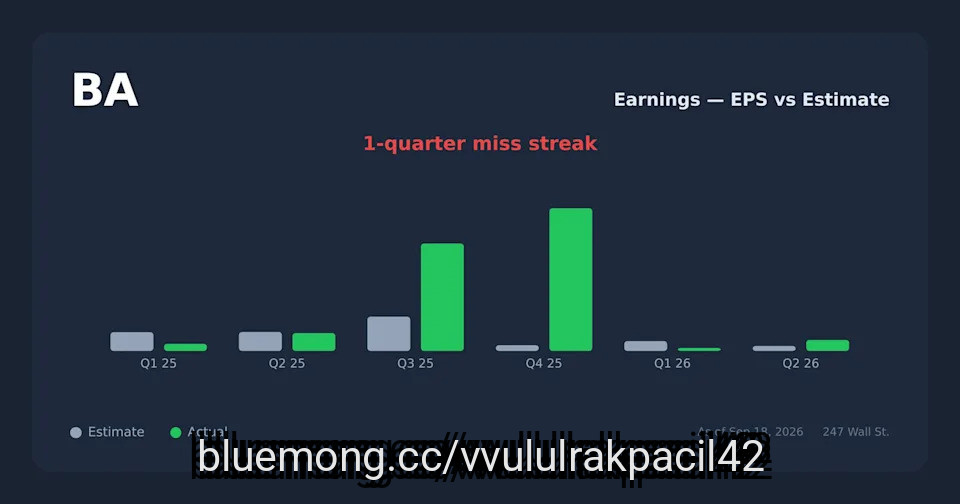
Boeing locked Korean Air into a $36.2 billion order spanning 737 MAX, 787-10, and 777X variants, but no deliveries arrive until the early 2030s.
Lockheed Martin posts steady profits while Boeing burns cash lifting production rates, carrying $600 million in quarterly interest expense that pressures GAAP results.
Just released. Our ******* ysts combed the entire stock market and named the ten best stocks to buy right now, and Boeing didn't make the cut. Enter your email to see the names that beat BA. The report is free. Enter your email and see if any of your stocks made the cut.
Boeing (NYSE:BA) confirmed a firm Korean Air order for the stretched 737 MAX, 787-10, and 777X in passenger and freighter variants, valued at $36.2 billion. Deliveries begin in the early 2030s.
These aircraft were previously logged as unidentified orders from a commitment announced last summer, so this is existing backlog getting a customer name rather than fresh demand.
#boeing #deliveries
Lockheed Martin posts steady profits while Boeing burns cash lifting production rates, carrying $600 million in quarterly interest expense that pressures GAAP results.
Just released. Our ******* ysts combed the entire stock market and named the ten best stocks to buy right now, and Boeing didn't make the cut. Enter your email to see the names that beat BA. The report is free. Enter your email and see if any of your stocks made the cut.
Boeing (NYSE:BA) confirmed a firm Korean Air order for the stretched 737 MAX, 787-10, and 777X in passenger and freighter variants, valued at $36.2 billion. Deliveries begin in the early 2030s.
These aircraft were previously logged as unidentified orders from a commitment announced last summer, so this is existing backlog getting a customer name rather than fresh demand.
#boeing #deliveries



9 hours ago
Merck (MRK) stock returned about 87% over the past twelve months, climbing from roughly $79 to about $147. Nothing in the year's results looks like that. The medicines Merck sells today grew at their usual pace. Investors spent the year repricing what comes next.
Revenue over the trailing twelve months was $66.6 billion, up 4.6% and in line with its own three-year pace. Profitability did not follow. Its operating margin over the same twelve months was 10.5%, versus a three-year average of 22.4%.
Most of that gap is one purchase. Merck took a $5.7 billion charge in the second quarter of 2026, about 9% of a year's sales. It bought Terns Pharmaceuticals, and with it MK-4208, a candidate for chronic myeloid leukemia. The bill hits earnings now and the medicine arrives later.
The proof matters because of the risk hanging over this stock. The KEYTRUDA family was just over half of Merck's revenue in the second quarter of 2026. The company is openly planning for the end of that exclusivity when Keytruda loses primary U.S. patent protection in 2028. Management describes the stretch as more of a hill than a cliff, with a shallow dip and a fast return to growth.
Johnson & Johnson (JNJ) returned 56% over the same twelve months and Pfizer (PFE) 23%, so a good year for pharmaceuticals explains some of this but not Merck's lead. What separated Merck was evidence. The FDA approved LIPFENDRA, the first and only oral PCSK9 inhibitor. In the CORALreef Lipids trial it lowered LDL cholesterol by up to 60% when added to a statin.
#year #johnson
Revenue over the trailing twelve months was $66.6 billion, up 4.6% and in line with its own three-year pace. Profitability did not follow. Its operating margin over the same twelve months was 10.5%, versus a three-year average of 22.4%.
Most of that gap is one purchase. Merck took a $5.7 billion charge in the second quarter of 2026, about 9% of a year's sales. It bought Terns Pharmaceuticals, and with it MK-4208, a candidate for chronic myeloid leukemia. The bill hits earnings now and the medicine arrives later.
The proof matters because of the risk hanging over this stock. The KEYTRUDA family was just over half of Merck's revenue in the second quarter of 2026. The company is openly planning for the end of that exclusivity when Keytruda loses primary U.S. patent protection in 2028. Management describes the stretch as more of a hill than a cliff, with a shallow dip and a fast return to growth.
Johnson & Johnson (JNJ) returned 56% over the same twelve months and Pfizer (PFE) 23%, so a good year for pharmaceuticals explains some of this but not Merck's lead. What separated Merck was evidence. The FDA approved LIPFENDRA, the first and only oral PCSK9 inhibitor. In the CORALreef Lipids trial it lowered LDL cholesterol by up to 60% when added to a statin.
#year #johnson


9 hours ago
On August 19, Ferrovial (NASDAQ:FER) announced it had been selected to deliver the I-24 Southeast Choice Lanes, a 26-mile project running between Nashville and Murfreesboro. It is the largest single capital investment in Tennessee's history and the state's first public-private partnership. The price tag is $9.2 billion, though Ferrovial isn't carrying it alone, since its DriveTN consortium also counts Transurban and Tikehau Star Infra as partners.
Choice lanes are familiar ground for Ferrovial, which has replicated the model in Washington, D.C., Charlotte and Dallas-Fort Worth. On Virginia's 66 Express corridor, similar lanes shaved up to 50% off peak-hour travel times. That is the pitch for I-24, a stretch of highway that already ranks among the region's most jammed: drivers who opt in get steadier speeds, and those in the free lanes should see less traffic too.
The business behind the bid looks healthy, too. Ferrovial's July 28 results showed adjusted EBITDA up 21.6% on a like-for-like basis to €746 million over the first six months of the year, with U.S. highways doing most of the lifting. Those roads are sending cash home as well, since Ferrovial received €357 million in dividends from North America. And the construction order book reached an all-time high of €18 billion, so plenty of work is already in hand. The pipeline keeps filling: Ferrovial bid on I-285 East in Georgia in July, and its D35 Highway bid in the Czech Republic was the most cost-effective submitted, with technical evaluation still underway.
Beyond the roads, the balance sheet looks sturdy. Ferrovial ended the first half with €1.3 billion in net cash, excluding infrastructure projects, meaning cash outweighs debt outside those projects. The airport arm is progressing too: Ferrovial has finished funding the $1.1 billion in equity it pledged for New Terminal One at JFK, and construction there is 92% complete.
Start with the line that looks worst on the page. Net profit for the first half of 2026 came in at €258 million, versus €540 million for the same period of 2025. That earlier figure included capital gains from ******* et rotation, which makes the comparison harsh, but the mismatch is still there: EBITDA climbed while reported profit fell.
#first #million #choice
Choice lanes are familiar ground for Ferrovial, which has replicated the model in Washington, D.C., Charlotte and Dallas-Fort Worth. On Virginia's 66 Express corridor, similar lanes shaved up to 50% off peak-hour travel times. That is the pitch for I-24, a stretch of highway that already ranks among the region's most jammed: drivers who opt in get steadier speeds, and those in the free lanes should see less traffic too.
The business behind the bid looks healthy, too. Ferrovial's July 28 results showed adjusted EBITDA up 21.6% on a like-for-like basis to €746 million over the first six months of the year, with U.S. highways doing most of the lifting. Those roads are sending cash home as well, since Ferrovial received €357 million in dividends from North America. And the construction order book reached an all-time high of €18 billion, so plenty of work is already in hand. The pipeline keeps filling: Ferrovial bid on I-285 East in Georgia in July, and its D35 Highway bid in the Czech Republic was the most cost-effective submitted, with technical evaluation still underway.
Beyond the roads, the balance sheet looks sturdy. Ferrovial ended the first half with €1.3 billion in net cash, excluding infrastructure projects, meaning cash outweighs debt outside those projects. The airport arm is progressing too: Ferrovial has finished funding the $1.1 billion in equity it pledged for New Terminal One at JFK, and construction there is 92% complete.
Start with the line that looks worst on the page. Net profit for the first half of 2026 came in at €258 million, versus €540 million for the same period of 2025. That earlier figure included capital gains from ******* et rotation, which makes the comparison harsh, but the mismatch is still there: EBITDA climbed while reported profit fell.
#first #million #choice


17 hours ago
Bitcoin's most violent rally of its two-year drawdown wasn't powered by fresh bullish bets. It was powered by bears getting crushed, according to a new report from ******* ytics firm Glassnode and crypto exchange Bybit.
Over five days in August, Bitcoin climbed 24.6% even as coin-denominated open interest, a measure of active leverage, fell 12.6%, the report found. That combination is the tell: rather than traders piling into new long positions, the move ran on the forced unwinding of existing shorts.
Roughly 64,000 BTC worth of open interest was closed out, and short positions supplied 89% of every liquidated dollar during the stretch.
The options market told the same story. Puts, the contracts traders buy to protect against a fall, had priced richer than calls for 361 straight days. A single session ended that run, flipping roughly a year of downside positioning as the market scrambled to reprice.
Bybit's own volatility index traveled four times its normal daily range in one session, and the front of the futures curve repriced sharply while longer-dated contracts barely moved, a sign the market read the move as a one-off event rather than a lasting regime change.
#interest
Over five days in August, Bitcoin climbed 24.6% even as coin-denominated open interest, a measure of active leverage, fell 12.6%, the report found. That combination is the tell: rather than traders piling into new long positions, the move ran on the forced unwinding of existing shorts.
Roughly 64,000 BTC worth of open interest was closed out, and short positions supplied 89% of every liquidated dollar during the stretch.
The options market told the same story. Puts, the contracts traders buy to protect against a fall, had priced richer than calls for 361 straight days. A single session ended that run, flipping roughly a year of downside positioning as the market scrambled to reprice.
Bybit's own volatility index traveled four times its normal daily range in one session, and the front of the futures curve repriced sharply while longer-dated contracts barely moved, a sign the market read the move as a one-off event rather than a lasting regime change.
#interest


19 hours ago
Whirlpool already cut its dividend 49% then skipped a payment entirely, while KHC's yield is inflated by a 55% decade-long price collapse with frozen payouts since 2019.
IEP's 29% yield masks two prior cuts and a 68% cash drop year over year, while UPS's quarterly operating cash flow fell $469 million short of its dividend payout.
A collapsing share price mechanically inflates yield, making high-yield stocks look attractive precisely when the underlying business is deteriorating most.
Just released. Our ******* ysts combed the entire stock market and named the ten best stocks to buy right now, and Kraft Heinz didn't make the cut. Enter your email to see the names that beat KHC. The report is free. Enter your email and see if any of your stocks made the cut.
Yield is a promise, not a payment. When a stock advertises a payout that looks two or three times the market average, it usually means the market has already decided something is wrong. The screen below flags six US-listed names where the numbers behind the yield show real strain: shrinking cash flow, stretched coverage, or a share price that collapsed and inflated the yield mechanically. None of these companies has announced a cut. Each has warning signs a retirement-focused reader should understand before buying the yield.
#inflated
IEP's 29% yield masks two prior cuts and a 68% cash drop year over year, while UPS's quarterly operating cash flow fell $469 million short of its dividend payout.
A collapsing share price mechanically inflates yield, making high-yield stocks look attractive precisely when the underlying business is deteriorating most.
Just released. Our ******* ysts combed the entire stock market and named the ten best stocks to buy right now, and Kraft Heinz didn't make the cut. Enter your email to see the names that beat KHC. The report is free. Enter your email and see if any of your stocks made the cut.
Yield is a promise, not a payment. When a stock advertises a payout that looks two or three times the market average, it usually means the market has already decided something is wrong. The screen below flags six US-listed names where the numbers behind the yield show real strain: shrinking cash flow, stretched coverage, or a share price that collapsed and inflated the yield mechanically. None of these companies has announced a cut. Each has warning signs a retirement-focused reader should understand before buying the yield.
#inflated


1 day ago
On August 6, Millicom International Cellular (NASDAQ:TIGO) released its second-quarter 2026 results, and the numbers pulled in two directions at once. Revenue jumped 59.4% year over year to $2.18 billion, while Adjusted EBITDA crossed $1 billion for the first time in the company's history at $1.01 billion, up 58% from a year earlier. Yet net profit attributable to company owners fell 83.9% to just $109 million. Investors weighing this quarter have to decide which of those two stories actually describes the business.
The headline figures are hard to ignore. Service revenue reached $2.04 billion in the quarter, up 60.1% year over year, while H1 2026 revenue climbed to $4.16 billion from $2.74 billion a year earlier, a 52.3% increase. Equity free cash flow hit a quarterly record of $327 million, up 50.1% from a year ago, and leverage actually fell to 2.73x even after Millicom absorbed acquisitions in Colombia, Ecuador and Uruguay. That combination, rising cash generation alongside falling leverage during an acquisition spree, is the kind of signal that tends to matter more than a single quarter's headline growth rate.
Management is backing that signal with cash. Millicom already declared a $3.00 per share dividend in May, to be paid out quarterly over the next 12 months, and on August 5, the board approved an additional interim dividend of $1.50 per share, split into two $0.75 installments due January 15, 2027, and April 15, 2027. The company also raised its full-year 2026 equity free cash flow guidance from at least $900 million to around $1.1 billion, while lowering its year-end leverage target from about 2.5x to below 2.5x. CEO Marcelo Benitez pointed to Ecuador and Uruguay as evidence the integration playbook works, saying both markets have reached margins and cash generation broadly in line with the Millicom average, with Colombia and Chile now showing early improvement on the same path.
Strip out the acquisitions, and the picture looks far less dramatic. Organic revenue growth was just 4.3% in the quarter and 4.2% for the first half, a fraction of the 59.4% and 52.3% reported figures. Most of what shows up in the headline number is Millicom buying its way to a bigger top line, not the existing business accelerating on its own.
The profit line raises a separate question. Net profit attributable to company owners dropped to $109 million from $676 million a year earlier, and the first-half figure fell 74.9% to $218 million from $869 million, even as EBITDA and cash flow set records over the same stretch. That gap between a surging EBITDA number and a collapsing bottom line is the kind of divergence that deserves scrutiny rather than a shrug. Capital spending is climbing too, up 51.2% to $234 million in the quarter and 48.8% to $426 million for the half, running well ahead of the organic growth rate it is meant to fund. And the balance sheet is still in motion: in July 2026, Bolivia took on five new local bank loans totaling roughly $44 millio
The headline figures are hard to ignore. Service revenue reached $2.04 billion in the quarter, up 60.1% year over year, while H1 2026 revenue climbed to $4.16 billion from $2.74 billion a year earlier, a 52.3% increase. Equity free cash flow hit a quarterly record of $327 million, up 50.1% from a year ago, and leverage actually fell to 2.73x even after Millicom absorbed acquisitions in Colombia, Ecuador and Uruguay. That combination, rising cash generation alongside falling leverage during an acquisition spree, is the kind of signal that tends to matter more than a single quarter's headline growth rate.
Management is backing that signal with cash. Millicom already declared a $3.00 per share dividend in May, to be paid out quarterly over the next 12 months, and on August 5, the board approved an additional interim dividend of $1.50 per share, split into two $0.75 installments due January 15, 2027, and April 15, 2027. The company also raised its full-year 2026 equity free cash flow guidance from at least $900 million to around $1.1 billion, while lowering its year-end leverage target from about 2.5x to below 2.5x. CEO Marcelo Benitez pointed to Ecuador and Uruguay as evidence the integration playbook works, saying both markets have reached margins and cash generation broadly in line with the Millicom average, with Colombia and Chile now showing early improvement on the same path.
Strip out the acquisitions, and the picture looks far less dramatic. Organic revenue growth was just 4.3% in the quarter and 4.2% for the first half, a fraction of the 59.4% and 52.3% reported figures. Most of what shows up in the headline number is Millicom buying its way to a bigger top line, not the existing business accelerating on its own.
The profit line raises a separate question. Net profit attributable to company owners dropped to $109 million from $676 million a year earlier, and the first-half figure fell 74.9% to $218 million from $869 million, even as EBITDA and cash flow set records over the same stretch. That gap between a surging EBITDA number and a collapsing bottom line is the kind of divergence that deserves scrutiny rather than a shrug. Capital spending is climbing too, up 51.2% to $234 million in the quarter and 48.8% to $426 million for the half, running well ahead of the organic growth rate it is meant to fund. And the balance sheet is still in motion: in July 2026, Bolivia took on five new local bank loans totaling roughly $44 millio

1 day ago
During market uncertainty, cautious investors may feel compelled to sell everything while they wait for the dust to settle. But Ross Gerber believes that, to paraphrase Rudyard Kipling, if you can keep your head when everyone else is losing theirs, you'll reap even bigger rewards.
The Gerber Kawasaki CEO says that while inflation, higher bond yields, oil prices, and Federal Reserve rate hikes can pressure stocks, he does not think investors should abandon equities wholesale. Instead, he advocates for a more defensive approach.
He recommends investors trim holdings with valuations that look stretched relative to their growth, build reserves in cash and short-duration fixed income **** ets, and keep long-term positions in companies that he believes still have strong earnings support, such as Nvidia.
And for investors trying to navigate an environment where corporate earnings remain strong while macroeconomic risks pressure stock valuations, that distinction matters. Gerber's framework is less about calling the market's next move than deciding which risks a portfolio can absorb—and which positions still deserve capital.
Here is a closer look at Gerber's defensive-focused strategy.
#gerber #pressure #still
The Gerber Kawasaki CEO says that while inflation, higher bond yields, oil prices, and Federal Reserve rate hikes can pressure stocks, he does not think investors should abandon equities wholesale. Instead, he advocates for a more defensive approach.
He recommends investors trim holdings with valuations that look stretched relative to their growth, build reserves in cash and short-duration fixed income **** ets, and keep long-term positions in companies that he believes still have strong earnings support, such as Nvidia.
And for investors trying to navigate an environment where corporate earnings remain strong while macroeconomic risks pressure stock valuations, that distinction matters. Gerber's framework is less about calling the market's next move than deciding which risks a portfolio can absorb—and which positions still deserve capital.
Here is a closer look at Gerber's defensive-focused strategy.
#gerber #pressure #still


1 day ago
Coinbase (COIN) dropped sharply when the CLARITY Act failed its Senate vote as Bitcoin barely moved, proving the bill served exchanges, not the coin.
Circle (CRCL) sold off alongside COIN while Polymarket prices Bitcoin reaching $95,000 by December at just 26%, well below Wall Street's bullish targets.
Grok flags October's Fed hike as Bitcoin's real gate, arguing that if it proves to be the last, returning ETF inflows could bring $100,000 within reach as a stretch target.
Read More: Avoid these 13 retirement mistakes before they derail your future (sponsor)
Coinbase (NASDAQ:COIN) and Circle (NYSE:CRCL) both fell sharply after the September 15 Senate cloture vote failed to advance the CLARITY Act, while Bitcoin (CRYPTO:BTC) barely moved.
#Coinbase #circle
Circle (CRCL) sold off alongside COIN while Polymarket prices Bitcoin reaching $95,000 by December at just 26%, well below Wall Street's bullish targets.
Grok flags October's Fed hike as Bitcoin's real gate, arguing that if it proves to be the last, returning ETF inflows could bring $100,000 within reach as a stretch target.
Read More: Avoid these 13 retirement mistakes before they derail your future (sponsor)
Coinbase (NASDAQ:COIN) and Circle (NYSE:CRCL) both fell sharply after the September 15 Senate cloture vote failed to advance the CLARITY Act, while Bitcoin (CRYPTO:BTC) barely moved.
#Coinbase #circle



1 day ago
On September 9, 2026, Reuters reported that GE Aerospace (NYSE:GE) agreed to buy castings maker Consolidated Precision Products for $11.75 billion. It is its largest acquisition since becoming a standalone company in 2024, to secure the supply of the precision metal turbine-blade components that have been a persistent bottleneck across the jet engine industry. CPP is the world's third-largest maker of these parts. CEO Larry Culp called the capacity "mission-critical" as the company works through a backlog stretching into the next decade.
GE Aerospace (NYSE:GE) can use the acquisition to convert its massive backlog into revenue faster. The company's backlog exceeded $210 billion after its second-quarter results. It includes roughly $170 billion in commercial services and more than $30 billion in defense. The $11.75 billion acquisition of Consolidated Precision Products directly targets one of the supply-chain bottlenecks that has limited GE's ability to increase engine production. CPP supplies about one-quarter of GE's casting needs. It gives GE greater control over a critical manufacturing process and could help it meet deliveries tied to its long-term backlog.
Bringing CPP in-house could improve GE's production economics while reducing supplier dependence. Spare-parts delinquencies jumped 20% sequentially in the second quarter. It shows the ongoing operational impact of supply constraints. GE plans to apply its Flight Deck lean operating model at CPP to improve factory yields and machine utilization and reduce scrap and rework. The company expects the acquisition to generate about $200 million in net synergies and achieve double-digit return on invested capital by the fifth year. It gives investors a measurable path to stronger returns from the deal.
The acquisition makes GE's position solid in the next generation of engines. GE expects demand for airfoils to increase more than 30% by 2030 from 2026 levels. CPP's casting expertise could help GE bring new airfoil designs into production faster. The business also expects CPP to make roughly $2 billion in revenue in 2027. That combination gives investors a potential path to higher production capacity, faster technology development, and stronger long-term participation in commercial and defense aerospace demand.
GE Aerospace (NYSE:GE) must justify a nearly $12 billion investment, and investors already ******* ign a premium valuation to the stock. GE Aerospace trades at roughly 46 times forward earnings. It leaves investors with limited tolerance for execution problems or weaker-than-expected returns. The company will fund $7 billion of the acquisition with cash and finance the remainder with new debt. So GE needs CPP's earnings and operating improvements to make sufficient returns to support the purchase price and protect shareholder value.
#billion #backlog #supply
GE Aerospace (NYSE:GE) can use the acquisition to convert its massive backlog into revenue faster. The company's backlog exceeded $210 billion after its second-quarter results. It includes roughly $170 billion in commercial services and more than $30 billion in defense. The $11.75 billion acquisition of Consolidated Precision Products directly targets one of the supply-chain bottlenecks that has limited GE's ability to increase engine production. CPP supplies about one-quarter of GE's casting needs. It gives GE greater control over a critical manufacturing process and could help it meet deliveries tied to its long-term backlog.
Bringing CPP in-house could improve GE's production economics while reducing supplier dependence. Spare-parts delinquencies jumped 20% sequentially in the second quarter. It shows the ongoing operational impact of supply constraints. GE plans to apply its Flight Deck lean operating model at CPP to improve factory yields and machine utilization and reduce scrap and rework. The company expects the acquisition to generate about $200 million in net synergies and achieve double-digit return on invested capital by the fifth year. It gives investors a measurable path to stronger returns from the deal.
The acquisition makes GE's position solid in the next generation of engines. GE expects demand for airfoils to increase more than 30% by 2030 from 2026 levels. CPP's casting expertise could help GE bring new airfoil designs into production faster. The business also expects CPP to make roughly $2 billion in revenue in 2027. That combination gives investors a potential path to higher production capacity, faster technology development, and stronger long-term participation in commercial and defense aerospace demand.
GE Aerospace (NYSE:GE) must justify a nearly $12 billion investment, and investors already ******* ign a premium valuation to the stock. GE Aerospace trades at roughly 46 times forward earnings. It leaves investors with limited tolerance for execution problems or weaker-than-expected returns. The company will fund $7 billion of the acquisition with cash and finance the remainder with new debt. So GE needs CPP's earnings and operating improvements to make sufficient returns to support the purchase price and protect shareholder value.
#billion #backlog #supply

1 day ago
CoreWeave (NASDAQ:CRWV), a GPU-accelerated cloud infrastructure provider, closed at $79.88, down 4.16%. The stock fell after CoreWeave announced convertible debt and a share sale, and investors are watching financing costs and infrastructure expansion.
Trading volume reached 78.3 million shares, coming in about 176% above its three-month average of 28.4 million shares. CoreWeave IPO'd in 2025 and has doubled since going public.
The S&P 500 (SNPINDEX:^GSPC) closed at 7,637, up 1.13%, while the Nasdaq Composite (NASDAQINDEX:^IXIC) closed at 26,418, up 1.69%. Among specialized cloud computing and AI infrastructure services peers, Nebius Group (NASDAQ:NBIS) closed at $217.99, up 4.12%, and Iren (NASDAQ:IREN) closed at $43.48, up 2.02%, as investors kept weighing AI buildout demand against funding needs.
It's important to note why CoreWeave stock dropped while shares of its closest peers rose sharply today. The companies are in a capital-intensive spending growth stretch. Demand for high-powered compute cloud ******* e for AI is huge, and CoreWeave announced today that it would raise money to meet that demand in two ways.
Its share offering and convertible bond offering are both likely to be dilutive to shareholders. But it takes money to make money, and CoreWeave also reinforced today that it is raising prices for its compute cloud contracts.
But the debt and share issuance contrasts with the solid cash position of peer Iren, for example. Iren has built up cash from its existing crypto mining operations.
#iren #infrastructure #shares
Trading volume reached 78.3 million shares, coming in about 176% above its three-month average of 28.4 million shares. CoreWeave IPO'd in 2025 and has doubled since going public.
The S&P 500 (SNPINDEX:^GSPC) closed at 7,637, up 1.13%, while the Nasdaq Composite (NASDAQINDEX:^IXIC) closed at 26,418, up 1.69%. Among specialized cloud computing and AI infrastructure services peers, Nebius Group (NASDAQ:NBIS) closed at $217.99, up 4.12%, and Iren (NASDAQ:IREN) closed at $43.48, up 2.02%, as investors kept weighing AI buildout demand against funding needs.
It's important to note why CoreWeave stock dropped while shares of its closest peers rose sharply today. The companies are in a capital-intensive spending growth stretch. Demand for high-powered compute cloud ******* e for AI is huge, and CoreWeave announced today that it would raise money to meet that demand in two ways.
Its share offering and convertible bond offering are both likely to be dilutive to shareholders. But it takes money to make money, and CoreWeave also reinforced today that it is raising prices for its compute cloud contracts.
But the debt and share issuance contrasts with the solid cash position of peer Iren, for example. Iren has built up cash from its existing crypto mining operations.
#iren #infrastructure #shares


1 day ago
McDonald's (MCD) stock fell 14.2% over the past 12 months, versus roughly 14.3% for the S&P 500, and now sits near its 52-week low. Over roughly the same stretch, management changed how it explains weak traffic. It used to point at customers outside its control. It now points at its own restaurants, and that makes the stock a different bet.
Who Did McDonald's Say Was Pulling Back?
About a year ago, on the second-quarter 2025 call, the lead worry sat outside the company. The CEO put it this way: "Visits across the industry by low-income consumers once again declined by double digits." The value message of that period leaned on core menu pricing, which management said shapes how customers judge value most.
So What Does McDonald's Say Went Wrong Instead?
In the latest call, for the second quarter of 2026, low-income consumers did not come up by name. The backdrop still comes up: industry traffic in several of its largest markets stayed flat to negative. The lead, though, is a miss of its own making. U.S. comparable sales grew 0.8%, and the CEO said the company did not execute at the level it needed.
#TRAFFIC
Who Did McDonald's Say Was Pulling Back?
About a year ago, on the second-quarter 2025 call, the lead worry sat outside the company. The CEO put it this way: "Visits across the industry by low-income consumers once again declined by double digits." The value message of that period leaned on core menu pricing, which management said shapes how customers judge value most.
So What Does McDonald's Say Went Wrong Instead?
In the latest call, for the second quarter of 2026, low-income consumers did not come up by name. The backdrop still comes up: industry traffic in several of its largest markets stayed flat to negative. The lead, though, is a miss of its own making. U.S. comparable sales grew 0.8%, and the CEO said the company did not execute at the level it needed.
#TRAFFIC

1 day ago
Intuitive Surgical (ISRG), maker of the da Vinci surgical robots, trades at about $382, some 36% below its 52-week high. Even so, you pay about 35.9 times trailing adjusted earnings. That is normalized net income with stock-based compensation added back, a basis meant to sit closer to the one ****** ysts forecast on, though the two are not defined identically. ****** ysts' forecasts run to 2027, the year Intuitive plans to start lowering what customers pay per use on some instruments.
The shares were trading about 11% lower the day after second-quarter results in July showed slower US procedure growth. US da Vinci procedures grew 12% in the second quarter, against 14% in the first. Management pointed to two likely causes, with the CFO noting that some customers say coverage changes are delaying deferrable procedures, alongside a little of the law of large numbers.
What the price still pays for is revenue growing faster than procedures. On the first-quarter call, the CFO credited that largely to da Vinci 5 and its higher pricing. More than half of the da Vinci systems Intuitive placed in the second quarter were da Vinci 5.
On ****** ysts' 2026 estimates, today's price is about 35.1 times earnings. On their 2027 estimates, it is about 31.4 times. The revenue forecast behind that looks modest: about 13.1% growth a year through 2027, against 20.7% growth over the past twelve months.
Consensus has earnings and revenue growing at a similar pace between 2026 and 2027, so margins hold roughly steady. Intuitive enters that stretch with an operating margin of 31.3% over the past twelve months, above its three-year average of 27.7%.
#intuitive #analysts #year #procedures
The shares were trading about 11% lower the day after second-quarter results in July showed slower US procedure growth. US da Vinci procedures grew 12% in the second quarter, against 14% in the first. Management pointed to two likely causes, with the CFO noting that some customers say coverage changes are delaying deferrable procedures, alongside a little of the law of large numbers.
What the price still pays for is revenue growing faster than procedures. On the first-quarter call, the CFO credited that largely to da Vinci 5 and its higher pricing. More than half of the da Vinci systems Intuitive placed in the second quarter were da Vinci 5.
On ****** ysts' 2026 estimates, today's price is about 35.1 times earnings. On their 2027 estimates, it is about 31.4 times. The revenue forecast behind that looks modest: about 13.1% growth a year through 2027, against 20.7% growth over the past twelve months.
Consensus has earnings and revenue growing at a similar pace between 2026 and 2027, so margins hold roughly steady. Intuitive enters that stretch with an operating margin of 31.3% over the past twelve months, above its three-year average of 27.7%.
#intuitive #analysts #year #procedures


2 days ago
Updated on: September 17, 2026 / 11:45 PM EDT / CBS News
Matt Bell, 52, has been farming for more than half his life in central North Carolina. He grows soybeans, corn and wheat and raises beef cattle on more than 1,000 acres. But Bell, who voted for President Trump, says soaring prices for fuel, fertilizer, and equipment are hurting his farm and leading some of his fellow farmers to consider calling it quits once this growing season ends.
"I've done this 34 years. I have never worried and stressed like I have the last year," Bell told CBS News in an interview on Wednesday at his farm in Kings Mountain, North Carolina.
Bell has been forced to make significant changes to his operation as a result of the high costs. He's shifting some of his acreage, trying to stretch out the lifespan of his equipment and producing his own fertilizer. His children have also opened up a storefront where visitors can pick pumpkins and take hayrides in the fall. But Bell is still feeling the pinch.
"We've cut everything we can cut," he said. "The last several years in agriculture have been terrible, and we have, you know, just cut the fat anywhere we could. But we're just getting to the point now there's nothing left to cut. You cannot run without fuel. You cannot run without fertilizer. You have to have that."
#bell #fertilizer #fuel #years
Matt Bell, 52, has been farming for more than half his life in central North Carolina. He grows soybeans, corn and wheat and raises beef cattle on more than 1,000 acres. But Bell, who voted for President Trump, says soaring prices for fuel, fertilizer, and equipment are hurting his farm and leading some of his fellow farmers to consider calling it quits once this growing season ends.
"I've done this 34 years. I have never worried and stressed like I have the last year," Bell told CBS News in an interview on Wednesday at his farm in Kings Mountain, North Carolina.
Bell has been forced to make significant changes to his operation as a result of the high costs. He's shifting some of his acreage, trying to stretch out the lifespan of his equipment and producing his own fertilizer. His children have also opened up a storefront where visitors can pick pumpkins and take hayrides in the fall. But Bell is still feeling the pinch.
"We've cut everything we can cut," he said. "The last several years in agriculture have been terrible, and we have, you know, just cut the fat anywhere we could. But we're just getting to the point now there's nothing left to cut. You cannot run without fuel. You cannot run without fertilizer. You have to have that."
#bell #fertilizer #fuel #years



2 days ago
Monthly car payments continue to hit record levels for both new and used cars.
The overall cost of car ownership remains elevated due to steep insurance and car maintenance prices in addition to the cost of a loan.
Good credit scores are key to qualifying for the best auto loan rates and driving away with a competitive monthly payment.
New car prices remain steep, with monthly payments for new cars soaring to the highest levels ever recorded. Amid this environment, buyers are taking on increasingly larger loans to make vehicle purchases, and some are also stretching repayment over a longer timeline — in some cases, up to seven years.
Whether you have poor credit or are looking to refinance your current loan, it's important to understand typical monthly payments and rates so you can feel confident that you are getting the best deal. While auto loan rates in 2026 are projected to lower slightly, it won't be enough to put a serious dent in the many factors that are driving up the cost of car ownership, including continued high cost of auto insurance and maintenance expenses.
#payments #rates #levels #ownership
The overall cost of car ownership remains elevated due to steep insurance and car maintenance prices in addition to the cost of a loan.
Good credit scores are key to qualifying for the best auto loan rates and driving away with a competitive monthly payment.
New car prices remain steep, with monthly payments for new cars soaring to the highest levels ever recorded. Amid this environment, buyers are taking on increasingly larger loans to make vehicle purchases, and some are also stretching repayment over a longer timeline — in some cases, up to seven years.
Whether you have poor credit or are looking to refinance your current loan, it's important to understand typical monthly payments and rates so you can feel confident that you are getting the best deal. While auto loan rates in 2026 are projected to lower slightly, it won't be enough to put a serious dent in the many factors that are driving up the cost of car ownership, including continued high cost of auto insurance and maintenance expenses.
#payments #rates #levels #ownership


2 days ago
Johnson & Johnson (JNJ) has been a rewarding stock to hold, up about 53% over the past year against about 17% for the S&P 500. The change worth noticing over that stretch is quieter than the price. Management said sales still rose 5.6% despite a STELARA drag of about 460 basis points. Management is encouraging investors to evaluate the company's underlying momentum by presenting growth rates that exclude STELARA alongside its reported figures.
A year and a half ago, that drag was the headline. Management's own framing of the first quarter of 2025 noted an approximate 810 basis point headwind on Innovative Medicine sales.
By the second quarter of 2026, that segment-level drag remained heavy at roughly 760 basis points (or about 460 basis points across the total enterprise), yet management's emphasis shifted to highlighting double-digit operational growth excluding STELARA
The exclusion is not a rounding adjustment. STELARA sales fell 55.7% in the second quarter of 2026, and management put that drag at about 460 basis points of the whole company's 5.6% operational sales growth.
Two products show what the replacement looks like. TREMFYA booked $2 billion of sales in the second quarter of 2026, up over 70%, and management says ulcerative colitis and Crohn's disease are the major drivers of that growth. ICOTYDE, a recently launched once-daily pill for psoriasis, is the second, which leadership has highlighted as a key pipeline priority for the immunology business.
#sales #basis #drag #quarter
A year and a half ago, that drag was the headline. Management's own framing of the first quarter of 2025 noted an approximate 810 basis point headwind on Innovative Medicine sales.
By the second quarter of 2026, that segment-level drag remained heavy at roughly 760 basis points (or about 460 basis points across the total enterprise), yet management's emphasis shifted to highlighting double-digit operational growth excluding STELARA
The exclusion is not a rounding adjustment. STELARA sales fell 55.7% in the second quarter of 2026, and management put that drag at about 460 basis points of the whole company's 5.6% operational sales growth.
Two products show what the replacement looks like. TREMFYA booked $2 billion of sales in the second quarter of 2026, up over 70%, and management says ulcerative colitis and Crohn's disease are the major drivers of that growth. ICOTYDE, a recently launched once-daily pill for psoriasis, is the second, which leadership has highlighted as a key pipeline priority for the immunology business.
#sales #basis #drag #quarter

2 days ago
On August 5, Kinetik Holdings Inc. (NYSE:KNTK) reported the strongest quarterly results in company history and raised its full-year 2026 guidance. The Permian-focused midstream operator posted net income, including noncontrolling interest, of $123.1 million for the quarter ended June 30, while Adjusted EBITDA climbed to $280.8 million. Management didn't stop at celebrating the number. It used the quarter as the launchpad for a string of expansion decisions that stretch out to 2028.
The Midstream Logistics segment, Kinetik's largest, grew Adjusted EBITDA 35% year over year to $204.8 million in the second quarter, even though processed natural gas volumes held flat at 1.74 Bcf/d. That flat number actually undersells the quarter. It came despite roughly 250 million cubic feet per day of gas that had been shut in because of weak Waha-area pricing, with stronger natural gas liquid recoveries, condensate yields, and favorable commodity spreads carrying the segment instead.
Management is betting the growth continues well past 2026. In May, Kinetik reached a final investment decision on Kings Landing II, a roughly $260 million project that will lift sour gas processing capacity across the company's Delaware North complex above 700 MMcf/d and push total system capacity to 2.7 Bcf/d when it comes online in mid-2028, earlier than previously communicated. The ECCC Pipeline, which links the system's northern and southern halves between Eddy and Culberson Counties, is now in service, and right-of-way work has already begun on a follow-on expansion for 2027.
Kinetik also locked in new firm Gulf Coast access for residue gas starting in 2027 and signed fresh natural gas liquids transport agreements, both aimed at getting better prices for the gas it moves. On the back of that momentum, Kinetik raised its full-year 2026 Adjusted EBITDA guidance to a range of $1.04 billion to $1.1 billion, a 7% ***** p from the guidance it issued in February.
Not every part of the business is moving in the same direction. The Pipeline Transportation segment posted Adjusted EBITDA of $83.0 million in the quarter, down 14% year over year, a decline the company attributes to last year's divestiture of its equity stake in EPIC Crude Holdings. That sale removed a source of cash flow the rest of the business now has to make up for. Kinetik also expects gas curtailments to keep running at an average of 25 million cubic feet per day through the second half of 2026, on top of the Waha-driven shut-ins that already weighed on the quarter. Its own pricing ***** umptions underline the regional problem: the company is now modeling Waha Hub natural gas at negative $0.26 per MMBtu for the full year, meaning gas in parts of the Permian is priced so low that moving it out of the basin is the whole game.
#quarter
The Midstream Logistics segment, Kinetik's largest, grew Adjusted EBITDA 35% year over year to $204.8 million in the second quarter, even though processed natural gas volumes held flat at 1.74 Bcf/d. That flat number actually undersells the quarter. It came despite roughly 250 million cubic feet per day of gas that had been shut in because of weak Waha-area pricing, with stronger natural gas liquid recoveries, condensate yields, and favorable commodity spreads carrying the segment instead.
Management is betting the growth continues well past 2026. In May, Kinetik reached a final investment decision on Kings Landing II, a roughly $260 million project that will lift sour gas processing capacity across the company's Delaware North complex above 700 MMcf/d and push total system capacity to 2.7 Bcf/d when it comes online in mid-2028, earlier than previously communicated. The ECCC Pipeline, which links the system's northern and southern halves between Eddy and Culberson Counties, is now in service, and right-of-way work has already begun on a follow-on expansion for 2027.
Kinetik also locked in new firm Gulf Coast access for residue gas starting in 2027 and signed fresh natural gas liquids transport agreements, both aimed at getting better prices for the gas it moves. On the back of that momentum, Kinetik raised its full-year 2026 Adjusted EBITDA guidance to a range of $1.04 billion to $1.1 billion, a 7% ***** p from the guidance it issued in February.
Not every part of the business is moving in the same direction. The Pipeline Transportation segment posted Adjusted EBITDA of $83.0 million in the quarter, down 14% year over year, a decline the company attributes to last year's divestiture of its equity stake in EPIC Crude Holdings. That sale removed a source of cash flow the rest of the business now has to make up for. Kinetik also expects gas curtailments to keep running at an average of 25 million cubic feet per day through the second half of 2026, on top of the Waha-driven shut-ins that already weighed on the quarter. Its own pricing ***** umptions underline the regional problem: the company is now modeling Waha Hub natural gas at negative $0.26 per MMBtu for the full year, meaning gas in parts of the Permian is priced so low that moving it out of the basin is the whole game.
#quarter


2 days ago
Coherent jumped 6% and Lumentum climbed 5% with no catalyst, driven by short covering after both stocks fell sharply over the prior month.
SOXX gained only 2% and SPY just 0.3%, making the optics group's surge a positioning-only bounce confined to the sector, not a broad re-rating.
Just released. Our ******* ysts combed the entire stock market and named the ten best stocks to buy right now, and Coherent didn't make the cut. Enter your email to see the names that beat COHR. The report is free. Enter your email and see if any of your stocks made the cut.
Optics stocks are rebounding Wednesday morning without a fresh headline to point to, and the size of the group's move relative to the broader market is the story. The iShares Semiconductor ETF (NASDAQ:SOXX) is at $508.59, up 2%, while the SPDR S&P 500 ETF Trust (NYSEARCA:SPY) is at $759.69, up just 0.3%. The three optics names running today are outpacing both benchmarks by a wide margin.
Coherent Corp. (NYSE:COHR) stock is up 6% to $287.21 in Wednesday morning trading. The bounce arrives after a rough stretch. Coherent shares had fallen 12% over the past month heading into today's session, and that drawdown is the part of the setup that hasn't been undone.
#optics
SOXX gained only 2% and SPY just 0.3%, making the optics group's surge a positioning-only bounce confined to the sector, not a broad re-rating.
Just released. Our ******* ysts combed the entire stock market and named the ten best stocks to buy right now, and Coherent didn't make the cut. Enter your email to see the names that beat COHR. The report is free. Enter your email and see if any of your stocks made the cut.
Optics stocks are rebounding Wednesday morning without a fresh headline to point to, and the size of the group's move relative to the broader market is the story. The iShares Semiconductor ETF (NASDAQ:SOXX) is at $508.59, up 2%, while the SPDR S&P 500 ETF Trust (NYSEARCA:SPY) is at $759.69, up just 0.3%. The three optics names running today are outpacing both benchmarks by a wide margin.
Coherent Corp. (NYSE:COHR) stock is up 6% to $287.21 in Wednesday morning trading. The bounce arrives after a rough stretch. Coherent shares had fallen 12% over the past month heading into today's session, and that drawdown is the part of the setup that hasn't been undone.
#optics


3 days ago
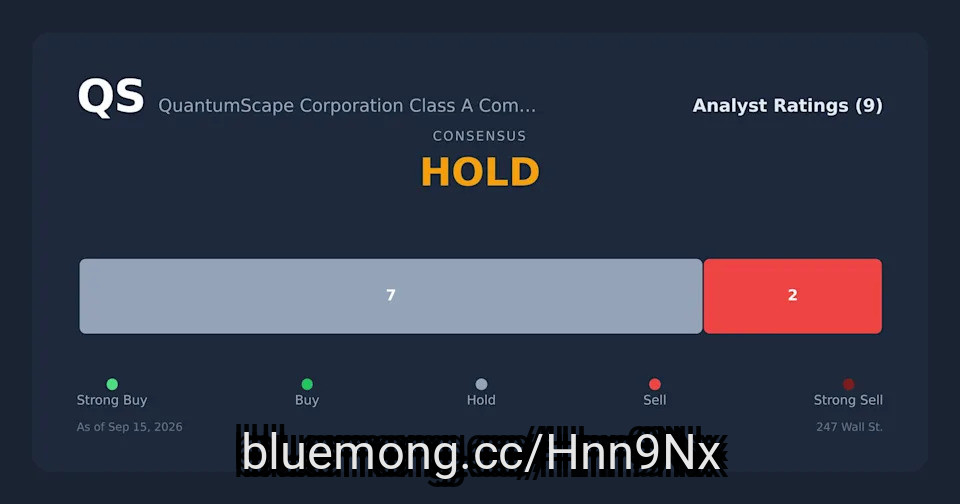
QS stock has fallen 51% year to date to near its 52-week low of $4.77, despite a Q2 earnings beat and $859 million in liquidity.
Enovix and Eos Energy are down 59% and 65% YTD as battery ETF LIT gained 8%, showing the market penalizing pre-revenue companies.
No **** ysts rate QS a buy, and production milestones stretch well into the late 2020s, yet Honda's rigorous technology validation strengthens the long-duration bull case.
Read More: Avoid these 13 retirement mistakes before they derail your future (sponsor)
Shares of QuantumScape (NYSE:QS) are down 1% to $5.14 in Tuesday afternoon trading, extending a slide that has left the solid-state battery developer down 51% year to date. QuantumScape stock now trades near the bottom of a 52-week range that topped $19 last fall.
#Stock #date #near #week
Enovix and Eos Energy are down 59% and 65% YTD as battery ETF LIT gained 8%, showing the market penalizing pre-revenue companies.
No **** ysts rate QS a buy, and production milestones stretch well into the late 2020s, yet Honda's rigorous technology validation strengthens the long-duration bull case.
Read More: Avoid these 13 retirement mistakes before they derail your future (sponsor)
Shares of QuantumScape (NYSE:QS) are down 1% to $5.14 in Tuesday afternoon trading, extending a slide that has left the solid-state battery developer down 51% year to date. QuantumScape stock now trades near the bottom of a 52-week range that topped $19 last fall.
#Stock #date #near #week



3 days ago
Investors looking for cheap stocks to buy before the end of 2026 don't have to look too far to find some great investments. There are many top stocks that can make for solid long-term growth investments that are trading at absurdly cheap valuations right now.
Three stocks that are trading at low earnings multiples and that have lots of growth still ahead are Novo Nordisk (NYSE:NVO), Intuit (NASDAQ:INTU), and Reddit (NYSE:RDDT). Here's why these can make for great growth stocks to buy right now.
Missed Nvidia in 2009? This Rare Signal Is Flashing Again. In 2009, a "Double Down" signal flashed for a little-known chipmaker called Nvidia. For the first time in years, that same "Total Conviction" signal is flashing for a company 1/100th the size of Nvidia. Continue »
Image source: Getty Images.
It's been a rough stretch for healthcare company Novo Nordisk, as it has declined about 23% in value over the past 12 months. Investors are questioning its ability to grow and compete alongside its rival, Eli Lilly. Novo was an early leader in the GLP-1 race with Ozempic and Wegovy, but now has lost more than a couple of steps.
#NVIDIA #investors #cheap
Three stocks that are trading at low earnings multiples and that have lots of growth still ahead are Novo Nordisk (NYSE:NVO), Intuit (NASDAQ:INTU), and Reddit (NYSE:RDDT). Here's why these can make for great growth stocks to buy right now.
Missed Nvidia in 2009? This Rare Signal Is Flashing Again. In 2009, a "Double Down" signal flashed for a little-known chipmaker called Nvidia. For the first time in years, that same "Total Conviction" signal is flashing for a company 1/100th the size of Nvidia. Continue »
Image source: Getty Images.
It's been a rough stretch for healthcare company Novo Nordisk, as it has declined about 23% in value over the past 12 months. Investors are questioning its ability to grow and compete alongside its rival, Eli Lilly. Novo was an early leader in the GLP-1 race with Ozempic and Wegovy, but now has lost more than a couple of steps.
#NVIDIA #investors #cheap


3 days ago
In some markets, it costs less to rent than to buy — by a lot. And it could be a great way to save a ton of money during your retirement years.
Mortgage and financial consultant Cody Schuiteboer of Best Interest Financial said many retirees never even consider renting as a serious option.
"There is an unshakeable mentality that buying is always the right choice, but the opposite is often true in retirement," he said. "If renting is actually cheaper in that market, renting lets retirees stretch their nest egg further."
MoneyLion ran the rent-versus-ownership numbers in the top retirement destinations along the East Coast and found the cities offering the greatest savings to renters. The homeownership numbers ****** umed a 10% down payment and a 6.53% interest rate, using average home price and rent numbers from Zillow.
Best of all, the following retirement hubs all have a total monthly expenditure cost under $4,000 according to BLS data, and adults over 65 make up at least 20% of the population.
#rent
Mortgage and financial consultant Cody Schuiteboer of Best Interest Financial said many retirees never even consider renting as a serious option.
"There is an unshakeable mentality that buying is always the right choice, but the opposite is often true in retirement," he said. "If renting is actually cheaper in that market, renting lets retirees stretch their nest egg further."
MoneyLion ran the rent-versus-ownership numbers in the top retirement destinations along the East Coast and found the cities offering the greatest savings to renters. The homeownership numbers ****** umed a 10% down payment and a 6.53% interest rate, using average home price and rent numbers from Zillow.
Best of all, the following retirement hubs all have a total monthly expenditure cost under $4,000 according to BLS data, and adults over 65 make up at least 20% of the population.
#rent


3 days ago
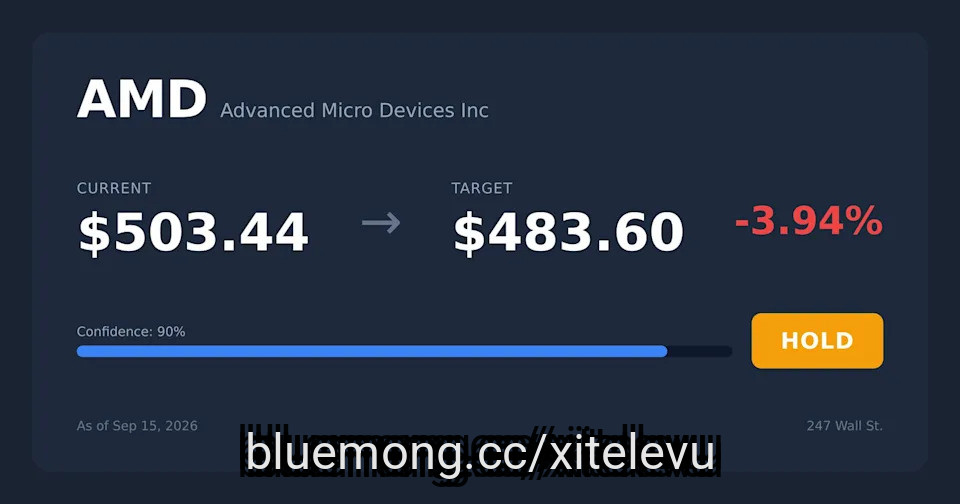
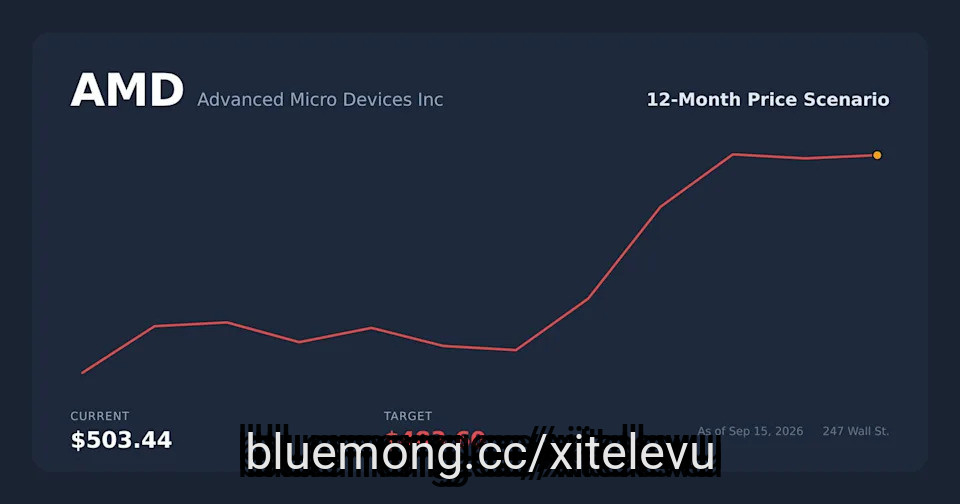
AMD stock surged 127% YTD after Data Center revenue doubled to $6.7B, yet 24/7 Wall St. rates it HOLD at $481 on stretched valuation.
Nvidia trades at a P/E of 44 despite $89B in Data Center revenue, making AMD's triple-digit multiple look dangerously extended by comparison.
Lisa Su sees a $1.4 trillion AI accelerator market by 2030, with Helios delivering 30% more tokens per dollar than rivals.
Read More: Avoid these 13 retirement mistakes before they derail your future (sponsor)
Our AMD (NASDAQ:AMD) call is one of the tougher ones we've made this quarter. The stock has done what few thought possible, doubling in months on the back of an AI accelerator story that is finally landing with hyperscalers.
#revenue #hold #NVIDIA
Nvidia trades at a P/E of 44 despite $89B in Data Center revenue, making AMD's triple-digit multiple look dangerously extended by comparison.
Lisa Su sees a $1.4 trillion AI accelerator market by 2030, with Helios delivering 30% more tokens per dollar than rivals.
Read More: Avoid these 13 retirement mistakes before they derail your future (sponsor)
Our AMD (NASDAQ:AMD) call is one of the tougher ones we've made this quarter. The stock has done what few thought possible, doubling in months on the back of an AI accelerator story that is finally landing with hyperscalers.
#revenue #hold #NVIDIA


3 days ago
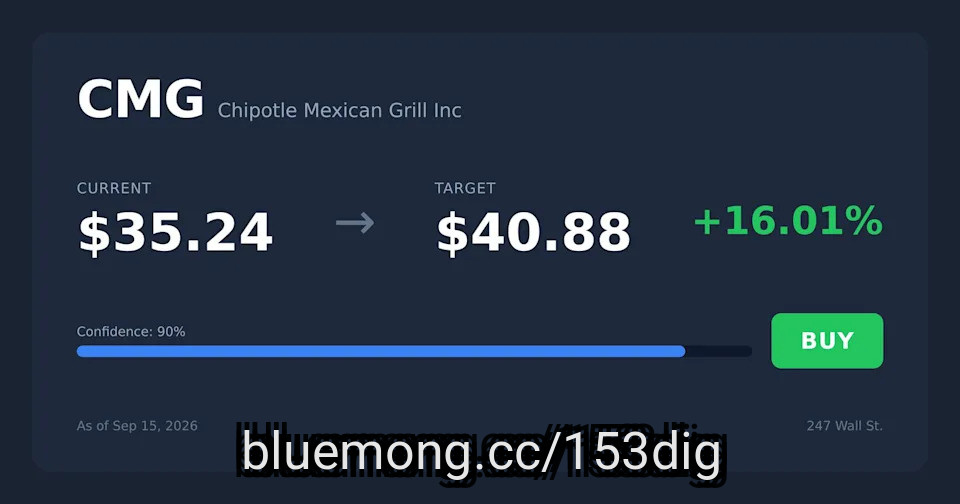
Chipotle stock dropped 5% Tuesday with no confirmed news behind the move, but remains up 5% for the month, pointing to profit taking not panic.
The CDC confirmed no ongoing consumer risk from the summer salmonella outbreak, and Chipotle stock actually rose while that investigation was open.
Broad benchmarks and QSR peers fell only between 0.5 and 3% on Tuesday, isolating Chipotle's move as stock-specific, with the next real catalyst on October 28.
Read More: Learn 7 secret wealth tips high net worth investors use that most investors miss (sponsor)
Chipotle Mexican Grill (NYSE:CMG) stock is down 5% to $35.32 in Tuesday morning trading, a sharp break from a stretch that had the shares grinding higher through the first half of September. The move stands out because it doesn't match a broad tape decline or a food and beverage sector rout of similar magnitude. That forces the question of what specifically is hitting Chipotle today when the peer group is barely giving ground.
#october
The CDC confirmed no ongoing consumer risk from the summer salmonella outbreak, and Chipotle stock actually rose while that investigation was open.
Broad benchmarks and QSR peers fell only between 0.5 and 3% on Tuesday, isolating Chipotle's move as stock-specific, with the next real catalyst on October 28.
Read More: Learn 7 secret wealth tips high net worth investors use that most investors miss (sponsor)
Chipotle Mexican Grill (NYSE:CMG) stock is down 5% to $35.32 in Tuesday morning trading, a sharp break from a stretch that had the shares grinding higher through the first half of September. The move stands out because it doesn't match a broad tape decline or a food and beverage sector rout of similar magnitude. That forces the question of what specifically is hitting Chipotle today when the peer group is barely giving ground.
#october


3 days ago
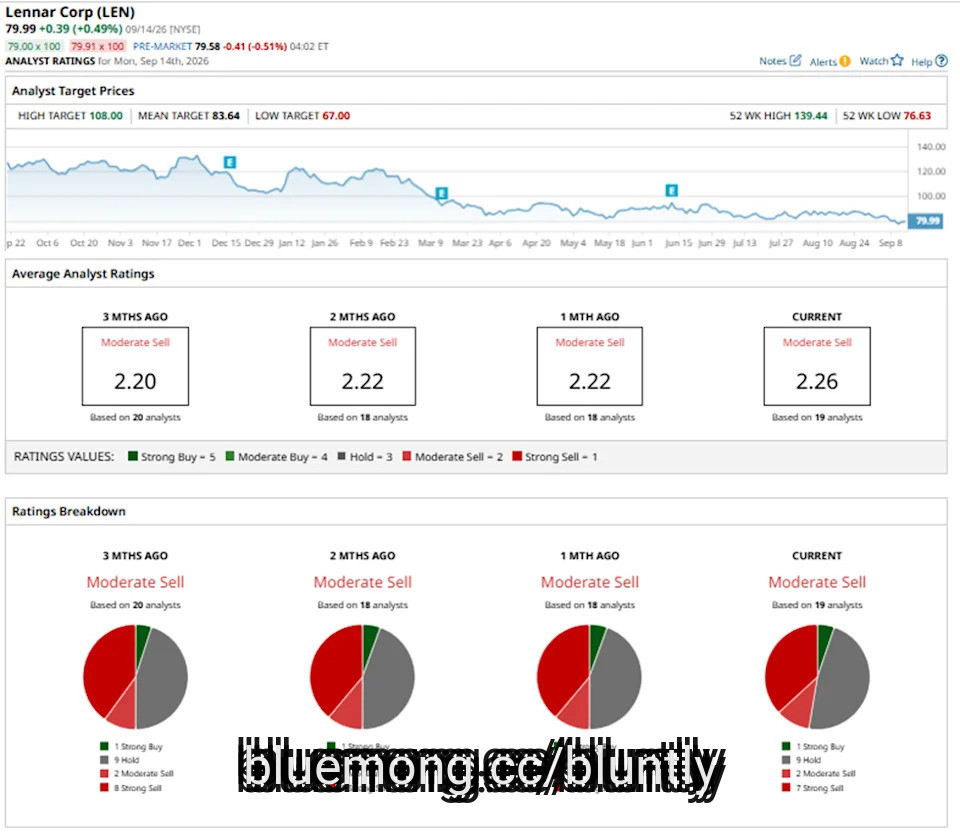
Shares of Lennar Corporation (LEN) have been hit hard on Wall Street, with persistent housing market headwinds sending its stock deep into the red in 2026. Elevated mortgage rates, sluggish housing demand, lower average selling prices, and shrinking gross margins fueled by aggressive pricing incentives have weighed heavily on the homebuilder. Add a string of ****** yst downgrades to the mix, and it's easy to see why investor confidence has taken a beating.
But Lennar may have a chance to turn the tide. The homebuilder is set to report its fiscal 2026 third-quarter earnings after market hours on Wednesday, Sept. 16, putting the stock back in the spotlight. Investors will be watching closely for any signs of recovery and, more importantly, clues that the housing giant's rough stretch could finally be coming to an end. With a major catalyst just around the corner, here's a closer look at Lennar stock ahead of its earnings report.
Goldman Sachs Expects Fed Chair Kevin Warsh to Raise Rates This Week — But Not Because of Oil Prices.
Morgan Stanley Doubles Down on Apple Stock as New Offerings Become 'More Exciting'
The EV Bubble Has Burst. How to Play Rivian Stock Now.
#Stock #housing #earnings
But Lennar may have a chance to turn the tide. The homebuilder is set to report its fiscal 2026 third-quarter earnings after market hours on Wednesday, Sept. 16, putting the stock back in the spotlight. Investors will be watching closely for any signs of recovery and, more importantly, clues that the housing giant's rough stretch could finally be coming to an end. With a major catalyst just around the corner, here's a closer look at Lennar stock ahead of its earnings report.
Goldman Sachs Expects Fed Chair Kevin Warsh to Raise Rates This Week — But Not Because of Oil Prices.
Morgan Stanley Doubles Down on Apple Stock as New Offerings Become 'More Exciting'
The EV Bubble Has Burst. How to Play Rivian Stock Now.
#Stock #housing #earnings



3 days ago
Shares of Lennar Corporation (LEN) have been hit hard on Wall Street, with persistent housing market headwinds sending its stock deep into the red in 2026. Elevated mortgage rates, sluggish housing demand, lower average selling prices, and shrinking gross margins fueled by aggressive pricing incentives have weighed heavily on the homebuilder. Add a string of ***** yst downgrades to the mix, and it's easy to see why investor confidence has taken a beating.
But Lennar may have a chance to turn the tide. The homebuilder is set to report its fiscal 2026 third-quarter earnings after market hours on Wednesday, Sept. 16, putting the stock back in the spotlight. Investors will be watching closely for any signs of recovery and, more importantly, clues that the housing giant's rough stretch could finally be coming to an end. With a major catalyst just around the corner, here's a closer look at Lennar stock ahead of its earnings report.
Goldman Sachs Expects Fed Chair Kevin Warsh to Raise Rates This Week — But Not Because of Oil Prices.
Morgan Stanley Doubles Down on Apple Stock as New Offerings Become 'More Exciting'
The EV Bubble Has Burst. How to Play Rivian Stock Now.
#rates
But Lennar may have a chance to turn the tide. The homebuilder is set to report its fiscal 2026 third-quarter earnings after market hours on Wednesday, Sept. 16, putting the stock back in the spotlight. Investors will be watching closely for any signs of recovery and, more importantly, clues that the housing giant's rough stretch could finally be coming to an end. With a major catalyst just around the corner, here's a closer look at Lennar stock ahead of its earnings report.
Goldman Sachs Expects Fed Chair Kevin Warsh to Raise Rates This Week — But Not Because of Oil Prices.
Morgan Stanley Doubles Down on Apple Stock as New Offerings Become 'More Exciting'
The EV Bubble Has Burst. How to Play Rivian Stock Now.
#rates



4 days ago
Palantir stock has had a rough stretch. A 5-star Wall Street **** yst just said the market is reading the company wrong.
UBS **** yst Karl Keirstead raised his price target on Palantir Technologies to $250 from $220 on Sept. 15, reiterating his Buy rating, according to CNBC. At Palantir's Sept. 14 closing price of roughly $173, the new target implies about 44% upside.
Keirstead's updated view stemmed directly from Palantir's Sept. 10 AIPCon11 event, where Palantir brought together customers, executives, and partners to discuss how companies are deploying its AI platform in real operations.
"Our view of Palantir as the best AI enabler in the market, making frontier models and AI useful in large enterprises, was, if anything, bolstered by these conversations, and demand momentum seems robust," Keirstead wrote in a note shared with clients.
He described three points that stood out from the event. Customer conversations kept coming back to AI sovereignty, the idea that enterprises and governments want control over their own data and AI infrastructure, rather than handing it to a small number of large cloud providers.
#analyst #market #target #Event
UBS **** yst Karl Keirstead raised his price target on Palantir Technologies to $250 from $220 on Sept. 15, reiterating his Buy rating, according to CNBC. At Palantir's Sept. 14 closing price of roughly $173, the new target implies about 44% upside.
Keirstead's updated view stemmed directly from Palantir's Sept. 10 AIPCon11 event, where Palantir brought together customers, executives, and partners to discuss how companies are deploying its AI platform in real operations.
"Our view of Palantir as the best AI enabler in the market, making frontier models and AI useful in large enterprises, was, if anything, bolstered by these conversations, and demand momentum seems robust," Keirstead wrote in a note shared with clients.
He described three points that stood out from the event. Customer conversations kept coming back to AI sovereignty, the idea that enterprises and governments want control over their own data and AI infrastructure, rather than handing it to a small number of large cloud providers.
#analyst #market #target #Event


4 days ago
On August 5, Kinetik Holdings Inc. (NYSE:KNTK) reported the strongest quarterly results in company history and raised its full-year 2026 guidance. The Permian-focused midstream operator posted net income, including noncontrolling interest, of $123.1 million for the quarter ended June 30, while Adjusted EBITDA climbed to $280.8 million. Management didn't stop at celebrating the number. It used the quarter as the launchpad for a string of expansion decisions that stretch out to 2028.
The Midstream Logistics segment, Kinetik's largest, grew Adjusted EBITDA 35% year over year to $204.8 million in the second quarter, even though processed natural gas volumes held flat at 1.74 Bcf/d. That flat number actually undersells the quarter. It came despite roughly 250 million cubic feet per day of gas that had been shut in because of weak Waha-area pricing, with stronger natural gas liquid recoveries, condensate yields, and favorable commodity spreads carrying the segment instead.
Management is betting the growth continues well past 2026. In May, Kinetik reached a final investment decision on Kings Landing II, a roughly $260 million project that will lift sour gas processing capacity across the company's Delaware North complex above 700 MMcf/d and push total system capacity to 2.7 Bcf/d when it comes online in mid-2028, earlier than previously communicated. The ECCC Pipeline, which links the system's northern and southern halves between Eddy and Culberson Counties, is now in service, and right-of-way work has already begun on a follow-on expansion for 2027.
Kinetik also locked in new firm Gulf Coast access for residue gas starting in 2027 and signed fresh natural gas liquids transport agreements, both aimed at getting better prices for the gas it moves. On the back of that momentum, Kinetik raised its full-year 2026 Adjusted EBITDA guidance to a range of $1.04 billion to $1.1 billion, a 7% ***** p from the guidance it issued in February.
Not every part of the business is moving in the same direction. The Pipeline Transportation segment posted Adjusted EBITDA of $83.0 million in the quarter, down 14% year over year, a decline the company attributes to last year's divestiture of its equity stake in EPIC Crude Holdings. That sale removed a source of cash flow the rest of the business now has to make up for. Kinetik also expects gas curtailments to keep running at an average of 25 million cubic feet per day through the second half of 2026, on top of the Waha-driven shut-ins that already weighed on the quarter. Its own pricing ***** umptions underline the regional problem: the company is now modeling Waha Hub natural gas at negative $0.26 per MMBtu for the full year, meaning gas in parts of the Permian is priced so low that moving it out of the basin is the whole game.
#natural
The Midstream Logistics segment, Kinetik's largest, grew Adjusted EBITDA 35% year over year to $204.8 million in the second quarter, even though processed natural gas volumes held flat at 1.74 Bcf/d. That flat number actually undersells the quarter. It came despite roughly 250 million cubic feet per day of gas that had been shut in because of weak Waha-area pricing, with stronger natural gas liquid recoveries, condensate yields, and favorable commodity spreads carrying the segment instead.
Management is betting the growth continues well past 2026. In May, Kinetik reached a final investment decision on Kings Landing II, a roughly $260 million project that will lift sour gas processing capacity across the company's Delaware North complex above 700 MMcf/d and push total system capacity to 2.7 Bcf/d when it comes online in mid-2028, earlier than previously communicated. The ECCC Pipeline, which links the system's northern and southern halves between Eddy and Culberson Counties, is now in service, and right-of-way work has already begun on a follow-on expansion for 2027.
Kinetik also locked in new firm Gulf Coast access for residue gas starting in 2027 and signed fresh natural gas liquids transport agreements, both aimed at getting better prices for the gas it moves. On the back of that momentum, Kinetik raised its full-year 2026 Adjusted EBITDA guidance to a range of $1.04 billion to $1.1 billion, a 7% ***** p from the guidance it issued in February.
Not every part of the business is moving in the same direction. The Pipeline Transportation segment posted Adjusted EBITDA of $83.0 million in the quarter, down 14% year over year, a decline the company attributes to last year's divestiture of its equity stake in EPIC Crude Holdings. That sale removed a source of cash flow the rest of the business now has to make up for. Kinetik also expects gas curtailments to keep running at an average of 25 million cubic feet per day through the second half of 2026, on top of the Waha-driven shut-ins that already weighed on the quarter. Its own pricing ***** umptions underline the regional problem: the company is now modeling Waha Hub natural gas at negative $0.26 per MMBtu for the full year, meaning gas in parts of the Permian is priced so low that moving it out of the basin is the whole game.
#natural


4 days ago
On September 14, American Battery Technology Company (NASDAQ:ABAT) held its fiscal year 2026 earnings call, and for once the numbers matched the ambition. Revenue at its flagship recycling facility jumped more than 400% to $21.7 million, and the company posted its first-ever adjusted gross profit. But on the same call, CEO Ryan Melsert disclosed a federal directive that could choke off exports of one of the plant's key products, black mass, a reminder that ABAT's fortunes are still tied tightly to Washington.
Revenue jumped over 400% year over year to $21.7 million, fueled by higher throughput at the company's first recycling facility and increased sales of byproducts. Cost of goods sold rose only 67% over the same stretch, evidence that fixed costs are spreading across a much bigger volume of material. Even more telling, operating cash spend actually fell 16% even as throughput at the plant more than quadrupled. That combination pushed American Battery Technology to an adjusted gross profit of $1.7 million, a sharp turnaround from the $6.2 million loss it posted a year earlier.
The balance sheet tells a similar story. Cash climbed to $49.5 million as of June 30, 2026, and total ***** ets reached $133 million, up sharply from the prior year. The company also erased all of its long-term debt during the year, leaving it with a clean balance sheet heading into a period of heavy capital spending.
Growth plans are already in motion. A second recycling facility planned for the Southeast U.S., designed to process 100,000 tons of batteries a year, is backed by a $150 million grant from the Department of Energy, and a separate $10 million DOE grant is funding three next-generation recycling technologies. On the mining side, the Bureau of Land Management certified the company's plan of operations for its Tonopah lithium project in Nevada, home to an identified 21.3 million tons of lithium hydroxide, including 2.7 million tons of proven and probable reserves. The project also won a FAST-41 priority designation, intended to speed up federal permitting.
The clearest risk surfaced on the call itself. The US Department of Commerce issued a directive that effectively bans the export of black mass, the concentrated metal byproduct of battery recycling, unless a company obtains a specific exception. American Battery Technology has submitted a request for that exception, but as of the call, Commerce had not issued a formal response, and the company is storing black mass at its facility in the meantime.
#company #recycling #black
Revenue jumped over 400% year over year to $21.7 million, fueled by higher throughput at the company's first recycling facility and increased sales of byproducts. Cost of goods sold rose only 67% over the same stretch, evidence that fixed costs are spreading across a much bigger volume of material. Even more telling, operating cash spend actually fell 16% even as throughput at the plant more than quadrupled. That combination pushed American Battery Technology to an adjusted gross profit of $1.7 million, a sharp turnaround from the $6.2 million loss it posted a year earlier.
The balance sheet tells a similar story. Cash climbed to $49.5 million as of June 30, 2026, and total ***** ets reached $133 million, up sharply from the prior year. The company also erased all of its long-term debt during the year, leaving it with a clean balance sheet heading into a period of heavy capital spending.
Growth plans are already in motion. A second recycling facility planned for the Southeast U.S., designed to process 100,000 tons of batteries a year, is backed by a $150 million grant from the Department of Energy, and a separate $10 million DOE grant is funding three next-generation recycling technologies. On the mining side, the Bureau of Land Management certified the company's plan of operations for its Tonopah lithium project in Nevada, home to an identified 21.3 million tons of lithium hydroxide, including 2.7 million tons of proven and probable reserves. The project also won a FAST-41 priority designation, intended to speed up federal permitting.
The clearest risk surfaced on the call itself. The US Department of Commerce issued a directive that effectively bans the export of black mass, the concentrated metal byproduct of battery recycling, unless a company obtains a specific exception. American Battery Technology has submitted a request for that exception, but as of the call, Commerce had not issued a formal response, and the company is storing black mass at its facility in the meantime.
#company #recycling #black


4 days ago
When people picture ***** e Exploration Technologies (NASDAQ: SPCX), the first things that likely come to their minds are its reusable Falcon rockets. What investors may not fully grasp is that ***** eX is building a three-headed machine across launch, satellite internet, and artificial intelligence (AI) computing.
Currently, ***** eX boasts a market capitalization of just under $2 trillion. The question I am wondering is whether the AI pillar can stretch that value toward $3 trillion without the broader story falling apart.
Missed Nvidia in 2009? This Rare Signal Is Flashing Again. In 2009, a "Double Down" signal flashed for a little-known chipmaker called Nvidia. For the first time in years, that same "Total Conviction" signal is flashing for a company 1/100th the size of Nvidia. Continue »
The short answer to that question is yes, it's possible. But it's not guaranteed. ***** eX's path to a $3 trillion market cap would have to run through cash flow that thus far has come from just one side of the business, but that now has a second engine quietly warming up.
The ***** e business was ***** eX's original foundation. This segment specializes in launching rockets -- the Falcon 9 and Falcon Heavy -- that carry NASA crews and cargo, as well as private company payloads.
#rockets
Currently, ***** eX boasts a market capitalization of just under $2 trillion. The question I am wondering is whether the AI pillar can stretch that value toward $3 trillion without the broader story falling apart.
Missed Nvidia in 2009? This Rare Signal Is Flashing Again. In 2009, a "Double Down" signal flashed for a little-known chipmaker called Nvidia. For the first time in years, that same "Total Conviction" signal is flashing for a company 1/100th the size of Nvidia. Continue »
The short answer to that question is yes, it's possible. But it's not guaranteed. ***** eX's path to a $3 trillion market cap would have to run through cash flow that thus far has come from just one side of the business, but that now has a second engine quietly warming up.
The ***** e business was ***** eX's original foundation. This segment specializes in launching rockets -- the Falcon 9 and Falcon Heavy -- that carry NASA crews and cargo, as well as private company payloads.
#rockets

5 days ago
Chad Baker-Mazara's departure from USC last spring came after head coach Eric Musselman went off on a "profanity-laced, racially-charged" tirade against him in the locker room, the former player is alleging in a new lawsuit.
Baker-Mazara filed a lawsuit in Los Angeles on Monday, according to the California Post, claiming that Musselman erupted on him after the team's loss to Nebraska on Feb. 28. Baker-Mazara and the Trojans split just days later. He is suing the university for breach of contract, conversion and intentional interference with prospective economic advantage, among other things.
Baker-Mazara left USC during the final stretch of the regular season last spring. Specifics of his departure weren't known, other than it was reportedly due to "an accumulation of issues," but the timing was very suspect. The announcement came on March 1, just days before the Trojans kicked off the Big Ten tournament.
Baker-Mazara transferred into USC from Auburn, and averaged career-highs 18.5 points and 4.2 rebounds per game.
The incident in question, according to the lawsuit, happened after their loss to Nebraska on Feb. 28. Baker-Mazara said that Musselman started yelling at the team in the locker room. Baker-Mazara tried to address his teammates, and Musselman shut him down.
#last #spring
Baker-Mazara filed a lawsuit in Los Angeles on Monday, according to the California Post, claiming that Musselman erupted on him after the team's loss to Nebraska on Feb. 28. Baker-Mazara and the Trojans split just days later. He is suing the university for breach of contract, conversion and intentional interference with prospective economic advantage, among other things.
Baker-Mazara left USC during the final stretch of the regular season last spring. Specifics of his departure weren't known, other than it was reportedly due to "an accumulation of issues," but the timing was very suspect. The announcement came on March 1, just days before the Trojans kicked off the Big Ten tournament.
Baker-Mazara transferred into USC from Auburn, and averaged career-highs 18.5 points and 4.2 rebounds per game.
The incident in question, according to the lawsuit, happened after their loss to Nebraska on Feb. 28. Baker-Mazara said that Musselman started yelling at the team in the locker room. Baker-Mazara tried to address his teammates, and Musselman shut him down.
#last #spring

5 days ago
The Eagles will place left guard Landon ***** erson on injured reserve with a knee injury.
Dickerson appeared on WIP's "Players Lounge Show" as news hit that he was headed to IR with what he described as a bone bruise in his right knee.
He said he "played like ***** " in the Eagles' 24-22 win over the Commanders on Sunday.
"I was a complete liability yesterday," ***** erson said, via Alexis Chassen of bleedinggreennation.com. "Again, that was my fault. I know I said earlier in camp I shouldn't be out there until I feel healthy. A few weeks ago, [I] got rolled up on in practice. I thought as weeks went by it would get better. It didn't, and we kind of went out there and finally got some imaging on it today, figured out what was wrong with it.
"Really the best plan going forward is to put me on IR, so I can get this thing better to have a good stretch at the back end of the season versus kind of what happened last year, go out there limping through 18 weeks. I don't think anyone wants to see that again because that was just ugly. I don't want to do that again, because that was just some BS."
#Eagles #knee #kind #players
Dickerson appeared on WIP's "Players Lounge Show" as news hit that he was headed to IR with what he described as a bone bruise in his right knee.
He said he "played like ***** " in the Eagles' 24-22 win over the Commanders on Sunday.
"I was a complete liability yesterday," ***** erson said, via Alexis Chassen of bleedinggreennation.com. "Again, that was my fault. I know I said earlier in camp I shouldn't be out there until I feel healthy. A few weeks ago, [I] got rolled up on in practice. I thought as weeks went by it would get better. It didn't, and we kind of went out there and finally got some imaging on it today, figured out what was wrong with it.
"Really the best plan going forward is to put me on IR, so I can get this thing better to have a good stretch at the back end of the season versus kind of what happened last year, go out there limping through 18 weeks. I don't think anyone wants to see that again because that was just ugly. I don't want to do that again, because that was just some BS."
#Eagles #knee #kind #players