

3 hours ago
On September 15, CareTrust REIT (NYSE:CTRE) announced it had closed on a $400 million skilled nursing portfolio in the Southwest, effective September 1, and unveiled a reloaded $600 million investment pipeline behind it. The deal covers 2,622 licensed beds triple net leased back to the existing operator, sourced off-market and structured through a joint venture that put roughly $380 million of CareTrust's own capital to work. It is the latest entry in a buying spree that has now pushed the company's 2026 investment total past $1.9 billion.
The new portfolio is expected to generate a stabilized yield of about 8.6%, in line with the 8.7% blended yield CareTrust has posted across two dozen deals closed so far in 2026. That consistency matters more than any single transaction. The company has now closed roughly $710 million in investments in the third quarter alone, including a small UK care home purchase in mid-August, on top of the $899.6 million it closed in the second quarter at an 8.9% yield.
Management says the $600 million pipeline of near-term, actionable deals, about half of it aimed at the senior housing operating portfolio, does not even include a set of larger transactions still being pursued, so the deal flow may not be finished. The balance sheet backs up that ambition. CareTrust ended the second quarter, on June 30, 2026, with net debt to annualized normalized EBITDA of just 1.01x, and as of the September announcement it still had $725 million available under its revolver plus $612 million of remaining ATM capacity. That combination let the company raise its full year 2026 guidance on August 6 to normalized FFO of $2.03 to $2.06 per share, an increase of 16.2% at the midpoint over 2025, even before this latest acquisition was on the books.
This growth has come with a real cost to existing shareholders. Diluted weighted average shares outstanding rose from about 192.9 million in the second quarter of 2025 to 234.2 million a year later, as CareTrust leaned on forward equity offerings and its ATM program to fund the buying spree. The company still had $439 million of expected net proceeds sitting in unsettled forward equity contracts as of September 15, meaning more shares are still coming.
The second quarter also carried a $4.7 million provision for loan losses, a line that did not appear in the prior year period and is worth watching as the loan and financing receivable book grows alongside the property portfolio. Interest expense rose to $15.3 million in the quarter from $13.0 million a year earlier, and 2026 guidance leans on rent escalators of just 2.5% a year, a modest built-in growth rate once the acquisition pace eventually slows. The company's own risk disclosures flag reliance on tenants to keep meeting their lease obligations, along with exposure to healthcare reform, staffing requirements, and currency swings tied to its UK operations.
#closed
The new portfolio is expected to generate a stabilized yield of about 8.6%, in line with the 8.7% blended yield CareTrust has posted across two dozen deals closed so far in 2026. That consistency matters more than any single transaction. The company has now closed roughly $710 million in investments in the third quarter alone, including a small UK care home purchase in mid-August, on top of the $899.6 million it closed in the second quarter at an 8.9% yield.
Management says the $600 million pipeline of near-term, actionable deals, about half of it aimed at the senior housing operating portfolio, does not even include a set of larger transactions still being pursued, so the deal flow may not be finished. The balance sheet backs up that ambition. CareTrust ended the second quarter, on June 30, 2026, with net debt to annualized normalized EBITDA of just 1.01x, and as of the September announcement it still had $725 million available under its revolver plus $612 million of remaining ATM capacity. That combination let the company raise its full year 2026 guidance on August 6 to normalized FFO of $2.03 to $2.06 per share, an increase of 16.2% at the midpoint over 2025, even before this latest acquisition was on the books.
This growth has come with a real cost to existing shareholders. Diluted weighted average shares outstanding rose from about 192.9 million in the second quarter of 2025 to 234.2 million a year later, as CareTrust leaned on forward equity offerings and its ATM program to fund the buying spree. The company still had $439 million of expected net proceeds sitting in unsettled forward equity contracts as of September 15, meaning more shares are still coming.
The second quarter also carried a $4.7 million provision for loan losses, a line that did not appear in the prior year period and is worth watching as the loan and financing receivable book grows alongside the property portfolio. Interest expense rose to $15.3 million in the quarter from $13.0 million a year earlier, and 2026 guidance leans on rent escalators of just 2.5% a year, a modest built-in growth rate once the acquisition pace eventually slows. The company's own risk disclosures flag reliance on tenants to keep meeting their lease obligations, along with exposure to healthcare reform, staffing requirements, and currency swings tied to its UK operations.
#closed


3 hours ago
On August 4, Westlake Corporation (NYSE:WLK) reported second-quarter results that erased two consecutive quarterly losses in a single swing. Net income landed at $260 million, or $2.01 per share, compared with a $169 million loss just three months earlier and a $142 million loss a year ago. EBITDA nearly tripled from the second quarter of 2025. The numbers mark a sharp reversal for a company whose chemicals business had been bleeding red ink.
The turnaround centers on Performance and Essential Materials, the segment that makes chlorovinyls and other basic chemicals. PEM swung from a $318 million operating loss in the second quarter of 2025 to $185 million in income this quarter, while EBITDA excluding identified items jumped from a 3% margin to 21%. The driver was pricing: average sales prices across PEM rose 14% year over year, more than offsetting a 3% price decline in the Housing and Infrastructure Products segment. Combined with a 7% increase in companywide sales volume, excluding the effects of plant shutdowns and an acquisition, the pricing recovery pushed companywide EBITDA to $679 million from $210 million a year earlier.
Westlake is also working the balance sheet alongside the market recovery. The company reduced debt by $500 million during the quarter and returned $99 million to shareholders through dividends and share repurchases. Management says its three-pillar profitability improvement plan remains on track to deliver a $600 million operating income benefit, a target that, if it holds, would layer structural cost savings on top of whatever the market gives back in pricing.
Not every part of the story improved together. Housing and Infrastructure Products, the segment tied to home construction and building products, saw its EBITDA margin slip to 22% from 24% a year earlier, even as volume rose 6% excluding the ACI acquisition. Average sales prices in that segment fell 3% year over year, a sign that pricing power in housing products has softened even as the company sells more of it.
The improvement in the core chemicals business also leans heavily on price rather than volume. PEM's turnaround came from a 14% jump in average sales price, a figure that can move in either direction with commodity cycles. The first quarter of 2026 was a reminder of how quickly conditions shift: Westlake posted a $169 million net loss just three months before this result, weighed down by $85 million in identified items, including a $67 million charge to settle litigation over PVC pipe and fittings and $18 million tied to facility shutdowns. A year earlier, in the second quarter of 2025, the company absorbed another $130 million in shutdown-related charges. Restructuring and legal charges showed up in two of the last three reported quarters.
#million #quarter #westlake #earlier
The turnaround centers on Performance and Essential Materials, the segment that makes chlorovinyls and other basic chemicals. PEM swung from a $318 million operating loss in the second quarter of 2025 to $185 million in income this quarter, while EBITDA excluding identified items jumped from a 3% margin to 21%. The driver was pricing: average sales prices across PEM rose 14% year over year, more than offsetting a 3% price decline in the Housing and Infrastructure Products segment. Combined with a 7% increase in companywide sales volume, excluding the effects of plant shutdowns and an acquisition, the pricing recovery pushed companywide EBITDA to $679 million from $210 million a year earlier.
Westlake is also working the balance sheet alongside the market recovery. The company reduced debt by $500 million during the quarter and returned $99 million to shareholders through dividends and share repurchases. Management says its three-pillar profitability improvement plan remains on track to deliver a $600 million operating income benefit, a target that, if it holds, would layer structural cost savings on top of whatever the market gives back in pricing.
Not every part of the story improved together. Housing and Infrastructure Products, the segment tied to home construction and building products, saw its EBITDA margin slip to 22% from 24% a year earlier, even as volume rose 6% excluding the ACI acquisition. Average sales prices in that segment fell 3% year over year, a sign that pricing power in housing products has softened even as the company sells more of it.
The improvement in the core chemicals business also leans heavily on price rather than volume. PEM's turnaround came from a 14% jump in average sales price, a figure that can move in either direction with commodity cycles. The first quarter of 2026 was a reminder of how quickly conditions shift: Westlake posted a $169 million net loss just three months before this result, weighed down by $85 million in identified items, including a $67 million charge to settle litigation over PVC pipe and fittings and $18 million tied to facility shutdowns. A year earlier, in the second quarter of 2025, the company absorbed another $130 million in shutdown-related charges. Restructuring and legal charges showed up in two of the last three reported quarters.
#million #quarter #westlake #earlier

4 hours ago
WASHINGTON, Sept 16 (Reuters) - U.S. homebuilder sentiment dropped to a one-year low in September as rising mortgage rates dampen demand for housing, a survey showed on Wednesday.
The National **** ociation of Home Builders/Wells Fargo Housing Market index fell three points to 32 this month, the lowest reading since September 2025, from 35 in August. The decline also reflected labor shortages amid an immigration crackdown as well as rising costs because of tariffs on imports.
Economists polled by Reuters had forecast the index easing to 34. Sentiment is likely to remain subdued in the months ahead as mortgage rates have been rising in tandem with the 10-year U.S. Treasury yield.
The 30-year fixed mortgage rate averaged 6.76% last week, the highest level in more than a year, up from 6.71% in the prior week, data from mortgage finance firm Freddie Mac showed.
The 10-year government bond yield on Tuesday hit 5.041%, the highest since July 2007, driven in part by expectations that the Federal Reserve would on Wednesday start raising interest rates to quell inflation that is being driven by the U.S.-Israel war with Iran. Longer-dated yields have also risen amid concerns over the nation's ballooning debt.
#housing
The National **** ociation of Home Builders/Wells Fargo Housing Market index fell three points to 32 this month, the lowest reading since September 2025, from 35 in August. The decline also reflected labor shortages amid an immigration crackdown as well as rising costs because of tariffs on imports.
Economists polled by Reuters had forecast the index easing to 34. Sentiment is likely to remain subdued in the months ahead as mortgage rates have been rising in tandem with the 10-year U.S. Treasury yield.
The 30-year fixed mortgage rate averaged 6.76% last week, the highest level in more than a year, up from 6.71% in the prior week, data from mortgage finance firm Freddie Mac showed.
The 10-year government bond yield on Tuesday hit 5.041%, the highest since July 2007, driven in part by expectations that the Federal Reserve would on Wednesday start raising interest rates to quell inflation that is being driven by the U.S.-Israel war with Iran. Longer-dated yields have also risen amid concerns over the nation's ballooning debt.
#housing


7 hours ago
In the early 2000s, house-flipping was the get-rich-quick trend that seemingly everyone with enough liquidity wanted to try their hand at. It was popularized by TV shows like Flip This House that showcased fixer-upper success stories and took viewers along for the ride.
Though the heyday ended with the 2008 housing crash, the practice was revived in the COVID-era housing lull and remains popular even now, despite not being as profitable as it once was given rising real estate, material, and labour costs. One way around those realities is to take advantage of the speculative nature of certain properties so a flip doesn't have to involve much renovation work (or any at all, if you're lucky).
Jeff Bezos backs a platform that lets anyone invest in rental homes for as little as $100 — 6 ways to build wealth like a landlord without actually being one
Dave Ramsey warns nearly 50% of Americans are making 1 big Social Security mistake. Here's what it is and 3 simple steps to fix it ASAP
The tax breaks in Trump's 'big beautiful bill' expire after 2028. Here are 4 moves to make before the window closes
#like #covid #bezos
Though the heyday ended with the 2008 housing crash, the practice was revived in the COVID-era housing lull and remains popular even now, despite not being as profitable as it once was given rising real estate, material, and labour costs. One way around those realities is to take advantage of the speculative nature of certain properties so a flip doesn't have to involve much renovation work (or any at all, if you're lucky).
Jeff Bezos backs a platform that lets anyone invest in rental homes for as little as $100 — 6 ways to build wealth like a landlord without actually being one
Dave Ramsey warns nearly 50% of Americans are making 1 big Social Security mistake. Here's what it is and 3 simple steps to fix it ASAP
The tax breaks in Trump's 'big beautiful bill' expire after 2028. Here are 4 moves to make before the window closes
#like #covid #bezos


2 days ago
Azure crossed $100B annually with 43% growth, and Microsoft's commercial backlog surged 84% to $678B, explaining why markets shrugged off AI safety calls.
Progressive fell 5% and Sherwin-Williams dropped 12% over the past year as housing starts slid 12% and consumer sentiment hit a recessionary 55.
Trump's 'whoever wins, AI wins' framing directly counters Manchin's push for an executive order freezing AI IPOs until federal safeguards are established.
Just released. Our ******* ysts combed the entire stock market and named the ten best stocks to buy right now, and Microsoft didn't make the cut. Enter your email to see the names that beat MSFT. The report is free. Enter your email and see if any of your stocks made the cut.
Monday morning, hours after public radio spent its morning walking through an open letter asking the AI industry to slow itself down, President Trump told CNBC the opposite: "We're leading China in AI. We're the most sophisticated country in the world. And frankly, I want to keep it that way because whoever wins, AI wins." Ninety minutes later, shares of Microsoft (NASDAQ:MSFT) were changing hands at $498.70, and Polymarket bettors were pricing 84.5% odds that the stock would close green.
#msft #whoever #stocks #morning
Progressive fell 5% and Sherwin-Williams dropped 12% over the past year as housing starts slid 12% and consumer sentiment hit a recessionary 55.
Trump's 'whoever wins, AI wins' framing directly counters Manchin's push for an executive order freezing AI IPOs until federal safeguards are established.
Just released. Our ******* ysts combed the entire stock market and named the ten best stocks to buy right now, and Microsoft didn't make the cut. Enter your email to see the names that beat MSFT. The report is free. Enter your email and see if any of your stocks made the cut.
Monday morning, hours after public radio spent its morning walking through an open letter asking the AI industry to slow itself down, President Trump told CNBC the opposite: "We're leading China in AI. We're the most sophisticated country in the world. And frankly, I want to keep it that way because whoever wins, AI wins." Ninety minutes later, shares of Microsoft (NASDAQ:MSFT) were changing hands at $498.70, and Polymarket bettors were pricing 84.5% odds that the stock would close green.
#msft #whoever #stocks #morning



2 days ago
Lowe's edges out Home Depot as the safer income hold, with a 6.93% FCF yield covering its 2.39% dividend yield by a far wider margin.
Home Depot's Pro contractor pivot drove 1.7% comp sales growth versus Lowe's 0.2%, but its free cash flow still shrank 22% and its payout ratio sits higher.
Lowe's steady raises from $1.05 to $1.25 quarterly signal a longer dividend growth runway than Home Depot's token 1.3% ***** p to $2.33.
Just released. Our ***** ysts combed the entire stock market and named the ten best stocks to buy right now, and Home Depot didn't make the cut. Enter your email to see the names that beat HD. The report is free. Enter your email and see if any of your stocks made the cut.
For an income investor weighing Home Depot (NYSE:HD) against Lowe's (NYSE:LOW), the real question is which dividend holds up better when the housing market stays frozen. Existing home sales sit at 3.98M annualized, the lowest reading in the trailing twelve-month history and inside what the series classifies as the soft range ***** ociated with high mortgage rates. Home Depot's CFO said housing turnover has "never been lower as a percentage of the housing stock". When people stop moving, they stop renovating. That is the identical headwind facing both payouts, and it sharpens the question of which one is actually safer.
#home #depot #Dividend #housing
Home Depot's Pro contractor pivot drove 1.7% comp sales growth versus Lowe's 0.2%, but its free cash flow still shrank 22% and its payout ratio sits higher.
Lowe's steady raises from $1.05 to $1.25 quarterly signal a longer dividend growth runway than Home Depot's token 1.3% ***** p to $2.33.
Just released. Our ***** ysts combed the entire stock market and named the ten best stocks to buy right now, and Home Depot didn't make the cut. Enter your email to see the names that beat HD. The report is free. Enter your email and see if any of your stocks made the cut.
For an income investor weighing Home Depot (NYSE:HD) against Lowe's (NYSE:LOW), the real question is which dividend holds up better when the housing market stays frozen. Existing home sales sit at 3.98M annualized, the lowest reading in the trailing twelve-month history and inside what the series classifies as the soft range ***** ociated with high mortgage rates. Home Depot's CFO said housing turnover has "never been lower as a percentage of the housing stock". When people stop moving, they stop renovating. That is the identical headwind facing both payouts, and it sharpens the question of which one is actually safer.
#home #depot #Dividend #housing



4 days ago
Some offers on this page are from advertisers who pay us, which may affect which products we write about, but not our recommendations. See our Advertiser Disclosure.
Mortgage rates have been slowly rising over the past seven months, from just below 6% before the Middle East conflict began in late February to near 7% this week (with some surveys reporting rates already above 7%).
However, it's still possible to lock in a rate below the national average. Borrowers need to shop diligently and deploy one or more of the following strategies to earn the lowest mortgage rate possible in the 2026 housing market.
See the average mortgage rate in your state.
Analysis by Yahoo Finance of nearly 5,000 mortgage lenders reporting 2026 loan information under the Home Mortgage Disclosure Act reveals the surprising truth: the lenders offering the absolute lowest mortgage rates. In 2026, the largest national banks, credit unions, and homebuilders that finance their own construction offered the most favorable home loan rates to the widest variety of borrowers.
#rates #finance #reporting
Mortgage rates have been slowly rising over the past seven months, from just below 6% before the Middle East conflict began in late February to near 7% this week (with some surveys reporting rates already above 7%).
However, it's still possible to lock in a rate below the national average. Borrowers need to shop diligently and deploy one or more of the following strategies to earn the lowest mortgage rate possible in the 2026 housing market.
See the average mortgage rate in your state.
Analysis by Yahoo Finance of nearly 5,000 mortgage lenders reporting 2026 loan information under the Home Mortgage Disclosure Act reveals the surprising truth: the lenders offering the absolute lowest mortgage rates. In 2026, the largest national banks, credit unions, and homebuilders that finance their own construction offered the most favorable home loan rates to the widest variety of borrowers.
#rates #finance #reporting




5 days ago
Some offers on this page are from advertisers who pay us, which may affect which products we write about, but not our recommendations. See our Advertiser Disclosure.
Mortgage rates continue to rise as 2026 nears its fourth quarter. What is the outlook for home loan rates in the next five years? Should you wait for mortgage rates to fall significantly before buying or refinancing? Mortgage interest rates are determined by several factors, all of which can give us clues about the future. Let's take a closer look at mortgage rate predictions over the next five years.
Here are the housing market predictions for 2026.
One of the most useful indicators for predicting mortgage rates is the yield on the 10-year U.S. Treasury note. Mortgage rates and 10-year Treasury yields typically move in the same direction, although mortgage rates are usually higher because lenders factor in additional risks. This difference is known as the spread, and we'll account for it when estimating where mortgage rates could go.
With that in mind, the first step is to look at where economists believe Treasury yields are headed over the next five years. To build a forecast, we'll combine expert economic projections with data compiled using artificial intelligence.
#rates #treasury #look #predictions
Mortgage rates continue to rise as 2026 nears its fourth quarter. What is the outlook for home loan rates in the next five years? Should you wait for mortgage rates to fall significantly before buying or refinancing? Mortgage interest rates are determined by several factors, all of which can give us clues about the future. Let's take a closer look at mortgage rate predictions over the next five years.
Here are the housing market predictions for 2026.
One of the most useful indicators for predicting mortgage rates is the yield on the 10-year U.S. Treasury note. Mortgage rates and 10-year Treasury yields typically move in the same direction, although mortgage rates are usually higher because lenders factor in additional risks. This difference is known as the spread, and we'll account for it when estimating where mortgage rates could go.
With that in mind, the first step is to look at where economists believe Treasury yields are headed over the next five years. To build a forecast, we'll combine expert economic projections with data compiled using artificial intelligence.
#rates #treasury #look #predictions



5 days ago
Some offers on this page are from advertisers who pay us, which may affect which products we write about, but not our recommendations. See our Advertiser Disclosure.
It doesn't look like a market crash is in our future.
A housing market crash happens when home values plummet due to a lack of demand for or an oversupply of homes. The factors leading to a housing market crash are varied, ranging from economic recessions to high mortgage rates that make it less affordable to buy a home. A housing crash can have upsides (low home prices) and downsides (losing built-up equity and tighter finances).
So, what's ahead for the housing market in 2026?
Read more: Want to buy a house in 2026? Here's what you need to know.
Despite 58% of Gen Z wanting a housing market crash, according to Clever, experts don't foresee one in 2026. If anything, they see a greater sense of normalcy following multiple years of twists and turns.
#crash #advertiser #despite #clever
It doesn't look like a market crash is in our future.
A housing market crash happens when home values plummet due to a lack of demand for or an oversupply of homes. The factors leading to a housing market crash are varied, ranging from economic recessions to high mortgage rates that make it less affordable to buy a home. A housing crash can have upsides (low home prices) and downsides (losing built-up equity and tighter finances).
So, what's ahead for the housing market in 2026?
Read more: Want to buy a house in 2026? Here's what you need to know.
Despite 58% of Gen Z wanting a housing market crash, according to Clever, experts don't foresee one in 2026. If anything, they see a greater sense of normalcy following multiple years of twists and turns.
#crash #advertiser #despite #clever


6 days ago
Some offers on this page are from advertisers who pay us, which may affect which products we write about, but not our recommendations. See our Advertiser Disclosure.
It doesn't look like a market crash is in our future.
A housing market crash happens when home values plummet due to a lack of demand for or an oversupply of homes. The factors leading to a housing market crash are varied, ranging from economic recessions to high mortgage rates that make it less affordable to buy a home. A housing crash can have upsides (low home prices) and downsides (losing built-up equity and tighter finances).
So, what's ahead for the housing market in 2026?
Read more: Want to buy a house in 2026? Here's what you need to know.
Despite 58% of Gen Z wanting a housing market crash, according to Clever, experts don't foresee one in 2026. If anything, they see a greater sense of normalcy following multiple years of twists and turns.
#market #crash
It doesn't look like a market crash is in our future.
A housing market crash happens when home values plummet due to a lack of demand for or an oversupply of homes. The factors leading to a housing market crash are varied, ranging from economic recessions to high mortgage rates that make it less affordable to buy a home. A housing crash can have upsides (low home prices) and downsides (losing built-up equity and tighter finances).
So, what's ahead for the housing market in 2026?
Read more: Want to buy a house in 2026? Here's what you need to know.
Despite 58% of Gen Z wanting a housing market crash, according to Clever, experts don't foresee one in 2026. If anything, they see a greater sense of normalcy following multiple years of twists and turns.
#market #crash


8 days ago
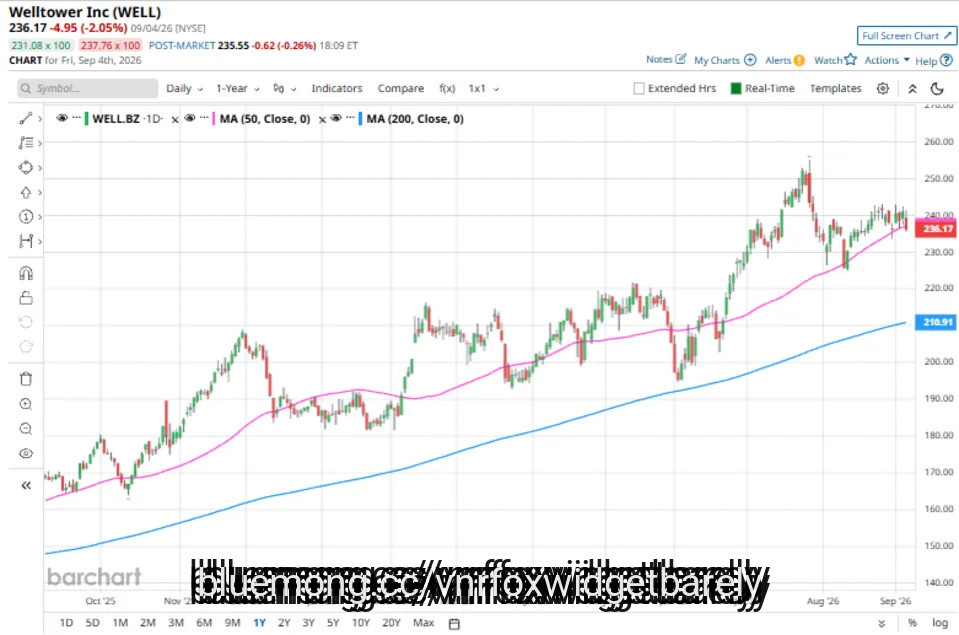
Toledo, Ohio-based Welltower Inc. (WELL) is a heavyweight in healthcare real estate. With a market cap of $170.2 billion, the REIT owns and manages properties across the United States, Canada, and the United Kingdom. Its portfolio is centered on senior housing communities, outpatient medical centers, and long-term care facilities.
Companies worth $10 billion or more are generally referred to as "large-cap stocks." Welltower fits right into that category, with its market cap exceeding the threshold, reflecting its substantial size, influence, and dominance in the real estate sector. By partnering with healthcare providers and senior living operators, Welltower is positioned to capitalize on the growing demand for care as populations age.
How to Play SNPS Stock as Layoffs Hit Synopsys
Micron Stock More Than Tripled in 2026. Now Taiwan Strike Threat Could Shake the AI Boom.
Dear Adobe Stock Fans, Mark Your Calendars for September 10
#estate
Companies worth $10 billion or more are generally referred to as "large-cap stocks." Welltower fits right into that category, with its market cap exceeding the threshold, reflecting its substantial size, influence, and dominance in the real estate sector. By partnering with healthcare providers and senior living operators, Welltower is positioned to capitalize on the growing demand for care as populations age.
How to Play SNPS Stock as Layoffs Hit Synopsys
Micron Stock More Than Tripled in 2026. Now Taiwan Strike Threat Could Shake the AI Boom.
Dear Adobe Stock Fans, Mark Your Calendars for September 10
#estate


8 days ago
Moerus Capital Management LLC, an investment management firm, recently released its "Worldwide Fund " second-quarter 2026 investor letter. A copy of the letter can be downloaded here. The fund navigated a highly bifurcated investment environment in the second quarter of 2026, as investor enthusiasm for artificial intelligence and technology drove a sharp rally in growth stocks while capital moved away from more traditional, value-oriented areas. The Fund's Institutional Class returned 0.14% in Q2, compared with 14.49% for the MSCI ACWI ex USA and 14.93% for the MSCI ACWI, while its first-half return stood at 5.37%, versus 13.69% and 11.25%, respectively, for the two benchmarks. The relative underperformance was primarily driven by the Fund's limited exposure to Information Technology as semiconductor and AI-related stocks surged, while its Energy holdings also gave back some earlier gains as oil prices declined; however, the Fund benefited from several energy-related investments during the first half. Looking ahead, Moerus views the extreme gap between expensive AI-focused areas and neglected parts of the market as an opportunity, maintaining its long-term deep-value approach of investing in unpopular businesses and **** ets at significant discounts to intrinsic value and using market volatility to identify potentially attractive investments. In addition, please check the Fund's top five holdings to know its best picks in 2026.
In its second-quarter 2026 investor letter, Moerus Worldwide Fund highlighted stocks like Douglas Elliman Inc. (NYSE:DOUG). Douglas Elliman Inc. is a residential real estate brokerage company with a strong presence in high-end U.S. housing markets. The one-month return of Douglas Elliman Inc. (NYSE:DOUG) was -2.19% while its shares traded between $1.5300 and $3.1900 over the last 52 weeks. On September 7, 2026, Douglas Elliman Inc. (NYSE:DOUG) stock closed at approximately $1.8100 per share, with a market capitalization of about $162.69 million.
Moerus Worldwide Fund stated the following regarding Douglas Elliman Inc. (NYSE:DOUG) in its Q2 2026 investor letter:
"Outside of Materials, other meaningful detractors from H1 came from different industries but were similarly impacted by various concerns related to the war and its effects in various areas, including real estate activity (Douglas Elliman Inc. (NYSE:DOUG)) given heightened inflation concerns and increased interest rate expectations. We would argue that the current valuations of each of these holdings are unusually modest, belying the formidable, leading presence that each boasts in its respective markets."
#douglas #NYSE
In its second-quarter 2026 investor letter, Moerus Worldwide Fund highlighted stocks like Douglas Elliman Inc. (NYSE:DOUG). Douglas Elliman Inc. is a residential real estate brokerage company with a strong presence in high-end U.S. housing markets. The one-month return of Douglas Elliman Inc. (NYSE:DOUG) was -2.19% while its shares traded between $1.5300 and $3.1900 over the last 52 weeks. On September 7, 2026, Douglas Elliman Inc. (NYSE:DOUG) stock closed at approximately $1.8100 per share, with a market capitalization of about $162.69 million.
Moerus Worldwide Fund stated the following regarding Douglas Elliman Inc. (NYSE:DOUG) in its Q2 2026 investor letter:
"Outside of Materials, other meaningful detractors from H1 came from different industries but were similarly impacted by various concerns related to the war and its effects in various areas, including real estate activity (Douglas Elliman Inc. (NYSE:DOUG)) given heightened inflation concerns and increased interest rate expectations. We would argue that the current valuations of each of these holdings are unusually modest, belying the formidable, leading presence that each boasts in its respective markets."
#douglas #NYSE


9 days ago
Despite weeks of largely sideways trade, the stock market sent some positive signals heading into the Labor Day shortened trading week. A strong session Thursday and confirmation of technical support by the Nasdaq and S&P 500 indexes led IBD to notch its Stock Market Exposure guide back to 60% to 80%, up from 40% to 60%.
Bond markets will be of central interest in the coming week, with yields hovering near multiyear highs and the Treasury Department set to begin its innovative bond buyback effort on Thursday. On Wednesday, Apple (AAPL) has its product introduction event. And Adobe (ADBE) and Oracle (ORCL) headline a slate of software sector earnings reports.
Here's what to watch:
The stock market rebounded bullishly from weekly lows, but indexes are still up and down, while various sectors trade back and forth. Investors shouldn't be too aggressive with new buys, but should be ready with their watchlists. Commodities exchange player Marex Group (MRX), software giant ServiceNow (NOW), biotech Exelixis (EXEL), senior housing real estate owner Welltower (WELL) and fintech Dave Inc. (DAVE) are all showing strength, with most flashing buy signals. Marex is clearing a brief, tight consolidation. ServiceNow and Exelixis both linger low in their respective buy ranges. Welltower and Dave are both coiling along support at their 10-week lines as they build fresh bases.
#Stock #bond
Bond markets will be of central interest in the coming week, with yields hovering near multiyear highs and the Treasury Department set to begin its innovative bond buyback effort on Thursday. On Wednesday, Apple (AAPL) has its product introduction event. And Adobe (ADBE) and Oracle (ORCL) headline a slate of software sector earnings reports.
Here's what to watch:
The stock market rebounded bullishly from weekly lows, but indexes are still up and down, while various sectors trade back and forth. Investors shouldn't be too aggressive with new buys, but should be ready with their watchlists. Commodities exchange player Marex Group (MRX), software giant ServiceNow (NOW), biotech Exelixis (EXEL), senior housing real estate owner Welltower (WELL) and fintech Dave Inc. (DAVE) are all showing strength, with most flashing buy signals. Marex is clearing a brief, tight consolidation. ServiceNow and Exelixis both linger low in their respective buy ranges. Welltower and Dave are both coiling along support at their 10-week lines as they build fresh bases.
#Stock #bond

11 days ago
On August 6, Installed Building Products (NYSE:IBP) reported second-quarter results that told two different stories at once. Net revenue hit a second-quarter record of $777.8 million, yet profit and margins moved the other way, and the board still found room to raise the dividend for the fifth straight year.
The headline number was $777.8 million in net revenue, up 2.3% from $760.3 million a year earlier. That growth came almost entirely from outside the core insulation installation business. Other revenue, which covers IBP's manufacturing and distribution operations, jumped 50.4% to $67.1 million, while commercial work inside the Installation segment posted same-branch sales growth of 10.4%. Acquisitions did heavy lifting too. The company closed Diamond Energy Systems in May, then Harkraft and Builders Hardware of South Carolina in July, adding roughly $30 million in combined annual revenue. Year to date, IBP has acquired about $59 million in revenue and still expects to reach at least $100 million for all of 2026.
The balance sheet backed that ambition, with $394.5 million in cash on hand at quarter-end. Management also kept returning cash to shareholders, repurchasing about 365,000 shares for $76.2 million in the quarter, with $398 million still available under the buyback authorization through March 2027. The board topped it off by declaring a third-quarter dividend of $0.39 per share, payable September 30 to holders of record on September 15, more than a 5% increase over last year's third-quarter payout.
The strength was uneven. Residential same-branch installation sales fell 6.1% for the quarter, and job volume excluding heavy commercial work dropped 5.2%, evidence that the housing slowdown is landing directly on IBP's biggest business line. That mix shift showed up in the bottom line. Net income fell to $64.9 million, or $2.43 per diluted share, from $69.0 million and $2.52 a year ago. Adjusted EBITDA slid 2.3% to $130.9 million, with the margin compressing to 16.9% from 17.6%.
Gross profit margin also narrowed to 33.3% from 34.2%, and the company pointed to a specific cause: the faster-growing Other segment carries a 24.7% gross margin, well below the 36.5% margin in core Installation work, so revenue mix worked against profitability even as total sales climbed. Higher fuel costs added further pressure on gross margin, while administrative expense crept up as a percentage of revenue, driven by higher medical insurance costs. CEO Jeff Edwards acknowledged the backdrop directly, saying the company expects affordability and consumer confidence to keep weighing on the residential market.
#million #installation #year #sales
The headline number was $777.8 million in net revenue, up 2.3% from $760.3 million a year earlier. That growth came almost entirely from outside the core insulation installation business. Other revenue, which covers IBP's manufacturing and distribution operations, jumped 50.4% to $67.1 million, while commercial work inside the Installation segment posted same-branch sales growth of 10.4%. Acquisitions did heavy lifting too. The company closed Diamond Energy Systems in May, then Harkraft and Builders Hardware of South Carolina in July, adding roughly $30 million in combined annual revenue. Year to date, IBP has acquired about $59 million in revenue and still expects to reach at least $100 million for all of 2026.
The balance sheet backed that ambition, with $394.5 million in cash on hand at quarter-end. Management also kept returning cash to shareholders, repurchasing about 365,000 shares for $76.2 million in the quarter, with $398 million still available under the buyback authorization through March 2027. The board topped it off by declaring a third-quarter dividend of $0.39 per share, payable September 30 to holders of record on September 15, more than a 5% increase over last year's third-quarter payout.
The strength was uneven. Residential same-branch installation sales fell 6.1% for the quarter, and job volume excluding heavy commercial work dropped 5.2%, evidence that the housing slowdown is landing directly on IBP's biggest business line. That mix shift showed up in the bottom line. Net income fell to $64.9 million, or $2.43 per diluted share, from $69.0 million and $2.52 a year ago. Adjusted EBITDA slid 2.3% to $130.9 million, with the margin compressing to 16.9% from 17.6%.
Gross profit margin also narrowed to 33.3% from 34.2%, and the company pointed to a specific cause: the faster-growing Other segment carries a 24.7% gross margin, well below the 36.5% margin in core Installation work, so revenue mix worked against profitability even as total sales climbed. Higher fuel costs added further pressure on gross margin, while administrative expense crept up as a percentage of revenue, driven by higher medical insurance costs. CEO Jeff Edwards acknowledged the backdrop directly, saying the company expects affordability and consumer confidence to keep weighing on the residential market.
#million #installation #year #sales


12 days ago
Download the Complete Report Here
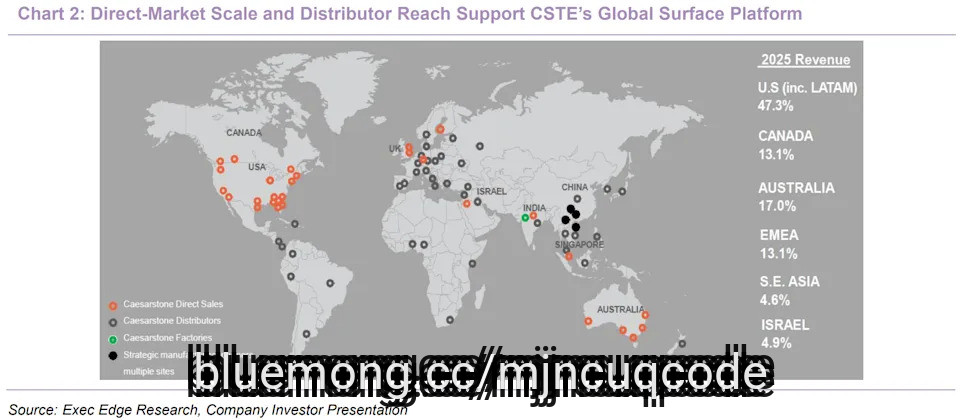
A premium multi-material surfaces platform becoming structurally lighter and more flexible. CSTE designs, develops, sources and markets premium quartz, ICON, porcelain, natural stone and complementary surface products, generating $397.2 million of revenue in 2025, with direct sales contributing 89% of revenue across its largest markets. The company has transitioned quartz production to external partners while retaining product development, quality, brand and customer control, with Lioli providing owned porcelain capacity. This broadens CSTE beyond legacy quartz while reducing fixed manufacturing exposure and increasing sourcing flexibility.
A differentiated model built on reinforcing sourcing, design, brand and direct-market capabilities supports commercial relevance across materials. CSTE combines partner-led quartz production with proprietary formulations, quality ***** urance, design know-how, premium brand recognition and local sales infrastructure. ICON provides the clearest proof point, with Australia delivering four consecutive quarters of y/y growth following the full rollout of CSTE's crystalline-silica-free collection. Porcelain extends the same commercial platform into additional applications, broadening the competitive advantage beyond any single product or manufacturing ***** et.
Growth strategy pairs a structural cost reset with targeted commercial and category expansion. CSTE is completing the partner-led production transition, rebuilding North American customer and channel engagement, sustaining Australia's ICON-led momentum, expanding porcelain and extending brand-led geographic reach. The restructuring targets more than $100 million of annualized savings by 2027 versus 2023, including approximately $22 million from the Bar-Lev closure. Execution is now focused on stabilizing core volumes, improving Lioli's commercial alignment, expanding channel productivity and mitigating the new U.S. quartz tariffs.
Material substitution and selective regional recovery broaden CSTE's addressable opportunity beyond legacy quartz. CSTE's existing and adjacent categories span approximately 53% of global countertop volume, while engineered quartz is forecast to recover and porcelain offers materially faster growth from a smaller base. Natural stone adds further U.S. optionality, while Australia demonstrates how regulatory change can redirect rather than eliminate premium-surface demand. North America remains the largest earnings opportunity, with renovation, ageing housing stock and material substitution providing recovery potential even before a full housing upcycle.
#porcelain #premium #icon #material
A premium multi-material surfaces platform becoming structurally lighter and more flexible. CSTE designs, develops, sources and markets premium quartz, ICON, porcelain, natural stone and complementary surface products, generating $397.2 million of revenue in 2025, with direct sales contributing 89% of revenue across its largest markets. The company has transitioned quartz production to external partners while retaining product development, quality, brand and customer control, with Lioli providing owned porcelain capacity. This broadens CSTE beyond legacy quartz while reducing fixed manufacturing exposure and increasing sourcing flexibility.
A differentiated model built on reinforcing sourcing, design, brand and direct-market capabilities supports commercial relevance across materials. CSTE combines partner-led quartz production with proprietary formulations, quality ***** urance, design know-how, premium brand recognition and local sales infrastructure. ICON provides the clearest proof point, with Australia delivering four consecutive quarters of y/y growth following the full rollout of CSTE's crystalline-silica-free collection. Porcelain extends the same commercial platform into additional applications, broadening the competitive advantage beyond any single product or manufacturing ***** et.
Growth strategy pairs a structural cost reset with targeted commercial and category expansion. CSTE is completing the partner-led production transition, rebuilding North American customer and channel engagement, sustaining Australia's ICON-led momentum, expanding porcelain and extending brand-led geographic reach. The restructuring targets more than $100 million of annualized savings by 2027 versus 2023, including approximately $22 million from the Bar-Lev closure. Execution is now focused on stabilizing core volumes, improving Lioli's commercial alignment, expanding channel productivity and mitigating the new U.S. quartz tariffs.
Material substitution and selective regional recovery broaden CSTE's addressable opportunity beyond legacy quartz. CSTE's existing and adjacent categories span approximately 53% of global countertop volume, while engineered quartz is forecast to recover and porcelain offers materially faster growth from a smaller base. Natural stone adds further U.S. optionality, while Australia demonstrates how regulatory change can redirect rather than eliminate premium-surface demand. North America remains the largest earnings opportunity, with renovation, ageing housing stock and material substitution providing recovery potential even before a full housing upcycle.
#porcelain #premium #icon #material



12 days ago
WestEnd Capital Management, an investment advisor, released its Q2 2026 investor letter. The letter can be downloaded here. WestEnd Capital Management's Core Strategy achieved a 16.3% net return in the quarter, surpassing the S&P 500's 15.0%. This performance stemmed from strong earnings generators and upward earnings revisions, showcasing U.S. companies' efficiency in converting sales into profits. S&P 500 net profit margins reached a decade-high of 14.8% in Q1 and are expected to remain above 14% in Q2 despite challenges like higher interest rates and geopolitical uncertainty. Technology remains a key focus in WestEnd's portfolio, along with investments in infrastructure, demographic shifts, financial innovation, and selective consumer opportunities. Also, check the fund's top five holdings to see its best picks in 2026.
In its second-quarter 2026 investor letter, WestEnd Capital Management highlighted Janus Living, Inc. (NYSE:JAN). Janus Living, Inc. (NYSE:JAN) is the only U.S. publicly traded REIT focused exclusively on the senior housing sector and the only U.S. publicly traded REIT. On September 2, 2026, Janus Living, Inc. (NYSE:JAN) closed at $30.70 per share. Over the past month, Janus Living, Inc. (NYSE:JAN) returned 5.51%, and its shares are up 27.08% over the three months. Janus Living, Inc. (NYSE:JAN) has a market capitalization of $9.45 billion.
WestEnd Capital Management stated the following regarding Janus Living, Inc. (NYSE:JAN) in its Q2 2026 investor letter:
"Janus Living, Inc. (NYSE:JAN) is one of the nation's largest pure-play owners and operators of senior housing communities. Unlike traditional triple-net REITs that collect fixed lease payments, Janus generates operating income directly from resident rents and service fees. That means the company captures the full operational upside as occupancy and rental rates increase, while also ******* uming the operational risks of running its communities. Because residents pay privately rather than through Medicare or Medicaid reimbursement programs, the business is largely insulated from changes in government reimbursement policy.
The industry's long-term fundamentals remain compelling:
#westend
In its second-quarter 2026 investor letter, WestEnd Capital Management highlighted Janus Living, Inc. (NYSE:JAN). Janus Living, Inc. (NYSE:JAN) is the only U.S. publicly traded REIT focused exclusively on the senior housing sector and the only U.S. publicly traded REIT. On September 2, 2026, Janus Living, Inc. (NYSE:JAN) closed at $30.70 per share. Over the past month, Janus Living, Inc. (NYSE:JAN) returned 5.51%, and its shares are up 27.08% over the three months. Janus Living, Inc. (NYSE:JAN) has a market capitalization of $9.45 billion.
WestEnd Capital Management stated the following regarding Janus Living, Inc. (NYSE:JAN) in its Q2 2026 investor letter:
"Janus Living, Inc. (NYSE:JAN) is one of the nation's largest pure-play owners and operators of senior housing communities. Unlike traditional triple-net REITs that collect fixed lease payments, Janus generates operating income directly from resident rents and service fees. That means the company captures the full operational upside as occupancy and rental rates increase, while also ******* uming the operational risks of running its communities. Because residents pay privately rather than through Medicare or Medicaid reimbursement programs, the business is largely insulated from changes in government reimbursement policy.
The industry's long-term fundamentals remain compelling:
#westend


12 days ago
Some offers on this page are from advertisers who pay us, which may affect which products we write about, but not our recommendations. See our Advertiser Disclosure.
The median price of a sold home in July 2026 was over $434,100 — more than 10 times higher than housing prices 50 years ago. Inflation is one reason, but building costs have risen faster than the consumer price index because labor and material costs have increased. A shortage of homes for sale and increasing affordability issues are also to blame. Here's what hopeful homebuyers need to know about today's elevated home prices.
Read more: The best low- and no-down-payment mortgage lenders
This table shows the median prices of existing home sales over the past year.
July 2025
#price #offers
The median price of a sold home in July 2026 was over $434,100 — more than 10 times higher than housing prices 50 years ago. Inflation is one reason, but building costs have risen faster than the consumer price index because labor and material costs have increased. A shortage of homes for sale and increasing affordability issues are also to blame. Here's what hopeful homebuyers need to know about today's elevated home prices.
Read more: The best low- and no-down-payment mortgage lenders
This table shows the median prices of existing home sales over the past year.
July 2025
#price #offers


12 days ago
On August 5, LTC Properties (NYSE:LTC) reported second-quarter results for the period ended June 30, 2026, and the numbers show a real estate investment trust leaning harder into a strategy it only started a year ago. Total revenue climbed to $98.9 million from $60.2 million a year earlier, and net income available to common stockholders nearly doubled to $29.5 million. Diluted earnings per share rose to $0.56 from $0.32. Alongside the results, the company raised its full-year 2026 investment guidance by 50% at the midpoint, putting more weight behind a business line called SHOP.
LTC increased the midpoint of its 2026 SHOP investment guidance to $900 million, calling that figure a jump of 50% from the previous midpoint. Management now expects $700 million in year-to-date SHOP acquisitions by the end of the third quarter, and projects SHOP will represent 40% of pro forma annualized net operating income by that same point, which the company says is ahead of its own estimates. LTC expects that share to approach 50% by year-end, with a stated pathway toward 75% by the end of 2028.
Since launching the platform in May 2025, LTC has built the SHOP portfolio to 39 communities across 12 operators, 10 of which are new relationships for the company, representing 37% of total gross real estate investments as of July 31, 2026. Second quarter core SHOP NOI came in at $13.3 million. The company closed $171 million in acquisitions during the quarter and expects another $529 million to close in the third quarter, with $208 million of that already done. LTC also raised its full-year diluted earnings per share guidance to $8.08 to $8.10 and expanded its credit facility to $1.1 billion, leaving $648 million in total pro forma liquidity.
Growth this fast comes with a cost that shows up once you move past revenue. Core FFO per diluted share held flat at $0.68, unchanged from a year earlier even though revenue grew 64%. Core FAD per diluted share actually slipped to $0.70 from $0.71. Part of the explanation is share count. Diluted weighted average shares outstanding rose to 52.2 million from 46.0 million, and total shares outstanding climbed to 53.9 million from 46.1 million, dilution that has kept per-share growth well behind the topline.
Expenses grew just as fast as revenue did. Total expenses nearly doubled to $75.5 million from $44.5 million, with senior housing operating expenses, the direct cost of running SHOP, jumping to $42.2 million from $9.4 million as the new segment scaled up. Interest expense rose to $9.5 million from $8.0 million, and $356 million remains drawn on the revolving credit line even after that facility's expansion. SHOP also depends on the 12 third-party operators running those communities day to day, 10 of which have never worked with LTC before, concentrating execution risk in relationships still being tested.
#million #company
LTC increased the midpoint of its 2026 SHOP investment guidance to $900 million, calling that figure a jump of 50% from the previous midpoint. Management now expects $700 million in year-to-date SHOP acquisitions by the end of the third quarter, and projects SHOP will represent 40% of pro forma annualized net operating income by that same point, which the company says is ahead of its own estimates. LTC expects that share to approach 50% by year-end, with a stated pathway toward 75% by the end of 2028.
Since launching the platform in May 2025, LTC has built the SHOP portfolio to 39 communities across 12 operators, 10 of which are new relationships for the company, representing 37% of total gross real estate investments as of July 31, 2026. Second quarter core SHOP NOI came in at $13.3 million. The company closed $171 million in acquisitions during the quarter and expects another $529 million to close in the third quarter, with $208 million of that already done. LTC also raised its full-year diluted earnings per share guidance to $8.08 to $8.10 and expanded its credit facility to $1.1 billion, leaving $648 million in total pro forma liquidity.
Growth this fast comes with a cost that shows up once you move past revenue. Core FFO per diluted share held flat at $0.68, unchanged from a year earlier even though revenue grew 64%. Core FAD per diluted share actually slipped to $0.70 from $0.71. Part of the explanation is share count. Diluted weighted average shares outstanding rose to 52.2 million from 46.0 million, and total shares outstanding climbed to 53.9 million from 46.1 million, dilution that has kept per-share growth well behind the topline.
Expenses grew just as fast as revenue did. Total expenses nearly doubled to $75.5 million from $44.5 million, with senior housing operating expenses, the direct cost of running SHOP, jumping to $42.2 million from $9.4 million as the new segment scaled up. Interest expense rose to $9.5 million from $8.0 million, and $356 million remains drawn on the revolving credit line even after that facility's expansion. SHOP also depends on the 12 third-party operators running those communities day to day, 10 of which have never worked with LTC before, concentrating execution risk in relationships still being tested.
#million #company

12 days ago
Some offers on this page are from advertisers who pay us, which may affect which products we write about, but not our recommendations. See our Advertiser Disclosure.
Mortgage rates have been higher in the last few years. But where are rates headed in the next five years, and should you wait for mortgage rates to fall significantly before buying or refinancing? Mortgage interest rates are determined by several factors, all of which can give us clues about the future. Let's take a closer look at mortgage rate predictions over the next five years.
Here are the housing market predictions for 2026.
One of the most useful indicators for predicting mortgage rates is the yield on the 10-year U.S. Treasury note. Mortgage rates and 10-year Treasury yields typically move in the same direction, although mortgage rates are usually higher because lenders factor in additional risks. This difference between the two is known as the spread, and we'll account for that when estimating where mortgage rates could go.
With that in mind, the first step is to look at where economists believe Treasury yields are headed over the next five years. To build a forecast, we'll combine expert economic projections with data compiled using artificial intelligence.
#rates #headed
Mortgage rates have been higher in the last few years. But where are rates headed in the next five years, and should you wait for mortgage rates to fall significantly before buying or refinancing? Mortgage interest rates are determined by several factors, all of which can give us clues about the future. Let's take a closer look at mortgage rate predictions over the next five years.
Here are the housing market predictions for 2026.
One of the most useful indicators for predicting mortgage rates is the yield on the 10-year U.S. Treasury note. Mortgage rates and 10-year Treasury yields typically move in the same direction, although mortgage rates are usually higher because lenders factor in additional risks. This difference between the two is known as the spread, and we'll account for that when estimating where mortgage rates could go.
With that in mind, the first step is to look at where economists believe Treasury yields are headed over the next five years. To build a forecast, we'll combine expert economic projections with data compiled using artificial intelligence.
#rates #headed


12 days ago
Some offers on this page are from advertisers who pay us, which may affect which products we write about, but not our recommendations. See our Advertiser Disclosure.
A housing market crash happens when home values plummet due to a lack of demand for or an oversupply of homes. The factors leading to a housing market crash are varied, ranging from economic recessions to high mortgage rates that make it less affordable to buy a home. A housing crash can have upsides (low home prices) and downsides (losing built-up equity and tighter finances).
So, what's ahead for the housing market in 2026?
Read more: Want to buy a house in 2026? Here's what you need to know.
Despite 58% of Gen Z wanting a housing market crash, according to Clever, experts don't foresee one in 2026. If anything, they see a greater sense of normalcy following multiple years of twists and turns.
"We're not heading toward a housing crash; we're in a market correction defined by stability, not volatility," Hoby Hanna, CEO of Howard Hanna Real Estate Services, said via email. "Today's housing environment is fundamentally different from 2008. Homeowners have record levels of equity, lending standards are sound, and inventory remains constrained. What we're seeing now is a normalization, not a collapse, as the market adjusts to new economic realities. For buyers and sellers, this is a market filled with opportunity and resilience, not instability or uncertainty."
#we 're #hanna #Equity #disclosure
A housing market crash happens when home values plummet due to a lack of demand for or an oversupply of homes. The factors leading to a housing market crash are varied, ranging from economic recessions to high mortgage rates that make it less affordable to buy a home. A housing crash can have upsides (low home prices) and downsides (losing built-up equity and tighter finances).
So, what's ahead for the housing market in 2026?
Read more: Want to buy a house in 2026? Here's what you need to know.
Despite 58% of Gen Z wanting a housing market crash, according to Clever, experts don't foresee one in 2026. If anything, they see a greater sense of normalcy following multiple years of twists and turns.
"We're not heading toward a housing crash; we're in a market correction defined by stability, not volatility," Hoby Hanna, CEO of Howard Hanna Real Estate Services, said via email. "Today's housing environment is fundamentally different from 2008. Homeowners have record levels of equity, lending standards are sound, and inventory remains constrained. What we're seeing now is a normalization, not a collapse, as the market adjusts to new economic realities. For buyers and sellers, this is a market filled with opportunity and resilience, not instability or uncertainty."
#we 're #hanna #Equity #disclosure

13 days ago
Freight broker FitzMark announced it has acquired United Transportation Services, a broker specializing in trade show logistics.
Founded in 1998, Aurora, Colorado-based UTS is a full-service 3PL focused on the retail and hospitality industries. It provides dry van, refrigerated, flatbed and specialty truckload transportation as well as packaging, warehousing and white-glove delivery services.
Financial terms of the transaction were not disclosed. The deal closed on Tuesday.
"Today marks an exciting new chapter— with the national support and strength of the FitzMark platform, we look forward to expanding capacity and service offerings while growing our shipper community together," said Bruce Parsons, CEO and president of UTS.
Indianapolis-based FitzMark provides brokerage services and a proprietary TMS to more than 3,000 shippers and 25,000 carriers. The company is backed by private equity firm Calera Capital.
#fitzmark #service #united
Founded in 1998, Aurora, Colorado-based UTS is a full-service 3PL focused on the retail and hospitality industries. It provides dry van, refrigerated, flatbed and specialty truckload transportation as well as packaging, warehousing and white-glove delivery services.
Financial terms of the transaction were not disclosed. The deal closed on Tuesday.
"Today marks an exciting new chapter— with the national support and strength of the FitzMark platform, we look forward to expanding capacity and service offerings while growing our shipper community together," said Bruce Parsons, CEO and president of UTS.
Indianapolis-based FitzMark provides brokerage services and a proprietary TMS to more than 3,000 shippers and 25,000 carriers. The company is backed by private equity firm Calera Capital.
#fitzmark #service #united


13 days ago
Offerpad surged 7% and Opendoor rose 2% as falling Treasury yields eased both mortgage market conditions and their inventory financing costs simultaneously.
ITB gained just 0.7% on the same rate news because builders control their own supply and carry none of the balance-sheet leverage that amplifies iBuyer moves.
Just released. Our ******* ysts combed the entire stock market and named the ten best stocks to buy right now. The report is free. Enter your email and see if any of your stocks made the cut.
The most rate-sensitive corner of housing is doing the day's work while homebuilders barely move. The iShares U.S. Home Construction ETF (CBOE:ITB) is up 0.7% to $92.96 in midday trading, a soft bid for the group that controls its own supply. The 10-year Treasury note yield sits at 4.8% and is nearly unchanged over the past 24 hours.
Offerpad Solutions (NYSE:OPAD) stock is up 7% to $4.40. Meanwhile, Opendoor Technologies (NASDAQ:OPEN) stock is rising 2% to $3.09, a same-direction but shallower move in the sector's other listed iBuyer.
#Stock #opendoor #ibuyer
ITB gained just 0.7% on the same rate news because builders control their own supply and carry none of the balance-sheet leverage that amplifies iBuyer moves.
Just released. Our ******* ysts combed the entire stock market and named the ten best stocks to buy right now. The report is free. Enter your email and see if any of your stocks made the cut.
The most rate-sensitive corner of housing is doing the day's work while homebuilders barely move. The iShares U.S. Home Construction ETF (CBOE:ITB) is up 0.7% to $92.96 in midday trading, a soft bid for the group that controls its own supply. The 10-year Treasury note yield sits at 4.8% and is nearly unchanged over the past 24 hours.
Offerpad Solutions (NYSE:OPAD) stock is up 7% to $4.40. Meanwhile, Opendoor Technologies (NASDAQ:OPEN) stock is rising 2% to $3.09, a same-direction but shallower move in the sector's other listed iBuyer.
#Stock #opendoor #ibuyer


13 days ago
Kamel told Julian to pay off his $9,700 car loan, build a $30,000 emergency fund, and cap housing payments at 25% of take-home pay.
At a 5.98% 15-year fixed rate and record home prices, Julian's $85,000 salary supports only about $1,400 monthly, which is too little for a duplex.
The 15-year mortgage rate is Julian's biggest obstacle, and a drop back toward February's 5.35% low would unlock more buying power than more saving would.
Read More: Learn 7 ways to generate income with a $1,000,000+ portfolio (sponsor)
"All of a sudden you're a bajillionaire" is how the Ramsey Show hosts mocked the pitch a 23-year-old caller named Julian brought them: buy a duplex or triplex as a first home, let tenants cover the mortgage, and skip straight to landlord wealth. Julian said he had about $70,000 in cash, earned about $85,000 a year, still owed $9,700 on a 2024 car loan, and wanted to put at least 10% down because his uncle had told him renters would pay the note. Hosts George Kamel and Jade Warshaw took the call in Dave Ramsey's absence.
#julian #year #home
At a 5.98% 15-year fixed rate and record home prices, Julian's $85,000 salary supports only about $1,400 monthly, which is too little for a duplex.
The 15-year mortgage rate is Julian's biggest obstacle, and a drop back toward February's 5.35% low would unlock more buying power than more saving would.
Read More: Learn 7 ways to generate income with a $1,000,000+ portfolio (sponsor)
"All of a sudden you're a bajillionaire" is how the Ramsey Show hosts mocked the pitch a 23-year-old caller named Julian brought them: buy a duplex or triplex as a first home, let tenants cover the mortgage, and skip straight to landlord wealth. Julian said he had about $70,000 in cash, earned about $85,000 a year, still owed $9,700 on a 2024 car loan, and wanted to put at least 10% down because his uncle had told him renters would pay the note. Hosts George Kamel and Jade Warshaw took the call in Dave Ramsey's absence.
#julian #year #home


14 days ago
Descartes Systems Group announced Tuesday that it has acquired Extensiv, a warehouse management and fulfillment tech provider, for $120 million. The deal follows Descartes' $100 million acquisition of Tai last week.
The acquisition was funded with cash on hand.
California-based Extensiv helps 3PLs with inventory management and order fulfillment. It uses AI tools to leverage its omnichannel data and enhance decision making for warehouse operators.
"3PLs are under constant pressure to fulfill faster, scale flexibly, and support the evolving needs of modern brands," said Mikel Richardson, general manager of ecommerce operations at Descartes. … "Extensiv strengthens that position by adding more participants, more contextually rich operational data and fulfillment intelligence to the Descartes Global Logistics Network."
Like the addition of Tai, a TMS provider to freight brokers, the Extensiv deal deepens Descartes' reach into the logistics services provider market. It also builds out its warehousing, inventory management and ecommerce fulfillment offerings.
#management
The acquisition was funded with cash on hand.
California-based Extensiv helps 3PLs with inventory management and order fulfillment. It uses AI tools to leverage its omnichannel data and enhance decision making for warehouse operators.
"3PLs are under constant pressure to fulfill faster, scale flexibly, and support the evolving needs of modern brands," said Mikel Richardson, general manager of ecommerce operations at Descartes. … "Extensiv strengthens that position by adding more participants, more contextually rich operational data and fulfillment intelligence to the Descartes Global Logistics Network."
Like the addition of Tai, a TMS provider to freight brokers, the Extensiv deal deepens Descartes' reach into the logistics services provider market. It also builds out its warehousing, inventory management and ecommerce fulfillment offerings.
#management


15 days ago
Millennials face a retirement savings paradox: the harder they try to stay disciplined, the more headwinds seem to appear. Housing costs are surging. Job security is evaporating. And unexpected expenses keep materializing right when that $500 monthly retirement contribution finally fits into the budget.
The problem isn't willpower. It's that the financial landscape is actively working against them. Here are four major factors quietly sabotaging retirement plans and what to actually do about them.
Two decades ago, income growth and rental increases were roughly in sync. Not anymore. According to the Joint Center for Housing Studies at Harvard, rent has skyrocketed while renter incomes have barely budged. The result is rent eating an increasingly larger chunk of your paycheck, which means less money flowing into retirement accounts.
To help combat this, brush off your negotiating skills when it's time to renew your rent. Most landlords value a reliable tenant who pays on time over squeezing out another $50 per month. If that doesn't work, consider splitting housing costs with a roommate.
According to the Federal Reserve, 37% of adults can't cover a $400 surprise expense without borrowing. A busted transmission, an ER visit, a sudden job loss — any of these can torpedo your financial plan if you're not prepared. Without an emergency cushion, you'll have lean on your credit card. Then you're paying interest on debt instead of building retirement wealth.
#millennials
The problem isn't willpower. It's that the financial landscape is actively working against them. Here are four major factors quietly sabotaging retirement plans and what to actually do about them.
Two decades ago, income growth and rental increases were roughly in sync. Not anymore. According to the Joint Center for Housing Studies at Harvard, rent has skyrocketed while renter incomes have barely budged. The result is rent eating an increasingly larger chunk of your paycheck, which means less money flowing into retirement accounts.
To help combat this, brush off your negotiating skills when it's time to renew your rent. Most landlords value a reliable tenant who pays on time over squeezing out another $50 per month. If that doesn't work, consider splitting housing costs with a roommate.
According to the Federal Reserve, 37% of adults can't cover a $400 surprise expense without borrowing. A busted transmission, an ER visit, a sudden job loss — any of these can torpedo your financial plan if you're not prepared. Without an emergency cushion, you'll have lean on your credit card. Then you're paying interest on debt instead of building retirement wealth.
#millennials


15 days ago
WASHINGTON, Sept 1 (Reuters) - U.S. construction spending unexpectedly fell in July, hitting the lowest level in nearly three years as higher mortgage rates weighed on single-family homebuilding.
The Commerce Department's Census Bureau said on Tuesday that construction spending dropped 0.5% to $2.158 trillion, the lowest level since October 2023. Data for June was revised higher to show construction spending unchanged instead of dipping 0.1%, as previously reported. Economists polled by Reuters had forecast construction spending would be unchanged in July.
Construction spending plunged 3.8% on a year-over-year basis in July. Spending on private construction projects decreased 0.5% after easing 0.1% in June. Investment in residential construction tumbled 1.3%. Spending on single-family housing projects dropped 3.2%. On a year-over-year basis, it plummeted 6.5% in July.
Homebuilding is also being squeezed by a glut of unsold single-family houses. The average rate on the popular 30-year fixed-rate mortgage is hovering near a one-year high of 6.66%, data from mortgage finance agency Freddie Mac showed. It has surged by almost 70 basis points since the U.S.-Israeli war with Iran started in late February.
Spending on multi-family housing units, which account for a small share of the housing market, rose 0.2% in July.
#spending #family
The Commerce Department's Census Bureau said on Tuesday that construction spending dropped 0.5% to $2.158 trillion, the lowest level since October 2023. Data for June was revised higher to show construction spending unchanged instead of dipping 0.1%, as previously reported. Economists polled by Reuters had forecast construction spending would be unchanged in July.
Construction spending plunged 3.8% on a year-over-year basis in July. Spending on private construction projects decreased 0.5% after easing 0.1% in June. Investment in residential construction tumbled 1.3%. Spending on single-family housing projects dropped 3.2%. On a year-over-year basis, it plummeted 6.5% in July.
Homebuilding is also being squeezed by a glut of unsold single-family houses. The average rate on the popular 30-year fixed-rate mortgage is hovering near a one-year high of 6.66%, data from mortgage finance agency Freddie Mac showed. It has surged by almost 70 basis points since the U.S.-Israeli war with Iran started in late February.
Spending on multi-family housing units, which account for a small share of the housing market, rose 0.2% in July.
#spending #family


15 days ago
Descartes Systems Group announced Tuesday that it has acquired Extensiv, a warehouse management and fulfillment tech provider, for $120 million. The deal follows Descartes' $100 million acquisition of Tai last week.
The acquisition was funded with cash on hand.
California-based Extensiv helps 3PLs with inventory management and order fulfillment. It uses AI tools to leverage its omnichannel data and enhance decision making for warehouse operators.
"3PLs are under constant pressure to fulfill faster, scale flexibly, and support the evolving needs of modern brands," said Mikel Richardson, general manager of ecommerce operations at Descartes. … "Extensiv strengthens that position by adding more participants, more contextually rich operational data and fulfillment intelligence to the Descartes Global Logistics Network."
Like the addition of Tai, a TMS provider to freight brokers, the Extensiv deal deepens Descartes' reach into the logistics services provider market. It also builds out its warehousing, inventory management and ecommerce fulfillment offerings.
#descartes #extensiv #provider #deal
The acquisition was funded with cash on hand.
California-based Extensiv helps 3PLs with inventory management and order fulfillment. It uses AI tools to leverage its omnichannel data and enhance decision making for warehouse operators.
"3PLs are under constant pressure to fulfill faster, scale flexibly, and support the evolving needs of modern brands," said Mikel Richardson, general manager of ecommerce operations at Descartes. … "Extensiv strengthens that position by adding more participants, more contextually rich operational data and fulfillment intelligence to the Descartes Global Logistics Network."
Like the addition of Tai, a TMS provider to freight brokers, the Extensiv deal deepens Descartes' reach into the logistics services provider market. It also builds out its warehousing, inventory management and ecommerce fulfillment offerings.
#descartes #extensiv #provider #deal


18 days ago
Tennessee's 9.55% combined sales tax and surging homeowners insurance drain fixed-income retirees faster than its zero income tax saves them.
Bowling Green, Kentucky fully exempts Social Security, ranks 18th in sales tax nationally, and offers housing untouched by Tennessee's migration-driven price surge.
A $600,000 portfolio at 4% withdrawal closes a $22,000 income gap after Social Security covers $48,000 of a $70,000 annual retirement budget.
Read More: Learn 7 ways to generate income with a $1,000,000+ portfolio (sponsor)
Every few months, somebody brings up Tennessee as the obvious retirement move. No state income tax, mild winters, Nashville has a fun scene, and the mountains are nice to look at. It has become the default answer for anyone trying to stretch a retirement portfolio. But here is the question **** ody seems to ask.
#Retirement #learn
Bowling Green, Kentucky fully exempts Social Security, ranks 18th in sales tax nationally, and offers housing untouched by Tennessee's migration-driven price surge.
A $600,000 portfolio at 4% withdrawal closes a $22,000 income gap after Social Security covers $48,000 of a $70,000 annual retirement budget.
Read More: Learn 7 ways to generate income with a $1,000,000+ portfolio (sponsor)
Every few months, somebody brings up Tennessee as the obvious retirement move. No state income tax, mild winters, Nashville has a fun scene, and the mountains are nice to look at. It has become the default answer for anyone trying to stretch a retirement portfolio. But here is the question **** ody seems to ask.
#Retirement #learn

19 days ago
Above a Methodist church at the end of a row of terraced housing, north of Rochdale town centre, Craig Kirby's phone is buzzing as he opens the door to his gym. The 50-year-old's latest TikTok video has just crept over 85,000 views.
It shows a personal highlights reel from one of his amateur football matches, filmed from the touchline by wife Lindsay, with a caption explaining how Kirby finds **** e and time on the bobbly park pitch. "Fitness and movement off the ball are 90% of the game," the text adds.
Kirby smiles at the video going viral. It has racked up more than 340,000 views by the time of writing, but it is nothing new.
The one pinned to the top of his profile has been seen 2.9 million times. It's a compilation of him playing for Whitworth Valley against Old Rivingtonians on a drizzly January afternoon, a backdrop of rolling Lancashire hills and a kids' playground, a simple **** le of: "Well beaten today. Not bad for 50 though."
That is one of his earliest videos from the beginning of last season - since then he has continued to post regularly across TikTok and Instagram, where the midfielder's 'Football at 50' profile has about 30,000 followers on each.
#rochdale
It shows a personal highlights reel from one of his amateur football matches, filmed from the touchline by wife Lindsay, with a caption explaining how Kirby finds **** e and time on the bobbly park pitch. "Fitness and movement off the ball are 90% of the game," the text adds.
Kirby smiles at the video going viral. It has racked up more than 340,000 views by the time of writing, but it is nothing new.
The one pinned to the top of his profile has been seen 2.9 million times. It's a compilation of him playing for Whitworth Valley against Old Rivingtonians on a drizzly January afternoon, a backdrop of rolling Lancashire hills and a kids' playground, a simple **** le of: "Well beaten today. Not bad for 50 though."
That is one of his earliest videos from the beginning of last season - since then he has continued to post regularly across TikTok and Instagram, where the midfielder's 'Football at 50' profile has about 30,000 followers on each.
#rochdale


19 days ago
By Robin Respaut
Aug 27 (Reuters) - A U.S. advisory committee on autism is set to propose that federal agencies nearly double investment in research and initiatives focusing on medical care, housing, aging, and other priorities to support people with the condition and their families.
Members of the Interagency Autism Coordinating Committee, a federal advisory panel appointed by Health Secretary Robert F. Kennedy Jr. this year, will meet on Thursday to discuss their new strategic plan to reshape federal priorities in autism.
The draft plan, made public on the IACC's website last month, suggests boosting investment by the National Institutes of Health, U.S. Centers for Disease Control and Prevention, and other agencies to $747.4 million annually from $390.4 million to address a sweeping array of issues impacting people with autism and their families.
Current federal spending, relative to the economic burden of autism, is less than other diseases, such as Alzheimer's and asthma, the draft plan says.
#plan #committee #people
Aug 27 (Reuters) - A U.S. advisory committee on autism is set to propose that federal agencies nearly double investment in research and initiatives focusing on medical care, housing, aging, and other priorities to support people with the condition and their families.
Members of the Interagency Autism Coordinating Committee, a federal advisory panel appointed by Health Secretary Robert F. Kennedy Jr. this year, will meet on Thursday to discuss their new strategic plan to reshape federal priorities in autism.
The draft plan, made public on the IACC's website last month, suggests boosting investment by the National Institutes of Health, U.S. Centers for Disease Control and Prevention, and other agencies to $747.4 million annually from $390.4 million to address a sweeping array of issues impacting people with autism and their families.
Current federal spending, relative to the economic burden of autism, is less than other diseases, such as Alzheimer's and asthma, the draft plan says.
#plan #committee #people