
4 days ago
Azmatullah Omarzai produced a stunning rescue act with the bat, smashing a record-breaking century to help Afghanistan recover from a disastrous start and post 221/7 against Zimbabwe in the second T20I at the Sharjah Cricket Stadium on Thursday.
Walking in with Afghanistan reeling at 5/4, Omarzai launched a counter-attack that completely changed the course of the innings. He hammered 116 off just 50 **** , striking five fours and 12 sixes at an astonishing strike rate of 232.
With the effort, Omarzai registered the highest individual score by a batter coming in at No. 6 or lower in T20Is involving Full Member nations. He went past the previous record of 89, scored by former Afghanistan captain Mohammad Nabi against Ireland in 2017.
The record-breaking knock also put Omarzai ahead of Sam Billings (87 against West Indies in 2019), Cameron White (85 not out against Sri Lanka in 2010) and David Miller (85 not out against Pakistan in 2021) on the list.
Afghanistan's innings had been in complete disarray after Zimbabwe's bowlers reduced them to 5/4. Several top-order batters departed cheaply, while Sediqullah Atal managed just 17 off 21 deliveries before falling in the ninth over.
Omarzai found an ideal partner in Ijaz Ahmad Ahmadzai, and the duo launched a remarkable recovery. They added 142 runs off only 59 **** for the sixth wicket, with Ijaz contributing a blistering 52 off 27 deliveries, including five fours and three sixes.
The partnership was finally broken when Ijaz fell with the score at 180. Omarzai continued his **** ault before being dismissed in the 19th over, having already produced one of the finest rescue acts in Afghanistan's T20I history.
Captain Rashid Khan provided a spectacular finish, smashing an unbeaten 25 off just six **** , including four sixes. Mujeeb Ur Rahman remained not out on two as Afghanistan closed their innings at 221/7, scoring at 11.05 runs per over.
Rashid also achieved a major milestone during the match, becoming the first bowler to claim 200 wickets in T20Is.
Zimbabwe fall short despite Sikandar Raza's century
Zimbabwe were unable to overcome the imposing target despite a determined effort from captain Sikandar Raza, who scored his second T20I century.
Raza fought till the end, but the visitors ultimately fell short, with Afghanistan's early batting collapse proving to be a distant memory after Omarzai's extraordinary intervention.
Tafadzwa Tsiga offered valuable support on his debut, while the dismissal of Ryan Burl dealt another blow to Zimbabwe's hopes.
The victory also extended Afghanistan's remarkable dominance in the rivalry, marking their eighth consecutive T20I series win against Zimbabwe. The visitors are yet to win a T20I series against Afghanistan.
#record #innings
Walking in with Afghanistan reeling at 5/4, Omarzai launched a counter-attack that completely changed the course of the innings. He hammered 116 off just 50 **** , striking five fours and 12 sixes at an astonishing strike rate of 232.
With the effort, Omarzai registered the highest individual score by a batter coming in at No. 6 or lower in T20Is involving Full Member nations. He went past the previous record of 89, scored by former Afghanistan captain Mohammad Nabi against Ireland in 2017.
The record-breaking knock also put Omarzai ahead of Sam Billings (87 against West Indies in 2019), Cameron White (85 not out against Sri Lanka in 2010) and David Miller (85 not out against Pakistan in 2021) on the list.
Afghanistan's innings had been in complete disarray after Zimbabwe's bowlers reduced them to 5/4. Several top-order batters departed cheaply, while Sediqullah Atal managed just 17 off 21 deliveries before falling in the ninth over.
Omarzai found an ideal partner in Ijaz Ahmad Ahmadzai, and the duo launched a remarkable recovery. They added 142 runs off only 59 **** for the sixth wicket, with Ijaz contributing a blistering 52 off 27 deliveries, including five fours and three sixes.
The partnership was finally broken when Ijaz fell with the score at 180. Omarzai continued his **** ault before being dismissed in the 19th over, having already produced one of the finest rescue acts in Afghanistan's T20I history.
Captain Rashid Khan provided a spectacular finish, smashing an unbeaten 25 off just six **** , including four sixes. Mujeeb Ur Rahman remained not out on two as Afghanistan closed their innings at 221/7, scoring at 11.05 runs per over.
Rashid also achieved a major milestone during the match, becoming the first bowler to claim 200 wickets in T20Is.
Zimbabwe fall short despite Sikandar Raza's century
Zimbabwe were unable to overcome the imposing target despite a determined effort from captain Sikandar Raza, who scored his second T20I century.
Raza fought till the end, but the visitors ultimately fell short, with Afghanistan's early batting collapse proving to be a distant memory after Omarzai's extraordinary intervention.
Tafadzwa Tsiga offered valuable support on his debut, while the dismissal of Ryan Burl dealt another blow to Zimbabwe's hopes.
The victory also extended Afghanistan's remarkable dominance in the rivalry, marking their eighth consecutive T20I series win against Zimbabwe. The visitors are yet to win a T20I series against Afghanistan.
#record #innings


5 days ago
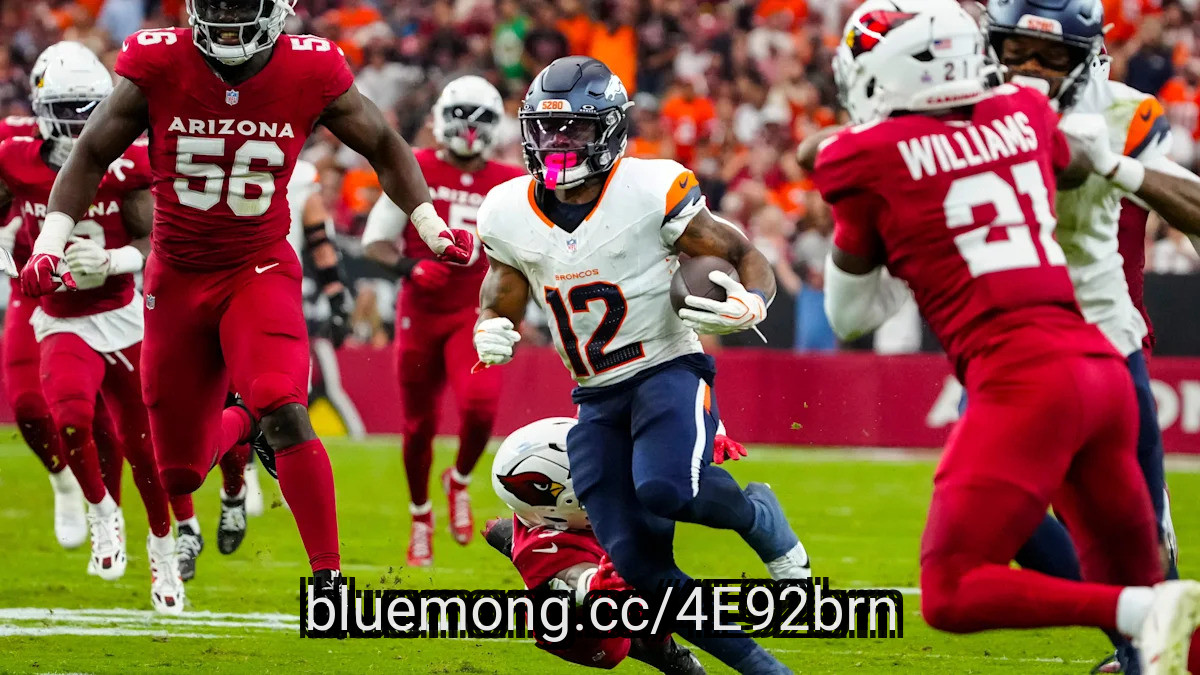
Denver Broncos RB RJ Harvey (knee) was a limited participant in practice Thursday, Oct. 29.
SOURCE: DenverBroncos.com
Why it Matters: Harvey wasn't listed on Wednesday's practice report, so the injury is something worth monitoring heading into Friday's session. His role in the offense has been shrinking a bit with the emergence of Jonah Coleman, and while Harvey has remained involved in the passing game, he has largely been reduced to a big-play dependent flex option.
This article originally appeared on USA TODAY: RJ Harvey pops up on Thursday's practice report
#denver #thursday
SOURCE: DenverBroncos.com
Why it Matters: Harvey wasn't listed on Wednesday's practice report, so the injury is something worth monitoring heading into Friday's session. His role in the offense has been shrinking a bit with the emergence of Jonah Coleman, and while Harvey has remained involved in the passing game, he has largely been reduced to a big-play dependent flex option.
This article originally appeared on USA TODAY: RJ Harvey pops up on Thursday's practice report
#denver #thursday

15 days ago
Round two of the Ranji Trophy 2026-27 began on Sunday with two Elite Group B sides in early trouble, and each was pulled back into its match by a batter who stayed at the crease.
Karnataka were struggling against Saurashtra at the Alur ground in Bengaluru, while Punjab were reduced to 69 for 3 against Chhattisgarh in New Chandigarh. Manvanth ******* ar delivered the bigger surprise.
The 22-year-old left-hander was playing only his second first-class match, yet he walked in with Karnataka eight down and hit 135 from number nine. Uday Saharan, the Punjab captain, was steadier but just as important, as he finished the first day unbeaten on 106.
Both matches are scheduled to run until Tuesday, October 21, and both innings have already changed the shape of the games. Karnataka were bowled out for 342 on the second day, while Punjab ended the first day on 269 for 4, a long way from where they stood early on.
Add The Sporting News as a preferred news source
#first #early #match
Karnataka were struggling against Saurashtra at the Alur ground in Bengaluru, while Punjab were reduced to 69 for 3 against Chhattisgarh in New Chandigarh. Manvanth ******* ar delivered the bigger surprise.
The 22-year-old left-hander was playing only his second first-class match, yet he walked in with Karnataka eight down and hit 135 from number nine. Uday Saharan, the Punjab captain, was steadier but just as important, as he finished the first day unbeaten on 106.
Both matches are scheduled to run until Tuesday, October 21, and both innings have already changed the shape of the games. Karnataka were bowled out for 342 on the second day, while Punjab ended the first day on 269 for 4, a long way from where they stood early on.
Add The Sporting News as a preferred news source
#first #early #match


15 days ago
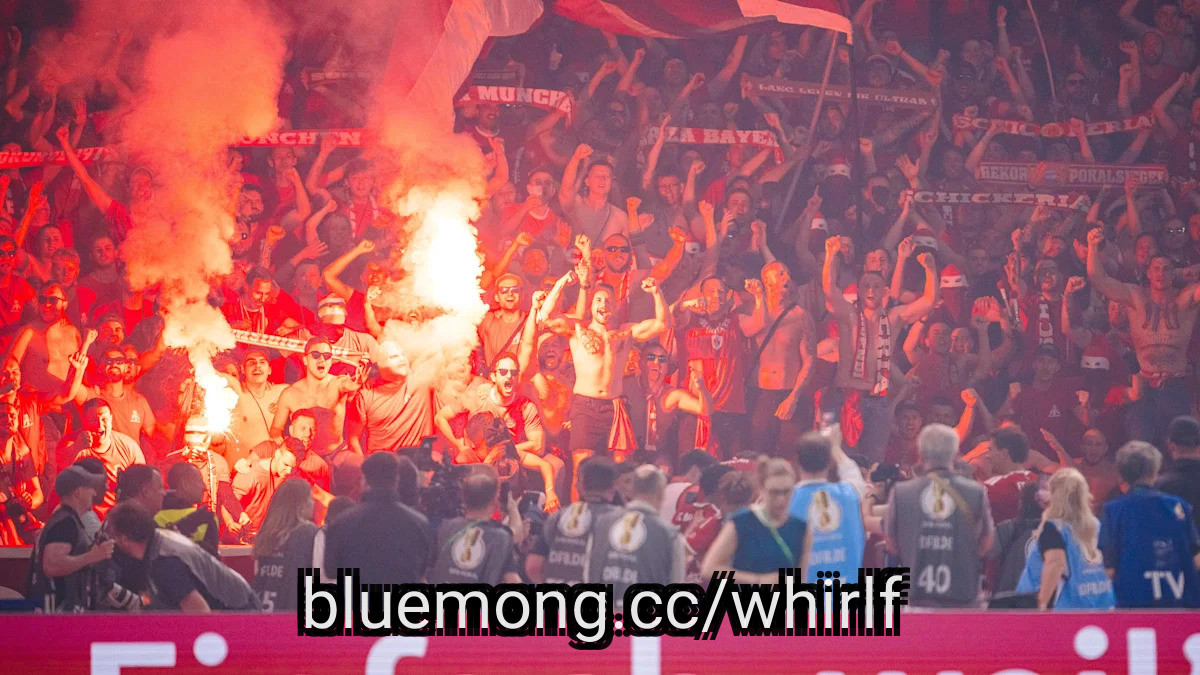
Bayern Munich and VfB Stuttgart have both managed to shave significant amounts off the hefty fines handed down by the DFB Sports Court following the pyrotechnics incidents during the DFB-Pokal final (via iMiaSanMia).
Both clubs were initially ordered to pay €260,000 after the use of pyrotechnics during the final, prompting Bayern and Stuttgart to appeal the original decisions. The appeals have now produced considerably different, but welcome, results for both clubs.
Stuttgart's fine has been reduced to €200,000, meaning the club will save €60,000 from the original punishment. Bayern came out even better, with its fine reduced to €170,000—a €90,000 reduction from the initial ruling.
That still leaves Bayern with a rather substantial bill for what happened during the final, but considering the original figure, ****** ody at Säbener Straße is likely to complain about the discount.
The DFB has made it clear that it intends to take pyrotechnics seriously, with clubs continuing to face significant financial penalties for incidents involving flares and other prohibited items in the stands.
#final #original #stuttgart #incidents
Both clubs were initially ordered to pay €260,000 after the use of pyrotechnics during the final, prompting Bayern and Stuttgart to appeal the original decisions. The appeals have now produced considerably different, but welcome, results for both clubs.
Stuttgart's fine has been reduced to €200,000, meaning the club will save €60,000 from the original punishment. Bayern came out even better, with its fine reduced to €170,000—a €90,000 reduction from the initial ruling.
That still leaves Bayern with a rather substantial bill for what happened during the final, but considering the original figure, ****** ody at Säbener Straße is likely to complain about the discount.
The DFB has made it clear that it intends to take pyrotechnics seriously, with clubs continuing to face significant financial penalties for incidents involving flares and other prohibited items in the stands.
#final #original #stuttgart #incidents


15 days ago
Alexander Isak has a problem and there's no clear fix. Andoni Iraola has real work to do as Liverpool boss.
Alexander Isak scored a winner for Liverpool on Saturday, finding the net on his return to beat Brentford. It was the kind of moment that Isak was signed for - to be the decisive goalscorer in a difficult game.
No matter what, then, this was a good performance from Isak. He did his job, got the three points for Liverpool, and it's difficult to have complaints. 'Difficult' but not impossible.
This was not a brilliant display from the Swede, who struggled badly to get into the game before Brentford were reduced to 10 men. And that creates a very difficult problem for Andoni Iraola to solve.
Brentford's red card came in the rarely-seen 8th-minute of first-half stoppage time, so this was truly a game of two halves. Incredibly, Liverpool actually had the same share of the ball in each half, though - 60 per cent of it.
#Liverpool #game #problem
Alexander Isak scored a winner for Liverpool on Saturday, finding the net on his return to beat Brentford. It was the kind of moment that Isak was signed for - to be the decisive goalscorer in a difficult game.
No matter what, then, this was a good performance from Isak. He did his job, got the three points for Liverpool, and it's difficult to have complaints. 'Difficult' but not impossible.
This was not a brilliant display from the Swede, who struggled badly to get into the game before Brentford were reduced to 10 men. And that creates a very difficult problem for Andoni Iraola to solve.
Brentford's red card came in the rarely-seen 8th-minute of first-half stoppage time, so this was truly a game of two halves. Incredibly, Liverpool actually had the same share of the ball in each half, though - 60 per cent of it.
#Liverpool #game #problem

27 days ago
Ray Fisher became internationally recognizable as the technologically enhanced superhero Cyborg, but his career began far from the world of comic book blockbusters. The American actor developed his craft through theater before making the leap to major Hollywood productions. His upbringing, particularly the influence of his mother and grandmother, helped shape the values he later carried into his professional life. When Fisher encountered difficulties behind the scenes of Justice League, he chose to speak publicly about his experience. That decision became an important part of a career increasingly ****** ociated with both performance and workplace accountability.
Born in Baltimore, Maryland, Fisher grew up in Lawnside, New Jersey, in a large family raised primarily by his mother and grandmother. He has described both women as his real life superheroes, praising the determination and strength they demonstrated while he was growing up. His interest in acting became serious during high school, when encouragement from a teacher led him to audition for theatrical productions.
Fisher continued developing as a stage performer and eventually established himself in professional theater. One of his most demanding early roles was Muhammad Ali in the Off Broadway production Fetch Clay, Make Man. Preparing to portray the legendary boxer required substantial physical transformation as well as the ability to capture Ali's confidence and personality. The experience demonstrated the discipline Fisher could bring to a role before Hollywood audiences became familiar with him.
His major screen opportunity arrived when Zack Snyder selected him to play Victor Stone, better known as Cyborg, in the DC film universe. Fisher made a brief appearance in Batman v Superman: Dawn of Justice before receiving a much larger role in Justice League. Production changed significantly after Snyder left the project and Joss Whedon took over during post production. The theatrical version released in 2017 reduced much of Cyborg's original storyline.
In 2020, Fisher publicly accused Whedon of inappropriate and unprofessional behavior during the Justice League reshoots. WarnerMedia subsequently conducted an investigation after Fisher raised concerns involving the production. In December 2020, the company announced that the investigation had concluded and that remedial action had been taken, without publicly detailing what those measures involved.
#justice #became #hollywood #whedon
Born in Baltimore, Maryland, Fisher grew up in Lawnside, New Jersey, in a large family raised primarily by his mother and grandmother. He has described both women as his real life superheroes, praising the determination and strength they demonstrated while he was growing up. His interest in acting became serious during high school, when encouragement from a teacher led him to audition for theatrical productions.
Fisher continued developing as a stage performer and eventually established himself in professional theater. One of his most demanding early roles was Muhammad Ali in the Off Broadway production Fetch Clay, Make Man. Preparing to portray the legendary boxer required substantial physical transformation as well as the ability to capture Ali's confidence and personality. The experience demonstrated the discipline Fisher could bring to a role before Hollywood audiences became familiar with him.
His major screen opportunity arrived when Zack Snyder selected him to play Victor Stone, better known as Cyborg, in the DC film universe. Fisher made a brief appearance in Batman v Superman: Dawn of Justice before receiving a much larger role in Justice League. Production changed significantly after Snyder left the project and Joss Whedon took over during post production. The theatrical version released in 2017 reduced much of Cyborg's original storyline.
In 2020, Fisher publicly accused Whedon of inappropriate and unprofessional behavior during the Justice League reshoots. WarnerMedia subsequently conducted an investigation after Fisher raised concerns involving the production. In December 2020, the company announced that the investigation had concluded and that remedial action had been taken, without publicly detailing what those measures involved.
#justice #became #hollywood #whedon



30 days ago
Chris Brown is getting another shot at the eight-figure verdict handed down against him in the dog-mauling case brought by his former housekeeper, but only if she refuses to accept less money.
According to legal documents obtained by Complex, Los Angeles judge Huey P. Cotton ruled that Brown and his company Black Pyramid LLC are entitled to a new trial limited to damages for Maria Avila, unless Avila consents to having her award reduced to $9.5 million. Judge Cotton denied all of Brown's other motions in the filing. Avila was originally awarded $12.9 million by a jury.
Cotton found the jury's $12.9 million figure excessive, pointing to insufficient evidence of permanent nerve damage and of the dollar value the panel attached to Avila's future pain and suffering. The judge did credit the evidence that Avila faces future humiliation, shame, and embarrassment.
The rest of Brown's arguments went nowhere. Cotton rejected the claim that jurors were tainted by the admission of Brown's 2009 felony ******* ault conviction involving Rihanna.
COMPLEX SHOP: Shop the brands you love, anytime and anywhere. Uncover what's next. Buy. Collect. Obsess.
#million #brown #shop #evidence
According to legal documents obtained by Complex, Los Angeles judge Huey P. Cotton ruled that Brown and his company Black Pyramid LLC are entitled to a new trial limited to damages for Maria Avila, unless Avila consents to having her award reduced to $9.5 million. Judge Cotton denied all of Brown's other motions in the filing. Avila was originally awarded $12.9 million by a jury.
Cotton found the jury's $12.9 million figure excessive, pointing to insufficient evidence of permanent nerve damage and of the dollar value the panel attached to Avila's future pain and suffering. The judge did credit the evidence that Avila faces future humiliation, shame, and embarrassment.
The rest of Brown's arguments went nowhere. Cotton rejected the claim that jurors were tainted by the admission of Brown's 2009 felony ******* ault conviction involving Rihanna.
COMPLEX SHOP: Shop the brands you love, anytime and anywhere. Uncover what's next. Buy. Collect. Obsess.
#million #brown #shop #evidence



1 month ago
Sean Combs was reportedly placed back in solitary confinement following a NBC News report that the music mogul was using a contraband cellphone to scroll on Instagram, kept a private stash of premium liquor, and had access to a jailbroken tablet where he watched a Netflix documentary about himself.
The 56-year-old was put in a special housing unit, both NBC and TMZ have reported, after footage was released of Combs seemingly using a cell phone while serving his 50-month sentence at Fort Dix in New Jersey. This would be Combs' second time placed in isolation, following a physical fight with a fellow inmate in July.
More from Rolling Stone
Rihanna Shooting Suspect Indicted by Grand Jury, Pleads Not Guilty to Upgraded Charges
Chris Brown Will Get New Dog Attack Trial, But Only If Housekeeper Rejects Reduced $9.5 Million Award
#following #Instagram #july
The 56-year-old was put in a special housing unit, both NBC and TMZ have reported, after footage was released of Combs seemingly using a cell phone while serving his 50-month sentence at Fort Dix in New Jersey. This would be Combs' second time placed in isolation, following a physical fight with a fellow inmate in July.
More from Rolling Stone
Rihanna Shooting Suspect Indicted by Grand Jury, Pleads Not Guilty to Upgraded Charges
Chris Brown Will Get New Dog Attack Trial, But Only If Housekeeper Rejects Reduced $9.5 Million Award
#following #Instagram #july


1 month ago
RM for RM x SFMOMA Between You and Me
While many know RM as a member of the global sensation BTS, his fandom, known as ARMY, and those in the art world know another side of him: RM, real name Kim Namjoon, is an art collector – and now curator.
He, alongside exhibition co-curators América Castillo and Hyoeun Kim of San Francisco Museum of Modern Art, is now ready to show his personal art collection in RM x SFMOMA: Between You and Me.
Over the past few years, museums have faced low attendance, lost federal grants, and reduced funding. Museums have had to strategize what exhibitions people want to see, how to increase membership, and how to introduce art to the masses. Castillo says there have been more projects that the museum has taken on that have "pushed that boundary, even within their section of the art world." She had previously worked on a project called "Art of Noise" that focused heavily on music.
"It was the accumulation of those moments within the art world [that] there might actually be an appetite," Castillo states. "Then there was an internal opening, calling for ideas, and I just didn't hesitate saying, 'We should work with RM'."
#World #sfmoma #know #hyoeun
While many know RM as a member of the global sensation BTS, his fandom, known as ARMY, and those in the art world know another side of him: RM, real name Kim Namjoon, is an art collector – and now curator.
He, alongside exhibition co-curators América Castillo and Hyoeun Kim of San Francisco Museum of Modern Art, is now ready to show his personal art collection in RM x SFMOMA: Between You and Me.
Over the past few years, museums have faced low attendance, lost federal grants, and reduced funding. Museums have had to strategize what exhibitions people want to see, how to increase membership, and how to introduce art to the masses. Castillo says there have been more projects that the museum has taken on that have "pushed that boundary, even within their section of the art world." She had previously worked on a project called "Art of Noise" that focused heavily on music.
"It was the accumulation of those moments within the art world [that] there might actually be an appetite," Castillo states. "Then there was an internal opening, calling for ideas, and I just didn't hesitate saying, 'We should work with RM'."
#World #sfmoma #know #hyoeun


1 month ago
Huntington Bancshares Incorporated (NASDAQ:HBAN) dropped 5.55% to $15.82 on September 16, 2026, close to its 52-week low. The price movement was triggered by a profit warning at a Barclays conference. Huntington brought down its 2027 EPS guidance from above $1.90 to the range of $1.75-$1.83, and its 2026 net interest income growth from 39%-43% to roughly 35%. What matters more than these numbers is the reason behind them. Deposit costs are rising, and loan pricing is tightening, and it landed on the day the Fed delivered its first interest rate hike since 2023. The drop therefore raises the question: is this an oversold bank or the opening crack in regional-bank margins?
A well-run bank has just lowered its guidance, citing intense competition for deposits and loans. If Huntington feels the margin pressure, then it is likely that its peers feel the same. This explains why Fifth Third shares slid 4.1% on the same afternoon alongside the whole financials group. The Fed's new hike makes the environment more unfavorable for the group in the near term. While rate increases eventually lift ***** et yields, banks must immediately offer higher deposit yields to retain balances, squeezing net interest margins in the near term. Furthermore, accelerated commercial real estate loan payoffs reduced total earning ***** ets, though these early payoffs lower credit risk on the loan book.
The selloff leans too much into the reset. A move to $1.75-$1.83 from above $1.90 is a modest single-digit trim. Huntington sustains its profit as well as its operational performance. Loans reached $189 billion from $50 billion in 2015. Deposits touched $222 billion. And one of the company's biggest growth engines, value-added fee income, compounded at a 14% annual rate since mid-2024, with year-to-date growth near 32%. The income helps offset a notable portion of the spread pressure and offers a competitive edge against pure spread lenders.
A higher-for-longer rate environment carries trade-offs for commercial banks. It drives up deposit expenses, reflecting the margin pressure Huntington reported. It also expands loan yields as credit ***** ets reprice. Deposit beta determines the net effect by measuring how much of each benchmark rate increase the bank transfers to depositors. After the rate hikes, deposit costs typically rise further, so betting on a near-term peak takes some faith. A lower beta allows fee revenue to support earnings, whereas a higher beta keeps the squeeze sustained over multiple quarters.
#bank #interest #Growth
A well-run bank has just lowered its guidance, citing intense competition for deposits and loans. If Huntington feels the margin pressure, then it is likely that its peers feel the same. This explains why Fifth Third shares slid 4.1% on the same afternoon alongside the whole financials group. The Fed's new hike makes the environment more unfavorable for the group in the near term. While rate increases eventually lift ***** et yields, banks must immediately offer higher deposit yields to retain balances, squeezing net interest margins in the near term. Furthermore, accelerated commercial real estate loan payoffs reduced total earning ***** ets, though these early payoffs lower credit risk on the loan book.
The selloff leans too much into the reset. A move to $1.75-$1.83 from above $1.90 is a modest single-digit trim. Huntington sustains its profit as well as its operational performance. Loans reached $189 billion from $50 billion in 2015. Deposits touched $222 billion. And one of the company's biggest growth engines, value-added fee income, compounded at a 14% annual rate since mid-2024, with year-to-date growth near 32%. The income helps offset a notable portion of the spread pressure and offers a competitive edge against pure spread lenders.
A higher-for-longer rate environment carries trade-offs for commercial banks. It drives up deposit expenses, reflecting the margin pressure Huntington reported. It also expands loan yields as credit ***** ets reprice. Deposit beta determines the net effect by measuring how much of each benchmark rate increase the bank transfers to depositors. After the rate hikes, deposit costs typically rise further, so betting on a near-term peak takes some faith. A lower beta allows fee revenue to support earnings, whereas a higher beta keeps the squeeze sustained over multiple quarters.
#bank #interest #Growth

1 month ago
On September 4, 2026, the Wall Street Journal reported that Starbucks Corporation (NASDAQ:SBUX)' longtime chai latte devotees have turned against the company's reformulated recipe, introduced in March. It reduced sweetener and shifted from a pre-made concentrate to a new base with just two grams of sugar.
Customers have signed petitions, flooded Starbucks' corporate lines, and taken to Reddit and store review sites demanding the original formula back. Starbucks says the change gives customers more control over sweetness and has introduced new variations like Mango Cream Chai and Pumpkin Cream Chai.
Starbucks Corporation (NASDAQ:SBUX)' broader turnaround remains intact despite the backlash over its chai reformulation. Global comparable sales increased 7.9% in fiscal Q3, with comparable transactions rising 4.2%. The company raised its fiscal 2026 adjusted EPS guidance to $2.55-$2.65 from $2.25-$2.45. Stronger customer traffic and higher earnings give investors evidence that one unpopular menu change has not derailed the recovery.
The chai backlash appears concentrated among loyal customers of one product rather than across Starbucks' broader customer base. The business introduced the new chai formula as part of a personalization strategy. Customers can customize sweetness and other ingredients. If Starbucks keeps transaction growth across its wider menu, the business could improve its product economics without materially damaging overall customer demand.
Starbucks is improving profitability while it executes its turnaround. Non-GAAP operating margin expanded 430 basis points year over year to 14.4% in fiscal Q3, while North America revenue increased 7% to $7.4 billion. These results give investors evidence that the company can improve margins and sales even as it experiments with its menu and customer experience.
#customer
Customers have signed petitions, flooded Starbucks' corporate lines, and taken to Reddit and store review sites demanding the original formula back. Starbucks says the change gives customers more control over sweetness and has introduced new variations like Mango Cream Chai and Pumpkin Cream Chai.
Starbucks Corporation (NASDAQ:SBUX)' broader turnaround remains intact despite the backlash over its chai reformulation. Global comparable sales increased 7.9% in fiscal Q3, with comparable transactions rising 4.2%. The company raised its fiscal 2026 adjusted EPS guidance to $2.55-$2.65 from $2.25-$2.45. Stronger customer traffic and higher earnings give investors evidence that one unpopular menu change has not derailed the recovery.
The chai backlash appears concentrated among loyal customers of one product rather than across Starbucks' broader customer base. The business introduced the new chai formula as part of a personalization strategy. Customers can customize sweetness and other ingredients. If Starbucks keeps transaction growth across its wider menu, the business could improve its product economics without materially damaging overall customer demand.
Starbucks is improving profitability while it executes its turnaround. Non-GAAP operating margin expanded 430 basis points year over year to 14.4% in fiscal Q3, while North America revenue increased 7% to $7.4 billion. These results give investors evidence that the company can improve margins and sales even as it experiments with its menu and customer experience.
#customer


1 month ago
Phillips 66 (NYSE:PSX) has been on a strong rally this year, posting gains of over 110% since the beginning of 2026. The outperformance has been driven by an unusually sharp surge in global refining margins amid the war in the Middle East, which has significantly tightened the world's refining capacity and reduced supplies of gasoline, diesel, and jet fuel.
Given Phillips 66's substantial outperformance compared to the wider market, investors may be questioning whether the stock's record-setting run has reached its peak. However, the ****** ysts over at BMO Capital see further upside ahead. On September 17, the firm raised its price target on PSX from $260 to $310, while maintaining an 'Outperform' rating on the shares. The target boost implies an upside of 13% from the current levels and even exceeds the stock's all-time high of over $274 achieved earlier this month.
BMO Capital highlighted Phillips 66's integrated business model, noting that it has gained momentum and outperformed its individual segments, supported by strong execution across the portfolio. While Refining and Renewables remain the cyclical leaders, BMO also sees a favorable medium-term growth outlook for the company's Midstream business.
BMO Capital's vote of confidence comes amid a broader optimism surrounding Phillips 66, with ****** ysts from Morgan Stanley, Raymon James, UBS, and several others also improving their respective outlooks on PSX. This suggests that Wall Street expects the ongoing refining upcycle to last longer than previously expected, particularly following the renewed escalations between Iran and the United States.
The supply disruptions now extend beyond the troubled region, as a recent wave of Ukrainian attacks on Russian refineries has further reduced global refining capacity and provided further support to margins.
#further #margins #amid
Given Phillips 66's substantial outperformance compared to the wider market, investors may be questioning whether the stock's record-setting run has reached its peak. However, the ****** ysts over at BMO Capital see further upside ahead. On September 17, the firm raised its price target on PSX from $260 to $310, while maintaining an 'Outperform' rating on the shares. The target boost implies an upside of 13% from the current levels and even exceeds the stock's all-time high of over $274 achieved earlier this month.
BMO Capital highlighted Phillips 66's integrated business model, noting that it has gained momentum and outperformed its individual segments, supported by strong execution across the portfolio. While Refining and Renewables remain the cyclical leaders, BMO also sees a favorable medium-term growth outlook for the company's Midstream business.
BMO Capital's vote of confidence comes amid a broader optimism surrounding Phillips 66, with ****** ysts from Morgan Stanley, Raymon James, UBS, and several others also improving their respective outlooks on PSX. This suggests that Wall Street expects the ongoing refining upcycle to last longer than previously expected, particularly following the renewed escalations between Iran and the United States.
The supply disruptions now extend beyond the troubled region, as a recent wave of Ukrainian attacks on Russian refineries has further reduced global refining capacity and provided further support to margins.
#further #margins #amid


1 month ago
Marathon Petroleum Corporation (NYSE:MPC) has substantially outperformed the wider market this year, supported by an unusually sharp surge in global refining margins as the prolonged Iran crisis has significantly tightened global refining capacity and reduced supplies of gasoline, diesel, and jet fuel.
With Marathon up by over 150% since the beginning of 2026, there are now concerns that the stock may have topped out. However, the ****** ysts over at Morgan Stanley are convinced that the rally still has further room to run. On September 14, Morgan Stanley ****** yst Joe Laetsch significantly raised the firm's price target on MPC from $265 to $453, while reaffirming an 'Overweight' rating on the shares.
The target boost reflects an upside of over 9% from the current price level and even exceeds the stock's record high of just under $411 per share achieved earlier this month. The Morgan Stanley update comes amid broader Wall Street optimism surrounding the American refining giant, with ****** ysts from Raymon James, UBS, and several others also improving their respective outlooks on MPC.
Morgan Stanley's vote of confidence suggests that Wall Street expects the ongoing refining upcycle to last longer than previously expected, especially given the fresh wave of attacks between Washington and Tehran. Even if the conflict in the Middle East subsides, the region's refined fuel output is expected to remain relatively tight, since the damaged or idled refineries in the Middle East are likely to take some time to return to full operations.
As the largest refiner by volume in the United States, Marathon has significant operating leverage to capitalize on the current high-margin environment. The company already demonstrated its ability to translate the high crack spreads into material earnings when it delivered an almost fourfold increase in profits in the second quarter.
#morgan #marathon #stanley #middle
With Marathon up by over 150% since the beginning of 2026, there are now concerns that the stock may have topped out. However, the ****** ysts over at Morgan Stanley are convinced that the rally still has further room to run. On September 14, Morgan Stanley ****** yst Joe Laetsch significantly raised the firm's price target on MPC from $265 to $453, while reaffirming an 'Overweight' rating on the shares.
The target boost reflects an upside of over 9% from the current price level and even exceeds the stock's record high of just under $411 per share achieved earlier this month. The Morgan Stanley update comes amid broader Wall Street optimism surrounding the American refining giant, with ****** ysts from Raymon James, UBS, and several others also improving their respective outlooks on MPC.
Morgan Stanley's vote of confidence suggests that Wall Street expects the ongoing refining upcycle to last longer than previously expected, especially given the fresh wave of attacks between Washington and Tehran. Even if the conflict in the Middle East subsides, the region's refined fuel output is expected to remain relatively tight, since the damaged or idled refineries in the Middle East are likely to take some time to return to full operations.
As the largest refiner by volume in the United States, Marathon has significant operating leverage to capitalize on the current high-margin environment. The company already demonstrated its ability to translate the high crack spreads into material earnings when it delivered an almost fourfold increase in profits in the second quarter.
#morgan #marathon #stanley #middle


1 month ago
Valero Energy Corporation (NYSE:VLO) has been on a strong rally, posting gains of over 140% since the beginning of 2026. The strong performance is fuelled by an unusually sharp surge in global refining margins as the ongoing disruptions have significantly reduced the world's refining capacity and tightened supplies of gasoline, diesel, and jet fuel.
While there are now investor concerns that the stock may have topped out, Wall Street sees further upside ahead. On September 14, Morgan Stanley ******* yst Joe Laetsch significantly boosted the firm's price target on VLO from $255 to $411, while maintaining an 'Equal Weight' rating on the shares. The revised target implies an upside of almost 4% from the current levels and even exceeds the stock's all-time high of just under $400 per share.
The higher price objective is supported by the possibility that Valero can translate the favorable refining environment into material earnings and cash flows. The company did exactly that in the second quarter, when it posted its highest-ever Q2 profit and topped Wall Street expectations.
It seems like the high-margin environment is here to stay following a fresh wave of attacks between the US and Iran. Even if the attacks stop and a potential peace agreement is achieved, the damaged or idled refineries in the Middle East are likely to take some time to return to full operations, keeping refined-fuel markets relatively tight. Notably, the supply disruptions also extend beyond the troubled region, as a recent series of Ukrainian strikes on Russian refineries has further constrained global refining capacity.
Valero's FCC Unit optimization project at its St. Charles Refinery will allow it to capitalize even further on the high-priced environment. Expected to be completed in the third quarter, the $230 million initiative will help enhance the facility's ability to produce high-value products.
#even #environment #wall #strong
While there are now investor concerns that the stock may have topped out, Wall Street sees further upside ahead. On September 14, Morgan Stanley ******* yst Joe Laetsch significantly boosted the firm's price target on VLO from $255 to $411, while maintaining an 'Equal Weight' rating on the shares. The revised target implies an upside of almost 4% from the current levels and even exceeds the stock's all-time high of just under $400 per share.
The higher price objective is supported by the possibility that Valero can translate the favorable refining environment into material earnings and cash flows. The company did exactly that in the second quarter, when it posted its highest-ever Q2 profit and topped Wall Street expectations.
It seems like the high-margin environment is here to stay following a fresh wave of attacks between the US and Iran. Even if the attacks stop and a potential peace agreement is achieved, the damaged or idled refineries in the Middle East are likely to take some time to return to full operations, keeping refined-fuel markets relatively tight. Notably, the supply disruptions also extend beyond the troubled region, as a recent series of Ukrainian strikes on Russian refineries has further constrained global refining capacity.
Valero's FCC Unit optimization project at its St. Charles Refinery will allow it to capitalize even further on the high-priced environment. Expected to be completed in the third quarter, the $230 million initiative will help enhance the facility's ability to produce high-value products.
#even #environment #wall #strong


1 month ago
A 2022 Nasdaq crash turned $10,000 into just $2,100 with TQQQ but preserved $3,900 with QLD's lower 2x leverage.
Recovering from TQQQ's 79% loss requires a 376% gain just to break even, making the extra leverage a costly bet.
QLD's 5-year annualized return of 17% beat TQQQ's 15% as volatility drag quietly eroded the extra leverage's advantage.
Just released. Our ****** ysts combed the entire stock market and named the ten best stocks to buy right now. The report is free. Enter your email and see if any of your stocks made the cut.
Leveraged ETFs have become an increasingly popular way to participate in the recent AI-driven technology boom. One such fund favored by investors and traders alike is the ProShares UltraPro QQQ (NASDAQ:TQQQ), an ETF that targets three times the Nasdaq's daily return. For investors who are uncomfortable with the 3x target, the ProShares Ultra QQQ (NYSEARCA:QLD) offers similar exposure but targets 2x the Nasdaq-100's daily move. When the Nasdaq is advancing higher, TQQQ seems like the obvious choice, but during a serious selloff, the reduced leverage of QLD can dramatically change the amount of capital left standing when the decline is over.
#leverage
Recovering from TQQQ's 79% loss requires a 376% gain just to break even, making the extra leverage a costly bet.
QLD's 5-year annualized return of 17% beat TQQQ's 15% as volatility drag quietly eroded the extra leverage's advantage.
Just released. Our ****** ysts combed the entire stock market and named the ten best stocks to buy right now. The report is free. Enter your email and see if any of your stocks made the cut.
Leveraged ETFs have become an increasingly popular way to participate in the recent AI-driven technology boom. One such fund favored by investors and traders alike is the ProShares UltraPro QQQ (NASDAQ:TQQQ), an ETF that targets three times the Nasdaq's daily return. For investors who are uncomfortable with the 3x target, the ProShares Ultra QQQ (NYSEARCA:QLD) offers similar exposure but targets 2x the Nasdaq-100's daily move. When the Nasdaq is advancing higher, TQQQ seems like the obvious choice, but during a serious selloff, the reduced leverage of QLD can dramatically change the amount of capital left standing when the decline is over.
#leverage

1 month ago
Claiming Social Security at 62 gives you three extra years of payments, but each monthly check is permanently smaller than it would be if you had waited until 65. Delaying benefits means giving up that early income in exchange for a larger monthly payment later. The break-even point shows when those larger checks catch up to the benefits collected by claiming early. Comparing that crossover age with your income needs, life expectancy and other retirement resources can help put the tradeoff in context.
A financial advisor can review a range of retirement strategies with you, including your optimum retirement age.
Social Security benefits can generally begin at age 62. However, starting before full retirement age (FRA) permanently reduces the monthly amount you receive. FRA depends on your birth year and ranges from 66 to 67 for workers approaching retirement today. For anyone born in 1960 or later, FRA is 67.
The Social Security Administration calculates early-claiming reductions based on how many months before FRA you begin collecting benefits. For the first 36 months before FRA, the benefit is generally reduced by 5/9 of 1% for each month. If you claim more than 36 months early, the reduction for those additional months is generally 5/12 of 1% per month.1
For a worker with an FRA of 67, claiming at 62 generally results in a 30% reduction. This means the worker receives about 70% of the benefit they would have received at FRA. Someone entitled to $2,500 per month at 67, for example, would receive approximately $1,750 per month by claiming at 62.
#Retirement
A financial advisor can review a range of retirement strategies with you, including your optimum retirement age.
Social Security benefits can generally begin at age 62. However, starting before full retirement age (FRA) permanently reduces the monthly amount you receive. FRA depends on your birth year and ranges from 66 to 67 for workers approaching retirement today. For anyone born in 1960 or later, FRA is 67.
The Social Security Administration calculates early-claiming reductions based on how many months before FRA you begin collecting benefits. For the first 36 months before FRA, the benefit is generally reduced by 5/9 of 1% for each month. If you claim more than 36 months early, the reduction for those additional months is generally 5/12 of 1% per month.1
For a worker with an FRA of 67, claiming at 62 generally results in a 30% reduction. This means the worker receives about 70% of the benefit they would have received at FRA. Someone entitled to $2,500 per month at 67, for example, would receive approximately $1,750 per month by claiming at 62.
#Retirement



2 months ago
On August 6, James Hardie Industries (NYSE:JHX) reported results for the quarter ended June 30 and beat its own numbers by enough to raise guidance just three months into the fiscal year. Net sales jumped 64% year over year to $1.475 billion, adjusted EBITDA climbed 79% to $422.1 million, and both figures came in ahead of what management had originally guided investors to expect. For a company that closed a transformative acquisition less than a year earlier, that kind of overshoot forces a reassessment of the growth story ahead.
The headline growth number is inflated by the AZEK Exteriors deal folded into the base, so the more telling figure is the 12% pro forma net sales growth, which also beat original guidance. Siding & Trim, the core fiber cement business, posted organic net sales growth of 20% as North American fiber cement volumes returned to growth for the first time in several quarters. CEO Aaron Erter tied that to share gains against vinyl and other competing materials, along with programs like ColorPlus and Expanded Statement drawing more of the higher-end repair and remodel market. Adjusted EBITDA margin in that segment expanded 140 basis points to 33.5%, powered by favorable pricing, cheaper raw materials, and continued savings from the company's Hardie Manufacturing Operating System even as freight costs rose.
Management also said cost synergies from the AZEK integration are running ahead of schedule and revenue synergies are on track, evidenced by newly expanded nationwide distribution partnerships with Boise Cascade and other regional distributors. In Deck, Rail & Accessories, sell-through accelerated every month of the quarter and outpaced shipments, pulling channel inventory back to normal levels and setting up a cleaner back half of the year. Free cash flow more than doubled to $254.2 million, and the company used the cash to pay down $400 million of senior unsecured notes.
Erter was careful to frame the beat as execution rather than a healthier market, telling investors the company is "not ***** uming a housing market improvement" for the rest of fiscal 2027. Part of the quarter's strength came from an easy comparison, since channel inventory was deliberately reduced a year earlier, and management said that benefit is expected to moderate as the year goes on. Deck, Rail & Accessories net sales actually fell 5% on a pro forma basis because the company intentionally cut production to work down channel inventory, leaving the segment with an operating loss of $3.3 million for the quarter.
#Growth #sales #management
The headline growth number is inflated by the AZEK Exteriors deal folded into the base, so the more telling figure is the 12% pro forma net sales growth, which also beat original guidance. Siding & Trim, the core fiber cement business, posted organic net sales growth of 20% as North American fiber cement volumes returned to growth for the first time in several quarters. CEO Aaron Erter tied that to share gains against vinyl and other competing materials, along with programs like ColorPlus and Expanded Statement drawing more of the higher-end repair and remodel market. Adjusted EBITDA margin in that segment expanded 140 basis points to 33.5%, powered by favorable pricing, cheaper raw materials, and continued savings from the company's Hardie Manufacturing Operating System even as freight costs rose.
Management also said cost synergies from the AZEK integration are running ahead of schedule and revenue synergies are on track, evidenced by newly expanded nationwide distribution partnerships with Boise Cascade and other regional distributors. In Deck, Rail & Accessories, sell-through accelerated every month of the quarter and outpaced shipments, pulling channel inventory back to normal levels and setting up a cleaner back half of the year. Free cash flow more than doubled to $254.2 million, and the company used the cash to pay down $400 million of senior unsecured notes.
Erter was careful to frame the beat as execution rather than a healthier market, telling investors the company is "not ***** uming a housing market improvement" for the rest of fiscal 2027. Part of the quarter's strength came from an easy comparison, since channel inventory was deliberately reduced a year earlier, and management said that benefit is expected to moderate as the year goes on. Deck, Rail & Accessories net sales actually fell 5% on a pro forma basis because the company intentionally cut production to work down channel inventory, leaving the segment with an operating loss of $3.3 million for the quarter.
#Growth #sales #management


2 months ago
Interested in Upexi, Inc.? Here are five stocks we like better.
Upexi strengthened its balance sheet and cut costs by extinguishing about $20 million of debt, refinancing at a lower 7.5% interest rate and reducing its workforce to 10 employees from 59.
The company held approximately 2.34 million Solana tokens worth $165.3 million at June 30, with 95% staked; the treasury generated $17.4 million in digital-asset revenue but incurred $195.1 million in unrealized and $11.7 million in realized losses.
Fiscal-year net loss widened sharply to $246.1 million from $13.7 million, while stockholders' equity fell to negative $53.8 million, largely due to digital-asset losses, higher interest costs and stock-based compensation.
Upexi (NASDAQ:UPXI) said it strengthened its balance sheet, reduced operating expenses and continued to build its Solana treasury during fiscal 2026, though declines in digital-asset values drove a substantially wider full-year net loss.
#digital #Solana #strengthened #costs
Upexi strengthened its balance sheet and cut costs by extinguishing about $20 million of debt, refinancing at a lower 7.5% interest rate and reducing its workforce to 10 employees from 59.
The company held approximately 2.34 million Solana tokens worth $165.3 million at June 30, with 95% staked; the treasury generated $17.4 million in digital-asset revenue but incurred $195.1 million in unrealized and $11.7 million in realized losses.
Fiscal-year net loss widened sharply to $246.1 million from $13.7 million, while stockholders' equity fell to negative $53.8 million, largely due to digital-asset losses, higher interest costs and stock-based compensation.
Upexi (NASDAQ:UPXI) said it strengthened its balance sheet, reduced operating expenses and continued to build its Solana treasury during fiscal 2026, though declines in digital-asset values drove a substantially wider full-year net loss.
#digital #Solana #strengthened #costs


2 months ago
The Children's Place, Inc. (NASDAQ:PLCE) reported on September 14 that fiscal second-quarter net sales declined 18.9% year over year to $241.8 million. Reported gross margin rose to 34.4% from 34.0% a year earlier for the quarter ended August 1, 2026.
The apparent margin improvement depended heavily on $39 million of tariff refunds recognized as a reduction of cost of sales. That benefit was equivalent to nearly 47% of reported gross profit of $83.3 million.
Management said gross margin excluding the refunds declined 1,550 basis points, or 15.5 percentage points, year over year. This non-GAAP comparison removes the cost-of-sales benefit. The central question is whether inventory cleanup can establish a healthier operating base.
The Children's Place, Inc. (NASDAQ:PLCE) reduced inventory to $340.2 million, down 23.2% from $442.7 million a year earlier. A smaller inventory position allows management to improve the merchandise mix and reduce future exposure to aging products.
Clearing excess stock can release working capital and create room for products better aligned with demand. The eventual benefit depends on rebuilding sales with less discounting, but reducing the stock burden is a useful starting point.
#reported #Margin
The apparent margin improvement depended heavily on $39 million of tariff refunds recognized as a reduction of cost of sales. That benefit was equivalent to nearly 47% of reported gross profit of $83.3 million.
Management said gross margin excluding the refunds declined 1,550 basis points, or 15.5 percentage points, year over year. This non-GAAP comparison removes the cost-of-sales benefit. The central question is whether inventory cleanup can establish a healthier operating base.
The Children's Place, Inc. (NASDAQ:PLCE) reduced inventory to $340.2 million, down 23.2% from $442.7 million a year earlier. A smaller inventory position allows management to improve the merchandise mix and reduce future exposure to aging products.
Clearing excess stock can release working capital and create room for products better aligned with demand. The eventual benefit depends on rebuilding sales with less discounting, but reducing the stock burden is a useful starting point.
#reported #Margin

2 months ago
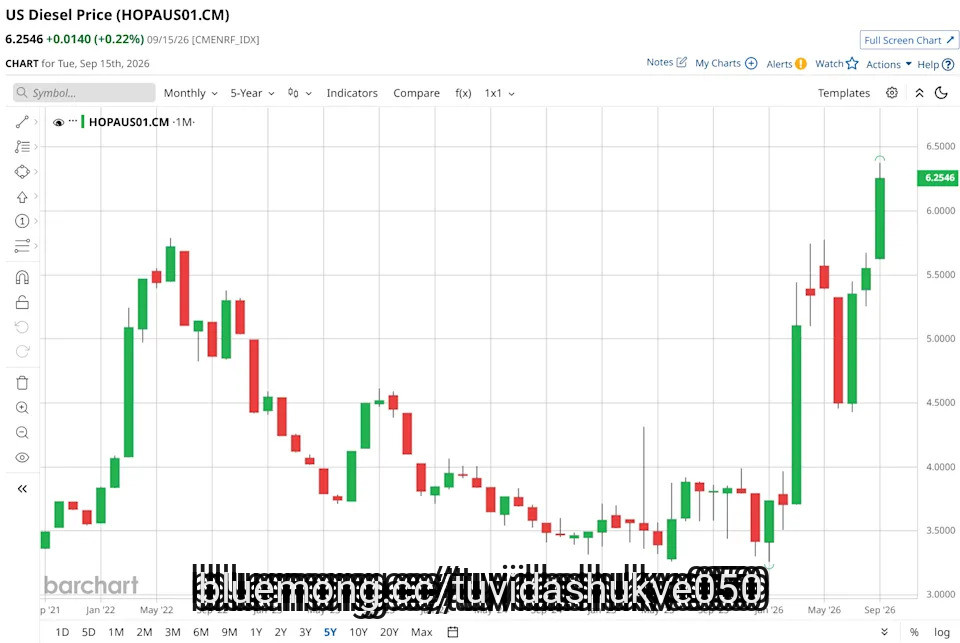
U.S. diesel prices have moved into record territory. The national average price of diesel climbed to a record $6.23 per gallon on Sept. 14, after first breaking above the $6 threshold last week. And diesel is hitting new highs again today at around $6.31. According to AAA data, the national average diesel price reached about $6.05 per gallon on Sept. 11, 2026, surpassing the previous record established in June 2022. The latest price is roughly 68% higher than the level of about $3.71 per gallon a year ago, highlighting the extraordinary speed of the rally.
The surge is being driven by a global shortage of refined petroleum products rather than crude oil alone. Disruptions to Middle Eastern energy infrastructure, sharply reduced traffic through the Strait of Hormuz, and attacks on Russian refineries have reduced the availability of diesel and other middle distillates. The situation has become serious enough that diesel prices are now adding to broader inflation concerns while simultaneously creating a potentially attractive environment for U.S. refiners.
Crude Oil Prices Sharply Lower as Middle East Disruptions Ease
Crude Oil Prices Retreat as Supply Fears Ease
Why UBS Just Turned Bearish on NuScale Power Stock
#Diesel
The surge is being driven by a global shortage of refined petroleum products rather than crude oil alone. Disruptions to Middle Eastern energy infrastructure, sharply reduced traffic through the Strait of Hormuz, and attacks on Russian refineries have reduced the availability of diesel and other middle distillates. The situation has become serious enough that diesel prices are now adding to broader inflation concerns while simultaneously creating a potentially attractive environment for U.S. refiners.
Crude Oil Prices Sharply Lower as Middle East Disruptions Ease
Crude Oil Prices Retreat as Supply Fears Ease
Why UBS Just Turned Bearish on NuScale Power Stock
#Diesel

2 months ago
On August 4, Westlake Corporation (NYSE:WLK) reported second-quarter results that erased two consecutive quarterly losses in a single swing. Net income landed at $260 million, or $2.01 per share, compared with a $169 million loss just three months earlier and a $142 million loss a year ago. EBITDA nearly tripled from the second quarter of 2025. The numbers mark a sharp reversal for a company whose chemicals business had been bleeding red ink.
The turnaround centers on Performance and Essential Materials, the segment that makes chlorovinyls and other basic chemicals. PEM swung from a $318 million operating loss in the second quarter of 2025 to $185 million in income this quarter, while EBITDA excluding identified items jumped from a 3% margin to 21%. The driver was pricing: average sales prices across PEM rose 14% year over year, more than offsetting a 3% price decline in the Housing and Infrastructure Products segment. Combined with a 7% increase in companywide sales volume, excluding the effects of plant shutdowns and an acquisition, the pricing recovery pushed companywide EBITDA to $679 million from $210 million a year earlier.
Westlake is also working the balance sheet alongside the market recovery. The company reduced debt by $500 million during the quarter and returned $99 million to shareholders through dividends and share repurchases. Management says its three-pillar profitability improvement plan remains on track to deliver a $600 million operating income benefit, a target that, if it holds, would layer structural cost savings on top of whatever the market gives back in pricing.
Not every part of the story improved together. Housing and Infrastructure Products, the segment tied to home construction and building products, saw its EBITDA margin slip to 22% from 24% a year earlier, even as volume rose 6% excluding the ACI acquisition. Average sales prices in that segment fell 3% year over year, a sign that pricing power in housing products has softened even as the company sells more of it.
The improvement in the core chemicals business also leans heavily on price rather than volume. PEM's turnaround came from a 14% jump in average sales price, a figure that can move in either direction with commodity cycles. The first quarter of 2026 was a reminder of how quickly conditions shift: Westlake posted a $169 million net loss just three months before this result, weighed down by $85 million in identified items, including a $67 million charge to settle litigation over PVC pipe and fittings and $18 million tied to facility shutdowns. A year earlier, in the second quarter of 2025, the company absorbed another $130 million in shutdown-related charges. Restructuring and legal charges showed up in two of the last three reported quarters.
#million #year #quarter #loss
The turnaround centers on Performance and Essential Materials, the segment that makes chlorovinyls and other basic chemicals. PEM swung from a $318 million operating loss in the second quarter of 2025 to $185 million in income this quarter, while EBITDA excluding identified items jumped from a 3% margin to 21%. The driver was pricing: average sales prices across PEM rose 14% year over year, more than offsetting a 3% price decline in the Housing and Infrastructure Products segment. Combined with a 7% increase in companywide sales volume, excluding the effects of plant shutdowns and an acquisition, the pricing recovery pushed companywide EBITDA to $679 million from $210 million a year earlier.
Westlake is also working the balance sheet alongside the market recovery. The company reduced debt by $500 million during the quarter and returned $99 million to shareholders through dividends and share repurchases. Management says its three-pillar profitability improvement plan remains on track to deliver a $600 million operating income benefit, a target that, if it holds, would layer structural cost savings on top of whatever the market gives back in pricing.
Not every part of the story improved together. Housing and Infrastructure Products, the segment tied to home construction and building products, saw its EBITDA margin slip to 22% from 24% a year earlier, even as volume rose 6% excluding the ACI acquisition. Average sales prices in that segment fell 3% year over year, a sign that pricing power in housing products has softened even as the company sells more of it.
The improvement in the core chemicals business also leans heavily on price rather than volume. PEM's turnaround came from a 14% jump in average sales price, a figure that can move in either direction with commodity cycles. The first quarter of 2026 was a reminder of how quickly conditions shift: Westlake posted a $169 million net loss just three months before this result, weighed down by $85 million in identified items, including a $67 million charge to settle litigation over PVC pipe and fittings and $18 million tied to facility shutdowns. A year earlier, in the second quarter of 2025, the company absorbed another $130 million in shutdown-related charges. Restructuring and legal charges showed up in two of the last three reported quarters.
#million #year #quarter #loss


2 months ago
Billionaire Ray Dalio's Bridgewater ******* ociates and Cathie Wood's ARK Invest follow sharply different investment philosophies. Bridgewater generally runs a diversified, macro-driven portfolio that balances exposure across ******* ets, countries and economic environments. ARK concentrates on companies it believes can benefit from disruptive innovation.
Still, Insider Monkey's ******* ysis of their second-quarter 13F filings shows that the two firms shared exposure to several stocks. Among the largest common holdings were Eli Lilly (LLY) and Nvidia (NVDA).
Bridgewater held 87,023 Eli Lilly shares worth about $104.4 million at the end of the second quarter, after increasing its position by 16,211 shares. ARK held 77,254 shares valued at about $92.7 million, after adding 64,578 shares.
Bridgewater's Nvidia stake was much larger, comprising 3.87 million shares worth about $773.6 million. However, it reduced the position by 826,808 shares during the quarter. ARK moved in the other direction, adding 345,821 Nvidia shares to end the quarter with 1.38 million shares valued at about $276.4 million.
Let's focus on LLY.
#shares #quarter #exposure
Still, Insider Monkey's ******* ysis of their second-quarter 13F filings shows that the two firms shared exposure to several stocks. Among the largest common holdings were Eli Lilly (LLY) and Nvidia (NVDA).
Bridgewater held 87,023 Eli Lilly shares worth about $104.4 million at the end of the second quarter, after increasing its position by 16,211 shares. ARK held 77,254 shares valued at about $92.7 million, after adding 64,578 shares.
Bridgewater's Nvidia stake was much larger, comprising 3.87 million shares worth about $773.6 million. However, it reduced the position by 826,808 shares during the quarter. ARK moved in the other direction, adding 345,821 Nvidia shares to end the quarter with 1.38 million shares valued at about $276.4 million.
Let's focus on LLY.
#shares #quarter #exposure


2 months ago
Merck (MRK) was at the center of a major cancer-treatment update in August. Specifically, the drugmaker and Moderna (MRNA) said their personalized mRNA cancer therapy, intismeran autogene, delivered positive results in a Phase 3 study involving 1,137 patients with high-risk melanoma.
Used with Keytruda, the treatment reduced the risk of cancer returning or causing death and improved distant metastasis-free survival compared with Keytruda alone. Merck shares jumped 11% on the news. That was a big move for the stock, which had posted only five single-day gains of more than 5% over the past year.
This High-Yield Construction Stock Just Raised Its Dividend by 40%
Dear Intuit Stock Fans, Mark Your Calendars for September 17
This Dividend Stock Is Staging a Turnaround in 2026 and Pays More Than 2.4%
#Dividend #high #treatment #risk
Used with Keytruda, the treatment reduced the risk of cancer returning or causing death and improved distant metastasis-free survival compared with Keytruda alone. Merck shares jumped 11% on the news. That was a big move for the stock, which had posted only five single-day gains of more than 5% over the past year.
This High-Yield Construction Stock Just Raised Its Dividend by 40%
Dear Intuit Stock Fans, Mark Your Calendars for September 17
This Dividend Stock Is Staging a Turnaround in 2026 and Pays More Than 2.4%
#Dividend #high #treatment #risk



2 months ago
Inquiring about Walmart Inc. (NASDAQ:WMT) on September 10, a caller asked if they should "keep it." Mad Money host Jim Cramer replied:
I got to tell you, this one is a short and long-term, okay? Short-term, I think I know what Walmart's doing. I think that they're letting their customers have a big break. They're not passing along all of these costs. That is going to earn them tremendous love when things get better. So the wise situation is to say this: Walmart trades at 36 times earnings. It deserves to trade lower just because of what's happening at the company now and higher what's happening at the company when this inflation bout ends. So you buy some at $106, $105, and then buy some at $95. And yes, it could trade to $95. It does not have yield support. This is not like Target, which had that yield support. Target's doing better than Walmart right now. It is.
Walmart Inc.'s (NASDAQ:WMT) second-quarter fiscal 2027 revenue rose 5.9% year over year to $187.9 billion, while global e-commerce sales increased 23%. Global advertising revenue rose 38%, and membership-fee revenue increased 17% globally. Walmart U.S. comparable sales, excluding fuel, grew 2.6%. The company is also using tariff refunds to support lower prices. It said tariff refunds increased its gross profit rate during the quarter, while price investments partially offset the benefit.
Target Corporation (NYSE:TGT) has stronger recent comparable-sales momentum. Its second-quarter sales rose 5.3%, comparable sales increased 3.8%, and traffic rose 3.6%. The company also raised its full-year sales-growth outlook to approximately 5%. Its second-quarter GAAP and adjusted EPS were $4.11, including a $1.65 benefit from tariff refunds. Excluding tariff refunds, GAAP and adjusted EPS increased 20% year over year. CEO Michael Fiddelke said Target had reduced prices on more than 10,000 frequently purchased items over the past year and acknowledged that "there's still meaningful work ahead."
Walmart Inc.'s (NASDAQ:WMT) biggest risk is valuation. Its premium forward PE of 36.76 leaves the stock more exposed if U.S. comparable-sales growth remains modest while the company continues investing in prices. Walmart's 2.6% U.S. comparable-sales growth also trails Target's 3.8%.
#increased #rose
I got to tell you, this one is a short and long-term, okay? Short-term, I think I know what Walmart's doing. I think that they're letting their customers have a big break. They're not passing along all of these costs. That is going to earn them tremendous love when things get better. So the wise situation is to say this: Walmart trades at 36 times earnings. It deserves to trade lower just because of what's happening at the company now and higher what's happening at the company when this inflation bout ends. So you buy some at $106, $105, and then buy some at $95. And yes, it could trade to $95. It does not have yield support. This is not like Target, which had that yield support. Target's doing better than Walmart right now. It is.
Walmart Inc.'s (NASDAQ:WMT) second-quarter fiscal 2027 revenue rose 5.9% year over year to $187.9 billion, while global e-commerce sales increased 23%. Global advertising revenue rose 38%, and membership-fee revenue increased 17% globally. Walmart U.S. comparable sales, excluding fuel, grew 2.6%. The company is also using tariff refunds to support lower prices. It said tariff refunds increased its gross profit rate during the quarter, while price investments partially offset the benefit.
Target Corporation (NYSE:TGT) has stronger recent comparable-sales momentum. Its second-quarter sales rose 5.3%, comparable sales increased 3.8%, and traffic rose 3.6%. The company also raised its full-year sales-growth outlook to approximately 5%. Its second-quarter GAAP and adjusted EPS were $4.11, including a $1.65 benefit from tariff refunds. Excluding tariff refunds, GAAP and adjusted EPS increased 20% year over year. CEO Michael Fiddelke said Target had reduced prices on more than 10,000 frequently purchased items over the past year and acknowledged that "there's still meaningful work ahead."
Walmart Inc.'s (NASDAQ:WMT) biggest risk is valuation. Its premium forward PE of 36.76 leaves the stock more exposed if U.S. comparable-sales growth remains modest while the company continues investing in prices. Walmart's 2.6% U.S. comparable-sales growth also trails Target's 3.8%.
#increased #rose

2 months ago
Interested in Netflix, Inc.? Here are five stocks we like better.
Netflix received 25 negative revisions in 90 days, yet 54 **** ysts remain bullish, seeing over 20% upside despite reduced price targets.
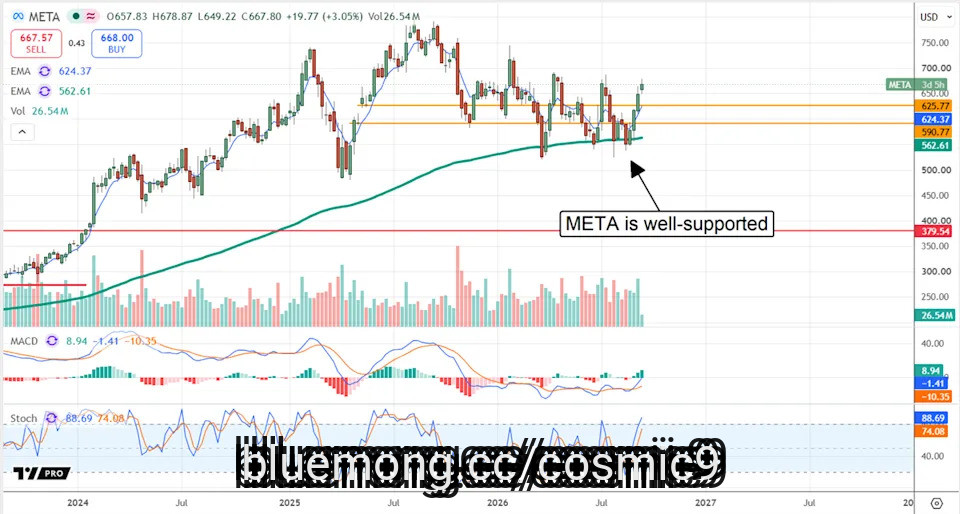
Meta Platforms faces 21 downgrades tied to rising CapEx and weak Q2 results, but **** ysts still rate it a Moderate Buy with about 20% upside.
Lululemon's downgrades reflect genuine fundamental deterioration, with 29 **** ysts giving it a consensus Reduce rating and mostly Hold or Sell ratings.
Downgrades rarely help bullish traders, hurting sentiment and price action—unless, of course, you're looking for a good stock to buy into. As always, it's the trend that matters, because a downgrade or price target reduction can mean different things in different situations.
#bullish #upside #interested #here
Netflix received 25 negative revisions in 90 days, yet 54 **** ysts remain bullish, seeing over 20% upside despite reduced price targets.
Meta Platforms faces 21 downgrades tied to rising CapEx and weak Q2 results, but **** ysts still rate it a Moderate Buy with about 20% upside.
Lululemon's downgrades reflect genuine fundamental deterioration, with 29 **** ysts giving it a consensus Reduce rating and mostly Hold or Sell ratings.
Downgrades rarely help bullish traders, hurting sentiment and price action—unless, of course, you're looking for a good stock to buy into. As always, it's the trend that matters, because a downgrade or price target reduction can mean different things in different situations.
#bullish #upside #interested #here



2 months ago
Interested in NVIDIA Corporation? Here are five stocks we like better.
NVIDIA released CUDA-Q Logical, an open-source software layer that links GPUs with quantum processors to solve practical error correction challenges.
Early testing by Fermilab and Sandia National Laboratories shows dramatic efficiency gains, including a seven-fold faster design cycle and reduced physical qubit requirements.
Quantum hardware firms IonQ, Rigetti Computing, and D-Wave Quantum could benefit as standardized software lowers development costs and enables deeper integration with NVIDIA's infrastructure.
Many investors view quantum hardware developers and classical semiconductor leaders as competing forces in high-performance computing. Recent developments demonstrate that the two architectures are becoming deeply interdependent.
#hardware #here
NVIDIA released CUDA-Q Logical, an open-source software layer that links GPUs with quantum processors to solve practical error correction challenges.
Early testing by Fermilab and Sandia National Laboratories shows dramatic efficiency gains, including a seven-fold faster design cycle and reduced physical qubit requirements.
Quantum hardware firms IonQ, Rigetti Computing, and D-Wave Quantum could benefit as standardized software lowers development costs and enables deeper integration with NVIDIA's infrastructure.
Many investors view quantum hardware developers and classical semiconductor leaders as competing forces in high-performance computing. Recent developments demonstrate that the two architectures are becoming deeply interdependent.
#hardware #here


2 months ago
Auxier ******* et Management, an investment advisory firm, released its second-quarter 2026 investor letter. The letter can be downloaded here. Following a strong rebound from the first-quarter decline, the S&P 500 gained 15.2% as accelerating capital spending toward artificial intelligence infrastructure drove significant gains across technology hardware companies. Semiconductor and data-center-related businesses benefited from supply constraints and strong demand, while enterprise software remained under pressure as investors reassessed AI disruption risks and compressed valuations. In the quarter, Auxier Focus Fund's Investor Class gained 8.82% and 10.70% for the six months ended June 30, 2026. Despite strong earnings growth across the broader market, Auxier highlighted concerns around rising margin debt, increased leverage, and elevated capital flows into high-growth technology areas that could amplify future volatility. The firm continues to focus on identifying enduring businesses with strong competitive advantages, resilient cash flows, and sustainable long-term growth potential. Also, check the fund's top five holdings to see its best picks in 2026.
In its second-quarter 2026 investor letter, Auxier ******* et Management highlighted The Kroger Co. (NYSE:KR). The Kroger Co. (NYSE:KR) is a leading supermarket chain that operates combination food and drug stores, multi-department stores, marketplace stores, and price impact warehouses. On September 14, 2026, The Kroger Co. (NYSE:KR) closed at $60.91 per share. Over the past month, The Kroger Co. (NYSE:KR) returned 10.12%, but its shares are down 7.06% over the past year. The Kroger Co. (NYSE:KR) has a market capitalization of $37.32 billion, and its stock has traded within a 52-week range of $54.15 to $76.58.
Auxier ******* et Management stated the following regarding The Kroger Co. (NYSE:KR) in its Q2 2026 investor letter:
"Consumer staples underperformed during the quarter. Elevated inflation, high interest rates and rising gas prices contributed to lower consumer spending, impacting companies like The Kroger Co. (NYSE:KR) and PepsiCo. Although Kroger's stock has been weak, its new CEO Greg Foran brings exceptional leadership that promises positive change. While he was President of Walmart US from 2014-2019, the company achieved 20 consecutive quarters of same-store sales growth and scaled its online grocery pickup. Since joining Kroger he has aggressively reduced prices and boosted the growth in private label and organic offerings. The stock trades at a mere 12 times earnings which is a significant discount to both Costco and Walmart."
#Growth #asset
In its second-quarter 2026 investor letter, Auxier ******* et Management highlighted The Kroger Co. (NYSE:KR). The Kroger Co. (NYSE:KR) is a leading supermarket chain that operates combination food and drug stores, multi-department stores, marketplace stores, and price impact warehouses. On September 14, 2026, The Kroger Co. (NYSE:KR) closed at $60.91 per share. Over the past month, The Kroger Co. (NYSE:KR) returned 10.12%, but its shares are down 7.06% over the past year. The Kroger Co. (NYSE:KR) has a market capitalization of $37.32 billion, and its stock has traded within a 52-week range of $54.15 to $76.58.
Auxier ******* et Management stated the following regarding The Kroger Co. (NYSE:KR) in its Q2 2026 investor letter:
"Consumer staples underperformed during the quarter. Elevated inflation, high interest rates and rising gas prices contributed to lower consumer spending, impacting companies like The Kroger Co. (NYSE:KR) and PepsiCo. Although Kroger's stock has been weak, its new CEO Greg Foran brings exceptional leadership that promises positive change. While he was President of Walmart US from 2014-2019, the company achieved 20 consecutive quarters of same-store sales growth and scaled its online grocery pickup. Since joining Kroger he has aggressively reduced prices and boosted the growth in private label and organic offerings. The stock trades at a mere 12 times earnings which is a significant discount to both Costco and Walmart."
#Growth #asset

2 months ago
BioNTech SE (NASDAQ:BNTX) reported that its investigational lung-cancer drug gotistobart produced a clinically meaningful overall-survival benefit in the Phase 3 PRESERVE-003 trial in patients with metastatic squamous non-small cell lung cancer whose disease had progressed after prior immunotherapy and chemotherapy. Reuters said gotistobart nearly doubled survival compared with standard-of-care chemotherapy, strengthening the case for the drug as a potential chemotherapy-free treatment in a population with significant unmet need.
The result builds on earlier Stage 1 data, where gotistobart reduced the risk of death by 54% versus docetaxel, with a hazard ratio of 0.46. Median overall survival was not yet reached for gotistobart versus 9.95 months for docetaxel, while the 12-month progression-free survival rate was 25.2% versus 0%. BioNTech is now awaiting the pivotal Stage 2 readout, making the latest result important not only for the drug's approval prospects but also for the credibility of BioNTech's broader transition from a COVID-vaccine company toward a multi-product oncology business.
The strongest bullish argument is that gotistobart now has repeated evidence of a meaningful survival advantage in a difficult-to-treat lung-cancer population. The earlier Stage 1 dataset showed 55.6% of patients alive in the gotistobart arm versus 23.8% with docetaxel, alongside a 54% reduction in the risk of death. The latest Phase 3 update reinforces that signal rather than introducing an entirely new hypothesis. If the pivotal Stage 2 data confirm the benefit, BioNTech SE (NASDAQ:BNTX) could have a differentiated therapy capable of competing on survival rather than simply response rates, potentially supporting meaningful pricing power and a commercially attractive oncology franchise.
The result also strengthens BioNTech's broader oncology strategy because gotistobart is one piece of a much larger pipeline rather than a standalone bet. BioNTech says it has 14 ongoing pivotal trials and more than 10 novel combination programs, while its lung-cancer strategy spans more than 16 ongoing clinical trials and five Phase 3 programs. Gotistobart's success therefore provides validation for the company's immuno-oncology capabilities, while other ****** ets such as pumitamig and antibody-drug conjugates advance toward additional indications. BioNTech has identified 17+ late-stage or pivotal readouts through 2030+, creating the possibility that a successful gotistobart launch becomes the first major commercial proof point in its planned transition to a multi-product oncology company.
#stage #survival
The result builds on earlier Stage 1 data, where gotistobart reduced the risk of death by 54% versus docetaxel, with a hazard ratio of 0.46. Median overall survival was not yet reached for gotistobart versus 9.95 months for docetaxel, while the 12-month progression-free survival rate was 25.2% versus 0%. BioNTech is now awaiting the pivotal Stage 2 readout, making the latest result important not only for the drug's approval prospects but also for the credibility of BioNTech's broader transition from a COVID-vaccine company toward a multi-product oncology business.
The strongest bullish argument is that gotistobart now has repeated evidence of a meaningful survival advantage in a difficult-to-treat lung-cancer population. The earlier Stage 1 dataset showed 55.6% of patients alive in the gotistobart arm versus 23.8% with docetaxel, alongside a 54% reduction in the risk of death. The latest Phase 3 update reinforces that signal rather than introducing an entirely new hypothesis. If the pivotal Stage 2 data confirm the benefit, BioNTech SE (NASDAQ:BNTX) could have a differentiated therapy capable of competing on survival rather than simply response rates, potentially supporting meaningful pricing power and a commercially attractive oncology franchise.
The result also strengthens BioNTech's broader oncology strategy because gotistobart is one piece of a much larger pipeline rather than a standalone bet. BioNTech says it has 14 ongoing pivotal trials and more than 10 novel combination programs, while its lung-cancer strategy spans more than 16 ongoing clinical trials and five Phase 3 programs. Gotistobart's success therefore provides validation for the company's immuno-oncology capabilities, while other ****** ets such as pumitamig and antibody-drug conjugates advance toward additional indications. BioNTech has identified 17+ late-stage or pivotal readouts through 2030+, creating the possibility that a successful gotistobart launch becomes the first major commercial proof point in its planned transition to a multi-product oncology company.
#stage #survival

2 months ago
The Kroger Co. (NYSE:KR) cut its full-year 2026 identical-sales forecast excluding fuel to 0.2%–0.8% from 1%–2%, reflecting a sharper-than-expected slowdown in consumer demand. Second-quarter identical sales rose just 0.2%, down from 3.4% a year earlier and below the 0.9% ****** yst estimate.
The weakness reflects pressure on middle- and lower-income consumers, while a Cyclospora outbreak reduced quarterly identical sales by roughly 35 basis points and Medicare prescription-drug pricing changes created an approximately 140-basis-point headwind for pharmacy revenue. Importantly, Kroger maintained its full-year adjusted FIFO operating-profit forecast of $5.0 billion–$5.2 billion and delivered adjusted EPS of $1.09, ahead of the $1.06 consensus.
The strongest bullish argument is that The Kroger Co. (NYSE:KR) is currently protecting earnings despite the deterioration in sales momentum. Second-quarter adjusted EPS increased 5% year over year to $1.09, while adjusted FIFO operating profit was $1.076 billion. Kroger's gross margin rate actually increased by 13 basis points, although the overall gross-margin percentage was 22.4% versus 22.5% a year earlier, suggesting that pricing, sourcing, and cost-management initiatives are helping offset weaker volumes. The company's higher-margin businesses are also becoming increasingly important: adjusted e-commerce sales grew 20% in the quarter, and Kroger Precision Marketing profit increased 24%. That mix shift gives Kroger an earnings lever even when supermarket traffic and comparable sales are weak.
There is also evidence that management is actively responding to the competitive pressure rather than simply accepting slower growth. CEO Greg Foran has been pursuing tighter sourcing, simpler operations and lower prices, with Reuters reporting plans to cut prices across thousands of products to regain shoppers from Walmart, Costco and Aldi. The Kroger Co. (NYSE:KR)'s balance sheet provides room to fund that strategy: its net debt-to-adjusted-EBITDA ratio was 1.91x, below its stated target range of 2.30x–2.50x, while the company repurchased $1.0 billion of shares in the second quarter and $1.2 billion year to date. It also raised its dividend 11%, marking the 20th consecutive year of increases. If sales stabilize while e-commerce, retail media and cost efficiencies continue expanding, the unchanged $5.0 billion–$5.2 billion operating-profit forecast could prove more important to valuation than the reduced top-line outlook.
#year
The weakness reflects pressure on middle- and lower-income consumers, while a Cyclospora outbreak reduced quarterly identical sales by roughly 35 basis points and Medicare prescription-drug pricing changes created an approximately 140-basis-point headwind for pharmacy revenue. Importantly, Kroger maintained its full-year adjusted FIFO operating-profit forecast of $5.0 billion–$5.2 billion and delivered adjusted EPS of $1.09, ahead of the $1.06 consensus.
The strongest bullish argument is that The Kroger Co. (NYSE:KR) is currently protecting earnings despite the deterioration in sales momentum. Second-quarter adjusted EPS increased 5% year over year to $1.09, while adjusted FIFO operating profit was $1.076 billion. Kroger's gross margin rate actually increased by 13 basis points, although the overall gross-margin percentage was 22.4% versus 22.5% a year earlier, suggesting that pricing, sourcing, and cost-management initiatives are helping offset weaker volumes. The company's higher-margin businesses are also becoming increasingly important: adjusted e-commerce sales grew 20% in the quarter, and Kroger Precision Marketing profit increased 24%. That mix shift gives Kroger an earnings lever even when supermarket traffic and comparable sales are weak.
There is also evidence that management is actively responding to the competitive pressure rather than simply accepting slower growth. CEO Greg Foran has been pursuing tighter sourcing, simpler operations and lower prices, with Reuters reporting plans to cut prices across thousands of products to regain shoppers from Walmart, Costco and Aldi. The Kroger Co. (NYSE:KR)'s balance sheet provides room to fund that strategy: its net debt-to-adjusted-EBITDA ratio was 1.91x, below its stated target range of 2.30x–2.50x, while the company repurchased $1.0 billion of shares in the second quarter and $1.2 billion year to date. It also raised its dividend 11%, marking the 20th consecutive year of increases. If sales stabilize while e-commerce, retail media and cost efficiencies continue expanding, the unchanged $5.0 billion–$5.2 billion operating-profit forecast could prove more important to valuation than the reduced top-line outlook.
#year


2 months ago
Auxier ***** et Management, an investment advisory firm, released its second-quarter 2026 investor letter. The letter can be downloaded here. Following a strong rebound from the first-quarter decline, the S&P 500 gained 15.2% as accelerating capital spending toward artificial intelligence infrastructure drove significant gains across technology hardware companies. Semiconductor and data-center-related businesses benefited from supply constraints and strong demand, while enterprise software remained under pressure as investors reassessed AI disruption risks and compressed valuations. In the quarter, Auxier Focus Fund's Investor Class gained 8.82% and 10.70% for the six months ended June 30, 2026. Despite strong earnings growth across the broader market, Auxier highlighted concerns around rising margin debt, increased leverage, and elevated capital flows into high-growth technology areas that could amplify future volatility. The firm continues to focus on identifying enduring businesses with strong competitive advantages, resilient cash flows, and sustainable long-term growth potential. Also, check the fund's top five holdings to see its best picks in 2026.
In its second-quarter 2026 investor letter, Auxier ***** et Management highlighted The Kroger Co. (NYSE:KR). The Kroger Co. (NYSE:KR) is a leading supermarket chain that operates combination food and drug stores, multi-department stores, marketplace stores, and price impact warehouses. On September 14, 2026, The Kroger Co. (NYSE:KR) closed at $60.91 per share. Over the past month, The Kroger Co. (NYSE:KR) returned 10.12%, but its shares are down 7.06% over the past year. The Kroger Co. (NYSE:KR) has a market capitalization of $37.32 billion, and its stock has traded within a 52-week range of $54.15 to $76.58.
Auxier ***** et Management stated the following regarding The Kroger Co. (NYSE:KR) in its Q2 2026 investor letter:
"Consumer staples underperformed during the quarter. Elevated inflation, high interest rates and rising gas prices contributed to lower consumer spending, impacting companies like The Kroger Co. (NYSE:KR) and PepsiCo. Although Kroger's stock has been weak, its new CEO Greg Foran brings exceptional leadership that promises positive change. While he was President of Walmart US from 2014-2019, the company achieved 20 consecutive quarters of same-store sales growth and scaled its online grocery pickup. Since joining Kroger he has aggressively reduced prices and boosted the growth in private label and organic offerings. The stock trades at a mere 12 times earnings which is a significant discount to both Costco and Walmart."
#NYSE #quarter #Growth #strong
In its second-quarter 2026 investor letter, Auxier ***** et Management highlighted The Kroger Co. (NYSE:KR). The Kroger Co. (NYSE:KR) is a leading supermarket chain that operates combination food and drug stores, multi-department stores, marketplace stores, and price impact warehouses. On September 14, 2026, The Kroger Co. (NYSE:KR) closed at $60.91 per share. Over the past month, The Kroger Co. (NYSE:KR) returned 10.12%, but its shares are down 7.06% over the past year. The Kroger Co. (NYSE:KR) has a market capitalization of $37.32 billion, and its stock has traded within a 52-week range of $54.15 to $76.58.
Auxier ***** et Management stated the following regarding The Kroger Co. (NYSE:KR) in its Q2 2026 investor letter:
"Consumer staples underperformed during the quarter. Elevated inflation, high interest rates and rising gas prices contributed to lower consumer spending, impacting companies like The Kroger Co. (NYSE:KR) and PepsiCo. Although Kroger's stock has been weak, its new CEO Greg Foran brings exceptional leadership that promises positive change. While he was President of Walmart US from 2014-2019, the company achieved 20 consecutive quarters of same-store sales growth and scaled its online grocery pickup. Since joining Kroger he has aggressively reduced prices and boosted the growth in private label and organic offerings. The stock trades at a mere 12 times earnings which is a significant discount to both Costco and Walmart."
#NYSE #quarter #Growth #strong