
16 hours ago
Former Intel CEO Pat Gelsinger is backing a startup that thinks AI's next bottleneck is not the accelerator. It is everything waiting for data to arrive.
Delos Data announced on September 15 that it raised more than $100 million to develop networking chips and software for increasingly heterogeneous AI data centers. Playground Global, where Gelsinger is a general partner, joined the round. Reuters reported that Delos is designing the network to work across different types of compute hardware rather than **** uming every accelerator comes from NVIDIA Corporation (NASDAQ:NVDA).
That makes Advanced Micro Devices, Inc. (NASDAQ:AMD) an important read-through even though AMD is not an investor in Delos.
For illustration purposes only. Photo by Brett Sayles on Pexels
Nvidia does not dominate AI simply because its GPUs are fast. NVIDIA Corporation (NASDAQ:NVDA) sells a tightly integrated system of accelerators, networking, interconnects and software. That makes large clusters easier to deploy and gives customers fewer reasons to mix architectures.
#delos #data #Networking #software
Delos Data announced on September 15 that it raised more than $100 million to develop networking chips and software for increasingly heterogeneous AI data centers. Playground Global, where Gelsinger is a general partner, joined the round. Reuters reported that Delos is designing the network to work across different types of compute hardware rather than **** uming every accelerator comes from NVIDIA Corporation (NASDAQ:NVDA).
That makes Advanced Micro Devices, Inc. (NASDAQ:AMD) an important read-through even though AMD is not an investor in Delos.
For illustration purposes only. Photo by Brett Sayles on Pexels
Nvidia does not dominate AI simply because its GPUs are fast. NVIDIA Corporation (NASDAQ:NVDA) sells a tightly integrated system of accelerators, networking, interconnects and software. That makes large clusters easier to deploy and gives customers fewer reasons to mix architectures.
#delos #data #Networking #software


16 hours ago
SK Hynix is exploring something it has never done before: manufacturing memory chips in the United States.
Reuters reported on September 16 that the Korean memory giant is discussing several possibilities with Intel Corporation (NASDAQ:INTC), including leasing part of Intel's long-delayed Ohio complex or forming a venture involving Intel and large cloud customers. SK Hynix said no specific plan has been finalized.
For Micron Technology, Inc. (NASDAQ:MU), the talks matter because one of its strongest strategic advantages is being the major U.S.-based memory producer while AI has made DRAM and HBM increasingly scarce.
Intel has committed enormous capital to Ohio, with the broader project potentially reaching around $100 billion over time. Delays have pushed planned production into the next decade. A tenant or joint-venture partner could therefore help Intel share the financial burden of developing the Ohio site rather than relying entirely on its own foundry demand to justify the buildout.
That is the bull case. The bear case is that exploratory talks are a long way from revenue. Bringing advanced Korean memory production to the U.S. could face cost problems, technology-transfer restrictions and objections from Seoul. Intel still needs its core manufacturing roadmap to work.
#long
Reuters reported on September 16 that the Korean memory giant is discussing several possibilities with Intel Corporation (NASDAQ:INTC), including leasing part of Intel's long-delayed Ohio complex or forming a venture involving Intel and large cloud customers. SK Hynix said no specific plan has been finalized.
For Micron Technology, Inc. (NASDAQ:MU), the talks matter because one of its strongest strategic advantages is being the major U.S.-based memory producer while AI has made DRAM and HBM increasingly scarce.
Intel has committed enormous capital to Ohio, with the broader project potentially reaching around $100 billion over time. Delays have pushed planned production into the next decade. A tenant or joint-venture partner could therefore help Intel share the financial burden of developing the Ohio site rather than relying entirely on its own foundry demand to justify the buildout.
That is the bull case. The bear case is that exploratory talks are a long way from revenue. Bringing advanced Korean memory production to the U.S. could face cost problems, technology-transfer restrictions and objections from Seoul. Intel still needs its core manufacturing roadmap to work.
#long


16 hours ago
Investors eager to buy into the futuristic vision of profitable driverless vehicles will get their chance soon. May Mobility is aiming to become the first U.S. publicly listed pure-play option for an autonomous ride-hailing technology company. It is poised to go public through a special purpose acquisition company (SPAC), merging with ACP Holdings Acquisition (NASDAQ: ACGC) that values the combined company at roughly $1.4 billion.
It's expected to operate as May Mobility. trading on the Nasdaq exchange under MAY. But before investors get too excited, let's pump the brakes and take a look at the details.
Missed AI's "Act 1"? Act 2 Could Be 15x Bigger. Most investors think they missed the AI boat because they didn't buy Nvidia in 2005. But according to our ***** ysts, we're only at the end of "Act 1"—the R&D phase. "Act 2" is the global rollout. Continue »
It's easy for investors to get excited about the opportunity, but many might not be aware of the potential market size or growth prospects. The global robotaxi market is projected to reach about $415 billion by 2035, with the U.S. accounting for a roughly $48 billion slice of that pie. The fleet of U.S. commercial autonomous vehicles (AVs) is projected to expand from only about 4,000 vehicles currently to around 35,000 by 2030 -- or about 8% of the ride-sharing market.
A year ago this month, Bank of America projected that the long-term U.S. total addressable market (TAM) for AV ride-hailing is a trillion-dollar opportunity as companies such as May Mobility aim to replace the drivers that take roughly 70% of every fare. It's also important for investors to realize how early in the game this is: Alphabet's Waymo, with an estimated $350 million in annualized revenue, would represent only about 0.5% of U.S. ride-hailing bookings.
#vehicles #company #roughly #billion
It's expected to operate as May Mobility. trading on the Nasdaq exchange under MAY. But before investors get too excited, let's pump the brakes and take a look at the details.
Missed AI's "Act 1"? Act 2 Could Be 15x Bigger. Most investors think they missed the AI boat because they didn't buy Nvidia in 2005. But according to our ***** ysts, we're only at the end of "Act 1"—the R&D phase. "Act 2" is the global rollout. Continue »
It's easy for investors to get excited about the opportunity, but many might not be aware of the potential market size or growth prospects. The global robotaxi market is projected to reach about $415 billion by 2035, with the U.S. accounting for a roughly $48 billion slice of that pie. The fleet of U.S. commercial autonomous vehicles (AVs) is projected to expand from only about 4,000 vehicles currently to around 35,000 by 2030 -- or about 8% of the ride-sharing market.
A year ago this month, Bank of America projected that the long-term U.S. total addressable market (TAM) for AV ride-hailing is a trillion-dollar opportunity as companies such as May Mobility aim to replace the drivers that take roughly 70% of every fare. It's also important for investors to realize how early in the game this is: Alphabet's Waymo, with an estimated $350 million in annualized revenue, would represent only about 0.5% of U.S. ride-hailing bookings.
#vehicles #company #roughly #billion


16 hours ago
Tiffany Trump's toddler son looked adorable in his mom's embrace in the latest photos. US President Donald Trump's daughter shared a couple of pictures on her Instagram Story. They included the mother-son duo posing near a lake. For those unversed, the 32-year-old shares one child, Alexander Trump Boulos, with her husband, Michael Boulos.
Tiffany Trump's toddler son's latest NYC photos have melted the internet. On her Instagram Story, the mother of one shared two photos of herself holding her child near a lake. It appeared to be a beautiful day, hinting at the upcoming fall season.
Tiffany wore a loose jacket, a black T-shirt, denim jeans, and high boots. With her hair let loose, Alexander's mom looked gorgeous yet sassy. But her expression had a gentle smile and love for her son in her arms.
The little one donned a comfortable T-shirt and pants with slip-on baby shoes. His hair seemed to have grown, as it was pulled up in a messy ponytail.
In the first photo, the two looked straight into the camera, clearly posing for a good snap. The background looked perfect, with New York City buildings that seemed near yet far. Big green trees, bushes, and a serene lake came between the buildings and the mother-son duo.
#tiffany #lake #story #boulos
Tiffany Trump's toddler son's latest NYC photos have melted the internet. On her Instagram Story, the mother of one shared two photos of herself holding her child near a lake. It appeared to be a beautiful day, hinting at the upcoming fall season.
Tiffany wore a loose jacket, a black T-shirt, denim jeans, and high boots. With her hair let loose, Alexander's mom looked gorgeous yet sassy. But her expression had a gentle smile and love for her son in her arms.
The little one donned a comfortable T-shirt and pants with slip-on baby shoes. His hair seemed to have grown, as it was pulled up in a messy ponytail.
In the first photo, the two looked straight into the camera, clearly posing for a good snap. The background looked perfect, with New York City buildings that seemed near yet far. Big green trees, bushes, and a serene lake came between the buildings and the mother-son duo.
#tiffany #lake #story #boulos


8 days ago
On September 17, Lucid Group, Inc. (NASDAQ:LCID) and Bolt, a leading European shared mobility platform, announced a strategic partnership to develop and deploy autonomous mobility services across Europe. This sent shares of Lucid Group, Inc. (NASDAQ:LCID) higher, and the stock ended the trading session with gains of nearly 6%.
The partnership will combine Lucid Group, Inc.'s (NASDAQ:LCID) software-defined vehicle platform with Bolt's European data, operating infrastructure, and mobility expertise. The companies will be looking to develop and launch autonomous mobility services at scale, using vehicles based on Lucid Group, Inc.'s (NASDAQ:LCID) upcoming Midsize platform.
Bolt plans to deploy at least 25,000 fully autonomous vehicles across multiple European cities and countries, supporting its ambitious goal of having 100,000 autonomous vehicles on its platform by 2035.
The financial details of the partnership were not disclosed.
The deal comes as Lucid Group, Inc. (NASDAQ:LCID) continues to face significant financial pressure. The company has been pursuing an ambitious expansion strategy. However, its revenue growth has not yet been enough to offset substantial operating losses and the high costs ****** ociated with building its global factories.
#lcid #european #platform #partnership
The partnership will combine Lucid Group, Inc.'s (NASDAQ:LCID) software-defined vehicle platform with Bolt's European data, operating infrastructure, and mobility expertise. The companies will be looking to develop and launch autonomous mobility services at scale, using vehicles based on Lucid Group, Inc.'s (NASDAQ:LCID) upcoming Midsize platform.
Bolt plans to deploy at least 25,000 fully autonomous vehicles across multiple European cities and countries, supporting its ambitious goal of having 100,000 autonomous vehicles on its platform by 2035.
The financial details of the partnership were not disclosed.
The deal comes as Lucid Group, Inc. (NASDAQ:LCID) continues to face significant financial pressure. The company has been pursuing an ambitious expansion strategy. However, its revenue growth has not yet been enough to offset substantial operating losses and the high costs ****** ociated with building its global factories.
#lcid #european #platform #partnership


8 days ago
For the recently reported second quarter, PicS N.V. (NASDAQ:PICS) outperformed relative to its previous guidance across all profitability metrics. The total account base for the company went up to 70.4 million during the second quarter, showcasing a 10% jump from the prior year. Moving on to the bottom line figures, the adjusted earnings before tax, without factoring in costs ******* ociated with stock-based compensation came in at R$291 million for the quarter. This represented a 2.1% outperformance relative to the company's R$285 million guidance. Similarly, compared to the R$245 million projection, adjusted net income for the period actually stood 15.5% higher at R$283 million.
welcomia/Shutterstock.com
The second quarter concluded with strong financial and operating momentum for PicS. The company recorded a 9% annual and 2% sequential growth in its client base, which went up to 45.4 million active users. The total credit portfolio jumped to R$31.9 billion, exceeding management's guidance by 3%. This outperformance came due to a higher number of mature credit card cohorts, and accelerated origination within secured and partly secured categories. An additional factor that accounted for the credit portfolio growth was management's measured expansion into higher risk areas such as newer platform credit and private payroll lending.
Managerial revenue rose to R$3,730 million, topping guidance by 3.6%, and net interest income reached R$2,002 million, 5.4% above projections, boosted by growing credit income. Total cash in totaled R$136.4 billion, up 17% from a year earlier and 9% from the previous quarter, with customers bringing in an average of approximately R$45.4 billion to the platform each month. Total deposits climbed to R$35.8 billion, a 45% yearly jump and 10% quarterly rise.
Some concerns related to the company's loan portfolio emerged during the quarter. Non-performing loans more than 90 days overdue increased to 9.8% of the credit portfolio during the quarter, up 93 basis points sequentially. Stage 3 exposure, which includes a broader set of credit-impaired loans, reached 12.9% of the total credit portfolio.
#million #credit #quarter #Portfolio
welcomia/Shutterstock.com
The second quarter concluded with strong financial and operating momentum for PicS. The company recorded a 9% annual and 2% sequential growth in its client base, which went up to 45.4 million active users. The total credit portfolio jumped to R$31.9 billion, exceeding management's guidance by 3%. This outperformance came due to a higher number of mature credit card cohorts, and accelerated origination within secured and partly secured categories. An additional factor that accounted for the credit portfolio growth was management's measured expansion into higher risk areas such as newer platform credit and private payroll lending.
Managerial revenue rose to R$3,730 million, topping guidance by 3.6%, and net interest income reached R$2,002 million, 5.4% above projections, boosted by growing credit income. Total cash in totaled R$136.4 billion, up 17% from a year earlier and 9% from the previous quarter, with customers bringing in an average of approximately R$45.4 billion to the platform each month. Total deposits climbed to R$35.8 billion, a 45% yearly jump and 10% quarterly rise.
Some concerns related to the company's loan portfolio emerged during the quarter. Non-performing loans more than 90 days overdue increased to 9.8% of the credit portfolio during the quarter, up 93 basis points sequentially. Stage 3 exposure, which includes a broader set of credit-impaired loans, reached 12.9% of the total credit portfolio.
#million #credit #quarter #Portfolio


8 days ago
On September 9, 2026, Chewy, Inc. (NYSE:CHWY) reported fiscal second-quarter net sales of $3.33 billion, up 7.3% year over year, and adjusted earnings per share of $0.36, nearly double the roughly $0.18 ******* ysts had expected, prompting the company to raise its full-year revenue and profitability outlook. CEO Sumit Singh said the broader pet market did not meaningfully recover during the quarter but also did not deteriorate further, with Chewy continuing to outperform the category by two to three times through share gains across its established and newer businesses.
Chewy, Inc. (NYSE:CHWY)'s recurring revenue base is solid. It gives the company greater visibility into future sales. Autoship sales jumped by 9.3% year over year to $2.82 billion and represented 84.6% of total net sales. The growing contribution from subscription-based purchases gives Chewy a more predictable revenue stream and reduces its exposure to fluctuations in discretionary pet spending.
Chewy is also building growth engines beyond its core retail business. Chewy Health, which includes veterinary care and pharmacy services, delivered triple-digit revenue growth. Specialty categories such as equine and exotics recorded a seventh consecutive quarter of mid-double-digit growth. These businesses give Chewy additional opportunities to increase customer spending and diversify its sources of revenue as the overall pet market matures.
Chewy is combining customer growth with stronger profitability and shareholder returns. The firm added 208,000 net active customers during the quarter. It takes its customer base to 21.7 million while returning $200 million to shareholders through share repurchases. Management also noted structural SG&A leverage, automation, and AI-driven cost reductions as contributors to margin expansion. It shows that Chewy can improve earnings while investing in customer acquisition and growth.
Part of Chewy, Inc. (NYSE:CHWY)'s profitability improvement came from benefits that may not recur. CFO Chris Deppe said the quarter's profitability upside included about $10 million from timing benefits and more than $5 million from discrete benefits. Those items boosted the latest results but do not provide a recurring earnings contribution. It means investors may need to lower their expectations for the pace of margin expansion in future quarters.
#customer
Chewy, Inc. (NYSE:CHWY)'s recurring revenue base is solid. It gives the company greater visibility into future sales. Autoship sales jumped by 9.3% year over year to $2.82 billion and represented 84.6% of total net sales. The growing contribution from subscription-based purchases gives Chewy a more predictable revenue stream and reduces its exposure to fluctuations in discretionary pet spending.
Chewy is also building growth engines beyond its core retail business. Chewy Health, which includes veterinary care and pharmacy services, delivered triple-digit revenue growth. Specialty categories such as equine and exotics recorded a seventh consecutive quarter of mid-double-digit growth. These businesses give Chewy additional opportunities to increase customer spending and diversify its sources of revenue as the overall pet market matures.
Chewy is combining customer growth with stronger profitability and shareholder returns. The firm added 208,000 net active customers during the quarter. It takes its customer base to 21.7 million while returning $200 million to shareholders through share repurchases. Management also noted structural SG&A leverage, automation, and AI-driven cost reductions as contributors to margin expansion. It shows that Chewy can improve earnings while investing in customer acquisition and growth.
Part of Chewy, Inc. (NYSE:CHWY)'s profitability improvement came from benefits that may not recur. CFO Chris Deppe said the quarter's profitability upside included about $10 million from timing benefits and more than $5 million from discrete benefits. Those items boosted the latest results but do not provide a recurring earnings contribution. It means investors may need to lower their expectations for the pace of margin expansion in future quarters.
#customer


8 days ago
On September 9, 2026, Jersey Mike's Subs Inc. (NYSE:JMKE) reported its first quarterly results as a public company, with total revenue up 10% year over year to $208 million and same-store sales accelerating to 2.3% growth from 1.7% in the prior quarter. It was primarily driven by transaction growth even as the restaurant industry faced weak traffic trends. Net income fell to $37 million from $59 million a year earlier. It showed non-routine expenses, advertising fund timing, and higher interest costs following the company's July initial public offering, partially offset by a $14 million gain on the sale of corporate-owned stores.
Jersey Mike's Subs Inc. (NYSE:JMKE) is gaining customers while its brand remains a major competitive advantage. The firm added 83 stores in the second quarter. It grew its customer base and increased systemwide sales 10% to $1.21 billion. Jersey Mike's also earned the No. 1 ranking among U.S. quick-service restaurant brands in the 2026 American Customer Satisfaction Index, surpassing Chick-fil-A after 11 consecutive years at the top. It gives the newly public company a strong foundation for continued customer and franchisee growth.
The business has substantial whitespace for long-term unit growth. Jersey Mike's ended the quarter with 3,378 locations and maintains a domestic development pipeline of more than 1,600 stores, with more than 90% of that pipeline coming from existing franchisees. Management estimates that the U.S. market could eventually support roughly 7,500 locations and sees potential to reach approximately 15,000 stores globally. It gives the business a long runway for franchise-led revenue and royalty growth.
Digital engagement and transaction growth give Jersey Mike's more avenues to increase sales. Digital sales represented 43% of systemwide sales in the second quarter, up from 41% a year earlier. Same-store sales increased 2.3% mainly because customers placed more transactions. Jersey Mike's also had more than 12.5 million active MyMike's loyalty members in 2025. It provides the company with a large customer database that it can use to increase frequency and personalize marketing as it expands.
Jersey Mike's Subs Inc. (NYSE:JMKE) still faces a significant profitability challenge despite its revenue growth. Second-quarter revenue jumped 10% to $208 million. However, net income fell 37% to $37 million from $59 million a year earlier. Management attributed part of the decline to advertising-fund timing and higher interest expense. It shows that revenue growth has not yet translated into comparable bottom-line growth for shareholders.
#million #customer
Jersey Mike's Subs Inc. (NYSE:JMKE) is gaining customers while its brand remains a major competitive advantage. The firm added 83 stores in the second quarter. It grew its customer base and increased systemwide sales 10% to $1.21 billion. Jersey Mike's also earned the No. 1 ranking among U.S. quick-service restaurant brands in the 2026 American Customer Satisfaction Index, surpassing Chick-fil-A after 11 consecutive years at the top. It gives the newly public company a strong foundation for continued customer and franchisee growth.
The business has substantial whitespace for long-term unit growth. Jersey Mike's ended the quarter with 3,378 locations and maintains a domestic development pipeline of more than 1,600 stores, with more than 90% of that pipeline coming from existing franchisees. Management estimates that the U.S. market could eventually support roughly 7,500 locations and sees potential to reach approximately 15,000 stores globally. It gives the business a long runway for franchise-led revenue and royalty growth.
Digital engagement and transaction growth give Jersey Mike's more avenues to increase sales. Digital sales represented 43% of systemwide sales in the second quarter, up from 41% a year earlier. Same-store sales increased 2.3% mainly because customers placed more transactions. Jersey Mike's also had more than 12.5 million active MyMike's loyalty members in 2025. It provides the company with a large customer database that it can use to increase frequency and personalize marketing as it expands.
Jersey Mike's Subs Inc. (NYSE:JMKE) still faces a significant profitability challenge despite its revenue growth. Second-quarter revenue jumped 10% to $208 million. However, net income fell 37% to $37 million from $59 million a year earlier. Management attributed part of the decline to advertising-fund timing and higher interest expense. It shows that revenue growth has not yet translated into comparable bottom-line growth for shareholders.
#million #customer


8 days ago
On September 9, 2026, Independence Realty Trust, Inc. (NYSE:IRT) and Centerspace announced a definitive all-stock merger agreement. It creates a combined middle-market apartment REIT with a pro forma equity market capitalization of about $5.0 billion and a total enterprise value of approximately $8.1 billion, encompassing more than 44,000 units.
The combined company will retain the Independence Realty Trust name and NYSE ticker "IRT." IRT's Scott Schaeffer continues as Chairman and CEO. The management projects the deal will be roughly 5% accretive to 2027 Core FFO per share for shareholders of both companies.
The merger gives Independence Realty Trust, Inc. (NYSE:IRT) higher scale and significantly broader geographic diversification. The combined company will own 44,354 apartment units across 163 communities in 17 states, with 58% of pro forma NOI coming from Sunbelt markets, 27% from the Midwest, and 15% from the Mountain West. The overall footprint reduces reliance on any single regional apartment market while keeping substantial exposure to markets with strong population and employment growth.
IRT can apply its existing value-creation strategy across a much larger portfolio. Its value-add renovation program has delivered about a 16% historical return on investment. The firm expects to grow its Wi-Fi initiative and other technology and income-generating programs across Centerspace's properties. Management also expects approximately $24 million in annualized synergies. It supports roughly 5% accretion to 2027 Core FFO per share on a leverage-neutral basis.
The all-stock structure allows the companies to chase greater scale without adding acquisition debt. IRT and Centerspace expect the combined company to retain BBB/BBB investment-grade credit ratings and maintain a well-laddered debt maturity profile. Centerspace shareholders will receive IRT shares and own approximately 22% of the combined company. It gives them exposure to the larger platform. Management also expects the transaction to improve access to capital markets and reduce the combined firm's cost of capital over time.
#management
The combined company will retain the Independence Realty Trust name and NYSE ticker "IRT." IRT's Scott Schaeffer continues as Chairman and CEO. The management projects the deal will be roughly 5% accretive to 2027 Core FFO per share for shareholders of both companies.
The merger gives Independence Realty Trust, Inc. (NYSE:IRT) higher scale and significantly broader geographic diversification. The combined company will own 44,354 apartment units across 163 communities in 17 states, with 58% of pro forma NOI coming from Sunbelt markets, 27% from the Midwest, and 15% from the Mountain West. The overall footprint reduces reliance on any single regional apartment market while keeping substantial exposure to markets with strong population and employment growth.
IRT can apply its existing value-creation strategy across a much larger portfolio. Its value-add renovation program has delivered about a 16% historical return on investment. The firm expects to grow its Wi-Fi initiative and other technology and income-generating programs across Centerspace's properties. Management also expects approximately $24 million in annualized synergies. It supports roughly 5% accretion to 2027 Core FFO per share on a leverage-neutral basis.
The all-stock structure allows the companies to chase greater scale without adding acquisition debt. IRT and Centerspace expect the combined company to retain BBB/BBB investment-grade credit ratings and maintain a well-laddered debt maturity profile. Centerspace shareholders will receive IRT shares and own approximately 22% of the combined company. It gives them exposure to the larger platform. Management also expects the transaction to improve access to capital markets and reduce the combined firm's cost of capital over time.
#management

8 days ago
On September 3, 2026, lululemon athletica inc. (NASDAQ:LULU) reported second-quarter fiscal 2026 results for the period ended August 2, 2026. Net revenue fell 4% to $2.4 billion, missing the $2.46 billion ****** ysts expected, and comparable sales dropped 10% on a constant dollar basis. Management cut full-year revenue guidance to a decline of 5% to 7%, down from a prior forecast of flat to down 1%, and lowered full-year earnings per share guidance to $9.48 to $9.73 from its prior forecast of $10.95 to $11.15, compared with $13.26 earned in fiscal 2025. Shares fell about 18% in extended trading. Incoming CEO Heidi O'Neill was set to start the following week.
Photo by Ian Deng Quddu on Unsplash
Citi's cut to $117 from $130 came with a Neutral rating and the observation that the stock's risk-reward is "slightly more favorable" after the selloff, even though the firm called fiscal 2027 visibility "very unclear." The operational bright spots are real.
lululemon athletica inc. (NASDAQ:LULU) increased its chase volume, the supply chain capability that lets it reorder fast-moving styles quickly, by about 20% this year, and away-from-body styles including the Groove Wide-Leg, Align Foldover Jogger, Breezily, and an updated Dance Studio Pant are trending well as shoppers shift from tight-fitting leggings. The brand's community pull held up too.
The SeaWheeze Half Marathon and Festival returned in August for the first time since 2019, drawing nearly 10,000 runners from 24 countries and roughly 14,000 festival attendees, while more than 85,000 people from 120 countries joined the companion Strava challenge, strong enough that Lululemon already committed to bringing the event back next summer. Rest of World revenue, spanning EMEA and APAC, grew 5% on a reported basis, and the company ended the quarter with $1.4 billion in cash and no outstanding borrowings.
#revenue #billion #NASDAQ
Photo by Ian Deng Quddu on Unsplash
Citi's cut to $117 from $130 came with a Neutral rating and the observation that the stock's risk-reward is "slightly more favorable" after the selloff, even though the firm called fiscal 2027 visibility "very unclear." The operational bright spots are real.
lululemon athletica inc. (NASDAQ:LULU) increased its chase volume, the supply chain capability that lets it reorder fast-moving styles quickly, by about 20% this year, and away-from-body styles including the Groove Wide-Leg, Align Foldover Jogger, Breezily, and an updated Dance Studio Pant are trending well as shoppers shift from tight-fitting leggings. The brand's community pull held up too.
The SeaWheeze Half Marathon and Festival returned in August for the first time since 2019, drawing nearly 10,000 runners from 24 countries and roughly 14,000 festival attendees, while more than 85,000 people from 120 countries joined the companion Strava challenge, strong enough that Lululemon already committed to bringing the event back next summer. Rest of World revenue, spanning EMEA and APAC, grew 5% on a reported basis, and the company ended the quarter with $1.4 billion in cash and no outstanding borrowings.
#revenue #billion #NASDAQ


8 days ago
On September 9, 2026, Reuters reported that AI music startup Suno launched a new suite of models, including its flagship v6 and exploratory v6-Wild, built in partnership with Warner Music Group Corp. (NASDAQ:WMG) and BMG. It lets users make new music inspired by licensed recordings from participating artists. The launch follows Warner Music's copyright lawsuit settlement with Suno in November 2025, under which artists and songwriters can opt in to have their names, voices, and compositions used in AI-generated music in exchange for compensation.
Warner Music Group Corp. (NASDAQ:WMG) can turn the Suno litigation dispute into a new licensing revenue opportunity. Suno has now launched its v6 models in partnership with Warner Music and BMG. It allows users to make music inspired by licensed works from participating artists. Warner previously sued Suno over copyright issues before reaching a licensing agreement. This gives the label a direct path to monetize AI-generated music rather than relying solely on litigation. The deal could create a new revenue stream as consumers increasingly adopt AI music tools.
Warner enters the AI-music market from a position of financial strength. The firm reported fiscal third-quarter revenue of $5.44 billion, up 9% year over year. Adjusted OIBDA increased 16% to $433 million, and its adjusted OIBDA margin expanded to 23.2%. Warner also said it had met or exceeded its financial targets for five consecutive quarters. That basic growth gives the company greater flexibility to invest in AI initiatives while using licensing agreements to add another potential growth driver to its existing streaming and publishing businesses.
Warner could help establish a more sustainable commercial model for AI-generated music. Suno said future products will include opt-in experiences that allow individual artists to participate and receive payment when users generate music around them. So Warner has an opportunity to help shape licensing and compensation practices as Spotify and other platforms develop their own AI-music products. If the industry increasingly adopts licensed models, Warner's large catalog and relationships with artists could solidify its negotiating position and create recurring AI-related revenue.
Suno's new licensing model does not eliminate the overall legal risks surrounding AI music. Warner Music Group Corp. (NASDAQ:WMG) has reached an agreement with Suno, but other copyright owners are challenging the firm's technology. Independent publisher Round Hill sued Suno in August, alleging that the company used copyrighted songs to train its AI system. Suno also faces separate litigation from Universal Music Group and Sony Music. Hence, lawsuits could increase legal costs and create uncertainty over the licensing framework that Warner hopes to monetize.
#music #licensing #corp #revenue
Warner Music Group Corp. (NASDAQ:WMG) can turn the Suno litigation dispute into a new licensing revenue opportunity. Suno has now launched its v6 models in partnership with Warner Music and BMG. It allows users to make music inspired by licensed works from participating artists. Warner previously sued Suno over copyright issues before reaching a licensing agreement. This gives the label a direct path to monetize AI-generated music rather than relying solely on litigation. The deal could create a new revenue stream as consumers increasingly adopt AI music tools.
Warner enters the AI-music market from a position of financial strength. The firm reported fiscal third-quarter revenue of $5.44 billion, up 9% year over year. Adjusted OIBDA increased 16% to $433 million, and its adjusted OIBDA margin expanded to 23.2%. Warner also said it had met or exceeded its financial targets for five consecutive quarters. That basic growth gives the company greater flexibility to invest in AI initiatives while using licensing agreements to add another potential growth driver to its existing streaming and publishing businesses.
Warner could help establish a more sustainable commercial model for AI-generated music. Suno said future products will include opt-in experiences that allow individual artists to participate and receive payment when users generate music around them. So Warner has an opportunity to help shape licensing and compensation practices as Spotify and other platforms develop their own AI-music products. If the industry increasingly adopts licensed models, Warner's large catalog and relationships with artists could solidify its negotiating position and create recurring AI-related revenue.
Suno's new licensing model does not eliminate the overall legal risks surrounding AI music. Warner Music Group Corp. (NASDAQ:WMG) has reached an agreement with Suno, but other copyright owners are challenging the firm's technology. Independent publisher Round Hill sued Suno in August, alleging that the company used copyrighted songs to train its AI system. Suno also faces separate litigation from Universal Music Group and Sony Music. Hence, lawsuits could increase legal costs and create uncertainty over the licensing framework that Warner hopes to monetize.
#music #licensing #corp #revenue


8 days ago
Former President Obama on Friday slammed President Trump over his handling of how to approach artificial intelligence amid “doomsday” warnings coming from some in the tech industry about the technology’s potential existential threat to humanity.
Obama said during an interview at Colgate University in New York that the federal government must regulate AI, before referring to comments made by one Trump adviser.
“I heard one of Donald Trump’s main advisers on this make the argument that, ‘The market will take care of AI,'” the former president said. “‘These companies will solve the safety issues because they have every incentive to do so — if it turns out to be dangerous, people will just sue them, and they’re worried about financial liability.'”
“That’s not how we treat airlines,” Obama added. “Or drug companies, or food companies.”
Obama continued to say that AI could become a threat at a human level if it falls into the clutches of “bad humans” and if self-improving AI models realize they no longer need humans. He referred to Trump again in that his successor has said regulations on AI are “for losers.”
#obama #president #university
Obama said during an interview at Colgate University in New York that the federal government must regulate AI, before referring to comments made by one Trump adviser.
“I heard one of Donald Trump’s main advisers on this make the argument that, ‘The market will take care of AI,'” the former president said. “‘These companies will solve the safety issues because they have every incentive to do so — if it turns out to be dangerous, people will just sue them, and they’re worried about financial liability.'”
“That’s not how we treat airlines,” Obama added. “Or drug companies, or food companies.”
Obama continued to say that AI could become a threat at a human level if it falls into the clutches of “bad humans” and if self-improving AI models realize they no longer need humans. He referred to Trump again in that his successor has said regulations on AI are “for losers.”
#obama #president #university




8 days ago
(NEXSTAR) – The days getting shorter serve as a reminder that we’re barreling toward the end of our seasonal observation of daylight saving time, but the wheels may be in motion to stop that – a move more than a dozen states have been waiting to happen.
Earlier this year, the House passed the Sunshine Protection Act, which would make daylight saving time permanent throughout the U.S., with few exceptions. It’s been held up in the Senate since July but, now that the chamber has returned from recess, there’s a chance the legislation could be picked up.
If it can pass the Senate, the bill seems to stand a fair chance of becoming law, with President Trump already expressing support.
For more than a dozen states, this is the closest they’ve been in years to seeing some of their own legislation finally take effect. The U.S. hasn’t been this close to permanent daylight saving time since a version of the Sunshine Protection Act passed in the Senate in 2022 but fizzled in the House.
At present, states are only allowed to opt into year-round permanent standard time, as Hawaii and much of Arizona have done. But that hasn’t stopped 19 states from enacting legislation that would make daylight saving time permanent in their jurisdiction, pending approval from Congress.
#House
Earlier this year, the House passed the Sunshine Protection Act, which would make daylight saving time permanent throughout the U.S., with few exceptions. It’s been held up in the Senate since July but, now that the chamber has returned from recess, there’s a chance the legislation could be picked up.
If it can pass the Senate, the bill seems to stand a fair chance of becoming law, with President Trump already expressing support.
For more than a dozen states, this is the closest they’ve been in years to seeing some of their own legislation finally take effect. The U.S. hasn’t been this close to permanent daylight saving time since a version of the Sunshine Protection Act passed in the Senate in 2022 but fizzled in the House.
At present, states are only allowed to opt into year-round permanent standard time, as Hawaii and much of Arizona have done. But that hasn’t stopped 19 states from enacting legislation that would make daylight saving time permanent in their jurisdiction, pending approval from Congress.
#House




8 days ago
Forgent Power Solutions, Inc. (NYSE:FPS) reported fiscal fourth-quarter revenue of approximately $462 million on September 15, up 94% year over year. Bookings reached $1.503 billion, increasing 375%, while backlog stood at $3.0 billion as of June 30, 2026.
The reported 3.3 times book-to-bill ratio compares quarterly bookings with quarterly revenue. Bookings and backlog are operating measures of order activity and outstanding contractual work, respectively. Neither represents cash collected, and backlog does not guarantee the timing of future revenue.
Forgent Power Solutions, Inc. (NYSE:FPS) expects fiscal 2027 revenue of $2.4 billion to $2.6 billion, implying 76% growth at the midpoint. The question is whether factories, employees, and working capital can support that expansion while preserving cash generation.
Forgent Power Solutions, Inc. (NYSE:FPS) already has evidence of stronger production economics. Fourth-quarter operating income reached $91.9 million, compared with $8.3 million a year earlier. Operating cash flow was $74 million, exceeding the quarter's $31 million of capital expenditures.
Those results suggest that rising output is beginning to cover the costs of expansion. Management attributed stronger profitability partly to revenue growing faster than operating costs as new campuses approached target production levels.
#operating #power #solutions #NYSE
The reported 3.3 times book-to-bill ratio compares quarterly bookings with quarterly revenue. Bookings and backlog are operating measures of order activity and outstanding contractual work, respectively. Neither represents cash collected, and backlog does not guarantee the timing of future revenue.
Forgent Power Solutions, Inc. (NYSE:FPS) expects fiscal 2027 revenue of $2.4 billion to $2.6 billion, implying 76% growth at the midpoint. The question is whether factories, employees, and working capital can support that expansion while preserving cash generation.
Forgent Power Solutions, Inc. (NYSE:FPS) already has evidence of stronger production economics. Fourth-quarter operating income reached $91.9 million, compared with $8.3 million a year earlier. Operating cash flow was $74 million, exceeding the quarter's $31 million of capital expenditures.
Those results suggest that rising output is beginning to cover the costs of expansion. Management attributed stronger profitability partly to revenue growing faster than operating costs as new campuses approached target production levels.
#operating #power #solutions #NYSE


8 days ago
Nvidia (NVDA) CEO Jensen Huang is challenging the people warning that AI could end humanity, suggesting their alarming predictions may serve another purpose.
Speaking with CBS News, Huang rejected the 'AI apocalypse' debate and questioned the motives behind those spreading that fear, adding a sharper edge to an increasingly public industry split.
OpenAI and Anthropic leaders, alongside Elon Musk, have backed calls to slow advanced AI development over safety concerns and fears that the technology might be advancing quicker than companies can control it, as reported by Financial Times.
For Nvidia investors, that debate carries financial weight. Shares have returned 20% year-to-date and 23% over the six months, according to Seeking Alpha data.
A coordinated slowdown could complicate the spending boom supporting its chip business. Huang's response, however, reaches beyond defending continued investment.
#NVIDIA #anthropic
Speaking with CBS News, Huang rejected the 'AI apocalypse' debate and questioned the motives behind those spreading that fear, adding a sharper edge to an increasingly public industry split.
OpenAI and Anthropic leaders, alongside Elon Musk, have backed calls to slow advanced AI development over safety concerns and fears that the technology might be advancing quicker than companies can control it, as reported by Financial Times.
For Nvidia investors, that debate carries financial weight. Shares have returned 20% year-to-date and 23% over the six months, according to Seeking Alpha data.
A coordinated slowdown could complicate the spending boom supporting its chip business. Huang's response, however, reaches beyond defending continued investment.
#NVIDIA #anthropic

8 days ago
Though it's down by 33% over the last five years, Ethereum (CRYPTO: ETH) climbed from about $130 in early 2020 to over $4,800 in early November 2021, which would have been sufficient to turn an investment of $27,000 into about $1 million. It's natural for investors to wonder if another historic run is in the cards for the coin, given that it's more widely known now than it was then.
Today, with a market cap of $292 billion as of Sept. 15, Ethereum can still grow your wealth substantially, but it probably won't be a millionaire maker for those with small positions anytime soon. Let's first look at the math to see why, then examine its upcoming catalysts.
Missed AI's "Act 1"? Act 2 Could Be 15x Bigger. Most investors think they missed the AI boat because they didn't buy Nvidia in 2005. But according to our **** ysts, we're only at the end of "Act 1"—the R&D phase. "Act 2" is the global rollout. Continue »
Ethereum isn't going to be a millionaire-maker investment from here, even if you're willing to pony up a lot more capital than most investors have on hand or are willing to allocate to a lottery ticket, and even if it becomes the next cryptocurrency to explode.
Turning $10,000 into $1 million requires a 100x gain, which would boost Ethereum's market cap to $29.2 trillion.
#even
Today, with a market cap of $292 billion as of Sept. 15, Ethereum can still grow your wealth substantially, but it probably won't be a millionaire maker for those with small positions anytime soon. Let's first look at the math to see why, then examine its upcoming catalysts.
Missed AI's "Act 1"? Act 2 Could Be 15x Bigger. Most investors think they missed the AI boat because they didn't buy Nvidia in 2005. But according to our **** ysts, we're only at the end of "Act 1"—the R&D phase. "Act 2" is the global rollout. Continue »
Ethereum isn't going to be a millionaire-maker investment from here, even if you're willing to pony up a lot more capital than most investors have on hand or are willing to allocate to a lottery ticket, and even if it becomes the next cryptocurrency to explode.
Turning $10,000 into $1 million requires a 100x gain, which would boost Ethereum's market cap to $29.2 trillion.
#even

8 days ago
Sen. John Barrasso, R-Wyo., on Sunday downplayed concerns that President Donald Trump may have violated the Constitution when reporters from Politico, MS NOW and CNN were banned from covering the White House on Saturday.
Asked directly whether the president had violated the Constitution, Barrasso said, “No, I believe the press has an obligation to report fairly.”
Pressed again on whether he agreed with Trump’s ban, Barrasso said, “We all respect and value the freedom of the press — it’s in the Constitution.”
“He was banned from Twitter. He was banned from Facebook, and I didn’t see people come to his defense,” the Wyoming senator told NBC News’ “Meet the Press.” “So it goes both ways. The press has an obligation to report fairly, and the president doesn’t see it happening that way.”
Pressed on whether the president’s decision to ban the reporters from White House coverage violated the First Amendment, Barrasso demurred, saying again, “I believe the press has an obligation to report fairly.”
#president #violated
Asked directly whether the president had violated the Constitution, Barrasso said, “No, I believe the press has an obligation to report fairly.”
Pressed again on whether he agreed with Trump’s ban, Barrasso said, “We all respect and value the freedom of the press — it’s in the Constitution.”
“He was banned from Twitter. He was banned from Facebook, and I didn’t see people come to his defense,” the Wyoming senator told NBC News’ “Meet the Press.” “So it goes both ways. The press has an obligation to report fairly, and the president doesn’t see it happening that way.”
Pressed on whether the president’s decision to ban the reporters from White House coverage violated the First Amendment, Barrasso demurred, saying again, “I believe the press has an obligation to report fairly.”
#president #violated



8 days ago
The Vanguard Bond Market ETF (NASDAQ:BND) is the largest bond ETF with nearly $162.3 billion in ***** ets. If you invested $10,000 into BND today, it could grow into over $18,000 in 20 years, given its historical 3% annualized return since inception (assuming you reinvest your interest payments). That's likely a lot less than you'd earn if you invested the same amount in an S&P 500 index fund. However, bonds are income generators and portfolio stabilizers, not wealth-building tools.
Here's a look at why you might still want to consider investing in this top bond ETF, despite its low historical returns.
Missed AI's "Act 1"? Act 2 Could Be 15x Bigger. Most investors think they missed the AI boat because they didn't buy Nvidia in 2005. But according to our ***** ysts, we're only at the end of "Act 1"—the R&D phase. "Act 2" is the global rollout. Continue »
Image source: Getty Images.
Vanguard launched BND in early 2007, right before the financial crisis, when interest rates were at their peak:
#bond
Here's a look at why you might still want to consider investing in this top bond ETF, despite its low historical returns.
Missed AI's "Act 1"? Act 2 Could Be 15x Bigger. Most investors think they missed the AI boat because they didn't buy Nvidia in 2005. But according to our ***** ysts, we're only at the end of "Act 1"—the R&D phase. "Act 2" is the global rollout. Continue »
Image source: Getty Images.
Vanguard launched BND in early 2007, right before the financial crisis, when interest rates were at their peak:
#bond


8 days ago
GOOG trades at a P/E of 14 versus META's 24, with Cloud revenue surging 82% while META's operating margins collapsed from 43% to 31%.
META's Reality Labs bleeds roughly $4B per quarter, 2026 capex is projected between $130B and $145B, and active litigation makes it a volatile aggressive-growth bet rather than a retirement hold.
Just released. Our ******* ysts combed the entire stock market and named the ten best stocks to buy right now, and Google didn't make the cut. Enter your email to see the names that beat GOOG. The report is free. Enter your email and see if any of your stocks made the cut.
Alphabet (NASDAQ:GOOG) and Meta Platforms (NASDAQ:META) just unleashed rival consumer AI agents (Google's family-focused CC, a shared agent supporting up to six family members, and Meta's single-user Muse, aiming for higher autonomy across a user's digital life, including commerce), and the retirement-focused investor writing one check today needs a clear answer: which mega-cap deserves the slot?
Both stocks are pouring tens of billions into AI infrastructure. Both consumer AI agents (not just chatbots) are designed to take real actions on a user's behalf rather than only answering questions. However, CC is a family-oriented productivity and logistics agent tightly tied to the Google ecosystem. Muse is a more general-purpose personal agent aiming for higher autonomy across a user's digital life, including commerce. They compete in the emerging "AI agent that actually does things" category, but target different use cases and user models.
#stocks #family
META's Reality Labs bleeds roughly $4B per quarter, 2026 capex is projected between $130B and $145B, and active litigation makes it a volatile aggressive-growth bet rather than a retirement hold.
Just released. Our ******* ysts combed the entire stock market and named the ten best stocks to buy right now, and Google didn't make the cut. Enter your email to see the names that beat GOOG. The report is free. Enter your email and see if any of your stocks made the cut.
Alphabet (NASDAQ:GOOG) and Meta Platforms (NASDAQ:META) just unleashed rival consumer AI agents (Google's family-focused CC, a shared agent supporting up to six family members, and Meta's single-user Muse, aiming for higher autonomy across a user's digital life, including commerce), and the retirement-focused investor writing one check today needs a clear answer: which mega-cap deserves the slot?
Both stocks are pouring tens of billions into AI infrastructure. Both consumer AI agents (not just chatbots) are designed to take real actions on a user's behalf rather than only answering questions. However, CC is a family-oriented productivity and logistics agent tightly tied to the Google ecosystem. Muse is a more general-purpose personal agent aiming for higher autonomy across a user's digital life, including commerce. They compete in the emerging "AI agent that actually does things" category, but target different use cases and user models.
#stocks #family


9 days ago
Marathon Petroleum Corporation (NYSE:MPC) has substantially outperformed the wider market this year, supported by an unusually sharp surge in global refining margins as the prolonged Iran crisis has significantly tightened global refining capacity and reduced supplies of gasoline, diesel, and jet fuel.
With Marathon up by over 150% since the beginning of 2026, there are now concerns that the stock may have topped out. However, the ****** ysts over at Morgan Stanley are convinced that the rally still has further room to run. On September 14, Morgan Stanley ****** yst Joe Laetsch significantly raised the firm's price target on MPC from $265 to $453, while reaffirming an 'Overweight' rating on the shares.
The target boost reflects an upside of over 9% from the current price level and even exceeds the stock's record high of just under $411 per share achieved earlier this month. The Morgan Stanley update comes amid broader Wall Street optimism surrounding the American refining giant, with ****** ysts from Raymon James, UBS, and several others also improving their respective outlooks on MPC.
Morgan Stanley's vote of confidence suggests that Wall Street expects the ongoing refining upcycle to last longer than previously expected, especially given the fresh wave of attacks between Washington and Tehran. Even if the conflict in the Middle East subsides, the region's refined fuel output is expected to remain relatively tight, since the damaged or idled refineries in the Middle East are likely to take some time to return to full operations.
As the largest refiner by volume in the United States, Marathon has significant operating leverage to capitalize on the current high-margin environment. The company already demonstrated its ability to translate the high crack spreads into material earnings when it delivered an almost fourfold increase in profits in the second quarter.
#morgan #marathon #stanley #middle
With Marathon up by over 150% since the beginning of 2026, there are now concerns that the stock may have topped out. However, the ****** ysts over at Morgan Stanley are convinced that the rally still has further room to run. On September 14, Morgan Stanley ****** yst Joe Laetsch significantly raised the firm's price target on MPC from $265 to $453, while reaffirming an 'Overweight' rating on the shares.
The target boost reflects an upside of over 9% from the current price level and even exceeds the stock's record high of just under $411 per share achieved earlier this month. The Morgan Stanley update comes amid broader Wall Street optimism surrounding the American refining giant, with ****** ysts from Raymon James, UBS, and several others also improving their respective outlooks on MPC.
Morgan Stanley's vote of confidence suggests that Wall Street expects the ongoing refining upcycle to last longer than previously expected, especially given the fresh wave of attacks between Washington and Tehran. Even if the conflict in the Middle East subsides, the region's refined fuel output is expected to remain relatively tight, since the damaged or idled refineries in the Middle East are likely to take some time to return to full operations.
As the largest refiner by volume in the United States, Marathon has significant operating leverage to capitalize on the current high-margin environment. The company already demonstrated its ability to translate the high crack spreads into material earnings when it delivered an almost fourfold increase in profits in the second quarter.
#morgan #marathon #stanley #middle

9 days ago
On September 14, NextEra Energy, Inc. (NYSE:NEE) and Dominion Energy, Inc. (NYSE:D) announced a "transformational" Virginia benefits package to address concerns regarding their proposed $66.8 billion merger. The Virginia supplier program, worth up to $1 billion annually for five years, will direct spending toward contractors, suppliers, and service providers in the state.
Additionally, the companies also proposed doubling residential bill credits to four years, protecting retail customers from grid costs tied to Northern Virginia's rapidly expanding AI data centers, and committing $100 million toward directly supporting workforce development in the Commonwealth. NextEra also stated that it plans to add 600 new energy jobs in Virginia, while expecting suppliers to create another 400 positions.
The updated package comes after the proposed merger attracted a great deal of political scrutiny due to the impact it can have on everyday consumers. Virginia Governor Abigail Spanberger also stated last month that she would formally intervene in the regulatory review to press for commitments on electric bill affordability, job protections, and clean-energy investments.
John Ketchum, Chairman, President, and CEO of NextEra Energy, commented:
"This is a Virginia-first package, and it starts with customers. We are proposing to double residential bill relief from two years to four years, along with expanded low-income financial ******* istance and long-term affordability benefits. We are also reaffirming our support for the State Corporation Commission, Governor and General ******* embly's efforts to protect residential and small business customers from costs ******* ociated with serving data centers. Just as important, this package would help Virginia build more of the clean energy and infrastructure it needs faster, so the Commonwealth can reduce its reliance on expensive imported power. And it would do that while positioning Virginia as a major energy leader, bringing NextEra Energy jobs, good-paying supplier jobs, workforce investment, economic development and national-scale energy technology and innovation to Virginia. This is the kind of customer-focused, job-creating package this combination makes possible."
#energy #years #Jobs
Additionally, the companies also proposed doubling residential bill credits to four years, protecting retail customers from grid costs tied to Northern Virginia's rapidly expanding AI data centers, and committing $100 million toward directly supporting workforce development in the Commonwealth. NextEra also stated that it plans to add 600 new energy jobs in Virginia, while expecting suppliers to create another 400 positions.
The updated package comes after the proposed merger attracted a great deal of political scrutiny due to the impact it can have on everyday consumers. Virginia Governor Abigail Spanberger also stated last month that she would formally intervene in the regulatory review to press for commitments on electric bill affordability, job protections, and clean-energy investments.
John Ketchum, Chairman, President, and CEO of NextEra Energy, commented:
"This is a Virginia-first package, and it starts with customers. We are proposing to double residential bill relief from two years to four years, along with expanded low-income financial ******* istance and long-term affordability benefits. We are also reaffirming our support for the State Corporation Commission, Governor and General ******* embly's efforts to protect residential and small business customers from costs ******* ociated with serving data centers. Just as important, this package would help Virginia build more of the clean energy and infrastructure it needs faster, so the Commonwealth can reduce its reliance on expensive imported power. And it would do that while positioning Virginia as a major energy leader, bringing NextEra Energy jobs, good-paying supplier jobs, workforce investment, economic development and national-scale energy technology and innovation to Virginia. This is the kind of customer-focused, job-creating package this combination makes possible."
#energy #years #Jobs


9 days ago
The Illinois governor called for federal regulation of AI.
With calls to regulate AI growing, Illinois Gov. JB Pritzker urged Congress to pass federal guardrails on the technology.
“You can't do this state by state. This needs to be a national effort as well as an international endeavor, especially together with our allies, because AI is not going to go away,” Pritzker told ABC “This Week” co-anchor Jonathan Karl in an exclusive interview that aired Sunday.
Pritzker touted legislation he signed in Illinois in July requiring AI companies to conduct annual third-party audits of their safety plans and disclose safety incidents to the state. He urged Congress to make federal regulations a top priority, calling the technology “dangerous on the level of nuclear weapons.”
President Donald Trump has called AI fears a “hoax” and announced he is forming an “AI Force” to accelerate growth in the industry. Pritzker said that approach is a mistake.
#federal #urged #safety
With calls to regulate AI growing, Illinois Gov. JB Pritzker urged Congress to pass federal guardrails on the technology.
“You can't do this state by state. This needs to be a national effort as well as an international endeavor, especially together with our allies, because AI is not going to go away,” Pritzker told ABC “This Week” co-anchor Jonathan Karl in an exclusive interview that aired Sunday.
Pritzker touted legislation he signed in Illinois in July requiring AI companies to conduct annual third-party audits of their safety plans and disclose safety incidents to the state. He urged Congress to make federal regulations a top priority, calling the technology “dangerous on the level of nuclear weapons.”
President Donald Trump has called AI fears a “hoax” and announced he is forming an “AI Force” to accelerate growth in the industry. Pritzker said that approach is a mistake.
#federal #urged #safety




9 days ago
Ahead of the release of Zach Cregger's reboot today, there were already seven Resident Evil movies — six of them in a more action-oriented series starring Milla Jovovich, four of which were directed by her husband, Paul W.S. Anderson, plus an unrelated "reboot" in 2021 called Welcome to Raccoon City that went for more of a John Carpenter vibe and was an attempt to truly "adapt" the games. There's also a Netflix TV show version that ran for a single season in 2022. Countless other works in the horror genre have unofficially cribbed from the Resident Evil games over the years. It's an incredibly influential series.
And yet, Zach Cregger, hot off his Oscar-winning original horror film Weapons, is the first filmmaker to truly feel like he's adapting the experience of playing the games, arguably the scariest survival-horror ones ever made, rather than simply incorporating story and plot elements to explain the outbreak of infected people. In Cregger's hands, Resident Evil is pure crowd-pleasing popcorn cinema, best experienced in a packed movie theater with dozens of other people reacting loudly to the madness.
The premise couldn't be simpler — and the runtime a brisk 90ish minutes — as we follow a medical courier named Bryan (Austin Abrams, proving himself to be the Bruce Campbell for a new generation) who unwittingly finds himself fighting for survival as one fateful, horrifying night collapses around him in a swirl of chaos. Fans of the video games will recognize various easter eggs and nods to game mechanics, including the importance of conserving ammo and checking every last drawer for more of it.
But you don't need to be familiar with the games at all to enjoy the movie, which is an efficient horror set-piece machine that just keeps putting Abrams in increasingly concerning situations. I can't stress enough how much this is a one-man show anchored by Abrams, and he crushes it. He's in every scene, earning tons of laughs simply by reacting as a normal person would in this situation; he's a true audience-surrogate character, ushering us through the chaos. His comedic timing, paired with Cregger's ****** ured camerawork and editing, is a match made in genre-movie heaven.
I didn't expect it to be so heavily inspired by genre classics like The Thing and Evil Dead. In fact, it's a better Evil Dead movie than the last several movies with "Evil Dead" in the ****** le, nailing the horror-comedy tone that only Sam Raimi and a few others can pull off with aplomb. Cregger has a ton of fun with the various monstrous forms that the infected take here, from fusing multiple humans together to crafting his own horror take on a big, scary guy like Dune's Baron Harkonnen. Resident Evil movies have thus far treated the zombies as pretty traditional movie zombies; Cregger's version gets at the attempt to create the next stage of human evolution.
#resident #dead
And yet, Zach Cregger, hot off his Oscar-winning original horror film Weapons, is the first filmmaker to truly feel like he's adapting the experience of playing the games, arguably the scariest survival-horror ones ever made, rather than simply incorporating story and plot elements to explain the outbreak of infected people. In Cregger's hands, Resident Evil is pure crowd-pleasing popcorn cinema, best experienced in a packed movie theater with dozens of other people reacting loudly to the madness.
The premise couldn't be simpler — and the runtime a brisk 90ish minutes — as we follow a medical courier named Bryan (Austin Abrams, proving himself to be the Bruce Campbell for a new generation) who unwittingly finds himself fighting for survival as one fateful, horrifying night collapses around him in a swirl of chaos. Fans of the video games will recognize various easter eggs and nods to game mechanics, including the importance of conserving ammo and checking every last drawer for more of it.
But you don't need to be familiar with the games at all to enjoy the movie, which is an efficient horror set-piece machine that just keeps putting Abrams in increasingly concerning situations. I can't stress enough how much this is a one-man show anchored by Abrams, and he crushes it. He's in every scene, earning tons of laughs simply by reacting as a normal person would in this situation; he's a true audience-surrogate character, ushering us through the chaos. His comedic timing, paired with Cregger's ****** ured camerawork and editing, is a match made in genre-movie heaven.
I didn't expect it to be so heavily inspired by genre classics like The Thing and Evil Dead. In fact, it's a better Evil Dead movie than the last several movies with "Evil Dead" in the ****** le, nailing the horror-comedy tone that only Sam Raimi and a few others can pull off with aplomb. Cregger has a ton of fun with the various monstrous forms that the infected take here, from fusing multiple humans together to crafting his own horror take on a big, scary guy like Dune's Baron Harkonnen. Resident Evil movies have thus far treated the zombies as pretty traditional movie zombies; Cregger's version gets at the attempt to create the next stage of human evolution.
#resident #dead


9 days ago
On September 17, Ferrari N.V. (NYSE:RACE) announced a partnership with the technology company Rakuten Group, Inc., effective January 1, 2027. The announcement gives no scope and no price tag, so it works better as a signal than as a number. The real substance sits in the results Ferrari posted on July 30, when it raised its 2026 guidance because buyers are ordering more personalization than the company expected.
In the second quarter, revenue rose 8%, but operating profit rose 10%, which means each euro of sales is leaving more behind. Ferrari credits a richer mix of cars, with the F80 helping, along with more buyers paying up for personalization. Strip out currency swings, and the gap widens, with revenue up 11% and operating profit up 16%. Deliveries of the Purosangue and the 296 Speciale family grew even in the middle of a planned model changeover.
Cash and demand back that up. Industrial free cash flow jumped 39% to €276 million, and Ferrari also returned more than €800 million to shareholders through a dividend and buybacks. Racing helped too, as higher sponsorships and engine rentals to other Formula 1 teams lifted revenue. Meanwhile, the order book covers 2027 in full, and the new 12Cilindri Manuale is already fully allocated, which is about as strong a demand signal as a carmaker can send. Those trends are why revenue guidance moved up to about €7.60 billion from about €7.50 billion.
Part of the strength is timing. Operating profit got a boost from temporarily lower depreciation and amortization while Ferrari swaps out models, and the company says those charges will climb once the new cars enter production. Net profit also leaned on a 23.0% tax rate, which reflects an estimated benefit from the new Patent Box. Neither says much about how profitable the cars themselves are.
Costs are climbing too. Higher industrial and marketing expenses weighed on operating profit, EBITDA margin slipped to 39.0% from 39.7% a year earlier, and management expects heavier brand, racing and digital spending for the year. Currency is a drag as well, mostly from the dollar and the yen, which is why 11% growth at constant currency shrank to 8% as reported. Deliveries totaled 3,366 cars while the 296 GTS, Roma Spider and SF90 XX family wound down, and sponsorship, commercial and brand revenue grew just 2%. And the whole outlook leans on current visibility into the Middle East crisis, which Ferrari cannot control.
#Ferrari
In the second quarter, revenue rose 8%, but operating profit rose 10%, which means each euro of sales is leaving more behind. Ferrari credits a richer mix of cars, with the F80 helping, along with more buyers paying up for personalization. Strip out currency swings, and the gap widens, with revenue up 11% and operating profit up 16%. Deliveries of the Purosangue and the 296 Speciale family grew even in the middle of a planned model changeover.
Cash and demand back that up. Industrial free cash flow jumped 39% to €276 million, and Ferrari also returned more than €800 million to shareholders through a dividend and buybacks. Racing helped too, as higher sponsorships and engine rentals to other Formula 1 teams lifted revenue. Meanwhile, the order book covers 2027 in full, and the new 12Cilindri Manuale is already fully allocated, which is about as strong a demand signal as a carmaker can send. Those trends are why revenue guidance moved up to about €7.60 billion from about €7.50 billion.
Part of the strength is timing. Operating profit got a boost from temporarily lower depreciation and amortization while Ferrari swaps out models, and the company says those charges will climb once the new cars enter production. Net profit also leaned on a 23.0% tax rate, which reflects an estimated benefit from the new Patent Box. Neither says much about how profitable the cars themselves are.
Costs are climbing too. Higher industrial and marketing expenses weighed on operating profit, EBITDA margin slipped to 39.0% from 39.7% a year earlier, and management expects heavier brand, racing and digital spending for the year. Currency is a drag as well, mostly from the dollar and the yen, which is why 11% growth at constant currency shrank to 8% as reported. Deliveries totaled 3,366 cars while the 296 GTS, Roma Spider and SF90 XX family wound down, and sponsorship, commercial and brand revenue grew just 2%. And the whole outlook leans on current visibility into the Middle East crisis, which Ferrari cannot control.
#Ferrari

9 days ago
Looking for passive income and a lot of it? Who wouldn't like that? Passive income can come from multiple sources, such as certificates of deposit (CDs), pensions, annuities, royalty checks, rental properties, and dividends, to name a few. I think dividend income is particularly compelling because:
Healthy and growing dividend payers tend to increase their payouts over time, often helping shareholders keep up with inflation.
Such companies also tend to keep paying no matter whether the economy is booming or in a slump.
Dividend payers are simply great investments, in general. Check it out:
Dividend-Paying Status
#tend
Healthy and growing dividend payers tend to increase their payouts over time, often helping shareholders keep up with inflation.
Such companies also tend to keep paying no matter whether the economy is booming or in a slump.
Dividend payers are simply great investments, in general. Check it out:
Dividend-Paying Status
#tend


9 days ago
On August 20, Royal Caribbean Group (NYSE:RCL) said it had completed a sale of $1.25 billion of notes that carry a 5.55% coupon and come due on January 20, 2034. The money is earmarked first for floating-rate term loans, with anything left over used to repay or refinance other debt, and the offering rode on a shelf registration filed on February 29, 2024. That sounds like routine upkeep. But next to an earnings beat and a flat third-quarter pricing outlook, the deal gives you a handy lens on where the company stands.
Start with the debt itself. Swapping floating-rate borrowings for notes with a stated 5.550% coupon takes some interest-rate guesswork out of the picture, and the notes don't mature until January 20, 2034. That matters because $2.7 billion comes due in 2027 and $3.4 billion in 2028. Against those bills, the company held $6.9 billion of liquidity as of June 30, and it added $250 million to its revolving credit line in July.
The business generating the cash is running well. On July 28, Royal Caribbean reported second-quarter adjusted earnings of $4.21 per share, ahead of its own guidance on stronger last-minute demand, lower costs, and better results from joint ventures. Management then raised full-year adjusted EPS guidance to a range of $17.73 to $17.87, which implies 14% growth. It also kept returning cash to shareholders in the second quarter, through $404 million of dividends and $199 million of buybacks. Booking volumes are running above last year, and 2027 bookings are tracking ahead of past years, even on routes that geopolitical events hit in 2026.
Beat or not, that $4.21 is still below the $4.38 from the same quarter in 2025. Costs excluding fuel per passenger cruise day rose 4.4%, and the cost beat came largely from the timing of expenses. Then there is pricing, where the story gets less rosy. Third-quarter net yields are guided to roughly flat against 2025 while capacity grows 8.5%, so the expected 8% revenue growth comes from more capacity, not from better yields. Management also says prolonged geopolitical activity has dented bookings on select itineraries. It calls the hit modest, but it is now built into guidance.
The refinancing also doesn't shrink the debt pile. New notes pay off old borrowings, so the total owed stays roughly where it was, and the company still expects net interest of $980 million to $990 million this year. Add roughly $4.7 billion of capital spending in 2026, mostly for new ships and destination projects, and it is clear this business needs a steady supply of capital. The April ship orders, Icon VI and Icon VII, extend that appetite, though their financing is already committed.
#billion #quarter #company #year
Start with the debt itself. Swapping floating-rate borrowings for notes with a stated 5.550% coupon takes some interest-rate guesswork out of the picture, and the notes don't mature until January 20, 2034. That matters because $2.7 billion comes due in 2027 and $3.4 billion in 2028. Against those bills, the company held $6.9 billion of liquidity as of June 30, and it added $250 million to its revolving credit line in July.
The business generating the cash is running well. On July 28, Royal Caribbean reported second-quarter adjusted earnings of $4.21 per share, ahead of its own guidance on stronger last-minute demand, lower costs, and better results from joint ventures. Management then raised full-year adjusted EPS guidance to a range of $17.73 to $17.87, which implies 14% growth. It also kept returning cash to shareholders in the second quarter, through $404 million of dividends and $199 million of buybacks. Booking volumes are running above last year, and 2027 bookings are tracking ahead of past years, even on routes that geopolitical events hit in 2026.
Beat or not, that $4.21 is still below the $4.38 from the same quarter in 2025. Costs excluding fuel per passenger cruise day rose 4.4%, and the cost beat came largely from the timing of expenses. Then there is pricing, where the story gets less rosy. Third-quarter net yields are guided to roughly flat against 2025 while capacity grows 8.5%, so the expected 8% revenue growth comes from more capacity, not from better yields. Management also says prolonged geopolitical activity has dented bookings on select itineraries. It calls the hit modest, but it is now built into guidance.
The refinancing also doesn't shrink the debt pile. New notes pay off old borrowings, so the total owed stays roughly where it was, and the company still expects net interest of $980 million to $990 million this year. Add roughly $4.7 billion of capital spending in 2026, mostly for new ships and destination projects, and it is clear this business needs a steady supply of capital. The April ship orders, Icon VI and Icon VII, extend that appetite, though their financing is already committed.
#billion #quarter #company #year


9 days ago
Pricing alone does not decide where people buy their clothes.
With a number of retail chains competing for the off-price, on-trend fashion crown, it's easy for one brand to fall out of favor. Consumers seem to have an enduring love for Marshalls and TJ Maxx, while the popularity of Ross Dress for Less has grown steadily in recent years.
These brands drive sales by foot traffic, and that's a battle the aforementioned chains have been winning.
"Off-price apparel remained on solid footing in Q2 2026, with Ross leading the segment. Visits to Ross Dress for Less rose 16.4% year over year (YoY), while dd's DISCOUNTS grew 8.4%. TJX's TJ Maxx and Marshalls, meanwhile, saw visits hover around last year's levels — significantly outperforming traditional apparel, which declined 3.5% YoY," according to data from Placer.ai.
In the battle for customers looking for deals on trendy, fashionable clothes, Cato has been struggling, and now plans to close about 15% of its retail stores.
#less #retail
With a number of retail chains competing for the off-price, on-trend fashion crown, it's easy for one brand to fall out of favor. Consumers seem to have an enduring love for Marshalls and TJ Maxx, while the popularity of Ross Dress for Less has grown steadily in recent years.
These brands drive sales by foot traffic, and that's a battle the aforementioned chains have been winning.
"Off-price apparel remained on solid footing in Q2 2026, with Ross leading the segment. Visits to Ross Dress for Less rose 16.4% year over year (YoY), while dd's DISCOUNTS grew 8.4%. TJX's TJ Maxx and Marshalls, meanwhile, saw visits hover around last year's levels — significantly outperforming traditional apparel, which declined 3.5% YoY," according to data from Placer.ai.
In the battle for customers looking for deals on trendy, fashionable clothes, Cato has been struggling, and now plans to close about 15% of its retail stores.
#less #retail

9 days ago
Cloudflare's Q2 beat and reaccelerating growth (36% revenue growth, 120% net dollar retention, record large customer adds) pushed NET stock to new highs, but the market has already paid up: NTM EV/Revenue sits at 35.17x, just below its all-time high of 36.30x and well above its roughly two-year average of 22.30x.
Free cash flow margin, the exact metric management points to as evidence of a credible path to GAAP profitability by 2028, has fallen for two straight quarters, from 14.55% in Q1 2026 to 9.71% in Q2 2026, even as severance and restructuring costs climbed toward $165 million for the year.
President Michelle Zatlyn, CFO Thomas Seifert, and director John Graham-Cumming all sold stock in August and September, Zatlyn alone disposing of roughly $44 million across two separate filings, while the company also raised $2.175 billion in convertible debt despite already holding $4.2 billion in cash.
Street consensus, which saw NET stock as 13% to 22% undervalued for most of late 2025 and early 2026, has now caught up: the mean ****** yst target of $336.81 sits just 4% above the September 18 close of $323.60, a far thinner cushion than investors had earlier in the rally.
Cloudflare's second quarter gave bulls plenty to like. Revenue grew 36% year over year to $696.1 million, beating the $665.5 million ****** yst estimate. The company added a record 986 large customers over the trailing year and net dollar retention accelerated to 120%, up six points from a year earlier. Management used that momentum to lean harder into its Act 4 story, the plan to turn Cloudflare's network into infrastructure for agentic commerce through products like Monetization Gateway, Wallets, and cloudflare.pay.
#revenue #dollar
Free cash flow margin, the exact metric management points to as evidence of a credible path to GAAP profitability by 2028, has fallen for two straight quarters, from 14.55% in Q1 2026 to 9.71% in Q2 2026, even as severance and restructuring costs climbed toward $165 million for the year.
President Michelle Zatlyn, CFO Thomas Seifert, and director John Graham-Cumming all sold stock in August and September, Zatlyn alone disposing of roughly $44 million across two separate filings, while the company also raised $2.175 billion in convertible debt despite already holding $4.2 billion in cash.
Street consensus, which saw NET stock as 13% to 22% undervalued for most of late 2025 and early 2026, has now caught up: the mean ****** yst target of $336.81 sits just 4% above the September 18 close of $323.60, a far thinner cushion than investors had earlier in the rally.
Cloudflare's second quarter gave bulls plenty to like. Revenue grew 36% year over year to $696.1 million, beating the $665.5 million ****** yst estimate. The company added a record 986 large customers over the trailing year and net dollar retention accelerated to 120%, up six points from a year earlier. Management used that momentum to lean harder into its Act 4 story, the plan to turn Cloudflare's network into infrastructure for agentic commerce through products like Monetization Gateway, Wallets, and cloudflare.pay.
#revenue #dollar

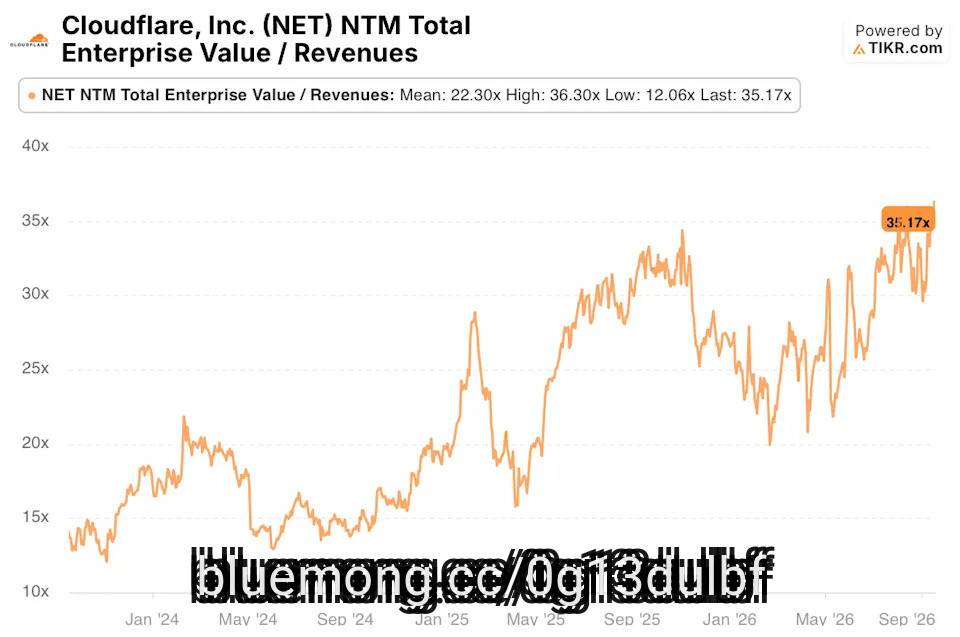
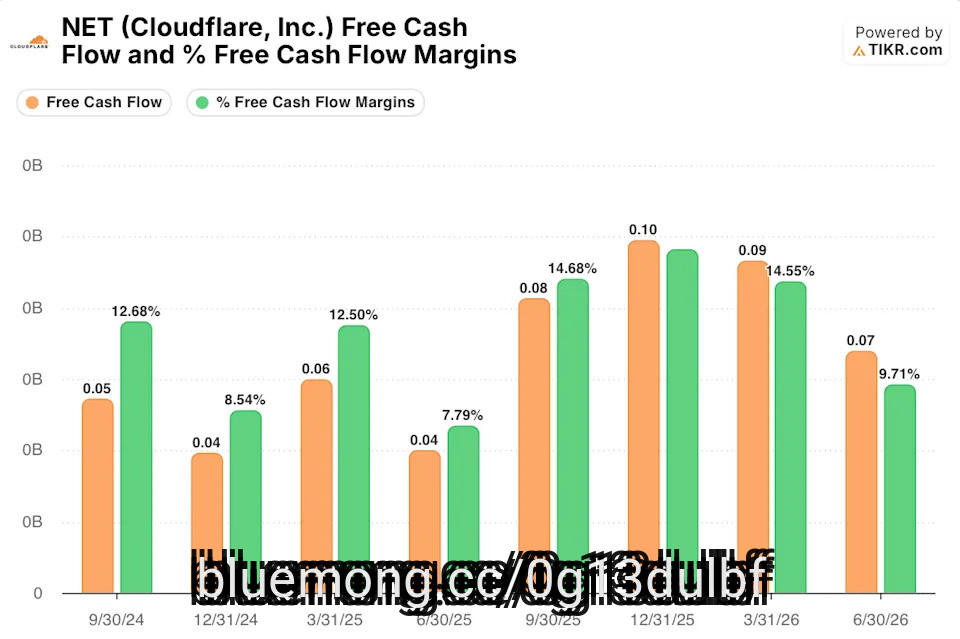
9 days ago
On September 15, Digital Realty (NYSE:DLR) made ServiceFabric MCP available, a software layer that lets AI agents design, monitor and troubleshoot network connections across more than 800 data centers, including third-party sites. That nudges a real estate company toward becoming a control panel for enterprise AI. It arrives after second quarter results reported on July 23, when Core FFO per share, the company's preferred earnings yardstick, excluding net promote rose to $2.13 from $1.87 a year earlier. Here is what the launch does, and what it has yet to prove.
The pitch is that enterprise AI needs more than servers. It needs power, cooling, and sovereign placement that software can control. ServiceFabric MCP handles four jobs: designing and provisioning connections, spotting capacity and watching live network health, managing access through OAuth 2, and handing troubleshooting to agents with links into chat and monitoring tools. It is also open by design. Customers do not have to live only in Digital Realty buildings or commit to a single AI model. An IDC research VP argues that public cloud interfaces alone cannot give enterprises enough control over data movement and policy, which favors providers that pair global reach with programmable interconnection. Digital Realty runs the system on its own AI workloads, and See All AI, a medical imaging developer, leans on the Boston campus and ServiceFabric to move large datasets quickly and securely.
The financial engine underneath is running hot. Renewal leases in the second quarter were signed at rates 25.4% higher on a cash basis, which shows customers will pay more to stay put. Signed leases waiting to start added up to a $1.9 billion backlog of annualized base rent at 100% share, so future revenue is already lined up. Management responded by lifting its 2026 Core FFO per share outlook, excluding net promote, to $8.15 to $8.20.
Start with what the launch has not shown yet. Digital Realty itself calls MCP an emerging standard, and ServiceFabric MCP is still being validated across internal, enterprise, and partner deployments. The announcement puts no dollar figure on what it could add to revenue, and the company describes it only as the first programmable surface of a larger architecture that may later stretch into ***** e, power and inventory. Until customers pay for this layer, it is a promising idea more than a line item.
Then there is the bill for the physical side. Digital Realty carried about $18.6 billion of debt at June 30, 2026, and its 2026 development spending outlook, net of partner contributions, now sits at $4.25 billion to $4.75 billion. The outlook also ***** umes new long-term debt priced at 4.5% to 5.5%, up from the earlier 4.0% to 4.5%. To help pay for growth, the company has sold roughly 13.5 million shares this year for about $2.5 billion, which spreads future earnings across more owners. And the quarter's headline flattered a bit: Core FFO per share of $2.65 included a $18
The pitch is that enterprise AI needs more than servers. It needs power, cooling, and sovereign placement that software can control. ServiceFabric MCP handles four jobs: designing and provisioning connections, spotting capacity and watching live network health, managing access through OAuth 2, and handing troubleshooting to agents with links into chat and monitoring tools. It is also open by design. Customers do not have to live only in Digital Realty buildings or commit to a single AI model. An IDC research VP argues that public cloud interfaces alone cannot give enterprises enough control over data movement and policy, which favors providers that pair global reach with programmable interconnection. Digital Realty runs the system on its own AI workloads, and See All AI, a medical imaging developer, leans on the Boston campus and ServiceFabric to move large datasets quickly and securely.
The financial engine underneath is running hot. Renewal leases in the second quarter were signed at rates 25.4% higher on a cash basis, which shows customers will pay more to stay put. Signed leases waiting to start added up to a $1.9 billion backlog of annualized base rent at 100% share, so future revenue is already lined up. Management responded by lifting its 2026 Core FFO per share outlook, excluding net promote, to $8.15 to $8.20.
Start with what the launch has not shown yet. Digital Realty itself calls MCP an emerging standard, and ServiceFabric MCP is still being validated across internal, enterprise, and partner deployments. The announcement puts no dollar figure on what it could add to revenue, and the company describes it only as the first programmable surface of a larger architecture that may later stretch into ***** e, power and inventory. Until customers pay for this layer, it is a promising idea more than a line item.
Then there is the bill for the physical side. Digital Realty carried about $18.6 billion of debt at June 30, 2026, and its 2026 development spending outlook, net of partner contributions, now sits at $4.25 billion to $4.75 billion. The outlook also ***** umes new long-term debt priced at 4.5% to 5.5%, up from the earlier 4.0% to 4.5%. To help pay for growth, the company has sold roughly 13.5 million shares this year for about $2.5 billion, which spreads future earnings across more owners. And the quarter's headline flattered a bit: Core FFO per share of $2.65 included a $18


9 days ago
On August 6, Wheaton Precious Metals (NYSE:WPM) reported second-quarter net earnings of $543 million on $929 million of revenue, both records. Through the first half, net earnings rose 106% to $1.1 billion. During the quarter, the company also made net upfront cash payments of $4.5 billion relative to mineral stream interests, and it now carries $2.0 billion of total debt against $100 million of cash on hand. Here is what that trade looks like up close.
Start with what the streaming model does when prices climb. Wheaton sold 14% more gold equivalent ounces than a year ago, but the average realized gold equivalent price jumped 61% in Q2, and that higher price explains most of the revenue surge. Costs per ounce rose from $406 to $568, yet the cash operating margin per ounce still grew 65% to $3,875, faster than gold itself appreciated. Operating cash flow hit $650 million in the quarter and $1.4 billion for the half.
The second argument is that plenty of growth hasn't arrived yet. Only about 3% of this year's production comes from **** ets still in construction or ramp-up, and the company forecasts a rise of roughly 50% to 1,200,000 gold equivalent ounces by 2030. Some of that ramp has dates attached. Ivanhoe now expects commercial production at Platreef in the fourth quarter of 2026, and Montage Gold is targeting first gold at Koné in late Q4. Effective April 1, Wheaton expanded its share of silver production from Antamina from 33.75% to 67.5% through the newly acquired BHP Antamina PMPA.
Growth on this scale wasn't free. Wheaton had no bank debt at the end of 2025. On April 1, it drew $1.5 billion on a new two-year term loan to help pay for Antamina, and finance costs that were negligible a year ago now take a real bite. Net debt stands at $1.9 billion. Taxes are heavier too. Wheaton paid $109 million of global minimum tax on June 24, and another Cdn$346 million is due around March 31, 2027.
Operations also gave investors a few reasons for caution. Gold ounces produced slipped 2.6% year over year, so the 6% rise in gold equivalent production leaned heavily on the Antamina purchase. Gold output at Salobo fell 11% on lower grades. At Constancia, it fell 35% after mining at the higher-grade Pampacancha pit finished in the fourth quarter of 2025. Hemlo Mining said on July 20 that its second-quarter output fell below the first quarter's, and Rio2 said on May 15 that Fenix missed planned tonnes and grade in Q1. And because the revenue jump came mainly from price, the same leverage works in reverse if metals slip.
#wheaton
Start with what the streaming model does when prices climb. Wheaton sold 14% more gold equivalent ounces than a year ago, but the average realized gold equivalent price jumped 61% in Q2, and that higher price explains most of the revenue surge. Costs per ounce rose from $406 to $568, yet the cash operating margin per ounce still grew 65% to $3,875, faster than gold itself appreciated. Operating cash flow hit $650 million in the quarter and $1.4 billion for the half.
The second argument is that plenty of growth hasn't arrived yet. Only about 3% of this year's production comes from **** ets still in construction or ramp-up, and the company forecasts a rise of roughly 50% to 1,200,000 gold equivalent ounces by 2030. Some of that ramp has dates attached. Ivanhoe now expects commercial production at Platreef in the fourth quarter of 2026, and Montage Gold is targeting first gold at Koné in late Q4. Effective April 1, Wheaton expanded its share of silver production from Antamina from 33.75% to 67.5% through the newly acquired BHP Antamina PMPA.
Growth on this scale wasn't free. Wheaton had no bank debt at the end of 2025. On April 1, it drew $1.5 billion on a new two-year term loan to help pay for Antamina, and finance costs that were negligible a year ago now take a real bite. Net debt stands at $1.9 billion. Taxes are heavier too. Wheaton paid $109 million of global minimum tax on June 24, and another Cdn$346 million is due around March 31, 2027.
Operations also gave investors a few reasons for caution. Gold ounces produced slipped 2.6% year over year, so the 6% rise in gold equivalent production leaned heavily on the Antamina purchase. Gold output at Salobo fell 11% on lower grades. At Constancia, it fell 35% after mining at the higher-grade Pampacancha pit finished in the fourth quarter of 2025. Hemlo Mining said on July 20 that its second-quarter output fell below the first quarter's, and Rio2 said on May 15 that Fenix missed planned tonnes and grade in Q1. And because the revenue jump came mainly from price, the same leverage works in reverse if metals slip.
#wheaton