29 mins. ago
Freight fraud risks and carrier vetting are the focus as Highway Chief Commercial Officer Michael Caney joins FreightWaves Today. He breaks down what brokers, carriers and shippers need to watch right now when onboarding and monitoring capacity.If you work fraud prevention, carrier compliance or network procurement, this conversation gets straight to the operational takeaway without the fluff.#FreightFraud #CarrierVetting #SupplyChain
Carrier-vetting platform Highway is putting its balance sheet behind its fraud-detection product: if a broker moves freight using Highway's guarantee standard and loses a load, Highway writes a check for $100,000. The company's chief commercial officer said the program covers the vast majority of carrier capacity in North America — and has paid out only once across roughly one million loads.
Of the approximately 175,000 carriers that move freight for freight brokers, Highway says more than 82% qualify for the guarantee tier. "What I would tell you is the industry keeps trying to solve for the bottom 18% of the market," the CCO said. "And what we're saying is if you will just move your freight to this cohort of carriers, which is the majority of capacity in North America, not only will you be fine, but Highway will stand behind it with a performance guarantee."
"The average cargo theft is not the $100,000, it's $250,000. This idea that a motor carrier can just show up and say, hey man, I'm gonna need this cargo, it's $250 grand, I'm good for it, is bananas."
The single payout to date stemmed from an identity-design flaw tied to California's non-domiciled limited-term licensing rules. A fraudulent carrier obtained a new license through California's process, resubmitted in Highway's system, and the alert dropped off before the bug was caught and fixed — costing Highway $100,000. The CCO described theft events as a "Swiss cheese" of compounding decisions rather than a single failure point, and said Highway continuously monitors for ownership changes, inbox compromises, and cyber anomalies within the guarantee framework.
#carriers #capacity #America
Carrier-vetting platform Highway is putting its balance sheet behind its fraud-detection product: if a broker moves freight using Highway's guarantee standard and loses a load, Highway writes a check for $100,000. The company's chief commercial officer said the program covers the vast majority of carrier capacity in North America — and has paid out only once across roughly one million loads.
Of the approximately 175,000 carriers that move freight for freight brokers, Highway says more than 82% qualify for the guarantee tier. "What I would tell you is the industry keeps trying to solve for the bottom 18% of the market," the CCO said. "And what we're saying is if you will just move your freight to this cohort of carriers, which is the majority of capacity in North America, not only will you be fine, but Highway will stand behind it with a performance guarantee."
"The average cargo theft is not the $100,000, it's $250,000. This idea that a motor carrier can just show up and say, hey man, I'm gonna need this cargo, it's $250 grand, I'm good for it, is bananas."
The single payout to date stemmed from an identity-design flaw tied to California's non-domiciled limited-term licensing rules. A fraudulent carrier obtained a new license through California's process, resubmitted in Highway's system, and the alert dropped off before the bug was caught and fixed — costing Highway $100,000. The CCO described theft events as a "Swiss cheese" of compounding decisions rather than a single failure point, and said Highway continuously monitors for ownership changes, inbox compromises, and cyber anomalies within the guarantee framework.
#carriers #capacity #America


4 hours ago
Autonomous vehicle company May Mobility is merging with a special purpose acquisition company (SPAC) and will become a publicly traded company. It's a deal that could raise more than $300 million for May Mobility at a valuation of $1.4 billion, the company said Wednesday.
Once the merger is complete, May Mobility said it will be the first public company in the U.S. that is focused entirely on autonomous ride-hailing vehicles. This is meant to differentiate it from a number of other public companies working on autonomy, including Tesla, Rivian, Alphabet (with Waymo), and trucking-focused Aurora and Kodiak.
The move sets up May Mobility to be a test of the stock market's appetite for pure-play robotaxi ventures.
It will also be a test of May Mobility's approach to autonomy, which it pitches as "asset-light" and "partnership-first." Instead of owning and operating the robotaxis, May Mobility's business revolves around selling its autonomous vehicles to its fleet partners over time while maintaining control of any remote supervision and software updates. In exchange, May Mobility receives either fixed fees or per-trip licensing fees.
Founded in 2017, May Mobility currently operates autonomous Toyota Siennas in three locations in the U.S. It has a partnership with Lyft in Atlanta, and offers rides in two cities — Eden Prairie and Grand Rapids — in Minnesota.
#company #autonomous #focused
Once the merger is complete, May Mobility said it will be the first public company in the U.S. that is focused entirely on autonomous ride-hailing vehicles. This is meant to differentiate it from a number of other public companies working on autonomy, including Tesla, Rivian, Alphabet (with Waymo), and trucking-focused Aurora and Kodiak.
The move sets up May Mobility to be a test of the stock market's appetite for pure-play robotaxi ventures.
It will also be a test of May Mobility's approach to autonomy, which it pitches as "asset-light" and "partnership-first." Instead of owning and operating the robotaxis, May Mobility's business revolves around selling its autonomous vehicles to its fleet partners over time while maintaining control of any remote supervision and software updates. In exchange, May Mobility receives either fixed fees or per-trip licensing fees.
Founded in 2017, May Mobility currently operates autonomous Toyota Siennas in three locations in the U.S. It has a partnership with Lyft in Atlanta, and offers rides in two cities — Eden Prairie and Grand Rapids — in Minnesota.
#company #autonomous #focused


4 days ago
Costco has raised the price of its Kirkland Signature full-synthetic motor oil and begun limiting how much any one member can purchase, as a global lubricant shortage tied to the ongoing Middle East conflict pushes crude oil toward $100 a barrel.
That 10-quart case — two 5-quart bottles, enough for a typical V6 or V8 oil change — has jumped to $57.99, compared with the roughly $30 price members had grown accustomed to paying, according to The Drive. Stores are capping purchases at two units per customer per week. The retailer has also imposed a five-per-member limit on Mobil 1, with six quarts of that brand running $44.
The rationing reflects pressure from multiple directions. The connection to fuel prices runs through the refinery: base oil shares its crude-oil origins with gasoline and diesel, so when margins on finished fuel are strong, refiners have a financial reason to favor fuel production over lubricant stock, according to The Auto Wire. EIA data showed the gasoline crack spread sitting roughly a dollar per gallon higher than where it stood at the same point in 2025, a gap that has squeezed base oil availability and pushed its price upward.
Regulatory and licensing costs add a separate layer of expense. The Kirkland 5W-30 displays the dexos1 Gen 3 certification, GM's proprietary specification, and earning that mark is not free — manufacturers must put their formulation through GM's independent testing protocol and obtain a license from the automaker, paying separately for each product and each unit sold, according to The Auto Wire. Layered on top of that is an industry-wide burden: when the API SP category took effect around 2020, it introduced seven additional laboratory tests with no equivalent in the previous standard, among them a procedure targeting low-speed pre-ignition, the knock-like detonation problem **** ociated with modern turbocharged, direct-injection engines.
The supply squeeze is unfolding against a backdrop of a worsening global oil deficit. The International Energy Agency cut its 2026 global oil supply forecast to 102 million barrels per day in August, projecting a deficit of 1.8 million barrels per day in the third quarter — more than double its prior estimate. **** ulative global inventory draws since the start of the U.S.-Iran conflict have reached more than 500 million barrels, and Chevron CEO Mike Wirth said last week that the cushions that had softened earlier price increases have been exhausted. U.S. diesel prices crossed $6 per gallon for the first time, sitting at $6.06 as of Monday, an 8-cent increase from Sunday and 21 cents above week-earlier levels, according to AAA.
#barrels #wire
That 10-quart case — two 5-quart bottles, enough for a typical V6 or V8 oil change — has jumped to $57.99, compared with the roughly $30 price members had grown accustomed to paying, according to The Drive. Stores are capping purchases at two units per customer per week. The retailer has also imposed a five-per-member limit on Mobil 1, with six quarts of that brand running $44.
The rationing reflects pressure from multiple directions. The connection to fuel prices runs through the refinery: base oil shares its crude-oil origins with gasoline and diesel, so when margins on finished fuel are strong, refiners have a financial reason to favor fuel production over lubricant stock, according to The Auto Wire. EIA data showed the gasoline crack spread sitting roughly a dollar per gallon higher than where it stood at the same point in 2025, a gap that has squeezed base oil availability and pushed its price upward.
Regulatory and licensing costs add a separate layer of expense. The Kirkland 5W-30 displays the dexos1 Gen 3 certification, GM's proprietary specification, and earning that mark is not free — manufacturers must put their formulation through GM's independent testing protocol and obtain a license from the automaker, paying separately for each product and each unit sold, according to The Auto Wire. Layered on top of that is an industry-wide burden: when the API SP category took effect around 2020, it introduced seven additional laboratory tests with no equivalent in the previous standard, among them a procedure targeting low-speed pre-ignition, the knock-like detonation problem **** ociated with modern turbocharged, direct-injection engines.
The supply squeeze is unfolding against a backdrop of a worsening global oil deficit. The International Energy Agency cut its 2026 global oil supply forecast to 102 million barrels per day in August, projecting a deficit of 1.8 million barrels per day in the third quarter — more than double its prior estimate. **** ulative global inventory draws since the start of the U.S.-Iran conflict have reached more than 500 million barrels, and Chevron CEO Mike Wirth said last week that the cushions that had softened earlier price increases have been exhausted. U.S. diesel prices crossed $6 per gallon for the first time, sitting at $6.06 as of Monday, an 8-cent increase from Sunday and 21 cents above week-earlier levels, according to AAA.
#barrels #wire


6 days ago
Dolly Parton and Tennessee go hand in hand. Dollywood already draws tourists who love her music. But the state has officially decided to honor her by changing the name of Nashville International Airport so every traveler will be familiar with her name.
TMZ reported that the Metropolitan Nashville Airport Authority voted unanimously on Sept. 11 to proceed with the name change. Airport officials are hoping to work with the country legend's estate on potential merchandise and licensing revenue.
The "Jolene" songwriter created another tourist hotspot before her death. Dolly Parton's Songwriter Hotel and museum opens in October 2026. The museum covers every decade of her life. Of course, there is a music venue on a different floor. Then there is a separate lounge for more live music called "Joelene's" and a cafe.
ZUMAPRESS.com / MEGA
"I am so proud of this," Parton told PEOPLE. "We found this location early one morning. I knew I wanted to do something special in Nashville, and until I saw this building, nothing ever hit me as the right thing to do."
#name #every
TMZ reported that the Metropolitan Nashville Airport Authority voted unanimously on Sept. 11 to proceed with the name change. Airport officials are hoping to work with the country legend's estate on potential merchandise and licensing revenue.
The "Jolene" songwriter created another tourist hotspot before her death. Dolly Parton's Songwriter Hotel and museum opens in October 2026. The museum covers every decade of her life. Of course, there is a music venue on a different floor. Then there is a separate lounge for more live music called "Joelene's" and a cafe.
ZUMAPRESS.com / MEGA
"I am so proud of this," Parton told PEOPLE. "We found this location early one morning. I knew I wanted to do something special in Nashville, and until I saw this building, nothing ever hit me as the right thing to do."
#name #every


6 days ago
An AI-hungry Google (GOOG, GOOGL) isn't playing nice with one of the largest content publishers on the internet.
"Here's the truth. For a long time, we had a deal with Google, an unwritten deal, which was 'you can use our content to build your search product, and in return, we get sessions,'" People Inc. (PPLI) CEO Neil Vogel told Yahoo Finance from the Goldman Sachs Communacopia & Tech Conference (video above). "Now the search product has turned into an AI product by and large, and they still use our content to train their AI, both in real time and in a training way — we don't have to get into the AI terminology of it — but now they don't share anything with us."
Google's push into AI-powered summaries has upended search traffic for publishers. Many fear the situation will get worse, triggering more sweeping cost cuts among many players in 2026.
Vogel said the company has signed content licensing deals with Microsoft (MSFT), Meta (META), and OpenAI (OPAI.PVT). Ideally, he would also like to ink one with Google.
He stopped short of saying he would turn off Google from crawling People's content.
#meta
"Here's the truth. For a long time, we had a deal with Google, an unwritten deal, which was 'you can use our content to build your search product, and in return, we get sessions,'" People Inc. (PPLI) CEO Neil Vogel told Yahoo Finance from the Goldman Sachs Communacopia & Tech Conference (video above). "Now the search product has turned into an AI product by and large, and they still use our content to train their AI, both in real time and in a training way — we don't have to get into the AI terminology of it — but now they don't share anything with us."
Google's push into AI-powered summaries has upended search traffic for publishers. Many fear the situation will get worse, triggering more sweeping cost cuts among many players in 2026.
Vogel said the company has signed content licensing deals with Microsoft (MSFT), Meta (META), and OpenAI (OPAI.PVT). Ideally, he would also like to ink one with Google.
He stopped short of saying he would turn off Google from crawling People's content.
#meta


10 days ago
Apple Inc. (NASDAQ:AAPL) raised the price of Apple TV in the U.S. to $14.99 a month from $12.99 and increased the individual Apple One bundle to $21.95 a month from $19.95, CNBC reported.
Apple TV launched in 2019 at $4.99 a month and has since added significant content, including the film "F1" and a fourth season of "Ted Lasso." The move follows a $1-a-month increase to Apple Music in July, which Apple attributed to licensing costs. Apple reported $30.7 billion in services revenue for its fiscal third quarter, up 12% year over year. The segment's gross margin fell more than a percentage point sequentially, which the company blamed on product mix and foreign exchange headwinds.
The higher price shows a genuinely larger content library, not just a margin grab. Apple TV launched with limited programming at $4.99 a month. It now includes award-winning originals like "Severance" and blockbuster films like "F1" and gives Apple a stronger case that the price increase tracks real value added rather than outpacing what subscribers get.
Apple Inc. (NASDAQ:AAPL) is raising prices in step with the rest of the industry, not standing out as an outlier. Netflix, Hulu, Disney+, and Peacock have all raised their own prices recently, reducing the competitive and reputational risk that price-sensitive subscribers abandon Apple TV specifically for a cheaper alternative.
Services remains a genuine growth engine with real momentum behind it. Revenue in the segment grew 12% to $30.7 billion in the fiscal third quarter, and price increases across Apple TV, Apple Music, and Apple One bundles all flow directly into that high-margin, recurring revenue line, reinforcing one of Apple's most valuable businesses beyond hardware sales.
#Margin #aapl #Services
Apple TV launched in 2019 at $4.99 a month and has since added significant content, including the film "F1" and a fourth season of "Ted Lasso." The move follows a $1-a-month increase to Apple Music in July, which Apple attributed to licensing costs. Apple reported $30.7 billion in services revenue for its fiscal third quarter, up 12% year over year. The segment's gross margin fell more than a percentage point sequentially, which the company blamed on product mix and foreign exchange headwinds.
The higher price shows a genuinely larger content library, not just a margin grab. Apple TV launched with limited programming at $4.99 a month. It now includes award-winning originals like "Severance" and blockbuster films like "F1" and gives Apple a stronger case that the price increase tracks real value added rather than outpacing what subscribers get.
Apple Inc. (NASDAQ:AAPL) is raising prices in step with the rest of the industry, not standing out as an outlier. Netflix, Hulu, Disney+, and Peacock have all raised their own prices recently, reducing the competitive and reputational risk that price-sensitive subscribers abandon Apple TV specifically for a cheaper alternative.
Services remains a genuine growth engine with real momentum behind it. Revenue in the segment grew 12% to $30.7 billion in the fiscal third quarter, and price increases across Apple TV, Apple Music, and Apple One bundles all flow directly into that high-margin, recurring revenue line, reinforcing one of Apple's most valuable businesses beyond hardware sales.
#Margin #aapl #Services

10 days ago
On August 5, Primerica (NYSE:PRI) reported second-quarter results that read as two different companies bolted together. Net income climbed 13% to $202 million, and earnings per diluted share jumped 19% to $6.45, pushing return on stockholders' equity to 32.1%. Total revenue reached $865 million, up 9% from a year earlier. But those headline figures obscure a split story. The investment arm is sprinting to record highs while the life insurance sales force is quietly getting smaller. Here is what is actually moving the numbers.
Investment and savings product sales hit a record $4.4 billion in the quarter, up 23% from a year ago, while client ***** et values ended the period at an all-time high of $140 billion, up 16%. Net inflows added another $397 million. That growth translated directly into profit. ISP segment revenue rose 21% to $361 million, and pretax income jumped 31% to $104 million, meaning the segment's margin expanded even as it grew. The reason: ***** et-based commission revenue climbed 28%, outpacing the 19% rise in average client ***** ets, thanks to a shift toward higher-margin US managed accounts and Canadian mutual funds.
Primerica also returned $172 million to shareholders in the quarter through $135 million in buybacks and roughly $37 million in dividends, bringing year-to-date capital returns to $352 million. Its effective tax rate improved to 21.7% from 23.9% a year earlier, and its life insurer's statutory risk-based capital ratio stood at approximately 440%, a cushion most insurers would envy.
The company's distribution engine tells a rougher story. The life-licensed sales force fell 3% year over year to 148,612 representatives. Recruiting rose 2% to 82,346 recruits, but far fewer of them actually got licensed: new life-licensed representatives dropped 15% to 11,020. That gap between recruiting and licensing shows up directly in output. The company issued 78,904 life insurance policies, down 12%, with total face amount issued falling 8% to $27.7 billion.
Term Life revenue was roughly flat at $444 million even as adjusted direct premiums rose 3%, and segment pretax income fell 4% to $148 million. Part of that came from cost creep rather than claims: the benefits and claims ratio held steady at 57.9%, but the insurance expense ratio rose to 8.4% from 7.6% a year earlier, eating into a segment that is supposed to be Primerica's stable, predictable cash generator.
#million #year #rose #sales
Investment and savings product sales hit a record $4.4 billion in the quarter, up 23% from a year ago, while client ***** et values ended the period at an all-time high of $140 billion, up 16%. Net inflows added another $397 million. That growth translated directly into profit. ISP segment revenue rose 21% to $361 million, and pretax income jumped 31% to $104 million, meaning the segment's margin expanded even as it grew. The reason: ***** et-based commission revenue climbed 28%, outpacing the 19% rise in average client ***** ets, thanks to a shift toward higher-margin US managed accounts and Canadian mutual funds.
Primerica also returned $172 million to shareholders in the quarter through $135 million in buybacks and roughly $37 million in dividends, bringing year-to-date capital returns to $352 million. Its effective tax rate improved to 21.7% from 23.9% a year earlier, and its life insurer's statutory risk-based capital ratio stood at approximately 440%, a cushion most insurers would envy.
The company's distribution engine tells a rougher story. The life-licensed sales force fell 3% year over year to 148,612 representatives. Recruiting rose 2% to 82,346 recruits, but far fewer of them actually got licensed: new life-licensed representatives dropped 15% to 11,020. That gap between recruiting and licensing shows up directly in output. The company issued 78,904 life insurance policies, down 12%, with total face amount issued falling 8% to $27.7 billion.
Term Life revenue was roughly flat at $444 million even as adjusted direct premiums rose 3%, and segment pretax income fell 4% to $148 million. Part of that came from cost creep rather than claims: the benefits and claims ratio held steady at 57.9%, but the insurance expense ratio rose to 8.4% from 7.6% a year earlier, eating into a segment that is supposed to be Primerica's stable, predictable cash generator.
#million #year #rose #sales


11 days ago
Actor Brad Pitt is best known for Hollywood hits like "Fight Club" and "Mr. & Mrs. Smith," but his lucrative film roles played only a small part in his overall fortune. From his multi-million-dollar real estate portfolio to his powerful production company, Plan B Entertainment, here's how the actor built his Hollywood empire.
News Licensing / MEGA
Brad Pitt has a net worth of $400 million, according to Celebrity Net Worth. This contrasts sharply with his ex-wife, Angelina Jolie, whose net worth is estimated at around $120 million.
The actor earned an upfront salary of $30 million for the 2025 Apple TV movie "F1," which was a major payday for the actor. However, he also made $35 million to co-star with George Clooney in the 2024 movie "Wolfs." If that wasn't enough, he also made $40 million for the "Once Upon A Time… In Hollywood" sequel.
MEGA
#actor
News Licensing / MEGA
Brad Pitt has a net worth of $400 million, according to Celebrity Net Worth. This contrasts sharply with his ex-wife, Angelina Jolie, whose net worth is estimated at around $120 million.
The actor earned an upfront salary of $30 million for the 2025 Apple TV movie "F1," which was a major payday for the actor. However, he also made $35 million to co-star with George Clooney in the 2024 movie "Wolfs." If that wasn't enough, he also made $40 million for the "Once Upon A Time… In Hollywood" sequel.
MEGA
#actor




12 days ago
On August 5, Primerica (NYSE:PRI) reported second-quarter results that read as two different companies bolted together. Net income climbed 13% to $202 million, and earnings per diluted share jumped 19% to $6.45, pushing return on stockholders' equity to 32.1%. Total revenue reached $865 million, up 9% from a year earlier. But those headline figures obscure a split story. The investment arm is sprinting to record highs while the life insurance sales force is quietly getting smaller. Here is what is actually moving the numbers.
Investment and savings product sales hit a record $4.4 billion in the quarter, up 23% from a year ago, while client ****** et values ended the period at an all-time high of $140 billion, up 16%. Net inflows added another $397 million. That growth translated directly into profit. ISP segment revenue rose 21% to $361 million, and pretax income jumped 31% to $104 million, meaning the segment's margin expanded even as it grew. The reason: ****** et-based commission revenue climbed 28%, outpacing the 19% rise in average client ****** ets, thanks to a shift toward higher-margin US managed accounts and Canadian mutual funds.
Primerica also returned $172 million to shareholders in the quarter through $135 million in buybacks and roughly $37 million in dividends, bringing year-to-date capital returns to $352 million. Its effective tax rate improved to 21.7% from 23.9% a year earlier, and its life insurer's statutory risk-based capital ratio stood at approximately 440%, a cushion most insurers would envy.
The company's distribution engine tells a rougher story. The life-licensed sales force fell 3% year over year to 148,612 representatives. Recruiting rose 2% to 82,346 recruits, but far fewer of them actually got licensed: new life-licensed representatives dropped 15% to 11,020. That gap between recruiting and licensing shows up directly in output. The company issued 78,904 life insurance policies, down 12%, with total face amount issued falling 8% to $27.7 billion.
Term Life revenue was roughly flat at $444 million even as adjusted direct premiums rose 3%, and segment pretax income fell 4% to $148 million. Part of that came from cost creep rather than claims: the benefits and claims ratio held steady at 57.9%, but the insurance expense ratio rose to 8.4% from 7.6% a year earlier, eating into a segment that is supposed to be Primerica's stable, predictable cash generator.
#sales
Investment and savings product sales hit a record $4.4 billion in the quarter, up 23% from a year ago, while client ****** et values ended the period at an all-time high of $140 billion, up 16%. Net inflows added another $397 million. That growth translated directly into profit. ISP segment revenue rose 21% to $361 million, and pretax income jumped 31% to $104 million, meaning the segment's margin expanded even as it grew. The reason: ****** et-based commission revenue climbed 28%, outpacing the 19% rise in average client ****** ets, thanks to a shift toward higher-margin US managed accounts and Canadian mutual funds.
Primerica also returned $172 million to shareholders in the quarter through $135 million in buybacks and roughly $37 million in dividends, bringing year-to-date capital returns to $352 million. Its effective tax rate improved to 21.7% from 23.9% a year earlier, and its life insurer's statutory risk-based capital ratio stood at approximately 440%, a cushion most insurers would envy.
The company's distribution engine tells a rougher story. The life-licensed sales force fell 3% year over year to 148,612 representatives. Recruiting rose 2% to 82,346 recruits, but far fewer of them actually got licensed: new life-licensed representatives dropped 15% to 11,020. That gap between recruiting and licensing shows up directly in output. The company issued 78,904 life insurance policies, down 12%, with total face amount issued falling 8% to $27.7 billion.
Term Life revenue was roughly flat at $444 million even as adjusted direct premiums rose 3%, and segment pretax income fell 4% to $148 million. Part of that came from cost creep rather than claims: the benefits and claims ratio held steady at 57.9%, but the insurance expense ratio rose to 8.4% from 7.6% a year earlier, eating into a segment that is supposed to be Primerica's stable, predictable cash generator.
#sales


13 days ago
Adobe Inc. (NASDAQ:ADBE) is strengthening its position in agentic artificial intelligence as the company looks to expand its marketing intelligence and workflow automation capabilities. The company had recently acquired Rilo, an India-based AI workflow automation startup, in a deal involving the licensing of Rilo's technology and the addition of its team.
The transaction gives Adobe access to technology designed to automate increasingly complex marketing workflows. The move comes as businesses accelerate their adoption of AI tools capable of not only generating content but also executing tasks with limited human intervention.
Rilo has developed AI agents capable of understanding plain-English instructions and executing multi-step marketing and go-to-market workflows. For Adobe, the technology could help expand its AI strategy beyond content generation toward AI agents that can act on behalf of marketers.
Rilo's technology could also enhance Adobe's existing marketing products as the company seeks to deepen its relationships with large enterprise customers.
Adobe could integrate Rilo's capabilities across its marketing ecosystem to automate activities such as competitor intelligence, sales call ***** ysis, marketing workflow execution, and content distribution.
#intelligence
The transaction gives Adobe access to technology designed to automate increasingly complex marketing workflows. The move comes as businesses accelerate their adoption of AI tools capable of not only generating content but also executing tasks with limited human intervention.
Rilo has developed AI agents capable of understanding plain-English instructions and executing multi-step marketing and go-to-market workflows. For Adobe, the technology could help expand its AI strategy beyond content generation toward AI agents that can act on behalf of marketers.
Rilo's technology could also enhance Adobe's existing marketing products as the company seeks to deepen its relationships with large enterprise customers.
Adobe could integrate Rilo's capabilities across its marketing ecosystem to automate activities such as competitor intelligence, sales call ***** ysis, marketing workflow execution, and content distribution.
#intelligence

13 days ago
The U.S. power grid is entering a period unlike any it has experienced in decades. Rapid electrification, domestic manufacturing, and the exponential growth of artificial intelligence are reshaping electricity demand. A recent report from Lawrence Berkeley National Laboratory, supported by the U.S. Department of Energy, projects that data centers alone could account for between 9.5% and 15.3% of total U.S. electricity consumption by 2030. More broadly, U.S. electricity demand is projected to grow by approximately 15% to 20% by 2035—roughly 80–110 GW of firm capacity—underscoring the scale of new generation that will be needed. Against this backdrop, executives across the utility, independent power producer, industrial, and technology sectors are making investment decisions that will shape the grid for decades.Safety is foundational to any nuclear project and is subject to rigorous review by the U.S. Nuclear Regulatory Commission (NRC). But the commercial and execution risks utilities must weigh extend well beyond safety: reactor design, constructability, supply chain readiness, licensing progress, workforce depth, operability, performance, and reliability.Advanced reactors are often discussed as a single technology class, yet the commercial and execution risks ******* ociated with individual designs differ substantially. As these technologies move toward commercial deployment, evaluating them requires a more comprehensive ******* sment of their technology, deployability, and commercial merits—and, importantly, the extent to which each design reduces or eliminates risk across multiple dimensions over the full project lifecycle. That ******* sment begins with three structural questions.
Capital efficiency is more than the magnitude of overnight capital cost (OCC). It encompasses how effectively capital is deployed and the capital intensity over time—especially before the commercial operation date (COD)—as well as post-COD costs: fuel, refueling outages, major projects and refurbishment, labor and other operations and maintenance (O&M) expenditures, and ultimately decommissioning. OCC offers only a partial view, since financing costs can account for a significant portion of total project cost. A smaller, simpler, faster-to-build design may achieve superior unit economics compared with higher-output designs that initially project a lower $/kW, once financing and schedule are considered. This amplifies the importance of long-lead materials, supply chain certainty and resilience, workforce and learning effects, and constructability in determining overall project cost and capital exposure.Utilities should also examine how fundamental reactor design choices affect both construction and lifecycle costs. Designs with high inherent safety that employ passive safety features—placing the plant into a safe condition through the natural laws of physics rather than relying primarily on active systems or operator intervention—can reduce reliance on multiple trai
Capital efficiency is more than the magnitude of overnight capital cost (OCC). It encompasses how effectively capital is deployed and the capital intensity over time—especially before the commercial operation date (COD)—as well as post-COD costs: fuel, refueling outages, major projects and refurbishment, labor and other operations and maintenance (O&M) expenditures, and ultimately decommissioning. OCC offers only a partial view, since financing costs can account for a significant portion of total project cost. A smaller, simpler, faster-to-build design may achieve superior unit economics compared with higher-output designs that initially project a lower $/kW, once financing and schedule are considered. This amplifies the importance of long-lead materials, supply chain certainty and resilience, workforce and learning effects, and constructability in determining overall project cost and capital exposure.Utilities should also examine how fundamental reactor design choices affect both construction and lifecycle costs. Designs with high inherent safety that employ passive safety features—placing the plant into a safe condition through the natural laws of physics rather than relying primarily on active systems or operator intervention—can reduce reliance on multiple trai


13 days ago
Microsoft announced a new financial reporting structure on Wednesday, collapsing its three operating segments into two as artificial intelligence reshapes how the company organizes its business. The change takes effect in fiscal year 2027.
The two new segments are Agents and Infra, and Devices and Consumer. Those three categories — Productivity and Business Processes, Intelligent Cloud, and More Personal Computing — dated to 2015, according to CNBC.
Agents and Infra will include Azure cloud infrastructure, Microsoft 365, GitHub, productivity and server licensing, industry solutions, and frontier and support services. Devices and Consumer will cover search and advertising, Xbox, Windows operating system licenses, and device sales. The restructuring brings Microsoft's advertising businesses together under one segment, the company said.
"There's no question AI represents a profound shift in both technology and business," Chairman and Chief Executive Officer Satya Nadella wrote in the presentation. "It is changing what we build and how we operate, and it is blurring the boundaries between our products and reshaping our business models."
As part of the changes, Microsoft will begin reporting quarterly Azure revenue figures — a disclosure it has not previously made. Under the new, narrower definition of Azure, which excludes GitHub cloud services, developer cloud services, the Security Copilot **** istant, and healthcare and life sciences cloud products, Azure revenue grew 42% to $29.42 billion in the June quarter. That compares with 43% growth under the old Azure and other cloud services metric. Azure represented roughly 33% of Microsoft's total revenue in that period.
#Services #agents
The two new segments are Agents and Infra, and Devices and Consumer. Those three categories — Productivity and Business Processes, Intelligent Cloud, and More Personal Computing — dated to 2015, according to CNBC.
Agents and Infra will include Azure cloud infrastructure, Microsoft 365, GitHub, productivity and server licensing, industry solutions, and frontier and support services. Devices and Consumer will cover search and advertising, Xbox, Windows operating system licenses, and device sales. The restructuring brings Microsoft's advertising businesses together under one segment, the company said.
"There's no question AI represents a profound shift in both technology and business," Chairman and Chief Executive Officer Satya Nadella wrote in the presentation. "It is changing what we build and how we operate, and it is blurring the boundaries between our products and reshaping our business models."
As part of the changes, Microsoft will begin reporting quarterly Azure revenue figures — a disclosure it has not previously made. Under the new, narrower definition of Azure, which excludes GitHub cloud services, developer cloud services, the Security Copilot **** istant, and healthcare and life sciences cloud products, Azure revenue grew 42% to $29.42 billion in the June quarter. That compares with 43% growth under the old Azure and other cloud services metric. Azure represented roughly 33% of Microsoft's total revenue in that period.
#Services #agents


14 days ago
Sands Capital, an investment management company, released its "Sands Capital Select Growth Fund" Q2 2026 investor letter. The letter can be downloaded here. Select Growth Fund targets U.S. businesses driving significant structural change through disruptive innovation. The fund returned 23.2% in the quarter, outperforming the Russell 1000 Growth Index's 16.7%. U.S. large-cap growth equities rebounded sharply, driven by improving corporate fundamentals and renewed investor confidence in AI, despite geopolitical uncertainties. However, the market's gains were narrow, concentrated among AI beneficiaries. The portfolio's success stemmed from strength in AI infrastructure holdings, especially memory and storage, supported by better pricing and tightening supply. As AI development advances, continuous demand for compute capacity is expected, prompting investments in memory, CPUs, AI chips, and semiconductor manufacturing to address emerging bottlenecks essential for scaling AI. Also, check the fund's top five holdings to see its best picks in 2026.
In its second-quarter 2026 investor letter, Sands Capital Select Growth Fund highlighted Sphere Entertainment Co. (NYSE:SPHR). Sphere Entertainment Co. (NYSE:SPHR) is a US-based live entertainment and media company. On September 1, 2026, Sphere Entertainment Co. (NYSE:SPHR) closed at $133.30 per share, reflecting a market capitalization of $4.79 billion. Sphere Entertainment Co. (NYSE:SPHR) posted a one-month return of -17.02%, while its shares gained 175.53% over the past 52 weeks.
Sands Capital Select Growth Fund stated the following regarding Sphere Entertainment Co. (NYSE:SPHR) in its Q2 2026 investor letter:
"Sphere Entertainment Co. (NYSE:SPHR) and ****** e Exploration Technologies (SpaceX) were added as more idiosyncratic growth opportunities. Sphere is creating a new category of immersive live entertainment, where we believe premium in-person experiences may become more valuable as digital content becomes increasingly abundant. Its Las Vegas venue combines live events, original content, and proprietary technology, creating the potential for high utilization and attractive venue-level economics. Over time, the investment case depends on Sphere's ability to scale beyond Las Vegas through additional venues, licensing, and high-margin content monetization."
Sphere Entertainment Co. (NYSE:SPHR) is not on our list of the 40 Most Popular Stocks Among Hedge Funds. As per our database, 1 hedge fund portfolios held Sphere Entertainment Co. (NYSE:SPHR) at the end of the second quarter, which was 2 in the previous quarter. While we acknowledge the potential of Sphere Entertainment Co. (NYSE:SPHR) as an investment, we believe certain AI stocks offer greater upside potential and carry less downside risk. If you're looking for an extremely undervalued AI stock that also stands to benefit significantly from Trump-era tariffs and the onshoring trend, see our free report on the best short-term AI stock.
#NYSE #s
In its second-quarter 2026 investor letter, Sands Capital Select Growth Fund highlighted Sphere Entertainment Co. (NYSE:SPHR). Sphere Entertainment Co. (NYSE:SPHR) is a US-based live entertainment and media company. On September 1, 2026, Sphere Entertainment Co. (NYSE:SPHR) closed at $133.30 per share, reflecting a market capitalization of $4.79 billion. Sphere Entertainment Co. (NYSE:SPHR) posted a one-month return of -17.02%, while its shares gained 175.53% over the past 52 weeks.
Sands Capital Select Growth Fund stated the following regarding Sphere Entertainment Co. (NYSE:SPHR) in its Q2 2026 investor letter:
"Sphere Entertainment Co. (NYSE:SPHR) and ****** e Exploration Technologies (SpaceX) were added as more idiosyncratic growth opportunities. Sphere is creating a new category of immersive live entertainment, where we believe premium in-person experiences may become more valuable as digital content becomes increasingly abundant. Its Las Vegas venue combines live events, original content, and proprietary technology, creating the potential for high utilization and attractive venue-level economics. Over time, the investment case depends on Sphere's ability to scale beyond Las Vegas through additional venues, licensing, and high-margin content monetization."
Sphere Entertainment Co. (NYSE:SPHR) is not on our list of the 40 Most Popular Stocks Among Hedge Funds. As per our database, 1 hedge fund portfolios held Sphere Entertainment Co. (NYSE:SPHR) at the end of the second quarter, which was 2 in the previous quarter. While we acknowledge the potential of Sphere Entertainment Co. (NYSE:SPHR) as an investment, we believe certain AI stocks offer greater upside potential and carry less downside risk. If you're looking for an extremely undervalued AI stock that also stands to benefit significantly from Trump-era tariffs and the onshoring trend, see our free report on the best short-term AI stock.
#NYSE #s


14 days ago
By Sahil Pandey
Sept 2 (Reuters) - AI company Owkin said on Wednesday it has signed a licensing deal with Germany's Boehringer Ingelheim, giving the drugmaker access to its AI research platform and patient data to speed up discovery of drugs for cancer and immunity-related diseases.
The deal adds Boehringer to a growing list of drugmakers using Owkin's AI technology, "K Pro". AstraZeneca licensed it in May, while Sanofi expanded its partnership with a five-year agreement in June.
Here are some more details:
• The deal builds on the companies' pilot project in 2025, in which Owkin used its patient tumor samples and related biological datasets to help Boehringer prioritize potential drug targets, the AI company's CEO, Thomas Clozel, told Reuters.
#deal #patient
Sept 2 (Reuters) - AI company Owkin said on Wednesday it has signed a licensing deal with Germany's Boehringer Ingelheim, giving the drugmaker access to its AI research platform and patient data to speed up discovery of drugs for cancer and immunity-related diseases.
The deal adds Boehringer to a growing list of drugmakers using Owkin's AI technology, "K Pro". AstraZeneca licensed it in May, while Sanofi expanded its partnership with a five-year agreement in June.
Here are some more details:
• The deal builds on the companies' pilot project in 2025, in which Owkin used its patient tumor samples and related biological datasets to help Boehringer prioritize potential drug targets, the AI company's CEO, Thomas Clozel, told Reuters.
#deal #patient


15 days ago
On August 26, Biohaven (NYSE:BHVN) and SK Biopharmaceuticals announced a global licensing agreement covering opakalim, Biohaven's lead epilepsy candidate, in a deal worth up to $795 million plus royalties. SK Biopharmaceuticals picks up exclusive worldwide rights to Biohaven's Kv7 ion channel platform, while Biohaven walks away with $400 million in near-term cash. The timing lines up with an August 10, 2026 earnings report that showed Biohaven still losing well over $100 million a quarter, and the gap between those two dates explains a lot about why this deal happened now.
SK Biopharmaceuticals will pay up to $795 million in upfront and milestone payments connected to the Kv7 platform, on top of tiered royalties on US net sales of opakalim that range from the mid-teens to low twenties. Biohaven collects $350 million at closing and another $50 million in 2027, with as much as $150 million more available through development and regulatory milestones plus royalties on global sales. SK Biopharmaceuticals is also taking over Kv7 program costs going forward, including certain Knopp Biosciences obligations. CEO Vlad Coric described the structure as proof Biohaven can monetize its pipeline through partnerships rather than leaning on public markets for cash.
The deal only makes sense because opakalim looks like it works. In a proof-of-concept study in idiopathic generalized epilepsy, the median time to a second generalized tonic-clonic seizure stretched to 141 days on opakalim versus 47 days on placebo, and a third of patients made it through the full 24 weeks without a second seizure. In focal epilepsy, 54% of patients in an open-label extension study saw at least a 50% drop in seizure frequency over any six months, in a group of more than 100 patients.
Opakalim is also designed as a once-daily pill with no ******* ration required, a real edge over older antiseizure drugs. Pairing that data with SK Biopharmaceuticals, the company behind XCOPRI and the only firm to bring a new focal-seizure drug to the US market since 2016, gives Opakalim a commercial path Biohaven would have struggled to build alone. The cash also buys runway for the rest of the pipeline, including protein degraders BHV-1300 and BHV-1400, which have shown rapid, selective reductions in disease-driving antibodies in Graves' disease and IgA nephropathy with clean safety data across nearly 200 patients dosed.
Biohaven is giving up full ownership of an ******* et it now believes could be a major seller. Royalties in the mid-teens to low twenties are real money, but they are a fraction of what outright ownership of an approved epilepsy drug would be worth, and $50 million of the $400 million upfront does not arrive until 2027. The Knopp Biosciences obligations SK Biopharmaceuticals is absorbing, worth up to $245 million plus mid-single-digit royalties, are a reminder that other parties already have claims on opakalim's future revenue before Biohaven sees a dollar of profit from it.
#ro
SK Biopharmaceuticals will pay up to $795 million in upfront and milestone payments connected to the Kv7 platform, on top of tiered royalties on US net sales of opakalim that range from the mid-teens to low twenties. Biohaven collects $350 million at closing and another $50 million in 2027, with as much as $150 million more available through development and regulatory milestones plus royalties on global sales. SK Biopharmaceuticals is also taking over Kv7 program costs going forward, including certain Knopp Biosciences obligations. CEO Vlad Coric described the structure as proof Biohaven can monetize its pipeline through partnerships rather than leaning on public markets for cash.
The deal only makes sense because opakalim looks like it works. In a proof-of-concept study in idiopathic generalized epilepsy, the median time to a second generalized tonic-clonic seizure stretched to 141 days on opakalim versus 47 days on placebo, and a third of patients made it through the full 24 weeks without a second seizure. In focal epilepsy, 54% of patients in an open-label extension study saw at least a 50% drop in seizure frequency over any six months, in a group of more than 100 patients.
Opakalim is also designed as a once-daily pill with no ******* ration required, a real edge over older antiseizure drugs. Pairing that data with SK Biopharmaceuticals, the company behind XCOPRI and the only firm to bring a new focal-seizure drug to the US market since 2016, gives Opakalim a commercial path Biohaven would have struggled to build alone. The cash also buys runway for the rest of the pipeline, including protein degraders BHV-1300 and BHV-1400, which have shown rapid, selective reductions in disease-driving antibodies in Graves' disease and IgA nephropathy with clean safety data across nearly 200 patients dosed.
Biohaven is giving up full ownership of an ******* et it now believes could be a major seller. Royalties in the mid-teens to low twenties are real money, but they are a fraction of what outright ownership of an approved epilepsy drug would be worth, and $50 million of the $400 million upfront does not arrive until 2027. The Knopp Biosciences obligations SK Biopharmaceuticals is absorbing, worth up to $245 million plus mid-single-digit royalties, are a reminder that other parties already have claims on opakalim's future revenue before Biohaven sees a dollar of profit from it.
#ro
15 days ago
Investment management company First Pacific Advisors recently released its "FPA Queens Road Small Cap Value Fund" second-quarter 2026 investor letter. A copy of the letter can be downloaded here. The Fund returned 27.02% in the first half of 2026, outperforming the Russell 2000 Value Index's 22.99% gain and the S&P 600 Index's 23.90% return. Small-cap earnings growth also began accelerating relative to large caps, while the small-cap technology sector surged nearly 100% in 26H1. The fund's technology holdings gained 72.39%, contributing 14.87 percentage points, compared with a 95.27% return and 7.10-point contribution from the benchmark's technology sector. Excluding IT and cash, the Fund contributed 12.73% versus 15.89% for the Russell 2000 Value Index; on a fully invested basis, the figures were 16.62% and 17.59%, respectively. The portfolio continued to trim appreciated technology holdings amid the AI-driven rally, while maintaining a bottom-up approach and avoiding beaten-down SaaS stocks due to the widening range of AI-related outcomes. The fund also eliminated about $62 million in capital gains during Q2 and approximately $140 million year-to-date through July, while ending the quarter with 10.2% in cash. In addition, please check the Fund's top five holdings to know its best picks in 2026.
In its second-quarter 2026 investor letter, FPA Queens Road Small Cap Value Fund highlighted stocks like InterDigital (NASDAQ:IDCC). InterDigital (NASDAQ:IDCC) develops wireless and video technologies and generates licensing revenue from its portfolio of cellular and digital communications patents. The one-month return of InterDigital (NASDAQ:IDCC) was 3.67% while its shares traded between $249.14 and $412.60 over the last 52 weeks. On August 31, 2026, InterDigital (NASDAQ:IDCC) stock closed at approximately $335.15 per share, with a market capitalization of about $8.65 billion.
FPA Queens Road Small Cap Value Fund stated the following regarding InterDigital (NASDAQ:IDCC) in its Q2 2026 investor letter:
"Interdigital (NASDAQ:IDCC) owns an expansive collection of wireless patents. Most of their revenue comes from licensing agreements with smart phone manufacturers, but the company has also started licensing to consumer electronics, auto, industrial and media companies. CEO Liren Chen joined in 2021 from Qualcomm and has done an exceptional job ramping up the pace of licensing deals. The stock price has followed earnings growth higher and IDCC was a top performer for the Fund in 2023, 2024 and 2025. We have trimmed all the way up but still hold a less than 2% position in IDCC."
#fund #small #road
In its second-quarter 2026 investor letter, FPA Queens Road Small Cap Value Fund highlighted stocks like InterDigital (NASDAQ:IDCC). InterDigital (NASDAQ:IDCC) develops wireless and video technologies and generates licensing revenue from its portfolio of cellular and digital communications patents. The one-month return of InterDigital (NASDAQ:IDCC) was 3.67% while its shares traded between $249.14 and $412.60 over the last 52 weeks. On August 31, 2026, InterDigital (NASDAQ:IDCC) stock closed at approximately $335.15 per share, with a market capitalization of about $8.65 billion.
FPA Queens Road Small Cap Value Fund stated the following regarding InterDigital (NASDAQ:IDCC) in its Q2 2026 investor letter:
"Interdigital (NASDAQ:IDCC) owns an expansive collection of wireless patents. Most of their revenue comes from licensing agreements with smart phone manufacturers, but the company has also started licensing to consumer electronics, auto, industrial and media companies. CEO Liren Chen joined in 2021 from Qualcomm and has done an exceptional job ramping up the pace of licensing deals. The stock price has followed earnings growth higher and IDCC was a top performer for the Fund in 2023, 2024 and 2025. We have trimmed all the way up but still hold a less than 2% position in IDCC."
#fund #small #road


16 days ago
Reddit (NYSE: RDDT)'s data licensing deals with Alphabet Inc. (NASDAQ:GOOGL)'s Google and OpenAI are set to expire next year, and Wall Street simply can't decide whether these deals are a windfall or a warning sign.
On September 2, Baird ***** yst Colin Sebastian reiterated a Neutral rating and $185.00 price target on the stock. The note implies the next big test for Reddit: deciding whether its massive archive of human conversations are still of use to artificial intelligence companies.
According to the firm's ***** sment, the current share price reflects an outcome near the firm's low-end case scenario.
Reddit made a 2024 Google deal that lets Google use its posts to train and power its AI models. Reportedly worth $60 million a year, the deal is set to expire after which Reddit may reportedly choose to block Google's AI from using its content. A similar deal between Reddit and OpenAI estimated around $70 million is also set to expire soon.
Some other publishers such as USA Today, Reuters, Politico are also re-evaluating whether to let Google crawl their pages as AI summaries reduce referral traffic.
#openai #next
On September 2, Baird ***** yst Colin Sebastian reiterated a Neutral rating and $185.00 price target on the stock. The note implies the next big test for Reddit: deciding whether its massive archive of human conversations are still of use to artificial intelligence companies.
According to the firm's ***** sment, the current share price reflects an outcome near the firm's low-end case scenario.
Reddit made a 2024 Google deal that lets Google use its posts to train and power its AI models. Reportedly worth $60 million a year, the deal is set to expire after which Reddit may reportedly choose to block Google's AI from using its content. A similar deal between Reddit and OpenAI estimated around $70 million is also set to expire soon.
Some other publishers such as USA Today, Reuters, Politico are also re-evaluating whether to let Google crawl their pages as AI summaries reduce referral traffic.
#openai #next

16 days ago
By Sahil Pandey
Sept 2 (Reuters) - AI company Owkin said on Wednesday it has signed a licensing deal with Germany's Boehringer Ingelheim, giving the drugmaker access to its AI research platform and patient data to speed up discovery of drugs for cancer and immunity-related diseases.
The deal adds Boehringer to a growing list of drugmakers using Owkin's AI technology, "K Pro". AstraZeneca licensed it in May, while Sanofi expanded its partnership with a five-year agreement in June.
Here are some more details:
• The deal builds on the companies' pilot project in 2025, in which Owkin used its patient tumor samples and related biological datasets to help Boehringer prioritize potential drug targets, the AI company's CEO, Thomas Clozel, told Reuters.
#patient
Sept 2 (Reuters) - AI company Owkin said on Wednesday it has signed a licensing deal with Germany's Boehringer Ingelheim, giving the drugmaker access to its AI research platform and patient data to speed up discovery of drugs for cancer and immunity-related diseases.
The deal adds Boehringer to a growing list of drugmakers using Owkin's AI technology, "K Pro". AstraZeneca licensed it in May, while Sanofi expanded its partnership with a five-year agreement in June.
Here are some more details:
• The deal builds on the companies' pilot project in 2025, in which Owkin used its patient tumor samples and related biological datasets to help Boehringer prioritize potential drug targets, the AI company's CEO, Thomas Clozel, told Reuters.
#patient


16 days ago
Ebbsfleet United will be able to start their season on Saturday after the National League lifted the club's suspension.
The Kent club had their first six National League South games postponed while they addressed ongoing financial issues, which had led His Majesty's Revenue and Customs (HMRC) to issue a winding-up petition over unpaid debts going back to April.
A takeover of the club last month, by new owner John O'Leary, allowed Ebbsfleet to fully pay HMRC and players.
"We would like to thank everyone for their patience and understanding, as well as our players and staff for their exemplary conduct through this difficult period," the club said on Wednesday.
Ebbsfleet have been handed a suspended six-point deduction by the league's compliance and licensing committee, which will be triggered should they fail to comply with as yet unspecified "obligations".
#players #Kent
The Kent club had their first six National League South games postponed while they addressed ongoing financial issues, which had led His Majesty's Revenue and Customs (HMRC) to issue a winding-up petition over unpaid debts going back to April.
A takeover of the club last month, by new owner John O'Leary, allowed Ebbsfleet to fully pay HMRC and players.
"We would like to thank everyone for their patience and understanding, as well as our players and staff for their exemplary conduct through this difficult period," the club said on Wednesday.
Ebbsfleet have been handed a suspended six-point deduction by the league's compliance and licensing committee, which will be triggered should they fail to comply with as yet unspecified "obligations".
#players #Kent

16 days ago
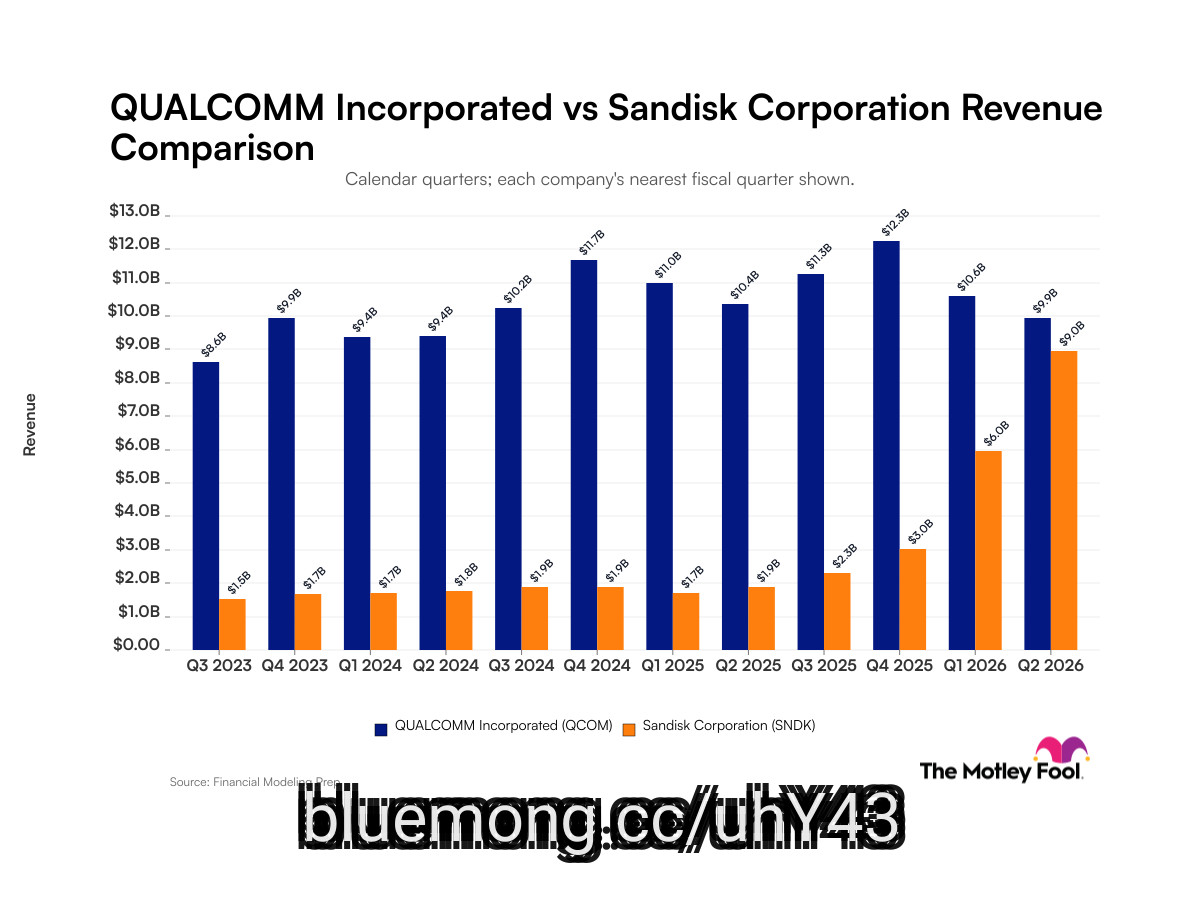
Through its various operating segments, Qualcomm (NASDAQ:QCOM) primarily generates revenue by developing integrated circuits and licensing its extensive foundational intellectual property portfolio for the global wireless communication industry across multiple technological standards. It recorded an operating margin of 17% for the quarter ended June 28, 2026.
Operating through multiple distinct product lines, Sandisk (NASDAQ:SNDK) primarily earns revenue by designing, manufacturing, and supplying data storage solutions, as well as various consumer devices, based on flash memory technology and foundational wafers.
It announced the commencement of production at a ****** anese fabrication facility. It released an open technical specification with SK Hynix and reported an operating margin of approximately 78% for the quarter ended July 3, 2026.
Revenue here refers to the standardized income-statement revenue line item. Watching this metric helps investors properly evaluate the amount of money a company brings in before any operational expenses or corporate taxes are finally subtracted.
Calendar quarter
#quarter #NASDAQ #Margin
Operating through multiple distinct product lines, Sandisk (NASDAQ:SNDK) primarily earns revenue by designing, manufacturing, and supplying data storage solutions, as well as various consumer devices, based on flash memory technology and foundational wafers.
It announced the commencement of production at a ****** anese fabrication facility. It released an open technical specification with SK Hynix and reported an operating margin of approximately 78% for the quarter ended July 3, 2026.
Revenue here refers to the standardized income-statement revenue line item. Watching this metric helps investors properly evaluate the amount of money a company brings in before any operational expenses or corporate taxes are finally subtracted.
Calendar quarter
#quarter #NASDAQ #Margin

19 days ago
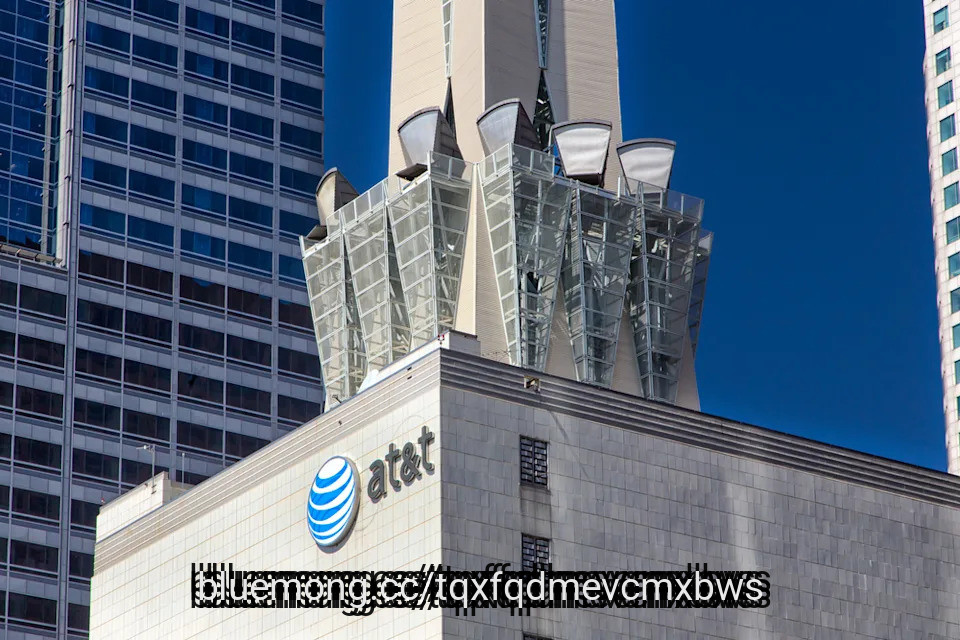
Two telecommunications giants recently showcased the contrasting sides of the 5G and connectivity ecosystem. On August 6, AT&T Inc. (NYSE:T) announced it selected Telefonaktiebolaget LM Ericsson (publ) (NASDAQ:ERIC) to supply 600 MHz dual-band radios to support the deployment of its newly acquired spectrum from EchoStar. The partnership reinforces AT&T's ongoing network modernization while keeping Ericsson deeply embedded in U.S. carrier infrastructure.
Shortly after, on August 10, AT&T demonstrated real-world execution by upgrading wireless connectivity at Mississippi State University's Davis Wade Stadium using a Distributed Antenna System powered by Airspan's MobileAccess 6000. While AT&T is actively converting network upgrades into sticky, high-margin subscriber growth, Ericsson faces the capital-intensive burden of hardware delivery.
Ken Wolter / Shutterstock.com
AT&T Inc. (NYSE:T) is showing a stronger financial trajectory and cash-generation profile than its equipment vendor partner, Ericsson. In Q2 2026, AT&T's consolidated revenue increased 2.3% year over year to $31.6 billion, supported by a 5.1% increase in Advanced Connectivity service revenue. Adjusted EPS surged 20.4% to $0.65, beating the $0.59 consensus estimate, while adjusted EBITDA rose 5.2% to $12.3 billion, producing a strong 39.1% margin. Free cash flow reached $4.7 billion, enabling management to raise its full-year share buyback target to $10 billion while maintaining its forecast for more than $18 billion in full-year free cash flow.
Telefonaktiebolaget LM Ericsson (publ) (NASDAQ:ERIC), meanwhile, faced weaker operating momentum in Q2 2026, with net sales declining 6% year over year to SEK 52.7 billion, or approximately $5.0 billion, due to lower IPR licensing revenue and uneven carrier capital spending. Net income fell 12% to SEK 4.1 billion, or approximately $390 million, although adjusted gross margin remained resilient at 48.4%. Free cash flow before M&A, however, plunged from SEK 2.6 billion to just SEK 385 million, or approximately $36.7 million.
#year
Shortly after, on August 10, AT&T demonstrated real-world execution by upgrading wireless connectivity at Mississippi State University's Davis Wade Stadium using a Distributed Antenna System powered by Airspan's MobileAccess 6000. While AT&T is actively converting network upgrades into sticky, high-margin subscriber growth, Ericsson faces the capital-intensive burden of hardware delivery.
Ken Wolter / Shutterstock.com
AT&T Inc. (NYSE:T) is showing a stronger financial trajectory and cash-generation profile than its equipment vendor partner, Ericsson. In Q2 2026, AT&T's consolidated revenue increased 2.3% year over year to $31.6 billion, supported by a 5.1% increase in Advanced Connectivity service revenue. Adjusted EPS surged 20.4% to $0.65, beating the $0.59 consensus estimate, while adjusted EBITDA rose 5.2% to $12.3 billion, producing a strong 39.1% margin. Free cash flow reached $4.7 billion, enabling management to raise its full-year share buyback target to $10 billion while maintaining its forecast for more than $18 billion in full-year free cash flow.
Telefonaktiebolaget LM Ericsson (publ) (NASDAQ:ERIC), meanwhile, faced weaker operating momentum in Q2 2026, with net sales declining 6% year over year to SEK 52.7 billion, or approximately $5.0 billion, due to lower IPR licensing revenue and uneven carrier capital spending. Net income fell 12% to SEK 4.1 billion, or approximately $390 million, although adjusted gross margin remained resilient at 48.4%. Free cash flow before M&A, however, plunged from SEK 2.6 billion to just SEK 385 million, or approximately $36.7 million.
#year
21 days ago
The Walt Disney Company (NYSE:DIS)'s ABC filed a First Amendment lawsuit against the Federal Communications Commission on August 18, 2026, calling the agency's investigation into the network a "retaliatory campaign." A federal judge rejected Disney's request for an urgent hearing on August 20, 2026, setting a filing deadline of September 24 and a hearing in early October instead.
This fight has become a real test of broadcasters' free speech rights, playing out as President Trump has repeatedly called for ABC to lose its licenses over programming he dislikes.
Can Disney actually win a First Amendment case against its own federal regulator, or does fighting the FCC risk making its licensing problems worse?
The FCC has already agreed to give The Walt Disney Company (NYSE:DIS) at least 48 hours' notice before referring ABC's licenses for a hearing, a procedural concession that removes the risk of a sudden license action. Commissioner Anna Gomez has publicly sided with ABC, giving Disney a sympathetic voice inside the regulator. The lawsuit leans on a unanimous 2024 Supreme Court precedent limiting government pressure on private speech.
On fundamentals, Disney enters this fight strong: companywide revenue grew 7% to $25.2 billion in fiscal Q3, and segment operating income rose 21% to $5.6 billion, ahead of guidance. Disney Experiences hit a record $9.97 billion, up 10%, while streaming reached a 13% SVOD margin and stays on track for double digits this year. That combination means ABC's legal exposure sits inside a company whose two biggest growth engines are firing together. A win would set a precedent limiting political pressure on Disney's other broadcast **** ets.
#company #NYSE
This fight has become a real test of broadcasters' free speech rights, playing out as President Trump has repeatedly called for ABC to lose its licenses over programming he dislikes.
Can Disney actually win a First Amendment case against its own federal regulator, or does fighting the FCC risk making its licensing problems worse?
The FCC has already agreed to give The Walt Disney Company (NYSE:DIS) at least 48 hours' notice before referring ABC's licenses for a hearing, a procedural concession that removes the risk of a sudden license action. Commissioner Anna Gomez has publicly sided with ABC, giving Disney a sympathetic voice inside the regulator. The lawsuit leans on a unanimous 2024 Supreme Court precedent limiting government pressure on private speech.
On fundamentals, Disney enters this fight strong: companywide revenue grew 7% to $25.2 billion in fiscal Q3, and segment operating income rose 21% to $5.6 billion, ahead of guidance. Disney Experiences hit a record $9.97 billion, up 10%, while streaming reached a 13% SVOD margin and stays on track for double digits this year. That combination means ABC's legal exposure sits inside a company whose two biggest growth engines are firing together. A win would set a precedent limiting political pressure on Disney's other broadcast **** ets.
#company #NYSE


21 days ago
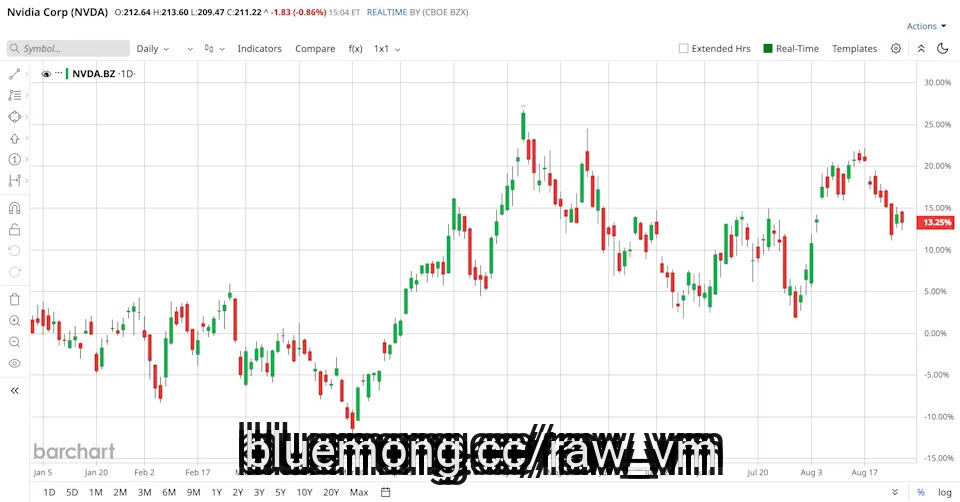
Nvidia Corporation (NVDA) is making another aggressive move to strengthen its position in the global artificial intelligence (AI) race, and its recently reported $6 billion licensing deal with AI startup Poolside could prove strategically important, along with $1 billion in equity investment.
The agreement gives Nvidia access to Poolside's AI model-development technology and brings more than 100 engineers into its Nemotron effort, as the chipmaker looks to accelerate open-weight AI models that can compete with increasingly capable Chinese alternatives such as DeepSeek and Kimi.
Walmart Stock Is More Expensive Than Nvidia Amid Earnings Miss
SpaceX Stock Just Crashed Below Its IPO Price: Here's the Bull Case ***** ody Can Ignore
A Major Bitcoin Short Squeeze Is Taking MicroStrategy Stock Higher. What Comes Next.
#Stock #poolside #nemotron #kimi
The agreement gives Nvidia access to Poolside's AI model-development technology and brings more than 100 engineers into its Nemotron effort, as the chipmaker looks to accelerate open-weight AI models that can compete with increasingly capable Chinese alternatives such as DeepSeek and Kimi.
Walmart Stock Is More Expensive Than Nvidia Amid Earnings Miss
SpaceX Stock Just Crashed Below Its IPO Price: Here's the Bull Case ***** ody Can Ignore
A Major Bitcoin Short Squeeze Is Taking MicroStrategy Stock Higher. What Comes Next.
#Stock #poolside #nemotron #kimi

22 days ago
Our ****** ysts just identified a stock with the potential to be the next Nvidia. Tell us how you invest and we'll show you why it's our #1 pick. Tap here.
What do the World Cup, Formula-1 and Kpop Demon Hunters have in common? They contributed significantly to Lego's record revenue in the first half of the year. The Danish toymaker launched more than 330 new products in six months and has been riding the fad wave.
Lego's new product releases this year included a replica of the official FIFA World Cup trophy, an 825-piece, buildable display model of Derpy Tiger and Sussie Bird from Kpop Demon Hunters and the F1 licensing deal lineup included Ferraris, Aston Martin, McLaren and Mercedes, each with a driver mini-figure.
But let's get into some numbers: The toymaker's revenue jumped 21% to about $6.55 billion in the first half of this year, with pre-tax profit surging a third to roughly $1.77 billion. But Lego has been breaking its own records every consecutive year. Lego's first-half revenue rose 12% to about $5.41 billion in 2025 on the back of a then-record 314 new sets, and it closed 2025 with revenue up 12% to about $13.05 billion, operating profit up 18% to roughly $3.44 billion. This means the 2026 first-half acceleration to 21% growth is a much faster pace than the year it just came off.
What's the secret behind Lego's speed and success? Keeping the company private. Lego is owned 75% by the Kirk Kristiansen family's holding company, and 25% by the Lego Foundation. It has no public shares, ticker or disclosed IPO plans.
#billion #first #half #hunters
What do the World Cup, Formula-1 and Kpop Demon Hunters have in common? They contributed significantly to Lego's record revenue in the first half of the year. The Danish toymaker launched more than 330 new products in six months and has been riding the fad wave.
Lego's new product releases this year included a replica of the official FIFA World Cup trophy, an 825-piece, buildable display model of Derpy Tiger and Sussie Bird from Kpop Demon Hunters and the F1 licensing deal lineup included Ferraris, Aston Martin, McLaren and Mercedes, each with a driver mini-figure.
But let's get into some numbers: The toymaker's revenue jumped 21% to about $6.55 billion in the first half of this year, with pre-tax profit surging a third to roughly $1.77 billion. But Lego has been breaking its own records every consecutive year. Lego's first-half revenue rose 12% to about $5.41 billion in 2025 on the back of a then-record 314 new sets, and it closed 2025 with revenue up 12% to about $13.05 billion, operating profit up 18% to roughly $3.44 billion. This means the 2026 first-half acceleration to 21% growth is a much faster pace than the year it just came off.
What's the secret behind Lego's speed and success? Keeping the company private. Lego is owned 75% by the Kirk Kristiansen family's holding company, and 25% by the Lego Foundation. It has no public shares, ticker or disclosed IPO plans.
#billion #first #half #hunters

23 days ago
Sustainable Growth Advisers (SGA), an investment management company, released its second-quarter 2026 investor letter for its "Global Growth Strategy." The letter can be downloaded here. The SGA Global Growth Portfolio returned 7.4% gross and 7.2% net, compared with 14.9% for the MSCI ACWI and 19.8% for the MSCI ACWI Growth Index. Momentum leadership and enthusiasm around AI infrastructure drove markets, with semiconductor, memory, and hardware stocks accounting for much of the gain. Although the portfolio owned AI beneficiaries, broader holdings lagged despite fundamentals, as median revenue and EPS growth reached 12% and 14% and more than 60% of the holdings beat expectations. SGA believes valuation compression reflects sentiment rather than weaker business quality, leaving the portfolio near its widest discount to the market since inception. The firm continues to favor durable compounders and expects 16% revenue growth and 20% earnings growth over three years. Also, please check the Fund's top five holdings to see its best picks for 2026.
In its second-quarter 2026 investor letter, SGA Global Growth Strategy highlighted Arm Holdings plc (NASDAQ:ARM) as a leading contributor. Arm Holdings plc (NASDAQ:ARM) is a UK-based technology company that develops and licenses central processing unit designs and related technologies for semiconductor companies and original equipment manufacturers. On August 21, 2026, Arm Holdings plc (NASDAQ:ARM) closed at $243.32 per share. The one-month return of Arm Holdings plc (NASDAQ:ARM) was -8.64%, and its shares gained 76.60% over the past 52 weeks. Arm Holdings plc (NASDAQ:ARM) has a market capitalization of $259.87 billion.
SGA Global Growth Strategy stated the following regarding Arm Holdings plc (NASDAQ:ARM) in its Q2 2026 investor letter:
"Arm Holdings plc (NASDAQ:ARM), leading designer and licensor of CPU architectures and related subsystems, was a top contributor to performance again this quarter. The company delivered solid quarterly results, including 20% revenue growth and 12% profit growth, with continued strength in licensing activity and sustained royalty expansion despite a tougher comparison period. Management guidance reinforced confidence in maintaining roughly 20% revenue growth, supported by increasing demand for Arm-based CPUs and expanding adoption across data center and AI workloads, which helped offset expected weakness in handset markets. Confidence was further supported by evidence of strong CPU demand, improving share gains versus x86 architectures, and growing customer traction, including an expanding roster of signed partners and management's confidence in achieving long-term revenue targets. With strong pricing power, highly recurring revenues, and expanding royalty rates as Arm captures more value across the compute stack, we continue to view the company as a high-quality, long-term compounder well-positioned to benefit from the proliferation of AI and power efficient computing. We
In its second-quarter 2026 investor letter, SGA Global Growth Strategy highlighted Arm Holdings plc (NASDAQ:ARM) as a leading contributor. Arm Holdings plc (NASDAQ:ARM) is a UK-based technology company that develops and licenses central processing unit designs and related technologies for semiconductor companies and original equipment manufacturers. On August 21, 2026, Arm Holdings plc (NASDAQ:ARM) closed at $243.32 per share. The one-month return of Arm Holdings plc (NASDAQ:ARM) was -8.64%, and its shares gained 76.60% over the past 52 weeks. Arm Holdings plc (NASDAQ:ARM) has a market capitalization of $259.87 billion.
SGA Global Growth Strategy stated the following regarding Arm Holdings plc (NASDAQ:ARM) in its Q2 2026 investor letter:
"Arm Holdings plc (NASDAQ:ARM), leading designer and licensor of CPU architectures and related subsystems, was a top contributor to performance again this quarter. The company delivered solid quarterly results, including 20% revenue growth and 12% profit growth, with continued strength in licensing activity and sustained royalty expansion despite a tougher comparison period. Management guidance reinforced confidence in maintaining roughly 20% revenue growth, supported by increasing demand for Arm-based CPUs and expanding adoption across data center and AI workloads, which helped offset expected weakness in handset markets. Confidence was further supported by evidence of strong CPU demand, improving share gains versus x86 architectures, and growing customer traction, including an expanding roster of signed partners and management's confidence in achieving long-term revenue targets. With strong pricing power, highly recurring revenues, and expanding royalty rates as Arm captures more value across the compute stack, we continue to view the company as a high-quality, long-term compounder well-positioned to benefit from the proliferation of AI and power efficient computing. We


23 days ago
Guinness Global Innovators, an investment management company, recently released its Q2 2026 quarterly investor update for its "Guinness Global Innovators Fund". You can download the letter here. The Guinness Global Innovators Fund focuses on investing in global companies that benefit from innovation in technology, communication, globalization, and management strategies. In the second quarter of 2026, the Guinness Global Innovators Fund returned 13.8% in GBP, compared with 13.0% for the MSCI World Index and 13.1% for the IA Global sector average. Easing Middle East tensions, falling oil prices, and renewed enthusiasm for artificial intelligence helped reverse much of the caution seen earlier in the year, with investors rotating back toward growth stocks and AI infrastructure beneficiaries. The Fund benefited from its overweight position in the Information Technology sector, while its overweight position in Communication Services detracted. Avoiding weaker Utilities, Materials, and Energy also supported relative performance. Also, please check the Fund's top five holdings to see its best picks for 2026.
In its second-quarter 2026 investor letter, Guinness Global Innovators Fund highlighted Nasdaq, Inc. (NASDAQ:NDAQ) as a new holding. Nasdaq, Inc. (NASDAQ:NDAQ) operates as a technology company that serves capital markets and other industries. On August 21, 2026, Nasdaq, Inc. (NASDAQ:NDAQ) closed at $98.22 per share. One-month return of Nasdaq, Inc. (NASDAQ:NDAQ) was 4.56% and its shares gained 4.13% over the past 52 weeks. Nasdaq, Inc. (NASDAQ:NDAQ) has a market capitalization of $54.9 billion.
Guinness Global Innovators Fund stated the following regarding Nasdaq, Inc. (NASDAQ:NDAQ) in its Q2 2026 investor letter:
"Nasdaq, Inc. (NASDAQ:NDAQ) is best understood not as a traditional exchange but as a global technology, data, and ******* ytics company that happens to own a major stock exchange, a positioning it has deliberately built since its 2017 strategic pivot away from transaction-driven revenue towards higher-growth, higher-margin software and ******* ytics. Nasdaq's business is diversified across three segments. Through its Financial Technology segment, the firm is strategically positioned to benefit from a structural rise in compliance and transparency requirements as regulators demand more granular and frequent reporting from banks globally. This segment also houses Calypso, a trading and risk-management platform whose demand is underpinned by the growing complexity of trading, collateral, and risk requirements at large financial institutions. The Capital Access Platforms segment includes listing fees, market data subscriptions and index licensing on products such as the Nasdaq-100. Lastly, its exchange business, although originally the direct driver of the business, has become more of an enabler for other business segments, as trading activity generates proprietary pricing data that the company repackages and monetises, while providing the
In its second-quarter 2026 investor letter, Guinness Global Innovators Fund highlighted Nasdaq, Inc. (NASDAQ:NDAQ) as a new holding. Nasdaq, Inc. (NASDAQ:NDAQ) operates as a technology company that serves capital markets and other industries. On August 21, 2026, Nasdaq, Inc. (NASDAQ:NDAQ) closed at $98.22 per share. One-month return of Nasdaq, Inc. (NASDAQ:NDAQ) was 4.56% and its shares gained 4.13% over the past 52 weeks. Nasdaq, Inc. (NASDAQ:NDAQ) has a market capitalization of $54.9 billion.
Guinness Global Innovators Fund stated the following regarding Nasdaq, Inc. (NASDAQ:NDAQ) in its Q2 2026 investor letter:
"Nasdaq, Inc. (NASDAQ:NDAQ) is best understood not as a traditional exchange but as a global technology, data, and ******* ytics company that happens to own a major stock exchange, a positioning it has deliberately built since its 2017 strategic pivot away from transaction-driven revenue towards higher-growth, higher-margin software and ******* ytics. Nasdaq's business is diversified across three segments. Through its Financial Technology segment, the firm is strategically positioned to benefit from a structural rise in compliance and transparency requirements as regulators demand more granular and frequent reporting from banks globally. This segment also houses Calypso, a trading and risk-management platform whose demand is underpinned by the growing complexity of trading, collateral, and risk requirements at large financial institutions. The Capital Access Platforms segment includes listing fees, market data subscriptions and index licensing on products such as the Nasdaq-100. Lastly, its exchange business, although originally the direct driver of the business, has become more of an enabler for other business segments, as trading activity generates proprietary pricing data that the company repackages and monetises, while providing the


23 days ago
Loomis Sayles, an investment management company, released its "Global Growth Fund" investor letter for Q2 2026. You can download a copy of the letter here. The fund returned 6.43%, underperforming the MSCI ACWI Index's 14.93% return. The fund employs a long-term private equity investment strategy, focusing on high-quality businesses with sustainable competitive advantages, investing at significant discounts to intrinsic value. At quarter-end, the fund maintained an overweight in communication services, consumer discretionary and healthcare sectors, and an underweight in information technology, financials, industrials, and consumer staples sectors. Also, please check the Fund's top five holdings to see its best picks for 2026.
In its Q2 2026 investor letter, Loomis Sayles Global Growth Fund highlighted Arm Holdings plc (NASDAQ:ARM) as a leading contributor. Arm Holdings plc (NASDAQ:ARM) is a UK-based technology company that develops and licenses central processing unit designs and related technologies for semiconductor companies and original equipment manufacturers. On August 21, 2026, Arm Holdings plc (NASDAQ:ARM) closed at $243.32 per share. The one-month return of Arm Holdings plc (NASDAQ:ARM) was -8.64%, and its shares gained 76.60% over the past 52 weeks. Arm Holdings plc (NASDAQ:ARM) has a market capitalization of $259.87 billion.
Loomis Sayles Global Growth Fund stated the following regarding Arm Holdings plc (NASDAQ:ARM) in its Q2 2026 investor letter:
"Arm Holdings plc (NASDAQ:ARM) is the world's leading microprocessor intellectual property (IP) supplier. The company develops and licenses its microprocessor IP technology to a network of partners to facilitate the design and manufacture of semiconductor chips used in a wide range of end markets, with a primary focus on mobile, cloud, automotive, and IoT (internet of things). Arm's clients include most of the world's leading semiconductor companies, which pay licensing fees to utilize the company's industry-standard technologies and ongoing royalties for the resulting chips incorporating its technology. While it can take in excess of five years before newly licensed technology is commercialized into new products, the resulting royalty payments to Arm can span decades. We owned Arm in our large cap and all cap growth portfolios from 2012 until it was acquired by SoftBank Group in 2016. Under SoftBank, the company invested substantially in research and development (R&D) and accelerated its pace of innovation. As a result, Arm launched Armv9, its most advanced processor architecture, and its Neoverse microarchitecture that now enables the company to effectively compete in the data center business..…" (Click here to read the full text)
#fund #technology #global #letter
In its Q2 2026 investor letter, Loomis Sayles Global Growth Fund highlighted Arm Holdings plc (NASDAQ:ARM) as a leading contributor. Arm Holdings plc (NASDAQ:ARM) is a UK-based technology company that develops and licenses central processing unit designs and related technologies for semiconductor companies and original equipment manufacturers. On August 21, 2026, Arm Holdings plc (NASDAQ:ARM) closed at $243.32 per share. The one-month return of Arm Holdings plc (NASDAQ:ARM) was -8.64%, and its shares gained 76.60% over the past 52 weeks. Arm Holdings plc (NASDAQ:ARM) has a market capitalization of $259.87 billion.
Loomis Sayles Global Growth Fund stated the following regarding Arm Holdings plc (NASDAQ:ARM) in its Q2 2026 investor letter:
"Arm Holdings plc (NASDAQ:ARM) is the world's leading microprocessor intellectual property (IP) supplier. The company develops and licenses its microprocessor IP technology to a network of partners to facilitate the design and manufacture of semiconductor chips used in a wide range of end markets, with a primary focus on mobile, cloud, automotive, and IoT (internet of things). Arm's clients include most of the world's leading semiconductor companies, which pay licensing fees to utilize the company's industry-standard technologies and ongoing royalties for the resulting chips incorporating its technology. While it can take in excess of five years before newly licensed technology is commercialized into new products, the resulting royalty payments to Arm can span decades. We owned Arm in our large cap and all cap growth portfolios from 2012 until it was acquired by SoftBank Group in 2016. Under SoftBank, the company invested substantially in research and development (R&D) and accelerated its pace of innovation. As a result, Arm launched Armv9, its most advanced processor architecture, and its Neoverse microarchitecture that now enables the company to effectively compete in the data center business..…" (Click here to read the full text)
#fund #technology #global #letter

24 days ago
More details have come to light about the location where Jed York was arrested.
The San Francisco 49ers owner was taken into custody over the weekend after being caught soliciting for ***** in an Ohio mobile community.
Now, it has been revealed that the shocking arrest was part of an undercover police sting that tied York to the location even though it wasn't in the initial plan.
News Licensing / MEGA
On Sunday, the billionaire was apprehended at the Wheat Hill Mobile Home Community after arranging to meet up and pay a ***** worker $140.
#sunday
The San Francisco 49ers owner was taken into custody over the weekend after being caught soliciting for ***** in an Ohio mobile community.
Now, it has been revealed that the shocking arrest was part of an undercover police sting that tied York to the location even though it wasn't in the initial plan.
News Licensing / MEGA
On Sunday, the billionaire was apprehended at the Wheat Hill Mobile Home Community after arranging to meet up and pay a ***** worker $140.
#sunday


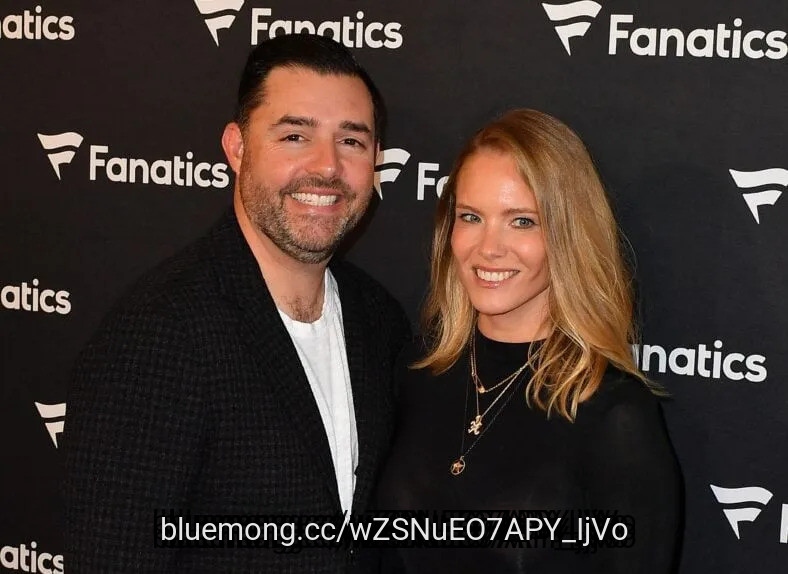

25 days ago
Guinness Global Innovators, an investment management company, recently released its Q2 2026 quarterly investor update for its "Guinness Global Innovators Fund". You can download the letter here. The Guinness Global Innovators Fund focuses on investing in global companies that benefit from innovation in technology, communication, globalization, and management strategies. In the second quarter of 2026, the Guinness Global Innovators Fund returned 13.8% in GBP, compared with 13.0% for the MSCI World Index and 13.1% for the IA Global sector average. Easing Middle East tensions, falling oil prices, and renewed enthusiasm for artificial intelligence helped reverse much of the caution seen earlier in the year, with investors rotating back toward growth stocks and AI infrastructure beneficiaries. The Fund benefited from its overweight position in the Information Technology sector, while its overweight position in Communication Services detracted. Avoiding weaker Utilities, Materials, and Energy also supported relative performance. Also, please check the Fund's top five holdings to see its best picks for 2026.
In its second-quarter 2026 investor letter, Guinness Global Innovators Fund highlighted Nasdaq, Inc. (NASDAQ:NDAQ) as a new holding. Nasdaq, Inc. (NASDAQ:NDAQ) operates as a technology company that serves capital markets and other industries. On August 21, 2026, Nasdaq, Inc. (NASDAQ:NDAQ) closed at $98.22 per share. One-month return of Nasdaq, Inc. (NASDAQ:NDAQ) was 4.56% and its shares gained 4.13% over the past 52 weeks. Nasdaq, Inc. (NASDAQ:NDAQ) has a market capitalization of $54.9 billion.
Guinness Global Innovators Fund stated the following regarding Nasdaq, Inc. (NASDAQ:NDAQ) in its Q2 2026 investor letter:
"Nasdaq, Inc. (NASDAQ:NDAQ) is best understood not as a traditional exchange but as a global technology, data, and ****** ytics company that happens to own a major stock exchange, a positioning it has deliberately built since its 2017 strategic pivot away from transaction-driven revenue towards higher-growth, higher-margin software and ****** ytics. Nasdaq's business is diversified across three segments. Through its Financial Technology segment, the firm is strategically positioned to benefit from a structural rise in compliance and transparency requirements as regulators demand more granular and frequent reporting from banks globally. This segment also houses Calypso, a trading and risk-management platform whose demand is underpinned by the growing complexity of trading, collateral, and risk requirements at large financial institutions. The Capital Access Platforms segment includes listing fees, market data subscriptions and index licensing on products such as the Nasdaq-100. Lastly, its exchange business, although originally the direct driver of the business, has become more of an enabler for other business segments, as trading activity generates proprietary pricing data that the company repackages and monetises, while providing the f
In its second-quarter 2026 investor letter, Guinness Global Innovators Fund highlighted Nasdaq, Inc. (NASDAQ:NDAQ) as a new holding. Nasdaq, Inc. (NASDAQ:NDAQ) operates as a technology company that serves capital markets and other industries. On August 21, 2026, Nasdaq, Inc. (NASDAQ:NDAQ) closed at $98.22 per share. One-month return of Nasdaq, Inc. (NASDAQ:NDAQ) was 4.56% and its shares gained 4.13% over the past 52 weeks. Nasdaq, Inc. (NASDAQ:NDAQ) has a market capitalization of $54.9 billion.
Guinness Global Innovators Fund stated the following regarding Nasdaq, Inc. (NASDAQ:NDAQ) in its Q2 2026 investor letter:
"Nasdaq, Inc. (NASDAQ:NDAQ) is best understood not as a traditional exchange but as a global technology, data, and ****** ytics company that happens to own a major stock exchange, a positioning it has deliberately built since its 2017 strategic pivot away from transaction-driven revenue towards higher-growth, higher-margin software and ****** ytics. Nasdaq's business is diversified across three segments. Through its Financial Technology segment, the firm is strategically positioned to benefit from a structural rise in compliance and transparency requirements as regulators demand more granular and frequent reporting from banks globally. This segment also houses Calypso, a trading and risk-management platform whose demand is underpinned by the growing complexity of trading, collateral, and risk requirements at large financial institutions. The Capital Access Platforms segment includes listing fees, market data subscriptions and index licensing on products such as the Nasdaq-100. Lastly, its exchange business, although originally the direct driver of the business, has become more of an enabler for other business segments, as trading activity generates proprietary pricing data that the company repackages and monetises, while providing the f
25 days ago
Loomis Sayles, an investment management company, released its "Global Growth Fund" investor letter for Q2 2026. You can download a copy of the letter here. The fund returned 6.43%, underperforming the MSCI ACWI Index's 14.93% return. The fund employs a long-term private equity investment strategy, focusing on high-quality businesses with sustainable competitive advantages, investing at significant discounts to intrinsic value. At quarter-end, the fund maintained an overweight in communication services, consumer discretionary and healthcare sectors, and an underweight in information technology, financials, industrials, and consumer staples sectors. Also, please check the Fund's top five holdings to see its best picks for 2026.
In its Q2 2026 investor letter, Loomis Sayles Global Growth Fund highlighted Arm Holdings plc (NASDAQ:ARM) as a leading contributor. Arm Holdings plc (NASDAQ:ARM) is a UK-based technology company that develops and licenses central processing unit designs and related technologies for semiconductor companies and original equipment manufacturers. On August 21, 2026, Arm Holdings plc (NASDAQ:ARM) closed at $243.32 per share. The one-month return of Arm Holdings plc (NASDAQ:ARM) was -8.64%, and its shares gained 76.60% over the past 52 weeks. Arm Holdings plc (NASDAQ:ARM) has a market capitalization of $259.87 billion.
Loomis Sayles Global Growth Fund stated the following regarding Arm Holdings plc (NASDAQ:ARM) in its Q2 2026 investor letter:
"Arm Holdings plc (NASDAQ:ARM) is the world's leading microprocessor intellectual property (IP) supplier. The company develops and licenses its microprocessor IP technology to a network of partners to facilitate the design and manufacture of semiconductor chips used in a wide range of end markets, with a primary focus on mobile, cloud, automotive, and IoT (internet of things). Arm's clients include most of the world's leading semiconductor companies, which pay licensing fees to utilize the company's industry-standard technologies and ongoing royalties for the resulting chips incorporating its technology. While it can take in excess of five years before newly licensed technology is commercialized into new products, the resulting royalty payments to Arm can span decades. We owned Arm in our large cap and all cap growth portfolios from 2012 until it was acquired by SoftBank Group in 2016. Under SoftBank, the company invested substantially in research and development (R&D) and accelerated its pace of innovation. As a result, Arm launched Armv9, its most advanced processor architecture, and its Neoverse microarchitecture that now enables the company to effectively compete in the data center business..…" (Click here to read the full text)
#company
In its Q2 2026 investor letter, Loomis Sayles Global Growth Fund highlighted Arm Holdings plc (NASDAQ:ARM) as a leading contributor. Arm Holdings plc (NASDAQ:ARM) is a UK-based technology company that develops and licenses central processing unit designs and related technologies for semiconductor companies and original equipment manufacturers. On August 21, 2026, Arm Holdings plc (NASDAQ:ARM) closed at $243.32 per share. The one-month return of Arm Holdings plc (NASDAQ:ARM) was -8.64%, and its shares gained 76.60% over the past 52 weeks. Arm Holdings plc (NASDAQ:ARM) has a market capitalization of $259.87 billion.
Loomis Sayles Global Growth Fund stated the following regarding Arm Holdings plc (NASDAQ:ARM) in its Q2 2026 investor letter:
"Arm Holdings plc (NASDAQ:ARM) is the world's leading microprocessor intellectual property (IP) supplier. The company develops and licenses its microprocessor IP technology to a network of partners to facilitate the design and manufacture of semiconductor chips used in a wide range of end markets, with a primary focus on mobile, cloud, automotive, and IoT (internet of things). Arm's clients include most of the world's leading semiconductor companies, which pay licensing fees to utilize the company's industry-standard technologies and ongoing royalties for the resulting chips incorporating its technology. While it can take in excess of five years before newly licensed technology is commercialized into new products, the resulting royalty payments to Arm can span decades. We owned Arm in our large cap and all cap growth portfolios from 2012 until it was acquired by SoftBank Group in 2016. Under SoftBank, the company invested substantially in research and development (R&D) and accelerated its pace of innovation. As a result, Arm launched Armv9, its most advanced processor architecture, and its Neoverse microarchitecture that now enables the company to effectively compete in the data center business..…" (Click here to read the full text)
#company