17 days ago
A handshake agreement. That's the term I saw all weekend regarding the College Football Playoff expanding from 12 teams to 24 beginning next year, with ESPN remaining the sole rights holder. There are positives and negatives to the reported deal, and it was refreshing to hear discourse on both sides of the argument across ESPN's networks this weekend. That's something college football fans didn't get with the network's coverage of the Protect College Sports Act.
However, in the end, ESPN owns all the goods. Again. The network has been the exclusive rights holder since the playoff began just 12 years ago. Fans can debate whether expanding the playoff to 24 teams will diminish the weekly must-win stakes of college football or lead to the elimination of conference championship games for major conferences. One thing remains clear: ESPN controls the entire package. That raises a question: If the sport wants to expand on the field, why can't it expand how those games are broadcast?
The old saying goes, "Follow the money." After signing a six-year, $7.8 billion exclusive extension in 2024, ESPN received an exclusive 30-day window to negotiate with the College Football Playoff over expansion. That window expired, but a handshake agreement was reportedly reached in the days that followed.
As a result, FOX Sports, CBS Sports/TNT Sports/Skydance, NBC Sports, and others never had an opportunity to compete for the expanded package during that window. Has ESPN dominated college football coverage for generations? Of course. Is watching College GameDay part of the average fan's Saturday routine during the fall? Absolutely.
But imagine if the NFL, MLB, NBA and NHL handled their biggest events the same way. Imagine if Kevin Burkhardt and Tom Brady were left out of the NFL's biggest games. What if Kenny Albert and Eddie Olczyk never got the opportunity to call the Stanley Cup Final?
#college #exclusive


29 days ago
Paramount closed its $81 billion (€72bn) purchase of Warner Bros. Discovery, the companies announced on Tuesday, forming a new Hollywood giant called Skydance.
The merger brings HBO Max, films ranging from "Harry Potter" to "Sinners", and networks including CNN under the same roof as Paramount+, CBS and ******* les such as "Top Gun" and "The Godfather".
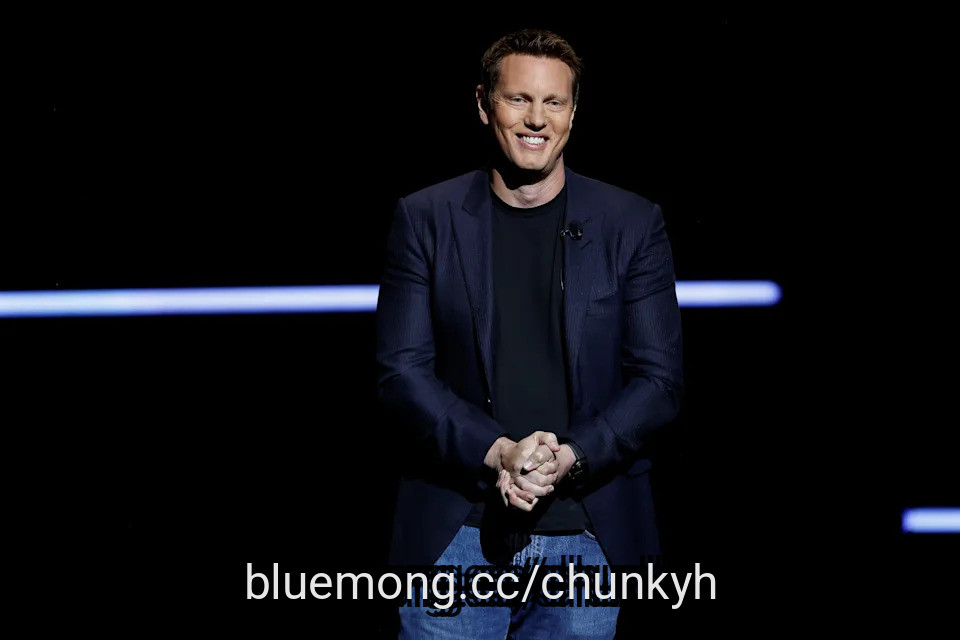
"Today is a historic day, not just for Skydance but for our entire industry," CEO David Ellison said in a statement.
The deal further concentrates power in an industry already run by just a handful of major players. Ellison's Skydance bought Paramount in an $8bn (€7.1bn) deal last year, and set its sights on Warner soon afterwards.
What followed was a tumultuous, yearlong fight over Warner's fate. Including billions of dollars in debt, Paramount's buyout of Warner amounts to nearly $111bn (€98.6bn).
#paramount #including #deal


29 days ago
The $110 billion merger of Paramount Skydance and Warner Bros. Discovery closed on Tuesday after Supreme Court Justice Elena Kagan denied a last-minute effort to halt the deal.
The new company — known as Skydance (SKYD)— brings the HBO Max and Paramount+ streaming services under one umbrella, roughly seven months after Paramount won a long bidding war with Netflix (NFLX) for Warner Bros.
The merger faced plenty of pushback and a long road to closing.
"The completed transaction unites two of media and entertainment's most storied companies, each with a history spanning more than a century, giving the combined business a rare legacy to build on," Skydance stated in a press release. "The aim of the combined company is to build the next-generation global media and entertainment company powered by creativity and technology."
The company's entertainment franchises span "Sopranos" to "SpongeBob SquarePants" and "Euphoria" to "Harry Potter." The portfolio also encompasses television networks CBS, CBS News, CBS Sports, CNN, TNT, TBS, Nickelodeon, and MTV, among others.
#build

30 days ago
Updated on: October 5, 2026 / 7:29 PM EDT / CBS News
President Trump said Monday he will start paying for the pro-Trump ads that have blanketed the airwaves in recent weeks with money raised by his super PAC, after his administration drew intense pushback for using public funds on the ads.
"The Radical Left is upset with the fact that I am taking Ads, which I consider to be a positive promotion for our Great U.S.A., and paying for them with U.S.A. money," the president wrote on Truth Social. "This is a rather standard thing to do but, rather than doing that, although nothing will make them happy, I have decided to do the Patriotic Ads, among others, and pay for them myself, and with money I raised for MAGA, Inc."
Emblazoned with the message "Paid for by the U.S. Government," the ads began popping up late last month on national cable and broadcast networks, including CBS, as the November midterm elections approach.
Several variations have aired, including one that features a recording of Mr. Trump saying, "We will defeat communism, socialism and Marxism in America," as photos of the president flash across the screen. Another recounts the U.S. capture of former Venezuelan President Nicolás Maduro.
#paying


30 days ago
Megyn Kelly is calling out what she sees as a lack of due process when it comes to Cornell's Chi Phi fraternity brothers amid their Jane Doe gang rape investigation.
On Monday's episode of "The Megyn Kelly Show," the host suggested the public has already made up its mind regarding the seven men named after a former student filed a civil suit claiming she was drugged, ******* aulted and gang-raped by them in 2024.
"These young men have had their names plastered all over every major newscast in America for a week now," Kelly said. "The mob has decided they're guilty and ought to be put to death, which is literally what we are hearing in several circles online without a trial, without a due process chance to defend themselves. Not in a kangaroo court on a college campus, which is a joke, but in an actual court, either civil or now it's looking more and more likely criminal."
She added: "This is deeply immoral. There are two sides to every story. You don't know, and I don't know what happened inside of Cornell that night. We know that there's been a story told by Jane Doe. We know that from her own story, the DA – a Democrat – said there's no case here… And we know it took her two years to file a civil suit… Now her lawyers are all over the television, ripping on the DA."
Kelly is not the only news personality to question the due process of the case. "The View" co-host Sunny Hostin also spoke out wondering if the men's names should not be going up across a number of news networks.
#civil #jane

1 month ago
On September 17, Coherent Corp. (NYSE:COHR) announced an upgraded Pluggable Optical Line System that covers the full C-band and fits in a compact QSFP module, the same slot ordinary transceivers use. That is a lot of networking gear shrunk into a plug, and it follows a quarter of 34% revenue growth. Here is what the launch means, and where the stock's story gets harder to read.
Start with what the product does. The upgraded system can pack 32 wavelengths onto a single pair of fibers, which Coherent says adds up to as much as 25.6Tbps of traffic on links running 2km to 200km. It is designed for the latest 800G coherent optics, and it configures itself, handling link setup and laser safety without a technician tuning each connection. Coherent also says the system is generally available and already shipping in high volume, in 400G and 800G versions that work with existing network setups. Madhu Krishnaswamy, who runs the company's telecom transport unit, describes the goal as easing the usual trade-off between raw performance and operational simplicity.
The launch also sits on top of a business that is already moving. On August 12, Coherent reported results for its fiscal fourth quarter, which ended June 30: revenue of $2.05 billion, up 34% from a year earlier. Non-GAAP earnings per share rose to $1.74 from $1.00, and CEO Jim Anderson noted that for the full year, that measure grew more than twice as fast as revenue. Management guided to revenue of $2.2 billion to $2.4 billion for the first quarter of fiscal 2027, and Anderson says AI data centers are increasingly moving from copper to optical links.
Now look at the two versions of profit. Coherent's non-GAAP earnings came to $1.74 per share, but under GAAP the figure was $1.19. The gap comes from items management leaves out, including stock-based pay, amortization on acquired intangibles, and restructuring and integration costs. Operating margin shows it more clearly, at 21.8% on a non-GAAP basis and 12.4% under GAAP. Some of those costs are non-cash, but they are real, and anyone anchoring on the higher figure is skipping them.
Then there is how much weight this launch can carry. The announcement puts no sales figure on the product, so its contribution to a company that booked $2.05 billion in a quarter cannot be sized from what has been published. The bullish story also rests on management's own read of where AI networks are headed, and on a capacity build-out that CFO Sherri Luther says gets priority in spending. Money spent on capacity only pays off if the demand management describes keeps arriving.
#gaap #revenue #launch #anderson


1 month ago
On September 17, B. Riley initiated coverage of Nokia Oyj (NYSE:NOK), giving the stock a Buy rating and setting the price target at $15. The firm pointed to the company's position in telecom infrastructure, cloud software, and hardware networking solutions.
Riley noted that the company's networking businesses are seeing strong growth. In Q2 2026, Optical Networks revenue increased 20% year-over-year, while IP Networks grew 16%. Net sales to AI and cloud customers also surged 105%. The research firm noted that hyperscalers continue to purchase Nokia Oyj's (NYSE:NOK) AI networking products to support large-scale computing clusters.
The company's AI and cloud opportunity is also reflected in its order book. Nokia Oyj (NYSE:NOK) reported EUR 2.8 billion in AI and cloud order intake during the second quarter of 2026. B. Riley pointed out that this provides revenue visibility into 2027. The firm also noted that the carrier inventory correction cycle that had weighed on global capital expenditures has now concluded.
Riley derived its $15 price target using a sum-of-the-parts valuation that separates the company's legacy ****** ets from its data center business. The firm applied a premium hardware multiple to the data center segment, reflecting its view of the potential operating leverage in that business.
Profitability Remains a Concern
#riley #NYSE #firm

2 months ago
On Monday, Sept. 21, Sandisk (NASDAQ:SNDK) takes a spot in the S&P 100, a subset of the S&P 500 (SNPINDEX:^GSPC) made up of 100 of its largest blue-chip companies. Dell Technologies, Palo Alto Networks, and Arista Networks enter with it. The announcement came from S&P Dow Jones Indices on Sept. 4, and the changes take effect before Monday's open.
Four companies are leaving to make room: Nike (NYSE:NKE), Colgate-Palmolive, Simon Property Group, and Honeywell Aerospace.
Missed Nvidia in 2009? This Rare Signal Is Flashing Again. In 2009, a "Double Down" signal flashed for a little-known chipmaker called Nvidia. For the first time in years, that same "Total Conviction" signal is flashing for a company 1/100th the size of Nvidia. Continue »
The swap says a lot about how 2026 has gone. Sandisk shares have gained more than 600% this year, more than any other stock in the S&P 500.
Nike's stock, meanwhile, reached a 52-week low this week. And Sandisk, worth about $260 billion, is currently more than four times the size of the roughly $54 billion sportswear giant.
#sandisk #networks #four #Companies


2 months ago
Zipline is putting a fresh valuation on the increasingly crowded race to make drone delivery a mainstream part of American last-mile logistics networks, all while the regulatory system is still playing catch-up.
The autonomous delivery company is in talks to raise roughly $1 billion that would value the firm of roughly $20 billion, according to Bloomberg, nearly tripling the $7.6 billion valuation it established in January.
More from WWD
Ravel Raises $8.2M to Tackle Fashion's Elastane Problem
Auction Marketplace Buywander Secures $21M in Funding
#delivery


2 months ago
Choosing the right mortgage lender could save you thousands of dollars. Shopping for one should be one the first steps you take when buying a house.
Comparing lenders and lining up preapprovals early gives you some benchmarks to work from, and when your real estate agent recommends lenders, you'll have a better sense of whether they're offering a good deal. Plus, having preapprovals in hand lets buyers and agents know you're serious.
Real estate agents typically have a roster of recommended lenders, often built on years of repeat business. "Choosing a lender is not just about obtaining financing," says Matthew Martinez, a California real estate broker. "It is about choosing one of the most important members of the transaction team."
Agents vet lenders to add to their networks, and they know what separates a good one from a bad one. Here are the four questions they say you should ask any lender you're considering.
A lender may offer a special program based on your profession, income or location that can make the mortgage more affordable.
#agents #estate #good #know


2 months ago
The price of jet fuel averaged $4.53 USD per gallon for the week ending Sept. 18, according to the latest Airlines for America U.S. Jet Fuel Index.
Driven by the war in Iran and closure of the Strait of Hormuz following the U.S.-Israeli strike on Iran at the end of February 2026, this price is a nearly 80% increase from the national average a year ago.
As a result, almost every major and regional airline has had to keep reworking its networks to maximize jet fuel use and ruthlessly cut any flights not bringing in the expected traffic.
Airline chief executives have also been sounding the alarm on what prolonged jet fuel prices could mean for the industry.
"If fuel prices remain as high as they are right now, I think that that's going to require some adjustments in terms of our capacity planning as we take a look into the future," American Airlines CEO Robert Isom said at the annual Morgan Stanley Laguna Conference in California on Sept. 16, Airline Geeks reported.
#airlines #price #index


2 months ago
NEW YORK (AP) — Two major news networks were denied access to the White House on Saturday morning, with reporters from CNN and MS NOW both going live to report they'd been barred following a ban imposed by President Donald Trump.
The actions escalated Trump's long-running efforts to restrict news coverage by journalists he finds objectionable, and is the latest test of First Amendment protections in the United States. Trump said Friday he would ban both organizations and also Politico, because of their coverage — which he called "fake news."
CNN issued a statement saying it stood behind its reporters. "We will not be deflected from our duty to hold the government and other public bodies to account," it said. The statement was shown on the air before senior White House reporter Betsy Klein began to report on her ban.
MS NOW also said in a statement that it stands behind its journalists.
"The White House belongs to the American people and the decisions made inside are funded by our tax dollars," the network said in a statement Saturday. "MS NOW intends to take any and all steps necessary to defend our First Amendment rights and the essential role of independent journalism in our democracy."
#reporters



2 months ago
Interested in Motorola Solutions, Inc.? Here are five stocks we like better.
Motorola Solutions expects broad-based growth, projecting 2026 gains of 10%–11% in mission-critical networks, about 11% in video security and about 15% in command-center software, supported by modernization of public-safety and federal infrastructure.
Silvus Technologies is becoming a major defense growth driver, with approximately $850 million in expected 2026 sales at current capacity. Motorola is expanding production, sales and R&D as demand grows for secure communications in contested environments and unmanned-systems operations.
D-Fend Solutions expands Motorola's counter-drone opportunity in public safety, airports, critical infrastructure and venues. The business was selected for a $1.5 billion U.S. Department of Homeland Security grant program and uses cyber-based technology to take control of and safely land threatening drones.
Motorola's $1.5B Bet to Own the Skies
#Growth #safety #infrastructure

2 months ago
On September 17, Coherent Corp. (NYSE:COHR) announced an upgraded Pluggable Optical Line System that covers the full C-band and fits in a compact QSFP module, the same slot ordinary transceivers use. That is a lot of networking gear shrunk into a plug, and it follows a quarter of 34% revenue growth. Here is what the launch means, and where the stock's story gets harder to read.
Start with what the product does. The upgraded system can pack 32 wavelengths onto a single pair of fibers, which Coherent says adds up to as much as 25.6Tbps of traffic on links running 2km to 200km. It is designed for the latest 800G coherent optics, and it configures itself, handling link setup and laser safety without a technician tuning each connection. Coherent also says the system is generally available and already shipping in high volume, in 400G and 800G versions that work with existing network setups. Madhu Krishnaswamy, who runs the company's telecom transport unit, describes the goal as easing the usual trade-off between raw performance and operational simplicity.
The launch also sits on top of a business that is already moving. On August 12, Coherent reported results for its fiscal fourth quarter, which ended June 30: revenue of $2.05 billion, up 34% from a year earlier. Non-GAAP earnings per share rose to $1.74 from $1.00, and CEO Jim Anderson noted that for the full year, that measure grew more than twice as fast as revenue. Management guided to revenue of $2.2 billion to $2.4 billion for the first quarter of fiscal 2027, and Anderson says AI data centers are increasingly moving from copper to optical links.
Now look at the two versions of profit. Coherent's non-GAAP earnings came to $1.74 per share, but under GAAP the figure was $1.19. The gap comes from items management leaves out, including stock-based pay, amortization on acquired intangibles, and restructuring and integration costs. Operating margin shows it more clearly, at 21.8% on a non-GAAP basis and 12.4% under GAAP. Some of those costs are non-cash, but they are real, and anyone anchoring on the higher figure is skipping them.
Then there is how much weight this launch can carry. The announcement puts no sales figure on the product, so its contribution to a company that booked $2.05 billion in a quarter cannot be sized from what has been published. The bullish story also rests on management's own read of where AI networks are headed, and on a capacity build-out that CFO Sherri Luther says gets priority in spending. Money spent on capacity only pays off if the demand management describes keeps arriving.
#quarter #launch #anderson

2 months ago
Starting the lightning round on September 14, when a caller inquired about SentinelOne, Inc. (NYSE:S), Mad Money host Jim Cramer remarked:
No, look, I think you don't need, look, my Charitable Trust owns both Palo Alto and CrowdStrike. It's already too many. I think either one of those two is superior to letter S.
The latest results show a large difference in scale. SentinelOne's fiscal second-quarter 2027 revenue rose 21% year over year to $292 million, while annualized recurring revenue increased 22% to $1.218 billion. Palo Alto Networks, Inc.'s (NASDAQ:PANW) fiscal fourth-quarter 2026 revenue rose 34% to $3.41 billion, while Next-Generation Security ARR increased 63% to $9.10 billion. Additionally, we have discussed CRWD in our recent article, "Jim Cramer Highlights CrowdStrike (CRWD) as AI Security Concerns Lift Cybersecurity Stocks."
SentinelOne, Inc. (NYSE:S) non-GAAP operating margin reached 10% in fiscal Q2 2027, up from 2% a year earlier, while its GAAP operating margin improved to negative 31% from negative 33%. The company guided for fiscal third-quarter revenue of $309 million to $311 million and full-year revenue of $1.202 billion to $1.207 billion.
Palo Alto Networks, Inc. (NASDAQ:PANW) reported approximately $1 billion of non-GAAP operating income in its fiscal fourth quarter of 2026, compared with $768 million a year earlier. Adjusted free cash flow reached approximately $1.3 billion, while GAAP operating income was $172 million versus $497 million a year earlier. Palo Alto CEO Nikesh Arora said in the September 1 earnings release that the latest advances in AI are "elevating cybersecurity to the top of the CIO priority list."
#billion #year #gaap #operating

2 months ago
On September 14, during the episode of Mad Money, Jim Cramer said CrowdStrike Holdings, Inc. (NASDAQ:CRWD) is emerging as a beneficiary of growing concerns over the cybersecurity risks created by artificial intelligence, as he said:
Over the weekend, the co-founder and CEO of Anthropic published an essay where he pushed for a slowdown among the frontier AI labs in order to handle newfound security concerns. In response to that, the cybersecurity cohort just went crazy because there are the companies that can prevent AI agents from randomly hacking into networks all over the world, and it's the cybersecurity companies. Take CrowdStrike, which shot up nearly 14% today, leading the S&P 500, something I feel great about, of course, because we own it big for the Charitable Trust. These guys have been adamant that AI represented a great opportunity for their business, and now Wall Street's finally gotten the memo.
CrowdStrike Holdings, Inc.'s (NASDAQ:CRWD) second-quarter fiscal 2027 revenue increased 26% year over year to $1.47 billion, while ending annual recurring revenue rose 25% to $5.84 billion. Net new ARR reached a record $332.8 million, and free cash flow was $377.4 million. The company also raised its full-year fiscal 2027 net new ARR growth outlook to 34% at the midpoint, up 630 basis points. CEO George Kurtz said the company believes securing AI is its "largest market opportunity in our history."
Kurtz said on September 14 that AI-driven threats are already operating at machine speed, describing the emerging threat as autonomous campaigns rather than individual hackers. He identified endpoints, cloud workloads and SaaS as key battlegrounds and said "enforcement at machine speed" is needed to stop AI agents in motion. CrowdStrike has responded by expanding into AI-agent, model and infrastructure protection, including Continuous Identity for AI Agents and Falcon AI Detection and Response.
CrowdStrike Holdings, Inc.'s (NASDAQ:CRWD) valuation leaves little room for a meaningful slowdown in growth. Yahoo Finance currently shows a forward P/E of approximately 188.7 times and a price-to-sales ratio of roughly 44.6 times. Those multiples leave little room for a material slowdown in ARR growth, weaker adoption of newer products, or greater competitive pressure. The company also remains much less profitable on a GAAP basis than its adjusted results suggest. The company reported a $33.2 million GAAP operating loss in the latest quarter against $371.6 million of non-GAAP operating income, while stock-based compensation and related employer payroll taxes totaled $399 million.
#crwd


2 months ago
On Wednesday, OpenAI (OPAI.PVT) revealed six new examples of its AI models displaying "unexpected or concerning model behavior" during testing and evaluation.
The company made the announcement alongside a new framework for "tracking, reporting, and disclosing" instances where AI models take actions they otherwise aren't told to or shouldn't.
It follows a number of reports of AI models from companies hacking into third-party networks and services, including an unreleased OpenAI model breaking into the network of AI model and testing site Hugging Face.
Earlier this week, Anthropic (ANTH.PVT) CEO Dario Amodei penned a lengthy essay calling for a slowdown in the pace of the development of frontier AI models, after Anthropic researcher Jacob ******* on posted on X that he was resigning from the company because it, and his former employer OpenAI, is "racing straight to self-improving superintelligence and gambling with our lives."
Anthropic alignment science lead Evan Hubinger followed up on ******* on's comments with his own post on X saying that he believes there is a greater-than-10% chance that the technology could "kill all humans."
#face



2 months ago
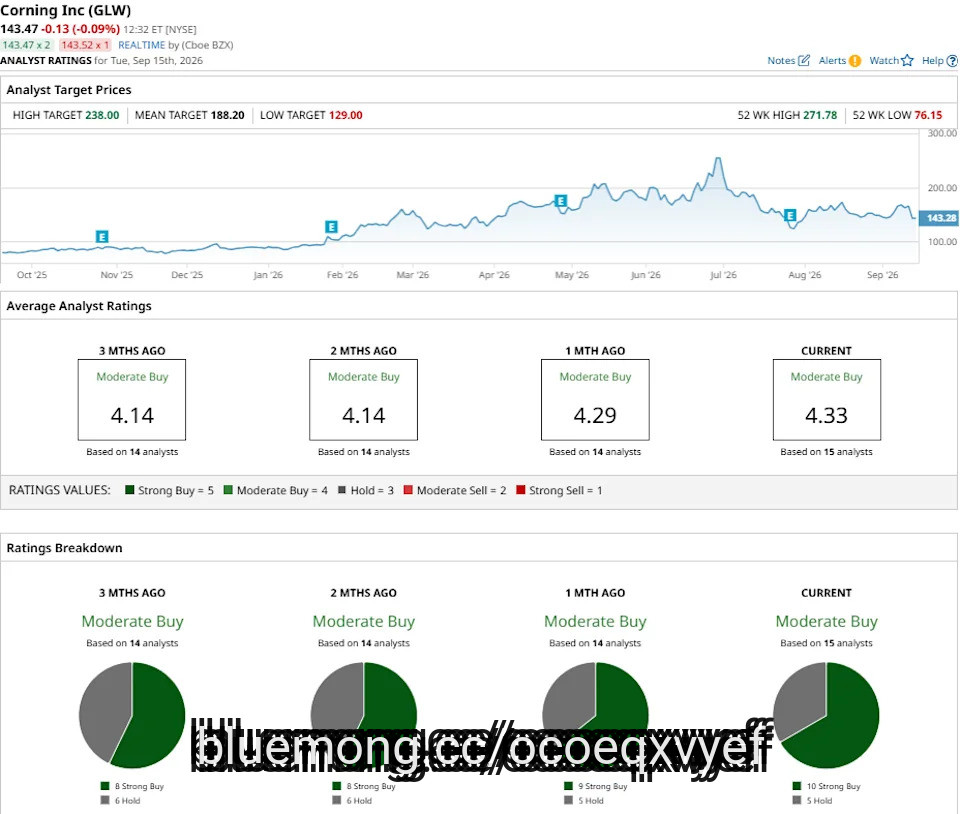
Corning Incorporated (GLW), the 175-year-old materials science giant based in Corning, New York, has become one of the more surprising beneficiaries of the artificial intelligence infrastructure buildout. Best known for its glass, ceramics, and optical technology innovations, Corning now plays a critical behind-the-scenes role as the dominant supplier of optical fiber powering hyperscale data centers and AI networks. The company has locked in major long-term supply agreements with tech heavyweights including Apple (AAPL), Meta (META), Nvidia (NVDA), Amazon (AMZN), and Verizon (VZ).
Corning stock has swung wildly of late, recently trading near $144 after plunging more than 13% in a single session following news of a $2 billion at-the-market equity offering arranged with Goldman Sachs, a move that reignited investor concerns over shareholder dilution. Shares now sit roughly in the middle of a wide 52-week range spanning $75.77 to $271.78, capturing a dramatic round trip. Corning suffered its worst monthly drop in 24 years this past July, only to rebound 8% in early September after unveiling a multibillion-dollar, 80-million-mile fiber supply deal with Verizon.
Billionaire Charlie Munger, Who Died at 99, Skipped Insurance on His Mansion Since He Could Just Write a Check to Rebuild — 'All Intelligent People Do It My Way'
Why It's Time to Load Up on Nvidia Stock
The Case for Selling CrowdStrike Stock
#meta #fiber


2 months ago
London-based Velocity has raised an additional $10 million, extending its Series A to $48 million at a $200 million post-money valuation, with participation from Visa Ventures, Circle Ventures, and Ripple. The fresh capital will fund infrastructure connecting stablecoins to existing payment networks, settlement systems, and corporate treasury operations.
The extension follows a $38 million Series A announced in July, which CEO Eric Queathem said was oversubscribed. Haun Ventures, Translink Capital, and Mirana Ventures also joined the extension round, pushing the total investor list well beyond typical crypto-native venture backers into strategic corporate money from a card network and a stablecoin issuer directly.
Velocity's platform lets payment companies and banks use stablecoins for settlement, liquidity, and treasury operations without ripping out the systems they already run. That's a deliberate scope: the company is targeting the layer connecting issuers, card networks, acquirers, and merchants, not the wallet consumers see.
Stablecoin circulation has grown past $300 billion, with usage expanding from crypto-exchange dollar transfers into payments, cross-border transfers, and corporate treasury work, the exact seam Velocity is trying to occupy.
Earn $50 and Enter $300K Prize Draw on EdgeX
#million #capital #stablecoin #connecting


2 months ago
Arista Networks (ANET) is a highly rated stock that is holding up well during the recent market weakness. Income investors who want to generate some option premium on Arista stock could look at a covered call trade.
A covered-call strategy is one way to slightly reduce the risk on a long stock position while also generating some option premium. The catch: a limited upside above the covered-call strike.
Let's look at how a covered-call trade on Arista might take shape.
Buying 100 shares of Arista Networks would cost around $19,800. An Oct. 16, 200-strike call option is trading around $10.25 a share, generating $1,025 in option premium per contract. Selling the call option generates an income of 5.2% in one month, equaling around 61% annualized.
If Arista Networks stock closes above 200 on the expiration date, the shares will be called away at 200, leaving the trader with a total profit of $1,225. That counts as the $200 gain on shares plus the $1,025 option premium received.
#option
2 months ago
Dow Jones futures rose modestly early Wednesday, along with S&P 500 futures and Nasdaq futures. The Federal Reserve is expected to raise interest rates amid soaring oil prices and Treasury yields.
The stock market saw further losses Tuesday with the Nasdaq and S&P 500 dropping below their 50-day moving averages. The 10-year Treasury yield is at 5% while crude oil prices jumped amid global conflicts.
Salesforce (CRM) fell slightly amid its annual Dreamforce conference but is still near entries. ServiceNow (NOW) rose within a buy zone while Twilio (TWLO) and Dynatrace (DT) reclaimed buy points. Cybersecurity plays Qualys (QLYS), Fortinet (FTNT) and Palo Alto Networks (PANW) flashed buy signals.
Outside of software, Energy play APA Corp. (APA) and Guardant Health (GH) are actionable.
Guardant Health and Twilio are on Leaderboard. Twilio stock, Salesforce and Guardant are on SwingTrader. Salesforce stock is on the IBD 50. Fortinet stock, Salesforce and Dynatrace are on the IBD Big Cap 20.
#Stock #futures

2 months ago
Hewlett Packard Enterprise Company (HPE) is becoming a major beneficiary of the enterprise artificial intelligence (AI) infrastructure growth. While many companies are working on AI applications, Hewlett Packard primarily focuses on infrastructure, supplying servers, networking, and other technology essential for large-scale AI deployment.
The company's latest quarterly results showed rising demand, with both revenue and profit exceeding **** yst expectations and robust growth across all segments. Its integration of Juniper Networks has further strengthened the company's position in AI networking, giving the company greater access to the infrastructure needs driven by AI's rapid growth.
Billionaire Charlie Munger, Who Died at 99, Skipped Insurance on His Mansion Since He Could Just Write a Check to Rebuild — 'All Intelligent People Do It My Way'
Nvidia CEO Jensen Huang Just Dropped Huge News for This Cybersecurity Stock
How to Play GME Stock as GameStop CEO Ryan Cohen Buys $20.3 Million in Shares
#infrastructure #company #juniper


2 months ago
During the September 10 episode of Mad Money, a caller inquired about Mad Money host Jim Cramer's confidence that Arista Networks, Inc. (NYSE:ANET) will not go down the same path as Ciena Corporation. He replied:
Okay, so let me just tell you, Arista is up a lot this year. My confidence is with Jayshree Ullall. I think she's amazing and I think it every time the stock has dipped, if you've noticed it. Since her tenure began, you have to buy it, and I'm not backing away from that. I feel the same way I do now, the way I did, oh man, how many years ago when we first met her. She is money, and the company's fantastic.
In its second quarter, the company shattered records by delivering its first-ever $3 billion quarter, reporting $3.036 billion in revenue, a 38% year-over-year and over 12% sequential increase. Management lifted its full-year 2026 revenue guidance to approximately $12.6 billion, representing roughly 40% annual top-line growth. The acceleration is supported by deep integration into cloud architectures, where Arista Networks, Inc. (NYSE:ANET) expects its dedicated AI fabrics revenue to reach at least $3.5 billion in 2026, supported by more than 100 **** ulative Etherlink customers.
Bottom-line performance remains equally strong, with non-GAAP diluted earnings per share reaching $1.02, driven by a 49.9% non-GAAP operating margin and $1.3 billion in non-GAAP quarterly net income. Arista Networks, Inc. (NYSE:ANET) ended the quarter with roughly $13.3 billion in cash and marketable securities, offering substantial liquidity. However, its $9.7 billion of non-cancellable purchase commitments also increase working-capital and inventory risk as the company secures components ahead of expected AI demand.
The company's financial results remain heavily tied to two hyperscale customers. According to its 10-K filings, Microsoft accounted for 26%, and Meta Platforms generated 16% of total revenue in fiscal 2025, bringing combined spending from these two cloud giants to 42%. It leaves Arista Networks, Inc. (NYSE:ANET) vulnerable to sudden capital expenditure adjustments, vendor diversification shifts, or project delays by its core buyers.
#billion #NYSE #year


2 months ago
OpenAI acquired Glass Imaging, a startup developing AI-powered smartphone camera technology, in a deal valued at over $300 million, according to The Wall Street Journal. The purchase price represents a significant jump from the roughly $100 million valuation Glass Imaging carried in a funding round last year.
Glass Imaging was founded in 2019 by Ziv Attar and Tom Bishop, two former Apple engineers who worked on the company's Portrait Mode feature. The Los Altos, California-based company had raised about $30 million from investors including GV, Alphabet's venture arm, and Insight Partners before the acquisition.
Glass Imaging's approach differs from conventional AI photo editing: instead of processing images after the fact, the company teaches neural networks the specific optical properties of each camera system so that picture quality is improved as the shot is taken, according to The Wall Street Journal. The company's goal is to produce image quality comparable to a DSLR camera from a smartphone. Its zoom-imaging technology was featured in a line of phones from Chinese smartphone brand Honor.
OpenAI's plans for Glass Imaging are unclear. The company is also developing a device with Jony Ive, the former Apple designer behind the iPhone. OpenAI brought on Ive in 2025 through its $6.5 billion purchase of io Products, and his responsibilities span hardware development alongside broader efforts to define how AI products will look and function.
A spokesperson for OpenAI had not provided a statement by the time of publication, according to TechCrunch. The company has made several other acquisitions recently, including an internet talk show called TBPN and an open-source developer tools startup, according to The Wall Street Journal. OpenAI is also preparing for an initial public offering expected next year.
#according #journal


2 months ago
New vehicle sales in Indonesia surged by a further 32% year-on-year to 81,756 units in August 2026, up from weak year-earlier sales of 61,771 units, according to wholesale data compiled by the local automotive industry ***** ociation, Gaikindo. The market last month was driven higher by strong demand for trucks and battery electric vehicles (BEVs).
In the first eight months of 2026, the country's vehicle market expanded by 20% to 599,491 units, after declining by 11% to 499,315 units a year earlier, with sales of light passenger vehicles rising by over 13% to 437,374 units, while commercial vehicle sales increased by 42% to 162,117 units, driven by a 54% surge in light- and medium-duty trucks to 131,813 units.
The truck market this year has been supported by government plans to procure vehicles to support the development of rural cooperatives and improve local logistics networks nationwide.
Sales of BEVs almost doubled to 103,300 units year-to-date, up from 53,100 units in the same period a year earlier, driven by Chinese brands and supported by government tax incentives.
GDP growth moderated to 5.3% year-on-year in the second quarter of 2026, down from a peak of 5.6% in the first quarter, underpinned mainly by strong government spending and investment. Private consumption growth slowed to 5.1% from 5.5%, after the central bank hiked its benchmark interest rate by 100 basis points to 5.75% in the second quarter to support the rupiah and rein in rising inflation. Government spending grew by 16%, down from a peak of 22%, driven by social programmes and rising fuel subsidy costs.
#year


2 months ago
An AI ****** istant that orders your groceries and renews subscriptions on its own might hit the market soon.
Visa (V) and Mastercard (MA) want to make sure that payment still runs through their networks when that happens.
This week, the two card giants said they are working with global fintech Ant International to build a shared way to identify and trust AI shopping agents.
For anyone holding the two stocks or considering them, this plan gives a hint on how both companies could grow in the future.
It also raises a fair question. If software does your spending, who makes sure it spends wisely?
#mastercard #subscriptions


2 months ago
Dow Jones futures will open Sunday evening, along with S&P 500 futures and Nasdaq futures. Iran-related news will be focus over the weekend. The Federal Reserve meeting will take center stage this coming week, with markets largely pricing in an interest rate hike on Sept. 16.
The stock market lost ground this past week as Treasury yields and oil prices surged, but rebounded Friday following the CPI inflation report. The S&P 500 and Nasdaq in particular made bullish technical moves.
Apple (AAPL), Moderna (MRNA), NetApp (NTAP) and Arista Networks (ANET) flashed buy signals heading into the weekend, with many others setting up.
Investors can make buys, but the market remains rangebound and ****** e to rapid sector rotation.
Apple stock is on SwingTrader. Arista Networks and NetApp stock are on the IBD 50. Apple stock and NetApp are on the IBD Big Cap 20. Arista stock is on IBD Sector Leaders.
#NASDAQ #sector #weekend


2 months ago
Energy Transfer LP (NYSE:ET) is set to move the primary listing of its common and Series I preferred units from the New York Stock Exchange to the Texas Stock Exchange in early October, making it the first major company to make such a switch from the NYSE to the newly established Dallas exchange. Reuters said the companies moving to TXSE, including Energy Transfer and related energy businesses, represent nearly $100 billion in combined market value, giving the fledgling exchange an important early credibility boost.
For Energy Transfer LP (NYSE:ET), however, the more important question is whether the move can eventually translate into better investor visibility or valuation rather than simply giving the company a stronger Texas identity. WSJ reported that Energy Transfer is worth roughly $75 billion and that Executive Chairman Kelcy Warren is a major backer of TXSE, owning about 30% of its parent company. That relationship makes the listing particularly significant, but it also means investors may scrutinize whether the decision creates a tangible benefit for Energy Transfer unitholders rather than primarily helping establish the new exchange.
The strongest bull argument is that Energy Transfer LP (NYSE:ET) is positioning itself ahead of a potentially important shift in the U.S. energy infrastructure market. TXSE is backed by major financial institutions including BlackRock, Citadel Securities, and Charles Schwab, and winning a roughly $75 billion company gives the exchange substantially more credibility with institutional investors. If TXSE attracts additional large energy companies, Energy Transfer could benefit from becoming one of the exchange's anchor names and gaining greater visibility among investors already focused on Texas-based energy infrastructure.
More importantly, the listing decision fits the underlying environment in which Energy Transfer LP (NYSE:ET) operates. Reuters has highlighted continued investment in U.S. gas-fired generation, LNG infrastructure, and pipeline networks as electricity demand rises and countries seek reliable energy supplies. The U.S. is also building substantial additional LNG export capacity. That matters because Energy Transfer's extensive midstream network can benefit from higher volumes of natural gas, crude oil, and NGLs without taking the same direct commodity-price exposure as upstream producers. If rising power demand from data centers and continued LNG development drive greater demand for U.S. gas transportation, Energy Transfer could see expanding opportunities to place additional infrastructure into service and lock in long-duration cash flows.
#transfer #company #infrastructure #listing

2 months ago
Gareth Cattermole / Getty Images
©FX Networks/Courtesy Everett Collection
Ser Baffo / ©Hulu/Disney / Courtesy Everett Collection
Related: "23 Celebs Who Have Admitted To Using Ozempic Or Other Weight Loss Medication"
© Searchlight Pictures / Courtesy Everett Collection
#courtesy #everett #getty #networks
©FX Networks/Courtesy Everett Collection
Ser Baffo / ©Hulu/Disney / Courtesy Everett Collection
Related: "23 Celebs Who Have Admitted To Using Ozempic Or Other Weight Loss Medication"
© Searchlight Pictures / Courtesy Everett Collection
#courtesy #everett #getty #networks


2 months ago
DUBAI, Sept 14 (Reuters) - Abu Dhabi's Etihad Airways said on Monday that its passenger-carrying capacity is running above year-earlier levels as Gulf carriers rebound from disruption caused by the Iran war, with strong demand expected heading into the winter travel season, its chief executive told Reuters.
"We are back on track," CEO Antonoaldo Neves said in an interview, noting that current Available Seat Kilometres - the industry's standard measure of passenger-carrying capacity - was currently 15 to 17% higher than a year ago.
"Flights are full, full, full," he said, adding that load factor, which measures how well an airline is filling available seats, was at 92% in August while the airline is targeting an 87% plus load factor for the remainder of the year.
The Iran war affected travel earlier this year, pushing fuel prices higher and disrupting flights in the Middle East and beyond. Middle Eastern carriers, some of the world's biggest, have seen their networks upended by the conflict, but have gradually resumed their activity.
(Reporting by Federico Maccioni, Editing by Louise Heavens)
#reuters #middle