

19 days ago
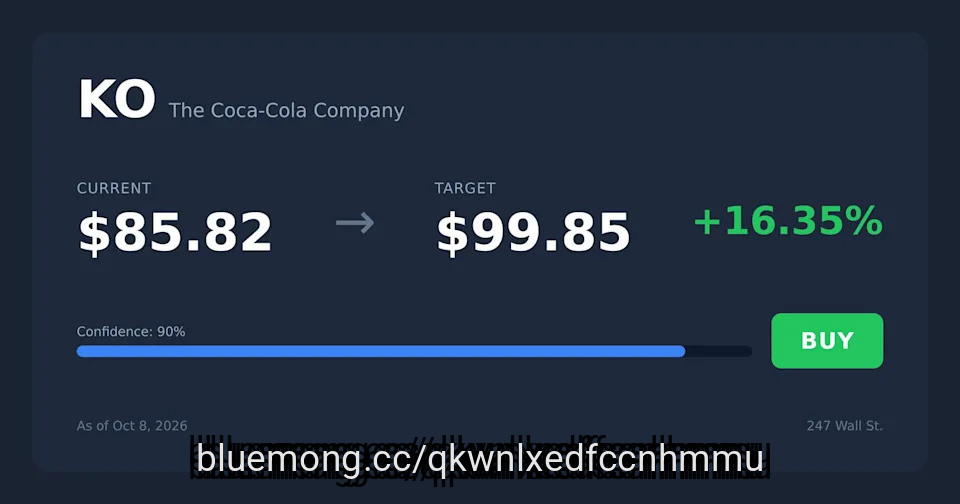
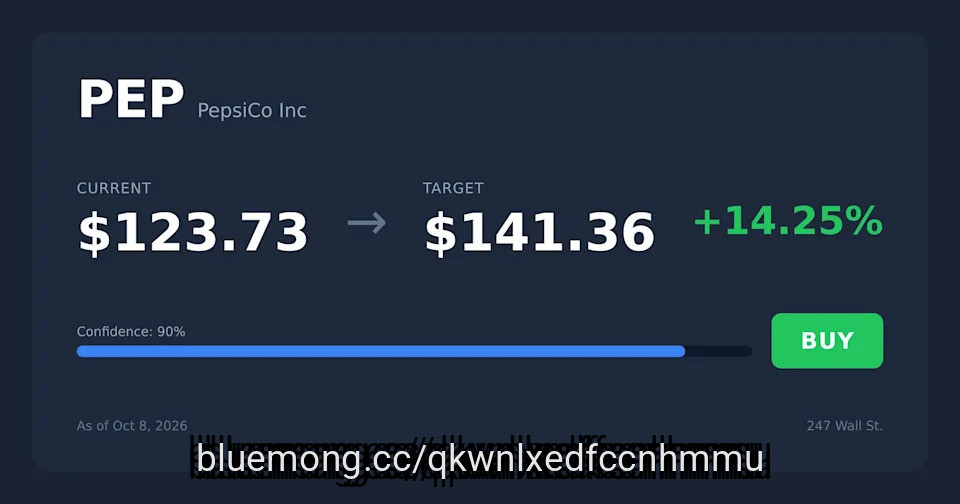
Coca-Cola ($KO) beats PepsiCo ($PEP) for generational portfolios with 63 consecutive dividend increases, wider margins, and 182% 10-year share gains versus 60%.
PepsiCo's free cash flow barely covers its 4.44% dividend yield, while Coca-Cola's expected $12.4B free cash flow dwarfs its $8.8B dividend payout.
A pending IRS appeals ruling and a premium P/E of 28 are the two risks that could crack Coca-Cola's otherwise dominant long-term case.
Just released. Our ***** ysts combed the entire stock market and named the ten best stocks to buy right now, and Coca-Cola didn't make the cut. Enter your email to see the names that beat KO. The report is free. Enter your email and see if any of your stocks made the cut.
Coca-Cola (NYSE:KO) or PepsiCo (NASDAQ:PEP): Which one better suits someone investing for retirement right now, knowing the shares may pass to the next generation? Looked at over several decades, Coca-Cola wins. PepsiCo pays the bigger yield today. Coca-Cola has the safer dividend, the stronger brand economics and fewer structural cracks.
#stocks
PepsiCo's free cash flow barely covers its 4.44% dividend yield, while Coca-Cola's expected $12.4B free cash flow dwarfs its $8.8B dividend payout.
A pending IRS appeals ruling and a premium P/E of 28 are the two risks that could crack Coca-Cola's otherwise dominant long-term case.
Just released. Our ***** ysts combed the entire stock market and named the ten best stocks to buy right now, and Coca-Cola didn't make the cut. Enter your email to see the names that beat KO. The report is free. Enter your email and see if any of your stocks made the cut.
Coca-Cola (NYSE:KO) or PepsiCo (NASDAQ:PEP): Which one better suits someone investing for retirement right now, knowing the shares may pass to the next generation? Looked at over several decades, Coca-Cola wins. PepsiCo pays the bigger yield today. Coca-Cola has the safer dividend, the stronger brand economics and fewer structural cracks.
#stocks



21 days ago
The $200 million in payments dwarfs previous amounts disclosed in the case.
The former CIA officer arrested after authorities discovered roughly $40 million worth of gold bars in his Virginia home pleaded guilty in federal court on Tuesday to a single count of wire fraud, admitting he defrauded the U.S. government out of nearly $200 million for his personal benefit.
David Rush was previously described by prosecutors as a "master manipulator" who used his clandestine position to amass millions worth of gold bars and luxury watches -. though the government revealed in Tuesday's hearing the extent of his alleged deception far exceeded what was previously known to the public.
The nearly $200 million in payments to Rush, which dwarfs previous amounts disclosed as part of his case, will likely only further draw public and congressional scrutiny to the intelligence community to provide more transparency regarding its methods in doling out taxpayer dollars to agents and the oversight that follows such exchanges.
The case has drawn widespread intrigue and raised major questions regarding the intelligence community's management in overseeing the secretive systems that grant officials like Rush the ability to amass high-value ****** ets tied to their work.
#million #payments #dwarfs
The former CIA officer arrested after authorities discovered roughly $40 million worth of gold bars in his Virginia home pleaded guilty in federal court on Tuesday to a single count of wire fraud, admitting he defrauded the U.S. government out of nearly $200 million for his personal benefit.
David Rush was previously described by prosecutors as a "master manipulator" who used his clandestine position to amass millions worth of gold bars and luxury watches -. though the government revealed in Tuesday's hearing the extent of his alleged deception far exceeded what was previously known to the public.
The nearly $200 million in payments to Rush, which dwarfs previous amounts disclosed as part of his case, will likely only further draw public and congressional scrutiny to the intelligence community to provide more transparency regarding its methods in doling out taxpayer dollars to agents and the oversight that follows such exchanges.
The case has drawn widespread intrigue and raised major questions regarding the intelligence community's management in overseeing the secretive systems that grant officials like Rush the ability to amass high-value ****** ets tied to their work.
#million #payments #dwarfs



1 month ago
York Water holds the longest dividend streak in US public markets at 27 consecutive years, while WTW's $1.775B operating cash flow dwarfs its $358M dividend obligation.
Amdocs and Ituran both run near-recession-proof revenue models, with DOX posting near-100% managed services renewal rates and ITRN carrying zero debt alongside $103.7M in net cash.
All five stocks fund dividends from contracted or recurring revenue streams such as regulated rates, fee income, or subscriptions, insulating payouts from economic cycles.
Read More: Learn 7 secret wealth tips high net worth investors use that most investors miss (sponsor)
Income investors heading into the fourth quarter want payouts that don't wobble with the business cycle. The five names below share one thing: dividends funded by recurring, contracted, or fee-based revenue streams that keep flowing whether or not the macro cooperates. Each has raised its payout recently, and each trades on Nasdaq. As a grounding data point, Willis Towers Watson (NASDAQ:WTW) alone generated $360 million of first-half free cash flow, roughly double the prior-year period, giving the broker ample room to keep funding both dividends and buybacks.
#revenue #NASDAQ #Dividend
Amdocs and Ituran both run near-recession-proof revenue models, with DOX posting near-100% managed services renewal rates and ITRN carrying zero debt alongside $103.7M in net cash.
All five stocks fund dividends from contracted or recurring revenue streams such as regulated rates, fee income, or subscriptions, insulating payouts from economic cycles.
Read More: Learn 7 secret wealth tips high net worth investors use that most investors miss (sponsor)
Income investors heading into the fourth quarter want payouts that don't wobble with the business cycle. The five names below share one thing: dividends funded by recurring, contracted, or fee-based revenue streams that keep flowing whether or not the macro cooperates. Each has raised its payout recently, and each trades on Nasdaq. As a grounding data point, Willis Towers Watson (NASDAQ:WTW) alone generated $360 million of first-half free cash flow, roughly double the prior-year period, giving the broker ample room to keep funding both dividends and buybacks.
#revenue #NASDAQ #Dividend

1 month ago
NVDA's $5 trillion market cap matches every Forbes 400 billionaire combined but equals just one-tenth of private business owners' $50 trillion collective wealth.
Jensen Huang guided Q3 revenue to $108 billion and projects 70% fiscal 2028 growth, calling the outlook supply-constrained against a $2 trillion cloud backlog.
Economist Owen Zidar estimates 3 million private business owners hold $50 trillion, a figure that dwarfs the $15 trillion held by all 3,795 global billionaires combined.
Read More: Avoid these 13 retirement mistakes before they derail your future (sponsor)
On Marketplace Morning Report, economist Owen Zidar delivered a number that reframes how investors should think about American wealth. Asked how much the country's hidden business-owner class actually holds, he answered: "We estimate that there are around 3 million everywhere millionaires who are business owners outside of tech and finance who have at least $5 million" and "Collectively it's around $50 trillion, which is enormous. The Forbes 400 only has about a tenth of that."
#forbes #zidar
Jensen Huang guided Q3 revenue to $108 billion and projects 70% fiscal 2028 growth, calling the outlook supply-constrained against a $2 trillion cloud backlog.
Economist Owen Zidar estimates 3 million private business owners hold $50 trillion, a figure that dwarfs the $15 trillion held by all 3,795 global billionaires combined.
Read More: Avoid these 13 retirement mistakes before they derail your future (sponsor)
On Marketplace Morning Report, economist Owen Zidar delivered a number that reframes how investors should think about American wealth. Asked how much the country's hidden business-owner class actually holds, he answered: "We estimate that there are around 3 million everywhere millionaires who are business owners outside of tech and finance who have at least $5 million" and "Collectively it's around $50 trillion, which is enormous. The Forbes 400 only has about a tenth of that."
#forbes #zidar


1 month ago
NVDA's $5 trillion market cap matches every Forbes 400 billionaire combined but equals just one-tenth of private business owners' $50 trillion collective wealth.
Jensen Huang guided Q3 revenue to $108 billion and projects 70% fiscal 2028 growth, calling the outlook supply-constrained against a $2 trillion cloud backlog.
Economist Owen Zidar estimates 3 million private business owners hold $50 trillion, a figure that dwarfs the $15 trillion held by all 3,795 global billionaires combined.
Read More: Avoid these 13 retirement mistakes before they derail your future (sponsor)
On Marketplace Morning Report, economist Owen Zidar delivered a number that reframes how investors should think about American wealth. Asked how much the country's hidden business-owner class actually holds, he answered: "We estimate that there are around 3 million everywhere millionaires who are business owners outside of tech and finance who have at least $5 million" and "Collectively it's around $50 trillion, which is enormous. The Forbes 400 only has about a tenth of that."
#trillion #business #million #combined
Jensen Huang guided Q3 revenue to $108 billion and projects 70% fiscal 2028 growth, calling the outlook supply-constrained against a $2 trillion cloud backlog.
Economist Owen Zidar estimates 3 million private business owners hold $50 trillion, a figure that dwarfs the $15 trillion held by all 3,795 global billionaires combined.
Read More: Avoid these 13 retirement mistakes before they derail your future (sponsor)
On Marketplace Morning Report, economist Owen Zidar delivered a number that reframes how investors should think about American wealth. Asked how much the country's hidden business-owner class actually holds, he answered: "We estimate that there are around 3 million everywhere millionaires who are business owners outside of tech and finance who have at least $5 million" and "Collectively it's around $50 trillion, which is enormous. The Forbes 400 only has about a tenth of that."
#trillion #business #million #combined




2 months ago
President Donald Trump pledged Wednesday to send every American adult $5,000 if Republicans retain control of the House and Senate in the midterm elections, an extraordinary gambit to reverse his party's sagging fortunes in November.
The dubious promise would most likely cost more than $1 trillion and require congressional approval, and would further exacerbate the country's nearly $1.8 trillion annual budget deficit and concerns about inflation.
"If the Republicans win, you win with us and you get $5,000," Trump said during the GOP's midterm convention in Dallas. "It will be called the Trump Dividend."
He likened the payments to a corporation's distributions to shareholders, citing "our tremendous strength and success economically."
Within an hour, Vice President JD Vance appeared to try to walk back Trump's proposal — at least in part — by suggesting the dividend payments would not go to the wealthy. Vance suggested it could be paid for by U.S. tariff revenues, though the suggested payment dwarfs what the U.S. has taken in through the protectionist measures.
#president #republicans #midterm #suggested
The dubious promise would most likely cost more than $1 trillion and require congressional approval, and would further exacerbate the country's nearly $1.8 trillion annual budget deficit and concerns about inflation.
"If the Republicans win, you win with us and you get $5,000," Trump said during the GOP's midterm convention in Dallas. "It will be called the Trump Dividend."
He likened the payments to a corporation's distributions to shareholders, citing "our tremendous strength and success economically."
Within an hour, Vice President JD Vance appeared to try to walk back Trump's proposal — at least in part — by suggesting the dividend payments would not go to the wealthy. Vance suggested it could be paid for by U.S. tariff revenues, though the suggested payment dwarfs what the U.S. has taken in through the protectionist measures.
#president #republicans #midterm #suggested


2 months ago
Walt Disney was a visionary who created a company that is arguably the leader in the entertainment field today. But he had to take a lot of risks, and that didn't always sit well with his wife Lillian.
Walt wasn't just an evangelist for his big ideas, he was a backer. In 1934, when he set out to make Snow White and the Seven Dwarfs, costs ran up to $250,000. While there were investors, the company still had trouble meeting the amount required to create the film, so Walt sold his car, mortgaged his house and borrowed against his life insurance to complete the film (which Hollywood reporters were calling "Disney's folly" before its release).
Jeff Bezos backs a platform that lets anyone invest in rental homes for as little as $100 — 6 ways to build wealth like a landlord without actually being one
Dave Ramsey warns nearly 50% of Americans are making 1 big Social Security mistake. Here's what it is and 3 simple steps to fix it ASAP
The tax breaks in Trump's 'big beautiful bill' expire after 2028. Here are 4 moves to make before the window closes
#company #dwarfs
Walt wasn't just an evangelist for his big ideas, he was a backer. In 1934, when he set out to make Snow White and the Seven Dwarfs, costs ran up to $250,000. While there were investors, the company still had trouble meeting the amount required to create the film, so Walt sold his car, mortgaged his house and borrowed against his life insurance to complete the film (which Hollywood reporters were calling "Disney's folly" before its release).
Jeff Bezos backs a platform that lets anyone invest in rental homes for as little as $100 — 6 ways to build wealth like a landlord without actually being one
Dave Ramsey warns nearly 50% of Americans are making 1 big Social Security mistake. Here's what it is and 3 simple steps to fix it ASAP
The tax breaks in Trump's 'big beautiful bill' expire after 2028. Here are 4 moves to make before the window closes
#company #dwarfs


2 months ago
Walt Disney was a visionary who created a company that is arguably the leader in the entertainment field today. But he had to take a lot of risks, and that didn't always sit well with his wife Lillian.
Walt wasn't just an evangelist for his big ideas, he was a backer. In 1934, when he set out to make Snow White and the Seven Dwarfs, costs ran up to $250,000. While there were investors, the company still had trouble meeting the amount required to create the film, so Walt sold his car, mortgaged his house and borrowed against his life insurance to complete the film (which Hollywood reporters were calling "Disney's folly" before its release).
Jeff Bezos backs a platform that lets anyone invest in rental homes for as little as $100 — 6 ways to build wealth like a landlord without actually being one
Dave Ramsey warns nearly 50% of Americans are making 1 big Social Security mistake. Here's what it is and 3 simple steps to fix it ASAP
The tax breaks in Trump's 'big beautiful bill' expire after 2028. Here are 4 moves to make before the window closes
#company
Walt wasn't just an evangelist for his big ideas, he was a backer. In 1934, when he set out to make Snow White and the Seven Dwarfs, costs ran up to $250,000. While there were investors, the company still had trouble meeting the amount required to create the film, so Walt sold his car, mortgaged his house and borrowed against his life insurance to complete the film (which Hollywood reporters were calling "Disney's folly" before its release).
Jeff Bezos backs a platform that lets anyone invest in rental homes for as little as $100 — 6 ways to build wealth like a landlord without actually being one
Dave Ramsey warns nearly 50% of Americans are making 1 big Social Security mistake. Here's what it is and 3 simple steps to fix it ASAP
The tax breaks in Trump's 'big beautiful bill' expire after 2028. Here are 4 moves to make before the window closes
#company


2 months ago
Premier League clubs have broken their all-time summer transfer record after spending reached £3.46bn.
English top flight clubs had already pushed well beyond the £3bn barrier when Iliman Ndiaye's move from Everton to Manchester City on deadline day for an initial £60m took the amount spent past the previous mark of £3.14bn from 12 months ago.
Enzo Fernandez's move from Chelsea to Manchester City for a joint-British transfer record fee of £125m was then confirmed shortly after the transfer window closed.
A total of £475m was spent on deadline day itself, up from £391m last year.
The total amount spent during the window considerably dwarfs the £1.13bn spent by clubs just five years ago and underlines the power top English clubs have to attract talent, according to figures provided to BBC Sport by Paul Macdonald, founder of FootballTransfers.com.
#spent #english #city
English top flight clubs had already pushed well beyond the £3bn barrier when Iliman Ndiaye's move from Everton to Manchester City on deadline day for an initial £60m took the amount spent past the previous mark of £3.14bn from 12 months ago.
Enzo Fernandez's move from Chelsea to Manchester City for a joint-British transfer record fee of £125m was then confirmed shortly after the transfer window closed.
A total of £475m was spent on deadline day itself, up from £391m last year.
The total amount spent during the window considerably dwarfs the £1.13bn spent by clubs just five years ago and underlines the power top English clubs have to attract talent, according to figures provided to BBC Sport by Paul Macdonald, founder of FootballTransfers.com.
#spent #english #city


2 months ago
On August 14, 2026, Reuters reported that Alphabet Inc. (NASDAQ:GOOGL) disclosed that its stake in ******* e Exploration Technologies Corp. (NASDAQ:SPCX) was worth about $94 billion as of June 30, 2026, more than 100 times its original $900 million investment from 2015. It is making Alphabet by far ******* eX's largest single institutional shareholder following the company's June initial public offering.
Alphabet Inc. (NASDAQ:GOOGL)'s ******* eX stake is now one of the most lucrative early-stage bets in tech history. A $900 million check from 2015 is worth roughly $94 billion, a gain that dwarfs Alphabet's next-largest disclosed rival holder, Saudi Arabia's Public Investment Fund, whose 154.1 million shares were worth $26.3 billion at the same date. That scale validates Alphabet's willingness to make patient, outsized bets outside its core search business, a track record that could matter the next time Alphabet weighs a similarly bold bet.
Space Exploration Technologies Corp. (NASDAQ:SPCX)'s trading action suggests institutional demand is holding up despite the pullback. The stock got "a fresh jolt of buying" when fears about its first lockup expiry proved unfounded, Interactive Brokers strategist Steve Sosnick told Reuters. It remains one of the most actively traded names among the firm's customers. That kind of resilience right after a lockup, often a moment when early holders dump shares, signals ******* eX's shareholder base isn't rushing for the exits.
SpaceX's ownership base extends well beyond Alphabet, which reduces reliance on any single backer's continued conviction. Reuters' filing review found Fidelity, Saudi Arabia's PIF, Hancock Prospecting, Brookfield, and other major institutions all disclosing sizable stakes. That breadth shows professional investors broadly, not just Alphabet, are underwriting ******* eX's valuation.
Alphabet Inc. (NASDAQ:GOOGL)'s headline number is already stale and shrinking. The stake would be worth about $77.9 billion at ******* eX's August 13 price, Reuters reported, roughly $16 billion below the June 30 figure used in the disclosure, since regulatory filings run on a 45-day lag. Now that ******* eX is public, Alphabet's stake must be marked to market. It means ******* eX's own stock swings could show up as real volatility in Alphabet's reported earnings going forward, a new risk that did not exist while the investment sat private.
#reuters #worth #public
Alphabet Inc. (NASDAQ:GOOGL)'s ******* eX stake is now one of the most lucrative early-stage bets in tech history. A $900 million check from 2015 is worth roughly $94 billion, a gain that dwarfs Alphabet's next-largest disclosed rival holder, Saudi Arabia's Public Investment Fund, whose 154.1 million shares were worth $26.3 billion at the same date. That scale validates Alphabet's willingness to make patient, outsized bets outside its core search business, a track record that could matter the next time Alphabet weighs a similarly bold bet.
Space Exploration Technologies Corp. (NASDAQ:SPCX)'s trading action suggests institutional demand is holding up despite the pullback. The stock got "a fresh jolt of buying" when fears about its first lockup expiry proved unfounded, Interactive Brokers strategist Steve Sosnick told Reuters. It remains one of the most actively traded names among the firm's customers. That kind of resilience right after a lockup, often a moment when early holders dump shares, signals ******* eX's shareholder base isn't rushing for the exits.
SpaceX's ownership base extends well beyond Alphabet, which reduces reliance on any single backer's continued conviction. Reuters' filing review found Fidelity, Saudi Arabia's PIF, Hancock Prospecting, Brookfield, and other major institutions all disclosing sizable stakes. That breadth shows professional investors broadly, not just Alphabet, are underwriting ******* eX's valuation.
Alphabet Inc. (NASDAQ:GOOGL)'s headline number is already stale and shrinking. The stake would be worth about $77.9 billion at ******* eX's August 13 price, Reuters reported, roughly $16 billion below the June 30 figure used in the disclosure, since regulatory filings run on a 45-day lag. Now that ******* eX is public, Alphabet's stake must be marked to market. It means ******* eX's own stock swings could show up as real volatility in Alphabet's reported earnings going forward, a new risk that did not exist while the investment sat private.
#reuters #worth #public


2 months ago
NVDA's $82B quarter dwarfs CBRS's $210M, but Cerebras's 103% growth and $25.4B backlog signal a credible inference speed challenger.
NVIDIA's 75% gross margins and $48B quarterly free cash flow cement it as the anchor, while Cerebras offers higher-variance upside on inference speed.
Don't wait: the **** yst who called NVIDIA in 2010 just revealed his top 10 AI stocks. See the full list FREE now.
Cerebras Systems (NASDAQ: CBRS) and NVIDIA (NASDAQ: NVDA) delivered post-earnings reports showing two distinct AI compute visions. NVIDIA reported a $81.61 billion quarter powered by full-stack AI factories. Cerebras, fresh off its IPO, bets on wafer-scale inference speed. The results make a direct comparison unusually relevant.
NVIDIA's Q1 FY27 earnings were dominated by Data Center revenue of $75.246 billion, up 92% year over year, with networking growing 199%. Jensen Huang stated "Demand has gone parabolic." Blackwell Ultra swept every MLPerf inference benchmark, and Vera Rubin production begins in the second half of fiscal 2027.
#NVIDIA #full #earnings
NVIDIA's 75% gross margins and $48B quarterly free cash flow cement it as the anchor, while Cerebras offers higher-variance upside on inference speed.
Don't wait: the **** yst who called NVIDIA in 2010 just revealed his top 10 AI stocks. See the full list FREE now.
Cerebras Systems (NASDAQ: CBRS) and NVIDIA (NASDAQ: NVDA) delivered post-earnings reports showing two distinct AI compute visions. NVIDIA reported a $81.61 billion quarter powered by full-stack AI factories. Cerebras, fresh off its IPO, bets on wafer-scale inference speed. The results make a direct comparison unusually relevant.
NVIDIA's Q1 FY27 earnings were dominated by Data Center revenue of $75.246 billion, up 92% year over year, with networking growing 199%. Jensen Huang stated "Demand has gone parabolic." Blackwell Ultra swept every MLPerf inference benchmark, and Vera Rubin production begins in the second half of fiscal 2027.
#NVIDIA #full #earnings

2 months ago
Wall Street is focused on Nvidia's (NVDA) graphics processing units (GPUs). The faster-growing story is sitting beside them.
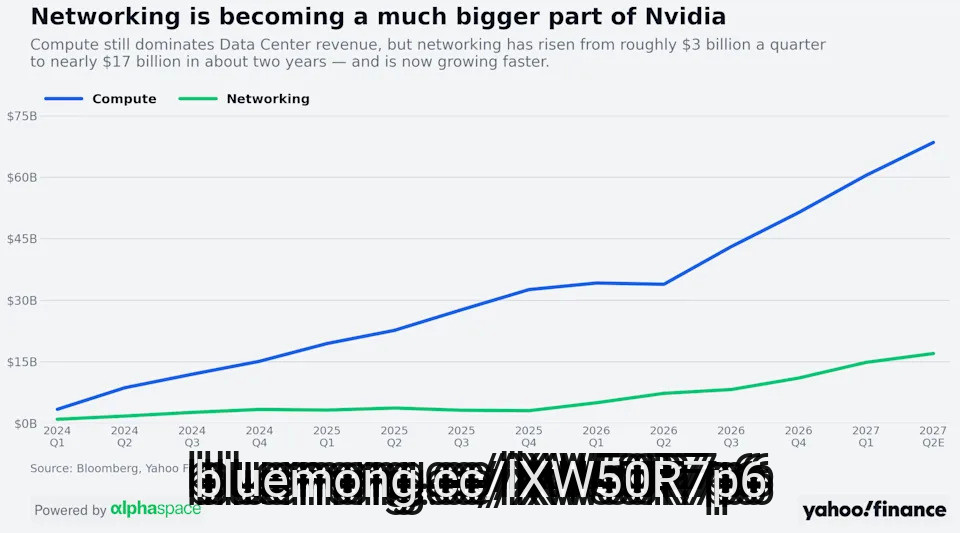
Nvidia has quietly built a networking operation that generated nearly $15 billion last quarter, up from roughly $3 billion per quarter two years ago. Wall Street expects that figure to approach $17 billion when the company reports earnings on Wednesday.
Compute still dwarfs networking inside Nvidia's Data Center business. But networking has been growing faster, up nearly 200% year over year in the last quarter compared with 77% for compute.
That pace is slowing. ******* ysts expect networking growth of roughly 134% in the quarter about to be reported, still ahead of compute at about 100%.
The change goes straight to one of the biggest questions hanging over Nvidia.
#quarter #growing #nearly
Nvidia has quietly built a networking operation that generated nearly $15 billion last quarter, up from roughly $3 billion per quarter two years ago. Wall Street expects that figure to approach $17 billion when the company reports earnings on Wednesday.
Compute still dwarfs networking inside Nvidia's Data Center business. But networking has been growing faster, up nearly 200% year over year in the last quarter compared with 77% for compute.
That pace is slowing. ******* ysts expect networking growth of roughly 134% in the quarter about to be reported, still ahead of compute at about 100%.
The change goes straight to one of the biggest questions hanging over Nvidia.
#quarter #growing #nearly

2 months ago
The U.S. Treasury is considering using its near-$950 billion General Account to help fund its recently announced bond buyback program, according to CNBC, citing two senior Treasury officials. The officials said the account is considered available for purchases of off-the-run securities but declined to specify how much, if any, would be used or when an announcement might come.
The TGA, which functions as the federal government's primary operating account at the Federal Reserve, stood at roughly $950 billion as of the officials' comments — a figure that dwarfs the $550 to $600 billion level that the Biden administration had aimed to maintain. Treasury Secretary Scott Bessent built the balance to its current level, and officials said it is funded with existing tax collections.
The prevailing expectation in markets was that the purchases would be paid for through new short-term bill sales, an approach Bessent labeled a "Treasury Twist" during a CNBC appearance last week. The senior officials did not rule out that approach, but made clear the TGA represents an additional potential funding source.
Tapping the TGA could counter doubts expressed by ******* ysts who have argued that the program lacks the scale to exert any real influence on long-term yields. Since the buyback announcement last week, bonds had retreated from an initial rally, pushing yields higher.
Officials indicated they do not view a partial TGA drawdown as creating any near-term cash management problem. Current projections put the next debt-ceiling bind sometime between next winter and early spring, which officials said provides a reasonable window to restore the balance before any constraint bites. Should the Treasury choose to hold the TGA near its current level after using some funds for buybacks, it would need to conduct additional debt sales to restore the account.
#account
The TGA, which functions as the federal government's primary operating account at the Federal Reserve, stood at roughly $950 billion as of the officials' comments — a figure that dwarfs the $550 to $600 billion level that the Biden administration had aimed to maintain. Treasury Secretary Scott Bessent built the balance to its current level, and officials said it is funded with existing tax collections.
The prevailing expectation in markets was that the purchases would be paid for through new short-term bill sales, an approach Bessent labeled a "Treasury Twist" during a CNBC appearance last week. The senior officials did not rule out that approach, but made clear the TGA represents an additional potential funding source.
Tapping the TGA could counter doubts expressed by ******* ysts who have argued that the program lacks the scale to exert any real influence on long-term yields. Since the buyback announcement last week, bonds had retreated from an initial rally, pushing yields higher.
Officials indicated they do not view a partial TGA drawdown as creating any near-term cash management problem. Current projections put the next debt-ceiling bind sometime between next winter and early spring, which officials said provides a reasonable window to restore the balance before any constraint bites. Should the Treasury choose to hold the TGA near its current level after using some funds for buybacks, it would need to conduct additional debt sales to restore the account.
#account

2 months ago
On August 17, Google, a unit of Alphabet Inc. (NASDAQ:GOOGL), agreed to buy internal business data from bankrupt Spirit Airlines for $10 million, outbidding a $7.5 million offer from AI data company Mercor. The haul includes employee emails, Microsoft Teams messages, spreadsheets, calendars, and marketing and operations records, all to be stripped of customer information before the sale closes at a bankruptcy court hearing. It is a tiny deal by Alphabet's standards. But it says something about how aggressively the company is hunting for raw material to train its AI models.
Google Cloud revenue grew 82% year over year to $24.8 billion in the second quarter, accelerating from 63% growth in the first. That pace dwarfs the 43% growth Microsoft reported for Azure and the 37% growth Amazon posted for AWS over the same period. Google Cloud is still the smallest of the three in dollar terms, but its operating income more than tripled, from $2.8 billion to $8.8 billion, pushing its margin from about 21% to 36%. Its backlog reached $514 billion, roughly five years of work at the current pace, and Alphabet expects to recognize just over half of it as revenue within 24 months. CEO Sundar Pichai said nearly 90% of the Fortune 100 now use its Gemini Enterprise model, with existing customers exceeding their original commitments by more than 50%.
AI is reshaping the advertising side of the business too. Gemini is helping Alphabet find relevant ads for longer, harder-to-monetize searches, while a tool called AI Max uses AI to expand keyword matches and rewrite ad copy automatically. Management has credited AI Overviews and AI Mode with lifting search revenue by making results more relevant, all built on top of a Chrome browser with 68% global market share and a Google Search engine that holds 91%.
Alphabet's headline numbers are less impressive up close. The company reported net income of $112.2 billion on revenue of $119.8 billion in the second quarter, but $98 billion of that came from "other income," driven mainly by a $94.1 billion unrealized gain tied to its early stake in **** eX. Alphabet invested $900 million in **** eX back in 2015 for roughly 7.5% of the company, a position that ballooned in value after **** eX's June IPO priced shares at $135 and closed the quarter at $170.86. Strip that gain out and Alphabet's net income falls closer to $18 billion, which works out to a 35% year-over-year decline in earnings per share. Because the gain is unrealized, it rises and falls with **** eX's stock price and could reverse just as fast as it appeared.
#year
Google Cloud revenue grew 82% year over year to $24.8 billion in the second quarter, accelerating from 63% growth in the first. That pace dwarfs the 43% growth Microsoft reported for Azure and the 37% growth Amazon posted for AWS over the same period. Google Cloud is still the smallest of the three in dollar terms, but its operating income more than tripled, from $2.8 billion to $8.8 billion, pushing its margin from about 21% to 36%. Its backlog reached $514 billion, roughly five years of work at the current pace, and Alphabet expects to recognize just over half of it as revenue within 24 months. CEO Sundar Pichai said nearly 90% of the Fortune 100 now use its Gemini Enterprise model, with existing customers exceeding their original commitments by more than 50%.
AI is reshaping the advertising side of the business too. Gemini is helping Alphabet find relevant ads for longer, harder-to-monetize searches, while a tool called AI Max uses AI to expand keyword matches and rewrite ad copy automatically. Management has credited AI Overviews and AI Mode with lifting search revenue by making results more relevant, all built on top of a Chrome browser with 68% global market share and a Google Search engine that holds 91%.
Alphabet's headline numbers are less impressive up close. The company reported net income of $112.2 billion on revenue of $119.8 billion in the second quarter, but $98 billion of that came from "other income," driven mainly by a $94.1 billion unrealized gain tied to its early stake in **** eX. Alphabet invested $900 million in **** eX back in 2015 for roughly 7.5% of the company, a position that ballooned in value after **** eX's June IPO priced shares at $135 and closed the quarter at $170.86. Strip that gain out and Alphabet's net income falls closer to $18 billion, which works out to a 35% year-over-year decline in earnings per share. Because the gain is unrealized, it rises and falls with **** eX's stock price and could reverse just as fast as it appeared.
#year


2 months ago
Size isn't everything in China's IPO markets.
Unitree, perhaps China's most famous humanoid robotics maker, is in the middle of an initial public offering on Shanghai's STAR market, the city's board for tech startups, with a trading debut expected for this week. Then, later this week, the fast-fashion platform Shein will reportedly start its own IPO in Hong Kong, with shares potentially debuting as soon as Aug. 28, according to Reuters.
Shein's IPO dwarfs Unitree's, with the fast fashion giant hoping to raise as much as $3 billion, roughly three times what Unitree is targeting. And yet Unitree's IPO is getting most of the attention: Retail investors are scrambling to buy into the company, and secondary markets are predicting a massive jump in valuation after the startup's debut.
Unitree may be smaller and younger compared to Shein, which has a decade of global expansion under its belt. But in the eyes of investors, the robot maker is the more exciting bet, as appetites shift to AI and hardware, and away from e-commerce and internet platforms.
Unitree, founded by ***** Xingxing in 2016, has become a fixture in China's pop culture, thanks to its robots' dance routines at the CCTV Spring Festival Gala, China's most-watched television broadcast.
Unitree is raising 6.1 billion Chinese yuan ($904 million) in its IPO, at a market valuation of around $9 billion. The company claimed last week that the retail portion of its offering was more than 8,000 times oversubscribed.
#maker
Unitree, perhaps China's most famous humanoid robotics maker, is in the middle of an initial public offering on Shanghai's STAR market, the city's board for tech startups, with a trading debut expected for this week. Then, later this week, the fast-fashion platform Shein will reportedly start its own IPO in Hong Kong, with shares potentially debuting as soon as Aug. 28, according to Reuters.
Shein's IPO dwarfs Unitree's, with the fast fashion giant hoping to raise as much as $3 billion, roughly three times what Unitree is targeting. And yet Unitree's IPO is getting most of the attention: Retail investors are scrambling to buy into the company, and secondary markets are predicting a massive jump in valuation after the startup's debut.
Unitree may be smaller and younger compared to Shein, which has a decade of global expansion under its belt. But in the eyes of investors, the robot maker is the more exciting bet, as appetites shift to AI and hardware, and away from e-commerce and internet platforms.
Unitree, founded by ***** Xingxing in 2016, has become a fixture in China's pop culture, thanks to its robots' dance routines at the CCTV Spring Festival Gala, China's most-watched television broadcast.
Unitree is raising 6.1 billion Chinese yuan ($904 million) in its IPO, at a market valuation of around $9 billion. The company claimed last week that the retail portion of its offering was more than 8,000 times oversubscribed.
#maker

3 months ago
Despite a summer swoon for tech stocks as investors fret over capex spending at the likes of Meta (META), Alphabet (GOOG), and Amazon (AMZN), tech still looks to be the place to be when ******* yzing fund inflows.
Tech stocks are on track for a yearly inflow of $216 billion, according to new data from Bank of America Global Research (see chart below). The figure dwarfs the total annual inflows of each year dating back to 2015.
The Nasdaq Composite's (^IXIC) forward price-to-earnings ratio is about 26 times, compared to 20.4 times for the S&P 500 (^GSPC), per Yahoo Finance AlphaSpace ******* ysis. The relative premium for the Nasdaq underscores the sector's higher growth tendencies and helps explain why investors often overweight the sector in their portfolios.
BofA's tech fund inflows data sends a key message to investors: While volatility has entered the ******* e on AI overspending fears, confidence in the long term isn't being lost.
"AI monetization is increasingly visible through backlog and cloud revenues. As elevated backlogs convert into recognized revenue, cloud growth should remain well supported, helping validate rising AI capex, strengthen order coverage, and further ease return on invested capital concerns," JPMorgan strategist Dubravko Lakos-Bujas wrote in a note on Monday.
#fund #data #times
Tech stocks are on track for a yearly inflow of $216 billion, according to new data from Bank of America Global Research (see chart below). The figure dwarfs the total annual inflows of each year dating back to 2015.
The Nasdaq Composite's (^IXIC) forward price-to-earnings ratio is about 26 times, compared to 20.4 times for the S&P 500 (^GSPC), per Yahoo Finance AlphaSpace ******* ysis. The relative premium for the Nasdaq underscores the sector's higher growth tendencies and helps explain why investors often overweight the sector in their portfolios.
BofA's tech fund inflows data sends a key message to investors: While volatility has entered the ******* e on AI overspending fears, confidence in the long term isn't being lost.
"AI monetization is increasingly visible through backlog and cloud revenues. As elevated backlogs convert into recognized revenue, cloud growth should remain well supported, helping validate rising AI capex, strengthen order coverage, and further ease return on invested capital concerns," JPMorgan strategist Dubravko Lakos-Bujas wrote in a note on Monday.
#fund #data #times


3 months ago
I have long thought that one of the best ways to invest in artificial intelligence (AI) and its infrastructure is to find a company that provides a product or service so compelling that it essentially dwarfs the competition. That's why two of my favorite stocks in the semiconductor supply chain are Taiwan Semiconductor Manufacturing (NYSE: TSM) and ASML (NASDAQ: ASML).
Both of these companies have been more-than-solid winners over the last five years, with net income for Taiwan Semiconductor (TSMC for short) rising 251% in that time, and revenue increasing by 165%. ASML has been strong as well, with better than 90% gains in both net income and revenue.
Missed Nvidia in 2009? This Rare Signal Is Flashing Again. In 2009, a "Double Down" signal flashed for a little-known chipmaker called Nvidia. For the first time in years, that same "Total Conviction" signal is flashing for a company 1/100th the size of Nvidia. Continue »
Their shares in the last five years have outpaced the tech-heavy Nasdaq Composite by a wide margin.
Both of these AI stocks have been great investments. But as we look forward, which appears to be the better AI play?
#asml #semiconductor #signal #NASDAQ
Both of these companies have been more-than-solid winners over the last five years, with net income for Taiwan Semiconductor (TSMC for short) rising 251% in that time, and revenue increasing by 165%. ASML has been strong as well, with better than 90% gains in both net income and revenue.
Missed Nvidia in 2009? This Rare Signal Is Flashing Again. In 2009, a "Double Down" signal flashed for a little-known chipmaker called Nvidia. For the first time in years, that same "Total Conviction" signal is flashing for a company 1/100th the size of Nvidia. Continue »
Their shares in the last five years have outpaced the tech-heavy Nasdaq Composite by a wide margin.
Both of these AI stocks have been great investments. But as we look forward, which appears to be the better AI play?
#asml #semiconductor #signal #NASDAQ



3 months ago
OKLO trades just 11% above its 52-week low, yet our $97.74 BUY target implies 121% upside over the next 12 months.
OKLO's $7.22 billion market cap dwarfs SMR's $3 billion, with CEG underscoring the steep execution premium Oklo must earn through commercial startup.
Oklo's bull case projects $170 by July 2027, but $0 FY2024 revenue, non-binding LOIs, and 19% short interest limit near-term conviction.
Act now: the ***** yst who called NVIDIA in 2010 just named his top 10 AI stocks — and Oklo Inc. didn't make the cut. Grab the names FREE today.
Oklo (NYSE:OKLO) has been one of the most volatile bets on the AI nuclear thesis. After a punishing pullback, our model sees room to run. Shares closed at $44.13 on July 21, 2026, well off the $193.84 52-week high.
#billion #fy2024 #free
OKLO's $7.22 billion market cap dwarfs SMR's $3 billion, with CEG underscoring the steep execution premium Oklo must earn through commercial startup.
Oklo's bull case projects $170 by July 2027, but $0 FY2024 revenue, non-binding LOIs, and 19% short interest limit near-term conviction.
Act now: the ***** yst who called NVIDIA in 2010 just named his top 10 AI stocks — and Oklo Inc. didn't make the cut. Grab the names FREE today.
Oklo (NYSE:OKLO) has been one of the most volatile bets on the AI nuclear thesis. After a punishing pullback, our model sees room to run. Shares closed at $44.13 on July 21, 2026, well off the $193.84 52-week high.
#billion #fy2024 #free



3 months ago
Together, Expedia (EXPE) and Booking.com (BKNG) account for roughly half of the online travel agency market. While Booking's market capitalization of $139 billion dwarfs the roughly $32 billion market cap of its rival, Expedia stock has a spot on the Investor's Business Daily Breakout Stocks Index while Booking.com does not.
While both stocks recently reset their base counts, Expedia stands poised for a breakout, which would mark a record high. Meanwhile, Booking.com remains mired below its 200-day line.
Expedia's portfolio of brands includes Expedia for full-service booking, Hotels.com, specializing in hotels, and Vrbo to handle vacation rentals. Booking's portfolio includes Priceline, Agoda, Kayak, OpenTable, and Rentalcars.com.
While Hilton Worldwide (HLT) coined the term "Whycation," Expedia and Booking.com have both tapped into the trend of purpose-driven, goal-oriented getaways.
As part of its Unpack'26 report, Expedia also outlined its Set-Jetting Forecast, focusing on travel spots inspired by movies and TV shows. According to Expedia, 81% of Gen Z and millennial travelers now plan getaways based on TV shows and movies. Expedia also showcases Fan Voyage for sports travel and Farm Charm through its Vrbo business. Through Hotels.com, it also spotlights Salvaged Stays with retreats converted from architectural relics.
#travel #market #breakout
While both stocks recently reset their base counts, Expedia stands poised for a breakout, which would mark a record high. Meanwhile, Booking.com remains mired below its 200-day line.
Expedia's portfolio of brands includes Expedia for full-service booking, Hotels.com, specializing in hotels, and Vrbo to handle vacation rentals. Booking's portfolio includes Priceline, Agoda, Kayak, OpenTable, and Rentalcars.com.
While Hilton Worldwide (HLT) coined the term "Whycation," Expedia and Booking.com have both tapped into the trend of purpose-driven, goal-oriented getaways.
As part of its Unpack'26 report, Expedia also outlined its Set-Jetting Forecast, focusing on travel spots inspired by movies and TV shows. According to Expedia, 81% of Gen Z and millennial travelers now plan getaways based on TV shows and movies. Expedia also showcases Fan Voyage for sports travel and Farm Charm through its Vrbo business. Through Hotels.com, it also spotlights Salvaged Stays with retreats converted from architectural relics.
#travel #market #breakout

3 months ago
TSMC's $265B US manufacturing pledge and Alphabet's 9.6 GW data center leases represent the hyperscaler firepower driving Europe's 20x AI investment deficit.
AI-driven labor restructuring remains isolated to high-exposure occupations, with broader impact on healthcare, logistics, and finance not projected until 2029.
Act now: the ****** yst who called NVIDIA in 2010 just named his top 10 AI stocks — and Google didn't make the cut. Grab the names FREE today.
A recent Thoughts on the Market roundtable hosted by Seth Carpenter highlighted two major realities shaping the AI economy. Just seven U.S. hyperscalers plan to spend 20 times more on AI than all of Europe, while AI's broader impact on employment may not emerge until 2029 or later.
The episode discussed that Europe's total planned AI investment is "A factor of 20 below what we see in the US by just the 7 hyperscalers." That comparison shows that a small cluster of America's cloud and platform giants alone dwarfs what the entire European bloc is committing.
#broader #hyperscalers #grab
AI-driven labor restructuring remains isolated to high-exposure occupations, with broader impact on healthcare, logistics, and finance not projected until 2029.
Act now: the ****** yst who called NVIDIA in 2010 just named his top 10 AI stocks — and Google didn't make the cut. Grab the names FREE today.
A recent Thoughts on the Market roundtable hosted by Seth Carpenter highlighted two major realities shaping the AI economy. Just seven U.S. hyperscalers plan to spend 20 times more on AI than all of Europe, while AI's broader impact on employment may not emerge until 2029 or later.
The episode discussed that Europe's total planned AI investment is "A factor of 20 below what we see in the US by just the 7 hyperscalers." That comparison shows that a small cluster of America's cloud and platform giants alone dwarfs what the entire European bloc is committing.
#broader #hyperscalers #grab


3 months ago
The chipmaker sent shareholders a fortune in cash, yet the stock itself went nowhere fast. Here's what owners actually got for their patience and what the trade-off really cost them.
Qualcomm (QCOM)'s stock has seen better days, trading around $170.32 a share after a recent 25% pullback from its one-month high. But behind the stock chart's noise is a much simpler story: the company has been a quiet, large cash-return machine. Over the last five years, Qualcomm handed back $43 billion to its owners through dividends and buybacks, an amount equal to 24% of its entire current market value. The question for any investor is whether that cash was a reward for a great business or a consolation prize for a stock that dramatically lagged the market.
The company's cash machine is built on two very different engines.
That $43 billion gusher, which dwarfs the $5.7 billion returned by the median S&P 500 company over the same period, comes from a business with formidable profitability. Qualcomm's operating margin over the last twelve months was 26%, well above the index median of 18.4%. The cash is generated by its two core segments: QCT, which designs the Snapdragon chipsets that power countless smartphones and, increasingly, cars and other connected devices; and QTL, its high-margin technology licensing arm.
Of the total returned to shareholders, $26 billion came from share repurchases, and another $17 billion was paid out as dividends. This is the financial brute force that underpins the investment case: a mature, highly profitable business dedicated to rewarding its owners.
#cash
Qualcomm (QCOM)'s stock has seen better days, trading around $170.32 a share after a recent 25% pullback from its one-month high. But behind the stock chart's noise is a much simpler story: the company has been a quiet, large cash-return machine. Over the last five years, Qualcomm handed back $43 billion to its owners through dividends and buybacks, an amount equal to 24% of its entire current market value. The question for any investor is whether that cash was a reward for a great business or a consolation prize for a stock that dramatically lagged the market.
The company's cash machine is built on two very different engines.
That $43 billion gusher, which dwarfs the $5.7 billion returned by the median S&P 500 company over the same period, comes from a business with formidable profitability. Qualcomm's operating margin over the last twelve months was 26%, well above the index median of 18.4%. The cash is generated by its two core segments: QCT, which designs the Snapdragon chipsets that power countless smartphones and, increasingly, cars and other connected devices; and QTL, its high-margin technology licensing arm.
Of the total returned to shareholders, $26 billion came from share repurchases, and another $17 billion was paid out as dividends. This is the financial brute force that underpins the investment case: a mature, highly profitable business dedicated to rewarding its owners.
#cash

3 months ago
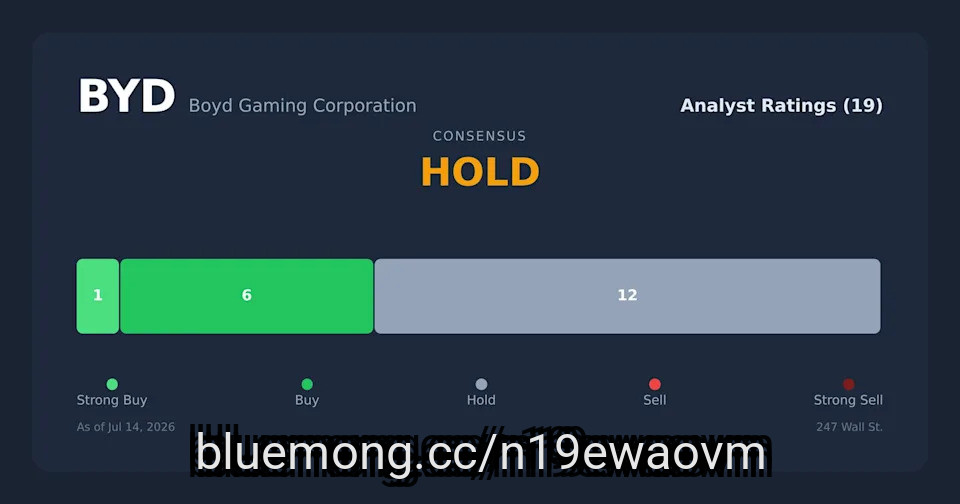
BYD trades at a forward P/E of 11 despite generating $317M in quarterly EBITDAR, with 17% upside to a fair value target of $102.
Boyd's 1.8x leverage dwarfs peers MGM and PENN, and its $150M quarterly buyback pace has shrunk the share count 33% over four years.
Boyd beat Q2 2025 EPS estimates by 15%, triggering a 4.4% same-day pop, with a 0.17 put/call ratio flagging bullish positioning ahead of July 23.
Act now: the ****** yst who called NVIDIA in 2010 just named his top 10 AI stocks — and Boyd Gaming didn't make the cut. Grab the names FREE today.
Boyd Gaming (NYSE:BYD) stands out in gaming heading into its confirmed July 23 earnings release, and the setup is doing most of the work for you. The 24/7 Wall St.'s base case pegs fair value at $102.07 against an $86.03 print as of July 14, a 16.91% upside call with a 90% confidence score and a Buy recommendation. The conviction case rests on a buyback machine, a rerating catalyst two weeks out and a valuation that ignores the earnings power underneath.
Boyd's 1.8x leverage dwarfs peers MGM and PENN, and its $150M quarterly buyback pace has shrunk the share count 33% over four years.
Boyd beat Q2 2025 EPS estimates by 15%, triggering a 4.4% same-day pop, with a 0.17 put/call ratio flagging bullish positioning ahead of July 23.
Act now: the ****** yst who called NVIDIA in 2010 just named his top 10 AI stocks — and Boyd Gaming didn't make the cut. Grab the names FREE today.
Boyd Gaming (NYSE:BYD) stands out in gaming heading into its confirmed July 23 earnings release, and the setup is doing most of the work for you. The 24/7 Wall St.'s base case pegs fair value at $102.07 against an $86.03 print as of July 14, a 16.91% upside call with a 90% confidence score and a Buy recommendation. The conviction case rests on a buyback machine, a rerating catalyst two weeks out and a valuation that ignores the earnings power underneath.


4 months ago
SpaceX stock will be added to the Nasdaq-100 index before the open on Tuesday, July 7, Nasdaq confirmed late Friday. That will pave the way for passive investment flows from mutual funds and ETFs that track the big-cap tech index.
The ***** eX news is not a surprise. Nasdaq recently announced fast-track rules for large IPOs to join the Nasdaq-100 index after just 15 trading days. For ***** eX stock, that's July 6. FTSE Russell also sped up big IPOs' eligibility into its indexes. SPCX stock was added to the Russell 1000 after Friday's market close.
Passive funds that track Russell indexes will need to buy almost $3 billion in ***** eX (SPCX), according to Jefferies. JPMorgan recently estimated that passive funds that track the Nasdaq 100 will need to buy $4 billion in Elon Musk's ***** e company.
Notably, S&P Dow Jones Indices this month opted to keep its eligibility requirements for the S&P 500, rejecting calls to fast track ***** eX and other upcoming megacap IPOs such as Anthropic and OpenAI into the benchmark index. ***** eX will have to wait 12 months, and even then must meet profitability and public float requirements.
The amount of money tracking the S&P 500 index dwarfs that of the Nasdaq-100 index and Russell 1000.
The ***** eX news is not a surprise. Nasdaq recently announced fast-track rules for large IPOs to join the Nasdaq-100 index after just 15 trading days. For ***** eX stock, that's July 6. FTSE Russell also sped up big IPOs' eligibility into its indexes. SPCX stock was added to the Russell 1000 after Friday's market close.
Passive funds that track Russell indexes will need to buy almost $3 billion in ***** eX (SPCX), according to Jefferies. JPMorgan recently estimated that passive funds that track the Nasdaq 100 will need to buy $4 billion in Elon Musk's ***** e company.
Notably, S&P Dow Jones Indices this month opted to keep its eligibility requirements for the S&P 500, rejecting calls to fast track ***** eX and other upcoming megacap IPOs such as Anthropic and OpenAI into the benchmark index. ***** eX will have to wait 12 months, and even then must meet profitability and public float requirements.
The amount of money tracking the S&P 500 index dwarfs that of the Nasdaq-100 index and Russell 1000.


4 months ago
Almost two weeks into the 2026 World Cup, FIFA has delivered on storylines such as Cape Verde's Cinderella run in the island country's very first appearance, or all-time great Lionel Messi recording a hat trick as he started his ***** le defense.
But there is plenty that has happened or is happening off the field, such as the immense fan presence from visiting countries, or what the World Cup is doing with tape at stadiums, or how LinkedIn led to one player's World Cup berth.
Being the most popular world sporting event, the FIFA World Cup draws a lot of eyeballs. Garnering roughly 1.5 billion viewers in the 2022 final, the tournament dwarfs the Super Bowl, which reported 125 million this past February, per NFL.
The viewership gives FIFA the opportunity to sell sponsorships for large amounts of money, and the organization does not like the idea of giving any free logo ***** e. In fact, FIFA has gone to great lengths to ensure brands who have not made deals do not receive free advertisement.
Ranging from little sauce bottles to stadium names, if it is not an official sponsor, FIFA has mandated its removal.
But there is plenty that has happened or is happening off the field, such as the immense fan presence from visiting countries, or what the World Cup is doing with tape at stadiums, or how LinkedIn led to one player's World Cup berth.
Being the most popular world sporting event, the FIFA World Cup draws a lot of eyeballs. Garnering roughly 1.5 billion viewers in the 2022 final, the tournament dwarfs the Super Bowl, which reported 125 million this past February, per NFL.
The viewership gives FIFA the opportunity to sell sponsorships for large amounts of money, and the organization does not like the idea of giving any free logo ***** e. In fact, FIFA has gone to great lengths to ensure brands who have not made deals do not receive free advertisement.
Ranging from little sauce bottles to stadium names, if it is not an official sponsor, FIFA has mandated its removal.


4 months ago
A social media stunt that started with fewer than 5,000 Instagram followers has rewritten the final chapter of Tim Payne’s career.
The New Zealand defender landed at the 2026 World Cup billed as the tournament’s least famous name, a label dreamed up online rather than earned on the pitch. Weeks later, he boasts an Instagram following of roughly 5.8 million — a figure that dwarfs most of the stars he is sharing the tournament with.
That overnight fame is now translating into something more concrete. Payne has reportedly agreed a summer transfer, one that will carry the 32-year-old away from Australia’s A-League and toward the next stage of his career in South America.
The right-back is set to join Paraguayan giants Club Olimpia, a switch that suggests he will see out the closing years of his career in Asunción rather than back home in Oceania.
Sky Sports reporter Anthony Joseph broke the news, posting to X that an agreement is in place.
The New Zealand defender landed at the 2026 World Cup billed as the tournament’s least famous name, a label dreamed up online rather than earned on the pitch. Weeks later, he boasts an Instagram following of roughly 5.8 million — a figure that dwarfs most of the stars he is sharing the tournament with.
That overnight fame is now translating into something more concrete. Payne has reportedly agreed a summer transfer, one that will carry the 32-year-old away from Australia’s A-League and toward the next stage of his career in South America.
The right-back is set to join Paraguayan giants Club Olimpia, a switch that suggests he will see out the closing years of his career in Asunción rather than back home in Oceania.
Sky Sports reporter Anthony Joseph broke the news, posting to X that an agreement is in place.



4 months ago
Gaming is the mega-sector few talk about. With a global market value of $386 billion this year, it dwarfs the size of film and music combined. As many as 350,000 people work in the industry directly, according to market research firm Gitnux. As with all other parts of the business world, talk of artificial intelligence is intense and inconclusive.
Microsoft is one of the Big Daddies. Call of Duty, World of Warcraft, and Minecraft live within the Xbox gaming empire, catapulted to leading global status by the acquisition of Activision Blizzard for $69 billion in 2023. Tencent, from China, and Sony, from ******* an, vie with Microsoft for supremacy at the top of the gaming leaderboard.
With such a successful stable, Microsoft is keen that advertisers engage with gaming platforms, and it has set up a business division—Xbox Media Solutions—to drive profitable deals. The first game it lists on its "global portfolio of fan-favorite franchises" has nothing to do with battlefield simulations in future universes or worlds created by an endless supply of rubble, bricks, and tree trunks. The first game it highlights relies on people matching different types of sweets in a row and has a name that is part pro wrestling, part confectionery store: Candy Crush Saga.
Candy Crush was launched in 2012 with 65 "levels" of candy-matching to complete. Few would have predicted that, 14 years later, it would still be making $1 billion in annual revenue and have a fan base of over 150 million users playing it more than once a month, according to Business of Apps, which covers the sector. The number of levels now exceeds 20,000, and spinoff games include Soda Saga and Jelly Saga. Given its rabid fandom, the $5.9 billion Activision paid in 2016 for King, the company that launched the game, now looks like a steal.
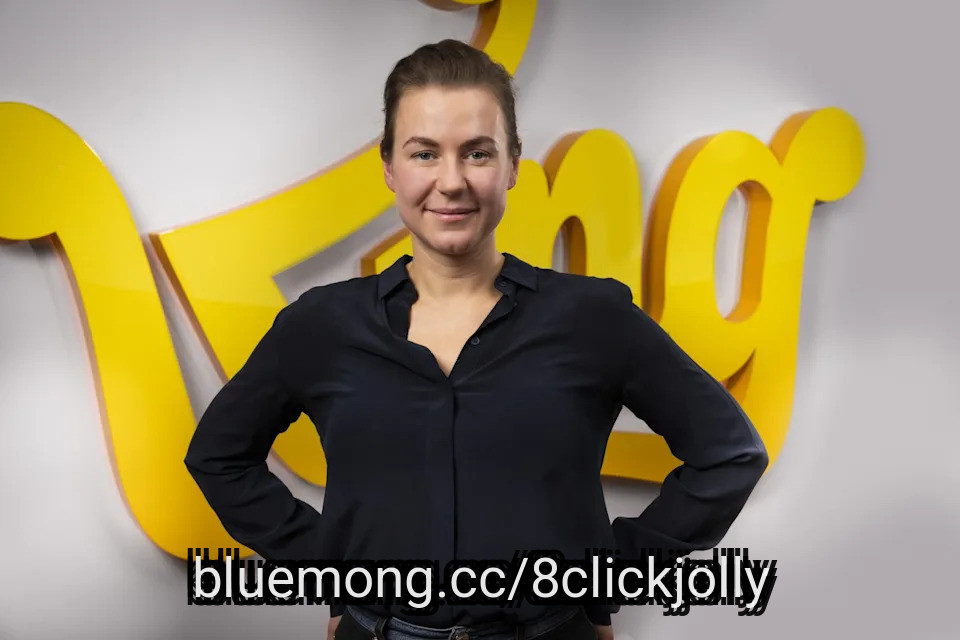
What's next for a game so successful that when writer of catchy tunes Meghan Trainor wanted an exclusive launch platform for the video of her new single "Made You Look," she chose Candy Crush? For the answer to that, it is worth turning to Paula Ingvar, the game's general manager, based at the company's HQ in Stockholm. She does not lack ambition.
Microsoft is one of the Big Daddies. Call of Duty, World of Warcraft, and Minecraft live within the Xbox gaming empire, catapulted to leading global status by the acquisition of Activision Blizzard for $69 billion in 2023. Tencent, from China, and Sony, from ******* an, vie with Microsoft for supremacy at the top of the gaming leaderboard.
With such a successful stable, Microsoft is keen that advertisers engage with gaming platforms, and it has set up a business division—Xbox Media Solutions—to drive profitable deals. The first game it lists on its "global portfolio of fan-favorite franchises" has nothing to do with battlefield simulations in future universes or worlds created by an endless supply of rubble, bricks, and tree trunks. The first game it highlights relies on people matching different types of sweets in a row and has a name that is part pro wrestling, part confectionery store: Candy Crush Saga.
Candy Crush was launched in 2012 with 65 "levels" of candy-matching to complete. Few would have predicted that, 14 years later, it would still be making $1 billion in annual revenue and have a fan base of over 150 million users playing it more than once a month, according to Business of Apps, which covers the sector. The number of levels now exceeds 20,000, and spinoff games include Soda Saga and Jelly Saga. Given its rabid fandom, the $5.9 billion Activision paid in 2016 for King, the company that launched the game, now looks like a steal.
What's next for a game so successful that when writer of catchy tunes Meghan Trainor wanted an exclusive launch platform for the video of her new single "Made You Look," she chose Candy Crush? For the answer to that, it is worth turning to Paula Ingvar, the game's general manager, based at the company's HQ in Stockholm. She does not lack ambition.

5 months ago
Marvell's GAAP net income cratered 81% year over year while 76% of its revenue comes from customers actively building silicon to replace it.
MRVL's forward P/E of 65 dwarfs TSM's 27, yet TSM delivers 44% net income growth and a physical moat no competitor can replicate.
Rising U.S. investment tax credits to 35% and government subsidies across four countries are steadily closing the Taiwan risk discount on TSM shares.
Act now: the **** yst who called NVIDIA in 2010 just named his top 10 AI stocks — and Taiwan Semiconductor Manufacturing didn't make the cut. Grab the names FREE today.
Marvell Technology (NASDAQ:MRVL) is the name on every chip trader's lips after a 305.44% one-year rip that turned custom AI silicon into the most crowded trade in semiconductors. But here's what you should actually be watching.
MRVL's forward P/E of 65 dwarfs TSM's 27, yet TSM delivers 44% net income growth and a physical moat no competitor can replicate.
Rising U.S. investment tax credits to 35% and government subsidies across four countries are steadily closing the Taiwan risk discount on TSM shares.
Act now: the **** yst who called NVIDIA in 2010 just named his top 10 AI stocks — and Taiwan Semiconductor Manufacturing didn't make the cut. Grab the names FREE today.
Marvell Technology (NASDAQ:MRVL) is the name on every chip trader's lips after a 305.44% one-year rip that turned custom AI silicon into the most crowded trade in semiconductors. But here's what you should actually be watching.


5 months ago
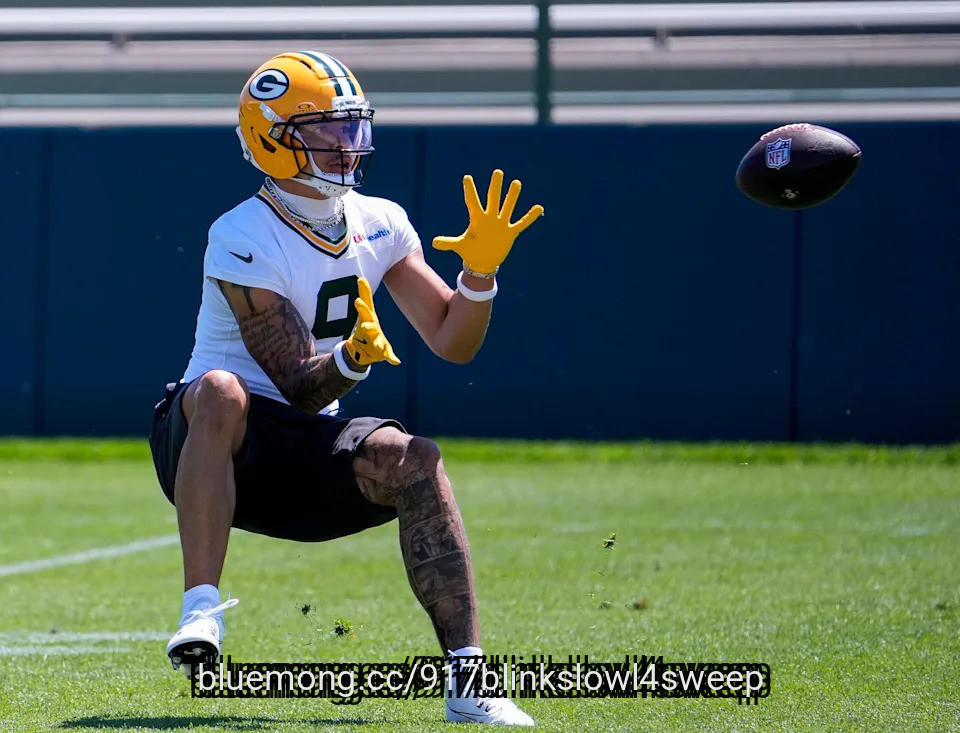
GREEN BAY – Less than a year ago, while still rehabbing from his torn ACL late in the 2024 season, Christian Watson got a little patience from the Green Bay Packers with a one-year extension.
It provided a runway for Watson to return without the pressure of a contract expiration hanging over him. More time to prove he was back to full speed.
Turns out, he didn’t need it.
Watson reached an agreement on a second extension June 4, a four-year, $110.5 million deal that will retain the Packers’ top receiver long term, according to ESPN’s Adam Schefter. The deal includes a $31 million signing bonus and dwarfs the one-year extension worth up to $13.25 million he signed last September.
The new extension makes Watson the NFL’s 15th-highest-paid receiver at $27.625 million annually. Watson might have scaled higher on the market with a healthy season this fall, but much like Jayden Reed did earlier this offseason, opted for more security up front.
It provided a runway for Watson to return without the pressure of a contract expiration hanging over him. More time to prove he was back to full speed.
Turns out, he didn’t need it.
Watson reached an agreement on a second extension June 4, a four-year, $110.5 million deal that will retain the Packers’ top receiver long term, according to ESPN’s Adam Schefter. The deal includes a $31 million signing bonus and dwarfs the one-year extension worth up to $13.25 million he signed last September.
The new extension makes Watson the NFL’s 15th-highest-paid receiver at $27.625 million annually. Watson might have scaled higher on the market with a healthy season this fall, but much like Jayden Reed did earlier this offseason, opted for more security up front.

8 months ago
Could these weird stars just be overgrown planets?
When you buy through links on our articles, Future and its syndication partners may earn a commission.
Many astronomical objects play by clear rules and fit into neat categories, but brown dwarfs (celestial objects too massive to be mere planets, but too small to be real stars) continue to refuse to cooperate.
Astronomers recently studied a sample of 70 objects, ranging from Jupiter-mass planets to brown dwarfs that are right on the brink of stardom. By looking for a relationship between the mass of these objects and certain features of t
When you buy through links on our articles, Future and its syndication partners may earn a commission.
Many astronomical objects play by clear rules and fit into neat categories, but brown dwarfs (celestial objects too massive to be mere planets, but too small to be real stars) continue to refuse to cooperate.
Astronomers recently studied a sample of 70 objects, ranging from Jupiter-mass planets to brown dwarfs that are right on the brink of stardom. By looking for a relationship between the mass of these objects and certain features of t

11 months ago
It’s billions of years in the future, but at some point, our warm, friendly sun exhausts its fuel and eventually collapses into a white dwarf. It’s a common fate for stars that aren’t massive enough to become black holes or neutron stars. Using an X-Ray telescope orbiting the Earth, researchers were able to take a peek into the heart of a unique “vampire” white dwarf system (EX Hydrae) for the first time, publishing their findings recently in the The Astrophysical Journal.
White dwarfs are incredibly dense—they have the mass of the sun collapsed into a ****** e about the size of Earth—and the
White dwarfs are incredibly dense—they have the mass of the sun collapsed into a ****** e about the size of Earth—and the