21 days ago
XOM has raised its dividend for 43 straight years, while CVX yields 3.45% with Hess acquisition synergies running 50% above initial targets.
EPD's distributable cash flow covered its 6% distribution 1.9x last quarter, with a trailing payout ratio of just 56% on adjusted cash flow.
Read More: Learn 7 ways to generate income with a $1,000,000+ portfolio (sponsor)
Energy has a reputation for boom and bust, yet the sector's largest companies have turned volatile commodities into some of the market's most reliable income. Exxon Mobil (NYSE:XOM) alone has grown its annual dividend per share for 43 consecutive years. The four large caps below split into two integrated oil majors and two midstream toll-road operators. Each pairs a well-covered payout with strong cash generation, making them natural candidates for a long-term income portfolio.
At a recent price of $163.83, Exxon's annualized forward dividend of $4.12 per share works out to a 2.51% yield. The quarterly payout is $1.03, up from $0.99 after a 4% raise late last year.
#income


1 month ago
On September 9, 2026, Independence Realty Trust, Inc. (NYSE:IRT) and Centerspace announced a definitive all-stock merger agreement. It creates a combined middle-market apartment REIT with a pro forma equity market capitalization of about $5.0 billion and a total enterprise value of approximately $8.1 billion, encompassing more than 44,000 units.
The combined company will retain the Independence Realty Trust name and NYSE ticker "IRT." IRT's Scott Schaeffer continues as Chairman and CEO. The management projects the deal will be roughly 5% accretive to 2027 Core FFO per share for shareholders of both companies.
The merger gives Independence Realty Trust, Inc. (NYSE:IRT) higher scale and significantly broader geographic diversification. The combined company will own 44,354 apartment units across 163 communities in 17 states, with 58% of pro forma NOI coming from Sunbelt markets, 27% from the Midwest, and 15% from the Mountain West. The overall footprint reduces reliance on any single regional apartment market while keeping substantial exposure to markets with strong population and employment growth.
IRT can apply its existing value-creation strategy across a much larger portfolio. Its value-add renovation program has delivered about a 16% historical return on investment. The firm expects to grow its Wi-Fi initiative and other technology and income-generating programs across Centerspace's properties. Management also expects approximately $24 million in annualized synergies. It supports roughly 5% accretion to 2027 Core FFO per share on a leverage-neutral basis.
The all-stock structure allows the companies to chase greater scale without adding acquisition debt. IRT and Centerspace expect the combined company to retain BBB/BBB investment-grade credit ratings and maintain a well-laddered debt maturity profile. Centerspace shareholders will receive IRT shares and own approximately 22% of the combined company. It gives them exposure to the larger platform. Management also expects the transaction to improve access to capital markets and reduce the combined firm's cost of capital over time.
#management


1 month ago
On August 6, James Hardie Industries (NYSE:JHX) reported results for the quarter ended June 30 and beat its own numbers by enough to raise guidance just three months into the fiscal year. Net sales jumped 64% year over year to $1.475 billion, adjusted EBITDA climbed 79% to $422.1 million, and both figures came in ahead of what management had originally guided investors to expect. For a company that closed a transformative acquisition less than a year earlier, that kind of overshoot forces a reassessment of the growth story ahead.
The headline growth number is inflated by the AZEK Exteriors deal folded into the base, so the more telling figure is the 12% pro forma net sales growth, which also beat original guidance. Siding & Trim, the core fiber cement business, posted organic net sales growth of 20% as North American fiber cement volumes returned to growth for the first time in several quarters. CEO Aaron Erter tied that to share gains against vinyl and other competing materials, along with programs like ColorPlus and Expanded Statement drawing more of the higher-end repair and remodel market. Adjusted EBITDA margin in that segment expanded 140 basis points to 33.5%, powered by favorable pricing, cheaper raw materials, and continued savings from the company's Hardie Manufacturing Operating System even as freight costs rose.
Management also said cost synergies from the AZEK integration are running ahead of schedule and revenue synergies are on track, evidenced by newly expanded nationwide distribution partnerships with Boise Cascade and other regional distributors. In Deck, Rail & Accessories, sell-through accelerated every month of the quarter and outpaced shipments, pulling channel inventory back to normal levels and setting up a cleaner back half of the year. Free cash flow more than doubled to $254.2 million, and the company used the cash to pay down $400 million of senior unsecured notes.
Erter was careful to frame the beat as execution rather than a healthier market, telling investors the company is "not ***** uming a housing market improvement" for the rest of fiscal 2027. Part of the quarter's strength came from an easy comparison, since channel inventory was deliberately reduced a year earlier, and management said that benefit is expected to moderate as the year goes on. Deck, Rail & Accessories net sales actually fell 5% on a pro forma basis because the company intentionally cut production to work down channel inventory, leaving the segment with an operating loss of $3.3 million for the quarter.
#Growth #sales #management


1 month ago
Interested in Capital One Financial Corporation? Here are five stocks we like better.
Consumer credit remains resilient: Capital One reported strong spending, stable delinquencies and better-than-seasonal charge-offs, including among lower-income customers in its portfolio. Auto lending is also growing while the company maintains underwriting and margin standards.
Discover integration is progressing toward 2027 completion: New Discover card originations have moved to Capital One's platform, with the existing portfolio conversion expected to finish in January 2027 and broader integration substantially complete by mid-2027. Capital One has achieved about one-third of its targeted $1.5 billion in operating-expense synergies.
Capital One is expanding beyond lending: The company sees Brex as a strategic commercial-payments platform and plans to leverage its technology, marketing reach and small-business customer base. With a 13.7% common equity tier 1 ratio, management says it can fund investments while maintaining conservative capital and shareholder returns.
These 4 Earnings Reports Expose the Market's Growing Economic Divide
#company #integration #interested

1 month ago
On September 9, 2026, Reuters reported that GE Aerospace (NYSE:GE) agreed to buy castings maker Consolidated Precision Products for $11.75 billion. It is its largest acquisition since becoming a standalone company in 2024, to secure the supply of the precision metal turbine-blade components that have been a persistent bottleneck across the jet engine industry. CPP is the world's third-largest maker of these parts. CEO Larry Culp called the capacity "mission-critical" as the company works through a backlog stretching into the next decade.
GE Aerospace (NYSE:GE) can use the acquisition to convert its massive backlog into revenue faster. The company's backlog exceeded $210 billion after its second-quarter results. It includes roughly $170 billion in commercial services and more than $30 billion in defense. The $11.75 billion acquisition of Consolidated Precision Products directly targets one of the supply-chain bottlenecks that has limited GE's ability to increase engine production. CPP supplies about one-quarter of GE's casting needs. It gives GE greater control over a critical manufacturing process and could help it meet deliveries tied to its long-term backlog.
Bringing CPP in-house could improve GE's production economics while reducing supplier dependence. Spare-parts delinquencies jumped 20% sequentially in the second quarter. It shows the ongoing operational impact of supply constraints. GE plans to apply its Flight Deck lean operating model at CPP to improve factory yields and machine utilization and reduce scrap and rework. The company expects the acquisition to generate about $200 million in net synergies and achieve double-digit return on invested capital by the fifth year. It gives investors a measurable path to stronger returns from the deal.
The acquisition makes GE's position solid in the next generation of engines. GE expects demand for airfoils to increase more than 30% by 2030 from 2026 levels. CPP's casting expertise could help GE bring new airfoil designs into production faster. The business also expects CPP to make roughly $2 billion in revenue in 2027. That combination gives investors a potential path to higher production capacity, faster technology development, and stronger long-term participation in commercial and defense aerospace demand.
GE Aerospace (NYSE:GE) must justify a nearly $12 billion investment, and investors already ******* ign a premium valuation to the stock. GE Aerospace trades at roughly 46 times forward earnings. It leaves investors with limited tolerance for execution problems or weaker-than-expected returns. The company will fund $7 billion of the acquisition with cash and finance the remainder with new debt. So GE needs CPP's earnings and operating improvements to make sufficient returns to support the purchase price and protect shareholder value.
#billion #backlog #supply


1 month ago
Alluvium **** et Management, an **** et management company, released its "Conventum – Alluvium Global Fund" second-quarter 2026 investor letter. The letter can be downloaded here. The second quarter reflected a sharp shift from geopolitical uncertainty and oil market volatility to a powerful equity rally led by semiconductor companies. Despite the broader market strength, the Fund declined 1.4% in EUR terms, 2.2% in USD terms, and 3.9% in AUD terms. Portfolio results were mixed, with Alphabet benefiting from strong Cloud growth, while Robert Half, H&R Block and other holdings posted solid gains. However, cable businesses and several healthcare and consumer holdings weighed on performance. Also, check the fund's top five holdings to see its best picks in 2026.
In its second-quarter 2026 investor letter, Conventum – Alluvium Global Fund highlighted Liberty Capital Corporation (NASDAQ:GLIBK). Liberty Capital Corporation (NASDAQ:GLIBK) is a communication services company that provides a range of data, wireless, video, voice, and managed services. GCI Liberty, Inc. rebranded to Liberty Capital Corporation (NASDAQ:GLIBK) in May 2026. On September 15, 2026, Liberty Capital Corporation (NASDAQ:GLIBK) closed at $25.55 per share. Over the past month, Liberty Capital Corporation (NASDAQ:GLIBK) declined 1.50% and its shares lost 27.02% over the past 52 weeks. Liberty Capital Corporation (NASDAQ:GLIBK) has a market capitalization of $1.02 billion, and its stock trades within a 52-week range of $19.30 and $41.18.
Conventum – Alluvium Global Fund stated the following regarding Liberty Capital Corporation (NASDAQ:GLIBK) in its Q2 2026 investor letter:
"GCI Liberty, the Alaskan cable business that was spun out of Liberty Broadband, has been renamed Liberty Capital Corporation (NASDAQ:GLIBK) (to reflect a future which is expected to include a broader array of businesses, and with its legacy GCI Alaska cable business being the solid "cash cow"). It fell 40.6%. There was plenty of news. Most notable was its USD 360m acquisition of Quintillion, which owns around 3,000 kilometres of fibre cable and plans to expand it by a further 2,500 kilometres or so. This perfectly aligns with Liberty's GCI operations. We understand Quintillion generates around USD 55-60m in revenue and USD 30m in free cash. We would expect significant synergies (reportedly around USD 20m) so we have little doubt that the deal adds value. And in fact, when we incorporate it into our model, the valuation uplift is around 35%. Management also decided to retreat from the competitive and low margin video business. And finally, Liberty Capital had intended to acquire an interest in Liberty Latin America by striking a deal for an initial 6% stake and building on that by buying John Malone's interest. For some reason this did not proceed which perhaps spooked the market. With the share price falling (to levels approximating half our valuation), and encouraged by its CEO buying shares, we increased our

1 month ago
Alluvium ****** et Management, an ****** et management company, released its "Conventum – Alluvium Global Fund" second-quarter 2026 investor letter. The letter can be downloaded here. The second quarter reflected a sharp shift from geopolitical uncertainty and oil market volatility to a powerful equity rally led by semiconductor companies. Despite the broader market strength, the Fund declined 1.4% in EUR terms, 2.2% in USD terms, and 3.9% in AUD terms. Portfolio results were mixed, with Alphabet benefiting from strong Cloud growth, while Robert Half, H&R Block and other holdings posted solid gains. However, cable businesses and several healthcare and consumer holdings weighed on performance. Also, check the fund's top five holdings to see its best picks in 2026.
In its second-quarter 2026 investor letter, Conventum – Alluvium Global Fund highlighted Charter Communications, Inc. (NASDAQ:CHTR). Charter Communications, Inc. (NASDAQ:CHTR) is a US-based broadband connectivity company. On September 15, 2026, Charter Communications, Inc. (NASDAQ:CHTR) closed at $141.20 per share. Over the past month, Charter Communications, Inc. (NASDAQ:CHTR) declined 7.39% and its shares lost 47.32% over the past 52 weeks. Charter Communications, Inc. (NASDAQ:CHTR) has a market capitalization of $24.73 billion and its stock has traded within a 52-week range of $111.55 and $285.82.
Conventum – Alluvium Global Fund stated the following regarding Charter Communications, Inc. (NASDAQ:CHTR) in its Q2 2026 investor letter:
"Charter Communications, Inc. (NASDAQ:CHTR) and its tracking stock Liberty Broadband fell 34.1% and 33.7% following the release of Charter's results in April. It seems the market is understandably concerned with the average revenue per user (ARPU) being flat, and the continual loss of internet customers. Competition is intense from both fixed wireless providers and low earth orbit satellite (Starlink). Compared to Charter's cables, these are higher cost and more capacity constrained. Charter's flat ARPU is the result of its decision to provide a demonstrably better offering at a low price - so why is it losing so many internet customers? We do not know the answer. We do know though that it is growing its mobile subscribers at a much faster rate than it is losing its internet customers, and more than half of its residential customers subscribe to more than one product. We also see positives stemming from the pending ****** acquisition, and indeed management increased expected synergies by 60%. It seems to us that the broader market has extrapolated current conditions to perpetuity..." (Click here to read the full text)
#fund


1 month ago
Kimberly-Clark Corporation (NASDAQ:KMB) is preparing **** et sales to address EU antitrust concerns surrounding its planned $40 billion acquisition of Kenvue, according to Reuters. The company is reportedly seeking to offer remedies that could secure European Commission approval by the September 29 deadline, avoiding a more extensive four-month investigation. Similar regulatory concerns have already emerged in Australia, where the deal received conditional approval after Kimberly-Clark agreed to divest Kenvue's Carefree and Stayfree brands.
The transaction is strategically important because it would create a consumer-health and personal-care company with approximately $32 billion of annual revenue and $7 billion of adjusted EBITDA. Kimberly-Clark Corporation (NASDAQ:KMB) expects about $1.9 billion of annual cost synergies and $500 million of revenue synergies, although it expects to invest roughly $2.5 billion in cash to achieve the cost savings. Therefore, the scale of any EU divestitures will be critical to determining whether Kimberly-Clark can retain the expected economic benefits of the deal.
The strongest bullish argument is that Kimberly-Clark Corporation (NASDAQ:KMB) is actively working toward a regulatory solution rather than allowing the EU review to threaten the transaction. If the company can satisfy regulators through limited **** et sales, it could preserve the majority of Kenvue's revenue and earnings while moving ahead with the combination. The expected $1.9 billion in annual cost savings represents a substantial earnings opportunity relative to the combined company's roughly $7 billion adjusted EBITDA target, giving Kimberly-Clark significant potential to improve margins and cash generation after integration.
The Australian precedent also suggests that targeted divestitures could be sufficient to resolve competition concerns without materially undermining the broader deal. Securing EU approval by September 29 would be particularly positive because it would remove a major source of uncertainty and allow Kimberly-Clark Corporation (NASDAQ:KMB) to focus on integration and synergy execution. With Kenvue adding major brands across consumer health and personal care, successful completion could also broaden Kimberly-Clark's portfolio and reduce its reliance on its existing product categories.
The biggest risk is that the EU requires more substantial **** et sales than Kimberly-Clark Corporation (NASDAQ:KMB) currently expects. Giving up attractive Kenvue brands or businesses in Europe could reduce the revenue and EBITDA acquired through the transaction, while Kimberly-Clark would still have to bear much of the financing, transaction, and integration burden. That could make the $40 billion purchase price less attractive on a risk-adjusted basis, particularly if the divested **** ets are among Kenvue's stronger European businesses.
#kimberly #revenue #ebitda


1 month ago
Kimberly-Clark Corporation (NASDAQ:KMB) is preparing ***** et sales to address EU antitrust concerns surrounding its planned $40 billion acquisition of Kenvue, according to Reuters. The company is reportedly seeking to offer remedies that could secure European Commission approval by the September 29 deadline, avoiding a more extensive four-month investigation. Similar regulatory concerns have already emerged in Australia, where the deal received conditional approval after Kimberly-Clark agreed to divest Kenvue's Carefree and Stayfree brands.
The transaction is strategically important because it would create a consumer-health and personal-care company with approximately $32 billion of annual revenue and $7 billion of adjusted EBITDA. Kimberly-Clark Corporation (NASDAQ:KMB) expects about $1.9 billion of annual cost synergies and $500 million of revenue synergies, although it expects to invest roughly $2.5 billion in cash to achieve the cost savings. Therefore, the scale of any EU divestitures will be critical to determining whether Kimberly-Clark can retain the expected economic benefits of the deal.
The strongest bullish argument is that Kimberly-Clark Corporation (NASDAQ:KMB) is actively working toward a regulatory solution rather than allowing the EU review to threaten the transaction. If the company can satisfy regulators through limited ***** et sales, it could preserve the majority of Kenvue's revenue and earnings while moving ahead with the combination. The expected $1.9 billion in annual cost savings represents a substantial earnings opportunity relative to the combined company's roughly $7 billion adjusted EBITDA target, giving Kimberly-Clark significant potential to improve margins and cash generation after integration.
The Australian precedent also suggests that targeted divestitures could be sufficient to resolve competition concerns without materially undermining the broader deal. Securing EU approval by September 29 would be particularly positive because it would remove a major source of uncertainty and allow Kimberly-Clark Corporation (NASDAQ:KMB) to focus on integration and synergy execution. With Kenvue adding major brands across consumer health and personal care, successful completion could also broaden Kimberly-Clark's portfolio and reduce its reliance on its existing product categories.
The biggest risk is that the EU requires more substantial ***** et sales than Kimberly-Clark Corporation (NASDAQ:KMB) currently expects. Giving up attractive Kenvue brands or businesses in Europe could reduce the revenue and EBITDA acquired through the transaction, while Kimberly-Clark would still have to bear much of the financing, transaction, and integration burden. That could make the $40 billion purchase price less attractive on a risk-adjusted basis, particularly if the divested ***** ets are among Kenvue's stronger European businesses.
#revenue


1 month ago
Alluvium **** et Management, an **** et management company, released its "Conventum – Alluvium Global Fund" second-quarter 2026 investor letter. The letter can be downloaded here. The second quarter reflected a sharp shift from geopolitical uncertainty and oil market volatility to a powerful equity rally led by semiconductor companies. Despite the broader market strength, the Fund declined 1.4% in EUR terms, 2.2% in USD terms, and 3.9% in AUD terms. Portfolio results were mixed, with Alphabet benefiting from strong Cloud growth, while Robert Half, H&R Block and other holdings posted solid gains. However, cable businesses and several healthcare and consumer holdings weighed on performance. Also, check the fund's top five holdings to see its best picks in 2026.
In its second-quarter 2026 investor letter, Conventum – Alluvium Global Fund highlighted Liberty Capital Corporation (NASDAQ:GLIBK). Liberty Capital Corporation (NASDAQ:GLIBK) is a communication services company that provides a range of data, wireless, video, voice, and managed services. GCI Liberty, Inc. rebranded to Liberty Capital Corporation (NASDAQ:GLIBK) in May 2026. On September 15, 2026, Liberty Capital Corporation (NASDAQ:GLIBK) closed at $25.55 per share. Over the past month, Liberty Capital Corporation (NASDAQ:GLIBK) declined 1.50% and its shares lost 27.02% over the past 52 weeks. Liberty Capital Corporation (NASDAQ:GLIBK) has a market capitalization of $1.02 billion, and its stock trades within a 52-week range of $19.30 and $41.18.
Conventum – Alluvium Global Fund stated the following regarding Liberty Capital Corporation (NASDAQ:GLIBK) in its Q2 2026 investor letter:
"GCI Liberty, the Alaskan cable business that was spun out of Liberty Broadband, has been renamed Liberty Capital Corporation (NASDAQ:GLIBK) (to reflect a future which is expected to include a broader array of businesses, and with its legacy GCI Alaska cable business being the solid "cash cow"). It fell 40.6%. There was plenty of news. Most notable was its USD 360m acquisition of Quintillion, which owns around 3,000 kilometres of fibre cable and plans to expand it by a further 2,500 kilometres or so. This perfectly aligns with Liberty's GCI operations. We understand Quintillion generates around USD 55-60m in revenue and USD 30m in free cash. We would expect significant synergies (reportedly around USD 20m) so we have little doubt that the deal adds value. And in fact, when we incorporate it into our model, the valuation uplift is around 35%. Management also decided to retreat from the competitive and low margin video business. And finally, Liberty Capital had intended to acquire an interest in Liberty Latin America by striking a deal for an initial 6% stake and building on that by buying John Malone's interest. For some reason this did not proceed which perhaps spooked the market. With the share price falling (to levels approximating half our valuation), and encouraged by its CEO buying shares, we increased our
In its second-quarter 2026 investor letter, Conventum – Alluvium Global Fund highlighted Liberty Capital Corporation (NASDAQ:GLIBK). Liberty Capital Corporation (NASDAQ:GLIBK) is a communication services company that provides a range of data, wireless, video, voice, and managed services. GCI Liberty, Inc. rebranded to Liberty Capital Corporation (NASDAQ:GLIBK) in May 2026. On September 15, 2026, Liberty Capital Corporation (NASDAQ:GLIBK) closed at $25.55 per share. Over the past month, Liberty Capital Corporation (NASDAQ:GLIBK) declined 1.50% and its shares lost 27.02% over the past 52 weeks. Liberty Capital Corporation (NASDAQ:GLIBK) has a market capitalization of $1.02 billion, and its stock trades within a 52-week range of $19.30 and $41.18.
Conventum – Alluvium Global Fund stated the following regarding Liberty Capital Corporation (NASDAQ:GLIBK) in its Q2 2026 investor letter:
"GCI Liberty, the Alaskan cable business that was spun out of Liberty Broadband, has been renamed Liberty Capital Corporation (NASDAQ:GLIBK) (to reflect a future which is expected to include a broader array of businesses, and with its legacy GCI Alaska cable business being the solid "cash cow"). It fell 40.6%. There was plenty of news. Most notable was its USD 360m acquisition of Quintillion, which owns around 3,000 kilometres of fibre cable and plans to expand it by a further 2,500 kilometres or so. This perfectly aligns with Liberty's GCI operations. We understand Quintillion generates around USD 55-60m in revenue and USD 30m in free cash. We would expect significant synergies (reportedly around USD 20m) so we have little doubt that the deal adds value. And in fact, when we incorporate it into our model, the valuation uplift is around 35%. Management also decided to retreat from the competitive and low margin video business. And finally, Liberty Capital had intended to acquire an interest in Liberty Latin America by striking a deal for an initial 6% stake and building on that by buying John Malone's interest. For some reason this did not proceed which perhaps spooked the market. With the share price falling (to levels approximating half our valuation), and encouraged by its CEO buying shares, we increased our


1 month ago
Alluvium **** et Management, an **** et management company, released its "Conventum – Alluvium Global Fund" second-quarter 2026 investor letter. The letter can be downloaded here. The second quarter reflected a sharp shift from geopolitical uncertainty and oil market volatility to a powerful equity rally led by semiconductor companies. Despite the broader market strength, the Fund declined 1.4% in EUR terms, 2.2% in USD terms, and 3.9% in AUD terms. Portfolio results were mixed, with Alphabet benefiting from strong Cloud growth, while Robert Half, H&R Block and other holdings posted solid gains. However, cable businesses and several healthcare and consumer holdings weighed on performance. Also, check the fund's top five holdings to see its best picks in 2026.
In its second-quarter 2026 investor letter, Conventum – Alluvium Global Fund highlighted Charter Communications, Inc. (NASDAQ:CHTR). Charter Communications, Inc. (NASDAQ:CHTR) is a US-based broadband connectivity company. On September 15, 2026, Charter Communications, Inc. (NASDAQ:CHTR) closed at $141.20 per share. Over the past month, Charter Communications, Inc. (NASDAQ:CHTR) declined 7.39% and its shares lost 47.32% over the past 52 weeks. Charter Communications, Inc. (NASDAQ:CHTR) has a market capitalization of $24.73 billion and its stock has traded within a 52-week range of $111.55 and $285.82.
Conventum – Alluvium Global Fund stated the following regarding Charter Communications, Inc. (NASDAQ:CHTR) in its Q2 2026 investor letter:
"Charter Communications, Inc. (NASDAQ:CHTR) and its tracking stock Liberty Broadband fell 34.1% and 33.7% following the release of Charter's results in April. It seems the market is understandably concerned with the average revenue per user (ARPU) being flat, and the continual loss of internet customers. Competition is intense from both fixed wireless providers and low earth orbit satellite (Starlink). Compared to Charter's cables, these are higher cost and more capacity constrained. Charter's flat ARPU is the result of its decision to provide a demonstrably better offering at a low price - so why is it losing so many internet customers? We do not know the answer. We do know though that it is growing its mobile subscribers at a much faster rate than it is losing its internet customers, and more than half of its residential customers subscribe to more than one product. We also see positives stemming from the pending **** acquisition, and indeed management increased expected synergies by 60%. It seems to us that the broader market has extrapolated current conditions to perpetuity..." (Click here to read the full text)
#fund


1 month ago
TotalEnergies SE (NYSE:TTE) plans to invest $10 billion alongside its partners in Angola over the next five years, with the goal of maintaining and potentially increasing its oil production in the country. TotalEnergies currently produces around 450,000 barrels per day in Angola, making it the country's largest oil operator and accounting for more than 40% of its total output.
The investment will go toward existing operations, new exploration, and projects aimed at replacing production from Angola's aging offshore fields. One of the biggest projects in the pipeline is the $6 billion Kaminho development, which is expected to start producing oil in 2028. TotalEnergies SE (NYSE:TTE) is also expanding its exploration efforts after signing agreements for two additional offshore blocks. On top of that, the company recently announced a new discovery in Block 17 that could add roughly 6,000 barrels per day to production.
The investment strengthens TotalEnergies SE (NYSE:TTE)'s position in one of Africa's key oil-producing markets and, perhaps more importantly, helps protect a major source of existing production. With around 450,000 barrels per day already coming from Angola, simply keeping output at current levels could continue to provide a meaningful contribution to the company's upstream cash flow. Any additional production from new discoveries and projects would offer further upside.
The current oil-price environment also works in TotalEnergies' favor. Brent crude recently climbed above $100 a barrel amid supply concerns and geopolitical tensions and is currently trading near this range. If prices remain elevated, projects designed to maintain or increase Angolan production could generate strong returns and make the company's investment more attractive.
There are also signs that TotalEnergies SE (NYSE:TTE) is doing more than just trying to slow production declines. Its recent Acacia-5 discovery in Block 17 could add around 6,000 barrels per day, while the company is expanding its exploration presence through new offshore blocks in the Lower Congo Basin. Angola's efforts to reform its oil sector and attract more exploration investment could also create a more favorable environment for TotalEnergies over the longer term.
#investment #offshore

1 month ago
Enbridge Inc. (NYSE:ENB) has agreed to buy Blackstone-owned Tallgrass Energy's crude oil business for $2.55 billion in cash, expanding its presence in the U.S. liquids pipeline market. The deal includes a 75% stake in the 1,050-mile Pony Express Pipeline, a 51% interest in the Powder River Gateway system, around 8.4 million barrels of storage capacity and crude marketing operations.
Pony Express can move roughly 460,000 barrels of crude per day between the Rockies and the Cushing, Oklahoma, hub. The deal also gives Enbridge greater exposure to major producing regions, including the Bakken, Powder River and Denver-Julesburg basins.
The acquisition gives Enbridge Inc. (NYSE:ENB) a stronger position in U.S. crude transportation at a time when domestic oil production is expected to remain important. Pony Express gives the company a larger presence in the Rockies and complements its existing Express-Platte system.
That combination could allow Enbridge to bring the operations together more efficiently and find synergies across its wider liquids network. The deal also gives Enbridge more than additional pipeline capacity. It adds storage infrastructure and crude marketing operations, giving the company more flexibility in how it manages and optimizes volumes. Bringing these parts of the business together could also improve the economics of the acquired **** ets.
Enbridge Inc. (NYSE:ENB) expects the **** ets to generate significant free cash flow. The company also says the transaction should add to distributable cash flow per share in the first full year after closing. The **** ets also offer relatively predictable infrastructure-style cash flows. This means Enbridge does not need higher crude prices to benefit from the acquisition. The deal fits with the company's broader strategy of growing its fee-based energy infrastructure business across North America, backed by its C$41 billion secured growth backlog.
#enbridge #cash #gives #business


1 month ago
SWKS surged 27% in a month to $88.35, now trading above its $68.35 consensus ****** yst target with most ****** ysts rating it Hold or worse.
The Qorvo merger could unlock $500M+ in synergies, but a regulatory delay leaves Skyworks holding $2B in new debt against shrinking revenue.
At 46x trailing P/E with 14 downward EPS revisions and the CFO selling into the rally, momentum is doing all the heavy lifting.
Just released. Our ****** ysts combed the entire stock market and named the ten best stocks to buy right now, and Skyworks Solutions didn't make the cut. Enter your email to see the names that beat SWKS. The report is free. Enter your email and see if any of your stocks made the cut.
At $88.35, Skyworks Solutions (NASDAQ:SWKS) is a Hold. The stock has ripped past its consensus ****** yst price target of $68.35, and with a pending merger, a fresh capital allocation framework, and a mixed fundamental picture, the case for chasing here is as thin as the case for stepping in front of the momentum.
#skyworks #solutions #analyst #target

2 months ago
FC Köln welcome Werder Bremen to the RheinEnergieStadion on Saturday evening as both sides look to secure their second Bundesliga win of the season.
The Billy Goats were handed their first defeat of the season last time out, losing 4-1 away at VfB Stuttgart.
Bremen, meanwhile, make the trip to the Cathedral City after securing a fantastic 3-1 win against RB Leipzig last Saturday.
With kick-off at 18:30 CEST, here are the confirmed starting lineups.
FC Köln (4-5-1): Schwäbe - Castro-Montes, Simpson-Pusey, Lochoshvili, Mensah - Bülter, Krauß, Skhiri, Moore, Maina - Dallinga
#saturday #goats


2 months ago
ExxonMobil Holdings Corporation (NYSE:XOM) agreed to increase its Papua LNG interest from 28.7% to 34.1% and ***** ume operatorship, as disclosed on September 7. The proposed ownership percentages reflect Papua New Guinea's state participation rights.
Papua LNG targets a fourth-quarter 2026 final investment decision, or FID. Santos Limited (ASX:STO) disclosed FID as a closing condition for its own stake acquisition; the operatorship announcement did not specify an equivalent condition.
TotalEnergies SE (NYSE:TTE) said redesign and contractor rebidding had reduced estimated development spending by nearly $4 billion since 2024 to approximately $14 billion. The project would produce 5.6 million tonnes of liquefied natural gas annually. The question is whether that smaller budget can support attractive returns through construction and an uncertain LNG market.
ExxonMobil Holdings Corporation (NYSE:XOM) already operates neighboring PNG LNG. Combining operatorship could improve coordination during construction and operations, including the redesigned handling of upstream condensate. That gives the proposed efficiency gains a practical basis in existing infrastructure and local experience.
The cost reduction is substantial. Mechanically, nearly $4 billion off an approximately $18 billion previous estimate represents about 22%. For ExxonMobil Holdings Corporation (NYSE:XOM), lower development spending would reduce the capital required to generate each future dollar of project cash flow, ***** uming production and operating economics hold.
#holdings #operatorship

2 months ago
On September 8, 2026, GE Aerospace (NYSE:GE) agreed to buy Consolidated Precision Products (CPP) for $11.75 billion. The acquisition marks the company's largest bet yet on precision engine castings, a constraint that has been capping GE's growth. Trading already at roughly 40x earnings, the company has now attacked one of its genuine bottlenecks through the deal. But has it paid too much to do it?
Castings, including the superalloy and ******* anium hot-section parts inside the jet engines, have constrained GE's engine production, including programs such as LEAP and GEnx, as well as its high-margin aftermarket. Without these castings, the company can neither build nor service its engines. If the acquisition closes, the company will gain access to CPP's 20-plus plants and about 6,600 workers, which are essential for making those components. The deal would therefore enable GE to control the constraint as well as defend its margins. CEO Larry Culp characterized the move as securing manufacturing capacity to meet simultaneous demand across commercial engines, aftermarket services, and defense contracts.
The valuation is where bulls should slow down. GE is paying roughly 18x 2027 EBITDA including synergies (26x without synergies). The sellers are private equity firms Warburg Pincus and Berkshire Partners. They have basically offloaded a cyclical business near the peak of the aerospace cycle. This is smart money selling to GE instead of the other way around. The real tell is that GE felt compelled to buy its way past this capacity bottleneck instead of scaling organically, which reveals how tight its prized aftermarket really was. Also, CPP also supplies other major aerospace and defense companies such as Pratt & Whitney, Honeywell, and Lockheed Martin, and through the vertical tie-up, the company invites antitrust scrutiny before it closes in late 2027.
GE's 40x multiple rests on its high-margin razor-and-blade business model that services a huge installed base. And the casting supply shortages quietly constrain this aftermarket. Hence, more than merely fixing a supply chain issue, the CPP acquisition defends the company's high margin and multiple. Financially, the transaction is accretive to adjusted EPS and free cash flow in the first year, funded through $7 billion in cash alongside newly issued debt. Insider Monkey data shows 113 hedge funds held GE in Q2 2026, down modestly from 119 in Q1, reflecting firm institutional positioning. Short interest is just 1.3% of float, below peers like Honeywell International (1.6%). Almost no one bets against it.
#aftermarket #acquisition #including

2 months ago
Arcosa, Inc. (NYSE:ACA) shareholders approved the proposed acquisition by CRH plc (NYSE:CRH) on September 4. The merger agreement received 39,595,867 votes in favor, compared with 66,113 against and 16,786 abstentions. Approximately 39.7 million shares, representing 80.8% of shares outstanding as of the record date, were present or represented by proxy.
The vote satisfies a major condition for the all-cash transaction. CRH plc (NYSE:CRH) agreed to pay $150 per share, valuing Arcosa, Inc. (NYSE:ACA) at an enterprise value of approximately $8.5 billion. The companies continue to expect a first-quarter 2027 closing, subject to required regulatory approvals and other customary conditions.
CRH plc (NYSE:CRH) described the valuation as 11.5 times estimated 2026 adjusted EBITDA, a company-defined non-GAAP measure, including $175 million of targeted annual run-rate cost synergies expected by year three. CRH plc (NYSE:CRH) defines adjusted EBITDA as earnings from continuing operations before interest, taxes, depreciation, depletion and amortization, with exclusions for impairments, divestitures and investments, equity-method results, substantial acquisition costs and specified pension items.
The result removes the principal seller-side approval risk. The merger no longer depends on another shareholder meeting, and support was decisive among the shares represented. Financing appears less exposed than regulatory clearance: CRH plc (NYSE:CRH) plans to use available cash and committed debt financing, while completion is not subject to a financing condition.
The strategic rationale is tangible. Arcosa, Inc. (NYSE:ACA) would add 109 quarries and yards, nine asphalt plants, 19 terminals and approximately 35 million tons of 2025 aggregates shipments. CRH plc (NYSE:CRH) expects more than 265 million tons of combined annualized aggregates production. Arcosa, Inc. (NYSE:ACA) also brings engineered structures serving grid modernization, electrification and data-center construction.
#NYSE #represented

0.00$ raised of 0.00$ goal
0 donations
0.00$
to go
2 months ago
Reuters reported that H.B. Fuller Company (NYSE:FUL) said its board unanimously rejected activist investor Ancora Holdings Group's unsolicited proposal to acquire its Building Adhesives Solutions (BAS) business for between $1.1 billion and $1.2 billion.
The board said the offer "significantly undervalues" BAS, is "substantially below precedent transactions," and ignores the unit's growth prospects, according to the company's statement. H.B. Fuller noted BAS delivered 6% organic growth year over year in the second quarter and said a carve-out would create "significant dis-synergies" since BAS shares manufacturing operations with the company's other businesses across more than 30 plants worldwide. The board also said Ancora's proposal "lacks key details needed to demonstrate" its ability to execute the deal. Ancora's activist campaign against H.B. Fuller began in May, initially opposing the company's acquisition of UK-based Advanced Medical Solutions Group.
H.B. Fuller Company (NYSE:FUL)'s valuation argument has support from BAS's recent performance and growth prospects. BAS delivered 6% organic sales growth and 10% EBITDA growth in the second quarter, while H.B. Fuller expects the business to become a significant earnings driver as construction markets recover and data-center demand grows. Those results give management a credible basis for arguing that Ancora's $1.2 billion offer undervalues the business.
H.B. Fuller also has a legitimate operational argument against separating BAS. The company shares manufacturing operations across more than 30 plants worldwide, and management expects a carve-out to create significant dis-synergies. Keeping BAS within H.B. Fuller could therefore preserve operating efficiencies that a standalone business might lose.
Management also has a clear strategic priority that competes with Ancora's proposal for its attention and capital. H.B. Fuller continues to implement its Advanced Medical Solutions Group acquisition while developing BAS as an important future earnings driver. The company can therefore focus on executing its existing strategy instead of diverting resources toward a major BAS separation.
#solutions #board

2 months ago
On July 1, QXO Inc. (NYSE:QXO) finalized its cash-and-stock acquisition of TopBuild Corp. for a $17 billion consideration. This makes QXO North America's largest distributor and installer of insulation, the largest distributor of waterproofing products, and the second-largest distributor of roofing products.. Chairman and CEO, Brad Jacobs, noted that the acquisition will enable QXO to explore rapidly expanding end markets such as data centers and broaden its product portfolio. Let's explore QXO's acquisitive growth strategy within the building products distribution segment and what potential does it offer to the company going forward.
QXO's acquisition of TopBuild is anticipated to be a highly accretive deal, with the company expecting at least $300 million of annual synergies by 2030. These will be linked with pricing, procurement, and cross-selling opportunities. Along with previous transactions involving $2.25 billion purchase of Kodiak Building Partners back in April and $11 billion acquisition of Beacon Roofing Supply in 2025, it makes QXO one of the top names across roofing, insulation, waterproofing, and building materials categories within North America.
The company's financials also appear encouraging. On August 13, QXO announced its second quarter results. The company posted $3.25 billion in revenue compared to $1.91 billion during Q2 2025. Adjusted EBITDA clocked in at $272 million, exhibiting 33% year-on-year growth. Adjusted net income came in at $130 million, up by more than 19% relative to the same period last year. The comparison, however, is influenced by acquisition timing. This is because the 2026 quarter included Kodiak and a full quarter of Beacon, while the prior-year period included Beacon only from its April 29, 2025 acquisition date.
CEO and Chairman acknowledged the company's technological progress and financial growth during the quarter. He stated:
"We are focused on our plan to more than double EBITDA by 2030 and reach $50 billion in revenue within the decade."
#building

2 months ago
On September 1, Everus Construction Group (NYSE:ECG) completed a $295 million cash acquisition of Epsilon Industries, a maker of prefabricated mechanical and electrical systems with plants scattered across the US and Canada. Everus first disclosed the deal on July 31, and the closing lands only a month after the company posted a quarter in which revenue jumped by more than a third. Epsilon's off-site fabrication lines give Everus a faster way to build the data centers, factories, and hospitals reshaping its backlog.
Everus grew into this deal from a position of strength. Second quarter revenue climbed 33.7% to $1.23 billion, and diluted earnings per share rose 59.2% to $1.64, numbers that reflect more than accounting leverage. Backlog reached $4.55 billion, up 41% from the end of 2025 and up 52.8% from a year earlier, driven largely by the electrical and mechanical segment, where revenue rose 41.6%, and EBITDA jumped 71.6%. That segment's backlog alone hit $4.16 billion, fueled by project bookings that topped $2 billion in the quarter across data center, hospitality, and high-tech work.
Epsilon slots directly into that momentum. Its modular capabilities are meant to extend Everus's geographic reach and deepen its footprint in advanced manufacturing, healthcare, and data center work, the same markets already driving backlog higher. Keeping Epsilon's president, Chris Wiederick, and its existing leadership in place suggests Everus wants continuity rather than a disruptive overhaul. Management raised full-year guidance to $4.5 billion to $4.7 billion in revenue and $410 million to $425 million in EBITDA even before folding in Epsilon's contribution, which it plans to detail during third-quarter earnings.
The growth comes with strings attached. Everus paid for Epsilon with cash on hand plus new borrowings under its credit facilities, its second acquisition this year after buying SE&M Constructors in the second quarter. Running two integrations at once raises the odds that something slips, whether in cost synergies or in the customer relationships that made both targets attractive in the first place. Net leverage stood at a modest 0.3x as of June 30, but that figure predates the Epsilon borrowings, so the real post-deal leverage is not yet known.
Not every part of the business is firing evenly, either. Transmission and distribution revenue grew only 7.1% in the quarter, and its backlog of $388.4 million actually sat below the $410.1 million reported a year earlier, even as the electrical and mechanical segment surged. That leaves Everus increasingly dependent on data center and commercial construction spending staying strong, a concentration that could cut the other way if that end market cools. And with the full financial impact of Epsilon not landing in guidance until third quarter results, investors are being asked to price in a deal whose numbers are still incomplete.
#billion #million #year

2 months ago
On July 1, QXO Inc. (NYSE:QXO) finalized its cash-and-stock acquisition of TopBuild Corp. for a $17 billion consideration. This makes QXO North America's largest distributor and installer of insulation, the largest distributor of waterproofing products, and the second-largest distributor of roofing products.. Chairman and CEO, Brad Jacobs, noted that the acquisition will enable QXO to explore rapidly expanding end markets such as data centers and broaden its product portfolio. Let's explore QXO's acquisitive growth strategy within the building products distribution segment and what potential does it offer to the company going forward.
QXO's acquisition of TopBuild is anticipated to be a highly accretive deal, with the company expecting at least $300 million of annual synergies by 2030. These will be linked with pricing, procurement, and cross-selling opportunities. Along with previous transactions involving $2.25 billion purchase of Kodiak Building Partners back in April and $11 billion acquisition of Beacon Roofing Supply in 2025, it makes QXO one of the top names across roofing, insulation, waterproofing, and building materials categories within North America.
The company's financials also appear encouraging. On August 13, QXO announced its second quarter results. The company posted $3.25 billion in revenue compared to $1.91 billion during Q2 2025. Adjusted EBITDA clocked in at $272 million, exhibiting 33% year-on-year growth. Adjusted net income came in at $130 million, up by more than 19% relative to the same period last year. The comparison, however, is influenced by acquisition timing. This is because the 2026 quarter included Kodiak and a full quarter of Beacon, while the prior-year period included Beacon only from its April 29, 2025 acquisition date.
CEO and Chairman acknowledged the company's technological progress and financial growth during the quarter. He stated:
"We are focused on our plan to more than double EBITDA by 2030 and reach $50 billion in revenue within the decade."
#year


2 months ago
Our ***** ysts just identified a stock with the potential to be the next Nvidia. Tell us how you invest and we'll show you why it's our #1 pick. Tap here.
Research publishing momentum is driven by record submission levels, up 31%, and a widening scale advantage that management believes creates a structural moat for large-scale publishers.
The 'Wiley Flywheel' strategy integrates proprietary research content with AI and data ***** ytics, where publishing fuels AI training and AI tools subsequently increase researcher productivity.
AI revenue growth is shifting toward a more favorable mix, with recurring revenue growing 2x to 3x over the prior year as the company expands beyond life sciences into chemistry and finance.
The Emerald acquisition is performing ahead of schedule, providing immediate scale in business and finance disciplines while contributing to research margin expansion through early cost synergies.
#Research #finance #NVIDIA #tell


2 months ago
Interested in Diversified Energy Company PLC? Here are five stocks we like better.
Diversified Energy agreed to acquire Birch Resources for approximately $1.8 billion, with closing expected in the fourth quarter of 2026. The deal would add 480 net wells, roughly 68,000 barrels of oil equivalent per day and 1.2 trillion cubic feet equivalent of reserves.
The acquisition would significantly expand Diversified's Permian presence, lifting production from about 9,000 to 77,000 barrels of oil equivalent per day and increasing projected Permian adjusted EBITDA from $64 million to $612 million. The ****** ets are about 70% liquids-weighted and include related infrastructure.
Diversified plans to finance the purchase mainly with ****** et-backed securities and expects operational synergies, while targeting nearly $2 billion of deleveraging over four years. The company said the transaction should increase total production by 35%, adjusted EBITDA by 55% and more than double free cash flow.
Premium Retail's Stress Test Is Separating Winners From Losers
#equivalent #energy #ebitda
2 months ago
Technip Energies (THNPY) stock has declined by 22.5% in the last 52 weeks, with the Middle East conflict a key negative catalyst. As a result of this correction, Technip stock trades at an attractive forward price-earnings ratio of 18.
While geopolitical tensions in the Middle East persist, there are emerging catalysts for Technip. It was recently reported that Technip is a contender for a potential $10 billion rocket fuel deal with **** eX (SPCX). With the first Starship launch targeted for 2029, Elon Musk has been pushing for rapid construction, and a potential deal for Technip would imply healthy revenue growth over the next 36 months. It's therefore not surprising that this news translated into a sharp rally for THNPY stock.
Fears of an Extended US-Iran Conflict Boost Crude Oil Prices
Nat-Gas Prices Rise on Hotter US Weather and Expectations of Smaller Storage
Crude Oil Prices Supported by Escalation of US-Iran Hostilities
#prices #Iran #conflict




2 months ago
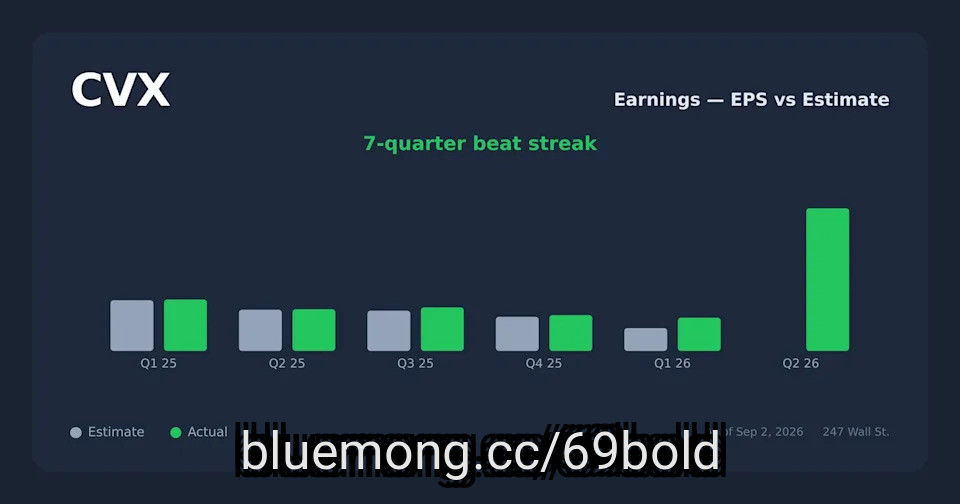
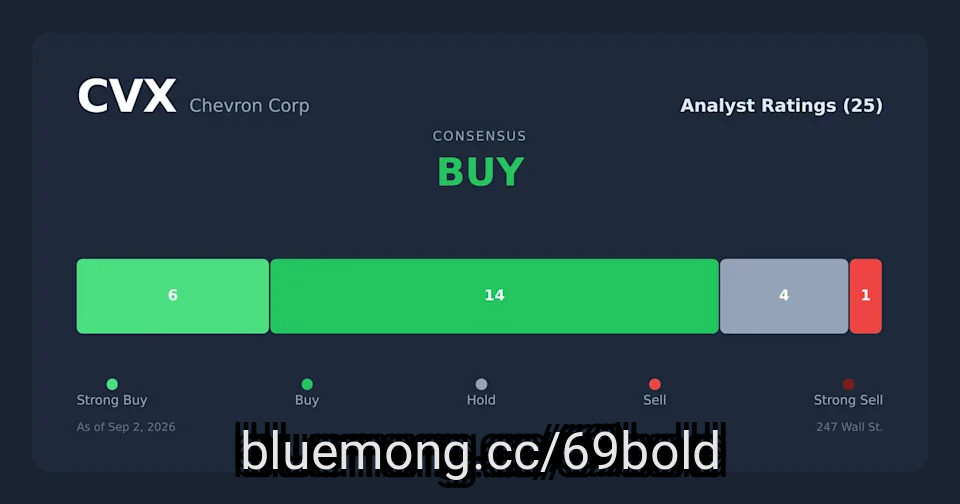
Cramer called CVX a steal above $200 after Chevron's downstream earnings surged from $737 million to $4.87 billion year over year.
Chevron's P/E of 34 runs richer than Exxon's 23, while ConocoPhillips offers more crude upside, up 49% year to date.
A 20-year Microsoft power deal and Hess synergies running 50% above target give Chevron cash flows insulated from crude swings.
Just released. Our ***** ysts combed the entire stock market and named the ten best stocks to buy right now. The report is free. Enter your email and see if any of your stocks made the cut.
Jim Cramer opened Squawk on the Street on the first trading day of September with a market backdrop he described in blunt terms. Two ships had been fired on in the Strait of Hormuz, Treasury yields were pushing higher across the curve, and diesel prices were climbing amid a supply picture already strained by Ukrainian strikes on Russian refining capacity and U.S. refiners operating near full utilization. Cramer called the combination "unholy" and said the AI trade had gone nowhere for about a year. Then he offered a single actionable idea.
#above


2 months ago
Interested in Union Pacific Corporation? Here are five stocks we like better.
STB review is advancing: Union Pacific said the Surface Transportation Board's 12-month review of its proposed Norfolk Southern merger began after the application was accepted on May 28, 2026. The company expects the deal could close in the third or fourth quarter of 2027.
Projected merger benefits remain substantial: Union Pacific estimates the combination could remove 2.1 million truckloads from highways annually, generate $3.5 billion in shipper savings, and deliver approximately $1.8 billion in annual revenue synergies plus $1 billion in cost synergies.
Competitive concerns are being addressed: The company has proposed pricing and service protections for shippers and reached agreements with Canadian National intended to ease concentration concerns and expand routing options. Executives said they remain confident the merger will meet the STB's public-interest requirements.
Buffett Spent 60 Years Ignoring Tech and the Bill Is Coming Due
#pacific #billion #remain #concerns

2 months ago
ONEOK, Inc. (NYSE:OKE) has agreed to acquire Brazos Midstream's Permian Midland Basin natural-gas gathering and processing ***** ets for $4.425 billion in cash. The deal is being paired with a $9 billion nonvoting minority equity investment from Apollo, of which ONEOK plans to use about $5 billion to reduce existing debt. ONEOK expects the acquisition to be immediately accretive to earnings and free cash flow per share.
The transaction would more than double ONEOK, Inc. (NYSE:OKE)'s Midland Basin processing capacity to approximately 2.3 Bcf/d, including plants already under construction. The acquired platform includes roughly 700 miles of gathering infrastructure, 1.2 Bcf/d of processing capacity after the Cassidy II plant is completed, and approximately 600,000 dedicated acres backed by fixed-fee contracts with more than 12 years of weighted-average remaining term.
The biggest attraction is the quality and location of the ***** ets. The Permian remains one of the most economically important oil and gas-producing regions in the U.S., and the Brazos system gives ONEOK, Inc. (NYSE:OKE) additional exposure to ***** ociated natural-gas volumes generated by oil production. The acquired ***** ets are supported by 14 active drilling rigs operated by producers including ExxonMobil, Diamondback Energy, and Double Eagle. The long-term contracts provide ONEOK with considerable visibility into future volumes and cash flows. That makes this more than a simple capacity expansion. ONEOK is effectively adding infrastructure that can grow alongside production on the dedicated acreage.
The ***** ets fit closely with ONEOK's existing gathering, processing, NGL transportation and crude infrastructure. That creates an opportunity to extract more value from the same barrels and molecules as they move through ONEOK's network.
The company expects to connect the Brazos system with downstream ***** ets such as its West Texas NGL Pipeline and the Medford NGL fractionation facility. This broader integration could produce commercial and operational efficiencies that an independent owner of the ***** ets might not be able to capture. ONEOK estimates about $80 million of full-year synergies in its 2027 EBITDA calculation and expects additional commercial and capital efficiencies as the systems are integrated.
#cash #expects


2 months ago
Aon plc (NYSE:AON) has agreed to acquire USI Insurance Services from KKR and other shareholders for $17 billion in cash, making it one of the largest insurance-brokerage acquisitions in recent years. USI generates roughly $3 billion in annual revenue, has more than 10,500 employees, and operates nearly 200 offices across the U.S.
The strategic focus is clear: Aon wants to significantly strengthen its position in the U.S. middle-market insurance segment, which Aon estimates at more than $40 billion and more than one-third of U.S. commercial P&C premiums. The acquisition also expands Aon's exposure to the excess & surplus (E&S) market, one of the faster-growing parts of commercial insurance. The deal builds on Aon's $13 billion acquisition of NFP in 2024, giving the company another major middle-market platform. Aon expects the USI transaction to generate approximately $395 million of annual run-rate net adjusted EBITDA synergies and become accretive to adjusted EPS in 2028.
The market's initial reaction was negative. Aon shares fell roughly 6% in early trading, reflecting investor concerns about the size of the transaction, leverage, and the time required for the deal to become earnings accretive.
Photo by Scott Graham on Unsplash
The biggest positive is that Aon plc (NYSE:AON) is buying into a large and attractive part of the insurance market. USI gives Aon considerably more scale among middle-market customers, while adding capabilities in employee benefits, P&C, personal risk and retirement services. This could allow Aon to sell more products to existing customers and use USI's relationships to cross-sell Aon's broader services.
#market #middle


2 months ago
Interested in SLB Limited? Here are five stocks we like better.
SLB agreed to acquire Kelvion for approximately $3.4 billion in cash, plus the ****** umption of about $700 million in debt. The deal is expected to close in the first half of 2027, pending regulatory approvals and other customary conditions.
The acquisition strengthens SLB's position in the rapidly growing AI and data-center cooling market by adding Kelvion's heat-exchange, air-cooling and heat-rejection technologies. SLB expects the combined data-center businesses to generate $4.5 billion to $5 billion in revenue and $700 million to $800 million in adjusted EBITDA in 2028.
SLB projects approximately $120 million in annual EBITDA synergies within three years of closing and says the transaction will be accretive to earnings and free cash flow per share within the first 12 months.
AI's Power Crunch Fuels a Pivot for These 2 Oilfield Stocks
#billion