
14 days ago
Exchanges liquidated $403.58 million in leveraged crypto longs within one hour as Bitcoin (BTC) slid to about $83,800. That equals about 0.27% of open interest, the total value of unsettled futures contracts.
Longs made up 97% of the $415.33 million total, so the flush hit one side of the market. However, it cleared only a small fraction of the leverage still outstanding.
The selling arrived in one burst. CoinGlass, a derivatives data tracker, logged 98% of the $412.99 million in four-hour long liquidations inside the final hour.
Over 24 hours, longs made up $487.02 million of $554.76 million in liquidations. That hour alone holds about 83% of the day's long total.
By comparison, the 10th-largest event on CoinGlass's all-time list reached $2.77 billion, about five times the 24-hour total.
#however



1 month ago
Margin debt hit $1.45 trillion in August, up 140% since 2022 and outpacing the S&P 500's 98% gain, which leaves the market carrying far more forced-selling risk.
At roughly 4.5% of GDP, margin debt now exceeds the dot-com bubble's peak, meaning a routine correction could cascade into broker-forced liquidations across the market.
The real danger isn't high leverage itself but the simultaneous forced selling that erupts when overleveraged investors all need cash at once.
Just released. Our ***** ysts combed the entire stock market and named the ten best stocks to buy right now. The report is free. Enter your email and see if any of your stocks made the cut.
The longer-term comparison is even more striking. Since the end of 2022 -- and the start of the current AI-dominated era -- investor borrowing has increased by $847 billion, or 140%, versus a 98% gain for the S&P 500 over the same period. That means leverage has grown faster than the market value investors have accumulated, presumably as they took on debt to buy into the AI boom.
#market #leverage #investors

1 month ago
Zcash (ZEC) has climbed 177.8% in a month, and the traders betting against it are paying for that move.
One short was closed at a $10.68 million loss this week, and the largest position still open sits $33.87 million underwater on Hyperliquid.
Lookonchain flagged the closed trade before the exit, citing 26 consecutive wins and an 89% rate across 47 trades. That record had produced more than $9 million in profit.
The short covered 12,285 ZEC and was worth $18.31 million earlier, with liquidation set at $1,550.66. Hyperliquid data shows the account now holds no positions at all.
Garrett Jin holds the largest short still open, covering 37,999 ZEC worth $59.37 million. He built the position at an average price of $671.05, so it now shows an unrealized loss of $33.87 million.
#million #open



1 month ago
Financially challenged fast-food franchisees have been lining up to file for bankruptcy protection in 2026 to reorganize their businesses and restructure debt.
Hardee's Phoenix-based restaurant franchisee Superior Star LLC , filed for Chapter 11 bankruptcy protection on July 9, facing an alleged seller financing dispute, according to court papers. A burger chain rival, Checkers Drive-In franchisee C.S. Holdings of Tampa LLC, which operates two locations in Tampa, Fla., filed for Chapter 11 bankruptcy protection to reorganize its business on July 14.
Another Hardee's franchisee, ARC Burger LLC, filed for Chapter 7 bankruptcy liquidation on April 20, 2026, after franchisor Hardee's Restaurants LLC sued the restaurant operator for alleged breach of contract, seeking to recover over $6.5 million in unpaid franchise fees and other obligations, according to Law.com.
And now, major Wendy's restaurant franchisee Meritage Hospitality Group Inc., which operates over 350 locations in 15 states, filed for Chapter 11 bankruptcy to reorganize its business and restructure its debt, almost 11 months after defaulting on its franchise agreements for failing to remit payments.
Meritage Hospitality and 14 affiliates filed their petition in the U.S. Bankruptcy Court for the Western District of Michigan on Sept. 17, 2026, listing $10 million to $50 million in **** ets and debts.
#chapter


1 month ago
An anonymous trader known only by their wallet address 0x3bca had their $7.19 million short position on the S&P 500 fully liquidated on Hyperliquid as the broader market rebounded on Wednesday. The liquidation was tracked via onchain data on Hypurrscan.
A short position is a trade that profits when an ***** et's price falls. The trader was betting the S&P 500 would decline, and when it moved in the opposite direction, the position was forcibly closed at a loss.
Related: Kevin O'Leary has a warning on Washington's tax plans
Liquidation happens when a leveraged trade moves far enough against the trader that the exchange automatically closes it to prevent further losses. Hyperliquid is a decentralized exchange that lets users trade perpetual contracts, derivatives that track an ***** et's price without an expiration date, on crypto, equities and commodities.
The Hypurrscan data shows the wallet held a total portfolio value of roughly $7.85 million at the time, with exposure to S&P 500, XYZ100, BTC and gold contracts. The transaction history reveals a flurry of activity in the seconds surrounding the liquidation, including multiple "Close Long" orders on Robinhood stock (xyz:HOOD) at $109.48 and fresh "Open Long" positions on BTC at approximately $76,568.
#trader #position #hyperliquid #short


1 month ago
October Nymex natural gas (NGV26) on Wednesday closed down -0.028 (-0.96%).
Nat-gas prices retreated from a 1-week high on Wednesday and settled lower as a decline in European nat-gas prices to a 1-week low sparked long liquidation in US nat-gas futures. Nat-gas prices initially rose on Wednesday on the outlook for above-average US temperatures, which should boost nat-gas demand from electricity providers as air conditioning use is expected to increase. The Commodity Weather Group said Wednesday that above-average temperatures are expected across the South and Southeast through September 25.
Crude Oil Prices Sharply Lower as Middle East Disruptions Ease
Crude Oil Prices Retreat as Supply Fears Ease
Why UBS Just Turned Bearish on NuScale Power Stock
#prices #lower #average #expected


1 month ago
The casual Mexican restaurant sector has faced a challenging year in 2026, as dining chains have closed underperforming locations, filed for Chapter 11 bankruptcy protection to reorganize their businesses, and in at least one case, filed for Chapter 7 liquidation to shut down all operations.
Once popular Mexican chain On the Border ceased operations in 2026, after closing all of its locations before its operating company, OTB Hospitality, filed for Chapter 7 liquidation on June 19, 2026, the company shared in a press release.
Another chain facing financial distress is Session Taco, a St. Louis-based casual Mexican dining chain, which closed one of its restaurant locations for the second time in seven months. The chain has not filed for bankruptcy.
The Mexican chain, originally branded Mission Taco Joint until a 2023 name change, closed its Sobremesa restaurant in St. Charles, Mo., on Sept. 13 after only three months of operation, according to its Facebook page.
The St. Charles location was previously branded as Session Taco until the company closed the restaurant on Feb. 13 to redesign and rebrand the restaurant as Sobremesa before reopening in June 2026.
#mexican #locations


1 month ago
Our ****** ysts just identified a stock with the potential to be the next Nvidia. Tell us how you invest and we'll show you why it's our #1 pick. Tap here.
Delivered total revenue growth of 1.1%, marking the second consecutive quarter of expansion as the Project Sunshine transformation gains traction.
Direct segment revenue grew 8% with comparable sales up 9.2%, serving as the primary indicator of customer resonance with new product and marketing strategies.
Gross margin expanded by more than 40 basis points (excluding tariff refunds) through disciplined pricing, promotion governance, and improved product ****** ortment productivity.
Indirect channel revenue contracted 39% due to intentional shifts in marketplace strategy and a strategic reduction in liquidation sales to protect brand equity.
#tell


1 month ago
On September 10, Shoe Station Group (NASDAQ:SHOE) held its first earnings call under its new name, and the numbers told a story of a company still finding its footing. Second quarter net sales fell 7.2% to $284.3 million from $306.4 million a year earlier, with comparable sales down 7.1%. But buried in the report was a sharper signal: August comparable sales improved to a 2.7% decline, a real jump from the second quarter's pace, and management is pointing to store-by-store product changes as the reason why.
Shoe Station's turnaround argument rests on giving up the idea that every store should look the same. Interim CEO Clifton Sifford said the company had been running nearly identical ***** ortments across its stores even though its two banners serve very different customers, and that approach stopped working. The shift already shows up in the numbers. Once the company localized its athletic ***** ortments ahead of back-to-school, adult athletic sales moved from a low single-digit decline in the second quarter to a low single-digit increase in August.
Running shoes comped positive in both men's and women's categories, and men's work boots, a replenishment category with loyal repeat buyers, grew 2%. Management believes this fall's boot lineup is the best it has fielded in years, heading into what Sifford expects to be a bigger nonathletic fashion cycle. E-commerce sales grew 18.8% even as store traffic fell, and in-store conversion actually improved, evidence that customers who show up are buying; they just are not showing up in the same numbers yet. The company also ended the quarter debt-free with $131.6 million in cash, up $39.7 million from a year ago, giving it room to fund the localized rollout without straining the balance sheet.
The flip side is that the entire second quarter was ugly across the board. Shoe Carnival branded stores, still 63% of revenue, saw sales fall 6.5%, while the newly converted Shoe Station banner dropped 8.4%. Gross profit margin fell 690 basis points to 31.9%, a mix of a promotional footwear market and management's decision to accelerate liquidation of aged inventory, trading margin for cash. That combination cut net income to $6.3 million, or $0.23 per diluted share, down from $19.2 million and $0.70 a year earlier.
Management is not projecting relief anytime soon. Sifford said plainly, "We are not ***** uming the environment improves," and CFO Kerry Jackson noted that gross margins in fiscal August were still running below last year's levels at a pace comparable to the second quarter. Full-year gross margin guidance of 32.5% to 32.7% implies 390 to 410 basis points of compression for the year. Store impairment charges reached $6.7 million on 11 stores year to date, and management has already conceded that the core problem is not price, since conversion rates rose while total customer visits kept falling. That points to a marketing and trust problem rather than a demand problem, and fixing it will take more tha


1 month ago
ETH is enjoying another stretch of relative strength, trading up as much as 7% this morning above $2,600, and still running around +4% on the day at the time of writing.
In this span, ETH outperformed a flat BTC (+0.33%) and warmer majors like SOL, HYPE, and ZEC (which are all roughly +2% over the past 24 hours).
The backdrop: Friday's CPI landed mixed, i.e. a hotter headline number softened by a cooler core reading. Markets seem to have shrugged this result off as already priced in, flipping the mood from Thursday's PPI-driven jitters back toward risk-on.
Secondary driver: This vibe shift led to buy pressure, the buy pressure led to a bounce, and the bounce led to a squeeze. As ETH shorts had become a crowded trade once more, that bounce forced hundreds of millions in liquidations, with one outsized position wipeout on Hyperliquid doing a lot of that damage alone.
What to watch: Traders are now betting the Fed will raise rates at next week's FOMC meeting. Odds jumped to the mid-to-high 80% range after Friday's data, up from around 70% the day before. If that rate hike happens and the Fed signals more are coming, ETH's rallying could stall. Yet if Fed Chair Warsh sounds less aggressive when he speaks afterward, ETH's strength could just as easily keep going.
#pressure #markets #hyperliquid


1 month ago
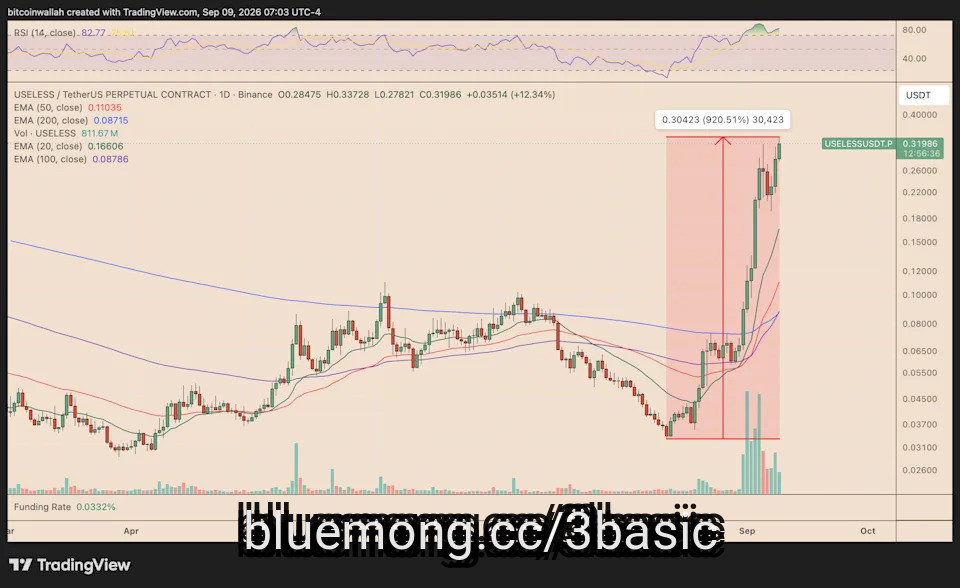
Useless (USELESS), a Solana-based memecoin, has surged more than 900% from its August low to trade near $0.337 on Wednesday, its highest level since October 2025.
In my view, these gains won't hold for too long, which may lead USELESS down at least 50% from its current levels. Let's examine.
USELESS's one-week liquidation heatmap shows a large imbalance in leveraged positions, with substantially more long positions exposed below the current price than short positions sitting above it.
If USELESS extends its rally to around $0.347, roughly $540,000 worth of ****** ulative short positions could be liquidated, according to CoinGlass data. That is relatively small compared with the downside exposure.
A decline toward $0.10, for instance, could wipe out nearly $6.70 million in ****** ulative leveraged long positions. In other words, traders betting on further gains currently have far more capital vulnerable to forced liquidation than bears betting on a decline.
#long #gains #liquidation #decline

0.00$ raised of 0.00$ goal
0 donations
0.00$
to go
2 months ago
Strategy Inc (NASDAQ:MSTR) rallied along with Bitcoin. The cryptocurrency rally followed a White House meeting with industry executives, while the Treasury Department's expanded bond-buyback plans lowered long-term yields and weakened the dollar.
However, Strategy Inc (NASDAQ:MSTR) is not a simple leveraged Bitcoin fund. The company held 843,775 Bitcoin on July 26, sold 1,638 Bitcoin during July 27-August 2, and another 1,690 during August 3-9, leaving 840,447 Bitcoin. That position was worth approximately $57.5 billion at Wednesday's Bitcoin price, but the figure represents gross **** et value rather than value attributable to common shareholders.
Common issuance increases gross Bitcoin per share only when the Bitcoin acquired per incremental **** umed diluted share exceeds the existing ratio. Issuing above net **** et value alone is insufficient because the share denominator and use of proceeds determine the result. Strategy Inc (NASDAQ:MSTR) reported that its company-defined Bitcoin-per-share metric increased 5% during the second quarter to 210,824 satoshis.
Strategy Inc (NASDAQ:MSTR) also had a $4.80 billion reserve as of August 16, including unsettled at-the-market offering proceeds. The reserve provides a buffer for contractual debt interest and preferred dividends when declared, although the preferred series have different terms, including **** ulative provisions for certain securities. This liquidity reduces near-term dependence on favorable Bitcoin or capital-market conditions.
Strategy Inc (NASDAQ:MSTR) reported $6.7 billion of aggregate convertible principal and a $15.5 billion aggregate preferred notional amount in May. At June 30, preferred equity had a $14.44 billion carrying amount and a $15.46 billion liquidation preference; repurchases began after quarter-end. These claims sit ahead of common equity under a basic-share valuation framework.
#NASDAQ

2 months ago
Updated Aug. 26, 2026 3:51 pm ET
Listen
(3 min)
1546 ET – Crude futures extend losses to three sessions on cautious expectations that the U.S. economic isolation of Iran, rather than military action, could bring about a reopening of the Strait of Hormuz. “The de-escalation and fears of tighter global supplies are easing, which is tripping some long liquidation by funds,” Dennis Kissler of BOK Financial BOKF -0.05%
decrease; down pointing triangle
says in a note. Rising U.S. commercial crude stocks are also a bearish factor, he adds. The EIA reported a 95,000 barrel increase in crude inventories, which was smaller than expected but still a fourth consecutive weekly rise. WTI edges down 0.2% to $82.23 a barrel, and Brent falls 0.8% to $87.84.(anthony.harrupwsj.com)
0900 ET – The slide in oil futures extends into a third session with renewed moves seen toward a reopening of the Strait of Hormuz after the U.S. outlined tighter economic sanctions on Iran. The oil market had been “seriously spooked” by the announcements of new measures a week earlier, but “breathed a sigh of relief at the Treasury’s rather modest measures and began to unwind their long positions in Brent in line with the ‘buy the rumor, sell the fact’ principle,” FxPro chief market ***** yst Alex Kuptsikevich says in a note. “The selloff then continued against the backdrop of a de-escalation of the conflict in the Middle East.” WTI is down 2.4% at $80.39 a barrel and Brent is off 2.5% at $86.38.(anthony.harrupwsj.com)
#brent #rather




2 months ago
By Mary Guzman
When Spirit Airlines collapsed into bankruptcy, the headlines focused on grounded planes and stranded passengers. But the most consequential part of Spirit's liquidation was invisible: the sale of its trade‑secret dataset; decades of operational intelligence, human decision‑making patterns, proprietary algorithms, and workflow histories sold to Google for just $10 million. The real value is at least 10x by any reasonable measure OTHER than what they sold for in a time of liquidation. I would argue that Spirit could and should have had those **** ets valued and kept a running tally long before bankruptcy and, in fact, as a matter of diligence.
Court filings show Google acquired more than 100 million internal emails, 500 million Teams messages, 7.5 billion de‑identified passenger records, 7.2 billion competitor pricing observations, and 30 million lines of code during the bankruptcy auction. These were not mere "data." They were (assuming they were actually owned by Spirit and protected properly) Spirit's trade secrets—the accumulated operational knowledge of a 17,000‑employee enterprise.
And Spirit was forced to let them go for pennies.
This should alarm every CEO, board member, investor, and lender. Spirit's failure wasn't the auction, though they should have been able to attract many more bidders than the two that participated. It was the years preceding it. From all appearances, the airline never formally inventoried its trade secrets, never valued them, may or may not ever have protected them with proper rigor, and never insured them. When the crisis came, Spirit had no idea what it owned or what it was worth.
#trade #liquidation #sold



2 months ago
Soybeans are trading with 3 to 7 cent losses on Tuesday morning Futures were under pressure from bean oil on Monday, with contracts down 4 to 15 ½ cents across most months, led by the nearbys. Open interest was down 17,019 contracts, suggesting some modest long liquidation. The cmdtyView national average Cash Bean price was down 13 1/2 cents at $11.88 1/2. Soymeal futures were up $2.60 to $6.20 on the day, with Soy Oil falling back 189 to 227 points.
Weekly Crop Progress data from NASS showed 91% of the US soybean crop setting pods by 8/23, with 6% dropping leaves. Condition ratings were down 1% at 60% gd/ex, with the Brugler500 index falling 4 points to 357.
Coffee Prices Soar as Supplies Tighten
Corn, Soybean Traders Get Price-Bullish Pro Farmer Crop Tour
Why This Week Looks to Be Fun
#points


2 months ago
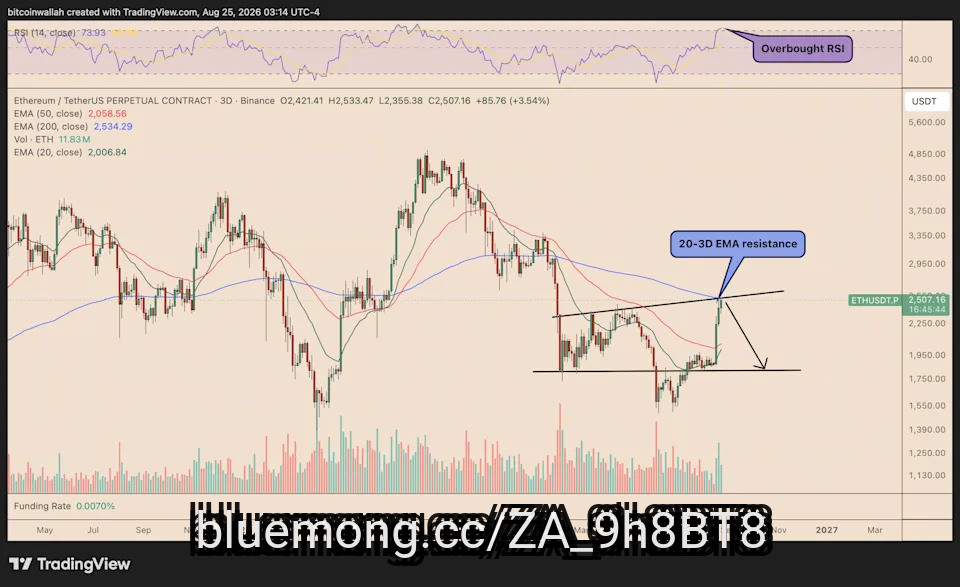
Ethereum's native token, Ether (ETH), has jumped more than 30% from its August lows near $1,800, briefly climbing above $2,500 as short liquidations and renewed buying accelerated its recovery.
But the rally is now running into major technical resistance, raising the risk of a short-term correction toward $2,000.
Ethereum's three-day chart shows ETH testing its 200-period exponential moving average (200-period EMA, blue) near $2,534.
The level has historically acted as an important long-term trend indicator. ETH is also testing a rising resistance trendline connecting its previous 2026 highs, creating an additional hurdle around the same price area.
Meanwhile, Ethereum's three-day relative strength index (RSI) has climbed to around 74.
#resistance #testing #around #ether

2 months ago
XRP (XRP) has outperformed all other crypto **** ets in the top 5 with an impressive 50% gain in just 7 days after the U.S. Securities and Exchange Commission (SEC) released a new regulatory framework for the industry.
Moreover, Ripple was one of the companies invited to the White House for President Donald Trump's crypto summit, a gathering where the head of state affirmed his commitment to get the Clarity Act passed this year.
Trading volumes for XRP have jumped to more $6 billion in the past 24 hours alone after spending months in the freezer. This figure accounts for over 6% of the **** et's circulating market cap, as five consecutive days of gains pulled off a massive short squeeze.
With more than $100 million worth of XRP shorts being liquidated in the past five days alone, this qualifies as one of the most dramatic bloodbaths for bears in the token's history.
The last time we saw liquidations of this magnitude was October 10, back when a flash crash swept the crypto market into its latest bearish cycle. Volatility was quite high at that point, and the market flushed out excessively leveraged shorts as it also evaporated billions in long positions.
#days #past



2 months ago
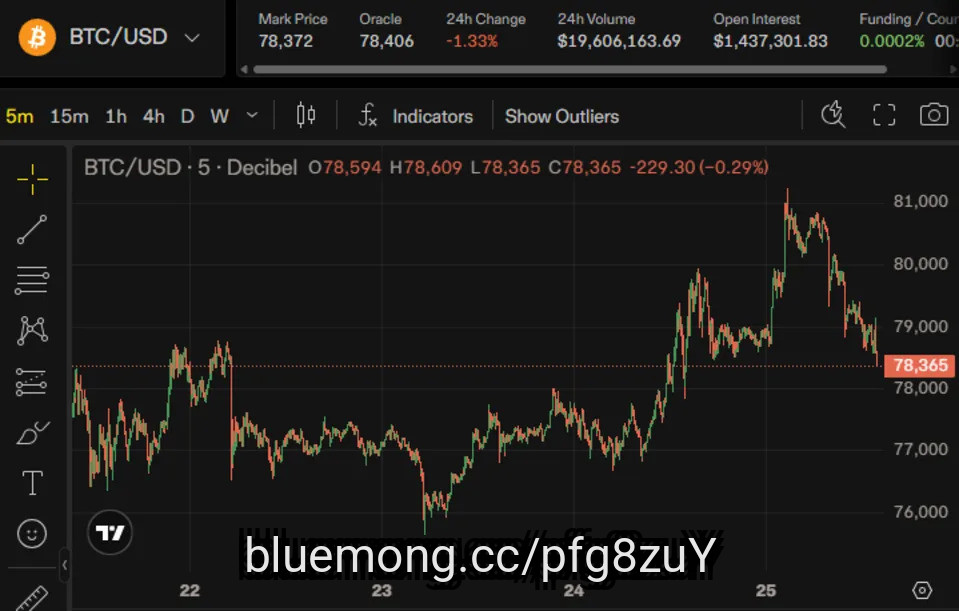
Bitcoin (BTC) surpassed the $81,000 price level on Aug. 25, its highest level since mid-May.
The latest surge is part of the broader crypto rally that began after the short squeeze caused by the U.S. Treasury's Aug. 19 announcement to at least double the amount of long-term government bond buybacks, which ignited liquidity hopes.
Related: Anonymous coder hides Bitcoin puzzle in Satoshi's genesis block
As per the onchain ****** ytics platform CoinGlass, $240 million worth of Bitcoin short positions got liquidated within the last 24 hours.
In contrast, the figure of long liquidations stood at only $88.83 million.
#long #related #coinglass #price

2 months ago
Interested in Eaton Vance Risk-Managed Diversified Equity Income Fund? Here are five stocks we like better.
Closed-end funds can offer high monthly dividend yields while diversifying away the company-specific risk tied to individual high-yield stocks.
ETJ, MEGI, and ARDC provide yields of 9.3%, 9.9%, and 10.9%, respectively, but each carries distinct fees, strategies, and risks.
Investors should weigh trade-offs such as MEGI's 2033 liquidation date, high expense ratios, and exposure to below-investment-grade debt in ARDC.
Ultra-high dividend yields for individual stocks may appeal to investors seeking additional income—after all, who doesn't want high dividend payments? At the same time, though, a very high yield can sometimes be a giant red flag for investors. If the yield is high because of a value trap in which the price of the stock is failing and the company is distressed, there is a growing risk of either a dividend cut or a continued decline to share price, or both.
#high #investors #stocks

2 months ago
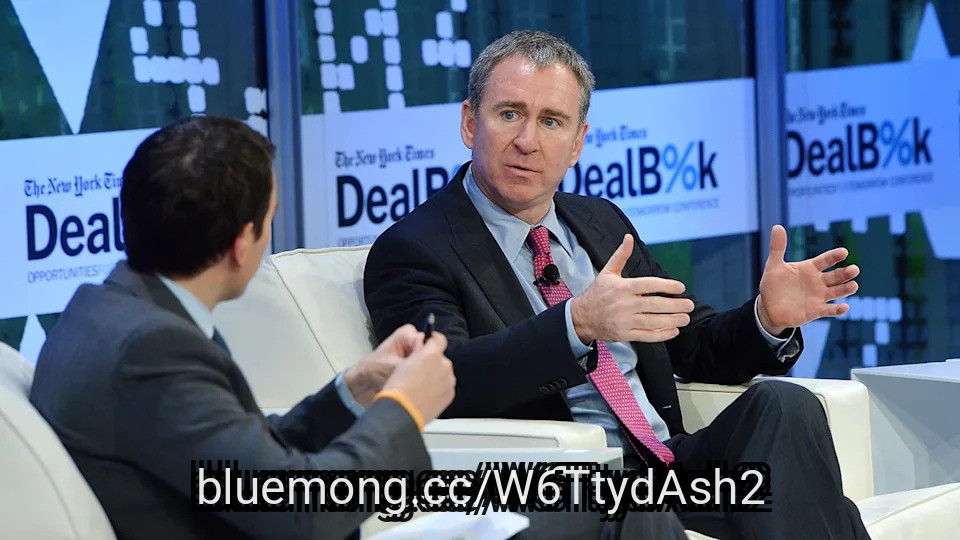
Ken Griffin bought Situational Awareness's distressed AI semiconductor positions at discounts over 10% after the leveraged fund collapsed 67% in July.
Citadel shed 80% of the acquired portfolio risk through nearly 100 block trades totaling $4 billion once markets stabilized.
The investor edge lies in distinguishing leverage-driven forced selling from fundamental decline, given that margin calls can manufacture the market's best entry points.
Don't wait: the ******* yst who called NVIDIA in 2010 just revealed his top 10 AI stocks. See the full list FREE now.
The AI trade has entered a new phase. After months of relentless optimism, leverage and crowded positioning collided with a sharp July sell-off in semiconductor stocks, exposing how quickly a winning trade can become a forced liquidation. The damage was especially severe for hedge funds that borrowed heavily to amplify returns.
#stocks #citadel #don 't
2 months ago
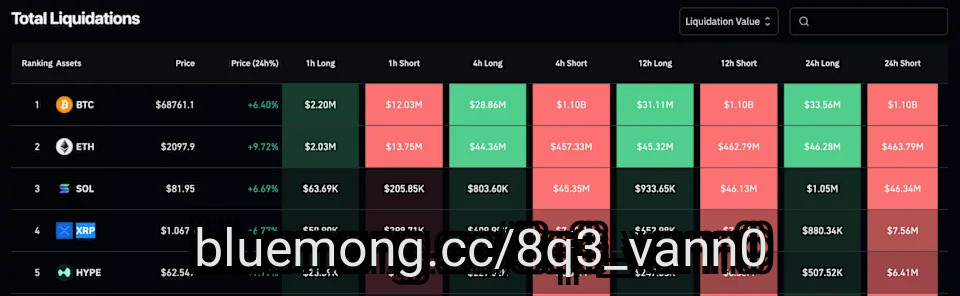
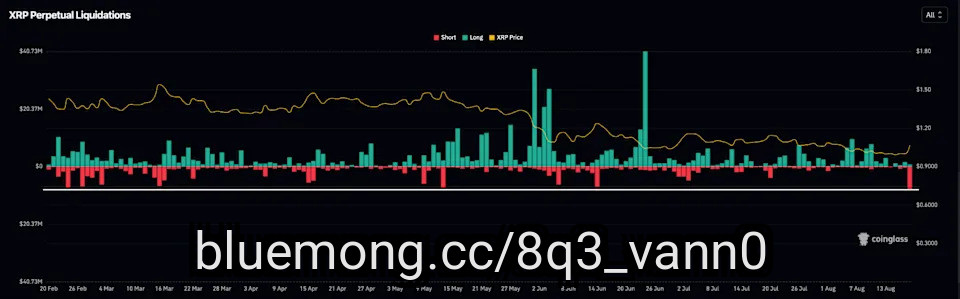
Bitcoin (BTC) has gone up by more than 8% in the past 24 hours and has rallied from $62,000 to $77,000 in just 5 days after a series of developments triggered a massive short squeeze across the crypto market.
Short liquidations in the past 24 hours alone surged to $1.2 billion and are now amounting to more than $4.4 billion, most of which came from blown-up BTC shorts.
The U.S. Securities and Exchange Commission (SEC) announced a couple of days ago a series of rules for the crypto market that front-run the approval of the Clarity Act. This move reassured the market that the current administration will do its best to support the sector's growth.
Moreover, President Donald Trump met with crypto executives at the White House and reiterated his commitment to push this key piece of legislation until it makes its way to his desk — ideally, this year.
Market participants reacted quite positively and fully ignored yesterday's hawkish comments found in the last FOMC minutes.
#market #Crypto #securities


2 months ago
AUSTIN, Texas (AP) — A Texas court on Friday slashed a $50 million judgment that conspiracy theorist Alex Jones was ordered to pay families of the 2012 Sandy Hook Elementary School massacre over his false claims that one of the deadliest mass shootings in U.S. history was a hoax.
The Infowars founder can only be forced to pay about $6 million, the Texas Third Court of Appeals ruled in a unanimous opinion, citing state laws that limit lawsuit damages.
The ruling does not affect a separate $1.25 billion judgment against Jones in Connecticut, where he was also found liable for defaming and causing emotional distress to relatives of the 20 first-graders and six educators killed in the Newtown shooting.
The punishing financial verdicts against Jones and his company, Free Speech Systems, in recent years have forced him into bankruptcy, led to some of his personal property being put up for auction and led to him leaving his Infowars platform. For decades, he used the platform to push conspiracy theories about the United Nations, the federal government, gun control and more.
Sandy Hook families have yet to collect any money from Jones, who has waged lengthy appeals in state and bankruptcy courts as his company faces liquidation. He remains on air after moving onto new websites and streaming platforms.
#texas #court #conspiracy


2 months ago
Ken Griffin bought Situational Awareness's distressed AI semiconductor positions at discounts over 10% after the leveraged fund collapsed 67% in July.
Citadel shed 80% of the acquired portfolio risk through nearly 100 block trades totaling $4 billion once markets stabilized.
The investor edge lies in distinguishing leverage-driven forced selling from fundamental decline, given that margin calls can manufacture the market's best entry points.
Don't wait: the ****** yst who called NVIDIA in 2010 just revealed his top 10 AI stocks. See the full list FREE now.
The AI trade has entered a new phase. After months of relentless optimism, leverage and crowded positioning collided with a sharp July sell-off in semiconductor stocks, exposing how quickly a winning trade can become a forced liquidation. The damage was especially severe for hedge funds that borrowed heavily to amplify returns.
#july #griffin

2 months ago
The price of bitcoin on Thursday bolted to a two-month high near $73,000, driving crypto stocks higher. The Treasury Department's Wednesday announcement regarding long-term bond buybacks appeared to spark the rally, further fueled by a massive wave of short liquidations and the Trump administration's commitment to passing crypto regulations.
The Commodities Futures Trading Commission today hosted its first Innovation Advisory Committee meeting.
The price of bitcoin on Thursday vaulted as high as $72,930, according to CoinMarketCap data. The cryptocurrency eased back near $72,650 Thursday afternoon but remains up almost 6% over the past 24 hours.
Bitcoin on Wednesday spiked above $68,000 after the Treasury Department announced plans to double the size of its long-term bond buybacks, which prompted a drop in Treasury yields and the U.S. dollar.
The price of bitcoin traded around $65,000 early Wednesday before the announcement.
#price


2 months ago
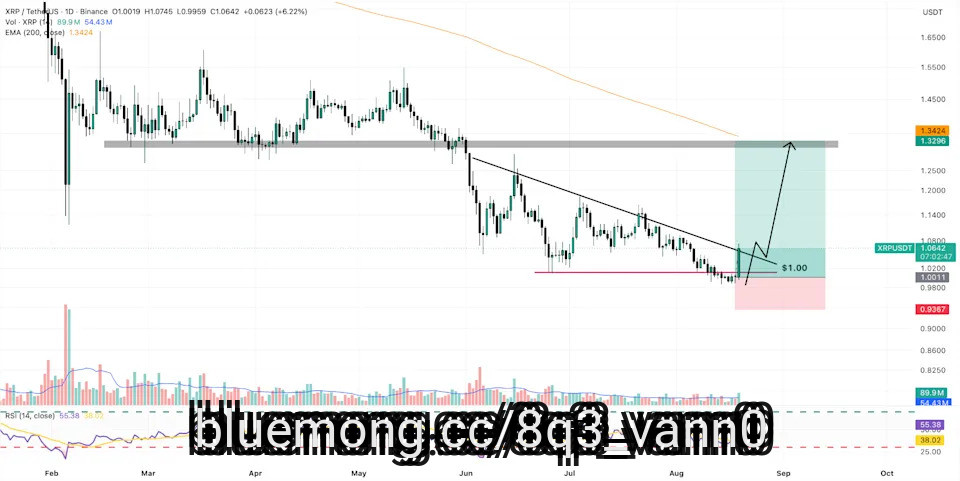
XRP (XRP) has gone up by more than 6% in the past 24 hours following the release of new rules for the crypto ****** e by the U.S. Securities and Exchange Commission (SEC).
Today's move comes just a few days after XRP managed to successfully stay above the $1 threshold – a key psychological support that needed to hold to prevent a much stronger correction for this altcoin.
Short liquidations spiked to a massive total of $1.70 billion in the past 12 hours, with Bitcoin (BTC) accounting for $1 billion of that total as the token just rose past the $66,000 resistance.
Moreover, Ethereum (ETH) also broke a key psychological and technical threshold at $2,000 that catalyzed the beginning of a bull market on two prior occasions.
Today's move is similar to the magnitudes seen on October 10, back when a flash crash kicked off this bearish cycle.
#exchange
2 months ago
Wheat is trading with mixed action early on Wednesday with CBT holding higher and the hard wheats fading lower. The wheat complex was mixed on Tuesday, with the spring wheat market holding up and winter wheats on the weaker side. Chicago SRW contracts was mixed, with front months down 1 to 10 ¼ cents and deferreds fractionally to 2 cents higher. Open interest slipped 7,720 contracts mainly on liquidation in the September contract (-14,165). KC HRW futures was the weakest of the wheat markets, with contracts down 5 ¼ to 15 cents at the close. Open interest was up just 168 contracts. MPLS spring wheat was the firmer of the three exchanges, with contracts fractionally to 1 ¼ cents higher across most months.
This week's NASS Crop Progress spring wheat conditions up 1% at 52% gd/ex, with the Brugler500 index back up 5 points to 344. The only states with dropping conditions were MT (-3) and WA (-5), with ID (+8), ND (+5), MN (+4) seeing improvement.
Tighter Coffee Supplies Push Prices Sharply Higher
Cocoa Prices Fall on Exceptional Growing Conditions in West Africa
Global Supply Concerns Fuel a Rally in Sugar Prices
#higher #cents #mixed #holding


2 months ago
Crypto bears just had one of their worst hours of 2026. Short positions worth $1.23 billion were liquidated in 60 minutes as Bitcoin (BTC) climbed 2.5% to near $68,424.
Three whale wallets on Hyperliquid, a decentralized derivatives exchange, absorbed $194 million of the damage. The forced buying added fuel to a rally that began in the bond market.
Total liquidations reached $1.31 billion in the hour, and shorts made up nearly all of it, per data from CoinGlass.
Bitcoin positions accounted for roughly $770 million of the wipeout, with Ethereum (ETH) adding another $430 million. ETH itself gained 3.9% and traded back above $2,000, near $2,084.
The 24-hour toll ran to $1.57 billion across 114,038 traders, with shorts making up $1.41 billion. The largest single order, an ETH position on Bitget, was worth $32.18 million.
#billion #positions #near #Crypto


2 months ago
Wheat is trading with mixed action early on Wednesday with CBT holding higher and the hard wheats fading lower. The wheat complex was mixed on Tuesday, with the spring wheat market holding up and winter wheats on the weaker side. Chicago SRW contracts was mixed, with front months down 1 to 10 ¼ cents and deferreds fractionally to 2 cents higher. Open interest slipped 7,720 contracts mainly on liquidation in the September contract (-14,165). KC HRW futures was the weakest of the wheat markets, with contracts down 5 ¼ to 15 cents at the close. Open interest was up just 168 contracts. MPLS spring wheat was the firmer of the three exchanges, with contracts fractionally to 1 ¼ cents higher across most months.
This week's NASS Crop Progress spring wheat conditions up 1% at 52% gd/ex, with the Brugler500 index back up 5 points to 344. The only states with dropping conditions were MT (-3) and WA (-5), with ID (+8), ND (+5), MN (+4) seeing improvement.
Tighter Coffee Supplies Push Prices Sharply Higher
Cocoa Prices Fall on Exceptional Growing Conditions in West Africa
Global Supply Concerns Fuel a Rally in Sugar Prices
#mixed


2 months ago
Crossroads Capital LLC, an investment management firm, published its second-quarter 2026 investor letter. A copy of the letter can be downloaded here. The Fund increased by 11.5% net of fees and expenses during the quarter. Since its founding, the fund has compounded at a net rate of 17.9%. By the end of June 2026, the fund's overall non-delta-adjusted gross and net exposures were 115.0% and 86.9%, respectively. In Q2, the S&P 500 rebounded 14.9%, its best since 2020, as market uncertainty eased. The oil market showed a transition, with Brent crude prices fluctuating. AI and semiconductors thrived, with 25% earnings growth. The quarter underscored a key principle: risk is priced continuously but resolved discontinuously. Small-cap benchmarks hit new highs, though the Magnificent 7 saw modest gains. In Q2, market activity focused on adjustments rather than facts, capitalizing on high option premiums. In addition, please check the Fund's top five holdings to know its best picks in 2026.
In its Q2 2026 investor letter, Crossroads Capital highlighted Nebius Group N.V. (NASDAQ:NBIS). Nebius Group N.V. (NASDAQ:NBIS) is a technology company focusing on developing full-stack infrastructure to service the global AI industry. On August 19, 2026, Nebius Group N.V. (NASDAQ:NBIS) closed at $223.90 per share. The one-month return of Nebius Group N.V. (NASDAQ:NBIS) was 1.33%, and its shares gained 238.32% over the past 52 weeks. Nebius Group N.V. (NASDAQ:NBIS) has a market capitalization of $60.87 billion.
Crossroads Capital stated the following regarding Nebius Group N.V. (NASDAQ:NBIS) in its Q2 2026 investor letter:
"Eighteen months ago, Nebius Group N.V. (NASDAQ:NBIS) was a Russian-adjacent carve-out of Yandex, the Russian Google, with no anchor customer, a cash burn, and an open question as to whether capital markets would touch it. You had to squint at it in order to see a viable business that was arguably trading below liquidation value. On August 12th, the company reported a second quarter with $582.3 million in revenue and a 50% adjusted EBITDA margin in its core AI cloud business. Today Nebius is an AI infrastructure platform with roughly $46B of committed contract value from Microsoft and Meta, priority Nvidia silicon secured through Nvidia's own $2B equity stake, and a target of almost 5 GW of contracted power by year-end(with over 75% of it owned rather than leased). Moreover, it has a funding structure in which roughly 50-60% of capex is covered by customer prepayments; the balance was raised this spring as $4B of oversubscribed convertibles with coupons of 1.25% and 2.625%. Sub-1.3% paper to 2031 is the bond market's answer to any question regarding Nebius' long-term prospects—and a question we couldn't have fully answered a year ago at any price.
The Meta relationship remains the keystone: $27B over five years, split between $12B of dedicated capacity on one of the first large-scale Vera Rubin deployments (starting early 2027) and $15B on w


2 months ago
Short sellers quickly lost close to $3 billion U.S. on their bearish bets as the price of Bitcoin (CRYPTO: $BTC) jumped above $70,000 U.S. late on Aug. 19.
Market data shows that traders and investors who were short Bitcoin lost $2.70 billion U.S. in the past 24 hours as the price of BTC got as high as $72,000 U.S.
Total liquidations due to the sharp rise in Bitcoin's price impacted 172,108 professional traders, according to data from CoinGlass. It's the biggest loss on Bitcoin short bets since 2021.
More From Cryptoprowl:
MEXC July TradFi Trading Shifts Toward AI Storage as SNDK Futures Volume Surges More Than 15x Times
#Bitcoin #Crypto #market