

1 hr. ago
On August 28, Frontline (NYSE:FRO) posted the best quarter in company history, with net income of $659 million and adjusted profit of $580 million for the second quarter of 2026, up $235 million from the prior quarter. The gains came from tanker rates that climbed across every vessel class Frontline operates, from its largest crude carriers to its smaller product tankers. CEO Lars Barstad described a market with no playbook, one where geopolitical disruption is reshaping how oil moves around the world. The bigger question left hanging on the call is how much of that strength holds once the disruptions ease.
VLCC rates hit $153,000 per day in the second quarter of 2026, while Suezmax and LR2/Aframax vessels earned $111,000 and $92,400 per day. That strength has carried into the third quarter, where Frontline has already booked 86% of VLCC days at $157,000 per day, 79% of Suezmax days at $117,000 per day, and 70% of LR2 days at $81,000 per day, evidence that rates are holding rather than sliding back. The fleet backing those numbers is young and efficient, averaging 6.6 years old, fully eco-designed, and 69% scrubber-fitted, which keeps cash breakeven costs between $22,200 and $25,700 per day, well under what the ships are currently earning.
That spread between cost and rate is throwing off real cash. Management estimated annual cash generation potential at $2.3 billion, or $10.35 per share, based on rates as of August 28, a 24% yield against the current share price. The balance sheet has room to match it: $1.2 billion in liquidity, no debt maturities until 2030, and a refinancing that cut the average interest rate margin by 52 basis points to 1.26%. Frontline also collected $270 million selling two VLCCs at about $135 million apiece, with Barstad noting some buyers are paying premiums for older tankers just to control their own logistics chains.
Much of the current rate strength traces back to friction rather than growth in oil demand. Crude exports from inside the Strait of Hormuz are down 82% amid recent disruptions, and China's crude imports have fallen 35%, cushioned by inventory drawdowns rather than fresh buying. Barstad pointed to a 23% increase in VLCC idling days, driven by ship-to-ship transfers off Fujairah and Malaysia that can triple the distance a cargo travels before reaching its final buyer. That inefficiency is tightening effective fleet supply even as actual volumes shrink, which is a different story than genuine demand growth.
#million #vlcc #strength #rather
VLCC rates hit $153,000 per day in the second quarter of 2026, while Suezmax and LR2/Aframax vessels earned $111,000 and $92,400 per day. That strength has carried into the third quarter, where Frontline has already booked 86% of VLCC days at $157,000 per day, 79% of Suezmax days at $117,000 per day, and 70% of LR2 days at $81,000 per day, evidence that rates are holding rather than sliding back. The fleet backing those numbers is young and efficient, averaging 6.6 years old, fully eco-designed, and 69% scrubber-fitted, which keeps cash breakeven costs between $22,200 and $25,700 per day, well under what the ships are currently earning.
That spread between cost and rate is throwing off real cash. Management estimated annual cash generation potential at $2.3 billion, or $10.35 per share, based on rates as of August 28, a 24% yield against the current share price. The balance sheet has room to match it: $1.2 billion in liquidity, no debt maturities until 2030, and a refinancing that cut the average interest rate margin by 52 basis points to 1.26%. Frontline also collected $270 million selling two VLCCs at about $135 million apiece, with Barstad noting some buyers are paying premiums for older tankers just to control their own logistics chains.
Much of the current rate strength traces back to friction rather than growth in oil demand. Crude exports from inside the Strait of Hormuz are down 82% amid recent disruptions, and China's crude imports have fallen 35%, cushioned by inventory drawdowns rather than fresh buying. Barstad pointed to a 23% increase in VLCC idling days, driven by ship-to-ship transfers off Fujairah and Malaysia that can triple the distance a cargo travels before reaching its final buyer. That inefficiency is tightening effective fleet supply even as actual volumes shrink, which is a different story than genuine demand growth.
#million #vlcc #strength #rather


2 days ago
Our ******* ysts just identified a stock with the potential to be the next Nvidia. Tell us how you invest and we'll show you why it's our #1 pick. Tap here.
Achieved record quarterly profit driven by a long-term strategy of increasing VLCC exposure and voyage days during the post-COVID period.
Market strength is driven by extreme trade inefficiencies, including a 23% increase in idling days per VLCC, which have emerged despite an 82% reduction in crude oil exports from the Strait of Hormuz.
Observed a significant shift in trade patterns, with Atlantic Basin exports taking longer routes and Middle East exports increasingly relying on multi-stage ship-to-ship (STS) transfers.
Global oil supply is currently being sustained by aggressive inventory draws in the US, China, and OECD nations, which management views as a temporary cushion.
#days
Achieved record quarterly profit driven by a long-term strategy of increasing VLCC exposure and voyage days during the post-COVID period.
Market strength is driven by extreme trade inefficiencies, including a 23% increase in idling days per VLCC, which have emerged despite an 82% reduction in crude oil exports from the Strait of Hormuz.
Observed a significant shift in trade patterns, with Atlantic Basin exports taking longer routes and Middle East exports increasingly relying on multi-stage ship-to-ship (STS) transfers.
Global oil supply is currently being sustained by aggressive inventory draws in the US, China, and OECD nations, which management views as a temporary cushion.
#days


9 days ago
Hormuz traffic remains near a standstill as Trump's 'Economic D-Day' campaign pushes Brent closer to $100.
Friday, August 21, 2026
Transits through the Strait of Hormuz have been in single digits the entire week, with Trump's announcement of an 'Economic D-Day' campaign against Iran increasing geopolitical risk premia in the markets. With ICE Brent at $94 per barrel, Asian LNG prices at $24 per MMBtu and VLCC freight rates at exorbitant levels, this week's gradual upward creeping momentum towards $100-per-barrel oil should continue over the remaining days of August.
Trump Turns the Iran War Economic. US President Trump threatened sweeping penalties and 'tremendous consequences' against countries trading with Iran, putting China and its imports of Iranian oil in the crosshairs as the White House announced the start of 'economic warfare' against Tehran.
Iraq Targets 10 Million—If OPEC and Export Routes Allow. Despite current production restrictions that see output around 2.9 million b/d, the new Iraqi government claimed it plans to reach output of 8–10 million b/d within 6 years, seeking a larger OPEC quota and developing alternative export corridors.
#million
Friday, August 21, 2026
Transits through the Strait of Hormuz have been in single digits the entire week, with Trump's announcement of an 'Economic D-Day' campaign against Iran increasing geopolitical risk premia in the markets. With ICE Brent at $94 per barrel, Asian LNG prices at $24 per MMBtu and VLCC freight rates at exorbitant levels, this week's gradual upward creeping momentum towards $100-per-barrel oil should continue over the remaining days of August.
Trump Turns the Iran War Economic. US President Trump threatened sweeping penalties and 'tremendous consequences' against countries trading with Iran, putting China and its imports of Iranian oil in the crosshairs as the White House announced the start of 'economic warfare' against Tehran.
Iraq Targets 10 Million—If OPEC and Export Routes Allow. Despite current production restrictions that see output around 2.9 million b/d, the new Iraqi government claimed it plans to reach output of 8–10 million b/d within 6 years, seeking a larger OPEC quota and developing alternative export corridors.
#million



11 days ago
Gulf oil producers are finding new ways around the Strait of Hormuz, but bypassing the world's biggest oil chokepoint creates new risks.
VLCC Rates Go Ballistic as Hormuz Turns Into a Freight Jackpot
- VLCC prices are ballooning out of control (once again), pushing ***** sed earnings for a Middle East-to-China voyage beyond $500,000 per day as the flow of vessels moving out of the Gulf trickled down to a mere couple per day.
- Amidst news that Saudi Aramco resumed crude loadings at its key Ras Tanura export terminal, VLCC fixing costs for inside-Hormuz cargoes jumped to a whopping $31 million per voyage, as seen this week with the Mongolia Prosperity supertanker.
- Saudi Aramco loaded at least three VLCCs (Malaysia Prosperity, Algeria Prosperity and Singapore Prosperity) in the Gulf last week, all owned by Sinokor, offering them to Asian buyers via ship-to-ship transfers off Fujairah in the UAE on a prompt basis.
#prosperity #ship
VLCC Rates Go Ballistic as Hormuz Turns Into a Freight Jackpot
- VLCC prices are ballooning out of control (once again), pushing ***** sed earnings for a Middle East-to-China voyage beyond $500,000 per day as the flow of vessels moving out of the Gulf trickled down to a mere couple per day.
- Amidst news that Saudi Aramco resumed crude loadings at its key Ras Tanura export terminal, VLCC fixing costs for inside-Hormuz cargoes jumped to a whopping $31 million per voyage, as seen this week with the Mongolia Prosperity supertanker.
- Saudi Aramco loaded at least three VLCCs (Malaysia Prosperity, Algeria Prosperity and Singapore Prosperity) in the Gulf last week, all owned by Sinokor, offering them to Asian buyers via ship-to-ship transfers off Fujairah in the UAE on a prompt basis.
#prosperity #ship



1 month ago
Oil prices gave up earlier gains on Friday after reports that Pakistan is trying to broker a return to U.S.-Iran nuclear negotiations. China is strongly backing the effort as the conflict and the closure of the Strait of Hormuz continue to threaten its energy security and weigh on its economy.
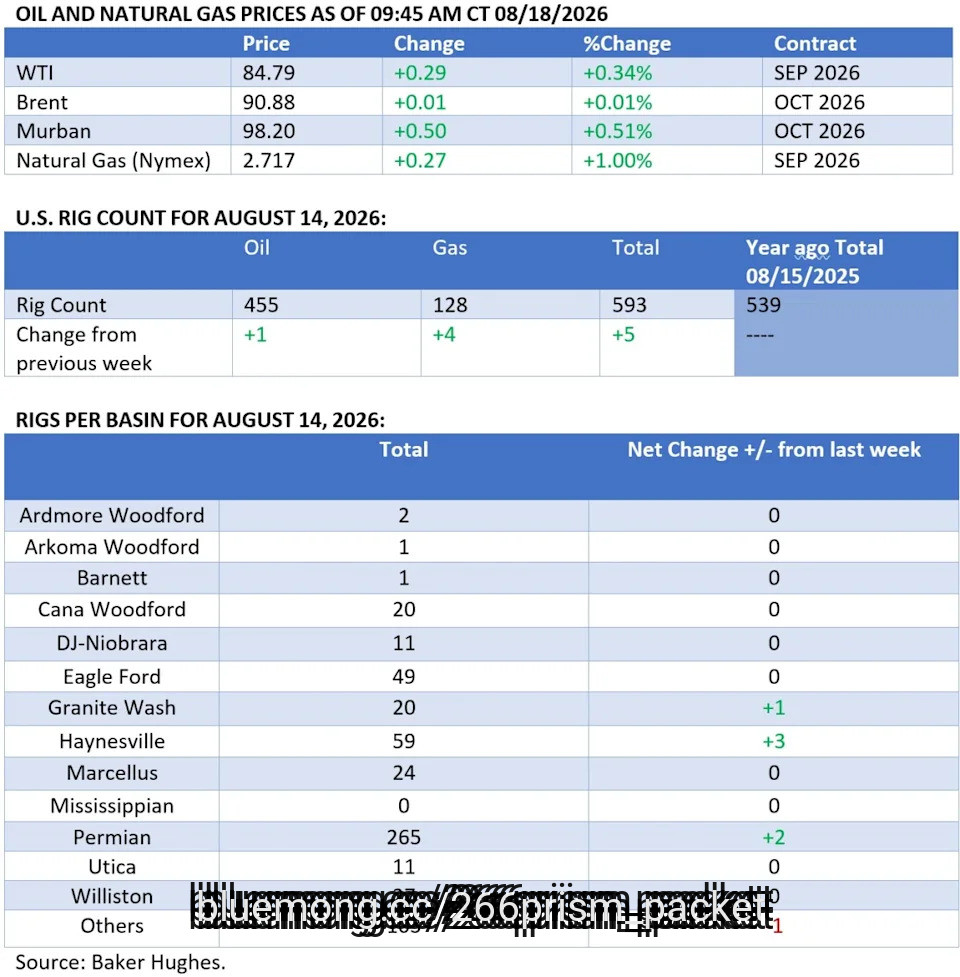
Brent crude for September delivery fell 4.4% to trade at $96.36 per barrel at 1.35 pm ET while WTI crude for September delivery was down 3.6% to change hands at $88.86/bbl.
However, Standard Chartered says the latest pullback may prove temporary as Middle East oil market risk has expanded from one strategic chokepoint to two.
On Monday, Yemen's Houthi militant group imposed a targeted maritime blockade against Saudi Arabia, threatening to enforce it by blocking Saudi-linked vessels from transiting the vital Bab el-Mandeb Strait. The group claimed the blockade was a direct retaliation for a decade-long Saudi containment of Yemen as well as a recent Saudi-backed airstrike targeting Sanaa International Airport.
The threat immediately rattled oil markets, prompting multiple Saudi-linked very large crude carriers (VLCCs) to abandon planned transits through the Bab el-Mandeb Strait and instead reroute around Africa's Cape of Good Hope, adding up to two weeks to each voyage. Two days later, the Houthis followed through. The group launched ballistic missiles and drones at two Saudi oil tankers on Thursday, damaging both vessels and igniting fires onboard. Brent crude surged nearly $20 per barrel, briefly climbing above $100.
#brent #september
Brent crude for September delivery fell 4.4% to trade at $96.36 per barrel at 1.35 pm ET while WTI crude for September delivery was down 3.6% to change hands at $88.86/bbl.
However, Standard Chartered says the latest pullback may prove temporary as Middle East oil market risk has expanded from one strategic chokepoint to two.
On Monday, Yemen's Houthi militant group imposed a targeted maritime blockade against Saudi Arabia, threatening to enforce it by blocking Saudi-linked vessels from transiting the vital Bab el-Mandeb Strait. The group claimed the blockade was a direct retaliation for a decade-long Saudi containment of Yemen as well as a recent Saudi-backed airstrike targeting Sanaa International Airport.
The threat immediately rattled oil markets, prompting multiple Saudi-linked very large crude carriers (VLCCs) to abandon planned transits through the Bab el-Mandeb Strait and instead reroute around Africa's Cape of Good Hope, adding up to two weeks to each voyage. Two days later, the Houthis followed through. The group launched ballistic missiles and drones at two Saudi oil tankers on Thursday, damaging both vessels and igniting fires onboard. Brent crude surged nearly $20 per barrel, briefly climbing above $100.
#brent #september


2 months ago
By Florence Tan and Siyi Liu
SINGAPORE, June 26 (Reuters) - Saudi Aramco resumed crude loadings on Friday at its Ras Tanura terminal in the Gulf after a near four-month halt, shipping data showed, as the world's biggest oil exporter joined a rush to move cargoes amid industry hopes of a return to normal.
The Saudi oil loadings come even though a ship belonging to Taiwan's Evergreen Marine was hit by an unknown object in the Strait of Hormuz on Thursday.
Middle Eastern producers had been ramping up oil and gas output and exports in the lead-up to the interim deal between the United States and Iran to halt the war and reopen the strait where a fifth of the world's oil and liquefied natural gas supplies used to pass.
Two Very Large Crude Carriers controlled by Saudi's shipping arm Bahri were seen loading crude at Ras Tanura, the world's biggest oil port, while another waited nearby, the data showed. Each VLCC is capable of loading 2 million barrels of oil.
SINGAPORE, June 26 (Reuters) - Saudi Aramco resumed crude loadings on Friday at its Ras Tanura terminal in the Gulf after a near four-month halt, shipping data showed, as the world's biggest oil exporter joined a rush to move cargoes amid industry hopes of a return to normal.
The Saudi oil loadings come even though a ship belonging to Taiwan's Evergreen Marine was hit by an unknown object in the Strait of Hormuz on Thursday.
Middle Eastern producers had been ramping up oil and gas output and exports in the lead-up to the interim deal between the United States and Iran to halt the war and reopen the strait where a fifth of the world's oil and liquefied natural gas supplies used to pass.
Two Very Large Crude Carriers controlled by Saudi's shipping arm Bahri were seen loading crude at Ras Tanura, the world's biggest oil port, while another waited nearby, the data showed. Each VLCC is capable of loading 2 million barrels of oil.

3 months ago
BWET surged 1,645% on VLCC freight rates driven by the Strait of Hormuz closure, but a ceasefire could erase gains within hours.
WTI crude already dropped from $112 to $98 in one week, signaling the war premium may be softening before any formal resolution.
BWET's 3.5% expense ratio and punishing futures roll costs create structural drag that compounds losses if freight rates reverse.
Act now: the ****** yst who called NVIDIA in 2010 just named his top 10 AI stocks — and Amplify Commodity Trust didn't make the cut. Grab the names FREE today.
The Breakwave Tanker Shipping ETF (NYSEARCA:BWET) has delivered one of the most extreme returns of any U.S.-listed fund in living memory, climbing 1,645% over the past year and 836% year to date to close near $180. Investors hold BWET to bet on crude tanker freight rates through near-dated futures, mostly 90% Very Large Crude Carrier (VLCC) and 10% Suezmax contracts. The fund's gain is real, but it rests almost entirely on one event, and that is the risk worth understanding before deciding what to do with the position.
WTI crude already dropped from $112 to $98 in one week, signaling the war premium may be softening before any formal resolution.
BWET's 3.5% expense ratio and punishing futures roll costs create structural drag that compounds losses if freight rates reverse.
Act now: the ****** yst who called NVIDIA in 2010 just named his top 10 AI stocks — and Amplify Commodity Trust didn't make the cut. Grab the names FREE today.
The Breakwave Tanker Shipping ETF (NYSEARCA:BWET) has delivered one of the most extreme returns of any U.S.-listed fund in living memory, climbing 1,645% over the past year and 836% year to date to close near $180. Investors hold BWET to bet on crude tanker freight rates through near-dated futures, mostly 90% Very Large Crude Carrier (VLCC) and 10% Suezmax contracts. The fund's gain is real, but it rests almost entirely on one event, and that is the risk worth understanding before deciding what to do with the position.