
9 days ago
Kourtney Kardashian found herself on the receiving end of Jennifer Lawrence's sharp humor, but the reality star says the timing made the remarks land differently.
Lawrence had criticized Kardashian last year only to reach out afterward through Kim Kardashian.
By the time the exchange resurfaced on "The Kardashians," Kourtney had already reconsidered her original comments, though she still said they made her feel particularly vulnerable when they arrived.
The exchange began with Lawrence's teasing comments during a November 2025 Vanity Fair lie detector test, when she said Kourtney Kardashian "drives me nuts" and is "more annoying than ever."
However, Kourtney said the circumstances surrounding Lawrence's remarks mattered more than the words themselves.
#remarks #comments #jennifer #kardashians
Lawrence had criticized Kardashian last year only to reach out afterward through Kim Kardashian.
By the time the exchange resurfaced on "The Kardashians," Kourtney had already reconsidered her original comments, though she still said they made her feel particularly vulnerable when they arrived.
The exchange began with Lawrence's teasing comments during a November 2025 Vanity Fair lie detector test, when she said Kourtney Kardashian "drives me nuts" and is "more annoying than ever."
However, Kourtney said the circumstances surrounding Lawrence's remarks mattered more than the words themselves.
#remarks #comments #jennifer #kardashians




9 days ago
President Donald Trump's portfolio managers bought as much as $30 million in Meta stock and ******* eX debt in August as purchases made in his name continue to be highly active.
A newly released financial disclosure shows more than 500 securities transactions in August, including up to $25 million in Meta stock and $5 million in ******* eX debt. His portfolio also invested in AT&T, Netflix and Chevron. In contrast, he sold shares of Advanced Micro Devices, T-Mobile, Dell Technologies and Nvidia.
Democrats have criticized moves made by the president's portfolio managers in the past. Sen. Elizabeth Warren and Rep. Robert Garcia sent a lengthy letter to Trump in August, saying they want to know who are the money managers in charge of his investments.
"One ******* ysis estimates that you reported more than 14,000 stock trades, worth up to $1.06 billion during your first year in office. The total is likely higher as these reports don't even include transactions worth less than one thousand dollars," reads a passage of the letter.
"The sheer volume of this trading activity and the timing of a number of transactions, raise questions about whether you are using your knowledge of government activities, your official authority, or the vast megaphone provided by the Presidency to make investments or move markets to your personal benefit—and about whether you have been making decisions that boost your portfolio at the expense of taxpayers, the economy, and national security," it adds.
#million #Stock
A newly released financial disclosure shows more than 500 securities transactions in August, including up to $25 million in Meta stock and $5 million in ******* eX debt. His portfolio also invested in AT&T, Netflix and Chevron. In contrast, he sold shares of Advanced Micro Devices, T-Mobile, Dell Technologies and Nvidia.
Democrats have criticized moves made by the president's portfolio managers in the past. Sen. Elizabeth Warren and Rep. Robert Garcia sent a lengthy letter to Trump in August, saying they want to know who are the money managers in charge of his investments.
"One ******* ysis estimates that you reported more than 14,000 stock trades, worth up to $1.06 billion during your first year in office. The total is likely higher as these reports don't even include transactions worth less than one thousand dollars," reads a passage of the letter.
"The sheer volume of this trading activity and the timing of a number of transactions, raise questions about whether you are using your knowledge of government activities, your official authority, or the vast megaphone provided by the Presidency to make investments or move markets to your personal benefit—and about whether you have been making decisions that boost your portfolio at the expense of taxpayers, the economy, and national security," it adds.
#million #Stock


10 days ago
Alan Ritchson and his wife, Catherine, are putting a positive spin on their shock divorce, but friends of the former couple are bracing themselves for a messy situation in the months ahead, a source tells the National Enquirer.
"People around Alan were pretty shocked at the timing of this break-up, especially because being an involved, sensitive dad has been central to Alan's identity for so long," reveals the source. "That's still the thing he's most broken up about with this divorce: it's going to mean less time with [sons Calem, Edan and Amory] and there's almost nothing he can do about that."
After twenty years of marriage, the Reacher star, 43, and his writer-producer wife, 42, announced their split in a joint Instagram post on September 12, pledging to become the "strongest co-parents" they can be. "We also want to give each other room to grow into the people we are becoming," the statement read.
"[Alan] was quite protective of Catherine and the kids when the Reacher series first got started, and then the show kind of took over everything and made him richer and way more famous than he ever expected," admits the source. "It's a lot to go through in just a few short years, and Alan's insane training schedule, completely apart from the long filming days, didn't make things easier."
ZUMAPRESS.com / MEGA
#source #reacher #divorce
"People around Alan were pretty shocked at the timing of this break-up, especially because being an involved, sensitive dad has been central to Alan's identity for so long," reveals the source. "That's still the thing he's most broken up about with this divorce: it's going to mean less time with [sons Calem, Edan and Amory] and there's almost nothing he can do about that."
After twenty years of marriage, the Reacher star, 43, and his writer-producer wife, 42, announced their split in a joint Instagram post on September 12, pledging to become the "strongest co-parents" they can be. "We also want to give each other room to grow into the people we are becoming," the statement read.
"[Alan] was quite protective of Catherine and the kids when the Reacher series first got started, and then the show kind of took over everything and made him richer and way more famous than he ever expected," admits the source. "It's a lot to go through in just a few short years, and Alan's insane training schedule, completely apart from the long filming days, didn't make things easier."
ZUMAPRESS.com / MEGA
#source #reacher #divorce



11 days ago
Jim Cramer has built a career on conviction calls, and few have been more consistent than his faith in Amazon (AMZN). For years, the Mad Money host has treated the retail giant as close to untouchable. A permanent fixture in nearly every portfolio he recommends.
That changed, briefly and publicly, after watching a rival's AI demo live on air. Here is what Cramer actually said, the stock moves that gave his comment real weight, and what it all means for anyone holding either name heading into the rest of the year.
Also read: Jim Cramer noticed something odd about the stock market
Cramer made the comment live on CNBC's Squawk on the Street on September 28, after watching a demonstration of Meta's (META) new AI shopping capability. "I'm an Amazon guy, but maybe I shouldn't be. This seemed impressive," he said, speaking as a shopper describing his own buying habits rather than making a stock call.
The timing gave the remark unusual weight. Meta shares had climbed roughly 24% over the prior month. Amazon fell roughly 8% over the same stretch. Investors were already debating which company was winning the fight for online shoppers before Cramer weighed in.
#cramer #amazon #roughly
That changed, briefly and publicly, after watching a rival's AI demo live on air. Here is what Cramer actually said, the stock moves that gave his comment real weight, and what it all means for anyone holding either name heading into the rest of the year.
Also read: Jim Cramer noticed something odd about the stock market
Cramer made the comment live on CNBC's Squawk on the Street on September 28, after watching a demonstration of Meta's (META) new AI shopping capability. "I'm an Amazon guy, but maybe I shouldn't be. This seemed impressive," he said, speaking as a shopper describing his own buying habits rather than making a stock call.
The timing gave the remark unusual weight. Meta shares had climbed roughly 24% over the prior month. Amazon fell roughly 8% over the same stretch. Investors were already debating which company was winning the fight for online shoppers before Cramer weighed in.
#cramer #amazon #roughly


11 days ago
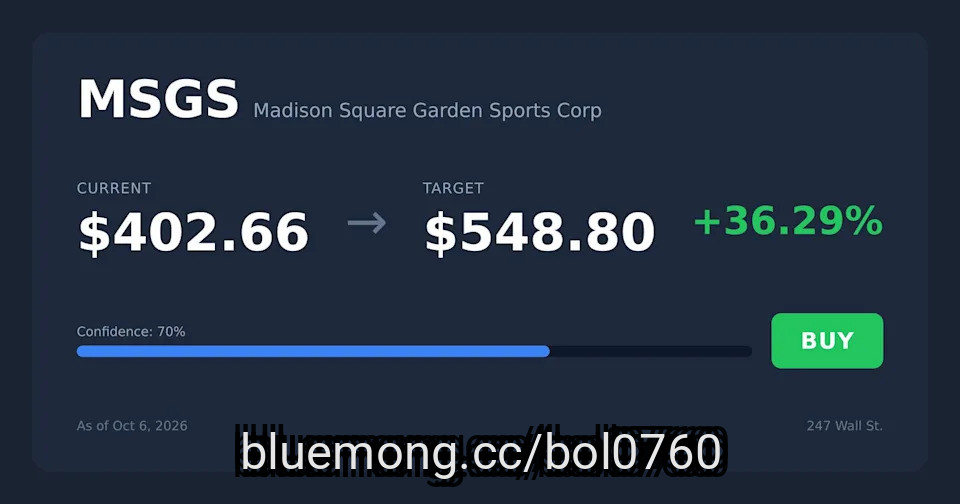
Four major corporate splits are upcoming, with MSGS separating the Knicks and Rangers into two distinct public companies by October 2026.
Keurig Dr Pepper's coffee spinoff carries significant execution risk as Russ Torres becomes its third CEO candidate ahead of the early 2027 split.
Textron leans toward selling its $3 billion Industrial segment rather than spinning it off, meaning shareholders would receive no second stock.
Building a portfolio and living off one are two completely different skills, and almost ******* ody teaches the second. This problem is what The Definitive Guide to Retirement Income helps, and it is free today. Read more here. (Sponsor)
Corteva (NYSE:CTVA) has split into two companies, and we walked through what its shareholders own now. Four more large separations are coming. Each has its own timeline, and each leaves shareholders holding something different. They are listed below by expected timing, soonest first.
#split #second #different
Keurig Dr Pepper's coffee spinoff carries significant execution risk as Russ Torres becomes its third CEO candidate ahead of the early 2027 split.
Textron leans toward selling its $3 billion Industrial segment rather than spinning it off, meaning shareholders would receive no second stock.
Building a portfolio and living off one are two completely different skills, and almost ******* ody teaches the second. This problem is what The Definitive Guide to Retirement Income helps, and it is free today. Read more here. (Sponsor)
Corteva (NYSE:CTVA) has split into two companies, and we walked through what its shareholders own now. Four more large separations are coming. Each has its own timeline, and each leaves shareholders holding something different. They are listed below by expected timing, soonest first.
#split #second #different



11 days ago
What if I told you that the biggest risk from the next market crash isn't the crash itself? It might be what investors do to their portfolios to try to avoid the crash.
In today's economic environment, there are legitimate reasons for concern. Inflation is high. Oil prices have soared. Interest rates are on the rise. The Shiller CAPE ratio, which measures stock prices relative to inflation-adjusted earnings over the past 10 years, is at its second-highest level of all time.
Missed AI's "Act 1"? Act 2 Could Be 14x Bigger. Most investors think they missed the AI boat because they didn't buy Nvidia in 2005. But according to our ****** ysts, we're only at the end of "Act 1"—the R&D phase. "Act 2" is the global rollout. Continue »
But selling stocks and moving to cash to avoid the decline creates a whole new set of problems. First, you have to be correct in your prediction that a crash is coming and the timing of it. Second, you have to decide when the right time is to get back into stocks (and have the actual discipline to do it).
I'd rather own an ETF that gives me the confidence to remain invested in stocks through the crash.
#missed #investors #prices
In today's economic environment, there are legitimate reasons for concern. Inflation is high. Oil prices have soared. Interest rates are on the rise. The Shiller CAPE ratio, which measures stock prices relative to inflation-adjusted earnings over the past 10 years, is at its second-highest level of all time.
Missed AI's "Act 1"? Act 2 Could Be 14x Bigger. Most investors think they missed the AI boat because they didn't buy Nvidia in 2005. But according to our ****** ysts, we're only at the end of "Act 1"—the R&D phase. "Act 2" is the global rollout. Continue »
But selling stocks and moving to cash to avoid the decline creates a whole new set of problems. First, you have to be correct in your prediction that a crash is coming and the timing of it. Second, you have to decide when the right time is to get back into stocks (and have the actual discipline to do it).
I'd rather own an ETF that gives me the confidence to remain invested in stocks through the crash.
#missed #investors #prices


11 days ago
Meghan Markle and Prince Harry's friend has reportedly suggested that the couple's recent romantic photos from their UK outing may carry a deeper meaning. The Duke and ***** ss of Sussex were recently photographed holding hands during a lunch date at a Cotswold pub. Notably, the outing marked the couple's first public appearance together since reportedly relocating back to the UK on August 26.
Prince Harry and Meghan Markle's friend told Rob Shuter that the photos from the couple's recent UK outing were taken with intention and purpose. For those unfamiliar, The Sun published exclusive images of the Sussexes on October 2, showing Harry and Meghan holding hands as they arrived at The Falkland Arms pub in the Cotswolds on October 1.
The couple opted for subtly coordinated dark-toned outfits, and both wore sunglasses during the outing. The "Suits" star wore an all-black ensemble with her hair loose, while the Duke of Sussex sported an olive-green fall jacket and a baseball cap.
The friend claimed, "This has Meghan's fingerprints all over it." The source explained that Markle is highly familiar with the worlds of media, photography, and publicity. According to the friend, she understood that the timing was right to send a pointed message to their critics and naysayers through the loved-up images.
A media insider also weighed in on the couple's recent UK outing, arguing that the paparazzi did not simply happen to capture the pair. Instead, the insider claimed that Harry and Meghan provided ample opportunities to be photographed.
#outing #duke
Prince Harry and Meghan Markle's friend told Rob Shuter that the photos from the couple's recent UK outing were taken with intention and purpose. For those unfamiliar, The Sun published exclusive images of the Sussexes on October 2, showing Harry and Meghan holding hands as they arrived at The Falkland Arms pub in the Cotswolds on October 1.
The couple opted for subtly coordinated dark-toned outfits, and both wore sunglasses during the outing. The "Suits" star wore an all-black ensemble with her hair loose, while the Duke of Sussex sported an olive-green fall jacket and a baseball cap.
The friend claimed, "This has Meghan's fingerprints all over it." The source explained that Markle is highly familiar with the worlds of media, photography, and publicity. According to the friend, she understood that the timing was right to send a pointed message to their critics and naysayers through the loved-up images.
A media insider also weighed in on the couple's recent UK outing, arguing that the paparazzi did not simply happen to capture the pair. Instead, the insider claimed that Harry and Meghan provided ample opportunities to be photographed.
#outing #duke




11 days ago
Over his career, Warren Buffett established himself as one of the world's best investors. However, after 60 years at Berkshire Hathaway, he finally stepped away for good. After relinquishing the CEO **** le at the start of the year, he also stepped down as Chairman last month.
In a farewell letter to shareholders on Sept. 18, Buffett said his goodbyes. In it were the only four words that investors need to be successful: "Father Time always wins." While Buffett was talking about his age and retirement, these words also hold true for investing and can help investors build a $10 million portfolio.
Missed AI's "Act 1"? Act 2 Could Be 14x Bigger. Most investors think they missed the AI boat because they didn't buy Nvidia in 2005. But according to our **** ysts, we're only at the end of "Act 1"—the R&D phase. "Act 2" is the global rollout. Continue »
The most powerful force in investing is time. It's not necessarily about picking the best stocks or timing the market correctly; it's about time in the market. Over time, the stock market, as represented by the S&P 500 (SNPINDEX: ^GSPC), has always gone up in the long term.
The longer you are in the market, the greater your wealth will grow. This is due to compounding, where in later years your gains start generating gains of their own. While early growth may seem slow, it's the late-stage growth that will eventually turn even a small investment into millions of dollars.
#market #years
In a farewell letter to shareholders on Sept. 18, Buffett said his goodbyes. In it were the only four words that investors need to be successful: "Father Time always wins." While Buffett was talking about his age and retirement, these words also hold true for investing and can help investors build a $10 million portfolio.
Missed AI's "Act 1"? Act 2 Could Be 14x Bigger. Most investors think they missed the AI boat because they didn't buy Nvidia in 2005. But according to our **** ysts, we're only at the end of "Act 1"—the R&D phase. "Act 2" is the global rollout. Continue »
The most powerful force in investing is time. It's not necessarily about picking the best stocks or timing the market correctly; it's about time in the market. Over time, the stock market, as represented by the S&P 500 (SNPINDEX: ^GSPC), has always gone up in the long term.
The longer you are in the market, the greater your wealth will grow. This is due to compounding, where in later years your gains start generating gains of their own. While early growth may seem slow, it's the late-stage growth that will eventually turn even a small investment into millions of dollars.
#market #years


11 days ago
Meghan Markle is reportedly eyeing a major public comeback following her return to the U.K. According to a new report, the ****** ss of Sussex is considering making a solo appearance at Paris Fashion Week as her first high-profile event since relocating to Britain.
The reported plan comes after Meghan has largely stayed out of the spotlight. Instead, she has focused on sharing glimpses of her family life on social media and making a few low-key outings.
According to the Daily Express, Meghan Markle is seriously weighing in on an appearance at Paris Fashion Week. A source told the outlet that the ****** ss wants the event to mark her official public return after moving back to Britain.
"She's keen to go alone and hold her head high," the source claimed. "Meghan deliberately hasn't attended an event in the U.K. yet; she's been holding out for the perfect time, and Paris offers that."
The report also claimed Meghan remains cautious about returning to the fashion event following last year's appearance controversy. Although organizers invited her through official channels, the insider said she is still evaluating whether the timing is right.
#Paris #fashion #duchess #week
The reported plan comes after Meghan has largely stayed out of the spotlight. Instead, she has focused on sharing glimpses of her family life on social media and making a few low-key outings.
According to the Daily Express, Meghan Markle is seriously weighing in on an appearance at Paris Fashion Week. A source told the outlet that the ****** ss wants the event to mark her official public return after moving back to Britain.
"She's keen to go alone and hold her head high," the source claimed. "Meghan deliberately hasn't attended an event in the U.K. yet; she's been holding out for the perfect time, and Paris offers that."
The report also claimed Meghan remains cautious about returning to the fashion event following last year's appearance controversy. Although organizers invited her through official channels, the insider said she is still evaluating whether the timing is right.
#Paris #fashion #duchess #week


11 days ago
Frank Fitzpatrick bought ~200 shares of Berkshire Hathaway (BRK-B) at $40 in 1976, sold after 14 months when the stock doubled, then bought back in at a higher price.
Fitzpatrick used his Berkshire gains to buy a Lake Tahoe lakefront home, fund an education nonprofit, and leave shares to his two children.
Fitzpatrick's habit of running back to Berkshire despite a painful early exit shows temperament, not timing, drives long-term investing success.
Building a portfolio and living off one are two completely different skills, and almost ******* ody teaches the second. This problem is what The Definitive Guide to Retirement Income helps, and it is free today. Read more here. (Sponsor)
In 1995, a family gathered on the deck of a newly purchased lakefront home in Lake Tahoe, Nevada. According to The Wall Street Journal, they came together "for a group hug and said, 'Thank you, Warren'". The homeowner was Frank Fitzpatrick, a Lake Tahoe tax lawyer known to friends as "Forty-Dollar Frank."
#tahoe #shares
Fitzpatrick used his Berkshire gains to buy a Lake Tahoe lakefront home, fund an education nonprofit, and leave shares to his two children.
Fitzpatrick's habit of running back to Berkshire despite a painful early exit shows temperament, not timing, drives long-term investing success.
Building a portfolio and living off one are two completely different skills, and almost ******* ody teaches the second. This problem is what The Definitive Guide to Retirement Income helps, and it is free today. Read more here. (Sponsor)
In 1995, a family gathered on the deck of a newly purchased lakefront home in Lake Tahoe, Nevada. According to The Wall Street Journal, they came together "for a group hug and said, 'Thank you, Warren'". The homeowner was Frank Fitzpatrick, a Lake Tahoe tax lawyer known to friends as "Forty-Dollar Frank."
#tahoe #shares


27 days ago
On September 9, 2026, Chewy, Inc. (NYSE:CHWY) reported fiscal second-quarter net sales of $3.33 billion, up 7.3% year over year, and adjusted earnings per share of $0.36, nearly double the roughly $0.18 ******* ysts had expected, prompting the company to raise its full-year revenue and profitability outlook. CEO Sumit Singh said the broader pet market did not meaningfully recover during the quarter but also did not deteriorate further, with Chewy continuing to outperform the category by two to three times through share gains across its established and newer businesses.
Chewy, Inc. (NYSE:CHWY)'s recurring revenue base is solid. It gives the company greater visibility into future sales. Autoship sales jumped by 9.3% year over year to $2.82 billion and represented 84.6% of total net sales. The growing contribution from subscription-based purchases gives Chewy a more predictable revenue stream and reduces its exposure to fluctuations in discretionary pet spending.
Chewy is also building growth engines beyond its core retail business. Chewy Health, which includes veterinary care and pharmacy services, delivered triple-digit revenue growth. Specialty categories such as equine and exotics recorded a seventh consecutive quarter of mid-double-digit growth. These businesses give Chewy additional opportunities to increase customer spending and diversify its sources of revenue as the overall pet market matures.
Chewy is combining customer growth with stronger profitability and shareholder returns. The firm added 208,000 net active customers during the quarter. It takes its customer base to 21.7 million while returning $200 million to shareholders through share repurchases. Management also noted structural SG&A leverage, automation, and AI-driven cost reductions as contributors to margin expansion. It shows that Chewy can improve earnings while investing in customer acquisition and growth.
Part of Chewy, Inc. (NYSE:CHWY)'s profitability improvement came from benefits that may not recur. CFO Chris Deppe said the quarter's profitability upside included about $10 million from timing benefits and more than $5 million from discrete benefits. Those items boosted the latest results but do not provide a recurring earnings contribution. It means investors may need to lower their expectations for the pace of margin expansion in future quarters.
#customer
Chewy, Inc. (NYSE:CHWY)'s recurring revenue base is solid. It gives the company greater visibility into future sales. Autoship sales jumped by 9.3% year over year to $2.82 billion and represented 84.6% of total net sales. The growing contribution from subscription-based purchases gives Chewy a more predictable revenue stream and reduces its exposure to fluctuations in discretionary pet spending.
Chewy is also building growth engines beyond its core retail business. Chewy Health, which includes veterinary care and pharmacy services, delivered triple-digit revenue growth. Specialty categories such as equine and exotics recorded a seventh consecutive quarter of mid-double-digit growth. These businesses give Chewy additional opportunities to increase customer spending and diversify its sources of revenue as the overall pet market matures.
Chewy is combining customer growth with stronger profitability and shareholder returns. The firm added 208,000 net active customers during the quarter. It takes its customer base to 21.7 million while returning $200 million to shareholders through share repurchases. Management also noted structural SG&A leverage, automation, and AI-driven cost reductions as contributors to margin expansion. It shows that Chewy can improve earnings while investing in customer acquisition and growth.
Part of Chewy, Inc. (NYSE:CHWY)'s profitability improvement came from benefits that may not recur. CFO Chris Deppe said the quarter's profitability upside included about $10 million from timing benefits and more than $5 million from discrete benefits. Those items boosted the latest results but do not provide a recurring earnings contribution. It means investors may need to lower their expectations for the pace of margin expansion in future quarters.
#customer


27 days ago
On September 9, 2026, Jersey Mike's Subs Inc. (NYSE:JMKE) reported its first quarterly results as a public company, with total revenue up 10% year over year to $208 million and same-store sales accelerating to 2.3% growth from 1.7% in the prior quarter. It was primarily driven by transaction growth even as the restaurant industry faced weak traffic trends. Net income fell to $37 million from $59 million a year earlier. It showed non-routine expenses, advertising fund timing, and higher interest costs following the company's July initial public offering, partially offset by a $14 million gain on the sale of corporate-owned stores.
Jersey Mike's Subs Inc. (NYSE:JMKE) is gaining customers while its brand remains a major competitive advantage. The firm added 83 stores in the second quarter. It grew its customer base and increased systemwide sales 10% to $1.21 billion. Jersey Mike's also earned the No. 1 ranking among U.S. quick-service restaurant brands in the 2026 American Customer Satisfaction Index, surpassing Chick-fil-A after 11 consecutive years at the top. It gives the newly public company a strong foundation for continued customer and franchisee growth.
The business has substantial whitespace for long-term unit growth. Jersey Mike's ended the quarter with 3,378 locations and maintains a domestic development pipeline of more than 1,600 stores, with more than 90% of that pipeline coming from existing franchisees. Management estimates that the U.S. market could eventually support roughly 7,500 locations and sees potential to reach approximately 15,000 stores globally. It gives the business a long runway for franchise-led revenue and royalty growth.
Digital engagement and transaction growth give Jersey Mike's more avenues to increase sales. Digital sales represented 43% of systemwide sales in the second quarter, up from 41% a year earlier. Same-store sales increased 2.3% mainly because customers placed more transactions. Jersey Mike's also had more than 12.5 million active MyMike's loyalty members in 2025. It provides the company with a large customer database that it can use to increase frequency and personalize marketing as it expands.
Jersey Mike's Subs Inc. (NYSE:JMKE) still faces a significant profitability challenge despite its revenue growth. Second-quarter revenue jumped 10% to $208 million. However, net income fell 37% to $37 million from $59 million a year earlier. Management attributed part of the decline to advertising-fund timing and higher interest expense. It shows that revenue growth has not yet translated into comparable bottom-line growth for shareholders.
#million #customer
Jersey Mike's Subs Inc. (NYSE:JMKE) is gaining customers while its brand remains a major competitive advantage. The firm added 83 stores in the second quarter. It grew its customer base and increased systemwide sales 10% to $1.21 billion. Jersey Mike's also earned the No. 1 ranking among U.S. quick-service restaurant brands in the 2026 American Customer Satisfaction Index, surpassing Chick-fil-A after 11 consecutive years at the top. It gives the newly public company a strong foundation for continued customer and franchisee growth.
The business has substantial whitespace for long-term unit growth. Jersey Mike's ended the quarter with 3,378 locations and maintains a domestic development pipeline of more than 1,600 stores, with more than 90% of that pipeline coming from existing franchisees. Management estimates that the U.S. market could eventually support roughly 7,500 locations and sees potential to reach approximately 15,000 stores globally. It gives the business a long runway for franchise-led revenue and royalty growth.
Digital engagement and transaction growth give Jersey Mike's more avenues to increase sales. Digital sales represented 43% of systemwide sales in the second quarter, up from 41% a year earlier. Same-store sales increased 2.3% mainly because customers placed more transactions. Jersey Mike's also had more than 12.5 million active MyMike's loyalty members in 2025. It provides the company with a large customer database that it can use to increase frequency and personalize marketing as it expands.
Jersey Mike's Subs Inc. (NYSE:JMKE) still faces a significant profitability challenge despite its revenue growth. Second-quarter revenue jumped 10% to $208 million. However, net income fell 37% to $37 million from $59 million a year earlier. Management attributed part of the decline to advertising-fund timing and higher interest expense. It shows that revenue growth has not yet translated into comparable bottom-line growth for shareholders.
#million #customer


27 days ago
Forgent Power Solutions, Inc. (NYSE:FPS) reported fiscal fourth-quarter revenue of approximately $462 million on September 15, up 94% year over year. Bookings reached $1.503 billion, increasing 375%, while backlog stood at $3.0 billion as of June 30, 2026.
The reported 3.3 times book-to-bill ratio compares quarterly bookings with quarterly revenue. Bookings and backlog are operating measures of order activity and outstanding contractual work, respectively. Neither represents cash collected, and backlog does not guarantee the timing of future revenue.
Forgent Power Solutions, Inc. (NYSE:FPS) expects fiscal 2027 revenue of $2.4 billion to $2.6 billion, implying 76% growth at the midpoint. The question is whether factories, employees, and working capital can support that expansion while preserving cash generation.
Forgent Power Solutions, Inc. (NYSE:FPS) already has evidence of stronger production economics. Fourth-quarter operating income reached $91.9 million, compared with $8.3 million a year earlier. Operating cash flow was $74 million, exceeding the quarter's $31 million of capital expenditures.
Those results suggest that rising output is beginning to cover the costs of expansion. Management attributed stronger profitability partly to revenue growing faster than operating costs as new campuses approached target production levels.
#operating #power #solutions #NYSE
The reported 3.3 times book-to-bill ratio compares quarterly bookings with quarterly revenue. Bookings and backlog are operating measures of order activity and outstanding contractual work, respectively. Neither represents cash collected, and backlog does not guarantee the timing of future revenue.
Forgent Power Solutions, Inc. (NYSE:FPS) expects fiscal 2027 revenue of $2.4 billion to $2.6 billion, implying 76% growth at the midpoint. The question is whether factories, employees, and working capital can support that expansion while preserving cash generation.
Forgent Power Solutions, Inc. (NYSE:FPS) already has evidence of stronger production economics. Fourth-quarter operating income reached $91.9 million, compared with $8.3 million a year earlier. Operating cash flow was $74 million, exceeding the quarter's $31 million of capital expenditures.
Those results suggest that rising output is beginning to cover the costs of expansion. Management attributed stronger profitability partly to revenue growing faster than operating costs as new campuses approached target production levels.
#operating #power #solutions #NYSE


27 days ago
Ahead of the release of Zach Cregger's reboot today, there were already seven Resident Evil movies — six of them in a more action-oriented series starring Milla Jovovich, four of which were directed by her husband, Paul W.S. Anderson, plus an unrelated "reboot" in 2021 called Welcome to Raccoon City that went for more of a John Carpenter vibe and was an attempt to truly "adapt" the games. There's also a Netflix TV show version that ran for a single season in 2022. Countless other works in the horror genre have unofficially cribbed from the Resident Evil games over the years. It's an incredibly influential series.
And yet, Zach Cregger, hot off his Oscar-winning original horror film Weapons, is the first filmmaker to truly feel like he's adapting the experience of playing the games, arguably the scariest survival-horror ones ever made, rather than simply incorporating story and plot elements to explain the outbreak of infected people. In Cregger's hands, Resident Evil is pure crowd-pleasing popcorn cinema, best experienced in a packed movie theater with dozens of other people reacting loudly to the madness.
The premise couldn't be simpler — and the runtime a brisk 90ish minutes — as we follow a medical courier named Bryan (Austin Abrams, proving himself to be the Bruce Campbell for a new generation) who unwittingly finds himself fighting for survival as one fateful, horrifying night collapses around him in a swirl of chaos. Fans of the video games will recognize various easter eggs and nods to game mechanics, including the importance of conserving ammo and checking every last drawer for more of it.
But you don't need to be familiar with the games at all to enjoy the movie, which is an efficient horror set-piece machine that just keeps putting Abrams in increasingly concerning situations. I can't stress enough how much this is a one-man show anchored by Abrams, and he crushes it. He's in every scene, earning tons of laughs simply by reacting as a normal person would in this situation; he's a true audience-surrogate character, ushering us through the chaos. His comedic timing, paired with Cregger's ****** ured camerawork and editing, is a match made in genre-movie heaven.
I didn't expect it to be so heavily inspired by genre classics like The Thing and Evil Dead. In fact, it's a better Evil Dead movie than the last several movies with "Evil Dead" in the ****** le, nailing the horror-comedy tone that only Sam Raimi and a few others can pull off with aplomb. Cregger has a ton of fun with the various monstrous forms that the infected take here, from fusing multiple humans together to crafting his own horror take on a big, scary guy like Dune's Baron Harkonnen. Resident Evil movies have thus far treated the zombies as pretty traditional movie zombies; Cregger's version gets at the attempt to create the next stage of human evolution.
#resident #dead
And yet, Zach Cregger, hot off his Oscar-winning original horror film Weapons, is the first filmmaker to truly feel like he's adapting the experience of playing the games, arguably the scariest survival-horror ones ever made, rather than simply incorporating story and plot elements to explain the outbreak of infected people. In Cregger's hands, Resident Evil is pure crowd-pleasing popcorn cinema, best experienced in a packed movie theater with dozens of other people reacting loudly to the madness.
The premise couldn't be simpler — and the runtime a brisk 90ish minutes — as we follow a medical courier named Bryan (Austin Abrams, proving himself to be the Bruce Campbell for a new generation) who unwittingly finds himself fighting for survival as one fateful, horrifying night collapses around him in a swirl of chaos. Fans of the video games will recognize various easter eggs and nods to game mechanics, including the importance of conserving ammo and checking every last drawer for more of it.
But you don't need to be familiar with the games at all to enjoy the movie, which is an efficient horror set-piece machine that just keeps putting Abrams in increasingly concerning situations. I can't stress enough how much this is a one-man show anchored by Abrams, and he crushes it. He's in every scene, earning tons of laughs simply by reacting as a normal person would in this situation; he's a true audience-surrogate character, ushering us through the chaos. His comedic timing, paired with Cregger's ****** ured camerawork and editing, is a match made in genre-movie heaven.
I didn't expect it to be so heavily inspired by genre classics like The Thing and Evil Dead. In fact, it's a better Evil Dead movie than the last several movies with "Evil Dead" in the ****** le, nailing the horror-comedy tone that only Sam Raimi and a few others can pull off with aplomb. Cregger has a ton of fun with the various monstrous forms that the infected take here, from fusing multiple humans together to crafting his own horror take on a big, scary guy like Dune's Baron Harkonnen. Resident Evil movies have thus far treated the zombies as pretty traditional movie zombies; Cregger's version gets at the attempt to create the next stage of human evolution.
#resident #dead


27 days ago
On September 17, Ferrari N.V. (NYSE:RACE) announced a partnership with the technology company Rakuten Group, Inc., effective January 1, 2027. The announcement gives no scope and no price tag, so it works better as a signal than as a number. The real substance sits in the results Ferrari posted on July 30, when it raised its 2026 guidance because buyers are ordering more personalization than the company expected.
In the second quarter, revenue rose 8%, but operating profit rose 10%, which means each euro of sales is leaving more behind. Ferrari credits a richer mix of cars, with the F80 helping, along with more buyers paying up for personalization. Strip out currency swings, and the gap widens, with revenue up 11% and operating profit up 16%. Deliveries of the Purosangue and the 296 Speciale family grew even in the middle of a planned model changeover.
Cash and demand back that up. Industrial free cash flow jumped 39% to €276 million, and Ferrari also returned more than €800 million to shareholders through a dividend and buybacks. Racing helped too, as higher sponsorships and engine rentals to other Formula 1 teams lifted revenue. Meanwhile, the order book covers 2027 in full, and the new 12Cilindri Manuale is already fully allocated, which is about as strong a demand signal as a carmaker can send. Those trends are why revenue guidance moved up to about €7.60 billion from about €7.50 billion.
Part of the strength is timing. Operating profit got a boost from temporarily lower depreciation and amortization while Ferrari swaps out models, and the company says those charges will climb once the new cars enter production. Net profit also leaned on a 23.0% tax rate, which reflects an estimated benefit from the new Patent Box. Neither says much about how profitable the cars themselves are.
Costs are climbing too. Higher industrial and marketing expenses weighed on operating profit, EBITDA margin slipped to 39.0% from 39.7% a year earlier, and management expects heavier brand, racing and digital spending for the year. Currency is a drag as well, mostly from the dollar and the yen, which is why 11% growth at constant currency shrank to 8% as reported. Deliveries totaled 3,366 cars while the 296 GTS, Roma Spider and SF90 XX family wound down, and sponsorship, commercial and brand revenue grew just 2%. And the whole outlook leans on current visibility into the Middle East crisis, which Ferrari cannot control.
#Ferrari
In the second quarter, revenue rose 8%, but operating profit rose 10%, which means each euro of sales is leaving more behind. Ferrari credits a richer mix of cars, with the F80 helping, along with more buyers paying up for personalization. Strip out currency swings, and the gap widens, with revenue up 11% and operating profit up 16%. Deliveries of the Purosangue and the 296 Speciale family grew even in the middle of a planned model changeover.
Cash and demand back that up. Industrial free cash flow jumped 39% to €276 million, and Ferrari also returned more than €800 million to shareholders through a dividend and buybacks. Racing helped too, as higher sponsorships and engine rentals to other Formula 1 teams lifted revenue. Meanwhile, the order book covers 2027 in full, and the new 12Cilindri Manuale is already fully allocated, which is about as strong a demand signal as a carmaker can send. Those trends are why revenue guidance moved up to about €7.60 billion from about €7.50 billion.
Part of the strength is timing. Operating profit got a boost from temporarily lower depreciation and amortization while Ferrari swaps out models, and the company says those charges will climb once the new cars enter production. Net profit also leaned on a 23.0% tax rate, which reflects an estimated benefit from the new Patent Box. Neither says much about how profitable the cars themselves are.
Costs are climbing too. Higher industrial and marketing expenses weighed on operating profit, EBITDA margin slipped to 39.0% from 39.7% a year earlier, and management expects heavier brand, racing and digital spending for the year. Currency is a drag as well, mostly from the dollar and the yen, which is why 11% growth at constant currency shrank to 8% as reported. Deliveries totaled 3,366 cars while the 296 GTS, Roma Spider and SF90 XX family wound down, and sponsorship, commercial and brand revenue grew just 2%. And the whole outlook leans on current visibility into the Middle East crisis, which Ferrari cannot control.
#Ferrari


27 days ago
On August 20, Royal Caribbean Group (NYSE:RCL) said it had completed a sale of $1.25 billion of notes that carry a 5.55% coupon and come due on January 20, 2034. The money is earmarked first for floating-rate term loans, with anything left over used to repay or refinance other debt, and the offering rode on a shelf registration filed on February 29, 2024. That sounds like routine upkeep. But next to an earnings beat and a flat third-quarter pricing outlook, the deal gives you a handy lens on where the company stands.
Start with the debt itself. Swapping floating-rate borrowings for notes with a stated 5.550% coupon takes some interest-rate guesswork out of the picture, and the notes don't mature until January 20, 2034. That matters because $2.7 billion comes due in 2027 and $3.4 billion in 2028. Against those bills, the company held $6.9 billion of liquidity as of June 30, and it added $250 million to its revolving credit line in July.
The business generating the cash is running well. On July 28, Royal Caribbean reported second-quarter adjusted earnings of $4.21 per share, ahead of its own guidance on stronger last-minute demand, lower costs, and better results from joint ventures. Management then raised full-year adjusted EPS guidance to a range of $17.73 to $17.87, which implies 14% growth. It also kept returning cash to shareholders in the second quarter, through $404 million of dividends and $199 million of buybacks. Booking volumes are running above last year, and 2027 bookings are tracking ahead of past years, even on routes that geopolitical events hit in 2026.
Beat or not, that $4.21 is still below the $4.38 from the same quarter in 2025. Costs excluding fuel per passenger cruise day rose 4.4%, and the cost beat came largely from the timing of expenses. Then there is pricing, where the story gets less rosy. Third-quarter net yields are guided to roughly flat against 2025 while capacity grows 8.5%, so the expected 8% revenue growth comes from more capacity, not from better yields. Management also says prolonged geopolitical activity has dented bookings on select itineraries. It calls the hit modest, but it is now built into guidance.
The refinancing also doesn't shrink the debt pile. New notes pay off old borrowings, so the total owed stays roughly where it was, and the company still expects net interest of $980 million to $990 million this year. Add roughly $4.7 billion of capital spending in 2026, mostly for new ships and destination projects, and it is clear this business needs a steady supply of capital. The April ship orders, Icon VI and Icon VII, extend that appetite, though their financing is already committed.
#billion #quarter #company #year
Start with the debt itself. Swapping floating-rate borrowings for notes with a stated 5.550% coupon takes some interest-rate guesswork out of the picture, and the notes don't mature until January 20, 2034. That matters because $2.7 billion comes due in 2027 and $3.4 billion in 2028. Against those bills, the company held $6.9 billion of liquidity as of June 30, and it added $250 million to its revolving credit line in July.
The business generating the cash is running well. On July 28, Royal Caribbean reported second-quarter adjusted earnings of $4.21 per share, ahead of its own guidance on stronger last-minute demand, lower costs, and better results from joint ventures. Management then raised full-year adjusted EPS guidance to a range of $17.73 to $17.87, which implies 14% growth. It also kept returning cash to shareholders in the second quarter, through $404 million of dividends and $199 million of buybacks. Booking volumes are running above last year, and 2027 bookings are tracking ahead of past years, even on routes that geopolitical events hit in 2026.
Beat or not, that $4.21 is still below the $4.38 from the same quarter in 2025. Costs excluding fuel per passenger cruise day rose 4.4%, and the cost beat came largely from the timing of expenses. Then there is pricing, where the story gets less rosy. Third-quarter net yields are guided to roughly flat against 2025 while capacity grows 8.5%, so the expected 8% revenue growth comes from more capacity, not from better yields. Management also says prolonged geopolitical activity has dented bookings on select itineraries. It calls the hit modest, but it is now built into guidance.
The refinancing also doesn't shrink the debt pile. New notes pay off old borrowings, so the total owed stays roughly where it was, and the company still expects net interest of $980 million to $990 million this year. Add roughly $4.7 billion of capital spending in 2026, mostly for new ships and destination projects, and it is clear this business needs a steady supply of capital. The April ship orders, Icon VI and Icon VII, extend that appetite, though their financing is already committed.
#billion #quarter #company #year


27 days ago
A $10,000 SPY investment at its 1993 launch would have compounded to $312,667 today, representing a 3,027% gain without adding a single dollar.
SPY's 0.0945% expense ratio costs roughly three times more than VOO or IVV, a gap that quietly compounds against long-term buy-and-hold investors.
RSP owns the same 500 stocks as SPY but weights each equally, cutting megacap dominance and serving as a hedge against a leadership rotation.
Two retirees, same $1 million, same 4% rule, buy one finished with $1.4 million, the other hit $0 in 12 years. Our free reader guide explains the flaw that separated them, and the income-first method built to avoid it.
A $10,000 stake placed in the SPDR S&P 500 ETF (NYSEARCA:SPY) on its opening day in January 1993 would be worth roughly $312,667 today. That works out to a 3,027% **** ulative gain, or about 10.8% a year compounded across 33 years. No stock picking, no market timing, no additional contributions.
#roughly #years #january
SPY's 0.0945% expense ratio costs roughly three times more than VOO or IVV, a gap that quietly compounds against long-term buy-and-hold investors.
RSP owns the same 500 stocks as SPY but weights each equally, cutting megacap dominance and serving as a hedge against a leadership rotation.
Two retirees, same $1 million, same 4% rule, buy one finished with $1.4 million, the other hit $0 in 12 years. Our free reader guide explains the flaw that separated them, and the income-first method built to avoid it.
A $10,000 stake placed in the SPDR S&P 500 ETF (NYSEARCA:SPY) on its opening day in January 1993 would be worth roughly $312,667 today. That works out to a 3,027% **** ulative gain, or about 10.8% a year compounded across 33 years. No stock picking, no market timing, no additional contributions.
#roughly #years #january


28 days ago
FleetCor and CEO Ronald Clarke agreed to a $100 million payment resolving Federal Trade Commission litigation. The settlement follows years of court action over hidden charges involving commercial fuel cards. Harm reached tens of thousands among small-business customers seeking lower operating costs. Regulators say promised savings disappeared beneath undisclosed billing practices.
Federal regulators accused FleetCor, which now operates as Corpay, of imposing unauthorized fees totaling hundreds of millions. Investigators found improper late penalties despite timely remittance or company barriers that prevented payment. Officials cited misleading claims about gas savings, fraud controls, plus card-related expenses. Those practices harmed operators across the United States, according to a 2019 complaint.
Regulators found FleetCor often waited several billing cycles before adding many charges. Delayed timing made extra costs harder for customers to notice. Invoices omitted fee disclosures, pushing account holders toward separate management reports. Even those documents obscured some amounts among unrelated details or excluded them entirely.
"FleetCor deceived its small business customers by promising fuel savings that never materialized," Christopher Mufarrige said. He directs FTC's Bureau of Consumer Protection. Agency officials also criticized hidden and unauthorized charges. Settlement terms channel restitution toward harmed account holders.
In 2023, one federal district court granted summary judgment to the FTC on every count. Its ruling found hidden charges and false representations involving savings, fees, plus fraud-control features. Permanent injunction terms barred FleetCor from billing without informed consent alongside clear disclosures. That order also prohibited deceptive fuel-card claims or hiding material information behind hyperlinks.
#fleetcor #savings
Federal regulators accused FleetCor, which now operates as Corpay, of imposing unauthorized fees totaling hundreds of millions. Investigators found improper late penalties despite timely remittance or company barriers that prevented payment. Officials cited misleading claims about gas savings, fraud controls, plus card-related expenses. Those practices harmed operators across the United States, according to a 2019 complaint.
Regulators found FleetCor often waited several billing cycles before adding many charges. Delayed timing made extra costs harder for customers to notice. Invoices omitted fee disclosures, pushing account holders toward separate management reports. Even those documents obscured some amounts among unrelated details or excluded them entirely.
"FleetCor deceived its small business customers by promising fuel savings that never materialized," Christopher Mufarrige said. He directs FTC's Bureau of Consumer Protection. Agency officials also criticized hidden and unauthorized charges. Settlement terms channel restitution toward harmed account holders.
In 2023, one federal district court granted summary judgment to the FTC on every count. Its ruling found hidden charges and false representations involving savings, fees, plus fraud-control features. Permanent injunction terms barred FleetCor from billing without informed consent alongside clear disclosures. That order also prohibited deceptive fuel-card claims or hiding material information behind hyperlinks.
#fleetcor #savings


28 days ago
TIPS held in taxable brokerage accounts generate phantom income from inflation-adjusted principal, potentially pushing up to 85% of Social Security benefits into taxable income.
30-year TIPS currently yield 2.96% above inflation, but account placement determines how much of that real return retirees actually keep after taxes.
Holding TIPS inside a traditional IRA defers inflation-adjustment taxation until withdrawal, shielding annual principal increases from the Social Security provisional income formula.
Two retirees, same $1 million, same 4% rule, buy one finished with $1.4 million, the other hit $0 in 12 years. Our free reader guide explains the flaw that separated them, and the income-first method built to avoid it.
A 71-year-old retiree did what the textbooks suggest. He built a ladder of Treasury Inflation-Protected Securities in his brokerage account to keep inflation from quietly eating away at retirement. The timing looks unusually attractive. As of August 28, Treasury's real-yield curve put 10-year TIPS at 2.42% and 30-year TIPS at 2.96%. Those are yields above inflation for an investor buying at current market prices and holding to maturity. That 2.96% is a real yield, meaning it sits on top of the inflation adjustment rather than competing with the inflation rate itself.
#real #taxable
30-year TIPS currently yield 2.96% above inflation, but account placement determines how much of that real return retirees actually keep after taxes.
Holding TIPS inside a traditional IRA defers inflation-adjustment taxation until withdrawal, shielding annual principal increases from the Social Security provisional income formula.
Two retirees, same $1 million, same 4% rule, buy one finished with $1.4 million, the other hit $0 in 12 years. Our free reader guide explains the flaw that separated them, and the income-first method built to avoid it.
A 71-year-old retiree did what the textbooks suggest. He built a ladder of Treasury Inflation-Protected Securities in his brokerage account to keep inflation from quietly eating away at retirement. The timing looks unusually attractive. As of August 28, Treasury's real-yield curve put 10-year TIPS at 2.42% and 30-year TIPS at 2.96%. Those are yields above inflation for an investor buying at current market prices and holding to maturity. That 2.96% is a real yield, meaning it sits on top of the inflation adjustment rather than competing with the inflation rate itself.
#real #taxable


28 days ago
On August 10, Ferguson Enterprises Inc. (NYSE:FERG) reported results for the quarter ended June 30, and the numbers show a company growing straight through a soft housing market. Sales rose 4.6% to $8.8 billion, and management lifted its outlook for the full year. But profit grew more slowly than sales, and that gap is what makes this report worth a closer look.
The strongest engine was non-residential work, where US revenue jumped 8% on share gains in what management called a mixed market. Large capital projects are part of the story, with open order volumes growing and bidding activity strong, so there is a pipeline behind the current numbers. Housing, roughly half of revenue, is the weak spot. Yet residential sales still rose 2% in the US even though new construction is weak and repair work is soft, which means Ferguson is beating its markets rather than riding them.
Capital deployment is the second pillar. Ferguson closed five acquisitions in the quarter, and on July 13, it announced a deal for FWI Holdings, known as FloWorks, an industrial distributor of valves and flow-control products that is expected to close in the third quarter. The eight deals announced this year carry about $1.4 billion in annualized revenue, a second growth path alongside organic sales. Net debt sits at 1.3 times adjusted EBITDA, a level management calls strong. The company also returned cash, buying back $202 million of stock in the quarter and declaring a $0.89 dividend payable October 7 to holders of record on August 21. Management raised its full-year sales outlook to mid-single-digit growth, before counting FloWorks.
Start with the gap between sales and profit. Adjusted operating profit rose 2.9%, behind the 4.6% sales gain, and gross margin slipped 20 basis points to 31.0%. Ferguson notes that last year's gross margin was temporarily lifted by the timing of supplier price increases, which is fair context, but the direction is still down. Reported earnings per share of $3.43 rose 6.9%, while the adjusted figure of $3.39 grew a slower 5.3%.
Then there are the soft spots. About half of revenue comes from residential markets that management describes as subdued, so a 2% gain there is modest. Canada's sales slipped 1.9%, with a business divestment outweighing organic growth, and management calls the market there challenging, especially in residential. Management also describes the economic environment as uncertain, and the margin part of the guidance raise is small. The low end of the adjusted operating margin range moved from 9.4% to 9.5%, while the top stayed at 9.8%. The guidance also leaves out FloWorks, and net debt to adjusted EBITDA is 1.3 times, against 1.2 times a year ago.
#management
The strongest engine was non-residential work, where US revenue jumped 8% on share gains in what management called a mixed market. Large capital projects are part of the story, with open order volumes growing and bidding activity strong, so there is a pipeline behind the current numbers. Housing, roughly half of revenue, is the weak spot. Yet residential sales still rose 2% in the US even though new construction is weak and repair work is soft, which means Ferguson is beating its markets rather than riding them.
Capital deployment is the second pillar. Ferguson closed five acquisitions in the quarter, and on July 13, it announced a deal for FWI Holdings, known as FloWorks, an industrial distributor of valves and flow-control products that is expected to close in the third quarter. The eight deals announced this year carry about $1.4 billion in annualized revenue, a second growth path alongside organic sales. Net debt sits at 1.3 times adjusted EBITDA, a level management calls strong. The company also returned cash, buying back $202 million of stock in the quarter and declaring a $0.89 dividend payable October 7 to holders of record on August 21. Management raised its full-year sales outlook to mid-single-digit growth, before counting FloWorks.
Start with the gap between sales and profit. Adjusted operating profit rose 2.9%, behind the 4.6% sales gain, and gross margin slipped 20 basis points to 31.0%. Ferguson notes that last year's gross margin was temporarily lifted by the timing of supplier price increases, which is fair context, but the direction is still down. Reported earnings per share of $3.43 rose 6.9%, while the adjusted figure of $3.39 grew a slower 5.3%.
Then there are the soft spots. About half of revenue comes from residential markets that management describes as subdued, so a 2% gain there is modest. Canada's sales slipped 1.9%, with a business divestment outweighing organic growth, and management calls the market there challenging, especially in residential. Management also describes the economic environment as uncertain, and the margin part of the guidance raise is small. The low end of the adjusted operating margin range moved from 9.4% to 9.5%, while the top stayed at 9.8%. The guidance also leaves out FloWorks, and net debt to adjusted EBITDA is 1.3 times, against 1.2 times a year ago.
#management


28 days ago
GE Vernova Inc. (NYSE:GEV) is trying to recover after an 8.5% decline, with Bernstein defending the stock as "wired to win" and highlighting that data centers account for only 38% of its electrification order book. This supports the argument that the company's utility exposure extends beyond AI power demand alone. That diversification is a real consideration, but it does not directly address the concern raised by GLJ Research. The firm's Sell rating is not based on doubts about AI-driven power demand. Instead, GLJ Research argues that GE Vernova is still a fundamentally cyclical gas-turbine manufacturer, while its current valuation reflects an **** umption that the ongoing boom can remain permanent.
GE Vernova shares stabilized after an 8.5% decline triggered by GLJ Research's new Sell rating and broader concerns that a slowdown in AI spending could weigh on the company's order book. Bernstein **** yst Sunaina Ocalan directly challenged the view that GE Vernova's outlook depends mainly on AI infrastructure spending:
While data center orders were $5 billion in H1 2026, or about 38% of electrification orders, the remaining 62% was utility-driven. Utility spend should continue to grow, supported by grid reliability and resilience investments. A slowdown in data center demand may alleviate generation bottlenecks but would do little to address existing grid constraints.
Bernstein continues to rate the stock a Buy with a $1,298 price target, while nearly 80% of **** ysts covering GE Vernova also have a Buy rating. In a separate development, the company announced a wind turbine supply agreement with Eurus Energy Holdings in **** an.
GLJ Research's Gordon Johnson argued that GE Vernova's turbines being sold out does not justify the stock trading at roughly 38.9x forward EV/EBITDA at the time the report was released. Johnson described the company as "a cyclical gas turbine manufacturer priced as a secular compounder," highlighting the premium valuation placed on a fundamentally cyclical business. His model estimates 2027 EBITDA at $7.42 billion, which is 22% below Wall Street consensus. The lower forecast is partly based on the timing of turbine orders, as equipment scheduled for 2027 delivery was ordered in 2024, before the company introduced its more recent price increase.
#bernstein #turbine #Stock #data
GE Vernova shares stabilized after an 8.5% decline triggered by GLJ Research's new Sell rating and broader concerns that a slowdown in AI spending could weigh on the company's order book. Bernstein **** yst Sunaina Ocalan directly challenged the view that GE Vernova's outlook depends mainly on AI infrastructure spending:
While data center orders were $5 billion in H1 2026, or about 38% of electrification orders, the remaining 62% was utility-driven. Utility spend should continue to grow, supported by grid reliability and resilience investments. A slowdown in data center demand may alleviate generation bottlenecks but would do little to address existing grid constraints.
Bernstein continues to rate the stock a Buy with a $1,298 price target, while nearly 80% of **** ysts covering GE Vernova also have a Buy rating. In a separate development, the company announced a wind turbine supply agreement with Eurus Energy Holdings in **** an.
GLJ Research's Gordon Johnson argued that GE Vernova's turbines being sold out does not justify the stock trading at roughly 38.9x forward EV/EBITDA at the time the report was released. Johnson described the company as "a cyclical gas turbine manufacturer priced as a secular compounder," highlighting the premium valuation placed on a fundamentally cyclical business. His model estimates 2027 EBITDA at $7.42 billion, which is 22% below Wall Street consensus. The lower forecast is partly based on the timing of turbine orders, as equipment scheduled for 2027 delivery was ordered in 2024, before the company introduced its more recent price increase.
#bernstein #turbine #Stock #data


28 days ago
Industrial automation company Rockwell (ROK) has joined Project Glasswing, Anthropic's initiative focused on using advanced artificial intelligence (AI) to improve cybersecurity across critical infrastructure. For Rockwell, this is especially relevant because its systems sit inside factories, warehouses, semiconductor plants, and other industrial operations.
The timing also matters. ROK stock has already had a strong run this year, while its latest results showed solid demand and expanding margins. But shares have pulled back from their June 52-week high of $497.36. That leaves investors asking whether Project Glasswing can become another growth driver or simply adds another layer to Rockwell's long-term technology story.
Mark Cuban Says He Was Dizzy for Months, So He Built a VR Fix That Does at Home 'Much Of What A 180k Machine' Does
Bank of America Just Declared a 'Generational Entry Point' in U.S. Bonds. Why Investors Should Be Backing Up the Truck on Treasuries Here.
Nvidia, OpenAI, and Oracle's $745B Financing Circle Just Hit Its First Stress Test: A Fed Rate Hike
#june #cuban
The timing also matters. ROK stock has already had a strong run this year, while its latest results showed solid demand and expanding margins. But shares have pulled back from their June 52-week high of $497.36. That leaves investors asking whether Project Glasswing can become another growth driver or simply adds another layer to Rockwell's long-term technology story.
Mark Cuban Says He Was Dizzy for Months, So He Built a VR Fix That Does at Home 'Much Of What A 180k Machine' Does
Bank of America Just Declared a 'Generational Entry Point' in U.S. Bonds. Why Investors Should Be Backing Up the Truck on Treasuries Here.
Nvidia, OpenAI, and Oracle's $745B Financing Circle Just Hit Its First Stress Test: A Fed Rate Hike
#june #cuban


28 days ago
Realty Income Corporation (NYSE:O) announced on September 14 a European property venture in which capital accounts advised by KKR & Co. Inc. (NYSE:KKR) intend to invest €528 million for a 49% interest. Closing is expected September 30, subject to customary conditions.
Realty Income Corporation (NYSE:O) would receive approximately €528 million in gross proceeds while retaining 51% ownership and day-to-day ******* et management. The contributed portfolio carries a 5.9% effective initial capitalization rate after recurring management fees. The question is whether redeploying the capital and earning fees can more than offset the rental economics transferred to the partner.
The venture could provide another funding source for acquisitions. Selling a minority interest in existing properties can release capital while preserving operational continuity. It also gives management an alternative when public equity or debt financing offers less attractive terms.
Management fees add a second source of income alongside retained property earnings. Realty Income Corporation (NYSE:O) could use its existing European operating platform to manage the venture, potentially spreading overhead across a broader pool of investor capital. The benefit depends on fee revenue exceeding the incremental costs of providing those services.
The structure includes a further source of potential upside. Realty Income Corporation (NYSE:O) would have an option to redeem the partner's interest after year 10 and through year 17. The redemption price would provide a capped internal rate of return, an annualized return accounting for cash-flow timing, expected at 6.3% to 6.5% and finalized at closing.
#NYSE #corporation #management #source
Realty Income Corporation (NYSE:O) would receive approximately €528 million in gross proceeds while retaining 51% ownership and day-to-day ******* et management. The contributed portfolio carries a 5.9% effective initial capitalization rate after recurring management fees. The question is whether redeploying the capital and earning fees can more than offset the rental economics transferred to the partner.
The venture could provide another funding source for acquisitions. Selling a minority interest in existing properties can release capital while preserving operational continuity. It also gives management an alternative when public equity or debt financing offers less attractive terms.
Management fees add a second source of income alongside retained property earnings. Realty Income Corporation (NYSE:O) could use its existing European operating platform to manage the venture, potentially spreading overhead across a broader pool of investor capital. The benefit depends on fee revenue exceeding the incremental costs of providing those services.
The structure includes a further source of potential upside. Realty Income Corporation (NYSE:O) would have an option to redeem the partner's interest after year 10 and through year 17. The redemption price would provide a capped internal rate of return, an annualized return accounting for cash-flow timing, expected at 6.3% to 6.5% and finalized at closing.
#NYSE #corporation #management #source

29 days ago
Every time Silicon Valley's biggest names line up behind a single message, someone eventually asks who benefits from such universal agreement. This time, that someone was the investor best known for calling the housing crash before almost anyone else saw it coming.
Michael Burry has spent the past year building a reputation as one of the AI industry's loudest skeptics. His latest target is not a stock but a story. When three of the sector's most powerful executives suddenly agreed the technology needed to slow down, Burry saw the timing as less about caution and more like a self-serving pitch.
Burry has spent much of 2026 building short positions against companies tied to the AI trade, disclosing bets against Nvidia, Tesla, Micron, Applied Materials, Caterpillar and a leading semiconductor ETF, according to TheStreet.
On September 14, Burry published a post on X and on his Substack, Cassandra Unchained, arguing that people should take a moment to understand how self-serving it is for OpenAI, Anthropic and other big hyperscaler executives to talk about slowing things down. The post circulated quickly across financial media, Yahoo Finance reported.
Related: Michael Burry doubles down on his surprising AI bet
#michael #time #someone
Michael Burry has spent the past year building a reputation as one of the AI industry's loudest skeptics. His latest target is not a stock but a story. When three of the sector's most powerful executives suddenly agreed the technology needed to slow down, Burry saw the timing as less about caution and more like a self-serving pitch.
Burry has spent much of 2026 building short positions against companies tied to the AI trade, disclosing bets against Nvidia, Tesla, Micron, Applied Materials, Caterpillar and a leading semiconductor ETF, according to TheStreet.
On September 14, Burry published a post on X and on his Substack, Cassandra Unchained, arguing that people should take a moment to understand how self-serving it is for OpenAI, Anthropic and other big hyperscaler executives to talk about slowing things down. The post circulated quickly across financial media, Yahoo Finance reported.
Related: Michael Burry doubles down on his surprising AI bet
#michael #time #someone

30 days ago
On August 25, Aptiv (NYSE:APTV) said it will support NVIDIA's newly announced Jetson Orin Nano 2 processor, extending a partnership that already covers the more powerful Jetson Thor platform. The move puts Aptiv squarely inside the buildout of "physical AI," the term for machines like drones, robots, and industrial systems that need to sense and react to the real world in real time. For a company still just months removed from spinning off its electrical distribution business, betting on edge robotics is a statement about where it thinks the next decade of growth actually lives.
NVIDIA's Jetson Orin Nano 2 packs 78 TOPS of processing power into an 8GB, 8-core Arm chip that doubles the inference speed of its predecessor while cutting power draw by 40% at equivalent performance. That kind of efficiency gain matters for battery-powered devices like delivery drones and mobile robots, where every watt saved extends run time. Aptiv isn't just supplying compute support; it is layering in its PULSE surround-view camera and radar system for 360-degree sensing, its Gen 8 radar for object detection in tough conditions, and Wind River software to handle the unglamorous but essential work of long-term maintenance and security updates. That full-stack approach is the pitch: instead of stitching together sensors, chips, and software from separate vendors, customers get one partner who can carry a device from prototype to a fleet running in the field.
The timing lines up with what Aptiv reported in its second-quarter results on August 4, 2026. Revenue reached $3.3 billion, up 2%, while adjusted EBITDA climbed to $613 million from $547 million a year earlier, pushing margins to 18.7% from 17.1%. CEO Kevin Clark pointed to double-digit growth in non-automotive revenue, progress moving robotics from partnership talks to actual commercial deployments, and a major drone industry win secured in early July. North America sales rose 10% and Asia Pacific grew 6%, including 5% growth in China, giving the company some geographic momentum to lean on as it chases this new business line.
The quarter wasn't clean underneath the headline numbers. Free cash flow came in at just $12 million in the second quarter, down from $219 million a year earlier, and the first half of 2026 actually posted negative free cash flow of $196 million versus a positive $264 million a year ago. Operating cash flow from continuing operations fell to $82 million for the first half, down sharply from $531 million. Management also flagged automotive demand and customer mix as an incremental headwind, a reminder that Aptiv's legacy business still carries real weight even as it chases robotics and drones. EMEA revenue dropped 8%, and South America fell 4% in the quarter, both drags even as North America and Asia Pacific grew.
#jetson #robotics
NVIDIA's Jetson Orin Nano 2 packs 78 TOPS of processing power into an 8GB, 8-core Arm chip that doubles the inference speed of its predecessor while cutting power draw by 40% at equivalent performance. That kind of efficiency gain matters for battery-powered devices like delivery drones and mobile robots, where every watt saved extends run time. Aptiv isn't just supplying compute support; it is layering in its PULSE surround-view camera and radar system for 360-degree sensing, its Gen 8 radar for object detection in tough conditions, and Wind River software to handle the unglamorous but essential work of long-term maintenance and security updates. That full-stack approach is the pitch: instead of stitching together sensors, chips, and software from separate vendors, customers get one partner who can carry a device from prototype to a fleet running in the field.
The timing lines up with what Aptiv reported in its second-quarter results on August 4, 2026. Revenue reached $3.3 billion, up 2%, while adjusted EBITDA climbed to $613 million from $547 million a year earlier, pushing margins to 18.7% from 17.1%. CEO Kevin Clark pointed to double-digit growth in non-automotive revenue, progress moving robotics from partnership talks to actual commercial deployments, and a major drone industry win secured in early July. North America sales rose 10% and Asia Pacific grew 6%, including 5% growth in China, giving the company some geographic momentum to lean on as it chases this new business line.
The quarter wasn't clean underneath the headline numbers. Free cash flow came in at just $12 million in the second quarter, down from $219 million a year earlier, and the first half of 2026 actually posted negative free cash flow of $196 million versus a positive $264 million a year ago. Operating cash flow from continuing operations fell to $82 million for the first half, down sharply from $531 million. Management also flagged automotive demand and customer mix as an incremental headwind, a reminder that Aptiv's legacy business still carries real weight even as it chases robotics and drones. EMEA revenue dropped 8%, and South America fell 4% in the quarter, both drags even as North America and Asia Pacific grew.
#jetson #robotics

1 month ago
Jim Cramer sees Seneca Foods Corporation (NASDAQ:SENEA) as an attractive food stock after its sharp rally, but he wants investors to leave room for a further pullback. During the September 10 episode of Mad Money, he noted that the shares had recently fallen about 11% from their high the previous week. He added:
Looking at the chart, you'd think this was an AI data center company. The stock's up 256% over the past three years, nearly 70% year to date.
Cramer said its appeal starts with its exposure to both branded and private-label products:
They don't care whether you're buying the premium nationally branded stuff or the cheap private-label knockoffs because they package everything.
Seneca reported fiscal first-quarter 2027 revenue of $405.2 million, up 36.2% year over year, while diluted EPS increased to $2.85 from $2.14. Management attributed the revenue growth to the Green Giant U.S. frozen acquisition, private-label growth and the timing of contract-packaging sales. Cramer credited the Green Giant transaction with helping drive the improvement after Seneca acquired B&G Foods' U.S. frozen business in March.
#seneca #giant
Looking at the chart, you'd think this was an AI data center company. The stock's up 256% over the past three years, nearly 70% year to date.
Cramer said its appeal starts with its exposure to both branded and private-label products:
They don't care whether you're buying the premium nationally branded stuff or the cheap private-label knockoffs because they package everything.
Seneca reported fiscal first-quarter 2027 revenue of $405.2 million, up 36.2% year over year, while diluted EPS increased to $2.85 from $2.14. Management attributed the revenue growth to the Green Giant U.S. frozen acquisition, private-label growth and the timing of contract-packaging sales. Cramer credited the Green Giant transaction with helping drive the improvement after Seneca acquired B&G Foods' U.S. frozen business in March.
#seneca #giant

1 month ago
Bank of America Corporation (NYSE:BAC) expects third-quarter investment banking fees to fall by at least 10% year over year, which highlights a broader normalization across capital markets after an unusually strong first half of 2026. BofA expects investment banking fees of roughly $1.6 billion to $1.8 billion in the third quarter, compared with $2 billion a year earlier. CEO Brian Moynihan said the broader investment banking market is also down around 10%, suggesting that the softer quarter reflects a cooling in industry activity rather than a company-specific breakdown.
The comparison with the second quarter illustrates how sharp the normalization is. BofA's investment banking fees had risen 50% year over year to $2.1 billion in Q2, while sales and trading revenue reached a record $7.1 billion. The current outlook therefore represents a pullback from elevated levels rather than a reversal of the broader recovery in dealmaking. Global M&A activity remained substantial in the first half of 2026, with more than $3 trillion of announced transactions, providing evidence that corporate deal appetite has remained relatively healthy even as quarterly activity fluctuates.
Pixabay/Public Domain
From a longer-term perspective, the normalization does not necessarily undermine Bank of America Corporation (NYSE:BAC)'s capital-markets franchise. Investment banking revenues remain well above the depressed levels seen during the earlier downturn in deal activity, while the bank continues to have a substantial pipeline of potential transactions. Moynihan's comments that the pipeline remains strong suggest that some of the current weakness could reflect the timing of transactions rather than a fundamental loss of corporate demand for M&A, financing or advisory services.
BofA also has a diversified earnings base that makes it less dependent on any single capital-markets cycle. Its second-quarter net interest income increased 9% to $16 billion, while average loans and leases grew 8%. That provides a more stable source of revenue as investment banking normalizes. In this context, the Q3 decline can be viewed as a shift away from exceptionally strong capital-markets contributions rather than evidence that the bank's broader earnings trajectory has deteriorated.
#billion #year #rather
The comparison with the second quarter illustrates how sharp the normalization is. BofA's investment banking fees had risen 50% year over year to $2.1 billion in Q2, while sales and trading revenue reached a record $7.1 billion. The current outlook therefore represents a pullback from elevated levels rather than a reversal of the broader recovery in dealmaking. Global M&A activity remained substantial in the first half of 2026, with more than $3 trillion of announced transactions, providing evidence that corporate deal appetite has remained relatively healthy even as quarterly activity fluctuates.
Pixabay/Public Domain
From a longer-term perspective, the normalization does not necessarily undermine Bank of America Corporation (NYSE:BAC)'s capital-markets franchise. Investment banking revenues remain well above the depressed levels seen during the earlier downturn in deal activity, while the bank continues to have a substantial pipeline of potential transactions. Moynihan's comments that the pipeline remains strong suggest that some of the current weakness could reflect the timing of transactions rather than a fundamental loss of corporate demand for M&A, financing or advisory services.
BofA also has a diversified earnings base that makes it less dependent on any single capital-markets cycle. Its second-quarter net interest income increased 9% to $16 billion, while average loans and leases grew 8%. That provides a more stable source of revenue as investment banking normalizes. In this context, the Q3 decline can be viewed as a shift away from exceptionally strong capital-markets contributions rather than evidence that the bank's broader earnings trajectory has deteriorated.
#billion #year #rather


1 month ago
Eli Lilly and Company (NYSE:LLY) says its newly launched oral obesity drug Foundayo has captured more than 30% of new U.S. patients starting oral weight-loss medicines, a notable early gain against Novo Nordisk's Wegovy pill. Reuters reports that Wegovy initially held roughly 90% of the oral market, making Lilly's rapid share capture an important sign that the oral GLP-1 market is becoming a two-player competition rather than a Novo-dominated segment. The broader U.S. obesity-drug market is expected to exceed $100 billion annually by 2030, with oral treatments potentially accounting for more than one-third of GLP-1 use.
The timing is strategically important for Lilly because Foundayo was only launched in the U.S. in April 2026. The drug starts at $149 per month for self-pay patients and can cost as little as $25 for eligible commercially insured patients, while Medicare beneficiaries can access it through the GLP-1 Bridge program at $50 per month. Lilly's SEC filing says Mounjaro and Zepbound already represented 65% of its revenue in the first six months of 2026, highlighting both the importance of the incretin franchise and the opportunity for Foundayo to broaden Lilly's cardiometabolic revenue base.
The strongest bullish implication is that Foundayo appears to be overcoming the biggest behavioral barrier in obesity treatment: patients' preference for an oral medicine over an injection. Capturing more than 30% of new oral patients only months after launch suggests Eli Lilly and Company (NYSE:LLY) is establishing meaningful competitive positioning before the oral GLP-1 market fully scales. Foundayo's formulation also has a practical advantage because it can be taken at any time of day without food or water restrictions, while Lilly's clinical data showed an average 27.3-pound, or 12.4%, weight reduction at the highest dose among patients who remained on treatment in ATTAIN-1.
The commercial opportunity could become considerably larger if Foundayo gains indications beyond obesity. Lilly reported that in the ACHIEVE-3 trial, Foundayo produced a 57.1% greater relative reduction in A1C and a 73.6% greater relative reduction in body weight compared with oral semaglutide 14 mg. Lilly submitted Foundayo for type 2 diabetes in the U.S., EU, and **** an, potentially expanding the addressable market beyond weight management.
The early oral-market traction also complements Eli Lilly and Company (NYSE:LLY)'s existing injectable franchise rather than simply cannibalizing it. A Lilly trial found that patients switching from maximum-tolerated Wegovy to Foundayo maintained all but 0.9 kg of their previous weight loss after one year, while patients switching from maximum-dose Zepbound to Foundayo maintained all but 5.0 kg. That suggests Foundayo could serve as a maintenance or lower-burden treatment within Lilly's broader obesity portfolio, increasing lifetime value per patient rather than limiting the opportunity to new prescriptions.
#patients #weight #c
The timing is strategically important for Lilly because Foundayo was only launched in the U.S. in April 2026. The drug starts at $149 per month for self-pay patients and can cost as little as $25 for eligible commercially insured patients, while Medicare beneficiaries can access it through the GLP-1 Bridge program at $50 per month. Lilly's SEC filing says Mounjaro and Zepbound already represented 65% of its revenue in the first six months of 2026, highlighting both the importance of the incretin franchise and the opportunity for Foundayo to broaden Lilly's cardiometabolic revenue base.
The strongest bullish implication is that Foundayo appears to be overcoming the biggest behavioral barrier in obesity treatment: patients' preference for an oral medicine over an injection. Capturing more than 30% of new oral patients only months after launch suggests Eli Lilly and Company (NYSE:LLY) is establishing meaningful competitive positioning before the oral GLP-1 market fully scales. Foundayo's formulation also has a practical advantage because it can be taken at any time of day without food or water restrictions, while Lilly's clinical data showed an average 27.3-pound, or 12.4%, weight reduction at the highest dose among patients who remained on treatment in ATTAIN-1.
The commercial opportunity could become considerably larger if Foundayo gains indications beyond obesity. Lilly reported that in the ACHIEVE-3 trial, Foundayo produced a 57.1% greater relative reduction in A1C and a 73.6% greater relative reduction in body weight compared with oral semaglutide 14 mg. Lilly submitted Foundayo for type 2 diabetes in the U.S., EU, and **** an, potentially expanding the addressable market beyond weight management.
The early oral-market traction also complements Eli Lilly and Company (NYSE:LLY)'s existing injectable franchise rather than simply cannibalizing it. A Lilly trial found that patients switching from maximum-tolerated Wegovy to Foundayo maintained all but 0.9 kg of their previous weight loss after one year, while patients switching from maximum-dose Zepbound to Foundayo maintained all but 5.0 kg. That suggests Foundayo could serve as a maintenance or lower-burden treatment within Lilly's broader obesity portfolio, increasing lifetime value per patient rather than limiting the opportunity to new prescriptions.
#patients #weight #c


1 month ago
Broyhill **** et Management, a Charlotte-based firm, issued its second-quarter 2026 investor letter, which is available for download here. The Broyhill Equity Composite gained 8.8% in Q2, trailing the MSCI All Country World Index's 15.1% and the MSCI ACWI Value Index's 10.8%. For the first half, the Composite returned 2.3%, versus 11.5% for the Index. The letter highlights that a significant portion of the shortfall occurred in April due to market dynamics and geopolitical events, with tech, particularly semiconductors, driving recent gains. Broyhill notes its lack of direct semiconductor exposure but acknowledges potential interest in the sector if opportunities arise, maintaining its investment philosophy focused on capital protection in fragile market conditions. Also, check the fund's top five holdings to see its best picks in 2026.
In its second-quarter 2026 investor letter, Broyhill **** et Management highlighted IQVIA Holdings Inc. (NYSE:IQV). IQVIA Holdings Inc. (NYSE:IQV) is a US-based provider of clinical research services, commercial insights, and healthcare intelligence to the life sciences and healthcare industries. On September 14, 2026, IQVIA Holdings Inc. (NYSE:IQV) closed at $265.67 per share. Over the past month, IQVIA Holdings Inc. (NYSE:IQV) returned 10.68%, and its shares are up 42.21% over the past year. IQVIA Holdings Inc. (NYSE:IQV) has a market capitalization of $43.73 billion, and its stock has traded within a 52-week range of $154.50 to $271.80.
Broyhill **** et Management stated the following regarding IQVIA Holdings Inc. (NYSE:IQV) in its Q2 2026 investor letter:
"IQVIA Holdings Inc. (NYSE:IQV) gained 14% after being our largest detractor in the first quarter. We set out our full case last quarter and will not repeat it here. The second quarter added evidence: results came in ahead, and request-for-proposal flow and award timing both improved. We trimmed the position in June and rolled the proceeds into Thermo Fisher, an exercise in portfolio management rather than a statement about our conviction."
IQVIA Holdings Inc. (NYSE:IQV) is not on our list of the 40 Most Popular Stocks Among Hedge Funds. According to our database, 58 hedge fund portfolios held IQVIA Holdings Inc. (NYSE:IQV) at the end of the second quarter, down from 64 in the previous quarter. While we acknowledge the potential of IQVIA Holdings Inc. (NYSE:IQV) as an investment, we believe certain AI stocks offer greater upside potential and carry less downside risk. If you're looking for an extremely undervalued AI stock that also stands to benefit significantly from Trump-era tariffs and the onshoring trend, see our free report on the best short-term AI stock.
#iqvia
In its second-quarter 2026 investor letter, Broyhill **** et Management highlighted IQVIA Holdings Inc. (NYSE:IQV). IQVIA Holdings Inc. (NYSE:IQV) is a US-based provider of clinical research services, commercial insights, and healthcare intelligence to the life sciences and healthcare industries. On September 14, 2026, IQVIA Holdings Inc. (NYSE:IQV) closed at $265.67 per share. Over the past month, IQVIA Holdings Inc. (NYSE:IQV) returned 10.68%, and its shares are up 42.21% over the past year. IQVIA Holdings Inc. (NYSE:IQV) has a market capitalization of $43.73 billion, and its stock has traded within a 52-week range of $154.50 to $271.80.
Broyhill **** et Management stated the following regarding IQVIA Holdings Inc. (NYSE:IQV) in its Q2 2026 investor letter:
"IQVIA Holdings Inc. (NYSE:IQV) gained 14% after being our largest detractor in the first quarter. We set out our full case last quarter and will not repeat it here. The second quarter added evidence: results came in ahead, and request-for-proposal flow and award timing both improved. We trimmed the position in June and rolled the proceeds into Thermo Fisher, an exercise in portfolio management rather than a statement about our conviction."
IQVIA Holdings Inc. (NYSE:IQV) is not on our list of the 40 Most Popular Stocks Among Hedge Funds. According to our database, 58 hedge fund portfolios held IQVIA Holdings Inc. (NYSE:IQV) at the end of the second quarter, down from 64 in the previous quarter. While we acknowledge the potential of IQVIA Holdings Inc. (NYSE:IQV) as an investment, we believe certain AI stocks offer greater upside potential and carry less downside risk. If you're looking for an extremely undervalued AI stock that also stands to benefit significantly from Trump-era tariffs and the onshoring trend, see our free report on the best short-term AI stock.
#iqvia


1 month ago
Eli Lilly and Company (NYSE:LLY) says its newly launched oral obesity drug Foundayo has captured more than 30% of new U.S. patients starting oral weight-loss medicines, a notable early gain against Novo Nordisk's Wegovy pill. Reuters reports that Wegovy initially held roughly 90% of the oral market, making Lilly's rapid share capture an important sign that the oral GLP-1 market is becoming a two-player competition rather than a Novo-dominated segment. The broader U.S. obesity-drug market is expected to exceed $100 billion annually by 2030, with oral treatments potentially accounting for more than one-third of GLP-1 use.
The timing is strategically important for Lilly because Foundayo was only launched in the U.S. in April 2026. The drug starts at $149 per month for self-pay patients and can cost as little as $25 for eligible commercially insured patients, while Medicare beneficiaries can access it through the GLP-1 Bridge program at $50 per month. Lilly's SEC filing says Mounjaro and Zepbound already represented 65% of its revenue in the first six months of 2026, highlighting both the importance of the incretin franchise and the opportunity for Foundayo to broaden Lilly's cardiometabolic revenue base.
The strongest bullish implication is that Foundayo appears to be overcoming the biggest behavioral barrier in obesity treatment: patients' preference for an oral medicine over an injection. Capturing more than 30% of new oral patients only months after launch suggests Eli Lilly and Company (NYSE:LLY) is establishing meaningful competitive positioning before the oral GLP-1 market fully scales. Foundayo's formulation also has a practical advantage because it can be taken at any time of day without food or water restrictions, while Lilly's clinical data showed an average 27.3-pound, or 12.4%, weight reduction at the highest dose among patients who remained on treatment in ATTAIN-1.
The commercial opportunity could become considerably larger if Foundayo gains indications beyond obesity. Lilly reported that in the ACHIEVE-3 trial, Foundayo produced a 57.1% greater relative reduction in A1C and a 73.6% greater relative reduction in body weight compared with oral semaglutide 14 mg. Lilly submitted Foundayo for type 2 diabetes in the U.S., EU, and ***** an, potentially expanding the addressable market beyond weight management.
The early oral-market traction also complements Eli Lilly and Company (NYSE:LLY)'s existing injectable franchise rather than simply cannibalizing it. A Lilly trial found that patients switching from maximum-tolerated Wegovy to Foundayo maintained all but 0.9 kg of their previous weight loss after one year, while patients switching from maximum-dose Zepbound to Foundayo maintained all but 5.0 kg. That suggests Foundayo could serve as a maintenance or lower-burden treatment within Lilly's broader obesity portfolio, increasing lifetime value per patient rather than limiting the opportunity to new prescriptions.
#weight
The timing is strategically important for Lilly because Foundayo was only launched in the U.S. in April 2026. The drug starts at $149 per month for self-pay patients and can cost as little as $25 for eligible commercially insured patients, while Medicare beneficiaries can access it through the GLP-1 Bridge program at $50 per month. Lilly's SEC filing says Mounjaro and Zepbound already represented 65% of its revenue in the first six months of 2026, highlighting both the importance of the incretin franchise and the opportunity for Foundayo to broaden Lilly's cardiometabolic revenue base.
The strongest bullish implication is that Foundayo appears to be overcoming the biggest behavioral barrier in obesity treatment: patients' preference for an oral medicine over an injection. Capturing more than 30% of new oral patients only months after launch suggests Eli Lilly and Company (NYSE:LLY) is establishing meaningful competitive positioning before the oral GLP-1 market fully scales. Foundayo's formulation also has a practical advantage because it can be taken at any time of day without food or water restrictions, while Lilly's clinical data showed an average 27.3-pound, or 12.4%, weight reduction at the highest dose among patients who remained on treatment in ATTAIN-1.
The commercial opportunity could become considerably larger if Foundayo gains indications beyond obesity. Lilly reported that in the ACHIEVE-3 trial, Foundayo produced a 57.1% greater relative reduction in A1C and a 73.6% greater relative reduction in body weight compared with oral semaglutide 14 mg. Lilly submitted Foundayo for type 2 diabetes in the U.S., EU, and ***** an, potentially expanding the addressable market beyond weight management.
The early oral-market traction also complements Eli Lilly and Company (NYSE:LLY)'s existing injectable franchise rather than simply cannibalizing it. A Lilly trial found that patients switching from maximum-tolerated Wegovy to Foundayo maintained all but 0.9 kg of their previous weight loss after one year, while patients switching from maximum-dose Zepbound to Foundayo maintained all but 5.0 kg. That suggests Foundayo could serve as a maintenance or lower-burden treatment within Lilly's broader obesity portfolio, increasing lifetime value per patient rather than limiting the opportunity to new prescriptions.
#weight