
3 days ago
Clay Greenfield delivered a solid performance in Friday's Love's RV Stop 225 at Talladega Superspeedway, finishing 15th in his No. 95 Chevrolet. The GK Racing driver qualified 21st and gained six positions during an event featuring multiple major accidents and an overtime finish.
Greenfield entered the race hoping to capitalize on the unpredictable nature of superspeedway racing. The opening stage featured intense drafting competition, with several drivers exchanging positions while attempting to maintain momentum. Greenfield remained competitive through the first segment and avoided the eight-truck accident that occurred on Lap 17.
The incident eliminated numerous drivers and temporarily interrupted the race, but Greenfield continued battling for track position. His Chevrolet remained in competition throughout the second stage as several other trucks encountered tire problems and mechanical issues.
The final stage featured another major accident on Lap 57, followed by a late caution that forced the event into overtime. Greenfield avoided the race-ending damage that affected several competitors and maintained his position on the lead lap. He ultimately finished 15th, completing all 86 laps and earning 22 points.
The performance represented a positive afternoon for Greenfield, who gained six positions from his qualifying effort and completed the entire race against a competitive Truck Series field.
#greenfield #positions #several #chevrolet


6 days ago
Melania Trump made a case for wardrobe repetition by bringing back her slit-front Maison Ullens skirt for her latest outing. The former model accompanied her husband, President Donald Trump, to cast their ballots during early voting at the Palm Beach County Supervisor of Elections on October 24.
Melania looks simply stunning today
pic.twitter.com/NblYxXsU7Y— Fan Page Melania Trump (ladymelaniafp) October 24, 2026
Melania Trump's outfit for the outing struck a delicate balance between approachable civic duty attire and high-end designer sophistication. She wore a high-waisted, camel-beige pencil skirt crafted by Belgian luxury fashion house Maison Ullens. She originally sported it during a trip to Brussels, Belgium, in May 2017.
The archival piece is made from soft leather tailored into geometric, paneled segments. Fine tonal contrast stitching outlined each panel, creating a grid-like structural detailing across the front and hip seams. The skirt featured a mid-length hem falling just below the knees. Moreover, a clean vertical slit at the center-front, offered ease of movement while adding a subtle modern edge to the traditional pencil silhouette.
#maison #slit #outing


6 days ago
Melania Trump made a case for wardrobe repetition by bringing back her slit-front Maison Ullens skirt for her latest outing. The former model accompanied her husband, President Donald Trump, to cast their ballots during early voting at the Palm Beach County Supervisor of Elections on October 24.
Melania Trump's outfit for the outing struck a delicate balance between approachable civic duty attire and high-end designer sophistication. She wore a high-waisted, camel-beige pencil skirt crafted by Belgian luxury fashion house Maison Ullens. She originally sported it during a trip to Brussels, Belgium, in May 2017.
The archival piece is made from soft leather tailored into geometric, paneled segments. Fine tonal contrast stitching outlined each panel, creating a grid-like structural detailing across the front and hip seams. The skirt featured a mid-length hem falling just below the knees. Moreover, a clean vertical slit at the center-front, offered ease of movement while adding a subtle modern edge to the traditional pencil silhouette.
The First Lady paired the skirt with a relaxed light-blue ****** on-down shirt. She wore the cotton poplin shirt with an unbuttoned, wide-spread collar and rolled-up three-quarter sleeves. It gave her upper half an effortless feel. The light blue hue provided a flattering contrast against the warm beige tone of the skirt. Tucking the shirt into her skirt's waistband highlighted her natural waist.
Trump completed her look with classic Christian Louboutin Patent Pigalle 120 Pumps in Nude. The glossy patent leather shoes featured the brand's signature red soles, pointed toes and a 120 mm stiletto heel. They not only elongated her frame but also paired well with the skirt.
#skirt


24 days ago
Jennifer Lawrence has addressed her comments about Kourtney Kardashian. The actress previously called Kourtney "more annoying than ever" during a Vanity Fair lie detector test. Kourtney later shared details about Lawrence's apology on the Season 8 premiere of The Kardashians.
During the Vanity Fair segment, Lawrence discussed her favorite Kardashian sisters. She picked Khloé Kardashian before criticizing Kourtney for announcing personal lifestyle choices. "She drives me nuts," Lawrence said, adding that Kourtney should "just shh!"
Kourtney addressed the comments while talking to her friend Simon Huck on the reality series. She explained that the remarks affected her more because she was having a "really sensitive week." She said, "I felt like our show was airing and everybody was ganging up on me." However, when Kourtney later watched the full clip, she admitted, "Oh, it's not that bad actually."
Lawrence addressed the situation privately rather than continuing the exchange publicly. She reached out through Kim to get Kourtney's email and sent her a message explaining how she felt about the Kardashian family. Kourtney said the actress wrote, "I just feel like I'm one of your sisters."
She appreciated the gesture, but did not reply as she had only seen the message late the previous night. While discussing it with Huck, Kourtney said, "She asked Kim for my email, and then she sent me that email, which is so nice." However, Kardashian joked about sending Lawrence a fun response, "Do I say something funny?"
#vanity


25 days ago
Savannah Guthrie said coach tickets for her upcoming holiday trip were surprisingly expensive
The Today co-anchor often sits in coach, near the bathroom
Guthrie joked that she only flies first class when "NBC is paying"
Savannah Guthrie is sharing some insight into her life off-camera.
The Today co-anchor, 54, discussed her upcoming holiday travel plans during a budgeting segment on the morning show Wednesday, Oct. 7.
#guthrie #savannah #upcoming #wednesday



25 days ago
The calendar has turned to October, and in a lot of places across the United States, the weather is starting to feel a little more crisp and a little more fall. The autumnal decorations have begun, ranging from pumpkins on porches to apple cider candles.
On this week's episode of the New Heights podcast, Jason Kelce and little brother Travis had a good laugh about some of that fall spirit. One fan put together a hay bale display (see below) that featured "Haylor Swift" and "Travis Kelc-hay," showing the couple in their Eras Tour and Kansas City costumes/uniforms, respectively.
Travis couldn't get enough of the depiction of him and his wife, although he did call out the crossed eyes. "Why'd they have to make my wife cross-eyed? That's all I'm asking." Kelce questioned. "Maybe Tay is about to sneeze," Jason added.
"She does go cross-eyed before she sneezes," Travis responded with a hearty laugh. The brothers closed out the segment wondering about the height of the hay bales and what would happen to the hay at the end of the season.
This article originally appeared on For The Win: Travis Kelce tickled over Taylor Swift hay decorations: 'Why'd they make my wife cross-eyed?'
#travis #kelce #cross #fall


26 days ago
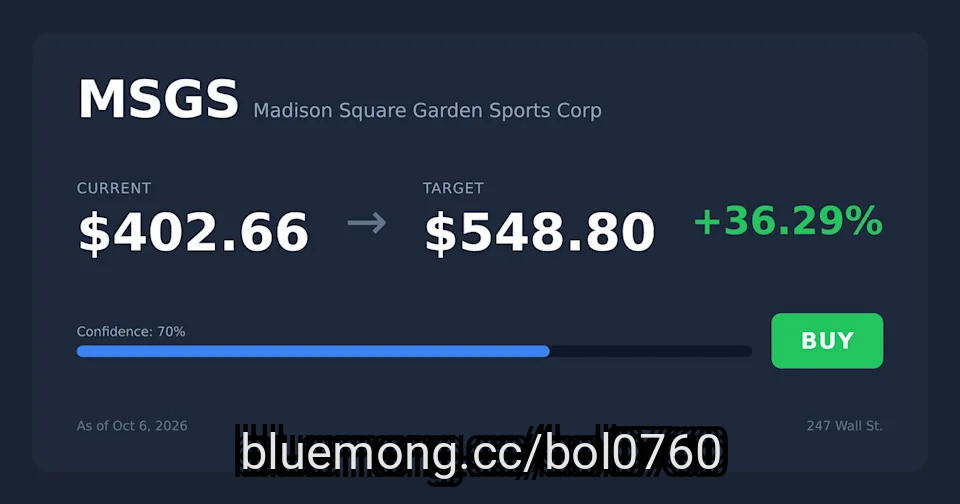
Four major corporate splits are upcoming, with MSGS separating the Knicks and Rangers into two distinct public companies by October 2026.
Keurig Dr Pepper's coffee spinoff carries significant execution risk as Russ Torres becomes its third CEO candidate ahead of the early 2027 split.
Textron leans toward selling its $3 billion Industrial segment rather than spinning it off, meaning shareholders would receive no second stock.
Building a portfolio and living off one are two completely different skills, and almost ******* ody teaches the second. This problem is what The Definitive Guide to Retirement Income helps, and it is free today. Read more here. (Sponsor)
Corteva (NYSE:CTVA) has split into two companies, and we walked through what its shareholders own now. Four more large separations are coming. Each has its own timeline, and each leaves shareholders holding something different. They are listed below by expected timing, soonest first.
#split #second #different


29 days ago
A portion of a major California highway has been renamed after Hollywood icon James Dean 71 years after he died in a fiery crash on the road while driving to a race in Salinas.
Caltrans officials were joined by representatives of the late star in the town of Cholame on Wednesday where a segment of Highway 46—which connects the coast with the Central Valley—officially became the James Dean Memorial Highway.
"Yesterday's ceremony marked 71 years since Dean's tragic crash, and local leaders, CHP, and community advocates came together with one message: safer roads save lives," the announcement read, referring to the designation near the site of Dean's fatal 1955 crash.
James Dean is shown in a scene from the film "East of Eden" in 1955. Courtesy Everett Collection
A 1950 Ford Tudor driven by Donald Turnupseed and James Dean's Porsche collided in a crash on Highway 41 in 1955. newsnationnow.com
#james





30 days ago
Sean "Diddy" Combs may not be getting out of prison as soon as expected after a Dateline segment this week detailed the luxe lifestyle the rap mogul has allegedly built behind bars, complete with a team of fellow inmates treated like his personal staff.
Since arriving at Fort Dix in October 2025 after more than a year at the Metropolitan Detention Center in Brooklyn, Combs has seen his projected release date bounce around the front half of the 2028 calendar, shifting several times between January and June. It now stands at Jan. 21, 2028. In that time, he has entered a drug rehabilitation program at the New Jersey facility, has been involved in a fight with another inmate, and violated several prison rules while serving a 50-month sentence for Mann Act violations.
More from The Hollywood Reporter
Tupac Murder Trial Highlights a Persistent Diddy Conspiracy Theory
Tupac's Murder Case Heads to Trial, 30 Years After Rap Icon's Death
#murder #prison #sean


1 month ago
Megyn Kelly criticized Mariska Hargitay over her response to a ****** ual ****** ault case involving Cornell University students. During her podcast, Kelly questioned Hargitay's comments and also criticized the outfit worn by the actress's 15-year-old daughter at the 2026 Emmy Awards.
The criticism came after Hargitay spoke out about a case involving a former Cornell student who alleged that seven fraternity members drugged and ****** ually ****** aulted her in October 2024, according to OK! Magazine.
The case drew renewed attention in September after the woman filed a civil lawsuit. The Tompkins County District Attorney later reopened the criminal investigation and said the case would be presented to a grand jury.
Hargitay, who stars in Law & Order: SVU and founded the Joyful Heart Foundation, criticized Cornell's handling of the case. She also shared posts calling for consequences for the accused men, writing, "Yes, I think we should ruin the futures of adult men who drug and gang r— a woman."
Kelly began her podcast segment by discussing Hargitay's career and appearance at the Emmys. Hargitay hosted the ceremony and attended with her family, including her 15-year-old daughter, Amaya.
#case #kelly #cornell


1 month ago
On August 5, Cencora (NYSE:COR) reported results for its fiscal third quarter, which closed on June 30, and the headline numbers looked clean. Revenue rose 5.1% to $84.8 billion, adjusted earnings per share climbed 12.0% to $4.48, and management raised its full-year adjusted EPS outlook to $17.75 to $17.95. The company also repurchased $1 billion of its own stock during the quarter. But the profit story has moving parts, and a few of them pull in opposite directions.
Start with the gap between profit growth and sales growth. Adjusted operating income rose 17.0% while revenue grew only 5.1%. Much of the help came from gross profit, which jumped 23.2% on an adjusted basis as both segments contributed and the OneOncology acquisition in February lifted margins in the US business. In plain terms, adjusted gross margin widened 61 basis points to 4.16%, so the company keeps more gross profit from every dollar it sells.
The strength was not confined to one corner, either. US Healthcare Solutions grew operating income 15.9% on higher pharmaceutical sales and the OneOncology deal, while specialty volume to health systems and physician groups lifted its revenue. International Healthcare Solutions did better still, with operating income up 20.8% on strength in European distribution and global specialty logistics. Management also put cash to work, completing in one quarter the $1 billion of buybacks it had expected to finish by the close of calendar 2026. The board declared a $0.60 quarterly dividend as well, payable August 31, to holders of record on August 14.
Growth is costing more than it first appears. Adjusted operating expenses jumped 26.8%, faster than adjusted gross profit, because OneOncology brought expenses along with its profits. Even so, adjusted operating income amounts to just 1.46% of revenue, a thin cushion on a business this large. Financing adds weight too. Cencora funded part of the purchase with new senior notes plus variable-rate term loans, and net interest expense rose $58.9 million from a year earlier.
The sales mix carries its own drag. GLP-1 drugs for diabetes and weight loss are adding to revenue, but they earn lower gross margins, so each dollar of that growth is worth less to profit. Meanwhile, an oncology customer Cencora lost in 2025, and lower sales to a large mail order customer both held back US revenue, as did lower manufacturer prices on some brand pharmaceuticals. Cencora is also exploring strategic alternatives for a group of other businesses, and its April divestiture of US Consulting Services trimmed consulting sales.
#adjusted #revenue #august


1 month ago
On August 6, Aflac (NYSE:AFL) reported second-quarter numbers that point in opposite directions. Net earnings climbed to $825 million, helped along by investment losses that shrank to $153 million from $421 million a year ago. Adjusted earnings, though, fell 7.7% to $883 million. Both numbers are real, but they answer different questions. Which measure you trust changes the story, so here is what sits underneath.
Start with the yen, because it is muddying the picture. The average rate was 159.45 to the dollar, 9.3% weaker than a year earlier, and that cost adjusted earnings $0.05 a share. Take the currency out of the first half and adjusted earnings per share rose 4.1% to $3.57. ******* an is also running more profitably. Its pretax adjusted margin widened to 34.3% from 32.0% as claims took a smaller bite out of premiums, and yen-based pretax adjusted earnings rose 3.4%. So part of the decline in ******* an's dollar-reported profit is currency, not operations.
The US business is still growing at the top line. Net earned premiums rose 2.3% to $1.5 billion, and sales climbed 2.6% to $349 million, led by group voluntary benefits along with dental and vision plans. In ******* an, the refreshed Tsumitasu life policy and the new Anshin Palette medical product grew strongly in the quarter, and first-half sales rose 7.0% to ¥37.3 billion. Then there is the cash. Aflac returned $1.3 billion to shareholders in the quarter, $983 million of it through buybacks, and declared a $0.61 third-quarter dividend, payable September 1 to holders of record on August 19, 2026. Management notes 43 straight years of dividend increases through 2025 and says the board is on a path to extend that in 2026.
The catch is that ******* an's profit gains came from lower claims, not a bigger business. Net earned premiums in yen fell 3.7%, mainly because of a new external reinsurance deal and older limited-pay policies reaching paid-up status. Premium persistency, the share of policies customers keep, slipped to 92.7% from 93.7%. ******* an's pretax adjusted earnings still fell 2.1% once currency is stripped out, and new sales dipped 5.6% in the quarter against a tough comparison for the Miraito cancer product, which launched in March 2025.
The US segment has its own soft spot. Pretax adjusted earnings fell 4.6% to $370 million, and the margin narrowed to 20.9% from 22.5% as claims and benefits took a bigger share of premiums. Corporate and Other swung to a $10 million pretax adjusted loss from a $20 million gain a year earlier, with interest expense up 21.6% to $62 million. And adjusted book value per share, excluding foreign currency remeasurement, slid to $41.22 at June 30 from $42.97 a year earlier.
#earnings #fell


1 month ago
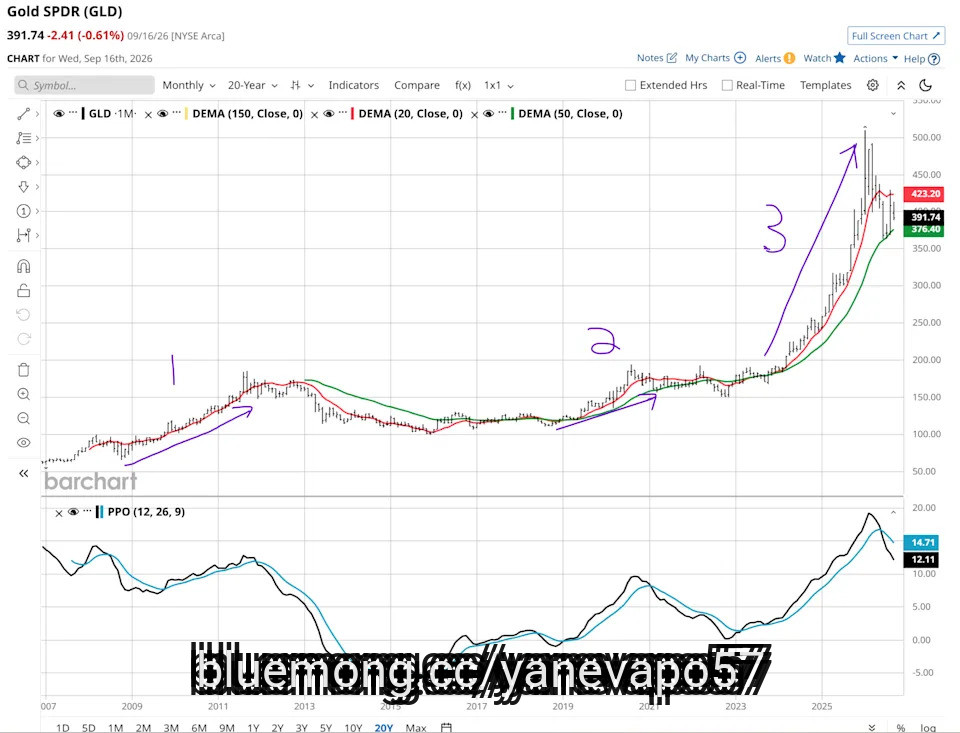
Is there any investment market segment more debated than gold (XAUUSD)? I'm not sure there is. We have "gold bugs," including those who see the yellow metal as the ***** et to own when the world goes haywire.
Then, there are the "we're going back on the gold standard" types. The ones that preceded crypto bros in believing fiat currencies weren't for this world. It follows that gold would return to its former role as the reserve currency.
Get exclusive insights with the FREE Barchart Brief newsletter. Subscribe now for quick, incisive midday market ***** ysis you won't find anywhere else.
Of course, there are also plenty of investors who don't really think about gold investing very much, and who will simply trade it when there's a good opportunity. I'm in this camp.
Financial media pundits routinely tout gold as some sort of bulletproof allocation. Inflation worries? Own gold. Currency debasement? Own gold. Want your kitchen to be decorated like the Oval Office? You'll need a lot of gold.
#Gold #free #barchart #brief


1 month ago
On September 17, B. Riley initiated coverage of Nokia Oyj (NYSE:NOK), giving the stock a Buy rating and setting the price target at $15. The firm pointed to the company's position in telecom infrastructure, cloud software, and hardware networking solutions.
Riley noted that the company's networking businesses are seeing strong growth. In Q2 2026, Optical Networks revenue increased 20% year-over-year, while IP Networks grew 16%. Net sales to AI and cloud customers also surged 105%. The research firm noted that hyperscalers continue to purchase Nokia Oyj's (NYSE:NOK) AI networking products to support large-scale computing clusters.
The company's AI and cloud opportunity is also reflected in its order book. Nokia Oyj (NYSE:NOK) reported EUR 2.8 billion in AI and cloud order intake during the second quarter of 2026. B. Riley pointed out that this provides revenue visibility into 2027. The firm also noted that the carrier inventory correction cycle that had weighed on global capital expenditures has now concluded.
Riley derived its $15 price target using a sum-of-the-parts valuation that separates the company's legacy ****** ets from its data center business. The firm applied a premium hardware multiple to the data center segment, reflecting its view of the potential operating leverage in that business.
Profitability Remains a Concern
#riley #NYSE #firm


1 month ago
Toward the end of the lightning round on September 17, a caller asked for Mad Money's host Jim Cramer's thoughts on Iron Mountain Incorporated (NYSE:IRM), and he replied:
It's been an incredible stock. It's a real estate investment trust, basically. And you know, we know that they shred, 3% yield, down 20 points from its high. I think it's a buy.
Iron Mountain Incorporated (NYSE:IRM) operates a highly durable business model centered on physical records management, secure document destruction, and expanding digital infrastructure. In Q2, total revenue reached $2.03 billion, representing an 18.7% increase year-over-year and 16.8% organic growth. The core physical storage business provides reliable cash flow, with storage rental revenue expanding 11.5% year-over-year excluding foreign-exchange effects across a global customer base of 240,000. Adjusted funds from operations grew 17% to $432.7 million, or $1.44 per share.
At the same time, management has channeled capital into scaling higher-growth segments, including digital solutions, ***** et lifecycle management, and data center operations. The data center segment posted 39% revenue growth during the second quarter, securing 110 megawatts in new leases through July and increasing power capacity across major enterprise markets. Operating as a real estate investment trust, the company maintains a quarterly dividend of $0.864 per share, offering shareholders a forward yield of over 3%.
On the other hand, Iron Mountain Incorporated (NYSE:IRM) faces risks inherent to capital-intensive real estate infrastructure expansion. Rapid buildouts of data center power capacity demand substantial capital expenditure, leading to elevated leverage across the balance sheet. Long-term debt, net of the current portion, reached approximately $17.1 billion at the end of the second quarter, increasing sensitivity to interest rate fluctuations and refinancing costs.
#revenue #Growth


1 month ago
SPX Technologies, Inc. (NYSE:SPXC) announced on September 15 that it completed the acquisition of FIS Water, LLC for approximately $410 million in cash, including certain tax attributes. The acquired business is expected to generate approximately $105 million of revenue in 2026.
That is FIS Water's full-year revenue forecast; its contribution to consolidated 2026 results will reflect the ownership period. The stated cash consideration equals approximately 3.9 times expected annual revenue, making profitability and cash conversion central to the investment case.
FIS Water expands the products SPX Technologies, Inc. (NYSE:SPXC) can supply to cooling customers. Its filtration and flow-control products remove solids, maintain water quality, and regulate water movement in commercial and industrial cooling systems, including data centers.
The business has joined the HVAC segment, covering heating, ventilation and air conditioning, within its Cooling operations. Its products complement existing cooling-tower offerings, while its valves and actuators also fit the recently acquired Neptronic controls business.
The strategic attraction is customer overlap. Management identified shared customers, engineering specifications and sales channels, and plans to use its global distribution and equipment-manufacturer relationships to support growth.
#cooling #NYSE

1 month ago
Phillips 66 (NYSE:PSX) has been on a strong rally this year, posting gains of over 110% since the beginning of 2026. The outperformance has been driven by an unusually sharp surge in global refining margins amid the war in the Middle East, which has significantly tightened the world's refining capacity and reduced supplies of gasoline, diesel, and jet fuel.
Given Phillips 66's substantial outperformance compared to the wider market, investors may be questioning whether the stock's record-setting run has reached its peak. However, the ****** ysts over at BMO Capital see further upside ahead. On September 17, the firm raised its price target on PSX from $260 to $310, while maintaining an 'Outperform' rating on the shares. The target boost implies an upside of 13% from the current levels and even exceeds the stock's all-time high of over $274 achieved earlier this month.
BMO Capital highlighted Phillips 66's integrated business model, noting that it has gained momentum and outperformed its individual segments, supported by strong execution across the portfolio. While Refining and Renewables remain the cyclical leaders, BMO also sees a favorable medium-term growth outlook for the company's Midstream business.
BMO Capital's vote of confidence comes amid a broader optimism surrounding Phillips 66, with ****** ysts from Morgan Stanley, Raymon James, UBS, and several others also improving their respective outlooks on PSX. This suggests that Wall Street expects the ongoing refining upcycle to last longer than previously expected, particularly following the renewed escalations between Iran and the United States.
The supply disruptions now extend beyond the troubled region, as a recent wave of Ukrainian attacks on Russian refineries has further reduced global refining capacity and provided further support to margins.
#further #margins #amid

1 month ago
JPMorgan Chase (NYSE: JPM) is the largest bank in the U.S., by far. It's a financial giant with robust consumer and commercial segments, and it's reliable in driving growth under pressure. It also pays a growing dividend that yields 1.7% at the current price, and it's a fantastic value addition to any investor's diversified portfolio.
While it's likely to become the first bank stock with a $1 trillion valuation in the near future (it currently sports a $927.5 billion market capitalization), there are smaller digital banks that are likely to grow much faster in the next two years, and probably a lot longer. SoFi Technologies (NASDAQ: SOFI) and Nu Holdings (NYSE: NU) are two of them.
Missed Nvidia in 2009? This Rare Signal Is Flashing Again. In 2009, a "Double Down" signal flashed for a little-known chipmaker called Nvidia. For the first time in years, that same "Total Conviction" signal is flashing for a company 1/100th the size of Nvidia. Continue »
SoFi is a young digital bank that's growing at the rate of a tech start-up, which makes sense, since it's a combination of both -- a classic fintech company.
What started as a loan cooperative for college students has expanded into a comprehensive financial app for anyone seeking an easy-to-use digital platform. It's attracting new members at a fast pace, and its strategy of bringing customers into the ecosystem and getting them to adopt more products is working.
#sofi #bank


1 month ago
Pricing alone does not decide where people buy their clothes.
With a number of retail chains competing for the off-price, on-trend fashion crown, it's easy for one brand to fall out of favor. Consumers seem to have an enduring love for Marshalls and TJ Maxx, while the popularity of Ross Dress for Less has grown steadily in recent years.
These brands drive sales by foot traffic, and that's a battle the aforementioned chains have been winning.
"Off-price apparel remained on solid footing in Q2 2026, with Ross leading the segment. Visits to Ross Dress for Less rose 16.4% year over year (YoY), while dd's DISCOUNTS grew 8.4%. TJX's TJ Maxx and Marshalls, meanwhile, saw visits hover around last year's levels — significantly outperforming traditional apparel, which declined 3.5% YoY," according to data from Placer.ai.
In the battle for customers looking for deals on trendy, fashionable clothes, Cato has been struggling, and now plans to close about 15% of its retail stores.
#less #retail

1 month ago
With a market cap. of $13.4 billion, McCormick & Company, Incorporated (MKC) is a global leader in flavor, manufacturing and distributing herbs, spices, seasonings, condiments, and flavors across 150 countries and territories. Its portfolio includes well-known brands such as McCormick, French's, Frank's RedHot, OLD BAY, Cholula, and Gourmet Garden, serving retailers, food manufacturers, and foodservice businesses.
Companies worth between $10 billion and $200 billion are generally classified as "large-cap stocks," and McCormick comfortably fits this category. Headquartered in Hunt Valley, Maryland, McCormick operates through its Consumer and Flavor Solutions segments, leveraging its global scale, expertise, and technology to support sustainable growth.
Elon Musk, Who Became the World's First Trillionaire, Still Sleeps in a Tiny $50,000 House Where His Mom Uses the Garage — 'It's Kinda Awesome Though'
How to Play AMZN Stock as Amazon Unveils Project Mercury
JPMorgan Gives Up Forecasting Iran War Endgame as Trump Tells Reporters 'Anything Could Happen With Me'
#mccormick #gourmet


1 month ago
GE Vernova Inc. (NYSE:GEV) is one of Jim Cramer's favorite stocks. Throughout 2025, the CNBC TV host continued to heap praise on the firm. Cramer's praise came at a time when new-age nuclear power and quantum computing stocks were experiencing strong gains. Throughout this period, he continued to **** ert that GE Vernova Inc. (NYSE:GEV) was the only nuclear firm with a stable delivery timeline and the capacity to deliver. In his morning appearance on the 15th, Cramer discussed the recent dip in shares and worries about a slowdown in the AI buildout:
"One company, GE Vernova, which was hit incredibly hard, which actually builds these, was saying they're seeing an order acceleration. So I really doubt the idea there's going to be a decel. Now that stock got hammered yesterday, it's been a horrendous stock since we started getting this political controversy. But again I point out that you just hear no one say anything about pullback."
For GE Vernova Inc. (NYSE:GEV), as perhaps indicated by the share price movement, the narrative is driven by its backlog and overall exposure to AI's power generation demand. On this front, CEO Scott Strazik, another Cramer favorite, outlined during the firm's second quarter earnings that data center orders of $5 billion for H1 2026 had already doubled over the full year 2025 figures. Additionally, during Q2, the firm's total orders touched $24 billion to mark an 88% growth driven by its Power and Electrification segment. As a whole, GE Vernova Inc. (NYSE:GEV)'s Q2 revenue grew by 22% annually, while its overall backlog and electrification backlogs sat at $176 billion and $446 billion.
At the same time, with GE Vernova Inc. (NYSE:GEV) also relying on gas turbines for its business, the debate is also about whether exposure to AI can remove the inherent cyclicality in the business. Additionally, with data centers accounting for 40% of the Electrification business's orders, any slowdown in capex spending by big tech players could generate tailwinds for GE Vernova Inc. (NYSE:GEV). Similarly, while the data center business is booming and the gas generation business remains tied to prices and interest rates, the firm's wind business is a drag and expected to hurt the bottom line throughout 2026.
In Q2, 106 out of the 1,006 funds tracked by Insider Monkey had held a stake in GE Vernova Inc. (NYSE:GEV), which marked a dip over the 118 out of 1,022 funds in Q1. Whether the dip was due to the order mix and AI sentiment or due to profit taking, your guess is as good as ours. On the valuation front, GE Vernova Inc. (NYSE:GEV) trades at a forward P/E ratio of 35, while short interest as a percentage of float is 3.29%.
#vernova #business #throughout #data


1 month ago
Johnson & Johnson (JNJ) stock has returned about 57% over the past year, against about 17% for the S&P 500. On the earnings it has already banked, that price looks expensive. But those earnings carry STELARA, which is losing share to biosimilar competition. What looks dear on earnings already reported comes down sharply on the earnings ***** ysts expect.
At about $270 a share, Johnson & Johnson trades at about 28.3 times its trailing earnings. That figure sits on adjusted earnings: normalized net income with stock-based compensation added back, meant to sit closer to the basis ***** ysts use in their forecasts than a GAAP figure would, though the two measures are not defined identically. Measured as market value against consensus net income, the multiple on fiscal 2026 earnings is about 24.1 times, and on the earnings expected for 2027 it is about 20.9 times.
Those trailing twelve months were not a clean run. STELARA cost Johnson & Johnson about 460 basis points of operational sales growth in the second quarter of 2026. Strip it out and the company grew double digits in that quarter on the same basis, on management's own account.
The trailing multiple measures today's price against a period burdened by slowing STELARA revenue. The rest of the portfolio kept growing. Revenue over the trailing twelve months is close to $98 billion, and the company has 28 products and platforms that each sell more than $1 billion a year.
Immunology shows both sides at once. TREMFYA grew 71% in the second quarter of 2026, and it remains the fastest-growing advanced therapy in both Crohn's disease and ulcerative colitis. STELARA is shrinking under biosimilars in that same segment.
#johnson #earnings


1 month ago
Pricing alone does not decide where people buy their clothes.
With a number of retail chains competing for the off-price, on-trend fashion crown, it's easy for one brand to fall out of favor. Consumers seem to have an enduring love for Marshalls and TJ Maxx, while the popularity of Ross Dress for Less has grown steadily in recent years.
These brands drive sales by foot traffic, and that's a battle the aforementioned chains have been winning.
"Off-price apparel remained on solid footing in Q2 2026, with Ross leading the segment. Visits to Ross Dress for Less rose 16.4% year over year (YoY), while dd's DISCOUNTS grew 8.4%. TJX's TJ Maxx and Marshalls, meanwhile, saw visits hover around last year's levels — significantly outperforming traditional apparel, which declined 3.5% YoY," according to data from Placer.ai.
In the battle for customers looking for deals on trendy, fashionable clothes, Cato has been struggling, and now plans to close about 15% of its retail stores.
#price

1 month ago
Interested in Cardinal Health, Inc.? Here are five stocks we like better.
Cardinal Health expects growth to normalize in fiscal 2027 after fiscal 2026 benefited from unusually strong specialty growth, customer onboarding, acquisitions and solid healthcare utilization. Management said all five operating segments delivered double-digit earnings growth in fiscal 2026.
The company is expanding its specialty and at-home healthcare strategy through MSO platforms, bolt-on acquisitions and diabetes-related deals. Strive Medical has closed, while the AdaptHealth diabetes acquisition is expected to close in the second half of fiscal 2027, strengthening Cardinal's continuous glucose monitoring business.
Cardinal is prioritizing automated, small-parcel distribution of higher-value at-home products and plans to add three more automated distribution centers. Management also said cash flow was strong in fiscal 2026, putting the company about 90% of the way toward its previously announced $10 billion objective.
Cardinal Health Earnings: Can Perfection Get Priced In Twice?
#acquisitions


1 month ago
On September 15, Arthur J. Gallagher & Co. (NYSE:AJG) announced that it had bought McMillan Insurance & Bonding Inc., an Englewood, Colorado, firm that operates as Innovise Business Consultants. Gallagher did not say what it paid. On its own, the deal is a footnote. But it is one of many, and the way those deals show up in earnings is where the debate over this stock really lives.
On July 30, Gallagher reported results for the quarter ended June 30, and the top line was hard to argue with. Revenue from its combined Brokerage and Risk Management businesses grew 24%, and organic growth, which leaves out acquisitions, was 6%. That second number shows clients are staying and spending. It was not confined to one corner, either, since organic fees in the risk management arm rose 12%. Management adds that retention is strong and customers want broader help from the platform. Adjusted earnings per share climbed to $2.84 from $2.30, which means growth is reaching profit once one-time acquisition costs are set aside.
Innovise fits the pattern. It sells surety bonds and commercial insurance brokerage with a focus on manufacturing, energy, construction and real estate, and Chairman and CEO J. Patrick Gallagher, Jr. said that niche expertise adds depth in Colorado. Jason McMillan's team will move into Gallagher's Denver office and work under Bret VanderVoort, who oversees retail property/casualty brokerage for the Western Zone. Buying specialists and folding them into existing offices is a repeatable playbook, and Gallagher closed 14 brokerage acquisitions in the first six months of 2026.
Now look at reported earnings, because that is where you see the cost. Diluted earnings per share fell to $1.25, from $1.40 in the second quarter of 2025, even though revenue jumped. Much of the gap between reported and adjusted results is the price of buying growth. Amortization of acquired intangibles alone weighs on brokerage net earnings by $218 million, up from $130 million a year ago, and integration costs rose as well. Adjusted figures set those aside, but they are real expenses, and they keep landing as long as Gallagher keeps buying.
Margins tell a similar story. The brokerage segment's adjusted EBITDAC margin, a stand-in for operating profit, slipped to 33.3% from 36.1%. Gallagher points to last year's interest income on cash raised for the ***** uredPartners deal, which closed in the third quarter of 2025, plus seasonality and newly added tuck-ins. That is a fair explanation. But the debt behind the deal is still here, including $9.55 billion of public debt, plus more in private placements and on a credit line. And the deal flow is thinner: brokerage acquisitions closed in the first six months of 2026 carried $107 million of annualized revenue, versus $354 million a year earlier, which puts more weight on organic growth.
#Growth

1 month ago
On August 5, Cencora (NYSE:COR) reported results for its fiscal third quarter, which closed on June 30, and the headline numbers looked clean. Revenue rose 5.1% to $84.8 billion, adjusted earnings per share climbed 12.0% to $4.48, and management raised its full-year adjusted EPS outlook to $17.75 to $17.95. The company also repurchased $1 billion of its own stock during the quarter. But the profit story has moving parts, and a few of them pull in opposite directions.
Start with the gap between profit growth and sales growth. Adjusted operating income rose 17.0% while revenue grew only 5.1%. Much of the help came from gross profit, which jumped 23.2% on an adjusted basis as both segments contributed and the OneOncology acquisition in February lifted margins in the US business. In plain terms, adjusted gross margin widened 61 basis points to 4.16%, so the company keeps more gross profit from every dollar it sells.
The strength was not confined to one corner, either. US Healthcare Solutions grew operating income 15.9% on higher pharmaceutical sales and the OneOncology deal, while specialty volume to health systems and physician groups lifted its revenue. International Healthcare Solutions did better still, with operating income up 20.8% on strength in European distribution and global specialty logistics. Management also put cash to work, completing in one quarter the $1 billion of buybacks it had expected to finish by the close of calendar 2026. The board declared a $0.60 quarterly dividend as well, payable August 31, to holders of record on August 14.
Growth is costing more than it first appears. Adjusted operating expenses jumped 26.8%, faster than adjusted gross profit, because OneOncology brought expenses along with its profits. Even so, adjusted operating income amounts to just 1.46% of revenue, a thin cushion on a business this large. Financing adds weight too. Cencora funded part of the purchase with new senior notes plus variable-rate term loans, and net interest expense rose $58.9 million from a year earlier.
The sales mix carries its own drag. GLP-1 drugs for diabetes and weight loss are adding to revenue, but they earn lower gross margins, so each dollar of that growth is worth less to profit. Meanwhile, an oncology customer Cencora lost in 2025, and lower sales to a large mail order customer both held back US revenue, as did lower manufacturer prices on some brand pharmaceuticals. Cencora is also exploring strategic alternatives for a group of other businesses, and its April divestiture of US Consulting Services trimmed consulting sales.
#profit #operating #Growth #august


1 month ago
On August 6, Aflac (NYSE:AFL) reported second-quarter numbers that point in opposite directions. Net earnings climbed to $825 million, helped along by investment losses that shrank to $153 million from $421 million a year ago. Adjusted earnings, though, fell 7.7% to $883 million. Both numbers are real, but they answer different questions. Which measure you trust changes the story, so here is what sits underneath.
Start with the yen, because it is muddying the picture. The average rate was 159.45 to the dollar, 9.3% weaker than a year earlier, and that cost adjusted earnings $0.05 a share. Take the currency out of the first half and adjusted earnings per share rose 4.1% to $3.57. **** an is also running more profitably. Its pretax adjusted margin widened to 34.3% from 32.0% as claims took a smaller bite out of premiums, and yen-based pretax adjusted earnings rose 3.4%. So part of the decline in **** an's dollar-reported profit is currency, not operations.
The US business is still growing at the top line. Net earned premiums rose 2.3% to $1.5 billion, and sales climbed 2.6% to $349 million, led by group voluntary benefits along with dental and vision plans. In **** an, the refreshed Tsumitasu life policy and the new Anshin Palette medical product grew strongly in the quarter, and first-half sales rose 7.0% to ¥37.3 billion. Then there is the cash. Aflac returned $1.3 billion to shareholders in the quarter, $983 million of it through buybacks, and declared a $0.61 third-quarter dividend, payable September 1 to holders of record on August 19, 2026. Management notes 43 straight years of dividend increases through 2025 and says the board is on a path to extend that in 2026.
The catch is that **** an's profit gains came from lower claims, not a bigger business. Net earned premiums in yen fell 3.7%, mainly because of a new external reinsurance deal and older limited-pay policies reaching paid-up status. Premium persistency, the share of policies customers keep, slipped to 92.7% from 93.7%. **** an's pretax adjusted earnings still fell 2.1% once currency is stripped out, and new sales dipped 5.6% in the quarter against a tough comparison for the Miraito cancer product, which launched in March 2025.
The US segment has its own soft spot. Pretax adjusted earnings fell 4.6% to $370 million, and the margin narrowed to 20.9% from 22.5% as claims and benefits took a bigger share of premiums. Corporate and Other swung to a $10 million pretax adjusted loss from a $20 million gain a year earlier, with interest expense up 21.6% to $62 million. And adjusted book value per share, excluding foreign currency remeasurement, slid to $41.22 at June 30 from $42.97 a year earlier.
#adjusted #pretax

1 month ago
The State Department's approval of two potential arms sales to Saudi Arabia totaling $5.75 billion, including JDAM-ER munitions and AGT-1500 tank engines, offers a modest but meaningful data point for two very different defense players. For The Boeing Company (NYSE:BA), the potential sale represents an additional international defense opportunity as the company continues working through margin pressure elsewhere. For Honeywell Aerospace Inc. (NASDAQ:HONA), the package reinforces a stable business line while the firm tackles its first quarter as a standalone public company.
The State Department approved a potential $5 billion sale of JDAM-ER guidance kits and bombs to Saudi Arabia, along with a separate potential $750 million deal for AGT-1500 tank engines. The JDAM package consists of 5,004 KMU-572 and 5,000 KMU-556 JDAM guidance kits and 5,004 BLU-111 and 5,000 BLU-117 bombs. Boeing has been identified as the principal contractor for the JDAM-ERs, with Honeywell handling the engines. The State Department said the sales would strengthen Saudi Arabia's airborne defense capabilities and improve interoperability with U.S. and Gulf partner forces.
Boeing stands to gain only modestly from the deal, given its roughly $85 billion Defense, ******* e and Security backlog. International orders already account for 27% of that total. The segment reported a second-quarter operating loss, largely due to charges tied to the VC-25B (Air Force One) program. That makes mature, lower-risk munitions programs such as JDAM-ER a more dependable part of the portfolio, though the deal is unlikely to have a meaningful impact on margins. For Honeywell Aerospace, the contract is smaller, but the AGT-1500 fits within its established defense propulsion business. It also adds to the company's international defence business, which makes up about 30% of its total Defense and ******* e revenue.
Honeywell Aerospace is owned by 74 hedge funds as of Q2 2026, which is consistent with Honeywell (NASDAQ:HON) hedge fund ownership prior to the spinoff. Unlike Honeywell, the number of hedge funds holding Boeing stock dropped from 99 at the end of the first quarter of fiscal 2026 to 90 at the end of Q2 2026.
Neither potential sale is large enough to have a meaningful impact on either company's short-term results by itself. Still, each supports a different investment story. For Boeing, the potential sales add to international defense exposure if finalized, as its defense unit continues dealing with fixed-price losses. For Honeywell, they support the steady flow of high-margin legacy revenue across its broader defense franchise.
#international #saudi


1 month ago
Des Moines, Iowa-based Principal Financial Group, Inc. (PFG) provides retirement, ******* et management, and insurance products and services to businesses, individuals, and institutional clients worldwide. The company has a market cap of $25 billion and operates through Retirement and Income Solutions, Principal ******* et Management, and Benefits and Protection segments.
Companies with a market cap of $10 billion or more are typically called "large-cap stocks." PFG fits squarely into that category, with a market cap above this threshold that reflects its substantial size and influence in the ******* et management industry.
Mark Cuban Says He Was Dizzy for Months, So He Built a VR Fix That Does at Home 'Much Of What A 180k Machine' Does
Bank of America Just Declared a 'Generational Entry Point' in U.S. Bonds. Why Investors Should Be Backing Up the Truck on Treasuries Here.
Nvidia, OpenAI, and Oracle's $745B Financing Circle Just Hit Its First Stress Test: A Fed Rate Hike
#asset #management #market #moines


1 month ago
On August 6, James Hardie Industries (NYSE:JHX) reported results for the quarter ended June 30 and beat its own numbers by enough to raise guidance just three months into the fiscal year. Net sales jumped 64% year over year to $1.475 billion, adjusted EBITDA climbed 79% to $422.1 million, and both figures came in ahead of what management had originally guided investors to expect. For a company that closed a transformative acquisition less than a year earlier, that kind of overshoot forces a reassessment of the growth story ahead.
The headline growth number is inflated by the AZEK Exteriors deal folded into the base, so the more telling figure is the 12% pro forma net sales growth, which also beat original guidance. Siding & Trim, the core fiber cement business, posted organic net sales growth of 20% as North American fiber cement volumes returned to growth for the first time in several quarters. CEO Aaron Erter tied that to share gains against vinyl and other competing materials, along with programs like ColorPlus and Expanded Statement drawing more of the higher-end repair and remodel market. Adjusted EBITDA margin in that segment expanded 140 basis points to 33.5%, powered by favorable pricing, cheaper raw materials, and continued savings from the company's Hardie Manufacturing Operating System even as freight costs rose.
Management also said cost synergies from the AZEK integration are running ahead of schedule and revenue synergies are on track, evidenced by newly expanded nationwide distribution partnerships with Boise Cascade and other regional distributors. In Deck, Rail & Accessories, sell-through accelerated every month of the quarter and outpaced shipments, pulling channel inventory back to normal levels and setting up a cleaner back half of the year. Free cash flow more than doubled to $254.2 million, and the company used the cash to pay down $400 million of senior unsecured notes.
Erter was careful to frame the beat as execution rather than a healthier market, telling investors the company is "not ***** uming a housing market improvement" for the rest of fiscal 2027. Part of the quarter's strength came from an easy comparison, since channel inventory was deliberately reduced a year earlier, and management said that benefit is expected to moderate as the year goes on. Deck, Rail & Accessories net sales actually fell 5% on a pro forma basis because the company intentionally cut production to work down channel inventory, leaving the segment with an operating loss of $3.3 million for the quarter.
#Growth #sales #management