2 days ago
Swimmers brandishing short, curved sticks held their breath as they somersaulted and dove towards a weighted puck at the bottom of a Hong Kong swimming pool, vying for first place in a sport likened to voluntary drowning.
The annual underwater hockey tournament, ominously advertised as "physical ****** ", nevertheless drew a roster of hardcore enthusiasts from countries across Asia to the Chinese city over the weekend.
"You have to choose when to use your breath and when not to... Anyone that's got the puck, you know that they've got some level of suffering," Leo Lines, a ****** anese-New Zealander competitor from Hokkaido, told AFP.
"I love that."
Suited up in snorkel masks and fins, players only resurface for air when they absolutely have to, and their heads remain constantly underwater so they can monitor the game.
#swimmers #kong


2 days ago
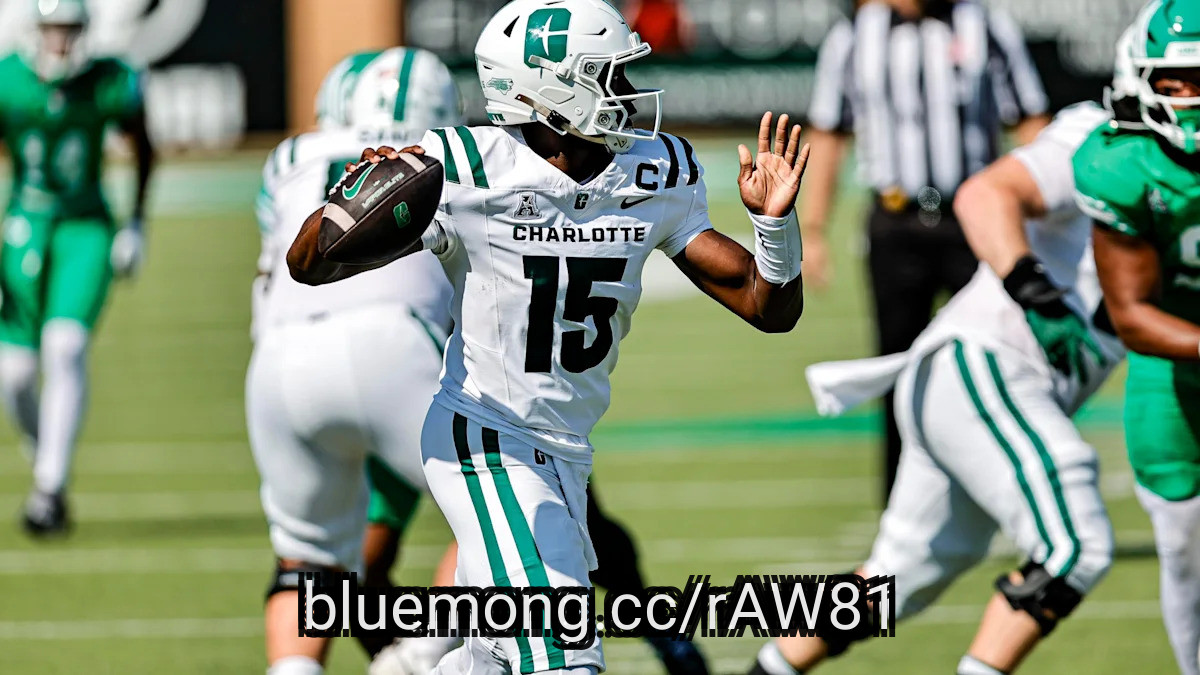
15-straight games. 398 days without a win. 685 days without a win over an FBS program.
The Charlotte 49ers marinated in futility for over a year, owning the nation's longest losing streak with little hope in sight. Last season, all 11 losses came by at least 11 points. This season, they were coming off back-to-back 40-point losses and dropped an opener to The Citadel — an FCS program that is 1-4 against its FCS peers this season.
It didn't seem like a matter of when Charlotte was going to win in 2026, rather, it was if that elusive triumph would even occur this season. But before a road trip to Philadelphia, Charlotte head coach Tim Albin took inspiration from the Rocky franchise, texting each of his individual players the following quote from the 2006 film Rocky Balboa:
"It ain't about how hard you hit. It's about how hard you can get hit and keep moving forward."
Charlotte had been hit, but it got up, and now, it's over. The streak is indeed over. The Charlotte 49ers won a college football game. On the road. In an NFL venue.
#program #streak #road


13 days ago
Despite the S&P 500's (SNPINDEX: ^GSPC) 13.3% gain thus far in 2026, there's still plenty bubbling beneath the surface that could trigger a sharp and sudden market crash. Stubborn inflation, the U.S. national debt sitting above $40 trillion, and fears of an artificial intelligence bubble are just a few concerns.
As one of the most successful investors of all time, Warren Buffett has some sage advice. It's found in the 1996 Berkshire Hathaway shareholder letter, which offered one of the top strategies for handling a market crash. The good news is that it can be followed before a crash even starts.
Missed Nvidia in 2009? This Rare Signal Is Flashing Again. In 2009, a "Double Down" signal flashed for a little-known chipmaker called Nvidia. For the first time in years, that same "Total Conviction" signal is flashing for a company 1/100th the size of Nvidia. Continue »
It's easy to feel panicked when the market starts tumbling, and making any kind of move, even if it's a knee-jerk reaction, can initially feel better than making no move at all. While that small voice whispering to "sell" may never go away during the initial waves of a market crash, it can be countered by being prepared in advance.
Buffett shared exactly how to counter it. In Berkshire's 1996 shareholder letter, he said, "If you aren't willing to own a stock for ten years, don't even think about owning it for ten minutes."
#crash #NVIDIA #even #shareholder


14 days ago
The S&P 500 (SNPINDEX: ^GSPC) has spent most of 2026 at or near record highs. While that's been good news for anyone invested in the index, a problem is developing beneath the surface.
As of Oct. 5, the S&P 500 was trading at less than 1% below its all-time high, yet only 42% of its components were trading above their 200-day moving average. According to Dow Jones Market Data, the last time the S&P 500 was within 1% of a record high while more than half of its stocks traded below their 200-day moving averages was March 2000.
Missed Nvidia in 2009? This Rare Signal Is Flashing Again. In 2009, a "Double Down" signal flashed for a little-known chipmaker called Nvidia. For the first time in years, that same "Total Conviction" signal is flashing for a company 1/100th the size of Nvidia. Continue »
Clearly, no one likes to see comparisons to the peak of the tech bubble. But this isn't a signal to sell stocks. Rather, it's time to rethink what you're actually owning when you buy the S&P 500.
Obviously, the S&P 500 is historically top-heavy right now. Tech stocks account for roughly 38% of the index, while the top 10 holdings also account for approximately 38%.
#time #Tech #record


14 days ago
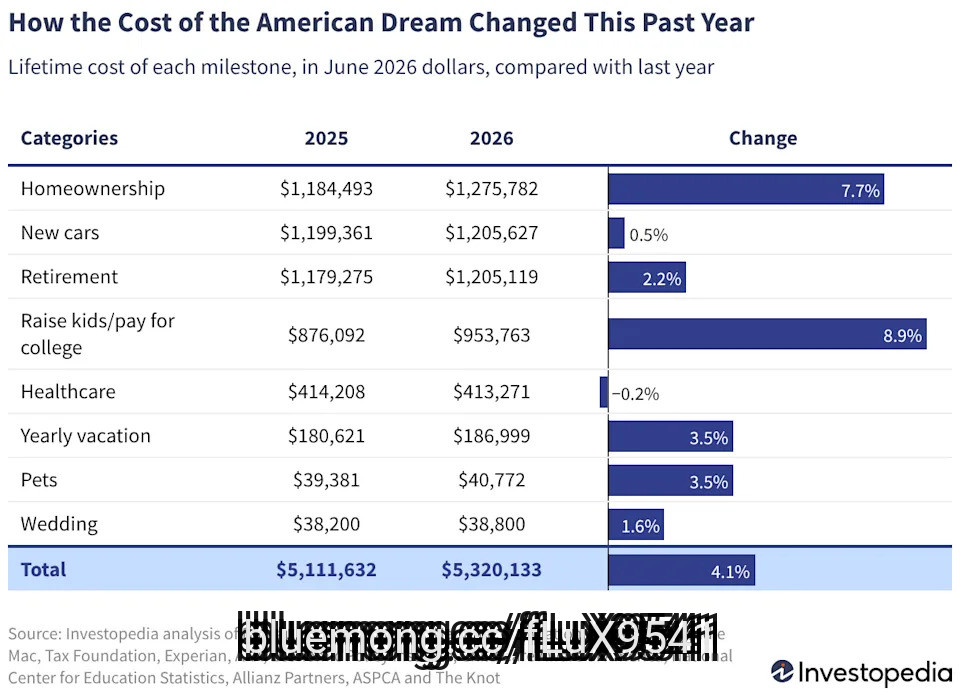
The "American Dream" costs about $5.3 million over a lifetime, up 4.1% from last year's updated total and faster than wages grew.
The costs of owning a house, paying for new cars and retirement expenses make up nearly 70% of the overall total.
Healthcare and car ownership prices were little changed from last year, but up substantially from five years ago.
The cost of the American Dream is rising faster than our paychecks can cover it.
That's according to an Investopedia ***** ysis of eight classic milestones: owning a home, buying new cars, raising two children and sending them to college, retiring, paying for healthcare, having a wedding, owning pets, and taking a yearly vacation. The lifetime tab, $5.3 million, is up 4.1% from a year ago. By comparison, private-sector wages and salaries in the 12 months through June rose 3.1%, according to the Bureau of Labor Statistics' Employment Cost Index.
#dream #last #total



14 days ago
EPR Properties (NYSE: EPR) is a company focused on properties designed for experiential and educational purposes. One of the benefits of owning its stock has been its dividend, which has increased for four consecutive years.
EPR is a real estate investment trust (REIT), which means it must pay out at least 90% of its taxable net income as dividends to retain that status. That makes it highly likely that payouts will continue. As the dividend has become more generous, it might surprise investors how little it takes to generate more than $1,000 in annual dividends in this stock.
Missed AI's "Act 1"? Act 2 Could Be 14x Bigger. Most investors think they missed the AI boat because they didn't buy Nvidia in 2005. But according to our **** ysts, we're only at the end of "Act 1"—the R&D phase. "Act 2" is the global rollout. Continue »
Working with whole shares, 269 shares purchased for $15,182 will generate $1,001 in annual dividends.
This amounts to an annual dividend of $3.72 per share with a yield of about 6.6%. That is far above the S&P 500 average of 1.1%. Moreover, it is one of the few stocks paying monthly dividends, which might make it especially appealing to income investors.
#Dividend #annual #missed

15 days ago
Even famed "bond king" Bill Gross is warning investors about the risks of owning longer-term bonds, arguing that excessive debt and current macroeconomic conditions have made them increasingly risky. But his recommendation comes with one important exception.
In a Sept. 30 op-ed for the Financial Times, Gross, who co-founded ***** et management giant Pacific Investment Management Company (PIMCO), put it bluntly: "Don't own bonds."
Dave Ramsey warns nearly 50% of Americans are making 1 big Social Security mistake. Here's what it is and 3 simple steps to fix it ASAP
The tax breaks in Trump's 'big beautiful bill' expire after 2028. Here are 4 reasons why retirees can't afford to waste time
Jeff Bezos backs a platform that lets anyone invest in rental homes for as little as $100 — 6 ways to build wealth like a landlord without actually being one
#gross #bill #bonds


15 days ago
Buying a stock in the hopes of holding it for 20 years or longer can be a difficult task. Warren Buffett likes to say his favorite holding period is "forever," but his trading history shows he has sold holdings, even after owning them for decades.
Knowing that, investors should look for holdings with the potential to survive and thrive for decades. Fortunately, investors have plenty of options, and these three well-established consumer staples stocks should stand out.
Missed AI's "Act 1"? Act 2 Could Be 14x Bigger. Most investors think they missed the AI boat because they didn't buy Nvidia in 2005. But according to our ****** ysts, we're only at the end of "Act 1"—the R&D phase. "Act 2" is the global rollout. Continue »
The public knows PepsiCo (NASDAQ: PEP) best for its flagship cola. Nonetheless, the company owns numerous well-known beverage and food brands, including Gatorade, Mountain Dew, Tostitos, and Quaker.
Its stock had suffered in recent years as the public turned against unhealthy beverages and packaged foods. PepsiCo has since pivoted, emphasizing healthier ingredients in its products and buying brands such as Siete to bolster this reputation.
#investors #holdings


16 days ago
For almost three decades Lucy Wilkinson has dedicated her life to making children laugh as a professional clown.
Lucy, better known as "Louby Lou", said her passion for clown life began when she started helping her father Arnold Cheetham, aka Trumble the Clown, at local shows as a child.
"I fell in love with the laughter, joy and magic that came from entertaining kids," she said. "It was back then that I knew this was my calling."
The father-daughter entertainment duo from Wigan is the focus of a new short documentary film Where Laughter Lives, which tells the story of life of the clowning family across the decades.
Lucy spent decades touring with her father Arthur [eklectics.co]
#lucy #life #louby #cheetham



19 days ago
Michael Douglas is owning up to an on-set romance that he has kept secret for 40 years.
The Oscar-winning actor, now 82, revealed in his new memoir One ****** uva Ride that he and his former co-star Kathleen Turner, now 72, fell in love while filming the 1984 blockbuster Romancing the Stone in Mexico.
At the time, Douglas — who has been married to Catherine Zeta-Jones since 2000 — was separated from Diandra Luker, his first wife and the mother of his son Cameron. He recalled meeting Turner during the casting process and hitting it off right away.
"Kathleen was smart, funny, and ****** y with a deep, sultry voice that became her signature," he wrote, according to an excerpt of the memoir obtained by People. "I instantly liked her, and we were immediately attracted to each other. "
The Fatal Attraction actor continued: "Things at home were in a bad place. Diandra and I were both having extramarital affairs... I left for Mexico still technically married, but separated."
#douglas #turner #married #separated



20 days ago
Kylie Kelce is getting a quick lesson in royal etiquette, and she is owning the mistake. The "Not Gonna Lie" podcast host apologized to Kate Middleton, formally known as Catherine, Princess of Wales, after learning that the way she addressed the royal during a recent episode was not considered the proper form of address.
Kelce, 34, revisited the subject on the Oct. 1 episode of her podcast, one week after publicly inviting the Princess of Wales to join her for a conversation about motherhood, sports, and their shared love of field hockey.
The "Not Gonna Lie" podcast host apologized to Kate Middleton, formally known as Catherine, Princess of Wales (@ Icon Sportswire via Getty Images)
During the Sept. 24 episode of "Not Gonna Lie," Kelce discussed the Princess of Wales showing off her athletic skills during a royal engagement. That prompted Kelce, who played field hockey in college, to extend an invitation to the royal. "Princess Kate, ******* ss of Cambridge," Kelce began before suggesting they "chitchat about some field hockey and maybe kids."
You may also like
#princess #kate #field #hockey


1 month ago
On September 16, Air Products (NYSE:APD) said it had signed a long-term deal to supply high-purity gases to a leading chipmaker, backed by roughly $250 million of its own money in Arizona. It is the company's second semiconductor supply win, and the two projects together carry more than $900 million of investment. That is a notable turn for a company that has been pulling back from big clean-energy projects.
The Arizona project plays to what Air Products already does. It will build, own, and operate the equipment, from hydrogen generation units and carbon dioxide purification to bulk supply for three gases: helium, hydrogen, and carbon dioxide. That means the customer's gas supply runs through equipment Air Products owns. Supply is targeted to start in phases, so the buildout can move alongside the customer's expansion plans. And this is familiar ground. Air Products has supplied electronics makers for more than 40 years, and its Chandler facility has served the Phoenix chip cluster since 1981, with a pipeline system carrying ultra-high purity nitrogen around the area.
The core business gives the deal a solid floor. In the fiscal third quarter, reported on July 30, adjusted earnings per share rose 12% to $3.47, and management lifted its full-year outlook to an adjusted $13.39 to $13.49 per share. Margins widened as well, so growth is showing up as profit. Chips appear elsewhere in the results too, since the company announced a deal to build four large air separation units to serve a chipmaker's growth in Taiwan.
The cost of the pivot is hard to ignore. On June 30, Air Products announced it would not go ahead with its Louisiana Clean Energy Complex and would discontinue a zero-carbon liquid hydrogen facility in Casa Grande, Arizona, plus other smaller clean energy distribution projects. The exits triggered roughly $2.9 billion in pre-tax charges, which is why the company posted a GAAP loss of $6.47 per share in the third quarter even as its underlying earnings grew. Adjusted results leave that hit out, but the GAAP numbers show what the retreat cost.
Owning the ****** ets also means funding them. Air Products expects about $3.5 billion of capital spending in fiscal 2026, and the Arizona plant alone is a commitment of approximately $250 million, with supply arriving in phases. The release also leaves gaps: it does not name the customer or say how long the contract runs, so the length of the revenue stream is unclear. Elsewhere, Europe's operating income rose only 2% as costs climbed, and management says it is still cautious about the economic backdrop.
#clean #adjusted

1 month ago
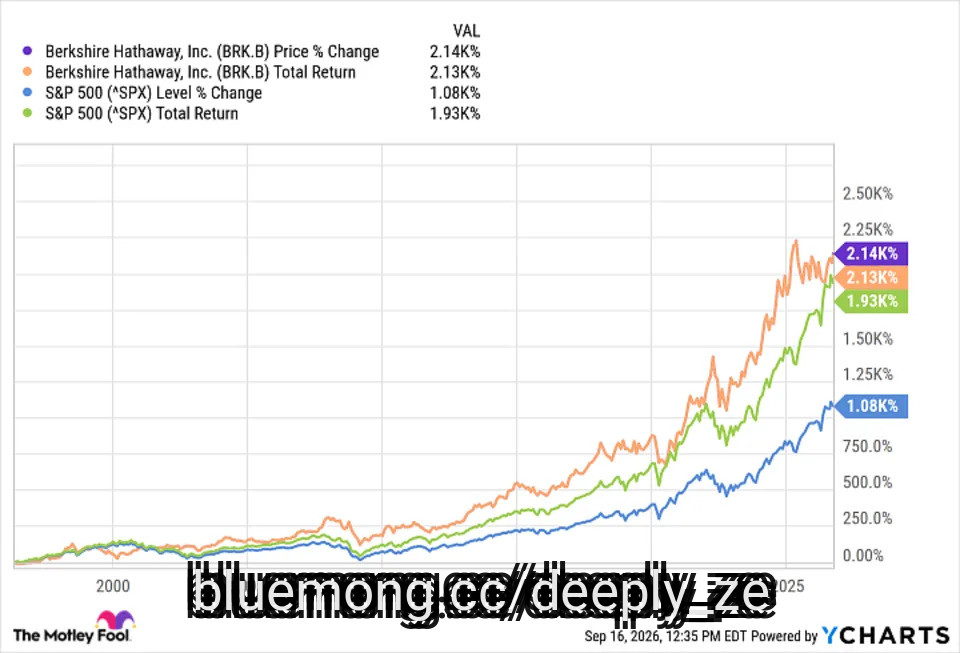
Experienced investors know the advantages of buying and holding S&P 500 index funds like the Vanguard S&P 500 ETF (NYSEMKT: VOO) or the SPDR S&P 500 ETF Trust (NYSEMKT: SPY). Not only are they super simple, but statistically speaking, you're likely to get better performance from them than you are by picking individual stocks or by owning an actively managed fund.
Nevertheless, given its long-term (and often market-beating) track record, even the most disciplined of investors might have the itch to step into a stake in Berkshire Hathaway (NYSE: BRKA) (NYSE: BRKB). But is it actually the better buy?
Missed Nvidia in 2009? This Rare Signal Is Flashing Again. In 2009, a "Double Down" signal flashed for a little-known chipmaker called Nvidia. For the first time in years, that same "Total Conviction" signal is flashing for a company 1/100th the size of Nvidia. Continue »
Berkshire Hathaway is a conglomerate consisting of several dozen reliable cash-producing businesses as well as a portfolio of hand-picked stocks. Brought to prominence by Warren Buffett, the company's flexible structure has enabled its shares to consistently outperform the S&P 500 since Buffett first took the helm in 1965.
It hasn't beaten the market every year since then, to be clear. Some years it did. Other years it didn't. It typically achieved the feat in five-year time frames.
#signal #years #buffett #flashing


1 month ago
If you are looking for reliable high yields in the energy sector, Energy Transfer (NYSE: ET) is likely to be high up on the list of options. And Wall Street really likes the stock, with 19 of the 21 ***** ysts covering it rating it a buy or strong buy. And yet, I just can't get myself to buy it, instead owning lower-yielding Enbridge (NYSE: ENB). Here's why Energy Transfer's 6.3% yield, despite distribution coverage of 2.2x, isn't enough to get me to buy it.
Before getting to Energy Transfer, I want to highlight some facts about Enbridge, the North American pipeline giant I actually bought. For starters, Enbridge's yield is 5.8%, roughly half a percentage point lower. That's a big difference, as buying Energy Transfer would increase my income stream by nearly 9%.
Missed Nvidia in 2009? This Rare Signal Is Flashing Again. In 2009, a "Double Down" signal flashed for a little-known chipmaker called Nvidia. For the first time in years, that same "Total Conviction" signal is flashing for a company 1/100th the size of Nvidia. Continue »
I can totally understand where a dividend investor would buy Energy Transfer for the added yield. But there's a big difference when you consider dividend history. Enbridge has increased its dividend annually for 31 consecutive years. Energy Transfer cut its distribution in 2020 during the COVID pandemic, right when most investors would probably have preferred dividend consistency. To Energy Transfer's credit, it lived up to its promise at the time to reduce leverage and return to distribution growth. In fact, the distribution is now above its level prior to the cut. And the cut was probably the right decision to make for the business.
But that distribution cut was a hit for unitholders. And it comes after another questionable situation back during the 1996 energy market downturn. At that point, Energy Transfer agreed to buy peer Williams (NYSE: WMB), but got cold feet. In an effort to scuttle the deal, Energy Transfer issued convertibles that appeared to protect insiders from a dividend cut, if one were made. The Williams deal was canceled, and the convertibles never became an issue, but it raised material trust issues for me.
#distribution #Dividend #yield

1 month ago
Owning a $400,000 Villages home costs owners roughly 4.5% annually in forgone investment income alone, before taxes, insurance, or CDD bond payments.
Annual rentals run between $2,200 and $3,000 a month, but renting beats owning only for stays under eight years once all costs are counted.
A 75-year-old facing a forced sale in a narrow buyer pool at 3.98 million existing home sales risks losing the flexibility a lease ending provides.
Two retirees, same $1 million, same 4% rule, buy one finished with $1.4 million, the other hit $0 in 12 years. Our free reader guide explains the flaw that separated them, and the income-first method built to avoid it.
At the end of the day, renting versus buying in The Villages comes down to one thing: math. More owners are running the numbers and finding that renting wins on the spreadsheet, so here is what the comparison actually looks like when every line is filled in.
#income


1 month ago
An equal $100,000 split across SGOV, JAAA, and CLOZ generates roughly $465 monthly at a blended 5.6% yield, no dividend stocks required.
CLOZ's 7.35% trailing yield on BBB-B rated CLO tranches drives $204 of the monthly income but carries the portfolio's highest credit risk.
Floating-rate CLO coupons in JAAA and CLOZ keep effective duration near zero, shielding principal from long-term rate swings while outpaying Treasury bills.
Read More: Avoid these 13 retirement mistakes before they derail your future (sponsor)
Income investors do not have to own dividend stocks to generate a meaningful monthly check. An equal $100,000 split across the iShares 0-3 Month Treasury Bond ETF (NYSEARCA:SGOV), Janus Henderson AAA CLO ETF (NYSEARCA: JAAA), and Eldridge BBB-B CLO ETF (NYSEARCA:CLOZ) currently produces roughly $465 a month based on trailing distribution yields. The portfolio gets there without owning a single dividend stock and with very little traditional interest-rate exposure. Instead, SGOV owns Treasury bills, while JAAA and CLOZ invest in floating-rate collateralized loan obligations. That combination gives income investors three different steps up the risk ladder without requiring a move into equities.
#income #Dividend


1 month ago
The Federal Communications Commission on Thursday granted Paramount Skydance's request to allow Middle Eastern royal families to hold a substantial stake in a merged Paramount-Warner Bros. Discovery.
Foreign investors, including the sovereign wealth funds of Saudi Arabia, Qatar and Abu Dhabi, are slated to indirectly own nearly 50% of the equity in David Ellison's proposed mega-studio. That will give them a hefty stake in CBS, CNN, Comedy Central, HBO and two historic Hollywood film studios.
Paramount also asked the commission, led by President Trump's appointee Brendan Carr, to allow the foreign investors to eventually take on an even bigger stake because the company expects that it will need more capital to run the merged entity after closing the highly leveraged deal.
The FCC's Media Bureau granted Paramount's petition. Ellison needed FCC approval because the deal will change the ownership structure of CBS.
As part of the Communications Act of 1934, Congress placed restrictions on foreign ownership of broadcast outlets because of concerns about national security. Current rules prevent foreign investors from owning more than 25% of a company that holds a U.S. broadcast license — unless the FCC determines that foreign ownership would serve a public interest.
#stake


1 month ago
In technology, the loudest applause usually comes at the demo, not the delivery. A flashy prototype draws headlines. The unglamorous rollout that actually generates revenue often gets a shrug.
CoreWeave, Inc. (CRWV) just lived that gap. The AI cloud provider rents out Nvidia Corporation (NVDA) chips to companies building artificial intelligence systems.
On Wednesday, September 16, it said it had linked hundreds of Nvidia's newest Rubin GPUs into a single working cluster, not just a test rack, according to the announcement.
For investors, that business model makes CRWV one of the most direct public ways to bet on AI infrastructure demand, without owning a chipmaker outright.
Nvidia, by contrast, is best known as the company that designs the GPUs everyone in the AI race is trying to get their hands on.
#crwv #NVIDIA #corporation #rubin


1 month ago
During the September 11 episode of Mad Money, a caller asked whether to buy, sell, or hold shares of The Kraft Heinz Company (NYSE:KHC). Jim Cramer replied:
No, I don't want you to do that… And I'll tell you why. Because it's not that I believe in the greater man theory, but this Steve Cahillane, who's the CEO, he saved Kellogg and made people a ton of money. He's going to do the same thing with Kraft Heinz. Let's give him a chance. Let's give him six months, okay? I think he'd appreciate that if we give him six months. He's been here for a while, and he's a… person [who] really likes to... [take] action. Don't leave it. Please don't leave Kraft Heinz.
The comments build on his June 2 view that he was willing to "take on the risk" of owning Kraft Heinz because of Cahillane's record at Kellogg. At the time, however, Cramer said he had "not all that much faith in Kraft or Heinz after previous management gutted the company."
The Kraft Heinz Company's (NYSE:KHC) second-quarter results show why the turnaround remains unfinished. Net sales fell 1.4% year over year to $6.26 billion, while organic net sales declined 1.3%. Adjusted operating income fell 18.4% to $1 billion, while North American sales declined 2.7%. Management raised its 2026 organic net-sales outlook to a decline of 0.5% to 2%, from the previous range of a 1.5% to 3.5% decline. It also increased incremental investment by $100 million to approximately $700 million in 2026, with the company targeting a return to volume-led, sustainable and profitable growth.
On September 2, Kraft Heinz said it will hold an Investor Day on November 12 to present its long-term strategy for "sustainable volume-led and profitable growth." Cahillane said, "Our brand investments are gaining traction and driving improved performance."
#kraft #give #september


1 month ago
Ondas Inc. (NASDAQ:ONDS) completed its acquisitions of GATE Technologies Ltd. and Bron Technologies on September 14, adding electronic safety and fuzing components used across precision weapons. GATE supplies the technology, while Bron provides manufacturing and certification capabilities in Poland.
Base consideration comprises $105 million in cash and $100 million in equity. The SEC filing specifies an additional $25 million working-capital adjustment. Of the stock consideration, approximately $22.5 million is scheduled for issuance within nine months, subject to conditions. Performance payments could add up to $185 million.
The investment question is whether owning qualified components can improve supply reliability and profitability enough to justify the purchase price and manufacturing investment.
GATE's technology is integrated into dozens of weapons systems. Qualification and integration requirements can make replacing a supplier difficult, supporting repeat demand as customer programs enter production. Ondas Inc. (NASDAQ:ONDS) can therefore participate in orders across multiple manufacturers alongside sales of its own systems.
Management says approximately 80% of GATE's revenue comes from outside the Middle East. The combination of Israeli engineering and Polish production provides an established international base. U.S.-produced finished products and integrated systems are targeted for the first half of 2027, potentially expanding access to programs with domestic sourcing requirements.
#ondas


1 month ago
Leasing a car requires less money upfront and has lower payments, but there are typically mileage restrictions and additional costs.
Buying can mean more expensive monthly payments and long-term maintenance costs, but you have greater control over its use and lower costs in the long run.
With leasing, you do not own the vehicle at the end of the lease term. Financing is more expensive in the short term, but you will own the vehicle once you've finished paying.
When you lease a car, you pay to use it and return it once the lease term is up. This often means lower monthly payments, but leasing can be more expensive than buying a car since you won't be able to sell your car or use it as a trade-in for your next purchase. Buying a car means owning it outright — once you've repaid your loan — and can drive it for years after your monthly payments finish.
If you're deciding between the two, balance your desire for top-of-the-line tech and a reasonable monthly payment against the long-term benefits of owning a car.
#term #payments #lower #costs


1 month ago
Autonomous vehicle company May Mobility is merging with a special purpose acquisition company (SPAC) and will become a publicly traded company. It's a deal that could raise more than $300 million for May Mobility at a valuation of $1.4 billion, the company said Wednesday.
Once the merger is complete, May Mobility said it will be the first public company in the U.S. that is focused entirely on autonomous ride-hailing vehicles. This is meant to differentiate it from a number of other public companies working on autonomy, including Tesla, Rivian, Alphabet (with Waymo), and trucking-focused Aurora and Kodiak.
The move sets up May Mobility to be a test of the stock market's appetite for pure-play robotaxi ventures.
It will also be a test of May Mobility's approach to autonomy, which it pitches as "asset-light" and "partnership-first." Instead of owning and operating the robotaxis, May Mobility's business revolves around selling its autonomous vehicles to its fleet partners over time while maintaining control of any remote supervision and software updates. In exchange, May Mobility receives either fixed fees or per-trip licensing fees.
Founded in 2017, May Mobility currently operates autonomous Toyota Siennas in three locations in the U.S. It has a partnership with Lyft in Atlanta, and offers rides in two cities — Eden Prairie and Grand Rapids — in Minnesota.
#company #autonomous #focused

1 month ago
Self-driving tech company May Mobility has reached a deal to go public via a merger with a **** affiliated with Atlas Credit Partners.
Why it matters: The deal is a test of public-market appetite for autonomous vehicle companies, with May pitching investors on a relatively capital-light alternative to the fleet-owning robotaxi model.
Driving the news: The transaction with ACP Holdings Acquisition Corp. implies a $1.4 billion pro forma enterprise value and could provide the Ann Arbor, Mich.-based AV startup with up to $337 million in gross proceeds.
That includes $217 million from the **** 's trust, **** uming no redemptions, plus a $120 million fully committed from private investors through a so-called PIPE financing.
An Atlas Credit Partners affiliate is co-anchoring the PIPE.
#driving #deal


1 month ago
When a caller inquired about SoFi Technologies, Inc. (NASDAQ:SOFI) during the September 10 episode of Mad Money, Jim Cramer commented:
Well, you know, it's a financial tech. It's a bank, but let's put it this way: It's doing as well as it can, but it has a very high price-to-earnings multiple versus the others in its cohort. So, it's going to mark time until the earnings continue to go up. I do like the company. I like the management. I wouldn't mind you owning it for the long term.
SoFi Technologies, Inc. (NASDAQ:SOFI) reported record second-quarter adjusted net revenue of $1.2 billion, up 40% year over year, while GAAP net income rose 61% to $156.6 million. Adjusted EBITDA increased 44% to $358 million. Loan originations reached a record $14.8 billion, while members increased 35% to 15.8 million and deposits reached $45.5 billion. Moreover, at the September 8 Goldman Sachs conference, CFO Chris Lapointe said SoFi generated approximately 40% year-over-year revenue growth in each of the first two quarters and approximately 30% adjusted EBITDA margins. He also said the company had outpaced the Rule of 40 for 20 consecutive quarters. Additionally, the company raised its 2026 adjusted net revenue outlook to $4.75 billion to $4.85 billion but maintained its adjusted EPS outlook at $0.60.
A concern is that SoFi Technologies, Inc.'s (NASDAQ:SOFI) earnings growth may not be sufficient to justify the multiple investors are paying. SoFi is trading at a premium valuation compared to its traditional banking peers, with Yahoo Finance's latest data showing a trailing P/E of 35.12 and a forward P/E of 21.51. That valuation leaves the shares sensitive to a slowdown in earnings growth. Credit performance is another important consideration as SoFi expands its lending business. For the six months ended June 30, total net charge-offs were $406.1 million, up $77.2 million from the prior-year period, while the total net charge-off ratio declined to 1.91% from 2.24%. The increase in charge-offs was driven primarily by higher personal-loan net charge-offs and student-loan net charge-offs, reflecting growth in average loans.
According to Insider Monkey, which tracks more than 1,000 hedge funds, 44 hedge funds held SoFi in Q2, down from 47 in Q1. Its short interest stood at about 14% to 15% of the float. SoFi Technologies, Inc.'s (NASDAQ:SOFI) growth and improving profitability give Cramer's long-term view a fundamental basis, but its valuation still leaves the stock dependent on continued earnings growth. The company's ability to turn strong revenue and loan growth into higher earnings will remain important to the stock's valuation.
#earnings #adjusted #million #charge

1 month ago
Two former Robinhood engineers allegedly used confidential information about upcoming cryptocurrency listings to make profitable trades on decentralized exchange Hyperliquid, federal prosecutors said Tuesday.
Hefu Chai, 36, and Huaisong "Jerry" Xiang, 30, each face one count of commodities fraud and one count of wire fraud.
"Today's charges make clear that corporate insiders cannot evade the securities and commodities laws by trading based on misappropriated information in derivatives like perpetual futures, tokenized securities, or other similar financial instruments," U.S. Attorney Jamie McDonald said in a statement.
Perpetual futures, or "perps," let traders speculate on an **** et's price—often with leverage—without owning it. Unlike conventional futures, the derivatives do not expire. Hyperliquid is one of the largest decentralized platforms for trading perps and has faced increased regulatory scrutiny.
According to the DOJ, the engineers allegedly used nonpublic information about upcoming Robinhood Crypto token listings to buy related perpetual futures before the announcements, earning profits "for their own benefit" between 2025 and 2026. Each defendant earned more than $50,000 from the alleged scheme, the Justice Department said.
#futures #engineers
1 month ago
Broyhill **** et Management, a Charlotte-based firm, issued its second-quarter 2026 investor letter, which is available for download here. The Broyhill Equity Composite gained 8.8% in Q2, trailing the MSCI All Country World Index's 15.1% and the MSCI ACWI Value Index's 10.8%. For the first half, the Composite returned 2.3%, versus 11.5% for the Index. The letter highlights that a significant portion of the shortfall occurred in April due to market dynamics and geopolitical events, with tech, particularly semiconductors, driving recent gains. Broyhill notes its lack of direct semiconductor exposure but acknowledges potential interest in the sector if opportunities arise, maintaining its investment philosophy focused on capital protection in fragile market conditions. Also, check the fund's top five holdings to see its best picks in 2026.
In its second-quarter 2026 investor letter, Broyhill **** et Management highlighted First Citizens BancShares, Inc. (NASDAQ:FCNCA). First Citizens BancShares, Inc. (NASDAQ:FCNCA) operates as the holding company for First-Citizens Bank & Trust Company, providing retail and commercial banking services. On September 14, 2026, First Citizens BancShares, Inc. (NASDAQ:FCNCA) closed at $2,173.88 per share. Over the past month, First Citizens BancShares, Inc. (NASDAQ:FCNCA) declined 1.03%, but its shares are up 17.10% over the past year. First Citizens BancShares, Inc. (NASDAQ:FCNCA) has a market capitalization of $24.55 billion, and its stock has traded within a 52-week range of $1,623.76 to $2,296.30.
Broyhill **** et Management stated the following regarding First Citizens BancShares, Inc. (NASDAQ:FCNCA) in its Q2 2026 investor letter:
"First Citizens BancShares, Inc. (NASDAQ:FCNCA), initiated in June, is a well-run company which we believe to be undervalued and with catalysts on the horizon. The company has retired almost 20% of its Class A shares since July 2024, and inside its roughly $25 billion market capitalization sits a rail leasing fleet of approximately 128,000 cars valued by the market at bank multiples. Management has proven themselves highly competent and highly aligned with shareholders, with the Holding family in key executive positions, owning over 20% of the economics and controlling roughly half the vote through their Class B shares. Much of what we are waiting on has a date attached to it: two separations have completed, and Masco and First Citizens are retiring shares at a pace that improves per-share value whether or not the multiples change."
#fcnca #market


1 month ago
Colgate-Palmolive Company (NYSE:CL) is reportedly exploring the sale of several mass-market personal care brands, including Softsoap, Irish Spring and Speed Stick, in a portfolio reshaping effort that could generate more than $1 billion. The company is working with Goldman Sachs on the potential divestiture. Personal care accounted for roughly 17% of Colgate-Palmolive's 2025 net sales, or about $3.5 billion, while oral care remains the company's largest business.
The move comes as Colgate faces pressure in its North American business. Although the company recently reported a 4.9% increase in net sales, organic sales in North America declined 3%, highlighting competitive pressure in a mature market. The strategy is also consistent with a broader consumer-goods shift toward simplifying portfolios and concentrating capital on higher-growth categories. Unilever, Nestlé, and other major consumer companies have similarly been selling slower-growing or non-core businesses.
The biggest positive is that Colgate-Palmolive Company (NYSE:CL) could become a more focused and potentially higher-quality business. Selling brands that no longer fit its highest-priority growth areas would allow management to concentrate capital, marketing spending, and management attention on oral care, pet nutrition, and other businesses where Colgate has stronger competitive advantages. The company's decision would therefore be less about abandoning personal care altogether and more about improving the quality of the remaining portfolio.
A sale could also unlock meaningful shareholder value. If the divestitures generate more than $1 billion, Colgate would have additional capital that could be used for debt reduction, share repurchases, acquisitions, or investment behind its strongest brands. In a mature consumer-staples company, disciplined capital allocation can have an outsized impact on earnings growth and shareholder returns. There is also evidence that portfolio simplification is becoming increasingly attractive across the consumer-goods industry. The Wall Street Journal has highlighted how companies such as Unilever and Nestlé are shedding businesses that add complexity without providing sufficient growth. The underlying argument is that the benefits of owning a very broad portfolio have diminished as consumer preferences become more fragmented and smaller brands become better at responding to trends.
Most importantly, the divestiture could improve Colgate-Palmolive Company (NYSE:CL)'s strategic focus at a time when North American competition is challenging. Rather than allocating resources to defend slower-growing personal-care brands, management could direct investment toward categories and geographies with better long-term growth prospects. That could ultimately support margins and organic growth even if the immediate revenue base becomes smaller.
#personal #NYSE #Portfolio


1 month ago
Broyhill ******* et Management, a Charlotte-based firm, issued its second-quarter 2026 investor letter, which is available for download here. The Broyhill Equity Composite gained 8.8% in Q2, trailing the MSCI All Country World Index's 15.1% and the MSCI ACWI Value Index's 10.8%. For the first half, the Composite returned 2.3%, versus 11.5% for the Index. The letter highlights that a significant portion of the shortfall occurred in April due to market dynamics and geopolitical events, with tech, particularly semiconductors, driving recent gains. Broyhill notes its lack of direct semiconductor exposure but acknowledges potential interest in the sector if opportunities arise, maintaining its investment philosophy focused on capital protection in fragile market conditions. Also, check the fund's top five holdings to see its best picks in 2026.
In its second-quarter 2026 investor letter, Broyhill ******* et Management highlighted First Citizens BancShares, Inc. (NASDAQ:FCNCA). First Citizens BancShares, Inc. (NASDAQ:FCNCA) operates as the holding company for First-Citizens Bank & Trust Company, providing retail and commercial banking services. On September 14, 2026, First Citizens BancShares, Inc. (NASDAQ:FCNCA) closed at $2,173.88 per share. Over the past month, First Citizens BancShares, Inc. (NASDAQ:FCNCA) declined 1.03%, but its shares are up 17.10% over the past year. First Citizens BancShares, Inc. (NASDAQ:FCNCA) has a market capitalization of $24.55 billion, and its stock has traded within a 52-week range of $1,623.76 to $2,296.30.
Broyhill ******* et Management stated the following regarding First Citizens BancShares, Inc. (NASDAQ:FCNCA) in its Q2 2026 investor letter:
"First Citizens BancShares, Inc. (NASDAQ:FCNCA), initiated in June, is a well-run company which we believe to be undervalued and with catalysts on the horizon. The company has retired almost 20% of its Class A shares since July 2024, and inside its roughly $25 billion market capitalization sits a rail leasing fleet of approximately 128,000 cars valued by the market at bank multiples. Management has proven themselves highly competent and highly aligned with shareholders, with the Holding family in key executive positions, owning over 20% of the economics and controlling roughly half the vote through their Class B shares. Much of what we are waiting on has a date attached to it: two separations have completed, and Masco and First Citizens are retiring shares at a pace that improves per-share value whether or not the multiples change."
#first #fcnca

1 month ago
Colgate-Palmolive Company (NYSE:CL) is reportedly exploring the sale of several mass-market personal care brands, including Softsoap, Irish Spring and Speed Stick, in a portfolio reshaping effort that could generate more than $1 billion. The company is working with Goldman Sachs on the potential divestiture. Personal care accounted for roughly 17% of Colgate-Palmolive's 2025 net sales, or about $3.5 billion, while oral care remains the company's largest business.
The move comes as Colgate faces pressure in its North American business. Although the company recently reported a 4.9% increase in net sales, organic sales in North America declined 3%, highlighting competitive pressure in a mature market. The strategy is also consistent with a broader consumer-goods shift toward simplifying portfolios and concentrating capital on higher-growth categories. Unilever, Nestlé, and other major consumer companies have similarly been selling slower-growing or non-core businesses.
The biggest positive is that Colgate-Palmolive Company (NYSE:CL) could become a more focused and potentially higher-quality business. Selling brands that no longer fit its highest-priority growth areas would allow management to concentrate capital, marketing spending, and management attention on oral care, pet nutrition, and other businesses where Colgate has stronger competitive advantages. The company's decision would therefore be less about abandoning personal care altogether and more about improving the quality of the remaining portfolio.
A sale could also unlock meaningful shareholder value. If the divestitures generate more than $1 billion, Colgate would have additional capital that could be used for debt reduction, share repurchases, acquisitions, or investment behind its strongest brands. In a mature consumer-staples company, disciplined capital allocation can have an outsized impact on earnings growth and shareholder returns. There is also evidence that portfolio simplification is becoming increasingly attractive across the consumer-goods industry. The Wall Street Journal has highlighted how companies such as Unilever and Nestlé are shedding businesses that add complexity without providing sufficient growth. The underlying argument is that the benefits of owning a very broad portfolio have diminished as consumer preferences become more fragmented and smaller brands become better at responding to trends.
Most importantly, the divestiture could improve Colgate-Palmolive Company (NYSE:CL)'s strategic focus at a time when North American competition is challenging. Rather than allocating resources to defend slower-growing personal-care brands, management could direct investment toward categories and geographies with better long-term growth prospects. That could ultimately support margins and organic growth even if the immediate revenue base becomes smaller.
#colgate #company #care


1 month ago
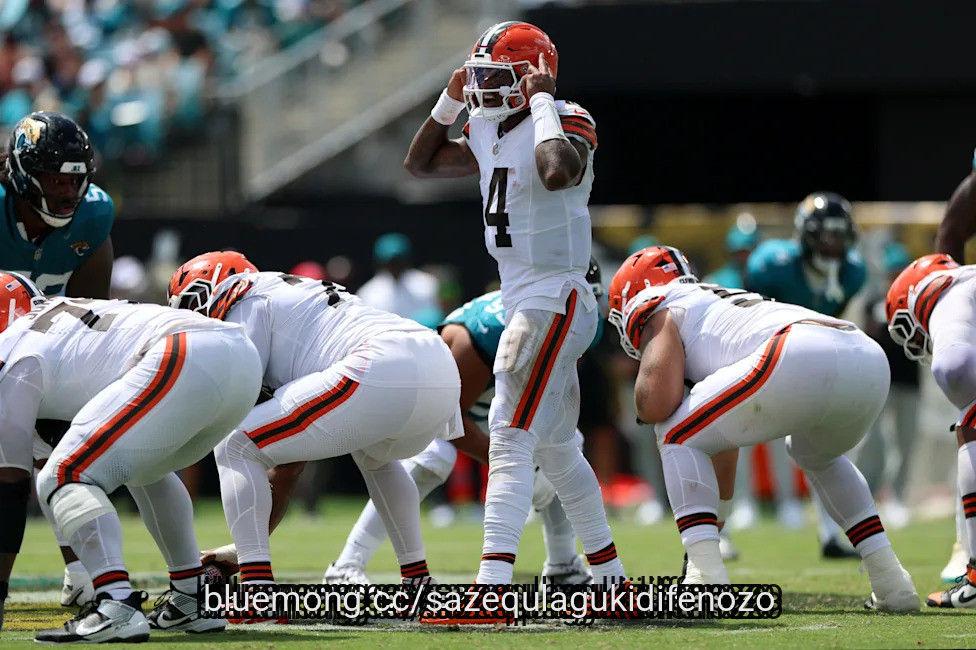
Deshaun Watson played poor football for all four quarters on Sunday, playing a key part in a 34-10 loss to the Jacksonville Jaguars. He was out of rhythm with his playmakers, lacked confidence in his throws, and made a handful of reckless decisions. However, if you asked Watson, it's just par for the course in being an NFL quarterback.
While speaking to the media after Sunday's loss, Watson downplayed his struggles, chalking it up to routine bad plays:
"Bad plays are going to happen all the time. Look all around the league, everyone throws interceptions, everyone makes bad plays. You got to give the defense credit."
It's getting to be beyond noticeable: Watson's lack of self-awareness. Instead of owning up to his mistakes- poor reads, bad timing, and irresponsible decision-making- he says that bad plays are going to happen? It leaves you wondering how long he can keep up this blatant disrespect, and how long he will keep the job in the first place.
This article originally appeared on Browns Wire: Deshaun Watson gives dismissive comments on his performance in Week 1
#deshaun #poor #going #happen