

51 mins. ago
Small and midsize shippers are often forced to stitch together various tools for parcel labels, freight quotes, tracking, and much more. The fragmentation gets more expensive as a business grows past pure e-commerce, since the moment a merchant needs to move inventory between warehouses or ship a pallet instead of a box, they're forced out of whatever platform runs their day-to-day shipping and into unfamiliar territory.
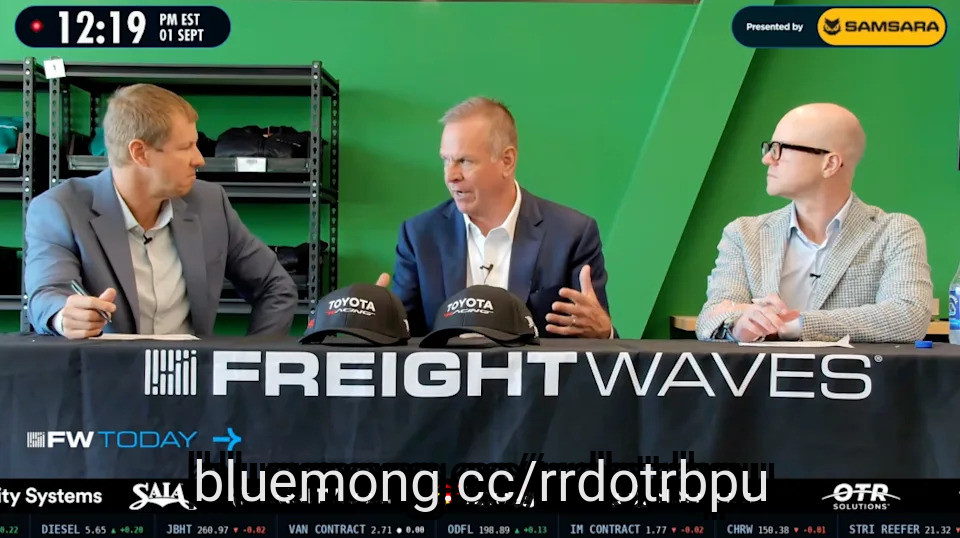
ShipStation Global CEO Tom Madine has built the company's post-merger strategy around closing that gap, knowing that the same merchants who came to the platform for parcel labels are increasingly buying freight, too, and would rather not leave the software to do it.
The LTL rollout is the first major product integration since Thoma Bravo acquired WWEX Group (parent of Worldwide Express, GlobalTranz, Unishippers, JEAR Logistics and BLX Logistics) and merged it with Auctane, the parent company of ShipStation, this past June. The combination created ShipStation Global, a company now valued at roughly $12 billion. CEO Tom Madine described the logic of putting the two businesses together as less about scale for its own sake and more about closing a gap both companies kept running into with customers.
"If you think about an e-commerce merchant that's selling through multiple channels, using multiple carriers with inventory in multiple places, it makes that a much more seamless and stress-free process for them, and allows them to manage everything through a single pane of glass," Madine said of the legacy ShipStation product, before pointing to what it had been missing. "There's nothing else like it on the market."
According to Madine, that gap had shown up repeatedly in customer surveys. "One of the most common requests that ShipStation would get in the legacy Auctane world was, 'When are you going to add other modes to the platform?'" he said. "Prior to today, if you were a ShipStation user, you were managing your entire workflow in ShipStation, except when you needed to move freight." Merchants who needed to move inventory between warehouses had to leave the platform entirely, log into a separate freight system, and reconcile the two.
#freight #inventory #multiple #auctane
ShipStation Global CEO Tom Madine has built the company's post-merger strategy around closing that gap, knowing that the same merchants who came to the platform for parcel labels are increasingly buying freight, too, and would rather not leave the software to do it.
The LTL rollout is the first major product integration since Thoma Bravo acquired WWEX Group (parent of Worldwide Express, GlobalTranz, Unishippers, JEAR Logistics and BLX Logistics) and merged it with Auctane, the parent company of ShipStation, this past June. The combination created ShipStation Global, a company now valued at roughly $12 billion. CEO Tom Madine described the logic of putting the two businesses together as less about scale for its own sake and more about closing a gap both companies kept running into with customers.
"If you think about an e-commerce merchant that's selling through multiple channels, using multiple carriers with inventory in multiple places, it makes that a much more seamless and stress-free process for them, and allows them to manage everything through a single pane of glass," Madine said of the legacy ShipStation product, before pointing to what it had been missing. "There's nothing else like it on the market."
According to Madine, that gap had shown up repeatedly in customer surveys. "One of the most common requests that ShipStation would get in the legacy Auctane world was, 'When are you going to add other modes to the platform?'" he said. "Prior to today, if you were a ShipStation user, you were managing your entire workflow in ShipStation, except when you needed to move freight." Merchants who needed to move inventory between warehouses had to leave the platform entirely, log into a separate freight system, and reconcile the two.
#freight #inventory #multiple #auctane


2 hours ago
Our ***** ysts just identified a stock with the potential to be the next Nvidia. Tell us how you invest and we'll show you why it's our #1 pick. Tap here.
Successfully completed the 'Seal the Foundation' phase, transitioning from fixing structural inefficiencies to framing a scalable growth structure.
Achieved nearly 500 basis points of operational gross margin improvement by reducing reliance on deep, site-wide discounts and clearance events.
Executed a fundamental merchandising shift toward a 'hero core' product strategy, resulting in a 43% reduction in clearance inventory.
Reported a contraction in the total customer base as a direct result of resetting promotions to restore brand equity and price integrity.
#tell
Successfully completed the 'Seal the Foundation' phase, transitioning from fixing structural inefficiencies to framing a scalable growth structure.
Achieved nearly 500 basis points of operational gross margin improvement by reducing reliance on deep, site-wide discounts and clearance events.
Executed a fundamental merchandising shift toward a 'hero core' product strategy, resulting in a 43% reduction in clearance inventory.
Reported a contraction in the total customer base as a direct result of resetting promotions to restore brand equity and price integrity.
#tell


4 hours ago
Duluth Holdings Inc. (NASDAQ:DLTH) reported sharply higher second-quarter earnings and stronger underlying gross margins despite lower sales, prompting the company to raise its fiscal 2026 Adjusted EBITDA outlook.
Duluth Holdings Inc. (NASDAQ:DLTH) reported second-quarter net income of $18.4 million, up from $1.3 million a year earlier, although results included $16.3 million of tariff refunds.
Adjusted EBITDA increased to $27.0 million from $12.0 million, while reported and adjusted EPS reached $0.50, including a $0.44 benefit from tariff refunds.
Underlying gross margin improved to 59.6% excluding tariff refunds, up 490 basis points year over year, supported by reduced promotions and lower product costs.
Net sales fell 7.8% to $121.4 million, highlighting continued pressure on customer traffic even as profitability and inventory management improved.
#reported #duluth
Duluth Holdings Inc. (NASDAQ:DLTH) reported second-quarter net income of $18.4 million, up from $1.3 million a year earlier, although results included $16.3 million of tariff refunds.
Adjusted EBITDA increased to $27.0 million from $12.0 million, while reported and adjusted EPS reached $0.50, including a $0.44 benefit from tariff refunds.
Underlying gross margin improved to 59.6% excluding tariff refunds, up 490 basis points year over year, supported by reduced promotions and lower product costs.
Net sales fell 7.8% to $121.4 million, highlighting continued pressure on customer traffic even as profitability and inventory management improved.
#reported #duluth


5 hours ago
On August 6, Dentsply Sirona (NASDAQ:XRAY) reported second-quarter 2026 results that pulled the stock in two directions at once. Net sales fell 4.1% year over year to $898 million, yet the company swung from a $45 million net loss a year earlier to $37 million in net income, with diluted earnings per share of $0.18 versus a $0.22 loss. Investors are left weighing a real profitability turnaround against a top line that is still shrinking.
GAAP gross margin climbed to 54.9% from 52.4% a year ago, and adjusted gross margin came in at 56.4%. Adjusted EBITDA margin ticked up slightly to 21.3% from 21.1%. Cash generation improved even more sharply. Operating cash flow jumped to $99 million from $48 million in the second quarter of 2025, helped by roughly $44 million in tariff refunds along with tighter management of inventory and payables. Free cash flow more than tripled to $55 million from $16 million. The company used some of that cash to repurchase 1.3 million shares for about $12 million during the quarter, and it also expanded its partnership with Medline Sinclair to broaden access to its Connected Technology Solutions portfolio across Canada.
Wellspect Healthcare was the lone segment posting real growth, with net sales up 7.1% to $86 million, and EMEA sales as reported were essentially flat at 0.2% growth. There were no goodwill or intangible ***** et impairments this quarter, a contrast to the $235 million charge taken in the same period last year. Despite the sales decline, the company reiterated its full-year 2026 outlook of $3.5 billion to $3.6 billion in net sales and adjusted EPS of $1.40 to $1.50.
The headline sales decline understates the underlying softness. On a constant currency basis, net sales fell 6.3%, meaning currency translation actually flattered the reported number. Orthodontic and Implant Solutions was the weakest segment, with sales dropping 13.2% to $197 million from $226 million a year ago. The Americas region fared worst geographically, with net sales down 10.7% as reported and 11.6% in constant currency.
Even the adjusted numbers show cracks: adjusted EPS of $0.52 was actually down 1.6% from a year earlier, despite the improved GAAP figures. The balance sheet tightened too, with cash and equivalents falling to $239 million from $326 million at the end of 2025, against long-term debt of nearly $2 billion. Restructuring and other costs for the first six months of 2026 totaled $69 million, up sharply from $13 million in the same period a year ago, tied in part to costs from a new global ERP system.
#year #company
GAAP gross margin climbed to 54.9% from 52.4% a year ago, and adjusted gross margin came in at 56.4%. Adjusted EBITDA margin ticked up slightly to 21.3% from 21.1%. Cash generation improved even more sharply. Operating cash flow jumped to $99 million from $48 million in the second quarter of 2025, helped by roughly $44 million in tariff refunds along with tighter management of inventory and payables. Free cash flow more than tripled to $55 million from $16 million. The company used some of that cash to repurchase 1.3 million shares for about $12 million during the quarter, and it also expanded its partnership with Medline Sinclair to broaden access to its Connected Technology Solutions portfolio across Canada.
Wellspect Healthcare was the lone segment posting real growth, with net sales up 7.1% to $86 million, and EMEA sales as reported were essentially flat at 0.2% growth. There were no goodwill or intangible ***** et impairments this quarter, a contrast to the $235 million charge taken in the same period last year. Despite the sales decline, the company reiterated its full-year 2026 outlook of $3.5 billion to $3.6 billion in net sales and adjusted EPS of $1.40 to $1.50.
The headline sales decline understates the underlying softness. On a constant currency basis, net sales fell 6.3%, meaning currency translation actually flattered the reported number. Orthodontic and Implant Solutions was the weakest segment, with sales dropping 13.2% to $197 million from $226 million a year ago. The Americas region fared worst geographically, with net sales down 10.7% as reported and 11.6% in constant currency.
Even the adjusted numbers show cracks: adjusted EPS of $0.52 was actually down 1.6% from a year earlier, despite the improved GAAP figures. The balance sheet tightened too, with cash and equivalents falling to $239 million from $326 million at the end of 2025, against long-term debt of nearly $2 billion. Restructuring and other costs for the first six months of 2026 totaled $69 million, up sharply from $13 million in the same period a year ago, tied in part to costs from a new global ERP system.
#year #company


7 hours ago
On August 26, Movado Group (NYSE:MOV) reported second-quarter fiscal 2027 results that pushed adjusted earnings per share to $0.54 from $0.23 a year earlier, while net sales climbed 4.9% to $169.8 million. The jewelry and watch company also confirmed it will stop issuing annual financial guidance going forward, choosing instead to focus commentary on near-term trends. For a business built on Swiss craftsmanship and a stable of licensed fashion brands, the quarter marked a fifth straight period of positive momentum, and it came with a few surprises tucked inside the numbers.
Some of the headline strength came from a one-time source: $3.2 million in IEEPA duty refunds tied to tariffs paid between February 2025 and May 2026, which lifted GAAP gross margin to 59.4% from 54.1%. But strip that out and adjusted gross margin still rose 340 basis points to 57.5%, driven by favorable channel and product mix, strategic pricing, and less discounting. Growth was broad rather than concentrated in one line item. US net sales rose 4.9%, international sales rose 4.9% as well (4.1% in constant currency), and Latin America and India posted particularly strong results.
Movado.com sales jumped 8%, and Olivia Burton sales grew 23%, powered by small-shaped watches focused on the U.K. and US markets. The company also flagged a resurgence in traditional watch interest among younger buyers, pointing to the Baby Face mini strap watch, which sold out more than 400 units on movado.com in under a month. Looking ahead, Movado is expanding its Tapestry partnership to launch Kate Spade watches starting next fiscal year. The balance sheet backs up the momentum, with $211.6 million in cash, no debt, and $16.6 million already returned to shareholders through dividends this year.
Not every piece of this quarter travels into the second half. Management was explicit that the favorable mix of lower duty rate inventory that padded margins is temporary and is not expected to continue, and second-half gross margin guidance of 55% to 56% reflects that normalization. Sallie DeMarsilis also noted that gross margin gains were partially offset by higher shipping costs tied to fuel surcharges and rising e-commerce volume.
Geographically, the Middle East remains a soft spot, with Efraim Grinberg citing tourism-related headwinds in a region still affected by regional conflict. Operating expenses rose to $85.7 million from $80.6 million, largely on higher performance-based compensation and marketing spend. There is also a smaller but notable item: a $0.2 million pretax charge tied to a misconduct investigation within a Dubai-based Swiss subsidiary branch. And while Movado expects to recover another $6.8 million in IEEPA duties, it has chosen not to recognize that gain until the cash actually arrives, a reminder that not all of this quarter's tailwind is guaranteed to repeat.
#second
Some of the headline strength came from a one-time source: $3.2 million in IEEPA duty refunds tied to tariffs paid between February 2025 and May 2026, which lifted GAAP gross margin to 59.4% from 54.1%. But strip that out and adjusted gross margin still rose 340 basis points to 57.5%, driven by favorable channel and product mix, strategic pricing, and less discounting. Growth was broad rather than concentrated in one line item. US net sales rose 4.9%, international sales rose 4.9% as well (4.1% in constant currency), and Latin America and India posted particularly strong results.
Movado.com sales jumped 8%, and Olivia Burton sales grew 23%, powered by small-shaped watches focused on the U.K. and US markets. The company also flagged a resurgence in traditional watch interest among younger buyers, pointing to the Baby Face mini strap watch, which sold out more than 400 units on movado.com in under a month. Looking ahead, Movado is expanding its Tapestry partnership to launch Kate Spade watches starting next fiscal year. The balance sheet backs up the momentum, with $211.6 million in cash, no debt, and $16.6 million already returned to shareholders through dividends this year.
Not every piece of this quarter travels into the second half. Management was explicit that the favorable mix of lower duty rate inventory that padded margins is temporary and is not expected to continue, and second-half gross margin guidance of 55% to 56% reflects that normalization. Sallie DeMarsilis also noted that gross margin gains were partially offset by higher shipping costs tied to fuel surcharges and rising e-commerce volume.
Geographically, the Middle East remains a soft spot, with Efraim Grinberg citing tourism-related headwinds in a region still affected by regional conflict. Operating expenses rose to $85.7 million from $80.6 million, largely on higher performance-based compensation and marketing spend. There is also a smaller but notable item: a $0.2 million pretax charge tied to a misconduct investigation within a Dubai-based Swiss subsidiary branch. And while Movado expects to recover another $6.8 million in IEEPA duties, it has chosen not to recognize that gain until the cash actually arrives, a reminder that not all of this quarter's tailwind is guaranteed to repeat.
#second


8 hours ago
On September 1, Sasol Limited (NYSE:SSL) posted fiscal 2026 results that looked nothing like the shaky operator investors have grown used to. Net debt fell to its lowest level in ten years, Secunda output hit a five-year high, and adjusted EBITDA jumped 17% year over year to ZAR 61 billion. The numbers suggest a turnaround that finally has traction, even as chemical markets stay stuck in a rut.
The clearest thread running through the quarter is that Sasol's core Southern African operations are simply working better than they have in years. Secunda production reached 7.26 million tonnes, a five-year high, driven by improved coal quality and gas availability after the company installed a destoning plant that pushed sinks below 12%. That reliability helped cut the Southern African oil breakeven to $49 per barrel. Management is also weaning the business off external coal, planning to cut purchases from 8.8 million tonnes down to a range of 5 million to 7 million tonnes in fiscal 2027 as own production climbs toward 34 million tonnes by 2028.
The balance sheet tells a similar story. Net debt dropped 11% to $3.3 billion, and available liquidity rose 21% to roughly $5 billion after a bond swap that better matched debt currency to cash generation. Free cash flow of ZAR 11.9 billion was actually up 26% once you strip out a one-time legal settlement from the prior year. International Chemicals, long the drag on the portfolio, posted $604 million in adjusted EBITDA on a 7% cut in fixed costs and a stronger fourth quarter market. Retail fuel market share climbed to 13% from 9% five years ago, and renewable capacity reached 500 megawatts on the way to a 2 gigawatt target by 2030.
Not everything is fixed. Sasol lost two colleagues during the year, a reminder that operational improvement has not erased safety risk. Currency remains a persistent headwind, with CFO Walt Bruns noting that "the stronger rand remained a significant earnings headwind given the U.S. dollar-linked nature of much of our revenue." That same stronger rand outlook, combined with weaker long-term polyethylene pricing, drove impairments on the Secunda liquid fuels refinery and the South African polyethylene unit.
Management was explicit that global chemical markets have not turned a corner, warning that "excess capacity and weaker demand" continue pressuring prices with only a gradual recovery expected. Working capital also ran hot at 18.3% of trailing turnover, above the 15.5% to 16.5% target range, due to pricing volatility and elevated inventory. Fiscal 2027 capital spending guidance of ZAR 23 billion to ZAR 26 billion is also higher than the year just completed, and dividends stay off the table until net debt is sustainably below $3 billion, a threshold the company has approached but not yet crossed.
#debt #fiscal #years #five
The clearest thread running through the quarter is that Sasol's core Southern African operations are simply working better than they have in years. Secunda production reached 7.26 million tonnes, a five-year high, driven by improved coal quality and gas availability after the company installed a destoning plant that pushed sinks below 12%. That reliability helped cut the Southern African oil breakeven to $49 per barrel. Management is also weaning the business off external coal, planning to cut purchases from 8.8 million tonnes down to a range of 5 million to 7 million tonnes in fiscal 2027 as own production climbs toward 34 million tonnes by 2028.
The balance sheet tells a similar story. Net debt dropped 11% to $3.3 billion, and available liquidity rose 21% to roughly $5 billion after a bond swap that better matched debt currency to cash generation. Free cash flow of ZAR 11.9 billion was actually up 26% once you strip out a one-time legal settlement from the prior year. International Chemicals, long the drag on the portfolio, posted $604 million in adjusted EBITDA on a 7% cut in fixed costs and a stronger fourth quarter market. Retail fuel market share climbed to 13% from 9% five years ago, and renewable capacity reached 500 megawatts on the way to a 2 gigawatt target by 2030.
Not everything is fixed. Sasol lost two colleagues during the year, a reminder that operational improvement has not erased safety risk. Currency remains a persistent headwind, with CFO Walt Bruns noting that "the stronger rand remained a significant earnings headwind given the U.S. dollar-linked nature of much of our revenue." That same stronger rand outlook, combined with weaker long-term polyethylene pricing, drove impairments on the Secunda liquid fuels refinery and the South African polyethylene unit.
Management was explicit that global chemical markets have not turned a corner, warning that "excess capacity and weaker demand" continue pressuring prices with only a gradual recovery expected. Working capital also ran hot at 18.3% of trailing turnover, above the 15.5% to 16.5% target range, due to pricing volatility and elevated inventory. Fiscal 2027 capital spending guidance of ZAR 23 billion to ZAR 26 billion is also higher than the year just completed, and dividends stay off the table until net debt is sustainably below $3 billion, a threshold the company has approached but not yet crossed.
#debt #fiscal #years #five


16 hours ago
Interested in Tilly's, Inc.? Here are five stocks we like better.
Tilly's delivered strong fiscal Q2 results: Net sales rose 8.1% to $163.5 million, comparable sales increased 12.1% for the third consecutive quarter, and net income climbed to $8.4 million from $3.2 million.
Profitability and liquidity improved: Gross margin expanded 300 basis points to 35.5% as inventory became more current, while cash and investments increased to $62.2 million and the company carried no borrowings.
Momentum continued into the third quarter: August comparable sales rose 14.6%, and management expects Q3 comparable sales growth of 10%–14%, with net income forecast at $2.2 million–$3.7 million.
Three Mall Retailers For Your Reopening Watchlist
#comparable #increased
Tilly's delivered strong fiscal Q2 results: Net sales rose 8.1% to $163.5 million, comparable sales increased 12.1% for the third consecutive quarter, and net income climbed to $8.4 million from $3.2 million.
Profitability and liquidity improved: Gross margin expanded 300 basis points to 35.5% as inventory became more current, while cash and investments increased to $62.2 million and the company carried no borrowings.
Momentum continued into the third quarter: August comparable sales rose 14.6%, and management expects Q3 comparable sales growth of 10%–14%, with net income forecast at $2.2 million–$3.7 million.
Three Mall Retailers For Your Reopening Watchlist
#comparable #increased

18 hours ago
Some offers on this page are from advertisers who pay us, which may affect which products we write about, but not our recommendations. See our Advertiser Disclosure.
A housing market crash happens when home values plummet due to a lack of demand for or an oversupply of homes. The factors leading to a housing market crash are varied, ranging from economic recessions to high mortgage rates that make it less affordable to buy a home. A housing crash can have upsides (low home prices) and downsides (losing built-up equity and tighter finances).
So, what's ahead for the housing market in 2026?
Read more: Want to buy a house in 2026? Here's what you need to know.
Despite 58% of Gen Z wanting a housing market crash, according to Clever, experts don't foresee one in 2026. If anything, they see a greater sense of normalcy following multiple years of twists and turns.
"We're not heading toward a housing crash; we're in a market correction defined by stability, not volatility," Hoby Hanna, CEO of Howard Hanna Real Estate Services, said via email. "Today's housing environment is fundamentally different from 2008. Homeowners have record levels of equity, lending standards are sound, and inventory remains constrained. What we're seeing now is a normalization, not a collapse, as the market adjusts to new economic realities. For buyers and sellers, this is a market filled with opportunity and resilience, not instability or uncertainty."
#we 're #hanna #Equity #disclosure
A housing market crash happens when home values plummet due to a lack of demand for or an oversupply of homes. The factors leading to a housing market crash are varied, ranging from economic recessions to high mortgage rates that make it less affordable to buy a home. A housing crash can have upsides (low home prices) and downsides (losing built-up equity and tighter finances).
So, what's ahead for the housing market in 2026?
Read more: Want to buy a house in 2026? Here's what you need to know.
Despite 58% of Gen Z wanting a housing market crash, according to Clever, experts don't foresee one in 2026. If anything, they see a greater sense of normalcy following multiple years of twists and turns.
"We're not heading toward a housing crash; we're in a market correction defined by stability, not volatility," Hoby Hanna, CEO of Howard Hanna Real Estate Services, said via email. "Today's housing environment is fundamentally different from 2008. Homeowners have record levels of equity, lending standards are sound, and inventory remains constrained. What we're seeing now is a normalization, not a collapse, as the market adjusts to new economic realities. For buyers and sellers, this is a market filled with opportunity and resilience, not instability or uncertainty."
#we 're #hanna #Equity #disclosure


22 hours ago
Offerpad surged 7% and Opendoor rose 2% as falling Treasury yields eased both mortgage market conditions and their inventory financing costs simultaneously.
ITB gained just 0.7% on the same rate news because builders control their own supply and carry none of the balance-sheet leverage that amplifies iBuyer moves.
Just released. Our ******* ysts combed the entire stock market and named the ten best stocks to buy right now. The report is free. Enter your email and see if any of your stocks made the cut.
The most rate-sensitive corner of housing is doing the day's work while homebuilders barely move. The iShares U.S. Home Construction ETF (CBOE:ITB) is up 0.7% to $92.96 in midday trading, a soft bid for the group that controls its own supply. The 10-year Treasury note yield sits at 4.8% and is nearly unchanged over the past 24 hours.
Offerpad Solutions (NYSE:OPAD) stock is up 7% to $4.40. Meanwhile, Opendoor Technologies (NASDAQ:OPEN) stock is rising 2% to $3.09, a same-direction but shallower move in the sector's other listed iBuyer.
#Stock #opendoor #ibuyer
ITB gained just 0.7% on the same rate news because builders control their own supply and carry none of the balance-sheet leverage that amplifies iBuyer moves.
Just released. Our ******* ysts combed the entire stock market and named the ten best stocks to buy right now. The report is free. Enter your email and see if any of your stocks made the cut.
The most rate-sensitive corner of housing is doing the day's work while homebuilders barely move. The iShares U.S. Home Construction ETF (CBOE:ITB) is up 0.7% to $92.96 in midday trading, a soft bid for the group that controls its own supply. The 10-year Treasury note yield sits at 4.8% and is nearly unchanged over the past 24 hours.
Offerpad Solutions (NYSE:OPAD) stock is up 7% to $4.40. Meanwhile, Opendoor Technologies (NASDAQ:OPEN) stock is rising 2% to $3.09, a same-direction but shallower move in the sector's other listed iBuyer.
#Stock #opendoor #ibuyer


1 day ago
Interested in Yatsen Holding Limited Sponsored ADR? Here are five stocks we like better.
Revenue grew 5.1% to RMB1.14 billion, driven by a 40.4% increase in skincare sales, which accounted for 71.5% of revenue. This was partially offset by a 35.8% decline in color cosmetics revenue amid portfolio optimization and SKU reductions.
Profitability weakened significantly: gross margin fell to 73.9% due largely to inventory provisions, while higher marketing expenses pushed the company's net loss to RMB90.8 million from RMB19.5 million a year earlier.
Yatsen plans to improve profitability by diversifying beyond Tmall and Douyin into business-to-business, offline, duty-free and professional channels. It forecasts third-quarter revenue of RMB898.6 million to RMB998.4 million, implying roughly flat to 10% year-over-year decline.
Yatsen (NYSE:YSG) reported second-quarter 2026 revenue growth of 5.1% as continued strength in its skincare portfolio offset a sharp decline in color cosmetics sales, while higher inventory provisions and increased marketing spending widened the company's losses.
#profitability #offset
Revenue grew 5.1% to RMB1.14 billion, driven by a 40.4% increase in skincare sales, which accounted for 71.5% of revenue. This was partially offset by a 35.8% decline in color cosmetics revenue amid portfolio optimization and SKU reductions.
Profitability weakened significantly: gross margin fell to 73.9% due largely to inventory provisions, while higher marketing expenses pushed the company's net loss to RMB90.8 million from RMB19.5 million a year earlier.
Yatsen plans to improve profitability by diversifying beyond Tmall and Douyin into business-to-business, offline, duty-free and professional channels. It forecasts third-quarter revenue of RMB898.6 million to RMB998.4 million, implying roughly flat to 10% year-over-year decline.
Yatsen (NYSE:YSG) reported second-quarter 2026 revenue growth of 5.1% as continued strength in its skincare portfolio offset a sharp decline in color cosmetics sales, while higher inventory provisions and increased marketing spending widened the company's losses.
#profitability #offset

2 days ago
(By Oil & Gas 360) – Month Ending: August 2026 – August was the month energy markets began treating geopolitical disruption less like a temporary shock and more like a structural part of the investment landscape. The Iran conflict remained the dominant force running through oil prices, tanker markets, LNG flows, sanctions policy, and shipping through the Strait of Hormuz.
Yet one of the more revealing developments was how quickly commodity markets learned to absorb the uncertainty. Oil could rally on renewed fighting, fall on hopes for diplomacy, and then trade lower even as physical shipping constraints remained very real.
The industry's response told a different story. Producers, midstream companies, and governments continued committing capital to natural gas, new drilling inventory, offshore exploration, pipelines, ports, automation, and alternative supply routes. August was therefore not simply a month defined by war or volatile crude prices. It was a month that exposed how deeply intertwined energy security, infrastructure, technology, and access to resources are becoming.
The Iran conflict remained the defining energy story of August. Brent repeatedly moved in response to developments surrounding fighting and diplomacy, while commodity vessel traffic through the Strait of Hormuz fell to a three-month low. Reports that nearly half of global oil flows originated in or moved through conflict-affected regions underscored just how exposed the world's energy system had become to geopolitical instability.
The consequences extended well beyond crude prices. VLCC tanker rates reportedly climbed as high as $650,000 per day, Qatar suffered a severe collapse in LNG exports, and Gulf producers accelerated investment in pipelines and ports capable of reducing dependence on vulnerable maritime corridors.
#strait #hormuz
Yet one of the more revealing developments was how quickly commodity markets learned to absorb the uncertainty. Oil could rally on renewed fighting, fall on hopes for diplomacy, and then trade lower even as physical shipping constraints remained very real.
The industry's response told a different story. Producers, midstream companies, and governments continued committing capital to natural gas, new drilling inventory, offshore exploration, pipelines, ports, automation, and alternative supply routes. August was therefore not simply a month defined by war or volatile crude prices. It was a month that exposed how deeply intertwined energy security, infrastructure, technology, and access to resources are becoming.
The Iran conflict remained the defining energy story of August. Brent repeatedly moved in response to developments surrounding fighting and diplomacy, while commodity vessel traffic through the Strait of Hormuz fell to a three-month low. Reports that nearly half of global oil flows originated in or moved through conflict-affected regions underscored just how exposed the world's energy system had become to geopolitical instability.
The consequences extended well beyond crude prices. VLCC tanker rates reportedly climbed as high as $650,000 per day, Qatar suffered a severe collapse in LNG exports, and Gulf producers accelerated investment in pipelines and ports capable of reducing dependence on vulnerable maritime corridors.
#strait #hormuz


2 days ago
On August 21, Martin Marietta Materials (NYSE:MLM) completed its combination with Lhoist North America, a subsidiary of Lhoist Group and one of the country's leading producers of lime and industrial mineral products. The deal hands Martin Marietta more than 2 billion tons of high-quality limestone reserves and, according to the company, makes it the nation's leading producer of limestone products. It caps months of dealmaking that has quietly reshaped what kind of company Martin Marietta is becoming.
Lhoist North America serves steel manufacturing, infrastructure, heavy nonresidential construction and environmental solutions, markets Martin Marietta says it can now reach through a shared limestone base. Company leadership has pointed to lime's mission-critical role in steel production and water treatment, businesses that lean on Martin Marietta's expanding Specialties platform. In the second quarter, that platform delivered $152 million in revenue and $50 million in gross profit, both records, aided by the July 2025 Premier Magnesia acquisition and organic pricing gains. One example the company highlighted: its Woodville lime plant saw shipments exceed 2006 levels by 2% even as broader U.S. aggregates production stayed 25% below its prior peak, a sign of how differently lime demand behaves through a downturn.
The core aggregates business is not standing still either. Second-quarter revenue there hit $1.5 billion, up 16%, while total shipments rose 17% to 61.6 million tons on acquisitions and organic growth in the Central and West divisions. Organic shipments alone grew 2.3%, the fourth straight quarter of gains. Management raised full-year revenue guidance to a range of $7.2 billion to $7.4 billion to reflect the New Frontier Materials acquisition, while reaffirming adjusted EBITDA guidance of $2.36 billion to $2.5 billion. Data center activity in company-served markets climbed 90% year to date, warehouse construction rose 53%, and 70% of under-construction data center and manufacturing square footage sits within 55 miles of a Martin Marietta facility.
Growth has not come free. Average selling prices fell 2% on a headline basis in the second quarter, even though they rose 3.7% once adjusted for geographic mix, a gap that shows how much the picture depends on how you slice it. Reported aggregate gross profit of $418 million absorbed a $52 million noncash inventory step-up charge tied to purchase accounting, and organic cost of goods sold per ton rose 3.6%, including a 150 basis point hit from higher pass-through freight costs.
#billion
Lhoist North America serves steel manufacturing, infrastructure, heavy nonresidential construction and environmental solutions, markets Martin Marietta says it can now reach through a shared limestone base. Company leadership has pointed to lime's mission-critical role in steel production and water treatment, businesses that lean on Martin Marietta's expanding Specialties platform. In the second quarter, that platform delivered $152 million in revenue and $50 million in gross profit, both records, aided by the July 2025 Premier Magnesia acquisition and organic pricing gains. One example the company highlighted: its Woodville lime plant saw shipments exceed 2006 levels by 2% even as broader U.S. aggregates production stayed 25% below its prior peak, a sign of how differently lime demand behaves through a downturn.
The core aggregates business is not standing still either. Second-quarter revenue there hit $1.5 billion, up 16%, while total shipments rose 17% to 61.6 million tons on acquisitions and organic growth in the Central and West divisions. Organic shipments alone grew 2.3%, the fourth straight quarter of gains. Management raised full-year revenue guidance to a range of $7.2 billion to $7.4 billion to reflect the New Frontier Materials acquisition, while reaffirming adjusted EBITDA guidance of $2.36 billion to $2.5 billion. Data center activity in company-served markets climbed 90% year to date, warehouse construction rose 53%, and 70% of under-construction data center and manufacturing square footage sits within 55 miles of a Martin Marietta facility.
Growth has not come free. Average selling prices fell 2% on a headline basis in the second quarter, even though they rose 3.7% once adjusted for geographic mix, a gap that shows how much the picture depends on how you slice it. Reported aggregate gross profit of $418 million absorbed a $52 million noncash inventory step-up charge tied to purchase accounting, and organic cost of goods sold per ton rose 3.6%, including a 150 basis point hit from higher pass-through freight costs.
#billion


2 days ago
On August 25, Citi Trends (NASDAQ:CTRN) reported second-quarter results that pushed its comparable sales growth streak to eight consecutive quarters, and this time the momentum showed up on the bottom line. Total sales rose 10.9% to $211.6 million, comparable sales climbed 10.5%, and adjusted EBITDA swung from a $1.1 million loss a year ago to $5.5 million. That improvement helped push first-half EBITDA to $19.4 million, already ahead of everything the company generated in all of fiscal 2025. Management responded by raising its full-year outlook across nearly every metric that matters.
The eighth straight quarter of comparable sales growth stands out on its own, especially with the two-year stack running at 19.7%, but the more telling shift is what happened underneath it. Gross margin expanded 60 basis points to 40.6% on better merchandise margin and lower shrinkage, while adjusted SG&A leveraged 260 basis points as fixed costs spread across a bigger sales base. Store payroll leveraged 70 basis points, and distribution center costs fell 60 basis points year to date, evidencing that the efficiency gains are showing up across the operation rather than in one line item. That combination pushed adjusted EBITDA margin to 2.6% for the quarter, and management raised full-year sales guidance to 10% to 12% growth, comparable sales guidance to 9% to 11%, and adjusted EBITDA guidance to $38 million to $42 million.
The balance sheet backs up the story. Citi Trends ended the quarter with $55.9 million in cash, no debt, and no draw on its $75 million credit facility, even as merchandise inventory grew a controlled 7.5% against double-digit comparable sales growth. The company is also leaning on a customer base broader than the discount label suggests: shoppers with household incomes between $75,000 and $150,000 make up 25% of customers but generate more than 40% of revenue. Management is funding growth accordingly, shifting capital toward its remodel program, now expected to cover 60 to 65 stores this year, up from 50, while building newer levers like the Insiders Club loyalty platform launched July 15 and AI tools for allocation and site selection. CEO Kenneth Seipel described the program as one that "turns traffic into loyalty, loyalty into frequency, and frequency into EBITDA."
Not everything in the print was clean. CFO Heather Plutino noted that rising fuel surcharges are pushing freight costs higher and said the pressure should continue for the rest of the year, a headwind that partially offset the gross margin gains. New store openings were also trimmed, with fiscal 2026 guidance cut to around 20 locations from a prior target of 25 due to timing, even as capital shifted toward remodels instead of new boxes.
#sales #million #comparable #quarter
The eighth straight quarter of comparable sales growth stands out on its own, especially with the two-year stack running at 19.7%, but the more telling shift is what happened underneath it. Gross margin expanded 60 basis points to 40.6% on better merchandise margin and lower shrinkage, while adjusted SG&A leveraged 260 basis points as fixed costs spread across a bigger sales base. Store payroll leveraged 70 basis points, and distribution center costs fell 60 basis points year to date, evidencing that the efficiency gains are showing up across the operation rather than in one line item. That combination pushed adjusted EBITDA margin to 2.6% for the quarter, and management raised full-year sales guidance to 10% to 12% growth, comparable sales guidance to 9% to 11%, and adjusted EBITDA guidance to $38 million to $42 million.
The balance sheet backs up the story. Citi Trends ended the quarter with $55.9 million in cash, no debt, and no draw on its $75 million credit facility, even as merchandise inventory grew a controlled 7.5% against double-digit comparable sales growth. The company is also leaning on a customer base broader than the discount label suggests: shoppers with household incomes between $75,000 and $150,000 make up 25% of customers but generate more than 40% of revenue. Management is funding growth accordingly, shifting capital toward its remodel program, now expected to cover 60 to 65 stores this year, up from 50, while building newer levers like the Insiders Club loyalty platform launched July 15 and AI tools for allocation and site selection. CEO Kenneth Seipel described the program as one that "turns traffic into loyalty, loyalty into frequency, and frequency into EBITDA."
Not everything in the print was clean. CFO Heather Plutino noted that rising fuel surcharges are pushing freight costs higher and said the pressure should continue for the rest of the year, a headwind that partially offset the gross margin gains. New store openings were also trimmed, with fiscal 2026 guidance cut to around 20 locations from a prior target of 25 due to timing, even as capital shifted toward remodels instead of new boxes.
#sales #million #comparable #quarter


2 days ago
Descartes Systems Group announced Tuesday that it has acquired Extensiv, a warehouse management and fulfillment tech provider, for $120 million. The deal follows Descartes' $100 million acquisition of Tai last week.
The acquisition was funded with cash on hand.
California-based Extensiv helps 3PLs with inventory management and order fulfillment. It uses AI tools to leverage its omnichannel data and enhance decision making for warehouse operators.
"3PLs are under constant pressure to fulfill faster, scale flexibly, and support the evolving needs of modern brands," said Mikel Richardson, general manager of ecommerce operations at Descartes. … "Extensiv strengthens that position by adding more participants, more contextually rich operational data and fulfillment intelligence to the Descartes Global Logistics Network."
Like the addition of Tai, a TMS provider to freight brokers, the Extensiv deal deepens Descartes' reach into the logistics services provider market. It also builds out its warehousing, inventory management and ecommerce fulfillment offerings.
#management
The acquisition was funded with cash on hand.
California-based Extensiv helps 3PLs with inventory management and order fulfillment. It uses AI tools to leverage its omnichannel data and enhance decision making for warehouse operators.
"3PLs are under constant pressure to fulfill faster, scale flexibly, and support the evolving needs of modern brands," said Mikel Richardson, general manager of ecommerce operations at Descartes. … "Extensiv strengthens that position by adding more participants, more contextually rich operational data and fulfillment intelligence to the Descartes Global Logistics Network."
Like the addition of Tai, a TMS provider to freight brokers, the Extensiv deal deepens Descartes' reach into the logistics services provider market. It also builds out its warehousing, inventory management and ecommerce fulfillment offerings.
#management


2 days ago
Global, Domestic, or Hybrid: What's Right for Your Supply Chain?
Global sourcing has offered advantages in cost, scale, and supplier capabilities. But rising uncertainty, transportation disruption, inventory pressure, and changing customer expectations are forcing companies to look beyond unit cost.
Is your current supply chain model still the right fit?
In the G3 Logistics whitepaper, Why Going Global Isn't Always the Right Call, discover how to evaluate global, domestic, and hybrid supply chain strategies based on the factors that matter across your entire network.
Download the whitepaper to learn how to:
#cost
Global sourcing has offered advantages in cost, scale, and supplier capabilities. But rising uncertainty, transportation disruption, inventory pressure, and changing customer expectations are forcing companies to look beyond unit cost.
Is your current supply chain model still the right fit?
In the G3 Logistics whitepaper, Why Going Global Isn't Always the Right Call, discover how to evaluate global, domestic, and hybrid supply chain strategies based on the factors that matter across your entire network.
Download the whitepaper to learn how to:
#cost


3 days ago
MD Sass, a boutique ****** et management firm, published its second-quarter investor update for its flagship, the "MD Sass Concentrated Value Strategy." The letter can be downloaded here. In the first half of 2026, AI infrastructure stocks led the market, with the Russell 1000 Value increasing by 16.3%, outpacing the S&P 500 (10.2%) and Russell 1000 Growth (5.3%). This growth was fueled by semiconductor, memory, and hardware companies benefiting from AI development, even though they are considered cyclical. These sectors, representing only 7.7% of the Russell 1000 Value at the start of the year, contributed nearly 70% of its returns. The portfolio gained 10.0% in the second quarter, net of fees, compared to 13.9% for the Russell 1000 Value Index. Year-to-date, the strategy returned 6.6%, net of fees, versus 16.3% for the Index. The portfolio faced challenges due to limited exposure to companies with the greatest upside from AI infrastructure investments. It also lacked exposure to the Energy sector, which returned about 20% in the first half amid geopolitical tensions with Iran that increased commodity prices, affecting performance. The firm recognizes the importance of adapting its strategies while maintaining core investment principles as it explores future opportunities in emerging technological themes. Also, check the fund's top five holdings to see its best picks in 2026.
In its second-quarter 2026 investor letter, MD Sass Concentrated Value Strategy highlighted TD SYNNEX Corporation (NYSE:SNX) as a new portfolio holding. TD SYNNEX Corporation (NYSE:SNX) is a leading distributor and solutions aggregator for the information technology (IT) ecosystem. On August 28, 2026, TD SYNNEX Corporation (NYSE:SNX) closed at $253.97 per share. Over the past month, TD SYNNEX Corporation (NYSE:SNX) returned -1.12%, while its shares have declined 69.50% in the last 52 weeks. TD SYNNEX Corporation (NYSE:SNX) has a market capitalization of $20.31 billion.
MD Sass Concentrated Value Strategy stated the following regarding TD SYNNEX Corporation (NYSE:SNX) in its Q2 2026 investor letter:
"During the quarter, we initiated a position in TD SYNNEX Corporation (NYSE:SNX), one of the world's largest IT distributors and a critical intermediary between technology vendors and more than 150,000 customers across over 100 countries. Its core Distribution business aggregates hardware, software, cloud products, and services while providing inventory, financing, configuration, and technical support to resellers and systems integrators. Distribution is a low-margin business, but scale matters, and SNX is increasingly benefiting as major vendors consolidate their channel relationships around a smaller number of global partners.
The crux of our thesis, however, is Hyve Solutions, a hidden growth engine that we believe the market continues to value as part of a traditional IT distributor. Hyve, a wholly owned subsidiary of SNX, designs, manufactures, integrates, and manages th
In its second-quarter 2026 investor letter, MD Sass Concentrated Value Strategy highlighted TD SYNNEX Corporation (NYSE:SNX) as a new portfolio holding. TD SYNNEX Corporation (NYSE:SNX) is a leading distributor and solutions aggregator for the information technology (IT) ecosystem. On August 28, 2026, TD SYNNEX Corporation (NYSE:SNX) closed at $253.97 per share. Over the past month, TD SYNNEX Corporation (NYSE:SNX) returned -1.12%, while its shares have declined 69.50% in the last 52 weeks. TD SYNNEX Corporation (NYSE:SNX) has a market capitalization of $20.31 billion.
MD Sass Concentrated Value Strategy stated the following regarding TD SYNNEX Corporation (NYSE:SNX) in its Q2 2026 investor letter:
"During the quarter, we initiated a position in TD SYNNEX Corporation (NYSE:SNX), one of the world's largest IT distributors and a critical intermediary between technology vendors and more than 150,000 customers across over 100 countries. Its core Distribution business aggregates hardware, software, cloud products, and services while providing inventory, financing, configuration, and technical support to resellers and systems integrators. Distribution is a low-margin business, but scale matters, and SNX is increasingly benefiting as major vendors consolidate their channel relationships around a smaller number of global partners.
The crux of our thesis, however, is Hyve Solutions, a hidden growth engine that we believe the market continues to value as part of a traditional IT distributor. Hyve, a wholly owned subsidiary of SNX, designs, manufactures, integrates, and manages th


3 days ago
On August 25, Citi Trends (NASDAQ:CTRN) reported second-quarter results that pushed its comparable sales growth streak to eight consecutive quarters, and this time the momentum showed up on the bottom line. Total sales rose 10.9% to $211.6 million, comparable sales climbed 10.5%, and adjusted EBITDA swung from a $1.1 million loss a year ago to $5.5 million. That improvement helped push first-half EBITDA to $19.4 million, already ahead of everything the company generated in all of fiscal 2025. Management responded by raising its full-year outlook across nearly every metric that matters.
The eighth straight quarter of comparable sales growth stands out on its own, especially with the two-year stack running at 19.7%, but the more telling shift is what happened underneath it. Gross margin expanded 60 basis points to 40.6% on better merchandise margin and lower shrinkage, while adjusted SG&A leveraged 260 basis points as fixed costs spread across a bigger sales base. Store payroll leveraged 70 basis points, and distribution center costs fell 60 basis points year to date, evidencing that the efficiency gains are showing up across the operation rather than in one line item. That combination pushed adjusted EBITDA margin to 2.6% for the quarter, and management raised full-year sales guidance to 10% to 12% growth, comparable sales guidance to 9% to 11%, and adjusted EBITDA guidance to $38 million to $42 million.
The balance sheet backs up the story. Citi Trends ended the quarter with $55.9 million in cash, no debt, and no draw on its $75 million credit facility, even as merchandise inventory grew a controlled 7.5% against double-digit comparable sales growth. The company is also leaning on a customer base broader than the discount label suggests: shoppers with household incomes between $75,000 and $150,000 make up 25% of customers but generate more than 40% of revenue. Management is funding growth accordingly, shifting capital toward its remodel program, now expected to cover 60 to 65 stores this year, up from 50, while building newer levers like the Insiders Club loyalty platform launched July 15 and AI tools for allocation and site selection. CEO Kenneth Seipel described the program as one that "turns traffic into loyalty, loyalty into frequency, and frequency into EBITDA."
Not everything in the print was clean. CFO Heather Plutino noted that rising fuel surcharges are pushing freight costs higher and said the pressure should continue for the rest of the year, a headwind that partially offset the gross margin gains. New store openings were also trimmed, with fiscal 2026 guidance cut to around 20 locations from a prior target of 25 due to timing, even as capital shifted toward remodels instead of new boxes.
#year #ebitda #quarter #Margin
The eighth straight quarter of comparable sales growth stands out on its own, especially with the two-year stack running at 19.7%, but the more telling shift is what happened underneath it. Gross margin expanded 60 basis points to 40.6% on better merchandise margin and lower shrinkage, while adjusted SG&A leveraged 260 basis points as fixed costs spread across a bigger sales base. Store payroll leveraged 70 basis points, and distribution center costs fell 60 basis points year to date, evidencing that the efficiency gains are showing up across the operation rather than in one line item. That combination pushed adjusted EBITDA margin to 2.6% for the quarter, and management raised full-year sales guidance to 10% to 12% growth, comparable sales guidance to 9% to 11%, and adjusted EBITDA guidance to $38 million to $42 million.
The balance sheet backs up the story. Citi Trends ended the quarter with $55.9 million in cash, no debt, and no draw on its $75 million credit facility, even as merchandise inventory grew a controlled 7.5% against double-digit comparable sales growth. The company is also leaning on a customer base broader than the discount label suggests: shoppers with household incomes between $75,000 and $150,000 make up 25% of customers but generate more than 40% of revenue. Management is funding growth accordingly, shifting capital toward its remodel program, now expected to cover 60 to 65 stores this year, up from 50, while building newer levers like the Insiders Club loyalty platform launched July 15 and AI tools for allocation and site selection. CEO Kenneth Seipel described the program as one that "turns traffic into loyalty, loyalty into frequency, and frequency into EBITDA."
Not everything in the print was clean. CFO Heather Plutino noted that rising fuel surcharges are pushing freight costs higher and said the pressure should continue for the rest of the year, a headwind that partially offset the gross margin gains. New store openings were also trimmed, with fiscal 2026 guidance cut to around 20 locations from a prior target of 25 due to timing, even as capital shifted toward remodels instead of new boxes.
#year #ebitda #quarter #Margin

3 days ago
Descartes Systems Group announced Tuesday that it has acquired Extensiv, a warehouse management and fulfillment tech provider, for $120 million. The deal follows Descartes' $100 million acquisition of Tai last week.
The acquisition was funded with cash on hand.
California-based Extensiv helps 3PLs with inventory management and order fulfillment. It uses AI tools to leverage its omnichannel data and enhance decision making for warehouse operators.
"3PLs are under constant pressure to fulfill faster, scale flexibly, and support the evolving needs of modern brands," said Mikel Richardson, general manager of ecommerce operations at Descartes. … "Extensiv strengthens that position by adding more participants, more contextually rich operational data and fulfillment intelligence to the Descartes Global Logistics Network."
Like the addition of Tai, a TMS provider to freight brokers, the Extensiv deal deepens Descartes' reach into the logistics services provider market. It also builds out its warehousing, inventory management and ecommerce fulfillment offerings.
#descartes #extensiv #provider #deal
The acquisition was funded with cash on hand.
California-based Extensiv helps 3PLs with inventory management and order fulfillment. It uses AI tools to leverage its omnichannel data and enhance decision making for warehouse operators.
"3PLs are under constant pressure to fulfill faster, scale flexibly, and support the evolving needs of modern brands," said Mikel Richardson, general manager of ecommerce operations at Descartes. … "Extensiv strengthens that position by adding more participants, more contextually rich operational data and fulfillment intelligence to the Descartes Global Logistics Network."
Like the addition of Tai, a TMS provider to freight brokers, the Extensiv deal deepens Descartes' reach into the logistics services provider market. It also builds out its warehousing, inventory management and ecommerce fulfillment offerings.
#descartes #extensiv #provider #deal


4 days ago
Global, Domestic, or Hybrid: What's Right for Your Supply Chain?
Global sourcing has offered advantages in cost, scale, and supplier capabilities. But rising uncertainty, transportation disruption, inventory pressure, and changing customer expectations are forcing companies to look beyond unit cost.
Is your current supply chain model still the right fit?
In the G3 Logistics whitepaper, Why Going Global Isn't Always the Right Call, discover how to evaluate global, domestic, and hybrid supply chain strategies based on the factors that matter across your entire network.
Download the whitepaper to learn how to:
#supply
Global sourcing has offered advantages in cost, scale, and supplier capabilities. But rising uncertainty, transportation disruption, inventory pressure, and changing customer expectations are forcing companies to look beyond unit cost.
Is your current supply chain model still the right fit?
In the G3 Logistics whitepaper, Why Going Global Isn't Always the Right Call, discover how to evaluate global, domestic, and hybrid supply chain strategies based on the factors that matter across your entire network.
Download the whitepaper to learn how to:
#supply


4 days ago
Australian Vintage is now a "stronger, more agile business", the wine group's management has said, after 12 months of work to boost cash, bolster the company's balance sheet and cut costs.
The group saw its annual losses grow in the year to the end of June amid an impairment charge on inventory, restructuring costs and a strengthening Australian dollar.
The McGuigan brand owner's revenue inched up 0.4% as growth in the second half offset lower sales in the first six months of the year.
Australian Vintage reported improvements in cash flow and said it had "focused on cash generation as a key measure of the underlying health and performance of the business".
In a stock-exchange filing, the company said the 2025/26 financial year had been "a year of significant transformation" for the business.
#australian #year #months #costs
The group saw its annual losses grow in the year to the end of June amid an impairment charge on inventory, restructuring costs and a strengthening Australian dollar.
The McGuigan brand owner's revenue inched up 0.4% as growth in the second half offset lower sales in the first six months of the year.
Australian Vintage reported improvements in cash flow and said it had "focused on cash generation as a key measure of the underlying health and performance of the business".
In a stock-exchange filing, the company said the 2025/26 financial year had been "a year of significant transformation" for the business.
#australian #year #months #costs


4 days ago
Nvidia Corp. (NASDAQ:NVDA) just posted a quarter that would make any other chipmaker blush. On its August 26 earnings call, the company reported $96.2 billion in revenue, more than double what it made a year earlier, and said AI demand has crossed into something it calls an inflection point. But buried inside the good news sat two admissions that matter just as much: memory costs are rising faster than expected, and Nvidia is now underwriting some of its own customers' growth. Both cut against the simple growth story.
Data center revenue reached $89 billion, up 117% year over year, and the ACIE segment, which covers AI labs, cloud providers, industrial and enterprise customers outside the big hyperscalers, grew 138% year over year to $40.0 billion. Management said that segment now represents roughly half of Nvidia's data center business, a sign that governments and specialized cloud operators are becoming nearly as important as Amazon or Microsoft. Sovereign AI revenue, sold mostly through regional NeoCloud partners, grew 35% sequentially and more than tripled from a year ago, and those partners are expected to exit the year with 8 gigawatts of installed capacity, up from roughly 3 gigawatts at the end of 2025.
The bigger shift is how much of each data center dollar Nvidia now keeps for itself. Management said the revenue potential per gigawatt of capacity has climbed from $18 billion in the Hopper generation to $40 billion with the upcoming Vera Rubin platform, as Nvidia sells the CPUs, networking gear and software around its chips rather than just the chips themselves. Networking revenue hit a record, up 18% sequentially, with Spectrum-X Ethernet sales growing 2.6 times year over year. Amazon deepened its own commitment too, agreeing to deploy an additional 2 million Nvidia GPUs through the second quarter of fiscal 2029 alongside new Vera CPUs, while adopting Nvidia's Omniverse and robotics software for its warehouse fleet.
None of this looks like a company running out of runway. Nvidia returned $26 billion to shareholders in the quarter, split between $20 billion in buybacks and $6 billion in dividends, with about $99 billion still left on its repurchase authorization. Global venture funding into AI topped $400 billion in the first half of 2026 alone, with roughly 70% of that money earmarked for compute, which happens to be exactly what Nvidia sells.
Growth this fast is not free. Gross margin held at 75% this quarter, but CFO Colette Kress told investors it will bottom out at 71% to 72% in the fourth quarter as memory component costs spike, and that the size of those price increases has already exceeded the company's own expectations and is set to climb further into next year. Operating expenses are rising too, up 11% sequentially to $8.2 billion, with guidance near $9 billion for the next quarter, and inventory swelled to $31.6 billion as Nvidia stocks up ahead of the Vera Rubin launch.
#vera
Data center revenue reached $89 billion, up 117% year over year, and the ACIE segment, which covers AI labs, cloud providers, industrial and enterprise customers outside the big hyperscalers, grew 138% year over year to $40.0 billion. Management said that segment now represents roughly half of Nvidia's data center business, a sign that governments and specialized cloud operators are becoming nearly as important as Amazon or Microsoft. Sovereign AI revenue, sold mostly through regional NeoCloud partners, grew 35% sequentially and more than tripled from a year ago, and those partners are expected to exit the year with 8 gigawatts of installed capacity, up from roughly 3 gigawatts at the end of 2025.
The bigger shift is how much of each data center dollar Nvidia now keeps for itself. Management said the revenue potential per gigawatt of capacity has climbed from $18 billion in the Hopper generation to $40 billion with the upcoming Vera Rubin platform, as Nvidia sells the CPUs, networking gear and software around its chips rather than just the chips themselves. Networking revenue hit a record, up 18% sequentially, with Spectrum-X Ethernet sales growing 2.6 times year over year. Amazon deepened its own commitment too, agreeing to deploy an additional 2 million Nvidia GPUs through the second quarter of fiscal 2029 alongside new Vera CPUs, while adopting Nvidia's Omniverse and robotics software for its warehouse fleet.
None of this looks like a company running out of runway. Nvidia returned $26 billion to shareholders in the quarter, split between $20 billion in buybacks and $6 billion in dividends, with about $99 billion still left on its repurchase authorization. Global venture funding into AI topped $400 billion in the first half of 2026 alone, with roughly 70% of that money earmarked for compute, which happens to be exactly what Nvidia sells.
Growth this fast is not free. Gross margin held at 75% this quarter, but CFO Colette Kress told investors it will bottom out at 71% to 72% in the fourth quarter as memory component costs spike, and that the size of those price increases has already exceeded the company's own expectations and is set to climb further into next year. Operating expenses are rising too, up 11% sequentially to $8.2 billion, with guidance near $9 billion for the next quarter, and inventory swelled to $31.6 billion as Nvidia stocks up ahead of the Vera Rubin launch.
#vera

5 days ago
On August 28, Frontline (NYSE:FRO) posted the best quarter in company history, with net income of $659 million and adjusted profit of $580 million for the second quarter of 2026, up $235 million from the prior quarter. The gains came from tanker rates that climbed across every vessel class Frontline operates, from its largest crude carriers to its smaller product tankers. CEO Lars Barstad described a market with no playbook, one where geopolitical disruption is reshaping how oil moves around the world. The bigger question left hanging on the call is how much of that strength holds once the disruptions ease.
VLCC rates hit $153,000 per day in the second quarter of 2026, while Suezmax and LR2/Aframax vessels earned $111,000 and $92,400 per day. That strength has carried into the third quarter, where Frontline has already booked 86% of VLCC days at $157,000 per day, 79% of Suezmax days at $117,000 per day, and 70% of LR2 days at $81,000 per day, evidence that rates are holding rather than sliding back. The fleet backing those numbers is young and efficient, averaging 6.6 years old, fully eco-designed, and 69% scrubber-fitted, which keeps cash breakeven costs between $22,200 and $25,700 per day, well under what the ships are currently earning.
That spread between cost and rate is throwing off real cash. Management estimated annual cash generation potential at $2.3 billion, or $10.35 per share, based on rates as of August 28, a 24% yield against the current share price. The balance sheet has room to match it: $1.2 billion in liquidity, no debt maturities until 2030, and a refinancing that cut the average interest rate margin by 52 basis points to 1.26%. Frontline also collected $270 million selling two VLCCs at about $135 million apiece, with Barstad noting some buyers are paying premiums for older tankers just to control their own logistics chains.
Much of the current rate strength traces back to friction rather than growth in oil demand. Crude exports from inside the Strait of Hormuz are down 82% amid recent disruptions, and China's crude imports have fallen 35%, cushioned by inventory drawdowns rather than fresh buying. Barstad pointed to a 23% increase in VLCC idling days, driven by ship-to-ship transfers off Fujairah and Malaysia that can triple the distance a cargo travels before reaching its final buyer. That inefficiency is tightening effective fleet supply even as actual volumes shrink, which is a different story than genuine demand growth.
#million #vlcc #strength #rather
VLCC rates hit $153,000 per day in the second quarter of 2026, while Suezmax and LR2/Aframax vessels earned $111,000 and $92,400 per day. That strength has carried into the third quarter, where Frontline has already booked 86% of VLCC days at $157,000 per day, 79% of Suezmax days at $117,000 per day, and 70% of LR2 days at $81,000 per day, evidence that rates are holding rather than sliding back. The fleet backing those numbers is young and efficient, averaging 6.6 years old, fully eco-designed, and 69% scrubber-fitted, which keeps cash breakeven costs between $22,200 and $25,700 per day, well under what the ships are currently earning.
That spread between cost and rate is throwing off real cash. Management estimated annual cash generation potential at $2.3 billion, or $10.35 per share, based on rates as of August 28, a 24% yield against the current share price. The balance sheet has room to match it: $1.2 billion in liquidity, no debt maturities until 2030, and a refinancing that cut the average interest rate margin by 52 basis points to 1.26%. Frontline also collected $270 million selling two VLCCs at about $135 million apiece, with Barstad noting some buyers are paying premiums for older tankers just to control their own logistics chains.
Much of the current rate strength traces back to friction rather than growth in oil demand. Crude exports from inside the Strait of Hormuz are down 82% amid recent disruptions, and China's crude imports have fallen 35%, cushioned by inventory drawdowns rather than fresh buying. Barstad pointed to a 23% increase in VLCC idling days, driven by ship-to-ship transfers off Fujairah and Malaysia that can triple the distance a cargo travels before reaching its final buyer. That inefficiency is tightening effective fleet supply even as actual volumes shrink, which is a different story than genuine demand growth.
#million #vlcc #strength #rather


6 days ago
Two leading automotive giants, General Motors Company (NYSE:GM) and Toyota Motor Corporation (NYSE:TM), represent contrasting strategies in the U.S. auto market. Twenty years ago, GM sold twice as many vehicles in the U.S. as Toyota. Today, that gap has narrowed dramatically. Through July, GM's sales lead over Toyota dwindled to just over 100,000 vehicles, as reported on August 21. The shifting dynamic highlights two distinct operating models: GM prioritizing disciplined volume and profit margins, while Toyota aggressively expands its hybrid-heavy lineup to capture market share.
Toyota's push into electrified vehicles, predominantly gas-electric hybrids, is rapidly closing the volume gap. In Q2 2026, Toyota Motor North America reported U.S. sales of 673,971 vehicles, up 1.1% year-over-year. Driver demand was led by its electrified options, which jumped 19.5% to 383,091 units, representing 56.8% of Toyota's total Q2 volume.
Financially, Toyota's hybrid strategy gives it strong top-line momentum without forcing full reliance on pure electric vehicles. Its multi-pathway approach offers 33 electrified models across the Toyota and Lexus lineups, helping maintain high consumer interest while keeping incentive spending among the lowest among full-line automakers.
While Toyota closes the distance, GM retained its spot as America's #1 automaker by volume in Q2 2026, selling 714,896 vehicles. Total sales dipped 4.2% year-over-year due to inventory constraints, discontinued models, and a softer EV backdrop. However, GM intentionally chose not to chase lower-margin volume, focusing instead on high-margin trucks and SUVs like the Chevrolet Suburban and GMC Sierra.
GM's financial execution remains sharp. In Q2 2026, GM delivered an 8.6% North American EBIT-adjusted margin, up 2.5 percentage points year-over-year, and raised its full-year 2026 guidance for the second time. Reduced EV manufacturing losses and pricing stability have kept profitability resilient despite lower unit sales growth.
#full #NYSE
Toyota's push into electrified vehicles, predominantly gas-electric hybrids, is rapidly closing the volume gap. In Q2 2026, Toyota Motor North America reported U.S. sales of 673,971 vehicles, up 1.1% year-over-year. Driver demand was led by its electrified options, which jumped 19.5% to 383,091 units, representing 56.8% of Toyota's total Q2 volume.
Financially, Toyota's hybrid strategy gives it strong top-line momentum without forcing full reliance on pure electric vehicles. Its multi-pathway approach offers 33 electrified models across the Toyota and Lexus lineups, helping maintain high consumer interest while keeping incentive spending among the lowest among full-line automakers.
While Toyota closes the distance, GM retained its spot as America's #1 automaker by volume in Q2 2026, selling 714,896 vehicles. Total sales dipped 4.2% year-over-year due to inventory constraints, discontinued models, and a softer EV backdrop. However, GM intentionally chose not to chase lower-margin volume, focusing instead on high-margin trucks and SUVs like the Chevrolet Suburban and GMC Sierra.
GM's financial execution remains sharp. In Q2 2026, GM delivered an 8.6% North American EBIT-adjusted margin, up 2.5 percentage points year-over-year, and raised its full-year 2026 guidance for the second time. Reduced EV manufacturing losses and pricing stability have kept profitability resilient despite lower unit sales growth.
#full #NYSE

6 days ago
On August 20, Hovnanian Enterprises (NYSE:HOV) reported third-quarter results that told two different stories at once. Revenue fell to $705.7 million from $800.6 million a year earlier, and the company posted a net loss of $0.70 per diluted share. Yet backlog value rose 5.1% year over year to $881.9 million, and management pointed to record land efficiency and a widening margin trend as evidence the business is being rebuilt for a different market. The gap between the near-term numbers and the longer-term setup is where this story gets interesting.
Hovnanian's adjusted homebuilding gross margin climbed to 14.6% in the quarter, up from a first-quarter trough, and management guided to 15% to 16.5% in the fourth quarter as newer, more recently underwritten communities make up a larger share of deliveries. Those communities were priced with today's higher incentive environment already built in, rather than ***** umptions from years ago when incentives were lower. The company's land position backs up that shift: 87% of controlled lots are now optioned rather than owned, the highest share in company history, up from 46% a decade earlier, freeing up capital and letting Hovnanian walk away from deals that no longer pencil out.
Total liquidity stood at $379.8 million, well above the company's own target range of $170 million to $245 million, while quick move-in inventory dropped 19.3% year over year to 820 homes as production was matched to actual sales pace. Contracts per community came in at 9.4, which management says ranks third among peers reporting similar periods. Demand also firmed lately: website traffic in July 2026 hit its highest level for that month since 2019, and month-to-date contracts in August ran 3% ahead of last year. To capture more of that traffic, Hovnanian hired active adult lifestyle veteran Deborah Blake to sharpen its Four Seasons brand as it pushes further into move-up and active adult buyers.
The quarter's headline numbers were rougher than the backlog alone suggests. Revenue fell from $800.6 million to $705.7 million, and Hovnanian swung to an adjusted pretax loss of $2.3 million, driven largely by delayed deliveries at newer joint venture projects that pulled unconsolidated joint venture income below expectations. That shortfall also broke a long streak: it was the first time in 23 quarters that adjusted pretax income landed below the company's own guidance range. Consolidated domestic contracts slipped 4.6% year over year to 1,155 homes, which management attributed to political and financial volatility keeping potential buyers on the sidelines.
#quarter #Share
Hovnanian's adjusted homebuilding gross margin climbed to 14.6% in the quarter, up from a first-quarter trough, and management guided to 15% to 16.5% in the fourth quarter as newer, more recently underwritten communities make up a larger share of deliveries. Those communities were priced with today's higher incentive environment already built in, rather than ***** umptions from years ago when incentives were lower. The company's land position backs up that shift: 87% of controlled lots are now optioned rather than owned, the highest share in company history, up from 46% a decade earlier, freeing up capital and letting Hovnanian walk away from deals that no longer pencil out.
Total liquidity stood at $379.8 million, well above the company's own target range of $170 million to $245 million, while quick move-in inventory dropped 19.3% year over year to 820 homes as production was matched to actual sales pace. Contracts per community came in at 9.4, which management says ranks third among peers reporting similar periods. Demand also firmed lately: website traffic in July 2026 hit its highest level for that month since 2019, and month-to-date contracts in August ran 3% ahead of last year. To capture more of that traffic, Hovnanian hired active adult lifestyle veteran Deborah Blake to sharpen its Four Seasons brand as it pushes further into move-up and active adult buyers.
The quarter's headline numbers were rougher than the backlog alone suggests. Revenue fell from $800.6 million to $705.7 million, and Hovnanian swung to an adjusted pretax loss of $2.3 million, driven largely by delayed deliveries at newer joint venture projects that pulled unconsolidated joint venture income below expectations. That shortfall also broke a long streak: it was the first time in 23 quarters that adjusted pretax income landed below the company's own guidance range. Consolidated domestic contracts slipped 4.6% year over year to 1,155 homes, which management attributed to political and financial volatility keeping potential buyers on the sidelines.
#quarter #Share

7 days ago
On August 19, The TJX Companies (NYSE:TJX) reported second-quarter results that beat its own plan, even though its largest division could not keep pace with the rest of the business. Consolidated comparable sales rose 4%, adjusted earnings per share climbed 11% to $1.22, and management raised its full-year profit outlook. The catch is that Marmaxx, the TJ Maxx and Marshalls business that generates the bulk of TJX's revenue, grew comparable sales just 1%. Everything else in the portfolio ran hot enough to cover for it.
HomeGoods was the standout, with comparable sales jumping 7% on a higher average basket and more shoppers walking through the door at both the HomeGoods and Homesense banners. Segment profit margin there widened 240 basis points to 12.4%, helped by top-line growth and lower tariff costs. Management pointed to a year-round gifting push at HomeGoods as a way to keep the home category relevant between major holidays. TJX Canada and TJX International were just as strong, posting comparable sales growth of 6% and 7%. International margin expanded 210 basis points to 7.3% on a constant currency basis, and executives described customer response to the company's second TK Maxx store in Spain in glowing terms.
Behind all of it sits a sourcing network of roughly 21,000 vendors that management says keeps merchandise flowing faster than the company can buy it. That confidence showed up in TJX's growth plans: the company lifted its long-term store target by 500 locations to 7,500 and said it will accelerate new store openings to a 4% pace starting next year. Shareholders also got $1.3 billion back in the quarter, split between $798 million in buybacks and $529 million in dividends.
Marmaxx is where the story gets complicated. Comparable sales rose just 1%, entirely from a bigger average basket, while the number of transactions actually slipped. CEO Ernie Herrman was direct about the cause, saying the company "could have executed our store mix better" by not always having the right goods in the right stores at the right time. Segment profit margin held flat at 14.2%, and adjusted SG&A crept up 20 basis points companywide on higher store wage and payroll costs.
Management expects added pressure into the third quarter, pointing to higher fuel rates in the back half that are set to weigh on gross margin. Freight costs carry their own separate strain too, tied to a shrinking pool of new truck drivers entering the industry. Third quarter earnings guidance reflects some of that caution, with adjusted EPS projected at just $1.30 to $1.32, only 2% to 3% growth versus a year earlier. Inventory also grew faster than the store base, up 7% year over year heading into the fall and holiday season, meaning the company is betting heavily that Marmaxx's self-inflicted problems get fixed before that merchandise needs to move.
#store #comparable #management #Margin
HomeGoods was the standout, with comparable sales jumping 7% on a higher average basket and more shoppers walking through the door at both the HomeGoods and Homesense banners. Segment profit margin there widened 240 basis points to 12.4%, helped by top-line growth and lower tariff costs. Management pointed to a year-round gifting push at HomeGoods as a way to keep the home category relevant between major holidays. TJX Canada and TJX International were just as strong, posting comparable sales growth of 6% and 7%. International margin expanded 210 basis points to 7.3% on a constant currency basis, and executives described customer response to the company's second TK Maxx store in Spain in glowing terms.
Behind all of it sits a sourcing network of roughly 21,000 vendors that management says keeps merchandise flowing faster than the company can buy it. That confidence showed up in TJX's growth plans: the company lifted its long-term store target by 500 locations to 7,500 and said it will accelerate new store openings to a 4% pace starting next year. Shareholders also got $1.3 billion back in the quarter, split between $798 million in buybacks and $529 million in dividends.
Marmaxx is where the story gets complicated. Comparable sales rose just 1%, entirely from a bigger average basket, while the number of transactions actually slipped. CEO Ernie Herrman was direct about the cause, saying the company "could have executed our store mix better" by not always having the right goods in the right stores at the right time. Segment profit margin held flat at 14.2%, and adjusted SG&A crept up 20 basis points companywide on higher store wage and payroll costs.
Management expects added pressure into the third quarter, pointing to higher fuel rates in the back half that are set to weigh on gross margin. Freight costs carry their own separate strain too, tied to a shrinking pool of new truck drivers entering the industry. Third quarter earnings guidance reflects some of that caution, with adjusted EPS projected at just $1.30 to $1.32, only 2% to 3% growth versus a year earlier. Inventory also grew faster than the store base, up 7% year over year heading into the fall and holiday season, meaning the company is betting heavily that Marmaxx's self-inflicted problems get fixed before that merchandise needs to move.
#store #comparable #management #Margin

7 days ago
On August 19, Lowe's Companies (NYSE:LOW) reported second-quarter sales of $26 billion, up 8.3% from a year earlier, even though comparable sales inched up just 0.2%. The headline number hides a split personality inside the business. Pro contractors, online shoppers and Do-It-For-Me customers kept spending, while everyday DIY homeowners pulled back hard enough that management trimmed its full-year guidance. That gap between who is still spending and who isn't is the real story in this quarter.
Pro sales grew again, and management credited small and medium-sized contractors responding to the company's digital planning tools and the MyLowe's Pro Rewards loyalty program, which lets Pros quote, plan, and manage jobs inside Lowe's own platform. Online sales jumped 15.7%, helped by expanded visualization tools and the Mylow AI agent, which has fielded more than 25 million customer and ******* ociate questions since launch.
Notably, CEO Marvin Ellison said the conversion rate for online shoppers who use Mylow runs triple that of shoppers who don't, a sign the tool is doing more than answering questions. Appliances delivered a seventh straight quarter of positive comparable sales, aided by next-day delivery in virtually every US ZIP code and a push into premium products like Traeger grills and a GE Profile refrigerator that scans groceries for an Instacart shopping list. Loyalty is compounding too: MyLowe's Rewards has crossed 30 million members who shop more often and spend more per visit than nonmembers, giving the company a growing base to sell that premium ******* ortment into even while the broader housing market stalls.
Comparable transactions fell 2.1% during the quarter, offset only by a 2.3% rise in average ticket, and management pinned the weakness on weather-sensitive and seasonal categories where DIY shoppers dominate. Executive Vice President Joe McFarland said Pro customers themselves are noticing it, describing homeowners who are "more cautious about their spending" and shifting toward smaller repair jobs instead of full remodels.
That caution pushed Lowe's to guide toward the bottom of its prior range, now targeting roughly $92 billion in sales and $12.25 in adjusted earnings per share for the full year. Margins felt it too. Adjusted operating margin slipped 62 basis points to 14%, and CFO Brandon Sink noted that an $80 million tariff refund benefit was largely wiped out by elevated fuel and transportation costs. The company's Foundation Building Materials and Artisan Design Group acquisitions add another layer of risk, since Sink flagged "softer-for-longer new home construction" pressuring demand in both segments. Inventory climbed to $17.7 billion, up $1.4 billion year over year, and adjusted debt to EBITDA sits at 3.0x against a 2.75x target management doesn't expect to hit until mid-2027. Third quarter earnings are guided to come in roughly 7% below last year's adjusted EPS.
#sales #billion #shoppers #online
Pro sales grew again, and management credited small and medium-sized contractors responding to the company's digital planning tools and the MyLowe's Pro Rewards loyalty program, which lets Pros quote, plan, and manage jobs inside Lowe's own platform. Online sales jumped 15.7%, helped by expanded visualization tools and the Mylow AI agent, which has fielded more than 25 million customer and ******* ociate questions since launch.
Notably, CEO Marvin Ellison said the conversion rate for online shoppers who use Mylow runs triple that of shoppers who don't, a sign the tool is doing more than answering questions. Appliances delivered a seventh straight quarter of positive comparable sales, aided by next-day delivery in virtually every US ZIP code and a push into premium products like Traeger grills and a GE Profile refrigerator that scans groceries for an Instacart shopping list. Loyalty is compounding too: MyLowe's Rewards has crossed 30 million members who shop more often and spend more per visit than nonmembers, giving the company a growing base to sell that premium ******* ortment into even while the broader housing market stalls.
Comparable transactions fell 2.1% during the quarter, offset only by a 2.3% rise in average ticket, and management pinned the weakness on weather-sensitive and seasonal categories where DIY shoppers dominate. Executive Vice President Joe McFarland said Pro customers themselves are noticing it, describing homeowners who are "more cautious about their spending" and shifting toward smaller repair jobs instead of full remodels.
That caution pushed Lowe's to guide toward the bottom of its prior range, now targeting roughly $92 billion in sales and $12.25 in adjusted earnings per share for the full year. Margins felt it too. Adjusted operating margin slipped 62 basis points to 14%, and CFO Brandon Sink noted that an $80 million tariff refund benefit was largely wiped out by elevated fuel and transportation costs. The company's Foundation Building Materials and Artisan Design Group acquisitions add another layer of risk, since Sink flagged "softer-for-longer new home construction" pressuring demand in both segments. Inventory climbed to $17.7 billion, up $1.4 billion year over year, and adjusted debt to EBITDA sits at 3.0x against a 2.75x target management doesn't expect to hit until mid-2027. Third quarter earnings are guided to come in roughly 7% below last year's adjusted EPS.
#sales #billion #shoppers #online

7 days ago
Our ******* ysts just identified a stock with the potential to be the next Nvidia. Tell us how you invest and we'll show you why it's our #1 pick. Tap here.
Achieved record quarterly profit driven by a long-term strategy of increasing VLCC exposure and voyage days during the post-COVID period.
Market strength is driven by extreme trade inefficiencies, including a 23% increase in idling days per VLCC, which have emerged despite an 82% reduction in crude oil exports from the Strait of Hormuz.
Observed a significant shift in trade patterns, with Atlantic Basin exports taking longer routes and Middle East exports increasingly relying on multi-stage ship-to-ship (STS) transfers.
Global oil supply is currently being sustained by aggressive inventory draws in the US, China, and OECD nations, which management views as a temporary cushion.
#days
Achieved record quarterly profit driven by a long-term strategy of increasing VLCC exposure and voyage days during the post-COVID period.
Market strength is driven by extreme trade inefficiencies, including a 23% increase in idling days per VLCC, which have emerged despite an 82% reduction in crude oil exports from the Strait of Hormuz.
Observed a significant shift in trade patterns, with Atlantic Basin exports taking longer routes and Middle East exports increasingly relying on multi-stage ship-to-ship (STS) transfers.
Global oil supply is currently being sustained by aggressive inventory draws in the US, China, and OECD nations, which management views as a temporary cushion.
#days

7 days ago
Aristotle Capital Management, LLC, an investment management company, released its "Value Equity Fund" Q2 2026 investor letter. A copy of the letter can be downloaded here. The Fund delivered a 4.32% total return in Q2 2026, underperforming the 13.87% gain for the Russell 1000 Value Index and the 15.20% return for the S&P 500, while its 1.99% year-to-date return also lagged the Russell 1000 Value Index's 16.26% and the S&P 500's 10.21%. The Fund attributed the performance gap largely to limited exposure to the AI infrastructure spending boom, noting that the U.S. has about 4,000 existing data centers and nearly 3,000 more planned or under construction, while AI-related demand has created bottlenecks in processors and memory. The letter highlighted the scale of the cycle, with industry cash flows in key AI hardware areas rising sharply, while the Russell 1000 Value Index's top 10 contributors gained an average 182% year to date and accounted for 9.29 percentage points of the index's 16.23% return. Looking ahead, the fund expects investors to eventually reassess the sustainability of current AI infrastructure earnings and valuations. In addition, please check the Fund's top five holdings to know its best picks in 2026.
In its second-quarter 2026 investor letter, Aristotle Value Equity Fund highlighted stocks like QUALCOMM Incorporated (NASDAQ:QCOM). QUALCOMM Incorporated (NASDAQ:QCOM) develops wireless technologies and semiconductor solutions powering smartphones, automotive systems, and connected devices worldwide. The one-month return of QUALCOMM Incorporated (NASDAQ:QCOM) was 11.63% while its shares traded between $121.99 and $259.92 over the last 52 weeks. On August 27, 2026, QUALCOMM Incorporated (NASDAQ:QCOM) stock closed at approximately $163.72 per share, with a market capitalization of about $176.00 billion.
Aristotle Value Equity Fund stated the following regarding QUALCOMM Incorporated (NASDAQ:QCOM) in its Q2 2026 investor letter:
QUALCOMM Incorporated (NASDAQ:QCOM), a leading semiconductor and communications technology company, was the largest contributor for the quarter. Shares recovered as management indicated that the inventory adjustments and production constraints resulting from higher memory costs were progressing largely as expected and that handset revenues from Chinese customers were expected to reach a bottom. As we noted last quarter, we believed these headwinds to be cyclical rather than structural and did not alter our long-term investment thesis. The company also continued to make progress on its long-term strategy of evolving from a handset-centric company into a broader provider of connected computing technologies. Automotive revenue reached another record high, while Internet of Things (IoT) and newer businesses such as AI-enabled PCs, industrial applications, and data center computing continue to represent a growing portion of the company and remain central to its long-term diversification strategy. We believe Qualco
In its second-quarter 2026 investor letter, Aristotle Value Equity Fund highlighted stocks like QUALCOMM Incorporated (NASDAQ:QCOM). QUALCOMM Incorporated (NASDAQ:QCOM) develops wireless technologies and semiconductor solutions powering smartphones, automotive systems, and connected devices worldwide. The one-month return of QUALCOMM Incorporated (NASDAQ:QCOM) was 11.63% while its shares traded between $121.99 and $259.92 over the last 52 weeks. On August 27, 2026, QUALCOMM Incorporated (NASDAQ:QCOM) stock closed at approximately $163.72 per share, with a market capitalization of about $176.00 billion.
Aristotle Value Equity Fund stated the following regarding QUALCOMM Incorporated (NASDAQ:QCOM) in its Q2 2026 investor letter:
QUALCOMM Incorporated (NASDAQ:QCOM), a leading semiconductor and communications technology company, was the largest contributor for the quarter. Shares recovered as management indicated that the inventory adjustments and production constraints resulting from higher memory costs were progressing largely as expected and that handset revenues from Chinese customers were expected to reach a bottom. As we noted last quarter, we believed these headwinds to be cyclical rather than structural and did not alter our long-term investment thesis. The company also continued to make progress on its long-term strategy of evolving from a handset-centric company into a broader provider of connected computing technologies. Automotive revenue reached another record high, while Internet of Things (IoT) and newer businesses such as AI-enabled PCs, industrial applications, and data center computing continue to represent a growing portion of the company and remain central to its long-term diversification strategy. We believe Qualco


8 days ago
Ross Stores, Inc. (NASDAQ:ROST) surged after raising its full-year fiscal 2026 earnings guidance. The off-price retailer boosted its FY26 EPS target to $8.61–$8.77 from $7.50–$7.74, cruising past consensus estimates of $7.82.
The primary catalyst was a stellar Q2 2026 report. Total sales rose 13% to $6.3 billion, beating estimates, while comparable-store sales jumped 10% versus 7.6% expected, driven primarily by customer traffic. Operating profits reached $1.1 billion, with operating margin expanding 610 basis points to include a 405 basis point boost from IEEPA tariff refunds. Reported diluted EPS reached $2.66 (vs. $1.56 a year ago), which included a $0.60 per share tariff refund benefit. Excluding this benefit, adjusted EPS came in at $2.06, still beating expectations driven by broad-based gains across customer demographics. The company also increased its fiscal 2026 store expansion plan to 115 new locations.
This performance brings up a core question: Does Ross Stores' double-digit comp growth signal sustainable market share gains, or will non-recurring tariff tailwinds and inventory buildup pressure future upside?
Wall Street **** ysts responded aggressively to the quarter. On August 21, Barclays **** yst Adrienne Yih raised the firm's price target on ROST to $298 from $260, keeping an Overweight rating. She cited the 10% comp beat, noting that Ross's "short-term execution gap versus peers remains wide" while trend strength has continued into Q3. The same day, Deutsche Bank raised its target to $294 from $283 with a Buy rating, highlighting that comp growth was driven by broad-based transaction gains and management's confidence in accelerating two-year comp momentum.
Operationally, Ross benefits from a scalable off-price model that efficiently sources excess inventory. Rapid turns and frequent product changes foster traffic and customer loyalty. Traffic gains across all merchandise categories indicate broad market share gains rather than reliance on a single segment. Furthermore, strong cash generation ($1.71 billion in H1 operating cash flow) supports store expansion, with 115 new openings planned for FY26, and continuous share buybacks without balance sheet strain.
#gains #Share #billion
The primary catalyst was a stellar Q2 2026 report. Total sales rose 13% to $6.3 billion, beating estimates, while comparable-store sales jumped 10% versus 7.6% expected, driven primarily by customer traffic. Operating profits reached $1.1 billion, with operating margin expanding 610 basis points to include a 405 basis point boost from IEEPA tariff refunds. Reported diluted EPS reached $2.66 (vs. $1.56 a year ago), which included a $0.60 per share tariff refund benefit. Excluding this benefit, adjusted EPS came in at $2.06, still beating expectations driven by broad-based gains across customer demographics. The company also increased its fiscal 2026 store expansion plan to 115 new locations.
This performance brings up a core question: Does Ross Stores' double-digit comp growth signal sustainable market share gains, or will non-recurring tariff tailwinds and inventory buildup pressure future upside?
Wall Street **** ysts responded aggressively to the quarter. On August 21, Barclays **** yst Adrienne Yih raised the firm's price target on ROST to $298 from $260, keeping an Overweight rating. She cited the 10% comp beat, noting that Ross's "short-term execution gap versus peers remains wide" while trend strength has continued into Q3. The same day, Deutsche Bank raised its target to $294 from $283 with a Buy rating, highlighting that comp growth was driven by broad-based transaction gains and management's confidence in accelerating two-year comp momentum.
Operationally, Ross benefits from a scalable off-price model that efficiently sources excess inventory. Rapid turns and frequent product changes foster traffic and customer loyalty. Traffic gains across all merchandise categories indicate broad market share gains rather than reliance on a single segment. Furthermore, strong cash generation ($1.71 billion in H1 operating cash flow) supports store expansion, with 115 new openings planned for FY26, and continuous share buybacks without balance sheet strain.
#gains #Share #billion


8 days ago
Some offers on this page are from advertisers who pay us, which may affect which products we write about, but not our recommendations. See our Advertiser Disclosure.
A housing market crash happens when home values plummet due to a lack of demand for or an oversupply of homes. The factors leading to a housing market crash are varied, ranging from economic recessions to high mortgage rates that make it less affordable to buy a home. A housing crash can have upsides (low home prices) and downsides (losing built-up equity and tighter finances).
So, what's ahead for the housing market in 2026?
Read more: Want to buy a house in 2026? Here's what you need to know.
Despite 58% of Gen Z wanting a housing market crash, according to Clever, experts don't foresee one in 2026. If anything, they see a greater sense of normalcy following multiple years of twists and turns.
"We're not heading toward a housing crash; we're in a market correction defined by stability, not volatility," Hoby Hanna, CEO of Howard Hanna Real Estate Services, said via email. "Today's housing environment is fundamentally different from 2008. Homeowners have record levels of equity, lending standards are sound, and inventory remains constrained. What we're seeing now is a normalization, not a collapse, as the market adjusts to new economic realities. For buyers and sellers, this is a market filled with opportunity and resilience, not instability or uncertainty."
#economic #disclosure
A housing market crash happens when home values plummet due to a lack of demand for or an oversupply of homes. The factors leading to a housing market crash are varied, ranging from economic recessions to high mortgage rates that make it less affordable to buy a home. A housing crash can have upsides (low home prices) and downsides (losing built-up equity and tighter finances).
So, what's ahead for the housing market in 2026?
Read more: Want to buy a house in 2026? Here's what you need to know.
Despite 58% of Gen Z wanting a housing market crash, according to Clever, experts don't foresee one in 2026. If anything, they see a greater sense of normalcy following multiple years of twists and turns.
"We're not heading toward a housing crash; we're in a market correction defined by stability, not volatility," Hoby Hanna, CEO of Howard Hanna Real Estate Services, said via email. "Today's housing environment is fundamentally different from 2008. Homeowners have record levels of equity, lending standards are sound, and inventory remains constrained. What we're seeing now is a normalization, not a collapse, as the market adjusts to new economic realities. For buyers and sellers, this is a market filled with opportunity and resilience, not instability or uncertainty."
#economic #disclosure