
11 hours ago
Answering a caller's query about The Procter & Gamble Company (NYSE:PG) during the lightning round of the September 10 episode of Mad Money, Jim Cramer said:
It's a tough stock. It's a tough stock because they don't have the growth that I want. They do have the 3% yield, but that's not enough. So, I'm going to say, you know, we sold it for the club. Don't look back.
The Procter & Gamble Company's (NYSE:PG) upside relies on elite operational execution and pricing power in high-margin categories. Continuous supply chain savings and an aggressive premiumization push toward items like Tide PODS help protect profitability. Combined with strong free cash flow productivity, management returned roughly $15 billion in FY 2026 through dividends and share buybacks, ensuring a steady earnings floor despite slow top-line growth.
The primary headwind is weak top-line momentum, with organic sales flat in the second quarter as challenging consumer trends, particularly in the U.S., weighed on growth. Foreign exchange friction and cost pressures further cap near-term earnings acceleration. Additionally, while the stock offers a reliable 3% dividend yield, that income profile creates a steep opportunity cost when risk-free ******* ets and higher-growth stocks offer attractive returns. We recently discussed what Cramer thinks is the ideal valuation for a good entry point in our article, "Jim Cramer Discusses Procter & Gamble (PG) Valuation and Growth."
According to Insider Monkey's data, 83 hedge funds had a stake in The Procter & Gamble Company (NYSE:PG) in Q2 compared to 78 in the prior quarter. Short percentage of the float is 1.21%, showing its status as a defensive holding rather than a short target. While the company provides exceptional balance sheet stability and reliable cash returns for defensive portfolios, its modest top-line growth trajectory and premium valuation continue to test investor patience, validating Cramer's decision to reallocate capital toward faster-moving opportunities.
#company
It's a tough stock. It's a tough stock because they don't have the growth that I want. They do have the 3% yield, but that's not enough. So, I'm going to say, you know, we sold it for the club. Don't look back.
The Procter & Gamble Company's (NYSE:PG) upside relies on elite operational execution and pricing power in high-margin categories. Continuous supply chain savings and an aggressive premiumization push toward items like Tide PODS help protect profitability. Combined with strong free cash flow productivity, management returned roughly $15 billion in FY 2026 through dividends and share buybacks, ensuring a steady earnings floor despite slow top-line growth.
The primary headwind is weak top-line momentum, with organic sales flat in the second quarter as challenging consumer trends, particularly in the U.S., weighed on growth. Foreign exchange friction and cost pressures further cap near-term earnings acceleration. Additionally, while the stock offers a reliable 3% dividend yield, that income profile creates a steep opportunity cost when risk-free ******* ets and higher-growth stocks offer attractive returns. We recently discussed what Cramer thinks is the ideal valuation for a good entry point in our article, "Jim Cramer Discusses Procter & Gamble (PG) Valuation and Growth."
According to Insider Monkey's data, 83 hedge funds had a stake in The Procter & Gamble Company (NYSE:PG) in Q2 compared to 78 in the prior quarter. Short percentage of the float is 1.21%, showing its status as a defensive holding rather than a short target. While the company provides exceptional balance sheet stability and reliable cash returns for defensive portfolios, its modest top-line growth trajectory and premium valuation continue to test investor patience, validating Cramer's decision to reallocate capital toward faster-moving opportunities.
#company


11 hours ago
Some offers on this page are from advertisers who pay us, which may affect which products we write about, but not our recommendations. See our Advertiser Disclosure.
At the beginning of 2026, the biggest question surrounding the Federal Reserve and interest rates was whether the Fed would cut its target rate at some point this year. However, it's become increasingly clear that a rate cut won't happen any time soon. In fact, it's possible that the Fed may increase its benchmark rate before the year is over.
Following the Federal Open Market Committee (FOMC)'s most recent meeting in July, under the leadership of new Fed Chair Kevin Warsh, the committee announced its decision to maintain the target range for the federal funds rate at 3.50%-3.75%.
In its statement, the committee noted that "inflation remains elevated relative to the Committee's 2 percent goal, in part reflecting supply shocks that have driven price increases in certain sectors, including energy. The Committee will deliver price stability."
The Fed has not cut rates since late 2025, yet interest rates on consumer loans and bank accounts steadily decreased throughout 2026 — at least, until recently. Recent rate increases are a sign that the market is already pricing in a rate hike. And with a few more Fed meetings on the calendar for the remainder of 2026, consumers are wondering how potential rate changes could impact their bottom lines.
#year
At the beginning of 2026, the biggest question surrounding the Federal Reserve and interest rates was whether the Fed would cut its target rate at some point this year. However, it's become increasingly clear that a rate cut won't happen any time soon. In fact, it's possible that the Fed may increase its benchmark rate before the year is over.
Following the Federal Open Market Committee (FOMC)'s most recent meeting in July, under the leadership of new Fed Chair Kevin Warsh, the committee announced its decision to maintain the target range for the federal funds rate at 3.50%-3.75%.
In its statement, the committee noted that "inflation remains elevated relative to the Committee's 2 percent goal, in part reflecting supply shocks that have driven price increases in certain sectors, including energy. The Committee will deliver price stability."
The Fed has not cut rates since late 2025, yet interest rates on consumer loans and bank accounts steadily decreased throughout 2026 — at least, until recently. Recent rate increases are a sign that the market is already pricing in a rate hike. And with a few more Fed meetings on the calendar for the remainder of 2026, consumers are wondering how potential rate changes could impact their bottom lines.
#year


11 hours ago
Bond traders are pricing in a Federal Reserve interest-rate hike Wednesday with a level of conviction that has proven right for decades. Interest-rate swaps tied to Fed meeting dates show traders see more than a 90% chance that Fed Chairman Kevin Warsh and his colleagues will lift the benchmark policy rate by a quarter point from the current 3.5%-3.75% range. That equates to roughly 23 basis points of tightening priced in. Kitty Richards Senior Fellow at the Groundwork Collaborative joined Balance of Power saying it will be difficult for the Fed to not raise rates.
#rate
#rate


11 hours ago
As markets anxiously await the outcome of the current FOMC meeting, Treasury yields notched new 19-year highs in trading Tuesday. The closely watched 10-year surpassed 5.0% Tuesday morning in a high not seen since July 2007. Even the 30-year Treasury yield rose sharply, hitting 5.4%, its highest since June 2007.
In addition to worries over persistent, rising core inflation (one of the Fed's preferred inflation measurements), skyrocketing oil prices and shortages create further pressure on Treasuries. Currently, the rolling one-month correlation between the 10-year Treasury yield and front-month WTI (West Texas Intermediate) crude sits at 0.96 per BMO Capital Markets ****** ysis.
Bond yields and oil prices have moved in tandem for much of this year as investors position for the longer-term inflationary impact of higher oil prices. And with major oil execs sounding the alarm on global supply cache shortages and strategic reserves depletion that help to temporarily soften spiking oil prices for consumers, these pricing pressures are likely to continue in the near-term. Saudi Arabia announced the closure of its East-West pipeline that bypassed the Strait of Hormuz after it came under attack late last week, and cancelled some shipments to Europe, reported Reuters.
"Normally, the relationship isn't as clean as it is now, but the geopolitical drivers behind the price of oil and global inflation are so prominent that the normally modest correlation has become much tighter," Steve Sosnick, Chief Strategist, Interactive Brokers told CNBC. "As long as oil prices remain firm and continue to drift higher, this will add pressure to interest rates."
As macro uncertainty continues and inflation persists, bonds and oil/energy will be categories to keep a weather eye towards and could see renewed ETF investor attention. Currently, investors are seizing the opportunity in longer-term bonds, with $9.7 billion flowing into the iShares 20+ Year Treasury Bond ETF (TLT) in the last three months though the fund is only up $3.4 billion net YTD according to FactSet data. It will be a category likely to see action in the wake of the FOMC rate decision. As bond yields climb, prices fall as they move inverse to each other, and should yields climb higher, investors may choose to scoop up longer duration bonds at depreciated prices for future gains. However, an exodus is more likely until the path of rate hikes becomes more certain.
#treasury #longer #higher
In addition to worries over persistent, rising core inflation (one of the Fed's preferred inflation measurements), skyrocketing oil prices and shortages create further pressure on Treasuries. Currently, the rolling one-month correlation between the 10-year Treasury yield and front-month WTI (West Texas Intermediate) crude sits at 0.96 per BMO Capital Markets ****** ysis.
Bond yields and oil prices have moved in tandem for much of this year as investors position for the longer-term inflationary impact of higher oil prices. And with major oil execs sounding the alarm on global supply cache shortages and strategic reserves depletion that help to temporarily soften spiking oil prices for consumers, these pricing pressures are likely to continue in the near-term. Saudi Arabia announced the closure of its East-West pipeline that bypassed the Strait of Hormuz after it came under attack late last week, and cancelled some shipments to Europe, reported Reuters.
"Normally, the relationship isn't as clean as it is now, but the geopolitical drivers behind the price of oil and global inflation are so prominent that the normally modest correlation has become much tighter," Steve Sosnick, Chief Strategist, Interactive Brokers told CNBC. "As long as oil prices remain firm and continue to drift higher, this will add pressure to interest rates."
As macro uncertainty continues and inflation persists, bonds and oil/energy will be categories to keep a weather eye towards and could see renewed ETF investor attention. Currently, investors are seizing the opportunity in longer-term bonds, with $9.7 billion flowing into the iShares 20+ Year Treasury Bond ETF (TLT) in the last three months though the fund is only up $3.4 billion net YTD according to FactSet data. It will be a category likely to see action in the wake of the FOMC rate decision. As bond yields climb, prices fall as they move inverse to each other, and should yields climb higher, investors may choose to scoop up longer duration bonds at depreciated prices for future gains. However, an exodus is more likely until the path of rate hikes becomes more certain.
#treasury #longer #higher


12 hours ago
Accenture (ACN) stock trades near $195, and the options market prices roughly a two-in-three chance that it ends the coming twelve months between about $123 and about $308. That floor is about where the stock bottomed over the past year, and the ceiling is above the high it has already given back. For a holder, the question is whether a band that wide is more than you signed up for.
How Much Of Your Position Is On The Table Each Way?
The floor sits about 37% below today's price, a fall of $71.59, and the ceiling about 58% above it, a rise of $113.12. The bigger upside figure is not a lean: a share price can rise without limit and cannot fall below zero, so the band is always wider in dollars on the way up.
Has Accenture Stock Moved This Much Before?
It has. The stock traded between $122.96 and $282.71 over the past 52 weeks, and it lost 17.5% over the trailing twelve months while the S&P 500 gained 17%. Realized volatility over that year was 44.9%, and the one-year options carry implied volatility of 45.5%, a ratio of 1.01. The chain is pricing another year of movement about the size of the last one.
#twelve #floor
How Much Of Your Position Is On The Table Each Way?
The floor sits about 37% below today's price, a fall of $71.59, and the ceiling about 58% above it, a rise of $113.12. The bigger upside figure is not a lean: a share price can rise without limit and cannot fall below zero, so the band is always wider in dollars on the way up.
Has Accenture Stock Moved This Much Before?
It has. The stock traded between $122.96 and $282.71 over the past 52 weeks, and it lost 17.5% over the trailing twelve months while the S&P 500 gained 17%. Realized volatility over that year was 44.9%, and the one-year options carry implied volatility of 45.5%, a ratio of 1.01. The chain is pricing another year of movement about the size of the last one.
#twelve #floor


12 hours ago
Interested in 3M Company? Here are five stocks we like better.
3M says it is ahead of its 2027 targets, citing 5.4% second-quarter organic growth, higher margins, improved execution and on-time, in-full delivery rising to about 90%.
Data centers are a major growth priority. Its expanded beam optics technology has been standardized by Microsoft Azure, is being evaluated by five other hyperscalers, and could address a market approaching $2 billion within the next two years.
Innovation and cost reductions are supporting the outlook: 3M plans more than 350 new-product launches this year, is consolidating factories, expects to offset $150 million–$175 million in oil-related costs through pricing, and is tracking above its 25% operating-margin goal for next year.
3 Stocks Whose Charts May Be Signaling the Next Big Move
#company
3M says it is ahead of its 2027 targets, citing 5.4% second-quarter organic growth, higher margins, improved execution and on-time, in-full delivery rising to about 90%.
Data centers are a major growth priority. Its expanded beam optics technology has been standardized by Microsoft Azure, is being evaluated by five other hyperscalers, and could address a market approaching $2 billion within the next two years.
Innovation and cost reductions are supporting the outlook: 3M plans more than 350 new-product launches this year, is consolidating factories, expects to offset $150 million–$175 million in oil-related costs through pricing, and is tracking above its 25% operating-margin goal for next year.
3 Stocks Whose Charts May Be Signaling the Next Big Move
#company


13 hours ago
Adobe (ADBE) reported a record fiscal Q3 2026 and raised its fiscal 2026 revenue and earnings targets. Revenue rose 13% as reported to $6.76 billion, above the $6.70 billion the company had guided. But the key figure that did not move is the one to hold the quarter against: the fiscal 2026 target for growth in ending annualized recurring revenue, or ARR, still 10.2%.
The fiscal 2026 revenue target moved to $26.576 billion to $26.626 billion from $26.55 billion. The interim CFO sized that at around $50 million at the midpoint, a little less than the $60 million revenue beat in fiscal Q3. The gap is a slight currency headwind in fiscal Q4, and the interim CFO said nothing in the business changed. Non-GAAP earnings per share of $6.13 cleared the $6.08 guide, and the fiscal 2026 non-GAAP EPS target moved to $24.45 to $24.50.
Total ending ARR was $27.5 billion, up 11.2% year over year at the end of fiscal Q3, and the fiscal 2026 year-end growth target for it stayed at 10.2%. Remaining performance obligations, or RPO, grew 8% year over year. One ***** yst called that the first single-digit reading since early fiscal 2023, and down from the prior quarter. The interim CFO tied the RPO figure to the push to acquire new users through the freemium model, and said RPO typically steps up in fiscal Q4 and then stays roughly flat for three quarters.
Another ***** yst put net new ARR down 36% to 37% year over year. Management's answer: Adobe has sent a portion of its traffic into the freemium path to acquire users, and will calibrate when to convert them into paying ARR. The CEO said the company was happy to skip pricing actions that might have brought short-term relief but matter less than new user adoption. Creative freemium monthly active users, which include Firefly, Express and the web and mobile versions of Photoshop, crossed 100 million, growing more than 70% year over year.
So far the paying signal is small against the book. AI-first ending ARR passed $650 million, growing more than 150% year over year, which is about 2.4% of the $27.5 billion total. Management says credit consumption is accelerating quarter on quarter across Creative Cloud and the Firefly app, and Acrobat AI ***** istant monthly active users doubled from the prior quarter. Management gave no date for resuming the pricing actions it deferred in Creative Cloud, and said it is constantly calibrating the best conversion point.
#year #revenue #target #creative
The fiscal 2026 revenue target moved to $26.576 billion to $26.626 billion from $26.55 billion. The interim CFO sized that at around $50 million at the midpoint, a little less than the $60 million revenue beat in fiscal Q3. The gap is a slight currency headwind in fiscal Q4, and the interim CFO said nothing in the business changed. Non-GAAP earnings per share of $6.13 cleared the $6.08 guide, and the fiscal 2026 non-GAAP EPS target moved to $24.45 to $24.50.
Total ending ARR was $27.5 billion, up 11.2% year over year at the end of fiscal Q3, and the fiscal 2026 year-end growth target for it stayed at 10.2%. Remaining performance obligations, or RPO, grew 8% year over year. One ***** yst called that the first single-digit reading since early fiscal 2023, and down from the prior quarter. The interim CFO tied the RPO figure to the push to acquire new users through the freemium model, and said RPO typically steps up in fiscal Q4 and then stays roughly flat for three quarters.
Another ***** yst put net new ARR down 36% to 37% year over year. Management's answer: Adobe has sent a portion of its traffic into the freemium path to acquire users, and will calibrate when to convert them into paying ARR. The CEO said the company was happy to skip pricing actions that might have brought short-term relief but matter less than new user adoption. Creative freemium monthly active users, which include Firefly, Express and the web and mobile versions of Photoshop, crossed 100 million, growing more than 70% year over year.
So far the paying signal is small against the book. AI-first ending ARR passed $650 million, growing more than 150% year over year, which is about 2.4% of the $27.5 billion total. Management says credit consumption is accelerating quarter on quarter across Creative Cloud and the Firefly app, and Acrobat AI ***** istant monthly active users doubled from the prior quarter. Management gave no date for resuming the pricing actions it deferred in Creative Cloud, and said it is constantly calibrating the best conversion point.
#year #revenue #target #creative


13 hours ago
Shares of Nvidia Corp (NASDAQ:NVDA) stock are inching 0.4% higher to trade at $211.72 this afternoon, taking a breather after five-straight losing sessions, including yesterday's AI-induced selloff of 3.4%. The equity is still up 13.3% in 2026, however, and a rebound could soon be on the way, per a historically bullish trendline.
According to Schaeffer's Senior Quantitative ***** yst Rocky White, NVDA is trading within 0.75 times the 126-day moving average's 20-day average true range (ATR), after spending at least 80% of the previous two weeks and 80% of the prior 42 trading sessions above that trendline.
This setup has appeared 11 times over the last decade, after which the stock was higher one month later 82% of the time, averaging a 6.2% gain. From its current perch, a move of this caliber would put the equity just shy of $225.
NVDA sports a 50-day put/call volume ratio at the International Securities Exchange (ISE), Cboe Options Exchange (CBOE), and NASDAQ OMX PHLX (PHLX) that stands higher than 83% of readings from the past year. Should this bearish sentiment begin to unwind, it could trigger a new round of tailwinds for the shares.
Options are looking affordable as well. The stock's Schaeffer's Volatility Index (SVI) of 34% stands higher than just 2% of all other readings from the past year. In other words, near-term option traders are pricing in low volatility expectations at the moment.
#NASDAQ #cboe #phlx
According to Schaeffer's Senior Quantitative ***** yst Rocky White, NVDA is trading within 0.75 times the 126-day moving average's 20-day average true range (ATR), after spending at least 80% of the previous two weeks and 80% of the prior 42 trading sessions above that trendline.
This setup has appeared 11 times over the last decade, after which the stock was higher one month later 82% of the time, averaging a 6.2% gain. From its current perch, a move of this caliber would put the equity just shy of $225.
NVDA sports a 50-day put/call volume ratio at the International Securities Exchange (ISE), Cboe Options Exchange (CBOE), and NASDAQ OMX PHLX (PHLX) that stands higher than 83% of readings from the past year. Should this bearish sentiment begin to unwind, it could trigger a new round of tailwinds for the shares.
Options are looking affordable as well. The stock's Schaeffer's Volatility Index (SVI) of 34% stands higher than just 2% of all other readings from the past year. In other words, near-term option traders are pricing in low volatility expectations at the moment.
#NASDAQ #cboe #phlx


14 hours ago
On September 10, a caller outlined a detailed financial thesis showing Micron Technology, Inc. (NASDAQ:MU) reaching $1,400 and asked whether the **** ysis held water. In response, Mad Money host Jim Cramer said:
I mean, that's a remarkable **** ysis. It's spot on in every single number. Every single thing you said is true, which is why my Charitable Trust owns it, and why we are buying it aggressively. And by the way, can I just say if you listen to what… [the caller] said, he put some money away. He was fortunate enough to have money, which I know not everybody can have, but he had money. He put it in an individual stock. Now, if he put it in an index fund, he'd make some money, but he got really rich. And part of my job is not just to get you rich, but to hopefully get you really rich.
Micron Technology, Inc. (NASDAQ:MU) stands as one of three primary global manufacturers of dynamic random-access memory (DRAM) and NAND flash memory, positioning it at the center of the ongoing expansion in artificial intelligence infrastructure. Because advanced AI workloads require significantly higher memory bandwidth, demand has surged for Micron's High-Bandwidth Memory (HBM3E) architecture, which is integrated directly into top-tier AI graphics processors and data center accelerators. With memory production capacity for advanced AI chips remaining constrained industry-wide, Micron has secured long-term purchase agreements that cover its HBM output through 2026 and into 2027, providing visibility into top-line revenue growth.
Driven by accelerated AI server adoption and broader pricing recovery across traditional DRAM and NAND markets, it reported extraordinary growth in fiscal Q3. Revenue surged to $41.46 billion, more than quadrupling the $9.30 billion generated in the same period last year and stepping up sharply from $23.86 billion in the prior quarter. The company demonstrated exceptional operating leverage during the period, posting GAAP net income of $28.24 billion ($24.67 per diluted share) and non-GAAP net income of $28.86 billion ($25.11 per diluted share). Operating cash flow also scaled quickly, reaching $25.39 billion compared to $11.90 billion in the prior quarter and $4.61 billion in the prior-year period.
Despite its strong position in the AI supply chain, Micron Technology, Inc. (NASDAQ:MU) operates in a historically cyclical memory industry with some operational and market risks. Memory chip pricing remains sensitive to industry-wide supply-and-demand imbalances, where oversupply can rapidly compress profit margins during broader downturns in consumer electronics demand or corporate IT spending.
#billion #memory #NASDAQ #industry
I mean, that's a remarkable **** ysis. It's spot on in every single number. Every single thing you said is true, which is why my Charitable Trust owns it, and why we are buying it aggressively. And by the way, can I just say if you listen to what… [the caller] said, he put some money away. He was fortunate enough to have money, which I know not everybody can have, but he had money. He put it in an individual stock. Now, if he put it in an index fund, he'd make some money, but he got really rich. And part of my job is not just to get you rich, but to hopefully get you really rich.
Micron Technology, Inc. (NASDAQ:MU) stands as one of three primary global manufacturers of dynamic random-access memory (DRAM) and NAND flash memory, positioning it at the center of the ongoing expansion in artificial intelligence infrastructure. Because advanced AI workloads require significantly higher memory bandwidth, demand has surged for Micron's High-Bandwidth Memory (HBM3E) architecture, which is integrated directly into top-tier AI graphics processors and data center accelerators. With memory production capacity for advanced AI chips remaining constrained industry-wide, Micron has secured long-term purchase agreements that cover its HBM output through 2026 and into 2027, providing visibility into top-line revenue growth.
Driven by accelerated AI server adoption and broader pricing recovery across traditional DRAM and NAND markets, it reported extraordinary growth in fiscal Q3. Revenue surged to $41.46 billion, more than quadrupling the $9.30 billion generated in the same period last year and stepping up sharply from $23.86 billion in the prior quarter. The company demonstrated exceptional operating leverage during the period, posting GAAP net income of $28.24 billion ($24.67 per diluted share) and non-GAAP net income of $28.86 billion ($25.11 per diluted share). Operating cash flow also scaled quickly, reaching $25.39 billion compared to $11.90 billion in the prior quarter and $4.61 billion in the prior-year period.
Despite its strong position in the AI supply chain, Micron Technology, Inc. (NASDAQ:MU) operates in a historically cyclical memory industry with some operational and market risks. Memory chip pricing remains sensitive to industry-wide supply-and-demand imbalances, where oversupply can rapidly compress profit margins during broader downturns in consumer electronics demand or corporate IT spending.
#billion #memory #NASDAQ #industry


14 hours ago
Our ****** ysts just identified a stock with the potential to be the next Nvidia. Tell us how you invest and we'll show you why it's our #1 pick. Tap here.
Delivered total revenue growth of 1.1%, marking the second consecutive quarter of expansion as the Project Sunshine transformation gains traction.
Direct segment revenue grew 8% with comparable sales up 9.2%, serving as the primary indicator of customer resonance with new product and marketing strategies.
Gross margin expanded by more than 40 basis points (excluding tariff refunds) through disciplined pricing, promotion governance, and improved product ****** ortment productivity.
Indirect channel revenue contracted 39% due to intentional shifts in marketplace strategy and a strategic reduction in liquidation sales to protect brand equity.
#tell
Delivered total revenue growth of 1.1%, marking the second consecutive quarter of expansion as the Project Sunshine transformation gains traction.
Direct segment revenue grew 8% with comparable sales up 9.2%, serving as the primary indicator of customer resonance with new product and marketing strategies.
Gross margin expanded by more than 40 basis points (excluding tariff refunds) through disciplined pricing, promotion governance, and improved product ****** ortment productivity.
Indirect channel revenue contracted 39% due to intentional shifts in marketplace strategy and a strategic reduction in liquidation sales to protect brand equity.
#tell

14 hours ago
Alluvium ***** et Management, an ***** et management company, released its "Conventum – Alluvium Global Fund" second-quarter 2026 investor letter. The letter can be downloaded here. The second quarter reflected a sharp shift from geopolitical uncertainty and oil market volatility to a powerful equity rally led by semiconductor companies. Despite the broader market strength, the Fund declined 1.4% in EUR terms, 2.2% in USD terms, and 3.9% in AUD terms. Portfolio results were mixed, with Alphabet benefiting from strong Cloud growth, while Robert Half, H&R Block and other holdings posted solid gains. However, cable businesses and several healthcare and consumer holdings weighed on performance. Also, check the fund's top five holdings to see its best picks in 2026.
In its second-quarter 2026 investor letter, Conventum – Alluvium Global Fund highlighted H&R Block, Inc. (NYSE:HRB). H&R Block, Inc. (NYSE:HRB) provides ***** isted and do-it-yourself (DIY) tax preparation solutions. On September 14, 2026, H&R Block, Inc. (NYSE:HRB) closed at $45.74 per share. Over the past month, H&R Block, Inc. (NYSE:HRB) declined 10.21%, and its shares lost 8.87% over the past 52 weeks. H&R Block, Inc. (NYSE:HRB) has a market capitalization of $5.64 billion, and its stock has traded within a 52-week range of $28.16 and $58.67.
Conventum – Alluvium Global Fund stated the following regarding H&R Block, Inc. (NYSE:HRB) in its Q2 2026 investor letter:
"Last quarter we mentioned in regard to H&R Block, Inc. (NYSE:HRB), the tax agents, that a "SAASpocalypse" did not necessarily apply across the board, and that there was a mispricing opportunity so we bought more. Somewhat ironically, during its results call in early May, management stated that rather than AI replacing its products, it is using AI to build better products which are being well received. After returning 21.3% during the quarter, it now accounts for 4.6% of the Fund. Although it is now trading at a more respectable price, H&R Block achieves high returns on its capital, and trades at double digit cash flow and earnings yields. In no way do we see it as expensive."
H&R Block, Inc. (NYSE:HRB) is not on our list of the 40 Most Popular Stocks Among Hedge Funds. As per our database, 33 hedge fund portfolios held H&R Block, Inc. (NYSE:HRB) at the end of the second quarter which was 35 in the previous quarter. While we acknowledge the potential of H&R Block, Inc. (NYSE:HRB) as an investment, we believe certain AI stocks offer greater upside potential and carry less downside risk. If you're looking for an extremely undervalued AI stock that also stands to benefit significantly from Trump-era tariffs and the onshoring trend, see our free report on the best short-term AI stock.
#conventum
In its second-quarter 2026 investor letter, Conventum – Alluvium Global Fund highlighted H&R Block, Inc. (NYSE:HRB). H&R Block, Inc. (NYSE:HRB) provides ***** isted and do-it-yourself (DIY) tax preparation solutions. On September 14, 2026, H&R Block, Inc. (NYSE:HRB) closed at $45.74 per share. Over the past month, H&R Block, Inc. (NYSE:HRB) declined 10.21%, and its shares lost 8.87% over the past 52 weeks. H&R Block, Inc. (NYSE:HRB) has a market capitalization of $5.64 billion, and its stock has traded within a 52-week range of $28.16 and $58.67.
Conventum – Alluvium Global Fund stated the following regarding H&R Block, Inc. (NYSE:HRB) in its Q2 2026 investor letter:
"Last quarter we mentioned in regard to H&R Block, Inc. (NYSE:HRB), the tax agents, that a "SAASpocalypse" did not necessarily apply across the board, and that there was a mispricing opportunity so we bought more. Somewhat ironically, during its results call in early May, management stated that rather than AI replacing its products, it is using AI to build better products which are being well received. After returning 21.3% during the quarter, it now accounts for 4.6% of the Fund. Although it is now trading at a more respectable price, H&R Block achieves high returns on its capital, and trades at double digit cash flow and earnings yields. In no way do we see it as expensive."
H&R Block, Inc. (NYSE:HRB) is not on our list of the 40 Most Popular Stocks Among Hedge Funds. As per our database, 33 hedge fund portfolios held H&R Block, Inc. (NYSE:HRB) at the end of the second quarter which was 35 in the previous quarter. While we acknowledge the potential of H&R Block, Inc. (NYSE:HRB) as an investment, we believe certain AI stocks offer greater upside potential and carry less downside risk. If you're looking for an extremely undervalued AI stock that also stands to benefit significantly from Trump-era tariffs and the onshoring trend, see our free report on the best short-term AI stock.
#conventum


16 hours ago
Fidelity Investments, an investment management company, recently released its second-quarter 2026 investor letter for the "Fidelity Dividend Growth Fund". The letter can be downloaded here. The Fidelity Dividend Growth Fund is a diversified large-cap equity strategy focused on capital appreciation through investments in large- and mid-cap stocks with strong dividend growth prospects. The fund returned 17.05% in the quarter, outperforming the S&P 500 Index, which gained 15.20%. U.S. stocks experienced significant gains in Q2, driven by increased spending on artificial intelligence. Technology stocks gained 31.79%, mainly driven by semiconductor companies, while the index faced a slight decline in June as investors considered the sustainability of AI-related profits amidst rising interest rates. Despite recent turbulence from the Middle East conflict, the fund remains optimistic about key investment themes, particularly in artificial intelligence. Also, check the fund's top five holdings to see its best picks in 2026.
In its second-quarter 2026 investor letter, Fidelity Dividend Growth Fund highlighted Seagate Technology Holdings plc (NASDAQ:STX) as a notable performance contributor. Seagate Technology Holdings plc (NASDAQ:STX) is a data storage company providing data storage technology and infrastructure solutions. On September 14, 2026, Seagate Technology Holdings plc (NASDAQ:STX) closed at $805.55 per share. Over the past month, Seagate Technology Holdings plc (NASDAQ:STX) declined 10.86%, but its shares are up 281.54% over the past year. Seagate Technology Holdings plc (NASDAQ:STX) has a market capitalization of $183.18 billion, and its stock has traded within a 52-week range of $206.26 to $1,145.00.
Fidelity Dividend Growth Fund stated the following regarding Seagate Technology Holdings plc (NASDAQ:STX) in its Q2 2026 investor letter:
"Shares of Seagate Technology Holdings plc (NASDAQ:STX) gained about 147% the past three months. Seagate is one of the world's largest producers of digital storage and, along with Western Digital, one of two dominant makers of hard-disk drives. Exploding demand for HDDs used in AI capable data centers has led to surging sales and strong pricing power for the company. In its most recent quarterly filing in April, Seagate reported revenue, earnings and profitability that all exceeded consensus expectations, while raising financial guidance."
Seagate Technology Holdings plc (NASDAQ:STX) is not on our list of the 40 Most Popular Stocks Among Hedge Funds. According to our database, 131 hedge fund portfolios held Seagate Technology Holdings plc (NASDAQ:STX) at the end of the second quarter, compared to 93 in the previous quarter. While we acknowledge the potential of Seagate Technology Holdings plc (NASDAQ:STX) as an investment, we believe certain AI stocks offer greater upside potential and carry less downside risk. If you're looking for an extremely undervalued AI stock that also stands to benefit significantly f
In its second-quarter 2026 investor letter, Fidelity Dividend Growth Fund highlighted Seagate Technology Holdings plc (NASDAQ:STX) as a notable performance contributor. Seagate Technology Holdings plc (NASDAQ:STX) is a data storage company providing data storage technology and infrastructure solutions. On September 14, 2026, Seagate Technology Holdings plc (NASDAQ:STX) closed at $805.55 per share. Over the past month, Seagate Technology Holdings plc (NASDAQ:STX) declined 10.86%, but its shares are up 281.54% over the past year. Seagate Technology Holdings plc (NASDAQ:STX) has a market capitalization of $183.18 billion, and its stock has traded within a 52-week range of $206.26 to $1,145.00.
Fidelity Dividend Growth Fund stated the following regarding Seagate Technology Holdings plc (NASDAQ:STX) in its Q2 2026 investor letter:
"Shares of Seagate Technology Holdings plc (NASDAQ:STX) gained about 147% the past three months. Seagate is one of the world's largest producers of digital storage and, along with Western Digital, one of two dominant makers of hard-disk drives. Exploding demand for HDDs used in AI capable data centers has led to surging sales and strong pricing power for the company. In its most recent quarterly filing in April, Seagate reported revenue, earnings and profitability that all exceeded consensus expectations, while raising financial guidance."
Seagate Technology Holdings plc (NASDAQ:STX) is not on our list of the 40 Most Popular Stocks Among Hedge Funds. According to our database, 131 hedge fund portfolios held Seagate Technology Holdings plc (NASDAQ:STX) at the end of the second quarter, compared to 93 in the previous quarter. While we acknowledge the potential of Seagate Technology Holdings plc (NASDAQ:STX) as an investment, we believe certain AI stocks offer greater upside potential and carry less downside risk. If you're looking for an extremely undervalued AI stock that also stands to benefit significantly f

17 hours ago
BioNTech SE (NASDAQ:BNTX) reported that its investigational lung-cancer drug gotistobart produced a clinically meaningful overall-survival benefit in the Phase 3 PRESERVE-003 trial in patients with metastatic squamous non-small cell lung cancer whose disease had progressed after prior immunotherapy and chemotherapy. Reuters said gotistobart nearly doubled survival compared with standard-of-care chemotherapy, strengthening the case for the drug as a potential chemotherapy-free treatment in a population with significant unmet need.
The result builds on earlier Stage 1 data, where gotistobart reduced the risk of death by 54% versus docetaxel, with a hazard ratio of 0.46. Median overall survival was not yet reached for gotistobart versus 9.95 months for docetaxel, while the 12-month progression-free survival rate was 25.2% versus 0%. BioNTech is now awaiting the pivotal Stage 2 readout, making the latest result important not only for the drug's approval prospects but also for the credibility of BioNTech's broader transition from a COVID-vaccine company toward a multi-product oncology business.
The strongest bullish argument is that gotistobart now has repeated evidence of a meaningful survival advantage in a difficult-to-treat lung-cancer population. The earlier Stage 1 dataset showed 55.6% of patients alive in the gotistobart arm versus 23.8% with docetaxel, alongside a 54% reduction in the risk of death. The latest Phase 3 update reinforces that signal rather than introducing an entirely new hypothesis. If the pivotal Stage 2 data confirm the benefit, BioNTech SE (NASDAQ:BNTX) could have a differentiated therapy capable of competing on survival rather than simply response rates, potentially supporting meaningful pricing power and a commercially attractive oncology franchise.
The result also strengthens BioNTech's broader oncology strategy because gotistobart is one piece of a much larger pipeline rather than a standalone bet. BioNTech says it has 14 ongoing pivotal trials and more than 10 novel combination programs, while its lung-cancer strategy spans more than 16 ongoing clinical trials and five Phase 3 programs. Gotistobart's success therefore provides validation for the company's immuno-oncology capabilities, while other ****** ets such as pumitamig and antibody-drug conjugates advance toward additional indications. BioNTech has identified 17+ late-stage or pivotal readouts through 2030+, creating the possibility that a successful gotistobart launch becomes the first major commercial proof point in its planned transition to a multi-product oncology company.
#stage #survival
The result builds on earlier Stage 1 data, where gotistobart reduced the risk of death by 54% versus docetaxel, with a hazard ratio of 0.46. Median overall survival was not yet reached for gotistobart versus 9.95 months for docetaxel, while the 12-month progression-free survival rate was 25.2% versus 0%. BioNTech is now awaiting the pivotal Stage 2 readout, making the latest result important not only for the drug's approval prospects but also for the credibility of BioNTech's broader transition from a COVID-vaccine company toward a multi-product oncology business.
The strongest bullish argument is that gotistobart now has repeated evidence of a meaningful survival advantage in a difficult-to-treat lung-cancer population. The earlier Stage 1 dataset showed 55.6% of patients alive in the gotistobart arm versus 23.8% with docetaxel, alongside a 54% reduction in the risk of death. The latest Phase 3 update reinforces that signal rather than introducing an entirely new hypothesis. If the pivotal Stage 2 data confirm the benefit, BioNTech SE (NASDAQ:BNTX) could have a differentiated therapy capable of competing on survival rather than simply response rates, potentially supporting meaningful pricing power and a commercially attractive oncology franchise.
The result also strengthens BioNTech's broader oncology strategy because gotistobart is one piece of a much larger pipeline rather than a standalone bet. BioNTech says it has 14 ongoing pivotal trials and more than 10 novel combination programs, while its lung-cancer strategy spans more than 16 ongoing clinical trials and five Phase 3 programs. Gotistobart's success therefore provides validation for the company's immuno-oncology capabilities, while other ****** ets such as pumitamig and antibody-drug conjugates advance toward additional indications. BioNTech has identified 17+ late-stage or pivotal readouts through 2030+, creating the possibility that a successful gotistobart launch becomes the first major commercial proof point in its planned transition to a multi-product oncology company.
#stage #survival


17 hours ago
Novo Nordisk A/S (NYSE:NVO)'s decision to rebrand its day-to-day identity as "Novo" and launch a cultural reset is primarily a strategic response to the company's loss of momentum in the obesity-drug market, rather than a financial restructuring in itself. Reuters reports that the company is trying to regain competitiveness as pressure from Eli Lilly intensifies. The move comes as Novo prepares to unveil new strategic ambitions at its September 21 Capital Markets Day, making the cultural reset potentially important if it leads to faster decision-making, stronger commercial execution and a more aggressive R&D approach.
The underlying business still has substantial scale to protect. Novo generated DKK 309.1 billion of 2025 sales and DKK 127.7 billion of operating profit, while obesity-care sales rose 31% at constant exchange rates to DKK 82.3 billion. However, the company also spent around DKK 8 billion on its transformation in 2025, and its diabetes value-market share fell 3.6 percentage points to 30.1%. The reset therefore comes at a critical point: Novo remains the global obesity-market leader, with a 59.6% branded-volume share in 2025, but Lilly is rapidly narrowing the competitive gap.
A successful cultural reset could improve Novo Nordisk A/S (NYSE:NVO)'s execution at a time when the company needs to convert its scientific and commercial ******* ets into faster growth. Reuters reported that CEO Mike Doustdar is already seeking to accelerate R&D and streamline decision-making following investor concerns about the pipeline and competition from Lilly. If the reorganization reduces internal bureaucracy and improves the speed of clinical, regulatory and commercial decisions, it could help Novo extract more value from its existing obesity portfolio while advancing next-generation treatments before the semaglutide patent cliff expected early next decade.
The company also has ******* ets that give a cultural and operational reset something concrete to build around. Wegovy was available in 52 countries by the end of 2025, while the company's higher-dose Wegovy achieved 20.7% weight loss in Phase 3 studies and its oral Wegovy achieved 16.6% weight loss. More recently, Wegovy received approval in China for MASH, expanding its potential beyond weight management and cardiovascular benefits into another large metabolic-disease market. If Novo Nordisk A/S (NYSE:NVO) can combine these products with better execution, the reset could support higher patient volumes and extend the commercial life of its GLP-1 franchise, helping defend revenue and cash flow despite pricing pressure.
#nordisk #lilly
The underlying business still has substantial scale to protect. Novo generated DKK 309.1 billion of 2025 sales and DKK 127.7 billion of operating profit, while obesity-care sales rose 31% at constant exchange rates to DKK 82.3 billion. However, the company also spent around DKK 8 billion on its transformation in 2025, and its diabetes value-market share fell 3.6 percentage points to 30.1%. The reset therefore comes at a critical point: Novo remains the global obesity-market leader, with a 59.6% branded-volume share in 2025, but Lilly is rapidly narrowing the competitive gap.
A successful cultural reset could improve Novo Nordisk A/S (NYSE:NVO)'s execution at a time when the company needs to convert its scientific and commercial ******* ets into faster growth. Reuters reported that CEO Mike Doustdar is already seeking to accelerate R&D and streamline decision-making following investor concerns about the pipeline and competition from Lilly. If the reorganization reduces internal bureaucracy and improves the speed of clinical, regulatory and commercial decisions, it could help Novo extract more value from its existing obesity portfolio while advancing next-generation treatments before the semaglutide patent cliff expected early next decade.
The company also has ******* ets that give a cultural and operational reset something concrete to build around. Wegovy was available in 52 countries by the end of 2025, while the company's higher-dose Wegovy achieved 20.7% weight loss in Phase 3 studies and its oral Wegovy achieved 16.6% weight loss. More recently, Wegovy received approval in China for MASH, expanding its potential beyond weight management and cardiovascular benefits into another large metabolic-disease market. If Novo Nordisk A/S (NYSE:NVO) can combine these products with better execution, the reset could support higher patient volumes and extend the commercial life of its GLP-1 franchise, helping defend revenue and cash flow despite pricing pressure.
#nordisk #lilly


17 hours ago
Broyhill ***** et Management, a Charlotte-based firm, issued its second-quarter 2026 investor letter, which is available for download here. The Broyhill Equity Composite gained 8.8% in Q2, trailing the MSCI All Country World Index's 15.1% and the MSCI ACWI Value Index's 10.8%. For the first half, the Composite returned 2.3%, versus 11.5% for the Index. The letter highlights that a significant portion of the shortfall occurred in April due to market dynamics and geopolitical events, with tech, particularly semiconductors, driving recent gains. Broyhill notes its lack of direct semiconductor exposure but acknowledges potential interest in the sector if opportunities arise, maintaining its investment philosophy focused on capital protection in fragile market conditions. Also, check the fund's top five holdings to see its best picks in 2026.
In its second-quarter 2026 investor letter, Broyhill ***** et Management highlighted Masco Corporation (NYSE:MAS). Masco Corporation (NYSE:MAS), a US-based home improvement and building products manufacturer, contributed positively to performance this quarter. On September 14, 2026, Masco Corporation (NYSE:MAS) closed at $69.41 per share. Over the past month, Masco Corporation (NYSE:MAS) declined 5.41%, but its shares are down 5.31% over the past year. Masco Corporation (NYSE:MAS) has a market capitalization of $13.69 billion, and its stock has traded within a 52-week range of $58.16 to $83.64.
Broyhill ***** et Management stated the following regarding Masco Corporation (NYSE:MAS) in its Q2 2026 investor letter:
"Masco Corporation (NYSE:MAS) gained 37%, the best result in the portfolio, and was initiated in the first quarter as one of two investments in the depressed housing sector. The quarter was plumbing-led and, more to the point, volume-led, with the strongest volume growth since the end of the pandemic and pricing intact. Management raised the topline outlook, took out delayed-draw leverage to repurchase stock, and increased the buyback guide by $200 million, to more than $800 million against a $2 billion authorization. Earlier in the quarter, our investment team also attended Masco's investor day and was able to interact with management at the event."
Masco Corporation (NYSE:MAS) is not on our list of the 40 Most Popular Stocks Among Hedge Funds. According to our database, 46 hedge fund portfolios held Masco Corporation (NYSE:MAS) at the end of the second quarter, compared to 42 in the previous quarter. While we acknowledge the potential of Masco Corporation (NYSE:MAS) as an investment, we believe certain AI stocks offer greater upside potential and carry less downside risk. If you're looking for an extremely undervalued AI stock that also stands to benefit significantly from Trump-era tariffs and the onshoring trend, see our free report on the best short-term AI stock.
#corporation #letter
In its second-quarter 2026 investor letter, Broyhill ***** et Management highlighted Masco Corporation (NYSE:MAS). Masco Corporation (NYSE:MAS), a US-based home improvement and building products manufacturer, contributed positively to performance this quarter. On September 14, 2026, Masco Corporation (NYSE:MAS) closed at $69.41 per share. Over the past month, Masco Corporation (NYSE:MAS) declined 5.41%, but its shares are down 5.31% over the past year. Masco Corporation (NYSE:MAS) has a market capitalization of $13.69 billion, and its stock has traded within a 52-week range of $58.16 to $83.64.
Broyhill ***** et Management stated the following regarding Masco Corporation (NYSE:MAS) in its Q2 2026 investor letter:
"Masco Corporation (NYSE:MAS) gained 37%, the best result in the portfolio, and was initiated in the first quarter as one of two investments in the depressed housing sector. The quarter was plumbing-led and, more to the point, volume-led, with the strongest volume growth since the end of the pandemic and pricing intact. Management raised the topline outlook, took out delayed-draw leverage to repurchase stock, and increased the buyback guide by $200 million, to more than $800 million against a $2 billion authorization. Earlier in the quarter, our investment team also attended Masco's investor day and was able to interact with management at the event."
Masco Corporation (NYSE:MAS) is not on our list of the 40 Most Popular Stocks Among Hedge Funds. According to our database, 46 hedge fund portfolios held Masco Corporation (NYSE:MAS) at the end of the second quarter, compared to 42 in the previous quarter. While we acknowledge the potential of Masco Corporation (NYSE:MAS) as an investment, we believe certain AI stocks offer greater upside potential and carry less downside risk. If you're looking for an extremely undervalued AI stock that also stands to benefit significantly from Trump-era tariffs and the onshoring trend, see our free report on the best short-term AI stock.
#corporation #letter


17 hours ago
The Kroger Co. (NYSE:KR) cut its full-year 2026 identical-sales forecast excluding fuel to 0.2%–0.8% from 1%–2%, reflecting a sharper-than-expected slowdown in consumer demand. Second-quarter identical sales rose just 0.2%, down from 3.4% a year earlier and below the 0.9% ****** yst estimate.
The weakness reflects pressure on middle- and lower-income consumers, while a Cyclospora outbreak reduced quarterly identical sales by roughly 35 basis points and Medicare prescription-drug pricing changes created an approximately 140-basis-point headwind for pharmacy revenue. Importantly, Kroger maintained its full-year adjusted FIFO operating-profit forecast of $5.0 billion–$5.2 billion and delivered adjusted EPS of $1.09, ahead of the $1.06 consensus.
The strongest bullish argument is that The Kroger Co. (NYSE:KR) is currently protecting earnings despite the deterioration in sales momentum. Second-quarter adjusted EPS increased 5% year over year to $1.09, while adjusted FIFO operating profit was $1.076 billion. Kroger's gross margin rate actually increased by 13 basis points, although the overall gross-margin percentage was 22.4% versus 22.5% a year earlier, suggesting that pricing, sourcing, and cost-management initiatives are helping offset weaker volumes. The company's higher-margin businesses are also becoming increasingly important: adjusted e-commerce sales grew 20% in the quarter, and Kroger Precision Marketing profit increased 24%. That mix shift gives Kroger an earnings lever even when supermarket traffic and comparable sales are weak.
There is also evidence that management is actively responding to the competitive pressure rather than simply accepting slower growth. CEO Greg Foran has been pursuing tighter sourcing, simpler operations and lower prices, with Reuters reporting plans to cut prices across thousands of products to regain shoppers from Walmart, Costco and Aldi. The Kroger Co. (NYSE:KR)'s balance sheet provides room to fund that strategy: its net debt-to-adjusted-EBITDA ratio was 1.91x, below its stated target range of 2.30x–2.50x, while the company repurchased $1.0 billion of shares in the second quarter and $1.2 billion year to date. It also raised its dividend 11%, marking the 20th consecutive year of increases. If sales stabilize while e-commerce, retail media and cost efficiencies continue expanding, the unchanged $5.0 billion–$5.2 billion operating-profit forecast could prove more important to valuation than the reduced top-line outlook.
#year
The weakness reflects pressure on middle- and lower-income consumers, while a Cyclospora outbreak reduced quarterly identical sales by roughly 35 basis points and Medicare prescription-drug pricing changes created an approximately 140-basis-point headwind for pharmacy revenue. Importantly, Kroger maintained its full-year adjusted FIFO operating-profit forecast of $5.0 billion–$5.2 billion and delivered adjusted EPS of $1.09, ahead of the $1.06 consensus.
The strongest bullish argument is that The Kroger Co. (NYSE:KR) is currently protecting earnings despite the deterioration in sales momentum. Second-quarter adjusted EPS increased 5% year over year to $1.09, while adjusted FIFO operating profit was $1.076 billion. Kroger's gross margin rate actually increased by 13 basis points, although the overall gross-margin percentage was 22.4% versus 22.5% a year earlier, suggesting that pricing, sourcing, and cost-management initiatives are helping offset weaker volumes. The company's higher-margin businesses are also becoming increasingly important: adjusted e-commerce sales grew 20% in the quarter, and Kroger Precision Marketing profit increased 24%. That mix shift gives Kroger an earnings lever even when supermarket traffic and comparable sales are weak.
There is also evidence that management is actively responding to the competitive pressure rather than simply accepting slower growth. CEO Greg Foran has been pursuing tighter sourcing, simpler operations and lower prices, with Reuters reporting plans to cut prices across thousands of products to regain shoppers from Walmart, Costco and Aldi. The Kroger Co. (NYSE:KR)'s balance sheet provides room to fund that strategy: its net debt-to-adjusted-EBITDA ratio was 1.91x, below its stated target range of 2.30x–2.50x, while the company repurchased $1.0 billion of shares in the second quarter and $1.2 billion year to date. It also raised its dividend 11%, marking the 20th consecutive year of increases. If sales stabilize while e-commerce, retail media and cost efficiencies continue expanding, the unchanged $5.0 billion–$5.2 billion operating-profit forecast could prove more important to valuation than the reduced top-line outlook.
#year


17 hours ago
Shares of Lennar Corporation (LEN) have been hit hard on Wall Street, with persistent housing market headwinds sending its stock deep into the red in 2026. Elevated mortgage rates, sluggish housing demand, lower average selling prices, and shrinking gross margins fueled by aggressive pricing incentives have weighed heavily on the homebuilder. Add a string of ****** yst downgrades to the mix, and it's easy to see why investor confidence has taken a beating.
But Lennar may have a chance to turn the tide. The homebuilder is set to report its fiscal 2026 third-quarter earnings after market hours on Wednesday, Sept. 16, putting the stock back in the spotlight. Investors will be watching closely for any signs of recovery and, more importantly, clues that the housing giant's rough stretch could finally be coming to an end. With a major catalyst just around the corner, here's a closer look at Lennar stock ahead of its earnings report.
Goldman Sachs Expects Fed Chair Kevin Warsh to Raise Rates This Week — But Not Because of Oil Prices.
Morgan Stanley Doubles Down on Apple Stock as New Offerings Become 'More Exciting'
The EV Bubble Has Burst. How to Play Rivian Stock Now.
#Stock #housing #earnings
But Lennar may have a chance to turn the tide. The homebuilder is set to report its fiscal 2026 third-quarter earnings after market hours on Wednesday, Sept. 16, putting the stock back in the spotlight. Investors will be watching closely for any signs of recovery and, more importantly, clues that the housing giant's rough stretch could finally be coming to an end. With a major catalyst just around the corner, here's a closer look at Lennar stock ahead of its earnings report.
Goldman Sachs Expects Fed Chair Kevin Warsh to Raise Rates This Week — But Not Because of Oil Prices.
Morgan Stanley Doubles Down on Apple Stock as New Offerings Become 'More Exciting'
The EV Bubble Has Burst. How to Play Rivian Stock Now.
#Stock #housing #earnings



18 hours ago
The 10-year U.S. Treasury yield ($TNX) surged to 5.041% earlier today, marking its highest level since July 2007 and representing an 86-basis-point climb since the start of 2026. This 19-year high in benchmark borrowing costs has arrived at a critical juncture, with the Federal Reserve commencing its two-day policy meeting Tuesday and a rate decision expected Wednesday afternoon.
Markets are pricing in a 92.7% probability of a 25-basis-point hike, per CME's FedWatch Tool, which would lift the federal funds target range to 3.75%-4.00%. That overwhelming consensus in favor of a rate hike is a dramatic shift from roughly 59% just one week ago.
Goldman Sachs Expects Fed Chair Kevin Warsh to Raise Rates This Week — But Not Because of Oil Prices.
Middle East Supply Constraints Lift Crude Oil Prices
Crude Prices Soar as Global Oil Supplies Continue to Tighten
#prices #year #point #rate
Markets are pricing in a 92.7% probability of a 25-basis-point hike, per CME's FedWatch Tool, which would lift the federal funds target range to 3.75%-4.00%. That overwhelming consensus in favor of a rate hike is a dramatic shift from roughly 59% just one week ago.
Goldman Sachs Expects Fed Chair Kevin Warsh to Raise Rates This Week — But Not Because of Oil Prices.
Middle East Supply Constraints Lift Crude Oil Prices
Crude Prices Soar as Global Oil Supplies Continue to Tighten
#prices #year #point #rate


19 hours ago
Goleta, California-based Deckers Outdoor Corporation (DECK) is a global footwear and lifestyle company with products spanning performance running, outdoor activities, and premium casual fashion. Valued at a market cap of $11.1 billion, the company offers its products under the UGG, HOKA, Teva, Koolaburra, and AHNU brand names.
Companies with a market cap between $10 billion and $200 billion are typically called "large-cap stocks," and DECK fits that definition. Its portfolio of distinctive, high-growth footwear brands, particularly HOKA and UGG, drives its market dominance. HOKA stands out for its performance-driven, comfort-focused running shoes, while UGG combines its iconic heritage with evolving lifestyle products. This strong brand equity, differentiated product design, and loyal customer base give Deckers pricing power and help it compete beyond traditional footwear trends.
Goldman Sachs Expects Fed Chair Kevin Warsh to Raise Rates This Week — But Not Because of Oil Prices.
Morgan Stanley Doubles Down on Apple Stock as New Offerings Become 'More Exciting'
The EV Bubble Has Burst. How to Play Rivian Stock Now.
#billion
Companies with a market cap between $10 billion and $200 billion are typically called "large-cap stocks," and DECK fits that definition. Its portfolio of distinctive, high-growth footwear brands, particularly HOKA and UGG, drives its market dominance. HOKA stands out for its performance-driven, comfort-focused running shoes, while UGG combines its iconic heritage with evolving lifestyle products. This strong brand equity, differentiated product design, and loyal customer base give Deckers pricing power and help it compete beyond traditional footwear trends.
Goldman Sachs Expects Fed Chair Kevin Warsh to Raise Rates This Week — But Not Because of Oil Prices.
Morgan Stanley Doubles Down on Apple Stock as New Offerings Become 'More Exciting'
The EV Bubble Has Burst. How to Play Rivian Stock Now.
#billion



20 hours ago
Fidelity Investments, an investment management company, recently released its second-quarter 2026 investor letter for the "Fidelity Dividend Growth Fund". The letter can be downloaded here. The Fidelity Dividend Growth Fund is a diversified large-cap equity strategy focused on capital appreciation through investments in large- and mid-cap stocks with strong dividend growth prospects. The fund returned 17.05% in the quarter, outperforming the S&P 500 Index, which gained 15.20%. U.S. stocks experienced significant gains in Q2, driven by increased spending on artificial intelligence. Technology stocks gained 31.79%, mainly driven by semiconductor companies, while the index faced a slight decline in June as investors considered the sustainability of AI-related profits amidst rising interest rates. Despite recent turbulence from the Middle East conflict, the fund remains optimistic about key investment themes, particularly in artificial intelligence. Also, check the fund's top five holdings to see its best picks in 2026.
In its second-quarter 2026 investor letter, Fidelity Dividend Growth Fund highlighted Seagate Technology Holdings plc (NASDAQ:STX) as a notable performance contributor. Seagate Technology Holdings plc (NASDAQ:STX) is a data storage company providing data storage technology and infrastructure solutions. On September 14, 2026, Seagate Technology Holdings plc (NASDAQ:STX) closed at $805.55 per share. Over the past month, Seagate Technology Holdings plc (NASDAQ:STX) declined 10.86%, but its shares are up 281.54% over the past year. Seagate Technology Holdings plc (NASDAQ:STX) has a market capitalization of $183.18 billion, and its stock has traded within a 52-week range of $206.26 to $1,145.00.
Fidelity Dividend Growth Fund stated the following regarding Seagate Technology Holdings plc (NASDAQ:STX) in its Q2 2026 investor letter:
"Shares of Seagate Technology Holdings plc (NASDAQ:STX) gained about 147% the past three months. Seagate is one of the world's largest producers of digital storage and, along with Western Digital, one of two dominant makers of hard-disk drives. Exploding demand for HDDs used in AI capable data centers has led to surging sales and strong pricing power for the company. In its most recent quarterly filing in April, Seagate reported revenue, earnings and profitability that all exceeded consensus expectations, while raising financial guidance."
Seagate Technology Holdings plc (NASDAQ:STX) is not on our list of the 40 Most Popular Stocks Among Hedge Funds. According to our database, 131 hedge fund portfolios held Seagate Technology Holdings plc (NASDAQ:STX) at the end of the second quarter, compared to 93 in the previous quarter. While we acknowledge the potential of Seagate Technology Holdings plc (NASDAQ:STX) as an investment, we believe certain AI stocks offer greater upside potential and carry less downside risk. If you're looking for an extremely undervalued AI stock that also stands to benefit significantly f
In its second-quarter 2026 investor letter, Fidelity Dividend Growth Fund highlighted Seagate Technology Holdings plc (NASDAQ:STX) as a notable performance contributor. Seagate Technology Holdings plc (NASDAQ:STX) is a data storage company providing data storage technology and infrastructure solutions. On September 14, 2026, Seagate Technology Holdings plc (NASDAQ:STX) closed at $805.55 per share. Over the past month, Seagate Technology Holdings plc (NASDAQ:STX) declined 10.86%, but its shares are up 281.54% over the past year. Seagate Technology Holdings plc (NASDAQ:STX) has a market capitalization of $183.18 billion, and its stock has traded within a 52-week range of $206.26 to $1,145.00.
Fidelity Dividend Growth Fund stated the following regarding Seagate Technology Holdings plc (NASDAQ:STX) in its Q2 2026 investor letter:
"Shares of Seagate Technology Holdings plc (NASDAQ:STX) gained about 147% the past three months. Seagate is one of the world's largest producers of digital storage and, along with Western Digital, one of two dominant makers of hard-disk drives. Exploding demand for HDDs used in AI capable data centers has led to surging sales and strong pricing power for the company. In its most recent quarterly filing in April, Seagate reported revenue, earnings and profitability that all exceeded consensus expectations, while raising financial guidance."
Seagate Technology Holdings plc (NASDAQ:STX) is not on our list of the 40 Most Popular Stocks Among Hedge Funds. According to our database, 131 hedge fund portfolios held Seagate Technology Holdings plc (NASDAQ:STX) at the end of the second quarter, compared to 93 in the previous quarter. While we acknowledge the potential of Seagate Technology Holdings plc (NASDAQ:STX) as an investment, we believe certain AI stocks offer greater upside potential and carry less downside risk. If you're looking for an extremely undervalued AI stock that also stands to benefit significantly f

20 hours ago
BioNTech SE (NASDAQ:BNTX) reported that its investigational lung-cancer drug gotistobart produced a clinically meaningful overall-survival benefit in the Phase 3 PRESERVE-003 trial in patients with metastatic squamous non-small cell lung cancer whose disease had progressed after prior immunotherapy and chemotherapy. Reuters said gotistobart nearly doubled survival compared with standard-of-care chemotherapy, strengthening the case for the drug as a potential chemotherapy-free treatment in a population with significant unmet need.
The result builds on earlier Stage 1 data, where gotistobart reduced the risk of death by 54% versus docetaxel, with a hazard ratio of 0.46. Median overall survival was not yet reached for gotistobart versus 9.95 months for docetaxel, while the 12-month progression-free survival rate was 25.2% versus 0%. BioNTech is now awaiting the pivotal Stage 2 readout, making the latest result important not only for the drug's approval prospects but also for the credibility of BioNTech's broader transition from a COVID-vaccine company toward a multi-product oncology business.
The strongest bullish argument is that gotistobart now has repeated evidence of a meaningful survival advantage in a difficult-to-treat lung-cancer population. The earlier Stage 1 dataset showed 55.6% of patients alive in the gotistobart arm versus 23.8% with docetaxel, alongside a 54% reduction in the risk of death. The latest Phase 3 update reinforces that signal rather than introducing an entirely new hypothesis. If the pivotal Stage 2 data confirm the benefit, BioNTech SE (NASDAQ:BNTX) could have a differentiated therapy capable of competing on survival rather than simply response rates, potentially supporting meaningful pricing power and a commercially attractive oncology franchise.
The result also strengthens BioNTech's broader oncology strategy because gotistobart is one piece of a much larger pipeline rather than a standalone bet. BioNTech says it has 14 ongoing pivotal trials and more than 10 novel combination programs, while its lung-cancer strategy spans more than 16 ongoing clinical trials and five Phase 3 programs. Gotistobart's success therefore provides validation for the company's immuno-oncology capabilities, while other ***** ets such as pumitamig and antibody-drug conjugates advance toward additional indications. BioNTech has identified 17+ late-stage or pivotal readouts through 2030+, creating the possibility that a successful gotistobart launch becomes the first major commercial proof point in its planned transition to a multi-product oncology company.
#biontech #survival
The result builds on earlier Stage 1 data, where gotistobart reduced the risk of death by 54% versus docetaxel, with a hazard ratio of 0.46. Median overall survival was not yet reached for gotistobart versus 9.95 months for docetaxel, while the 12-month progression-free survival rate was 25.2% versus 0%. BioNTech is now awaiting the pivotal Stage 2 readout, making the latest result important not only for the drug's approval prospects but also for the credibility of BioNTech's broader transition from a COVID-vaccine company toward a multi-product oncology business.
The strongest bullish argument is that gotistobart now has repeated evidence of a meaningful survival advantage in a difficult-to-treat lung-cancer population. The earlier Stage 1 dataset showed 55.6% of patients alive in the gotistobart arm versus 23.8% with docetaxel, alongside a 54% reduction in the risk of death. The latest Phase 3 update reinforces that signal rather than introducing an entirely new hypothesis. If the pivotal Stage 2 data confirm the benefit, BioNTech SE (NASDAQ:BNTX) could have a differentiated therapy capable of competing on survival rather than simply response rates, potentially supporting meaningful pricing power and a commercially attractive oncology franchise.
The result also strengthens BioNTech's broader oncology strategy because gotistobart is one piece of a much larger pipeline rather than a standalone bet. BioNTech says it has 14 ongoing pivotal trials and more than 10 novel combination programs, while its lung-cancer strategy spans more than 16 ongoing clinical trials and five Phase 3 programs. Gotistobart's success therefore provides validation for the company's immuno-oncology capabilities, while other ***** ets such as pumitamig and antibody-drug conjugates advance toward additional indications. BioNTech has identified 17+ late-stage or pivotal readouts through 2030+, creating the possibility that a successful gotistobart launch becomes the first major commercial proof point in its planned transition to a multi-product oncology company.
#biontech #survival


20 hours ago
Novo Nordisk A/S (NYSE:NVO)'s decision to rebrand its day-to-day identity as "Novo" and launch a cultural reset is primarily a strategic response to the company's loss of momentum in the obesity-drug market, rather than a financial restructuring in itself. Reuters reports that the company is trying to regain competitiveness as pressure from Eli Lilly intensifies. The move comes as Novo prepares to unveil new strategic ambitions at its September 21 Capital Markets Day, making the cultural reset potentially important if it leads to faster decision-making, stronger commercial execution and a more aggressive R&D approach.
The underlying business still has substantial scale to protect. Novo generated DKK 309.1 billion of 2025 sales and DKK 127.7 billion of operating profit, while obesity-care sales rose 31% at constant exchange rates to DKK 82.3 billion. However, the company also spent around DKK 8 billion on its transformation in 2025, and its diabetes value-market share fell 3.6 percentage points to 30.1%. The reset therefore comes at a critical point: Novo remains the global obesity-market leader, with a 59.6% branded-volume share in 2025, but Lilly is rapidly narrowing the competitive gap.
A successful cultural reset could improve Novo Nordisk A/S (NYSE:NVO)'s execution at a time when the company needs to convert its scientific and commercial ***** ets into faster growth. Reuters reported that CEO Mike Doustdar is already seeking to accelerate R&D and streamline decision-making following investor concerns about the pipeline and competition from Lilly. If the reorganization reduces internal bureaucracy and improves the speed of clinical, regulatory and commercial decisions, it could help Novo extract more value from its existing obesity portfolio while advancing next-generation treatments before the semaglutide patent cliff expected early next decade.
The company also has ***** ets that give a cultural and operational reset something concrete to build around. Wegovy was available in 52 countries by the end of 2025, while the company's higher-dose Wegovy achieved 20.7% weight loss in Phase 3 studies and its oral Wegovy achieved 16.6% weight loss. More recently, Wegovy received approval in China for MASH, expanding its potential beyond weight management and cardiovascular benefits into another large metabolic-disease market. If Novo Nordisk A/S (NYSE:NVO) can combine these products with better execution, the reset could support higher patient volumes and extend the commercial life of its GLP-1 franchise, helping defend revenue and cash flow despite pricing pressure.
#cultural #company #lilly
The underlying business still has substantial scale to protect. Novo generated DKK 309.1 billion of 2025 sales and DKK 127.7 billion of operating profit, while obesity-care sales rose 31% at constant exchange rates to DKK 82.3 billion. However, the company also spent around DKK 8 billion on its transformation in 2025, and its diabetes value-market share fell 3.6 percentage points to 30.1%. The reset therefore comes at a critical point: Novo remains the global obesity-market leader, with a 59.6% branded-volume share in 2025, but Lilly is rapidly narrowing the competitive gap.
A successful cultural reset could improve Novo Nordisk A/S (NYSE:NVO)'s execution at a time when the company needs to convert its scientific and commercial ***** ets into faster growth. Reuters reported that CEO Mike Doustdar is already seeking to accelerate R&D and streamline decision-making following investor concerns about the pipeline and competition from Lilly. If the reorganization reduces internal bureaucracy and improves the speed of clinical, regulatory and commercial decisions, it could help Novo extract more value from its existing obesity portfolio while advancing next-generation treatments before the semaglutide patent cliff expected early next decade.
The company also has ***** ets that give a cultural and operational reset something concrete to build around. Wegovy was available in 52 countries by the end of 2025, while the company's higher-dose Wegovy achieved 20.7% weight loss in Phase 3 studies and its oral Wegovy achieved 16.6% weight loss. More recently, Wegovy received approval in China for MASH, expanding its potential beyond weight management and cardiovascular benefits into another large metabolic-disease market. If Novo Nordisk A/S (NYSE:NVO) can combine these products with better execution, the reset could support higher patient volumes and extend the commercial life of its GLP-1 franchise, helping defend revenue and cash flow despite pricing pressure.
#cultural #company #lilly


21 hours ago
Shares of Lennar Corporation (LEN) have been hit hard on Wall Street, with persistent housing market headwinds sending its stock deep into the red in 2026. Elevated mortgage rates, sluggish housing demand, lower average selling prices, and shrinking gross margins fueled by aggressive pricing incentives have weighed heavily on the homebuilder. Add a string of ***** yst downgrades to the mix, and it's easy to see why investor confidence has taken a beating.
But Lennar may have a chance to turn the tide. The homebuilder is set to report its fiscal 2026 third-quarter earnings after market hours on Wednesday, Sept. 16, putting the stock back in the spotlight. Investors will be watching closely for any signs of recovery and, more importantly, clues that the housing giant's rough stretch could finally be coming to an end. With a major catalyst just around the corner, here's a closer look at Lennar stock ahead of its earnings report.
Goldman Sachs Expects Fed Chair Kevin Warsh to Raise Rates This Week — But Not Because of Oil Prices.
Morgan Stanley Doubles Down on Apple Stock as New Offerings Become 'More Exciting'
The EV Bubble Has Burst. How to Play Rivian Stock Now.
#rates
But Lennar may have a chance to turn the tide. The homebuilder is set to report its fiscal 2026 third-quarter earnings after market hours on Wednesday, Sept. 16, putting the stock back in the spotlight. Investors will be watching closely for any signs of recovery and, more importantly, clues that the housing giant's rough stretch could finally be coming to an end. With a major catalyst just around the corner, here's a closer look at Lennar stock ahead of its earnings report.
Goldman Sachs Expects Fed Chair Kevin Warsh to Raise Rates This Week — But Not Because of Oil Prices.
Morgan Stanley Doubles Down on Apple Stock as New Offerings Become 'More Exciting'
The EV Bubble Has Burst. How to Play Rivian Stock Now.
#rates


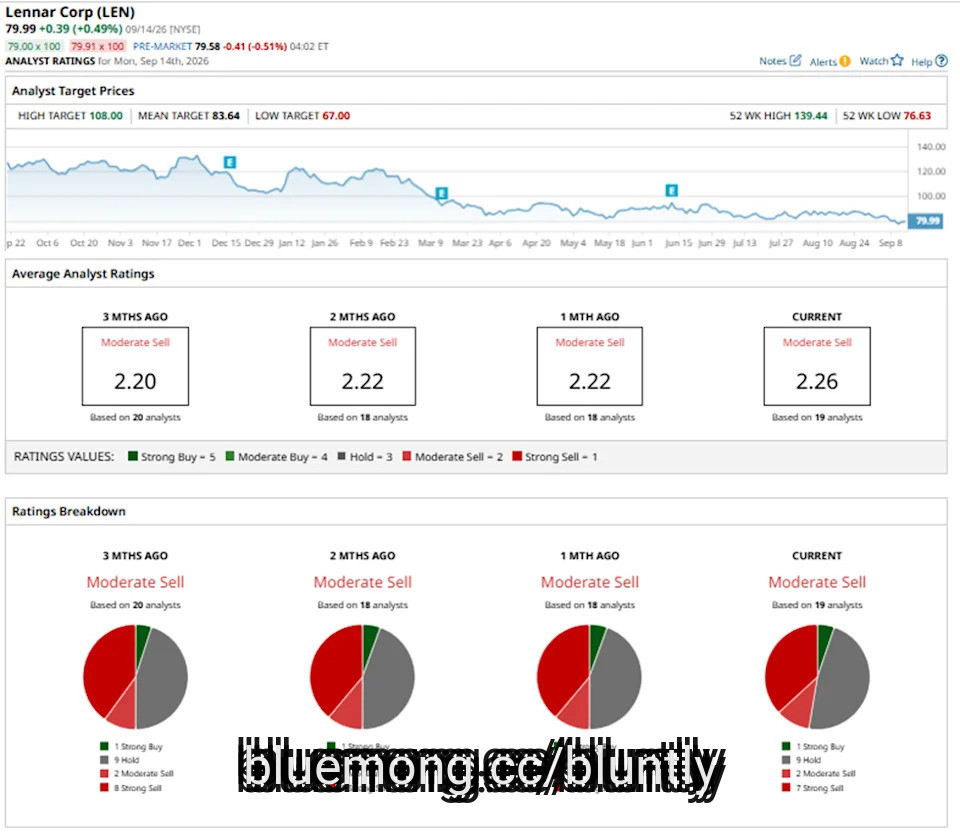

21 hours ago
The 10-year U.S. Treasury yield ($TNX) surged to 5.041% earlier today, marking its highest level since July 2007 and representing an 86-basis-point climb since the start of 2026. This 19-year high in benchmark borrowing costs has arrived at a critical juncture, with the Federal Reserve commencing its two-day policy meeting Tuesday and a rate decision expected Wednesday afternoon.
Markets are pricing in a 92.7% probability of a 25-basis-point hike, per CME's FedWatch Tool, which would lift the federal funds target range to 3.75%-4.00%. That overwhelming consensus in favor of a rate hike is a dramatic shift from roughly 59% just one week ago.
Goldman Sachs Expects Fed Chair Kevin Warsh to Raise Rates This Week — But Not Because of Oil Prices.
Middle East Supply Constraints Lift Crude Oil Prices
Crude Prices Soar as Global Oil Supplies Continue to Tighten
#since #rate
Markets are pricing in a 92.7% probability of a 25-basis-point hike, per CME's FedWatch Tool, which would lift the federal funds target range to 3.75%-4.00%. That overwhelming consensus in favor of a rate hike is a dramatic shift from roughly 59% just one week ago.
Goldman Sachs Expects Fed Chair Kevin Warsh to Raise Rates This Week — But Not Because of Oil Prices.
Middle East Supply Constraints Lift Crude Oil Prices
Crude Prices Soar as Global Oil Supplies Continue to Tighten
#since #rate


1 day ago
On August 4, Westlake Corporation (NYSE:WLK) reported second-quarter results that erased two consecutive quarterly losses in a single swing. Net income landed at $260 million, or $2.01 per share, compared with a $169 million loss just three months earlier and a $142 million loss a year ago. EBITDA nearly tripled from the second quarter of 2025. The numbers mark a sharp reversal for a company whose chemicals business had been bleeding red ink.
The turnaround centers on Performance and Essential Materials, the segment that makes chlorovinyls and other basic chemicals. PEM swung from a $318 million operating loss in the second quarter of 2025 to $185 million in income this quarter, while EBITDA excluding identified items jumped from a 3% margin to 21%. The driver was pricing: average sales prices across PEM rose 14% year over year, more than offsetting a 3% price decline in the Housing and Infrastructure Products segment. Combined with a 7% increase in companywide sales volume, excluding the effects of plant shutdowns and an acquisition, the pricing recovery pushed companywide EBITDA to $679 million from $210 million a year earlier.
Westlake is also working the balance sheet alongside the market recovery. The company reduced debt by $500 million during the quarter and returned $99 million to shareholders through dividends and share repurchases. Management says its three-pillar profitability improvement plan remains on track to deliver a $600 million operating income benefit, a target that, if it holds, would layer structural cost savings on top of whatever the market gives back in pricing.
Not every part of the story improved together. Housing and Infrastructure Products, the segment tied to home construction and building products, saw its EBITDA margin slip to 22% from 24% a year earlier, even as volume rose 6% excluding the ACI acquisition. Average sales prices in that segment fell 3% year over year, a sign that pricing power in housing products has softened even as the company sells more of it.
The improvement in the core chemicals business also leans heavily on price rather than volume. PEM's turnaround came from a 14% jump in average sales price, a figure that can move in either direction with commodity cycles. The first quarter of 2026 was a reminder of how quickly conditions shift: Westlake posted a $169 million net loss just three months before this result, weighed down by $85 million in identified items, including a $67 million charge to settle litigation over PVC pipe and fittings and $18 million tied to facility shutdowns. A year earlier, in the second quarter of 2025, the company absorbed another $130 million in shutdown-related charges. Restructuring and legal charges showed up in two of the last three reported quarters.
#million #quarter #westlake #earlier
The turnaround centers on Performance and Essential Materials, the segment that makes chlorovinyls and other basic chemicals. PEM swung from a $318 million operating loss in the second quarter of 2025 to $185 million in income this quarter, while EBITDA excluding identified items jumped from a 3% margin to 21%. The driver was pricing: average sales prices across PEM rose 14% year over year, more than offsetting a 3% price decline in the Housing and Infrastructure Products segment. Combined with a 7% increase in companywide sales volume, excluding the effects of plant shutdowns and an acquisition, the pricing recovery pushed companywide EBITDA to $679 million from $210 million a year earlier.
Westlake is also working the balance sheet alongside the market recovery. The company reduced debt by $500 million during the quarter and returned $99 million to shareholders through dividends and share repurchases. Management says its three-pillar profitability improvement plan remains on track to deliver a $600 million operating income benefit, a target that, if it holds, would layer structural cost savings on top of whatever the market gives back in pricing.
Not every part of the story improved together. Housing and Infrastructure Products, the segment tied to home construction and building products, saw its EBITDA margin slip to 22% from 24% a year earlier, even as volume rose 6% excluding the ACI acquisition. Average sales prices in that segment fell 3% year over year, a sign that pricing power in housing products has softened even as the company sells more of it.
The improvement in the core chemicals business also leans heavily on price rather than volume. PEM's turnaround came from a 14% jump in average sales price, a figure that can move in either direction with commodity cycles. The first quarter of 2026 was a reminder of how quickly conditions shift: Westlake posted a $169 million net loss just three months before this result, weighed down by $85 million in identified items, including a $67 million charge to settle litigation over PVC pipe and fittings and $18 million tied to facility shutdowns. A year earlier, in the second quarter of 2025, the company absorbed another $130 million in shutdown-related charges. Restructuring and legal charges showed up in two of the last three reported quarters.
#million #quarter #westlake #earlier

1 day ago
On September 11, Elastic (NYSE:ESTC) rolled out Elasticsearch Vector Database, a new serverless offering the company says lets developers ship large-scale vector search and AI applications without stitching together the usual pile of infrastructure themselves. The launch landed less than three weeks after Elastic posted first-quarter fiscal 2027 results on August 27, for the period ended July 31, giving investors a fresh product story to weigh against a quarter that already showed accelerating growth.
The new database automates what used to require manual ***** embly: chunking documents, hosting embedding and reranking models, configuring indexes, and wiring query-time retrieval. Elastic built in expert-tuned defaults, a single field type that handles indexing, embeddings, and chunking together, and hybrid search that combines full-text and vector retrieval in one query. The system scales to hundreds of billions of vectors using Elastic's Better Binary Quantization, which the company says shrinks vector memory by up to 32 times while keeping recall high, and pricing is based on data and search capacity rather than the opaque compute units the company says define most pure-play vector database pricing.
That product push follows a quarter that was already running hot. Total revenue reached $478 million in the first quarter of fiscal 2027, up 15% year over year, while current remaining performance obligations grew 21% and remaining performance obligations grew 27%. Sales-led subscription revenue, which strips out Monthly Elastic Cloud, grew 18% year over year to $399 million, outpacing the company's overall subscription growth.
Elastic added more customers with annual contract value above $100,000 than in any prior quarter, pushing that cohort past 1,800 from over 1,720 in the fourth quarter of fiscal 2026 and over 1,550 a year earlier. Net expansion rate held around 111%, and the company generated $143 million in adjusted free cash flow during the quarter. Guidance for the second quarter of fiscal 2027, ending October 31, calls for revenue of $486 million to $487 million and a swing to positive GAAP operating margin, with full fiscal 2027 non-GAAP operating margin guided to roughly 19.4%, up from 16.2% in the quarter just reported.
Growth came with a reminder that Elastic has not fully crossed into GAAP profitability. The company posted a GAAP operating loss of $24 million in the first quarter of fiscal 2027, a -5% operating margin, and a GAAP net loss per share of $0.16. Non-GAAP figures told a healthier story, with $77 million in non-GAAP operating income and $0.70 in non-GAAP diluted earnings per share, but the gap between the two measures shows how much of Elastic's reported profitability still depends on excluding real costs like stock-based compensation.
#quarter #fiscal #year #operating
The new database automates what used to require manual ***** embly: chunking documents, hosting embedding and reranking models, configuring indexes, and wiring query-time retrieval. Elastic built in expert-tuned defaults, a single field type that handles indexing, embeddings, and chunking together, and hybrid search that combines full-text and vector retrieval in one query. The system scales to hundreds of billions of vectors using Elastic's Better Binary Quantization, which the company says shrinks vector memory by up to 32 times while keeping recall high, and pricing is based on data and search capacity rather than the opaque compute units the company says define most pure-play vector database pricing.
That product push follows a quarter that was already running hot. Total revenue reached $478 million in the first quarter of fiscal 2027, up 15% year over year, while current remaining performance obligations grew 21% and remaining performance obligations grew 27%. Sales-led subscription revenue, which strips out Monthly Elastic Cloud, grew 18% year over year to $399 million, outpacing the company's overall subscription growth.
Elastic added more customers with annual contract value above $100,000 than in any prior quarter, pushing that cohort past 1,800 from over 1,720 in the fourth quarter of fiscal 2026 and over 1,550 a year earlier. Net expansion rate held around 111%, and the company generated $143 million in adjusted free cash flow during the quarter. Guidance for the second quarter of fiscal 2027, ending October 31, calls for revenue of $486 million to $487 million and a swing to positive GAAP operating margin, with full fiscal 2027 non-GAAP operating margin guided to roughly 19.4%, up from 16.2% in the quarter just reported.
Growth came with a reminder that Elastic has not fully crossed into GAAP profitability. The company posted a GAAP operating loss of $24 million in the first quarter of fiscal 2027, a -5% operating margin, and a GAAP net loss per share of $0.16. Non-GAAP figures told a healthier story, with $77 million in non-GAAP operating income and $0.70 in non-GAAP diluted earnings per share, but the gap between the two measures shows how much of Elastic's reported profitability still depends on excluding real costs like stock-based compensation.
#quarter #fiscal #year #operating

1 day ago
CRDO reported $236M in adjusted profit, but stock-comp add-backs and a $62M inventory build shrunk free cash flow to just $83M.
Shares fell 42% in one month to $150, while 18 of 19 ***** ysts maintain Buy ratings with a $281 consensus target.
Top two customers represent 33% and 28% of revenue, meaning a single push-out could flip Credo's inventory build into a demand shortfall.
Just released. Our ***** ysts combed the entire stock market and named the ten best stocks to buy right now, and Credo Technology Group didn't make the cut. Enter your email to see the names that beat CRDO. The report is free. Enter your email and see if any of your stocks made the cut.
Credo (NASDAQ:CRDO) closed its fiscal first quarter with $236.3 million in adjusted profit and $82.9 million in free cash flow, and the stock has moved as if investors noticed. Shares last traded at $150.39, down 42.14% over the past month, while the Wall Street consensus price target sits at $281.47. That leaves a wide spread between where the market is pricing the AI connectivity chipmaker and where the sell side thinks it belongs.
#crdo #shares #inventory
Shares fell 42% in one month to $150, while 18 of 19 ***** ysts maintain Buy ratings with a $281 consensus target.
Top two customers represent 33% and 28% of revenue, meaning a single push-out could flip Credo's inventory build into a demand shortfall.
Just released. Our ***** ysts combed the entire stock market and named the ten best stocks to buy right now, and Credo Technology Group didn't make the cut. Enter your email to see the names that beat CRDO. The report is free. Enter your email and see if any of your stocks made the cut.
Credo (NASDAQ:CRDO) closed its fiscal first quarter with $236.3 million in adjusted profit and $82.9 million in free cash flow, and the stock has moved as if investors noticed. Shares last traded at $150.39, down 42.14% over the past month, while the Wall Street consensus price target sits at $281.47. That leaves a wide spread between where the market is pricing the AI connectivity chipmaker and where the sell side thinks it belongs.
#crdo #shares #inventory


1 day ago
On August 5, Kinetik Holdings Inc. (NYSE:KNTK) reported the strongest quarterly results in company history and raised its full-year 2026 guidance. The Permian-focused midstream operator posted net income, including noncontrolling interest, of $123.1 million for the quarter ended June 30, while Adjusted EBITDA climbed to $280.8 million. Management didn't stop at celebrating the number. It used the quarter as the launchpad for a string of expansion decisions that stretch out to 2028.
The Midstream Logistics segment, Kinetik's largest, grew Adjusted EBITDA 35% year over year to $204.8 million in the second quarter, even though processed natural gas volumes held flat at 1.74 Bcf/d. That flat number actually undersells the quarter. It came despite roughly 250 million cubic feet per day of gas that had been shut in because of weak Waha-area pricing, with stronger natural gas liquid recoveries, condensate yields, and favorable commodity spreads carrying the segment instead.
Management is betting the growth continues well past 2026. In May, Kinetik reached a final investment decision on Kings Landing II, a roughly $260 million project that will lift sour gas processing capacity across the company's Delaware North complex above 700 MMcf/d and push total system capacity to 2.7 Bcf/d when it comes online in mid-2028, earlier than previously communicated. The ECCC Pipeline, which links the system's northern and southern halves between Eddy and Culberson Counties, is now in service, and right-of-way work has already begun on a follow-on expansion for 2027.
Kinetik also locked in new firm Gulf Coast access for residue gas starting in 2027 and signed fresh natural gas liquids transport agreements, both aimed at getting better prices for the gas it moves. On the back of that momentum, Kinetik raised its full-year 2026 Adjusted EBITDA guidance to a range of $1.04 billion to $1.1 billion, a 7% ***** p from the guidance it issued in February.
Not every part of the business is moving in the same direction. The Pipeline Transportation segment posted Adjusted EBITDA of $83.0 million in the quarter, down 14% year over year, a decline the company attributes to last year's divestiture of its equity stake in EPIC Crude Holdings. That sale removed a source of cash flow the rest of the business now has to make up for. Kinetik also expects gas curtailments to keep running at an average of 25 million cubic feet per day through the second half of 2026, on top of the Waha-driven shut-ins that already weighed on the quarter. Its own pricing ***** umptions underline the regional problem: the company is now modeling Waha Hub natural gas at negative $0.26 per MMBtu for the full year, meaning gas in parts of the Permian is priced so low that moving it out of the basin is the whole game.
#natural
The Midstream Logistics segment, Kinetik's largest, grew Adjusted EBITDA 35% year over year to $204.8 million in the second quarter, even though processed natural gas volumes held flat at 1.74 Bcf/d. That flat number actually undersells the quarter. It came despite roughly 250 million cubic feet per day of gas that had been shut in because of weak Waha-area pricing, with stronger natural gas liquid recoveries, condensate yields, and favorable commodity spreads carrying the segment instead.
Management is betting the growth continues well past 2026. In May, Kinetik reached a final investment decision on Kings Landing II, a roughly $260 million project that will lift sour gas processing capacity across the company's Delaware North complex above 700 MMcf/d and push total system capacity to 2.7 Bcf/d when it comes online in mid-2028, earlier than previously communicated. The ECCC Pipeline, which links the system's northern and southern halves between Eddy and Culberson Counties, is now in service, and right-of-way work has already begun on a follow-on expansion for 2027.
Kinetik also locked in new firm Gulf Coast access for residue gas starting in 2027 and signed fresh natural gas liquids transport agreements, both aimed at getting better prices for the gas it moves. On the back of that momentum, Kinetik raised its full-year 2026 Adjusted EBITDA guidance to a range of $1.04 billion to $1.1 billion, a 7% ***** p from the guidance it issued in February.
Not every part of the business is moving in the same direction. The Pipeline Transportation segment posted Adjusted EBITDA of $83.0 million in the quarter, down 14% year over year, a decline the company attributes to last year's divestiture of its equity stake in EPIC Crude Holdings. That sale removed a source of cash flow the rest of the business now has to make up for. Kinetik also expects gas curtailments to keep running at an average of 25 million cubic feet per day through the second half of 2026, on top of the Waha-driven shut-ins that already weighed on the quarter. Its own pricing ***** umptions underline the regional problem: the company is now modeling Waha Hub natural gas at negative $0.26 per MMBtu for the full year, meaning gas in parts of the Permian is priced so low that moving it out of the basin is the whole game.
#natural


1 day ago
U.S. median household income hit a record $87,460 in 2025, but lower-income earners saw no meaningful gains while top earners' income has surged 121% over 58 years.
Gasoline prices surged 27%, shelter rose 3%, and hospital services climbed 5% year-over-year, eroding purchasing power for households already spending most income on essentials.
Investors should favor companies with durable pricing power in essential categories and businesses built to serve cost-conscious consumers trading down on discretionary spending.
Read More: Learn 7 secret wealth tips high net worth investors use that most investors miss (sponsor)
The latest Census Bureau data delivers a headline that sounds almost too good to be true: American households earned more in 2025 than ever before. But the numbers also explain why a record income figure can coexist with a persistent sense that the household budget is under pressure.
#income #earners #surged
Gasoline prices surged 27%, shelter rose 3%, and hospital services climbed 5% year-over-year, eroding purchasing power for households already spending most income on essentials.
Investors should favor companies with durable pricing power in essential categories and businesses built to serve cost-conscious consumers trading down on discretionary spending.
Read More: Learn 7 secret wealth tips high net worth investors use that most investors miss (sponsor)
The latest Census Bureau data delivers a headline that sounds almost too good to be true: American households earned more in 2025 than ever before. But the numbers also explain why a record income figure can coexist with a persistent sense that the household budget is under pressure.
#income #earners #surged

1 day ago
XLE has surged 46% year-to-date while XLY dropped 7%, with defensive XLP up 9% as markets rotate away from consumer exposure.
XLF's soft 4% gain signals financial stocks aren't pricing a healthy cycle, with the 10-year/2-year Treasury spread flattened to 0.33%.
Torres pegs $120 WTI as the consumer spending breaking point, still 20% above current prices but reminiscent of 2022's economy-crushing oil surge.
Read More: Avoid these 13 retirement mistakes before they derail your future (sponsor)
The national average price of regular gasoline jumped 16 cents in a single week to $4.32 a gallon on September 14, 2026, a move that puts the pump price in the 90th percentile of the past year and caps a 7.8% jump in one month. The proximate cause sits upstream: WTI crude cleared $97.26 a barrel on September 9 after running up 16.1% in a month, and Brent has traded through the $100 line. On Fed decision day, a CNBC Morning Call panel put a number on where this stops being an inconvenience and starts being a recession.
#Consumer #torres
XLF's soft 4% gain signals financial stocks aren't pricing a healthy cycle, with the 10-year/2-year Treasury spread flattened to 0.33%.
Torres pegs $120 WTI as the consumer spending breaking point, still 20% above current prices but reminiscent of 2022's economy-crushing oil surge.
Read More: Avoid these 13 retirement mistakes before they derail your future (sponsor)
The national average price of regular gasoline jumped 16 cents in a single week to $4.32 a gallon on September 14, 2026, a move that puts the pump price in the 90th percentile of the past year and caps a 7.8% jump in one month. The proximate cause sits upstream: WTI crude cleared $97.26 a barrel on September 9 after running up 16.1% in a month, and Brent has traded through the $100 line. On Fed decision day, a CNBC Morning Call panel put a number on where this stops being an inconvenience and starts being a recession.
#Consumer #torres