3 days ago
Vivian Wilson's newest co-star is a humanoid robot, and she spends much of their time together finding increasingly strange jobs for it to do.
The 22-year-old model fronts Desigual's Fall 2026 "Born to Disobey" campaign alongside DESI84, a robotic **** istant that struggles once Wilson pushes it beyond its programming. She walks it on a leash, uses it as a golf tee and repeatedly tries to teach it how to **** ounce Desigual before ending the film with the line, "Some things aren't meant to be fixed."
Wilson's criticism of artificial intelligence goes beyond the joke. She told PEOPLE that AI is taking work from creative professionals while creating environmental costs, and she argued that AI generated art lacks the human emotion and intention behind creative work.
Her casting has also prompted comparisons with her estranged father, Elon Musk, whose companies include artificial intelligence venture xAI and Tesla, which is developing the Optimus humanoid robot. TMZ interpreted the campaign as a shot at Musk, but Wilson and Desigual have not said DESI84 represents him or Optimus.
Wilson said concerns about employment were among the reasons she wanted to speak about artificial intelligence through the campaign.
#campaign #artificial #desigual #musk
The 22-year-old model fronts Desigual's Fall 2026 "Born to Disobey" campaign alongside DESI84, a robotic **** istant that struggles once Wilson pushes it beyond its programming. She walks it on a leash, uses it as a golf tee and repeatedly tries to teach it how to **** ounce Desigual before ending the film with the line, "Some things aren't meant to be fixed."
Wilson's criticism of artificial intelligence goes beyond the joke. She told PEOPLE that AI is taking work from creative professionals while creating environmental costs, and she argued that AI generated art lacks the human emotion and intention behind creative work.
Her casting has also prompted comparisons with her estranged father, Elon Musk, whose companies include artificial intelligence venture xAI and Tesla, which is developing the Optimus humanoid robot. TMZ interpreted the campaign as a shot at Musk, but Wilson and Desigual have not said DESI84 represents him or Optimus.
Wilson said concerns about employment were among the reasons she wanted to speak about artificial intelligence through the campaign.
#campaign #artificial #desigual #musk


4 days ago
Vivian Jenna Wilson is taking aim at artificial intelligence – and seemingly her billionaire father – in a new fashion campaign with Desigual.
Wilson, the estranged daughter of Elon Musk, stars in the fashion brand's fall 2026 "Born to Disobey" campaign, which features a malfunctioning robot, an apparent dig at Musk's humanoid robot called Optimus.
In the campaign video, the 22-year-old model is paired with DESI84, a humanoid robot that she says was "designed to obey" and ***** ist with everyday tasks. Wilson instead puts the machine through a series of unconventional tests, including walking it like a dog and using it as a golf tee.
Elon Musk's estranged daughter takes to X rival Threads to call him a liar, adulterer
The robot also struggles to ***** ounce the Spanish fashion brand's name correctly before repeatedly banging its head against a wall. Wilson ultimately concludes, "Some things aren't meant to be fixed."
#robot #elon
Wilson, the estranged daughter of Elon Musk, stars in the fashion brand's fall 2026 "Born to Disobey" campaign, which features a malfunctioning robot, an apparent dig at Musk's humanoid robot called Optimus.
In the campaign video, the 22-year-old model is paired with DESI84, a humanoid robot that she says was "designed to obey" and ***** ist with everyday tasks. Wilson instead puts the machine through a series of unconventional tests, including walking it like a dog and using it as a golf tee.
Elon Musk's estranged daughter takes to X rival Threads to call him a liar, adulterer
The robot also struggles to ***** ounce the Spanish fashion brand's name correctly before repeatedly banging its head against a wall. Wilson ultimately concludes, "Some things aren't meant to be fixed."
#robot #elon



8 days ago
On September 2, ChargePoint Holdings, Inc (NYSE:CHPT) reported stronger-than-expected results for the second quarter of fiscal 2027. Revenue and the company's loss per share both came in better than Wall Street expectations and the company also reported record non-GAAP gross margin while also highlighting continued progress across its charging business.
Q2 revenue increased 18% year-over-year to $116.1 million, exceeding the $105.2 million ****** yst estimate. ChargePoint Holdings, Inc (NYSE:CHPT) reported an adjusted loss of 35 cents per share, compared with ****** ysts' expectations for a loss of 85 cents per share, according to average estimates compiled by LSEG.
The company also benefited from higher North American home-charging sales, which helped push revenue above expectations. Networked charging systems revenue was up 25% year-over-year as it reached $62.9 million. Subscription revenue increased 10% to $43.7 million. Additionally, the company reported a 78% improvement in its non-GAAP adjusted EBITDA loss, which narrowed sharply to $4.8 million from $22.1 million in the same quarter last year.
ChargePoint Holdings, Inc (NYSE:CHPT) expanded its commercial relationships during the quarter as it extended its long-standing partnership with Mercedes-Benz through a new agreement covering charging solutions for fleet operators in the UK and Germany. The company also announced agreements with Optimus Energy Solutions and Onvo that are expected to add hundreds of new charging ports across the eastern US.
The company also appointed automotive industry veteran John Saffrett as Executive Vice President and Managing Director for Europe, where he will be overseeing sales, customer relationships, partnerships, and market expansion.
#revenue #holdings #chpt
Q2 revenue increased 18% year-over-year to $116.1 million, exceeding the $105.2 million ****** yst estimate. ChargePoint Holdings, Inc (NYSE:CHPT) reported an adjusted loss of 35 cents per share, compared with ****** ysts' expectations for a loss of 85 cents per share, according to average estimates compiled by LSEG.
The company also benefited from higher North American home-charging sales, which helped push revenue above expectations. Networked charging systems revenue was up 25% year-over-year as it reached $62.9 million. Subscription revenue increased 10% to $43.7 million. Additionally, the company reported a 78% improvement in its non-GAAP adjusted EBITDA loss, which narrowed sharply to $4.8 million from $22.1 million in the same quarter last year.
ChargePoint Holdings, Inc (NYSE:CHPT) expanded its commercial relationships during the quarter as it extended its long-standing partnership with Mercedes-Benz through a new agreement covering charging solutions for fleet operators in the UK and Germany. The company also announced agreements with Optimus Energy Solutions and Onvo that are expected to add hundreds of new charging ports across the eastern US.
The company also appointed automotive industry veteran John Saffrett as Executive Vice President and Managing Director for Europe, where he will be overseeing sales, customer relationships, partnerships, and market expansion.
#revenue #holdings #chpt


12 days ago
PEOPLE has obtained Peter Cullen's death certificate, confirming his cause of death
The voice actor died at his home in Los Angeles on Aug. 26 at age 85
In a statement, his family asked fans to "honor his remarkable legacy by serving your communities and leading others with compassion, integrity and loyalty"
Peter Cullen's cause of death has been revealed.
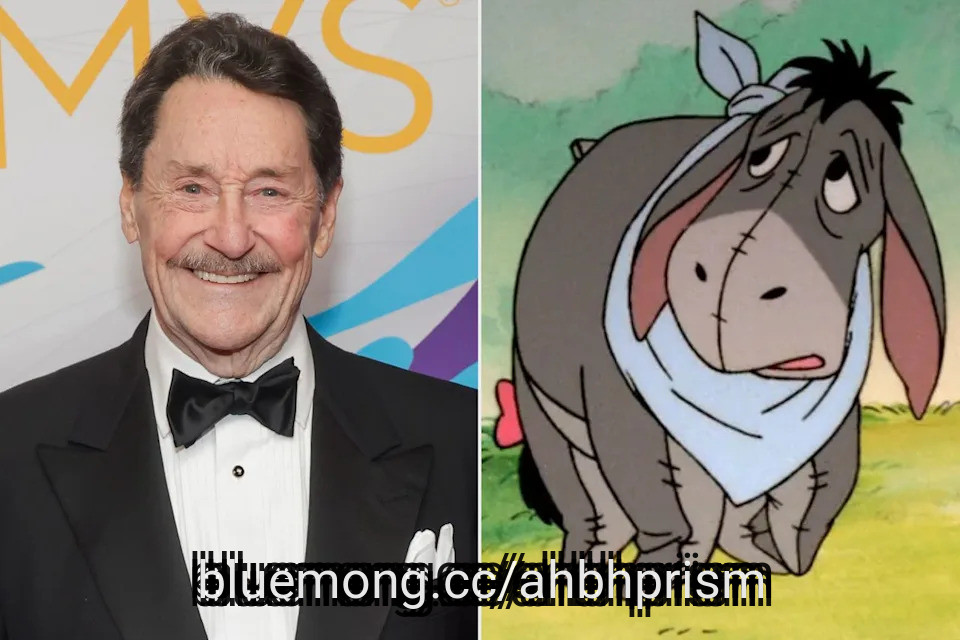
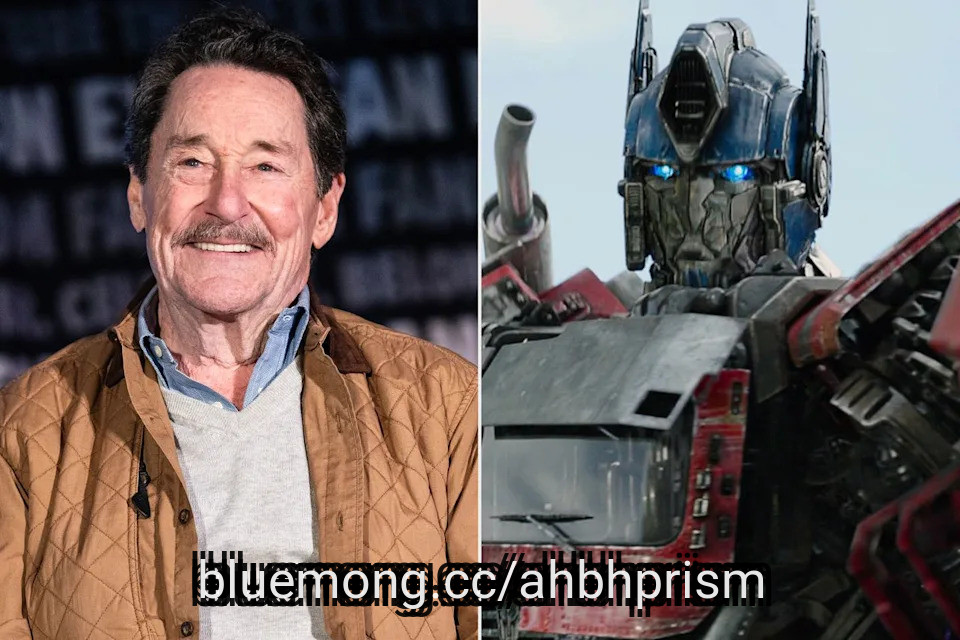
The voice actor, who best known for playing Optimus Prime in the Transformers movies and Eeyore in Winnie the Pooh, died on Aug. 26 at his Los Angeles home at age 85, a rep previously confirmed to PEOPLE.
#actor #died #optimus
The voice actor died at his home in Los Angeles on Aug. 26 at age 85
In a statement, his family asked fans to "honor his remarkable legacy by serving your communities and leading others with compassion, integrity and loyalty"
Peter Cullen's cause of death has been revealed.
The voice actor, who best known for playing Optimus Prime in the Transformers movies and Eeyore in Winnie the Pooh, died on Aug. 26 at his Los Angeles home at age 85, a rep previously confirmed to PEOPLE.
#actor #died #optimus


16 days ago
When you buy through links on our articles, Future and its syndication partners may earn a commission.
Credit: Activision
In his review of Transformers: War for Cybertron, Dan Stapleton referred to "the tingly nerd-joy of hearing original Optimus Prime voice actor Peter Cullen's authoritative dialogue". Every time the character appeared on screen, as he did many times in videogames like Transformers: Devastation and Fall of Cybertron or the middling movies, it was thrilling to hear him and realize, yes, they got the "real" Optimus Prime.
As noted by The Hollywood Reporter, Cullen has died at the age of 85. He joins a string of particularly beloved celebrities to have died in recent days, including Dolly Parton, Yayoi Kusama, and Red Alert 3 star and camp icon Tim Curry.
While most famous for his recurring role as Optimus Prime, Cullen also voiced Venger in Dungeons & Dragons, Eeyore in Winnie the Pooh, Monterey Jack in Chip 'n Dale: Rescue Rangers, and provided the menacing clicking sounds for the Predator.
#transformers #cybertron #died #credit
Credit: Activision
In his review of Transformers: War for Cybertron, Dan Stapleton referred to "the tingly nerd-joy of hearing original Optimus Prime voice actor Peter Cullen's authoritative dialogue". Every time the character appeared on screen, as he did many times in videogames like Transformers: Devastation and Fall of Cybertron or the middling movies, it was thrilling to hear him and realize, yes, they got the "real" Optimus Prime.
As noted by The Hollywood Reporter, Cullen has died at the age of 85. He joins a string of particularly beloved celebrities to have died in recent days, including Dolly Parton, Yayoi Kusama, and Red Alert 3 star and camp icon Tim Curry.
While most famous for his recurring role as Optimus Prime, Cullen also voiced Venger in Dungeons & Dragons, Eeyore in Winnie the Pooh, Monterey Jack in Chip 'n Dale: Rescue Rangers, and provided the menacing clicking sounds for the Predator.
#transformers #cybertron #died #credit


18 days ago
Tesla (NASDAQ: TSLA) CEO Elon Musk has repeatedly said that investors should think of his company as a robotics and automation company. And, to its credit, Tesla is making some progress in this direction with its Optimus humanoid robot and tests of its Robotaxi self-driving vehicle service in a handful of U.S. cities.
But betting on Tesla's transition to robotics is pretty risky. The company has been an EV company for years, and it's spending heavily as it remakes itself.
Missed Nvidia in 2009? This Rare Signal Is Flashing Again. In 2009, a "Double Down" signal flashed for a little-known chipmaker called Nvidia. For the first time in years, that same "Total Conviction" signal is flashing for a company 1/100th the size of Nvidia. Continue »
Investors looking for two better robotics stocks that could successfully tap into the $2.5 trillion robotics market (by 2035) should consider owning Nvidia (NASDAQ: NVDA) and Microsoft (NASDAQ: MSFT) for the long haul. Here's why.
Nvidia's management believes physical AI -- including robotics -- will be one of the next big tech waves, and the company is preparing for the transition now.
#flashing
But betting on Tesla's transition to robotics is pretty risky. The company has been an EV company for years, and it's spending heavily as it remakes itself.
Missed Nvidia in 2009? This Rare Signal Is Flashing Again. In 2009, a "Double Down" signal flashed for a little-known chipmaker called Nvidia. For the first time in years, that same "Total Conviction" signal is flashing for a company 1/100th the size of Nvidia. Continue »
Investors looking for two better robotics stocks that could successfully tap into the $2.5 trillion robotics market (by 2035) should consider owning Nvidia (NASDAQ: NVDA) and Microsoft (NASDAQ: MSFT) for the long haul. Here's why.
Nvidia's management believes physical AI -- including robotics -- will be one of the next big tech waves, and the company is preparing for the transition now.
#flashing

19 days ago
The world is mourning the loss of iconic voice actor Peter Cullen, who died at the age of 85. He was an all-time great voice actor. He was Optimus Prime in Transformers. He was Eeyore in Winnie the Pooh. He was Monterey Jack in Chip 'n' Dale's Rescue Rangers. He was King Kong.
What was the cause of death? None has been reported so far, and in a statement to USA TODAY his agent Kevin Motley had this to say: "Peter Cullen passed away peacefully, surrounded by his loving family – and held in the hearts of his many friends and countless fans worldwide."
We'll update this story with more information as it becomes available.
Here's our list of the best of them.
This article originally appeared on For The Win: What happened to Optimus Prime voice actor Peter Cullen? Everything we know
#peter #cullen #optimus #transformers
What was the cause of death? None has been reported so far, and in a statement to USA TODAY his agent Kevin Motley had this to say: "Peter Cullen passed away peacefully, surrounded by his loving family – and held in the hearts of his many friends and countless fans worldwide."
We'll update this story with more information as it becomes available.
Here's our list of the best of them.
This article originally appeared on For The Win: What happened to Optimus Prime voice actor Peter Cullen? Everything we know
#peter #cullen #optimus #transformers


19 days ago
Actor Peter Cullen, who voiced popular characters including Optimus Prime in Transformers and Eeyore in Disney's Winnie the Pooh franchise, has died at the age of 85.
The Canadian actor began his most famous role - as the heroic deep-voiced Optimus Prime - for the Transformers TV series in 1984, then returned for seven Hollywood films from 2007 to 2023 and other spin-offs.
He voiced depressive donkey Eeyore in TV animation The New Adventures of Winnie the Pooh from the late 1980s as well as numerous related shows, films and games.
His other memorable voice parts included KARR, the evil counterpart to KITT in TV show Knight Rider; the clicking vocalisations of The Predator in Arnold Schwarzenegger's 1987 film; and the roars of King Kong in 1976.
Cullen received a lifetime achievement award at the Children's & Family Emmy Awards in 2023 [Getty Images]
#voiced #winnie #actor
The Canadian actor began his most famous role - as the heroic deep-voiced Optimus Prime - for the Transformers TV series in 1984, then returned for seven Hollywood films from 2007 to 2023 and other spin-offs.
He voiced depressive donkey Eeyore in TV animation The New Adventures of Winnie the Pooh from the late 1980s as well as numerous related shows, films and games.
His other memorable voice parts included KARR, the evil counterpart to KITT in TV show Knight Rider; the clicking vocalisations of The Predator in Arnold Schwarzenegger's 1987 film; and the roars of King Kong in 1976.
Cullen received a lifetime achievement award at the Children's & Family Emmy Awards in 2023 [Getty Images]
#voiced #winnie #actor


19 days ago
Peter Cullen has died at the age of 85. Cullen was a prolific voice actor who played Transformers' Optimus Prime in both the animated and live-action franchises, Winnie the Pooh's Eeyore, the evil K.A.R.R. in Knight Rider, and more. He was also known for voicing the menacing clicking sounds that came out of the monster's mouth in Predator, starring Arnold Schwarzenegger.
Cullen's death was announced on Thursday, August 27, but Cullen died on August 26 in his home in Los Angeles, his agent, Kevin Motley, told The Hollywood Reporter. An official cause of death has not been disclosed.
The Canadian actor "passed away peacefully, surrounded by his loving family — and held in the hearts of his many friends and countless fans worldwide," Cullen's family said in a statement. The family asks "that you honor his remarkable legacy by serving your communities and leading others with compassion, integrity, and loyalty, and always remember 'be strong enough to be gentle.'"
Cullen recently played the voice of Thadeus in Invincible on Prime Video. Cullen also played the voice of King Kong in the 1976 remake. His live-action work in the early years of his career included being the announcer for The Smothers Brothers Comedy Hour and The Sonny & Cher Comedy Hour.
Related
#voice #august #hour
Cullen's death was announced on Thursday, August 27, but Cullen died on August 26 in his home in Los Angeles, his agent, Kevin Motley, told The Hollywood Reporter. An official cause of death has not been disclosed.
The Canadian actor "passed away peacefully, surrounded by his loving family — and held in the hearts of his many friends and countless fans worldwide," Cullen's family said in a statement. The family asks "that you honor his remarkable legacy by serving your communities and leading others with compassion, integrity, and loyalty, and always remember 'be strong enough to be gentle.'"
Cullen recently played the voice of Thadeus in Invincible on Prime Video. Cullen also played the voice of King Kong in the 1976 remake. His live-action work in the early years of his career included being the announcer for The Smothers Brothers Comedy Hour and The Sonny & Cher Comedy Hour.
Related
#voice #august #hour



19 days ago
Peter Cullen has died at age 85
The voice actor was known for his roles as Optimus Prime in Transformers and Eeyore in Disney's Winnie the Pooh franchise
"His family asks that you honor his remarkable legacy by serving your communities and leading others with compassion, integrity and loyalty and always remember 'be strong enough to be gentle,'" his family said
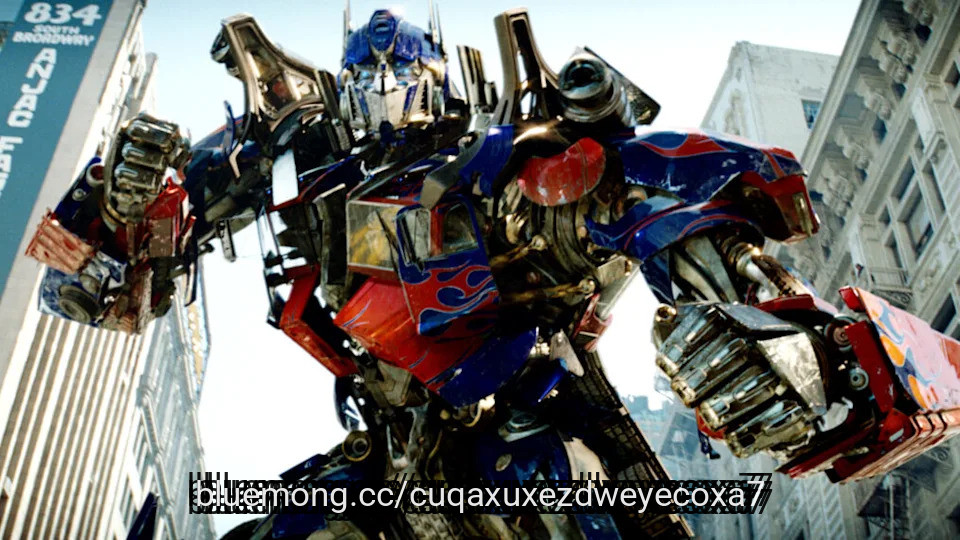
Peter Cullen, the voice actor known for his work in the Transformers and Winnie the Pooh franchises, has died. He was 85.
Cullen died on Wednesday, Aug. 26, at his home in Los Angeles, a rep for the actor confirmed to PEOPLE. A cause of death was not shared.
#transformers #family
The voice actor was known for his roles as Optimus Prime in Transformers and Eeyore in Disney's Winnie the Pooh franchise
"His family asks that you honor his remarkable legacy by serving your communities and leading others with compassion, integrity and loyalty and always remember 'be strong enough to be gentle,'" his family said
Peter Cullen, the voice actor known for his work in the Transformers and Winnie the Pooh franchises, has died. He was 85.
Cullen died on Wednesday, Aug. 26, at his home in Los Angeles, a rep for the actor confirmed to PEOPLE. A cause of death was not shared.
#transformers #family

19 days ago
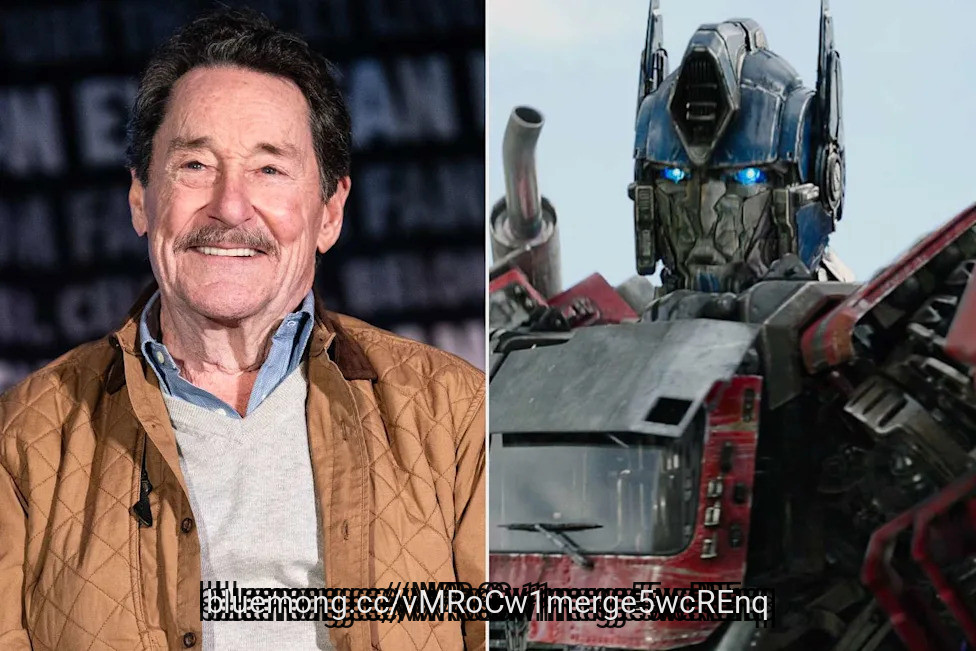
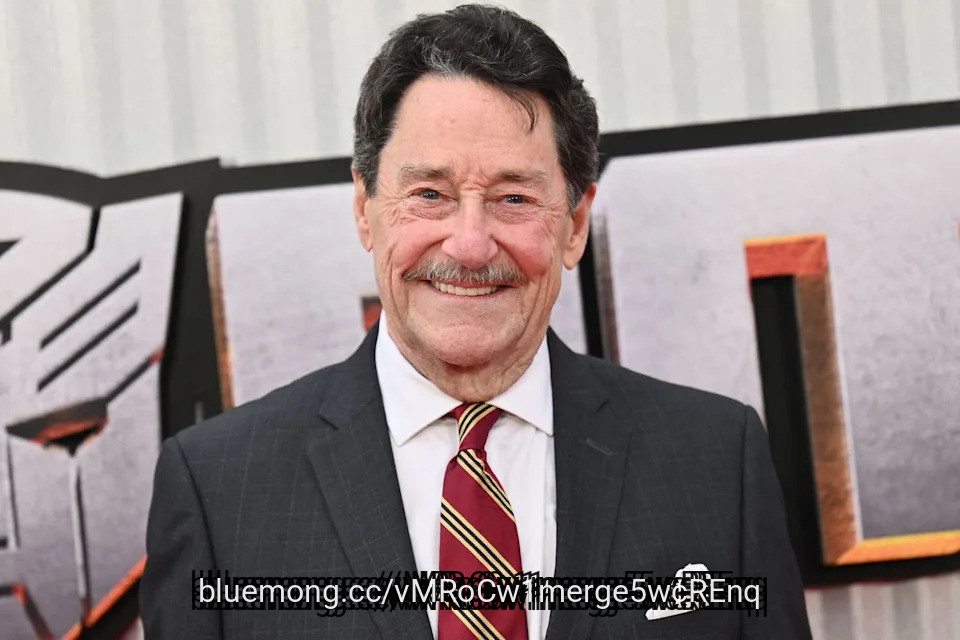
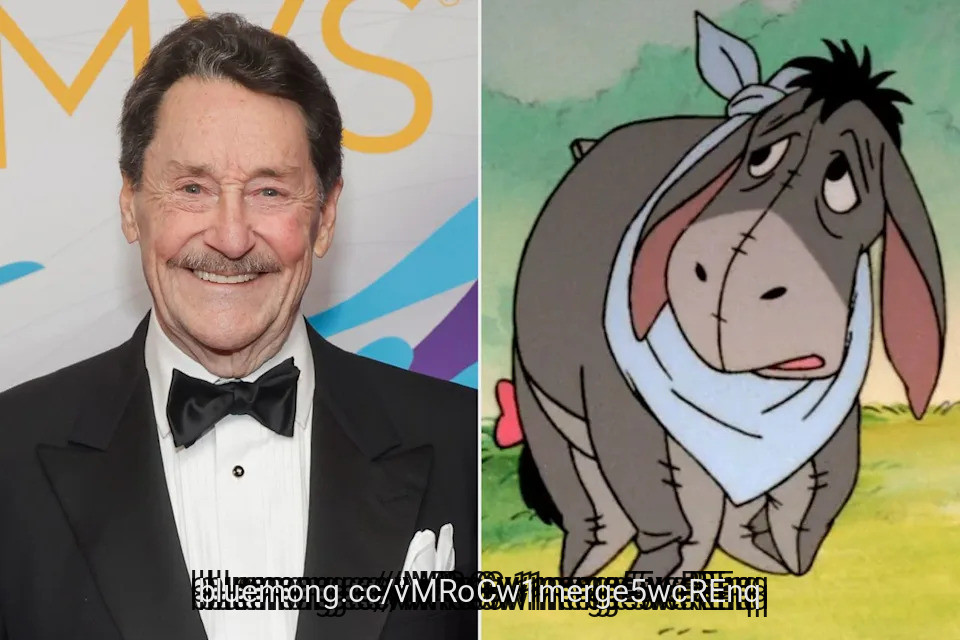
Canadian voice actor Peter Cullen has died, aged 85. He is best known as the voice of Optimus Prime in the Transformers films, TV shows and video games as well as Eeyore in dozens of Winnie the Pooh projects;
His agent Kevin Motley, announced his death to The Hollywood Reporter, confirming he passed on Wednesday 27 August at the age of 85.
He "passed away peacefully, surrounded by his loving family — and held in the hearts of his many friends and countless fans worldwide," his family said in a statement. They ask "that you honor his remarkable legacy by serving your communities and leading others with compassion, integrity and loyalty and always remember 'be strong enough to be gentle'."
Born in Montreal, Cullen voiced King Kong in the 1976 remake and the evil K.A.R.R. in Knight Rider series. He was also the originator of the clicking sounds made by the monster in 1987's Predator.
He also worked as the announcer for The Smothers Brothers Comedy Hour and The Sonny & Cher Comedy Hour.
#family
His agent Kevin Motley, announced his death to The Hollywood Reporter, confirming he passed on Wednesday 27 August at the age of 85.
He "passed away peacefully, surrounded by his loving family — and held in the hearts of his many friends and countless fans worldwide," his family said in a statement. They ask "that you honor his remarkable legacy by serving your communities and leading others with compassion, integrity and loyalty and always remember 'be strong enough to be gentle'."
Born in Montreal, Cullen voiced King Kong in the 1976 remake and the evil K.A.R.R. in Knight Rider series. He was also the originator of the clicking sounds made by the monster in 1987's Predator.
He also worked as the announcer for The Smothers Brothers Comedy Hour and The Sonny & Cher Comedy Hour.
#family


19 days ago
Peter Cullen, the Canadian voice actor who voiced Optimus Prime in the original 1980s Transformers animated series, later reprised the role in the film and TV franchises and also voiced Eeyore in the Winnie the Pooh franchise, among many others, has died. He was 85.
His family told TMZ Cullen died Wednesday in Los Angeles but did not provide a cause of death.
More from Deadline
2026 Deaths Photo Gallery: Hollywood & Media Obituaries
Remembering Tim Curry: A Career in Photos
#peter #canadian #eeyore #winnie
His family told TMZ Cullen died Wednesday in Los Angeles but did not provide a cause of death.
More from Deadline
2026 Deaths Photo Gallery: Hollywood & Media Obituaries
Remembering Tim Curry: A Career in Photos
#peter #canadian #eeyore #winnie



19 days ago
HOLLYWOOD, CA - SEPTEMBER 30: Voiceover actor Peter Cullen at the Optimus Prime hand and footprint ceremony held at TCL Chinese Theatre IMAX on September 30, 2014 in Hollywood, California. (Photo by Albert L. Ortega/Getty Images)
Peter Cullen, the Canadian voice actor whose deep, measured baritone gave Optimus Prime his voice across four decades of the Transformers franchise, died at his Los Angeles home He was 85. No cause of death was confirmed, and the passing was first reported by TMZ.
His family said in a statement, "Peter Cullen passed away peacefully, surrounded by his loving family — and held in the hearts of his many friends and countless fans worldwide. His family asks that you honor his remarkable legacy by serving your communities and leading others with compassion, integrity, and loyalty, and always remember: be strong enough to be gentle."
That last phrase — "be strong enough to be gentle" — was the advice Cullen's brother Larry gave him when he auditioned for the role of Optimus Prime in 1984. Cullen based the character's voice on Larry, a Marine veteran, deciding that a true leader's strength should carry warmth rather than aggression. The audition won him the long-running role.
Cullen's animation career began well before Transformers, voicing characters across Pac-Man, Rainbow Brite, Voltron, The Addams Family, and Chip 'n Dale Rescue Rangers as Monterey Jack, and provided the vocal effects of the Predator in the ep 1987 film of the same name. He was also the voice of Eeyore in Disney's Winnie the Pooh properties for years, a role he described as among his favourites. Disney later turned to Brad Garrett for a couple of 2018 productions, though Cullen remained the character's primary voice elsewhere.
#peter
Peter Cullen, the Canadian voice actor whose deep, measured baritone gave Optimus Prime his voice across four decades of the Transformers franchise, died at his Los Angeles home He was 85. No cause of death was confirmed, and the passing was first reported by TMZ.
His family said in a statement, "Peter Cullen passed away peacefully, surrounded by his loving family — and held in the hearts of his many friends and countless fans worldwide. His family asks that you honor his remarkable legacy by serving your communities and leading others with compassion, integrity, and loyalty, and always remember: be strong enough to be gentle."
That last phrase — "be strong enough to be gentle" — was the advice Cullen's brother Larry gave him when he auditioned for the role of Optimus Prime in 1984. Cullen based the character's voice on Larry, a Marine veteran, deciding that a true leader's strength should carry warmth rather than aggression. The audition won him the long-running role.
Cullen's animation career began well before Transformers, voicing characters across Pac-Man, Rainbow Brite, Voltron, The Addams Family, and Chip 'n Dale Rescue Rangers as Monterey Jack, and provided the vocal effects of the Predator in the ep 1987 film of the same name. He was also the voice of Eeyore in Disney's Winnie the Pooh properties for years, a role he described as among his favourites. Disney later turned to Brad Garrett for a couple of 2018 productions, though Cullen remained the character's primary voice elsewhere.
#peter


21 days ago
SpaceX (NASDAQ: SPCX), Tesla (NASDAQ: TSLA), and Intel (NASDAQ: INTC) recently broke ground on the Terafab, the world's largest vertically integrated chipmaking factory. The massive plant is located in Grimes County, approximately 70 miles outside of Houston.
The initial phase of the Terafab will cost $16.8 billion, while its total costs across all phases could surpass $119 billion. Upon completion, the 100-million-square-foot facility will meet ******* eX and Tesla's projected computing demand of more than 1 terawatt per year.
Missed Nvidia in 2009? This Rare Signal Is Flashing Again. In 2009, a "Double Down" signal flashed for a little-known chipmaker called Nvidia. For the first time in years, that same "Total Conviction" signal is flashing for a company 1/100th the size of Nvidia. Continue »
SpaceX and Tesla will fund the plant's construction, while Intel will support its development with its licensed chipmaking process and foundry operations. ******* eX and Tesla haven't disclosed the exact dollar-for-dollar equity split for the project, but ******* eX will absorb a larger portion of those costs because it will claim more of those chips. Approximately 75% of the Terafab's chips will be allocated to ******* eX's orbital data centers and satellite constellations, while the remaining 25% will power Tesla's Optimus robots, self-driving vehicles, and Cybercabs.
Those chips could help ******* eX achieve Elon Musk's ambitious goal of becoming the first company to generate over $1 trillion in annual revenue by 2030. To achieve that goal, ******* eX would need its Starlink, rocket launch, and AI businesses to grow exponentially.
#tesla #Intel #approximately
The initial phase of the Terafab will cost $16.8 billion, while its total costs across all phases could surpass $119 billion. Upon completion, the 100-million-square-foot facility will meet ******* eX and Tesla's projected computing demand of more than 1 terawatt per year.
Missed Nvidia in 2009? This Rare Signal Is Flashing Again. In 2009, a "Double Down" signal flashed for a little-known chipmaker called Nvidia. For the first time in years, that same "Total Conviction" signal is flashing for a company 1/100th the size of Nvidia. Continue »
SpaceX and Tesla will fund the plant's construction, while Intel will support its development with its licensed chipmaking process and foundry operations. ******* eX and Tesla haven't disclosed the exact dollar-for-dollar equity split for the project, but ******* eX will absorb a larger portion of those costs because it will claim more of those chips. Approximately 75% of the Terafab's chips will be allocated to ******* eX's orbital data centers and satellite constellations, while the remaining 25% will power Tesla's Optimus robots, self-driving vehicles, and Cybercabs.
Those chips could help ******* eX achieve Elon Musk's ambitious goal of becoming the first company to generate over $1 trillion in annual revenue by 2030. To achieve that goal, ******* eX would need its Starlink, rocket launch, and AI businesses to grow exponentially.
#tesla #Intel #approximately

25 days ago
Tesla (TSLA) is a global leader in electric vehicles, energy storage, and artificial intelligence, headquartered in Austin, Texas. Led by CEO Elon Musk, Tesla designs and manufactures EVs, energy storage systems, and solar products while aggressively expanding into autonomous driving, robotics, and AI infrastructure through its Full Self-Driving (FSD) software, Robotaxi network, and Optimus humanoid robot program. The company operates through two primary segments: Automotive, and Energy Generation and Storage. As Tesla transitions from a pure-play automaker into a broader AI and robotics powerhouse, it continues to invest heavily in manufacturing capacity, battery technology, and next-generation autonomous systems worldwide.
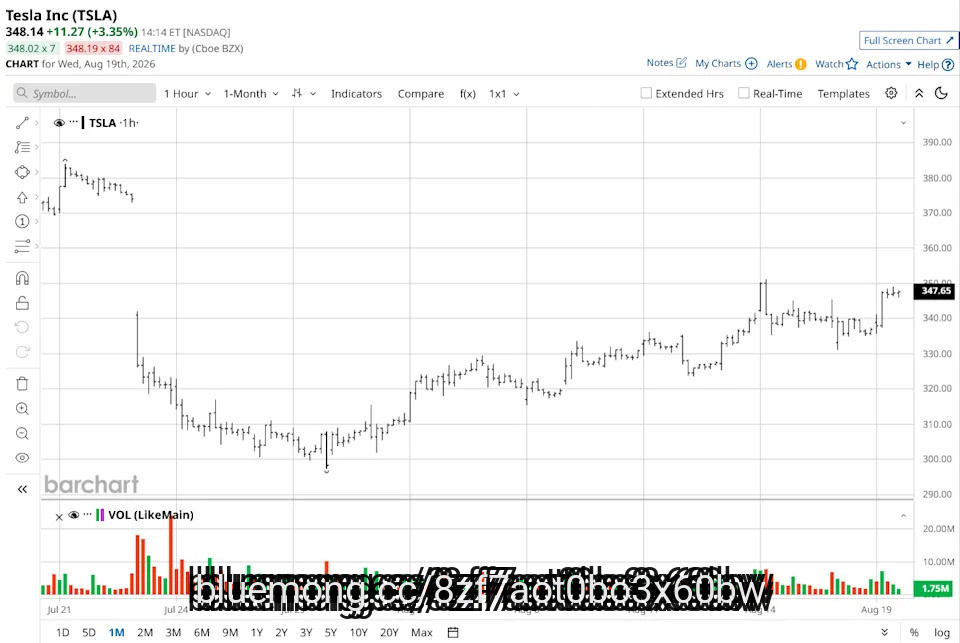
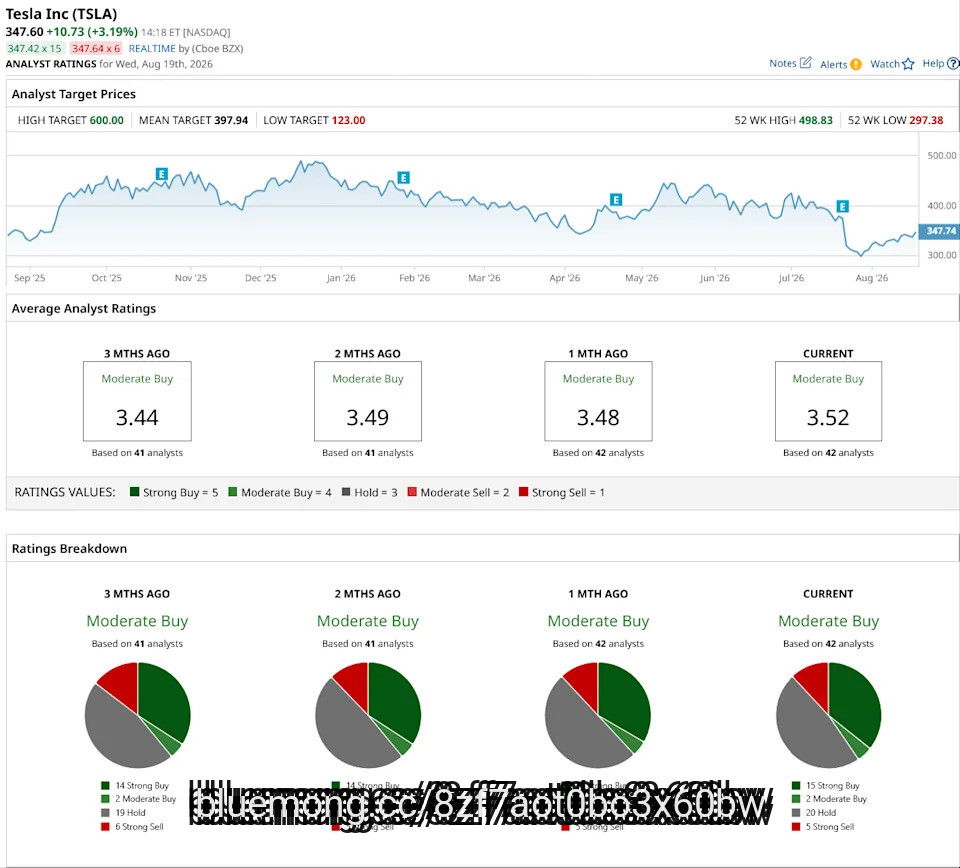
Tesla's stock has struggled in 2026, trading near the bottom of its 52-week range and below its 200-day moving average. Shares recently closed around $336.87, down sharply from a 52-week high of $498.83 set in June, though still above the 52-week low of $297.38 touched in late July. The stock has been pressured by margin compression, a negative free cash flow quarter, and investor anxiety over Tesla's massive AI and robotics capital spending, even as anticipation builds around the upcoming public Cybercab robotaxi launch in Austin and continued progress on Optimus humanoid robot production.
Barron Trump, 20, Now Worth $150 Million — More Than Mom, Melania — From Crypto And $39 Energy Drink
Billionaire Michael Saylor Warns Against Buying a House Because 'Every 36 Years You Actually Pay the Cost of the House in Tax to the Government'
QQQ Just 'Gamma Flipped' as Market Makers Were Forced to Sell. Here's What Our Top Chart Expert is Tracking Next.
#robotics #driving
Tesla's stock has struggled in 2026, trading near the bottom of its 52-week range and below its 200-day moving average. Shares recently closed around $336.87, down sharply from a 52-week high of $498.83 set in June, though still above the 52-week low of $297.38 touched in late July. The stock has been pressured by margin compression, a negative free cash flow quarter, and investor anxiety over Tesla's massive AI and robotics capital spending, even as anticipation builds around the upcoming public Cybercab robotaxi launch in Austin and continued progress on Optimus humanoid robot production.
Barron Trump, 20, Now Worth $150 Million — More Than Mom, Melania — From Crypto And $39 Energy Drink
Billionaire Michael Saylor Warns Against Buying a House Because 'Every 36 Years You Actually Pay the Cost of the House in Tax to the Government'
QQQ Just 'Gamma Flipped' as Market Makers Were Forced to Sell. Here's What Our Top Chart Expert is Tracking Next.
#robotics #driving
30 days ago
The spending is going up. The margins are going down. Free cash flow is negative. And a Wall Street ***** yst who covers one of the most closely watched stocks in the market just published a note saying the next quarter has to be different.
The note comes from Morgan Stanley. The company it covers is Tesla. ***** yst Andrew Percoco has been on the Tesla account since longtime ***** yst Adam Jonas moved to the automotive side. His message on August 11 is direct. The long-term AI thesis is still intact. But the numbers need to start showing up, according to Investing.com.
Percoco kept his Equal Weight rating and $415 price target on Tesla. The stock was trading around $330 at the time of publication. That puts the target roughly 26% above where the stock was sitting.
The note says the second quarter earnings call did not change his long-term view. Tesla is positioned to lead in physical AI. That part of the thesis is not in question. What has changed is the urgency around proof. Weaker gross margins, higher research and development spending, and extended free cash flow burn have "sharpened our and investors' focus on measurable progress across Robotaxi and Optimus," Percoco wrote.
More Tesla:
#tesla
The note comes from Morgan Stanley. The company it covers is Tesla. ***** yst Andrew Percoco has been on the Tesla account since longtime ***** yst Adam Jonas moved to the automotive side. His message on August 11 is direct. The long-term AI thesis is still intact. But the numbers need to start showing up, according to Investing.com.
Percoco kept his Equal Weight rating and $415 price target on Tesla. The stock was trading around $330 at the time of publication. That puts the target roughly 26% above where the stock was sitting.
The note says the second quarter earnings call did not change his long-term view. Tesla is positioned to lead in physical AI. That part of the thesis is not in question. What has changed is the urgency around proof. Weaker gross margins, higher research and development spending, and extended free cash flow burn have "sharpened our and investors' focus on measurable progress across Robotaxi and Optimus," Percoco wrote.
More Tesla:
#tesla


1 month ago
A capital program set to keep growing for years has already turned free cash flow negative, and it is funding the product Tesla itself calls the hardest it has ever had to scale.
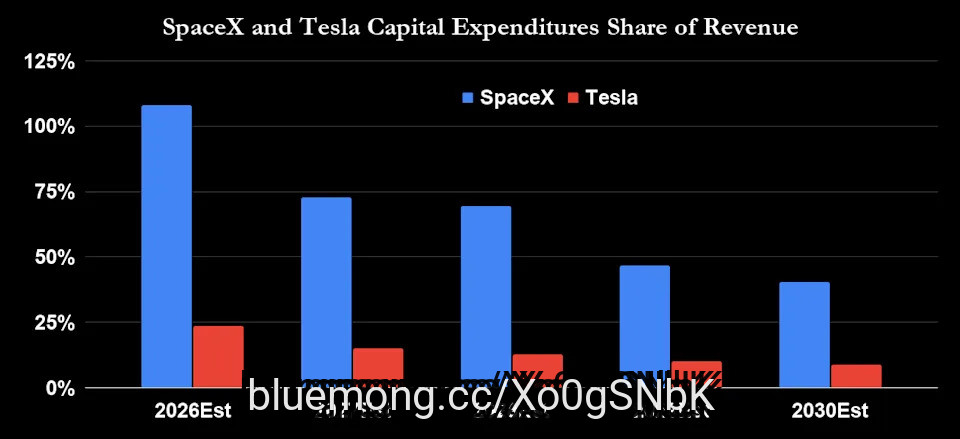
Tesla (TSLA)'s $25 Billion Capital Bill Is Close To A Quarter Of Its Sales
After the fiscal Q2 2026 report, the margin trajectory got the blame for the stock's slide. The commitment that should worry a Tesla holder outlasts any single quarter's margin move, and it sits on the cash flow statement rather than the income statement. Tesla expects capital spending to top $25 billion in calendar 2026. Set against $103.6 billion of revenue over the trailing twelve months, that is close to a quarter of a year's sales going into factories, robots, and chips rather than into cash the company gets to keep. Spending more than doubled sequentially in fiscal Q2 2026, which is most of why free cash flow turned negative. Tesla is also securing debt facilities that would give it the capacity to borrow up to $30 billion.
The $25 Billion Is Going Where The Payoff Is Years Away
What the money buys matters more than its size. It funds the robotaxi fleet, production capacity for Optimus, a semiconductor fab, solar manufacturing and AI compute, and Tesla expects that spending to keep growing for two to three more years. Tesla calls Optimus the hardest product it has ever had to scale, because almost every part of the robot is new and no supply chain exists to buy it from, so the early stretch of the ramp will be flat and long. A development fab in Austin exists to try new chip designs quickly and see whether they work. The bill lands years ahead of the revenue it is meant to create.
#billion #years #optimus
Tesla (TSLA)'s $25 Billion Capital Bill Is Close To A Quarter Of Its Sales
After the fiscal Q2 2026 report, the margin trajectory got the blame for the stock's slide. The commitment that should worry a Tesla holder outlasts any single quarter's margin move, and it sits on the cash flow statement rather than the income statement. Tesla expects capital spending to top $25 billion in calendar 2026. Set against $103.6 billion of revenue over the trailing twelve months, that is close to a quarter of a year's sales going into factories, robots, and chips rather than into cash the company gets to keep. Spending more than doubled sequentially in fiscal Q2 2026, which is most of why free cash flow turned negative. Tesla is also securing debt facilities that would give it the capacity to borrow up to $30 billion.
The $25 Billion Is Going Where The Payoff Is Years Away
What the money buys matters more than its size. It funds the robotaxi fleet, production capacity for Optimus, a semiconductor fab, solar manufacturing and AI compute, and Tesla expects that spending to keep growing for two to three more years. Tesla calls Optimus the hardest product it has ever had to scale, because almost every part of the robot is new and no supply chain exists to buy it from, so the early stretch of the ramp will be flat and long. A development fab in Austin exists to try new chip designs quickly and see whether they work. The bill lands years ahead of the revenue it is meant to create.
#billion #years #optimus


2 months ago
July 22 and 23 proved to be one of the most significant 48-hour periods of 2026's artificial intelligence trade, showing a clear flaw in how public equity markets reward massive capital spending. Both Tesla, Inc. (NASDAQ:TSLA) and Alphabet published second-quarter financial results after the market closed on July 22, with both reporting negative quarterly free cash flow due to significant AI infrastructure investments. However, the market distinguished between spending connected to visible near-term margin conversion and spending ***** ociated with core margin compression and an indefinite payout period. While Alphabet had a modest reversal, Tesla, Inc. (NASDAQ:TSLA) fell as much as 15% intraday, marking one of the company's worst single-day falls in history.
On the surface, Tesla's top-line headline numbers were strong, with second-quarter revenue reaching a record $28.24 billion, a 26% year-over-year increase that comfortably exceeded Wall Street consensus projections of $25.55 billion to $25.71 billion. Vehicle deliveries set a quarterly high of 480,126 units, while automotive revenue increased 23% to $20.52 billion. Auxiliary areas grew even faster, with Energy Generation and Storage up 13% to $3.14 billion and Services up 50% to a record $4.58 billion.
However, underneath these top-line gains lies considerable margin deterioration. Non-GAAP adjusted earnings per share came in at $0.33, roughly a third lower than the consensus forecast of $0.51 to $0.53, while GAAP operating income fell 57% year-over-year to $398 million, implying an operating margin of 1.4% versus slightly over 4% posted both in last quarter and the same quarter last year.
This profitability compression was directly related to Tesla's core vehicle price strategy. Total gross margin fell to 16.8%, down from 17.2% a year ago and well below ***** ysts' expectations of 19.4%. Tesla's decision to introduce lower-cost variants of the Model 3 and Model Y while discontinuing its higher-margin Model S and Model X flagship vehicles reduced average selling prices throughout the fleet. This structural decline in average selling price, combined with a rapid contraction in high-margin regulatory credit revenue, severely harmed profitability while fixed overhead increased.
An enormous spike in spending added to the core vehicle pricing pressures. Operating expenses increased by 47% year-over-year to $4.35 billion, while capital expenditures nearly doubled to $5.80 billion, resulting in a $1.10 billion negative free cash flow balance. This substantial cash burn represents significant expenditures in AI compute infrastructure, custom semiconductor development, battery material manufacture, and production capacity for the Cybercab and Optimus humanoid robots.
#vehicle #operating
On the surface, Tesla's top-line headline numbers were strong, with second-quarter revenue reaching a record $28.24 billion, a 26% year-over-year increase that comfortably exceeded Wall Street consensus projections of $25.55 billion to $25.71 billion. Vehicle deliveries set a quarterly high of 480,126 units, while automotive revenue increased 23% to $20.52 billion. Auxiliary areas grew even faster, with Energy Generation and Storage up 13% to $3.14 billion and Services up 50% to a record $4.58 billion.
However, underneath these top-line gains lies considerable margin deterioration. Non-GAAP adjusted earnings per share came in at $0.33, roughly a third lower than the consensus forecast of $0.51 to $0.53, while GAAP operating income fell 57% year-over-year to $398 million, implying an operating margin of 1.4% versus slightly over 4% posted both in last quarter and the same quarter last year.
This profitability compression was directly related to Tesla's core vehicle price strategy. Total gross margin fell to 16.8%, down from 17.2% a year ago and well below ***** ysts' expectations of 19.4%. Tesla's decision to introduce lower-cost variants of the Model 3 and Model Y while discontinuing its higher-margin Model S and Model X flagship vehicles reduced average selling prices throughout the fleet. This structural decline in average selling price, combined with a rapid contraction in high-margin regulatory credit revenue, severely harmed profitability while fixed overhead increased.
An enormous spike in spending added to the core vehicle pricing pressures. Operating expenses increased by 47% year-over-year to $4.35 billion, while capital expenditures nearly doubled to $5.80 billion, resulting in a $1.10 billion negative free cash flow balance. This substantial cash burn represents significant expenditures in AI compute infrastructure, custom semiconductor development, battery material manufacture, and production capacity for the Cybercab and Optimus humanoid robots.
#vehicle #operating

2 months ago
A brutal year for Tesla (TSLA) investors is getting even more brutal.
Quick insight: The post-earnings slide in Tesla stock has made it the most oversold since March 2025, according to Yahoo Finance AlphaSpace data. Overbought and oversold levels for a stock are tracked by the relative strength index, or RSI (bottom red line in the chart below).
The RSI is a momentum indicator that measures the speed and magnitude of a stock's recent price movements on a scale from 0 to 100. An RSI reading above 70 is generally viewed as a sign that a stock has risen too fast and could be due for a pullback. A reading below 30 suggests a stock may be oversold and could be poised for a rebound.
Tesla's RSI currently stands at 14. Shares are down 30% this year compared to an 8% gain for the S&P 500 (^GSPC).
The why: The sell-off in Tesla has intensified after execs offered few concrete updates on the pace of its Robotaxi rollout or the commercialization timeline for its Optimus humanoid robot during its earnings call last week. This was on top of a brutal earnings miss versus Wall Street estimates,
#Stock #Tsla
Quick insight: The post-earnings slide in Tesla stock has made it the most oversold since March 2025, according to Yahoo Finance AlphaSpace data. Overbought and oversold levels for a stock are tracked by the relative strength index, or RSI (bottom red line in the chart below).
The RSI is a momentum indicator that measures the speed and magnitude of a stock's recent price movements on a scale from 0 to 100. An RSI reading above 70 is generally viewed as a sign that a stock has risen too fast and could be due for a pullback. A reading below 30 suggests a stock may be oversold and could be poised for a rebound.
Tesla's RSI currently stands at 14. Shares are down 30% this year compared to an 8% gain for the S&P 500 (^GSPC).
The why: The sell-off in Tesla has intensified after execs offered few concrete updates on the pace of its Robotaxi rollout or the commercialization timeline for its Optimus humanoid robot during its earnings call last week. This was on top of a brutal earnings miss versus Wall Street estimates,
#Stock #Tsla

2 months ago
When one considers the investment case for Tesla (TSLA), one hears about electric vehicles, autonomous vehicles, Optimus humanoid robots, and energy storage. The company's "Megapod" business is not something that is discussed in the annals of Tesla folklore frequently.
But in the company's latest earnings call, CEO Elon Musk explained how it can aid its AI ambitions. Describing it as a data center hardware system to be used for heavy AI compute, Musk commented, "This allows us to scale AI compute with aggregated electricity production. We can place Megapods at Superchargers and have distributed AI."
Dear ****** eX Stock Fans, Mark Your Calendars for August 6
Amazon Stock Just Hit a Major Hurdle Ahead of Earnings
Elon Musk Just Revealed a Quiet Win for Tesla's AI Ambitions
#compute #optimus
But in the company's latest earnings call, CEO Elon Musk explained how it can aid its AI ambitions. Describing it as a data center hardware system to be used for heavy AI compute, Musk commented, "This allows us to scale AI compute with aggregated electricity production. We can place Megapods at Superchargers and have distributed AI."
Dear ****** eX Stock Fans, Mark Your Calendars for August 6
Amazon Stock Just Hit a Major Hurdle Ahead of Earnings
Elon Musk Just Revealed a Quiet Win for Tesla's AI Ambitions
#compute #optimus



2 months ago
Tesla (TSLA) is an electric vehicle (EV) and clean energy company led by CEO Elon Musk. Founded in 2003 and based in Austin, Texas, the company designs, manufactures, and sells EVs alongside energy storage and generation products, including Megapack and solar solutions. Tesla operates across two core segments: Automotive — which includes vehicle sales, regulatory credits, and Full Self-Driving (FSD) subscriptions — and Energy Generation and Storage.
Rapidly emerging businesses including Tesla's robotaxi service, Optimus humanoid robots, and artificial intelligence (AI) computing infrastructure are increasingly shaping the company's long-term valuation narrative. That's positioning Tesla as a full-stack autonomous technology and energy platform. Let's take a closer look.
What Do Monday Morning's Markets Bring to Mind?
Dear Bloom Energy Stock Fans, Mark Your Calendars for July 28
Crude Oil Prices Plunge as Supply Threats Ease
#energy #full #vehicle
Rapidly emerging businesses including Tesla's robotaxi service, Optimus humanoid robots, and artificial intelligence (AI) computing infrastructure are increasingly shaping the company's long-term valuation narrative. That's positioning Tesla as a full-stack autonomous technology and energy platform. Let's take a closer look.
What Do Monday Morning's Markets Bring to Mind?
Dear Bloom Energy Stock Fans, Mark Your Calendars for July 28
Crude Oil Prices Plunge as Supply Threats Ease
#energy #full #vehicle


2 months ago
US stocks were hammered on Thursday as the latest AI spending outlooks from Alphabet (GOOG) and Tesla (TSLA) spooked investors, and oil prices surged above $100 in the wake of expanded attacks in the Middle East.
The Nasdaq Composite (^IXIC) suffered the worst of the losses, tumbling 2.1% and briefly breaking below 25,000 for the first time since May.
The Dow Jones Industrial Average (^DJI) dropped 0.9%, meanwhile, and the S&P 500 (^GSPC) fell by 1.2%, building on a stock retreat on Wednesday amid a flurry of earnings reports.
Big Tech stocks sold off, led by declines in Alphabet and Tesla shares after the two "Magnificent Seven" heavyweights reported results after Wednesday's market close.
Alphabet posted a strong quarter fundamentally, but the Google parent's raised capex outlook comes as investors scrutinize AI's return on investment. Tesla CEO Elon Musk also said 2026 would be a "massive capex year" for the company, highlighting a focus on Optimus robots, robotaxis, and data centers.
#goog
The Nasdaq Composite (^IXIC) suffered the worst of the losses, tumbling 2.1% and briefly breaking below 25,000 for the first time since May.
The Dow Jones Industrial Average (^DJI) dropped 0.9%, meanwhile, and the S&P 500 (^GSPC) fell by 1.2%, building on a stock retreat on Wednesday amid a flurry of earnings reports.
Big Tech stocks sold off, led by declines in Alphabet and Tesla shares after the two "Magnificent Seven" heavyweights reported results after Wednesday's market close.
Alphabet posted a strong quarter fundamentally, but the Google parent's raised capex outlook comes as investors scrutinize AI's return on investment. Tesla CEO Elon Musk also said 2026 would be a "massive capex year" for the company, highlighting a focus on Optimus robots, robotaxis, and data centers.
#goog

2 months ago
Tesla shares tumbled on Thursday after the EV maker reported lower-than-expected quarterly profit despite revenue exceeding estimates.
The company burned through more than $1 billion in cash as it upped investments in Robotaxi, Optimus and semiconductor manufacturing.
Tesla (TSLA) shares plummeted Thursday after the electric vehicle maker's quarterly earnings missed estimates as infrastructure spending ballooned.
The stock fell nearly 15% to around $320, leading S&P 500 decliners and trading at its lowest level in nearly a year. Tesla stock has now lost 29% of its value since the start of 2026, making it the worst performer among the Magnificent Seven.
Tesla on Wednesday afternoon reported second-quarter profit of 33 cents a share, an 18% decrease from last year's quarter and well short of the 55 cents Wall Street had forecast. Revenue increased 26% to $28.2 billion, surpassing expectations. The company's gross margins contracted by more than 2 percentage points to 16.9% as regulatory credit revenue declined and the average selling price of its cars fell.
#profit
The company burned through more than $1 billion in cash as it upped investments in Robotaxi, Optimus and semiconductor manufacturing.
Tesla (TSLA) shares plummeted Thursday after the electric vehicle maker's quarterly earnings missed estimates as infrastructure spending ballooned.
The stock fell nearly 15% to around $320, leading S&P 500 decliners and trading at its lowest level in nearly a year. Tesla stock has now lost 29% of its value since the start of 2026, making it the worst performer among the Magnificent Seven.
Tesla on Wednesday afternoon reported second-quarter profit of 33 cents a share, an 18% decrease from last year's quarter and well short of the 55 cents Wall Street had forecast. Revenue increased 26% to $28.2 billion, surpassing expectations. The company's gross margins contracted by more than 2 percentage points to 16.9% as regulatory credit revenue declined and the average selling price of its cars fell.
#profit


2 months ago
Three big earnings reports came out this week. Alphabet Inc. (NASDAQ:GOOGL) and Tesla, Inc. (NASDAQ:TSLA) reported Wednesday after the market closed, and International Business Machines Corporation (NYSE:IBM) shared its official results the same day. All three show the same thing: spending money on AI is starting to hurt profits. However, each company's story is different enough that treating them as one big story would miss what's actually going on. So let's dig into it:
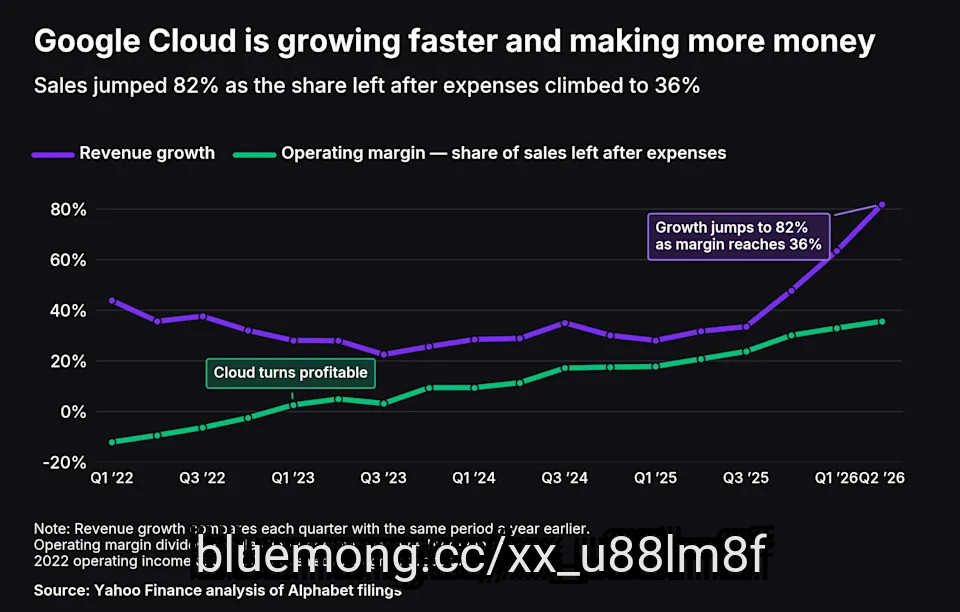
Alphabet Inc. (NASDAQ:GOOGL) made more money than expected. Revenue came in at $119.8 billion compared to the $116.9 billion ***** ysts expected, growing 24% from last year. Its cloud business also had its best quarter ever. Cloud revenue jumped 82% to $24.77 billion, way above the $22.46 billion ***** ysts predicted, and the amount of future cloud business it has lined up hit $514 billion, up from about $460 billion. Even so, the stock fell about 4% after hours. Why? Because Alphabet said it will spend even more money in 2026 than planned, between $195 billion and $205 billion instead of the earlier $180-190 billion range and well above the roughly $186 billion Wall Street expected. The firm's leftover cash after paying for everything actually went negative, by $5.9 billion, for the first time in at least 10 years. That happened because Alphabet spent $44.9 billion in just this one quarter, double what it spent a year ago. Alphabet's finance chief, Anat Ashkenazi, told ***** ysts the tech firm still doesn't have enough computing power to meet demand. Google is even renting extra computing capacity from ***** eX to keep up while it builds more of its own.
Tesla, Inc. (NASDAQ:TSLA) had a similar problem, just in a different business. Revenue beat expectations, coming in at $28.24 billion versus $25.71 billion expected, up 26% from last year. Tesla also delivered more cars than expected. But profit missed, and adjusted earnings were 33 cents per share, well below the 51 cents ***** ysts expected. The profit margin on each car sold also shrank to about 16.3% instead of the roughly 18% expected. And Tesla's leftover cash went negative too, by $1.1 billion, for the first time in over two years. That's because Tesla spent 142% more money than usual, $5.8 billion, mostly on things like Optimus robots, its Cybercab robotaxi, and AI computing power, not on making more cars. Elon Musk called it "a massive capex year" and said he believes these investments will pay off. But right now, it's the car business paying for all of it, and the car business is making less money per vehicle than before.
#expected #alphabet #money
Alphabet Inc. (NASDAQ:GOOGL) made more money than expected. Revenue came in at $119.8 billion compared to the $116.9 billion ***** ysts expected, growing 24% from last year. Its cloud business also had its best quarter ever. Cloud revenue jumped 82% to $24.77 billion, way above the $22.46 billion ***** ysts predicted, and the amount of future cloud business it has lined up hit $514 billion, up from about $460 billion. Even so, the stock fell about 4% after hours. Why? Because Alphabet said it will spend even more money in 2026 than planned, between $195 billion and $205 billion instead of the earlier $180-190 billion range and well above the roughly $186 billion Wall Street expected. The firm's leftover cash after paying for everything actually went negative, by $5.9 billion, for the first time in at least 10 years. That happened because Alphabet spent $44.9 billion in just this one quarter, double what it spent a year ago. Alphabet's finance chief, Anat Ashkenazi, told ***** ysts the tech firm still doesn't have enough computing power to meet demand. Google is even renting extra computing capacity from ***** eX to keep up while it builds more of its own.
Tesla, Inc. (NASDAQ:TSLA) had a similar problem, just in a different business. Revenue beat expectations, coming in at $28.24 billion versus $25.71 billion expected, up 26% from last year. Tesla also delivered more cars than expected. But profit missed, and adjusted earnings were 33 cents per share, well below the 51 cents ***** ysts expected. The profit margin on each car sold also shrank to about 16.3% instead of the roughly 18% expected. And Tesla's leftover cash went negative too, by $1.1 billion, for the first time in over two years. That's because Tesla spent 142% more money than usual, $5.8 billion, mostly on things like Optimus robots, its Cybercab robotaxi, and AI computing power, not on making more cars. Elon Musk called it "a massive capex year" and said he believes these investments will pay off. But right now, it's the car business paying for all of it, and the car business is making less money per vehicle than before.
#expected #alphabet #money

2 months ago
Tesla runs its earnings Q&A through a platform called Say Technologies, where shareholders submit questions and vote them up based on how many shares they hold. The idea is that the most pressing investor concerns rise to the top, giving Musk and his team a clear read on what the market actually wants answered before he gets on the call.
For Tesla's second-quarter earnings on July 22, the top categories looked predictable: FSD, Robotaxi, Optimus, Cybercab. And then, in fifth place, ****** eX. Not Starlink. Not ****** eX's technology. Whether Tesla and ****** eX might merge. Twenty-two questions on that topic made it onto the formal shareholder agenda, and Tesla investors want a direct answer from Musk, Business Insider reported.
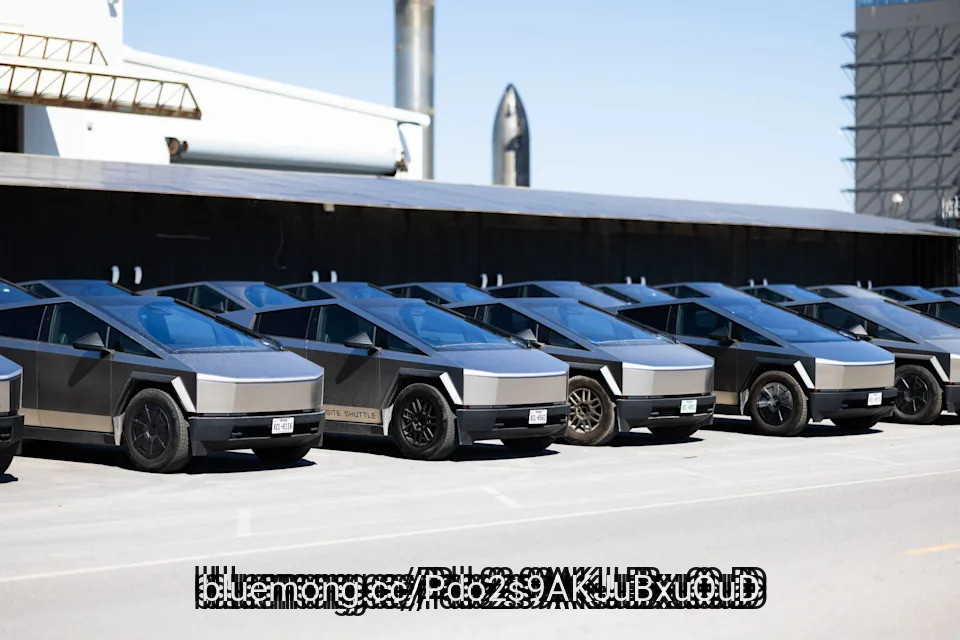
The persistence of the question has a lot to do with how much the two companies already overlap. Tesla holds a stake in ****** eX. Tesla sold roughly $890 million in vehicles and batteries to ****** eX and its subsidiary xAI since 2023, and ****** eX spent $131 million on Cybertrucks in 2025 alone, according to the company's IPO filing.
Earlier this year, ****** eX acquired xAI. Tesla had put $2 billion into xAI, so that investment became a small equity stake in ****** eX when the deal closed, the first time a regulatory filing had formally connected the two companies, CNBC reported.
More Teslaand ****** eX:
#musk
For Tesla's second-quarter earnings on July 22, the top categories looked predictable: FSD, Robotaxi, Optimus, Cybercab. And then, in fifth place, ****** eX. Not Starlink. Not ****** eX's technology. Whether Tesla and ****** eX might merge. Twenty-two questions on that topic made it onto the formal shareholder agenda, and Tesla investors want a direct answer from Musk, Business Insider reported.
The persistence of the question has a lot to do with how much the two companies already overlap. Tesla holds a stake in ****** eX. Tesla sold roughly $890 million in vehicles and batteries to ****** eX and its subsidiary xAI since 2023, and ****** eX spent $131 million on Cybertrucks in 2025 alone, according to the company's IPO filing.
Earlier this year, ****** eX acquired xAI. Tesla had put $2 billion into xAI, so that investment became a small equity stake in ****** eX when the deal closed, the first time a regulatory filing had formally connected the two companies, CNBC reported.
More Teslaand ****** eX:
#musk
2 months ago
Lucid burned $3.8B in free cash flow against $1.35B in revenue in 2025, while Rivian's cash reserves shrank from $4.81B to $2.85B.
Stellantis posted a $22.33B net loss for FY2025 as CEO Filosa admitted the company over-estimated the pace of the energy transition.
Tesla leads with a $1.4T market cap, but Q4 2025 deliveries fell 16% and prediction markets heavily doubt its near-term robotaxi and Optimus timelines.
Act now: the **** yst who called NVIDIA in 2010 just named his top 10 AI stocks — and Tesla didn't make the cut. Grab the names FREE today.
Morning Brew Daily's July segment framed the U.S. electric vehicle industry in stark terms. They argued that Lucid (NASDAQ: LCID), once valued at $91 billion, is now worth just $2.87 billion, while Rivian (NASDAQ: RIVN) has fallen from a peak near $150 billion to roughly $25 billion. The guest **** yst on the show argued that both pure-play startups are "one boardroom decision at another company away" from collapse, and that neither company is expected to turn cash flow positive before 2030. The numbers back the framing.
#cash #free #flow
Stellantis posted a $22.33B net loss for FY2025 as CEO Filosa admitted the company over-estimated the pace of the energy transition.
Tesla leads with a $1.4T market cap, but Q4 2025 deliveries fell 16% and prediction markets heavily doubt its near-term robotaxi and Optimus timelines.
Act now: the **** yst who called NVIDIA in 2010 just named his top 10 AI stocks — and Tesla didn't make the cut. Grab the names FREE today.
Morning Brew Daily's July segment framed the U.S. electric vehicle industry in stark terms. They argued that Lucid (NASDAQ: LCID), once valued at $91 billion, is now worth just $2.87 billion, while Rivian (NASDAQ: RIVN) has fallen from a peak near $150 billion to roughly $25 billion. The guest **** yst on the show argued that both pure-play startups are "one boardroom decision at another company away" from collapse, and that neither company is expected to turn cash flow positive before 2030. The numbers back the framing.
#cash #free #flow

2 months ago
Big Tech earnings season kicks off Wednesday with Google (GOOG, GOOGL) and Tesla (TSLA) set to report after the bell. Intel (INTC) will follow on Thursday.
While Tesla saw solid quarterly delivers, ****** ysts will be on the lookout for how much the company is spending on its Robotaxi, Optimus humanoid robot, and AI initiatives, which is expected to send free cash flow nose diving.
Intel's stock has been riding the AI data center growth story to new highs, though it's since come off those highs as traders rotated out of the semiconductor sector. But it could get another boost if the company announces any new customers for its foundry business.
Google stock has also benefited handsomely from the AI boom, though growth has moderated over the past few months. Investors will be looking for more information about the company's spending plans as it continues to address computing capacity constraints.
On Thursday, AMD (AMD) will host its Advancing AI event in San Francisco, where it's expected to announce updates to its product lines across its data center unit.
#tesla #spending #data #Growth
While Tesla saw solid quarterly delivers, ****** ysts will be on the lookout for how much the company is spending on its Robotaxi, Optimus humanoid robot, and AI initiatives, which is expected to send free cash flow nose diving.
Intel's stock has been riding the AI data center growth story to new highs, though it's since come off those highs as traders rotated out of the semiconductor sector. But it could get another boost if the company announces any new customers for its foundry business.
Google stock has also benefited handsomely from the AI boom, though growth has moderated over the past few months. Investors will be looking for more information about the company's spending plans as it continues to address computing capacity constraints.
On Thursday, AMD (AMD) will host its Advancing AI event in San Francisco, where it's expected to announce updates to its product lines across its data center unit.
#tesla #spending #data #Growth



2 months ago
It's no secret that Tesla (NASDAQ: TSLA) is one of the most narrative-driven stocks in the market. The company's valuation hinges less on its revenue and profitability numbers, and more on whether investors believe it will successfully evolve into an artificial intelligence (AI) platform business with product lines spanning autonomous vehicles and humanoid robotics.
The bull case centers on Tesla scaling up its production of self-driving vehicles and proving that there is a market for its humanoid Optimus robots. These innovations aim to create entirely new revenue streams far larger than the electric vehicle (EV) and energy storage businesses that dominate its financials today.
Missed Nvidia in 2009? This Rare Signal Is Flashing Again. In 2009, a "Double Down" signal flashed for a little-known chipmaker called Nvidia. For the first time in years, that same "Total Conviction" signal is flashing for a company 1/100th the size of Nvidia. Continue »
On the other hand, the bear case emphasizes that those same projects have experienced repeated delays and are incurring mounting capital expenditures with little in the way of near-term returns, while Tesla's core EV business has yet to demonstrate durable pricing power or margin expansion.
Tesla's second-quarter earnings report is slated for July 22, and growth investors may be wondering how the stock will react to that data readout, particularly given the polarized views about Elon Musk's ambitious vision for the company.
The bull case centers on Tesla scaling up its production of self-driving vehicles and proving that there is a market for its humanoid Optimus robots. These innovations aim to create entirely new revenue streams far larger than the electric vehicle (EV) and energy storage businesses that dominate its financials today.
Missed Nvidia in 2009? This Rare Signal Is Flashing Again. In 2009, a "Double Down" signal flashed for a little-known chipmaker called Nvidia. For the first time in years, that same "Total Conviction" signal is flashing for a company 1/100th the size of Nvidia. Continue »
On the other hand, the bear case emphasizes that those same projects have experienced repeated delays and are incurring mounting capital expenditures with little in the way of near-term returns, while Tesla's core EV business has yet to demonstrate durable pricing power or margin expansion.
Tesla's second-quarter earnings report is slated for July 22, and growth investors may be wondering how the stock will react to that data readout, particularly given the polarized views about Elon Musk's ambitious vision for the company.


3 months ago
The company is spending billions to pivot from electric vehicles to robotics and autonomy, forcing investors to decide if the long-term vision is worth the near-term cost.
Tesla (TSLA) is in the middle of a profound and costly transformation. After a 26% run over the past year, the stock now sits about 16% below its 52-week high, and the company has made it clear why: it is embarking on a large investment cycle. Management plans to spend over $25 billion on capital expenditures this year, a move they expect will lead to negative free cash flow for the rest of 2026. This investment funds a deliberate pivot toward artificial intelligence, robotics, and autonomous driving, expanding the company's focus beyond simply building more cars. The practical question for an investor today is whether you're buying into the next phase of a revolutionary company or funding a high-stakes gamble with an uncertain payoff.
What The Market Is Charging
When you buy Tesla stock, you are paying a significant premium. The shares trade at a price-to-earnings ratio of 318.0, a world away from the S&P 500's average of 24.6. On a price-to-sales basis, it's a similar story: 12.5 for Tesla versus 3.3 for the broader market. This isn't the price for a conventional automaker. The market is charging you for the belief that Tesla's most valuable products don't exist yet. You're paying for the potential of the Optimus robot, which the CEO believes will be the "biggest product ever," and for a future fleet of autonomous robotaxis. For this premium to make sense, the company must successfully execute on its plan to create what management calls a "substantially increased future revenue stream."
The Business Underneath
Tesla (TSLA) is in the middle of a profound and costly transformation. After a 26% run over the past year, the stock now sits about 16% below its 52-week high, and the company has made it clear why: it is embarking on a large investment cycle. Management plans to spend over $25 billion on capital expenditures this year, a move they expect will lead to negative free cash flow for the rest of 2026. This investment funds a deliberate pivot toward artificial intelligence, robotics, and autonomous driving, expanding the company's focus beyond simply building more cars. The practical question for an investor today is whether you're buying into the next phase of a revolutionary company or funding a high-stakes gamble with an uncertain payoff.
What The Market Is Charging
When you buy Tesla stock, you are paying a significant premium. The shares trade at a price-to-earnings ratio of 318.0, a world away from the S&P 500's average of 24.6. On a price-to-sales basis, it's a similar story: 12.5 for Tesla versus 3.3 for the broader market. This isn't the price for a conventional automaker. The market is charging you for the belief that Tesla's most valuable products don't exist yet. You're paying for the potential of the Optimus robot, which the CEO believes will be the "biggest product ever," and for a future fleet of autonomous robotaxis. For this premium to make sense, the company must successfully execute on its plan to create what management calls a "substantially increased future revenue stream."
The Business Underneath


3 months ago
The two companies obviously have a lot in common, and it goes beyond having Elon Musk as their CEO. The reality is that they are both stocks valued and bought today, not for their current earnings, but for what they could become in the future.
However, there are key differences between the investment profiles of Tesla (NASDAQ: TSLA) and ***** e Exploration Technologies (NASDAQ: SPCX), better known as ***** eX, that make them suitable for different types of investors and also challenge the notion that folding Tesla into ***** eX is a good idea.
Missed Nvidia in 2009? This Rare Signal Is Flashing Again. In 2009, a "Double Down" signal flashed for a little-known chipmaker called Nvidia. For the first time in years, that same "Total Conviction" signal is flashing for a company 1/100th the size of Nvidia. Continue »
The major factors to consider are as follows:
Tesla's projects (electric vehicles, robotaxis, and Optimus robots) embody artificial intelligence (AI). At the same time, ***** eX is largely dependent on end demand for AI, not least for its xAI business and its orbital data center ambitions.
However, there are key differences between the investment profiles of Tesla (NASDAQ: TSLA) and ***** e Exploration Technologies (NASDAQ: SPCX), better known as ***** eX, that make them suitable for different types of investors and also challenge the notion that folding Tesla into ***** eX is a good idea.
Missed Nvidia in 2009? This Rare Signal Is Flashing Again. In 2009, a "Double Down" signal flashed for a little-known chipmaker called Nvidia. For the first time in years, that same "Total Conviction" signal is flashing for a company 1/100th the size of Nvidia. Continue »
The major factors to consider are as follows:
Tesla's projects (electric vehicles, robotaxis, and Optimus robots) embody artificial intelligence (AI). At the same time, ***** eX is largely dependent on end demand for AI, not least for its xAI business and its orbital data center ambitions.