

20 hours ago
Amgen Inc. (NASDAQ:AMGN) shed roughly $12 billion in market value after hours on September 4, 2026. The stock declined by about 5% to $415. The reason, as strange as it sounds, is a drug it does not own. Novartis announced that pelacarsen, an Lp(a)-lowering therapy, missed its Phase 3 cardiovascular-outcomes trial, Lp(a)HORIZON. And since Amgen's late-stage ******* et olpasiran relies on the same biological premise, investors immediately marked down Amgen on the negative read-through.
The result strikes at a premise rather than at a product. Pelacarsenhad lowered Lp(a) by roughly 80% in earlier studies. In Lp(a)HORIZON, Novartis said pelacarsen substantially lowered Lp(a), but it still failed to reduce the composite of cardiovascular death, heart attack, stroke, and urgent revascularization. It still could not reduce the composite of cardiovascular death, heart attack, stroke, and urgent revascularization. And now the entire hypothesis that lowering Lp(a), a genetic cardiovascular risk factor, actually cuts events, is being directly challenged. Olpasiran is built on the same hypothesis, leading to the repricing of odds as soon as pelacarsen's data were out.
Amgen's olpasiran, an siRNA, lowered Lp(a) by more than 95% at certain doses in Phase 2, compared with reductions of roughly 80% for pelacarsen in earlier studies. The bull case is that this deeper reduction could help olpasiran deliver better cardiovascular outcomes.. The bull case is that this 15% will help Amgen to make a deeper cut and deliver results. While biologically possible, the Lp(a)HORIZON trial provided no evidence that a clinical threshold exists above an 80% reduction. The topline Phase 3 announcement did not establish that deeper Lp(a) lowering would have produced a cardiovascular benefit. It is therefore appropriate to say that the miss lowered olpasiran's probability of success rather than pretending it is irrelevant. Eli Lilly's lepodisiran is running the same deep-reduction experiment, so the hypothesis will be tested with or without Amgen.
Amgen is not an Lp(a) pure-play. MariTide in obesity, Repatha in cholesterol, and Tezspire in asthma drive more value for the company, and this diversification creates a cushion for the stock, although the selloff ultimately became much larger than the initial 5% after-hours reaction. Positioning has stayed calm since the beginning of 2026. Insider Monkey data shows 66 hedge funds held AMGN in the second quarter of 2026, up slightly from 65 in the first. Short interest, on the other hand, sits at just 2.4% of float, reflecting minimal bets against the stock in the market.
#horizon #pelacarsen
The result strikes at a premise rather than at a product. Pelacarsenhad lowered Lp(a) by roughly 80% in earlier studies. In Lp(a)HORIZON, Novartis said pelacarsen substantially lowered Lp(a), but it still failed to reduce the composite of cardiovascular death, heart attack, stroke, and urgent revascularization. It still could not reduce the composite of cardiovascular death, heart attack, stroke, and urgent revascularization. And now the entire hypothesis that lowering Lp(a), a genetic cardiovascular risk factor, actually cuts events, is being directly challenged. Olpasiran is built on the same hypothesis, leading to the repricing of odds as soon as pelacarsen's data were out.
Amgen's olpasiran, an siRNA, lowered Lp(a) by more than 95% at certain doses in Phase 2, compared with reductions of roughly 80% for pelacarsen in earlier studies. The bull case is that this deeper reduction could help olpasiran deliver better cardiovascular outcomes.. The bull case is that this 15% will help Amgen to make a deeper cut and deliver results. While biologically possible, the Lp(a)HORIZON trial provided no evidence that a clinical threshold exists above an 80% reduction. The topline Phase 3 announcement did not establish that deeper Lp(a) lowering would have produced a cardiovascular benefit. It is therefore appropriate to say that the miss lowered olpasiran's probability of success rather than pretending it is irrelevant. Eli Lilly's lepodisiran is running the same deep-reduction experiment, so the hypothesis will be tested with or without Amgen.
Amgen is not an Lp(a) pure-play. MariTide in obesity, Repatha in cholesterol, and Tezspire in asthma drive more value for the company, and this diversification creates a cushion for the stock, although the selloff ultimately became much larger than the initial 5% after-hours reaction. Positioning has stayed calm since the beginning of 2026. Insider Monkey data shows 66 hedge funds held AMGN in the second quarter of 2026, up slightly from 65 in the first. Short interest, on the other hand, sits at just 2.4% of float, reflecting minimal bets against the stock in the market.
#horizon #pelacarsen


4 days ago
Royalty Pharma plc (NASDAQ:RPRX) disclosed that pelacarsen failed the Phase 3 Lp(a)HORIZON cardiovascular-outcomes trial conducted by Novartis AG (NYSE:NVS). The randomized, double-blind study enrolled 8,323 patients with elevated lipoprotein(a), or Lp(a), and established cardiovascular disease.
Pelacarsen lowered Lp(a), but the study did not meet its primary endpoint of reducing cardiovascular events compared with placebo in the overall population. The endpoint combined cardiovascular death, nonfatal heart attack, nonfatal stroke, and urgent coronary revascularization requiring hospitalization. Complete results have not yet been presented.
Royalty Pharma plc (NASDAQ:RPRX) provided Ionis Pharmaceuticals, Inc. (NASDAQ:IONS) with $500 million in January 2023. The transaction allocated $150 million to pelacarsen royalties and $350 million to Spinraza royalties. The clinical failure shifts the financial focus from uncertain pelacarsen upside to recovery through Spinraza.
Royalty Pharma plc (NASDAQ:RPRX) acquired 25% of the Spinraza royalties received by Ionis Pharmaceuticals, Inc. (NASDAQ:IONS) through 2027. That share increases to 45% in 2028 on Spinraza annual sales of up to $1.5 billion.
Following the HORIZON result, the Spinraza interest will revert after aggregate payments to Royalty Pharma plc (NASDAQ:RPRX) reach $550 million, equal to 1.1 times the original funding. Management expects the structure to recover the entire investment and generate a modest positive return despite the clinical failure.
#royalty #pharma #cardiovascular #horizon
Pelacarsen lowered Lp(a), but the study did not meet its primary endpoint of reducing cardiovascular events compared with placebo in the overall population. The endpoint combined cardiovascular death, nonfatal heart attack, nonfatal stroke, and urgent coronary revascularization requiring hospitalization. Complete results have not yet been presented.
Royalty Pharma plc (NASDAQ:RPRX) provided Ionis Pharmaceuticals, Inc. (NASDAQ:IONS) with $500 million in January 2023. The transaction allocated $150 million to pelacarsen royalties and $350 million to Spinraza royalties. The clinical failure shifts the financial focus from uncertain pelacarsen upside to recovery through Spinraza.
Royalty Pharma plc (NASDAQ:RPRX) acquired 25% of the Spinraza royalties received by Ionis Pharmaceuticals, Inc. (NASDAQ:IONS) through 2027. That share increases to 45% in 2028 on Spinraza annual sales of up to $1.5 billion.
Following the HORIZON result, the Spinraza interest will revert after aggregate payments to Royalty Pharma plc (NASDAQ:RPRX) reach $550 million, equal to 1.1 times the original funding. Management expects the structure to recover the entire investment and generate a modest positive return despite the clinical failure.
#royalty #pharma #cardiovascular #horizon


5 days ago
Biopharmaceutical leader Kiniksa Pharmaceuticals (KNSA) is approaching a new buy point in the wake of a strong quarterly sales report. That makes Kiniksa stock Thursday's pick for IBD 50 Growth Stocks To Watch from Investor's Business Daily.
Kiniksa develops and commercializes medicines for cardiovascular, autoimmune and autoinflammatory diseases. Its only drug, Arcalyst, treats recurrent pericarditis, a condition in which the sac protecting the heart, the pericardium, becomes inflamed. The risk of recurrence increases with each subsequent flare-up of pericarditis, according to the Arcalyst website.
The company expects to replace Arcalyst with a next-generation version, now called KPL-387, in 2028 or 2029.
While Arcalyst requires a weekly under-the-skin shot, KPL-387 is a monthly injection. KPL-387 sales are expected to start slow at $21.7 million in 2028, growing to $173.7 million, $486.3 million and $1.03 billion over the next three years.
During the second quarter, Arcalyst generated $243.6 million in sales, growing 55% year over year. That crushed estimates from FactSet that called for $227.7 million.
#next #biopharmaceutical
Kiniksa develops and commercializes medicines for cardiovascular, autoimmune and autoinflammatory diseases. Its only drug, Arcalyst, treats recurrent pericarditis, a condition in which the sac protecting the heart, the pericardium, becomes inflamed. The risk of recurrence increases with each subsequent flare-up of pericarditis, according to the Arcalyst website.
The company expects to replace Arcalyst with a next-generation version, now called KPL-387, in 2028 or 2029.
While Arcalyst requires a weekly under-the-skin shot, KPL-387 is a monthly injection. KPL-387 sales are expected to start slow at $21.7 million in 2028, growing to $173.7 million, $486.3 million and $1.03 billion over the next three years.
During the second quarter, Arcalyst generated $243.6 million in sales, growing 55% year over year. That crushed estimates from FactSet that called for $227.7 million.
#next #biopharmaceutical
0.00$ raised of 0.00$ goal
0 donations
0.00$
to go

7 days ago
The Dow Jones Industrial Average and the other major stock indexes fell Tuesday, with oil prices rising following an attack on Saudi Arabia by Iran-backed Houthis. Energy stocks jumped while software lagged. Meanwhile, memory-chip leader SK Hynix (SKHY) rallied on the stock market today, breaking out past a new buy point.
Stocks were under pressure in the first day of the shortened trading week, with the Dow industrials diving nearly 700 points. This equates to a 1.3% drop. Oil major Chevron (CVX) stood out with a 2% pop, putting shares back in a buy zone.
But Amgen (AMGN) plunged 9% and dropped to its 50-day moving average. It comes after a disappointing trial results for an experimental Novartis (NVS) cardiovascular treatment were seen as a negative indicator for the former firm's own fledgling heart treatment olpasiran. Novartis, not a blue chip stock, plummeted more than 13%.
The S&P 500 also felt the heat, dropping 0.4%. A majority of sectors were lower, with communication services and healthcare being hit the hardest. Energy and utilities were posting the best gains.
The tech-heavy Nasdaq composite was also being punished, falling 0.5%. Booking (BKNG) and Shopify (SHOP) lagged due to drops of more than 5% and around 8%, respectively. CoreWeave (CRWV) showed strength by rising more than 8%.
#major #rising #lagged
Stocks were under pressure in the first day of the shortened trading week, with the Dow industrials diving nearly 700 points. This equates to a 1.3% drop. Oil major Chevron (CVX) stood out with a 2% pop, putting shares back in a buy zone.
But Amgen (AMGN) plunged 9% and dropped to its 50-day moving average. It comes after a disappointing trial results for an experimental Novartis (NVS) cardiovascular treatment were seen as a negative indicator for the former firm's own fledgling heart treatment olpasiran. Novartis, not a blue chip stock, plummeted more than 13%.
The S&P 500 also felt the heat, dropping 0.4%. A majority of sectors were lower, with communication services and healthcare being hit the hardest. Energy and utilities were posting the best gains.
The tech-heavy Nasdaq composite was also being punished, falling 0.5%. Booking (BKNG) and Shopify (SHOP) lagged due to drops of more than 5% and around 8%, respectively. CoreWeave (CRWV) showed strength by rising more than 8%.
#major #rising #lagged


10 days ago
Over the past five years, Eli Lilly (NYSE: LLY) stock managed a total return of 376%. If the stock managed a repeat over the next five years, share prices would top $5,500. Much of its current performance boost is thanks to enthusiasm over its GLP-1 offerings.
Are the same factors that led to the healthcare company's sharp rise likely to recur? The simple answer is no. While its metabolic GLP-1 weight-loss therapies helped spike revenue, it's not likely to happen again. Still, there are reasons to believe the pharmaceutical stock could double in value over the next five years, making a $5,000 investment in Eli Lilly stock worth more than $10,000 in five years. Here's why.
Missed Nvidia in 2009? This Rare Signal Is Flashing Again. In 2009, a "Double Down" signal flashed for a little-known chipmaker called Nvidia. For the first time in years, that same "Total Conviction" signal is flashing for a company 1/100th the size of Nvidia. Continue »
Eli Lilly, through tirzepatide, marketed as Mounjaro for type 2 diabetes and Zepbound for chronic weight management, is still a leader in the GLP-1 **** e. Tirzepatide is showing to be an incredibly versatile incretin-based peptide drug.
Excess weight is tied to many health problems, and tirzepatide could expand to adjacent indications. It has already been approved to treat obstructive sleep apnea, and on Aug. 28, the Food and Drug Administration (FDA) approved Mounjaro to lower the risk of major adverse cardiovascular (CV) events, including cardiovascular death, non-fatal heart attack, or non-fatal stroke in adults with type 2 diabetes who are at high risk.
#Stock #signal #weight #total
Are the same factors that led to the healthcare company's sharp rise likely to recur? The simple answer is no. While its metabolic GLP-1 weight-loss therapies helped spike revenue, it's not likely to happen again. Still, there are reasons to believe the pharmaceutical stock could double in value over the next five years, making a $5,000 investment in Eli Lilly stock worth more than $10,000 in five years. Here's why.
Missed Nvidia in 2009? This Rare Signal Is Flashing Again. In 2009, a "Double Down" signal flashed for a little-known chipmaker called Nvidia. For the first time in years, that same "Total Conviction" signal is flashing for a company 1/100th the size of Nvidia. Continue »
Eli Lilly, through tirzepatide, marketed as Mounjaro for type 2 diabetes and Zepbound for chronic weight management, is still a leader in the GLP-1 **** e. Tirzepatide is showing to be an incredibly versatile incretin-based peptide drug.
Excess weight is tied to many health problems, and tirzepatide could expand to adjacent indications. It has already been approved to treat obstructive sleep apnea, and on Aug. 28, the Food and Drug Administration (FDA) approved Mounjaro to lower the risk of major adverse cardiovascular (CV) events, including cardiovascular death, non-fatal heart attack, or non-fatal stroke in adults with type 2 diabetes who are at high risk.
#Stock #signal #weight #total


11 days ago
Medtronic (NYSE: MDT), one of the world's largest medical device makers, was once considered a stable blue chip stock. But over the past five years, it has declined by more than 30% due to supply chain constraints, higher costs, quality control issues, and competitive pressure. However, Medtronic's stock is worth buying again for four simple reasons.
In fiscal 2026 (which ended this April), Medtronic's revenue grew 8.4% (and 5.8% organically) to $36.4 billion, marking its strongest top-line growth in ten years.
Missed Nvidia in 2009? This Rare Signal Is Flashing Again. In 2009, a "Double Down" signal flashed for a little-known chipmaker called Nvidia. For the first time in years, that same "Total Conviction" signal is flashing for a company 1/100th the size of Nvidia. Continue »
That acceleration was driven by 9.3% organic growth in its cardiovascular business, which accounted for more than 38% of its enterprise revenue. All of its other segments (neuroscience, medical surgical, and diabetes) also grew organically.
Medtronic expects its organic revenue to rise 7.25%-7.75% in fiscal 2027, representing another multi-year high and easily exceeding its historical average of around 5%. Once again, that growth will be led by its rising sales of cardiovascular devices. From fiscal 2026 to fiscal 2029, ****** ysts expect its reported revenue to grow at a 5% CAGR.
#fiscal #NVIDIA
In fiscal 2026 (which ended this April), Medtronic's revenue grew 8.4% (and 5.8% organically) to $36.4 billion, marking its strongest top-line growth in ten years.
Missed Nvidia in 2009? This Rare Signal Is Flashing Again. In 2009, a "Double Down" signal flashed for a little-known chipmaker called Nvidia. For the first time in years, that same "Total Conviction" signal is flashing for a company 1/100th the size of Nvidia. Continue »
That acceleration was driven by 9.3% organic growth in its cardiovascular business, which accounted for more than 38% of its enterprise revenue. All of its other segments (neuroscience, medical surgical, and diabetes) also grew organically.
Medtronic expects its organic revenue to rise 7.25%-7.75% in fiscal 2027, representing another multi-year high and easily exceeding its historical average of around 5%. Once again, that growth will be led by its rising sales of cardiovascular devices. From fiscal 2026 to fiscal 2029, ****** ysts expect its reported revenue to grow at a 5% CAGR.
#fiscal #NVIDIA

11 days ago
With a market cap of $138.2 billion, Bristol-Myers Squibb Company (BMY) is a global biopharmaceutical company that discovers, develops, manufactures, and markets innovative medicines worldwide. Its portfolio spans key therapeutic areas including oncology, hematology, immunology, cardiovascular disease, and neuroscience, with well-known products such as Opdivo, Eliquis, Revlimid, and Yervoy.
Companies valued at $10 billion or more are generally classified as "large-cap" stocks, and Bristol-Myers Squibb fits this criterion perfectly. The company serves patients through a broad commercial network that includes wholesalers, distributors, specialty pharmacies, hospitals, clinics, and government agencies.
Nvidia CEO Jensen Huang Says His $3.5 Billion MediaTek Deal Is 'Not Circular' Because 'They Do Their Own Business'
Strategy's Strategy Appears to Have Failed, and the Outlook of MSTR Stock Is Unfavorable
A Potential ***** eX Deal Could Meaningfully Accelerate Growth for Technip Stock
#company #bristol #squibb #Stock
Companies valued at $10 billion or more are generally classified as "large-cap" stocks, and Bristol-Myers Squibb fits this criterion perfectly. The company serves patients through a broad commercial network that includes wholesalers, distributors, specialty pharmacies, hospitals, clinics, and government agencies.
Nvidia CEO Jensen Huang Says His $3.5 Billion MediaTek Deal Is 'Not Circular' Because 'They Do Their Own Business'
Strategy's Strategy Appears to Have Failed, and the Outlook of MSTR Stock Is Unfavorable
A Potential ***** eX Deal Could Meaningfully Accelerate Growth for Technip Stock
#company #bristol #squibb #Stock



12 days ago
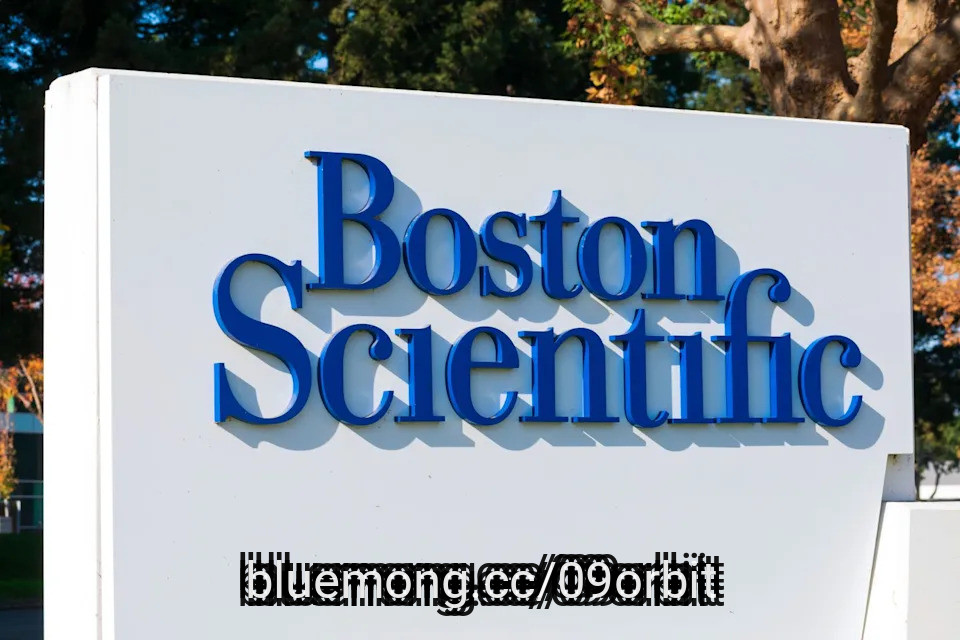
With a market cap of $69.7 billion, Boston Scientific Corporation (BSX) is a global medical technology leader focused on developing innovative solutions that improve patient health and transform lives. The company offers a broad portfolio of high-performance devices and therapies designed to address unmet medical needs while helping reduce healthcare costs.
Companies valued at more than $10 billion are generally considered "large-cap" stocks, and Boston Scientific fits this criterion perfectly. Its technologies support physicians in diagnosing and treating complex cardiovascular, respiratory, digestive, oncological, neurological, and urological conditions.
Dear GameStop Stock Fans, Mark Your Calendars for September 8
SMCI vs. CoreWeave: 1 AI Infrastructure Model Has the Bigger Opportunity
Why ****** ysts Think Sellas Life Sciences Stock Can Gain 150% From Here
#boston #scientific
Companies valued at more than $10 billion are generally considered "large-cap" stocks, and Boston Scientific fits this criterion perfectly. Its technologies support physicians in diagnosing and treating complex cardiovascular, respiratory, digestive, oncological, neurological, and urological conditions.
Dear GameStop Stock Fans, Mark Your Calendars for September 8
SMCI vs. CoreWeave: 1 AI Infrastructure Model Has the Bigger Opportunity
Why ****** ysts Think Sellas Life Sciences Stock Can Gain 150% From Here
#boston #scientific



14 days ago
People who consume greater amounts of a popular artificial sweetener could face a greater risk of heart attack and stroke, a new study suggests.
The research, which was presented at the ESC Cardiology Congress in Germany this week, showed that higher levels of xylitol in the blood were **** ociated with an increased risk of major adverse cardiovascular events (MACE).
Xylitol is a sugar alcohol that is commonly used as a low-calorie sweetener and sugar substitute, according to the National Institutes of Health. It is often used in higher amounts to sweeten foods, drinks, chewing gum and dental care products.
Zero-calorie Sweeteners Could Alter The Genes Of Later Generations, New Study Warns
The researchers followed two large study cohorts of more than 17,700 Canadian and British participants.
#study #higher
The research, which was presented at the ESC Cardiology Congress in Germany this week, showed that higher levels of xylitol in the blood were **** ociated with an increased risk of major adverse cardiovascular events (MACE).
Xylitol is a sugar alcohol that is commonly used as a low-calorie sweetener and sugar substitute, according to the National Institutes of Health. It is often used in higher amounts to sweeten foods, drinks, chewing gum and dental care products.
Zero-calorie Sweeteners Could Alter The Genes Of Later Generations, New Study Warns
The researchers followed two large study cohorts of more than 17,700 Canadian and British participants.
#study #higher


20 days ago
I think David Tepper made a mistake selling UnitedHealth Group (NYSE: UNH), and not a small mistake either. When I look at what this company is doing and where healthcare is headed, I would rather buy the stock than walk away.
For context, here's what happened: Tepper is a billionaire hedge fund manager, the founder and president of Appaloosa Management. Tepper didn't trim his stake in UnitedHealth. He sold every share, about 90,000 in total, refocusing his portfolio toward artificial intelligence (AI) with purchases of Amazon (NASDAQ: AMZN), Micron (NASDAQ: MU), and Taiwan Semiconductor (NYSE: TSM), which now account for nearly 40% of his fund. That tells me his move was about concentrating on a narrower theme, not about UnitedHealth losing its edge. In earlier filings, UnitedHealth ranked among his top positions, accounting for more than 10% of the portfolio, indicating he once saw it as a core holding.
Missed Nvidia in 2009? This Rare Signal Is Flashing Again. In 2009, a "Double Down" signal flashed for a little-known chipmaker called Nvidia. For the first time in years, that same "Total Conviction" signal is flashing for a company 1/100th the size of Nvidia. Continue »
So what changed? The obvious worry is medical cost pressure, especially from GLP‑1 weight loss drugs and broader inflation in care. UnitedHealth's Q2 2026 numbers show medical costs of $75.36 billion and a medical care ratio of 86.7%, down from 89.4% a year earlier but still above the mid-80s range the company had framed as its target (lower is better). Some investors see that as a sign that margins will stay under pressure and that insurers will never fully catch up to medical care's rising cost curve. Tepper may have decided that the headache was not worth the trouble.
When I dig into the details, I see something different. UnitedHealth is not sitting still and hoping costs fall. It's reshaping how care is delivered across its UnitedHealthcare insurance arm and Optum pharmacy management services. On GLP‑1 drugs, the company has drawn a clear line, covering them for diabetes and cardiovascular risk under tight medical necessity rules and restricting coverage for weight loss alone. It has launched programs like Total Weight Support to combine medication with coaching and digital tools, which gives it a way to manage outcomes rather than paying for pills without structure. That kind of strategy matters when drug costs can top $1,000 per member each month.
#medical #costs
For context, here's what happened: Tepper is a billionaire hedge fund manager, the founder and president of Appaloosa Management. Tepper didn't trim his stake in UnitedHealth. He sold every share, about 90,000 in total, refocusing his portfolio toward artificial intelligence (AI) with purchases of Amazon (NASDAQ: AMZN), Micron (NASDAQ: MU), and Taiwan Semiconductor (NYSE: TSM), which now account for nearly 40% of his fund. That tells me his move was about concentrating on a narrower theme, not about UnitedHealth losing its edge. In earlier filings, UnitedHealth ranked among his top positions, accounting for more than 10% of the portfolio, indicating he once saw it as a core holding.
Missed Nvidia in 2009? This Rare Signal Is Flashing Again. In 2009, a "Double Down" signal flashed for a little-known chipmaker called Nvidia. For the first time in years, that same "Total Conviction" signal is flashing for a company 1/100th the size of Nvidia. Continue »
So what changed? The obvious worry is medical cost pressure, especially from GLP‑1 weight loss drugs and broader inflation in care. UnitedHealth's Q2 2026 numbers show medical costs of $75.36 billion and a medical care ratio of 86.7%, down from 89.4% a year earlier but still above the mid-80s range the company had framed as its target (lower is better). Some investors see that as a sign that margins will stay under pressure and that insurers will never fully catch up to medical care's rising cost curve. Tepper may have decided that the headache was not worth the trouble.
When I dig into the details, I see something different. UnitedHealth is not sitting still and hoping costs fall. It's reshaping how care is delivered across its UnitedHealthcare insurance arm and Optum pharmacy management services. On GLP‑1 drugs, the company has drawn a clear line, covering them for diabetes and cardiovascular risk under tight medical necessity rules and restricting coverage for weight loss alone. It has launched programs like Total Weight Support to combine medication with coaching and digital tools, which gives it a way to manage outcomes rather than paying for pills without structure. That kind of strategy matters when drug costs can top $1,000 per member each month.
#medical #costs

23 days ago
Pfizer (NYSE: PFE) has an attractive 6.4% dividend yield. That compares to 1% for the S&P 500 index (SNPINDEX: ^GSPC) and 1.4% for the average pharmaceutical stock. Despite the outsize yield, the company is sticking by the dividend payment. That's great, but why is the yield so high? An examination of the business through 2030 will explain the problem.
From a big picture perspective, Pfizer sells pharmaceuticals. Only the drugs it sells don't appear out of thin air. It has to develop them or buy them before it can market them. That's an expensive, often time-consuming, and difficult process. This is why drug companies are afforded a limited, patent-protected window of exclusivity to sell their drugs. Drug companies like Pfizer can generate substantial revenue from patent-protected drugs.
Missed Nvidia in 2009? This Rare Signal Is Flashing Again. In 2009, a "Double Down" signal flashed for a little-known chipmaker called Nvidia. For the first time in years, that same "Total Conviction" signal is flashing for a company 1/100th the size of Nvidia. Continue »
There's just one small problem: revenues tend to fall dramatically after a drug loses patent protections. Complicating this is that developing new drugs doesn't follow a set timeline, unlike patent expirations. So sometimes there's a mismatch that puts pressure on a company's top and bottom lines.
That's what Pfizer is dealing with right now. In 2027, oncology drugs Ibrance and Xtandi are set to lose patent protection. In 2028, the cardiovascular drug Eliquis will lose patent protection. Pfizer is working hard to find drugs to replace revenue lost from these patent expirations, but investors are clearly worried that it won't be able to. It doesn't help any that the company suffered a material black eye when it had to drop its internally developed GLP-1 weight-loss drug candidate in 2025.
#pfizer #drug #yield
From a big picture perspective, Pfizer sells pharmaceuticals. Only the drugs it sells don't appear out of thin air. It has to develop them or buy them before it can market them. That's an expensive, often time-consuming, and difficult process. This is why drug companies are afforded a limited, patent-protected window of exclusivity to sell their drugs. Drug companies like Pfizer can generate substantial revenue from patent-protected drugs.
Missed Nvidia in 2009? This Rare Signal Is Flashing Again. In 2009, a "Double Down" signal flashed for a little-known chipmaker called Nvidia. For the first time in years, that same "Total Conviction" signal is flashing for a company 1/100th the size of Nvidia. Continue »
There's just one small problem: revenues tend to fall dramatically after a drug loses patent protections. Complicating this is that developing new drugs doesn't follow a set timeline, unlike patent expirations. So sometimes there's a mismatch that puts pressure on a company's top and bottom lines.
That's what Pfizer is dealing with right now. In 2027, oncology drugs Ibrance and Xtandi are set to lose patent protection. In 2028, the cardiovascular drug Eliquis will lose patent protection. Pfizer is working hard to find drugs to replace revenue lost from these patent expirations, but investors are clearly worried that it won't be able to. It doesn't help any that the company suffered a material black eye when it had to drop its internally developed GLP-1 weight-loss drug candidate in 2025.
#pfizer #drug #yield


1 month ago
It was reported on July 27 that AstraZeneca PLC (NASDAQ:AZN) shares outperformed in European trading after the company reported second-quarter earnings that beat Wall Street expectations and reiterated its full-year 2026 guidance. Core earnings per share (EPS) jumped 18% on a constant exchange rate (FXN) basis year-over-year to $2.63, comfortably ahead of the $2.48 ***** yst consensus. Total revenue reached $15.38 billion, up 5% at constant exchange rates, driven primarily by sustained momentum in its Oncology and Rare Disease units. Management reconfirmed its full-year 2026 outlook of mid-to-high single-digit revenue growth and low double-digit Core EPS growth, expressing confidence in reaching its $80 billion total revenue target by 2030 despite near-term headwind shocks.
The quarter demonstrated strong commercial execution in core growth engines. Oncology revenue rose 16% to $7.33 billion, supported by strong demand for Tagrisso ($1.94 billion), Imfinzi ($1.85 billion), and Enhertu (+31%). Rare Disease contributed $4.9 billion, led by Ultomiris. These gains successfully offset severe pressures in the Cardiovascular, Renal & Metabolism (CVRM) segment, which declined 15% due to the loss of exclusivity (LOE) for Farxiga in the U.S. and ongoing Volume-Based Procurement (VBP) price cuts in China.
Meanwhile, pipeline updates presented a mixed picture. On July 27, AZN disclosed that a Phase 3 study evaluating Ultomiris in hematopoietic stem cell transplant-associated thrombotic microangiopathy (HSCT-TMA) failed to hit its primary endpoint of event-free survival at week 26 versus placebo. Following the readout, H.C. Wainwright noted that the trial miss represents a "clear positive" for competitor Omeros (OMER), removing a major near-term competitive overhang on its drug Yartemlea and driving Omeros shares up 11% in morning trading.
AstraZeneca PLC (NASDAQ:AZN)'s core profitability remains elite, with core operating margins expanding to 34% in Q2 despite top-line headwinds from generic entry. High gross and net margins signal durable pricing power across its branded specialty portfolio. This strong profitability generates predictable cash flow to fund heavy R&D investments, commercial rollouts, and growing shareholder returns, including a 3-cent increase in the interim dividend to $1.06 per share, while buffering the company against pricing pressure.
The company's expansive late-stage pipeline and high volume of regulatory approvals underpin a multi-year growth trajectory. With 30 major regional approvals since late 2025 and more than 20 high-value trial readouts scheduled over the next 18 months, AZN possesses broad commercial optionality. Continued expansions in oncology (e.g., Enhertu and Imfinzi) and respiratory therapies (such as Breztri and Tezspire) provide direct revenue replacement for legacy products facing patent expiration.
#high #july
The quarter demonstrated strong commercial execution in core growth engines. Oncology revenue rose 16% to $7.33 billion, supported by strong demand for Tagrisso ($1.94 billion), Imfinzi ($1.85 billion), and Enhertu (+31%). Rare Disease contributed $4.9 billion, led by Ultomiris. These gains successfully offset severe pressures in the Cardiovascular, Renal & Metabolism (CVRM) segment, which declined 15% due to the loss of exclusivity (LOE) for Farxiga in the U.S. and ongoing Volume-Based Procurement (VBP) price cuts in China.
Meanwhile, pipeline updates presented a mixed picture. On July 27, AZN disclosed that a Phase 3 study evaluating Ultomiris in hematopoietic stem cell transplant-associated thrombotic microangiopathy (HSCT-TMA) failed to hit its primary endpoint of event-free survival at week 26 versus placebo. Following the readout, H.C. Wainwright noted that the trial miss represents a "clear positive" for competitor Omeros (OMER), removing a major near-term competitive overhang on its drug Yartemlea and driving Omeros shares up 11% in morning trading.
AstraZeneca PLC (NASDAQ:AZN)'s core profitability remains elite, with core operating margins expanding to 34% in Q2 despite top-line headwinds from generic entry. High gross and net margins signal durable pricing power across its branded specialty portfolio. This strong profitability generates predictable cash flow to fund heavy R&D investments, commercial rollouts, and growing shareholder returns, including a 3-cent increase in the interim dividend to $1.06 per share, while buffering the company against pricing pressure.
The company's expansive late-stage pipeline and high volume of regulatory approvals underpin a multi-year growth trajectory. With 30 major regional approvals since late 2025 and more than 20 high-value trial readouts scheduled over the next 18 months, AZN possesses broad commercial optionality. Continued expansions in oncology (e.g., Enhertu and Imfinzi) and respiratory therapies (such as Breztri and Tezspire) provide direct revenue replacement for legacy products facing patent expiration.
#high #july

1 month ago
Shares of Medtronic (NYSE: MDT), one of the world's largest medical device makers, have declined by more than 30% over the past five years. Higher costs, supply chain bottlenecks, quality control issues, and competitive pressure in surgical robotics all weighed on its stock.
Yet Wall Street remains bullish on Medtronic, with an average price target of $98.44 and a top target of $121. I believe it could rise more than 40% from its current price of $86 and hit that high-end target by the end of this year for a few simple reasons.
Missed Nvidia in 2009? This Rare Signal Is Flashing Again. In 2009, a "Double Down" signal flashed for a little-known chipmaker called Nvidia. For the first time in years, that same "Total Conviction" signal is flashing for a company 1/100th the size of Nvidia. Continue »
Back in March, Medtronic spun off its diabetes unit as MiniMed (NASDAQ: MMED) to streamline its business. It's also restructuring its business to expand its higher-margin cardiovascular and neuroscience portfolios and to integrate more AI features into its surgical planning products.
In fiscal 2026 (which ended in April), Medtronic's revenue grew 8.4% to $36.4 billion (or 5.8% organically) and marked its strongest top-line growth in ten years. From fiscal 2026 to fiscal 2029, **** ysts expect its revenue and EPS to grow at CAGRs of 5% and 13%, respectively.
#NVIDIA #years #surgical
Yet Wall Street remains bullish on Medtronic, with an average price target of $98.44 and a top target of $121. I believe it could rise more than 40% from its current price of $86 and hit that high-end target by the end of this year for a few simple reasons.
Missed Nvidia in 2009? This Rare Signal Is Flashing Again. In 2009, a "Double Down" signal flashed for a little-known chipmaker called Nvidia. For the first time in years, that same "Total Conviction" signal is flashing for a company 1/100th the size of Nvidia. Continue »
Back in March, Medtronic spun off its diabetes unit as MiniMed (NASDAQ: MMED) to streamline its business. It's also restructuring its business to expand its higher-margin cardiovascular and neuroscience portfolios and to integrate more AI features into its surgical planning products.
In fiscal 2026 (which ended in April), Medtronic's revenue grew 8.4% to $36.4 billion (or 5.8% organically) and marked its strongest top-line growth in ten years. From fiscal 2026 to fiscal 2029, **** ysts expect its revenue and EPS to grow at CAGRs of 5% and 13%, respectively.
#NVIDIA #years #surgical


1 month ago
After a year at the helm, Novo Nordisk's CEO Maziar Mike Doustdar's task of closing the gap to pacesetter Eli Lilly doesn't look to be getting any easier.
Doustdar joined Novo at the height of spiralling erosion to rivals in the obesity and type 2 diabetes market segments. While the Danish drugmaker has since gained approval for oral Wegovy, a drug that set a record-breaking pace for a glucagon-like peptide-1 receptor agonist (GLP-1RA) at launch, other pipeline products have had mixed clinical results. Earlier this week, cardiovascular disease drug ziltivekimab failed a Phase III trial, while CagriSema fell short in a non-inferiority trial comparing it to Lilly's tirzepatide.
Coupled with ongoing sales decline, dealmaking presents an obvious avenue in which to boost pipeline offerings. Novo has already said it is actively targeting bolt-on acquisitions, with Doustdar reiterating during the Q2 earnings call that large-scale, transformative deals are still a way off.
"I'm very proud of our internal R&D and pipeline, but no company has a monopoly on good ideas. I've also said we are in every data room to try and see who else has a better idea, who else can give us ******* ets that we can bolt on, and complement what [our internal R&D teams] are doing," Doustdar said.
"I'm a person who never starts with a no to one day [being able to conduct transformative M&A], but you have to be in a very different situation than Novo Nordisk is in today," he added.
#pipeline
Doustdar joined Novo at the height of spiralling erosion to rivals in the obesity and type 2 diabetes market segments. While the Danish drugmaker has since gained approval for oral Wegovy, a drug that set a record-breaking pace for a glucagon-like peptide-1 receptor agonist (GLP-1RA) at launch, other pipeline products have had mixed clinical results. Earlier this week, cardiovascular disease drug ziltivekimab failed a Phase III trial, while CagriSema fell short in a non-inferiority trial comparing it to Lilly's tirzepatide.
Coupled with ongoing sales decline, dealmaking presents an obvious avenue in which to boost pipeline offerings. Novo has already said it is actively targeting bolt-on acquisitions, with Doustdar reiterating during the Q2 earnings call that large-scale, transformative deals are still a way off.
"I'm very proud of our internal R&D and pipeline, but no company has a monopoly on good ideas. I've also said we are in every data room to try and see who else has a better idea, who else can give us ******* ets that we can bolt on, and complement what [our internal R&D teams] are doing," Doustdar said.
"I'm a person who never starts with a no to one day [being able to conduct transformative M&A], but you have to be in a very different situation than Novo Nordisk is in today," he added.
#pipeline

1 month ago
Baron Capital, an investment management company, released its Q2 2026 investor letter for the "Baron Health Care Fund". A copy of the letter is available to download here. The Fund gained 11.99% during the quarter, compared with the 10.48% gain for the Russell 3000 Health Care Index and the 15.44% gain for the Russell 3000 Index. Since inception, the Fund appreciated 10.61% on an annualized basis, compared with 10.02% for the Benchmark and 14.83% for the Index. Strong stock selection in pharmaceuticals, biotechnology, health care equipment, and life sciences tools and services supported the Fund's outperformance, although limited exposure to managed care stocks reduced relative returns. The Fund remains positive on health care due to improving biotechnology funding, strong acquisition activity, recovering managed care margins, and growth from an aging population, chronic disease, medical innovation, and higher health care spending. In addition, please check the Fund's top five holdings to know the best picks in 2026.
In its second-quarter 2026 investor letter, Baron Health Care Fund highlighted Edwards Lifesciences Corporation (NYSE:EW). Edwards Lifesciences Corporation (NYSE:EW) is a medical technology company that provides products and technologies to treat advanced cardiovascular diseases. On August 3, 2026, Edwards Lifesciences Corporation (NYSE:EW) closed at $88.82 per share. The one-month return of Edwards Lifesciences Corporation (NYSE:EW) was -6.33% and its shares gained 12.09% over the past 52 weeks. Edwards Lifesciences Corporation (NYSE:EW) has a market capitalization of $51.14 billion.
Baron Health Care Fund stated the following regarding Edwards Lifesciences Corporation (NYSE:EW) in its Q2 2026 investor letter:
"Edwards Lifesciences Corporation (NYSE:EW) was a material tailwind in the period. Shares of Edwards, a medical technology company specializing in structural heart disease therapies, rose due to solid first quarter results and an updated Medicare coverage decision for transcatheter aortic valve replacement (TAVR), which has the potential to increase procedure volumes. We retain conviction as Edwards' lead in replacement therapies for mitral and tricuspid valves, which combined with a total addressable market that could approach the scale of core TAVR provides a durable and differentiated growth runway that competitors are years away from replicating."
Edwards Lifesciences Corporation (NYSE:EW) is not on our list of the 40 Most Popular Stocks Among Hedge Funds. As per our database, 68 hedge fund portfolios held Edwards Lifesciences Corporation (NYSE:EW) at the end of the first quarter which was 64 in the previous quarter. While we acknowledge the potential of Edwards Lifesciences Corporation (NYSE:EW) as an investment, we believe certain AI stocks offer greater upside potential and carry less downside risk. If you're looking for an extremely undervalued AI stock that also stands to benefit significantly from Trump-era tarif
In its second-quarter 2026 investor letter, Baron Health Care Fund highlighted Edwards Lifesciences Corporation (NYSE:EW). Edwards Lifesciences Corporation (NYSE:EW) is a medical technology company that provides products and technologies to treat advanced cardiovascular diseases. On August 3, 2026, Edwards Lifesciences Corporation (NYSE:EW) closed at $88.82 per share. The one-month return of Edwards Lifesciences Corporation (NYSE:EW) was -6.33% and its shares gained 12.09% over the past 52 weeks. Edwards Lifesciences Corporation (NYSE:EW) has a market capitalization of $51.14 billion.
Baron Health Care Fund stated the following regarding Edwards Lifesciences Corporation (NYSE:EW) in its Q2 2026 investor letter:
"Edwards Lifesciences Corporation (NYSE:EW) was a material tailwind in the period. Shares of Edwards, a medical technology company specializing in structural heart disease therapies, rose due to solid first quarter results and an updated Medicare coverage decision for transcatheter aortic valve replacement (TAVR), which has the potential to increase procedure volumes. We retain conviction as Edwards' lead in replacement therapies for mitral and tricuspid valves, which combined with a total addressable market that could approach the scale of core TAVR provides a durable and differentiated growth runway that competitors are years away from replicating."
Edwards Lifesciences Corporation (NYSE:EW) is not on our list of the 40 Most Popular Stocks Among Hedge Funds. As per our database, 68 hedge fund portfolios held Edwards Lifesciences Corporation (NYSE:EW) at the end of the first quarter which was 64 in the previous quarter. While we acknowledge the potential of Edwards Lifesciences Corporation (NYSE:EW) as an investment, we believe certain AI stocks offer greater upside potential and carry less downside risk. If you're looking for an extremely undervalued AI stock that also stands to benefit significantly from Trump-era tarif


1 month ago
AstraZeneca (AZN) stock took a nosedive Monday amid reports it's mulling a megamerger with Bristol Myers Squibb (BMY).
The combined company would be worth roughly $400 billion, "making it one of the biggest pharmaceutical mergers in history," RBC Capital Markets ******* yst Trung Huynh said in a report. The Financial Times first reported the early merger talks. AstraZeneca declined to comment to Investor's Business Daily. Bristol Myers didn't immediately respond.
The deal would merge two oncology powerhouses, and likely trigger an antitrust review. Bristol Myers fills portfolio gaps in blood cancer, immunology, cardiovascular diseases and central nervous system conditions where AstraZeneca lacks scale today, Huynh said.
AstraZeneca stock tumbled 6.9% to 157.97. Shares are already trading below their 21-day, 50-day and 200-day moving averages. Bristol Myers Squibb stock, on the other hand, inched a fraction higher to 65.47. The stock ended the regular session in a buy zone that runs up to 66.03.
Given the size of the two companies, the deal would likely be mostly stock-based, resulting in Bristol Myers shareholders owning roughly a third of the combined company, William Blair ******* yst Matt Phipps said in a client note. He says $160 billion makes sense as a price tag for Bristol Myers Squibb.
#astrazeneca #huynh #combined
The combined company would be worth roughly $400 billion, "making it one of the biggest pharmaceutical mergers in history," RBC Capital Markets ******* yst Trung Huynh said in a report. The Financial Times first reported the early merger talks. AstraZeneca declined to comment to Investor's Business Daily. Bristol Myers didn't immediately respond.
The deal would merge two oncology powerhouses, and likely trigger an antitrust review. Bristol Myers fills portfolio gaps in blood cancer, immunology, cardiovascular diseases and central nervous system conditions where AstraZeneca lacks scale today, Huynh said.
AstraZeneca stock tumbled 6.9% to 157.97. Shares are already trading below their 21-day, 50-day and 200-day moving averages. Bristol Myers Squibb stock, on the other hand, inched a fraction higher to 65.47. The stock ended the regular session in a buy zone that runs up to 66.03.
Given the size of the two companies, the deal would likely be mostly stock-based, resulting in Bristol Myers shareholders owning roughly a third of the combined company, William Blair ******* yst Matt Phipps said in a client note. He says $160 billion makes sense as a price tag for Bristol Myers Squibb.
#astrazeneca #huynh #combined


2 months ago
Chelsea FC winger Mykhailo Mudryk has been cleared to make an immediate return to action after the Court of Arbitration for Sport (Cas) partially upheld an appeal against his four-year ban for doping.
The 25-year-old has not played a competitive match since November 2024 after returning an adverse finding for banned substance meldonium.
Having been provisionally suspended by the Football ****** ociation (FA), Mudryk was then widely reported to have been given a four-year ban – though appealed to Cas against that decision.
The body has now ruled that Mudryk can return "with immediate effect" after he accepted breaking anti-doping rules, and reached agreement on a suspension equivalent to time served.
Cas said the test displayed "a low concentration" of the prohibited substance. It added that changes have since been made to the World Anti-Doping Agency (Wada) technical document regarding meldonium, a cardiovascular medication.
#year
The 25-year-old has not played a competitive match since November 2024 after returning an adverse finding for banned substance meldonium.
Having been provisionally suspended by the Football ****** ociation (FA), Mudryk was then widely reported to have been given a four-year ban – though appealed to Cas against that decision.
The body has now ruled that Mudryk can return "with immediate effect" after he accepted breaking anti-doping rules, and reached agreement on a suspension equivalent to time served.
Cas said the test displayed "a low concentration" of the prohibited substance. It added that changes have since been made to the World Anti-Doping Agency (Wada) technical document regarding meldonium, a cardiovascular medication.
#year


2 months ago
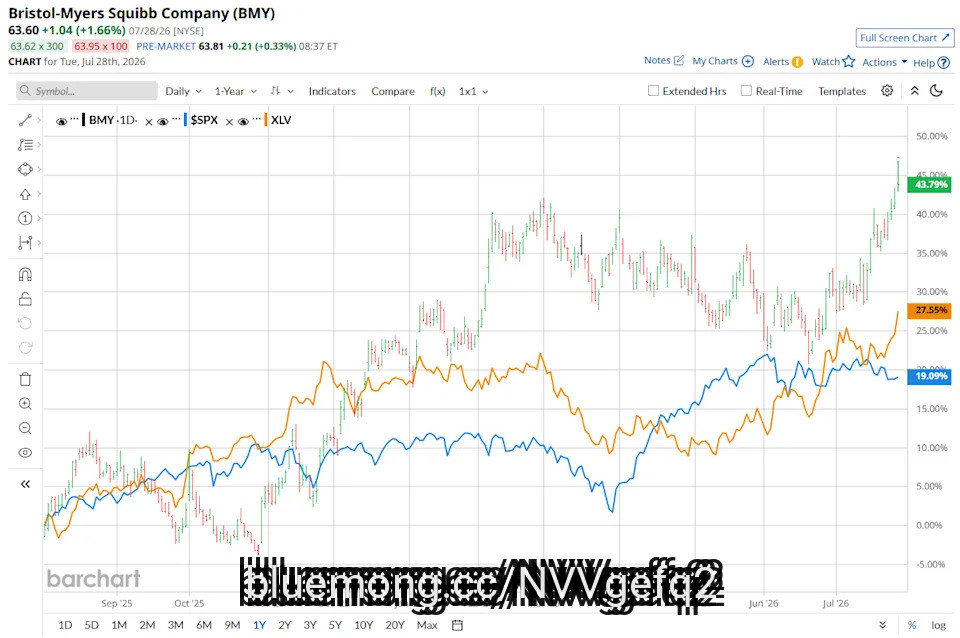
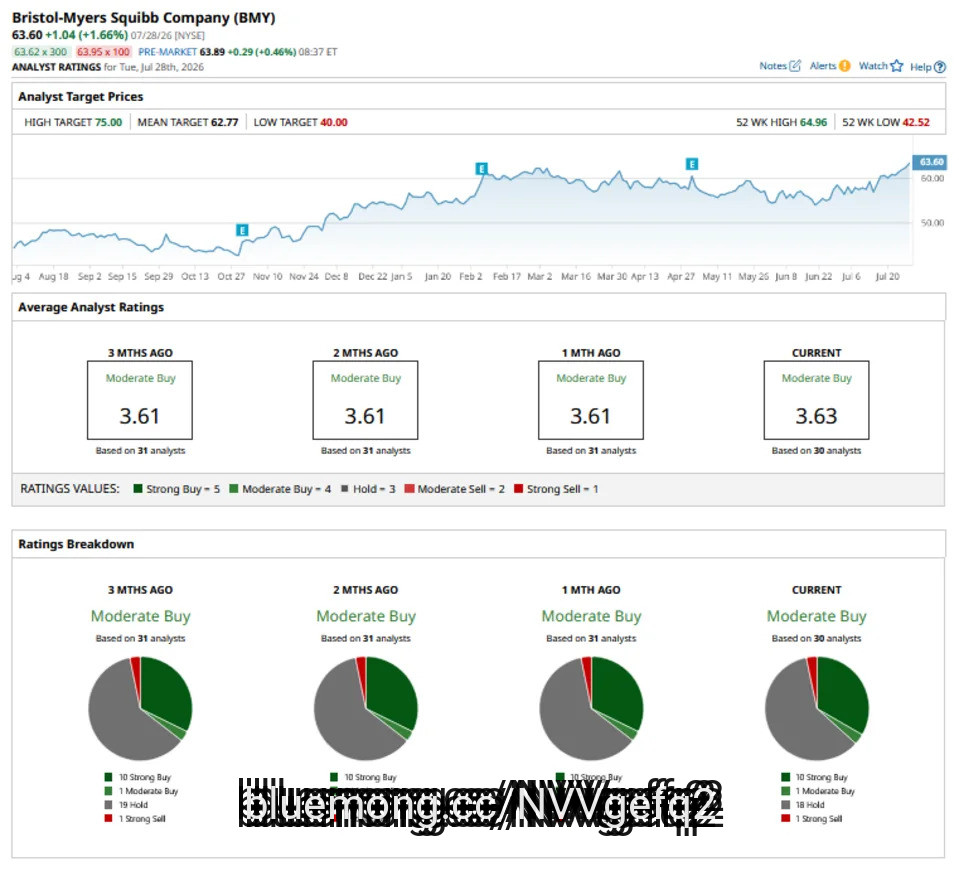
Princeton, New Jersey-based Bristol-Myers Squibb Company (BMY) discovers, develops, licenses, manufactures, markets, distributes, and sells biopharmaceutical products worldwide. With a market cap of $129.9 billion, the company offers products for oncology, hematology, immunology, cardiovascular, neuroscience, and other areas.
Shares of BMY have rallied the broader market over the past year, surging 33.9% compared to the S&P 500 Index's ($SPX) 16.3% surge. Moreover, in 2026, the stock has risen by nearly 17.9%, outpacing the SPX's 8.5% gain.
Dear Sandisk Stock Fans, Mark Your Calendars for August 5
Nasdaq Futures Plunge as Chip Selloff Rages On, FOMC Meeting and Earnings on Tap
Ahead of Microsoft Earnings, Here's What Barchart Data Says Comes Next for MSFT Stock
#products #bristol #squibb
Shares of BMY have rallied the broader market over the past year, surging 33.9% compared to the S&P 500 Index's ($SPX) 16.3% surge. Moreover, in 2026, the stock has risen by nearly 17.9%, outpacing the SPX's 8.5% gain.
Dear Sandisk Stock Fans, Mark Your Calendars for August 5
Nasdaq Futures Plunge as Chip Selloff Rages On, FOMC Meeting and Earnings on Tap
Ahead of Microsoft Earnings, Here's What Barchart Data Says Comes Next for MSFT Stock
#products #bristol #squibb


2 months ago
Indianapolis, Indiana-based Eli Lilly and Company (LLY) is a leading pharmaceutical company that sells Trulicity, Verzenio and Taltz drugs. The company discovers, develops, and markets human pharmaceuticals. With a market cap of $1.1 trillion, LLY's products include neuroscience, endocrine, anti-infectives, cardiovascular agents, oncology, and animal health products. The pharmaceutical giant is expected to announce its fiscal second-quarter earnings for 2026 before the market opens on Wednesday, Aug. 5.
Ahead of the event, ****** ysts expect LLY to report a profit of $7.47 per share on a diluted basis, up 18.4% from $6.31 per share in the year-ago quarter. The company has consistently surpassed Wall Street's EPS estimates in its last four quarterly reports.
PayPal Says a $53 Billion Takeover Offer from Stripe Undervalues It. How to Play PYPL Stock Here.
Billionaire Jeff Bezos Called Amazon's Customer Service to Prove a Point But Waited in Silence for More Than 10 Minutes — 'It Was Really Long'
Micron Stock Is Near Bear-Market Territory. Here's Why ASML's Guidance Says Buy the Dip.
#indiana
Ahead of the event, ****** ysts expect LLY to report a profit of $7.47 per share on a diluted basis, up 18.4% from $6.31 per share in the year-ago quarter. The company has consistently surpassed Wall Street's EPS estimates in its last four quarterly reports.
PayPal Says a $53 Billion Takeover Offer from Stripe Undervalues It. How to Play PYPL Stock Here.
Billionaire Jeff Bezos Called Amazon's Customer Service to Prove a Point But Waited in Silence for More Than 10 Minutes — 'It Was Really Long'
Micron Stock Is Near Bear-Market Territory. Here's Why ASML's Guidance Says Buy the Dip.
#indiana



2 months ago
Fred Alger Management, an investment management company, released its "Alger Weatherbie Specialized Growth Fund" second-quarter 2026 investor letter. A copy of the letter can be downloaded here. U.S. equities experienced a strong recovery in Q2 2026, with the S&P 500 Index gaining 15.2%, marking its best quarter since 2020. A ceasefire between the United States and Iran and accelerated investment in artificial intelligence (AI) regained market optimism in the quarter, leading the Information Technology and Industrials sectors upward, and Energy and Utilities lagged because of falling oil and gas prices. In June, the Federal Reserve maintained steady interest rates, but the meeting had a hawkish tone. As AI transitions into its agentic phase, opportunities are identified within sectors adopting the technology. The Weatherbie Specialized Growth Fund's Class A shares outperformed the Russell 2500 Growth Index in the quarter. The Industrials and Information Technology sectors contributed to the relative performance, whereas Financials and Consumer Discretionary sectors detracted. In addition, please check the Fund's top five holdings to know its best picks in 2026.
In its Q2 2026 investor letter, Alger Weatherbie Specialized Growth Fund highlighted Artivion, Inc. (NYSE:AORT). Artivion, Inc. (NYSE:AORT) is a global manufacturer and distributor of medical devices and implantable human tissues. On July 20, 2026, Artivion, Inc. (NYSE:AORT) closed at $25.37 per share. One-month return of Artivion, Inc. (NYSE:AORT) was 22.68%, and its shares lost 16.55% over the past 52 weeks. Artivion, Inc. (NYSE:AORT) has a market capitalization of $1.23 billion.
Alger Weatherbie Specialized Growth Fund stated the following regarding Artivion, Inc. (NYSE:AORT) in its Q2 2026 investor update:
"Artivion, Inc. (NYSE:AORT) manufactures, processes, and distributes medical devices and implantable human tissues used in cardiac and vascular surgical procedures, with a focus on treating patients with aortic disease. The company's portfolio includes established products as well as newer technologies designed to improve outcomes in complex cardiovascular procedures. During the quarter, shares detracted from performance after the company reported in-line first-quarter results but modestly lowered its full-year outlook, primarily due to slower-than-expected starter set sales for AMDS, its key new product cycle."
Artivion, Inc. (NYSE:AORT) is not on our list of 40 Most Popular Stocks Among Hedge Funds Heading Into 2026. According to our database, 28 hedge fund portfolios held Artivion, Inc. (NYSE:AORT) at the end of the first quarter, up from 25 in the previous quarter. Artivion, Inc. (NYSE:AORT) delivered total revenue of $116.3 million in Q1 2026, an increase of 12% on a non-GAAP constant currency basis. While we acknowledge the potential of Artivion, Inc. (NYSE:AORT) as an investment, we believe certain AI stocks offer greater upside potential and carry less downside risk. If y
In its Q2 2026 investor letter, Alger Weatherbie Specialized Growth Fund highlighted Artivion, Inc. (NYSE:AORT). Artivion, Inc. (NYSE:AORT) is a global manufacturer and distributor of medical devices and implantable human tissues. On July 20, 2026, Artivion, Inc. (NYSE:AORT) closed at $25.37 per share. One-month return of Artivion, Inc. (NYSE:AORT) was 22.68%, and its shares lost 16.55% over the past 52 weeks. Artivion, Inc. (NYSE:AORT) has a market capitalization of $1.23 billion.
Alger Weatherbie Specialized Growth Fund stated the following regarding Artivion, Inc. (NYSE:AORT) in its Q2 2026 investor update:
"Artivion, Inc. (NYSE:AORT) manufactures, processes, and distributes medical devices and implantable human tissues used in cardiac and vascular surgical procedures, with a focus on treating patients with aortic disease. The company's portfolio includes established products as well as newer technologies designed to improve outcomes in complex cardiovascular procedures. During the quarter, shares detracted from performance after the company reported in-line first-quarter results but modestly lowered its full-year outlook, primarily due to slower-than-expected starter set sales for AMDS, its key new product cycle."
Artivion, Inc. (NYSE:AORT) is not on our list of 40 Most Popular Stocks Among Hedge Funds Heading Into 2026. According to our database, 28 hedge fund portfolios held Artivion, Inc. (NYSE:AORT) at the end of the first quarter, up from 25 in the previous quarter. Artivion, Inc. (NYSE:AORT) delivered total revenue of $116.3 million in Q1 2026, an increase of 12% on a non-GAAP constant currency basis. While we acknowledge the potential of Artivion, Inc. (NYSE:AORT) as an investment, we believe certain AI stocks offer greater upside potential and carry less downside risk. If y


2 months ago
Gilead Sciences, Inc. (GILD), headquartered in Foster City, California, is a biopharmaceutical company that discovers, develops, and commercializes medicines in the areas of unmet medical need. Valued at $166.7 billion by market cap, the company's primary areas of focus include HIV, AIDS, liver disease, and serious cardiovascular and respiratory conditions. The HIV giant is expected to announce its fiscal second-quarter earnings for 2026 in the near term.
Ahead of the event, ******* ysts expect GILD to report a loss of $7.09 per share on a diluted basis, down 452.7% from a profit of $2.01 per share in the year-ago quarter. The company has consistently surpassed the consensus estimates in each of the last four quarters.
Huge, Unusual Intel Options Volume Today Ahead of Earnings This Week
Intel Stock Is Down, But Put Premiums are High - Put Short Sellers Love the High Yields
The Number Tesla Stock Bulls Are Really Waiting for This Earnings Season Has Nothing to Do With Cars
#earnings
Ahead of the event, ******* ysts expect GILD to report a loss of $7.09 per share on a diluted basis, down 452.7% from a profit of $2.01 per share in the year-ago quarter. The company has consistently surpassed the consensus estimates in each of the last four quarters.
Huge, Unusual Intel Options Volume Today Ahead of Earnings This Week
Intel Stock Is Down, But Put Premiums are High - Put Short Sellers Love the High Yields
The Number Tesla Stock Bulls Are Really Waiting for This Earnings Season Has Nothing to Do With Cars
#earnings



2 months ago
Veteran Democratic strategist James Carville said Wednesday that while he takes no joy in the late Senator Lindsay Graham's death, he will remember his career as one of "duplicity."
"Let's give him all the credit in the world. He was one of the [Bill Clinton] impeachment managers. Remember the great moral ***** an Henry Hyde and that whole crowd. And yeah, he was a little bit more than just for impeachment. He was the most aggressive," Carville said.
"I knew him. He could be personable, but I don't think the man has had a... sorry, I don't want anybody to get sick or die, that's not it," Carville said. "But I think his political career is mostly defined by duplicity. Just my own view."
Graham, 71, died Saturday night from an aortic dissection due to arteriosclerotic cardiovascular disease. The news stunned Washington, as Graham was one of the body's most active members and was even scheduled to appear on NBC's "Meet the Press" Sunday morning.
Media Ghouls, Commentators Across Political Aisle Mock Lindsey Graham's Death With 'Good Riddance' Posts
"Let's give him all the credit in the world. He was one of the [Bill Clinton] impeachment managers. Remember the great moral ***** an Henry Hyde and that whole crowd. And yeah, he was a little bit more than just for impeachment. He was the most aggressive," Carville said.
"I knew him. He could be personable, but I don't think the man has had a... sorry, I don't want anybody to get sick or die, that's not it," Carville said. "But I think his political career is mostly defined by duplicity. Just my own view."
Graham, 71, died Saturday night from an aortic dissection due to arteriosclerotic cardiovascular disease. The news stunned Washington, as Graham was one of the body's most active members and was even scheduled to appear on NBC's "Meet the Press" Sunday morning.
Media Ghouls, Commentators Across Political Aisle Mock Lindsey Graham's Death With 'Good Riddance' Posts



2 months ago
Sen. Lindsey Graham's sudden death has thrown new attention on a rare but often deadly cardiovascular emergency known as aortic dissection.
The cause of death was identified as an aortic dissection due to arteriosclerotic cardiovascular disease, according to a statement released by Graham's office on Sunday, citing preliminary findings from the District of Columbia's Office of the Chief Medical Examiner.
"It occurs when the layers of the aorta (the body's largest artery) come apart and the inner one tears," Fox News senior medical **** yst Dr. Marc Siegel, who did not treat Graham, told Fox News Digital.
Heart Condition Tied To Lindsey Graham's Death Can Strike Without Warning — What To Know
"It can come on in minutes or days and may be hard to recognize," added the doctor, noting that while dissections can evolve over time, symptoms often appear suddenly.
The cause of death was identified as an aortic dissection due to arteriosclerotic cardiovascular disease, according to a statement released by Graham's office on Sunday, citing preliminary findings from the District of Columbia's Office of the Chief Medical Examiner.
"It occurs when the layers of the aorta (the body's largest artery) come apart and the inner one tears," Fox News senior medical **** yst Dr. Marc Siegel, who did not treat Graham, told Fox News Digital.
Heart Condition Tied To Lindsey Graham's Death Can Strike Without Warning — What To Know
"It can come on in minutes or days and may be hard to recognize," added the doctor, noting that while dissections can evolve over time, symptoms often appear suddenly.




3 months ago
By Chris Prentice and Amina Niasse
NEW YORK, July 1 (Reuters) - Millions more Americans will qualify for obesity medications at just $50 a month under a new Medicare program starting on Wednesday, bringing the highly effective drugs to people aged 65 and older at an affordable price.
The U.S. Centers for Medicare & Medicaid Services' 18-month trial program will offer for the first time Novo Nordisk's Wegovy and Eli Lilly's Foundayo and Zepbound as a weight-loss treatment alone.
Medicare, which also covers people with disabilities, has been barred from weight-loss coverage and had paid for the drugs only when prescribed for co-conditions like cardiovascular issues and severe fatty liver disease. Now the program offers three pathways for some Medicare subscribers to qualify for coverage.
Eligible patients are estimated in the single-digit millions, a U.S. official said recently. Wall Street **** ysts estimate that will amount to billions of dollars in revenue for the drugmakers.
NEW YORK, July 1 (Reuters) - Millions more Americans will qualify for obesity medications at just $50 a month under a new Medicare program starting on Wednesday, bringing the highly effective drugs to people aged 65 and older at an affordable price.
The U.S. Centers for Medicare & Medicaid Services' 18-month trial program will offer for the first time Novo Nordisk's Wegovy and Eli Lilly's Foundayo and Zepbound as a weight-loss treatment alone.
Medicare, which also covers people with disabilities, has been barred from weight-loss coverage and had paid for the drugs only when prescribed for co-conditions like cardiovascular issues and severe fatty liver disease. Now the program offers three pathways for some Medicare subscribers to qualify for coverage.
Eligible patients are estimated in the single-digit millions, a U.S. official said recently. Wall Street **** ysts estimate that will amount to billions of dollars in revenue for the drugmakers.

3 months ago
Boston Scientific Corporation (NYSE:BSX) is one of the best low volatility stocks to buy under $50. BofA cut the price target on Boston Scientific Corporation (NYSE:BSX) to $61 from $68 on June 12 and maintained a Buy rating on the shares. It noted that the firm's services team continues to highlight a lower utilization environment, and Barclays wants to take a more conservative view on 2027 medtech company estimates, given valuations are already reflecting utilization risk. It further told investors that the firm is lowering 2027 estimates across its larger-cap coverage where there's exposure to utilization and inflation.
Boston Scientific Corporation (NYSE:BSX) also received a rating update from Canaccord on June 1. The firm lowered the price target on the stock to $70 from $71, reiterating a Buy rating on the shares. Canaccord stated that it updated its model on the stock to take into account slowdowns in the U.S. Watchman business in 2026 and 2027, which have negative implications on its revenue and EPS estimates.
Boston Scientific Corporation (NYSE:BSX) manufactures, develops, and markets medical devices used in interventional medical procedures. Its operations are divided into Cardiovascular and MedSurg segments. The Cardiovascular segment covers Cardiology and Peripheral Interventions, while the MedSurg segment comprises Urology, Endoscopy, and Neuromodulation.
While we acknowledge the potential of BSX as an investment, we believe certain AI stocks offer greater upside potential and carry less downside risk. If you're looking for an extremely undervalued AI stock that also stands to benefit significantly from Trump-era tariffs and the onshoring trend, see our free report on the best short-term AI stock.
READ NEXT: 15 Stocks That Will Make You Rich in 10 Years AND 12 Best Stocks That Will Always Grow.
Boston Scientific Corporation (NYSE:BSX) also received a rating update from Canaccord on June 1. The firm lowered the price target on the stock to $70 from $71, reiterating a Buy rating on the shares. Canaccord stated that it updated its model on the stock to take into account slowdowns in the U.S. Watchman business in 2026 and 2027, which have negative implications on its revenue and EPS estimates.
Boston Scientific Corporation (NYSE:BSX) manufactures, develops, and markets medical devices used in interventional medical procedures. Its operations are divided into Cardiovascular and MedSurg segments. The Cardiovascular segment covers Cardiology and Peripheral Interventions, while the MedSurg segment comprises Urology, Endoscopy, and Neuromodulation.
While we acknowledge the potential of BSX as an investment, we believe certain AI stocks offer greater upside potential and carry less downside risk. If you're looking for an extremely undervalued AI stock that also stands to benefit significantly from Trump-era tariffs and the onshoring trend, see our free report on the best short-term AI stock.
READ NEXT: 15 Stocks That Will Make You Rich in 10 Years AND 12 Best Stocks That Will Always Grow.


3 months ago
Boston Scientific Corporation (NYSE:BSX) is one of the best low volatility stocks to buy under $50. BofA cut the price target on Boston Scientific Corporation (NYSE:BSX) to $61 from $68 on June 12 and maintained a Buy rating on the shares. It noted that the firm's services team continues to highlight a lower utilization environment, and Barclays wants to take a more conservative view on 2027 medtech company estimates, given valuations are already reflecting utilization risk. It further told investors that the firm is lowering 2027 estimates across its larger-cap coverage where there's exposure to utilization and inflation.
Boston Scientific Corporation (NYSE:BSX) also received a rating update from Canaccord on June 1. The firm lowered the price target on the stock to $70 from $71, reiterating a Buy rating on the shares. Canaccord stated that it updated its model on the stock to take into account slowdowns in the U.S. Watchman business in 2026 and 2027, which have negative implications on its revenue and EPS estimates.
Boston Scientific Corporation (NYSE:BSX) manufactures, develops, and markets medical devices used in interventional medical procedures. Its operations are divided into Cardiovascular and MedSurg segments. The Cardiovascular segment covers Cardiology and Peripheral Interventions, while the MedSurg segment comprises Urology, Endoscopy, and Neuromodulation.
While we acknowledge the potential of BSX as an investment, we believe certain AI stocks offer greater upside potential and carry less downside risk. If you're looking for an extremely undervalued AI stock that also stands to benefit significantly from Trump-era tariffs and the onshoring trend, see our free report on the best short-term AI stock.
READ NEXT: 15 Stocks That Will Make You Rich in 10 Years AND 12 Best Stocks That Will Always Grow.
Boston Scientific Corporation (NYSE:BSX) also received a rating update from Canaccord on June 1. The firm lowered the price target on the stock to $70 from $71, reiterating a Buy rating on the shares. Canaccord stated that it updated its model on the stock to take into account slowdowns in the U.S. Watchman business in 2026 and 2027, which have negative implications on its revenue and EPS estimates.
Boston Scientific Corporation (NYSE:BSX) manufactures, develops, and markets medical devices used in interventional medical procedures. Its operations are divided into Cardiovascular and MedSurg segments. The Cardiovascular segment covers Cardiology and Peripheral Interventions, while the MedSurg segment comprises Urology, Endoscopy, and Neuromodulation.
While we acknowledge the potential of BSX as an investment, we believe certain AI stocks offer greater upside potential and carry less downside risk. If you're looking for an extremely undervalued AI stock that also stands to benefit significantly from Trump-era tariffs and the onshoring trend, see our free report on the best short-term AI stock.
READ NEXT: 15 Stocks That Will Make You Rich in 10 Years AND 12 Best Stocks That Will Always Grow.


3 months ago
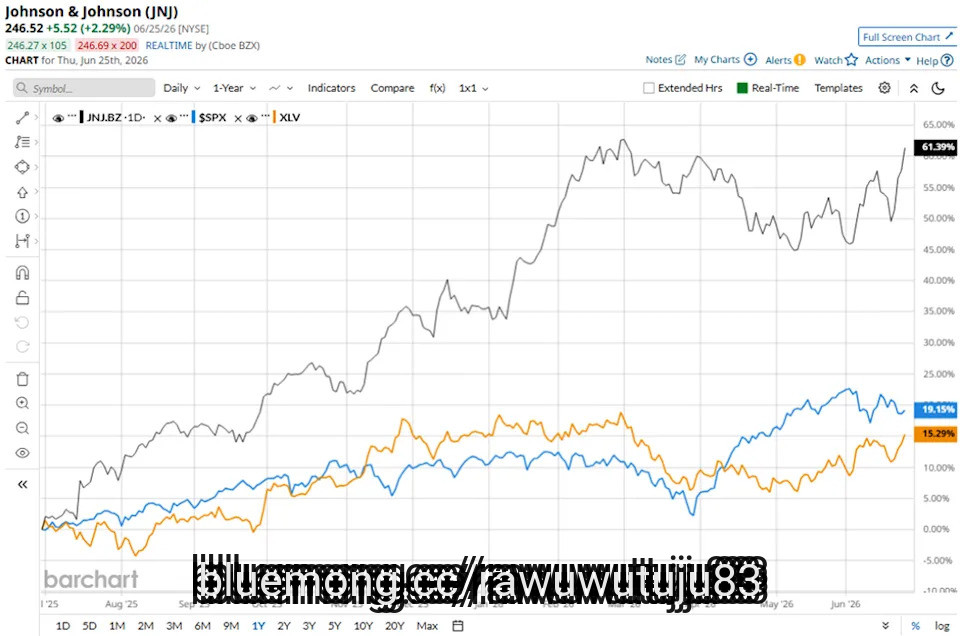
With a market cap of $580.1 billion, Johnson & Johnson (JNJ) is a global healthcare company engaged in the research, development, manufacture, and sale of a broad range of medical products and solutions through its Innovative Medicine and MedTech segments. It serves healthcare providers, hospitals, retailers, and patients worldwide across areas including pharmaceuticals, surgery, orthopedics, cardiovascular care, and vision health.
The New Brunswick, New Jersey-based company is expected to unveil its fiscal Q2 2026 results before the market opens on Wednesday, Jul. 15. Ahead of the event, ****** ysts forecast JNJ to post an adjusted EPS of $2.83, a growth of 2.2% from $2.77 in the same quarter last year. It has surpassed Wall Street's bottom-line projections in the past four quarters.
Palantir Stock Crashes to a 52-Week Low: Why It's Time to Buy the Dip.
Corning Stock Skyrockets on AI-Related Demand, Spurring Unusual Call Option Buying
AMD's MEXT Acquisition Is More Important Than Markets Realize. Here's How It Solves the Memory Bottleneck.
The New Brunswick, New Jersey-based company is expected to unveil its fiscal Q2 2026 results before the market opens on Wednesday, Jul. 15. Ahead of the event, ****** ysts forecast JNJ to post an adjusted EPS of $2.83, a growth of 2.2% from $2.77 in the same quarter last year. It has surpassed Wall Street's bottom-line projections in the past four quarters.
Palantir Stock Crashes to a 52-Week Low: Why It's Time to Buy the Dip.
Corning Stock Skyrockets on AI-Related Demand, Spurring Unusual Call Option Buying
AMD's MEXT Acquisition Is More Important Than Markets Realize. Here's How It Solves the Memory Bottleneck.


3 months ago
We recently compiled a list of the 10 Best Weight Loss Drug Stocks to Buy in 2026. Amgen Inc. (NASDAQ:AMGN) is one of the best weight loss drugs on this list.
TheFly reported on June 16 that Mizuho ****** yst Salim Syed increased the price target for AMGN to $303 from $295 while maintaining a Neutral rating on the shares. The adjustment followed an update to the firm's valuation model after reviewing AMGN's first quarter results.
In separate news, on June 7, Amgen Inc. (NASDAQ:AMGN) presented new clinical findings at the American Diabetes ****** ociation (ADA) 86th Scientific Sessions, highlighting its efforts to address cardiovascular risks among people with cardiometabolic conditions. The company shared Phase 3 VESALIUS-CV subgroup data evaluating Repatha in 6,002 high-risk diabetes patients with elevated LDL-C levels who had not previously experienced a heart attack or stroke.
The ****** ysis showed that Repatha, used alongside statins or other LDL-C-lowering treatments, lowered the likelihood of major cardiovascular events, including coronary heart disease death, heart attack, or ischemic stroke, by 29% compared with placebo. The treatment also demonstrated a 21% reduction in a broader cardiovascular outcome that included ischemia-related revascularization. Patients receiving Repatha achieved a median LDL-C level of 45 mg/dL, compared with 106 mg/dL among those receiving placebo.
Amgen Inc. (NASDAQ:AMGN) is a global biotech company gaining investor attention in the weight-loss market through MariTide, an experimental obesity drug in Phase 3 trials. With potential monthly dosing and strong weight-loss results, MariTide could become a major competitor in the growing obesity treatment ****** e.
TheFly reported on June 16 that Mizuho ****** yst Salim Syed increased the price target for AMGN to $303 from $295 while maintaining a Neutral rating on the shares. The adjustment followed an update to the firm's valuation model after reviewing AMGN's first quarter results.
In separate news, on June 7, Amgen Inc. (NASDAQ:AMGN) presented new clinical findings at the American Diabetes ****** ociation (ADA) 86th Scientific Sessions, highlighting its efforts to address cardiovascular risks among people with cardiometabolic conditions. The company shared Phase 3 VESALIUS-CV subgroup data evaluating Repatha in 6,002 high-risk diabetes patients with elevated LDL-C levels who had not previously experienced a heart attack or stroke.
The ****** ysis showed that Repatha, used alongside statins or other LDL-C-lowering treatments, lowered the likelihood of major cardiovascular events, including coronary heart disease death, heart attack, or ischemic stroke, by 29% compared with placebo. The treatment also demonstrated a 21% reduction in a broader cardiovascular outcome that included ischemia-related revascularization. Patients receiving Repatha achieved a median LDL-C level of 45 mg/dL, compared with 106 mg/dL among those receiving placebo.
Amgen Inc. (NASDAQ:AMGN) is a global biotech company gaining investor attention in the weight-loss market through MariTide, an experimental obesity drug in Phase 3 trials. With potential monthly dosing and strong weight-loss results, MariTide could become a major competitor in the growing obesity treatment ****** e.


3 months ago
We recently compiled a list of the 10 Best Weight Loss Drug Stocks to Buy in 2026. AstraZeneca PLC (NYSE:AZN) is one of the best weight loss drugs on this list.
TheFly reported on June 15 that AZN announced that its supplemental Biologics License Application (sBLA) for Ultomiris (ravulizumab) was accepted and granted Priority Review by the U.S. Food and Drug Administration (FDA). The application seeks approval for the treatment of adults with immunoglobulin A nephropathy (IgAN), a rare kidney disorder. The FDA's Priority Review designation is given to therapies that have the potential to provide meaningful improvements in treatment options through benefits such as improved safety, effectiveness, or patient care. The FDA's final decision on the application is expected in the fourth quarter of 2026.
15 States with the Best Healthcare in the US
This regulatory milestone closely follows another major commercial victory for the company's oncology franchise. On June 12, AstraZeneca PLC (NYSE:AZN) announced that the U.S. Food and Drug Administration approved Truqap (capivasertib) in combination with abiraterone and prednisone for the treatment of adults with PTEN-deficient metastatic prostate cancer. The approval applies to patients with metastatic androgen pathway modulation-naive or sensitive disease, identified through an FDA-authorized diagnostic test. The decision positions Truqap as a targeted treatment option for this specific patient population and expands AstraZeneca's oncology portfolio with a new approach for managing advanced prostate cancer.
AstraZeneca PLC (NYSE:AZN) is a global biopharma company and is expanding into the obesity market with next-generation weight-loss therapies, including oral GLP-1 drugs and monthly injectables. The company aims to compete with market leaders while combining obesity treatments with its strong cardiovascular and metabolic disease portfolio.
TheFly reported on June 15 that AZN announced that its supplemental Biologics License Application (sBLA) for Ultomiris (ravulizumab) was accepted and granted Priority Review by the U.S. Food and Drug Administration (FDA). The application seeks approval for the treatment of adults with immunoglobulin A nephropathy (IgAN), a rare kidney disorder. The FDA's Priority Review designation is given to therapies that have the potential to provide meaningful improvements in treatment options through benefits such as improved safety, effectiveness, or patient care. The FDA's final decision on the application is expected in the fourth quarter of 2026.
15 States with the Best Healthcare in the US
This regulatory milestone closely follows another major commercial victory for the company's oncology franchise. On June 12, AstraZeneca PLC (NYSE:AZN) announced that the U.S. Food and Drug Administration approved Truqap (capivasertib) in combination with abiraterone and prednisone for the treatment of adults with PTEN-deficient metastatic prostate cancer. The approval applies to patients with metastatic androgen pathway modulation-naive or sensitive disease, identified through an FDA-authorized diagnostic test. The decision positions Truqap as a targeted treatment option for this specific patient population and expands AstraZeneca's oncology portfolio with a new approach for managing advanced prostate cancer.
AstraZeneca PLC (NYSE:AZN) is a global biopharma company and is expanding into the obesity market with next-generation weight-loss therapies, including oral GLP-1 drugs and monthly injectables. The company aims to compete with market leaders while combining obesity treatments with its strong cardiovascular and metabolic disease portfolio.


3 months ago
WASHINGTON (AP) — The Justice Department has charged a Texas doctor in an $89 million healthcare fraud scheme, accusing him of billing insurers for medically unnecessary cardiovascular screening tests for college student-athletes and then rubber-stamping the results as normal without reviewing them.
Jason Finkelstein, 53, faces charges of healthcare fraud and conspiracy in what prosecutors describe as a yearslong scheme that preyed on the fears of athletes that they could die on playing fields or courts of sudden cardiac arrest.
Athletes with no preexisting conditions who were concerned about being cleared to compete were administered tests they did not need and, in one case, a patient whose results were falsely certified as normal later died after his significant heart problems were undetected, the indictment says.
The prosecution is among a series of cases that the Justice Department intends to highlight at a news conference Tuesday in announcing what it says are record results in a nationwide crackdown on healthcare fraud, a long-running federal law enforcement priority that the Trump administration over the last year has sought to emphasize.
The department says Finkelstein's case, with allegations not only of unrendered services but also poor medical performance that put patients at risk, represents the type of sophisticated scheme prosecutors are striving to disrupt.
Jason Finkelstein, 53, faces charges of healthcare fraud and conspiracy in what prosecutors describe as a yearslong scheme that preyed on the fears of athletes that they could die on playing fields or courts of sudden cardiac arrest.
Athletes with no preexisting conditions who were concerned about being cleared to compete were administered tests they did not need and, in one case, a patient whose results were falsely certified as normal later died after his significant heart problems were undetected, the indictment says.
The prosecution is among a series of cases that the Justice Department intends to highlight at a news conference Tuesday in announcing what it says are record results in a nationwide crackdown on healthcare fraud, a long-running federal law enforcement priority that the Trump administration over the last year has sought to emphasize.
The department says Finkelstein's case, with allegations not only of unrendered services but also poor medical performance that put patients at risk, represents the type of sophisticated scheme prosecutors are striving to disrupt.