
29 days ago
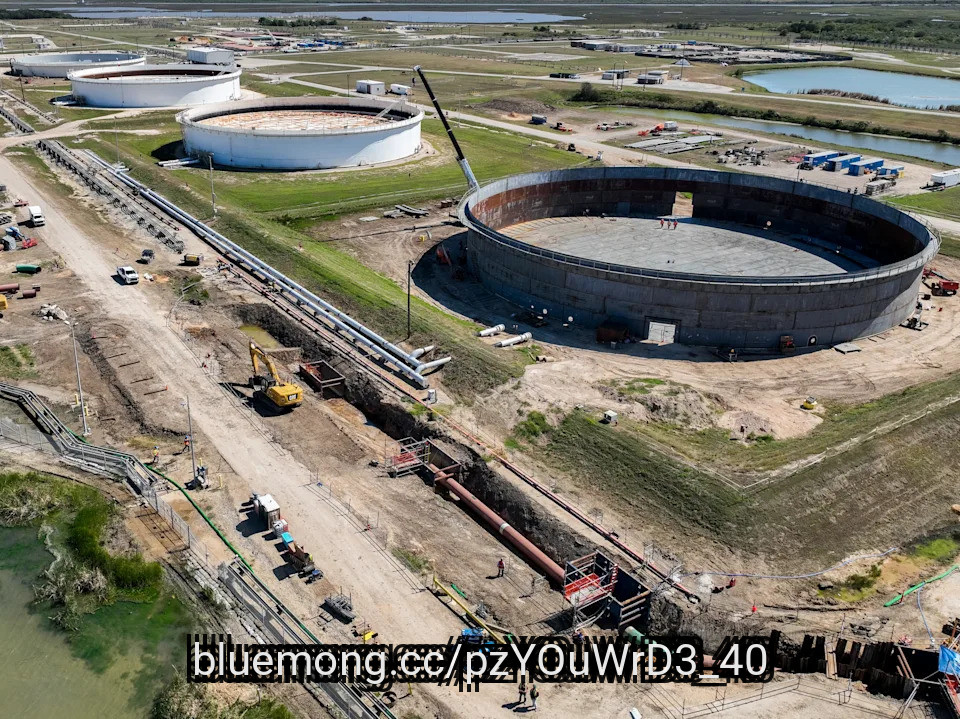
The US Strategic Petroleum Reserve (SPR) dropped by almost 800,000 barrels last week, and the Trump administration moved forward with plans to sell another 40 million barrels in the coming months.
New data released on Monday by the US Department of Energy showed the US energy backstop sitting at 283 million barrels, down from 283.77 million the week prior.
That leaves about two weeks of US oil consumption in the reserve amid widespread worries about global stockpiles, which the head of Saudi Arabia's state producer on Monday called "scarily thin."
Amin Nasser, chief executive of Saudi Aramco, added at an Energy Intelligence Forum in London on Monday that releasing stockpiles will buy economies some time but won't fix the imbalances that have developed between supply and demand.
Yet these withdrawals in the US could soon accelerate after the Trump administration unveiled a request for bids from companies to buy up to 40 million barrels of crude oil from the SPR, with the aim of having the companies return those supplies "with additional premium barrels." The solicitation process is ongoing, and it's unclear if companies will agree to those terms.
#Companies #saudi #week


30 days ago
Olivia Rodrigo has called out leaders at Cornell University over their handling of an alleged ****** ual ****** ault case.
Last month, a former student - known only as Jane Doe - filed a civil case in New York in which she claimed she was drugged, ****** aulted, and gang-raped by seven members of the Chi Phi fraternity in 2024.
The fraternity chapter was barred following the allegations but none of the individuals reported to be involved have faced criminal charges.
Taking to Instagram Stories on Sunday, Rodrigo issued a statement in which she expressed her concerns.
"Shame on Cornell and on every institution who protects rapists and abusers over women," she began.
The Drop Dead hitmaker went on to emphasise that she supports the woman who filed the case.
#case #cornell #filed #last


1 month ago
Angelina Jolie put her storied Los Feliz estate on the market in May, marking the latest chapter in a house that has already had more than a few famous owners. Now it has a new one: Madonna, who has reportedly bought the former Cecil B. DeMille estate for $24.75 million.
Jolie bought the property for $24.5 million in 2017 and listed it this spring for $29.85 million. It ultimately sold for just $250,000 more than she paid nearly a decade ago. Madonna apparently didn't need to spend much time getting acquainted with the place. According to the New York Post, her team arranged a private tour after she expressed interest in the property, even though she wasn't in Los Angeles at the time.
More from Robb Report
Tyler Perry's Beverly Hills Megamansion Can Be Yours for $57 Million
Cazcanes's Excellent New Reposado Tequilas Show Single Barrels Aren't Just for Whiskey
#million #jolie




1 month ago
WASHINGTON (AP) — The Group of Seven wealthy democracies said Friday that they plan to release 100 million barrels of oil and fuel products in the coming weeks, starting with "substantial" amounts of diesel after the fuel recently hit record high prices in the United States.
President Donald Trump said the diesel release would happen "immediately," echoing a G7 promise to start "immediately" with a "frontloaded substantial release" of diesel within the next 20 days and the rest over four months.
Trump and his Republican Party face pressure to address surging prices ahead of the Nov. 3 midterm elections, and Trump announced the action Friday on social media. The president's approval ratings on the economy hit a new low, according to an AP-NORC poll, as the Iran war and his trade battles have increased U.S. prices for oil and other goods.
Gas prices in the U.S. and abroad have soared during the eight-month-long war, a cost Trump has repeatedly said is worth it for making sure Iran does not obtain nuclear weapons. The national average for a gallon of diesel in the U.S. was $6.37 on Friday, according to AAA, after hitting a record $6.52 on Sept. 22. Diesel prices have hit records in Europe, too.
France holds the rotating presidency of the G7 group and made the announcement in a statement released after videoconference talks that Macron presided over. The G7 countries are Canada, France, Germany, Italy, ******* an, the U.K. and the U.S., plus EU representation.
#Diesel #prices #release #substantial



1 month ago
WASHINGTON, Oct 1 (Reuters) - US President Donald Trump said he regretted nominating three Supreme Court justices — Neil Gorsuch, Amy Coney Barrett and Brett Kavanaugh — who have opposed him in recent rulings, according to a Time Magazine interview.
The Republican president was asked about his recent comments regarding the three conservative justices in the interview, which was conducted on Monday.
"Do you regret nominating them?" the interviewer asked, referring to Trump's comments in a recent Truth Social post.
"Yeah. Yeah," Trump responded, according to a transcript of the interview.
"What can I do? I put them in. They voted against me too often. I was very — I gave them the position of a lifetime, and they vote against me often."
#recent


1 month ago
(NEXSTAR) – The days getting shorter serve as a reminder that we’re barreling toward the end of our seasonal observation of daylight saving time, but the wheels may be in motion to stop that – a move more than a dozen states have been waiting to happen.
Earlier this year, the House passed the Sunshine Protection Act, which would make daylight saving time permanent throughout the U.S., with few exceptions. It’s been held up in the Senate since July but, now that the chamber has returned from recess, there’s a chance the legislation could be picked up.
If it can pass the Senate, the bill seems to stand a fair chance of becoming law, with President Trump already expressing support.
For more than a dozen states, this is the closest they’ve been in years to seeing some of their own legislation finally take effect. The U.S. hasn’t been this close to permanent daylight saving time since a version of the Sunshine Protection Act passed in the Senate in 2022 but fizzled in the House.
At present, states are only allowed to opt into year-round permanent standard time, as Hawaii and much of Arizona have done. But that hasn’t stopped 19 states from enacting legislation that would make daylight saving time permanent in their jurisdiction, pending approval from Congress.
#House




1 month ago
A Wall Street Journal report on September 16 revealed that ExxonMobil Holdings Corporation (NYSE:XOM) is nearing a preliminary agreement with Venezuela's state-owned PDVSA, potentially marking its return to the country almost two decades after its ***** ets were nationalized. According to Reuters, Exxon has shown interest in the large Petromonagas heavy oil project in the Orinoco Belt, as well as in areas in the neighboring Carabobo block.
While the talks are still in their preliminary phase and could still fall apart or be delayed, they mark a major turnaround from Exxon's previous stance on Venezuela. The company's CEO, Darren Woods, stated in January that the country was "uninvestable" without durable investment protections, legal reforms, and changes to its hydrocarbon laws.
The development comes amid a broader push by the Trump administration to open Venezuela's oil industry to American companies and revive the country's dilapidated oil infrastructure. The South American nation is sitting on the largest proven crude oil reserves in the world, accounting for roughly 17% of the global total.
Venezuela could provide Exxon with access to an enormous resource base at a time when the company is actively seeking low-cost and long-duration ***** ets. The fields under consideration are estimated to contain more than 50 billion barrels of oil buried underground.
Exxon already holds an advantage through its previous experience in the country. Petromonagas, formerly called Cerro Negro, was once the energy firm's flagship project in Venezuela, giving it familiarity with the country's vast heavy and extra-heavy crude resources. Petromonagas also remains one of the few Venezuelan projects with an operational upgrader capable of turning the Orinoco's extra-heavy crude into lighter exportable grades.
#heavy #project


1 month ago
Americans have paid about $97 billion more for fuel since the Iran war started in late February, roughly $740 extra per household, according to CNN. President Trump says prices will come down after the midterms. The CEO of Chevron just said publicly he does not see how that happens quickly.
Mike Wirth, Chevron's chairman and chief executive, spoke at a University of Texas at Austin energy conference on September 11. He told the audience that the mechanisms that helped absorb the oil supply shock earlier in the conflict have largely been used up, and that prices are more likely to rise than fall over the next few months.
When the U.S.-Iran conflict began, the oil market had several ways to handle the disruption. Countries could release crude from strategic reserves. Commercial inventories could be drawn down. The U.S. eased restrictions on sanctioned crude stored on vessels at sea. Those measures helped limit the initial price spike.
"Those have largely now played out," Wirth said. The energy system no longer has the buffers it had when the war began.
The loss of flexibility became more acute after attacks knocked out a major Saudi crude pipeline that had been bypassing the Strait of Hormuz. That single disruption put an estimated 2.5 million barrels of oil per day in limbo, tightening a market that was already running short on supply.
#crude #prices #energy #conflict


1 month ago
Chevron Corporation (NYSE:CVX) is about to significantly expand its operations in Venezuela. The company's CFO, Eimear Bonner, revealed at a Barclays conference on September 8 that the American oil giant plans to more than double the number of oil rigs it operates in the country as part of its five-year plan to increase output.
The statement follows the company's recent announcement that its joint venture partnerships in Venezuela would invest more than $7 billion to more than double oil output to 600,000 barrels per day by 2031. The current production from Chevron's three Venezuelan JVs totals around 290,000, which is all exported to the United States.
The move builds on Chevron's longstanding presence in Venezuela, as it was the only American oil major that continued operating in the country under a special US license, allowing it to produce and export oil despite the sanctions.
The expansion comes alongside a much larger agreement between Washington and Caracas announced this month, which gave the US majority control over around 20% of Venezuela's proven crude reserves. The White House has now invited American oil companies to revive and modernize the South American country's oil infrastructure and more than double its crude production in the next few years.
Chevron has maintained operations in Venezuela since 1923 and even stayed through the nationalizations that forced ExxonMobil and ConocoPhillips to exit in 2007. This gives it a significant competitive advantage, since it already has a longstanding relationship with the state-owned PDVSA and extensive experience operating in the country's complex regulatory environment.
#around

2 months ago
FleetCor and CEO Ronald Clarke agreed to a $100 million payment resolving Federal Trade Commission litigation. The settlement follows years of court action over hidden charges involving commercial fuel cards. Harm reached tens of thousands among small-business customers seeking lower operating costs. Regulators say promised savings disappeared beneath undisclosed billing practices.
Federal regulators accused FleetCor, which now operates as Corpay, of imposing unauthorized fees totaling hundreds of millions. Investigators found improper late penalties despite timely remittance or company barriers that prevented payment. Officials cited misleading claims about gas savings, fraud controls, plus card-related expenses. Those practices harmed operators across the United States, according to a 2019 complaint.
Regulators found FleetCor often waited several billing cycles before adding many charges. Delayed timing made extra costs harder for customers to notice. Invoices omitted fee disclosures, pushing account holders toward separate management reports. Even those documents obscured some amounts among unrelated details or excluded them entirely.
"FleetCor deceived its small business customers by promising fuel savings that never materialized," Christopher Mufarrige said. He directs FTC's Bureau of Consumer Protection. Agency officials also criticized hidden and unauthorized charges. Settlement terms channel restitution toward harmed account holders.
In 2023, one federal district court granted summary judgment to the FTC on every count. Its ruling found hidden charges and false representations involving savings, fees, plus fraud-control features. Permanent injunction terms barred FleetCor from billing without informed consent alongside clear disclosures. That order also prohibited deceptive fuel-card claims or hiding material information behind hyperlinks.
#fleetcor #savings



2 months ago
Happy Friday, traders. Welcome to our weekly market wrap, where we take a look back at these last five trading days with a focus on the market news, economic data, and headlines that had the most impact on gold prices and other key correlated ****** ets—and may continue to in the future.
So, what kind of week has it been?
Gold took a more volatile path than expected but rebounded from a post-FOMC low near $4,260/oz to trade just above $4,350/oz shortly after the US market open on Friday, putting the yellow metal in position for a moderate weekly gain.
The Federal Reserve delivered the week's main event on Wednesday, unanimously raising policy rates by 25 basis points. Gold's sharp initial drop appeared tied less to the hike itself than to projections showing elevated inflation expectations and another 25-basis-point increase before the end of 2026.
Thursday brought the countermove as crude oil slid back toward and then below $100 per barrel, US Treasury yields eased, and gold recovered to around $4,360/oz. The Bank of ****** an's overnight rate hike to 1.25% added another tailwind into Friday.
#Friday #weekly #welcome


2 months ago
NEW YORK (AP) — Two major news networks were denied access to the White House on Saturday morning, with reporters from CNN and MS NOW both going live to report they'd been barred following a ban imposed by President Donald Trump.
The actions escalated Trump's long-running efforts to restrict news coverage by journalists he finds objectionable, and is the latest test of First Amendment protections in the United States. Trump said Friday he would ban both organizations and also Politico, because of their coverage — which he called "fake news."
CNN issued a statement saying it stood behind its reporters. "We will not be deflected from our duty to hold the government and other public bodies to account," it said. The statement was shown on the air before senior White House reporter Betsy Klein began to report on her ban.
MS NOW also said in a statement that it stands behind its journalists.
"The White House belongs to the American people and the decisions made inside are funded by our tax dollars," the network said in a statement Saturday. "MS NOW intends to take any and all steps necessary to defend our First Amendment rights and the essential role of independent journalism in our democracy."
#reporters


2 months ago
Some offers on this page are from advertisers who pay us, which may affect which products we write about, but not our recommendations. See our Advertiser Disclosure.
Silver (SI=F) December futures opened at $65.76 per ounce on Friday, September 18, 2026, down 0.5% from Thursday's close but more than $2 higher than yesterday's opening price. Silver prices surged this morning, reaching $67.47 as of 7:05 a.m. ET.
Until today, silver prices bounced around the $63 to $64 range, but broke out of those bookends by a wide margin this morning. Today's opening price set the highest opening price of the week, and silver is surging this morning, hitting a high of $67.89.
The Fed's decision to raise rates for the first time in three years, combined with the ongoing restoration of Saudi Arabia's key East-West pipeline, has prompted inflation concerns to fade among investors.
And oil prices are responding as well. Wednesday morning, Brent crude (BZ=F) prices were over $107 a barrel. Yesterday at this time, prices were at over $99 a barrel, and this morning, they're $98.51 as of 7:05 a.m. ET.
#disclosure



2 months ago
Some offers on this page are from advertisers who pay us, which may affect which products we write about, but not our recommendations. See our Advertiser Disclosure.
Gold (GC=F) December futures opened at $4,381.60 per troy ounce on Friday, September 18, 2026, down 0.4% from Thursday's closing price. Gold is moving upward this morning at $4,421.40 per troy ounce as of 6:46 a.m. ET.
Gold prices have held in the $4,300 range since last Friday, but this morning they broke above $4,400, hitting a weekly high of $4,439.80.
The Fed's decision to raise rates for the first time in three years, combined with the ongoing restoration of Saudi Arabia's key East-West pipeline, has prompted inflation concerns to fade among investors.
Oil prices continue to move lower as a result. On Wednesday at this time, Brent crude (BZ=F) prices were over $107 a barrel. Yesterday morning, prices were at over $99 a barrel, and this morning, they're $98.46 as of 6:39 a.m. ET.
#morning #prices #ounce #barrel


2 months ago
On September 16, Evolution Petroleum Corporation (NYSEAMERICAN:EPM) held its fiscal fourth-quarter and full-year 2026 earnings call, and the numbers told a story of a company climbing out of a rough patch. Revenue jumped 20% sequentially to $24.2 million as oil prices realized before hedge settlements shot up 49% year over year to $90.74 a barrel. Adjusted EBITDA more than doubled to $6.5 million. After a bruising third quarter, the fourth quarter finally looked like the recovery management had promised investors back in May.
The fourth-quarter turnaround wasn't just about crude. NGL prices realized $32.49 a barrel, up 27% year over year, and because Evolution leaves its NGL production entirely unhedged, every dollar of that gain flowed straight through. That combination of higher liquids pricing, growing production, and the roll-off of a prior-period transportation adjustment at the Delhi Field pushed operating cash flow to $6.8 million in the quarter, nearly double the $3.5 million generated in the third quarter.
Behind the quarterly numbers sits a longer-term shift in how Evolution makes money. The company closed a roughly $16 million acquisition of mineral and royalty acreage in the Permian's Midland Basin after the fiscal year ended, adding about 3,420 net royalty acres and more than 200 barrels of oil equivalent per day of current production, all without Evolution spending a dime on development. That mirrors what's already happening in the SCOOP/STACK play, where fourth-quarter production climbed 14% year over year to 1,275 BOE per day while unit operating costs fell to $10.33 a barrel. Evolution also replaced more than 100% of the 2.6 million barrels of oil equivalent it produced during the year, ending fiscal 2026 with 27.2 million barrels of proved reserves, an outcome that matters directly to a dividend now in its 52nd consecutive quarter.
Not every part of the business bounced back. Average daily production fell 4% year over year to 6,901 barrels of oil equivalent per day, largely because the flush production from new Chaveroo wells that boosted last year's fourth quarter has since tapered off. Natural gas pricing remained the softest spot in the portfolio, especially at the Jonah Field, where CEO Kelly Loyd said "regional differentials have weighed on realizations" even as broader demand for gas keeps growing. CFO Ryan Stash noted that stronger oil and NGL results helped offset "continued weakness in natural gas realizations, particularly at Jonah."
#barrel


2 months ago
On August 6, APA Corporation (NASDAQ:APA) held its second-quarter earnings call, and one number stood out from the rest. The oil and gas producer is now holding its Permian oil production steady with four drilling rigs, half the eight it once estimated it would need. Adjusted production of 347,000 barrels of oil equivalent per day beat management's own guidance, free cash flow kept climbing, and the balance sheet is healing faster than planned. That combination is the story of the quarter.
APA raised its full-year US oil guidance to 123,000 barrels per day, up from an original 120,000, while holding its capital budget at $1.3 billion despite higher diesel and other input costs. Management also lifted its cost-savings target to $500 million in annualized run-rate savings by year-end, up from the $450 million goal it set at the start of the year.
That flexibility is showing up in cash flow. Free cash flow hit $738 million in the second quarter, pushing the first half of 2026 past $1.2 billion, which topped what APA generated in each of the past three full years. The company returned $189 million of that to shareholders through dividends and the repurchase of 2.8 million shares at an average price of $35.26, continuing a streak of returning at least 60% of free cash flow to investors every year since 2021.
The balance sheet is moving just as fast. Net debt stood at $3.3 billion at quarter-end after APA repaid $752 million of bonds in the first half, including $673 million in the second quarter alone, cutting total debt by $2.3 billion since the end of 2024 and lowering annualized interest expense by roughly $175 million. Management now expects to hit its $3 billion net debt target in 2027, well ahead of the three- to four-year window it laid out when the goal was first announced.
Further out, APA is building option value beyond its core Permian and Egypt ****** ets. It agreed to acquire Savant Alaska for $70 million, picking up an airstrip, a dock, and a pipeline connection into the Trans Alaska system to support two exploration wells planned for 2027. In Uruguay, ENI signed on as a partner in Block 6, funding a significant share of the first exploration well while APA keeps 60% ownership. In Suriname, the GranMorgu project remains on budget for first oil in mid-2028.
#billion


2 months ago
The temporary closure of the key onshore pipeline Saudi Arabia uses to bypass the Strait of Hormuz has added another shock to an oil market already struggling with six months of Middle East supply disruptions.
And the damage now appears to be more extensive than initially believed.
Three pumping stations along Saudi Arabia's East-West pipeline were damaged in last week's attack, Reuters reported on Thursday, citing satellite imagery and industry sources. Earlier ***** sments had identified damage at two stations. Three sources told Reuters that repairs could take five to six weeks, although partial pumping could resume sooner.
Before the attack, the system was moving between 4 million and 5 million barrels per day (bpd), equivalent to roughly 4%–5% of global oil supply. Its total capacity is around 7 million bpd, including approximately 2 million bpd supplied to refineries.
Saudi Arabia shut the pipeline following multiple attacks on September 10. Satellite imagery previously published by MizarVision showed extensive fire and structural damage around pumping stations along the route.
#million #pumping #arabia


2 months ago
US stocks rebounded on Thursday as oil prices edged lower and a Fed rate hike on Wednesday offered some relief that the central bank was working to contain inflation.
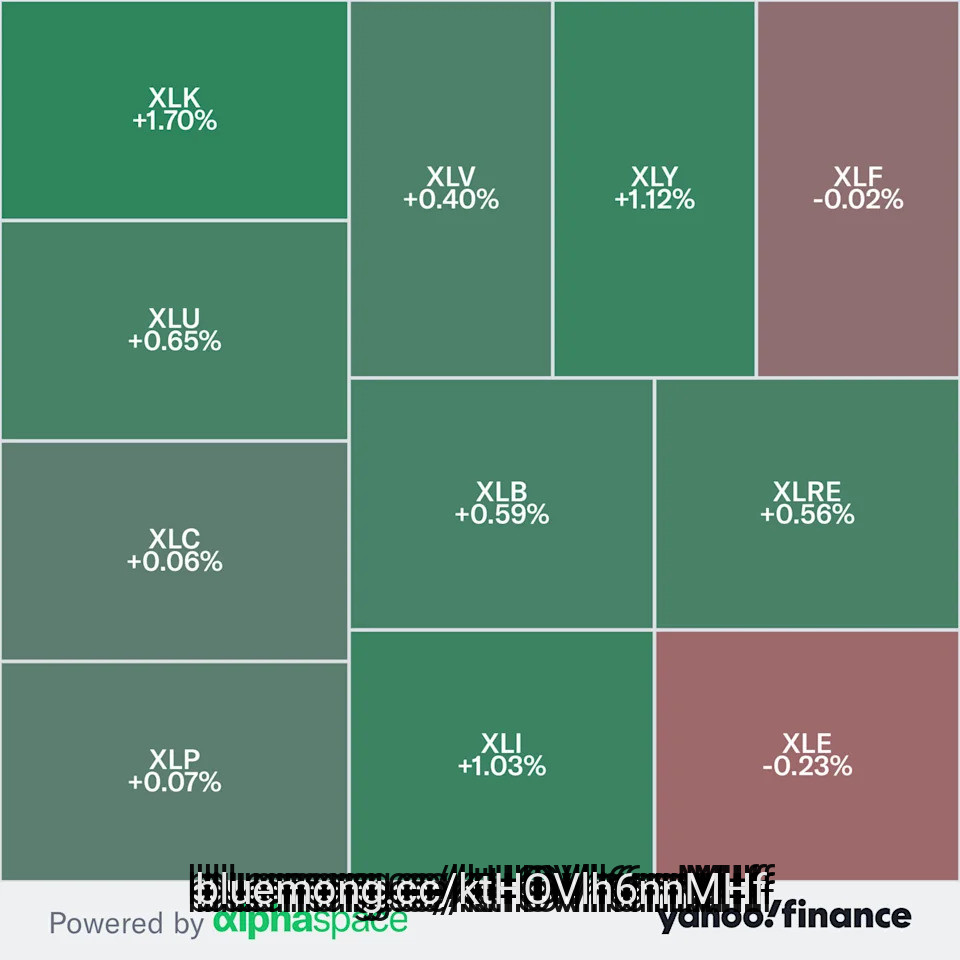
The Dow Jones Industrial Average (^DJI) rose 0.6%, while the S&P 500 (^GSPC) climbed 1.1%. The tech-heavy Nasdaq Composite (^IXIC) jumped 1.7%, rebounding from a post-Fed-hike slump on Wednesday.
Stocks recovered as investors **** sed Federal Reserve Chairman Kevin Warsh's hawkish rhetoric, which **** ysts said helped restore the Fed's credibility on inflation. On Wednesday, the Federal Reserve raised interest rates by 25 basis points for the first time in three years and projected one more rate hike this year.
The decision drew the ire of President Trump, who called for lower interest rates and said he had spoken with Warsh ahead of the FOMC meeting. "You might as well vote with the board because it's not going to matter," Trump said he told Warsh.
Oil prices, meanwhile, ticked lower as US Energy Secretary Chris Wright said Saudi Arabia's East-West pipeline, which has become a key alternative route for oil stuck in the Strait of Hormuz, would be restored soon. Brent crude (BZ=F), the global benchmark, changed hands at $104 per barrel.
#reserve #Trump
2 months ago
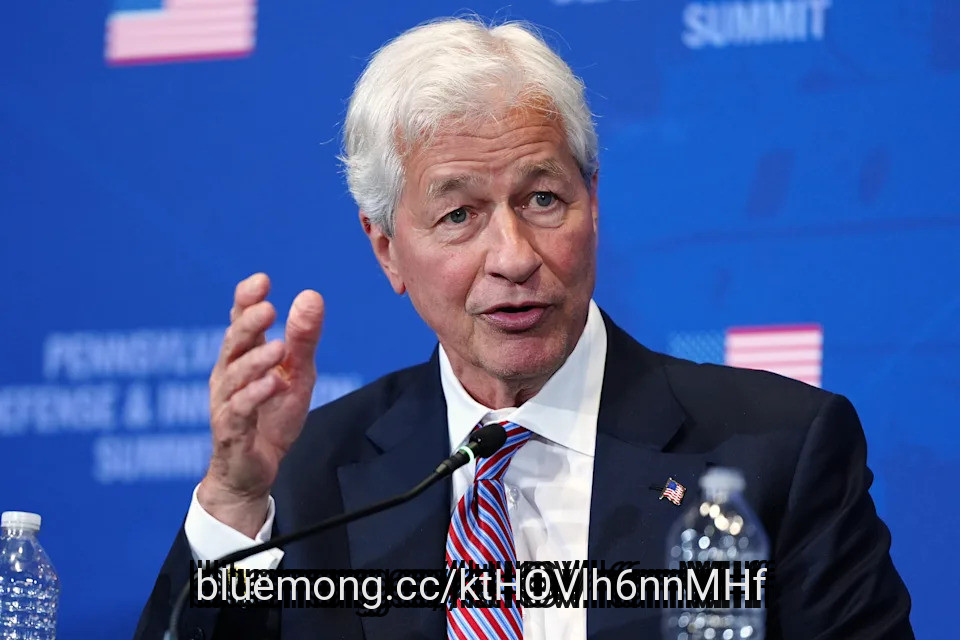
Sept 17 (Reuters) - JP Morgan said on Thursday that it does not have a clear baseline view for oil markets for the first time since the start of the US-Israeli war on Iran.
"We simply don't know how to model the endgame," ***** ysts at the bank noted.
The note flagged that at the beginning of the conflict, JP Morgan had ***** umed there were some economic thresholds that the U.S. administration would not cross, but six months into the conflict, many of those lines have been crossed with no clear exit strategy in view.
The bank noted that oil prices have climbed above $100 a barrel with gasoline at $4.37 a gallon. It also noted that US diesel prices have hit an all-time high of $6.31 a gallon heading into winter, the period of peak seasonal demand, while inventories sit at all-time lows.
JP Morgan estimated Brent's fair value at around $90 a barrel for September, compared with current prices near $106, suggesting markets are pricing in the risk of further supply losses beyond the estimated 10 million barrels per day already disrupted.
#noted #markets

2 months ago
Oil markets appear to have reached the inflection point that many ***** ysts had predicted weeks ago as the Middle East conflict re-escalated with no diplomatic push in sight and global inventories continue to slump.
Oil prices are back above $100 per barrel, lifting diesel and gasoline prices, including in the United States.
The Trump Administration is looking to downplay the price spikes it sees as only temporary. Prices would "drop like a rock" when the Iran war ends, U.S. President Donald Trump said, but he appears to have acknowledged that there may be no respite before the mid-term elections in early November.
Meanwhile, the record-high diesel prices and the highest gasoline prices for this time of year on record could do damage to the economy and consumer spending.
On Tuesday evening, the U.S. average diesel price hit $6.301 per gallon while gasoline prices jumped to an average of $4.355 per gallon, according to GasBuddy data.
#prices #Trump #price #record

2 months ago
Corn futures saw some late session strength as contracts closed with losses of 1 ½ to 2 ¼ cents across the board on Wednesday. The CmdtyView national average Cash Corn price was down 1 1/2 cents at $4.89.
The weekly EIA report showed ethanol production at 1.099 million barrels per day in the week of 9/4, steady with the week prior. That is still 4.17% above the same week last year. Stocks saw a 33,000 barrel increase to 25.22 million barrels, which is 11.58% above the same week last year. Refiner inputs of ethanol were up 3,000 barrels per day to 911,000 barrels per day, with exports up 14,000 barrels per day to 161,000 bpd.
Coffee Prices Pressured by Improved Global Supply Outlook
Cocoa Prices Consolidate Below 11.5-Month Highs
Signs of Improving Global Supplies Weigh on Coffee Prices
#coffee #cents #ethanol #million

2 months ago
Argentina's controversial right-wing president, Javier Milei, slashed inflation with a brutal dose of economic austerity, but this came at a steep social cost. The cost of living is spiraling higher, fueling household debt, loan delinquencies, and economic hardship. Industrial output, since Milei took office, has declined sharply, with local companies closing at an alarming rate. While parts of the economy are falling into chaos, Argentina's oil and gas sector is experiencing a generational boom driven by the Vaca Muerta shale.
Argentina's vital hydrocarbon sector continues to surge, with oil production hitting yet another record in July 2026. Output reached 902,920 barrels per day, almost 1% above June and 12% higher than a year earlier, marking the country's highest oil production on record. Natural gas production has also expanded strongly, although output slipped 0.5% month over month and 1.6% year over year in July to average 5.6 billion cubic feet per day. That modest setback barely dents the bigger picture: economically crucial gas production has surged 21% over the past five years.
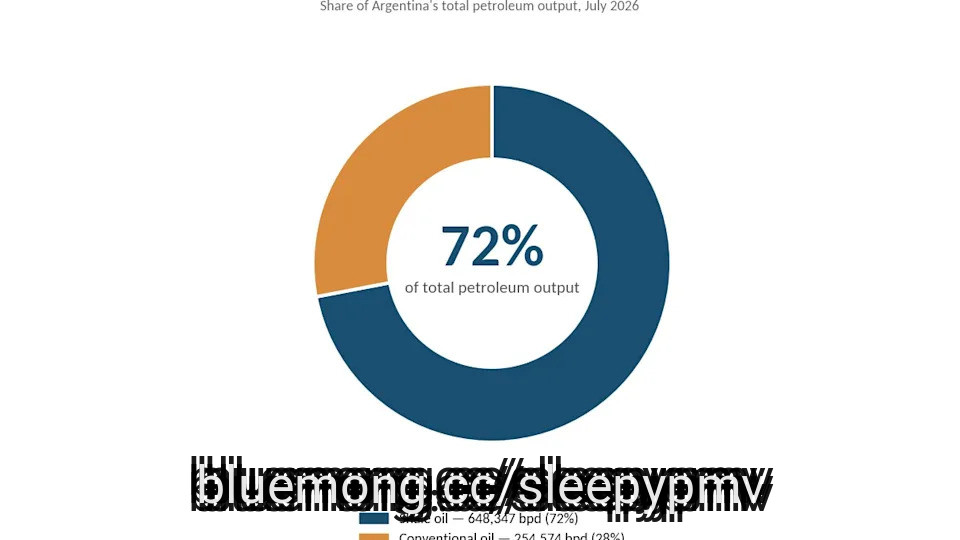
It is the ongoing and growing exploitation of the Vaca Muerta shale, situated in northern Patagonia in Neuquén Province which is responsible for Argentina's booming oil and natural gas complex. For July 2026, shale oil production rose by 1.2% month over month and a whopping 26% year over year to an all-time high of 648,347 barrels per day. As a result, shale oil now comprises a record 72% of Argentina's total petroleum output. This is also responsible for bolstering energy security in the Americas.
Shale gas production is also expanding at a healthy clip. For July 2026, Argentina lifted an average of 3.9 billion cubic feet per day of the fossil, which, despite being nearly 1% less than a month prior, was almost 4% higher year over year. That is the second-highest monthly shale gas production ever recorded. It was only eclipsed by June 2026 output, which hit 3.94 billion cubic feet per day. Shale gas now makes up 70% of Argentina's natural gas output, which is the highest level ever recorded.
Shale oil and gas production will keep growing at a solid pace, with Argentina on track to become a pure unconventional producer. You see, conventional oil output is in decline and has been for over a decade. Argentina's conventional fields are well past their prime, in many cases having hit peak production a decade ago with output now truly in decline. Government data shows July 2026 conventional oil production of 254,574 barrels per day, which is 2% lower than a month prior and 13% less year over year, indicating conventional oil output is 50% lower than a decade ago.
#shale #july #higher #record

2 months ago
Saudi Arabia's oil supply crisis is rapidly becoming Europe's problem.
The September 10 attacks on Saudi Arabia's East-West Pipeline struck the system at multiple locations and damaged at least one pumping station, forcing Riyadh to shut down the Kingdom's critical alternative to the Strait of Hormuz.
The 1,200-kilometer Petroline can carry around 7 million barrels per day from Saudi Arabia's eastern producing regions to Yanbu on the Red Sea. Since the war effectively closed Hormuz, it has become one of the most important pieces of energy infrastructure in the world.
Kpler estimates the pipeline had been moving roughly 4 million bpd around Hormuz before the attack. A prolonged outage could ultimately threaten 3.5–4 million bpd of Saudi crude exports. The figure is below Petroline's nameplate capacity because Saudi Arabia can still export some crude from eastern terminals such as Ras Tanura, despite the severe constraints on Gulf shipping.
The immediate problem is storage.
#hormuz #crude


2 months ago
Corn futures are trading with 6 cent losses across the front months at midday. The CmdtyView national average Cash Corn price is down 6 cents at $4.84 1/2.
The weekly EIA report showed ethanol production at 1.099 million barrels per day in the week of 9/4, steady with the week prior. That is still 4.17% above the same week last year. Stocks saw a 33,000 barrel increase to 25.22 million barrels, which is 11.58% above the same week last year. Refiner inputs of ethanol were up 3,000 barrels per day to 911,000 barrels per day, with exports up 14,000 barrels per day to 161,000 bpd.
Coffee Prices Retreat on Ideal Growing Weather in Brazil and Vietnam
Cocoa Prices Fall on Signs of Adequate Supplies
Signs of Adequate Supplies Weigh on Cocoa Prices
#corn #cocoa #million


2 months ago
Shares of Occidental Petroleum Corp (NYSE:OXY) are trading lower Wednesday as energy equities experience broad profit-taking alongside a pullback in crude oil prices.
The weakness in benchmark energy commodities comes as fresh market data indicates a weekly drawdown in U.S. crude inventories, dampening immediate commodity momentum alongside sector-wide risk mitigation ahead of the Federal Reserve's afternoon interest rate decision.
Occidental Petroleum stock is taking a hit today. Why are OXY shares down?
A major catalyst cooling OXY's momentum today is the latest U.S. crude oil inventory report. The Energy Information Administration reported that crude stockpiles fell by just 640,000 barrels for the week ending Sept. 11, missing market expectations for a significantly larger drawdown.
Because a smaller-than-expected inventory draw signals softer overall energy demand, crude prices faced renewed downward pressure, pulling upstream producers like Occidental lower in tandem.
#lower #taking #alongside #market


2 months ago
XLE has surged 46% year-to-date while XLY dropped 7%, with defensive XLP up 9% as markets rotate away from consumer exposure.
XLF's soft 4% gain signals financial stocks aren't pricing a healthy cycle, with the 10-year/2-year Treasury spread flattened to 0.33%.
Torres pegs $120 WTI as the consumer spending breaking point, still 20% above current prices but reminiscent of 2022's economy-crushing oil surge.
Read More: Avoid these 13 retirement mistakes before they derail your future (sponsor)
The national average price of regular gasoline jumped 16 cents in a single week to $4.32 a gallon on September 14, 2026, a move that puts the pump price in the 90th percentile of the past year and caps a 7.8% jump in one month. The proximate cause sits upstream: WTI crude cleared $97.26 a barrel on September 9 after running up 16.1% in a month, and Brent has traded through the $100 line. On Fed decision day, a CNBC Morning Call panel put a number on where this stops being an inconvenience and starts being a recession.
#september #cnbc


2 months ago
"I am the house now," Treasury Secretary Scott Bessent told traders last week, as he defended the administration's increasingly interventionist approach to the bond market. He added that he had "asymmetric information" about what policymakers would do next and dared investors: "bet against me if you want."
On Wednesday, Federal Reserve chair Kevin Warsh might effectively take the other side of the bet.
It's been a hot American summer. Oil is hot, hovering around $110 a barrel. Bond yields are hot, too: the 10-year Treasury yield has pushed above 5%, around its highest level since 2007. Credit markets are running hot as well: U.S.-dollar debt issuance to finance AI and data-center development reached $308 billion through July. And all that borrowing is competing with U.S. national debt, which crossed $40 trillion less than a month ago. Stocks, despite a rough few days, are still up roughly 11% this year. Inflation, meanwhile, remains above 3%.
Put all that heat together, and the Federal Reserve is staring down a question it hasn't seriously confronted in three years: Is the U.S. economy actually overheating? Markets are betting the Fed thinks the answer is at least "maybe." Traders have priced a quarter-point hike Wednesday with near certainty.
But whether Wednesday amounts to a one-time course correction or the beginning of a new tightening cycle depends on what, exactly, is making the American economy hot. The last time the Fed began raising rates, in March 2022, Jerome Powell's Fed ultimately raised its benchmark rate by 525 basis points over 16 months.
Mohamed El-Erian, Wharton professor of practice and chief economic adviser at Allianz, parsed the current fervor and anxiety into four questions on X Tuesday: whether oil-supply disruptions persist, with China potentially acting as a "swing consumer"; whether Treasury Secretary Scott Bessent intervenes again to influence long-end yields; whether this week's hike proves "one and done" or the beginning of a cycle; and how markets balance AI's enormous promise against its enormous risks.
#secretary #federal #american


2 months ago
US stock index futures pointed to a higher opening on Wednesday as crude oil prices declined and investors awaited the Federal Reserve's interest rate decision later in the day.
The indicated rebound followed two consecutive sessions of losses that pushed the S&P 500 to its lowest closing level in more than a month.
US crude oil futures fell nearly 2% after gaining almost 6% over the previous two days. The decline followed an American Petroleum Institute report showing an unexpected increase of 7.1 million barrels in US crude oil inventories last week.
Trading activity could remain limited ahead of the Federal Reserve's monetary policy announcement.
According to CME Group's FedWatch Tool, market pricing indicated a 92.7% probability of a 25-basis-point interest rate increase. The figure reflects market-implied expectations rather than a confirmed policy decision.
#increase

2 months ago
Our ******* ysts just identified a stock with the potential to be the next Nvidia. Tell us how you invest and we'll show you why it's our #1 pick. Tap here.
Management is deliberately shifting the business model toward a more diversified energy company by balancing legacy long-life non-operated ******* ets with high-margin mineral and royalty interests.
The fourth quarter recovery was driven by the roll-off of temporary operational items, increased production, and improved operating costs per barrel, which more than doubled adjusted EBITDA sequentially.
Portfolio resilience was demonstrated by stronger liquids pricing and improved operations offsetting persistent natural gas pricing headwinds and regional differentials.
The company maintains a 'steady as she goes' outlook for oil demand while anticipating long-term natural gas demand growth from LNG expansion and data center power needs.
#company #improved #demand #NVIDIA

2 months ago
Stock futures are higher after two days of losses for major indexes as traders await the Federal Reserve's decision on interest rates; the Fed is widely expected to raise its benchmark interest rate for the first time in three years to tame inflation; the European Union could add Canada as an "associate member" amid the country's growing trade war with the Trump administration; shares of SK Hynix and Intel are climbing following a report that the companies could partner to build chips in the U.S.; and retail sales data is due this morning. Here's what you need to know today.
Stock futures are rising this morning ahead of the highly anticipated Federal Reserve decision on interest rates. Dow Jones Industrial Average and S&P 500 futures were each up 0.3% in recent trading while futures tracking the tech-heavy Nasdaq added 0.6%. The major indexes fell Tuesday for the second straight session as oil prices and government bond yields rose. WTI crude oil futures were recently down more more than 2% at $103.50 per barrel after hitting a fresh four-month high yesterday. The yield on the 10-year Treasury note was at 4.97%, after jumping as high as 5.04% in yesterday's session, the highest point since the financial crisis of 2007. Bitcoin was holding steady at $76,100, after the cryptocurrency slumped yesterday as the Clarity Act failed to pass through a cloture vote in the Senate. Gold futures were up 1% to $4,390 an ounce.
The Federal Reserve's policy committee will wrap up its two-day meeting this afternoon amid expectations that the central bank will hike its benchmark rate for the first time in three years to address mounting inflationary pressure. The Federal Open Market Committee's decision is scheduled to be released at 2:00 p.m. ET, along with quarterly economic projections from FOMC members. Fed Chair Kevin Warsh, who took over the top position in May, has said repeatedly the Fed is squarely focussed on bringing inflation down to the Fed's target. Recent inflation data has confirmed that price pressures persist as oil prices rise owing to the Iran war. Investors will be looking for additional insights from Warsh, who is scheduled to speak at a press conference half an hour after the decision is announced. A rate hike is meant to raise borrowing costs, slowing economic activity such that inflation moderates. The challenge the Fed faces is that it can't address the underlying causes of the inflation, including the Iran war, tariffs and rampant corporate spending on AI.
#interest