6 days ago
On August 5, Cencora (NYSE:COR) reported results for its fiscal third quarter, which closed on June 30, and the headline numbers looked clean. Revenue rose 5.1% to $84.8 billion, adjusted earnings per share climbed 12.0% to $4.48, and management raised its full-year adjusted EPS outlook to $17.75 to $17.95. The company also repurchased $1 billion of its own stock during the quarter. But the profit story has moving parts, and a few of them pull in opposite directions.
Start with the gap between profit growth and sales growth. Adjusted operating income rose 17.0% while revenue grew only 5.1%. Much of the help came from gross profit, which jumped 23.2% on an adjusted basis as both segments contributed and the OneOncology acquisition in February lifted margins in the US business. In plain terms, adjusted gross margin widened 61 basis points to 4.16%, so the company keeps more gross profit from every dollar it sells.
The strength was not confined to one corner, either. US Healthcare Solutions grew operating income 15.9% on higher pharmaceutical sales and the OneOncology deal, while specialty volume to health systems and physician groups lifted its revenue. International Healthcare Solutions did better still, with operating income up 20.8% on strength in European distribution and global specialty logistics. Management also put cash to work, completing in one quarter the $1 billion of buybacks it had expected to finish by the close of calendar 2026. The board declared a $0.60 quarterly dividend as well, payable August 31, to holders of record on August 14.
Growth is costing more than it first appears. Adjusted operating expenses jumped 26.8%, faster than adjusted gross profit, because OneOncology brought expenses along with its profits. Even so, adjusted operating income amounts to just 1.46% of revenue, a thin cushion on a business this large. Financing adds weight too. Cencora funded part of the purchase with new senior notes plus variable-rate term loans, and net interest expense rose $58.9 million from a year earlier.
The sales mix carries its own drag. GLP-1 drugs for diabetes and weight loss are adding to revenue, but they earn lower gross margins, so each dollar of that growth is worth less to profit. Meanwhile, an oncology customer Cencora lost in 2025, and lower sales to a large mail order customer both held back US revenue, as did lower manufacturer prices on some brand pharmaceuticals. Cencora is also exploring strategic alternatives for a group of other businesses, and its April divestiture of US Consulting Services trimmed consulting sales.
#adjusted #revenue #august
Start with the gap between profit growth and sales growth. Adjusted operating income rose 17.0% while revenue grew only 5.1%. Much of the help came from gross profit, which jumped 23.2% on an adjusted basis as both segments contributed and the OneOncology acquisition in February lifted margins in the US business. In plain terms, adjusted gross margin widened 61 basis points to 4.16%, so the company keeps more gross profit from every dollar it sells.
The strength was not confined to one corner, either. US Healthcare Solutions grew operating income 15.9% on higher pharmaceutical sales and the OneOncology deal, while specialty volume to health systems and physician groups lifted its revenue. International Healthcare Solutions did better still, with operating income up 20.8% on strength in European distribution and global specialty logistics. Management also put cash to work, completing in one quarter the $1 billion of buybacks it had expected to finish by the close of calendar 2026. The board declared a $0.60 quarterly dividend as well, payable August 31, to holders of record on August 14.
Growth is costing more than it first appears. Adjusted operating expenses jumped 26.8%, faster than adjusted gross profit, because OneOncology brought expenses along with its profits. Even so, adjusted operating income amounts to just 1.46% of revenue, a thin cushion on a business this large. Financing adds weight too. Cencora funded part of the purchase with new senior notes plus variable-rate term loans, and net interest expense rose $58.9 million from a year earlier.
The sales mix carries its own drag. GLP-1 drugs for diabetes and weight loss are adding to revenue, but they earn lower gross margins, so each dollar of that growth is worth less to profit. Meanwhile, an oncology customer Cencora lost in 2025, and lower sales to a large mail order customer both held back US revenue, as did lower manufacturer prices on some brand pharmaceuticals. Cencora is also exploring strategic alternatives for a group of other businesses, and its April divestiture of US Consulting Services trimmed consulting sales.
#adjusted #revenue #august

6 days ago
Around 57% of households have some type of unsecured debt, including credit cards and personal loans. This debt can be a financial burden because borrowers must make monthly payments and cover interest.
Once you've taken on debt, you're committed to paying it back. Otherwise, you could hurt your credit score and face collection activity. But what happens if the company you borrowed from runs into financial trouble and goes out of business? Does that mean your debt disappears?
Jeff Bezos backs a platform that lets anyone invest in rental homes for as little as $100 — 6 ways to build wealth like a landlord without actually being one
Dave Ramsey warns nearly 50% of Americans are making 1 big Social Security mistake. Here's what it is and 3 simple steps to fix it ASAP
The tax breaks in Trump's 'big beautiful bill' expire after 2028. Here are 4 moves to make before the window closes
#around #once #otherwise
Once you've taken on debt, you're committed to paying it back. Otherwise, you could hurt your credit score and face collection activity. But what happens if the company you borrowed from runs into financial trouble and goes out of business? Does that mean your debt disappears?
Jeff Bezos backs a platform that lets anyone invest in rental homes for as little as $100 — 6 ways to build wealth like a landlord without actually being one
Dave Ramsey warns nearly 50% of Americans are making 1 big Social Security mistake. Here's what it is and 3 simple steps to fix it ASAP
The tax breaks in Trump's 'big beautiful bill' expire after 2028. Here are 4 moves to make before the window closes
#around #once #otherwise


6 days ago
On September 4, 2026, the Wall Street Journal reported that Starbucks Corporation (NASDAQ:SBUX)' longtime chai latte devotees have turned against the company's reformulated recipe, introduced in March. It reduced sweetener and shifted from a pre-made concentrate to a new base with just two grams of sugar.
Customers have signed petitions, flooded Starbucks' corporate lines, and taken to Reddit and store review sites demanding the original formula back. Starbucks says the change gives customers more control over sweetness and has introduced new variations like Mango Cream Chai and Pumpkin Cream Chai.
Starbucks Corporation (NASDAQ:SBUX)' broader turnaround remains intact despite the backlash over its chai reformulation. Global comparable sales increased 7.9% in fiscal Q3, with comparable transactions rising 4.2%. The company raised its fiscal 2026 adjusted EPS guidance to $2.55-$2.65 from $2.25-$2.45. Stronger customer traffic and higher earnings give investors evidence that one unpopular menu change has not derailed the recovery.
The chai backlash appears concentrated among loyal customers of one product rather than across Starbucks' broader customer base. The business introduced the new chai formula as part of a personalization strategy. Customers can customize sweetness and other ingredients. If Starbucks keeps transaction growth across its wider menu, the business could improve its product economics without materially damaging overall customer demand.
Starbucks is improving profitability while it executes its turnaround. Non-GAAP operating margin expanded 430 basis points year over year to 14.4% in fiscal Q3, while North America revenue increased 7% to $7.4 billion. These results give investors evidence that the company can improve margins and sales even as it experiments with its menu and customer experience.
#customer
Customers have signed petitions, flooded Starbucks' corporate lines, and taken to Reddit and store review sites demanding the original formula back. Starbucks says the change gives customers more control over sweetness and has introduced new variations like Mango Cream Chai and Pumpkin Cream Chai.
Starbucks Corporation (NASDAQ:SBUX)' broader turnaround remains intact despite the backlash over its chai reformulation. Global comparable sales increased 7.9% in fiscal Q3, with comparable transactions rising 4.2%. The company raised its fiscal 2026 adjusted EPS guidance to $2.55-$2.65 from $2.25-$2.45. Stronger customer traffic and higher earnings give investors evidence that one unpopular menu change has not derailed the recovery.
The chai backlash appears concentrated among loyal customers of one product rather than across Starbucks' broader customer base. The business introduced the new chai formula as part of a personalization strategy. Customers can customize sweetness and other ingredients. If Starbucks keeps transaction growth across its wider menu, the business could improve its product economics without materially damaging overall customer demand.
Starbucks is improving profitability while it executes its turnaround. Non-GAAP operating margin expanded 430 basis points year over year to 14.4% in fiscal Q3, while North America revenue increased 7% to $7.4 billion. These results give investors evidence that the company can improve margins and sales even as it experiments with its menu and customer experience.
#customer


6 days ago
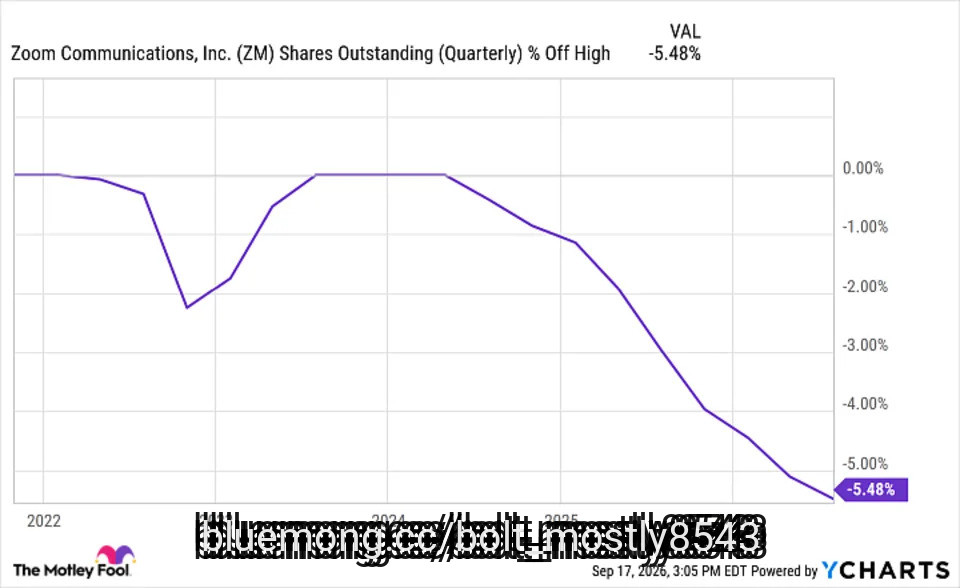
Anthropic's initial public offering (IPO) appears to be on pace to take place in late October or early November. Right now, it is difficult for retail investors to get a stake in the artificial intelligence (AI) giant, which is one of the fastest-growing businesses in the world.
But there is an investment you could make that would get you sizable indirect exposure to Anthropic ahead of its listing. Zoom Communications (NASDAQ: ZM), the leading cloud video conferencing company, bought a stake in Anthropic back in May 2023, and that investment could now be worth billions.
Missed AI's "Act 1"? Act 2 Could Be 15x Bigger. Most investors think they missed the AI boat because they didn't buy Nvidia in 2005. But according to our ***** ysts, we're only at the end of "Act 1"—the R&D phase. "Act 2" is the global rollout. Continue »
Let's see whether that makes Zoom stock a buy right now.
Zoom made a $51 million investment in Anthropic in May 2023, and that has turned out to be one of the smartest decisions the company has ever made (maybe even smarter than its choice to go public right before the pandemic).
#investment #missed
But there is an investment you could make that would get you sizable indirect exposure to Anthropic ahead of its listing. Zoom Communications (NASDAQ: ZM), the leading cloud video conferencing company, bought a stake in Anthropic back in May 2023, and that investment could now be worth billions.
Missed AI's "Act 1"? Act 2 Could Be 15x Bigger. Most investors think they missed the AI boat because they didn't buy Nvidia in 2005. But according to our ***** ysts, we're only at the end of "Act 1"—the R&D phase. "Act 2" is the global rollout. Continue »
Let's see whether that makes Zoom stock a buy right now.
Zoom made a $51 million investment in Anthropic in May 2023, and that has turned out to be one of the smartest decisions the company has ever made (maybe even smarter than its choice to go public right before the pandemic).
#investment #missed


6 days ago
SEOUL, Sept 20 (Reuters) - North Korea launched two missiles off its eastern coast on Sunday, its second set of tests in roughly a week and days after Pyongyang accused the US of driving tensions on the Korean Peninsula through a series of military drills.
Just three hours after launching a short-range ballistic missile (SRBM) toward the East Sea on Sunday afternoon, North Korea fired another short-range ballistic missile, according to South Korea's defence ministry.
If the subsequent launch is confirmed to be a ballistic missile, it will mark two consecutive ballistic missile tests by North Korea within a three-hour window.
South Korea's Joint Chiefs of Staff said it detected the first test firing from the Wonsan area around 3 p.m. (0600 GMT), identifying the weapon as a ballistic missile. ***** an's defence ministry also said it appeared to be a ballistic missile.
Japanese public broadcaster NHK said the projectile had come down outside ***** an's exclusive economic zone.
#sunday
Just three hours after launching a short-range ballistic missile (SRBM) toward the East Sea on Sunday afternoon, North Korea fired another short-range ballistic missile, according to South Korea's defence ministry.
If the subsequent launch is confirmed to be a ballistic missile, it will mark two consecutive ballistic missile tests by North Korea within a three-hour window.
South Korea's Joint Chiefs of Staff said it detected the first test firing from the Wonsan area around 3 p.m. (0600 GMT), identifying the weapon as a ballistic missile. ***** an's defence ministry also said it appeared to be a ballistic missile.
Japanese public broadcaster NHK said the projectile had come down outside ***** an's exclusive economic zone.
#sunday



6 days ago
On September 16, Air Products (NYSE:APD) said it had signed a long-term deal to supply high-purity gases to a leading chipmaker, backed by roughly $250 million of its own money in Arizona. It is the company's second semiconductor supply win, and the two projects together carry more than $900 million of investment. That is a notable turn for a company that has been pulling back from big clean-energy projects.
The Arizona project plays to what Air Products already does. It will build, own, and operate the equipment, from hydrogen generation units and carbon dioxide purification to bulk supply for three gases: helium, hydrogen, and carbon dioxide. That means the customer's gas supply runs through equipment Air Products owns. Supply is targeted to start in phases, so the buildout can move alongside the customer's expansion plans. And this is familiar ground. Air Products has supplied electronics makers for more than 40 years, and its Chandler facility has served the Phoenix chip cluster since 1981, with a pipeline system carrying ultra-high purity nitrogen around the area.
The core business gives the deal a solid floor. In the fiscal third quarter, reported on July 30, adjusted earnings per share rose 12% to $3.47, and management lifted its full-year outlook to an adjusted $13.39 to $13.49 per share. Margins widened as well, so growth is showing up as profit. Chips appear elsewhere in the results too, since the company announced a deal to build four large air separation units to serve a chipmaker's growth in Taiwan.
The cost of the pivot is hard to ignore. On June 30, Air Products announced it would not go ahead with its Louisiana Clean Energy Complex and would discontinue a zero-carbon liquid hydrogen facility in Casa Grande, Arizona, plus other smaller clean energy distribution projects. The exits triggered roughly $2.9 billion in pre-tax charges, which is why the company posted a GAAP loss of $6.47 per share in the third quarter even as its underlying earnings grew. Adjusted results leave that hit out, but the GAAP numbers show what the retreat cost.
Owning the ****** ets also means funding them. Air Products expects about $3.5 billion of capital spending in fiscal 2026, and the Arizona plant alone is a commitment of approximately $250 million, with supply arriving in phases. The release also leaves gaps: it does not name the customer or say how long the contract runs, so the length of the revenue stream is unclear. Elsewhere, Europe's operating income rose only 2% as costs climbed, and management says it is still cautious about the economic backdrop.
#clean #adjusted
The Arizona project plays to what Air Products already does. It will build, own, and operate the equipment, from hydrogen generation units and carbon dioxide purification to bulk supply for three gases: helium, hydrogen, and carbon dioxide. That means the customer's gas supply runs through equipment Air Products owns. Supply is targeted to start in phases, so the buildout can move alongside the customer's expansion plans. And this is familiar ground. Air Products has supplied electronics makers for more than 40 years, and its Chandler facility has served the Phoenix chip cluster since 1981, with a pipeline system carrying ultra-high purity nitrogen around the area.
The core business gives the deal a solid floor. In the fiscal third quarter, reported on July 30, adjusted earnings per share rose 12% to $3.47, and management lifted its full-year outlook to an adjusted $13.39 to $13.49 per share. Margins widened as well, so growth is showing up as profit. Chips appear elsewhere in the results too, since the company announced a deal to build four large air separation units to serve a chipmaker's growth in Taiwan.
The cost of the pivot is hard to ignore. On June 30, Air Products announced it would not go ahead with its Louisiana Clean Energy Complex and would discontinue a zero-carbon liquid hydrogen facility in Casa Grande, Arizona, plus other smaller clean energy distribution projects. The exits triggered roughly $2.9 billion in pre-tax charges, which is why the company posted a GAAP loss of $6.47 per share in the third quarter even as its underlying earnings grew. Adjusted results leave that hit out, but the GAAP numbers show what the retreat cost.
Owning the ****** ets also means funding them. Air Products expects about $3.5 billion of capital spending in fiscal 2026, and the Arizona plant alone is a commitment of approximately $250 million, with supply arriving in phases. The release also leaves gaps: it does not name the customer or say how long the contract runs, so the length of the revenue stream is unclear. Elsewhere, Europe's operating income rose only 2% as costs climbed, and management says it is still cautious about the economic backdrop.
#clean #adjusted


6 days ago
In the end, Kevin Warsh's Federal Reserve acquitted itself well. For all the uncertainty he had sparked at the previous meeting of the Federal Open Market Committee, when he refused to provide any indication of what he was prepared to do to tame stubborn inflation, the chair on Wednesday presided over a unanimous decision to raise interest rates for the first time in three years.
"Today's action starts to show that we're serious about this," he said at the press conference after the meeting, with "this" meaning inflation in excess of the Fed's 2% target for over five years. Welcome though it was, his embrace of economic orthodoxy nonetheless did little to dispel the Keystone Cops quality of governance in Donald Trump's US.
Warsh's resolve – raising rates just a few weeks before elections that will determine whether Republicans retain control of Congress – appeared even more resolute in the face of a veiled threat from White House economic adviser Kevin Hassett, who pointed out to his chums on Fox that "if you want an independent Fed, then one thing the Fed does is it stays out of the way of elections".
The central bankers' parsimonious comments in the press conference following the meeting made a sharp contrast with the more unhinged commentary from other members of the administration, including the president himself, who earlier this month celebrated the resilience of the labor market with a mind-boggling threat to "STOP TRADING WITH COUNTRIES WITH WHICH WE HAVE A DEFICIT" unless the Fed cut interest rates.
Trump has yet to turn on Warsh in the way he did on his predecessor, Jerome "numbskull" Powell. But the signs are ominous. After the rate hike, Trump went ballistic – spewing more of the random, incoherent thoughts that have become his trademark. "Interest Rates in the United States should be 1%, or less, because we are the Best Credit in the World," he wrote on social media, despite recalcitrant inflation and a budget deficit that is likely to exceed $2tn this year. He again demanded the powers that be to "LOWER THE INTEREST RATES FOR THE UNITED STATES OF AMERICA, AND FAST!"
#rates #federal #states
"Today's action starts to show that we're serious about this," he said at the press conference after the meeting, with "this" meaning inflation in excess of the Fed's 2% target for over five years. Welcome though it was, his embrace of economic orthodoxy nonetheless did little to dispel the Keystone Cops quality of governance in Donald Trump's US.
Warsh's resolve – raising rates just a few weeks before elections that will determine whether Republicans retain control of Congress – appeared even more resolute in the face of a veiled threat from White House economic adviser Kevin Hassett, who pointed out to his chums on Fox that "if you want an independent Fed, then one thing the Fed does is it stays out of the way of elections".
The central bankers' parsimonious comments in the press conference following the meeting made a sharp contrast with the more unhinged commentary from other members of the administration, including the president himself, who earlier this month celebrated the resilience of the labor market with a mind-boggling threat to "STOP TRADING WITH COUNTRIES WITH WHICH WE HAVE A DEFICIT" unless the Fed cut interest rates.
Trump has yet to turn on Warsh in the way he did on his predecessor, Jerome "numbskull" Powell. But the signs are ominous. After the rate hike, Trump went ballistic – spewing more of the random, incoherent thoughts that have become his trademark. "Interest Rates in the United States should be 1%, or less, because we are the Best Credit in the World," he wrote on social media, despite recalcitrant inflation and a budget deficit that is likely to exceed $2tn this year. He again demanded the powers that be to "LOWER THE INTEREST RATES FOR THE UNITED STATES OF AMERICA, AND FAST!"
#rates #federal #states

6 days ago
Americans are increasingly falling victim to so-called "ghost charges": small, frictionless payment purchases at Starbucks or McDonald's, or digital subscription deductions from your bank account you forgot about. The costs may only be $5 or $10 a pop, but they add up, and before you know it, $200 has disappeared from your savings every month.
Jeff Bezos backs a platform that lets anyone invest in rental homes for as little as $100 — 6 ways to build wealth like a landlord without actually being one
Dave Ramsey warns nearly 50% of Americans are making 1 big Social Security mistake. Here's what it is and 3 simple steps to fix it ASAP
The tax breaks in Trump's 'big beautiful bill' expire after 2028. Here are 4 moves to make before the window closes
A recent study from Cashews, a digital bank tracking platform for serial small recurring charges, shows that 61% of people have more than $50 a month in these small charges; 38.7% have more than $100 a month; and 14.5% have more than $200 a month in charges where no single charge is over $100. Additionally, three of the median person's four small recurring monthly charges go to merchants they never otherwise interact with.
#charges #digital #bank #platform
Jeff Bezos backs a platform that lets anyone invest in rental homes for as little as $100 — 6 ways to build wealth like a landlord without actually being one
Dave Ramsey warns nearly 50% of Americans are making 1 big Social Security mistake. Here's what it is and 3 simple steps to fix it ASAP
The tax breaks in Trump's 'big beautiful bill' expire after 2028. Here are 4 moves to make before the window closes
A recent study from Cashews, a digital bank tracking platform for serial small recurring charges, shows that 61% of people have more than $50 a month in these small charges; 38.7% have more than $100 a month; and 14.5% have more than $200 a month in charges where no single charge is over $100. Additionally, three of the median person's four small recurring monthly charges go to merchants they never otherwise interact with.
#charges #digital #bank #platform


6 days ago
For custom chip designer Broadcom Inc. (NASDAQ:AVGO), the debate is all about whether the demand for AI products will sustain and grow. It is among the few firms capable of designing custom AI chips that big technology firms rely on to supplement NVIDIA's high-power and expensive AI chips. Anthropic CEO Dario Amodei's latest remarks about the need to slow down AI development due to safety concerns have generated quite a buzz, and Cramer discussed what Broadcom Inc. (NASDAQ:AVGO)'s CEO told him when asked about AI infrastructure development losing traction:
"What's refuted by Hock Tan, of course, maybe Hock Tan is one of the biggest providers of semis, other than NVIDIA, and when I asked him about, give me a prediction about the AI slowdown, would there be one, he said, not in the least. We see the demand for compute infrastructure for development of AI and inference as extremely strong and durable. So I know those stocks were the most heavily hammered, other than the fiber stocks. But David, when you listen to what Hock Tan said last night on Mad Money, you are inclined to do buying.
"I think David, you recognize, and a lot of people don't, when you're speaking about Hock Tan, whom I had on, you're talking about a 1.6 trillion dollar company. This isn't just someone. . .worried about what orders are going to be. . .this man has more orders than almost anybody other than Jensen Huang. So I think Carl, when we get very, very negative we still have to rely on the facts And the facts do not support there are some people who are very worried about mankind, I did not get the mankind worry when I spoke yesterday."
The CNBC TV host's remarks about Broadcom Inc. (NASDAQ:AVGO) sit right at the center of the debate for the firm. This debate is about whether it will be able to continue to capture additional orders for custom AI chips. Looking at the third quarter earnings, released on September 2nd, the growth narrative appears to be quite strong.
It boosts Cramer's claims of Broadcom Inc. (NASDAQ:AVGO) experiencing strong orders, as during the quarter, the firm's revenue grew by 86%, AI semiconductor revenue jumped by 221% and fiscal year 2026 guidance implied 186% annual AI revenue growth. Not to mention, CEO Tan reaffirmed that Broadcom Inc. (NASDAQ:AVGO) could pull in $115 billion in annual AI chip sales in 2027 and a whopping $230 billion in 2028.
#orders #debate #strong
"What's refuted by Hock Tan, of course, maybe Hock Tan is one of the biggest providers of semis, other than NVIDIA, and when I asked him about, give me a prediction about the AI slowdown, would there be one, he said, not in the least. We see the demand for compute infrastructure for development of AI and inference as extremely strong and durable. So I know those stocks were the most heavily hammered, other than the fiber stocks. But David, when you listen to what Hock Tan said last night on Mad Money, you are inclined to do buying.
"I think David, you recognize, and a lot of people don't, when you're speaking about Hock Tan, whom I had on, you're talking about a 1.6 trillion dollar company. This isn't just someone. . .worried about what orders are going to be. . .this man has more orders than almost anybody other than Jensen Huang. So I think Carl, when we get very, very negative we still have to rely on the facts And the facts do not support there are some people who are very worried about mankind, I did not get the mankind worry when I spoke yesterday."
The CNBC TV host's remarks about Broadcom Inc. (NASDAQ:AVGO) sit right at the center of the debate for the firm. This debate is about whether it will be able to continue to capture additional orders for custom AI chips. Looking at the third quarter earnings, released on September 2nd, the growth narrative appears to be quite strong.
It boosts Cramer's claims of Broadcom Inc. (NASDAQ:AVGO) experiencing strong orders, as during the quarter, the firm's revenue grew by 86%, AI semiconductor revenue jumped by 221% and fiscal year 2026 guidance implied 186% annual AI revenue growth. Not to mention, CEO Tan reaffirmed that Broadcom Inc. (NASDAQ:AVGO) could pull in $115 billion in annual AI chip sales in 2027 and a whopping $230 billion in 2028.
#orders #debate #strong


7 days ago
GE Vernova Inc. (NYSE:GEV) is one of Jim Cramer's favorite stocks. Throughout 2025, the CNBC TV host continued to heap praise on the firm. Cramer's praise came at a time when new-age nuclear power and quantum computing stocks were experiencing strong gains. Throughout this period, he continued to **** ert that GE Vernova Inc. (NYSE:GEV) was the only nuclear firm with a stable delivery timeline and the capacity to deliver. In his morning appearance on the 15th, Cramer discussed the recent dip in shares and worries about a slowdown in the AI buildout:
"One company, GE Vernova, which was hit incredibly hard, which actually builds these, was saying they're seeing an order acceleration. So I really doubt the idea there's going to be a decel. Now that stock got hammered yesterday, it's been a horrendous stock since we started getting this political controversy. But again I point out that you just hear no one say anything about pullback."
For GE Vernova Inc. (NYSE:GEV), as perhaps indicated by the share price movement, the narrative is driven by its backlog and overall exposure to AI's power generation demand. On this front, CEO Scott Strazik, another Cramer favorite, outlined during the firm's second quarter earnings that data center orders of $5 billion for H1 2026 had already doubled over the full year 2025 figures. Additionally, during Q2, the firm's total orders touched $24 billion to mark an 88% growth driven by its Power and Electrification segment. As a whole, GE Vernova Inc. (NYSE:GEV)'s Q2 revenue grew by 22% annually, while its overall backlog and electrification backlogs sat at $176 billion and $446 billion.
At the same time, with GE Vernova Inc. (NYSE:GEV) also relying on gas turbines for its business, the debate is also about whether exposure to AI can remove the inherent cyclicality in the business. Additionally, with data centers accounting for 40% of the Electrification business's orders, any slowdown in capex spending by big tech players could generate tailwinds for GE Vernova Inc. (NYSE:GEV). Similarly, while the data center business is booming and the gas generation business remains tied to prices and interest rates, the firm's wind business is a drag and expected to hurt the bottom line throughout 2026.
In Q2, 106 out of the 1,006 funds tracked by Insider Monkey had held a stake in GE Vernova Inc. (NYSE:GEV), which marked a dip over the 118 out of 1,022 funds in Q1. Whether the dip was due to the order mix and AI sentiment or due to profit taking, your guess is as good as ours. On the valuation front, GE Vernova Inc. (NYSE:GEV) trades at a forward P/E ratio of 35, while short interest as a percentage of float is 3.29%.
#vernova #business #throughout #data
"One company, GE Vernova, which was hit incredibly hard, which actually builds these, was saying they're seeing an order acceleration. So I really doubt the idea there's going to be a decel. Now that stock got hammered yesterday, it's been a horrendous stock since we started getting this political controversy. But again I point out that you just hear no one say anything about pullback."
For GE Vernova Inc. (NYSE:GEV), as perhaps indicated by the share price movement, the narrative is driven by its backlog and overall exposure to AI's power generation demand. On this front, CEO Scott Strazik, another Cramer favorite, outlined during the firm's second quarter earnings that data center orders of $5 billion for H1 2026 had already doubled over the full year 2025 figures. Additionally, during Q2, the firm's total orders touched $24 billion to mark an 88% growth driven by its Power and Electrification segment. As a whole, GE Vernova Inc. (NYSE:GEV)'s Q2 revenue grew by 22% annually, while its overall backlog and electrification backlogs sat at $176 billion and $446 billion.
At the same time, with GE Vernova Inc. (NYSE:GEV) also relying on gas turbines for its business, the debate is also about whether exposure to AI can remove the inherent cyclicality in the business. Additionally, with data centers accounting for 40% of the Electrification business's orders, any slowdown in capex spending by big tech players could generate tailwinds for GE Vernova Inc. (NYSE:GEV). Similarly, while the data center business is booming and the gas generation business remains tied to prices and interest rates, the firm's wind business is a drag and expected to hurt the bottom line throughout 2026.
In Q2, 106 out of the 1,006 funds tracked by Insider Monkey had held a stake in GE Vernova Inc. (NYSE:GEV), which marked a dip over the 118 out of 1,022 funds in Q1. Whether the dip was due to the order mix and AI sentiment or due to profit taking, your guess is as good as ours. On the valuation front, GE Vernova Inc. (NYSE:GEV) trades at a forward P/E ratio of 35, while short interest as a percentage of float is 3.29%.
#vernova #business #throughout #data

7 days ago
Cybersecurity provider CrowdStrike Holdings, Inc. (NASDAQ:CRWD)'s shares are up by more than 100% year to date. With AI continuing to dominate the market narrative, the firm has found itself at the center of the industry's concerns about cybersecurity. While some, such as Anthropic's Dario Amodei, have claimed that their AI software is sufficient for cybersecurity purposes, others have argued that firms such as CrowdStrike Holdings, Inc. (NASDAQ:CRWD) will play a key role in the industry. Cramer is in the latter camp, and in his morning appearance on September 15th, the CNBC TV host discussed the recent discussions about AI being a threat:
"I had George Kurtz last night, who has partnered both with OpenAI and Anthropic. And he encouraged me to say look, they are doing a lot of things about safeguards. I think he was so much surprised, that there was so much doomsaying, of course, doomsaying being heavily refuted. Now there's a stock, remember that stock was up the most of any stock in the S&P."
While Cramer believes CrowdStrike Holdings, Inc. (NASDAQ:CRWD) will play an important role in cybersecurity in the AI era, the broader debate about the firm is about its AI-driven cybersecurity initiatives and whether they are sufficient to stay competitive and justify the eye-watering share price performance. On this front, the firm's annual recurring revenue (ARR) grew by 25% and net new ARR grew by 55% in its fiscal second quarter. Additionally, CrowdStrike Holdings, Inc. (NASDAQ:CRWD)'s net new ARR set a new record of $333 million. Cramer's bullishness on the firm is also matched by others, such as ******* ysts from Argus. Argus has set a $425 share price target for CrowdStrike Holdings, Inc. (NASDAQ:CRWD) and argued that growth in agentic AI use presents a major tailwind for the firm.
Yet, in a classic case of the bigger you are, the harder you fall, CrowdStrike Holdings, Inc. (NASDAQ:CRWD)'s massive growth creates risk. For its fiscal second quarter, the firm has guided net new ARR to range between $343 million and $347 million to imply growth ranging between 29% to 31%. Considering that the metric grew by 55% in Q1, the new figures do indicate a slowdown. As for catalysts from agentic AI, CrowdStrike Holdings, Inc. (NASDAQ:CRWD)'s next-gen SIEM (Security Information and Event Management) ending ARR grew by 60% to $695 million in the second quarter.
Hedge fund interest in CrowdStrike Holdings, Inc. (NASDAQ:CRWD) grew in Q2. According to Insider Monkey's data, 89 out of 1,006 funds had held a stake in the firm during the period. This marked a jump over the 89 out of the 1,022 funds in Q1. As for valuation, CrowdStrike Holdings, Inc. (NASDAQ:CRWD)'s forward P/E ratio of 188 is significantly higher than peer firm Palo Alto's 89 which should increase the pressure to maintain growth. Short interest as a percentage of float is 2.41% for CrowdStrike Holdings, Inc. (NASDAQ:CRWD) compared to 2.65% for Palo Alto.
#NASDAQ #firm #grew
"I had George Kurtz last night, who has partnered both with OpenAI and Anthropic. And he encouraged me to say look, they are doing a lot of things about safeguards. I think he was so much surprised, that there was so much doomsaying, of course, doomsaying being heavily refuted. Now there's a stock, remember that stock was up the most of any stock in the S&P."
While Cramer believes CrowdStrike Holdings, Inc. (NASDAQ:CRWD) will play an important role in cybersecurity in the AI era, the broader debate about the firm is about its AI-driven cybersecurity initiatives and whether they are sufficient to stay competitive and justify the eye-watering share price performance. On this front, the firm's annual recurring revenue (ARR) grew by 25% and net new ARR grew by 55% in its fiscal second quarter. Additionally, CrowdStrike Holdings, Inc. (NASDAQ:CRWD)'s net new ARR set a new record of $333 million. Cramer's bullishness on the firm is also matched by others, such as ******* ysts from Argus. Argus has set a $425 share price target for CrowdStrike Holdings, Inc. (NASDAQ:CRWD) and argued that growth in agentic AI use presents a major tailwind for the firm.
Yet, in a classic case of the bigger you are, the harder you fall, CrowdStrike Holdings, Inc. (NASDAQ:CRWD)'s massive growth creates risk. For its fiscal second quarter, the firm has guided net new ARR to range between $343 million and $347 million to imply growth ranging between 29% to 31%. Considering that the metric grew by 55% in Q1, the new figures do indicate a slowdown. As for catalysts from agentic AI, CrowdStrike Holdings, Inc. (NASDAQ:CRWD)'s next-gen SIEM (Security Information and Event Management) ending ARR grew by 60% to $695 million in the second quarter.
Hedge fund interest in CrowdStrike Holdings, Inc. (NASDAQ:CRWD) grew in Q2. According to Insider Monkey's data, 89 out of 1,006 funds had held a stake in the firm during the period. This marked a jump over the 89 out of the 1,022 funds in Q1. As for valuation, CrowdStrike Holdings, Inc. (NASDAQ:CRWD)'s forward P/E ratio of 188 is significantly higher than peer firm Palo Alto's 89 which should increase the pressure to maintain growth. Short interest as a percentage of float is 2.41% for CrowdStrike Holdings, Inc. (NASDAQ:CRWD) compared to 2.65% for Palo Alto.
#NASDAQ #firm #grew


7 days ago
The price of Bitcoin (CRYPTO: $BTC) and other cryptocurrencies strengthened heading into the weekend after a volatile week dominated by an interest rate hike from the U.S. Federal Reserve
On the afternoon of Sept. 18, Bitcoin was up 6% and trading at $80,850 U.S. The largest cryptocurrency had been trading near $75,000 U.S. on the eve of the U.S. interest rate decision on Sept. 16. Other digital ****** ets were gaining strength at week's end, with Ethereum (CRYPTO: $ETH) also up 6% and Solana's (CRYPTO: $SOL) price rising 11%.
It's proving to be a quick recovery for digital ****** ets after the U.S. central bank raised its trendsetting Fed Funds Rate by 25 basis points, its first hike in three years. Crypto appears to be staging a relief rally as the market welcomes slightly higher interest rates that are used to dampen inflation.
More From Cryptoprowl:
U.S. Regulators Push Crypto Rules As Clarity Act Stalls
#sept #digital
On the afternoon of Sept. 18, Bitcoin was up 6% and trading at $80,850 U.S. The largest cryptocurrency had been trading near $75,000 U.S. on the eve of the U.S. interest rate decision on Sept. 16. Other digital ****** ets were gaining strength at week's end, with Ethereum (CRYPTO: $ETH) also up 6% and Solana's (CRYPTO: $SOL) price rising 11%.
It's proving to be a quick recovery for digital ****** ets after the U.S. central bank raised its trendsetting Fed Funds Rate by 25 basis points, its first hike in three years. Crypto appears to be staging a relief rally as the market welcomes slightly higher interest rates that are used to dampen inflation.
More From Cryptoprowl:
U.S. Regulators Push Crypto Rules As Clarity Act Stalls
#sept #digital


7 days ago
Credit card companies are racing to claim a place at the checkout when AI agents start shopping on behalf of consumers—even as shoppers remain skeptical of letting bots spend their money.
Mastercard rolled out a payment option Thursday that lets people give an AI agent a virtual card and allow it to buy things online without checking in before each purchase. Cardholders can limit how much it spends, restrict which retailers it buys from, or require approval before checkout.
"This is a land grab for infrastructure standards," Phil Bruno, chief strategy and growth officer at payments company ACI Worldwide, told Fortune. "If they set the standards for agentic commerce, they can keep the commerce in their environments for decades to come."
Rival Visa partnered with Alchemy earlier this year and has also announced its own AI shopping and payment product, Visa Intelligent Commerce, which the company says is still being deployed. Similarly, Meta has Muse, which can search for products and navigate checkout, but presents the purchase for the user's final approval.
It seems, though, that shoppers appear far more interested in using AI to find a deal than letting it pay. Just 7% of U.S. and U.K. consumers surveyed who buy fashion items said they would allow an AI ***** istant to make purchases without approval under predefined conditions, according to research commissioned by ACI Worldwide. More than half said they were uncomfortable allowing AI to purchase on their behalf.
#purchase #consumers
Mastercard rolled out a payment option Thursday that lets people give an AI agent a virtual card and allow it to buy things online without checking in before each purchase. Cardholders can limit how much it spends, restrict which retailers it buys from, or require approval before checkout.
"This is a land grab for infrastructure standards," Phil Bruno, chief strategy and growth officer at payments company ACI Worldwide, told Fortune. "If they set the standards for agentic commerce, they can keep the commerce in their environments for decades to come."
Rival Visa partnered with Alchemy earlier this year and has also announced its own AI shopping and payment product, Visa Intelligent Commerce, which the company says is still being deployed. Similarly, Meta has Muse, which can search for products and navigate checkout, but presents the purchase for the user's final approval.
It seems, though, that shoppers appear far more interested in using AI to find a deal than letting it pay. Just 7% of U.S. and U.K. consumers surveyed who buy fashion items said they would allow an AI ***** istant to make purchases without approval under predefined conditions, according to research commissioned by ACI Worldwide. More than half said they were uncomfortable allowing AI to purchase on their behalf.
#purchase #consumers

7 days ago
A crypto whale appears to be shifting a large portion of its portfolio from Bitcoin into Ethereum.
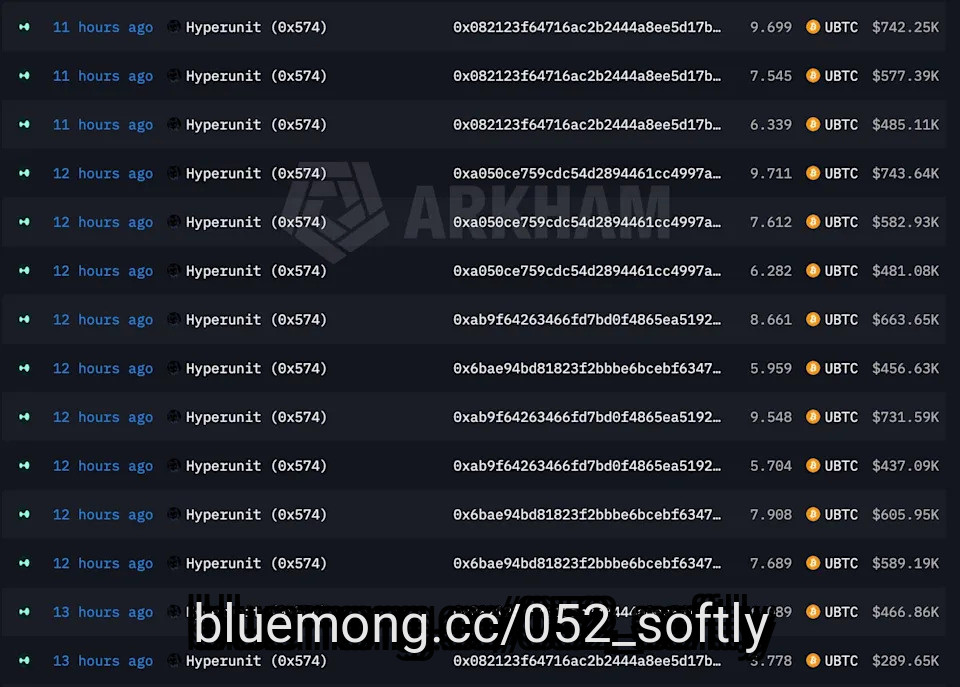
According to blockchain ***** ytics platform Lookonchain, 11 newly created wallets suspected to belong to the same whale, sold 602 BTC and bought 18,780 ETH on Hyperliquid over the past three days. Both sides of the transactions were worth roughly $45.83 million, indicating a large-scale portfolio rebalancing.
At press time, Bitcoin was trading around $81,001, up nearly 5.5% over the past 24 hours, while Ether was around $2,594, gaining about 5%.
JPMorgan says one ***** et class could soon beat gold
Kevin O'Leary has a warning on Washington's tax plans
#whale #Portfolio #ethereum #lookonchain
According to blockchain ***** ytics platform Lookonchain, 11 newly created wallets suspected to belong to the same whale, sold 602 BTC and bought 18,780 ETH on Hyperliquid over the past three days. Both sides of the transactions were worth roughly $45.83 million, indicating a large-scale portfolio rebalancing.
At press time, Bitcoin was trading around $81,001, up nearly 5.5% over the past 24 hours, while Ether was around $2,594, gaining about 5%.
JPMorgan says one ***** et class could soon beat gold
Kevin O'Leary has a warning on Washington's tax plans
#whale #Portfolio #ethereum #lookonchain



7 days ago
In June, ****** eX (NASDAQ: SPCX) successfully completed its blockbuster IPO, raising more than $85 billion. In the days that followed, ****** eX's market cap soared from an initial IPO valuation of $1.77 trillion to nearly $2.8 trillion. Shares corrected hard after the surge, however, and ****** eX's valuation now hovers just below $2 trillion -- a 36% decline versus the company's all-time high.
Morgan Stanley (NYSE: MS) ****** ysts remain unfazed regarding the ****** e stock's long-term growth potential. On Sept. 15, the bank reiterated its "buy" rating on shares, affirming its $300 price target. That price target implies more than 100% in near-term upside over the next 12 months.
Missed Nvidia in 2009? This Rare Signal Is Flashing Again. In 2009, a "Double Down" signal flashed for a little-known chipmaker called Nvidia. For the first time in years, that same "Total Conviction" signal is flashing for a company 1/100th the size of Nvidia. Continue »
Why does Morgan Stanley remain so bullish? The answer might surprise you.
Morgan Stanley appears all-in on the ****** e economy. The bank, in many ways, predicted ****** eX's meteoric rise years before much of the public caught on.
#trillion #valuation
Morgan Stanley (NYSE: MS) ****** ysts remain unfazed regarding the ****** e stock's long-term growth potential. On Sept. 15, the bank reiterated its "buy" rating on shares, affirming its $300 price target. That price target implies more than 100% in near-term upside over the next 12 months.
Missed Nvidia in 2009? This Rare Signal Is Flashing Again. In 2009, a "Double Down" signal flashed for a little-known chipmaker called Nvidia. For the first time in years, that same "Total Conviction" signal is flashing for a company 1/100th the size of Nvidia. Continue »
Why does Morgan Stanley remain so bullish? The answer might surprise you.
Morgan Stanley appears all-in on the ****** e economy. The bank, in many ways, predicted ****** eX's meteoric rise years before much of the public caught on.
#trillion #valuation


7 days ago
US stocks were mixed on Friday as investors continued to calibrate to the Federal Reserve's first rate hike in three years and existential fears about artificial intelligence's capabilities.
The tech-heavy Nasdaq Composite (^IXIC) rose 0.4% but ended the week in green. Meanwhile, the S&P 500 (^GSPC) rose 0.2% but eked out a loss for the week. The Dow Jones Industrial Average (^DJI) was down 0.2% and lost more than 1.5% for the week.
The 10-year Treasury yield (^TNX) rose 5 basis points to hover near the 5% level as traders increased bets that the Fed will raise rates again in October.
Markets appeared to look past the Fed's 25 basis point rate hike this week, which was widely expected. US stock continued to climb after the Bank of ***** an raised interest rates to the highest level in 31 years.
However, ***** ysts and top CEOs aren't convinced that one rate hike (by the Fed) will be enough to bring down stubbornly high inflation. "It's not clear to me we've slayed inflation," JPMorgan Chase CEO Jamie Dimon told Yahoo Finance this week.
#week #years #down #level
The tech-heavy Nasdaq Composite (^IXIC) rose 0.4% but ended the week in green. Meanwhile, the S&P 500 (^GSPC) rose 0.2% but eked out a loss for the week. The Dow Jones Industrial Average (^DJI) was down 0.2% and lost more than 1.5% for the week.
The 10-year Treasury yield (^TNX) rose 5 basis points to hover near the 5% level as traders increased bets that the Fed will raise rates again in October.
Markets appeared to look past the Fed's 25 basis point rate hike this week, which was widely expected. US stock continued to climb after the Bank of ***** an raised interest rates to the highest level in 31 years.
However, ***** ysts and top CEOs aren't convinced that one rate hike (by the Fed) will be enough to bring down stubbornly high inflation. "It's not clear to me we've slayed inflation," JPMorgan Chase CEO Jamie Dimon told Yahoo Finance this week.
#week #years #down #level


7 days ago
FleetCor and CEO Ronald Clarke agreed to a $100 million payment resolving Federal Trade Commission litigation. The settlement follows years of court action over hidden charges involving commercial fuel cards. Harm reached tens of thousands among small-business customers seeking lower operating costs. Regulators say promised savings disappeared beneath undisclosed billing practices.
Federal regulators accused FleetCor, which now operates as Corpay, of imposing unauthorized fees totaling hundreds of millions. Investigators found improper late penalties despite timely remittance or company barriers that prevented payment. Officials cited misleading claims about gas savings, fraud controls, plus card-related expenses. Those practices harmed operators across the United States, according to a 2019 complaint.
Regulators found FleetCor often waited several billing cycles before adding many charges. Delayed timing made extra costs harder for customers to notice. Invoices omitted fee disclosures, pushing account holders toward separate management reports. Even those documents obscured some amounts among unrelated details or excluded them entirely.
"FleetCor deceived its small business customers by promising fuel savings that never materialized," Christopher Mufarrige said. He directs FTC's Bureau of Consumer Protection. Agency officials also criticized hidden and unauthorized charges. Settlement terms channel restitution toward harmed account holders.
In 2023, one federal district court granted summary judgment to the FTC on every count. Its ruling found hidden charges and false representations involving savings, fees, plus fraud-control features. Permanent injunction terms barred FleetCor from billing without informed consent alongside clear disclosures. That order also prohibited deceptive fuel-card claims or hiding material information behind hyperlinks.
#fleetcor #savings
Federal regulators accused FleetCor, which now operates as Corpay, of imposing unauthorized fees totaling hundreds of millions. Investigators found improper late penalties despite timely remittance or company barriers that prevented payment. Officials cited misleading claims about gas savings, fraud controls, plus card-related expenses. Those practices harmed operators across the United States, according to a 2019 complaint.
Regulators found FleetCor often waited several billing cycles before adding many charges. Delayed timing made extra costs harder for customers to notice. Invoices omitted fee disclosures, pushing account holders toward separate management reports. Even those documents obscured some amounts among unrelated details or excluded them entirely.
"FleetCor deceived its small business customers by promising fuel savings that never materialized," Christopher Mufarrige said. He directs FTC's Bureau of Consumer Protection. Agency officials also criticized hidden and unauthorized charges. Settlement terms channel restitution toward harmed account holders.
In 2023, one federal district court granted summary judgment to the FTC on every count. Its ruling found hidden charges and false representations involving savings, fees, plus fraud-control features. Permanent injunction terms barred FleetCor from billing without informed consent alongside clear disclosures. That order also prohibited deceptive fuel-card claims or hiding material information behind hyperlinks.
#fleetcor #savings


7 days ago
Happy Friday, traders. Welcome to our weekly market wrap, where we take a look back at these last five trading days with a focus on the market news, economic data, and headlines that had the most impact on gold prices and other key correlated ****** ets—and may continue to in the future.
So, what kind of week has it been?
Gold took a more volatile path than expected but rebounded from a post-FOMC low near $4,260/oz to trade just above $4,350/oz shortly after the US market open on Friday, putting the yellow metal in position for a moderate weekly gain.
The Federal Reserve delivered the week's main event on Wednesday, unanimously raising policy rates by 25 basis points. Gold's sharp initial drop appeared tied less to the hike itself than to projections showing elevated inflation expectations and another 25-basis-point increase before the end of 2026.
Thursday brought the countermove as crude oil slid back toward and then below $100 per barrel, US Treasury yields eased, and gold recovered to around $4,360/oz. The Bank of ****** an's overnight rate hike to 1.25% added another tailwind into Friday.
#Friday #weekly #welcome
So, what kind of week has it been?
Gold took a more volatile path than expected but rebounded from a post-FOMC low near $4,260/oz to trade just above $4,350/oz shortly after the US market open on Friday, putting the yellow metal in position for a moderate weekly gain.
The Federal Reserve delivered the week's main event on Wednesday, unanimously raising policy rates by 25 basis points. Gold's sharp initial drop appeared tied less to the hike itself than to projections showing elevated inflation expectations and another 25-basis-point increase before the end of 2026.
Thursday brought the countermove as crude oil slid back toward and then below $100 per barrel, US Treasury yields eased, and gold recovered to around $4,360/oz. The Bank of ****** an's overnight rate hike to 1.25% added another tailwind into Friday.
#Friday #weekly #welcome

7 days ago
Around 57% of households have some type of unsecured debt, including credit cards and personal loans. This debt can be a financial burden because borrowers must make monthly payments and cover interest.
Once you've taken on debt, you're committed to paying it back. Otherwise, you could hurt your credit score and face collection activity. But what happens if the company you borrowed from runs into financial trouble and goes out of business? Does that mean your debt disappears?
Jeff Bezos backs a platform that lets anyone invest in rental homes for as little as $100 — 6 ways to build wealth like a landlord without actually being one
Dave Ramsey warns nearly 50% of Americans are making 1 big Social Security mistake. Here's what it is and 3 simple steps to fix it ASAP
The tax breaks in Trump's 'big beautiful bill' expire after 2028. Here are 4 moves to make before the window closes
#around
Once you've taken on debt, you're committed to paying it back. Otherwise, you could hurt your credit score and face collection activity. But what happens if the company you borrowed from runs into financial trouble and goes out of business? Does that mean your debt disappears?
Jeff Bezos backs a platform that lets anyone invest in rental homes for as little as $100 — 6 ways to build wealth like a landlord without actually being one
Dave Ramsey warns nearly 50% of Americans are making 1 big Social Security mistake. Here's what it is and 3 simple steps to fix it ASAP
The tax breaks in Trump's 'big beautiful bill' expire after 2028. Here are 4 moves to make before the window closes
#around


7 days ago
With just over three months left in the year, the S&P 500 (SNPINDEX: ^GSPC) is up 11% year to date. If it manages to stay there, it will end 2026 with four consecutive years of double-digit gains, a feat not accomplished since 1999 -- incidentally, right before it crashed and lost nearly 50% of its value. It lost that over three years, and it didn't reach a new high until mid-2007. Many companies went out of business then as the dot-com bubble burst.
If history is any indication of what's about to happen, every investor should be doing this one thing right now.
Missed AI's "Act 1"? Act 2 Could Be 15x Bigger. Most investors think they missed the AI boat because they didn't buy Nvidia in 2005. But according to our ***** ysts, we're only at the end of "Act 1"—the R&D phase. "Act 2" is the global rollout. Continue »
The artificial intelligence (AI) revolution is real, but the hype might not exactly align with reality. Some well-established AI powerhouses, like Nvidia and Alphabet, don't look expensive at today's prices. They trade at 14 and 23 times forward, one-year earnings, respectively. However, other, smaller stocks look riskier as their valuations soar.
Bloom Energy, for example, trades at 53 times forward, one-year earnings, and only recently became profitable, while Marvell Technology trades at 33 times earnings. CoreWeave isn't yet profitable. It appears that investors are willing to take a chance on these stocks for the massive expected payoff as they grow.
#years #right #lost
If history is any indication of what's about to happen, every investor should be doing this one thing right now.
Missed AI's "Act 1"? Act 2 Could Be 15x Bigger. Most investors think they missed the AI boat because they didn't buy Nvidia in 2005. But according to our ***** ysts, we're only at the end of "Act 1"—the R&D phase. "Act 2" is the global rollout. Continue »
The artificial intelligence (AI) revolution is real, but the hype might not exactly align with reality. Some well-established AI powerhouses, like Nvidia and Alphabet, don't look expensive at today's prices. They trade at 14 and 23 times forward, one-year earnings, respectively. However, other, smaller stocks look riskier as their valuations soar.
Bloom Energy, for example, trades at 53 times forward, one-year earnings, and only recently became profitable, while Marvell Technology trades at 33 times earnings. CoreWeave isn't yet profitable. It appears that investors are willing to take a chance on these stocks for the massive expected payoff as they grow.
#years #right #lost



7 days ago
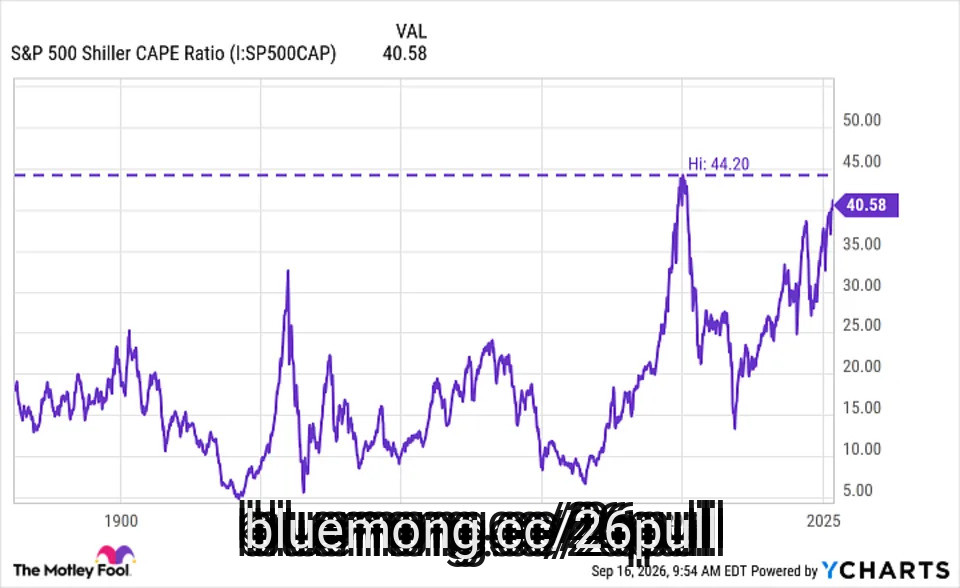
IBM raised its quarterly dividend a single penny, from $1.68 to $1.69, marking its 31st consecutive increase but delivering just $0.04 more annually to shareholders.
Microsoft grew its quarterly dividend from $0.13 to $0.98 since 2010, making it the stronger pick for investors seeking real income growth over IBM's 2.83% yield.
IBM's dividend appears safe, with $14.7B in free cash flow comfortably covering its $6.3B payout, though capital is flowing toward acquisitions, $62B in debt, and quantum computing bets.
Just released. Our ******* ysts combed the entire stock market and named the ten best stocks to buy right now, and IBM didn't make the cut. Enter your email to see the names that beat IBM. The report is free. Enter your email and see if any of your stocks made the cut.
The headline is easy to sell. IBM (NYSE:IBM) has paid consecutive quarterly dividends every year since 1916 and, with the April declaration, notched its 31st consecutive year of dividend increases. The reality a retiree actually banks is smaller. Much smaller.
#Dividend #year
Microsoft grew its quarterly dividend from $0.13 to $0.98 since 2010, making it the stronger pick for investors seeking real income growth over IBM's 2.83% yield.
IBM's dividend appears safe, with $14.7B in free cash flow comfortably covering its $6.3B payout, though capital is flowing toward acquisitions, $62B in debt, and quantum computing bets.
Just released. Our ******* ysts combed the entire stock market and named the ten best stocks to buy right now, and IBM didn't make the cut. Enter your email to see the names that beat IBM. The report is free. Enter your email and see if any of your stocks made the cut.
The headline is easy to sell. IBM (NYSE:IBM) has paid consecutive quarterly dividends every year since 1916 and, with the April declaration, notched its 31st consecutive year of dividend increases. The reality a retiree actually banks is smaller. Much smaller.
#Dividend #year

7 days ago
If you are looking for reliable high yields in the energy sector, Energy Transfer (NYSE: ET) is likely to be high up on the list of options. And Wall Street really likes the stock, with 19 of the 21 ***** ysts covering it rating it a buy or strong buy. And yet, I just can't get myself to buy it, instead owning lower-yielding Enbridge (NYSE: ENB). Here's why Energy Transfer's 6.3% yield, despite distribution coverage of 2.2x, isn't enough to get me to buy it.
Before getting to Energy Transfer, I want to highlight some facts about Enbridge, the North American pipeline giant I actually bought. For starters, Enbridge's yield is 5.8%, roughly half a percentage point lower. That's a big difference, as buying Energy Transfer would increase my income stream by nearly 9%.
Missed Nvidia in 2009? This Rare Signal Is Flashing Again. In 2009, a "Double Down" signal flashed for a little-known chipmaker called Nvidia. For the first time in years, that same "Total Conviction" signal is flashing for a company 1/100th the size of Nvidia. Continue »
I can totally understand where a dividend investor would buy Energy Transfer for the added yield. But there's a big difference when you consider dividend history. Enbridge has increased its dividend annually for 31 consecutive years. Energy Transfer cut its distribution in 2020 during the COVID pandemic, right when most investors would probably have preferred dividend consistency. To Energy Transfer's credit, it lived up to its promise at the time to reduce leverage and return to distribution growth. In fact, the distribution is now above its level prior to the cut. And the cut was probably the right decision to make for the business.
But that distribution cut was a hit for unitholders. And it comes after another questionable situation back during the 1996 energy market downturn. At that point, Energy Transfer agreed to buy peer Williams (NYSE: WMB), but got cold feet. In an effort to scuttle the deal, Energy Transfer issued convertibles that appeared to protect insiders from a dividend cut, if one were made. The Williams deal was canceled, and the convertibles never became an issue, but it raised material trust issues for me.
#distribution #Dividend #yield
Before getting to Energy Transfer, I want to highlight some facts about Enbridge, the North American pipeline giant I actually bought. For starters, Enbridge's yield is 5.8%, roughly half a percentage point lower. That's a big difference, as buying Energy Transfer would increase my income stream by nearly 9%.
Missed Nvidia in 2009? This Rare Signal Is Flashing Again. In 2009, a "Double Down" signal flashed for a little-known chipmaker called Nvidia. For the first time in years, that same "Total Conviction" signal is flashing for a company 1/100th the size of Nvidia. Continue »
I can totally understand where a dividend investor would buy Energy Transfer for the added yield. But there's a big difference when you consider dividend history. Enbridge has increased its dividend annually for 31 consecutive years. Energy Transfer cut its distribution in 2020 during the COVID pandemic, right when most investors would probably have preferred dividend consistency. To Energy Transfer's credit, it lived up to its promise at the time to reduce leverage and return to distribution growth. In fact, the distribution is now above its level prior to the cut. And the cut was probably the right decision to make for the business.
But that distribution cut was a hit for unitholders. And it comes after another questionable situation back during the 1996 energy market downturn. At that point, Energy Transfer agreed to buy peer Williams (NYSE: WMB), but got cold feet. In an effort to scuttle the deal, Energy Transfer issued convertibles that appeared to protect insiders from a dividend cut, if one were made. The Williams deal was canceled, and the convertibles never became an issue, but it raised material trust issues for me.
#distribution #Dividend #yield


7 days ago
On August 5, Cencora (NYSE:COR) reported results for its fiscal third quarter, which closed on June 30, and the headline numbers looked clean. Revenue rose 5.1% to $84.8 billion, adjusted earnings per share climbed 12.0% to $4.48, and management raised its full-year adjusted EPS outlook to $17.75 to $17.95. The company also repurchased $1 billion of its own stock during the quarter. But the profit story has moving parts, and a few of them pull in opposite directions.
Start with the gap between profit growth and sales growth. Adjusted operating income rose 17.0% while revenue grew only 5.1%. Much of the help came from gross profit, which jumped 23.2% on an adjusted basis as both segments contributed and the OneOncology acquisition in February lifted margins in the US business. In plain terms, adjusted gross margin widened 61 basis points to 4.16%, so the company keeps more gross profit from every dollar it sells.
The strength was not confined to one corner, either. US Healthcare Solutions grew operating income 15.9% on higher pharmaceutical sales and the OneOncology deal, while specialty volume to health systems and physician groups lifted its revenue. International Healthcare Solutions did better still, with operating income up 20.8% on strength in European distribution and global specialty logistics. Management also put cash to work, completing in one quarter the $1 billion of buybacks it had expected to finish by the close of calendar 2026. The board declared a $0.60 quarterly dividend as well, payable August 31, to holders of record on August 14.
Growth is costing more than it first appears. Adjusted operating expenses jumped 26.8%, faster than adjusted gross profit, because OneOncology brought expenses along with its profits. Even so, adjusted operating income amounts to just 1.46% of revenue, a thin cushion on a business this large. Financing adds weight too. Cencora funded part of the purchase with new senior notes plus variable-rate term loans, and net interest expense rose $58.9 million from a year earlier.
The sales mix carries its own drag. GLP-1 drugs for diabetes and weight loss are adding to revenue, but they earn lower gross margins, so each dollar of that growth is worth less to profit. Meanwhile, an oncology customer Cencora lost in 2025, and lower sales to a large mail order customer both held back US revenue, as did lower manufacturer prices on some brand pharmaceuticals. Cencora is also exploring strategic alternatives for a group of other businesses, and its April divestiture of US Consulting Services trimmed consulting sales.
#profit #operating #Growth #august
Start with the gap between profit growth and sales growth. Adjusted operating income rose 17.0% while revenue grew only 5.1%. Much of the help came from gross profit, which jumped 23.2% on an adjusted basis as both segments contributed and the OneOncology acquisition in February lifted margins in the US business. In plain terms, adjusted gross margin widened 61 basis points to 4.16%, so the company keeps more gross profit from every dollar it sells.
The strength was not confined to one corner, either. US Healthcare Solutions grew operating income 15.9% on higher pharmaceutical sales and the OneOncology deal, while specialty volume to health systems and physician groups lifted its revenue. International Healthcare Solutions did better still, with operating income up 20.8% on strength in European distribution and global specialty logistics. Management also put cash to work, completing in one quarter the $1 billion of buybacks it had expected to finish by the close of calendar 2026. The board declared a $0.60 quarterly dividend as well, payable August 31, to holders of record on August 14.
Growth is costing more than it first appears. Adjusted operating expenses jumped 26.8%, faster than adjusted gross profit, because OneOncology brought expenses along with its profits. Even so, adjusted operating income amounts to just 1.46% of revenue, a thin cushion on a business this large. Financing adds weight too. Cencora funded part of the purchase with new senior notes plus variable-rate term loans, and net interest expense rose $58.9 million from a year earlier.
The sales mix carries its own drag. GLP-1 drugs for diabetes and weight loss are adding to revenue, but they earn lower gross margins, so each dollar of that growth is worth less to profit. Meanwhile, an oncology customer Cencora lost in 2025, and lower sales to a large mail order customer both held back US revenue, as did lower manufacturer prices on some brand pharmaceuticals. Cencora is also exploring strategic alternatives for a group of other businesses, and its April divestiture of US Consulting Services trimmed consulting sales.
#profit #operating #Growth #august

7 days ago
When Ray Dalio speaks, investors tend to listen, and likely for good reason. He ran Bridgewater **** ociates, the hedge fund he founded, for half a century, and over that time, he was one of the most successful investment managers in history.
In fact, he has long used history as a guide for deploying capital, and today, he believes history offers lessons for how investors should approach the AI boom. Specifically, he sees echoes of 1929 and 2000 in the current situation, and is urging investors to approach AI stocks with caution. Here is what he said and why investors may want to heed his advice.
Missed Nvidia in 2009? This Rare Signal Is Flashing Again. In 2009, a "Double Down" signal flashed for a little-known chipmaker called Nvidia. For the first time in years, that same "Total Conviction" signal is flashing for a company 1/100th the size of Nvidia. Continue »
First of all, investors should remember that Dalio has stepped down from Bridgewater. Thus, the fund's investments in AI stocks like ServiceNow and Nutanix were likely made without his input.
Given what he has said recently, he may even disagree with those purchases. When Dalio appeared on the podcast The Diary of a CEO in August, he said that AI shows "classic signs" of a bubble.
#dalio #signal #flashing #likely
In fact, he has long used history as a guide for deploying capital, and today, he believes history offers lessons for how investors should approach the AI boom. Specifically, he sees echoes of 1929 and 2000 in the current situation, and is urging investors to approach AI stocks with caution. Here is what he said and why investors may want to heed his advice.
Missed Nvidia in 2009? This Rare Signal Is Flashing Again. In 2009, a "Double Down" signal flashed for a little-known chipmaker called Nvidia. For the first time in years, that same "Total Conviction" signal is flashing for a company 1/100th the size of Nvidia. Continue »
First of all, investors should remember that Dalio has stepped down from Bridgewater. Thus, the fund's investments in AI stocks like ServiceNow and Nutanix were likely made without his input.
Given what he has said recently, he may even disagree with those purchases. When Dalio appeared on the podcast The Diary of a CEO in August, he said that AI shows "classic signs" of a bubble.
#dalio #signal #flashing #likely


8 days ago
Tesla's (NASDAQ: TSLA) business is in an interesting spot. The company saw a significant sales rebound in the second quarter, with revenue rising 26% year over year to reach $22.5 billion. Recent reports also suggest that the company's share of the U.S. electric vehicle (EV) market has risen sharply amid a substantial sales contraction for the overall industry. And while the company's net income fell 5% annually in the second quarter, the business still recorded net income of $1.11 billion in the period.
On the other hand, positive net income doesn't tell the whole story because the metric doesn't include capital expenditures (capex) that are recorded as ****** ets on the balance sheet. With Tesla betting big on its robotaxi project, Optimus humanoid robots, and other potential growth drivers, the company recorded $5.79 billion in capex in Q2. As a result, the business posted -$1.1 billion in free cash flow (FCF) in the period. With FCF coming up negative lately, the company's $43.5 billion cash position provides a valuable cushion.
Missed Nvidia in 2009? This Rare Signal Is Flashing Again. In 2009, a "Double Down" signal flashed for a little-known chipmaker called Nvidia. For the first time in years, that same "Total Conviction" signal is flashing for a company 1/100th the size of Nvidia. Continue »
Tesla posted substantial sales growth in the second quarter as some of the pressures facing the brand eased, higher gas prices encouraged EV purchases, and price cuts helped spur demand. On the other hand, it remains to be seen whether this sales growth momentum is sustainable -- and banking on the core EV business to be an earnings driver that can support the company's highly growth-dependent valuation seems unwise.
While Tesla has seen competitors based in the U.S., ****** an, and South Korea reduce their focus on the EV market, BYD and other China-based rivals are making inroads in the market and continue to bet heavily on long-term growth in the category. CEO Elon Musk appears to have a good grasp on the challenging competitive landscape and has been positioning robotaxis, humanoid robots, and semiconductor projects as the core elements of his company's growth strategy.
#NVIDIA
On the other hand, positive net income doesn't tell the whole story because the metric doesn't include capital expenditures (capex) that are recorded as ****** ets on the balance sheet. With Tesla betting big on its robotaxi project, Optimus humanoid robots, and other potential growth drivers, the company recorded $5.79 billion in capex in Q2. As a result, the business posted -$1.1 billion in free cash flow (FCF) in the period. With FCF coming up negative lately, the company's $43.5 billion cash position provides a valuable cushion.
Missed Nvidia in 2009? This Rare Signal Is Flashing Again. In 2009, a "Double Down" signal flashed for a little-known chipmaker called Nvidia. For the first time in years, that same "Total Conviction" signal is flashing for a company 1/100th the size of Nvidia. Continue »
Tesla posted substantial sales growth in the second quarter as some of the pressures facing the brand eased, higher gas prices encouraged EV purchases, and price cuts helped spur demand. On the other hand, it remains to be seen whether this sales growth momentum is sustainable -- and banking on the core EV business to be an earnings driver that can support the company's highly growth-dependent valuation seems unwise.
While Tesla has seen competitors based in the U.S., ****** an, and South Korea reduce their focus on the EV market, BYD and other China-based rivals are making inroads in the market and continue to bet heavily on long-term growth in the category. CEO Elon Musk appears to have a good grasp on the challenging competitive landscape and has been positioning robotaxis, humanoid robots, and semiconductor projects as the core elements of his company's growth strategy.
#NVIDIA
8 days ago
The temporary closure of the key onshore pipeline Saudi Arabia uses to bypass the Strait of Hormuz has added another shock to an oil market already struggling with six months of Middle East supply disruptions.
And the damage now appears to be more extensive than initially believed.
Three pumping stations along Saudi Arabia's East-West pipeline were damaged in last week's attack, Reuters reported on Thursday, citing satellite imagery and industry sources. Earlier ***** sments had identified damage at two stations. Three sources told Reuters that repairs could take five to six weeks, although partial pumping could resume sooner.
Before the attack, the system was moving between 4 million and 5 million barrels per day (bpd), equivalent to roughly 4%–5% of global oil supply. Its total capacity is around 7 million bpd, including approximately 2 million bpd supplied to refineries.
Saudi Arabia shut the pipeline following multiple attacks on September 10. Satellite imagery previously published by MizarVision showed extensive fire and structural damage around pumping stations along the route.
#million #pumping #arabia
And the damage now appears to be more extensive than initially believed.
Three pumping stations along Saudi Arabia's East-West pipeline were damaged in last week's attack, Reuters reported on Thursday, citing satellite imagery and industry sources. Earlier ***** sments had identified damage at two stations. Three sources told Reuters that repairs could take five to six weeks, although partial pumping could resume sooner.
Before the attack, the system was moving between 4 million and 5 million barrels per day (bpd), equivalent to roughly 4%–5% of global oil supply. Its total capacity is around 7 million bpd, including approximately 2 million bpd supplied to refineries.
Saudi Arabia shut the pipeline following multiple attacks on September 10. Satellite imagery previously published by MizarVision showed extensive fire and structural damage around pumping stations along the route.
#million #pumping #arabia

8 days ago
On September 10, 2026, The Lovesac Company (NASDAQ:LOVE) reported second-quarter fiscal 2027 results for the period ended August 2, 2026. Net sales rose 0.4% to $161.2 million, a record for the quarter, and the company swung to net income of $7.4 million, or $0.51 per diluted share, from a loss of $6.7 million a year earlier. Inside that $0.51 sits $0.86 of net benefit from IEEPA tariff refunds. Omni-channel comparable sales fell 1.9%.
Canaccord's Maria Ripps read the quarter as in line, with revenue and adjusted EBITDA both landing within guidance and near consensus while tariff refunds pushed gross margin and earnings above expectations; she cut the firm's target on The Lovesac Company (NASDAQ:LOVE) to $20 from $22 but held the Buy rating.
Roth Capital's Matt Koranda also called the quarter in line with consensus, though he flagged omni-channel comps trending modestly negative on soft lower-end consumer demand. He lowered the firm's target on The Lovesac Company (NASDAQ:LOVE) to $20 from $22 as well, keeping a Buy rating, and noted that management reset full-year guidance lower on a tough demand environment and modest product launch delays.
DA Davidson offered a similar interpretation of the lower guidance, arguing that the reset reflects the new CFO's approach more than a deterioration in the underlying business. The firm said the CFO, who joined during the quarter, appears to be establishing more conservative expectations that could restore a beat-and-raise pattern the stock had lacked. DA Davidson lowered its target on The Lovesac Company (NASDAQ:LOVE) to $18 from $20 while maintaining its Buy rating.
The operating case rests on the high end: configurations above $6,000 grew double digits against a tough comparison, showroom net sales rose 4.6% to $114.1 million on 14 net new locations, and Snugg helped push other products revenue up 198.2%. Lovesac ended the quarter with $68.8 million in cash and no debt.
#quarter
Canaccord's Maria Ripps read the quarter as in line, with revenue and adjusted EBITDA both landing within guidance and near consensus while tariff refunds pushed gross margin and earnings above expectations; she cut the firm's target on The Lovesac Company (NASDAQ:LOVE) to $20 from $22 but held the Buy rating.
Roth Capital's Matt Koranda also called the quarter in line with consensus, though he flagged omni-channel comps trending modestly negative on soft lower-end consumer demand. He lowered the firm's target on The Lovesac Company (NASDAQ:LOVE) to $20 from $22 as well, keeping a Buy rating, and noted that management reset full-year guidance lower on a tough demand environment and modest product launch delays.
DA Davidson offered a similar interpretation of the lower guidance, arguing that the reset reflects the new CFO's approach more than a deterioration in the underlying business. The firm said the CFO, who joined during the quarter, appears to be establishing more conservative expectations that could restore a beat-and-raise pattern the stock had lacked. DA Davidson lowered its target on The Lovesac Company (NASDAQ:LOVE) to $18 from $20 while maintaining its Buy rating.
The operating case rests on the high end: configurations above $6,000 grew double digits against a tough comparison, showroom net sales rose 4.6% to $114.1 million on 14 net new locations, and Snugg helped push other products revenue up 198.2%. Lovesac ended the quarter with $68.8 million in cash and no debt.
#quarter


8 days ago
Virtus Investment Partners, Inc. (NYSE:VRTS) reported on September 11 that preliminary ****** ets under management, or AUM, totaled $147.501 billion at August-end, compared with $148.874 billion at July-end. That represents a $1.373 billion decline, or approximately 0.9%.
Management identified net outflows in institutional accounts, retail separate accounts, U.S. retail funds and global funds, partly offset by positive flows into exchange-traded funds, or ETFs, and tender-offer funds.
Positive market performance partly offset net outflows. The $1.373 billion AUM decline therefore differs from net client withdrawals, which the announcement did not quantify. The underlying business question is whether products attracting new money can become large enough to stabilize the revenue base.
Virtus Investment Partners, Inc. (NYSE:VRTS) has identifiable sources of customer demand. Positive net flows into ETFs and tender-offer funds provide a route toward a more balanced product mix.
ETF demand also appeared in the second quarter, when these products attracted $0.3 billion of net inflows. August's positive flows suggest the opportunity extends beyond a single reporting period.
#virtus #investment #partners
Management identified net outflows in institutional accounts, retail separate accounts, U.S. retail funds and global funds, partly offset by positive flows into exchange-traded funds, or ETFs, and tender-offer funds.
Positive market performance partly offset net outflows. The $1.373 billion AUM decline therefore differs from net client withdrawals, which the announcement did not quantify. The underlying business question is whether products attracting new money can become large enough to stabilize the revenue base.
Virtus Investment Partners, Inc. (NYSE:VRTS) has identifiable sources of customer demand. Positive net flows into ETFs and tender-offer funds provide a route toward a more balanced product mix.
ETF demand also appeared in the second quarter, when these products attracted $0.3 billion of net inflows. August's positive flows suggest the opportunity extends beyond a single reporting period.
#virtus #investment #partners

8 days ago
In late 2022, OpenAI released ChatGPT, and within months the bottom rung of the tech-industry career ladder started to disappear. Graduates who majored in computer science and other AI-exposed fields are increasingly missing out on the jobs they trained for, and a chunk of them are landing behind restaurant counters and retail registers instead, according to two Census Bureau papers.
An April 2026 Census paper tracked matched employer-employee records and found that hiring of workers ages 22 to 24 fell sharply in the industries most exposed to AI, while hiring in less-exposed industries held steady. Employment for early-career workers in the most AI-exposed fifth of industries dropped 12% over the ten quarters after ChatGPT's release. Lee Tucker, one of the coauthors of the paper, said "the decline in hires is the primary cause" of that rate of unemployment, not people losing jobs they already had.
That mattered most for one type of graduate. The most AI-exposed industries, Tucker found, cluster heavily around software and information-technology work, which are the very fields computer science and other highly AI-exposed majors are built to feed into.
A second paper from last week, also coauthored by Tucker, follows the graduates of the most AI-exposed decile of college majors. Their odds of holding a job one quarter after graduation fell by five percentage points, and full-quarter initial earnings dropped 13% following ChatGPT's release. A 13% earnings decline is roughly the size economists would expect from graduating into a severe recession—except there wasn't one, since the rest of the labor market held up fine.
Young grads still need to work and still have jobs, even if they've received highly exposed degrees. So the decline in earnings is less about a lack of employment and more about pursuing lower-wage occupations to make ends meet.
#graduates
An April 2026 Census paper tracked matched employer-employee records and found that hiring of workers ages 22 to 24 fell sharply in the industries most exposed to AI, while hiring in less-exposed industries held steady. Employment for early-career workers in the most AI-exposed fifth of industries dropped 12% over the ten quarters after ChatGPT's release. Lee Tucker, one of the coauthors of the paper, said "the decline in hires is the primary cause" of that rate of unemployment, not people losing jobs they already had.
That mattered most for one type of graduate. The most AI-exposed industries, Tucker found, cluster heavily around software and information-technology work, which are the very fields computer science and other highly AI-exposed majors are built to feed into.
A second paper from last week, also coauthored by Tucker, follows the graduates of the most AI-exposed decile of college majors. Their odds of holding a job one quarter after graduation fell by five percentage points, and full-quarter initial earnings dropped 13% following ChatGPT's release. A 13% earnings decline is roughly the size economists would expect from graduating into a severe recession—except there wasn't one, since the rest of the labor market held up fine.
Young grads still need to work and still have jobs, even if they've received highly exposed degrees. So the decline in earnings is less about a lack of employment and more about pursuing lower-wage occupations to make ends meet.
#graduates


8 days ago
US stocks wavered on Friday morning as investors continued to calibrate to the Federal Reserve's first rate hike in three years and existential fears about artificial intelligence's capabilities.
The tech-heavy Nasdaq Composite (^IXIC) traded flat, while the S&P 500 (^GSPC) fell 0.1%. The Dow Jones Industrial Average (^DJI) was down 0.3%.
The 10-year Treasury yield (^TNX) rose 5 basis points to 5% on Friday as traders increased bets that the Fed will raise rates again in October.
Markets appeared to look past the Fed's 25 basis point rate hike this week, which was widely expected. US stock continued to climb after the Bank of ******* an raised interest rates to the highest level in 31 years.
However, ******* ysts and top CEOs aren't convinced that one rate hike (by the Fed) will be enough to bring down stubbornly high inflation. "It's not clear to me we've slayed inflation," JPMorgan Chase CEO Jamie Dimon told Yahoo Finance this week.
#down
The tech-heavy Nasdaq Composite (^IXIC) traded flat, while the S&P 500 (^GSPC) fell 0.1%. The Dow Jones Industrial Average (^DJI) was down 0.3%.
The 10-year Treasury yield (^TNX) rose 5 basis points to 5% on Friday as traders increased bets that the Fed will raise rates again in October.
Markets appeared to look past the Fed's 25 basis point rate hike this week, which was widely expected. US stock continued to climb after the Bank of ******* an raised interest rates to the highest level in 31 years.
However, ******* ysts and top CEOs aren't convinced that one rate hike (by the Fed) will be enough to bring down stubbornly high inflation. "It's not clear to me we've slayed inflation," JPMorgan Chase CEO Jamie Dimon told Yahoo Finance this week.
#down