

26 days ago
In the end, Kevin Warsh's Federal Reserve acquitted itself well. For all the uncertainty he had sparked at the previous meeting of the Federal Open Market Committee, when he refused to provide any indication of what he was prepared to do to tame stubborn inflation, the chair on Wednesday presided over a unanimous decision to raise interest rates for the first time in three years.
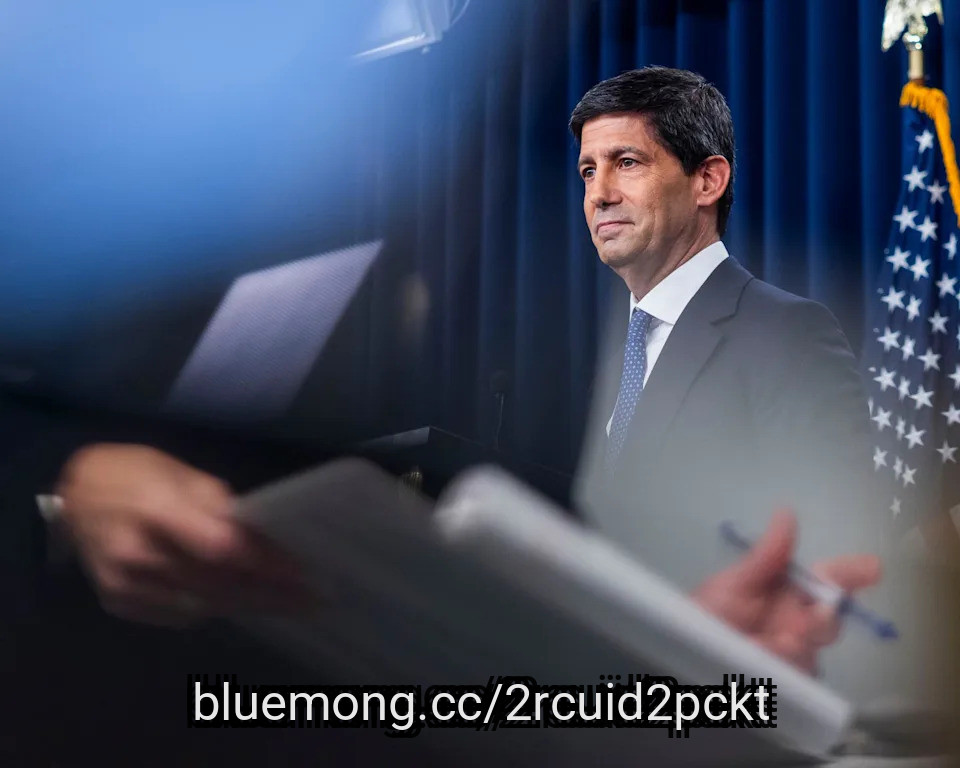
"Today's action starts to show that we're serious about this," he said at the press conference after the meeting, with "this" meaning inflation in excess of the Fed's 2% target for over five years. Welcome though it was, his embrace of economic orthodoxy nonetheless did little to dispel the Keystone Cops quality of governance in Donald Trump's US.
Warsh's resolve – raising rates just a few weeks before elections that will determine whether Republicans retain control of Congress – appeared even more resolute in the face of a veiled threat from White House economic adviser Kevin Hassett, who pointed out to his chums on Fox that "if you want an independent Fed, then one thing the Fed does is it stays out of the way of elections".
The central bankers' parsimonious comments in the press conference following the meeting made a sharp contrast with the more unhinged commentary from other members of the administration, including the president himself, who earlier this month celebrated the resilience of the labor market with a mind-boggling threat to "STOP TRADING WITH COUNTRIES WITH WHICH WE HAVE A DEFICIT" unless the Fed cut interest rates.
Trump has yet to turn on Warsh in the way he did on his predecessor, Jerome "numbskull" Powell. But the signs are ominous. After the rate hike, Trump went ballistic – spewing more of the random, incoherent thoughts that have become his trademark. "Interest Rates in the United States should be 1%, or less, because we are the Best Credit in the World," he wrote on social media, despite recalcitrant inflation and a budget deficit that is likely to exceed $2tn this year. He again demanded the powers that be to "LOWER THE INTEREST RATES FOR THE UNITED STATES OF AMERICA, AND FAST!"
#rates #federal #states
"Today's action starts to show that we're serious about this," he said at the press conference after the meeting, with "this" meaning inflation in excess of the Fed's 2% target for over five years. Welcome though it was, his embrace of economic orthodoxy nonetheless did little to dispel the Keystone Cops quality of governance in Donald Trump's US.
Warsh's resolve – raising rates just a few weeks before elections that will determine whether Republicans retain control of Congress – appeared even more resolute in the face of a veiled threat from White House economic adviser Kevin Hassett, who pointed out to his chums on Fox that "if you want an independent Fed, then one thing the Fed does is it stays out of the way of elections".
The central bankers' parsimonious comments in the press conference following the meeting made a sharp contrast with the more unhinged commentary from other members of the administration, including the president himself, who earlier this month celebrated the resilience of the labor market with a mind-boggling threat to "STOP TRADING WITH COUNTRIES WITH WHICH WE HAVE A DEFICIT" unless the Fed cut interest rates.
Trump has yet to turn on Warsh in the way he did on his predecessor, Jerome "numbskull" Powell. But the signs are ominous. After the rate hike, Trump went ballistic – spewing more of the random, incoherent thoughts that have become his trademark. "Interest Rates in the United States should be 1%, or less, because we are the Best Credit in the World," he wrote on social media, despite recalcitrant inflation and a budget deficit that is likely to exceed $2tn this year. He again demanded the powers that be to "LOWER THE INTEREST RATES FOR THE UNITED STATES OF AMERICA, AND FAST!"
#rates #federal #states
1 month ago
(Table below reflects daily flows on September 10, 2026 and **** et totals as of that date.)
ETF Brand League Table
Welcome to the etf.com league table. On this page, you'll find the U.S. ETF market through different lenses: brand and issuer. What's the difference? The brand is what the ETF says on the tin. For example, "iShares" is the brand of issuer "BlackRock's" ETFs. Because many issuers license their ETF infrastructure to third parties, we present the data in both ways. The identification of the correct brand and legal issuer is done by our key data provider, FactSet.
Brand
AUM ($, mm)
#september
ETF Brand League Table
Welcome to the etf.com league table. On this page, you'll find the U.S. ETF market through different lenses: brand and issuer. What's the difference? The brand is what the ETF says on the tin. For example, "iShares" is the brand of issuer "BlackRock's" ETFs. Because many issuers license their ETF infrastructure to third parties, we present the data in both ways. The identification of the correct brand and legal issuer is done by our key data provider, FactSet.
Brand
AUM ($, mm)
#september

1 month ago
The European Central Bank is likely to deliver a 25 basis-point rate hike at its meeting concluding today. But while the direction of travel may be clear for now, the path beyond September is anything but.
The ECB is likely to keep its powder dry beyond today, with the path thereafter determined by how the economy and, above all, inflation respond to the renewed energy shock. The key message from the Governing Council is therefore likely to be hawkish: further hike(s) may be warranted if inflation risks intensify, but policymakers will want to retain flexibility rather than pre-commit to any specific policy path.
There is only modest evidence so far that inflation expectations are becoming less firmly anchored, although there may be growing concern that second-round effects may eventually turn a temporary energy shock into a more persistent inflation problem. The challenge for the ECB is that the economy has so far proven more resilient than expected, making an upside revision to its growth projections probable. Output rose more than anticipated during the second quarter, and business surveys are suggesting solid momentum ahead.
That resilience matters. A weaker economy would give policymakers more room to look through an energy-driven inflation spike. A more robust economy, by contrast, makes it harder to ***** ume that higher energy prices may simply wash through absent affecting wages, services prices and broader inflation behaviour.
Euro area headline inflation rose to 3.3% year on year last month (Figure 1), although the easing in core inflation to 2.4% does offer some reassurance. Underlying inflation measures have stayed comparatively moderate, wage pressures are still contained and there is, as yet, only sparse evidence that the energy shock is generating widespread second-round effects.
#economy #path #shock #today
The ECB is likely to keep its powder dry beyond today, with the path thereafter determined by how the economy and, above all, inflation respond to the renewed energy shock. The key message from the Governing Council is therefore likely to be hawkish: further hike(s) may be warranted if inflation risks intensify, but policymakers will want to retain flexibility rather than pre-commit to any specific policy path.
There is only modest evidence so far that inflation expectations are becoming less firmly anchored, although there may be growing concern that second-round effects may eventually turn a temporary energy shock into a more persistent inflation problem. The challenge for the ECB is that the economy has so far proven more resilient than expected, making an upside revision to its growth projections probable. Output rose more than anticipated during the second quarter, and business surveys are suggesting solid momentum ahead.
That resilience matters. A weaker economy would give policymakers more room to look through an energy-driven inflation spike. A more robust economy, by contrast, makes it harder to ***** ume that higher energy prices may simply wash through absent affecting wages, services prices and broader inflation behaviour.
Euro area headline inflation rose to 3.3% year on year last month (Figure 1), although the easing in core inflation to 2.4% does offer some reassurance. Underlying inflation measures have stayed comparatively moderate, wage pressures are still contained and there is, as yet, only sparse evidence that the energy shock is generating widespread second-round effects.
#economy #path #shock #today


1 month ago
On August 5, Central Garden & Pet (NASDAQ:CENT) reported fiscal 2026 third-quarter results for the period ended June 27, and the numbers pull in two directions at once. Net sales fell 8% to $882 million, yet the company raised its full-year profit outlook, a combination that says more about where the business is heading than the headline sales figure does.
The most important number in this report is not on the top line. Gross margin expanded 130 basis points to 35.9%, and non-GAAP operating margin climbed 90 basis points to 15.4%, even as revenue shrank. That is largely because Central exited its pet distribution business earlier in the year, a lower-margin operation whose absence flattered every profitability metric that followed. Strip that exit out and organic net sales, which account for the divested business, actually rose 2% to $862 million.
The Garden segment did the real work here, with sales up 3% to $482 million on strength in wild bird feed, fertilizer and controls, and grass seed, pushing segment operating margin up 100 basis points to 18.7%. On the back of this performance, management raised its fiscal 2026 non-GAAP diluted EPS outlook from $2.70 or better to $2.85 or better, a meaningful upgrade delivered with one quarter still to report.
Central also announced a definitive agreement to acquire an 80% interest in TRIXIE, a European pet supplies and pet snacks company serving more than 30,000 retail stores, for up to €400 million including earn-outs. The deal would push international sales to roughly 10% of the total and give Central a foothold in a fragmented European pet specialty market, though it is not expected to close until the first half of fiscal 2027.
The margin expansion cannot fully mask what happened at the bottom of the income statement. GAAP diluted EPS fell to $1.45 from $1.52, and non-GAAP EPS slipped to $1.54 from $1.56, both declines even as the company was calling the quarter a success. Net income dropped 5% to $90 million. The Pet segment remains the bigger question mark: reported net sales there fell 19% to $400 million, and while organic Pet sales rose 2% to $380 million, the gap between reported and organic figures shows how much of the segment's recent shape has been dictated by portfolio changes rather than underlying demand.
#gaap #Margin #reported #company
The most important number in this report is not on the top line. Gross margin expanded 130 basis points to 35.9%, and non-GAAP operating margin climbed 90 basis points to 15.4%, even as revenue shrank. That is largely because Central exited its pet distribution business earlier in the year, a lower-margin operation whose absence flattered every profitability metric that followed. Strip that exit out and organic net sales, which account for the divested business, actually rose 2% to $862 million.
The Garden segment did the real work here, with sales up 3% to $482 million on strength in wild bird feed, fertilizer and controls, and grass seed, pushing segment operating margin up 100 basis points to 18.7%. On the back of this performance, management raised its fiscal 2026 non-GAAP diluted EPS outlook from $2.70 or better to $2.85 or better, a meaningful upgrade delivered with one quarter still to report.
Central also announced a definitive agreement to acquire an 80% interest in TRIXIE, a European pet supplies and pet snacks company serving more than 30,000 retail stores, for up to €400 million including earn-outs. The deal would push international sales to roughly 10% of the total and give Central a foothold in a fragmented European pet specialty market, though it is not expected to close until the first half of fiscal 2027.
The margin expansion cannot fully mask what happened at the bottom of the income statement. GAAP diluted EPS fell to $1.45 from $1.52, and non-GAAP EPS slipped to $1.54 from $1.56, both declines even as the company was calling the quarter a success. Net income dropped 5% to $90 million. The Pet segment remains the bigger question mark: reported net sales there fell 19% to $400 million, and while organic Pet sales rose 2% to $380 million, the gap between reported and organic figures shows how much of the segment's recent shape has been dictated by portfolio changes rather than underlying demand.
#gaap #Margin #reported #company