

1 month ago
On September 16, IDEXX Laboratories (NASDAQ:IDXX) announced it had bought CoVetAI, a fast-growing veterinary software company whose tool listens during appointments and organizes what gets said and done. It sounds like a productivity gadget. But IDEXX is pitching it as a way to put the right patient details in front of a vet at the moment they decide what to test. The price was not disclosed, so the strategy is the story.
Start with the customer base IDEXX already has. More than 10,000 clinics worldwide run on its cloud practice software, and CoVet will plug into that system, including a link to IDEXX VetConnect PLUS. That hands a new product a ready audience. CoVet also works with practice systems IDEXX does not make, and IDEXX plans to keep supporting rival scribes, so the tool can reach clinics and regions the company does not serve today.
Then there is the engine this could feed. On August 4, IDEXX reported second-quarter revenue growth of 10%, and its recurring diagnostics business grew 11%, powered by higher volumes. That says vets are already running more tests, which is the behavior a smarter workflow tool is meant to encourage. The company also placed more than 1,600 inVue Dx ****** yzers in the quarter, lifting the installed base past 9,000, and it counts that instrument among its AI-driven products. Software and hardware are pointing in the same direction.
The biggest problem is what we can't see. Without deal terms, there is no way to judge what IDEXX paid or how much CoVet matters to earnings. And the company describes the payoff in future tense, saying these capabilities can raise diagnostic use over time. That is a hope, not a result yet. CoVet's openness to other systems cuts both ways too. It widens reach, but it also means a clinic can use CoVet without going deeper into IDEXX's ecosystem.
The second quarter also needs a careful read. Earnings per share rose 18%, but that included tax benefits from stock-based pay and a currency boost, and growth on a comparable basis was 15%. Some of the gain, in other words, did not come from selling more to vets. IDEXX also says it is spending more on commercial and innovation priorities, so its higher full-year earnings outlook comes with added costs attached.
#company #software #earnings #already


1 month ago
Interested in NVIDIA Corporation? Here are five stocks we like better.
NVIDIA released CUDA-Q Logical, an open-source software layer that links GPUs with quantum processors to solve practical error correction challenges.
Early testing by Fermilab and Sandia National Laboratories shows dramatic efficiency gains, including a seven-fold faster design cycle and reduced physical qubit requirements.
Quantum hardware firms IonQ, Rigetti Computing, and D-Wave Quantum could benefit as standardized software lowers development costs and enables deeper integration with NVIDIA's infrastructure.
Many investors view quantum hardware developers and classical semiconductor leaders as competing forces in high-performance computing. Recent developments demonstrate that the two architectures are becoming deeply interdependent.
#hardware #here


1 month ago
Prosper Stars & Stripes, a long/short equity fund, recently released its second-quarter 2026 investor letter. The letter can be downloaded here. In Q2 2026, the portfolio delivered a strong net return of +30.1% compared to the Russell 2000 Index's +21.5% return and the HFRX Equity Hedge Index's +10.3% return. The long book drove performance, generating a 43.2% gross contribution, while average net exposure remained relatively modest at 47%. U.S. economic growth remained resilient despite inflation concerns, elevated energy prices, and geopolitical uncertainty. Markets rallied sharply after easing U.S.-Iran tensions pushed oil prices lower, supporting renewed risk appetite. Small-cap equities benefited significantly, with Information Technology, Industrials, and Health Care leading gains, while Energy declined as crude prices fell. Year to date, the Composite returned +23.7%, slightly ahead of the Russell 2000's +22.6% and well above the HFRI Equity Hedge Index's +9.7%. Additionally, you can review the Portfolio's top 5 holdings to see its best picks for 2026.
In its second-quarter 2026 investor letter, Prosper Stars & Stripes highlighted Universal Display Corporation (NASDAQ:OLED). Universal Display Corporation (NASDAQ:OLED) is an American technology company that develops and commercializes organic light-emitting diode (OLED) technologies and materials for use in display and solid-state lighting applications. On September 14, 2026, Universal Display Corporation (NASDAQ:OLED) closed at $76.62 per share. Over the past month, Universal Display Corporation (NASDAQ:OLED) declined 9.27%, and its shares lost 44.06% over the past 52 weeks. Universal Display Corporation (NASDAQ:OLED) has a market capitalization of $3.52 billion, and its stock traded within a 52-week range of $76.42 to $153.38.
Prosper Stars & Stripes stated the following regarding Universal Display Corporation (NASDAQ:OLED) in its Q2 2026 investor letter:
"This year's market rally has pressured short returns and narrowed the windows to successfully monetize shorts, as we would expect. Certain themes and short ideas do continue to resonate, however. One theme that has had success is the ongoing pressure caused by the investment boom in AI crowding out spending in other areas. We have shorted Universal Display Corporation (NASDAQ:OLED), Dolby Laboratories (DLB), and Logitech International (LOGI) on this theme. We believe cost pressures on technology components such as DRAM to result in higher prices for consumer electronics. This would have a significant impact on back-to-school and holiday spending, the key periods for these companies' end markets. We expect the forecasts that these companies are providing at this time of the year to prove optimistic, as tech cost inflation is unusual. Further, we believe the so-called K-shaped economy, where consumers have felt the pressure of rising costs of living, will continue to squeeze discretionary purchases like these. Rising prices make it nea


1 month ago
Prosper Stars & Stripes, a long/short equity fund, recently released its second-quarter 2026 investor letter. The letter can be downloaded here. In Q2 2026, the portfolio delivered a strong net return of +30.1% compared to the Russell 2000 Index's +21.5% return and the HFRX Equity Hedge Index's +10.3% return. The long book drove performance, generating a 43.2% gross contribution, while average net exposure remained relatively modest at 47%. U.S. economic growth remained resilient despite inflation concerns, elevated energy prices, and geopolitical uncertainty. Markets rallied sharply after easing U.S.-Iran tensions pushed oil prices lower, supporting renewed risk appetite. Small-cap equities benefited significantly, with Information Technology, Industrials, and Health Care leading gains, while Energy declined as crude prices fell. Year to date, the Composite returned +23.7%, slightly ahead of the Russell 2000's +22.6% and well above the HFRI Equity Hedge Index's +9.7%. Additionally, you can review the Portfolio's top 5 holdings to see its best picks for 2026.
In its second-quarter 2026 investor letter, Prosper Stars & Stripes highlighted Logitech International S.A. (NASDAQ:LOGI). Logitech International S.A. (NASDAQ:LOGI) is a Swiss technology company that designs, manufactures, and markets software-enabled hardware solutions. On September 14, 2026, Logitech International S.A. (NASDAQ:LOGI) closed at $100.36 per share. Over the past month, Logitech International S.A. (NASDAQ:LOGI) returned 2.09%, and its shares lost 10.65% over the past 52 weeks. Logitech International S.A. (NASDAQ:LOGI) has a market capitalization of $14.14 billion; its stock has traded within a 52-week trading range of $83.32 to $129.66.
Prosper Stars & Stripes stated the following regarding Logitech International S.A. (NASDAQ:LOGI) in its Q2 2026 investor letter:
"This year's market rally has pressured short returns and narrowed the windows to successfully monetize shorts, as we would expect. Certain themes and short ideas do continue to resonate, however. One theme that has had success is the ongoing pressure caused by the investment boom in AI crowding out spending in other areas. We have shorted Universal Display Corp (OLED), Dolby Laboratories (DLB), and Logitech International S.A. (NASDAQ:LOGI) on this theme. We believe cost pressures on technology components such as DRAM to result in higher prices for consumer electronics. This would have a significant impact on back-to-school and holiday spending, the key periods for these companies' end markets. We expect the forecasts that these companies are providing at this time of the year to prove optimistic, as tech cost inflation is unusual. Further, we believe the so-called K-shaped economy, where consumers have felt the pressure of rising costs of living, will continue to squeeze discretionary purchases like these. Rising prices make it nearly impossible to use discounts to stimulate sales, compounding the pressure."
#na


1 month ago
Prosper Stars & Stripes, a long/short equity fund, recently released its second-quarter 2026 investor letter. The letter can be downloaded here. In Q2 2026, the portfolio delivered a strong net return of +30.1% compared to the Russell 2000 Index's +21.5% return and the HFRX Equity Hedge Index's +10.3% return. The long book drove performance, generating a 43.2% gross contribution, while average net exposure remained relatively modest at 47%. U.S. economic growth remained resilient despite inflation concerns, elevated energy prices, and geopolitical uncertainty. Markets rallied sharply after easing U.S.-Iran tensions pushed oil prices lower, supporting renewed risk appetite. Small-cap equities benefited significantly, with Information Technology, Industrials, and Health Care leading gains, while Energy declined as crude prices fell. Year to date, the Composite returned +23.7%, slightly ahead of the Russell 2000's +22.6% and well above the HFRI Equity Hedge Index's +9.7%. Additionally, you can review the Portfolio's top 5 holdings to see its best picks for 2026.
In its second-quarter 2026 investor letter, Prosper Stars & Stripes highlighted Dolby Laboratories, Inc. (NYSE:DLB). Dolby Laboratories, Inc. (NYSE:DLB) is a US-based technology company that designs and manufactures audio, imaging, accessibility, and other hardware and software solutions for television, broadcast, and live entertainment industries. On September 14, 2026, Dolby Laboratories, Inc. (NYSE:DLB) closed at $61.91 per share. Over the past month, Dolby Laboratories, Inc. (NYSE:DLB) returned 1.33%, and its shares lost 14.24% over the past 52 weeks. Dolby Laboratories, Inc. (NYSE:DLB) has a market capitalization of $5.79 billion, and its stock has traded within a 52-week range of $48.26 and $73.01.
Prosper Stars & Stripes stated the following regarding Dolby Laboratories, Inc. (NYSE:DLB) in its Q2 2026 investor letter:
"This year's market rally has pressured short returns and narrowed the windows to successfully monetize shorts, as we would expect. Certain themes and short ideas do continue to resonate, however. One theme that has had success is the ongoing pressure caused by the investment boom in AI crowding out spending in other areas. We have shorted Universal Display Corp (OLED), Dolby Laboratories, Inc. (NYSE:DLB), and Logitech International (LOGI) on this theme. We believe cost pressures on technology components such as DRAM to result in higher prices for consumer electronics. This would have a significant impact on back-to-school and holiday spending, the key periods for these companies' end markets. We expect the forecasts that these companies are providing at this time of the year to prove optimistic, as tech cost inflation is unusual. Further, we believe the so-called K-shaped economy, where consumers have felt the pressure of rising costs of living, will continue to squeeze discretionary purchases like these. Rising prices make it nearly impossible to use discounts to st


1 month ago
Prosper Stars & Stripes, a long/short equity fund, recently released its second-quarter 2026 investor letter. The letter can be downloaded here. In Q2 2026, the portfolio delivered a strong net return of +30.1% compared to the Russell 2000 Index's +21.5% return and the HFRX Equity Hedge Index's +10.3% return. The long book drove performance, generating a 43.2% gross contribution, while average net exposure remained relatively modest at 47%. U.S. economic growth remained resilient despite inflation concerns, elevated energy prices, and geopolitical uncertainty. Markets rallied sharply after easing U.S.-Iran tensions pushed oil prices lower, supporting renewed risk appetite. Small-cap equities benefited significantly, with Information Technology, Industrials, and Health Care leading gains, while Energy declined as crude prices fell. Year to date, the Composite returned +23.7%, slightly ahead of the Russell 2000's +22.6% and well above the HFRI Equity Hedge Index's +9.7%. Additionally, you can review the Portfolio's top 5 holdings to see its best picks for 2026.
In its second-quarter 2026 investor letter, Prosper Stars & Stripes highlighted Logitech International S.A. (NASDAQ:LOGI). Logitech International S.A. (NASDAQ:LOGI) is a Swiss technology company that designs, manufactures, and markets software-enabled hardware solutions. On September 14, 2026, Logitech International S.A. (NASDAQ:LOGI) closed at $100.36 per share. Over the past month, Logitech International S.A. (NASDAQ:LOGI) returned 2.09%, and its shares lost 10.65% over the past 52 weeks. Logitech International S.A. (NASDAQ:LOGI) has a market capitalization of $14.14 billion; its stock has traded within a 52-week trading range of $83.32 to $129.66.
Prosper Stars & Stripes stated the following regarding Logitech International S.A. (NASDAQ:LOGI) in its Q2 2026 investor letter:
"This year's market rally has pressured short returns and narrowed the windows to successfully monetize shorts, as we would expect. Certain themes and short ideas do continue to resonate, however. One theme that has had success is the ongoing pressure caused by the investment boom in AI crowding out spending in other areas. We have shorted Universal Display Corp (OLED), Dolby Laboratories (DLB), and Logitech International S.A. (NASDAQ:LOGI) on this theme. We believe cost pressures on technology components such as DRAM to result in higher prices for consumer electronics. This would have a significant impact on back-to-school and holiday spending, the key periods for these companies' end markets. We expect the forecasts that these companies are providing at this time of the year to prove optimistic, as tech cost inflation is unusual. Further, we believe the so-called K-shaped economy, where consumers have felt the pressure of rising costs of living, will continue to squeeze discretionary purchases like these. Rising prices make it nearly impossible to use discounts to stimulate sales, compounding the pressure."
#pr


1 month ago
Prosper Stars & Stripes, a long/short equity fund, recently released its second-quarter 2026 investor letter. The letter can be downloaded here. In Q2 2026, the portfolio delivered a strong net return of +30.1% compared to the Russell 2000 Index's +21.5% return and the HFRX Equity Hedge Index's +10.3% return. The long book drove performance, generating a 43.2% gross contribution, while average net exposure remained relatively modest at 47%. U.S. economic growth remained resilient despite inflation concerns, elevated energy prices, and geopolitical uncertainty. Markets rallied sharply after easing U.S.-Iran tensions pushed oil prices lower, supporting renewed risk appetite. Small-cap equities benefited significantly, with Information Technology, Industrials, and Health Care leading gains, while Energy declined as crude prices fell. Year to date, the Composite returned +23.7%, slightly ahead of the Russell 2000's +22.6% and well above the HFRI Equity Hedge Index's +9.7%. Additionally, you can review the Portfolio's top 5 holdings to see its best picks for 2026.
In its second-quarter 2026 investor letter, Prosper Stars & Stripes highlighted Universal Display Corporation (NASDAQ:OLED). Universal Display Corporation (NASDAQ:OLED) is an American technology company that develops and commercializes organic light-emitting diode (OLED) technologies and materials for use in display and solid-state lighting applications. On September 14, 2026, Universal Display Corporation (NASDAQ:OLED) closed at $76.62 per share. Over the past month, Universal Display Corporation (NASDAQ:OLED) declined 9.27%, and its shares lost 44.06% over the past 52 weeks. Universal Display Corporation (NASDAQ:OLED) has a market capitalization of $3.52 billion, and its stock traded within a 52-week range of $76.42 to $153.38.
Prosper Stars & Stripes stated the following regarding Universal Display Corporation (NASDAQ:OLED) in its Q2 2026 investor letter:
"This year's market rally has pressured short returns and narrowed the windows to successfully monetize shorts, as we would expect. Certain themes and short ideas do continue to resonate, however. One theme that has had success is the ongoing pressure caused by the investment boom in AI crowding out spending in other areas. We have shorted Universal Display Corporation (NASDAQ:OLED), Dolby Laboratories (DLB), and Logitech International (LOGI) on this theme. We believe cost pressures on technology components such as DRAM to result in higher prices for consumer electronics. This would have a significant impact on back-to-school and holiday spending, the key periods for these companies' end markets. We expect the forecasts that these companies are providing at this time of the year to prove optimistic, as tech cost inflation is unusual. Further, we believe the so-called K-shaped economy, where consumers have felt the pressure of rising costs of living, will continue to squeeze discretionary purchases like these. Rising prices make it nea


1 month ago
IDEXX Laboratories, Inc. (IDXX) is a leading animal-health diagnostics and technology company best known for providing veterinarians with diagnostic testing, laboratory services, software, and imaging solutions. Valued at a market cap of $45.7 billion, the company develops and supplies diagnostic instruments, test kits, software, and laboratory services that help veterinarians, farmers, and laboratories detect diseases and monitor animal health.
Companies worth between $10 billion and $200 billion are typically classified as "large-cap stocks," and IDXX fits the label perfectly. The company is widely recognized as a market leader in veterinary diagnostics, supported by strong brand recognition, a large installed base of diagnostic instruments across veterinary practices, and a recurring revenue model fueled by consumables and testing services. With its solutions used by veterinary practices in more than 175 countries, the company has built a strong global presence and a broad, highly recurring customer base.
'Not Tens Of Billions, But Tens Of Trillions': Nvidia CEO Jensen Huang Says AI Is Like the New Electricity and the Scale Is Unlike Any Tech in History
What It Means for MSFT Stock Investors as Microsoft Switches to 2 Business Segments
RKLB Stock Jumps as Rocket Lab Debuts New Solar Cell for ******* e
#Services #Stock #laboratories



2 months ago
By Mike Sheikh
Cocrystal Pharma (NASDAQ: COCP) may look like another undercapitalized, clinical-stage biotech searching for its niche, and in need of a rescue, but there is more to this story than what meets the eye. Investors glancing at the stock chart may miss the signs of a strategic reset orchestrated by biotech legends, and miss this unique opportunity.
COCP is not a company that lacks science or researchers. It has a drug discovery platform technology capable of delivering broad spectrum antivirals on demand for high value diseases that include norovirus, influenza, coronaviruses, and hepatitis C. If you had to point to something they were lacking then the missing "it factor" was a clear strategic vision. They needed an operator and a commercialization guru capable of aligning the board to his vision and raising the capital they needed on favorable terms to turn a platform technology into an enterprise.
The appointment of James Sapirstein was a transformative moment for the company.
Sapirstein is a high powered biotech exec with an impeccable pedigree. He's not an eager early-career operator looking to make a name for himself. Investors need to realize he joined after decades of experience in commercial pharmaceutical leadership, antiviral development, product launches, and business development. From his bio we learned that he has participated in or led 23 product launches and has driven numerous business-development transactions. His résumé includes founding CEO of Tobira Therapeutics, CEO of Contravir Pharmaceuticals (Hepion Pharmaceuticals, Inc. NASDAQ: HEPA), executive leadership at Serono Laboratories, senior commercial roles at Gilead Sciences (NASDAQ: GILD), and international marketing leadership in Bristol Myers Squibb's (NYSE:BMY) infectious-disease division.
#NASDAQ #Biotech



2 months ago
SHANGHAI, Aug 27 (Reuters) - Chinese technology conglomerate Huawei plans to expand its AI cooperation with local pharmaceutical firms into drug development and clinical practice, a senior executive said.
The move highlights Huawei's ambitions to gain a foothold in the fast-growing AI drug discovery market, where pharmaceutical companies are investing in modelling tools and automated laboratories to shorten development timelines and improve efficiency.
"As we further deepen our research into AI in the medical field, we'll have more collaboration and results emerging with pharmaceutical companies from drug manufacturing to clinical to final implementation," William Zhang, president of Huawei's healthcare business unit, told Reuters on Wednesday.
He said that Huawei had some existing collaborations in the area of clinical practice in hospitals and was exploring more opportunities, without further elaboration.
The projects now are mainly with domestic drugmakers, he said.
#drug #clinical #huawei


2 months ago
Pfizer Inc. (NYSE:PFE) and Abbott Laboratories (NYSE:ABT) offer investors two very different dividend stories. Pfizer (NYSE:PFE) is working to rebuild growth before major patent expirations arrive, while Abbott (NYSE:ABT) is combining a long dividend-growth record with a more diversified healthcare portfolio. Pfizer (NYSE:PFE) may offer turnaround potential, but Abbott's (NYSE:ABT) latest results present the steadier investment case.
Pfizer's (NYSE:PFE) non-COVID portfolio is beginning to carry more of the business. Revenue excluding Comirnaty and Paxlovid grew 5% operationally in fiscal Q2 2026, while launched and acquired products generated $3.2 billion and increased 18% operationally. Padcev revenue rose 23% operationally to $667 million, supported by increased market share in first-line locally advanced or metastatic urothelial cancer and uptake in muscle-invasive bladder cancer. The Vyndaqel family generated $1.76 billion, up 8% operationally, while Lorbrena grew 37% operationally. This broader contribution is encouraging because Pfizer needs several products to offset declining COVID revenue and future patent losses.
Stronger non-COVID performance allowed Pfizer (NYSE:PFE) to raise the midpoint of its 2026 revenue guidance by $500 million, despite reducing its COVID-product forecast from approximately $5 billion to $4 billion. Its cost programs should provide further support, as management expects combined savings of approximately $9.7 billion through 2029 across its cost-realignment and manufacturing-optimization initiatives.
Abbott's (NYSE:ABT) advantage is the breadth of its growth. Second-quarter sales increased 13% on a reported basis and 4.8% on a comparable basis, while adjusted EPS rose 4% to $1.31. Medical Devices remained Abbott's (NYSE:ABT) largest segment and an important growth contributor, with sales rising 8.4% on a comparable basis. Growth was led by electrophysiology, rhythm management, heart failure, and diabetes care, with continuous-glucose-monitor sales increasing 9.5% comparably.
The Exact Sciences acquisition also expanded Abbott's (NYSE:ABT) diagnostics business. Diagnostics revenue reached $3.09 billion, rising 42.3% reported and 2.9% comparably. Within the segment, Cancer Diagnostics delivered 13.3% comparable growth as Cologuard benefited from increasing numbers of new and repeat users.
#Growth #billion #covid #revenue


2 months ago
Boston Scientific (NYSE:BSX), a global medical device maker, closed at $48.17, down 3.38%. Premarket reports said a cybersecurity incident disrupted global operations and shipping. The company also announced a product recall for certain types of its percutaneous catheters, further weighing on the stock. Investors are watching how quickly the company restores its systems and whether the recall exacerbates the interruption. Trading volume reached 31.8M shares, coming in about 48% above its three-month average of 21.4M shares.
S&P 500 (SNPINDEX:^GSPC) fell 0.04% to 7,675, and the Nasdaq Composite (NASDAQINDEX:^IXIC) slipped 0.08% to 26,130. Among medical devices and interventional medtech peers, Abbott Laboratories (NYSE:ABT) closed at $114.10, down 1.75%, while Medtronic (NYSE:MDT) finished at $92.01, up 0.95%, as Boston Scientific's cyber disruption stood out.
Boston Scientific has seen its stock drop 55% over the last year, and today's double dose of bad news didn't help things. The product recall is tied to the company's ENROUTE Transcarotid Neuroprotection System (NPS) following the FDA's concerns about the potential separation of the product's arterial sheath tip.
Making matters worse, the company also disclosed a cybersecurity incident that disrupted its global operations, potentially disrupting the processing and shipping of customers' orders. Management noted that it was working to restore lost functions but couldn't yet determine whether the event would have a material impact on BSX shares.
Following several quarters of weaker-than-expected earnings results, disappointing Watchman sales, slashed guidance, and a major acquisition now weighing on Boston Scientific's balance sheet, the stock has shifted from a steady compounder to more of a turnaround or value type of stock -- especially after today's news. While BSX stock is on my watch list, I'd need to see some type of positive developments before I consider buying.
#boston #NYSE #global #following

2 months ago
With a market cap of $26.9 billion, Quest Diagnostics Incorporated (DGX) is a leading provider of diagnostic testing services in the United States and internationally. The company delivers a wide range of routine and advanced diagnostic information services through its brands and network of laboratories, serving healthcare providers, insurers, employers, and government institutions.
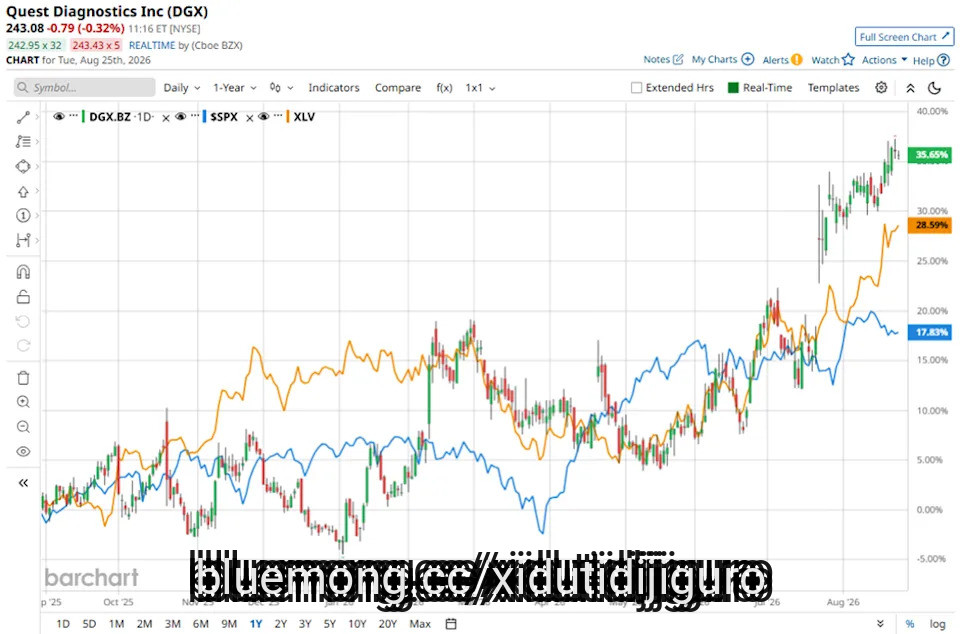
Shares of the Secaucus, New Jersey-based company have outperformed the broader market over the past 52 weeks. DGX stock has returned 36.3% over this time frame, while the broader S&P 500 Index ($SPX) has gained 19.1%. Moreover, the stock has soared 40.4% on a YTD basis, compared to SPX's 12% increase.
IonQ vs. Rigetti: The Better Quantum Computing Stock for Long-Term Investors
QQQ is Still in a Negative Gamma Regime. Here's How a 'Put Wall' and Fibonacci Support Could Come Into Play.
IBM Just Hit a New Quantum Computing Milestone. How to Play IBM Stock Now.
#quantum #computing #market #quest

2 months ago
Abbott Laboratories (NYSE:ABT) has agreed to pay $670 million to settle claims involving about 2,000 people who alleged that its specialized preterm infant formulas contributed to necrotizing enterocolitis (NEC), a serious and potentially fatal bowel disease affecting premature infants. The settlement also resolves Abbott's appeal of a $495 million verdict involving an Illinois mother, after that judgment was upheld by a Missouri appeals court. Abbott did not admit liability and continues to maintain that its products are safe.
The bigger issue for investors is that the settlement does not fully end the litigation. Abbott says claims from as many as 12,700 people remain, although that figure includes duplicate and unsupported claims as well as cases where it is unclear which manufacturer's formula was used. More than 825 federal cases are consolidated in Chicago, with additional cases pending in state courts.
That makes the settlement both a cost and a potential step toward reducing uncertainty around the litigation.
The strongest argument for Abbott Laboratories (NYSE:ABT) is that the $670 million settlement could put a meaningful portion of the legal risk behind the company. Rather than continuing to spend years fighting individual cases and risking additional large jury awards, Abbott has chosen to settle with a sizable group of plaintiffs. The company said the agreement is intended to substantially resolve the broader litigation.
There is also an important distinction between the products involved in the lawsuits and Abbott's broader nutrition business. The litigation concerns specialized formulas and products used for premature infants in hospitals, rather than the ordinary infant formulas sold through stores. That limits the direct exposure of Abbott's wider consumer nutrition portfolio.
#cases #formulas #laboratories

2 months ago
Healthcare investors are often faced with a choice between companies that generate steady growth across diversified businesses and those positioned to benefit from improving industry conditions. Abbott Laboratories (NYSE:ABT) and Thermo Fisher Scientific (NYSE:TMO) represent those two approaches. Abbott (NYSE:ABT) continues to deliver broad-based growth across diagnostics, medical devices, and nutrition, while Thermo Fisher (NYSE:TMO) is showing early signs that the life sciences downturn may finally be easing.
Both companies reported encouraging results, but the question for investors is whether consistent execution or a cyclical recovery offers the stronger long-term opportunity.
Abbott's (NYSE:ABT) strongest growth driver this quarter came from diagnostics, reinforcing the company's ability to generate meaningful growth across multiple business segments. The company's cancer diagnostics business, which was recently integrated through the Exact Sciences buyout, is benefiting from an expanding base that comprises both new and repeat users of the colorectal cancer screening test, Cologuard.
The quarter's earnings report corroborates this, as sales in its diagnostics segment rose 42% to $3.09 billion in fiscal Q2, surpassing the estimate of $3.02 billion, emerging as one of the company's strongest performers during the quarter. The continued strength in diagnostics is particularly important because it adds another major growth engine alongside Abbott's (NYSE:ABT) medical device business, making the company's earnings profile more balanced.
While Abbott's (NYSE:ABT) investment case is built on factors like diversification, Thermo Fisher's (NYSE:TMO) outlook increasingly depends on improving conditions across the life sciences industry. The company's quarter suggests that the recovery in life sciences spending is becoming increasingly broad-based. Management highlighted improving customer activity across pharmaceutical and biotechnology markets, while multiple operating segments returned to healthy growth. That is an important distinction because broader participation across business segments suggests customer spending is becoming healthier rather than merely stabilizing in one niche.
#Growth #thermo


2 months ago
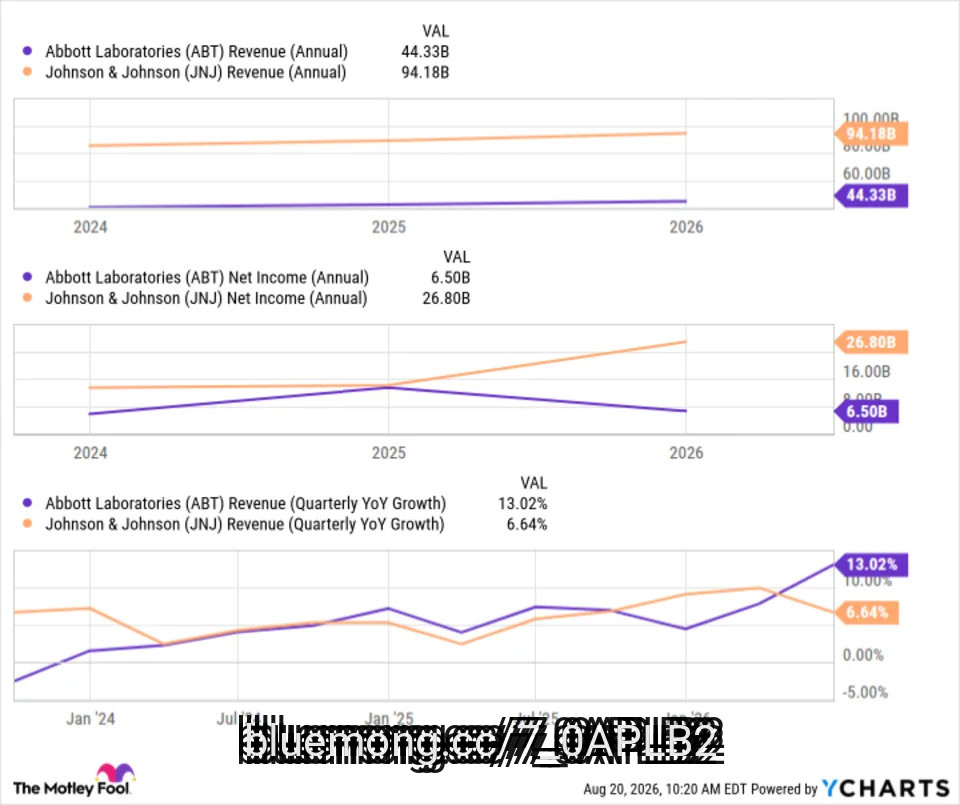
Investors looking for rock-solid dividend stocks can hardly do better than turning to Dividend Kings. This refers to a group of corporations that have raised their payouts for at least 50 consecutive years, an impressive accomplishment. However, not all Dividend Kings are created equal. Take Abbott Laboratories (NYSE: ABT) and Johnson & Johnson (NYSE: JNJ). Both healthcare giants belong to that group, and they have moved in opposite directions this year: Johnson & Johnson has beaten broader equities, while Abbott Laboratories has been a market laggard. Which of them is a better buy today?
Missed Nvidia in 2009? This Rare Signal Is Flashing Again. In 2009, a "Double Down" signal flashed for a little-known chipmaker called Nvidia. For the first time in years, that same "Total Conviction" signal is flashing for a company 1/100th the size of Nvidia. Continue »
Abbott has faced several challenges over the past couple of years. First, revenue and earnings growth haven't been strong, particularly in its diagnostics and nutrition segments. Second, the medical device specialist has faced some legal and regulatory headwinds. For instance, it has dealt with lawsuits claiming that its baby formula caused health issues in premature babies.
These have somewhat tarnished the company's public image. However, the healthcare leader is looking to turn things around. It can still count on its core medical device segment, particularly its diabetes care unit, which remains one of its main growth drivers. Abbott's FreeStyle Libre, a line of continuous glucose monitoring (CGM) systems that help patients with diabetes track their blood sugar levels, continues to perform well.
Also important, the company acquired Exact Sciences earlier this year in a cash transaction valued at $21 billion. This deal brings Cologuard, a leading non-invasive diagnostic test for colorectal cancer, under Abbott's umbrella. It will help the company tap into the large and growing cancer diagnostic market and boost sales within its diagnostic division. So, Abbott could bounce back, and in the meantime, its dividend program remains intact. It has increased its payouts for 54 consecutive years.
#johnson #Dividend

2 months ago
Baron Capital, an investment management company, released its Q2 2026 investor letter for the "Baron Focused Growth Fund". A copy of the letter can be downloaded here. In the second quarter, the Baron Focused Growth Fund achieved a 13.26% gain, still trailing the Russell 2500 Growth Index's 24.02% return. The underperformance was driven by ongoing concerns about AI's impact on portfolio businesses and underexposure to AI infrastructure. The IPO of ****** eX provided a boost, but overall, the Fund's companies are generating robust revenue growth and strengthening margins through enhanced client engagement and product offerings. Many stocks remain historically undervalued, and companies are beginning accelerated share repurchases, bolstering investor confidence. The Fund is perceived as compelling, benefiting from favorable market conditions and strong balance sheets, while inflation and interest rates are expected to remain stable. The Fund has outperformed its Benchmark over the past 3, 5, and 10 years, showing significant excess returns with lower market risk, attributed to a research-driven investment approach. The Fund maintains a commitment to long-term investing in growth-oriented businesses, utilizing a balanced portfolio to mitigate risk and potentially enhance returns. Please review the Fund's top five holdings to gain insights into their key selections for 2026.
In its Q2 2026 investor letter, Baron Focused Growth Fund highlighted IDEXX Laboratories, Inc. (NASDAQ:IDXX). IDEXX Laboratories, Inc. (NASDAQ:IDXX) develops, manufactures, and distributes products for the companion animal veterinary, livestock and poultry, dairy, and water testing industries. On August 19, 2026, IDEXX Laboratories, Inc. (NASDAQ:IDXX) closed at $562.20 per share, reflecting a market capitalization of $44.29 billion. IDEXX Laboratories, Inc. (NASDAQ:IDXX) posted a one‑month return of 4.23%, while its shares lost 11.19% over the past 52 weeks.
Baron Focused Growth Fund stated the following regarding IDEXX Laboratories, Inc. (NASDAQ:IDXX) in its Q2 2026 investor letter:
"In Health Care, we invest in competitively advantaged companies that are leaders in their industries such as IDEXX Laboratories, Inc. (NASDAQ:IDXX), the leading provider of diagnostics to the veterinary industry and who is benefiting from the increase in pets that people acquired during the COVID pandemic, especially as these pets age. The Fund is further diversified by investments in businesses at different stages of growth and development."
#idxx #baron

2 months ago
An outbreak of cyclosporiasis, a parasitic infection known for causing explosive diarrhea that has been linked to recalled iceberg lettuce, has expanded to two additional states since early August, according to the Centers for Disease Control and Prevention (CDC).
An unprecedented wave of infections has hit the United States since May, resulting in thousands of illnesses and two deaths. The CDC, which lags significantly behind states in reporting infections, pinpointed 13,895 laboratory-confirmed cases across 47 states between May 1 and its latest update on Aug. 10. At least 10,455 additional cases have not yet been confirmed by laboratories, the CDC said.
Is lettuce safe to eat now? What to know amid cyclospora outbreak
Ohio and Michigan have led the charge in reporting cyclosporiasis incidents, with Michigan's health department stating on Aug. 13 that it had 13,909 cases, including the first two deaths identified in the nationwide outbreak.
Cyclosporiasis, an illness caused by the parasite Cyclospora cayetanensis, results in unpleasant gastrointestinal symptoms, often ****** ociated with food poisoning, such as diarrhea, nausea and vomiting. It is usually contracted through contaminated food or water, and it is not generally known to be deadly; however, it can cause more serious complications in people with compromised immune systems or other underlying health issues.
#lettuce

2 months ago
Strategy (Nasdaq: MSTR), the world's leading Bitcoin (BTC) treasury company led by billionaire Michael Saylor, faces another MSCI (formerly Morgan Stanley Capital International) delisting threat as the index provider opened a new consultation on the eligibility of non-operating companies for its Global Investable Market Indexes.
As per the consultation's simulation using May 2026 data, Strategy (formerly MicroStrategy), Metaplanet (TYO: 3350), and Yellow Cake (LSE: YCA) could get deleted from the MSCI ACWI IMI.
SharpLink (Nasdaq: SBET), Center Laboratories (TWSE: 4123), and Lydia Holding (IS: LYDHO) would be placed on a watchlist.
Related: Strategy stock slides after $108M sale
While Strategy and Metaplanet are both Bitcoin treasury companies, SharpLink is an Ethereum (ETH) treasury company.
#strategy #msci #sharplink


3 months ago
Dairy group Hochdorf is setting up a venture with infant-formula business Pharmalys Laboratories.
In a statement, the Swiss companies said they want to "accelerate" the growth of their businesses in the infant-formula sector.
Hochdorf Swiss Nutrition develops formula and baby food under brands including Bimbosan and private-label contracts.
Pharmalys, meanwhile, specialises in infant formula and has a stable of brands including Primalac, Nutrimilk and Swisslac.
There was once a shareholding relationship between the two businesses.
#dairy

3 months ago
Thermo Fisher Scientific Inc. (NYSE:TMO) saw its share prices increase by 8.71 percent on Thursday to close at $572.32 apiece, as investors took heart from the strong earnings performance and a series of price target upgrades for its stock.
In the second quarter of the year, the company grew its net income by 7 percent to $1.736 billion from $1.617 billion in the same period last year, while revenues increased by 10 percent to $11.99 billion from $10.85 billion year-on-year, thanks to its strong PPI Business System and growth strategy, among others.
Among its launches during the period include the next-generation Orbitrap platforms with AI-driven ******* ytics, which support researchers to study complex biology across multiomics, structural biology, biopharma characterization and small-molecule ******* ysis on a single system; help scientists to identify hard-to-detect molecules in drug development; and improve workflow flexibility, speed and reproducibility for molecular biology laboratories.
"Our end markets continue to strengthen and we're making great progress enhancing our capabilities, and further advancing our trusted partner status with customers, leading to continued share gain," he said.
Photo by Tima Miroshnichenko on Pexels
#Share #strong #thermo


3 months ago
Henry Schein, Inc. (HSIC), headquartered in Melville, New York, provides health care products and services to dental practitioners, laboratories, physician practices, and ambulatory surgery centers, government, institutional health care clinics, and other alternate care clinics. Valued at $9.8 billion by market cap, the company provides shop supplies, as well as dental and medical solutions and services to improve operational success and clinical outcomes. The world's largest health care solutions provider is expected to announce its fiscal second-quarter earnings for 2026 in the near future.
Ahead of the event, ******* ysts expect HSIC to report a profit of $1.22 per share on a diluted basis, up 10.9% from $1.10 per share in the year-ago quarter. The company beat the consensus estimates in three of the last four quarters while missing the forecast on another occasion.
Elon Musk Dubs Him 'Scam Altman' Not Sam — Then Altman Clapped Back: 'Homeboy You're The One Selling ******* e Datacenters'
Oracle Stock Crashes to a 52-Week Low. Here's Why It Might Be Time to Buy.
Short Seller Hunterbrook Attacked Bloom Energy's Supply-Chain Claims. BE Stock Is Bruised, But Not Broken.



3 months ago
Intuitive Surgical (ISRG) stock tumbled Tuesday, alongside shares of other medtech leaders like Abbott Laboratories (ABT), Stryker (SYK) and Medtronic (MDT), after HCA Healthcare trimmed its full-year earnings outlook, suggesting a drop in surgical procedures.
HCA Healthcare, the largest for-profit hospital operator, said inpatient surgeries declined 2.3% while outpatient procedures fell 3.4% in the second quarter compared with the year-ago period.
As a result, HCA now projects $6.3 billion to $6.7 billion in net income and adjusted earnings before interest, taxes, depreciation and amortization, or EBITDA, of $15.4 billion to $16.1 billion. That's down from the prior outlook for roughly $6.5 billion to $7.04 billion in net income and adjusted EBITDA of $15.55 billion to $16.45 billion.
HCA also narrowed its sales guidance, now projecting $77 billion to $79.5 billion. The midpoint of the new outlook, $78.25 billion, matches the company's prior view.

3 months ago
Abbott Laboratories (NYSE:ABT) is one of the Best Monopoly Stocks to Buy According to Hedge Funds. On June 30, Baird initiated coverage on the company's stock with an "Outperform" rating, setting a price objective of $121.00. The firm sees Abbott Laboratories (NYSE:ABT)'s portfolio as delivering steady top-line and earnings growth over the upcoming several years. As per the firm, the company's medical device segment is expected to see an above-peer growth trajectory.
The company's diagnostics, nutrition, and established pharmaceutical offerings enhance Abbott Laboratories (NYSE:ABT)'s reach throughout the healthcare spectrum. As per the firm, there is a clearer path to upside in FY 2027 and FY 2028, with new products and indication opportunities layering in, and Exact Sciences integration and synergies contributing to the results.
In a different update, Evercore ISI **** yst Vijay **** ar reduced the firm's price objective on Abbott Laboratories (NYSE:ABT)'s stock to $112 from $120 and maintained an "Outperform" rating. The firm's Q2 preview for MedTech, Life Sciences Tools, and Diagnostics demonstrates healthy procedure volumes as well as capex trends throughout the sector.
Abbott Laboratories (NYSE:ABT) is engaged in discovering, developing, manufacturing, and selling health care products.
While we acknowledge the potential of ABT as an investment, we believe certain AI stocks offer greater upside potential and carry less downside risk. If you're looking for an extremely undervalued AI stock that also stands to benefit significantly from Trump-era tariffs and the onshoring trend, see our free report on the best short-term AI stock.


3 months ago
By Kane Wu and Saqib Iqbal Ahmed
HONG KONG/NEW YORK, July 13 (Reuters) - South Korean chipmaker SK Hynix may have had a rousing $26.5 billion U.S. share sale and market debut last week, but that owed much to its pivotal role in the AI supply chain and timing.
Other Asian tech firms are expected to take note and also look to tap foreign investors but they are likely to find appetite for AI-related companies more selective, investors say.
Current levels of investor exuberance over AI are going to be hard to maintain as fears grow about the sustainability of AI-driven stock rallies, while chip stocks also tend to be volatile due to the historical boom-and-bust cyclical nature of the industry.
"SK Hynix is a special case because it is large, liquid, AI-critical, and hard for many U.S. investors to own directly," said Ophir Gottlieb, CEO of Capital Market Laboratories.


4 months ago
Maximizing dividend income isn't all about chasing high yields. A company must have a healthy, growing business to generate the profits needed to pay dividends and raise them over time. A high dividend yield can even be a red flag, a trap that ultimately costs investors more than they bargained for.
Fortunately, there are some fantastic high-yield dividend stocks out there. That's especially true in healthcare. It's an evergreen industry, and an enormous one; in the United States, healthcare spending in 2025 reached $5.7 trillion.
Missed Nvidia in 2009? This Rare Signal Is Flashing Again. In 2009, a "Double Down" signal flashed for a little-known chipmaker called Nvidia. For the first time in years, that same "Total Conviction" signal is flashing for a company 1/100th the size of Nvidia. Continue »
These three healthcare stocks will pay you generously to hold them, and have the stability and growth to own them for the long haul. While AbbVie (NYSE: ABBV) tops this list, you don't want to miss the other two.
The pharmaceutical industry is a major driver of the broader healthcare sector, and AbbVie is one of its top players. The company boasts an impressive portfolio spanning immunology, oncology, neuroscience, eye care, and aesthetics. AbbVie has increased its dividend for at least 50 consecutive years, dating back to its years as part of Abbott Laboratories. This impressive feat makes the stock a Dividend King.


4 months ago
With the S&P 500 looking historically expensive at 31 times earnings, it's a good time to buy a few defensive dividend stocks to hedge against a market crash. These stocks might also swoon during a downturn, but they'll reward patient investors with steady income. If you reinvest those dividends, you'll also accumulate more shares at lower prices.
The healthcare sector is a good place to find stable dividend stocks, as the market leaders usually generate ample cash and are well insulated from macro headwinds. These three pharma giants check those boxes and are arguably no-brainer income plays right now: AbbVie (NYSE: ABBV), Johnson & Johnson (NYSE: JNJ), and Pfizer (NYSE: PFE).
Missed Nvidia in 2009? This Rare Signal Is Flashing Again. In 2009, a "Double Down" signal flashed for a little-known chipmaker called Nvidia. For the first time in years, that same "Total Conviction" signal is flashing for a company 1/100th the size of Nvidia. Continue »
AbbVie struggled after its blockbuster autoimmune disease drug, Humira, lost its U.S. patent exclusivity in 2023. But it offset that pressure with two newer immunology drugs, Skyrizi and Rinvoq, which it expects to generate combined sales of over $31 billion by 2027. It's also spent more than $20 billion on acquisitions over the past three years to diversify its portfolio.
AbbVie has raised its dividend every year since its spin-off from Abbott Laboratories (NYSE: ABT) in 2013. It currently pays a forward yield of 2.7%, and its dividends only consumed 59% of its free cash flow (FCF) over the past 12 months.

4 months ago
We recently compiled a list of the 10 Best Weight Loss Drug Stocks to Buy in 2026. Thermo Fisher Scientific Inc. (NYSE:TMO) is one of the best weight loss drugs on this list.
TheFly reported on June 1 that Wolfe Research ****** yst Mike Polark initiated coverage of TMO with an Outperform rating and set a $535 price target. The firm highlighted TMO's strong position in the life sciences tools and diagnostics industry, describing the company as a key player in the sector. Wolfe Research also noted its positive view of Thermo Fisher's business strategy, particularly its history of expanding through acquisitions.
Moreover, on June 1, Thermo Fisher Scientific Inc. (NYSE:TMO) announced that it introduced new advancements across its Orbitrap mass spectrometry platform, AI-powered software, and integrated laboratory solutions. The company expanded its technology portfolio to support researchers, biopharmaceutical developers, and applied testing laboratories dealing with increasingly complex samples and larger data volumes.
TMO's latest innovations combine high-resolution, accurate-mass capabilities with connected workflows to improve scientific ****** ysis, accelerate drug discovery, and enhance testing accuracy in areas such as food, environmental, and biological research. The company showcased new Orbitrap systems, software enhancements, and ****** ytical tools designed to provide faster insights and more reliable results across multiple scientific applications.
Thermo Fisher Scientific Inc. (NYSE:TMO) is a life sciences company benefiting from the growth of weight-loss drugs by supplying biopharma services, manufacturing support, and key components needed to scale production of GLP-1 therapies. It provides indirect exposure to the obesity market.

4 months ago
Abbott Laboratories (NYSE:ABT) is one of the
7 Best Longevity Stocks to Buy Now.
On June 7, 2026, Abbott Laboratories (NYSE:ABT) announced new data showing that diabetic ketoacidosis, or DKA, “remains an important” but often undetected health concern for people with both Type 1 and Type 2 diabetes. The findings, shared at the American Diabetes ***** ociation’s 86th Scientific Sessions, showed sharp increases in DKA-related hospitalizations across all age groups nationwide. Mahmood Kazemi, chief medical officer for Abbott’s diabetes care business, said the data show that preventing DKA starts with recognizing risk earlier.
Africa Studio/Shutterstock.com
On May 27, 2026, Abbott Laboratories (NYSE:ABT) announced that it secured the CE Mark for its dual glucose-ketone sensing technology for people with diabetes. Branded as Libre Duo and Libre Duo 10 Day, the systems are designed to continuously measure glucose and ketone levels every minute, giving users real-time visibility into glucose levels and rising ketones that can lead to a DKA emergency. Abbott said it plans to begin launching Libre Duo systems in select European countries later this year.


5 months ago
DETROIT (AP) — Two scientists at a U.S. government lab were charged with smuggling vials of deactivated mpox virus into the country from Africa and lying about it during interviews with investigators at a Michigan airport, authorities said Tuesday.
A criminal complaint was unsealed in federal court in Detroit against Vincent Munster, who is chief of the virus ecology section at Rocky Mountain Laboratories in Hamilton, Montana, and Claude Kwe, who works with him.
Munster and Kwe were stopped at Detroit Metropolitan Airport in January after a flight from Paris and nine days in the Republic of Congo. An outbreak of the mpox disease has been linked to more than 2,000 deaths in Congo, a vast region in central Africa, though a two-year outbreak was declared over in April.
Munster “adamantly denied” returning to the U.S. with biological materials or samples, the FBI said in a court filing.
But tests subsequently revealed that Munster and Kwe were traveling with vials of deactivated mpox, the FBI said, yet they had failed to declare them or obtain the necessary permission.


