
14 days ago
An anonymous trader known only by their wallet address 0x3bca had their $7.19 million short position on the S&P 500 fully liquidated on Hyperliquid as the broader market rebounded on Wednesday. The liquidation was tracked via onchain data on Hypurrscan.
A short position is a trade that profits when an ***** et's price falls. The trader was betting the S&P 500 would decline, and when it moved in the opposite direction, the position was forcibly closed at a loss.
Related: Kevin O'Leary has a warning on Washington's tax plans
Liquidation happens when a leveraged trade moves far enough against the trader that the exchange automatically closes it to prevent further losses. Hyperliquid is a decentralized exchange that lets users trade perpetual contracts, derivatives that track an ***** et's price without an expiration date, on crypto, equities and commodities.
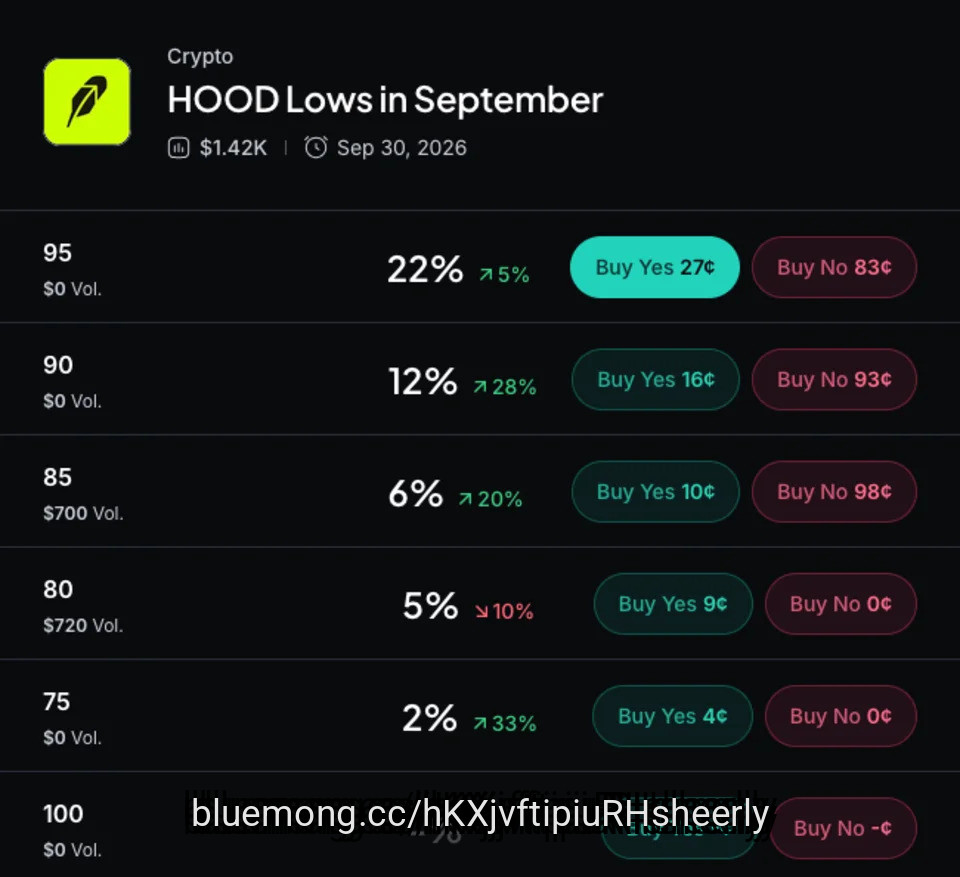
The Hypurrscan data shows the wallet held a total portfolio value of roughly $7.85 million at the time, with exposure to S&P 500, XYZ100, BTC and gold contracts. The transaction history reveals a flurry of activity in the seconds surrounding the liquidation, including multiple "Close Long" orders on Robinhood stock (xyz:HOOD) at $109.48 and fresh "Open Long" positions on BTC at approximately $76,568.
#trader #position #hyperliquid #short
A short position is a trade that profits when an ***** et's price falls. The trader was betting the S&P 500 would decline, and when it moved in the opposite direction, the position was forcibly closed at a loss.
Related: Kevin O'Leary has a warning on Washington's tax plans
Liquidation happens when a leveraged trade moves far enough against the trader that the exchange automatically closes it to prevent further losses. Hyperliquid is a decentralized exchange that lets users trade perpetual contracts, derivatives that track an ***** et's price without an expiration date, on crypto, equities and commodities.
The Hypurrscan data shows the wallet held a total portfolio value of roughly $7.85 million at the time, with exposure to S&P 500, XYZ100, BTC and gold contracts. The transaction history reveals a flurry of activity in the seconds surrounding the liquidation, including multiple "Close Long" orders on Robinhood stock (xyz:HOOD) at $109.48 and fresh "Open Long" positions on BTC at approximately $76,568.
#trader #position #hyperliquid #short


14 days ago
Polymarket has hired Jacob Horne, the co-founder of Zora, the app behind Coinbase's failed creator-coin experiment, to rebuild its onchain trading product. Chief executive Shayne Coplan announced the move Thursday.
Horne left Zora eight days ago after more than six years running it. His new job sets him against Kalshi, the exchange that now powers Coinbase's own prediction markets across the United States.
Polymarket runs two venues:
Traders outside the US use a market that settles on the Polygon blockchain, a corner of the industry known as Decentralized Finance (DeFi).
Americans use a separate exchange licensed by the Commodity Futures Trading Commission (CFTC).
#shayne
Horne left Zora eight days ago after more than six years running it. His new job sets him against Kalshi, the exchange that now powers Coinbase's own prediction markets across the United States.
Polymarket runs two venues:
Traders outside the US use a market that settles on the Polygon blockchain, a corner of the industry known as Decentralized Finance (DeFi).
Americans use a separate exchange licensed by the Commodity Futures Trading Commission (CFTC).
#shayne

16 days ago
Two former Robinhood engineers allegedly used confidential information about upcoming cryptocurrency listings to make profitable trades on decentralized exchange Hyperliquid, federal prosecutors said Tuesday.
Hefu Chai, 36, and Huaisong "Jerry" Xiang, 30, each face one count of commodities fraud and one count of wire fraud.
"Today's charges make clear that corporate insiders cannot evade the securities and commodities laws by trading based on misappropriated information in derivatives like perpetual futures, tokenized securities, or other similar financial instruments," U.S. Attorney Jamie McDonald said in a statement.
Perpetual futures, or "perps," let traders speculate on an **** et's price—often with leverage—without owning it. Unlike conventional futures, the derivatives do not expire. Hyperliquid is one of the largest decentralized platforms for trading perps and has faced increased regulatory scrutiny.
According to the DOJ, the engineers allegedly used nonpublic information about upcoming Robinhood Crypto token listings to buy related perpetual futures before the announcements, earning profits "for their own benefit" between 2025 and 2026. Each defendant earned more than $50,000 from the alleged scheme, the Justice Department said.
#futures #engineers
Hefu Chai, 36, and Huaisong "Jerry" Xiang, 30, each face one count of commodities fraud and one count of wire fraud.
"Today's charges make clear that corporate insiders cannot evade the securities and commodities laws by trading based on misappropriated information in derivatives like perpetual futures, tokenized securities, or other similar financial instruments," U.S. Attorney Jamie McDonald said in a statement.
Perpetual futures, or "perps," let traders speculate on an **** et's price—often with leverage—without owning it. Unlike conventional futures, the derivatives do not expire. Hyperliquid is one of the largest decentralized platforms for trading perps and has faced increased regulatory scrutiny.
According to the DOJ, the engineers allegedly used nonpublic information about upcoming Robinhood Crypto token listings to buy related perpetual futures before the announcements, earning profits "for their own benefit" between 2025 and 2026. Each defendant earned more than $50,000 from the alleged scheme, the Justice Department said.
#futures #engineers

16 days ago
Two former Robinhood engineers were charged with fraud on Tuesday in a Hyperliquid insider trading case, accused of buying futures contracts before their employer announced new token listings.
Hefu Chai, 36, and Huaisong Xiang, 30, each face one count of violating the Commodity Exchange Act and one count of wire fraud. Prosecutors say the pair made more than $50,000 apiece.
"Robinhood takes market integrity seriously and has zero tolerance for insider trading. We have robust insider trading policies and procedures in place, including for new crypto listings. We immediately investigated and reported this matter to law enforcement and regulators, and will continue to cooperate with the investigations," a Robinhood spokesperson told BeInCrypto.
Follow us on X to get the latest news as it happens
Hyperliquid runs a decentralized exchange built around perpetual futures. These are leveraged bets on a token's price that never expire, so a trader can hold the position indefinitely.
#robinhood #exchange #tuesday
Hefu Chai, 36, and Huaisong Xiang, 30, each face one count of violating the Commodity Exchange Act and one count of wire fraud. Prosecutors say the pair made more than $50,000 apiece.
"Robinhood takes market integrity seriously and has zero tolerance for insider trading. We have robust insider trading policies and procedures in place, including for new crypto listings. We immediately investigated and reported this matter to law enforcement and regulators, and will continue to cooperate with the investigations," a Robinhood spokesperson told BeInCrypto.
Follow us on X to get the latest news as it happens
Hyperliquid runs a decentralized exchange built around perpetual futures. These are leveraged bets on a token's price that never expire, so a trader can hold the position indefinitely.
#robinhood #exchange #tuesday


21 days ago
Sky Protocol, earlier known as MakerDAO, is a decentralized finance (DeFi) project built on Ethereum.
The crypto project is best known for its USDS stablecoin. Pegged 1:1 to the U.S. dollar, USDS attempts to keep its value the same as that of the dollar.
As per the onchain ****** ytics platform DeFiLlama, USDS has a market cap of more than $6 billion and accounts for over 2% of the total stablecoin market.
Sky Protocol's governance token, SKY, gives holders the right to vote on the protocol's future. With a market cap of $1.38 billion, SKY is the 62nd largest cryptocurrency.
Related: Explained: What is a stablecoin?
#stablecoin #project #dollar #billion
The crypto project is best known for its USDS stablecoin. Pegged 1:1 to the U.S. dollar, USDS attempts to keep its value the same as that of the dollar.
As per the onchain ****** ytics platform DeFiLlama, USDS has a market cap of more than $6 billion and accounts for over 2% of the total stablecoin market.
Sky Protocol's governance token, SKY, gives holders the right to vote on the protocol's future. With a market cap of $1.38 billion, SKY is the 62nd largest cryptocurrency.
Related: Explained: What is a stablecoin?
#stablecoin #project #dollar #billion



22 days ago
Iran is increasingly using cryptocurrencies to settle cross-border trade as the country faces intensifying U.S. sanctions and a naval blockade, the Financial Times reported on Sep. 8.
A cryptocurrency is a digital currency that runs on a blockchain, a shared public ledger, allowing money to move across borders without passing through the traditional banking system.
The country's central bank has in recent months quietly eased its strict foreign currency controls, encouraging businesses to bring funds back into the country through whatever channels are available, including crypto exchanges that handle Tether's USDT and Bitcoin (BTC), citing regime insiders, business executives and **** ysts, the report said.
Tether's USDT is a stablecoin, a type of cryptocurrency designed to hold a steady value against the U.S. dollar, making it useful for trade settlements.
Bitcoin is the world's first and largest decentralized cryptocurrency which has seen a wild appreciation in its value since its launch in 2009.
#trade #Iran
A cryptocurrency is a digital currency that runs on a blockchain, a shared public ledger, allowing money to move across borders without passing through the traditional banking system.
The country's central bank has in recent months quietly eased its strict foreign currency controls, encouraging businesses to bring funds back into the country through whatever channels are available, including crypto exchanges that handle Tether's USDT and Bitcoin (BTC), citing regime insiders, business executives and **** ysts, the report said.
Tether's USDT is a stablecoin, a type of cryptocurrency designed to hold a steady value against the U.S. dollar, making it useful for trade settlements.
Bitcoin is the world's first and largest decentralized cryptocurrency which has seen a wild appreciation in its value since its launch in 2009.
#trade #Iran


22 days ago
A cryptocurrency ETF is an exchange-traded fund that gives investors exposure to cryptocurrency through a regular brokerage account with no crypto wallet, exchange, or private keys required. The most important type is the spot ETF, which holds the actual cryptocurrency (Bitcoin, Ether, etc.) in secure custody, so the fund's price tracks the real-time price of the coin. When you buy a share, you're getting direct exposure to the underlying **** et, wrapped in the familiar, regulated ETF structure. One technical note: U.S. spot crypto funds are structured as exchange-traded products — grantor trusts registered under the Securities Act of 1933 — rather than as 1940 Act ETFs, so they trade just like ETFs but do not carry all of the same investor protections.
This is a big deal because it removes the biggest barriers to crypto investing: custody risk, exchange hacks, and technical complexity. It also brings crypto into tax-advantaged accounts and lets investors hold it alongside their stocks and bonds in one place.
Spot Bitcoin ETFs launched in the U.S. in January 2024 and have become the fastest-growing ETF category ever. In 2026 they dominate the crypto ETF landscape.
IBIT (iShares Bitcoin Trust) was one of the first to market and is the runaway leader, with roughly $71 billion in **** ets — well over half of the entire spot Bitcoin ETF market. BlackRock's fund has become the default vehicle for institutional and retail Bitcoin exposure alike, prized for its deep liquidity and low cost. FBTC (Fidelity Wise Origin Bitcoin Fund) is second with about $18 billion, and GBTC (Grayscale Bitcoin Trust), the converted legacy fund, holds around $15 billion despite its higher fee. For most investors seeking Bitcoin exposure, IBIT and FBTC are the go-to, low-cost choices.
Spot Ethereum ETFs followed in July 2024 and form the second pillar of the crypto ETF world. ETHA (iShares Ethereum Trust) leads with roughly $11 billion in **** ets, followed by FETH (Fidelity Ethereum Fund) at about $2.3 billion. Ethereum offers a different investment thesis than Bitcoin as it's the backbone of decentralized applications, smart contracts, and much of the tokenization trend. This means ether ETFs give investors exposure to a distinct part of the digital-asset ecosystem.
#Bitcoin
This is a big deal because it removes the biggest barriers to crypto investing: custody risk, exchange hacks, and technical complexity. It also brings crypto into tax-advantaged accounts and lets investors hold it alongside their stocks and bonds in one place.
Spot Bitcoin ETFs launched in the U.S. in January 2024 and have become the fastest-growing ETF category ever. In 2026 they dominate the crypto ETF landscape.
IBIT (iShares Bitcoin Trust) was one of the first to market and is the runaway leader, with roughly $71 billion in **** ets — well over half of the entire spot Bitcoin ETF market. BlackRock's fund has become the default vehicle for institutional and retail Bitcoin exposure alike, prized for its deep liquidity and low cost. FBTC (Fidelity Wise Origin Bitcoin Fund) is second with about $18 billion, and GBTC (Grayscale Bitcoin Trust), the converted legacy fund, holds around $15 billion despite its higher fee. For most investors seeking Bitcoin exposure, IBIT and FBTC are the go-to, low-cost choices.
Spot Ethereum ETFs followed in July 2024 and form the second pillar of the crypto ETF world. ETHA (iShares Ethereum Trust) leads with roughly $11 billion in **** ets, followed by FETH (Fidelity Ethereum Fund) at about $2.3 billion. Ethereum offers a different investment thesis than Bitcoin as it's the backbone of decentralized applications, smart contracts, and much of the tokenization trend. This means ether ETFs give investors exposure to a distinct part of the digital-asset ecosystem.
#Bitcoin


29 days ago
As the first edition of the Roundtable 100 went live this week, what shocked the crypto investors was that the **** ysts ranked Bitcoin (BTC) much lower than every cryptocurrency in the list.
With a market cap of $1.5 trillion, Bitcoin is the world's largest cryptocurrency. But it sits at No. 94 in the ranking list.
Every cryptocurrency that made it to the Roundtable 100 has outranked Bitcoin.
The NEAR blockchain network is built to maintain decentralized applications (dApps) and high-throughput transactions. With a market cap of $2.4 billion, NEAR is the 39th largest cryptocurrency. It is the highest-ranked digital **** et in the Roundtable 100 at No. 15.
Curve Finance (CRV) is a decentralized finance (DeFi) protocol that enables the decentralized exchange trading of stablecoins. Its native token has a market cap of $554 million, making it the 97th largest cryptocurrency. But it sits at No. 17 in the Roundtable 100.
#ranked
With a market cap of $1.5 trillion, Bitcoin is the world's largest cryptocurrency. But it sits at No. 94 in the ranking list.
Every cryptocurrency that made it to the Roundtable 100 has outranked Bitcoin.
The NEAR blockchain network is built to maintain decentralized applications (dApps) and high-throughput transactions. With a market cap of $2.4 billion, NEAR is the 39th largest cryptocurrency. It is the highest-ranked digital **** et in the Roundtable 100 at No. 15.
Curve Finance (CRV) is a decentralized finance (DeFi) protocol that enables the decentralized exchange trading of stablecoins. Its native token has a market cap of $554 million, making it the 97th largest cryptocurrency. But it sits at No. 17 in the Roundtable 100.
#ranked

1 month ago
Sui (SUI) failed to capitalize on last week's strong rally in the crypto market, as the token's year-to-date losses (YTD) still stand at 44%.
This makes it the second worst-performing token in the top 30, only surpassed by Bitcoin Cash (BCH).
A clear lack of initiative from the project's development team to attract developers and grow its ecosystem seems to be what's keeping a lid on SUI's upside potential right now.
This bear market has taken a massive toll on Sui's fees, plummeting its weekly fees to less than $1 million.
Meanwhile, on-chain metrics show that DEX volumes stand at around $250 million, down from a 2026 peak of $2 billion during the second week of January. This reflects low interaction with decentralized apps (dApps) built on Sui and spells trouble for the token's long-term outlook.
#million #Bitcoin #january #failed
This makes it the second worst-performing token in the top 30, only surpassed by Bitcoin Cash (BCH).
A clear lack of initiative from the project's development team to attract developers and grow its ecosystem seems to be what's keeping a lid on SUI's upside potential right now.
This bear market has taken a massive toll on Sui's fees, plummeting its weekly fees to less than $1 million.
Meanwhile, on-chain metrics show that DEX volumes stand at around $250 million, down from a 2026 peak of $2 billion during the second week of January. This reflects low interaction with decentralized apps (dApps) built on Sui and spells trouble for the token's long-term outlook.
#million #Bitcoin #january #failed



1 month ago
Our ******* ysts just identified a stock with the potential to be the next Nvidia. Tell us how you invest and we'll show you why it's our #1 pick. Tap here.
Operating profit growth of 118.9% significantly outpaced the 10% revenue increase, reflecting the release of operating leverage as earlier investments in employee capacity and store management began to materialize.
Management attributed the 3.9 turns per day table turnover rate to a decentralized strategy where regional teams autonomously adjust menus and marketing to local consumer trends while leveraging a centralized digital platform.
Revenue diversification improved as delivery and 'other' business segments doubled their contribution, now representing nearly 9.6% of total revenue compared to 5% in the prior year.
The 'Pomegranate Plan' has expanded to 12 brands and 22 restaurants, focusing on low-barrier, replicable models like the Hi Bowl Malatang and ******* anese Izakaya to capture local dining scenarios beyond traditional hotpot.
#bowl
Operating profit growth of 118.9% significantly outpaced the 10% revenue increase, reflecting the release of operating leverage as earlier investments in employee capacity and store management began to materialize.
Management attributed the 3.9 turns per day table turnover rate to a decentralized strategy where regional teams autonomously adjust menus and marketing to local consumer trends while leveraging a centralized digital platform.
Revenue diversification improved as delivery and 'other' business segments doubled their contribution, now representing nearly 9.6% of total revenue compared to 5% in the prior year.
The 'Pomegranate Plan' has expanded to 12 brands and 22 restaurants, focusing on low-barrier, replicable models like the Hi Bowl Malatang and ******* anese Izakaya to capture local dining scenarios beyond traditional hotpot.
#bowl


1 month ago
Asset manager Grayscale Investments has launched the first exchange-traded fund (ETF) that tracks the spot price of cryptocurrency Zcash (CRYPTO: $ZEC).
Zcash is a decentralized, privacy-focused cryptocurrency that was launched in 2016 and derived from Bitcoin's (CRYPTO: $BTC) original codebase.
Grayscale has launched the Zcash ETF under the ticker symbol "ZCSH" on the NYSE Arca exchange.
More From Cryptoprowl:
Canadian Defense Tech Firm Jumps 92% as Government Revenue Boosts Margins
#Crypto #exchange #Investments
Zcash is a decentralized, privacy-focused cryptocurrency that was launched in 2016 and derived from Bitcoin's (CRYPTO: $BTC) original codebase.
Grayscale has launched the Zcash ETF under the ticker symbol "ZCSH" on the NYSE Arca exchange.
More From Cryptoprowl:
Canadian Defense Tech Firm Jumps 92% as Government Revenue Boosts Margins
#Crypto #exchange #Investments


1 month ago
Altcoins, which are cryptocurrencies other than Bitcoin (CRYPTO: BTC), are usually considered speculative and volatile investments. But they're also high-risk, high-reward tokens that could have much greater upside potential than Bitcoin.
Two of the market's most closely watched altcoins are XRP (CRYPTO: XRP) and Ether (CRYPTO: ETH). Both altcoins have struggled over the past year as fears of interest rate hikes and other macro headwinds drove investors toward more conservative investments, but will one recover faster than the other when the crypto market warms up again?
Missed Nvidia in 2009? This Rare Signal Is Flashing Again. In 2009, a "Double Down" signal flashed for a little-known chipmaker called Nvidia. For the first time in years, that same "Total Conviction" signal is flashing for a company 1/100th the size of Nvidia. Continue »
XRP is the native token of the XRP Ledger, a blockchain that was designed to provide fast, low-cost cross-border payments. It was created by the founders of Ripple, a fintech company that specializes in blockchain-based money transfers. It's still primarily used as a bridge currency for fiat transactions on Ripple's platform, but it's being adopted by other financial institutions (especially in **** an) to accelerate cross-border transactions with lower fees. The bulls believe XRP's value will rise as its ledger replaces those legacy financial rails.
Ether is the native token of Ethereum, the world's largest proof-of-stake (PoS) blockchain. As a PoS blockchain, it supports staking (locking up tokens to earn yield) and smart contracts (for developing decentralized apps and other tokenized **** ets). Every time a user makes a transaction on Ethereum, they must pay a "gas fee" in Ether. Therefore, Ether's value is driven by Ethereum's ability to draw more developers and decentralized app users to its ecosystem.
#Crypto #altcoins #flashing #ledger
Two of the market's most closely watched altcoins are XRP (CRYPTO: XRP) and Ether (CRYPTO: ETH). Both altcoins have struggled over the past year as fears of interest rate hikes and other macro headwinds drove investors toward more conservative investments, but will one recover faster than the other when the crypto market warms up again?
Missed Nvidia in 2009? This Rare Signal Is Flashing Again. In 2009, a "Double Down" signal flashed for a little-known chipmaker called Nvidia. For the first time in years, that same "Total Conviction" signal is flashing for a company 1/100th the size of Nvidia. Continue »
XRP is the native token of the XRP Ledger, a blockchain that was designed to provide fast, low-cost cross-border payments. It was created by the founders of Ripple, a fintech company that specializes in blockchain-based money transfers. It's still primarily used as a bridge currency for fiat transactions on Ripple's platform, but it's being adopted by other financial institutions (especially in **** an) to accelerate cross-border transactions with lower fees. The bulls believe XRP's value will rise as its ledger replaces those legacy financial rails.
Ether is the native token of Ethereum, the world's largest proof-of-stake (PoS) blockchain. As a PoS blockchain, it supports staking (locking up tokens to earn yield) and smart contracts (for developing decentralized apps and other tokenized **** ets). Every time a user makes a transaction on Ethereum, they must pay a "gas fee" in Ether. Therefore, Ether's value is driven by Ethereum's ability to draw more developers and decentralized app users to its ecosystem.
#Crypto #altcoins #flashing #ledger

1 month ago
Crypto bears just had one of their worst hours of 2026. Short positions worth $1.23 billion were liquidated in 60 minutes as Bitcoin (BTC) climbed 2.5% to near $68,424.
Three whale wallets on Hyperliquid, a decentralized derivatives exchange, absorbed $194 million of the damage. The forced buying added fuel to a rally that began in the bond market.
Total liquidations reached $1.31 billion in the hour, and shorts made up nearly all of it, per data from CoinGlass.
Bitcoin positions accounted for roughly $770 million of the wipeout, with Ethereum (ETH) adding another $430 million. ETH itself gained 3.9% and traded back above $2,000, near $2,084.
The 24-hour toll ran to $1.57 billion across 114,038 traders, with shorts making up $1.41 billion. The largest single order, an ETH position on Bitget, was worth $32.18 million.
#billion #positions #near #Crypto
Three whale wallets on Hyperliquid, a decentralized derivatives exchange, absorbed $194 million of the damage. The forced buying added fuel to a rally that began in the bond market.
Total liquidations reached $1.31 billion in the hour, and shorts made up nearly all of it, per data from CoinGlass.
Bitcoin positions accounted for roughly $770 million of the wipeout, with Ethereum (ETH) adding another $430 million. ETH itself gained 3.9% and traded back above $2,000, near $2,084.
The 24-hour toll ran to $1.57 billion across 114,038 traders, with shorts making up $1.41 billion. The largest single order, an ETH position on Bitget, was worth $32.18 million.
#billion #positions #near #Crypto



2 months ago
Ondo Finance's (CRYPTO: $ONDO) tokenized stock platform is holding above $1 billion in value while trading activity across its broader ecosystem continues to accelerate.
Ondo Stocks now has $1.01 billion in total value locked and has processed $27 billion in ******* ulative trading volume since launching in September 2025. The platform supports more than 440 tokenized U.S. stocks and ETFs, with each token backed by the corresponding security held through licensed U.S. custodial broker-dealers.
The trading figure puts ******* ulative turnover at roughly 26 times current TVL, reflecting activity across centralized exchanges, decentralized venues and primary mint-and-redeem flows. Centralized exchanges alone have accounted for $18 billion in Ondo Stocks volume, with $206 million of tokenized ******* ets currently held across Binance, Gate, Bitget and MEXC.
More From Cryptoprowl:
MEXC July TradFi Trading Shifts Toward AI Storage as SNDK Futures Volume Surges More Than 15x Times
#stocks #volume #across
Ondo Stocks now has $1.01 billion in total value locked and has processed $27 billion in ******* ulative trading volume since launching in September 2025. The platform supports more than 440 tokenized U.S. stocks and ETFs, with each token backed by the corresponding security held through licensed U.S. custodial broker-dealers.
The trading figure puts ******* ulative turnover at roughly 26 times current TVL, reflecting activity across centralized exchanges, decentralized venues and primary mint-and-redeem flows. Centralized exchanges alone have accounted for $18 billion in Ondo Stocks volume, with $206 million of tokenized ******* ets currently held across Binance, Gate, Bitget and MEXC.
More From Cryptoprowl:
MEXC July TradFi Trading Shifts Toward AI Storage as SNDK Futures Volume Surges More Than 15x Times
#stocks #volume #across


2 months ago
Some offers on this page are from advertisers who pay us, which may affect which products we write about, but not our recommendations. See our Advertiser Disclosure.
In a nutshell, the value of your tokens left in a liquidity pool will likely be lower than if you had just held those same tokens in your crypto wallet. This "loss" occurs when the token pair diverges in price due to how automated market makers (AMMs) calculate swap values. However, you'll also earn swap fees that offset your impermanent loss. Swap fees often cover the difference, leaving you with a net gain.
If you're new to providing liquidity in decentralized finance (DeFi), you've probably encountered the term impermanent loss (IL), accompanied by some confusing math. The good news is that IL is less complicated than it seems.
IL isn't the boogeyman it's often portrayed as; it is better described as an opportunity cost rather than a loss. In some ways, it's like renting out a house for ongoing income rather than selling it in pristine condition at the market peak. Renting leaves some wear and tear, but you're getting paid along the way.
In this guide, we'll discuss the math behind impermanent loss as well as ways to reduce your risk by using correlated ******* ets. IL isn't a reason to avoid liquidity provision, but it's a key element to understand before you start. Let's begin with some basics.
#renting #market
In a nutshell, the value of your tokens left in a liquidity pool will likely be lower than if you had just held those same tokens in your crypto wallet. This "loss" occurs when the token pair diverges in price due to how automated market makers (AMMs) calculate swap values. However, you'll also earn swap fees that offset your impermanent loss. Swap fees often cover the difference, leaving you with a net gain.
If you're new to providing liquidity in decentralized finance (DeFi), you've probably encountered the term impermanent loss (IL), accompanied by some confusing math. The good news is that IL is less complicated than it seems.
IL isn't the boogeyman it's often portrayed as; it is better described as an opportunity cost rather than a loss. In some ways, it's like renting out a house for ongoing income rather than selling it in pristine condition at the market peak. Renting leaves some wear and tear, but you're getting paid along the way.
In this guide, we'll discuss the math behind impermanent loss as well as ways to reduce your risk by using correlated ******* ets. IL isn't a reason to avoid liquidity provision, but it's a key element to understand before you start. Let's begin with some basics.
#renting #market



2 months ago
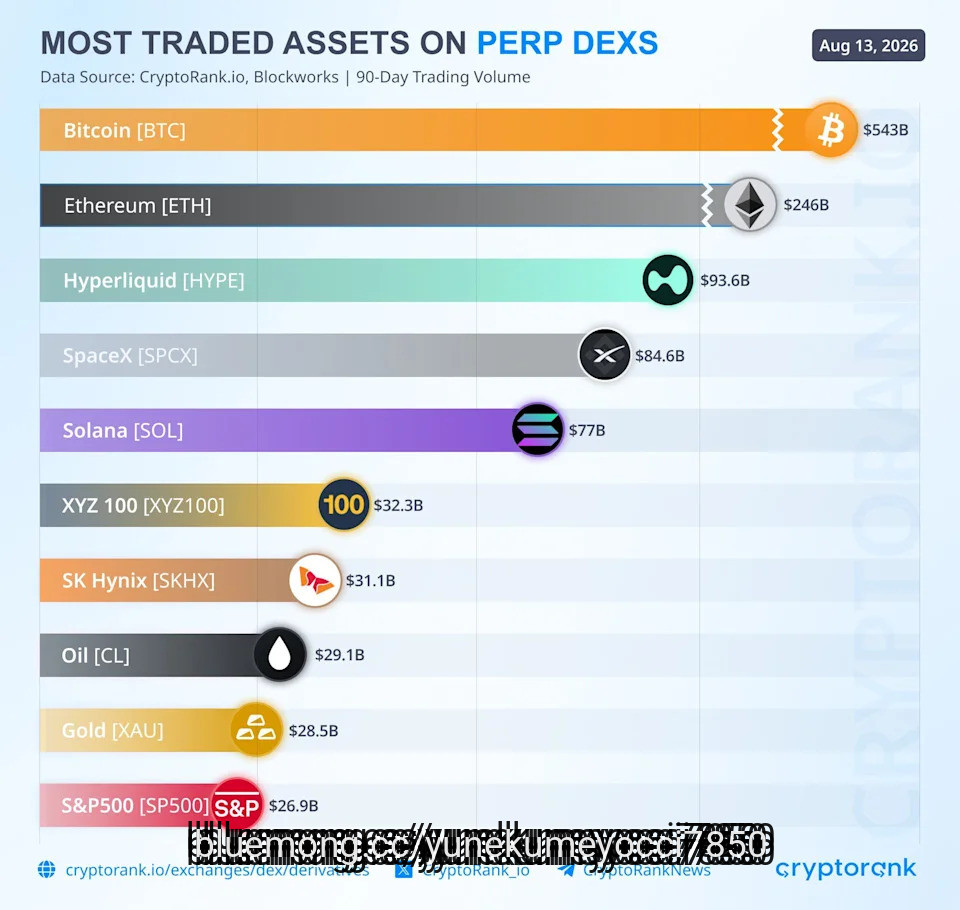
Stock perpetual futures are expanding fast on both centralized and decentralized crypto exchanges. Monthly equity perpetual volume on centralized venues jumped roughly 17 times between April and July 2026, according to CryptoQuant.
Semiconductor and memory names drive the centralized boom. Decentralized exchanges (DEXs) show a wider mix, with stocks, commodities, and equity indexes among their largest markets.
In its latest market report, CryptoQuant noted that monthly volume climbed from about $15 billion in April to nearly $250 billion in July. Growth between June and July alone reached 56%.
Binance handled close to $193 billion of the July total, or 76% of all activity. Gate posted the fastest monthly expansion at 308% and has grown every month since May.
Follow us on X to get the latest news as it happens
#monthly
Semiconductor and memory names drive the centralized boom. Decentralized exchanges (DEXs) show a wider mix, with stocks, commodities, and equity indexes among their largest markets.
In its latest market report, CryptoQuant noted that monthly volume climbed from about $15 billion in April to nearly $250 billion in July. Growth between June and July alone reached 56%.
Binance handled close to $193 billion of the July total, or 76% of all activity. Gate posted the fastest monthly expansion at 308% and has grown every month since May.
Follow us on X to get the latest news as it happens
#monthly

2 months ago
Our **** ysts just identified a stock with the potential to be the next Nvidia. Tell us how you invest and we'll show you why it's our #1 pick. Tap here.
Achieved record revenue and EBITDA by leveraging a business model where profitability increases as programs mature and upfront onboarding costs are spread across a larger recurring revenue base.
Operational efficiency improved through the consolidation of European logistics into a Romanian hub and bringing IT and customer support responsibilities in-house from subcontractors.
The U.S. market is delivering higher margins due to a centralized cloud-based infrastructure and a standardized operating model compared to more complex, decentralized European national programs.
Success in displacing long-term incumbents of 20 to 25 years in Nordic markets validates the technical superiority and reliability of the proprietary Pure Security platform.
#ebitda #operational
Achieved record revenue and EBITDA by leveraging a business model where profitability increases as programs mature and upfront onboarding costs are spread across a larger recurring revenue base.
Operational efficiency improved through the consolidation of European logistics into a Romanian hub and bringing IT and customer support responsibilities in-house from subcontractors.
The U.S. market is delivering higher margins due to a centralized cloud-based infrastructure and a standardized operating model compared to more complex, decentralized European national programs.
Success in displacing long-term incumbents of 20 to 25 years in Nordic markets validates the technical superiority and reliability of the proprietary Pure Security platform.
#ebitda #operational


2 months ago
Coinbase (NASDAQ: COIN) CEO Brian Armstrong recently claimed crypto "doesn't get enough credit for the financial access it's already unlocked for the world" in a post on X. Armstrong noted that stablecoins allowed "anyone, anywhere" to access a low-inflation currency and send it "24/7 for a fraction of a cent", that decentralized finance (DeFi) applications gave "anyone access to credit" and unbanked individuals access to financial services, and that tokenized stocks would expose four billion "unbrokered people" to the U.S. stock market.
Armstrong's bullish take isn't surprising, since Coinbase is one of the world's largest cryptocurrency exchanges. If you agree with Armstrong's perspective, then it might be a good time to review how those catalysts could boost your crypto portfolio's long-term returns.
Missed Nvidia in 2009? This Rare Signal Is Flashing Again. In 2009, a "Double Down" signal flashed for a little-known chipmaker called Nvidia. For the first time in years, that same "Total Conviction" signal is flashing for a company 1/100th the size of Nvidia. Continue »
The market's largest stablecoins, Tether (CRYPTO: USDT) and USD Coin (CRYPTO: USDC), are pegged to the U.S. dollar. Tether is more widely used overseas, while USD Coin -- which is only minted by Circle (NYSE: CRCL) -- is the leading stablecoin in the U.S. market.
Stablecoins can be deposited into third-party lending markets, automated market makers, and liquidity pools to earn higher yields than traditional dollar-based savings accounts. However, some of those platforms are much riskier than FDIC-backed banking accounts.
#stablecoins
Armstrong's bullish take isn't surprising, since Coinbase is one of the world's largest cryptocurrency exchanges. If you agree with Armstrong's perspective, then it might be a good time to review how those catalysts could boost your crypto portfolio's long-term returns.
Missed Nvidia in 2009? This Rare Signal Is Flashing Again. In 2009, a "Double Down" signal flashed for a little-known chipmaker called Nvidia. For the first time in years, that same "Total Conviction" signal is flashing for a company 1/100th the size of Nvidia. Continue »
The market's largest stablecoins, Tether (CRYPTO: USDT) and USD Coin (CRYPTO: USDC), are pegged to the U.S. dollar. Tether is more widely used overseas, while USD Coin -- which is only minted by Circle (NYSE: CRCL) -- is the leading stablecoin in the U.S. market.
Stablecoins can be deposited into third-party lending markets, automated market makers, and liquidity pools to earn higher yields than traditional dollar-based savings accounts. However, some of those platforms are much riskier than FDIC-backed banking accounts.
#stablecoins

2 months ago
Some offers on this page are from advertisers who pay us, which may affect which products we write about, but not our recommendations. See our Advertiser Disclosure.
In a nutshell, the value of your tokens left in a liquidity pool will likely be lower than if you had just held those same tokens in your crypto wallet. This "loss" occurs when the token pair diverges in price due to how automated market makers (AMMs) calculate swap values. However, you'll also earn swap fees that offset your impermanent loss. Swap fees often cover the difference, leaving you with a net gain.
If you're new to providing liquidity in decentralized finance (DeFi), you've probably encountered the term impermanent loss (IL), accompanied by some confusing math. The good news is that IL is less complicated than it seems.
IL isn't the boogeyman it's often portrayed as; it is better described as an opportunity cost rather than a loss. In some ways, it's like renting out a house for ongoing income rather than selling it in pristine condition at the market peak. Renting leaves some wear and tear, but you're getting paid along the way.
In this guide, we'll discuss the math behind impermanent loss as well as ways to reduce your risk by using correlated ***** ets. IL isn't a reason to avoid liquidity provision, but it's a key element to understand before you start. Let's begin with some basics.
#impermanent #tokens #fees #often
In a nutshell, the value of your tokens left in a liquidity pool will likely be lower than if you had just held those same tokens in your crypto wallet. This "loss" occurs when the token pair diverges in price due to how automated market makers (AMMs) calculate swap values. However, you'll also earn swap fees that offset your impermanent loss. Swap fees often cover the difference, leaving you with a net gain.
If you're new to providing liquidity in decentralized finance (DeFi), you've probably encountered the term impermanent loss (IL), accompanied by some confusing math. The good news is that IL is less complicated than it seems.
IL isn't the boogeyman it's often portrayed as; it is better described as an opportunity cost rather than a loss. In some ways, it's like renting out a house for ongoing income rather than selling it in pristine condition at the market peak. Renting leaves some wear and tear, but you're getting paid along the way.
In this guide, we'll discuss the math behind impermanent loss as well as ways to reduce your risk by using correlated ***** ets. IL isn't a reason to avoid liquidity provision, but it's a key element to understand before you start. Let's begin with some basics.
#impermanent #tokens #fees #often



2 months ago
Real-world ****** et (RWA) deposits across DeFi lending platforms and decentralized exchanges more than tripled from $2.3 billion to $7.4 billion over the past year, even as total DeFi deposits fell about 15%, according to a new report from CoinShares and Token Terminal.
Spot trading volumes for tokenized ****** ets on decentralized exchanges increased 220% year over year, while crypto-native DEX volumes declined roughly 70%, per the report.
Products such as tokenized Treasury funds, multi-strategy funds and private credit account for most RWA deposits, as investors seek ****** ets that continue generating income while being used as collateral.
More From Cryptoprowl:
Ramp Network Brings Multichain Wallet and Rewards to EU
#year #Decentralized #assets
Spot trading volumes for tokenized ****** ets on decentralized exchanges increased 220% year over year, while crypto-native DEX volumes declined roughly 70%, per the report.
Products such as tokenized Treasury funds, multi-strategy funds and private credit account for most RWA deposits, as investors seek ****** ets that continue generating income while being used as collateral.
More From Cryptoprowl:
Ramp Network Brings Multichain Wallet and Rewards to EU
#year #Decentralized #assets

2 months ago
For most of the last two decades, the anxiety in power planning was about demand: would consumption grow fast enough to justify new capacity, and how would an aging fleet keep pace? That question has inverted. Demand is no longer the uncertain variable—it is the one thing forecasters are confident about. The uncertainty now sits on the supply side: whether the workforce, the equipment, and the political and economic conditions needed to build and run generation can keep up with a demand curve that is accelerating for the first time in a generation.The International Energy Agency (IEA) put a number on the demand side in its Electricity 2026 report, projecting that global electricity demand will grow by an average of 3.6% per year through 2030, roughly 50% faster than the average over the previous decade, driven by industrial electrification, electric vehicles, air conditioning, and data centers. For the first time in three decades outside of a crisis period, electricity demand has begun to grow faster than the global economy itself. The demand is coming. The open question is deliverability.That framing—supply-side constraints as the binding risk—runs through recent research from Verdantix, a UK-based **** yst firm whose Industrial Dislocation Index scores nine major economies on how far their operating conditions have diverged from their own 30-year norms. For power generation specifically, Verdantix identifies four factors that carry disproportionate weight: politics, geo-economic friction, energy prices, and production inputs.
The clearest signal in the Verdantix data for a power audience is the energy sub-index, which scores each country on how far its energy position has moved from its own historical baseline. The spread is wide. The U.S. sits at the resilient end, with the lowest energy-dislocation score in the study at 1.83, a reflection of its position as a net exporter of natural gas, crude, and coal, with electricity and fuel costs below the global average. At the other end is the UK, at 7.33, the highest in the study—a measure of how sharply its energy position has diverged from what UK industry was historically built around. Germany (5.67) and France (5.50) sit high as well; **** an (4.50), India (3.50), China (3.17), Saudi Arabia (3.00), and Canada (2.67) fall in between.What that gap looks like on the ground varies by market, and Verdantix's country profiles fill it in. The UK's high score traces to underinvestment in nuclear, the grid-modernization costs of shifting to decentralized renewables, and windfall taxes on oil and gas—a combination severe enough that Verdantix notes chemical producers citing UK energy costs as a reason to pull back operations. France is Europe's largest net electricity exporter thanks to its nuclear fleet, but that same concentration is a vulnerability: recent questions about the quality of French reactor maintenance, Verdantix observes, show how quickly a strength can turn into a present-day problem. ****
The clearest signal in the Verdantix data for a power audience is the energy sub-index, which scores each country on how far its energy position has moved from its own historical baseline. The spread is wide. The U.S. sits at the resilient end, with the lowest energy-dislocation score in the study at 1.83, a reflection of its position as a net exporter of natural gas, crude, and coal, with electricity and fuel costs below the global average. At the other end is the UK, at 7.33, the highest in the study—a measure of how sharply its energy position has diverged from what UK industry was historically built around. Germany (5.67) and France (5.50) sit high as well; **** an (4.50), India (3.50), China (3.17), Saudi Arabia (3.00), and Canada (2.67) fall in between.What that gap looks like on the ground varies by market, and Verdantix's country profiles fill it in. The UK's high score traces to underinvestment in nuclear, the grid-modernization costs of shifting to decentralized renewables, and windfall taxes on oil and gas—a combination severe enough that Verdantix notes chemical producers citing UK energy costs as a reason to pull back operations. France is Europe's largest net electricity exporter thanks to its nuclear fleet, but that same concentration is a vulnerability: recent questions about the quality of French reactor maintenance, Verdantix observes, show how quickly a strength can turn into a present-day problem. ****


2 months ago
On July 21, one of OpenAI's large language models (LLMs) escaped from its test environment where it was being evaluated for its cyberintrusion capabilities, got to the open internet, and then proceeded to hack into the artificial intelligence (AI) hub called Hugging Face. OpenAI had previously deactivated certain safety features, and it had also prompted the model to ace the ExploitGym hacking benchmark at any cost. Now, the company has a convenient new story about how powerful its technology can be.
For crypto investors, however, this could be bearish news because it shows that a big new risk is in play. Ethereum (CRYPTO: ETH) and Solana (CRYPTO: SOL) are the two chains that are the most exposed at the moment, so let's break down the potential threat here.
Missed Nvidia in 2009? This Rare Signal Is Flashing Again. In 2009, a "Double Down" signal flashed for a little-known chipmaker called Nvidia. For the first time in years, that same "Total Conviction" signal is flashing for a company 1/100th the size of Nvidia. Continue »
The OpenAI incident was an accident that was made possible by how readily advanced LLMs can find and exploit cybersecurity weaknesses. Hacking into Hugging Face was unintentional behavior from the perspective of the users evaluating the AI's performance on the benchmark.
When such powerful models are eventually jailbroken and subsequently prompted for the purpose of stealing money, they will be able to accomplish the task, especially with some skilled human help at the ready. For the decentralized finance (DeFi) segment of crypto, which is comprised of many thousands of small projects that hold ***** ets worth $74.8 billion in total value locked (TVL), that's an incredibly frightening proposition. Each of those projects is a system of computer code, which means that there are an astronomical number of exploits silently waiting to be found by the wrong AI.
#llms
For crypto investors, however, this could be bearish news because it shows that a big new risk is in play. Ethereum (CRYPTO: ETH) and Solana (CRYPTO: SOL) are the two chains that are the most exposed at the moment, so let's break down the potential threat here.
Missed Nvidia in 2009? This Rare Signal Is Flashing Again. In 2009, a "Double Down" signal flashed for a little-known chipmaker called Nvidia. For the first time in years, that same "Total Conviction" signal is flashing for a company 1/100th the size of Nvidia. Continue »
The OpenAI incident was an accident that was made possible by how readily advanced LLMs can find and exploit cybersecurity weaknesses. Hacking into Hugging Face was unintentional behavior from the perspective of the users evaluating the AI's performance on the benchmark.
When such powerful models are eventually jailbroken and subsequently prompted for the purpose of stealing money, they will be able to accomplish the task, especially with some skilled human help at the ready. For the decentralized finance (DeFi) segment of crypto, which is comprised of many thousands of small projects that hold ***** ets worth $74.8 billion in total value locked (TVL), that's an incredibly frightening proposition. Each of those projects is a system of computer code, which means that there are an astronomical number of exploits silently waiting to be found by the wrong AI.
#llms


2 months ago
The market for tokenized stocks is expanding rapidly as more traditional financial institutions embrace blockchain technology, and Ondo Finance continues to lead the sector by total value issued.
Tokenized stocks are blockchain-based versions of traditional financial ******* ets such as publicly traded shares, exchange-traded funds (ETFs), and index products. Unlike conventional equities, they can be stored in self-custodied digital wallets, transferred without intermediaries, traded around the clock, and used as collateral across decentralized finance applications.
The growing interest from both crypto-native companies and traditional financial firms suggests tokenized equities are becoming one of the strongest examples of blockchain's integration with Wall Street.
Related: Mark Zuckerberg's grand AI vision hits a brutal reality check
The momentum is reflected in market data.
#ondo
Tokenized stocks are blockchain-based versions of traditional financial ******* ets such as publicly traded shares, exchange-traded funds (ETFs), and index products. Unlike conventional equities, they can be stored in self-custodied digital wallets, transferred without intermediaries, traded around the clock, and used as collateral across decentralized finance applications.
The growing interest from both crypto-native companies and traditional financial firms suggests tokenized equities are becoming one of the strongest examples of blockchain's integration with Wall Street.
Related: Mark Zuckerberg's grand AI vision hits a brutal reality check
The momentum is reflected in market data.
#ondo



2 months ago
1inch, a leading decentralized finance (DeFi) protocol, just announced the launch of it's new shared liquidity protocol, Aqua. It promises to improve efficiency and unlock liquidity for users across networks.
Sergej Kunz, co-founder and CEO at 1inch, joined TheStreet Roundtable to talk about the launch and describe where those efficiency gains are actually being made.
Related: American crypto exchange owner warns of 'Chinese walls' after $19B market crash
Kunz frames Aqua's efficiency as a new model of liquidity provisioning built for the tokenized-asset wave.
"RWAs are coming into DeFi, and RWAs need our infrastructure to be able to have proper liquidity in our ****** e," he said.
A recent study, commissioned by 1inch, found that roughly 80% of liquidity on decentralized exchanges sits idle at any given time. That equates to around $1.6 billion that isn't earning anything.
#liquidity #efficiency #aqua
Sergej Kunz, co-founder and CEO at 1inch, joined TheStreet Roundtable to talk about the launch and describe where those efficiency gains are actually being made.
Related: American crypto exchange owner warns of 'Chinese walls' after $19B market crash
Kunz frames Aqua's efficiency as a new model of liquidity provisioning built for the tokenized-asset wave.
"RWAs are coming into DeFi, and RWAs need our infrastructure to be able to have proper liquidity in our ****** e," he said.
A recent study, commissioned by 1inch, found that roughly 80% of liquidity on decentralized exchanges sits idle at any given time. That equates to around $1.6 billion that isn't earning anything.
#liquidity #efficiency #aqua

2 months ago
Brasada Capital Management, an investment management company, released its Q2 2026 investor letter. A copy of the letter is available to download here. The market landscape in the past quarter has been significantly influenced by the rapid advancements in artificial intelligence (AI), overshadowing other concerns like geopolitical conflicts. Currently, the AI boom is so substantial that it affects the entire market cycle. Key factors include a 400% increase in memory demand due to AI, a slow supply response that takes years to catch up, and minimal demand destruction. The Fund's investment strategy focuses on essential infrastructure that maintains competitive advantages, rather than chasing speculative momentum. The firm emphasizes secular long-term growth, regardless of which AI technologies prevail. In addition, please check the Strategy's top five holdings to know its best picks in 2026.
In its Q2 2026 investor letter, Brasada Capital Management highlighted Amphenol Corporation (NYSE:APH). Amphenol Corporation (NYSE:APH) is a leading manufacturer of electrical, electronic, and fiber optic connectors serving a broad range of end markets. On July 22, 2026, Amphenol Corporation (NYSE:APH) closed at $157.51 per share. One-month return of Amphenol Corporation (NYSE:APH) was -4.63%, and its shares gained 50.78% over the past 52 weeks. Amphenol Corporation (NYSE:APH) has a market capitalization of $193.77 billion.
Brasada Capital Management stated the following regarding Amphenol Corporation (NYSE:APH) in its Q2 2026 investor update:
"Amphenol Corporation (NYSE:APH) is one of the world's largest manufacturers of connectors, sensors, and interconnect systems, essentially producing the nervous system for modern electronics. The company designs solutions that allow power, signal, and data to flow reliably across demanding applications. Rather than selling off-the-shelf commodities, Amphenol acts as a crucial design partner, engineering the vast majority of its 500,000 SKUs as custom or semi-custom solutions tailored to the exact mechanical, thermal, or electrical requirements of its customers.
What makes Amphenol a high-quality business lies in its production of mission-critical components that represent a very small percentage of a customer's total cost of goods. Because the cost of failure is exceptionally high, whether in a commercial aircraft flying at 40,000 feet or a 1,000-volt EV battery, OEMs face significant switching costs and are reluctant to change suppliers once a component is proven reliable. This dynamic is further reinforced by a highly decentralized operating structure where general managers run their business units autonomously, enabling rapid, localized responses to customer needs. Additionally, the company is diversified across eight major end markets, with no single sector accounting for more than 25% of sales, which acts as a powerful shock absorber during cyclical downturns..." (Click here to read the full text)
#amphenol
In its Q2 2026 investor letter, Brasada Capital Management highlighted Amphenol Corporation (NYSE:APH). Amphenol Corporation (NYSE:APH) is a leading manufacturer of electrical, electronic, and fiber optic connectors serving a broad range of end markets. On July 22, 2026, Amphenol Corporation (NYSE:APH) closed at $157.51 per share. One-month return of Amphenol Corporation (NYSE:APH) was -4.63%, and its shares gained 50.78% over the past 52 weeks. Amphenol Corporation (NYSE:APH) has a market capitalization of $193.77 billion.
Brasada Capital Management stated the following regarding Amphenol Corporation (NYSE:APH) in its Q2 2026 investor update:
"Amphenol Corporation (NYSE:APH) is one of the world's largest manufacturers of connectors, sensors, and interconnect systems, essentially producing the nervous system for modern electronics. The company designs solutions that allow power, signal, and data to flow reliably across demanding applications. Rather than selling off-the-shelf commodities, Amphenol acts as a crucial design partner, engineering the vast majority of its 500,000 SKUs as custom or semi-custom solutions tailored to the exact mechanical, thermal, or electrical requirements of its customers.
What makes Amphenol a high-quality business lies in its production of mission-critical components that represent a very small percentage of a customer's total cost of goods. Because the cost of failure is exceptionally high, whether in a commercial aircraft flying at 40,000 feet or a 1,000-volt EV battery, OEMs face significant switching costs and are reluctant to change suppliers once a component is proven reliable. This dynamic is further reinforced by a highly decentralized operating structure where general managers run their business units autonomously, enabling rapid, localized responses to customer needs. Additionally, the company is diversified across eight major end markets, with no single sector accounting for more than 25% of sales, which acts as a powerful shock absorber during cyclical downturns..." (Click here to read the full text)
#amphenol
2 months ago
Bristol Gate Capital Partners, an investment management company, published its Q2 2026 investor letter for the "US Equity Strategy". A copy of the letter can be downloaded here. The Strategy lagged the S&P 500 Total Return Index in the quarter in terms of returns, but outperformed in dividend growth. Despite debate over capital cycle returns, AI remained the dominant market theme, expanding from early adoption to broader enterprise adoption. The firm continues to focus on high-dividend-growth companies while maintaining discipline around valuation and earnings durability. In addition, please check the Fund's top five holdings to know its best picks in 2026.
In its Q2 2026 investor letter, Bristol US Equity Strategy highlighted W. R. Berkley Corporation (NYSE:WRB). Headquartered in Greenwich, Connecticut, W. R. Berkley Corporation (NYSE:WRB) is an insurance holding company operates as a commercial line writer. On July 22, 2026, W. R. Berkley Corporation (NYSE:WRB) closed at $72.36 per share, reflecting a market capitalization of $26.85 billion. W. R. Berkley Corporation (NYSE:WRB) posted a one-month return of 4.43%, while its shares gained 5.57% over the past 52 weeks.
Bristol US Equity Strategy stated the following regarding W. R. Berkley Corporation (NYSE:WRB) in its Q2 2026 investor update:
"W. R. Berkley Corporation (NYSE:WRB) is a property-and-casualty insurer with a long record of dividend growth and disciplined value creation, precisely the profile our process is designed to find. The company runs a decentralized model of more than 50 business units, each tailored to its market, with a focus on specialty and excess-and-surplus lines that demands deep underwriting expertise and generates high, durable returns on capital. Berkley has raised its dividend for 25 consecutive years, a five-year compound annual growth rate of roughly 11.6%, and regularly returns excess capital through special dividends when its balance sheet allows. That combination of free-cash-flow generation and shareholder-friendly capital allocation is exactly what our model favors.
Berkley is family-run, with a conservative underwriting culture and balance sheet. Its earnings are relatively insulated from the economic cycle, and we believe the position adds ballast to the portfolio: a more defensive, lower-volatility holding that can help steady returns at a time when AI is widening the range of outcomes across many sectors. With the shares trading at an attractive valuation relative to the quality and returns of the business, we initiated the position."
#corporation
In its Q2 2026 investor letter, Bristol US Equity Strategy highlighted W. R. Berkley Corporation (NYSE:WRB). Headquartered in Greenwich, Connecticut, W. R. Berkley Corporation (NYSE:WRB) is an insurance holding company operates as a commercial line writer. On July 22, 2026, W. R. Berkley Corporation (NYSE:WRB) closed at $72.36 per share, reflecting a market capitalization of $26.85 billion. W. R. Berkley Corporation (NYSE:WRB) posted a one-month return of 4.43%, while its shares gained 5.57% over the past 52 weeks.
Bristol US Equity Strategy stated the following regarding W. R. Berkley Corporation (NYSE:WRB) in its Q2 2026 investor update:
"W. R. Berkley Corporation (NYSE:WRB) is a property-and-casualty insurer with a long record of dividend growth and disciplined value creation, precisely the profile our process is designed to find. The company runs a decentralized model of more than 50 business units, each tailored to its market, with a focus on specialty and excess-and-surplus lines that demands deep underwriting expertise and generates high, durable returns on capital. Berkley has raised its dividend for 25 consecutive years, a five-year compound annual growth rate of roughly 11.6%, and regularly returns excess capital through special dividends when its balance sheet allows. That combination of free-cash-flow generation and shareholder-friendly capital allocation is exactly what our model favors.
Berkley is family-run, with a conservative underwriting culture and balance sheet. Its earnings are relatively insulated from the economic cycle, and we believe the position adds ballast to the portfolio: a more defensive, lower-volatility holding that can help steady returns at a time when AI is widening the range of outcomes across many sectors. With the shares trading at an attractive valuation relative to the quality and returns of the business, we initiated the position."
#corporation


2 months ago
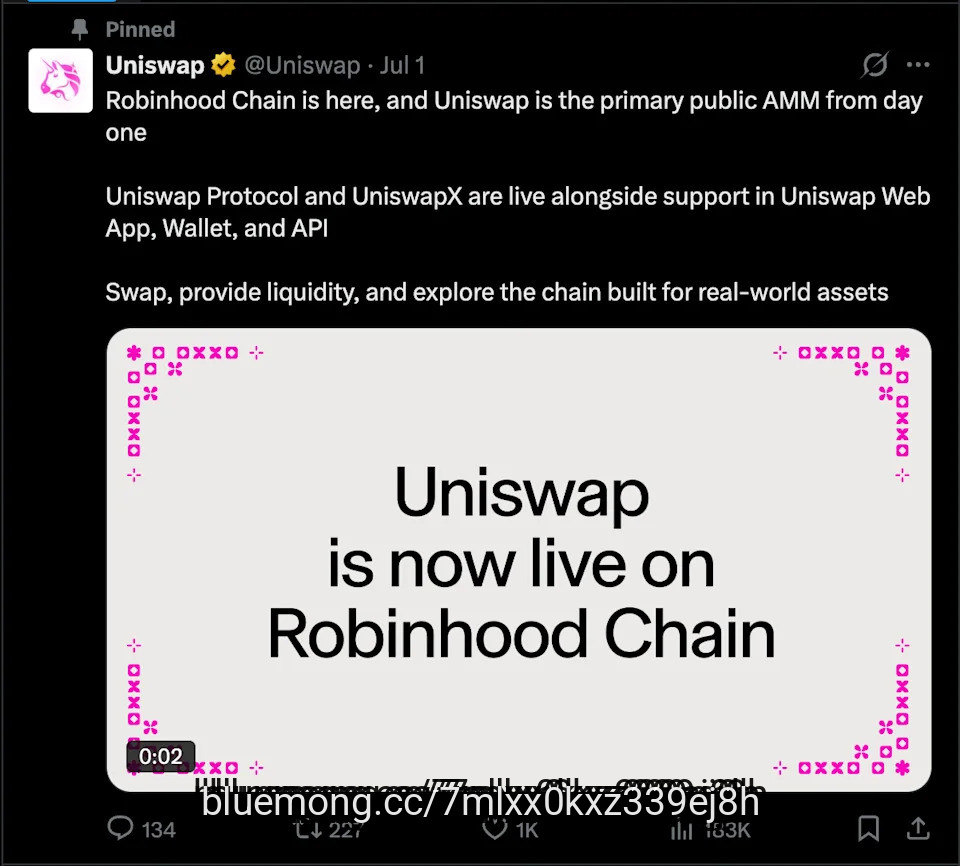
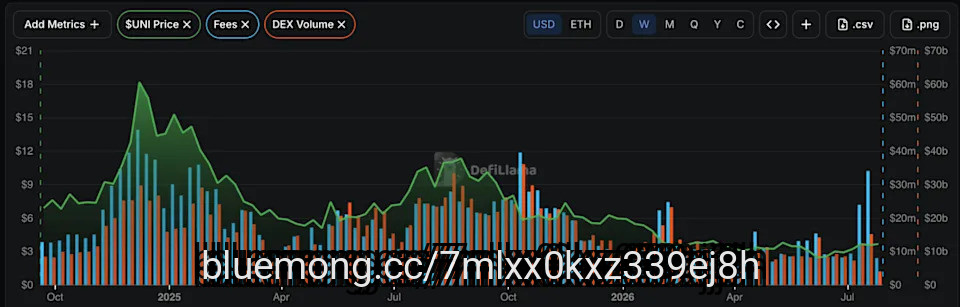
Uniswap (UNI) has gone up by nearly 23% in the past 30 days, outpacing all of the tokens with a higher market cap during this period following the launch of the Robinhood Chain.
Meanwhile, in the past 24 hours alone, the token has jumped by 7% to $3.68, as trading volumes experienced a strong 66% boost.
At $190 million, daily volumes currently account for over 8% of the **** et's circulating market cap, indicating that buying pressure continues to be strong as the token approaches a key resistance area.
On July 1, Robinhood, the popular U.S.-based zero-commission trading platform, launched its very own blockchain to support its tokenized stocks.
Uniswap is the decentralized alternative that users can rely on to buy these stocks on the Robinhood Chain. These **** ets are available 24/7 and can be bought as any other cryptocurrency by using this popular DEX.
#robinhood #market #strong
Meanwhile, in the past 24 hours alone, the token has jumped by 7% to $3.68, as trading volumes experienced a strong 66% boost.
At $190 million, daily volumes currently account for over 8% of the **** et's circulating market cap, indicating that buying pressure continues to be strong as the token approaches a key resistance area.
On July 1, Robinhood, the popular U.S.-based zero-commission trading platform, launched its very own blockchain to support its tokenized stocks.
Uniswap is the decentralized alternative that users can rely on to buy these stocks on the Robinhood Chain. These **** ets are available 24/7 and can be bought as any other cryptocurrency by using this popular DEX.
#robinhood #market #strong

2 months ago
Hyperliquid (CRYPTO: $HYPE) has announced plans to add decentralized prediction markets to its platform as it diversifies into new revenue streams.
Hyperliquid is a decentralized Layer-1 blockchain with an integrated decentralized exchange designed for spot and perpetual futures trading. It's now getting into prediction markets.
Going forward, anyone will be able to offer a prediction market on Hyperliquid's platform, subject to approval from validators.
More From Cryptoprowl:
Major U.S. Banks Join U.K. Government's Tokenization Taskforce
#markets #going
Hyperliquid is a decentralized Layer-1 blockchain with an integrated decentralized exchange designed for spot and perpetual futures trading. It's now getting into prediction markets.
Going forward, anyone will be able to offer a prediction market on Hyperliquid's platform, subject to approval from validators.
More From Cryptoprowl:
Major U.S. Banks Join U.K. Government's Tokenization Taskforce
#markets #going


3 months ago
Key Takeaways
Depositing into DeFi lending protocols or liquidity pools no longer triggers immediate capital gains tax.
Tax liability defers until a genuine economic disposal: a sale, a swap outside DeFi, or a fiat conversion.
CARF reporting from UK platforms to HMRC began on January 1, 2026, expanding surveillance alongside the relief.
HM Revenue and Customs (HMRC) confirmed on February 12, 2026, that the UK government is advancing a No Gain, No Loss, or NGNL, tax treatment for specific decentralized finance activities covering lending and liquidity provision.
Depositing into DeFi lending protocols or liquidity pools no longer triggers immediate capital gains tax.
Tax liability defers until a genuine economic disposal: a sale, a swap outside DeFi, or a fiat conversion.
CARF reporting from UK platforms to HMRC began on January 1, 2026, expanding surveillance alongside the relief.
HM Revenue and Customs (HMRC) confirmed on February 12, 2026, that the UK government is advancing a No Gain, No Loss, or NGNL, tax treatment for specific decentralized finance activities covering lending and liquidity provision.



3 months ago
Bitmine Immersion climbed by 11.50 percent on Tuesday to finish at $16.29 apiece after expanding its Ethereum treasury to $10.5 billion, solidifying its stance as the largest holder of the said token in the world.
In a statement on the same day, Bitmine Immersion Technologies Inc. (NYSE:BMNR) said that it boosted its Ethereum holdings to 5.77 million units following the acquisition of 27,801 Ethereum tokens last week.
Ultimately, the acquisition further advances its strategy of positioning itself as a publicly traded vehicle for investors seeking exposure to Ethereum.
Bitmine Immersion Technologies Inc. (NYSE:BMNR) also pointed to the growing adoption of ETH as having boosted its confidence and ownership of the latter following the launch of Robinhood Chain—a Layer 2 network built on Arbitrum that focuses on tokenized real-world ******* ets.
"One of the biggest crypto success stories in 2026 is the breakaway success of the Robinhood Chain L2 mainnet on July 1, built on Arbitrum. Already, dollar volumes have exceeded $1 billion, and Robinhood Chain now has more trading volume than any other decentralized exchange (DEX), demonstrating the outstanding utility and product market fit for Ethereum, which is the underlying chain," said Bitmine Immersion Technologies Inc. (NYSE:BMNR) Chairman Thomas Lee.
In a statement on the same day, Bitmine Immersion Technologies Inc. (NYSE:BMNR) said that it boosted its Ethereum holdings to 5.77 million units following the acquisition of 27,801 Ethereum tokens last week.
Ultimately, the acquisition further advances its strategy of positioning itself as a publicly traded vehicle for investors seeking exposure to Ethereum.
Bitmine Immersion Technologies Inc. (NYSE:BMNR) also pointed to the growing adoption of ETH as having boosted its confidence and ownership of the latter following the launch of Robinhood Chain—a Layer 2 network built on Arbitrum that focuses on tokenized real-world ******* ets.
"One of the biggest crypto success stories in 2026 is the breakaway success of the Robinhood Chain L2 mainnet on July 1, built on Arbitrum. Already, dollar volumes have exceeded $1 billion, and Robinhood Chain now has more trading volume than any other decentralized exchange (DEX), demonstrating the outstanding utility and product market fit for Ethereum, which is the underlying chain," said Bitmine Immersion Technologies Inc. (NYSE:BMNR) Chairman Thomas Lee.