13 mins. ago
The SEC just formally proposed Regulation Crypto ******* ets, a new offering framework that would let crypto projects raise up to $5M through a one-time startup exemption or up to $75M annually through a tiered fundraising exemption.
The exemptions: The startup lane allows $5M over four years with no accredited-investor requirement or per-investor cap. The fundraising lane allows $75M every 12 months, split into a $20M Tier 1 and $75M Tier 2, with Tier 2 issuers needing audited financials and ongoing reporting, and non-accredited buyers capped at 10% of income or net worth. Tokens sold under either lane wouldn't carry a rule-based resale lockup.
The safe harbor: Once a team finishes, or permanently drops, the managerial work it promised, its token can shed "investment contract" status for good—a formalized version of the concept the SEC's March interpretive guidance first floated. The rule would also preempt state-level securities registration for these offerings and certain secondary trades.
What's missing: The SEC's separate "innovation exemption," expected to let firms tokenize actual securities like stocks and trade them onchain, wasn't part of Tuesday's release. The agency explicitly said it isn't touching registered-offering rules for "digital securities" this round, so tokenized equities on public blockchains remain unaddressed.
Why the delay: CoinDesk reported the tokenization piece had been expected to land alongside the fundraising rule before the SEC abruptly pulled an Aug. 14 meeting. The holdup has been tied to White House concerns about muddying live CLARITY Act talks, internal questions over the SEC's own statutory authority, and Wall Street's SIFMA objecting to using exemptive relief for market-structure changes.
#lane #rule #Crypto
The exemptions: The startup lane allows $5M over four years with no accredited-investor requirement or per-investor cap. The fundraising lane allows $75M every 12 months, split into a $20M Tier 1 and $75M Tier 2, with Tier 2 issuers needing audited financials and ongoing reporting, and non-accredited buyers capped at 10% of income or net worth. Tokens sold under either lane wouldn't carry a rule-based resale lockup.
The safe harbor: Once a team finishes, or permanently drops, the managerial work it promised, its token can shed "investment contract" status for good—a formalized version of the concept the SEC's March interpretive guidance first floated. The rule would also preempt state-level securities registration for these offerings and certain secondary trades.
What's missing: The SEC's separate "innovation exemption," expected to let firms tokenize actual securities like stocks and trade them onchain, wasn't part of Tuesday's release. The agency explicitly said it isn't touching registered-offering rules for "digital securities" this round, so tokenized equities on public blockchains remain unaddressed.
Why the delay: CoinDesk reported the tokenization piece had been expected to land alongside the fundraising rule before the SEC abruptly pulled an Aug. 14 meeting. The holdup has been tied to White House concerns about muddying live CLARITY Act talks, internal questions over the SEC's own statutory authority, and Wall Street's SIFMA objecting to using exemptive relief for market-structure changes.
#lane #rule #Crypto


1 hr. ago
ZeroStack Corp. (NASDAQ: $ZSTK) has struck a $1 billion crypto contribution deal that would add nearly 926 million MemeCore (CRYPTO: $M) tokens to its balance sheet while giving MemeCore-linked investors a large equity position in the Nasdaq-listed company.
Under the definitive agreement, Puple AI Inc. and Blockcat Pte. Ltd. will contribute 925,925,926 $M tokens, valued at $1.08 each, in exchange for 3.5 million ZeroStack common shares and pre-funded warrants covering up to 36,198,293 additional shares.
The warrants are priced at $25.19 per share, more than 12 times ZeroStack's recent market trading price. Shares tied to the warrants cannot be issued until shareholders approve the transaction under Nasdaq Listing Rule 5635 and will be subject to a lock-up lasting up to 10 years after closing.
More From Cryptoprowl:
MEXC July TradFi Trading Shifts Toward AI Storage as SNDK Futures Volume Surges More Than 15x Times
#NASDAQ #tokens
Under the definitive agreement, Puple AI Inc. and Blockcat Pte. Ltd. will contribute 925,925,926 $M tokens, valued at $1.08 each, in exchange for 3.5 million ZeroStack common shares and pre-funded warrants covering up to 36,198,293 additional shares.
The warrants are priced at $25.19 per share, more than 12 times ZeroStack's recent market trading price. Shares tied to the warrants cannot be issued until shareholders approve the transaction under Nasdaq Listing Rule 5635 and will be subject to a lock-up lasting up to 10 years after closing.
More From Cryptoprowl:
MEXC July TradFi Trading Shifts Toward AI Storage as SNDK Futures Volume Surges More Than 15x Times
#NASDAQ #tokens


6 hours ago
ZeroStack Corp. (NASDAQ: $ZSTK) has struck a $1 billion crypto contribution deal that would add nearly 926 million MemeCore (CRYPTO: $M) tokens to its balance sheet while giving MemeCore-linked investors a large equity position in the Nasdaq-listed company.
Under the definitive agreement, Puple AI Inc. and Blockcat Pte. Ltd. will contribute 925,925,926 $M tokens, valued at $1.08 each, in exchange for 3.5 million ZeroStack common shares and pre-funded warrants covering up to 36,198,293 additional shares.
The warrants are priced at $25.19 per share, more than 12 times ZeroStack's recent market trading price. Shares tied to the warrants cannot be issued until shareholders approve the transaction under Nasdaq Listing Rule 5635 and will be subject to a lock-up lasting up to 10 years after closing.
More From Cryptoprowl:
MEXC July TradFi Trading Shifts Toward AI Storage as SNDK Futures Volume Surges More Than 15x Times
#NASDAQ #memecore #times
Under the definitive agreement, Puple AI Inc. and Blockcat Pte. Ltd. will contribute 925,925,926 $M tokens, valued at $1.08 each, in exchange for 3.5 million ZeroStack common shares and pre-funded warrants covering up to 36,198,293 additional shares.
The warrants are priced at $25.19 per share, more than 12 times ZeroStack's recent market trading price. Shares tied to the warrants cannot be issued until shareholders approve the transaction under Nasdaq Listing Rule 5635 and will be subject to a lock-up lasting up to 10 years after closing.
More From Cryptoprowl:
MEXC July TradFi Trading Shifts Toward AI Storage as SNDK Futures Volume Surges More Than 15x Times
#NASDAQ #memecore #times


6 hours ago
Altcoins, which are cryptocurrencies other than Bitcoin (CRYPTO: BTC), are usually considered speculative and volatile investments. But they're also high-risk, high-reward tokens that could have much greater upside potential than Bitcoin.
Two of the market's most closely watched altcoins are XRP (CRYPTO: XRP) and Ether (CRYPTO: ETH). Both altcoins have struggled over the past year as fears of interest rate hikes and other macro headwinds drove investors toward more conservative investments, but will one recover faster than the other when the crypto market warms up again?
Missed Nvidia in 2009? This Rare Signal Is Flashing Again. In 2009, a "Double Down" signal flashed for a little-known chipmaker called Nvidia. For the first time in years, that same "Total Conviction" signal is flashing for a company 1/100th the size of Nvidia. Continue »
XRP is the native token of the XRP Ledger, a blockchain that was designed to provide fast, low-cost cross-border payments. It was created by the founders of Ripple, a fintech company that specializes in blockchain-based money transfers. It's still primarily used as a bridge currency for fiat transactions on Ripple's platform, but it's being adopted by other financial institutions (especially in **** an) to accelerate cross-border transactions with lower fees. The bulls believe XRP's value will rise as its ledger replaces those legacy financial rails.
Ether is the native token of Ethereum, the world's largest proof-of-stake (PoS) blockchain. As a PoS blockchain, it supports staking (locking up tokens to earn yield) and smart contracts (for developing decentralized apps and other tokenized **** ets). Every time a user makes a transaction on Ethereum, they must pay a "gas fee" in Ether. Therefore, Ether's value is driven by Ethereum's ability to draw more developers and decentralized app users to its ecosystem.
#Crypto #altcoins #flashing #ledger
Two of the market's most closely watched altcoins are XRP (CRYPTO: XRP) and Ether (CRYPTO: ETH). Both altcoins have struggled over the past year as fears of interest rate hikes and other macro headwinds drove investors toward more conservative investments, but will one recover faster than the other when the crypto market warms up again?
Missed Nvidia in 2009? This Rare Signal Is Flashing Again. In 2009, a "Double Down" signal flashed for a little-known chipmaker called Nvidia. For the first time in years, that same "Total Conviction" signal is flashing for a company 1/100th the size of Nvidia. Continue »
XRP is the native token of the XRP Ledger, a blockchain that was designed to provide fast, low-cost cross-border payments. It was created by the founders of Ripple, a fintech company that specializes in blockchain-based money transfers. It's still primarily used as a bridge currency for fiat transactions on Ripple's platform, but it's being adopted by other financial institutions (especially in **** an) to accelerate cross-border transactions with lower fees. The bulls believe XRP's value will rise as its ledger replaces those legacy financial rails.
Ether is the native token of Ethereum, the world's largest proof-of-stake (PoS) blockchain. As a PoS blockchain, it supports staking (locking up tokens to earn yield) and smart contracts (for developing decentralized apps and other tokenized **** ets). Every time a user makes a transaction on Ethereum, they must pay a "gas fee" in Ether. Therefore, Ether's value is driven by Ethereum's ability to draw more developers and decentralized app users to its ecosystem.
#Crypto #altcoins #flashing #ledger

23 hours ago
WASHINGTON, Aug 18 (Reuters) - The U.S. Securities and Exchange Commission on Tuesday proposed a new regulatory framework for crypto ***** ets, the first major step under U.S. President Donald Trump's administration to give the industry the tailored rules it has long pushed for.
The SEC's proposal would exempt certain crypto companies and offerings from U.S. securities rules, which should make it easier for crypto companies to issue tokens and raise money.
The agency "seeks to provide crypto ***** et entrepreneurs and market participants with clear pathways to raise capital under the federal securities laws," Paul Atkins, the SEC's Trump-appointed chair, said in a statement.
Trump, who courted crypto cash on the campaign trail and whose family has profited from its own crypto endeavors, has prioritized reform for the sector in his second administration.
Under his Republican leaders, the SEC ended a crackdown on the crypto industry, moving swiftly last year to rescind stringent crypto accounting guidance and dismiss lawsuits against Coinbase, Binance and others that the agency had alleged were flouting its rules.
#Trump #washington
The SEC's proposal would exempt certain crypto companies and offerings from U.S. securities rules, which should make it easier for crypto companies to issue tokens and raise money.
The agency "seeks to provide crypto ***** et entrepreneurs and market participants with clear pathways to raise capital under the federal securities laws," Paul Atkins, the SEC's Trump-appointed chair, said in a statement.
Trump, who courted crypto cash on the campaign trail and whose family has profited from its own crypto endeavors, has prioritized reform for the sector in his second administration.
Under his Republican leaders, the SEC ended a crackdown on the crypto industry, moving swiftly last year to rescind stringent crypto accounting guidance and dismiss lawsuits against Coinbase, Binance and others that the agency had alleged were flouting its rules.
#Trump #washington


24 hours ago
CBRS slides 13% and AMD falls 5% in a classic buy-the-rumor unwind ahead of tonight's Supernova livestream at 6:30 PM ET.
Uniform selling in MU and COHR signals wholesale de-risking, not company-specific news, as the 30-year Treasury yield hits a 19-year high of 5.25%.
Act now: the **** yst who called NVIDIA in 2010 just named his top 10 AI stocks — and AMD didn't make the cut. Grab the names FREE today.
Shares of AI hardware names are broadly lower at midday Tuesday, hours ahead of Cerebras' flagship SUPERNOVA product event, which begins at 3:30 PM Pacific Time (6:30 PM ET). Cerebras Systems (NASDAQ:CBRS) is down 13% to $220, while Intel (NASDAQ:INTC) has slid 7% and AMD (NASDAQ:AMD) is off 5%.
The selloff is a classic buy-the-rumor, sell-the-news setup layered on top of a broader macro rotation. Cerebras surged into Tuesday's event on a Wedbush endorsement and OpenAI's confirmation that its GPT-5.6 Sol Ultrafast mode, capable of up to 750 output tokens per second, will run exclusively on Cerebras' Wafer-Scale Engine. Morgan Stanley also reaffirmed Overweight and raised its price target Monday, projecting core revenue to more than triple by 2027.
#NASDAQ #classic #ahead
Uniform selling in MU and COHR signals wholesale de-risking, not company-specific news, as the 30-year Treasury yield hits a 19-year high of 5.25%.
Act now: the **** yst who called NVIDIA in 2010 just named his top 10 AI stocks — and AMD didn't make the cut. Grab the names FREE today.
Shares of AI hardware names are broadly lower at midday Tuesday, hours ahead of Cerebras' flagship SUPERNOVA product event, which begins at 3:30 PM Pacific Time (6:30 PM ET). Cerebras Systems (NASDAQ:CBRS) is down 13% to $220, while Intel (NASDAQ:INTC) has slid 7% and AMD (NASDAQ:AMD) is off 5%.
The selloff is a classic buy-the-rumor, sell-the-news setup layered on top of a broader macro rotation. Cerebras surged into Tuesday's event on a Wedbush endorsement and OpenAI's confirmation that its GPT-5.6 Sol Ultrafast mode, capable of up to 750 output tokens per second, will run exclusively on Cerebras' Wafer-Scale Engine. Morgan Stanley also reaffirmed Overweight and raised its price target Monday, projecting core revenue to more than triple by 2027.
#NASDAQ #classic #ahead


1 day ago
Most of the world's top cryptocurrencies, including Bitcoin (CRYPTO: BTC) and Ethereum (CRYPTO: ETH), have struggled over the past year as inflation, fears of interest rate hikes, and other macro challenges drove investors toward more conservative investments. Bitcoin, which set a record high of over $126,000 last October, now trades at around $64,000. Ethereum, which reached an all-time high of nearly $5,000 last August, has dropped below $1,900.
That "crypto winter" will likely persist until those headwinds dissipate. However, there's one sector of the crypto market that continues to grow as conventional tokens fizzle out. According to CoinShares, deposits of real-world ******* ets (RWAs) on blockchains more than tripled year over year to $7.4 billion in the second quarter of 2026. Let's see why that niche market is expanding, and how investors can profit from its future growth.
Missed Nvidia in 2009? This Rare Signal Is Flashing Again. In 2009, a "Double Down" signal flashed for a little-known chipmaker called Nvidia. For the first time in years, that same "Total Conviction" signal is flashing for a company 1/100th the size of Nvidia. Continue »
Tokenized RWAs are physical or traditional financial ******* ets -- including stocks, bonds, commodities, real estate, and even fine art -- that are digitized into tokens on a blockchain. That tokenization makes those ******* ets easier to transfer and cuts out the middlemen.
Tokenized stocks and bonds can be traded 24/7 at faster speeds and lower fees than traditional brokerages and banks. Tokenized commodities, such as gold and silver, can be traded easily, with instant liquidity and no physical storage issues. Tokenized real estate and art can be sold much faster, with ownership easily split into fractional shares among multiple buyers. Stablecoins, which are pegged to stable fiat currencies like the U.S. dollar or the euro, can be traded faster and more cheaply while earning higher yields than their conventional counterparts.
#tokenized #year
That "crypto winter" will likely persist until those headwinds dissipate. However, there's one sector of the crypto market that continues to grow as conventional tokens fizzle out. According to CoinShares, deposits of real-world ******* ets (RWAs) on blockchains more than tripled year over year to $7.4 billion in the second quarter of 2026. Let's see why that niche market is expanding, and how investors can profit from its future growth.
Missed Nvidia in 2009? This Rare Signal Is Flashing Again. In 2009, a "Double Down" signal flashed for a little-known chipmaker called Nvidia. For the first time in years, that same "Total Conviction" signal is flashing for a company 1/100th the size of Nvidia. Continue »
Tokenized RWAs are physical or traditional financial ******* ets -- including stocks, bonds, commodities, real estate, and even fine art -- that are digitized into tokens on a blockchain. That tokenization makes those ******* ets easier to transfer and cuts out the middlemen.
Tokenized stocks and bonds can be traded 24/7 at faster speeds and lower fees than traditional brokerages and banks. Tokenized commodities, such as gold and silver, can be traded easily, with instant liquidity and no physical storage issues. Tokenized real estate and art can be sold much faster, with ownership easily split into fractional shares among multiple buyers. Stablecoins, which are pegged to stable fiat currencies like the U.S. dollar or the euro, can be traded faster and more cheaply while earning higher yields than their conventional counterparts.
#tokenized #year


3 days ago
Caitlin Clark launches heartfelt hospital program for pediatric patients originally appeared on The Sporting News. Add The Sporting News as a Preferred Source by clicking here.
Caitlin Clark has built her basketball career by creating opportunities for teammates. Her newest **** ist will deliver books, activities and moments of happiness to children facing much more difficult circumstances than anything encountered on a basketball court.
The Caitlin Clark Foundation announced the launch of "Turning Pages, Healing Hearts," a new program designed to support pediatric patients and their families at children's hospitals in Indiana and Iowa. Created in partnership with Scholastic, the initiative provides participating hospitals with book vending machines and tokens that allow young patients to select books based on their own interests. The program also includes arts and crafts activities and a welcome "joy finder."
"We are honored to be bringing our new program, Turning Pages, Healing Hearts, to local hospitals!" the foundation announced on Instagram.
Clark shared the post on her Instagram Story and added an emotional response.
#clark #program #patients #healing
Caitlin Clark has built her basketball career by creating opportunities for teammates. Her newest **** ist will deliver books, activities and moments of happiness to children facing much more difficult circumstances than anything encountered on a basketball court.
The Caitlin Clark Foundation announced the launch of "Turning Pages, Healing Hearts," a new program designed to support pediatric patients and their families at children's hospitals in Indiana and Iowa. Created in partnership with Scholastic, the initiative provides participating hospitals with book vending machines and tokens that allow young patients to select books based on their own interests. The program also includes arts and crafts activities and a welcome "joy finder."
"We are honored to be bringing our new program, Turning Pages, Healing Hearts, to local hospitals!" the foundation announced on Instagram.
Clark shared the post on her Instagram Story and added an emotional response.
#clark #program #patients #healing




4 days ago
On August 13, Alphabet's (NASDAQ:GOOGL) Google unveiled Gemini 3.7 Flash, a new AI model built for coding and automated business tasks. The launch came without word on when the company's flagship Gemini 3.5 Pro model will arrive, a gap investors have watched closely as a gauge of whether Google's DeepMind unit can keep pace with Anthropic and OpenAI. It also landed the same week that Alphabet closed a $25 billion bond sale and posted its first-ever negative free cash flow quarter.
Gemini 3.7 Flash arrived just three weeks after Gemini 3.6 Flash, a pace that signals Google is iterating quickly on the models it hopes will power autonomous AI agents. The new model targets businesses building systems that can plan tasks, use software tools, and complete multi-step workflows with less human oversight, and Google says it shows improved performance on coding tasks including debugging, issue resolution, and production-ready code generation. To win over developers, Google priced Gemini 3.7 Flash at 75 cents per million input tokens and $3.75 per million output tokens through the end of the year, half the original cost of Gemini 3.6 Flash. It is also rolling out immediately to Gemini Spark, Google's subscription AI agent service available in more than 160 countries.
That pricing sits alongside a cloud business converting AI investment into revenue. Google Cloud's backlog has climbed to $514 billion, and Alphabet expects to recognize a little more than half of it as revenue over the next 24 months. Alphabet also holds more than $240 billion in cash and marketable securities, giving it room to keep funding its buildout as free cash flow comes under pressure.
Alphabet's capital expenditures are now guided to $195 billion to $205 billion for 2026, up from $91 billion in 2025 and $53 billion in 2024. Second-quarter capex alone was $45 billion, double the year-earlier figure, pushing Alphabet to a quarterly free cash flow loss of $5.9 billion. Buybacks have gone to zero, and Alphabet raised roughly $56 billion in debt plus about $50 billion from stock sales in the first half to help cover the gap.
That borrowing culminated in a $25 billion, ten-tranche bond sale that closed Monday, ranging from notes due in 2028 to a $2.5 billion tranche not due until 2066. Much of that money funds servers and networking gear that Alphabet itself depreciates over about six years, meaning a large share of this year's spending will need to be repaid all over again long before the longest bonds come due.
#flow
Gemini 3.7 Flash arrived just three weeks after Gemini 3.6 Flash, a pace that signals Google is iterating quickly on the models it hopes will power autonomous AI agents. The new model targets businesses building systems that can plan tasks, use software tools, and complete multi-step workflows with less human oversight, and Google says it shows improved performance on coding tasks including debugging, issue resolution, and production-ready code generation. To win over developers, Google priced Gemini 3.7 Flash at 75 cents per million input tokens and $3.75 per million output tokens through the end of the year, half the original cost of Gemini 3.6 Flash. It is also rolling out immediately to Gemini Spark, Google's subscription AI agent service available in more than 160 countries.
That pricing sits alongside a cloud business converting AI investment into revenue. Google Cloud's backlog has climbed to $514 billion, and Alphabet expects to recognize a little more than half of it as revenue over the next 24 months. Alphabet also holds more than $240 billion in cash and marketable securities, giving it room to keep funding its buildout as free cash flow comes under pressure.
Alphabet's capital expenditures are now guided to $195 billion to $205 billion for 2026, up from $91 billion in 2025 and $53 billion in 2024. Second-quarter capex alone was $45 billion, double the year-earlier figure, pushing Alphabet to a quarterly free cash flow loss of $5.9 billion. Buybacks have gone to zero, and Alphabet raised roughly $56 billion in debt plus about $50 billion from stock sales in the first half to help cover the gap.
That borrowing culminated in a $25 billion, ten-tranche bond sale that closed Monday, ranging from notes due in 2028 to a $2.5 billion tranche not due until 2066. Much of that money funds servers and networking gear that Alphabet itself depreciates over about six years, meaning a large share of this year's spending will need to be repaid all over again long before the longest bonds come due.
#flow


5 days ago
Some offers on this page are from advertisers who pay us, which may affect which products we write about, but not our recommendations. See our Advertiser Disclosure.
In a nutshell, the value of your tokens left in a liquidity pool will likely be lower than if you had just held those same tokens in your crypto wallet. This "loss" occurs when the token pair diverges in price due to how automated market makers (AMMs) calculate swap values. However, you'll also earn swap fees that offset your impermanent loss. Swap fees often cover the difference, leaving you with a net gain.
If you're new to providing liquidity in decentralized finance (DeFi), you've probably encountered the term impermanent loss (IL), accompanied by some confusing math. The good news is that IL is less complicated than it seems.
IL isn't the boogeyman it's often portrayed as; it is better described as an opportunity cost rather than a loss. In some ways, it's like renting out a house for ongoing income rather than selling it in pristine condition at the market peak. Renting leaves some wear and tear, but you're getting paid along the way.
In this guide, we'll discuss the math behind impermanent loss as well as ways to reduce your risk by using correlated ******* ets. IL isn't a reason to avoid liquidity provision, but it's a key element to understand before you start. Let's begin with some basics.
#renting #market
In a nutshell, the value of your tokens left in a liquidity pool will likely be lower than if you had just held those same tokens in your crypto wallet. This "loss" occurs when the token pair diverges in price due to how automated market makers (AMMs) calculate swap values. However, you'll also earn swap fees that offset your impermanent loss. Swap fees often cover the difference, leaving you with a net gain.
If you're new to providing liquidity in decentralized finance (DeFi), you've probably encountered the term impermanent loss (IL), accompanied by some confusing math. The good news is that IL is less complicated than it seems.
IL isn't the boogeyman it's often portrayed as; it is better described as an opportunity cost rather than a loss. In some ways, it's like renting out a house for ongoing income rather than selling it in pristine condition at the market peak. Renting leaves some wear and tear, but you're getting paid along the way.
In this guide, we'll discuss the math behind impermanent loss as well as ways to reduce your risk by using correlated ******* ets. IL isn't a reason to avoid liquidity provision, but it's a key element to understand before you start. Let's begin with some basics.
#renting #market




7 days ago
Some offers on this page are from advertisers who pay us, which may affect which products we write about, but not our recommendations. See our Advertiser Disclosure.
In a nutshell, the value of your tokens left in a liquidity pool will likely be lower than if you had just held those same tokens in your crypto wallet. This "loss" occurs when the token pair diverges in price due to how automated market makers (AMMs) calculate swap values. However, you'll also earn swap fees that offset your impermanent loss. Swap fees often cover the difference, leaving you with a net gain.
If you're new to providing liquidity in decentralized finance (DeFi), you've probably encountered the term impermanent loss (IL), accompanied by some confusing math. The good news is that IL is less complicated than it seems.
IL isn't the boogeyman it's often portrayed as; it is better described as an opportunity cost rather than a loss. In some ways, it's like renting out a house for ongoing income rather than selling it in pristine condition at the market peak. Renting leaves some wear and tear, but you're getting paid along the way.
In this guide, we'll discuss the math behind impermanent loss as well as ways to reduce your risk by using correlated ***** ets. IL isn't a reason to avoid liquidity provision, but it's a key element to understand before you start. Let's begin with some basics.
#impermanent #tokens #fees #often
In a nutshell, the value of your tokens left in a liquidity pool will likely be lower than if you had just held those same tokens in your crypto wallet. This "loss" occurs when the token pair diverges in price due to how automated market makers (AMMs) calculate swap values. However, you'll also earn swap fees that offset your impermanent loss. Swap fees often cover the difference, leaving you with a net gain.
If you're new to providing liquidity in decentralized finance (DeFi), you've probably encountered the term impermanent loss (IL), accompanied by some confusing math. The good news is that IL is less complicated than it seems.
IL isn't the boogeyman it's often portrayed as; it is better described as an opportunity cost rather than a loss. In some ways, it's like renting out a house for ongoing income rather than selling it in pristine condition at the market peak. Renting leaves some wear and tear, but you're getting paid along the way.
In this guide, we'll discuss the math behind impermanent loss as well as ways to reduce your risk by using correlated ***** ets. IL isn't a reason to avoid liquidity provision, but it's a key element to understand before you start. Let's begin with some basics.
#impermanent #tokens #fees #often




10 days ago
Three crypto companies, Bitdeer (BTDR), Forward Industries (FWDI), and Bit Digital (BTBT), report quarterly earnings this week, each coming off a quarter deep in the red.
The three prints span exposure to major tokens, including Bitcoin (BTC), Solana (SOL), and Ethereum (ETH). All three **** ets fell last quarter, likely driving heavy paper losses. Now the earnings will show how deep the damage ran.
Bitdeer opens the week on Monday. It will report its second-quarter 2026 results before the US market opens on Monday, August 10, at around 7:00 a.m. ET
In the first quarter, Bitdeer reported a $159.5 million net loss, pressured by weaker cryptocurrency prices. Revenue, however, rose to $188.9 million, while adjusted EBITDA remained positive at $14.4 million.
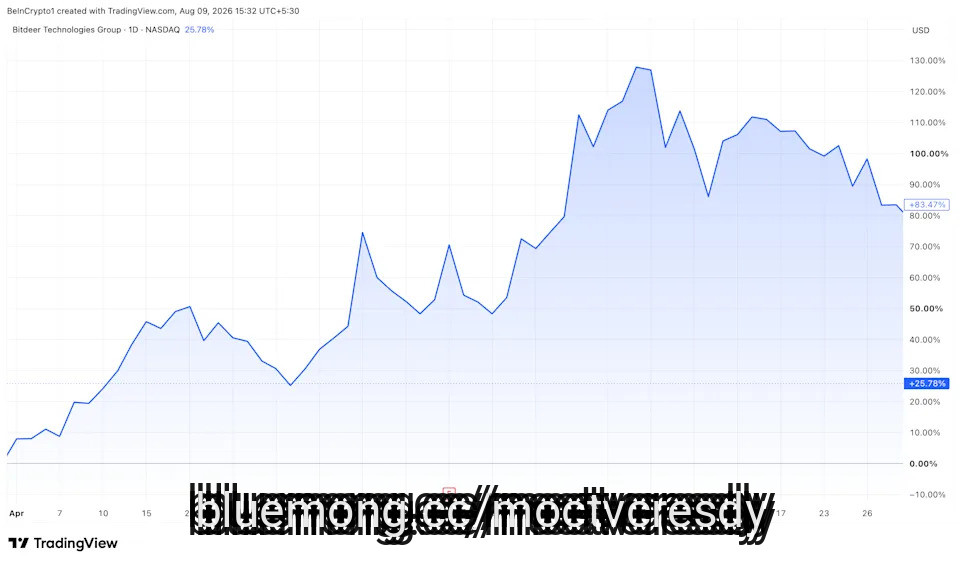
The second-quarter results come amid a strong period for Bitdeer shares. BTDR gained roughly 83% during Q2, significantly outperforming Bitcoin, which fell 14.08% over the same period.
#three #Monday #report
The three prints span exposure to major tokens, including Bitcoin (BTC), Solana (SOL), and Ethereum (ETH). All three **** ets fell last quarter, likely driving heavy paper losses. Now the earnings will show how deep the damage ran.
Bitdeer opens the week on Monday. It will report its second-quarter 2026 results before the US market opens on Monday, August 10, at around 7:00 a.m. ET
In the first quarter, Bitdeer reported a $159.5 million net loss, pressured by weaker cryptocurrency prices. Revenue, however, rose to $188.9 million, while adjusted EBITDA remained positive at $14.4 million.
The second-quarter results come amid a strong period for Bitdeer shares. BTDR gained roughly 83% during Q2, significantly outperforming Bitcoin, which fell 14.08% over the same period.
#three #Monday #report



11 days ago
Australian AI infrastructure startup Firmus Technologies has received full commitments for a $2bn strategic equity investment round, as it moves ahead with its Project Southgate AI Factory rollout across Australia.
The round includes follow-on participation from Coatue and Nvidia, as well as new investment from funds managed by Blackstone Tactical Opportunities and other Blackstone vehicles, which the company collectively referred to as Blackstone. Global trading and technology firm Jane Street is also participating.
Firmus said the funding will support the next phase of Project Southgate in Australia and help prepare for expansion into other Asia-Pacific markets.
The company said it already manufactures its proprietary HyperCube platform in Australia and has grid-aware software in place. It added that the new capital will help accelerate its domestic rollout and support targeted investments tied to future expansion.
Firmus said it is developing an AI infrastructure based on Nvidia's DSX AI Factory Reference Architecture to speed up deployment, improving tokens per watt, and boosting resiliency at scale.
#firmus #project #infrastructure #round
The round includes follow-on participation from Coatue and Nvidia, as well as new investment from funds managed by Blackstone Tactical Opportunities and other Blackstone vehicles, which the company collectively referred to as Blackstone. Global trading and technology firm Jane Street is also participating.
Firmus said the funding will support the next phase of Project Southgate in Australia and help prepare for expansion into other Asia-Pacific markets.
The company said it already manufactures its proprietary HyperCube platform in Australia and has grid-aware software in place. It added that the new capital will help accelerate its domestic rollout and support targeted investments tied to future expansion.
Firmus said it is developing an AI infrastructure based on Nvidia's DSX AI Factory Reference Architecture to speed up deployment, improving tokens per watt, and boosting resiliency at scale.
#firmus #project #infrastructure #round


15 days ago
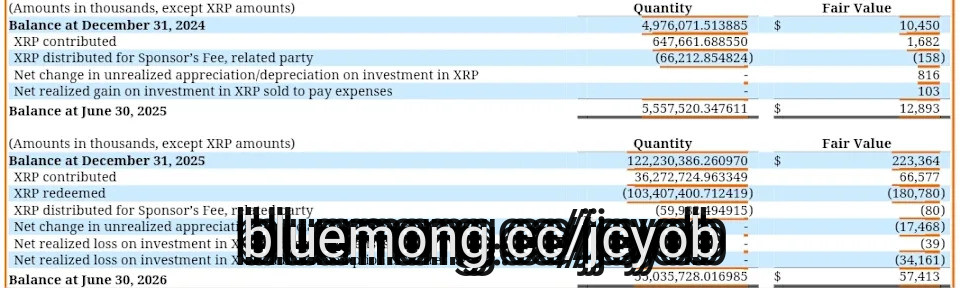
The Grayscale XRP Trust ETF has sold XRP worth more than $180 million during the first half of 2026, the latest filing with the U.S. Securities and Exchange Commission (SEC) revealed.
The fund held 122.23 million XRP by the end of 2025 but lowered the holdings to 55.04 million XRP as of June 30, 2026.
The trust cashed out $180.78 million worth of XRP, selling 103.41 million tokens to redeem investor ****** ets.
Related: XRP holders can now borrow Ripple's stablecoin
The trust created an additional 36.27 million in XRP worth $66.58 million during the last six months. But the outflows exceeded the inflows.
#commission
The fund held 122.23 million XRP by the end of 2025 but lowered the holdings to 55.04 million XRP as of June 30, 2026.
The trust cashed out $180.78 million worth of XRP, selling 103.41 million tokens to redeem investor ****** ets.
Related: XRP holders can now borrow Ripple's stablecoin
The trust created an additional 36.27 million in XRP worth $66.58 million during the last six months. But the outflows exceeded the inflows.
#commission


15 days ago
DeepSeek gave Alibaba Group Holding Limited (NYSE:BABA) and Alphabet Inc. (NASDAQ:GOOGL) a revealing price comparison on August 3. Artificial ***** ysis estimated that DeepSeek's V4-Flash averaged just $0.03 to complete each test in its benchmark suite while scoring 50 on its Intelligence Index, matching Google's Gemini 3.6 Flash.
Three cents is the average cost of completing each benchmark test, not a normal customer query, and the index combines nine coding, reasoning, and workplace tests. More capable models from Moonshot, OpenAI and Anthropic scored at least seven points higher. Still, V4-Flash costs $0.14 per million input tokens and $0.28 per million output tokens. That makes model intelligence cheap enough to pressure pricing for routine enterprise workloads.
Source: unsplash
Alibaba has two ways to monetize that pressure. Alibaba Cloud's AI Gateway already supports DeepSeek V4 APIs and can route workloads between DeepSeek and Qwen. Alibaba also unveiled its own 2.4-trillion-parameter Qwen3.8-Max on August 3, sending its Hong Kong shares up 7%. Its cloud revenue grew 38% in the March quarter, external cloud revenue rose 40%, and AI products reached 30% of external cloud sales. The catch is severe spending: group revenue rose only 3%, while Alibaba plans to exceed its earlier RMB380 billion three-year AI commitment and is treating margins as secondary.
What that creates is a demanding unit-economics test. Lower inference prices can pull customers into Alibaba Cloud, but revenue compounds only if workload volume grows faster than prices fall and those users also buy storage, networking and databases.
#flash #revenue #intelligence #index
Three cents is the average cost of completing each benchmark test, not a normal customer query, and the index combines nine coding, reasoning, and workplace tests. More capable models from Moonshot, OpenAI and Anthropic scored at least seven points higher. Still, V4-Flash costs $0.14 per million input tokens and $0.28 per million output tokens. That makes model intelligence cheap enough to pressure pricing for routine enterprise workloads.
Source: unsplash
Alibaba has two ways to monetize that pressure. Alibaba Cloud's AI Gateway already supports DeepSeek V4 APIs and can route workloads between DeepSeek and Qwen. Alibaba also unveiled its own 2.4-trillion-parameter Qwen3.8-Max on August 3, sending its Hong Kong shares up 7%. Its cloud revenue grew 38% in the March quarter, external cloud revenue rose 40%, and AI products reached 30% of external cloud sales. The catch is severe spending: group revenue rose only 3%, while Alibaba plans to exceed its earlier RMB380 billion three-year AI commitment and is treating margins as secondary.
What that creates is a demanding unit-economics test. Lower inference prices can pull customers into Alibaba Cloud, but revenue compounds only if workload volume grows faster than prices fall and those users also buy storage, networking and databases.
#flash #revenue #intelligence #index


15 days ago
BlackRock has launched tokenized share classes for a range of European money market funds holding a combined $311 billion, its first on-chain fund access in Europe.
The 12 new share classes sit across six funds in the BlackRock Institutional Cash Series, covering euro, sterling and U.S. dollar strategies in both distributing and accumulating form. Tokens are minted on Ethereum using Kinexys, J.P. Morgan's blockchain unit, which handles minting and burning and acts as the layer between on-chain activity and the traditional share register.
Each token represents a share in the underlying fund, and the official shareholder register continues to be maintained by the fund's transfer agent. Smart contracts move holdings between approved investor wallets, which BlackRock said delivers round-the-clock peer-to-peer transferability and near real-time visibility.
"Today's launches represent an important evolution in how investors access and manage cash, while helping modernise capital markets infrastructure," Beccy Milchem, Global Head of Cash Distribution and Head of the International Cash Management business at BlackRock, said in a press release shared with Decrypt.
Kara Kennedy, global head of market development at Kinexys, noted that, "Tokenization has moved from concept to execution," while BlackRock pointed to corporate treasury management, digital collateral and bank and wealth distribution channels as the use cases it expects the structure to open up.
#blackrock
The 12 new share classes sit across six funds in the BlackRock Institutional Cash Series, covering euro, sterling and U.S. dollar strategies in both distributing and accumulating form. Tokens are minted on Ethereum using Kinexys, J.P. Morgan's blockchain unit, which handles minting and burning and acts as the layer between on-chain activity and the traditional share register.
Each token represents a share in the underlying fund, and the official shareholder register continues to be maintained by the fund's transfer agent. Smart contracts move holdings between approved investor wallets, which BlackRock said delivers round-the-clock peer-to-peer transferability and near real-time visibility.
"Today's launches represent an important evolution in how investors access and manage cash, while helping modernise capital markets infrastructure," Beccy Milchem, Global Head of Cash Distribution and Head of the International Cash Management business at BlackRock, said in a press release shared with Decrypt.
Kara Kennedy, global head of market development at Kinexys, noted that, "Tokenization has moved from concept to execution," while BlackRock pointed to corporate treasury management, digital collateral and bank and wealth distribution channels as the use cases it expects the structure to open up.
#blackrock


20 days ago
By Jonathan Stempel
NEW YORK, July 30 (Reuters) - Coinbase won the dismissal on Thursday of much of a lawsuit in which customers accused the largest U.S. cryptocurrency exchange of illegally selling securities without registering as an exchange or broker-dealer.
Customers sued over 60 tokens, including XRP and dogecoin, that they claimed were unregistered securities, seeking unspecified damages in the proposed class action.
• U.S. District Judge Paul Engelmayer in Manhattan dismissed all claims based on "matched" transactions where Coinbase paired customers' buy and sell orders. These accounted for an estimated 99.97% of trading volume, equal to hundreds of billions of dollars.
• The judge also said customers may pursue claims over "inventory" transactions, where Coinbase fills orders from tokens it owns. These accounted for the remaining trading volume, comprising at least $178 million in sales.
#Coinbase #accounted
NEW YORK, July 30 (Reuters) - Coinbase won the dismissal on Thursday of much of a lawsuit in which customers accused the largest U.S. cryptocurrency exchange of illegally selling securities without registering as an exchange or broker-dealer.
Customers sued over 60 tokens, including XRP and dogecoin, that they claimed were unregistered securities, seeking unspecified damages in the proposed class action.
• U.S. District Judge Paul Engelmayer in Manhattan dismissed all claims based on "matched" transactions where Coinbase paired customers' buy and sell orders. These accounted for an estimated 99.97% of trading volume, equal to hundreds of billions of dollars.
• The judge also said customers may pursue claims over "inventory" transactions, where Coinbase fills orders from tokens it owns. These accounted for the remaining trading volume, comprising at least $178 million in sales.
#Coinbase #accounted

20 days ago
By Jonathan Stempel
NEW YORK, July 30 (Reuters) - Coinbase won the dismissal on Thursday of much of a lawsuit in which customers accused the largest U.S. cryptocurrency exchange of illegally selling securities without registering as an exchange or broker-dealer.
Customers sued over 60 tokens, including XRP and dogecoin, that they claimed were unregistered securities, seeking unspecified damages in the proposed class action.
U.S. District Judge Paul Engelmayer in Manhattan dismissed all claims based on "matched" transactions where Coinbase paired customers' buy and sell orders. These accounted for an estimated 99.97% of trading volume, equal to hundreds of billions of dollars.
The judge also said customers may pursue claims over "inventory" transactions, where Coinbase fills orders from tokens it owns. These accounted for the remaining 0.03% of trading volume, comprising at least $178 million in sales.
#exchange #securities
NEW YORK, July 30 (Reuters) - Coinbase won the dismissal on Thursday of much of a lawsuit in which customers accused the largest U.S. cryptocurrency exchange of illegally selling securities without registering as an exchange or broker-dealer.
Customers sued over 60 tokens, including XRP and dogecoin, that they claimed were unregistered securities, seeking unspecified damages in the proposed class action.
U.S. District Judge Paul Engelmayer in Manhattan dismissed all claims based on "matched" transactions where Coinbase paired customers' buy and sell orders. These accounted for an estimated 99.97% of trading volume, equal to hundreds of billions of dollars.
The judge also said customers may pursue claims over "inventory" transactions, where Coinbase fills orders from tokens it owns. These accounted for the remaining 0.03% of trading volume, comprising at least $178 million in sales.
#exchange #securities

21 days ago
Grayscale Research says Hyperliquid's HYPE (CRYPTO: $HYPE) token remains inexpensive beside fintech and crypto stocks, even as shares of its largest public-market treasury vehicle trade lower.
The ****** et manager valued Hyperliquid using "earnings per token," applying an equity-style framework to the protocol's fee generation and token supply. Grayscale expects Hyperliquid to produce roughly $1 billion in earnings in 2027, about 20% above 2025 levels, supported by recovering crypto trading volumes and a new stablecoin revenue stream.
With approximately 270 million HYPE circulating, Grayscale expects supply to reach between 270 million and 310 million tokens by the end of 2027. That would place projected earnings per token between $3.25 and $3.75.
More From Cryptoprowl:
TokenInsight Q2 2026 Report: TradFi Momentum Lifts MEXC to No. 2 in Commodity Perpetuals
#hype #Crypto #supply
The ****** et manager valued Hyperliquid using "earnings per token," applying an equity-style framework to the protocol's fee generation and token supply. Grayscale expects Hyperliquid to produce roughly $1 billion in earnings in 2027, about 20% above 2025 levels, supported by recovering crypto trading volumes and a new stablecoin revenue stream.
With approximately 270 million HYPE circulating, Grayscale expects supply to reach between 270 million and 310 million tokens by the end of 2027. That would place projected earnings per token between $3.25 and $3.75.
More From Cryptoprowl:
TokenInsight Q2 2026 Report: TradFi Momentum Lifts MEXC to No. 2 in Commodity Perpetuals
#hype #Crypto #supply


23 days ago
Grayscale Research says Hyperliquid's HYPE (CRYPTO: $HYPE) token remains inexpensive beside fintech and crypto stocks, even as shares of its largest public-market treasury vehicle trade lower.
The ***** et manager valued Hyperliquid using "earnings per token," applying an equity-style framework to the protocol's fee generation and token supply. Grayscale expects Hyperliquid to produce roughly $1 billion in earnings in 2027, about 20% above 2025 levels, supported by recovering crypto trading volumes and a new stablecoin revenue stream.
With approximately 270 million HYPE circulating, Grayscale expects supply to reach between 270 million and 310 million tokens by the end of 2027. That would place projected earnings per token between $3.25 and $3.75.
More From Cryptoprowl:
TokenInsight Q2 2026 Report: TradFi Momentum Lifts MEXC to No. 2 in Commodity Perpetuals
#grayscale #expects
The ***** et manager valued Hyperliquid using "earnings per token," applying an equity-style framework to the protocol's fee generation and token supply. Grayscale expects Hyperliquid to produce roughly $1 billion in earnings in 2027, about 20% above 2025 levels, supported by recovering crypto trading volumes and a new stablecoin revenue stream.
With approximately 270 million HYPE circulating, Grayscale expects supply to reach between 270 million and 310 million tokens by the end of 2027. That would place projected earnings per token between $3.25 and $3.75.
More From Cryptoprowl:
TokenInsight Q2 2026 Report: TradFi Momentum Lifts MEXC to No. 2 in Commodity Perpetuals
#grayscale #expects


23 days ago
Morgan Stanley's new spot Solana ETF (MSOL) holds actual SOL tokens on NYSE Arca and charges a competitive 0.14% annual fee.
SOL has dropped 41% year-to-date and 60% over the past year, making MSOL a high-risk bet despite 136% gains over five years.
Don't wait: the ****** yst who called NVIDIA in 2010 just revealed his top 10 AI stocks. See the full list FREE now.
Morgan Stanley has entered the spot crypto ETF market with the launch of the Morgan Stanley Solana Trust (NYSEARCA:MSOL), a fund that holds actual Solana tokens and is listed on NYSE Arca. It is the firm's first exchange-traded product tied directly to a single cryptocurrency, and it arrives at a moment when Solana, the blockchain once best known for hosting meme coins, is trying to sell itself to Wall Street as serious financial infrastructure.
The trust charges a unitary Delegated Sponsor Fee accrued daily at an annualized rate of 0.14% of the Trust's net ****** et value, or about $14 a year on a $10,000 investment. According to the prospectus, Morgan Stanley Investment Management Inc. agrees to pay the trust's ordinary operating expenses out of that fee, excluding taxes and extraordinary or litigation expenses. The sponsor is a wholly owned subsidiary of Morgan Stanley, one of the largest ****** et managers in the world.
#sponsor
SOL has dropped 41% year-to-date and 60% over the past year, making MSOL a high-risk bet despite 136% gains over five years.
Don't wait: the ****** yst who called NVIDIA in 2010 just revealed his top 10 AI stocks. See the full list FREE now.
Morgan Stanley has entered the spot crypto ETF market with the launch of the Morgan Stanley Solana Trust (NYSEARCA:MSOL), a fund that holds actual Solana tokens and is listed on NYSE Arca. It is the firm's first exchange-traded product tied directly to a single cryptocurrency, and it arrives at a moment when Solana, the blockchain once best known for hosting meme coins, is trying to sell itself to Wall Street as serious financial infrastructure.
The trust charges a unitary Delegated Sponsor Fee accrued daily at an annualized rate of 0.14% of the Trust's net ****** et value, or about $14 a year on a $10,000 investment. According to the prospectus, Morgan Stanley Investment Management Inc. agrees to pay the trust's ordinary operating expenses out of that fee, excluding taxes and extraordinary or litigation expenses. The sponsor is a wholly owned subsidiary of Morgan Stanley, one of the largest ****** et managers in the world.
#sponsor

24 days ago
Storj filed for bankruptcy protection on Sunday. The company says its network still works and STORJ tokens still work. Its owner made similar promises nine months ago.
Storj now wants to hand token holders a slice of the rebuilt company. But a judge must approve that. And creditors get paid first.
Storj Labs filed in a federal bankruptcy court in West Virginia. The case number is 5:26-bk-00512.
Follow us on X to get the latest news as it happens
Chapter 11 is not a shutdown. It lets a company keep trading while a court helps it clear its debts.
#storj #still
Storj now wants to hand token holders a slice of the rebuilt company. But a judge must approve that. And creditors get paid first.
Storj Labs filed in a federal bankruptcy court in West Virginia. The case number is 5:26-bk-00512.
Follow us on X to get the latest news as it happens
Chapter 11 is not a shutdown. It lets a company keep trading while a court helps it clear its debts.
#storj #still



24 days ago
Circle (NYSE: CRCL) issues USD Coin (CRYPTO: USDC), the world's second-largest stablecoin and the most widely used stablecoin in the United States. USD Coin is backed by Circle's own U.S. dollars and Treasuries, and the company generates most of its revenue from the interest earned on those deposits (known as its reserve income). Circle recently won a U.S. bank charter, and its firm compliance with U.S. regulations makes it an appealing choice for institutional investors.
Circle's revenue will keep rising as long as it continues to mint more USDC tokens for investors who want a faster, more digitally flexible alternative to real U.S. dollars. In a recent CNBC interview, Circle CEO Jeremy Allaire claimed the entire stablecoin market could grow from about $1 trillion today to tens of trillions of dollars over the coming years. But does that mean Circle's stock will grow at the same rate as the broader stablecoin market?
Missed Nvidia in 2009? This Rare Signal Is Flashing Again. In 2009, a "Double Down" signal flashed for a little-known chipmaker called Nvidia. For the first time in years, that same "Total Conviction" signal is flashing for a company 1/100th the size of Nvidia. Continue »
Circle's U.S. bank charter and its tight compliance with U.S. regulators might make it seem like an obvious way to profit from the stablecoin market's growth. However, Circle's entire future is pegged to USDC -- and that leading token will face a major new competitor later this year.
That challenger is Open USD (OUSD), a new stablecoin backed by a coalition of over 140 financial, tech, and retail giants. One of OUSD's most prominent backers is Coinbase (NASDAQ: COIN), a founding partner of USDC. Coinbase retains USDC's reserve income on its own exchange, and that crucial partnership will automatically renew on Aug. 18.
#signal #Coinbase
Circle's revenue will keep rising as long as it continues to mint more USDC tokens for investors who want a faster, more digitally flexible alternative to real U.S. dollars. In a recent CNBC interview, Circle CEO Jeremy Allaire claimed the entire stablecoin market could grow from about $1 trillion today to tens of trillions of dollars over the coming years. But does that mean Circle's stock will grow at the same rate as the broader stablecoin market?
Missed Nvidia in 2009? This Rare Signal Is Flashing Again. In 2009, a "Double Down" signal flashed for a little-known chipmaker called Nvidia. For the first time in years, that same "Total Conviction" signal is flashing for a company 1/100th the size of Nvidia. Continue »
Circle's U.S. bank charter and its tight compliance with U.S. regulators might make it seem like an obvious way to profit from the stablecoin market's growth. However, Circle's entire future is pegged to USDC -- and that leading token will face a major new competitor later this year.
That challenger is Open USD (OUSD), a new stablecoin backed by a coalition of over 140 financial, tech, and retail giants. One of OUSD's most prominent backers is Coinbase (NASDAQ: COIN), a founding partner of USDC. Coinbase retains USDC's reserve income on its own exchange, and that crucial partnership will automatically renew on Aug. 18.
#signal #Coinbase

27 days ago
Following Advanced Micro Devices Inc.'s (NASDAQ:AMD) Advancing AI 2026 event in San Francisco, top technology ****** ysts are issuing aggressive price targets and bullish forecasts for the chipmaker.
Futurum Equities reiterated its Buy rating and raised its price target to $800—representing nearly 48% upside—declaring "AMD is one of our top convictions." At the same time, Moor Insights & Strategy chief ****** yst Patrick Moorhead highlighted projections indicating the server CPU market will surge past $200 billion by 2030.
Daniel Newman of Futurum Equities cited AMD's rapidly expanding hardware ecosystem and customer momentum following major keynote announcements. Key among them is a strategic 2-gigawatt deployment deal with Anthropic, bringing AMD's total committed accelerator deployments to 14 gigawatts.
Futurum models $38 billion in GPU revenue next year, accelerated by 6th Gen EPYC "Venice" CPUs and AMD Helios rackscale solutions, which deliver up to 30% more tokens per dollar than competitors. Newman noted AMD is well-positioned across an accelerator total addressable market reaching $1.4 trillion by 2030.
$AMD Futurum Equities reiterates Buy and ups PT to $800.
Top 5 takes from today's event by rolfbulk pic.twitter.com/GgpY2nzqtB
#futurum #newman #price #billion
Futurum Equities reiterated its Buy rating and raised its price target to $800—representing nearly 48% upside—declaring "AMD is one of our top convictions." At the same time, Moor Insights & Strategy chief ****** yst Patrick Moorhead highlighted projections indicating the server CPU market will surge past $200 billion by 2030.
Daniel Newman of Futurum Equities cited AMD's rapidly expanding hardware ecosystem and customer momentum following major keynote announcements. Key among them is a strategic 2-gigawatt deployment deal with Anthropic, bringing AMD's total committed accelerator deployments to 14 gigawatts.
Futurum models $38 billion in GPU revenue next year, accelerated by 6th Gen EPYC "Venice" CPUs and AMD Helios rackscale solutions, which deliver up to 30% more tokens per dollar than competitors. Newman noted AMD is well-positioned across an accelerator total addressable market reaching $1.4 trillion by 2030.
$AMD Futurum Equities reiterates Buy and ups PT to $800.
Top 5 takes from today's event by rolfbulk pic.twitter.com/GgpY2nzqtB
#futurum #newman #price #billion


27 days ago
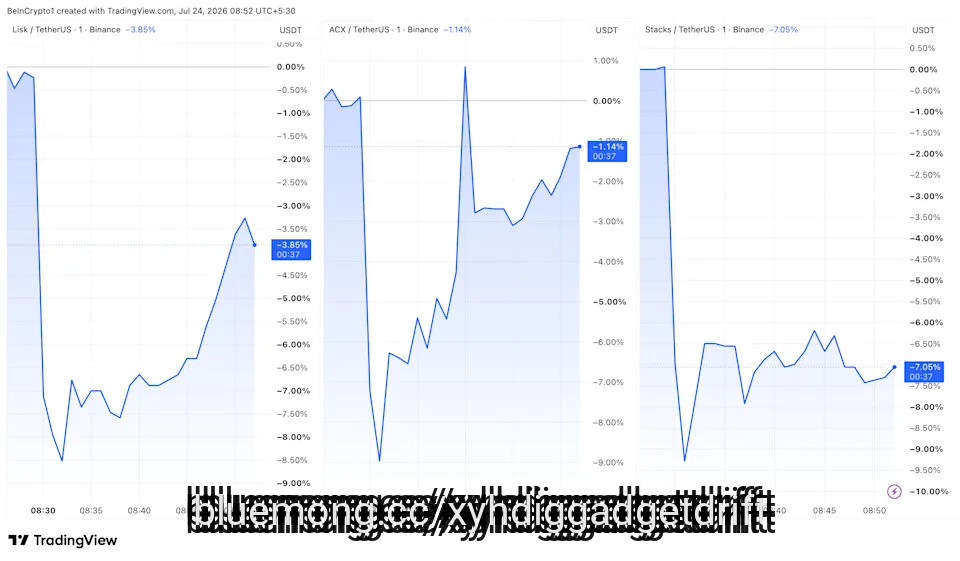
Binance added Across Protocol (ACX), Lisk (LSK), and Stacks (STX) to its Monitoring Tag on July 24, signaling all three now carry delisting risk on the world's largest crypto exchange.
The tag marks tokens that show higher volatility and risk than other listed **** ets. Binance reviews these projects regularly and can delist them if they fail to meet its criteria.
The Monitoring Tag is Binance's warning system for **** ets it deems higher risk. It does not remove a token right away.
Instead, it puts projects on notice. Binance weighs team commitment, development activity, trading volume, network stability, and tokenomics changes during each review. Evidence of fraud or negligence can also trigger the tag.
"These tokens are closely monitored, with regular reviews conducted. Keep in mind that tokens with the Monitoring Tag are at risk of no longer meeting our listing criteria and being delisted from the platform," the exchange said.
#higher #criteria
The tag marks tokens that show higher volatility and risk than other listed **** ets. Binance reviews these projects regularly and can delist them if they fail to meet its criteria.
The Monitoring Tag is Binance's warning system for **** ets it deems higher risk. It does not remove a token right away.
Instead, it puts projects on notice. Binance weighs team commitment, development activity, trading volume, network stability, and tokenomics changes during each review. Evidence of fraud or negligence can also trigger the tag.
"These tokens are closely monitored, with regular reviews conducted. Keep in mind that tokens with the Monitoring Tag are at risk of no longer meeting our listing criteria and being delisted from the platform," the exchange said.
#higher #criteria


28 days ago
Hyperliquid (HYPE) has gone down by 7% today and has accumulated a 15% drop in the past 7 days after a handful of whales reportedly cashed out on their early HYPE bets.
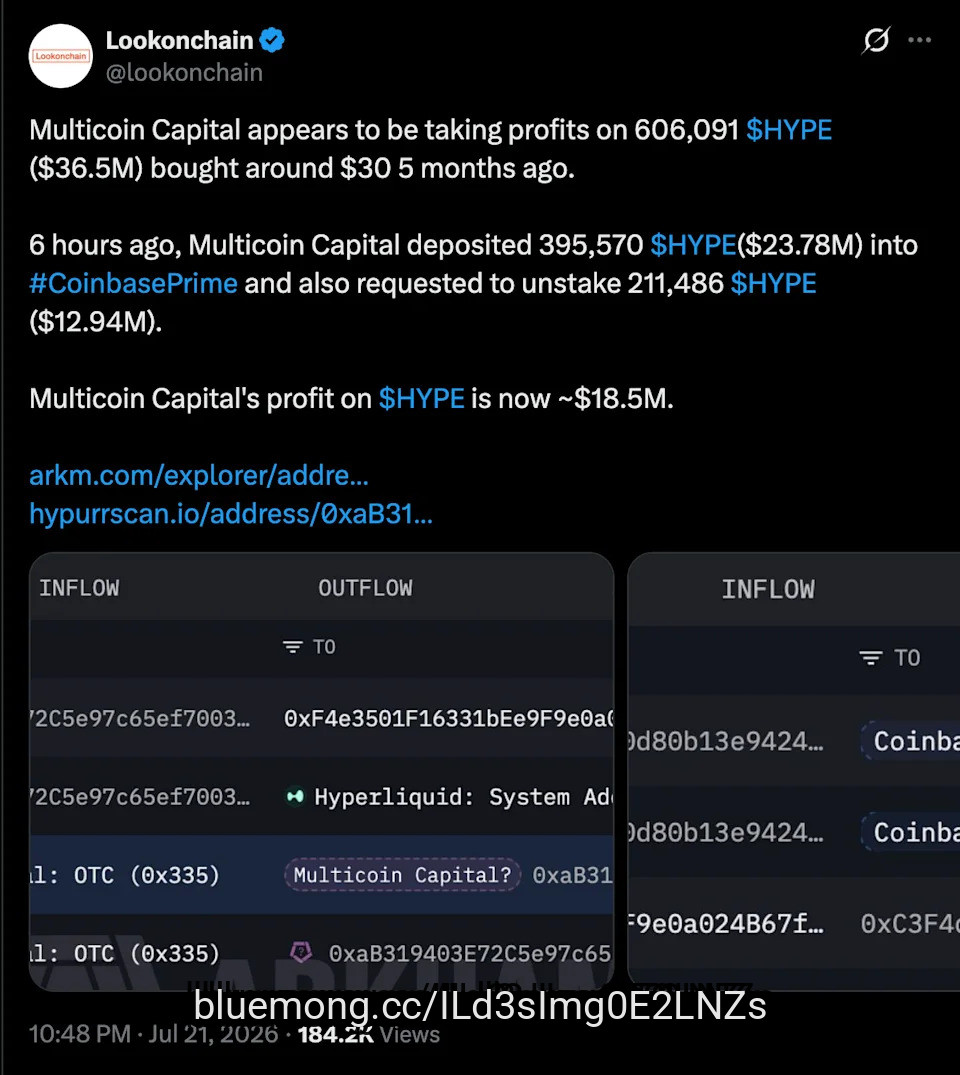
Yesterday, the crypto ****** ytics firm Lookonchain revealed that Multicoin Capital transferred nearly 400,000 HYPE tokens to Coinbase Prime and requested to unstake almost 212,000 tokens less than a month after they published a bullish report on this cryptocurrency.
In a piece ****** led "Hyperliquid (HYPE) ****** ysis & Valuation," Multicoin stated that "Hyperliquid's trajectory looks eerily similar to Binance's early years."
They also set forth a long-term target of $319 for the token, claiming that, at $63, it was currently trading at 36 times its trailing twelve months (TTM) earnings. They projected $8 billion in annual profits by 2028, which, at a 20x price-to-earnings (P/E) multiple, results in a potential 5x gain.
However, this recent move to cash out of Hyperliquid's short-term gains has raised eyebrows about the firm's motivations to publish this report among the crypto community.
#hype #hyperliquid #multicoin #early
Yesterday, the crypto ****** ytics firm Lookonchain revealed that Multicoin Capital transferred nearly 400,000 HYPE tokens to Coinbase Prime and requested to unstake almost 212,000 tokens less than a month after they published a bullish report on this cryptocurrency.
In a piece ****** led "Hyperliquid (HYPE) ****** ysis & Valuation," Multicoin stated that "Hyperliquid's trajectory looks eerily similar to Binance's early years."
They also set forth a long-term target of $319 for the token, claiming that, at $63, it was currently trading at 36 times its trailing twelve months (TTM) earnings. They projected $8 billion in annual profits by 2028, which, at a 20x price-to-earnings (P/E) multiple, results in a potential 5x gain.
However, this recent move to cash out of Hyperliquid's short-term gains has raised eyebrows about the firm's motivations to publish this report among the crypto community.
#hype #hyperliquid #multicoin #early

29 days ago
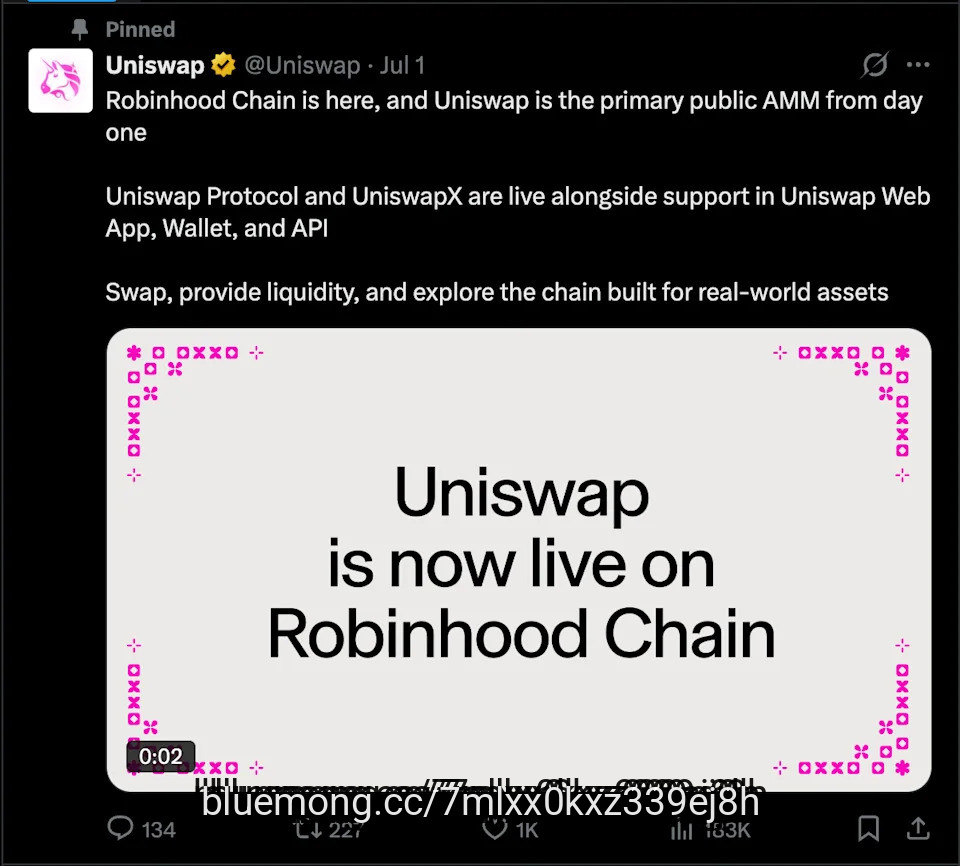
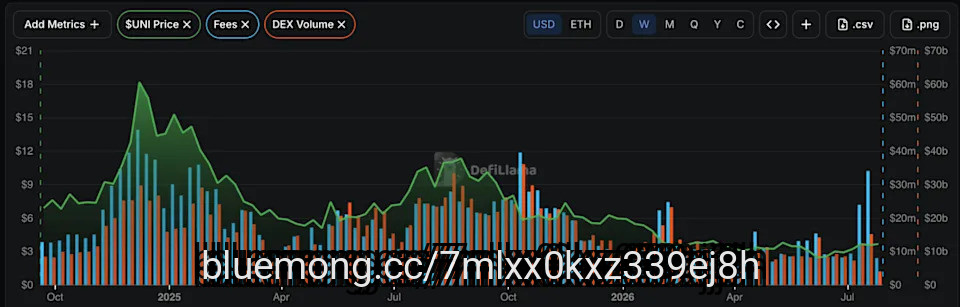
Uniswap (UNI) has gone up by nearly 23% in the past 30 days, outpacing all of the tokens with a higher market cap during this period following the launch of the Robinhood Chain.
Meanwhile, in the past 24 hours alone, the token has jumped by 7% to $3.68, as trading volumes experienced a strong 66% boost.
At $190 million, daily volumes currently account for over 8% of the **** et's circulating market cap, indicating that buying pressure continues to be strong as the token approaches a key resistance area.
On July 1, Robinhood, the popular U.S.-based zero-commission trading platform, launched its very own blockchain to support its tokenized stocks.
Uniswap is the decentralized alternative that users can rely on to buy these stocks on the Robinhood Chain. These **** ets are available 24/7 and can be bought as any other cryptocurrency by using this popular DEX.
#robinhood #market #strong
Meanwhile, in the past 24 hours alone, the token has jumped by 7% to $3.68, as trading volumes experienced a strong 66% boost.
At $190 million, daily volumes currently account for over 8% of the **** et's circulating market cap, indicating that buying pressure continues to be strong as the token approaches a key resistance area.
On July 1, Robinhood, the popular U.S.-based zero-commission trading platform, launched its very own blockchain to support its tokenized stocks.
Uniswap is the decentralized alternative that users can rely on to buy these stocks on the Robinhood Chain. These **** ets are available 24/7 and can be bought as any other cryptocurrency by using this popular DEX.
#robinhood #market #strong

29 days ago
XRP whale deposits to Binance fell to about 947 million tokens over 30 days, the lowest in two months, a drop that normally points to less selling pressure ahead.
Futures are driving XRP's 5% weekly gain, with $1.8 billion in daily futures volume dwarfing $180 million in spot at a ratio of nearly 10 to 1.
A Bitcoin breakout or CLARITY Act passage could pull real spot buyers back and give XRP's futures-driven rally an actual foundation.
Don't wait: the **** yst who called NVIDIA in 2010 just revealed his top 10 AI stocks. See the full list FREE now.
XRP (CRYPTO:XRP) whale deposits to Binance just dropped to their lowest level in two months. On its face, that is good news. Big holders move coins onto an exchange when they are getting ready to sell, so fewer deposits should mean less selling ahead.
#futures #months #selling
Futures are driving XRP's 5% weekly gain, with $1.8 billion in daily futures volume dwarfing $180 million in spot at a ratio of nearly 10 to 1.
A Bitcoin breakout or CLARITY Act passage could pull real spot buyers back and give XRP's futures-driven rally an actual foundation.
Don't wait: the **** yst who called NVIDIA in 2010 just revealed his top 10 AI stocks. See the full list FREE now.
XRP (CRYPTO:XRP) whale deposits to Binance just dropped to their lowest level in two months. On its face, that is good news. Big holders move coins onto an exchange when they are getting ready to sell, so fewer deposits should mean less selling ahead.
#futures #months #selling


29 days ago
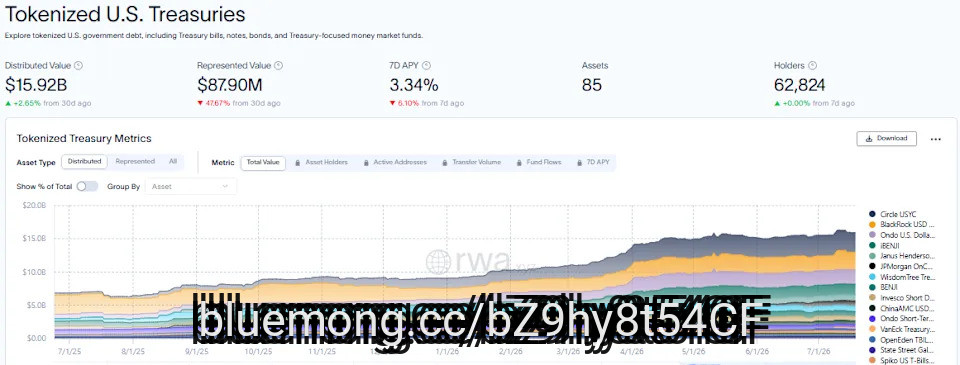
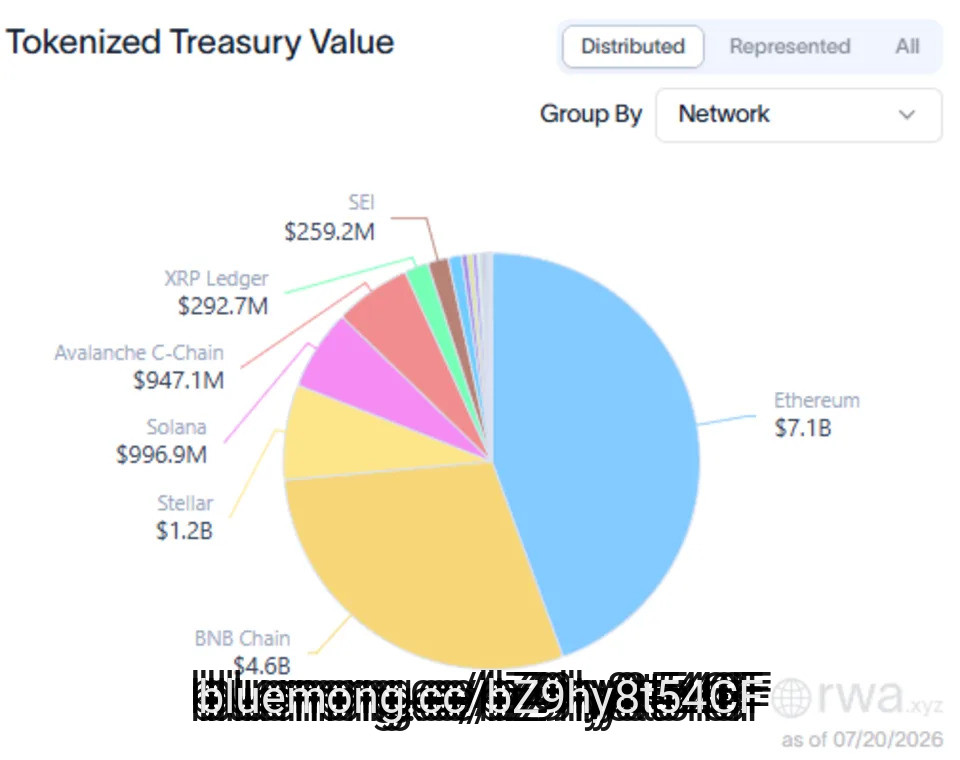
The value of tokenized U.S. Treasuries has surged nearly 2.5 times in a year, latest data from rwa.xyz reveals.
The value of tokenized U.S. Treasuries, which stood at $6.51 billion on July 20, 2025, has surged to $15.92 billion within a span of a year.
In simple words, tokenization is the process of converting real-world ****** ets (RWAs)—like real estate, stocks, or government bonds—into digital tokens on a blockchain.
Each such token represents full or fractional ownership of the underlying ****** et, offering the exposure to a popular ****** et with the efficiency of digital ****** ets.
As per rwa.xyz, tokenized U.S. government debt, including T-bills, notes, bonds, and Treasury-focused money market funds have a distributed value of $15.92 billion as of July 19.
#billion #assets #government
The value of tokenized U.S. Treasuries, which stood at $6.51 billion on July 20, 2025, has surged to $15.92 billion within a span of a year.
In simple words, tokenization is the process of converting real-world ****** ets (RWAs)—like real estate, stocks, or government bonds—into digital tokens on a blockchain.
Each such token represents full or fractional ownership of the underlying ****** et, offering the exposure to a popular ****** et with the efficiency of digital ****** ets.
As per rwa.xyz, tokenized U.S. government debt, including T-bills, notes, bonds, and Treasury-focused money market funds have a distributed value of $15.92 billion as of July 19.
#billion #assets #government

29 days ago
This article was originally published on ETFTrends.com.
Crypto has spent more than a decade on the edge of mainstream investing, cast either as a technological revolution or a speculative distraction. According to a new T. Rowe Price research report ******* led "Crypto edges into the mainstream," that debate has shifted.
T. Rowe Price research favors sizing diverse crypto exposure deliberately over chasing single tokens.
A 2.5% bitcoin allocation added 7% of a 60/40 portfolio's five-year risk.
Active management, not passive indexes, can better track crypto's fast-moving networks.
#rowe #mainstream #etftrends
Crypto has spent more than a decade on the edge of mainstream investing, cast either as a technological revolution or a speculative distraction. According to a new T. Rowe Price research report ******* led "Crypto edges into the mainstream," that debate has shifted.
T. Rowe Price research favors sizing diverse crypto exposure deliberately over chasing single tokens.
A 2.5% bitcoin allocation added 7% of a 60/40 portfolio's five-year risk.
Active management, not passive indexes, can better track crypto's fast-moving networks.
#rowe #mainstream #etftrends