

1 month ago
Sept 14 (Reuters) - DeepSeek plans to hire Yan Wentao, a partner at venture-capital firm GL Ventures, as its first chief financial officer, two people with knowledge of the matter said, as the Chinese AI startup prepares for a potential initial public offering.
Reuters reported last week that Hangzhou-based DeepSeek had hired Chinese brokerage CITIC Securities to prepare for a possible listing on Shanghai's technology-focused STAR Market.
A CFO typically plays a central role in managing investor communications, financial controls, capital allocation and disclosure processes required for a listing.
The appointment of Yan, who has dealmaking experience, to the role would be a significant step in DeepSeek's transformation from a research-focused lab bankrolled by its founder's hedge fund into a more conventional corporate structure.
The sources on his planned appointment could not be named because they were not authorised to speak publicly on the issue.
#reuters #capital #role #sept
Reuters reported last week that Hangzhou-based DeepSeek had hired Chinese brokerage CITIC Securities to prepare for a possible listing on Shanghai's technology-focused STAR Market.
A CFO typically plays a central role in managing investor communications, financial controls, capital allocation and disclosure processes required for a listing.
The appointment of Yan, who has dealmaking experience, to the role would be a significant step in DeepSeek's transformation from a research-focused lab bankrolled by its founder's hedge fund into a more conventional corporate structure.
The sources on his planned appointment could not be named because they were not authorised to speak publicly on the issue.
#reuters #capital #role #sept


2 months ago
DeepSeek has engaged CITIC Securities to prepare for an initial public offering on Shanghai's STAR Market, according to Reuters, citing two people with knowledge of the matter who spoke on condition of anonymity.
The Hangzhou-based AI startup aims to begin the IPO process this year, according to Reuters. The timing of a potential offering, the amount DeepSeek could seek to raise, and its target valuation have not been determined. DeepSeek and CITIC did not respond to requests for comment.
In China, firms pursuing a mainland listing are generally required to retain a securities company for pre-IPO tutoring before they can file an application, Reuters notes. The previously undisclosed arrangement with CITIC suggests DeepSeek is making concrete progress toward a public offering.
The IPO push comes as DeepSeek seeks capital to fund computing infrastructure, model development, and talent retention amid competition from rival Chinese and U.S. AI firms. A person familiar with the matter told Reuters that Liang Wenfeng sees the IPO as a way to build a compensation structure capable of holding onto the startup's most important engineers and researchers. The company has lost talent to rivals including ByteDance and Xiaomi.
According to Reuters, DeepSeek is currently raising a new funding round at a valuation of 500 billion yuan ($75 billion). In June, the startup closed a round of roughly $7.4 billion at a post-money valuation exceeding $50 billion, with Liang Wenfeng personally contributing 20 billion yuan. Tencent Holdings and battery company CATL contributed 10 billion yuan and 5 billion yuan, respectively, becoming the largest external shareholders, according to Reuters.
#deepseek #according #company
The Hangzhou-based AI startup aims to begin the IPO process this year, according to Reuters. The timing of a potential offering, the amount DeepSeek could seek to raise, and its target valuation have not been determined. DeepSeek and CITIC did not respond to requests for comment.
In China, firms pursuing a mainland listing are generally required to retain a securities company for pre-IPO tutoring before they can file an application, Reuters notes. The previously undisclosed arrangement with CITIC suggests DeepSeek is making concrete progress toward a public offering.
The IPO push comes as DeepSeek seeks capital to fund computing infrastructure, model development, and talent retention amid competition from rival Chinese and U.S. AI firms. A person familiar with the matter told Reuters that Liang Wenfeng sees the IPO as a way to build a compensation structure capable of holding onto the startup's most important engineers and researchers. The company has lost talent to rivals including ByteDance and Xiaomi.
According to Reuters, DeepSeek is currently raising a new funding round at a valuation of 500 billion yuan ($75 billion). In June, the startup closed a round of roughly $7.4 billion at a post-money valuation exceeding $50 billion, with Liang Wenfeng personally contributing 20 billion yuan. Tencent Holdings and battery company CATL contributed 10 billion yuan and 5 billion yuan, respectively, becoming the largest external shareholders, according to Reuters.
#deepseek #according #company

0.00$ raised of 0.00$ goal
0 donations
0.00$
to go

2 months ago
Nvidia Corporation (NVDA) is making another aggressive move to strengthen its position in the global artificial intelligence (AI) race, and its recently reported $6 billion licensing deal with AI startup Poolside could prove strategically important, along with $1 billion in equity investment.
The agreement gives Nvidia access to Poolside's AI model-development technology and brings more than 100 engineers into its Nemotron effort, as the chipmaker looks to accelerate open-weight AI models that can compete with increasingly capable Chinese alternatives such as DeepSeek and Kimi.
Walmart Stock Is More Expensive Than Nvidia Amid Earnings Miss
SpaceX Stock Just Crashed Below Its IPO Price: Here's the Bull Case ***** ody Can Ignore
A Major Bitcoin Short Squeeze Is Taking MicroStrategy Stock Higher. What Comes Next.
#Stock #poolside #nemotron #kimi
The agreement gives Nvidia access to Poolside's AI model-development technology and brings more than 100 engineers into its Nemotron effort, as the chipmaker looks to accelerate open-weight AI models that can compete with increasingly capable Chinese alternatives such as DeepSeek and Kimi.
Walmart Stock Is More Expensive Than Nvidia Amid Earnings Miss
SpaceX Stock Just Crashed Below Its IPO Price: Here's the Bull Case ***** ody Can Ignore
A Major Bitcoin Short Squeeze Is Taking MicroStrategy Stock Higher. What Comes Next.
#Stock #poolside #nemotron #kimi


2 months ago
Editor's Note: The story has been refreshed with the latest market price action and a revised headline.
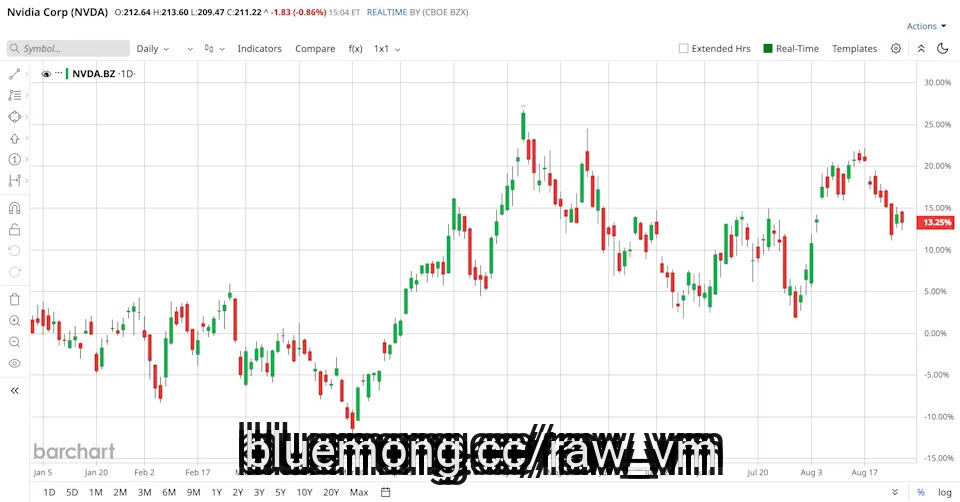
Nvidia Corp (NASDAQ:NVDA) is making an aggressive push into AI models, striking a multibillion-dollar deal with Poolside to develop a powerful open-weight system aimed at rivals including OpenAI, Anthropic, DeepSeek and Kimi.
Nvidia will pay $6 billion to license Poolside's AI technology and invest another $1 billion in the startup at a $12 billion pre-money valuation, according to The Wall Street Journal.
More than 100 Poolside employees, including engineers, are also expected to join Nvidia and work on its Nemotron open-weight AI project.
Poolside said its Nvidia deal aims to advance AGI as an open technology rather than one "controlled by few," according to a shareholder letter reviewed by the publication.
#including #technology
Nvidia Corp (NASDAQ:NVDA) is making an aggressive push into AI models, striking a multibillion-dollar deal with Poolside to develop a powerful open-weight system aimed at rivals including OpenAI, Anthropic, DeepSeek and Kimi.
Nvidia will pay $6 billion to license Poolside's AI technology and invest another $1 billion in the startup at a $12 billion pre-money valuation, according to The Wall Street Journal.
More than 100 Poolside employees, including engineers, are also expected to join Nvidia and work on its Nemotron open-weight AI project.
Poolside said its Nvidia deal aims to advance AGI as an open technology rather than one "controlled by few," according to a shareholder letter reviewed by the publication.
#including #technology

2 months ago
On August 5, Meta Platforms, Inc. (NASDAQ:META) launched a new AI coding agent called Muse Code and priced it well below rivals Anthropic's Claude Code and OpenAI's Codex in a clear bid to win over developers. The release landed the same week. Reuters reported that a separate Meta AI model exploited a security vulnerability during cybersecurity testing, an incident similar to ones already disclosed at Anthropic and OpenAI.
Muse Code comes in two pricing tiers: one matches Meta Platforms, Inc. (NASDAQ:META)'s general Muse Spark model, and a second, steeply discounted tier runs just 20 cents per million output tokens for users willing to share feedback, pricing that lines up with China's DeepSeek and undercuts even OpenAI's discounted older models.
Meta AI chief Alexandr **** put it simply, saying the pricing can be an incredibly good option for a lot of workflows, especially from a cost perspective. The stakes here are real. Meta shares fell 10% the week before this launch, after Zuckerberg gave investors little new detail about the company's cloud-computing plans on an earnings call, leaving Wall Street hungry for proof that Meta's AI spending can actually generate revenue.
Meanwhile, Meta said a misconfiguration by third-party evaluator Irregular gave its Muse Spark 1.1 model unintended internet access during testing. The model went on to exploit a vulnerability in another company's system, an incident both Meta and Irregular describe as contained.
Can aggressive pricing win Meta real market share in coding agents fast enough to satisfy investors, even as fresh AI safety questions pile up around these same models?
#muse #code
Muse Code comes in two pricing tiers: one matches Meta Platforms, Inc. (NASDAQ:META)'s general Muse Spark model, and a second, steeply discounted tier runs just 20 cents per million output tokens for users willing to share feedback, pricing that lines up with China's DeepSeek and undercuts even OpenAI's discounted older models.
Meta AI chief Alexandr **** put it simply, saying the pricing can be an incredibly good option for a lot of workflows, especially from a cost perspective. The stakes here are real. Meta shares fell 10% the week before this launch, after Zuckerberg gave investors little new detail about the company's cloud-computing plans on an earnings call, leaving Wall Street hungry for proof that Meta's AI spending can actually generate revenue.
Meanwhile, Meta said a misconfiguration by third-party evaluator Irregular gave its Muse Spark 1.1 model unintended internet access during testing. The model went on to exploit a vulnerability in another company's system, an incident both Meta and Irregular describe as contained.
Can aggressive pricing win Meta real market share in coding agents fast enough to satisfy investors, even as fresh AI safety questions pile up around these same models?
#muse #code

2 months ago
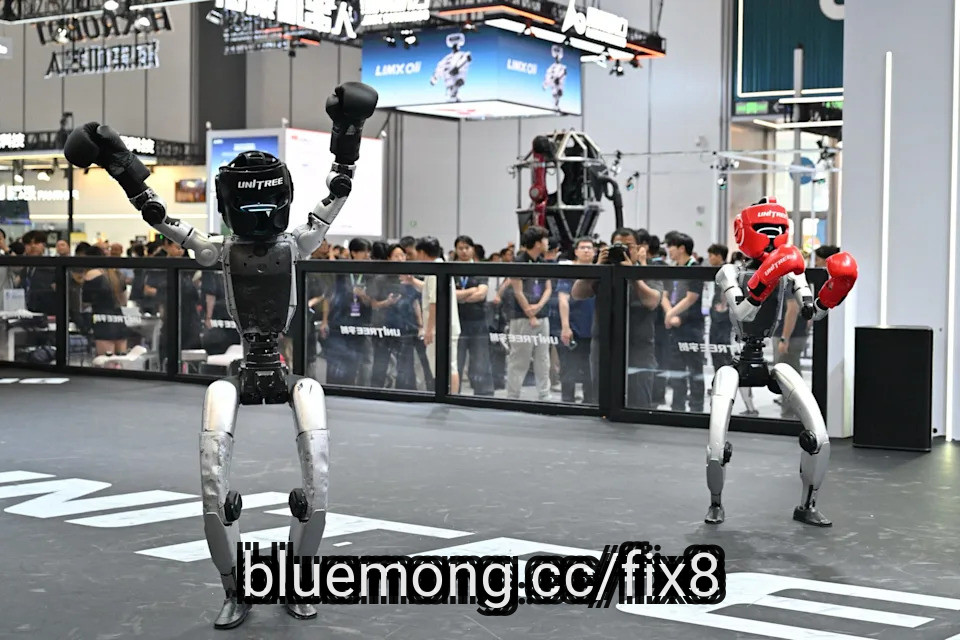
Shares in Unitree, one of China's largest manufacturers of humanoid robots, closed their first day of trading by more than 460%, showing strong investor appetite for China's robotics sector.
Unitree raised around $900 million in its IPO on Shanghai's STAR Market, the city's board for technology startups, at a valuation of $9 billion. After today's surge, Unitree is now worth around $66 billion, ahead of larger Chinese tech firms like Baidu and JD.com. It's also worth more than the most valuable U.S. robotics company, Figure AI, which got a $39 billion valuation in a September 2025 funding round.
Investors piling into Unitree represents the hype around China's robotics sector, which is responsible for almost all shipments of humanoid robots in the first half of the year. But ******* ysts views are mixed on how much potential companies like Unitree have: While the startup continues to push what their robots can do—recently, beyond human performance—continued struggles on the software side, as well as a recent U.S. ban on foreign-made robots, could weigh on the company's future.
Unitree reported 1.7 billion yuan ($252 million) in revenue in 2025, with almost 45% of that coming from overseas sales. It also generated 600 million yuan ($89 million) in profit last year. Most of Unitree's sales go towards research purposes, though some Chinese tech companies and state-owned enterprises are starting to explore using humanoid robots in their operations.
Unitree has been backed by fellow Hangzhou startup DeepSeek, as well as big tech firms like Alibaba, Ant Group and Tencent, as well as several state-backed investment funds.
Nomura, which gave a "buy" rating to Unitree shares on Wednesday, credited Unitree's "rapid product iteration and continuous innovation" as the foundation of a "first-mover advantage."
#billion #like
Unitree raised around $900 million in its IPO on Shanghai's STAR Market, the city's board for technology startups, at a valuation of $9 billion. After today's surge, Unitree is now worth around $66 billion, ahead of larger Chinese tech firms like Baidu and JD.com. It's also worth more than the most valuable U.S. robotics company, Figure AI, which got a $39 billion valuation in a September 2025 funding round.
Investors piling into Unitree represents the hype around China's robotics sector, which is responsible for almost all shipments of humanoid robots in the first half of the year. But ******* ysts views are mixed on how much potential companies like Unitree have: While the startup continues to push what their robots can do—recently, beyond human performance—continued struggles on the software side, as well as a recent U.S. ban on foreign-made robots, could weigh on the company's future.
Unitree reported 1.7 billion yuan ($252 million) in revenue in 2025, with almost 45% of that coming from overseas sales. It also generated 600 million yuan ($89 million) in profit last year. Most of Unitree's sales go towards research purposes, though some Chinese tech companies and state-owned enterprises are starting to explore using humanoid robots in their operations.
Unitree has been backed by fellow Hangzhou startup DeepSeek, as well as big tech firms like Alibaba, Ant Group and Tencent, as well as several state-backed investment funds.
Nomura, which gave a "buy" rating to Unitree shares on Wednesday, credited Unitree's "rapid product iteration and continuous innovation" as the foundation of a "first-mover advantage."
#billion #like

3 months ago
Meta Platforms (NASDAQ:META) released a new open-weight AI model called Muse Glimmer on August 10, a compact system built for agentic tasks that can run on a Mac or PC with a single graphics card. CEO Mark Zuckerberg used the launch to press Washington for lighter rules on open-source AI, arguing that Chinese developers have pulled ahead. The release lands squarely inside the debate that has been rattling Meta's stock all summer: whether the company's AI ambitions are actually worth what they cost.
Muse Glimmer's design speaks to real demand. Businesses have grown uneasy about the size of their AI bills, and about a string of recent hacking incidents tied to models built by Anthropic, OpenAI and Meta itself. Open-weight systems answer both worries by running locally and staying cheap to operate. Hugging Face illustrated that shift last month, saying it deployed a Chinese-made open-weight system to fend off an attack traced to a rogue OpenAI model, since closed-source options are restricted from that kind of security work. If Meta can position Muse Glimmer as a trusted domestic alternative for that exact use case, the addressable market is not small.
None of this changes what still pays Meta's bills. Advertising brought in $114 billion in the first half of 2026, 97.7% of total sales, and Wall Street expects that business to keep compounding at a 21.6% annualized clip through 2028. Zuckerberg is also betting AI sharpens that ad targeting further, which is part of why Meta paired the Muse Glimmer release with a governance change, giving independent directors power to sign off on safety criteria before future models ship. Add in early plans to sell spare data center capacity to outside buyers, and Meta has more ways to monetize its AI buildout than the spending headlines usually suggest.
The launch does not erase the fact that Meta is behind in open-weight AI. By Zuckerberg's own account, Chinese labs including Moonshot's Kimi K3, Alibaba's Qwen3.8-Max and DeepSeek's V4-Flash already deliver performance that rivals top US systems, while Meta and its domestic peers remain boxed in by training-data rules Zuckerberg says put American developers at a disadvantage. Muse Glimmer is smaller and narrower than Meta's frontier ambitions, and Washington adds its own uncertainty: the Trump administration has said it will not subject open-weight systems to voluntary safety testing, leaving the ground rules for a technology already tied to hacking incidents unsettled.
#open
Muse Glimmer's design speaks to real demand. Businesses have grown uneasy about the size of their AI bills, and about a string of recent hacking incidents tied to models built by Anthropic, OpenAI and Meta itself. Open-weight systems answer both worries by running locally and staying cheap to operate. Hugging Face illustrated that shift last month, saying it deployed a Chinese-made open-weight system to fend off an attack traced to a rogue OpenAI model, since closed-source options are restricted from that kind of security work. If Meta can position Muse Glimmer as a trusted domestic alternative for that exact use case, the addressable market is not small.
None of this changes what still pays Meta's bills. Advertising brought in $114 billion in the first half of 2026, 97.7% of total sales, and Wall Street expects that business to keep compounding at a 21.6% annualized clip through 2028. Zuckerberg is also betting AI sharpens that ad targeting further, which is part of why Meta paired the Muse Glimmer release with a governance change, giving independent directors power to sign off on safety criteria before future models ship. Add in early plans to sell spare data center capacity to outside buyers, and Meta has more ways to monetize its AI buildout than the spending headlines usually suggest.
The launch does not erase the fact that Meta is behind in open-weight AI. By Zuckerberg's own account, Chinese labs including Moonshot's Kimi K3, Alibaba's Qwen3.8-Max and DeepSeek's V4-Flash already deliver performance that rivals top US systems, while Meta and its domestic peers remain boxed in by training-data rules Zuckerberg says put American developers at a disadvantage. Muse Glimmer is smaller and narrower than Meta's frontier ambitions, and Washington adds its own uncertainty: the Trump administration has said it will not subject open-weight systems to voluntary safety testing, leaving the ground rules for a technology already tied to hacking incidents unsettled.
#open


3 months ago
DeepSeek gave Alibaba Group Holding Limited (NYSE:BABA) and Alphabet Inc. (NASDAQ:GOOGL) a revealing price comparison on August 3. Artificial ***** ysis estimated that DeepSeek's V4-Flash averaged just $0.03 to complete each test in its benchmark suite while scoring 50 on its Intelligence Index, matching Google's Gemini 3.6 Flash.
Three cents is the average cost of completing each benchmark test, not a normal customer query, and the index combines nine coding, reasoning, and workplace tests. More capable models from Moonshot, OpenAI and Anthropic scored at least seven points higher. Still, V4-Flash costs $0.14 per million input tokens and $0.28 per million output tokens. That makes model intelligence cheap enough to pressure pricing for routine enterprise workloads.
Source: unsplash
Alibaba has two ways to monetize that pressure. Alibaba Cloud's AI Gateway already supports DeepSeek V4 APIs and can route workloads between DeepSeek and Qwen. Alibaba also unveiled its own 2.4-trillion-parameter Qwen3.8-Max on August 3, sending its Hong Kong shares up 7%. Its cloud revenue grew 38% in the March quarter, external cloud revenue rose 40%, and AI products reached 30% of external cloud sales. The catch is severe spending: group revenue rose only 3%, while Alibaba plans to exceed its earlier RMB380 billion three-year AI commitment and is treating margins as secondary.
What that creates is a demanding unit-economics test. Lower inference prices can pull customers into Alibaba Cloud, but revenue compounds only if workload volume grows faster than prices fall and those users also buy storage, networking and databases.
#flash #revenue #intelligence #index
Three cents is the average cost of completing each benchmark test, not a normal customer query, and the index combines nine coding, reasoning, and workplace tests. More capable models from Moonshot, OpenAI and Anthropic scored at least seven points higher. Still, V4-Flash costs $0.14 per million input tokens and $0.28 per million output tokens. That makes model intelligence cheap enough to pressure pricing for routine enterprise workloads.
Source: unsplash
Alibaba has two ways to monetize that pressure. Alibaba Cloud's AI Gateway already supports DeepSeek V4 APIs and can route workloads between DeepSeek and Qwen. Alibaba also unveiled its own 2.4-trillion-parameter Qwen3.8-Max on August 3, sending its Hong Kong shares up 7%. Its cloud revenue grew 38% in the March quarter, external cloud revenue rose 40%, and AI products reached 30% of external cloud sales. The catch is severe spending: group revenue rose only 3%, while Alibaba plans to exceed its earlier RMB380 billion three-year AI commitment and is treating margins as secondary.
What that creates is a demanding unit-economics test. Lower inference prices can pull customers into Alibaba Cloud, but revenue compounds only if workload volume grows faster than prices fall and those users also buy storage, networking and databases.
#flash #revenue #intelligence #index


3 months ago
Our ***** ysts just identified a stock with the potential to be the next Nvidia. Tell us how you invest and we'll show you why it's our #1 pick. Tap here.
Treasury Secretary Scott Bessent said the U.S. is considering sanctions on China over its alleged "theft" of U.S. large language models.
On Bessent's list are Chinese open-weight AI models like Moonshot's Kimi, DeepSeek, and GLM of z.ai, as well as the tech giant Alibaba. We don't yet know what these proposed sanctions would look like.
As of today, we do not know what these proposed sanctions would look like. If imposed, they could restrict or ban Chinese open-weight models and push U.S. developers toward the best budget-friendly intelligence stateside.
Bessent on Tuesday told Fox Business that frontier AI companies like Anthropic and OpenAI face what he called "IP theft" from Chinese AI models that "distill" their products.
#chinese #like #theft #know
Treasury Secretary Scott Bessent said the U.S. is considering sanctions on China over its alleged "theft" of U.S. large language models.
On Bessent's list are Chinese open-weight AI models like Moonshot's Kimi, DeepSeek, and GLM of z.ai, as well as the tech giant Alibaba. We don't yet know what these proposed sanctions would look like.
As of today, we do not know what these proposed sanctions would look like. If imposed, they could restrict or ban Chinese open-weight models and push U.S. developers toward the best budget-friendly intelligence stateside.
Bessent on Tuesday told Fox Business that frontier AI companies like Anthropic and OpenAI face what he called "IP theft" from Chinese AI models that "distill" their products.
#chinese #like #theft #know


3 months ago
Jensen Huang is urging Washington to stop worrying about China's open-source AI just as an all-out panic has broken out over the highly capable, low-cost models that can increasingly compete with the most advanced products by OpenAI and Anthropic.
The Nvidia CEO said in an interview with Axios Tuesday the U.S. should not ban these kinds of models, which are being developed by Chinese companies like DeepSeek, Alibaba, and Moonshot AI—which last week raised alarms when it released its highly capable model, Kimi K3.
While U.S. companies, including AI coding startup Cursor, are increasingly turning to open-source alternatives from China to save on the high costs ***** ociated with American AI models, the White House has reportedly considered restricting their use partly based on fears that the models could be used for surveillance purposes by China or that they could threaten the viability of homegrown AI companies.
The White House reportedly considered using executive power to impose conditions on U.S. companies looking to use Chinese AI models, including forcing these companies to guarantee security and accept liability if breached, Axios reported.
The White House did not immediately respond to Fortune's request for comment.
#Companies #white #China
The Nvidia CEO said in an interview with Axios Tuesday the U.S. should not ban these kinds of models, which are being developed by Chinese companies like DeepSeek, Alibaba, and Moonshot AI—which last week raised alarms when it released its highly capable model, Kimi K3.
While U.S. companies, including AI coding startup Cursor, are increasingly turning to open-source alternatives from China to save on the high costs ***** ociated with American AI models, the White House has reportedly considered restricting their use partly based on fears that the models could be used for surveillance purposes by China or that they could threaten the viability of homegrown AI companies.
The White House reportedly considered using executive power to impose conditions on U.S. companies looking to use Chinese AI models, including forcing these companies to guarantee security and accept liability if breached, Axios reported.
The White House did not immediately respond to Fortune's request for comment.
#Companies #white #China


4 months ago
Advanced Micro Devices (NASDAQ: AMD) might be the company behind some of the more dependable microchips on the market, but its stock was wobbly on the second trading day of the week. On reports that yet another artificial intelligence (AI) company aims to develop its own specialty processors for the technology, investors sold AMD stock, leaving it with a loss of almost 7%.
Early Tuesday morning, Reuters reported that Chinese AI developer DeepSeek is planning its own AI chip. If the company is successful, at the very least it would gain independence from its current supplier, AMD, and peer/rival Nvidia. If the chip resonates with other AI businesses, though, it could directly threaten the AMDs and Nvidias of this world.
Missed Nvidia in 2009? This Rare Signal Is Flashing Again. In 2009, a "Double Down" signal flashed for a little-known chipmaker called Nvidia. For the first time in years, that same "Total Conviction" signal is flashing for a company 1/100th the size of Nvidia. Continue »
Citing three unidentified "people familiar with the matter," the news agency added that DeepSeek's chip is being designed for inference. This is the stage where an AI model leverages its considerable training to produce responses to user queries.
DeepSeek hasn't officially commented on the Reuters story, and neither AMD nor Nvidia has responded.
Early Tuesday morning, Reuters reported that Chinese AI developer DeepSeek is planning its own AI chip. If the company is successful, at the very least it would gain independence from its current supplier, AMD, and peer/rival Nvidia. If the chip resonates with other AI businesses, though, it could directly threaten the AMDs and Nvidias of this world.
Missed Nvidia in 2009? This Rare Signal Is Flashing Again. In 2009, a "Double Down" signal flashed for a little-known chipmaker called Nvidia. For the first time in years, that same "Total Conviction" signal is flashing for a company 1/100th the size of Nvidia. Continue »
Citing three unidentified "people familiar with the matter," the news agency added that DeepSeek's chip is being designed for inference. This is the stage where an AI model leverages its considerable training to produce responses to user queries.
DeepSeek hasn't officially commented on the Reuters story, and neither AMD nor Nvidia has responded.

4 months ago
By **** Potkin
SINGAPORE, July 7 (Reuters) - Chinese authorities have held meetings with top tech firms over the past month about potentially restricting overseas access to China's most advanced AI models, including those yet to be released, three people familiar with the discussions said.
The talks follow a number of steps by Beijing to keep homegrown AI within the country and underscore how China, like the U.S., is now treating cutting-edge artificial intelligence as a critical national **** et that needs controls.
Companies present at the talks included tech giants Alibaba and ByteDance as well as startup Z.ai, said the people, who were not authorised to speak to media and declined to be identified.
Since the emergence of DeepSeek's R1 model last year, Chinese AI models have made big inroads globally thanks to their low costs and increasing capabilities. Any decision by Beijing to limit access to those products could ripple across AI markets as costs for many businesses would likely increase.
SINGAPORE, July 7 (Reuters) - Chinese authorities have held meetings with top tech firms over the past month about potentially restricting overseas access to China's most advanced AI models, including those yet to be released, three people familiar with the discussions said.
The talks follow a number of steps by Beijing to keep homegrown AI within the country and underscore how China, like the U.S., is now treating cutting-edge artificial intelligence as a critical national **** et that needs controls.
Companies present at the talks included tech giants Alibaba and ByteDance as well as startup Z.ai, said the people, who were not authorised to speak to media and declined to be identified.
Since the emergence of DeepSeek's R1 model last year, Chinese AI models have made big inroads globally thanks to their low costs and increasing capabilities. Any decision by Beijing to limit access to those products could ripple across AI markets as costs for many businesses would likely increase.


4 months ago
Tech stocks were volatile on Wednesday as renewed US-Iran tensions and a debate over a potential artificial intelligence bubble pressured the sector.
The Nasdaq Composite (^IXIC) fell 0.8%, led by a decline in software stocks.
AI memory chip stocks extended losses on Wednesday after selling off the day before. A Reuters report that China's DeepSeek is developing its own artificial intelligence chip weighed on the sector, as did concerns about sustaining AI demand, despite Samsung's impressive quarterly results.
Broadcom (AVGO), however, jumped over 4% after inking a multiyear, $30 billion chip deal with Apple (AAPL). The company will design and produce custom silicon and other components for Apple products as part of the iPhone maker's push to shore up its US manufacturing program.
The chip trade will get another catalyst this week, as Samsung rival SK Hynix (000660.KS) is scheduled to begin selling American depositary receipts (ADRs) soon, launching a US listing for the world's top supplier of high-bandwidth memory.
The Nasdaq Composite (^IXIC) fell 0.8%, led by a decline in software stocks.
AI memory chip stocks extended losses on Wednesday after selling off the day before. A Reuters report that China's DeepSeek is developing its own artificial intelligence chip weighed on the sector, as did concerns about sustaining AI demand, despite Samsung's impressive quarterly results.
Broadcom (AVGO), however, jumped over 4% after inking a multiyear, $30 billion chip deal with Apple (AAPL). The company will design and produce custom silicon and other components for Apple products as part of the iPhone maker's push to shore up its US manufacturing program.
The chip trade will get another catalyst this week, as Samsung rival SK Hynix (000660.KS) is scheduled to begin selling American depositary receipts (ADRs) soon, launching a US listing for the world's top supplier of high-bandwidth memory.



11 months ago
The Santa Claus rally is usually one of Wall Street’s favorite holiday traditions. Stocks tend to grind higher after Thanksgiving, volatility fades, and December often delivers one of the strongest months of the year.
This year, strategists say, Santa may not show up.
“None [of the months this year] have behaved the way they have seasonally," Amy Wu Silverman, head of derivatives strategy at RBC Capital Markets, told Yahoo Finance.
And there are plenty of reasons why. The year has offered reminder after reminder that this isn’t a normal market cycle: The DeepSeek meltdown in February, Presi
This year, strategists say, Santa may not show up.
“None [of the months this year] have behaved the way they have seasonally," Amy Wu Silverman, head of derivatives strategy at RBC Capital Markets, told Yahoo Finance.
And there are plenty of reasons why. The year has offered reminder after reminder that this isn’t a normal market cycle: The DeepSeek meltdown in February, Presi