

5 days ago
This article was originally published on ETFTrends.com.
International stocks are performing admirably this year. As of July 22, the MSCI ACWI ex-US Investable Market Index, which combines developed and emerging market equities, is higher by 11.51%. Sounds good and it is, but investors should dig deeper.
Artificial intelligence (AI)-adjacent and technology stocks, many hailing from emerging markets, have been key contributors to international equity upside this year. As a result, markets such as South Korea and Taiwan loom large in some supposedly diverse international ETFs. Plus, some of those funds now devote significant percentages of their portfolios to growth stocks.
For investors looking to defray some of those risks while adding more value exposure to their portfolios, the ALPS O'Shares International Developed Quality Dividend ETF (OEFA) is an idea to consider. With its emphasis on quality traits and dividend growth, OEFA could be an ideal complement to growth-heavy portfolios and for investors looking for a more prudent way to gain international exposure.
With the S&P 500 heavily allocated to AI-related stocks and with the same becoming true of some developing markets, developed market exposure – attainable via OEFA – becomes all the more compelling because the sector-level profiles in many developed markets don't resemble those found here in the U.S.
#international #stocks #market
International stocks are performing admirably this year. As of July 22, the MSCI ACWI ex-US Investable Market Index, which combines developed and emerging market equities, is higher by 11.51%. Sounds good and it is, but investors should dig deeper.
Artificial intelligence (AI)-adjacent and technology stocks, many hailing from emerging markets, have been key contributors to international equity upside this year. As a result, markets such as South Korea and Taiwan loom large in some supposedly diverse international ETFs. Plus, some of those funds now devote significant percentages of their portfolios to growth stocks.
For investors looking to defray some of those risks while adding more value exposure to their portfolios, the ALPS O'Shares International Developed Quality Dividend ETF (OEFA) is an idea to consider. With its emphasis on quality traits and dividend growth, OEFA could be an ideal complement to growth-heavy portfolios and for investors looking for a more prudent way to gain international exposure.
With the S&P 500 heavily allocated to AI-related stocks and with the same becoming true of some developing markets, developed market exposure – attainable via OEFA – becomes all the more compelling because the sector-level profiles in many developed markets don't resemble those found here in the U.S.
#international #stocks #market


5 days ago
This article was originally published on ETFTrends.com.
To the dismay of advisors and fixed income investors, the words "clear" and "overt" seem to have left the Federal Reserve's lexicon. However, there are avenues for investors looking for the combination of elevated income and reduced rate risk.
The WisdomTree Interest Rate Hedged High Yield Bond Fund (HYZD) is one of the ETF's that accomplishes those objectives. The $260.2 million HYZD, tracks the WisdomTree U.S. High Yield Corporate Bond, Zero Duration Index. It could be a valuable tool as new Fed Chairman Kevin Warsh scrutinizes the central bank's data inputs, balance sheet, and commentary on rates.
"In terms of forward guidance, investors have already witnessed the Chairman's plans where the goal is to essentially remove this form of communication to the markets," observed WisdomTree. "Some clear-cut examples were the scaled back, just the facts, Greenspan-esque, June FOMC policy statement as well as Warsh's non-participation in the dot plot. The balance sheet question will take longer to resolve, but the examination of the data the Fed uses to set policy deserves some attention."
HYZD turns 13 years old in December. It carries a 30-day SEC yield of 6% and an effective duration of 0.30 years. For many investors, that high yield and low duration would be enough. No further examination required. However, it is worth digging deeper into HYZD.
#duration #income
To the dismay of advisors and fixed income investors, the words "clear" and "overt" seem to have left the Federal Reserve's lexicon. However, there are avenues for investors looking for the combination of elevated income and reduced rate risk.
The WisdomTree Interest Rate Hedged High Yield Bond Fund (HYZD) is one of the ETF's that accomplishes those objectives. The $260.2 million HYZD, tracks the WisdomTree U.S. High Yield Corporate Bond, Zero Duration Index. It could be a valuable tool as new Fed Chairman Kevin Warsh scrutinizes the central bank's data inputs, balance sheet, and commentary on rates.
"In terms of forward guidance, investors have already witnessed the Chairman's plans where the goal is to essentially remove this form of communication to the markets," observed WisdomTree. "Some clear-cut examples were the scaled back, just the facts, Greenspan-esque, June FOMC policy statement as well as Warsh's non-participation in the dot plot. The balance sheet question will take longer to resolve, but the examination of the data the Fed uses to set policy deserves some attention."
HYZD turns 13 years old in December. It carries a 30-day SEC yield of 6% and an effective duration of 0.30 years. For many investors, that high yield and low duration would be enough. No further examination required. However, it is worth digging deeper into HYZD.
#duration #income


5 days ago
This article was originally published on ETFTrends.com.
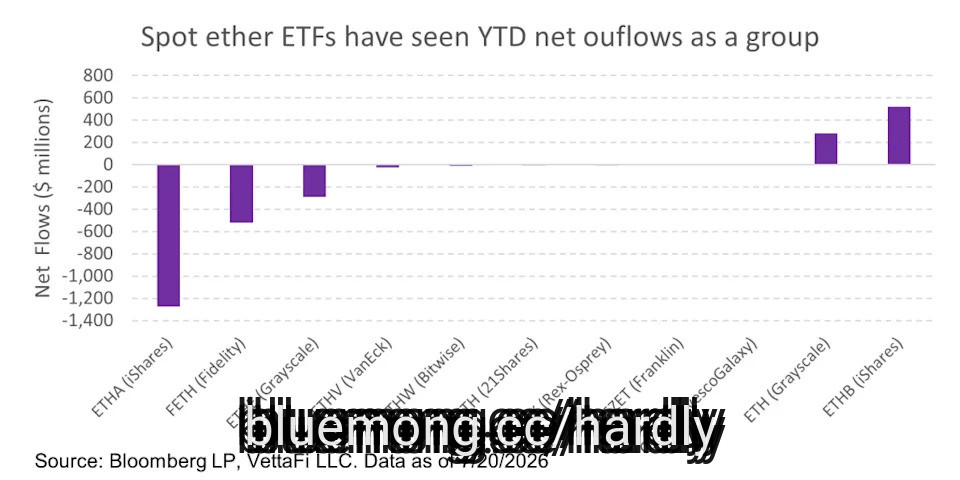
Bitcoin remains dominant, but that ETF demand has become more selective toward the lowest-cost products.
Hyperliquid ETFs show that investors still reward differentiated use cases, flexibility, and credible growth narratives.
Active multi-token ETFs can provide a nimble solution to combat the dynamic nature of the crypto market.
The crypto market has entered a more selective phase. Financial institutions continue to explore practical concepts like tokenization, stablecoins, and incorporating crypto trading alongside equities on their platforms. This momentum persists even as broader enthusiasm for cryptocurrencies has cooled. And in the background, regulatory progress continues to evolve as the CLARITY Act nears the finish line, providing tailwinds for the long term.
#financial
Bitcoin remains dominant, but that ETF demand has become more selective toward the lowest-cost products.
Hyperliquid ETFs show that investors still reward differentiated use cases, flexibility, and credible growth narratives.
Active multi-token ETFs can provide a nimble solution to combat the dynamic nature of the crypto market.
The crypto market has entered a more selective phase. Financial institutions continue to explore practical concepts like tokenization, stablecoins, and incorporating crypto trading alongside equities on their platforms. This momentum persists even as broader enthusiasm for cryptocurrencies has cooled. And in the background, regulatory progress continues to evolve as the CLARITY Act nears the finish line, providing tailwinds for the long term.
#financial



5 days ago
This article was originally published on ETFTrends.com.
Bitcoin, the largest digital currency by market capitalization, is showing signs. It surpassed the psychologically important $65,000 level and is higher by nearly 3% for the week ending July 21.
It remains to be seen if months of cryptocurrency frustration are nearing an end. The same is true regarding a bitcoin bottom. However, with the CLARITY Act close to passing and bullish price action of late, crypto investors may have credible reasons to get back in the game. Thanks to the NEOS Bitcoin High Income ETF (BTCI), market participants can earn compensation while waiting for the bitcoin dust to settle.
The $1.12 billion BTCI turns two years old in October and has rapidly become royalty in the bitcoin income ETF ***** e. The actively managed BTCI writes or sells options on a pair of well-known spot bitcoin ETFs, ensuring a solid liquidity profile. It's a smart income move, as highlighted by a 30-day SEC yield 2.13% — a percentage previously unthinkable with crypto ETFs.
BTCI's status as an income-generating bitcoin avenue is potentially attractive at a time when some market participants are apprehensive about what comes next for the dominant digital currency.
#Bitcoin #btci #Crypto
Bitcoin, the largest digital currency by market capitalization, is showing signs. It surpassed the psychologically important $65,000 level and is higher by nearly 3% for the week ending July 21.
It remains to be seen if months of cryptocurrency frustration are nearing an end. The same is true regarding a bitcoin bottom. However, with the CLARITY Act close to passing and bullish price action of late, crypto investors may have credible reasons to get back in the game. Thanks to the NEOS Bitcoin High Income ETF (BTCI), market participants can earn compensation while waiting for the bitcoin dust to settle.
The $1.12 billion BTCI turns two years old in October and has rapidly become royalty in the bitcoin income ETF ***** e. The actively managed BTCI writes or sells options on a pair of well-known spot bitcoin ETFs, ensuring a solid liquidity profile. It's a smart income move, as highlighted by a 30-day SEC yield 2.13% — a percentage previously unthinkable with crypto ETFs.
BTCI's status as an income-generating bitcoin avenue is potentially attractive at a time when some market participants are apprehensive about what comes next for the dominant digital currency.
#Bitcoin #btci #Crypto


6 days ago
This article was originally published on ETFTrends.com.
Robinhood Markets (HOOD) reports second-quarter results on Wednesday, July 29. That could be an ideal time for active traders to consider single-stock ETFs such as the Direxion Daily HOOD Bull 2X ETF (HODU).
Ahead of the report, traders considering this leveraged ETF should examine some of the catalysts that could move Robinhood shares. It should also be noted that HODU attempts to deliver 200% of the daily returns of the financial services stock. That is to say, this is a short-term ETF, not one that should be treated as a buy-and-hold fund.
Heading into Robinhood earnings, Wall Street is bullish on the financial services stock. On Monday, Needham reiterated a "buy" rating on the stock, while boosting its price target to $123 from $97. Citing strength across various business lines, including cryptocurrency, equities, options and prediction markets, Needham boosted its 2026 and 2027 revenue estimates on Robinhood. It noted that the brokerage firm's core retail customer remains heavily engaged with the platform.
In recent months, prediction markets have increasingly become a focal point in the Robinhood investment thesis. It's an issue for traders considering HODU to stay abreast of as well.
#hodu
Robinhood Markets (HOOD) reports second-quarter results on Wednesday, July 29. That could be an ideal time for active traders to consider single-stock ETFs such as the Direxion Daily HOOD Bull 2X ETF (HODU).
Ahead of the report, traders considering this leveraged ETF should examine some of the catalysts that could move Robinhood shares. It should also be noted that HODU attempts to deliver 200% of the daily returns of the financial services stock. That is to say, this is a short-term ETF, not one that should be treated as a buy-and-hold fund.
Heading into Robinhood earnings, Wall Street is bullish on the financial services stock. On Monday, Needham reiterated a "buy" rating on the stock, while boosting its price target to $123 from $97. Citing strength across various business lines, including cryptocurrency, equities, options and prediction markets, Needham boosted its 2026 and 2027 revenue estimates on Robinhood. It noted that the brokerage firm's core retail customer remains heavily engaged with the platform.
In recent months, prediction markets have increasingly become a focal point in the Robinhood investment thesis. It's an issue for traders considering HODU to stay abreast of as well.
#hodu

6 days ago
This article was originally published on ETFTrends.com.
According to Bankrate's Mortgage Rates, the national average for a 30-year fixed mortgage is 6.61%. That's uncomfortably high and a major headwind to many prospective homebuyers, particularly those in the first-time category. But it's not all bad news in the mortgage market. Confirming opportunity abounds for fixed income investors with ETFs such as the WisdomTree Mortgage Plus Bond Fund (MTGP), some experts view mortgage-backed securities (MBS) as one of the more fundamentally sturdy corners of the bond market.
The actively managed MTGP, which turns seven years old in November, sports a 30-day SEC yield of 4.31%. That's impressive when considering the scant credit risk typically ***** ociated with MBS. The case for the WisdomTree ETF is fortified by a robust fundamental outlook.
"Agency mortgage-backed securities fundamentals remain supported by a combination of elevated mortgage rates, limited refinancing incentives, constrained housing turnover, and low net supply," noted BNP Paribas.
As noted above, high mortgage rates are drags on residential real estate activity. Those rates are barriers to entry for many buyers, which morphs into a problem for sellers. However, that situation can be a boon for MBS.
#market
According to Bankrate's Mortgage Rates, the national average for a 30-year fixed mortgage is 6.61%. That's uncomfortably high and a major headwind to many prospective homebuyers, particularly those in the first-time category. But it's not all bad news in the mortgage market. Confirming opportunity abounds for fixed income investors with ETFs such as the WisdomTree Mortgage Plus Bond Fund (MTGP), some experts view mortgage-backed securities (MBS) as one of the more fundamentally sturdy corners of the bond market.
The actively managed MTGP, which turns seven years old in November, sports a 30-day SEC yield of 4.31%. That's impressive when considering the scant credit risk typically ***** ociated with MBS. The case for the WisdomTree ETF is fortified by a robust fundamental outlook.
"Agency mortgage-backed securities fundamentals remain supported by a combination of elevated mortgage rates, limited refinancing incentives, constrained housing turnover, and low net supply," noted BNP Paribas.
As noted above, high mortgage rates are drags on residential real estate activity. Those rates are barriers to entry for many buyers, which morphs into a problem for sellers. However, that situation can be a boon for MBS.
#market


6 days ago
This article was originally published on ETFTrends.com.
Each year, as headlines tout inflation or red hot returns, investors revisit their favorite value stocks. Value is rarely as flashy as growth, and in a moment defined by AI, value has trailed lots of tech and growth strategies. In response, many investors want to wait for the right moment for value. That may be a mistake, when an active value ETF like the T. Rowe Price Value ETF (TVAL) is already delivering in the value stocks ******* e.
The S&P 500 is overvalued almost 200% based on recent data from June 2026.
Even while investors want to wait for an AI bubble burst, an active value ETF can deliver right now.
TVAL has outperformed its benchmark, the Russell 1000 Value index.
#Growth
Each year, as headlines tout inflation or red hot returns, investors revisit their favorite value stocks. Value is rarely as flashy as growth, and in a moment defined by AI, value has trailed lots of tech and growth strategies. In response, many investors want to wait for the right moment for value. That may be a mistake, when an active value ETF like the T. Rowe Price Value ETF (TVAL) is already delivering in the value stocks ******* e.
The S&P 500 is overvalued almost 200% based on recent data from June 2026.
Even while investors want to wait for an AI bubble burst, an active value ETF can deliver right now.
TVAL has outperformed its benchmark, the Russell 1000 Value index.
#Growth


6 days ago
This article was originally published on ETFTrends.com.
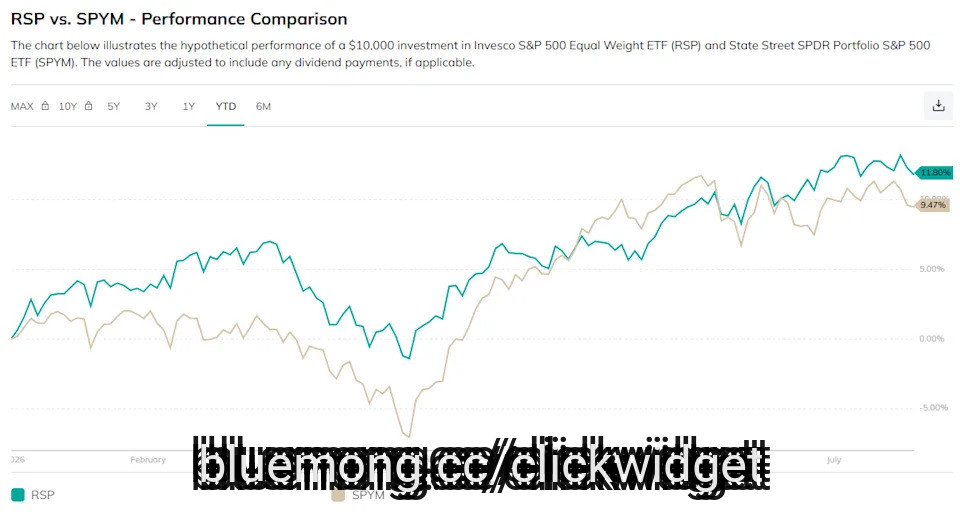
The Q2 earnings season is still in its early days, but it's already handing us a reality check: growth is broadening out. These conditions are putting one tried-and-tested segment of smart beta ETFs, the equal-weighted strategies, into sharp focus. And investors are taking notice.
Earnings growth is broadening, with S&P 500 on track for a strong 24% YoY earning expansion in Q2.
The "S&P 493" catch-up is gaining momentum with ******* ysts expecting these stocks to outpace the Mag 7 in Q2.
Equal-weighted ETFs are standing out as a way to mitigate tech/AI concentration risk and capture gains across broader market leaders.
#etfs #Growth #weighted #originally
The Q2 earnings season is still in its early days, but it's already handing us a reality check: growth is broadening out. These conditions are putting one tried-and-tested segment of smart beta ETFs, the equal-weighted strategies, into sharp focus. And investors are taking notice.
Earnings growth is broadening, with S&P 500 on track for a strong 24% YoY earning expansion in Q2.
The "S&P 493" catch-up is gaining momentum with ******* ysts expecting these stocks to outpace the Mag 7 in Q2.
Equal-weighted ETFs are standing out as a way to mitigate tech/AI concentration risk and capture gains across broader market leaders.
#etfs #Growth #weighted #originally


6 days ago
This article was originally published on ETFTrends.com.
The threads of the markets continue to weave a complicated story. The landscape has moved from a backdrop characterized by a hawkish Fed, a bulletproof AI investment cycle, and a willingness to look through Iran/U.S. tensions, to one defined by a respite from Fed tightening, doubts about the return on investment of AI spending, and a renewed Iran/U.S. conflict with no end in sight.
Inflation prints have surprised to the downside recently, which takes the risk of an immediate rate hike at the July FOMC off the table. Last week's CPI and PPI readings printed below most expectations, providing a reprieve from the worrying inflation dynamics that emerged following the March energy shock. CPI fell month-over-month in June, the largest monthly decline since April 2020, and is now tracking at 3.5%, down from 4.2% in May. PPI also declined by 0.3% in June and slowed to 5.5% on a year-over-year basis from 6.0% in May.
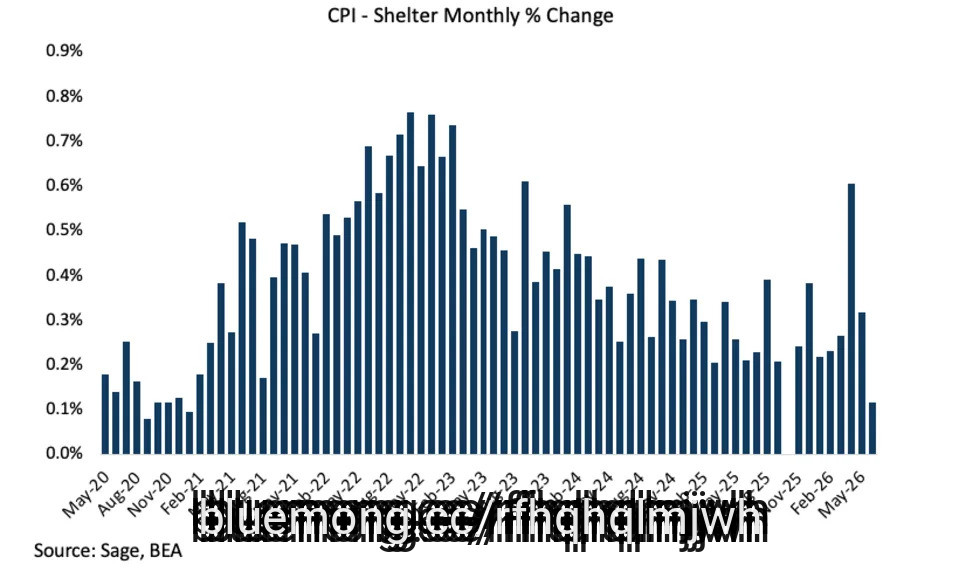
The decline in headline CPI and PPI was expected given lower energy prices in June. More encouragingly, shelter inflation, a major contributor to core inflation that has little to do with energy prices in the near-term, rose by only 0.1% in June, the smallest monthly increase in six years.
Markets continue to price a benign inflation outlook, even if recent geopolitical developments have increased uncertainty at the margin. One-year inflation swaps imply inflation of just 2.02% over the next year, suggesting investors expect the Iran-related energy shock to remain contained and elevated current prices to fade through base effects. A July FOMC hike appears unlikely, as markets are implying only a 14% probability.
#inflation #fomc #continue
The threads of the markets continue to weave a complicated story. The landscape has moved from a backdrop characterized by a hawkish Fed, a bulletproof AI investment cycle, and a willingness to look through Iran/U.S. tensions, to one defined by a respite from Fed tightening, doubts about the return on investment of AI spending, and a renewed Iran/U.S. conflict with no end in sight.
Inflation prints have surprised to the downside recently, which takes the risk of an immediate rate hike at the July FOMC off the table. Last week's CPI and PPI readings printed below most expectations, providing a reprieve from the worrying inflation dynamics that emerged following the March energy shock. CPI fell month-over-month in June, the largest monthly decline since April 2020, and is now tracking at 3.5%, down from 4.2% in May. PPI also declined by 0.3% in June and slowed to 5.5% on a year-over-year basis from 6.0% in May.
The decline in headline CPI and PPI was expected given lower energy prices in June. More encouragingly, shelter inflation, a major contributor to core inflation that has little to do with energy prices in the near-term, rose by only 0.1% in June, the smallest monthly increase in six years.
Markets continue to price a benign inflation outlook, even if recent geopolitical developments have increased uncertainty at the margin. One-year inflation swaps imply inflation of just 2.02% over the next year, suggesting investors expect the Iran-related energy shock to remain contained and elevated current prices to fade through base effects. A July FOMC hike appears unlikely, as markets are implying only a 14% probability.
#inflation #fomc #continue

6 days ago
This article was originally published on ETFTrends.com.
The municipal bond landscape continues to receive significant interest in both flows and supply. That, and investors looking to get muni bonds exposure for tax purposes in portfolios, positions them for serious ETF interest. American Century Investments Vice President and senior portfolio manager, Joe Gotelli recently spoke with VettaFi on his views on the muni bonds market right now.
Gotelli identified the belly of the muni bond curve as a place for real opportunities.
He ****** erted that front end richness and rising Treasury yields as risk areas to watch.
American Century Investments provides muni exposure via ETFs like TAXF and CATF.
#muni #century
The municipal bond landscape continues to receive significant interest in both flows and supply. That, and investors looking to get muni bonds exposure for tax purposes in portfolios, positions them for serious ETF interest. American Century Investments Vice President and senior portfolio manager, Joe Gotelli recently spoke with VettaFi on his views on the muni bonds market right now.
Gotelli identified the belly of the muni bond curve as a place for real opportunities.
He ****** erted that front end richness and rising Treasury yields as risk areas to watch.
American Century Investments provides muni exposure via ETFs like TAXF and CATF.
#muni #century


7 days ago
This article was originally published on ETFTrends.com.
Crypto has spent more than a decade on the edge of mainstream investing, cast either as a technological revolution or a speculative distraction. According to a new T. Rowe Price research report ******* led "Crypto edges into the mainstream," that debate has shifted.
T. Rowe Price research favors sizing diverse crypto exposure deliberately over chasing single tokens.
A 2.5% bitcoin allocation added 7% of a 60/40 portfolio's five-year risk.
Active management, not passive indexes, can better track crypto's fast-moving networks.
#rowe #mainstream #etftrends
Crypto has spent more than a decade on the edge of mainstream investing, cast either as a technological revolution or a speculative distraction. According to a new T. Rowe Price research report ******* led "Crypto edges into the mainstream," that debate has shifted.
T. Rowe Price research favors sizing diverse crypto exposure deliberately over chasing single tokens.
A 2.5% bitcoin allocation added 7% of a 60/40 portfolio's five-year risk.
Active management, not passive indexes, can better track crypto's fast-moving networks.
#rowe #mainstream #etftrends


7 days ago
This article was originally published on ETFTrends.com.
In another one of this week's tests of investor sentiment around artificial intelligence (AI) – and a tentpole one at that -- Google's parent company, Alphabet (NASDAQ: GOOGL), reports second-quarter results after the close of U.S. markets on Wednesday, July 22.
This report could be an opportune time for short-term traders to consider Alphabet single-stock ETFs, such as the Direxion Daily GOOGL Bull 2X Shares (GGLL) and the Direxion Daily GOOGL Bear 1X Shares (GGLS). When preparing for Alphabet's earnings with these funds, traders should note that GGLL attempts to deliver 200% of the daily returns of the internet stock, while the bearish GGLS seeks intraday performances corresponding with the inverse returns of Alphabet.
Although shares of Alphabet are up 12% year to date, they have slipped 3% over the past month — perhaps signaling a near-term burden of proof for the company as it heads into its earnings report. If that's accurate, either GGLL or GGLS could be worth considering.
"Look for Google Cloud growth in both quarterly numbers and contracted future revenue (or backlog)," noted Malik Khan of Morningstar. "We think investors want certainty that the $460 billion backlog will convert to sales over the next two years, and also want to know what that trajectory will look like. Non-backlog factors, such as consumption-based spending and new commitments, will be important for understanding the health of the cloud business."
#daily #cloud
In another one of this week's tests of investor sentiment around artificial intelligence (AI) – and a tentpole one at that -- Google's parent company, Alphabet (NASDAQ: GOOGL), reports second-quarter results after the close of U.S. markets on Wednesday, July 22.
This report could be an opportune time for short-term traders to consider Alphabet single-stock ETFs, such as the Direxion Daily GOOGL Bull 2X Shares (GGLL) and the Direxion Daily GOOGL Bear 1X Shares (GGLS). When preparing for Alphabet's earnings with these funds, traders should note that GGLL attempts to deliver 200% of the daily returns of the internet stock, while the bearish GGLS seeks intraday performances corresponding with the inverse returns of Alphabet.
Although shares of Alphabet are up 12% year to date, they have slipped 3% over the past month — perhaps signaling a near-term burden of proof for the company as it heads into its earnings report. If that's accurate, either GGLL or GGLS could be worth considering.
"Look for Google Cloud growth in both quarterly numbers and contracted future revenue (or backlog)," noted Malik Khan of Morningstar. "We think investors want certainty that the $460 billion backlog will convert to sales over the next two years, and also want to know what that trajectory will look like. Non-backlog factors, such as consumption-based spending and new commitments, will be important for understanding the health of the cloud business."
#daily #cloud


7 days ago
This article was originally published on ETFTrends.com.
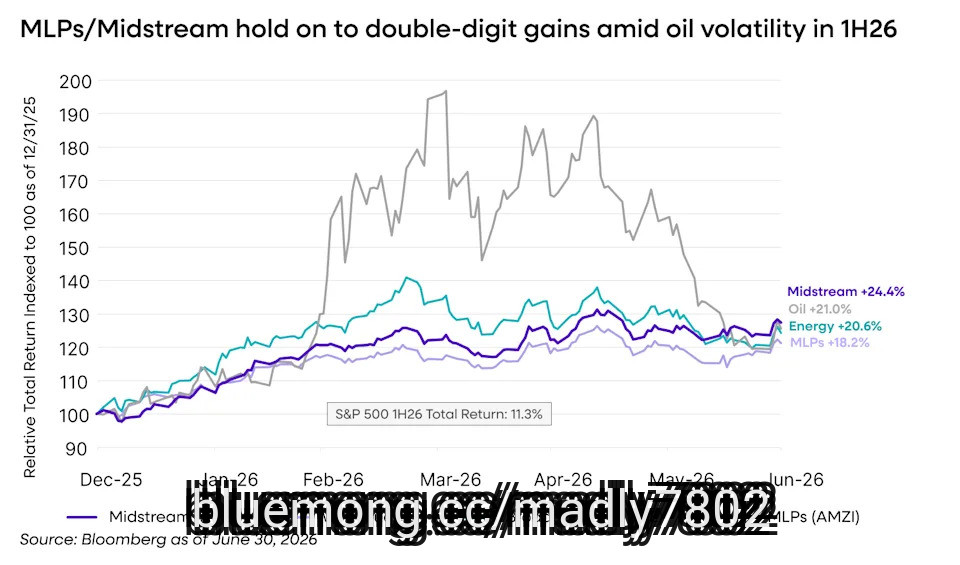
As we cross the halfway mark of 2026, the energy ******* e has already experienced a dramatic shift in the macro landscape. Supply disruptions in the Middle East turned a looming oil supply glut into a severe shortage with depleted global inventories, benefiting U.S. energy companies across the value chain. Amid significant swings in oil and equities broadly, MLPs and midstream managed to outperform the S&P 500 and kept pace with the energy benchmark in 1H26. Midstream names also largely beat 1Q26 earnings estimates, with select companies raising EBITDA guidance for the full year. Learn more below about the key topics impacting MLPs and midstream in 1H26.
Midstream had a strong first quarter and showcased its defensiveness in the second quarter. The sector held onto early gains as oil prices pulled back.
Surging liquefied natural gas (LNG) export demand and power needs are driving record midstream backlogs and benefiting natural gas infrastructure companies.
Midstream operators are rapidly building new pipeline takeaway capacity, which is starting to resolve Permian natural gas bottlenecks this year.
#midstream #energy #benefiting
As we cross the halfway mark of 2026, the energy ******* e has already experienced a dramatic shift in the macro landscape. Supply disruptions in the Middle East turned a looming oil supply glut into a severe shortage with depleted global inventories, benefiting U.S. energy companies across the value chain. Amid significant swings in oil and equities broadly, MLPs and midstream managed to outperform the S&P 500 and kept pace with the energy benchmark in 1H26. Midstream names also largely beat 1Q26 earnings estimates, with select companies raising EBITDA guidance for the full year. Learn more below about the key topics impacting MLPs and midstream in 1H26.
Midstream had a strong first quarter and showcased its defensiveness in the second quarter. The sector held onto early gains as oil prices pulled back.
Surging liquefied natural gas (LNG) export demand and power needs are driving record midstream backlogs and benefiting natural gas infrastructure companies.
Midstream operators are rapidly building new pipeline takeaway capacity, which is starting to resolve Permian natural gas bottlenecks this year.
#midstream #energy #benefiting



7 days ago
This article was originally published on ETFTrends.com.
Declining money market yields make sitting in cash increasingly costly.
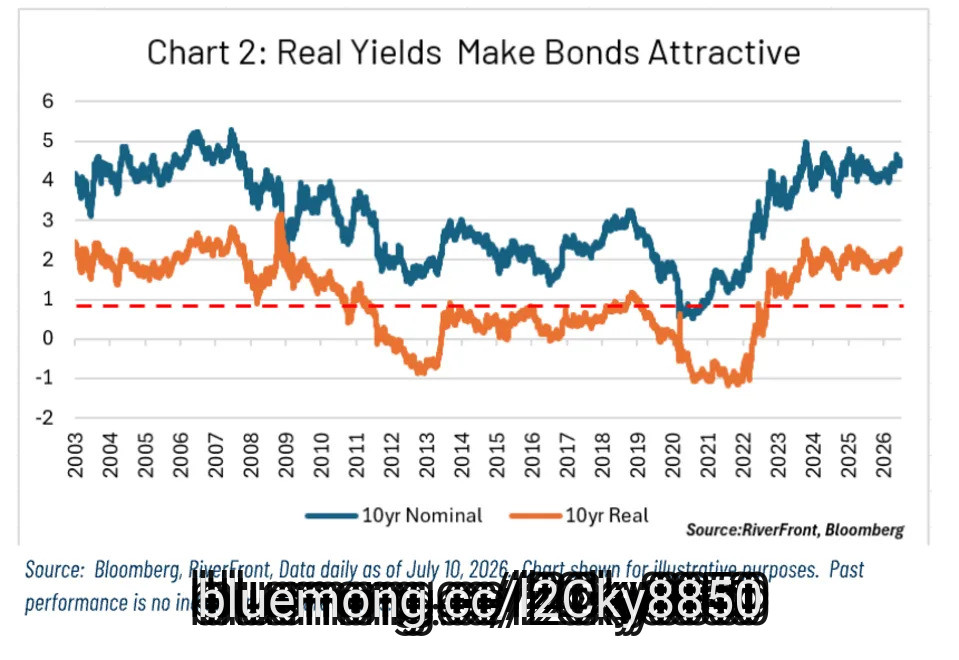
Treasuries offer attractive real yields and lower volatility than equities.
Strong equity gains create an opportunity to rebalance into bonds.
Now that the book has been closed on the first half of 2026 - a period propelled by the AI-driven technology trade - investors are searching for what to do next. For those investors that have ridden the stock market up to near all-time highs, they may be thinking about reducing their equity exposure and adding fixed income to their portfolio. Others that have sat paralyzed on the sidelines, looking for the right time to enter the market, may simply want their money to work for them. We will walk through how both types of investors should view bonds moving forward.
#market #Equity #bonds
Declining money market yields make sitting in cash increasingly costly.
Treasuries offer attractive real yields and lower volatility than equities.
Strong equity gains create an opportunity to rebalance into bonds.
Now that the book has been closed on the first half of 2026 - a period propelled by the AI-driven technology trade - investors are searching for what to do next. For those investors that have ridden the stock market up to near all-time highs, they may be thinking about reducing their equity exposure and adding fixed income to their portfolio. Others that have sat paralyzed on the sidelines, looking for the right time to enter the market, may simply want their money to work for them. We will walk through how both types of investors should view bonds moving forward.
#market #Equity #bonds


11 days ago
This article was originally published on ETFTrends.com.
The crescendo of AI-related spending is affecting all corners of the capital markets. Debt financing has been especially impacted this year given the epic financing needs of the largest hyperscalers. The big four — Meta, Microsoft, Alphabet, and Amazon — are slated to spend at least $700 billion in 2026, roughly 80% higher than 2025's record figure. That amounts to 2.2% of GDP in AI capex from these four names alone, before accounting for the many other companies investing at similar scale.
These capex plans do not come cheap, and the debt markets are bearing much of the load. Investment grade corporate issuance has already cleared $976 billion through May, running well ahead of the record pace set in each of the past five years, including 2025 — itself a record. Hyperscalers are the marginal driver: Alphabet, Amazon, Meta, Microsoft, and Oracle have priced roughly $110 billion of US paper year-to-date, accounting for nearly 16% of IG issuance, versus just 3% a year ago.
Yet spreads have barely flinched as demand is meeting supply. IG spreads sit near 80 basis points, consistent with the tightest levels since the mid-1990s. Yield buyers, such as pensions, insurance companies, and other liability-driven allocators have absorbed the supply, happy to harvest all-in yields that remain above 5% for IG corporates, even as spread compensation shrinks.
Spreads this tight leave little margin for error. A rebound in M&A activity, a stumble in hyperscaler return on AI investment, or a bout of supply indigestion could easily reverse positive sentiment on corporates. Hyperscaler spreads already trade more than 25 bps wider than the broader IG index, a 10-year high, hinting that the market is beginning to differentiate among issuers. Spreads are priced for a perfect AI capex cycle, but the supply imbalance will eventually correct through a buyer's revolt. Whether that comes in three months or three years is uncertain, but the current spread setup leaves little cushion when it does. All-in yields still look attractive; however, with corporate spreads offering little downside protection, we prefer to source yield from sectors with better risk-adjusted compensation.
The crescendo of AI-related spending is affecting all corners of the capital markets. Debt financing has been especially impacted this year given the epic financing needs of the largest hyperscalers. The big four — Meta, Microsoft, Alphabet, and Amazon — are slated to spend at least $700 billion in 2026, roughly 80% higher than 2025's record figure. That amounts to 2.2% of GDP in AI capex from these four names alone, before accounting for the many other companies investing at similar scale.
These capex plans do not come cheap, and the debt markets are bearing much of the load. Investment grade corporate issuance has already cleared $976 billion through May, running well ahead of the record pace set in each of the past five years, including 2025 — itself a record. Hyperscalers are the marginal driver: Alphabet, Amazon, Meta, Microsoft, and Oracle have priced roughly $110 billion of US paper year-to-date, accounting for nearly 16% of IG issuance, versus just 3% a year ago.
Yet spreads have barely flinched as demand is meeting supply. IG spreads sit near 80 basis points, consistent with the tightest levels since the mid-1990s. Yield buyers, such as pensions, insurance companies, and other liability-driven allocators have absorbed the supply, happy to harvest all-in yields that remain above 5% for IG corporates, even as spread compensation shrinks.
Spreads this tight leave little margin for error. A rebound in M&A activity, a stumble in hyperscaler return on AI investment, or a bout of supply indigestion could easily reverse positive sentiment on corporates. Hyperscaler spreads already trade more than 25 bps wider than the broader IG index, a 10-year high, hinting that the market is beginning to differentiate among issuers. Spreads are priced for a perfect AI capex cycle, but the supply imbalance will eventually correct through a buyer's revolt. Whether that comes in three months or three years is uncertain, but the current spread setup leaves little cushion when it does. All-in yields still look attractive; however, with corporate spreads offering little downside protection, we prefer to source yield from sectors with better risk-adjusted compensation.



12 days ago
This article was originally published on ETFTrends.com.
On July 15, Direxion launched the Direxion Daily SK Hynix Bull 2X ETF (SKHL), seeking to replicate double the daily performance of the South Korean semiconductor manufacturers Sk Hynix (SKHY). The fund provides leveraged exposure to the world's leading supplier of high-bandwidth memory chips. It boasts an expense ratio of 97 basis points.
Direxion launched the Direxion Daily SK Hynix Bull 2X ETF (SKHL) on July 15. It provides investors with 2X daily leveraged exposure to the performance of SK Hynix.
The company operates as a leading memory semiconductor provider. It supplies critical HBM, DRAM, and NAND flash technology to major tech companies like Nvidia, Apple, and Microsoft.
SK Hynix is now the largest-ever foreign U.S. listing, raising $26.5 billion through its Nasdaq ADR debut. Despite early volatility, the stock continues to attract significant investor interest as a primary memory component supplier.
On July 15, Direxion launched the Direxion Daily SK Hynix Bull 2X ETF (SKHL), seeking to replicate double the daily performance of the South Korean semiconductor manufacturers Sk Hynix (SKHY). The fund provides leveraged exposure to the world's leading supplier of high-bandwidth memory chips. It boasts an expense ratio of 97 basis points.
Direxion launched the Direxion Daily SK Hynix Bull 2X ETF (SKHL) on July 15. It provides investors with 2X daily leveraged exposure to the performance of SK Hynix.
The company operates as a leading memory semiconductor provider. It supplies critical HBM, DRAM, and NAND flash technology to major tech companies like Nvidia, Apple, and Microsoft.
SK Hynix is now the largest-ever foreign U.S. listing, raising $26.5 billion through its Nasdaq ADR debut. Despite early volatility, the stock continues to attract significant investor interest as a primary memory component supplier.


14 days ago
This article was originally published on ETFTrends.com.
Missiles and drones disrupted skies over Dubai in late February, following U.S.-Israeli strikes on Iran. Private aviation executive Jonny Dodge watched his phone light up nonstop. His firm, YourSky, flies much of the emirate's crypto elite, giving him a front-row seat to the panic.
Missile strikes near Dubai triggered a wave of crypto executive evacuations in February.
The UAE's on-chain crypto value hit $56 billion in 2024-2025, up 33% year over year.
Founders are splitting operations across Dubai, Hong Kong and Singapore instead of leaving.
Missiles and drones disrupted skies over Dubai in late February, following U.S.-Israeli strikes on Iran. Private aviation executive Jonny Dodge watched his phone light up nonstop. His firm, YourSky, flies much of the emirate's crypto elite, giving him a front-row seat to the panic.
Missile strikes near Dubai triggered a wave of crypto executive evacuations in February.
The UAE's on-chain crypto value hit $56 billion in 2024-2025, up 33% year over year.
Founders are splitting operations across Dubai, Hong Kong and Singapore instead of leaving.

15 days ago
This article was originally published on ETFTrends.com.
In my former career as a stock research ******* yst, a unique dynamic always signaled a high-conviction idea. While I sat there building out earnings models and reworking valuation ******* umptions, the technical ******* ysts would look for relative strength or weakness. The chartists would regularly poke holes in my fundamental ******* ysis recommendations. However, occasionally, my research would independently flag an undervalued stock that the technical ******* ysis supported as a breakout. The recently launched Defiance KSM TipRanks ******* yst ETF (RANK) brings these two investment approaches together nicely. The new index ETF can act as a bridge that blends fundamental research and momentum investing.
The newly launched RANK ETF blends fundamental ******* ysis and technical trends in one TipRanks index approach.
Risk management constraints keep individual stock weights capped at 6% and Walmart (WMT) was a recent top position.
RANK's underlying TipRanks index outpaced standalone strategies over a trailing three-year stretch, achieving a 37% annualized return as of June 2026.
In my former career as a stock research ******* yst, a unique dynamic always signaled a high-conviction idea. While I sat there building out earnings models and reworking valuation ******* umptions, the technical ******* ysts would look for relative strength or weakness. The chartists would regularly poke holes in my fundamental ******* ysis recommendations. However, occasionally, my research would independently flag an undervalued stock that the technical ******* ysis supported as a breakout. The recently launched Defiance KSM TipRanks ******* yst ETF (RANK) brings these two investment approaches together nicely. The new index ETF can act as a bridge that blends fundamental research and momentum investing.
The newly launched RANK ETF blends fundamental ******* ysis and technical trends in one TipRanks index approach.
Risk management constraints keep individual stock weights capped at 6% and Walmart (WMT) was a recent top position.
RANK's underlying TipRanks index outpaced standalone strategies over a trailing three-year stretch, achieving a 37% annualized return as of June 2026.

16 days ago
This article was originally published on ETFTrends.com.
Welcome to Trends with Benefits, the podcast that gives you an insider's edge into finance, tech, and investing. Hosted by Ed Lopez, VanEck's Head of Product Management.
Explore why the S&P may be mispricing geopolitical risk, the case for India, the dollar's decline, and gold as a trade (not a strategy), with Mercer Advisors CIO Don Calcagni.
For more news, information, and strategy, visit the Beyond Basic Beta Content Hub.
POPULAR ARTICLES AND RESOURCES FROM ETFTRENDS.COM
Welcome to Trends with Benefits, the podcast that gives you an insider's edge into finance, tech, and investing. Hosted by Ed Lopez, VanEck's Head of Product Management.
Explore why the S&P may be mispricing geopolitical risk, the case for India, the dollar's decline, and gold as a trade (not a strategy), with Mercer Advisors CIO Don Calcagni.
For more news, information, and strategy, visit the Beyond Basic Beta Content Hub.
POPULAR ARTICLES AND RESOURCES FROM ETFTRENDS.COM


17 days ago
This article was originally published on ETFTrends.com.
To learn more about Main Management and how some of our strategies could help you with your investment needs, please contact Darol Ryan, our Head of Sales and National Accounts, at ryanmainmgt.com. Also check out Main Management CEO Kim Arthur on Twitter and Main Management on LinkedIn.
POPULAR ARTICLES AND RESOURCES FROM ETFTRENDS.COM
SPY ETF Quote
VOO ETF Quote
To learn more about Main Management and how some of our strategies could help you with your investment needs, please contact Darol Ryan, our Head of Sales and National Accounts, at ryanmainmgt.com. Also check out Main Management CEO Kim Arthur on Twitter and Main Management on LinkedIn.
POPULAR ARTICLES AND RESOURCES FROM ETFTRENDS.COM
SPY ETF Quote
VOO ETF Quote



18 days ago
This article was originally published on ETFTrends.com.
VettaFi's Head of Research Todd Rosenbluth discussed the Vanguard US High-Yield Corporate BD Index ETF (VCHY) on this week's "ETF of the Week" podcast with Chuck Jaffe of "Money Life."
For more news, information, and strategy, visit the Fixed Income Content Hub.
POPULAR ARTICLES AND RESOURCES FROM ETFTRENDS.COM
SPY ETF Quote
VettaFi's Head of Research Todd Rosenbluth discussed the Vanguard US High-Yield Corporate BD Index ETF (VCHY) on this week's "ETF of the Week" podcast with Chuck Jaffe of "Money Life."
For more news, information, and strategy, visit the Fixed Income Content Hub.
POPULAR ARTICLES AND RESOURCES FROM ETFTRENDS.COM
SPY ETF Quote


19 days ago
This article was originally published on ETFTrends.com.
Artificial intelligence (AI) data centers, a fractured energy security picture, and a wave of electrification are converging into a supercycle for clean energy infrastructure. That's according to executives from SS&C ALPS Advisors and CIBC Private Wealth.
Global clean energy investment hit a record $2.3 trillion in 2025, up 8% year over year.
AI data centers could consume 10% of U.S. electricity by 2030, straining the power grid.
ACES targets North American clean energy firms that draw over half their value from the sector.
Artificial intelligence (AI) data centers, a fractured energy security picture, and a wave of electrification are converging into a supercycle for clean energy infrastructure. That's according to executives from SS&C ALPS Advisors and CIBC Private Wealth.
Global clean energy investment hit a record $2.3 trillion in 2025, up 8% year over year.
AI data centers could consume 10% of U.S. electricity by 2030, straining the power grid.
ACES targets North American clean energy firms that draw over half their value from the sector.

19 days ago
This article was originally published on ETFTrends.com.
First Half of 2026 Sees a Shift in Leadership
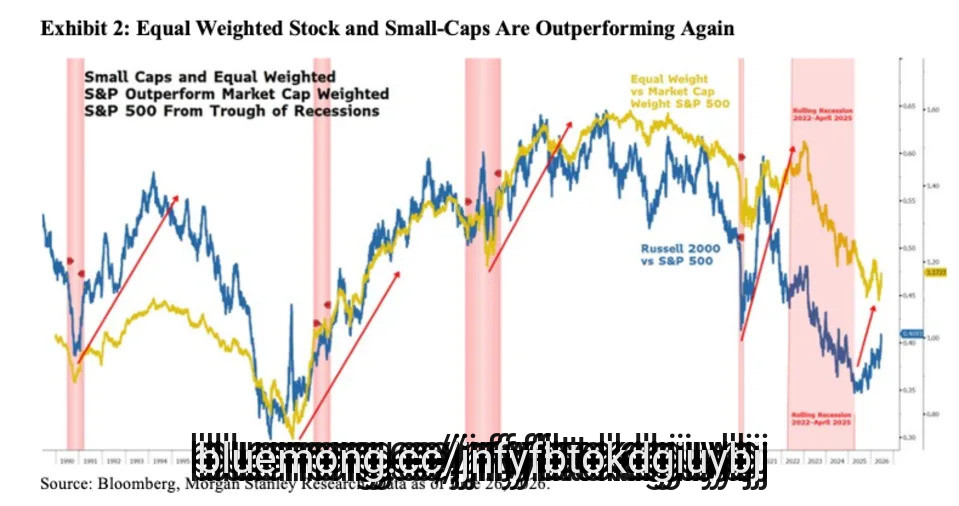
Despite conflict in the Middle East, sharp oil price swings, and resurging inflation concerns, equity markets posted positive returns in the first half of 2026 amid de-escalating geopolitical risk, strong corporate earnings led by the AI infrastructure buildout, and a still-resilient economy. The Nasdaq-100 Index and S&P 500 Index recovered sharply within the period, each rallying over 32% and 18%, respectively, since the March lows. Notably, US small-caps via the Russell 2000 Index saw their strongest first half since 1991, gaining over 22%. US mid-caps (+17.4%) and international developed equities (+15.1%) followed. Bonds mostly fared well as high yield credits rose 1.9%, municipal bonds gained 1.8%, and Treasury Inflation Protected Notes were up 1.2%. Aside from silver (-17.0%) and gold (-7.0%), commodities posted positive returns as crude oil surged 53.9% and broad-based commodities rose 14.4%.
Fed Holds, Warsh Signals Less Guidance
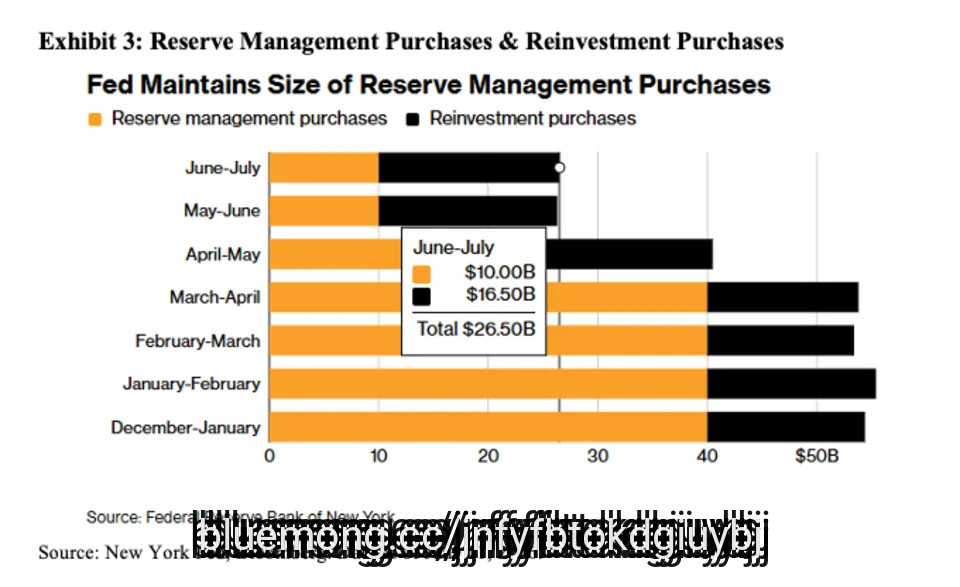
The Federal Reserve held the federal funds rate steady at the June FOMC meeting, keeping the target range at 3.50–3.75%. This marks the 4th consecutive hold in 2026 and was the first meeting chaired by Kevin Warsh, who succeeded Jerome Powell as Chair. While the decision to hold was widely expected, the accompanying communication shifted in a more hawkish direction. The policy statement was shortened to roughly 130 words from 341 in April, removed prior language signaling a bias toward future cuts, and emphasized that the Committee "will deliver price stability." Consistent with his prior skepticism of forward guidance, Chair Warsh also declined to submit his own projection in the dot plot. The economic backdrop offered little reason to ease, as May PCE rose 4.1% year-over-year, its highest reading since April 2023, while Nonfarm Payrolls remained firm at 172,000 and the unemployment rate held at 4.3%. The updated Summary of Economic Projections reflected the shift, with nine of eighteen officials now penciling in at least one 25 bps hike in 2026 and six projecting at least two, lifting the median year-end funds rate forecast to 3.8% from 3.4% in March and reversing the cut previously expected. Looking ahead, market pricing via the CME FedWatch Tool implies another hold at the July meeting, with the next move now priced as a hike rather than a cut.
First Half of 2026 Sees a Shift in Leadership
Despite conflict in the Middle East, sharp oil price swings, and resurging inflation concerns, equity markets posted positive returns in the first half of 2026 amid de-escalating geopolitical risk, strong corporate earnings led by the AI infrastructure buildout, and a still-resilient economy. The Nasdaq-100 Index and S&P 500 Index recovered sharply within the period, each rallying over 32% and 18%, respectively, since the March lows. Notably, US small-caps via the Russell 2000 Index saw their strongest first half since 1991, gaining over 22%. US mid-caps (+17.4%) and international developed equities (+15.1%) followed. Bonds mostly fared well as high yield credits rose 1.9%, municipal bonds gained 1.8%, and Treasury Inflation Protected Notes were up 1.2%. Aside from silver (-17.0%) and gold (-7.0%), commodities posted positive returns as crude oil surged 53.9% and broad-based commodities rose 14.4%.
Fed Holds, Warsh Signals Less Guidance
The Federal Reserve held the federal funds rate steady at the June FOMC meeting, keeping the target range at 3.50–3.75%. This marks the 4th consecutive hold in 2026 and was the first meeting chaired by Kevin Warsh, who succeeded Jerome Powell as Chair. While the decision to hold was widely expected, the accompanying communication shifted in a more hawkish direction. The policy statement was shortened to roughly 130 words from 341 in April, removed prior language signaling a bias toward future cuts, and emphasized that the Committee "will deliver price stability." Consistent with his prior skepticism of forward guidance, Chair Warsh also declined to submit his own projection in the dot plot. The economic backdrop offered little reason to ease, as May PCE rose 4.1% year-over-year, its highest reading since April 2023, while Nonfarm Payrolls remained firm at 172,000 and the unemployment rate held at 4.3%. The updated Summary of Economic Projections reflected the shift, with nine of eighteen officials now penciling in at least one 25 bps hike in 2026 and six projecting at least two, lifting the median year-end funds rate forecast to 3.8% from 3.4% in March and reversing the cut previously expected. Looking ahead, market pricing via the CME FedWatch Tool implies another hold at the July meeting, with the next move now priced as a hike rather than a cut.

19 days ago
This article was originally published on ETFTrends.com.
At first glance, broad-market funds seemingly offer similar exposure to the exact same underlying stocks. Various **** et managers offer several heavyweight funds that claim to capture the broader market. However, subtle differences in how these products are built, priced, and managed mean they are far from interchangeable.
Many funds track the same indexes.Structural and management differences such as fee structures and composition make products far from interchangeable.
Investors can potentially optimize their portfolios by choosing between different funds for the same index. For example, selecting SPY for high liquidity and active trading or SPYM for cost-efficient, long-term holding.
State Street is the first firm to offer distinct ETFs tracking all three major U.S. benchmarks—the S&P 500, the Dow Jones Industrial Average, and the Nasdaq-100—providing a complete suite of index-based strategies for investors.
At first glance, broad-market funds seemingly offer similar exposure to the exact same underlying stocks. Various **** et managers offer several heavyweight funds that claim to capture the broader market. However, subtle differences in how these products are built, priced, and managed mean they are far from interchangeable.
Many funds track the same indexes.Structural and management differences such as fee structures and composition make products far from interchangeable.
Investors can potentially optimize their portfolios by choosing between different funds for the same index. For example, selecting SPY for high liquidity and active trading or SPYM for cost-efficient, long-term holding.
State Street is the first firm to offer distinct ETFs tracking all three major U.S. benchmarks—the S&P 500, the Dow Jones Industrial Average, and the Nasdaq-100—providing a complete suite of index-based strategies for investors.


19 days ago
This article was originally published on ETFTrends.com.
We may often come off as skeptical about AI in this newsletter. Our skepticism is primarily centered on the AI capital spend and AI company valuations rather than the AI tools themselves, which we have found both useful and exciting. In that spirit, I'm going to walk you through a simple example of how we have used AI tools in our research process.
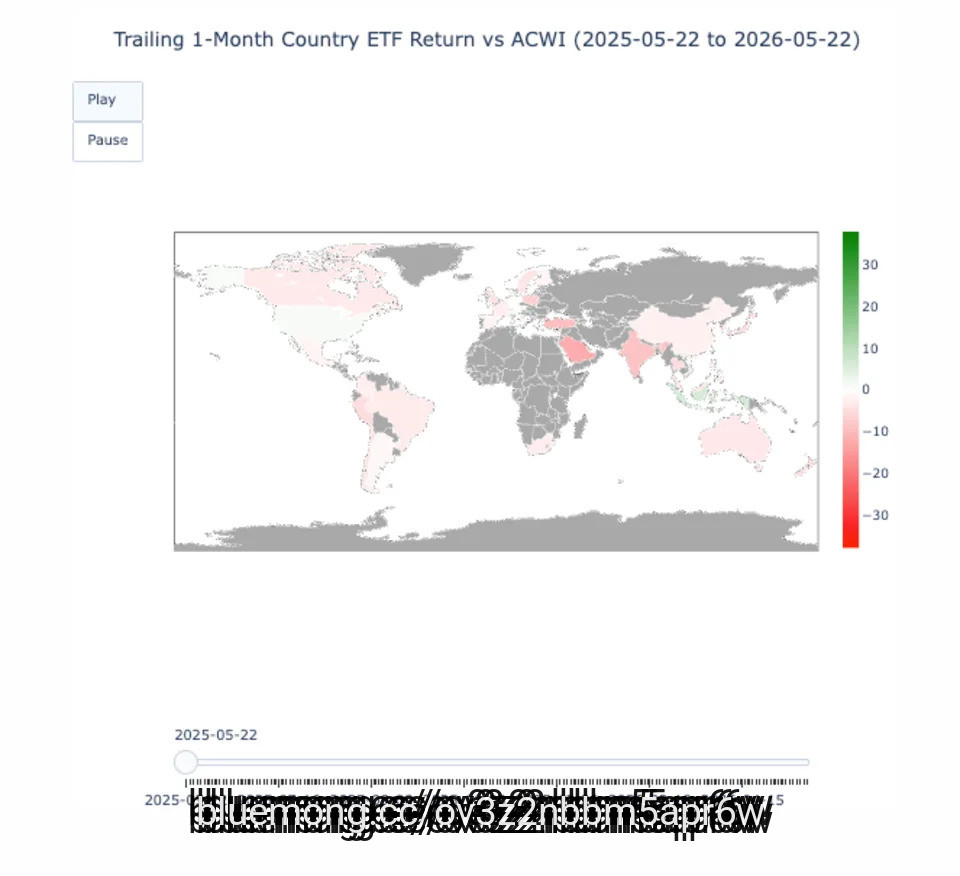
Our portfolio has had a fair amount of international exposure over the last 9 months, so I wanted to create a monitor of how various countries have been performing of late. I can pull a list of foreign ETF trailing returns with no effort, but what I really wanted was a map so I could easily see regional variations vs. single country variations.
There's no driving business need for this map and it's unlikely to generate a dollar of revenue. And so just a few years ago, I would not have bothered to take the week or so of time it would have taken to write and debug the map code myself. With ChatGPT (or Claude or Gemini or your LLM of choice), I no longer needed to consider whether making that map was worth a week of my time because I could now accomplish it with about 30-60 minutes of active time while ChatGPT did the brunt of the work.
I began by double checking with the LLM whether I had an exhaustive list of single-country ETFs. It suggested three countries I hadn't included, but it turned out these had been de-listed anyway. I ended up with a list of 44 countries that have dedicated US-listed ETFs.
We may often come off as skeptical about AI in this newsletter. Our skepticism is primarily centered on the AI capital spend and AI company valuations rather than the AI tools themselves, which we have found both useful and exciting. In that spirit, I'm going to walk you through a simple example of how we have used AI tools in our research process.
Our portfolio has had a fair amount of international exposure over the last 9 months, so I wanted to create a monitor of how various countries have been performing of late. I can pull a list of foreign ETF trailing returns with no effort, but what I really wanted was a map so I could easily see regional variations vs. single country variations.
There's no driving business need for this map and it's unlikely to generate a dollar of revenue. And so just a few years ago, I would not have bothered to take the week or so of time it would have taken to write and debug the map code myself. With ChatGPT (or Claude or Gemini or your LLM of choice), I no longer needed to consider whether making that map was worth a week of my time because I could now accomplish it with about 30-60 minutes of active time while ChatGPT did the brunt of the work.
I began by double checking with the LLM whether I had an exhaustive list of single-country ETFs. It suggested three countries I hadn't included, but it turned out these had been de-listed anyway. I ended up with a list of 44 countries that have dedicated US-listed ETFs.

20 days ago
This article was originally published on ETFTrends.com.
The action in Emerging Markets ETFs this year has been really interesting to watch. From record-breaking ******* et flows to impressive results, albeit massively dispersed, this category of funds has had quite a ride so far in 2026. What comes next could be equally interesting.
Asset flows shows massive capital migration into EM ETF category
EM ETFs delivering impressive results but dispersion sits in double digits
Structural AI earnings power is overturning the old playbook
The action in Emerging Markets ETFs this year has been really interesting to watch. From record-breaking ******* et flows to impressive results, albeit massively dispersed, this category of funds has had quite a ride so far in 2026. What comes next could be equally interesting.
Asset flows shows massive capital migration into EM ETF category
EM ETFs delivering impressive results but dispersion sits in double digits
Structural AI earnings power is overturning the old playbook

20 days ago
This article was originally published on ETFTrends.com.
AI may reshape the labor market in ways that are difficult to predict, and it won't be the first time this has happened. In the short term, the labor market appears to have stabilized and there are some early signs of acceleration. A stronger labor market may turn the Federal Reserve's attention back toward fighting high inflation, and bond markets have noticed. Much of the market's recent movement has been driven AI-related companies, creating a stark divide between AI and everything else. Agricultural exports. Divergent paths. ****** eX.
1. Change may happen faster this time around, but the U.S. economy has reinvented itself before and can do it again:
2. Job growth has strengthened in recent months after stalling for much of 2025:
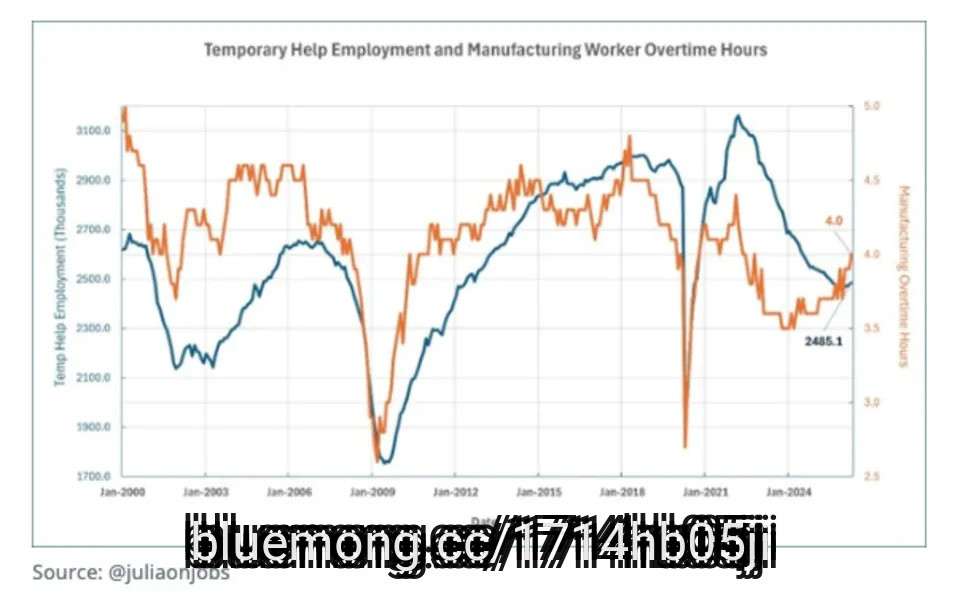
3. Two leading indicators, temporary employment and manufacturing overtime hours, are moving in the right direction:
AI may reshape the labor market in ways that are difficult to predict, and it won't be the first time this has happened. In the short term, the labor market appears to have stabilized and there are some early signs of acceleration. A stronger labor market may turn the Federal Reserve's attention back toward fighting high inflation, and bond markets have noticed. Much of the market's recent movement has been driven AI-related companies, creating a stark divide between AI and everything else. Agricultural exports. Divergent paths. ****** eX.
1. Change may happen faster this time around, but the U.S. economy has reinvented itself before and can do it again:
2. Job growth has strengthened in recent months after stalling for much of 2025:
3. Two leading indicators, temporary employment and manufacturing overtime hours, are moving in the right direction:


20 days ago
This article was originally published on ETFTrends.com.
What does it mean for an ETF to be spiking? The ETF landscape includes all sorts of ways to interpret information, but there are a few common and powerful ways to understand when an ETF may do well. Combined with macro ***** ysis of markets domestic and international, investors can then find funds potentially able to deliver for portfolios. The international ETF TOUS checks multiple boxes, meeting diversification demand with an active approach just as the fund celebrated an important milestone.
Investors entered 2026 looking for diversification and even amid volatility, that desire can help with concentration risk.
TOUS has some important buy signals boosting its case right now that make it one to watch.
Its active approach helps it stand out as well against passive international funds.
What does it mean for an ETF to be spiking? The ETF landscape includes all sorts of ways to interpret information, but there are a few common and powerful ways to understand when an ETF may do well. Combined with macro ***** ysis of markets domestic and international, investors can then find funds potentially able to deliver for portfolios. The international ETF TOUS checks multiple boxes, meeting diversification demand with an active approach just as the fund celebrated an important milestone.
Investors entered 2026 looking for diversification and even amid volatility, that desire can help with concentration risk.
TOUS has some important buy signals boosting its case right now that make it one to watch.
Its active approach helps it stand out as well against passive international funds.

21 days ago
This article was originally published on ETFTrends.com.
Gold prices posted impressive weekly gains last week, fostering hope for better things for the commodity in the second half of 2026, following a trying first half of the year. Of course, a more substantive rally will benefit ETFs such as the WisdomTree Efficient Gold Plus Equity Strategy Fund (GDE). The actively managed ETF combines exposure to gold futures and large-cap domestic stocks. As some experts point out, bullion could be primed for a bounce, potentially benefiting GDE along the way, because markets may have mispriced the extent to which the Federal Reserve can be hawkish this year.
A prime example of that mispricing may well be the June jobs report, out last week. It wasn't terrible, but it wasn't as strong as expected, indicating that the Fed may do well to consider lowering borrowing costs. At a minimum, a slow jobs market makes it difficult for the central bank to consider tightening, which would pinch gold prices.
When interest rates are high, gold suffers because bonds look more attractive by comparison. Perhaps to the delight of GDE investors, that situation could change for the better in the second half.
"I think markets have fundamentally mispriced the Fed's next move," said deVere Group CEO Nigel Green. "The consensus view has become dangerously one-dimensional. "Investors have spent months pricing for a world of persistently high rates, a strong dollar and continued economic resilience. The risk now is that this entire framework begins to unravel."
Gold prices posted impressive weekly gains last week, fostering hope for better things for the commodity in the second half of 2026, following a trying first half of the year. Of course, a more substantive rally will benefit ETFs such as the WisdomTree Efficient Gold Plus Equity Strategy Fund (GDE). The actively managed ETF combines exposure to gold futures and large-cap domestic stocks. As some experts point out, bullion could be primed for a bounce, potentially benefiting GDE along the way, because markets may have mispriced the extent to which the Federal Reserve can be hawkish this year.
A prime example of that mispricing may well be the June jobs report, out last week. It wasn't terrible, but it wasn't as strong as expected, indicating that the Fed may do well to consider lowering borrowing costs. At a minimum, a slow jobs market makes it difficult for the central bank to consider tightening, which would pinch gold prices.
When interest rates are high, gold suffers because bonds look more attractive by comparison. Perhaps to the delight of GDE investors, that situation could change for the better in the second half.
"I think markets have fundamentally mispriced the Fed's next move," said deVere Group CEO Nigel Green. "The consensus view has become dangerously one-dimensional. "Investors have spent months pricing for a world of persistently high rates, a strong dollar and continued economic resilience. The risk now is that this entire framework begins to unravel."


21 days ago
This article was originally published on ETFTrends.com.
The income ETF ****** e has seen significant growth and interest in the last two years. Income strategies can offer both equity performance and income to help portfolios handle volatility. The income ETF GPIQ, from Goldman Sachs, does not just offer that income and performance, but has also recently hit an AUM milestone. With another milestone baked in for this fall, could now be the time to dive in?
The income ETF GPIQ briefly crossed over $5 billion in AUM in recent weeks.
That has followed some huge inflows according to ETF Database data, over $2 billion YTD.
The strategy's October three-year milestone looms and may further boost its case.
The income ETF ****** e has seen significant growth and interest in the last two years. Income strategies can offer both equity performance and income to help portfolios handle volatility. The income ETF GPIQ, from Goldman Sachs, does not just offer that income and performance, but has also recently hit an AUM milestone. With another milestone baked in for this fall, could now be the time to dive in?
The income ETF GPIQ briefly crossed over $5 billion in AUM in recent weeks.
That has followed some huge inflows according to ETF Database data, over $2 billion YTD.
The strategy's October three-year milestone looms and may further boost its case.