13 days ago
On September 9, 2026, Reuters reported that Alphabet Inc. (NASDAQ:GOOGL)'s Google will invest at least €13 billion, or about $15.1 billion, in AI infrastructure in Finland over the next two years, its biggest European investment, including three new data centers and a 22-year deal for up to 50% of the output of one of Finland's two nuclear power plants. The agreement with Finnish utility Fortum is Google's first nuclear energy deal outside the United States, and Fortum's stock jumped as much as 15.5% on the news, its biggest gain in Europe that day.
Finland gives Alphabet Inc. (NASDAQ:GOOGL) a potentially more cost-efficient location for its expanding AI infrastructure. Google plans to invest at least €13 billion ($15.1 billion) in three new data centers and related infrastructure in Finland during 2027 and 2028. The country's cold climate can reduce the need for energy-intensive cooling. The investment will also help grid improvements, clean-energy projects and battery storage.
The 22-year nuclear power agreement gives Google greater control over a critical input for AI infrastructure. Google will purchase up to 50% of the electricity generated by Finland's Loviisa nuclear plant, providing a long-term source of low-carbon power for its data-center operations. The agreement also gives Fortum greater economic certainty to extend and upgrade the plant through 2050. Google and Fortum plan to explore more nuclear and renewable projects.
Alphabet has strong demand drivers that can justify investment in AI capacity. The firm has increased its 2026 global capital investment target to $195 billion-$205 billion as it seeks to capture growing AI computing demand. Google is using the additional infrastructure to support Gemini, Search, Maps, and YouTube. It gives Alphabet multiple major products through which it can monetize greater AI capacity over time.
The Finland project adds another major commitment to Alphabet Inc. (NASDAQ:GOOGL)'s already enormous AI spending program. Alphabet expects to spend $195 billion-$205 billion on capital investment globally in 2026. The Finnish project will require at least another €13 billion during 2027 and 2028. Investors need Alphabet to make enough incremental revenue and cash flow from AI services to justify an infrastructure buildout that is rapidly increasing the company's capital requirements.
#billion #Google #investment #googl
Finland gives Alphabet Inc. (NASDAQ:GOOGL) a potentially more cost-efficient location for its expanding AI infrastructure. Google plans to invest at least €13 billion ($15.1 billion) in three new data centers and related infrastructure in Finland during 2027 and 2028. The country's cold climate can reduce the need for energy-intensive cooling. The investment will also help grid improvements, clean-energy projects and battery storage.
The 22-year nuclear power agreement gives Google greater control over a critical input for AI infrastructure. Google will purchase up to 50% of the electricity generated by Finland's Loviisa nuclear plant, providing a long-term source of low-carbon power for its data-center operations. The agreement also gives Fortum greater economic certainty to extend and upgrade the plant through 2050. Google and Fortum plan to explore more nuclear and renewable projects.
Alphabet has strong demand drivers that can justify investment in AI capacity. The firm has increased its 2026 global capital investment target to $195 billion-$205 billion as it seeks to capture growing AI computing demand. Google is using the additional infrastructure to support Gemini, Search, Maps, and YouTube. It gives Alphabet multiple major products through which it can monetize greater AI capacity over time.
The Finland project adds another major commitment to Alphabet Inc. (NASDAQ:GOOGL)'s already enormous AI spending program. Alphabet expects to spend $195 billion-$205 billion on capital investment globally in 2026. The Finnish project will require at least another €13 billion during 2027 and 2028. Investors need Alphabet to make enough incremental revenue and cash flow from AI services to justify an infrastructure buildout that is rapidly increasing the company's capital requirements.
#billion #Google #investment #googl


13 days ago
Targa Resources Corp. (NYSE:TRGP) has significantly outperformed the wider market this year, posting gains of over 56% since the beginning of 2026. A major catalyst behind this growth was the 20-year fee-based agreement that the company signed with ExxonMobil last month.
While there are concerns that the stock's rally may have topped out, the **** ysts over at TD Cowen see further growth ahead. On September 18, the firm upgraded TRGP from 'Hold' to Buy', while also boosting its price target from $275 to $350. The revised target implies an upside of almost 20% from the current levels and even exceeds the stock's record high of just under $308 achieved last month.
TD Cowen cited Targa's expected Permian Basin wet gas growth and peer-leading EBITDA growth for the upgrade. The **** yst expects the company's free cash flow yield to rise from 6% in 2026 to more than 10% in 2028, compared with an estimated 8.5% FCF yield for peers in 2030. The improvement is expected to be driven by EBITDA growth from new processing plants and the completion of a major capital project in the Speedway NGL pipeline.
According to TD Cowen, a key driver for Targa's growth is the rising wet gas production in the Permian, which means that the **** yst's thesis is tied to physical volume growth rather than simply a higher-commodity price **** umption.
Targa's recently announced deal with ExxonMobil provides greater visibility into future volumes and infrastructure demand. The company has also planned three new natural gas processing plants in the Permian Delaware as part of the deal, with an aggregate capacity of roughly 825 MMcf/day. Targa expects this agreement to add significantly to its "strong growth rate well into the next decade and bolster its outlook for durable and growing adjusted free cash flow over the long term".
#exxonmobil #ebitda
While there are concerns that the stock's rally may have topped out, the **** ysts over at TD Cowen see further growth ahead. On September 18, the firm upgraded TRGP from 'Hold' to Buy', while also boosting its price target from $275 to $350. The revised target implies an upside of almost 20% from the current levels and even exceeds the stock's record high of just under $308 achieved last month.
TD Cowen cited Targa's expected Permian Basin wet gas growth and peer-leading EBITDA growth for the upgrade. The **** yst expects the company's free cash flow yield to rise from 6% in 2026 to more than 10% in 2028, compared with an estimated 8.5% FCF yield for peers in 2030. The improvement is expected to be driven by EBITDA growth from new processing plants and the completion of a major capital project in the Speedway NGL pipeline.
According to TD Cowen, a key driver for Targa's growth is the rising wet gas production in the Permian, which means that the **** yst's thesis is tied to physical volume growth rather than simply a higher-commodity price **** umption.
Targa's recently announced deal with ExxonMobil provides greater visibility into future volumes and infrastructure demand. The company has also planned three new natural gas processing plants in the Permian Delaware as part of the deal, with an aggregate capacity of roughly 825 MMcf/day. Targa expects this agreement to add significantly to its "strong growth rate well into the next decade and bolster its outlook for durable and growing adjusted free cash flow over the long term".
#exxonmobil #ebitda

13 days ago
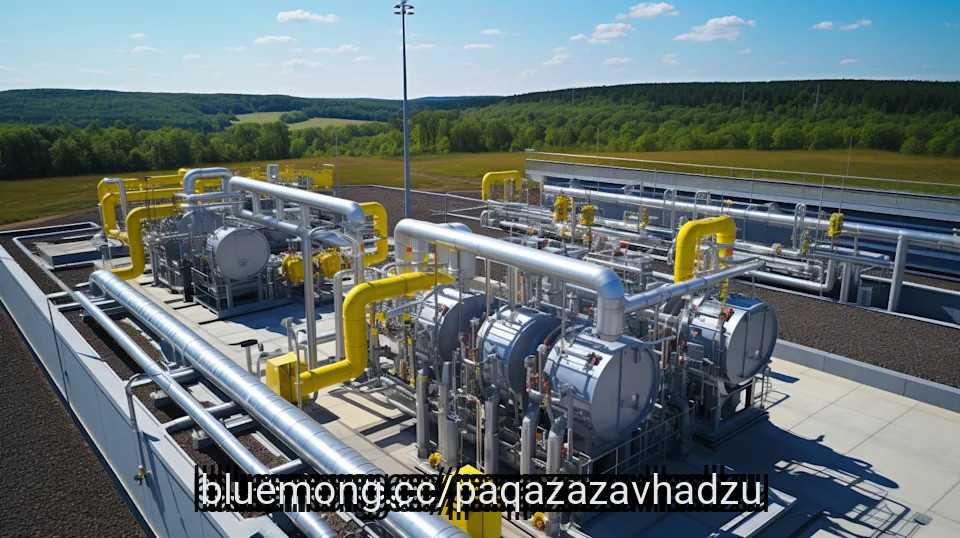
NextEra Energy, Inc. (NYSE:NEE) announced on September 8 that it had secured a loan of up to $1.9 billion from the U.S. Department of Energy to support the restart of a shuttered nuclear power plant in Iowa. The Duane Arnold Energy Center ceased operations in 2020 after 45 years of service. The plant is now expected to resume operations in early 2029, pending regulatory approvals.
The federal funding is intended to help restore the facility and add reliable generation capacity as the US electricity demand soars to record levels amid the AI boom. To help meet the growing demand, President Trump is making efforts to accelerate the expansion of nuclear energy. He has signed an executive order to get 10 large conventional reactors under construction by 2030 and has also called for federal funding to support the restart of shuttered nuclear plants.
John Ketchum, Chairman, President, and CEO of NextEra Energy, commented:
"Restarting Duane Arnold is about delivering new power to meet new demand while generating billions of dollars in economic value for Iowans. Just as importantly, it shows how America can support rapid economic growth and rising electricity demand while helping keep power affordable for existing customers. By bringing new generation online to serve new demand, we can strengthen the grid, create hundreds of good-paying jobs and help ensure Iowa families and businesses are not asked to bear the costs of growth. We appreciate the Administration's leadership in advancing America's nuclear renaissance and share its commitment to an all-of-the-above energy strategy that expands supply, strengthens energy security and keeps America competitive."
Photo by Frédéric Paulussen on Unsplash
#duane #arnold
The federal funding is intended to help restore the facility and add reliable generation capacity as the US electricity demand soars to record levels amid the AI boom. To help meet the growing demand, President Trump is making efforts to accelerate the expansion of nuclear energy. He has signed an executive order to get 10 large conventional reactors under construction by 2030 and has also called for federal funding to support the restart of shuttered nuclear plants.
John Ketchum, Chairman, President, and CEO of NextEra Energy, commented:
"Restarting Duane Arnold is about delivering new power to meet new demand while generating billions of dollars in economic value for Iowans. Just as importantly, it shows how America can support rapid economic growth and rising electricity demand while helping keep power affordable for existing customers. By bringing new generation online to serve new demand, we can strengthen the grid, create hundreds of good-paying jobs and help ensure Iowa families and businesses are not asked to bear the costs of growth. We appreciate the Administration's leadership in advancing America's nuclear renaissance and share its commitment to an all-of-the-above energy strategy that expands supply, strengthens energy security and keeps America competitive."
Photo by Frédéric Paulussen on Unsplash
#duane #arnold


14 days ago
Industrial automation company Rockwell (ROK) has joined Project Glasswing, Anthropic's initiative focused on using advanced artificial intelligence (AI) to improve cybersecurity across critical infrastructure. For Rockwell, this is especially relevant because its systems sit inside factories, warehouses, semiconductor plants, and other industrial operations.
The timing also matters. ROK stock has already had a strong run this year, while its latest results showed solid demand and expanding margins. But shares have pulled back from their June 52-week high of $497.36. That leaves investors asking whether Project Glasswing can become another growth driver or simply adds another layer to Rockwell's long-term technology story.
Mark Cuban Says He Was Dizzy for Months, So He Built a VR Fix That Does at Home 'Much Of What A 180k Machine' Does
Bank of America Just Declared a 'Generational Entry Point' in U.S. Bonds. Why Investors Should Be Backing Up the Truck on Treasuries Here.
Nvidia, OpenAI, and Oracle's $745B Financing Circle Just Hit Its First Stress Test: A Fed Rate Hike
#june #cuban
The timing also matters. ROK stock has already had a strong run this year, while its latest results showed solid demand and expanding margins. But shares have pulled back from their June 52-week high of $497.36. That leaves investors asking whether Project Glasswing can become another growth driver or simply adds another layer to Rockwell's long-term technology story.
Mark Cuban Says He Was Dizzy for Months, So He Built a VR Fix That Does at Home 'Much Of What A 180k Machine' Does
Bank of America Just Declared a 'Generational Entry Point' in U.S. Bonds. Why Investors Should Be Backing Up the Truck on Treasuries Here.
Nvidia, OpenAI, and Oracle's $745B Financing Circle Just Hit Its First Stress Test: A Fed Rate Hike
#june #cuban



15 days ago
BILLINGS, Mont. (AP) — Killing endangered animals while logging a forest or building a dam would not be considered illegal unless the animals were specifically targeted, under a new interpretation of the Endangered Species Act by President Donald Trump's administration that marks a sea change in how the landmark environmental law is enforced.
A directive sent to U.S. Fish and Wildlife Service employees this week says imperiled animals or plants must be intentionally targeted for their killing to be considered illegal.
That's a sharp turnaround from past practice at the wildlife service, which historically held people liable even for accidentally harming protected species such as grizzly bears, manatees and spotted owls.
Experts said the change would allow timber companies to log forests in the Pacific Northwest even if they knew that doing so could kill imperiled birds nesting in the trees, or for developers to build a dam knowing it would kill salmon.
"This cuts against the entire history of the Endangered Species Act," said Dan Ashe, who led the Fish and Wildlife Service under former President Barack Obama.
#species #president #killing
A directive sent to U.S. Fish and Wildlife Service employees this week says imperiled animals or plants must be intentionally targeted for their killing to be considered illegal.
That's a sharp turnaround from past practice at the wildlife service, which historically held people liable even for accidentally harming protected species such as grizzly bears, manatees and spotted owls.
Experts said the change would allow timber companies to log forests in the Pacific Northwest even if they knew that doing so could kill imperiled birds nesting in the trees, or for developers to build a dam knowing it would kill salmon.
"This cuts against the entire history of the Endangered Species Act," said Dan Ashe, who led the Fish and Wildlife Service under former President Barack Obama.
#species #president #killing




15 days ago
Core & Main, Inc. (NYSE:CNM) reported quarterly sales of $2.145 billion on September 9, up 2.5%. Company-defined non-GAAP adjusted EBITDA reached $274 million. The measure adjusts consolidated net income for interest, taxes, depreciation and amortization, equity compensation, debt modification and extinguishment losses, offering expenses, and specified other income or expenses.
Consolidated net income rose 6.4% to $150 million, while GAAP diluted earnings per share increased 10% to $0.77. Diluted weighted-average shares declined approximately 2.5% to 193.4 million. Buybacks amplified an improvement that also had an operating foundation.
The company repurchased $169 million of equity during the quarter, against $62 million of operating cash flow. The investment question is whether cash generation can sustain capital returns alongside the spending needed to grow.
Core & Main, Inc. (NYSE:CNM) benefits from demand for essential infrastructure products. Management highlighted municipal demand, fire protection, treatment plants, and data centers as areas of strength. These end markets provide several sources of business even when construction demand is uneven.
Expense discipline also helped. Quarterly selling, general and administrative expenses declined to $301 million from $302 million. Controlling overhead allows modest sales growth to contribute more to earnings. Stronger volumes would make further earnings gains easier to sustain.
#income #main #quarterly
Consolidated net income rose 6.4% to $150 million, while GAAP diluted earnings per share increased 10% to $0.77. Diluted weighted-average shares declined approximately 2.5% to 193.4 million. Buybacks amplified an improvement that also had an operating foundation.
The company repurchased $169 million of equity during the quarter, against $62 million of operating cash flow. The investment question is whether cash generation can sustain capital returns alongside the spending needed to grow.
Core & Main, Inc. (NYSE:CNM) benefits from demand for essential infrastructure products. Management highlighted municipal demand, fire protection, treatment plants, and data centers as areas of strength. These end markets provide several sources of business even when construction demand is uneven.
Expense discipline also helped. Quarterly selling, general and administrative expenses declined to $301 million from $302 million. Controlling overhead allows modest sales growth to contribute more to earnings. Stronger volumes would make further earnings gains easier to sustain.
#income #main #quarterly


15 days ago
With a market cap of $18.8 billion, Zimmer Biomet Holdings, Inc. (ZBH) is a global medical technology company specializing in musculoskeletal healthcare solutions. The company designs, manufactures, and markets products ranging from orthopedic reconstructive implants to sports medicine, spine, craniomaxillofacial, and thoracic solutions.
Companies worth more than $10 billion are generally labeled as "large-cap" stocks and Zimmer Biomet fits this criterion perfectly. Its innovations support surgeons and healthcare providers worldwide in treating disorders and injuries of bones, joints, and soft tissues.
Billionaire Charlie Munger, Who Died at 99, Skipped Insurance on His Mansion Since He Could Just Write a Check to Rebuild — 'All Intelligent People Do It My Way'
Why It's Time to Load Up on Nvidia Stock
The Case for Selling CrowdStrike Stock
#Stock
Companies worth more than $10 billion are generally labeled as "large-cap" stocks and Zimmer Biomet fits this criterion perfectly. Its innovations support surgeons and healthcare providers worldwide in treating disorders and injuries of bones, joints, and soft tissues.
Billionaire Charlie Munger, Who Died at 99, Skipped Insurance on His Mansion Since He Could Just Write a Check to Rebuild — 'All Intelligent People Do It My Way'
Why It's Time to Load Up on Nvidia Stock
The Case for Selling CrowdStrike Stock
#Stock



16 days ago
An **** ysis of recent filings from American politicians shows that Accenture (NYSE: ACN) and Boston Scientific (NYSE: BSX) saw an uptick in purchases from notable politicians. Rep. Gilbert Ray Cisneros, Jr. (D-CA) bought Boston Scientific shares, according to a filing earlier this month. The trade was made on August 18, 2026. Rep. Ro Khanna (D-CA) also bought the stock twice, on August 3 and August 10, 2026, according to a filing filed on September 4, 2026. Neither politician sold Boston Scientific shares in the same period. Cisneros and Khanna were also the two buyers of Accenture shares in July and August.
This is based on data from Quiver Quantitative, a platform that tracks congressional stock trades from politicians.
Let's focus on BSX in this article.
BSX is down about 50% so far this year amid a cyberattack that disrupted manufacturing, order processing and shipments, forcing the company to withdraw its previous third-quarter and full-year outlook. Bulls say the market has priced in too severe an outcome. By Sept. 8, the company said its major distribution centers were shipping at or above normal levels, sterilization facilities were operating, and manufacturing had restarted at most plants. Bulls believe much of the disrupted revenue could be delayed rather than permanently lost as hospitals wait for products, reschedule procedures and the company works through its backlog.
Bulls also point to a business that was still growing. Second-quarter revenue rose 7.5% year over year and organic growth was 7%. Several core franchises delivered double-digit organic growth, including Interventional Cardiology and Vascular Therapies, Interventional Oncology and Embolization, and Neuromodulation.
#august #NYSE
This is based on data from Quiver Quantitative, a platform that tracks congressional stock trades from politicians.
Let's focus on BSX in this article.
BSX is down about 50% so far this year amid a cyberattack that disrupted manufacturing, order processing and shipments, forcing the company to withdraw its previous third-quarter and full-year outlook. Bulls say the market has priced in too severe an outcome. By Sept. 8, the company said its major distribution centers were shipping at or above normal levels, sterilization facilities were operating, and manufacturing had restarted at most plants. Bulls believe much of the disrupted revenue could be delayed rather than permanently lost as hospitals wait for products, reschedule procedures and the company works through its backlog.
Bulls also point to a business that was still growing. Second-quarter revenue rose 7.5% year over year and organic growth was 7%. Several core franchises delivered double-digit organic growth, including Interventional Cardiology and Vascular Therapies, Interventional Oncology and Embolization, and Neuromodulation.
#august #NYSE


16 days ago
Intel and SK Hynix each jumped roughly 3% after Reuters reported talks to produce memory chips at Intel's $100B Ohio campus, with plants not due until 2030.
Semiconductor ETF SOXX gained 2%, tripling QQQ's advance, while Micron risks losing its CHIPS Act home-market edge if SK Hynix secures U.S. soil production.
Just released. Our ******* ysts combed the entire stock market and named the ten best stocks to buy right now, and Intel didn't make the cut. Enter your email to see the names that beat INTC. The report is free. Enter your email and see if any of your stocks made the cut.
Shares of Intel (NASDAQ:INTC) are trading higher early Wednesday after Reuters reported the chipmaker is in talks with a Korean memory partner about producing memory chips at Intel's Ohio campus. Intel stock is up 4% to $100.55 in early Wednesday trading, extending a run that has the shares up 171% year to date. The move points to a paying tenant on the same site Intel has been funding on its own.
SK Hynix (NASDAQ:SKHY) is the reported counterparty, and its U.S.-listed shares are climbing on the same story. SK Hynix stock is up 3.3% to $180.52. The Korean memory leader is in the middle of a wider U.S. build-out that already includes a groundbreaking last month on a high-bandwidth memory (HBM) production base in Indiana.
#Intel #Stock #reuters
Semiconductor ETF SOXX gained 2%, tripling QQQ's advance, while Micron risks losing its CHIPS Act home-market edge if SK Hynix secures U.S. soil production.
Just released. Our ******* ysts combed the entire stock market and named the ten best stocks to buy right now, and Intel didn't make the cut. Enter your email to see the names that beat INTC. The report is free. Enter your email and see if any of your stocks made the cut.
Shares of Intel (NASDAQ:INTC) are trading higher early Wednesday after Reuters reported the chipmaker is in talks with a Korean memory partner about producing memory chips at Intel's Ohio campus. Intel stock is up 4% to $100.55 in early Wednesday trading, extending a run that has the shares up 171% year to date. The move points to a paying tenant on the same site Intel has been funding on its own.
SK Hynix (NASDAQ:SKHY) is the reported counterparty, and its U.S.-listed shares are climbing on the same story. SK Hynix stock is up 3.3% to $180.52. The Korean memory leader is in the middle of a wider U.S. build-out that already includes a groundbreaking last month on a high-bandwidth memory (HBM) production base in Indiana.
#Intel #Stock #reuters

16 days ago
Small modular reactors, or SMRs, are essentially miniature nuclear power plants. They can be built faster than larger conventional nuclear facilities. And while typically more expensive on a per-megawatt basis, upfront capital investment can also be much lower than that of traditional nuclear plants.
While the concept of SMRs has been around for decades, only two SMR systems have ever been commercialized -- one in Russia, the other in China. Both of those systems are relatively small in generating capacity.
Missed Nvidia in 2009? This Rare Signal Is Flashing Again. In 2009, a "Double Down" signal flashed for a little-known chipmaker called Nvidia. For the first time in years, that same "Total Conviction" signal is flashing for a company 1/100th the size of Nvidia. Continue »
A new age for SMRs, however, is upon us. The AI industry needs more power quickly to support scaling trillions of dollars in data center infrastructure. Nuclear power can provide large amounts of stable baseload power with minimal refueling needs. And while SMRs are typically higher cost on a per-megawatt basis, the speed of construction of these smaller nuclear systems is highly attractive in today's environment.
The European Investment Bank -- the lending arm of the European Union -- is recognizing the potential of SMRs. On Sept. 4, the group announced a €40 million loan to Steady Energy, an SMR developer based in Finland. According to Reuters, "The loan is the first in a pipeline of SMR investments the EIB has planned."
#smrs #power #small
While the concept of SMRs has been around for decades, only two SMR systems have ever been commercialized -- one in Russia, the other in China. Both of those systems are relatively small in generating capacity.
Missed Nvidia in 2009? This Rare Signal Is Flashing Again. In 2009, a "Double Down" signal flashed for a little-known chipmaker called Nvidia. For the first time in years, that same "Total Conviction" signal is flashing for a company 1/100th the size of Nvidia. Continue »
A new age for SMRs, however, is upon us. The AI industry needs more power quickly to support scaling trillions of dollars in data center infrastructure. Nuclear power can provide large amounts of stable baseload power with minimal refueling needs. And while SMRs are typically higher cost on a per-megawatt basis, the speed of construction of these smaller nuclear systems is highly attractive in today's environment.
The European Investment Bank -- the lending arm of the European Union -- is recognizing the potential of SMRs. On Sept. 4, the group announced a €40 million loan to Steady Energy, an SMR developer based in Finland. According to Reuters, "The loan is the first in a pipeline of SMR investments the EIB has planned."
#smrs #power #small

16 days ago
Chemical manufacturer OXEA has selected Uber Freight as its strategic logistics provider across the U.S., Canada, Mexico and Europe as the company moves to consolidate regional transportation operations into a more unified global network.
Houston-based OXEA said Uber Freight will manage day-to-day transportation execution across truckload, rail and ocean freight, using technology, data and logistics services to provide greater visibility across the chemical manufacturer's supply chain.
The agreement represents Uber Freight's (NYSE: UBER) first managed transportation engagement designed from the outset to span the U.S., Canada, Mexico and Europe, according to the companies.
OXEA manufactures oxo intermediates and oxo performance chemicals used in products including coatings, lubricants, cosmetics, pharmaceuticals, flavors and fragrances, printing inks and plastics. The company employs more than 1,200 people and sells chemicals in more than 60 countries.
The partnership is intended to replace a more regionally segmented approach to transportation management with an integrated operation connecting OXEA's plants, carriers and customers.
#Mexico #chemical #Logistics
Houston-based OXEA said Uber Freight will manage day-to-day transportation execution across truckload, rail and ocean freight, using technology, data and logistics services to provide greater visibility across the chemical manufacturer's supply chain.
The agreement represents Uber Freight's (NYSE: UBER) first managed transportation engagement designed from the outset to span the U.S., Canada, Mexico and Europe, according to the companies.
OXEA manufactures oxo intermediates and oxo performance chemicals used in products including coatings, lubricants, cosmetics, pharmaceuticals, flavors and fragrances, printing inks and plastics. The company employs more than 1,200 people and sells chemicals in more than 60 countries.
The partnership is intended to replace a more regionally segmented approach to transportation management with an integrated operation connecting OXEA's plants, carriers and customers.
#Mexico #chemical #Logistics


16 days ago
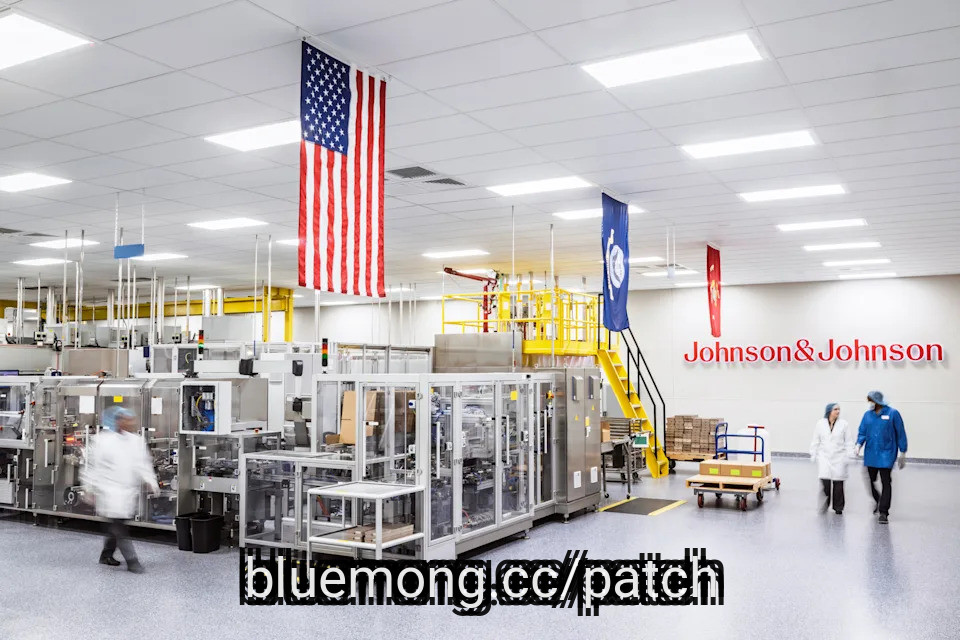
Apollo Global Management, Inc. (NYSE:APO) is reportedly in talks to acquire Johnson & Johnson (NYSE:JNJ) DePuy Synthes orthopedics business in a transaction that could value the unit at close to $20 billion, according to Bloomberg, as reported by Reuters. J&J generated $9.3 billion of revenue from the orthopedics business in 2025, making the potential transaction material for both companies. The discussions could reach an agreement within weeks, although J&J is also considering a public-market spin-off. This is consistent with J&J's October 2025 decision to separate DePuy Synthes within an expected 18-to-24-month timeframe and shift its MedTech portfolio toward higher-growth, higher-margin businesses.
For Apollo Global Management, Inc. (NYSE:APO), the attraction is the opportunity to acquire a large, established medical-device franchise with substantial recurring demand from joint-replacement and surgical procedures. A roughly $20 billion valuation against $9.3 billion of 2025 revenue implies a price-to-sales multiple of about 2.2x, giving Apollo room to pursue operational improvements, portfolio rationalization, and margin expansion if the business is acquired at an attractive valuation.
DePuy Synthes also has meaningful scale and leading positions across major orthopedics categories, while J&J has recently invested in technologies that could strengthen the franchise, including an agreement covering Gemtrack tracking technology for robotic and navigation-assisted joint procedures and the acquisition of Expanding Innovations for expandable spine implants. Apollo is also entering the potential deal from a position of considerable financial scale: it had approximately $1.05 trillion of ***** ets under management as of June 30, 2026, with $198 billion in equity strategies and $849 billion in credit strategies. Its second-quarter results included $111 billion of gross capital deployment, demonstrating the capacity to execute large transactions.
For Johnson & Johnson (NYSE:JNJ), a sale could accelerate the portfolio transformation that management has already identified as a strategic priority while potentially delivering a sizeable upfront cash inflow. J&J explicitly said its planned orthopedics separation should increase the company's top-line growth and operating margins by allowing it to concentrate on Oncology, Immunology, Neuroscience, Cardiovascular, Surgery and Vision.
The company has also been restructuring orthopedics, with $307 million of restructuring expense in 2025, following $167 million in 2024 and $319 million in 2023, primarily tied to market and product exits. A sale could therefore remove a business that has required restructuring resources while allowing J&J to redeploy capital toward areas it views as higher growth and higher margin.
#billion #depuy
For Apollo Global Management, Inc. (NYSE:APO), the attraction is the opportunity to acquire a large, established medical-device franchise with substantial recurring demand from joint-replacement and surgical procedures. A roughly $20 billion valuation against $9.3 billion of 2025 revenue implies a price-to-sales multiple of about 2.2x, giving Apollo room to pursue operational improvements, portfolio rationalization, and margin expansion if the business is acquired at an attractive valuation.
DePuy Synthes also has meaningful scale and leading positions across major orthopedics categories, while J&J has recently invested in technologies that could strengthen the franchise, including an agreement covering Gemtrack tracking technology for robotic and navigation-assisted joint procedures and the acquisition of Expanding Innovations for expandable spine implants. Apollo is also entering the potential deal from a position of considerable financial scale: it had approximately $1.05 trillion of ***** ets under management as of June 30, 2026, with $198 billion in equity strategies and $849 billion in credit strategies. Its second-quarter results included $111 billion of gross capital deployment, demonstrating the capacity to execute large transactions.
For Johnson & Johnson (NYSE:JNJ), a sale could accelerate the portfolio transformation that management has already identified as a strategic priority while potentially delivering a sizeable upfront cash inflow. J&J explicitly said its planned orthopedics separation should increase the company's top-line growth and operating margins by allowing it to concentrate on Oncology, Immunology, Neuroscience, Cardiovascular, Surgery and Vision.
The company has also been restructuring orthopedics, with $307 million of restructuring expense in 2025, following $167 million in 2024 and $319 million in 2023, primarily tied to market and product exits. A sale could therefore remove a business that has required restructuring resources while allowing J&J to redeploy capital toward areas it views as higher growth and higher margin.
#billion #depuy
16 days ago
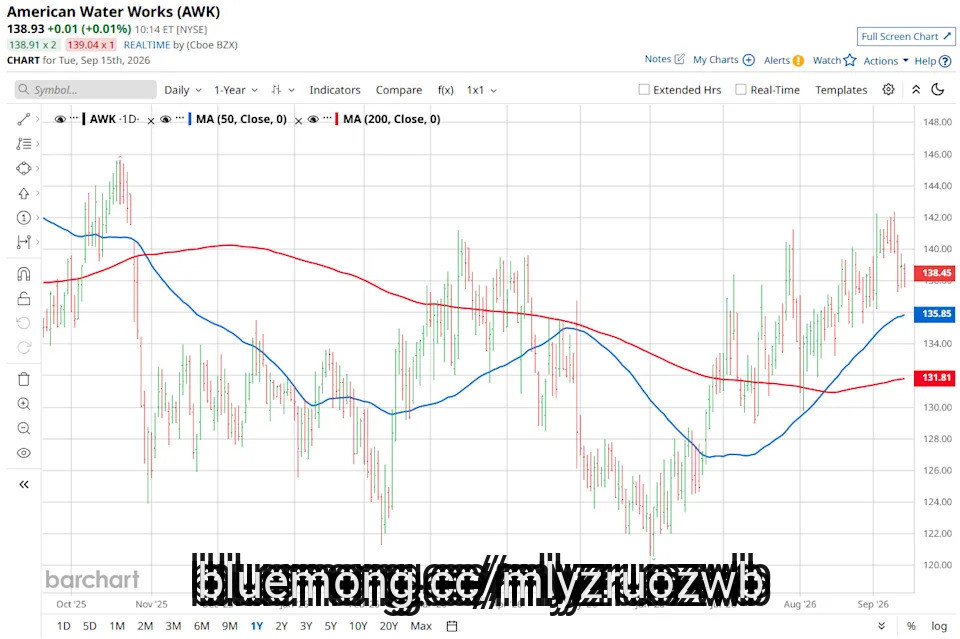
Camden, New Jersey-based American Water Works Company, Inc. (AWK) provides water and wastewater services in the United States and offers water and wastewater services on military installations, undertakes contracts with municipal customers to operate and manage water and wastewater facilities, and offers other related services. The company has a market cap of $27.6 billion and operates approximately 80 surface water treatment plants; 520 groundwater treatment plants; 170 wastewater treatment plants; and 55,000 miles of transmission, distribution, and collection.
Companies with a market cap of $10 billion or more are typically referred to as "large-cap stocks." AWK fits squarely into that category, with its market cap exceeding this threshold and reflecting its substantial size and influence in the regulated water utilities industry.
Goldman Sachs Expects Fed Chair Kevin Warsh to Raise Rates This Week — But Not Because of Oil Prices.
Morgan Stanley Doubles Down on Apple Stock as New Offerings Become 'More Exciting'
The EV Bubble Has Burst. How to Play Rivian Stock Now.
#wastewater #offers #billion
Companies with a market cap of $10 billion or more are typically referred to as "large-cap stocks." AWK fits squarely into that category, with its market cap exceeding this threshold and reflecting its substantial size and influence in the regulated water utilities industry.
Goldman Sachs Expects Fed Chair Kevin Warsh to Raise Rates This Week — But Not Because of Oil Prices.
Morgan Stanley Doubles Down on Apple Stock as New Offerings Become 'More Exciting'
The EV Bubble Has Burst. How to Play Rivian Stock Now.
#wastewater #offers #billion


17 days ago
Chemical manufacturer OXEA has selected Uber Freight as its strategic logistics provider across the U.S., Canada, Mexico and Europe as the company moves to consolidate regional transportation operations into a more unified global network.
Houston-based OXEA said Uber Freight will manage day-to-day transportation execution across truckload, rail and ocean freight, using technology, data and logistics services to provide greater visibility across the chemical manufacturer's supply chain.
The agreement represents Uber Freight's (NYSE: UBER) first managed transportation engagement designed from the outset to span the U.S., Canada, Mexico and Europe, according to the companies.
OXEA manufactures oxo intermediates and oxo performance chemicals used in products including coatings, lubricants, cosmetics, pharmaceuticals, flavors and fragrances, printing inks and plastics. The company employs more than 1,200 people and sells chemicals in more than 60 countries.
The partnership is intended to replace a more regionally segmented approach to transportation management with an integrated operation connecting OXEA's plants, carriers and customers.
#Transportation #Logistics
Houston-based OXEA said Uber Freight will manage day-to-day transportation execution across truckload, rail and ocean freight, using technology, data and logistics services to provide greater visibility across the chemical manufacturer's supply chain.
The agreement represents Uber Freight's (NYSE: UBER) first managed transportation engagement designed from the outset to span the U.S., Canada, Mexico and Europe, according to the companies.
OXEA manufactures oxo intermediates and oxo performance chemicals used in products including coatings, lubricants, cosmetics, pharmaceuticals, flavors and fragrances, printing inks and plastics. The company employs more than 1,200 people and sells chemicals in more than 60 countries.
The partnership is intended to replace a more regionally segmented approach to transportation management with an integrated operation connecting OXEA's plants, carriers and customers.
#Transportation #Logistics


17 days ago
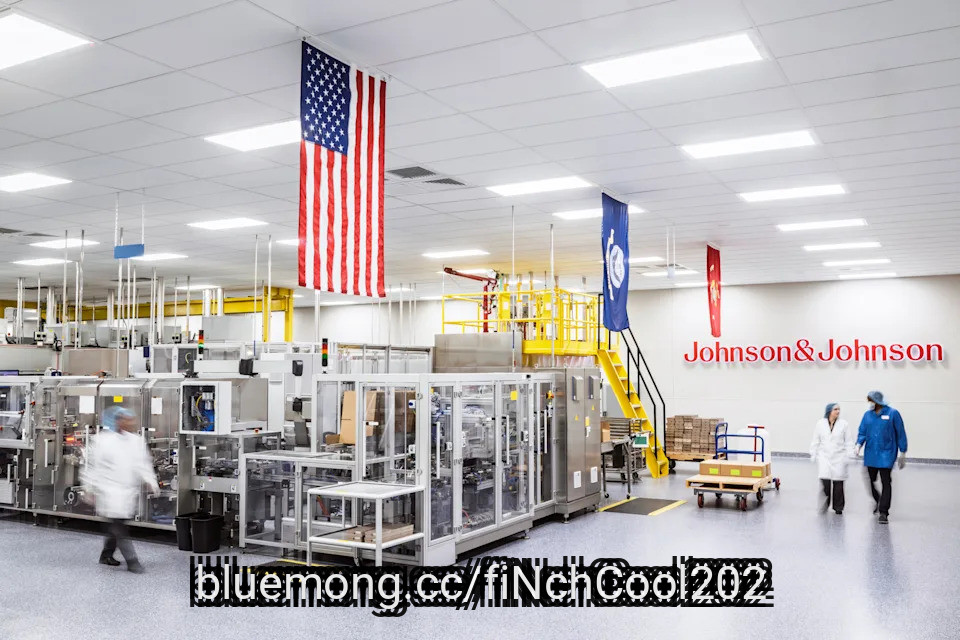
Apollo Global Management, Inc. (NYSE:APO) is reportedly in talks to acquire Johnson & Johnson (NYSE:JNJ) DePuy Synthes orthopedics business in a transaction that could value the unit at close to $20 billion, according to Bloomberg, as reported by Reuters. J&J generated $9.3 billion of revenue from the orthopedics business in 2025, making the potential transaction material for both companies. The discussions could reach an agreement within weeks, although J&J is also considering a public-market spin-off. This is consistent with J&J's October 2025 decision to separate DePuy Synthes within an expected 18-to-24-month timeframe and shift its MedTech portfolio toward higher-growth, higher-margin businesses.
For Apollo Global Management, Inc. (NYSE:APO), the attraction is the opportunity to acquire a large, established medical-device franchise with substantial recurring demand from joint-replacement and surgical procedures. A roughly $20 billion valuation against $9.3 billion of 2025 revenue implies a price-to-sales multiple of about 2.2x, giving Apollo room to pursue operational improvements, portfolio rationalization, and margin expansion if the business is acquired at an attractive valuation.
DePuy Synthes also has meaningful scale and leading positions across major orthopedics categories, while J&J has recently invested in technologies that could strengthen the franchise, including an agreement covering Gemtrack tracking technology for robotic and navigation-assisted joint procedures and the acquisition of Expanding Innovations for expandable spine implants. Apollo is also entering the potential deal from a position of considerable financial scale: it had approximately $1.05 trillion of **** ets under management as of June 30, 2026, with $198 billion in equity strategies and $849 billion in credit strategies. Its second-quarter results included $111 billion of gross capital deployment, demonstrating the capacity to execute large transactions.
For Johnson & Johnson (NYSE:JNJ), a sale could accelerate the portfolio transformation that management has already identified as a strategic priority while potentially delivering a sizeable upfront cash inflow. J&J explicitly said its planned orthopedics separation should increase the company's top-line growth and operating margins by allowing it to concentrate on Oncology, Immunology, Neuroscience, Cardiovascular, Surgery and Vision.
The company has also been restructuring orthopedics, with $307 million of restructuring expense in 2025, following $167 million in 2024 and $319 million in 2023, primarily tied to market and product exits. A sale could therefore remove a business that has required restructuring resources while allowing J&J to redeploy capital toward areas it views as higher growth and higher margin.
#NYSE #johnson
For Apollo Global Management, Inc. (NYSE:APO), the attraction is the opportunity to acquire a large, established medical-device franchise with substantial recurring demand from joint-replacement and surgical procedures. A roughly $20 billion valuation against $9.3 billion of 2025 revenue implies a price-to-sales multiple of about 2.2x, giving Apollo room to pursue operational improvements, portfolio rationalization, and margin expansion if the business is acquired at an attractive valuation.
DePuy Synthes also has meaningful scale and leading positions across major orthopedics categories, while J&J has recently invested in technologies that could strengthen the franchise, including an agreement covering Gemtrack tracking technology for robotic and navigation-assisted joint procedures and the acquisition of Expanding Innovations for expandable spine implants. Apollo is also entering the potential deal from a position of considerable financial scale: it had approximately $1.05 trillion of **** ets under management as of June 30, 2026, with $198 billion in equity strategies and $849 billion in credit strategies. Its second-quarter results included $111 billion of gross capital deployment, demonstrating the capacity to execute large transactions.
For Johnson & Johnson (NYSE:JNJ), a sale could accelerate the portfolio transformation that management has already identified as a strategic priority while potentially delivering a sizeable upfront cash inflow. J&J explicitly said its planned orthopedics separation should increase the company's top-line growth and operating margins by allowing it to concentrate on Oncology, Immunology, Neuroscience, Cardiovascular, Surgery and Vision.
The company has also been restructuring orthopedics, with $307 million of restructuring expense in 2025, following $167 million in 2024 and $319 million in 2023, primarily tied to market and product exits. A sale could therefore remove a business that has required restructuring resources while allowing J&J to redeploy capital toward areas it views as higher growth and higher margin.
#NYSE #johnson

17 days ago
An ******* ysis of recent filings from American politicians shows that Accenture (NYSE: ACN) and Boston Scientific (NYSE: BSX) saw an uptick in purchases from notable politicians. Rep. Gilbert Ray Cisneros, Jr. (D-CA) bought Boston Scientific shares, according to a filing earlier this month. The trade was made on August 18, 2026. Rep. Ro Khanna (D-CA) also bought the stock twice, on August 3 and August 10, 2026, according to a filing filed on September 4, 2026. Neither politician sold Boston Scientific shares in the same period. Cisneros and Khanna were also the two buyers of Accenture shares in July and August.
This is based on data from Quiver Quantitative, a platform that tracks congressional stock trades from politicians.
Let's focus on BSX in this article.
BSX is down about 50% so far this year amid a cyberattack that disrupted manufacturing, order processing and shipments, forcing the company to withdraw its previous third-quarter and full-year outlook. Bulls say the market has priced in too severe an outcome. By Sept. 8, the company said its major distribution centers were shipping at or above normal levels, sterilization facilities were operating, and manufacturing had restarted at most plants. Bulls believe much of the disrupted revenue could be delayed rather than permanently lost as hospitals wait for products, reschedule procedures and the company works through its backlog.
Bulls also point to a business that was still growing. Second-quarter revenue rose 7.5% year over year and organic growth was 7%. Several core franchises delivered double-digit organic growth, including Interventional Cardiology and Vascular Therapies, Interventional Oncology and Embolization, and Neuromodulation.
#accenture
This is based on data from Quiver Quantitative, a platform that tracks congressional stock trades from politicians.
Let's focus on BSX in this article.
BSX is down about 50% so far this year amid a cyberattack that disrupted manufacturing, order processing and shipments, forcing the company to withdraw its previous third-quarter and full-year outlook. Bulls say the market has priced in too severe an outcome. By Sept. 8, the company said its major distribution centers were shipping at or above normal levels, sterilization facilities were operating, and manufacturing had restarted at most plants. Bulls believe much of the disrupted revenue could be delayed rather than permanently lost as hospitals wait for products, reschedule procedures and the company works through its backlog.
Bulls also point to a business that was still growing. Second-quarter revenue rose 7.5% year over year and organic growth was 7%. Several core franchises delivered double-digit organic growth, including Interventional Cardiology and Vascular Therapies, Interventional Oncology and Embolization, and Neuromodulation.
#accenture


22 days ago
On September 8, 2026, GE Aerospace (NYSE:GE) agreed to buy Consolidated Precision Products (CPP) for $11.75 billion. The acquisition marks the company's largest bet yet on precision engine castings, a constraint that has been capping GE's growth. Trading already at roughly 40x earnings, the company has now attacked one of its genuine bottlenecks through the deal. But has it paid too much to do it?
Castings, including the superalloy and ******* anium hot-section parts inside the jet engines, have constrained GE's engine production, including programs such as LEAP and GEnx, as well as its high-margin aftermarket. Without these castings, the company can neither build nor service its engines. If the acquisition closes, the company will gain access to CPP's 20-plus plants and about 6,600 workers, which are essential for making those components. The deal would therefore enable GE to control the constraint as well as defend its margins. CEO Larry Culp characterized the move as securing manufacturing capacity to meet simultaneous demand across commercial engines, aftermarket services, and defense contracts.
The valuation is where bulls should slow down. GE is paying roughly 18x 2027 EBITDA including synergies (26x without synergies). The sellers are private equity firms Warburg Pincus and Berkshire Partners. They have basically offloaded a cyclical business near the peak of the aerospace cycle. This is smart money selling to GE instead of the other way around. The real tell is that GE felt compelled to buy its way past this capacity bottleneck instead of scaling organically, which reveals how tight its prized aftermarket really was. Also, CPP also supplies other major aerospace and defense companies such as Pratt & Whitney, Honeywell, and Lockheed Martin, and through the vertical tie-up, the company invites antitrust scrutiny before it closes in late 2027.
GE's 40x multiple rests on its high-margin razor-and-blade business model that services a huge installed base. And the casting supply shortages quietly constrain this aftermarket. Hence, more than merely fixing a supply chain issue, the CPP acquisition defends the company's high margin and multiple. Financially, the transaction is accretive to adjusted EPS and free cash flow in the first year, funded through $7 billion in cash alongside newly issued debt. Insider Monkey data shows 113 hedge funds held GE in Q2 2026, down modestly from 119 in Q1, reflecting firm institutional positioning. Short interest is just 1.3% of float, below peers like Honeywell International (1.6%). Almost no one bets against it.
#aftermarket #acquisition #including
Castings, including the superalloy and ******* anium hot-section parts inside the jet engines, have constrained GE's engine production, including programs such as LEAP and GEnx, as well as its high-margin aftermarket. Without these castings, the company can neither build nor service its engines. If the acquisition closes, the company will gain access to CPP's 20-plus plants and about 6,600 workers, which are essential for making those components. The deal would therefore enable GE to control the constraint as well as defend its margins. CEO Larry Culp characterized the move as securing manufacturing capacity to meet simultaneous demand across commercial engines, aftermarket services, and defense contracts.
The valuation is where bulls should slow down. GE is paying roughly 18x 2027 EBITDA including synergies (26x without synergies). The sellers are private equity firms Warburg Pincus and Berkshire Partners. They have basically offloaded a cyclical business near the peak of the aerospace cycle. This is smart money selling to GE instead of the other way around. The real tell is that GE felt compelled to buy its way past this capacity bottleneck instead of scaling organically, which reveals how tight its prized aftermarket really was. Also, CPP also supplies other major aerospace and defense companies such as Pratt & Whitney, Honeywell, and Lockheed Martin, and through the vertical tie-up, the company invites antitrust scrutiny before it closes in late 2027.
GE's 40x multiple rests on its high-margin razor-and-blade business model that services a huge installed base. And the casting supply shortages quietly constrain this aftermarket. Hence, more than merely fixing a supply chain issue, the CPP acquisition defends the company's high margin and multiple. Financially, the transaction is accretive to adjusted EPS and free cash flow in the first year, funded through $7 billion in cash alongside newly issued debt. Insider Monkey data shows 113 hedge funds held GE in Q2 2026, down modestly from 119 in Q1, reflecting firm institutional positioning. Short interest is just 1.3% of float, below peers like Honeywell International (1.6%). Almost no one bets against it.
#aftermarket #acquisition #including


22 days ago
Oklo (NYSE: OKLO), a developer of microreactors for nuclear power plants, has been a divisive stock since its market debut. After going public through a merger with a special purpose acquisition company (SPAC) on May 10, 2024, Oklo started trading at $15.50 per share.
It soared to a record high of $174.14 on Oct. 14, 2025, but it now trades at about $43. Wall Street's average price target for the stock is about $75. Let's see why Oklo's stock went through so many wild swings -- and where I think it will actually end up by the end of 2026.
Missed Nvidia in 2009? This Rare Signal Is Flashing Again. In 2009, a "Double Down" signal flashed for a little-known chipmaker called Nvidia. For the first time in years, that same "Total Conviction" signal is flashing for a company 1/100th the size of Nvidia. Continue »
Oklo's Aurora microreactor, which is much smaller than conventional nuclear reactors, only generates 1.5 MWe per unit. However, its modular design allows it to be deployed alongside additional reactors to generate up to 75 MWe per "Powerhouse" power plant. That's tiny compared to a conventional nuclear power plant, which typically generates at least 1,000 MWe, but Aurora's Powerhouse plants can be deployed on less land in remote, off-grid areas.
The Aurora also uses metallic uranium fuel pellets, which are denser, have higher thermal resistance, and are cheaper to produce than the uranium dioxide fuel pellets that power conventional reactors. By recycling its pellets in a closed loop, the Aurora can last for a decade without refueling. Conventional reactors are still refueled in stages every two years.
#conventional #reactors #signal
It soared to a record high of $174.14 on Oct. 14, 2025, but it now trades at about $43. Wall Street's average price target for the stock is about $75. Let's see why Oklo's stock went through so many wild swings -- and where I think it will actually end up by the end of 2026.
Missed Nvidia in 2009? This Rare Signal Is Flashing Again. In 2009, a "Double Down" signal flashed for a little-known chipmaker called Nvidia. For the first time in years, that same "Total Conviction" signal is flashing for a company 1/100th the size of Nvidia. Continue »
Oklo's Aurora microreactor, which is much smaller than conventional nuclear reactors, only generates 1.5 MWe per unit. However, its modular design allows it to be deployed alongside additional reactors to generate up to 75 MWe per "Powerhouse" power plant. That's tiny compared to a conventional nuclear power plant, which typically generates at least 1,000 MWe, but Aurora's Powerhouse plants can be deployed on less land in remote, off-grid areas.
The Aurora also uses metallic uranium fuel pellets, which are denser, have higher thermal resistance, and are cheaper to produce than the uranium dioxide fuel pellets that power conventional reactors. By recycling its pellets in a closed loop, the Aurora can last for a decade without refueling. Conventional reactors are still refueled in stages every two years.
#conventional #reactors #signal

22 days ago
Dow is considering an exit from its stake in the $20-billion Sadara Chemical Company venture with Saudi Aramco as the U.S. chemicals giant battles a prolonged industry downturn compounded by the Iran war.
Dow could sell its reported 35% interest in the Saudi petrochemical complex, with Aramco potentially emerging as a buyer, Bloomberg reported on Wednesday, citing people familiar with the matter. Strategic and financial investors could also be interested, although no final decision has been made.
The potential exit comes as the global chemicals industry struggles with weak demand, persistent overcapacity and elevated costs. The Middle East conflict has added another layer of pressure by disrupting petrochemical flows and supply chains and increasing transportation and operating expenses.
Sadara itself was temporarily shut earlier this year due to conflict-related supply disruptions.
Located in Jubail Industrial City, Sadara was developed as a $20-billion mega-project and was the world's largest integrated chemicals complex built in a single phase when completed. Its 26 manufacturing plants have the capacity to produce more than 3 million metric tons of performance plastics and high-value chemicals annually.
#exit #reported
Dow could sell its reported 35% interest in the Saudi petrochemical complex, with Aramco potentially emerging as a buyer, Bloomberg reported on Wednesday, citing people familiar with the matter. Strategic and financial investors could also be interested, although no final decision has been made.
The potential exit comes as the global chemicals industry struggles with weak demand, persistent overcapacity and elevated costs. The Middle East conflict has added another layer of pressure by disrupting petrochemical flows and supply chains and increasing transportation and operating expenses.
Sadara itself was temporarily shut earlier this year due to conflict-related supply disruptions.
Located in Jubail Industrial City, Sadara was developed as a $20-billion mega-project and was the world's largest integrated chemicals complex built in a single phase when completed. Its 26 manufacturing plants have the capacity to produce more than 3 million metric tons of performance plastics and high-value chemicals annually.
#exit #reported


22 days ago
The Campbell's Company (NASDAQ:CPB) is taking aggressive steps to turn around its fortunes, but the food company faces a difficult test. It's whether the $500 million cost-savings plan can rebuild margins and earnings as weak demand continues to pressure sales.
The company has already cut more than 550 jobs and closed two snack plants as part of the cost-cutting efforts. Moreover, it has reduced its quarterly dividend by 36% to conserve cash. Yet management expects another year of declining sales. That means the turnaround hinges on Campbell's ability to improve efficiency while stabilizing sales.
The need for restructuring became clear in the latest quarter. Sales fell 8% to $2.1 billion, and the company swung to a $69 million loss from a $145 million profit a year ago.
The Campbell's Company (NASDAQ:CPB) now plans to cut $500 million in costs by fiscal 2030. The savings are expected to support margin and allow greater investment in the brands. The cost-cutting program includes the closure of two snack plants and a workforce reduction affecting around 13% of Campbell's salaried employees.
Campbell's strategy has a clear financial logic. Lower costs should improve cash flow, help the company absorb inflationary pressures, and provide greater flexibility to invest in strengthening its brands. But the desired turnaround would only be possible if Campbell's can stabilize its underlying business at the same time.
#sales
The company has already cut more than 550 jobs and closed two snack plants as part of the cost-cutting efforts. Moreover, it has reduced its quarterly dividend by 36% to conserve cash. Yet management expects another year of declining sales. That means the turnaround hinges on Campbell's ability to improve efficiency while stabilizing sales.
The need for restructuring became clear in the latest quarter. Sales fell 8% to $2.1 billion, and the company swung to a $69 million loss from a $145 million profit a year ago.
The Campbell's Company (NASDAQ:CPB) now plans to cut $500 million in costs by fiscal 2030. The savings are expected to support margin and allow greater investment in the brands. The cost-cutting program includes the closure of two snack plants and a workforce reduction affecting around 13% of Campbell's salaried employees.
Campbell's strategy has a clear financial logic. Lower costs should improve cash flow, help the company absorb inflationary pressures, and provide greater flexibility to invest in strengthening its brands. But the desired turnaround would only be possible if Campbell's can stabilize its underlying business at the same time.
#sales

22 days ago
The artificial intelligence (AI) boom is fueling a nuclear renaissance. For the industry to grow, massive amounts of energy-intensive compute power will need to be built. As a low-carbon, high-baseload energy source, nuclear power is a promising solution.
NuScale Power (NYSE: SMR) is the only small modular reactor (SMR) developer in the U.S. approved by regulators to construct an SMR facility. SMRs are ideal for the AI data center build-out, given that they can be built more quickly and at a lower cost than conventional nuclear plants. This smaller footprint allows an SMR to be constructed near the data center infrastructure itself.
Missed Nvidia in 2009? This Rare Signal Is Flashing Again. In 2009, a "Double Down" signal flashed for a little-known chipmaker called Nvidia. For the first time in years, that same "Total Conviction" signal is flashing for a company 1/100th the size of Nvidia. Continue »
Despite growth potential, NuScale shares are down 40% this year. Skepticism is reasonable. Only two SMR systems currently exist worldwide. NuScale has never commercialized any of its SMR designs. Plus, the company already experienced a sizable failure in 2023 when its biggest customer (at the time) canceled its project.
While NuScale operates in an industry that should see long-term growth, the nuclear stock's future may hinge on a single upcoming catalyst.
#nuclear
NuScale Power (NYSE: SMR) is the only small modular reactor (SMR) developer in the U.S. approved by regulators to construct an SMR facility. SMRs are ideal for the AI data center build-out, given that they can be built more quickly and at a lower cost than conventional nuclear plants. This smaller footprint allows an SMR to be constructed near the data center infrastructure itself.
Missed Nvidia in 2009? This Rare Signal Is Flashing Again. In 2009, a "Double Down" signal flashed for a little-known chipmaker called Nvidia. For the first time in years, that same "Total Conviction" signal is flashing for a company 1/100th the size of Nvidia. Continue »
Despite growth potential, NuScale shares are down 40% this year. Skepticism is reasonable. Only two SMR systems currently exist worldwide. NuScale has never commercialized any of its SMR designs. Plus, the company already experienced a sizable failure in 2023 when its biggest customer (at the time) canceled its project.
While NuScale operates in an industry that should see long-term growth, the nuclear stock's future may hinge on a single upcoming catalyst.
#nuclear


23 days ago
Arcosa, Inc. (NYSE:ACA) shareholders approved the proposed acquisition by CRH plc (NYSE:CRH) on September 4. The merger agreement received 39,595,867 votes in favor, compared with 66,113 against and 16,786 abstentions. Approximately 39.7 million shares, representing 80.8% of shares outstanding as of the record date, were present or represented by proxy.
The vote satisfies a major condition for the all-cash transaction. CRH plc (NYSE:CRH) agreed to pay $150 per share, valuing Arcosa, Inc. (NYSE:ACA) at an enterprise value of approximately $8.5 billion. The companies continue to expect a first-quarter 2027 closing, subject to required regulatory approvals and other customary conditions.
CRH plc (NYSE:CRH) described the valuation as 11.5 times estimated 2026 adjusted EBITDA, a company-defined non-GAAP measure, including $175 million of targeted annual run-rate cost synergies expected by year three. CRH plc (NYSE:CRH) defines adjusted EBITDA as earnings from continuing operations before interest, taxes, depreciation, depletion and amortization, with exclusions for impairments, divestitures and investments, equity-method results, substantial acquisition costs and specified pension items.
The result removes the principal seller-side approval risk. The merger no longer depends on another shareholder meeting, and support was decisive among the shares represented. Financing appears less exposed than regulatory clearance: CRH plc (NYSE:CRH) plans to use available cash and committed debt financing, while completion is not subject to a financing condition.
The strategic rationale is tangible. Arcosa, Inc. (NYSE:ACA) would add 109 quarries and yards, nine asphalt plants, 19 terminals and approximately 35 million tons of 2025 aggregates shipments. CRH plc (NYSE:CRH) expects more than 265 million tons of combined annualized aggregates production. Arcosa, Inc. (NYSE:ACA) also brings engineered structures serving grid modernization, electrification and data-center construction.
#NYSE #represented
The vote satisfies a major condition for the all-cash transaction. CRH plc (NYSE:CRH) agreed to pay $150 per share, valuing Arcosa, Inc. (NYSE:ACA) at an enterprise value of approximately $8.5 billion. The companies continue to expect a first-quarter 2027 closing, subject to required regulatory approvals and other customary conditions.
CRH plc (NYSE:CRH) described the valuation as 11.5 times estimated 2026 adjusted EBITDA, a company-defined non-GAAP measure, including $175 million of targeted annual run-rate cost synergies expected by year three. CRH plc (NYSE:CRH) defines adjusted EBITDA as earnings from continuing operations before interest, taxes, depreciation, depletion and amortization, with exclusions for impairments, divestitures and investments, equity-method results, substantial acquisition costs and specified pension items.
The result removes the principal seller-side approval risk. The merger no longer depends on another shareholder meeting, and support was decisive among the shares represented. Financing appears less exposed than regulatory clearance: CRH plc (NYSE:CRH) plans to use available cash and committed debt financing, while completion is not subject to a financing condition.
The strategic rationale is tangible. Arcosa, Inc. (NYSE:ACA) would add 109 quarries and yards, nine asphalt plants, 19 terminals and approximately 35 million tons of 2025 aggregates shipments. CRH plc (NYSE:CRH) expects more than 265 million tons of combined annualized aggregates production. Arcosa, Inc. (NYSE:ACA) also brings engineered structures serving grid modernization, electrification and data-center construction.
#NYSE #represented

0.00$ raised of 0.00$ goal
0 donations
0.00$
to go

25 days ago
NASA Administrator Jared Isaacman's support for Elon Musk's idea to put AI data centers in **** e and power them with solar panels did not occur in a vacuum. It comes not just against a background of rising, bipartisan opposition to ground-based data centers but also the recent announcement of an immense, **** eX Starbase to be built in Louisiana.
Many people oppose data centers out of the same kind of "NIMBY" emotion that fueled opposition to nuclear power plants and hydraulic fracking. They view them as big, noisy eyesores that will consume a lot of electricity and water to the detriment of local communities.
Opposition to ground-based AI data centers is not universal. Trade unions, which foresee lots of jobs being created in their construction and operation, are warmly supporting them. On the other hand, if Meta's experiments with using robots at data centers pans out, those jobs may be fewer than many expect.
The reason that many people are opposed to AI data centers in their communities may have less to do with objective facts than a Chinese disinformation campaign to turn them against such facilities. Engadget reports that X uncovered a Chinese bot farm with 200,000 accounts, 200 of which were used to manipulate the debate about data centers.
It should be noted that the Chinese are going pedal to the metal to create their own data centers. As a totalitarian country, China is not concerned with public opinion one way or the other. Beijing is determined to dominate AI according to its ideology and interests.
#centers #opposition #people #communities
Many people oppose data centers out of the same kind of "NIMBY" emotion that fueled opposition to nuclear power plants and hydraulic fracking. They view them as big, noisy eyesores that will consume a lot of electricity and water to the detriment of local communities.
Opposition to ground-based AI data centers is not universal. Trade unions, which foresee lots of jobs being created in their construction and operation, are warmly supporting them. On the other hand, if Meta's experiments with using robots at data centers pans out, those jobs may be fewer than many expect.
The reason that many people are opposed to AI data centers in their communities may have less to do with objective facts than a Chinese disinformation campaign to turn them against such facilities. Engadget reports that X uncovered a Chinese bot farm with 200,000 accounts, 200 of which were used to manipulate the debate about data centers.
It should be noted that the Chinese are going pedal to the metal to create their own data centers. As a totalitarian country, China is not concerned with public opinion one way or the other. Beijing is determined to dominate AI according to its ideology and interests.
#centers #opposition #people #communities

25 days ago
Reuters reported that H.B. Fuller Company (NYSE:FUL) said its board unanimously rejected activist investor Ancora Holdings Group's unsolicited proposal to acquire its Building Adhesives Solutions (BAS) business for between $1.1 billion and $1.2 billion.
The board said the offer "significantly undervalues" BAS, is "substantially below precedent transactions," and ignores the unit's growth prospects, according to the company's statement. H.B. Fuller noted BAS delivered 6% organic growth year over year in the second quarter and said a carve-out would create "significant dis-synergies" since BAS shares manufacturing operations with the company's other businesses across more than 30 plants worldwide. The board also said Ancora's proposal "lacks key details needed to demonstrate" its ability to execute the deal. Ancora's activist campaign against H.B. Fuller began in May, initially opposing the company's acquisition of UK-based Advanced Medical Solutions Group.
H.B. Fuller Company (NYSE:FUL)'s valuation argument has support from BAS's recent performance and growth prospects. BAS delivered 6% organic sales growth and 10% EBITDA growth in the second quarter, while H.B. Fuller expects the business to become a significant earnings driver as construction markets recover and data-center demand grows. Those results give management a credible basis for arguing that Ancora's $1.2 billion offer undervalues the business.
H.B. Fuller also has a legitimate operational argument against separating BAS. The company shares manufacturing operations across more than 30 plants worldwide, and management expects a carve-out to create significant dis-synergies. Keeping BAS within H.B. Fuller could therefore preserve operating efficiencies that a standalone business might lose.
Management also has a clear strategic priority that competes with Ancora's proposal for its attention and capital. H.B. Fuller continues to implement its Advanced Medical Solutions Group acquisition while developing BAS as an important future earnings driver. The company can therefore focus on executing its existing strategy instead of diverting resources toward a major BAS separation.
#solutions #board
The board said the offer "significantly undervalues" BAS, is "substantially below precedent transactions," and ignores the unit's growth prospects, according to the company's statement. H.B. Fuller noted BAS delivered 6% organic growth year over year in the second quarter and said a carve-out would create "significant dis-synergies" since BAS shares manufacturing operations with the company's other businesses across more than 30 plants worldwide. The board also said Ancora's proposal "lacks key details needed to demonstrate" its ability to execute the deal. Ancora's activist campaign against H.B. Fuller began in May, initially opposing the company's acquisition of UK-based Advanced Medical Solutions Group.
H.B. Fuller Company (NYSE:FUL)'s valuation argument has support from BAS's recent performance and growth prospects. BAS delivered 6% organic sales growth and 10% EBITDA growth in the second quarter, while H.B. Fuller expects the business to become a significant earnings driver as construction markets recover and data-center demand grows. Those results give management a credible basis for arguing that Ancora's $1.2 billion offer undervalues the business.
H.B. Fuller also has a legitimate operational argument against separating BAS. The company shares manufacturing operations across more than 30 plants worldwide, and management expects a carve-out to create significant dis-synergies. Keeping BAS within H.B. Fuller could therefore preserve operating efficiencies that a standalone business might lose.
Management also has a clear strategic priority that competes with Ancora's proposal for its attention and capital. H.B. Fuller continues to implement its Advanced Medical Solutions Group acquisition while developing BAS as an important future earnings driver. The company can therefore focus on executing its existing strategy instead of diverting resources toward a major BAS separation.
#solutions #board

26 days ago
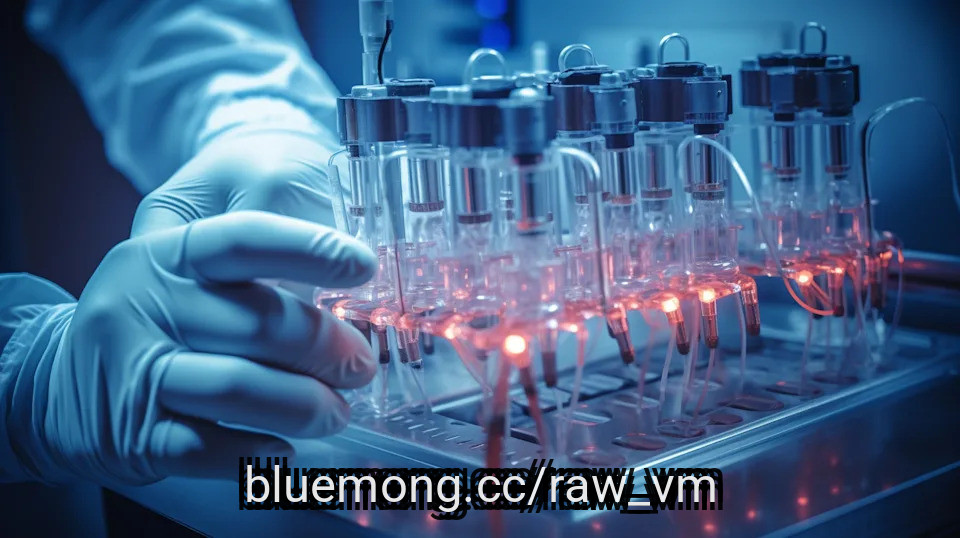
On September 4, Bruker (NASDAQ:BRKR) said its energy and supercon technologies unit, Bruker Energy & Supercon Technologies (or BEST), had struck a supply collaboration with Luvata Materials & Solutions to scale up production of RRP superconductors for magnetic confinement fusion. The deal lands right as governments and private developers from Europe to South Korea race to build fusion demonstration plants, and it comes a month after Bruker's core scientific instruments business showed its first real signs of stabilizing. Two very different stories are converging inside one stock.
The Luvata tie-up is not Bruker's first rodeo in fusion. BEST and Luvata previously supplied materials and expertise to ITER, the international fusion megaproject, and to the Wendelstein 7-X stellarator, two of the most advanced superconducting plasma facilities ever built. Their RRP superconductors, wires built with the Rod-Restack Process to withstand field strengths between 12 and 20 Tesla, already run inside CERN's Large Hadron Collider and in ultra-high field NMR magnets. That track record matters now because fusion programs are ramping across Europe, the Americas, China, ***** an and South Korea, and Gauss Fusion has already begun evaluating RRP superconductors for its Gauss Industrial Demonstrator and GIGA power plant platform.
The segment is already delivering. On August 4, Bruker reported that BEST revenue climbed 11.9% year over year to $74.2 million in the second quarter, with organic growth of 8.9% net of intercompany eliminations, while first-half BEST revenue rose 12.3% to $141 million. That growth showed up in Bruker's bottom line too. Non-GAAP operating margin expanded to 14.1% from 9% a year earlier, and non-GAAP diluted earnings per share grew to $0.49 from $0.32, results strong enough that management kept its full-year non-GAAP EPS growth target of 15% to 17% intact.
None of that shows up on a GAAP basis. Bruker's second-quarter GAAP operating results swung to a $65.3 million loss, versus $11.9 million of GAAP operating income a year earlier, dragged down largely by a $134.9 million non-cash goodwill charge. GAAP diluted earnings per share swung to a loss of $0.41 from a profit of $0.05, and for the first half of 2026 the company posted a GAAP diluted loss per share of $0.39. Impairments do not spend cash, but they are a reminder that some of what Bruker paid for in past acquisitions is now being written down.
#fusion
The Luvata tie-up is not Bruker's first rodeo in fusion. BEST and Luvata previously supplied materials and expertise to ITER, the international fusion megaproject, and to the Wendelstein 7-X stellarator, two of the most advanced superconducting plasma facilities ever built. Their RRP superconductors, wires built with the Rod-Restack Process to withstand field strengths between 12 and 20 Tesla, already run inside CERN's Large Hadron Collider and in ultra-high field NMR magnets. That track record matters now because fusion programs are ramping across Europe, the Americas, China, ***** an and South Korea, and Gauss Fusion has already begun evaluating RRP superconductors for its Gauss Industrial Demonstrator and GIGA power plant platform.
The segment is already delivering. On August 4, Bruker reported that BEST revenue climbed 11.9% year over year to $74.2 million in the second quarter, with organic growth of 8.9% net of intercompany eliminations, while first-half BEST revenue rose 12.3% to $141 million. That growth showed up in Bruker's bottom line too. Non-GAAP operating margin expanded to 14.1% from 9% a year earlier, and non-GAAP diluted earnings per share grew to $0.49 from $0.32, results strong enough that management kept its full-year non-GAAP EPS growth target of 15% to 17% intact.
None of that shows up on a GAAP basis. Bruker's second-quarter GAAP operating results swung to a $65.3 million loss, versus $11.9 million of GAAP operating income a year earlier, dragged down largely by a $134.9 million non-cash goodwill charge. GAAP diluted earnings per share swung to a loss of $0.41 from a profit of $0.05, and for the first half of 2026 the company posted a GAAP diluted loss per share of $0.39. Impairments do not spend cash, but they are a reminder that some of what Bruker paid for in past acquisitions is now being written down.
#fusion


26 days ago
Derek Hough, 41, looked absolutely ripped in a new shirtless photo which he shared on social media.
The dancer posted an eye-catching picture online in which his abs and toned arms were on full display as he donned only tailored black pants, a grey cap and a gold chain.
The star captioned the post: "Water the plants," as fans flocked to the comments to cheer him on.
Derek showed off his muscular build online (@ Instagram)
One person joked: "A shirt hates to see this guy coming." A second follower added: "40-CITY TOUR THIRST TRAP. My dude is SHREDDED!!! Don't forget to water your hydrangeas!!"
#trap
The dancer posted an eye-catching picture online in which his abs and toned arms were on full display as he donned only tailored black pants, a grey cap and a gold chain.
The star captioned the post: "Water the plants," as fans flocked to the comments to cheer him on.
Derek showed off his muscular build online (@ Instagram)
One person joked: "A shirt hates to see this guy coming." A second follower added: "40-CITY TOUR THIRST TRAP. My dude is SHREDDED!!! Don't forget to water your hydrangeas!!"
#trap


27 days ago
On September 4, Bruker (NASDAQ:BRKR) said its energy and supercon technologies unit, Bruker Energy & Supercon Technologies (or BEST), had struck a supply collaboration with Luvata Materials & Solutions to scale up production of RRP superconductors for magnetic confinement fusion. The deal lands right as governments and private developers from Europe to South Korea race to build fusion demonstration plants, and it comes a month after Bruker's core scientific instruments business showed its first real signs of stabilizing. Two very different stories are converging inside one stock.
The Luvata tie-up is not Bruker's first rodeo in fusion. BEST and Luvata previously supplied materials and expertise to ITER, the international fusion megaproject, and to the Wendelstein 7-X stellarator, two of the most advanced superconducting plasma facilities ever built. Their RRP superconductors, wires built with the Rod-Restack Process to withstand field strengths between 12 and 20 Tesla, already run inside CERN's Large Hadron Collider and in ultra-high field NMR magnets. That track record matters now because fusion programs are ramping across Europe, the Americas, China, **** an and South Korea, and Gauss Fusion has already begun evaluating RRP superconductors for its Gauss Industrial Demonstrator and GIGA power plant platform.
The segment is already delivering. On August 4, Bruker reported that BEST revenue climbed 11.9% year over year to $74.2 million in the second quarter, with organic growth of 8.9% net of intercompany eliminations, while first-half BEST revenue rose 12.3% to $141 million. That growth showed up in Bruker's bottom line too. Non-GAAP operating margin expanded to 14.1% from 9% a year earlier, and non-GAAP diluted earnings per share grew to $0.49 from $0.32, results strong enough that management kept its full-year non-GAAP EPS growth target of 15% to 17% intact.
None of that shows up on a GAAP basis. Bruker's second-quarter GAAP operating results swung to a $65.3 million loss, versus $11.9 million of GAAP operating income a year earlier, dragged down largely by a $134.9 million non-cash goodwill charge. GAAP diluted earnings per share swung to a loss of $0.41 from a profit of $0.05, and for the first half of 2026 the company posted a GAAP diluted loss per share of $0.39. Impairments do not spend cash, but they are a reminder that some of what Bruker paid for in past acquisitions is now being written down.
#gaap #bruker #million #already
The Luvata tie-up is not Bruker's first rodeo in fusion. BEST and Luvata previously supplied materials and expertise to ITER, the international fusion megaproject, and to the Wendelstein 7-X stellarator, two of the most advanced superconducting plasma facilities ever built. Their RRP superconductors, wires built with the Rod-Restack Process to withstand field strengths between 12 and 20 Tesla, already run inside CERN's Large Hadron Collider and in ultra-high field NMR magnets. That track record matters now because fusion programs are ramping across Europe, the Americas, China, **** an and South Korea, and Gauss Fusion has already begun evaluating RRP superconductors for its Gauss Industrial Demonstrator and GIGA power plant platform.
The segment is already delivering. On August 4, Bruker reported that BEST revenue climbed 11.9% year over year to $74.2 million in the second quarter, with organic growth of 8.9% net of intercompany eliminations, while first-half BEST revenue rose 12.3% to $141 million. That growth showed up in Bruker's bottom line too. Non-GAAP operating margin expanded to 14.1% from 9% a year earlier, and non-GAAP diluted earnings per share grew to $0.49 from $0.32, results strong enough that management kept its full-year non-GAAP EPS growth target of 15% to 17% intact.
None of that shows up on a GAAP basis. Bruker's second-quarter GAAP operating results swung to a $65.3 million loss, versus $11.9 million of GAAP operating income a year earlier, dragged down largely by a $134.9 million non-cash goodwill charge. GAAP diluted earnings per share swung to a loss of $0.41 from a profit of $0.05, and for the first half of 2026 the company posted a GAAP diluted loss per share of $0.39. Impairments do not spend cash, but they are a reminder that some of what Bruker paid for in past acquisitions is now being written down.
#gaap #bruker #million #already


28 days ago
On September 1, Everus Construction Group (NYSE:ECG) completed a $295 million cash acquisition of Epsilon Industries, a maker of prefabricated mechanical and electrical systems with plants scattered across the US and Canada. Everus first disclosed the deal on July 31, and the closing lands only a month after the company posted a quarter in which revenue jumped by more than a third. Epsilon's off-site fabrication lines give Everus a faster way to build the data centers, factories, and hospitals reshaping its backlog.
Everus grew into this deal from a position of strength. Second quarter revenue climbed 33.7% to $1.23 billion, and diluted earnings per share rose 59.2% to $1.64, numbers that reflect more than accounting leverage. Backlog reached $4.55 billion, up 41% from the end of 2025 and up 52.8% from a year earlier, driven largely by the electrical and mechanical segment, where revenue rose 41.6%, and EBITDA jumped 71.6%. That segment's backlog alone hit $4.16 billion, fueled by project bookings that topped $2 billion in the quarter across data center, hospitality, and high-tech work.
Epsilon slots directly into that momentum. Its modular capabilities are meant to extend Everus's geographic reach and deepen its footprint in advanced manufacturing, healthcare, and data center work, the same markets already driving backlog higher. Keeping Epsilon's president, Chris Wiederick, and its existing leadership in place suggests Everus wants continuity rather than a disruptive overhaul. Management raised full-year guidance to $4.5 billion to $4.7 billion in revenue and $410 million to $425 million in EBITDA even before folding in Epsilon's contribution, which it plans to detail during third-quarter earnings.
The growth comes with strings attached. Everus paid for Epsilon with cash on hand plus new borrowings under its credit facilities, its second acquisition this year after buying SE&M Constructors in the second quarter. Running two integrations at once raises the odds that something slips, whether in cost synergies or in the customer relationships that made both targets attractive in the first place. Net leverage stood at a modest 0.3x as of June 30, but that figure predates the Epsilon borrowings, so the real post-deal leverage is not yet known.
Not every part of the business is firing evenly, either. Transmission and distribution revenue grew only 7.1% in the quarter, and its backlog of $388.4 million actually sat below the $410.1 million reported a year earlier, even as the electrical and mechanical segment surged. That leaves Everus increasingly dependent on data center and commercial construction spending staying strong, a concentration that could cut the other way if that end market cools. And with the full financial impact of Epsilon not landing in guidance until third quarter results, investors are being asked to price in a deal whose numbers are still incomplete.
#billion #million #year
Everus grew into this deal from a position of strength. Second quarter revenue climbed 33.7% to $1.23 billion, and diluted earnings per share rose 59.2% to $1.64, numbers that reflect more than accounting leverage. Backlog reached $4.55 billion, up 41% from the end of 2025 and up 52.8% from a year earlier, driven largely by the electrical and mechanical segment, where revenue rose 41.6%, and EBITDA jumped 71.6%. That segment's backlog alone hit $4.16 billion, fueled by project bookings that topped $2 billion in the quarter across data center, hospitality, and high-tech work.
Epsilon slots directly into that momentum. Its modular capabilities are meant to extend Everus's geographic reach and deepen its footprint in advanced manufacturing, healthcare, and data center work, the same markets already driving backlog higher. Keeping Epsilon's president, Chris Wiederick, and its existing leadership in place suggests Everus wants continuity rather than a disruptive overhaul. Management raised full-year guidance to $4.5 billion to $4.7 billion in revenue and $410 million to $425 million in EBITDA even before folding in Epsilon's contribution, which it plans to detail during third-quarter earnings.
The growth comes with strings attached. Everus paid for Epsilon with cash on hand plus new borrowings under its credit facilities, its second acquisition this year after buying SE&M Constructors in the second quarter. Running two integrations at once raises the odds that something slips, whether in cost synergies or in the customer relationships that made both targets attractive in the first place. Net leverage stood at a modest 0.3x as of June 30, but that figure predates the Epsilon borrowings, so the real post-deal leverage is not yet known.
Not every part of the business is firing evenly, either. Transmission and distribution revenue grew only 7.1% in the quarter, and its backlog of $388.4 million actually sat below the $410.1 million reported a year earlier, even as the electrical and mechanical segment surged. That leaves Everus increasingly dependent on data center and commercial construction spending staying strong, a concentration that could cut the other way if that end market cools. And with the full financial impact of Epsilon not landing in guidance until third quarter results, investors are being asked to price in a deal whose numbers are still incomplete.
#billion #million #year


28 days ago
Big Tech is betting trillions of dollars on artificial intelligence, with a lot of that to be spent on building the data centers that would power large language models. Stock markets are reflecting this in Big Tech stocks, but that's not the only industry riding the artificial intelligence wave. Because that wave runs on electricity and the equipment that brings it from generator to consumer.
There have been reports about a chip shortage caused by the AI rush, and higher compute prices overall resulting from AI-related demand growth in electronics. But a more serious shortage is unfolding in power equipment, as the companies pledging hundreds of billions in AI investments want everything ready yesterday if possible. Alas, it is not.
Transformers, a vital component of the grid, have been in increasingly short supply for at least two years. The shortage has been driven by the fast growth in electricity demand, mostly coming from the tech sector, and the inability to respond to that growth with equally fast grid expansion.
Related: Europe's Low Gas Stocks Set Stage for Winter LNG Battle
Transformers are used to convert the high-voltage electricity that runs from power plants to substations along transmission lines to a lower-voltage electric current that can be used by end consumers, including data centers. According to Wood Mackenzie, the shortfall in transformers this year is 15%. Yet there is also a shortage of substations, highlighting the essential nature of power equipment. Per Wood Mackenzie estimates, the substation deficit is 8%. This situation will be aggravated further by a recent executive order by President Trump that banned imports of bulk power equipment from China.
#Growth #wood #stocks
There have been reports about a chip shortage caused by the AI rush, and higher compute prices overall resulting from AI-related demand growth in electronics. But a more serious shortage is unfolding in power equipment, as the companies pledging hundreds of billions in AI investments want everything ready yesterday if possible. Alas, it is not.
Transformers, a vital component of the grid, have been in increasingly short supply for at least two years. The shortage has been driven by the fast growth in electricity demand, mostly coming from the tech sector, and the inability to respond to that growth with equally fast grid expansion.
Related: Europe's Low Gas Stocks Set Stage for Winter LNG Battle
Transformers are used to convert the high-voltage electricity that runs from power plants to substations along transmission lines to a lower-voltage electric current that can be used by end consumers, including data centers. According to Wood Mackenzie, the shortfall in transformers this year is 15%. Yet there is also a shortage of substations, highlighting the essential nature of power equipment. Per Wood Mackenzie estimates, the substation deficit is 8%. This situation will be aggravated further by a recent executive order by President Trump that banned imports of bulk power equipment from China.
#Growth #wood #stocks

29 days ago
Atlanta, Georgia-based The Southern Company (SO) generates, transmits, and distributes electricity. Valued at $101.6 billion by market cap, the company also offers wireless telecommunications services, provides businesses with two-way radio, telephone, paging, and internet access services, and wholesales fiber optic solutions.
Companies worth $10 billion or more are generally described as "large-cap stocks," and SO definitely fits that description, with its market cap exceeding this threshold, reflecting its substantial size, influence, and dominance in the utilities - regulated electric industry. SO has a robust foundation, with strong finances, a skilled workforce, and extensive infrastructure, including power plants and transmission lines. The company's expertise in navigating complex regulatory environments and influencing energy policy is a key ***** et.
A Potential ***** eX Deal Could Meaningfully Accelerate Growth for Technip Stock
Fears of an Extended US-Iran Conflict Boost Crude Oil Prices
Nat-Gas Prices Rise on Hotter US Weather and Expectations of Smaller Storage
#company #market #Services #atlanta
Companies worth $10 billion or more are generally described as "large-cap stocks," and SO definitely fits that description, with its market cap exceeding this threshold, reflecting its substantial size, influence, and dominance in the utilities - regulated electric industry. SO has a robust foundation, with strong finances, a skilled workforce, and extensive infrastructure, including power plants and transmission lines. The company's expertise in navigating complex regulatory environments and influencing energy policy is a key ***** et.
A Potential ***** eX Deal Could Meaningfully Accelerate Growth for Technip Stock
Fears of an Extended US-Iran Conflict Boost Crude Oil Prices
Nat-Gas Prices Rise on Hotter US Weather and Expectations of Smaller Storage
#company #market #Services #atlanta