

2 mins. ago
On August 5, Primerica (NYSE:PRI) reported second-quarter results that read as two different companies bolted together. Net income climbed 13% to $202 million, and earnings per diluted share jumped 19% to $6.45, pushing return on stockholders' equity to 32.1%. Total revenue reached $865 million, up 9% from a year earlier. But those headline figures obscure a split story. The investment arm is sprinting to record highs while the life insurance sales force is quietly getting smaller. Here is what is actually moving the numbers.
Investment and savings product sales hit a record $4.4 billion in the quarter, up 23% from a year ago, while client ***** et values ended the period at an all-time high of $140 billion, up 16%. Net inflows added another $397 million. That growth translated directly into profit. ISP segment revenue rose 21% to $361 million, and pretax income jumped 31% to $104 million, meaning the segment's margin expanded even as it grew. The reason: ***** et-based commission revenue climbed 28%, outpacing the 19% rise in average client ***** ets, thanks to a shift toward higher-margin US managed accounts and Canadian mutual funds.
Primerica also returned $172 million to shareholders in the quarter through $135 million in buybacks and roughly $37 million in dividends, bringing year-to-date capital returns to $352 million. Its effective tax rate improved to 21.7% from 23.9% a year earlier, and its life insurer's statutory risk-based capital ratio stood at approximately 440%, a cushion most insurers would envy.
The company's distribution engine tells a rougher story. The life-licensed sales force fell 3% year over year to 148,612 representatives. Recruiting rose 2% to 82,346 recruits, but far fewer of them actually got licensed: new life-licensed representatives dropped 15% to 11,020. That gap between recruiting and licensing shows up directly in output. The company issued 78,904 life insurance policies, down 12%, with total face amount issued falling 8% to $27.7 billion.
Term Life revenue was roughly flat at $444 million even as adjusted direct premiums rose 3%, and segment pretax income fell 4% to $148 million. Part of that came from cost creep rather than claims: the benefits and claims ratio held steady at 57.9%, but the insurance expense ratio rose to 8.4% from 7.6% a year earlier, eating into a segment that is supposed to be Primerica's stable, predictable cash generator.
#million #year #rose #sales
Investment and savings product sales hit a record $4.4 billion in the quarter, up 23% from a year ago, while client ***** et values ended the period at an all-time high of $140 billion, up 16%. Net inflows added another $397 million. That growth translated directly into profit. ISP segment revenue rose 21% to $361 million, and pretax income jumped 31% to $104 million, meaning the segment's margin expanded even as it grew. The reason: ***** et-based commission revenue climbed 28%, outpacing the 19% rise in average client ***** ets, thanks to a shift toward higher-margin US managed accounts and Canadian mutual funds.
Primerica also returned $172 million to shareholders in the quarter through $135 million in buybacks and roughly $37 million in dividends, bringing year-to-date capital returns to $352 million. Its effective tax rate improved to 21.7% from 23.9% a year earlier, and its life insurer's statutory risk-based capital ratio stood at approximately 440%, a cushion most insurers would envy.
The company's distribution engine tells a rougher story. The life-licensed sales force fell 3% year over year to 148,612 representatives. Recruiting rose 2% to 82,346 recruits, but far fewer of them actually got licensed: new life-licensed representatives dropped 15% to 11,020. That gap between recruiting and licensing shows up directly in output. The company issued 78,904 life insurance policies, down 12%, with total face amount issued falling 8% to $27.7 billion.
Term Life revenue was roughly flat at $444 million even as adjusted direct premiums rose 3%, and segment pretax income fell 4% to $148 million. Part of that came from cost creep rather than claims: the benefits and claims ratio held steady at 57.9%, but the insurance expense ratio rose to 8.4% from 7.6% a year earlier, eating into a segment that is supposed to be Primerica's stable, predictable cash generator.
#million #year #rose #sales


3 mins. ago
By Emma Farge
GENEVA, Sept 7 (Reuters) - A U.N. expert said on Monday that Israeli clearance of rubble in Gaza could destroy valuable evidence of "atrocity crimes" and prevent the recovery of human remains.
Israel's ****** ault on Gaza — started after the deadly raid into Israel by Hamas in October 2023 — has generated around 61 million tons of wreckage and debris that could take seven years to clear, according to the United Nations.
Francesca Albanese, the U.N. expert on the Palestinian territories, said evidence should be gathered and human remains identified before full clearance started.
She issued a statement headlined: "UN expert warns Israeli rubble-clearing could erase traces of atrocity crimes" and said Palestinians should be behind any plans to remove waste.
#Gaza #rubble #evidence
GENEVA, Sept 7 (Reuters) - A U.N. expert said on Monday that Israeli clearance of rubble in Gaza could destroy valuable evidence of "atrocity crimes" and prevent the recovery of human remains.
Israel's ****** ault on Gaza — started after the deadly raid into Israel by Hamas in October 2023 — has generated around 61 million tons of wreckage and debris that could take seven years to clear, according to the United Nations.
Francesca Albanese, the U.N. expert on the Palestinian territories, said evidence should be gathered and human remains identified before full clearance started.
She issued a statement headlined: "UN expert warns Israeli rubble-clearing could erase traces of atrocity crimes" and said Palestinians should be behind any plans to remove waste.
#Gaza #rubble #evidence


5 mins. ago
On August 5, Vaxcyte (NASDAQ:PCVX) reported second-quarter results that read less like a snapshot of today and more like a countdown to a verdict. The clinical-stage vaccine maker has no product on the market yet, but its three late-stage trials for its lead pneumococcal candidate are now fully enrolled, with the first major readout due before year-end. Add a net loss that nearly doubled and a boardroom that just brought in two vaccine-industry veterans, and you have a company betting its near-term story on data still to come.
Vaxcyte's three Phase 3 studies of VAX-31, its next-generation pneumococcal conjugate vaccine, have dosed 6,191 adults combined, with roughly 3,500 of them receiving the actual candidate. The largest, OPUS-1, put 4,049 participants through head-to-head comparisons against Prevnar 20 and Capvaxive, the two shots VAX-31 needs to beat to earn a spot in the standard vaccination schedule. Data on safety, tolerability, and immune response from that trial are due in the fourth quarter of 2026, with results from OPUS-2 and OPUS-3 following in the first half of 2027.
A separate Phase 2 study testing VAX-31 in infants, covering both the primary immunization series and a booster dose, is on a similar timeline. In June, Vaxcyte also dosed the first participants in a Phase 1 study of VAX-A1, aimed at preventing disease from Group A Streptococcus, with topline data expected in the second half of 2027. As of June 30, cash and investments stood at $2.5 billion, up from $2.44 billion at the end of 2025, and the board added Dr. Moncef Slaoui, previously chief scientific advisor to Operation Warp Speed and a three-decade GSK veteran, alongside Dr. John Markels, the former president of Merck's global vaccines business.
None of that pipeline progress comes cheap. Vaxcyte's net loss for the quarter ended June 30 was $284.3 million, up from $166.6 million in the same period a year earlier, and the increase shows up on both sides of the ledger. R&D spending rose to $267.9 million from $194.2 million, driven by manufacturing work to prepare for a possible launch and by the cost of running three simultaneous Phase 3 trials at once. G&A expenses climbed too, to $34.9 million from $32 million, largely from adding headcount.
Because Vaxcyte has no approved product generating sales, every one of those dollars comes straight off the balance sheet. The calendar adds pressure of its own: even a clean OPUS-1 readout in the fourth quarter of 2026 still leaves the OPUS-2 and OPUS-3 results, plus a required manufacturing consistency study, sitting in the first half of 2027, pushing any license application and launch well beyond that. The newer VAX-A1 program is earlier still, with its second stage contingent on a safety board signing off on the first.
#phase
Vaxcyte's three Phase 3 studies of VAX-31, its next-generation pneumococcal conjugate vaccine, have dosed 6,191 adults combined, with roughly 3,500 of them receiving the actual candidate. The largest, OPUS-1, put 4,049 participants through head-to-head comparisons against Prevnar 20 and Capvaxive, the two shots VAX-31 needs to beat to earn a spot in the standard vaccination schedule. Data on safety, tolerability, and immune response from that trial are due in the fourth quarter of 2026, with results from OPUS-2 and OPUS-3 following in the first half of 2027.
A separate Phase 2 study testing VAX-31 in infants, covering both the primary immunization series and a booster dose, is on a similar timeline. In June, Vaxcyte also dosed the first participants in a Phase 1 study of VAX-A1, aimed at preventing disease from Group A Streptococcus, with topline data expected in the second half of 2027. As of June 30, cash and investments stood at $2.5 billion, up from $2.44 billion at the end of 2025, and the board added Dr. Moncef Slaoui, previously chief scientific advisor to Operation Warp Speed and a three-decade GSK veteran, alongside Dr. John Markels, the former president of Merck's global vaccines business.
None of that pipeline progress comes cheap. Vaxcyte's net loss for the quarter ended June 30 was $284.3 million, up from $166.6 million in the same period a year earlier, and the increase shows up on both sides of the ledger. R&D spending rose to $267.9 million from $194.2 million, driven by manufacturing work to prepare for a possible launch and by the cost of running three simultaneous Phase 3 trials at once. G&A expenses climbed too, to $34.9 million from $32 million, largely from adding headcount.
Because Vaxcyte has no approved product generating sales, every one of those dollars comes straight off the balance sheet. The calendar adds pressure of its own: even a clean OPUS-1 readout in the fourth quarter of 2026 still leaves the OPUS-2 and OPUS-3 results, plus a required manufacturing consistency study, sitting in the first half of 2027, pushing any license application and launch well beyond that. The newer VAX-A1 program is earlier still, with its second stage contingent on a safety board signing off on the first.
#phase


10 mins. ago
Pamela Anderson has been showcasing one head-turning red carpet look after another at the 83rd Venice International Film Festival.
The 59-year-old opted for an elegant lilac ensemble for the Golden Lion for Lifetime Achievement Award ceremony on September 7, pairing a chiffon-pleated top with long, floaty sleeves with a figure-hugging maxi skirt.
Instead of coordinating her footwear, Pamela took a walk on the wild side and rocked a pair of black-and-white, pointed-toe leopard-print heels, shunning the typical brown-and-black animal print.
Completing her look, she wore cat-eye sunglasses, an oval lilac clutch, and her platinum blonde hair in soft curls.
The Golden Lion ceremony was held in honor of actress Ellen Burstyn, best known for her work in The Exorcist, Flowers in the Attic, and Requiem for a Dream.
#golden #lion #venice
The 59-year-old opted for an elegant lilac ensemble for the Golden Lion for Lifetime Achievement Award ceremony on September 7, pairing a chiffon-pleated top with long, floaty sleeves with a figure-hugging maxi skirt.
Instead of coordinating her footwear, Pamela took a walk on the wild side and rocked a pair of black-and-white, pointed-toe leopard-print heels, shunning the typical brown-and-black animal print.
Completing her look, she wore cat-eye sunglasses, an oval lilac clutch, and her platinum blonde hair in soft curls.
The Golden Lion ceremony was held in honor of actress Ellen Burstyn, best known for her work in The Exorcist, Flowers in the Attic, and Requiem for a Dream.
#golden #lion #venice



12 mins. ago
On August 3, Alexandria Real Estate Equities (NYSE:ARE) reported a Q2 2026 net loss of $0.43 per diluted share, narrower than the $0.64 loss posted a year earlier, while first-half net income swung to $1.68 per share from a loss of $0.71 in H1 2025. Funds from operations, the metric real estate investors watch most closely, moved the other way. Second-quarter FFO per share, as adjusted, fell to $1.73 from $2.33, and first-half FFO per share dropped to $3.46 from $4.63.
Leasing activity picked up meaningfully in the second quarter. Alexandria signed 1,038,917 rentable square feet of leases in Q2 2026, a 60% jump from the first quarter and roughly 87,000 square feet above its trailing quarterly average. Three-quarters of that leasing activity over the trailing twelve months came from existing tenants, and once executed leases with future occupancy are counted, total occupancy climbs to 90.9% from the reported 86.9%. Tenant quality remains a selling point too: 80% of annual rental revenue comes from the company's Megacampus platform, and 57% comes from investment-grade or publicly traded large-cap tenants, with 99.9% of second-quarter rents and receivables collected as of August 3.
The balance sheet backs that stability up. Alexandria holds $3.60 billion in liquidity and just extended its $5.0 billion unsecured line of credit to 2032 at a lower borrowing rate of SOFR plus 0.725%, down from SOFR plus 0.835%. Only 6% of total debt matures through 2028, and the company's 9.7-year weighted-average remaining debt term is the longest among S&P 500 REITs. General and administrative expenses fell 17.4% from Q2 2024, even after a year-over-year uptick, and the company maintained its $0.72 per share quarterly dividend, a 5.4% yield as of June 30.
The numbers behind the improved per-share figures are less reassuring on closer look. Same-property net operating income fell 10.6% in the second quarter and 11.5% for the first half, driven largely by occupancy declines tied to lease expirations. Operating occupancy slipped from 87.7% at the end of March to 86.9% at the end of June, and the current-period average occupancy of 87.1% compares with 92.6% a year earlier. Lease renewals aren't helping much either: rental rate changes on renewed and re-leased ******* e fell 0.7% in the second quarter and 15.0% in the first quarter, with cash-basis declines of 4.3% and 15.8%, respectively.
Leverage remains elevated in the near term. Net debt and preferred stock to Adjusted EBITDA stood at 7.0x on a Q2 2026 annualized basis, well above the company's 5.6x to 6.2x target for the fourth quarter, which depends on completing $2.9 billion in planned dispositions and other capital sources. General and administrative expenses rose 26.5% from Q2 2025 to $36.9 million. The company also recorded $222.5 million of real estate impairment charges in the quarter and continues to evaluate the business and financial strategy for five development and redevelopment projects totaling 1.4 m
Leasing activity picked up meaningfully in the second quarter. Alexandria signed 1,038,917 rentable square feet of leases in Q2 2026, a 60% jump from the first quarter and roughly 87,000 square feet above its trailing quarterly average. Three-quarters of that leasing activity over the trailing twelve months came from existing tenants, and once executed leases with future occupancy are counted, total occupancy climbs to 90.9% from the reported 86.9%. Tenant quality remains a selling point too: 80% of annual rental revenue comes from the company's Megacampus platform, and 57% comes from investment-grade or publicly traded large-cap tenants, with 99.9% of second-quarter rents and receivables collected as of August 3.
The balance sheet backs that stability up. Alexandria holds $3.60 billion in liquidity and just extended its $5.0 billion unsecured line of credit to 2032 at a lower borrowing rate of SOFR plus 0.725%, down from SOFR plus 0.835%. Only 6% of total debt matures through 2028, and the company's 9.7-year weighted-average remaining debt term is the longest among S&P 500 REITs. General and administrative expenses fell 17.4% from Q2 2024, even after a year-over-year uptick, and the company maintained its $0.72 per share quarterly dividend, a 5.4% yield as of June 30.
The numbers behind the improved per-share figures are less reassuring on closer look. Same-property net operating income fell 10.6% in the second quarter and 11.5% for the first half, driven largely by occupancy declines tied to lease expirations. Operating occupancy slipped from 87.7% at the end of March to 86.9% at the end of June, and the current-period average occupancy of 87.1% compares with 92.6% a year earlier. Lease renewals aren't helping much either: rental rate changes on renewed and re-leased ******* e fell 0.7% in the second quarter and 15.0% in the first quarter, with cash-basis declines of 4.3% and 15.8%, respectively.
Leverage remains elevated in the near term. Net debt and preferred stock to Adjusted EBITDA stood at 7.0x on a Q2 2026 annualized basis, well above the company's 5.6x to 6.2x target for the fourth quarter, which depends on completing $2.9 billion in planned dispositions and other capital sources. General and administrative expenses rose 26.5% from Q2 2025 to $36.9 million. The company also recorded $222.5 million of real estate impairment charges in the quarter and continues to evaluate the business and financial strategy for five development and redevelopment projects totaling 1.4 m


15 mins. ago
On August 5, Murphy USA (NYSE:MUSA) reported second-quarter results that make the case for its unglamorous business model. Net income came in at $209.1 million, or $11.27 per diluted share, up from $145.6 million and $7.36 per share in the same quarter of 2025. Adjusted EBITDA climbed to $377.3 million from $286.0 million. For a company that mostly sells gasoline and convenience store snacks, that is a striking jump, and it did not come from a single lucky quarter.
The engine behind the gain was fuel. Total fuel contribution reached 40.6 cents per gallon in the quarter, up from 32.0 cents a year earlier, while the retail fuel margin alone rose 20.2% to 35.1 cents per gallon. Volume grew at the same time, with total retail gallons up 3.9% and same-store sales volumes up 0.5%, so Murphy USA was not just pricing better; it was also moving more gas through its pumps. Merchandise held up its end too, with contribution dollars up 4.0% to $227.4 million on unit margins of 20.1%, as nicotine contribution rose 6.1% and non-nicotine contribution grew 2.9%.
The company kept returning cash to shareholders through it all, buying back 143.1 thousand shares for $76.8 million and raising its quarterly dividend 28.0% year over year to $0.64 per share. In May, it issued $500 million of notes due 2034 and used the proceeds to retire $300 million of 2027 notes, pushing out its debt maturities while continuing to open new stores, with 6 net additions in the quarter and 36 more under construction.
The quarter's growth came with a heavier expense load. Total store and other operating expenses rose to $308.7 million from $275.2 million, and the company said two-thirds of that increase came from payment processing fees, which climb automatically as retail fuel prices rise. SG&A costs increased to $60.5 million from $50.9 million on higher employee costs and incentive accruals, and the effective tax rate ticked up to 24.7% from 24.4%, with guidance now pointing to the higher end of the company's 23% to 25% full-year range.
Fuel supply contribution, excluding renewable credits, was negative $54.9 million, a wider loss than the negative $25.9 million posted a year earlier. Management's own full-year outlook **** umes some cooling ahead: its projection of roughly $636 million in net income and $1.25 billion in Adjusted EBITDA is built on second-half fuel margins averaging 35 cents per gallon, down from 37.9 cents in the first half. Capital expenditures are also being guided to the higher end of the $475 million to $525 million range, meaning the spending pace is not slowing even as margins are expected to.
#million #fuel #total #same
The engine behind the gain was fuel. Total fuel contribution reached 40.6 cents per gallon in the quarter, up from 32.0 cents a year earlier, while the retail fuel margin alone rose 20.2% to 35.1 cents per gallon. Volume grew at the same time, with total retail gallons up 3.9% and same-store sales volumes up 0.5%, so Murphy USA was not just pricing better; it was also moving more gas through its pumps. Merchandise held up its end too, with contribution dollars up 4.0% to $227.4 million on unit margins of 20.1%, as nicotine contribution rose 6.1% and non-nicotine contribution grew 2.9%.
The company kept returning cash to shareholders through it all, buying back 143.1 thousand shares for $76.8 million and raising its quarterly dividend 28.0% year over year to $0.64 per share. In May, it issued $500 million of notes due 2034 and used the proceeds to retire $300 million of 2027 notes, pushing out its debt maturities while continuing to open new stores, with 6 net additions in the quarter and 36 more under construction.
The quarter's growth came with a heavier expense load. Total store and other operating expenses rose to $308.7 million from $275.2 million, and the company said two-thirds of that increase came from payment processing fees, which climb automatically as retail fuel prices rise. SG&A costs increased to $60.5 million from $50.9 million on higher employee costs and incentive accruals, and the effective tax rate ticked up to 24.7% from 24.4%, with guidance now pointing to the higher end of the company's 23% to 25% full-year range.
Fuel supply contribution, excluding renewable credits, was negative $54.9 million, a wider loss than the negative $25.9 million posted a year earlier. Management's own full-year outlook **** umes some cooling ahead: its projection of roughly $636 million in net income and $1.25 billion in Adjusted EBITDA is built on second-half fuel margins averaging 35 cents per gallon, down from 37.9 cents in the first half. Capital expenditures are also being guided to the higher end of the $475 million to $525 million range, meaning the spending pace is not slowing even as margins are expected to.
#million #fuel #total #same


28 mins. ago
On August 4, Wynn Resorts Limited (NASDAQ:WYNN) reported second quarter 2026 results showing net income more than doubling to $140.1 million from $66.2 million a year earlier, while revenue climbed to $1.86 billion. Diluted earnings per share jumped to $1.32 from $0.64. Behind that headline number sits a messier picture: one Macau property carried the quarter while Las Vegas and Boston watched their profits shrink, even as management pressed ahead with a resort in the United Arab Emirates that will not open until September 2027.
Wynn Palace did the heavy lifting this quarter. Revenue jumped $113.8 million to $653.4 million, and Adjusted Property EBITDAR climbed to $201.5 million from $157.2 million a year earlier. The mass market table games win percentage came in at 29.7%, well above the 22.3% posted in the second quarter of 2025, a sign that ordinary gamblers, not just high rollers, are spending more at the tables. Las Vegas also showed discipline where it counts: the table games win percentage reached 23.9%, inside the property's expected 22% to 26% range and up from 21.8% a year earlier.
Wynn Resorts backed up the earnings jump with capital returns. The board declared a quarterly dividend of $0.25 per share, payable August 28, to shareholders of record as of August 14. The company also bought back 741,098 shares during the quarter at an average price of $101.20, spending $75.0 million, and still has $326.1 million left under its repurchase authorization. Construction, meanwhile, continues on Wynn Al Marjan Island, the joint venture project in Ras Al Khaimah, with life-to-date cash contributions reaching $1.06 billion as of June 30.
Strip away Wynn Palace and the picture changes. Adjusted Property EBITDAR fell at three of Wynn's four properties. Las Vegas Operations brought in $4.6 million more revenue, but EBITDAR still dropped $19.6 million to $215.2 million, meaning costs ate into the top-line gain. Encore Boston Harbor had it worse on both ends, with revenue down $6.4 million to $209.3 million and EBITDAR down $7.8 million to $56.1 million; its table games win percentage slipped to 18.1% from 21.3% a year earlier, even though it stayed inside the expected 18% to 22% range.
Wynn Macau's revenue rose $7.3 million, but EBITDAR still slipped to $95.5 million from $96.5 million, and its VIP table games win percentage of 2.58% fell well short of both the prior year's 3.41% and the property's own 3.1% to 3.4% target range. Wynn Palace's VIP win percentage of 2.97% missed its target range too, even with mass market strength carrying the property overall.
#ebitdar
Wynn Palace did the heavy lifting this quarter. Revenue jumped $113.8 million to $653.4 million, and Adjusted Property EBITDAR climbed to $201.5 million from $157.2 million a year earlier. The mass market table games win percentage came in at 29.7%, well above the 22.3% posted in the second quarter of 2025, a sign that ordinary gamblers, not just high rollers, are spending more at the tables. Las Vegas also showed discipline where it counts: the table games win percentage reached 23.9%, inside the property's expected 22% to 26% range and up from 21.8% a year earlier.
Wynn Resorts backed up the earnings jump with capital returns. The board declared a quarterly dividend of $0.25 per share, payable August 28, to shareholders of record as of August 14. The company also bought back 741,098 shares during the quarter at an average price of $101.20, spending $75.0 million, and still has $326.1 million left under its repurchase authorization. Construction, meanwhile, continues on Wynn Al Marjan Island, the joint venture project in Ras Al Khaimah, with life-to-date cash contributions reaching $1.06 billion as of June 30.
Strip away Wynn Palace and the picture changes. Adjusted Property EBITDAR fell at three of Wynn's four properties. Las Vegas Operations brought in $4.6 million more revenue, but EBITDAR still dropped $19.6 million to $215.2 million, meaning costs ate into the top-line gain. Encore Boston Harbor had it worse on both ends, with revenue down $6.4 million to $209.3 million and EBITDAR down $7.8 million to $56.1 million; its table games win percentage slipped to 18.1% from 21.3% a year earlier, even though it stayed inside the expected 18% to 22% range.
Wynn Macau's revenue rose $7.3 million, but EBITDAR still slipped to $95.5 million from $96.5 million, and its VIP table games win percentage of 2.58% fell well short of both the prior year's 3.41% and the property's own 3.1% to 3.4% target range. Wynn Palace's VIP win percentage of 2.97% missed its target range too, even with mass market strength carrying the property overall.
#ebitdar


30 mins. ago
Hailey Bieber and Justin Bieber cuddled up in the PDA-filled debut issue of WYouth, a print publication aimed at the next generation of teens, and shared the films, songs and novels that they return to.
The images, taken by the Biebers on a Contax point-and-shoot camera, feature the couple mid-makeout, a shirtless Justin Bieber sleeping under the sheets and a close-up of the two canoodling in bed.
The Rhode beauty founder revealed Queen's "Bohemian Rhapsody" as her go-to karaoke song, with Justin Bieber name-dropping "With You" by Chris Brown. Fans will remember the "Baby" singer's rendition of the R&B song from a 2008 YouTube video, which has garnered more than 65 million views.
The couple also detailed their favorite films and books. The "Everything Hallelujah" singer picked "The Grinch" and the Bible, whereas Hailey Bieber named the Jennifer Aniston and Vince Vaughn-led rom-com "The Break-Up" and the children's book series "Angelina Ballerina," which she loved growing up, as her favorites.
Hailey and Justin Bieber also described their favorite ways to relax (the spa), favorite cities (a split between New York and Los Angeles) and favorite holidays (Thanksgiving and Christmas). They both agreed that picking an all-time favorite artist was simply "too hard."
#song
The images, taken by the Biebers on a Contax point-and-shoot camera, feature the couple mid-makeout, a shirtless Justin Bieber sleeping under the sheets and a close-up of the two canoodling in bed.
The Rhode beauty founder revealed Queen's "Bohemian Rhapsody" as her go-to karaoke song, with Justin Bieber name-dropping "With You" by Chris Brown. Fans will remember the "Baby" singer's rendition of the R&B song from a 2008 YouTube video, which has garnered more than 65 million views.
The couple also detailed their favorite films and books. The "Everything Hallelujah" singer picked "The Grinch" and the Bible, whereas Hailey Bieber named the Jennifer Aniston and Vince Vaughn-led rom-com "The Break-Up" and the children's book series "Angelina Ballerina," which she loved growing up, as her favorites.
Hailey and Justin Bieber also described their favorite ways to relax (the spa), favorite cities (a split between New York and Los Angeles) and favorite holidays (Thanksgiving and Christmas). They both agreed that picking an all-time favorite artist was simply "too hard."
#song



40 mins. ago
By Ayose Naranjo
HAVANA, Sept 7 (Reuters) - Cuba's top diplomat said on Monday there are no talks underway with the United States, nor were there any plans for future negotiations, amid a "genocidal" blockade that Cuba says has cost the island nation over $8 billion in economic damages in the last year.
"There are no negotiations or agendas, although a willingness to stay in contact remains despite the lack of progress," Cuba's foreign minister, Bruno Rodriguez, told reporters at a press conference in Havana.
Rodriguez said that damages caused by the decades-old U.S. trade embargo against Cuba had jumped 7 percent in 2025 versus the previous year, to $8.1 billion.
Cuba's foreign minister said the financial hit to Cuba`s economy would balloon in the first months of 2026, after the Trump administration imposed an oil blockade on the island that has all but decimated output and led to nationwide blackouts that now span days.
#havana #billion
HAVANA, Sept 7 (Reuters) - Cuba's top diplomat said on Monday there are no talks underway with the United States, nor were there any plans for future negotiations, amid a "genocidal" blockade that Cuba says has cost the island nation over $8 billion in economic damages in the last year.
"There are no negotiations or agendas, although a willingness to stay in contact remains despite the lack of progress," Cuba's foreign minister, Bruno Rodriguez, told reporters at a press conference in Havana.
Rodriguez said that damages caused by the decades-old U.S. trade embargo against Cuba had jumped 7 percent in 2025 versus the previous year, to $8.1 billion.
Cuba's foreign minister said the financial hit to Cuba`s economy would balloon in the first months of 2026, after the Trump administration imposed an oil blockade on the island that has all but decimated output and led to nationwide blackouts that now span days.
#havana #billion


44 mins. ago
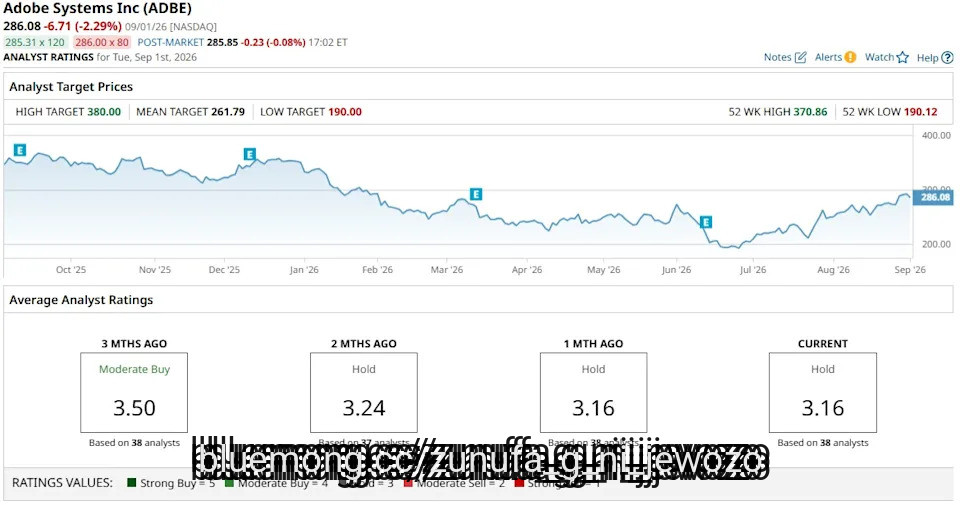
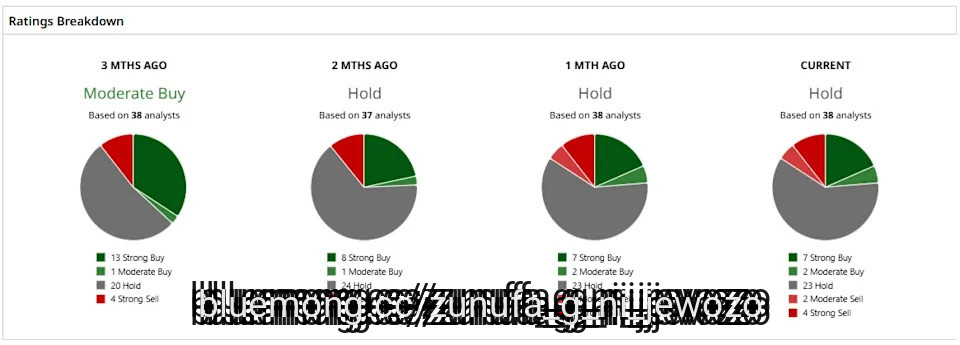
Adobe (ADBE) shareholders should circle Thursday, Sept. 10, on their calendars. The company will release its third-quarter fiscal 2026 results after the market closes that day, followed by a conference call with investors from 2 p.m. to 3 p.m. Pacific Time. This report arrives at a pivotal moment for one of the software industry's most closely watched names.
Adobe heads into the report with considerable operational momentum. In fiscal Q2, Adobe generated record revenue of $6.62 billion, up 13% year-over-year (YOY). Just as notably, Adobe's AI-first annual recurring revenue (ARR) more than tripled YOY to exceed $500 million, offering an increasingly tangible sign that its investments in AI products are beginning to produce meaningful recurring revenue.
How to Play SNPS Stock as Layoffs Hit Synopsys
Micron Stock More Than Tripled in 2026. Now Taiwan Strike Threat Could Shake the AI Boom.
Apple Stock: September Surprise Could Be Bigger Than a New iPhone
#recurring #adbe #thursday
Adobe heads into the report with considerable operational momentum. In fiscal Q2, Adobe generated record revenue of $6.62 billion, up 13% year-over-year (YOY). Just as notably, Adobe's AI-first annual recurring revenue (ARR) more than tripled YOY to exceed $500 million, offering an increasingly tangible sign that its investments in AI products are beginning to produce meaningful recurring revenue.
How to Play SNPS Stock as Layoffs Hit Synopsys
Micron Stock More Than Tripled in 2026. Now Taiwan Strike Threat Could Shake the AI Boom.
Apple Stock: September Surprise Could Be Bigger Than a New iPhone
#recurring #adbe #thursday


51 mins. ago
Dell Technologies (DELL) stock spiked almost $100 this week after its Sept. 1 Q2 earnings release, following strong earnings and free cash flow (FCF) performance. But it's near my prior FCF-based price target ($525.71) from a month ago. Moreover, ***** ysts' PTs are only slightly higher (+7.6%).
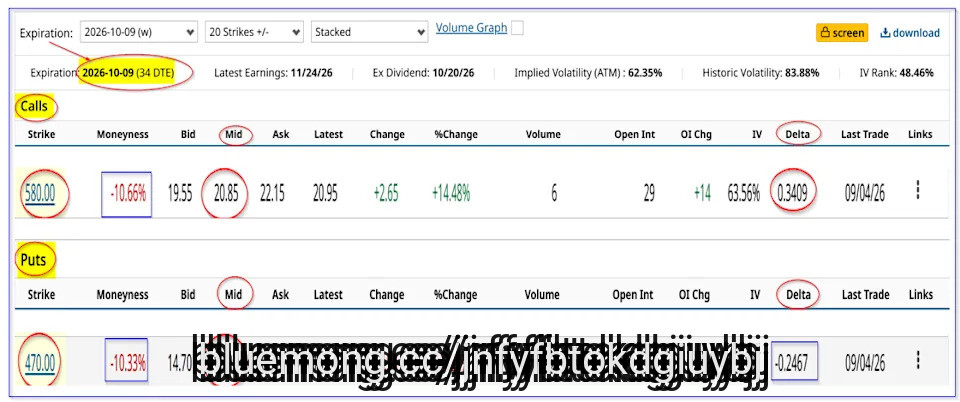
As a result, instead of buying DELL stock here, shorting out-of-the-money options may be a better play. That way, an investor can collect a premium while waiting to buy in (i.e., a short-put play) lower or sell at a higher price (a covered call play). This article will show how these work.
Meta Is Underperforming Every Trillion-Dollar Stock but Tesla. This Trade Pays You While Wall Street Waits It Out.
Markets move fast. Keep up by reading our FREE midday Barchart Brief newsletter for exclusive charts, ***** ysis, and headlines.
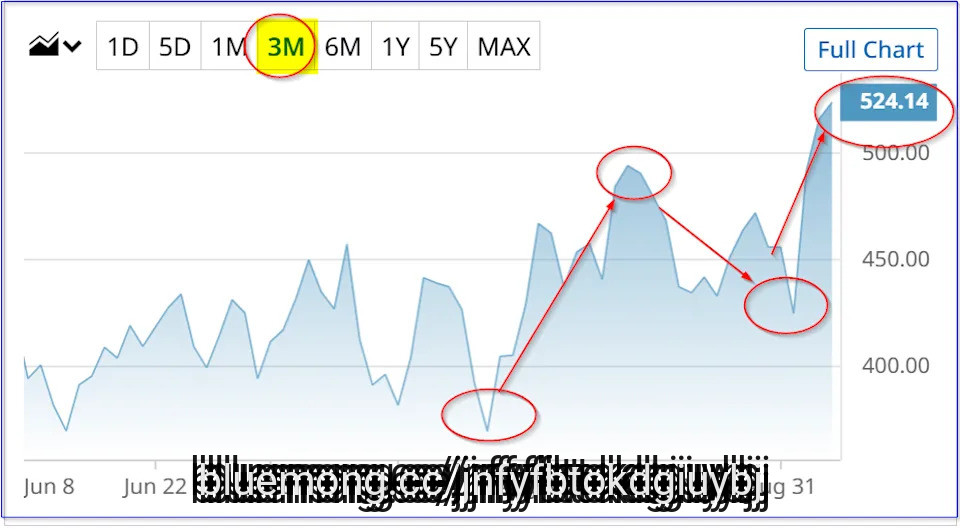
DELL closed at $524.14 on Friday, Sept. 4, up +23.3% from its pre-earnings close on Sept. 1 of $425.00. In fact, it's been quite volatile, as seen in the Barchart chart below. In fact, its implied volatility (IV) is relatively high at 62.50%, according to Barchart.
#earnings
As a result, instead of buying DELL stock here, shorting out-of-the-money options may be a better play. That way, an investor can collect a premium while waiting to buy in (i.e., a short-put play) lower or sell at a higher price (a covered call play). This article will show how these work.
Meta Is Underperforming Every Trillion-Dollar Stock but Tesla. This Trade Pays You While Wall Street Waits It Out.
Markets move fast. Keep up by reading our FREE midday Barchart Brief newsletter for exclusive charts, ***** ysis, and headlines.
DELL closed at $524.14 on Friday, Sept. 4, up +23.3% from its pre-earnings close on Sept. 1 of $425.00. In fact, it's been quite volatile, as seen in the Barchart chart below. In fact, its implied volatility (IV) is relatively high at 62.50%, according to Barchart.
#earnings
1 hr. ago
On August 5, Protagonist Therapeutics (NASDAQ:PTGX) reported second-quarter 2026 results that flipped the company from red ink to a $162.8 million profit, or $2.29 per diluted share, compared with a $34.8 million loss a year earlier. The swing came as the company banked payments tied to two drugs moving from the lab bench to the pharmacy counter: ICOTYDE, an oral psoriasis treatment, and rusfertide, an injectable now awaiting an FDA decision. Cash and marketable securities climbed to $849.5 million. Here's what's fueling the optimism, and what could complicate it.
The quarter marked the first full three months of commercial sales for ICOTYDE, which won FDA approval on March 18 for moderate-to-severe plaque psoriasis in patients 12 and older weighing at least 40 kg. That approval triggered a $50 million milestone payment and made ICOTYDE, according to the company, the first and only FDA-approved targeted oral peptide for the condition. Protagonist can still collect up to $580 million more in milestones from partner Johnson & Johnson, plus royalties that average around 7.25 percent at $4 billion in annual sales.
Rusfertide carries even more weight. Its new drug application sits under Priority Review with a PDUFA goal date in August, backed by Breakthrough Therapy, Orphan Drug, and Fast Track designations for polycythemia vera. Partner Takeda already paid Protagonist $200 million on an opt-out election in April, with another $200 million and a $75 million approval milestone still due, on top of royalties that can reach 29 percent of sales above $1.5 billion. Behind both drugs, PN-881, an oral IL-17 antagonist, is heading into a Phase 2b psoriasis program in early 2027 after Phase 1 data showed drug levels beating their pharmacokinetic targets, and a Phase 1 study just began for PN-477sc, an injectable obesity peptide.
Look closer at that $213.5 million in license and collaboration revenue, and $192.4 million of it traces to the proportional recognition of Takeda's initial opt-out payment, not repeatable product sales. A year earlier, the same line item was just $5.5 million, so the growth reflects a single deal event more than an operating business scaling up. And that opt-out itself cuts both ways: Protagonist gave up its right to develop and commercialize rusfertide on its own, trading full ownership for royalties and milestones that depend on Takeda's execution rather than Protagonist's.
Spending is also set to climb. Management expects research and development costs to increase significantly in the second half of 2026 versus the first half, driven by the new PN-881 Phase 2b program, manufacturing investments, and added headcount. General and administrative costs are rising too, largely on stock-based compensation. And rusfertide's fate still hinges on an FDA decision that hasn't happened yet, priority review or not.
#protagonist
The quarter marked the first full three months of commercial sales for ICOTYDE, which won FDA approval on March 18 for moderate-to-severe plaque psoriasis in patients 12 and older weighing at least 40 kg. That approval triggered a $50 million milestone payment and made ICOTYDE, according to the company, the first and only FDA-approved targeted oral peptide for the condition. Protagonist can still collect up to $580 million more in milestones from partner Johnson & Johnson, plus royalties that average around 7.25 percent at $4 billion in annual sales.
Rusfertide carries even more weight. Its new drug application sits under Priority Review with a PDUFA goal date in August, backed by Breakthrough Therapy, Orphan Drug, and Fast Track designations for polycythemia vera. Partner Takeda already paid Protagonist $200 million on an opt-out election in April, with another $200 million and a $75 million approval milestone still due, on top of royalties that can reach 29 percent of sales above $1.5 billion. Behind both drugs, PN-881, an oral IL-17 antagonist, is heading into a Phase 2b psoriasis program in early 2027 after Phase 1 data showed drug levels beating their pharmacokinetic targets, and a Phase 1 study just began for PN-477sc, an injectable obesity peptide.
Look closer at that $213.5 million in license and collaboration revenue, and $192.4 million of it traces to the proportional recognition of Takeda's initial opt-out payment, not repeatable product sales. A year earlier, the same line item was just $5.5 million, so the growth reflects a single deal event more than an operating business scaling up. And that opt-out itself cuts both ways: Protagonist gave up its right to develop and commercialize rusfertide on its own, trading full ownership for royalties and milestones that depend on Takeda's execution rather than Protagonist's.
Spending is also set to climb. Management expects research and development costs to increase significantly in the second half of 2026 versus the first half, driven by the new PN-881 Phase 2b program, manufacturing investments, and added headcount. General and administrative costs are rising too, largely on stock-based compensation. And rusfertide's fate still hinges on an FDA decision that hasn't happened yet, priority review or not.
#protagonist

1 hr. ago
On August 4, Voya Financial (NYSE:VOYA) announced its second-quarter 2026 results, and the headline numbers tell an uncomfortable story. Net income available to common shareholders dropped to $90 million, or $0.97 per diluted share, down from $162 million and $1.66 a year earlier. Adjusted operating earnings fell just as sharply, to $140 million from $240 million. Yet look past the income statement and Voya's underlying businesses were adding client ******* ets, growing fee income, and returning cash to shareholders at a steady pace.
Voya's Retirement business crossed 10 million participant accounts during the quarter, a milestone that arrived alongside the completed integration of OneAmerica. Total client ******* ets in that segment reached $863 billion as of June 30, up 14% from $757 billion a year earlier, and fee-based revenues climbed 10% year over year. Investment Management told a similar story. Pre-tax adjusted operating earnings there rose 12% to $57 million, helped by $1.2 billion of net inflows during the quarter that pushed ******* ets under management to $377 billion, up from $360 billion a year ago.
Assets under advisory grew even faster, reaching $63 billion from $54 billion. Margins widened too, up 100 basis points on a trailing twelve-month basis to 29.0%. Employee Benefits, often the company's most volatile segment, showed real underwriting progress: the total aggregate loss ratio improved to 74% from 79% a year earlier, lifting its trailing twelve-month margin to 11.0% from just 3.7%. None of that came at the expense of shareholders. Voya generated roughly $150 million of excess capital in the quarter, more than fully converting its adjusted operating earnings into deployable cash, and returned about $200 million through dividends and buybacks, with $263 million still authorized for future repurchases.
The drop in profitability traces to specific, identifiable costs. Corporate reported pre-tax adjusted operating losses of $102 million, up from $67 million a year earlier, largely because of roughly $40 million in severance tied to efficiency actions. A $15 million pre-tax loss on alternative investments added further pressure. Those same alternative investment declines hit Retirement directly: pre-tax adjusted operating earnings there fell to $190 million from $235 million, even as fee revenue grew, because lower alternative investment income and planned strategic investment spending offset the gains. Employee Benefits saw the sharpest swing, with pre-tax adjusted operating earnings falling to $22 million from $69 million.
#year #earnings #assets #voya
Voya's Retirement business crossed 10 million participant accounts during the quarter, a milestone that arrived alongside the completed integration of OneAmerica. Total client ******* ets in that segment reached $863 billion as of June 30, up 14% from $757 billion a year earlier, and fee-based revenues climbed 10% year over year. Investment Management told a similar story. Pre-tax adjusted operating earnings there rose 12% to $57 million, helped by $1.2 billion of net inflows during the quarter that pushed ******* ets under management to $377 billion, up from $360 billion a year ago.
Assets under advisory grew even faster, reaching $63 billion from $54 billion. Margins widened too, up 100 basis points on a trailing twelve-month basis to 29.0%. Employee Benefits, often the company's most volatile segment, showed real underwriting progress: the total aggregate loss ratio improved to 74% from 79% a year earlier, lifting its trailing twelve-month margin to 11.0% from just 3.7%. None of that came at the expense of shareholders. Voya generated roughly $150 million of excess capital in the quarter, more than fully converting its adjusted operating earnings into deployable cash, and returned about $200 million through dividends and buybacks, with $263 million still authorized for future repurchases.
The drop in profitability traces to specific, identifiable costs. Corporate reported pre-tax adjusted operating losses of $102 million, up from $67 million a year earlier, largely because of roughly $40 million in severance tied to efficiency actions. A $15 million pre-tax loss on alternative investments added further pressure. Those same alternative investment declines hit Retirement directly: pre-tax adjusted operating earnings there fell to $190 million from $235 million, even as fee revenue grew, because lower alternative investment income and planned strategic investment spending offset the gains. Employee Benefits saw the sharpest swing, with pre-tax adjusted operating earnings falling to $22 million from $69 million.
#year #earnings #assets #voya

1 hr. ago
On August 6, SIGA Technologies (NASDAQ:SIGA) reported financial results for the three and six months ended June 30, and the numbers tell two very different stories depending on which quarter you compare them to. Revenue and profit both cratered from a year ago, yet the company still turned a profit, paid out a special dividend, and closed the books on a major government contract. For a stock priced at less than three times forward earnings, that combination is worth unpacking.
The quarter's headline number is $37 million in TPOXX sales spread across three customers. That included $24 million of IV TPOXX delivered to the US strategic national stockpile and $13 million of oral TPOXX sold to two international buyers. CEO Diem Nguyen pointed to deliveries spanning the US, Europe, and the Asia-Pacific region, across multiple formulations, as evidence the company is executing its plan to sell TPOXX to a broader mix of regions and customers rather than leaning on a single buyer.
That IV shipment also marked something bigger. The deliveries completed the last procurement order under the 19C contract, the government agreement that has anchored SIGA's stockpile sales for years. Wrapping up that order cleanly, alongside new international oral TPOXX business, supports the idea that SIGA can keep generating meaningful revenue even as its original government relationship winds down. The company also stayed profitable through the transition. Net income came in at $12.5 million for the quarter and $9 million for the first half of the year, and it still had room to pay shareholders a special cash dividend of $0.6 per share, declared March 26 and paid out April 23 to holders of record as of April 7. A company burning cash could not make that call.
Set next to a year ago, the quarter looks like a steep step down. Product sales fell to $37.9 million from $79.1 million, and six-month product sales dropped to $41.4 million from $84.9 million. Total revenue followed the same path, sliding to $41 million from $81.1 million in the quarter and to $47.2 million from $88.2 million over six months.
Profitability fell even faster than revenue. Operating income dropped to $13.9 million from $45.7 million in the quarter, and to $8.6 million from $43.4 million over six months. Net income slid to $12.5 million from $35.5 million, and diluted earnings per share fell to $0.17 from $0.49. The six-month numbers show the same pattern, with EPS down to $0.13 from $0.49. And with the last 19C procurement order now delivered, the specific piece of business that drove those bigger prior-year numbers will not simply repeat itself, leaving the company to lean on the newer international and stockpile orders it is still building out.
#tpoxx #quarter #siga #months
The quarter's headline number is $37 million in TPOXX sales spread across three customers. That included $24 million of IV TPOXX delivered to the US strategic national stockpile and $13 million of oral TPOXX sold to two international buyers. CEO Diem Nguyen pointed to deliveries spanning the US, Europe, and the Asia-Pacific region, across multiple formulations, as evidence the company is executing its plan to sell TPOXX to a broader mix of regions and customers rather than leaning on a single buyer.
That IV shipment also marked something bigger. The deliveries completed the last procurement order under the 19C contract, the government agreement that has anchored SIGA's stockpile sales for years. Wrapping up that order cleanly, alongside new international oral TPOXX business, supports the idea that SIGA can keep generating meaningful revenue even as its original government relationship winds down. The company also stayed profitable through the transition. Net income came in at $12.5 million for the quarter and $9 million for the first half of the year, and it still had room to pay shareholders a special cash dividend of $0.6 per share, declared March 26 and paid out April 23 to holders of record as of April 7. A company burning cash could not make that call.
Set next to a year ago, the quarter looks like a steep step down. Product sales fell to $37.9 million from $79.1 million, and six-month product sales dropped to $41.4 million from $84.9 million. Total revenue followed the same path, sliding to $41 million from $81.1 million in the quarter and to $47.2 million from $88.2 million over six months.
Profitability fell even faster than revenue. Operating income dropped to $13.9 million from $45.7 million in the quarter, and to $8.6 million from $43.4 million over six months. Net income slid to $12.5 million from $35.5 million, and diluted earnings per share fell to $0.17 from $0.49. The six-month numbers show the same pattern, with EPS down to $0.13 from $0.49. And with the last 19C procurement order now delivered, the specific piece of business that drove those bigger prior-year numbers will not simply repeat itself, leaving the company to lean on the newer international and stockpile orders it is still building out.
#tpoxx #quarter #siga #months

1 hr. ago
SEOUL, Sept 7 (Reuters) - South Korea and the United States have agreed on the size of Seoul's planned investment in a gas project in Texas at around $22.3 billion, Korean media outlet Edaily reported on Monday, citing unidentified officials and politicians.
The project, which would be Seoul's first U.S. investment under last year's trade agreement, aims to build a 6.3-gigawatt gas plant in Encinal, Texas, to meet rising power demand for AI data centres, according to the media reports.
The investment would be part of the trade deal signed by the two allies last year, under which Seoul pledged $350 billion worth of U.S. investments in exchange for favourable U.S. tariffs on imports of South Korean goods.
The reports did not say whether Seoul would shoulder the whole cost of the Texas project.
Seoul is also considering other potential projects in the United States, including building a large-scale nuclear power plant or a liquefied natural gas project in Alaska, the reports said.
#states
The project, which would be Seoul's first U.S. investment under last year's trade agreement, aims to build a 6.3-gigawatt gas plant in Encinal, Texas, to meet rising power demand for AI data centres, according to the media reports.
The investment would be part of the trade deal signed by the two allies last year, under which Seoul pledged $350 billion worth of U.S. investments in exchange for favourable U.S. tariffs on imports of South Korean goods.
The reports did not say whether Seoul would shoulder the whole cost of the Texas project.
Seoul is also considering other potential projects in the United States, including building a large-scale nuclear power plant or a liquefied natural gas project in Alaska, the reports said.
#states

1 hr. ago
The Internal Revenue Service collected less money from audits in 2025 — a direct result of losing many employees to cost cutting measures by the Trump administration, according to a new watchdog report.
The Treasury Inspector General for Tax Administration (TIGTA) said that in fiscal 2025, ending Sept. 30, the IRS collected $6.5 billion in revenue from tax audits, down from $10 billion the year prior.
Jeff Bezos backs a platform that lets anyone invest in rental homes for as little as $100 — 6 ways to build wealth like a landlord without actually being one
Dave Ramsey warns nearly 50% of Americans are making 1 big Social Security mistake. Here's what it is and 3 simple steps to fix it ASAP
The tax breaks in Trump's 'big beautiful bill' expire after 2028. Here are 4 moves to make before the window closes
#revenue #internal
The Treasury Inspector General for Tax Administration (TIGTA) said that in fiscal 2025, ending Sept. 30, the IRS collected $6.5 billion in revenue from tax audits, down from $10 billion the year prior.
Jeff Bezos backs a platform that lets anyone invest in rental homes for as little as $100 — 6 ways to build wealth like a landlord without actually being one
Dave Ramsey warns nearly 50% of Americans are making 1 big Social Security mistake. Here's what it is and 3 simple steps to fix it ASAP
The tax breaks in Trump's 'big beautiful bill' expire after 2028. Here are 4 moves to make before the window closes
#revenue #internal


1 hr. ago
Maggie Gyllenhaal attended the Golden Lion for Lifetime Achievement presentation to Ellen Burstyn earlier today during the Venice Film Festival.
Victor Boyko/Getty Images
As President of the Jury, and knowing all we know about Maggie's style, we weren't expecting anything elaborate. But I have to say, I really enjoyed this Chloé Fall 2025 look.
I love the eggplant hue of the cropped blouse, with the ruffles adding just enough drama to make this feel worthy of the occasion without taking Maggie too far outside her comfort zone.
I also prefer her black trousers to the sheer taupe skirt we saw on the runway. They allow the blouse to remain the focal point and make the look feel much more like Maggie.
#blouse #make #lion
Victor Boyko/Getty Images
As President of the Jury, and knowing all we know about Maggie's style, we weren't expecting anything elaborate. But I have to say, I really enjoyed this Chloé Fall 2025 look.
I love the eggplant hue of the cropped blouse, with the ruffles adding just enough drama to make this feel worthy of the occasion without taking Maggie too far outside her comfort zone.
I also prefer her black trousers to the sheer taupe skirt we saw on the runway. They allow the blouse to remain the focal point and make the look feel much more like Maggie.
#blouse #make #lion




1 hr. ago
Earnings season refuses to end. While others may have had enough, earnings reports are my lifeblood! Well, that and 1,500 milligrams of caffeine a day.
I'm glad earnings season rages on because it gives us the very latest insights on all things AI. This is super helpful information as I embark for the Super Bowl of tech conferences: the Goldman Sachs Communacopia tech gathering. More on that in a moment.
The past two weeks have been bonkers for the AI investment thesis. Any talk about peak AI needs to be tossed aside.
Broadcom's (AVGO) revenue surged 86% year over year in its most recent quarter. Adjusted earnings per share exploded 96%. Both metrics easily thumped ***** yst estimates.
The massive outperformance was fueled by relentless hyperscaler demand for custom AI chips and networking gear, with quarterly AI semiconductor revenue alone tripling to $16.7 billion.
#super #season #revenue #sachs
I'm glad earnings season rages on because it gives us the very latest insights on all things AI. This is super helpful information as I embark for the Super Bowl of tech conferences: the Goldman Sachs Communacopia tech gathering. More on that in a moment.
The past two weeks have been bonkers for the AI investment thesis. Any talk about peak AI needs to be tossed aside.
Broadcom's (AVGO) revenue surged 86% year over year in its most recent quarter. Adjusted earnings per share exploded 96%. Both metrics easily thumped ***** yst estimates.
The massive outperformance was fueled by relentless hyperscaler demand for custom AI chips and networking gear, with quarterly AI semiconductor revenue alone tripling to $16.7 billion.
#super #season #revenue #sachs


2 hours ago
Moneywise and Yahoo Finance LLC may earn commission or revenue through links in the content below.
Americans, on the whole, owe a lot of money. Collectively, households across the country owe $18.8 trillion (1) to creditors, with mortgage debt accounting for around $13.1 trillion of that amount.
Experian data also showed the average American's debt was $104,755 as of June 2025 (2). That's a substantial sum given that the median household income was just $83,730 in 2024 (3).
Jeff Bezos backs a platform that lets anyone invest in rental homes for as little as $100 — 6 ways to build wealth like a landlord without actually being one
JPMorgan sees gold hitting $5,000/oz by Q4 — and savvy investors are protecting their wealth with a tax-advantaged Gold IRA. Get your free guide from Priority Gold
#Gold #debt #finance #june
Americans, on the whole, owe a lot of money. Collectively, households across the country owe $18.8 trillion (1) to creditors, with mortgage debt accounting for around $13.1 trillion of that amount.
Experian data also showed the average American's debt was $104,755 as of June 2025 (2). That's a substantial sum given that the median household income was just $83,730 in 2024 (3).
Jeff Bezos backs a platform that lets anyone invest in rental homes for as little as $100 — 6 ways to build wealth like a landlord without actually being one
JPMorgan sees gold hitting $5,000/oz by Q4 — and savvy investors are protecting their wealth with a tax-advantaged Gold IRA. Get your free guide from Priority Gold
#Gold #debt #finance #june


2 hours ago
On August 13, TSS Inc. (NASDAQ:TSSI) reported second-quarter results that look worse on the top line and better underneath it. Revenue fell 20% year over year to $35.1 million, yet gross profit rose 11% and adjusted EBITDA climbed 12%. The company is deliberately walking away from lower-margin procurement work and leaning into systems integration for AI and HPC infrastructure, a business that grew 46% in the quarter. That trade-off is the whole story right now, and it cuts both ways.
Systems integration revenue reached $13.9 million in the quarter, up 46% from a year earlier, and now makes up 39% of revenue, versus just 22% in last year's second quarter. Facilities management grew even faster, up 84% to $2.7 million. CEO Darryll Dewan said systems integration is expected to keep outpacing the rest of the business given strong demand and the company's track record on complex technology projects.
TSS has started deploying capital toward a planned $17 million investment aimed at the next wave of AI data center technology, a buildout the company expects to start converting into higher systems integration revenue in the third quarter. The company has also put an idle **** et back to work: its former Round Rock integration facility began warehouse operations on May 1, generating $0.3 million in operating lease income during the quarter.
Management is also pointing to stronger months ahead. TSS expects the second half of 2026 to outperform the first half, with accelerated systems integration growth, and it maintained guidance for full-year adjusted EBITDA to land between $20 million and $22 million, at the high end of that band.
The revenue decline is not small. Procurement revenue, still TSS's largest segment by dollars, fell 45% to $18.2 million in the quarter and is down 53% to $58.2 million for the first six months of the year. That drop pulled total revenue down 20% in the quarter and 37% for the year to date, to $90.5 million, even as the higher-margin segments expanded.
#systems #procurement
Systems integration revenue reached $13.9 million in the quarter, up 46% from a year earlier, and now makes up 39% of revenue, versus just 22% in last year's second quarter. Facilities management grew even faster, up 84% to $2.7 million. CEO Darryll Dewan said systems integration is expected to keep outpacing the rest of the business given strong demand and the company's track record on complex technology projects.
TSS has started deploying capital toward a planned $17 million investment aimed at the next wave of AI data center technology, a buildout the company expects to start converting into higher systems integration revenue in the third quarter. The company has also put an idle **** et back to work: its former Round Rock integration facility began warehouse operations on May 1, generating $0.3 million in operating lease income during the quarter.
Management is also pointing to stronger months ahead. TSS expects the second half of 2026 to outperform the first half, with accelerated systems integration growth, and it maintained guidance for full-year adjusted EBITDA to land between $20 million and $22 million, at the high end of that band.
The revenue decline is not small. Procurement revenue, still TSS's largest segment by dollars, fell 45% to $18.2 million in the quarter and is down 53% to $58.2 million for the first six months of the year. That drop pulled total revenue down 20% in the quarter and 37% for the year to date, to $90.5 million, even as the higher-margin segments expanded.
#systems #procurement


2 hours ago
On August 5, OraSure Technologies (NASDAQ:OSUR) reported second-quarter 2026 results that included its first GAAP net income in years, a headline number of $6.2 million versus a $19.7 million loss a year earlier. Revenue of $30.6 million beat the company's own guidance range and climbed 9.7% from the prior quarter. But look past the top line and the story splits in two, one part driven by real operating progress, the other by an accounting adjustment tied to a regulatory setback.
Some of this quarter's improvement came from actual operations. Gross margin expanded to 43.5% on a GAAP basis, up from 42.1% a year earlier, and non-GAAP gross margin rose to 44.2% from 43.2%. Diagnostics revenue grew 1% year over year to $19.4 million, helped by higher syphilis test sales and the addition of BioMedomics' Sickle SCAN product line. OraSure also picked up two regulatory wins during the quarter. In June 2026, the FDA cleared its Colli-Pee Dx urine collection kit for use with Roche's **** ually transmitted infection tests, letting patients collect samples at home instead of in a clinic.
The following month, the FDA granted Emergency Use Authorization for the second-generation OraQuick Ebola 2.0 Rapid Antigen Test, which can detect all four Ebola virus strains known to cause disease in humans. Cash used in operating activities improved to $23.8 million over the first six months of 2026, down from $30 million a year earlier, a sign the cash burn is easing. The company also kept buying back stock, repurchasing $22 million of shares, or 7.7 million shares, against its $40 million authorization, retiring more than 10% of shares outstanding.
The GAAP profit that headlines this quarter didn't come from the business getting more profitable. It came almost entirely from a $22.6 million reduction in a contingent consideration liability, an accounting entry triggered when OraSure updated its regulatory submission plan for the CT/NG test on its Sherlock platform. Strip that adjustment out and the underlying trend looks different. Non-GAAP operating loss widened to $14.7 million from $13.2 million a year earlier, and non-GAAP net loss came in at $13.8 million, roughly in line with last year's $14.2 million loss. The regulatory event behind that accounting gain is itself a setback.
In July, OraSure withdrew its InteliQuick CT/NG molecular self-test submission after receiving FDA feedback, meaning the product's path to market is now delayed while the company prepares a future resubmission. Total revenue for the quarter was still down 2% year over year, and core revenue, which excludes COVID-19 and Risk **** sment Testing, was flat. Six-month revenue fell 4% to $58.6 million. Sample Management Solutions revenue stayed flat year over year at $9.9 million, showing no growth driver of its own. Cash and equivalents fell to $161 million at quarter-end from $199.3 million at the end of 2025, pulled down by continued buybacks and cash used in operations.
#year #gaap #reven
Some of this quarter's improvement came from actual operations. Gross margin expanded to 43.5% on a GAAP basis, up from 42.1% a year earlier, and non-GAAP gross margin rose to 44.2% from 43.2%. Diagnostics revenue grew 1% year over year to $19.4 million, helped by higher syphilis test sales and the addition of BioMedomics' Sickle SCAN product line. OraSure also picked up two regulatory wins during the quarter. In June 2026, the FDA cleared its Colli-Pee Dx urine collection kit for use with Roche's **** ually transmitted infection tests, letting patients collect samples at home instead of in a clinic.
The following month, the FDA granted Emergency Use Authorization for the second-generation OraQuick Ebola 2.0 Rapid Antigen Test, which can detect all four Ebola virus strains known to cause disease in humans. Cash used in operating activities improved to $23.8 million over the first six months of 2026, down from $30 million a year earlier, a sign the cash burn is easing. The company also kept buying back stock, repurchasing $22 million of shares, or 7.7 million shares, against its $40 million authorization, retiring more than 10% of shares outstanding.
The GAAP profit that headlines this quarter didn't come from the business getting more profitable. It came almost entirely from a $22.6 million reduction in a contingent consideration liability, an accounting entry triggered when OraSure updated its regulatory submission plan for the CT/NG test on its Sherlock platform. Strip that adjustment out and the underlying trend looks different. Non-GAAP operating loss widened to $14.7 million from $13.2 million a year earlier, and non-GAAP net loss came in at $13.8 million, roughly in line with last year's $14.2 million loss. The regulatory event behind that accounting gain is itself a setback.
In July, OraSure withdrew its InteliQuick CT/NG molecular self-test submission after receiving FDA feedback, meaning the product's path to market is now delayed while the company prepares a future resubmission. Total revenue for the quarter was still down 2% year over year, and core revenue, which excludes COVID-19 and Risk **** sment Testing, was flat. Six-month revenue fell 4% to $58.6 million. Sample Management Solutions revenue stayed flat year over year at $9.9 million, showing no growth driver of its own. Cash and equivalents fell to $161 million at quarter-end from $199.3 million at the end of 2025, pulled down by continued buybacks and cash used in operations.
#year #gaap #reven

2 hours ago
Moneywise and Yahoo Finance LLC may earn commission or revenue through links in the content below.
For millions of Americans, turning 65 brings a major change in how they pay for health care: Medicare eligibility.
But financial expert Suze Orman says there's a potentially costly misconception about what happens next.
Jeff Bezos backs a platform that lets anyone invest in rental homes for as little as $100 — 6 ways to build wealth like a landlord without actually being one
JPMorgan sees gold hitting $5,000/oz by Q4 — and savvy investors are protecting their wealth with a tax-advantaged Gold IRA. Get your free guide from Priority Gold
#Gold #moneywise
For millions of Americans, turning 65 brings a major change in how they pay for health care: Medicare eligibility.
But financial expert Suze Orman says there's a potentially costly misconception about what happens next.
Jeff Bezos backs a platform that lets anyone invest in rental homes for as little as $100 — 6 ways to build wealth like a landlord without actually being one
JPMorgan sees gold hitting $5,000/oz by Q4 — and savvy investors are protecting their wealth with a tax-advantaged Gold IRA. Get your free guide from Priority Gold
#Gold #moneywise


2 hours ago
The "magic number" many Americans plan their retirement around often refers to how much money they think they'll need saved before they can quit work.
As of 2026, that number has climbed to $1.46 million — a $200,000 increase from the year before.
Jeff Bezos backs a platform that lets anyone invest in rental homes for as little as $100 — 6 ways to build wealth like a landlord without actually being one
Dave Ramsey warns nearly 50% of Americans are making 1 big Social Security mistake. Here's what it is and 3 simple steps to fix it ASAP
The tax breaks in Trump's 'big beautiful bill' expire after 2028. Here are 4 moves to make before the window closes
#jeff
As of 2026, that number has climbed to $1.46 million — a $200,000 increase from the year before.
Jeff Bezos backs a platform that lets anyone invest in rental homes for as little as $100 — 6 ways to build wealth like a landlord without actually being one
Dave Ramsey warns nearly 50% of Americans are making 1 big Social Security mistake. Here's what it is and 3 simple steps to fix it ASAP
The tax breaks in Trump's 'big beautiful bill' expire after 2028. Here are 4 moves to make before the window closes
#jeff

2 hours ago
Jhalesa Seymour became a millionaire by age 25 by selling something simple: soap.
But she didn't build her multimillion-dollar business with a pile of startup cash or backing from investors. Seymour says she started the company while she was still in college with just $67 to her name.
Jeff Bezos backs a platform that lets anyone invest in rental homes for as little as $100 — 6 ways to build wealth like a landlord without actually being one
Dave Ramsey warns nearly 50% of Americans are making 1 big Social Security mistake. Here's what it is and 3 simple steps to fix it ASAP
The tax breaks in Trump's 'big beautiful bill' expire after 2028. Here are 4 moves to make before the window closes
#dave #americans
But she didn't build her multimillion-dollar business with a pile of startup cash or backing from investors. Seymour says she started the company while she was still in college with just $67 to her name.
Jeff Bezos backs a platform that lets anyone invest in rental homes for as little as $100 — 6 ways to build wealth like a landlord without actually being one
Dave Ramsey warns nearly 50% of Americans are making 1 big Social Security mistake. Here's what it is and 3 simple steps to fix it ASAP
The tax breaks in Trump's 'big beautiful bill' expire after 2028. Here are 4 moves to make before the window closes
#dave #americans


2 hours ago
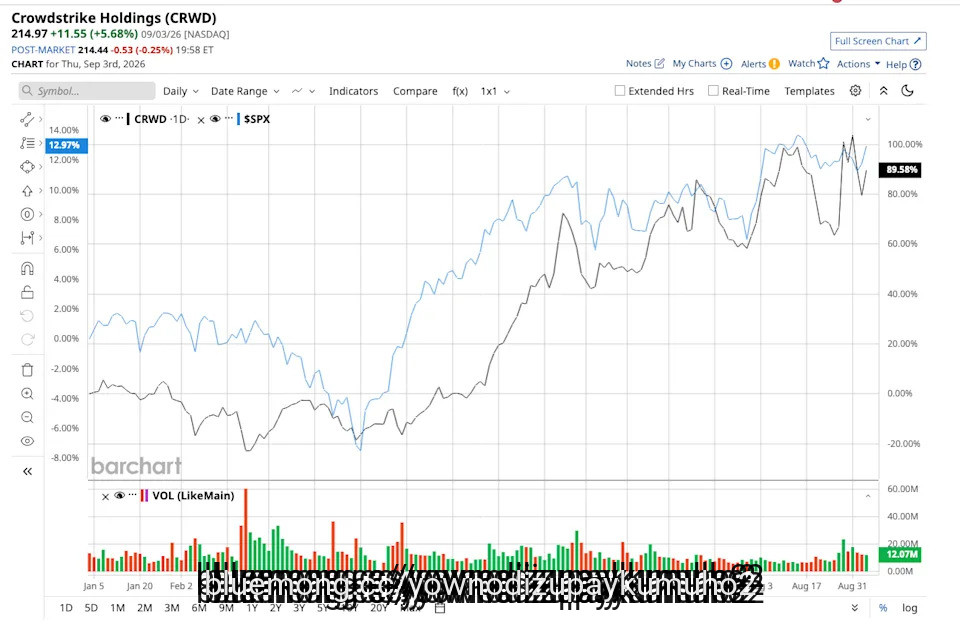
CrowdStrike (CRWD) looks like one of the strongest growth stories in cybersecurity right now. It had a lot to prove in the fiscal second-quarter earnings. The company delivered on all three numbers that I flagged ahead of the Q2 print, and in some cases it did much better than expected. And the stock's massive 90% gains so far this year reflect that outstanding performance.
With a market cap of $220 billion, CrowdStrike is a cloud-based cybersecurity company best known for its Falcon platform. The company helps businesses protect endpoints, cloud workloads, identities, and other parts of their technology infrastructure from cyber threats.
How to Play SNPS Stock as Layoffs Hit Synopsys
Micron Stock More Than Tripled in 2026. Now Taiwan Strike Threat Could Shake the AI Boom.
Dear Adobe Stock Fans, Mark Your Calendars for September 10
#Stock #company #Cybersecurity
With a market cap of $220 billion, CrowdStrike is a cloud-based cybersecurity company best known for its Falcon platform. The company helps businesses protect endpoints, cloud workloads, identities, and other parts of their technology infrastructure from cyber threats.
How to Play SNPS Stock as Layoffs Hit Synopsys
Micron Stock More Than Tripled in 2026. Now Taiwan Strike Threat Could Shake the AI Boom.
Dear Adobe Stock Fans, Mark Your Calendars for September 10
#Stock #company #Cybersecurity

2 hours ago
NVIDIA Corporation (NASDAQ:NVDA) has officially committed billions on AI developer platform Hugging Face for a $12.9 billion. The deal signifies the chipmaker's move beyond hardware and up the AI stack.
The AI chipmaker buying the open-source model hub millions of developers are already using reads differently when compared to Broadcom's earlier forecast to double its AI chip revenue to roughly $230 billion in fiscal 2028.
Even though AVGO is facing increased competition in Google's TPU programs, it is also gaining ground with customers such as OpenAI and Anthropic. This makes Nvidia's recent move look more like insurance rather than opportunism.
In response to the acquisition, Needham ******* yst Rajvindra Gill reiterated a Buy rating on Nvidia on September 4, ******* igning a $300.00 price target.
"Yesterday, NVIDIA announced its agreement to buy Hugging Face for $12.930BN. Hugging Face is the open source platform for hosting open source and open weight models and datasets enabling developers to easily access ready-to-use models instead of building and training them from scratch."
#developers
The AI chipmaker buying the open-source model hub millions of developers are already using reads differently when compared to Broadcom's earlier forecast to double its AI chip revenue to roughly $230 billion in fiscal 2028.
Even though AVGO is facing increased competition in Google's TPU programs, it is also gaining ground with customers such as OpenAI and Anthropic. This makes Nvidia's recent move look more like insurance rather than opportunism.
In response to the acquisition, Needham ******* yst Rajvindra Gill reiterated a Buy rating on Nvidia on September 4, ******* igning a $300.00 price target.
"Yesterday, NVIDIA announced its agreement to buy Hugging Face for $12.930BN. Hugging Face is the open source platform for hosting open source and open weight models and datasets enabling developers to easily access ready-to-use models instead of building and training them from scratch."
#developers


2 hours ago
On August 6, Xponential Fitness (NYSE:XPOF) reported results for the second quarter ended June 30, and the numbers came in well short of where the boutique-fitness franchisor wanted to be. Revenue fell 13% year over year to $66 million, and the company swung to a net loss of $4.8 million after posting net income in the same period last year. CEO Mike Nuzzo said the quarter came in "below expectations." The bigger story sits in the outlook section, where the company trimmed nearly every full-year target it had set.
Despite the weak headline numbers, Xponential kept adding to its network. The company opened 67 gross new studios and sold 53 franchise licenses during the quarter, a sign that franchisee demand for its brands hasn't disappeared. North America system-wide sales held essentially flat at $437.3 million, which means new locations are offsetting some of the softness at existing studios rather than the whole system contracting. Even after cutting its 2026 targets, the company still expects to open roughly 150 net new studios for the year and generate North America system-wide sales of $1.7 billion to $1.75 billion. Full-year adjusted EBITDA guidance, while lowered, still points to $91 million to $97 million, meaning the business is still projected to be solidly profitable on that measure.
The details underneath the topline number are worse than the revenue decline alone suggests. North America same-store sales fell 6.8%, a sharp reversal from 2.4% growth in the same period a year earlier, and the quarterly run-rate average unit volume dropped to $659,000 from $686,000. Franchise revenue slipped 3% to $44 million on that same-store weakness plus brand divestitures completed in 2025, while equipment revenue dropped 26% to $7.1 million as fewer studio openings and license sales meant fewer installations. Merchandise revenue nearly vanished, falling 90% to $0.5 million as the company shifted from an in-house wholesale model to an outsourced retail arrangement, a transition it admitted came with its own challenges.
Costs moved the wrong direction too, with selling, general and administrative expenses up 33% to $32 million on higher legal expenses, and marketing fund expenses up 29% to $11.4 million. Adjusted EBITDA fell 22% to $21.9 million, and adjusted net income collapsed to $0.8 million from $14.5 million a year earlier. The balance sheet adds another concern, with just $25 million in cash, cash equivalents, and restricted cash against $522.4 million in total long-term debt, and $25.7 million in cash used in operating activities during the quarter. Management responded by cutting full-year revenue guidance to $250 million to $260 million, a 19% decline at the midpoint from 2025 and down from a prior forecast of $260 million to $270 million.
#million #quarter #north #sales
Despite the weak headline numbers, Xponential kept adding to its network. The company opened 67 gross new studios and sold 53 franchise licenses during the quarter, a sign that franchisee demand for its brands hasn't disappeared. North America system-wide sales held essentially flat at $437.3 million, which means new locations are offsetting some of the softness at existing studios rather than the whole system contracting. Even after cutting its 2026 targets, the company still expects to open roughly 150 net new studios for the year and generate North America system-wide sales of $1.7 billion to $1.75 billion. Full-year adjusted EBITDA guidance, while lowered, still points to $91 million to $97 million, meaning the business is still projected to be solidly profitable on that measure.
The details underneath the topline number are worse than the revenue decline alone suggests. North America same-store sales fell 6.8%, a sharp reversal from 2.4% growth in the same period a year earlier, and the quarterly run-rate average unit volume dropped to $659,000 from $686,000. Franchise revenue slipped 3% to $44 million on that same-store weakness plus brand divestitures completed in 2025, while equipment revenue dropped 26% to $7.1 million as fewer studio openings and license sales meant fewer installations. Merchandise revenue nearly vanished, falling 90% to $0.5 million as the company shifted from an in-house wholesale model to an outsourced retail arrangement, a transition it admitted came with its own challenges.
Costs moved the wrong direction too, with selling, general and administrative expenses up 33% to $32 million on higher legal expenses, and marketing fund expenses up 29% to $11.4 million. Adjusted EBITDA fell 22% to $21.9 million, and adjusted net income collapsed to $0.8 million from $14.5 million a year earlier. The balance sheet adds another concern, with just $25 million in cash, cash equivalents, and restricted cash against $522.4 million in total long-term debt, and $25.7 million in cash used in operating activities during the quarter. Management responded by cutting full-year revenue guidance to $250 million to $260 million, a 19% decline at the midpoint from 2025 and down from a prior forecast of $260 million to $270 million.
#million #quarter #north #sales


3 hours ago
Eve tells PEOPLE she and husband Maximillion Cooper credit honesty and communication for their strong marriage of 12 years
The couple supports each other's careers, with Cooper often attending Eve's performances as a fan
Eve will tour the U.K. and Europe to celebrate the 25th anniversary of her album Scorpion this October
Marriage looks good on Eve and Maximillion Cooper.
The Grammy-winning rapper, 47, married the English entrepreneur, 54, in June 2014 after three years of dating. Today, the spouses reside in London and share 4-year-old son Wilde Wolf, while Eve is a stepmother to Cooper's four kids from a previous relationship: Jagger, Lotus, Mini and Cash.
#people
The couple supports each other's careers, with Cooper often attending Eve's performances as a fan
Eve will tour the U.K. and Europe to celebrate the 25th anniversary of her album Scorpion this October
Marriage looks good on Eve and Maximillion Cooper.
The Grammy-winning rapper, 47, married the English entrepreneur, 54, in June 2014 after three years of dating. Today, the spouses reside in London and share 4-year-old son Wilde Wolf, while Eve is a stepmother to Cooper's four kids from a previous relationship: Jagger, Lotus, Mini and Cash.
#people




3 hours ago
Kansas City Chiefs tight end Travis Kelce has made another major real estate move, adding a historic lakefront estate in his home state of Ohio to the extensive collection of properties owned by him and his wife, Taylor Swift.
Kelce purchased the $5.35 million property in Bratenahl, a village just outside Cleveland, in March, according to The Wall Street Journal. The move brings the Cleveland Heights native back to Northeast Ohio while giving the couple another large private residence.
The purchase follows years of real estate moves for both Kelce and Swift. Kelce previously bought homes in two Kansas City-area neighborhoods, while Swift has ******* embled a portfolio spanning Nashville, New York City, Rhode Island and California.
Kelce's latest acquisition is known as Moyenage, a more than 21,000-square-foot Elizabethan Tudor-style mansion overlooking Lake Erie.
Built in 1904 for iron and steel manufacturer Jay Morse, the home sits on approximately 3.5 acres and includes eight bedrooms and 11 bathrooms. According to FreshWater Cleveland, the property underwent a yearlong restoration before Kelce purchased it.
#city #real
Kelce purchased the $5.35 million property in Bratenahl, a village just outside Cleveland, in March, according to The Wall Street Journal. The move brings the Cleveland Heights native back to Northeast Ohio while giving the couple another large private residence.
The purchase follows years of real estate moves for both Kelce and Swift. Kelce previously bought homes in two Kansas City-area neighborhoods, while Swift has ******* embled a portfolio spanning Nashville, New York City, Rhode Island and California.
Kelce's latest acquisition is known as Moyenage, a more than 21,000-square-foot Elizabethan Tudor-style mansion overlooking Lake Erie.
Built in 1904 for iron and steel manufacturer Jay Morse, the home sits on approximately 3.5 acres and includes eight bedrooms and 11 bathrooms. According to FreshWater Cleveland, the property underwent a yearlong restoration before Kelce purchased it.
#city #real

3 hours ago
Comedian and former professional football player Lou Young is giving his two cents on the fiasco around fake NFL player Daejon Labrayae Love. After Love's arrest for defrauding dozens of women out of over $1 million dollars, social media users flooded platforms with jokes and memes about their "careers" in the football league. In a recent interview with VIBE, Young shared his thoughts on the wild story and how it's made him question his own career choice.
"To actually develop in your mind a lie and say that you're really playing on the team and swindle over a one-point-something million, that's more money than I ever made in the league," he said candidly. "Honestly, I might have been in the wrong profession. I got on the wrong boat. ******* !
"I worked my whole life to put that NFL shield on, and get all the issue gear and ******* . That was like armor. You felt like somebody when you got yours. He just ordered his ******* offline and put it on."
Young also addressed how dozens of women fell for his facade and failed to use common sense before sending money to Love.
"Who's raising [y'all]? We're losing recipes. That's why, as a girl dad," he said. "I'm leading by example. If my daughter ever got swindled by a ******* like Daejon Love, it's going to be ******* to pay for a lot of people because I worked too hard to show her that that is a fraud.
#young #million
"To actually develop in your mind a lie and say that you're really playing on the team and swindle over a one-point-something million, that's more money than I ever made in the league," he said candidly. "Honestly, I might have been in the wrong profession. I got on the wrong boat. ******* !
"I worked my whole life to put that NFL shield on, and get all the issue gear and ******* . That was like armor. You felt like somebody when you got yours. He just ordered his ******* offline and put it on."
Young also addressed how dozens of women fell for his facade and failed to use common sense before sending money to Love.
"Who's raising [y'all]? We're losing recipes. That's why, as a girl dad," he said. "I'm leading by example. If my daughter ever got swindled by a ******* like Daejon Love, it's going to be ******* to pay for a lot of people because I worked too hard to show her that that is a fraud.
#young #million