
23 days ago
Hub Group, Inc. (NASDAQ:HUBG) disclosed on September 14 that preliminary, unaudited first-half 2026 revenue was expected to reach $1.7 billion to $1.8 billion, near management's expectations. Yet management anticipated an operating loss before one-time charges. This non-GAAP presentation excludes those charges, but neither the loss nor the exclusions were quantified.
Hub Group, Inc. (NASDAQ:HUBG) identified higher fuel, rail, and drayage costs, excess warehouse capacity, and accounting-review and restatement expenses. The central issue is whether pricing and efficiency improvements can restore profitability on the revenue already moving through the business.
Hub Group, Inc. (NASDAQ:HUBG) began implementing rate increases in the third quarter, after transportation costs had pressured first-half results. Relatively stable intermodal volume trends suggest an existing customer base on which better pricing could improve margins. If increases hold without significant volume losses, revenue could become more profitable without requiring a broad freight recovery.
Hub Group, Inc. (NASDAQ:HUBG) also launched additional efficiency initiatives in the second quarter, including warehouse consolidation and improvements in driver and warehouse-worker productivity. These actions address specific weaknesses: underused ***** e spreads fixed costs across fewer orders, while low productivity raises the cost of each shipment or handling task. Better utilization could reinforce the benefit of higher rates.
Hub Group, Inc. (NASDAQ:HUBG) is also targeting order-to-cash processes, which cover the steps from taking orders through billing and collection. Improvements could reduce administrative friction and accelerate cash collection. That would support liquidity while operational changes take effect, although faster collections alone would not repair an operating loss.
#improvements #better
Hub Group, Inc. (NASDAQ:HUBG) identified higher fuel, rail, and drayage costs, excess warehouse capacity, and accounting-review and restatement expenses. The central issue is whether pricing and efficiency improvements can restore profitability on the revenue already moving through the business.
Hub Group, Inc. (NASDAQ:HUBG) began implementing rate increases in the third quarter, after transportation costs had pressured first-half results. Relatively stable intermodal volume trends suggest an existing customer base on which better pricing could improve margins. If increases hold without significant volume losses, revenue could become more profitable without requiring a broad freight recovery.
Hub Group, Inc. (NASDAQ:HUBG) also launched additional efficiency initiatives in the second quarter, including warehouse consolidation and improvements in driver and warehouse-worker productivity. These actions address specific weaknesses: underused ***** e spreads fixed costs across fewer orders, while low productivity raises the cost of each shipment or handling task. Better utilization could reinforce the benefit of higher rates.
Hub Group, Inc. (NASDAQ:HUBG) is also targeting order-to-cash processes, which cover the steps from taking orders through billing and collection. Improvements could reduce administrative friction and accelerate cash collection. That would support liquidity while operational changes take effect, although faster collections alone would not repair an operating loss.
#improvements #better


24 days ago
Union Pacific Corp (NYSE:UNP, XETRA:UNP) received a UBS upgrade to Buy from Neutral as the broker forecast stronger 2027 growth, excluding potential NSC merger benefits from its base case.
UBS raised its price target from $310 to $339, applying an unchanged multiple of 21 times its 2028 earnings forecast of $16.15 per share.
The bank expects intermodal volumes to grow 6% to 7% in 2027, citing current volume momentum and the relationship between intermodal performance and truckload pricing cycles.
Alongside industrial growth and a roughly neutral contribution from coal and grain, those intermodal gains underpin UBS's forecast for 3.5% total volume growth in 2027.
Low inventories should support steel shipments, while elevated energy prices should sustain petroleum and products volumes, the broker said.
#volume #union #pacific #corp
UBS raised its price target from $310 to $339, applying an unchanged multiple of 21 times its 2028 earnings forecast of $16.15 per share.
The bank expects intermodal volumes to grow 6% to 7% in 2027, citing current volume momentum and the relationship between intermodal performance and truckload pricing cycles.
Alongside industrial growth and a roughly neutral contribution from coal and grain, those intermodal gains underpin UBS's forecast for 3.5% total volume growth in 2027.
Low inventories should support steel shipments, while elevated energy prices should sustain petroleum and products volumes, the broker said.
#volume #union #pacific #corp


24 days ago
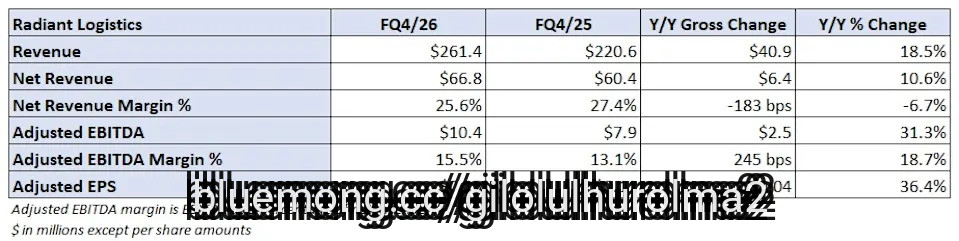
On September 14, Radiant Logistics (NYSEAMERICAN:RLGT) held its fourth fiscal quarter earnings call, and the headline numbers landed harder than a typical logistics update. Net income jumped 53.1% to $7.5 million for the quarter ended June 30, while revenue climbed 18.5% to $261.4 million. Look past that one quarter, though, and the picture gets more complicated, because full-year adjusted profitability actually fell. That gap between a blowout quarter and a softer year is what makes this name worth a closer look.
The fourth fiscal quarter was strong from top to bottom. Adjusted EBITDA rose 31.6% to $10.4 million, margin expanded 240 basis points to 15.5%, and adjusted net income climbed 34.5% to $7.4 million, all against organic revenue growth of 8%. Management credited the acceleration to US forwarding operations and international airfreight, including work supporting disaster relief after typhoon activity hit the Western Pacific earlier this year, plus airfreight demand tied to capital flows into global data center buildouts.
The balance sheet backs up the story. Radiant enters fiscal 2027 with zero net debt, $25.6 million in cash as of June 30, and a $200 million senior credit facility that was extended and restated in August, pushing maturity out to August 7, 2031, while its acquisition-focused accordion grew to $100 million from $75 million. On the domestic side, capacity has been exiting the truckload and intermodal markets, and spot rates and tender rejections moved higher late in the quarter. Radiant also launched a new independent agent program at Radiant Road & Rail during the quarter, extending its freight forwarding agent network into truck brokerage and intermodal, while Navegate is gaining traction, with one enterprise customer now managing more than 1,400 vendors on the platform.
The full-year numbers tell a different story than the quarter does. Revenue rose just 3.5% to $934.4 million from $902.7 million, a fraction of the fourth quarter's 18.5% pace, and full-year net income grew a modest 8.7% to $18.8 million. Full-year adjusted EBITDA actually fell 5.4% to $36.7 million from $38.8 million, and that figure included a $1.3 million First Brands adjustment. Strip that out and normalized adjusted EBITDA comes in at $35.4 million, an even steeper decline than the headline number suggests.
The operating backdrop stays complicated too. Ocean shipping routes remain disrupted by the closure of the Strait of Hormuz and continued Houthi activity affecting Suez Canal transits, keeping capacity tight on key trade lanes. US tariff policy is generating elevated IEEPA-related filing activity, and Canada put new retaliatory tariff measures into effect in early September, adding fresh complexity for shippers moving goods across that border. Management itself acknowledged that the domestic truck brokerage improvement seen late in the fourth quarter is not yet fully reflected in the reported results.
#quarter #revenue
The fourth fiscal quarter was strong from top to bottom. Adjusted EBITDA rose 31.6% to $10.4 million, margin expanded 240 basis points to 15.5%, and adjusted net income climbed 34.5% to $7.4 million, all against organic revenue growth of 8%. Management credited the acceleration to US forwarding operations and international airfreight, including work supporting disaster relief after typhoon activity hit the Western Pacific earlier this year, plus airfreight demand tied to capital flows into global data center buildouts.
The balance sheet backs up the story. Radiant enters fiscal 2027 with zero net debt, $25.6 million in cash as of June 30, and a $200 million senior credit facility that was extended and restated in August, pushing maturity out to August 7, 2031, while its acquisition-focused accordion grew to $100 million from $75 million. On the domestic side, capacity has been exiting the truckload and intermodal markets, and spot rates and tender rejections moved higher late in the quarter. Radiant also launched a new independent agent program at Radiant Road & Rail during the quarter, extending its freight forwarding agent network into truck brokerage and intermodal, while Navegate is gaining traction, with one enterprise customer now managing more than 1,400 vendors on the platform.
The full-year numbers tell a different story than the quarter does. Revenue rose just 3.5% to $934.4 million from $902.7 million, a fraction of the fourth quarter's 18.5% pace, and full-year net income grew a modest 8.7% to $18.8 million. Full-year adjusted EBITDA actually fell 5.4% to $36.7 million from $38.8 million, and that figure included a $1.3 million First Brands adjustment. Strip that out and normalized adjusted EBITDA comes in at $35.4 million, an even steeper decline than the headline number suggests.
The operating backdrop stays complicated too. Ocean shipping routes remain disrupted by the closure of the Strait of Hormuz and continued Houthi activity affecting Suez Canal transits, keeping capacity tight on key trade lanes. US tariff policy is generating elevated IEEPA-related filing activity, and Canada put new retaliatory tariff measures into effect in early September, adding fresh complexity for shippers moving goods across that border. Management itself acknowledged that the domestic truck brokerage improvement seen late in the fourth quarter is not yet fully reflected in the reported results.
#quarter #revenue

25 days ago
Third-party logistics provider Radiant Logistics beat fiscal fourth-quarter expectations Monday after the market closed. A volatile trade landscape is driving demand higher for its customs brokerage and compliance services. It also flagged further tightening in the domestic truckload and intermodal markets, which will propel financial results over time.
"While these market trends are not fully reflected in our results for the June quarter, we view these developments as constructive for our domestic operations in general and our U.S. Brokerage operations, in particular," said Bohn Crain, founder and CEO, in a news release. "If these trends continue, we believe they support a more broad-based and durable recovery for the domestic freight market."
The report sent shares of RLGT 16% higher in early trading on Tuesday versus the S&P 500, which was down 0.2%.
The Renton, Washington-based company reported revenue of $261 million for its fiscal fourth quarter, ended June 30. The result was 19% higher year over year and $30 million ahead of the consensus estimate.
Adjusted earnings per share of 15 cents ($7.4 million) were 4 cents higher y/y and 6 cents ahead of consensus. Disaster relief shipments following typhoons in the Western Pacific drove international airfreight results higher in the period.
#june
"While these market trends are not fully reflected in our results for the June quarter, we view these developments as constructive for our domestic operations in general and our U.S. Brokerage operations, in particular," said Bohn Crain, founder and CEO, in a news release. "If these trends continue, we believe they support a more broad-based and durable recovery for the domestic freight market."
The report sent shares of RLGT 16% higher in early trading on Tuesday versus the S&P 500, which was down 0.2%.
The Renton, Washington-based company reported revenue of $261 million for its fiscal fourth quarter, ended June 30. The result was 19% higher year over year and $30 million ahead of the consensus estimate.
Adjusted earnings per share of 15 cents ($7.4 million) were 4 cents higher y/y and 6 cents ahead of consensus. Disaster relief shipments following typhoons in the Western Pacific drove international airfreight results higher in the period.
#june


25 days ago
Our ****** ysts just identified a stock with the potential to be the next Nvidia. Tell us how you invest and we'll show you why it's our #1 pick. Tap here.
Performance was driven by U.S. forwarding operations and international airfreight strength, particularly in disaster relief efforts following Western Pacific typhoons.
The Navegate platform is acting as a growth catalyst, enabling enterprise customers to manage complex supply chains, including one client managing over 1,400 vendors.
Domestic market dynamics are improving as capacity exits the North America truckload and intermodal sectors through carrier attrition and tighter driver availability.
Management observed constructive cyclical indicators, including rising spot rates and tender rejections, which began to manifest late in the fourth fiscal quarter.
#tell #navegate #America
Performance was driven by U.S. forwarding operations and international airfreight strength, particularly in disaster relief efforts following Western Pacific typhoons.
The Navegate platform is acting as a growth catalyst, enabling enterprise customers to manage complex supply chains, including one client managing over 1,400 vendors.
Domestic market dynamics are improving as capacity exits the North America truckload and intermodal sectors through carrier attrition and tighter driver availability.
Management observed constructive cyclical indicators, including rising spot rates and tender rejections, which began to manifest late in the fourth fiscal quarter.
#tell #navegate #America


26 days ago
On September 14, Radiant Logistics (NYSEAMERICAN:RLGT) held its fourth fiscal quarter earnings call, and the headline numbers landed harder than a typical logistics update. Net income jumped 53.1% to $7.5 million for the quarter ended June 30, while revenue climbed 18.5% to $261.4 million. Look past that one quarter, though, and the picture gets more complicated, because full-year adjusted profitability actually fell. That gap between a blowout quarter and a softer year is what makes this name worth a closer look.
The fourth fiscal quarter was strong from top to bottom. Adjusted EBITDA rose 31.6% to $10.4 million, margin expanded 240 basis points to 15.5%, and adjusted net income climbed 34.5% to $7.4 million, all against organic revenue growth of 8%. Management credited the acceleration to US forwarding operations and international airfreight, including work supporting disaster relief after typhoon activity hit the Western Pacific earlier this year, plus airfreight demand tied to capital flows into global data center buildouts.
The balance sheet backs up the story. Radiant enters fiscal 2027 with zero net debt, $25.6 million in cash as of June 30, and a $200 million senior credit facility that was extended and restated in August, pushing maturity out to August 7, 2031, while its acquisition-focused accordion grew to $100 million from $75 million. On the domestic side, capacity has been exiting the truckload and intermodal markets, and spot rates and tender rejections moved higher late in the quarter. Radiant also launched a new independent agent program at Radiant Road & Rail during the quarter, extending its freight forwarding agent network into truck brokerage and intermodal, while Navegate is gaining traction, with one enterprise customer now managing more than 1,400 vendors on the platform.
The full-year numbers tell a different story than the quarter does. Revenue rose just 3.5% to $934.4 million from $902.7 million, a fraction of the fourth quarter's 18.5% pace, and full-year net income grew a modest 8.7% to $18.8 million. Full-year adjusted EBITDA actually fell 5.4% to $36.7 million from $38.8 million, and that figure included a $1.3 million First Brands adjustment. Strip that out and normalized adjusted EBITDA comes in at $35.4 million, an even steeper decline than the headline number suggests.
The operating backdrop stays complicated too. Ocean shipping routes remain disrupted by the closure of the Strait of Hormuz and continued Houthi activity affecting Suez Canal transits, keeping capacity tight on key trade lanes. US tariff policy is generating elevated IEEPA-related filing activity, and Canada put new retaliatory tariff measures into effect in early September, adding fresh complexity for shippers moving goods across that border. Management itself acknowledged that the domestic truck brokerage improvement seen late in the fourth quarter is not yet fully reflected in the reported results.
#million #quarter #revenue #fiscal
The fourth fiscal quarter was strong from top to bottom. Adjusted EBITDA rose 31.6% to $10.4 million, margin expanded 240 basis points to 15.5%, and adjusted net income climbed 34.5% to $7.4 million, all against organic revenue growth of 8%. Management credited the acceleration to US forwarding operations and international airfreight, including work supporting disaster relief after typhoon activity hit the Western Pacific earlier this year, plus airfreight demand tied to capital flows into global data center buildouts.
The balance sheet backs up the story. Radiant enters fiscal 2027 with zero net debt, $25.6 million in cash as of June 30, and a $200 million senior credit facility that was extended and restated in August, pushing maturity out to August 7, 2031, while its acquisition-focused accordion grew to $100 million from $75 million. On the domestic side, capacity has been exiting the truckload and intermodal markets, and spot rates and tender rejections moved higher late in the quarter. Radiant also launched a new independent agent program at Radiant Road & Rail during the quarter, extending its freight forwarding agent network into truck brokerage and intermodal, while Navegate is gaining traction, with one enterprise customer now managing more than 1,400 vendors on the platform.
The full-year numbers tell a different story than the quarter does. Revenue rose just 3.5% to $934.4 million from $902.7 million, a fraction of the fourth quarter's 18.5% pace, and full-year net income grew a modest 8.7% to $18.8 million. Full-year adjusted EBITDA actually fell 5.4% to $36.7 million from $38.8 million, and that figure included a $1.3 million First Brands adjustment. Strip that out and normalized adjusted EBITDA comes in at $35.4 million, an even steeper decline than the headline number suggests.
The operating backdrop stays complicated too. Ocean shipping routes remain disrupted by the closure of the Strait of Hormuz and continued Houthi activity affecting Suez Canal transits, keeping capacity tight on key trade lanes. US tariff policy is generating elevated IEEPA-related filing activity, and Canada put new retaliatory tariff measures into effect in early September, adding fresh complexity for shippers moving goods across that border. Management itself acknowledged that the domestic truck brokerage improvement seen late in the fourth quarter is not yet fully reflected in the reported results.
#million #quarter #revenue #fiscal


1 month ago
MD Sass, a boutique ****** et management firm, published its second-quarter investor update for its flagship, the "MD Sass Concentrated Value Strategy." The letter can be downloaded here. In the first half of 2026, AI infrastructure stocks led the market, with the Russell 1000 Value increasing by 16.3%, outpacing the S&P 500 (10.2%) and Russell 1000 Growth (5.3%). This growth was fueled by semiconductor, memory, and hardware companies benefiting from AI development, even though they are considered cyclical. These sectors, representing only 7.7% of the Russell 1000 Value at the start of the year, contributed nearly 70% of its returns. The portfolio gained 10.0% in the second quarter, net of fees, compared to 13.9% for the Russell 1000 Value Index. Year-to-date, the strategy returned 6.6%, net of fees, versus 16.3% for the Index. The portfolio faced challenges due to limited exposure to companies with the greatest upside from AI infrastructure investments. It also lacked exposure to the Energy sector, which returned about 20% in the first half amid geopolitical tensions with Iran that increased commodity prices, affecting performance. The firm recognizes the importance of adapting its strategies while maintaining core investment principles as it explores future opportunities in emerging technological themes. Also, check the fund's top five holdings to see its best picks in 2026.
In its second-quarter 2026 investor letter, MD Sass Concentrated Value Strategy highlighted Knight-Swift Transportation Holdings Inc. (NYSE:KNX). Knight-Swift Transportation Holdings Inc. (NYSE:KNX) is a freight transportation services provider that operates through Truckload, Less-than-truckload (LTL), Logistics, and Intermodal segments. On August 28, 2026, Knight-Swift Transportation Holdings Inc. (NYSE:KNX) closed at $67.24 per share, reflecting a market capitalization of $10.94 billion. Knight-Swift Transportation Holdings Inc. (NYSE:KNX) posted a one‑month return of ‑1.04%, while its shares gained 54.24% over the past 52 weeks.
MD Sass Concentrated Value Strategy stated the following regarding Knight-Swift Transportation Holdings Inc. (NYSE:KNX) in its Q2 2026 investor letter:
"Knight-Swift Transportation Holdings Inc. (NYSE:KNX) operates the largest full-truckload fleet in North America and operates approximately 21,000 tractors across its irregular route and dedicated fleets. Excluding fuel surcharges and intersegment transactions, Truckload represents approximately 63% of revenue, less-than-truckload represents 19%, logistics 8%, and intermodal 5%.
Trucking is a cyclical, fragmented, and historically low-margin business, and for those reasons we have avoided it. So why own it now? We believe the industry is entering a rate cycle that is meaningfully different from the demand-driven cycles of the past. This cycle is being manufactured on the supply side through a combination of economic attrition, regulatory enforcement, and increased legal liability. Importantly
In its second-quarter 2026 investor letter, MD Sass Concentrated Value Strategy highlighted Knight-Swift Transportation Holdings Inc. (NYSE:KNX). Knight-Swift Transportation Holdings Inc. (NYSE:KNX) is a freight transportation services provider that operates through Truckload, Less-than-truckload (LTL), Logistics, and Intermodal segments. On August 28, 2026, Knight-Swift Transportation Holdings Inc. (NYSE:KNX) closed at $67.24 per share, reflecting a market capitalization of $10.94 billion. Knight-Swift Transportation Holdings Inc. (NYSE:KNX) posted a one‑month return of ‑1.04%, while its shares gained 54.24% over the past 52 weeks.
MD Sass Concentrated Value Strategy stated the following regarding Knight-Swift Transportation Holdings Inc. (NYSE:KNX) in its Q2 2026 investor letter:
"Knight-Swift Transportation Holdings Inc. (NYSE:KNX) operates the largest full-truckload fleet in North America and operates approximately 21,000 tractors across its irregular route and dedicated fleets. Excluding fuel surcharges and intersegment transactions, Truckload represents approximately 63% of revenue, less-than-truckload represents 19%, logistics 8%, and intermodal 5%.
Trucking is a cyclical, fragmented, and historically low-margin business, and for those reasons we have avoided it. So why own it now? We believe the industry is entering a rate cycle that is meaningfully different from the demand-driven cycles of the past. This cycle is being manufactured on the supply side through a combination of economic attrition, regulatory enforcement, and increased legal liability. Importantly


2 months ago
Lowell, Arkansas-based J.B. Hunt Transport Services, Inc. (JBHT) is a leading North American transportation and logistics company. It provides freight transportation, intermodal, truckload, dedicated, brokerage, and supply chain solutions, leveraging technology, capacity, and infrastructure to improve efficiency. The company has a market capitalization of approximately $25.9 billion.
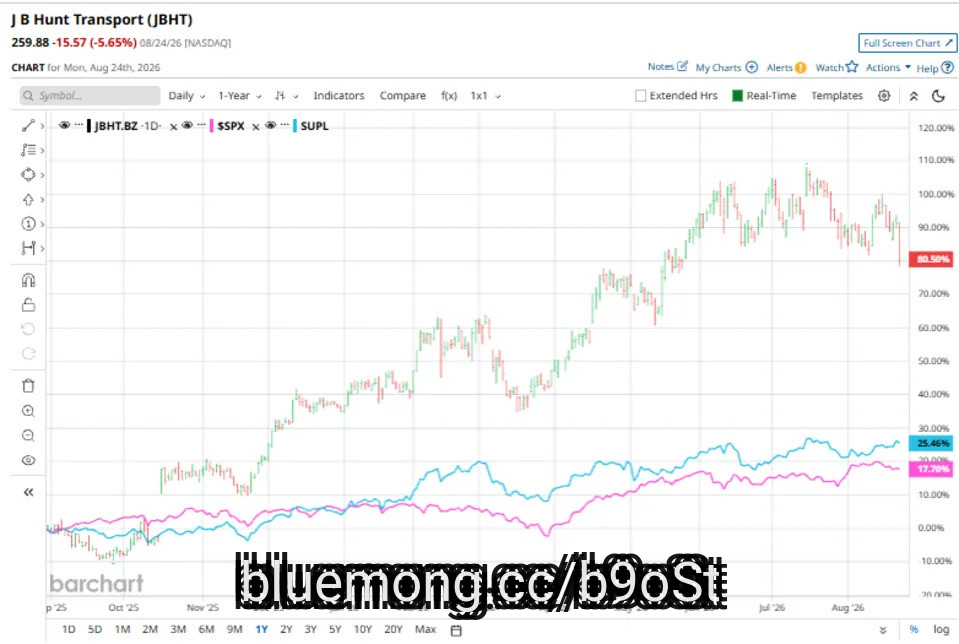
Shares of this leading transportation and logistics company have significantly outperformed the broader market over the past year. JBHT has gained 73.1% over this period, while the broader S&P 500 Index ($SPX) has rallied 18.3%. Likewise, JBHT has climbed 33.7% so far this year, outperforming the S&P 500's 11.8% year-to-date gain.
IonQ vs. Rigetti: The Better Quantum Computing Stock for Long-Term Investors
QQQ is Still in a Negative Gamma Regime. Here's How a 'Put Wall' and Fibonacci Support Could Come Into Play.
Stocks Set to Open Lower as Chipmakers Get Hit, Nvidia Earnings and Warsh's Jackson Hole Speech Awaited
#market
Shares of this leading transportation and logistics company have significantly outperformed the broader market over the past year. JBHT has gained 73.1% over this period, while the broader S&P 500 Index ($SPX) has rallied 18.3%. Likewise, JBHT has climbed 33.7% so far this year, outperforming the S&P 500's 11.8% year-to-date gain.
IonQ vs. Rigetti: The Better Quantum Computing Stock for Long-Term Investors
QQQ is Still in a Negative Gamma Regime. Here's How a 'Put Wall' and Fibonacci Support Could Come Into Play.
Stocks Set to Open Lower as Chipmakers Get Hit, Nvidia Earnings and Warsh's Jackson Hole Speech Awaited
#market


2 months ago
Two cases making their way through the federal court system on the issue of broker liability have been added to the pool of litigation closely watched by the 3PL industry following the Supreme Court's Montgomery decision.
One of them involves J.B. Hunt as a defendant in the U.S. District Court for Arizona, where it and the plaintiffs are awaiting a response on a request by the trucking and intermodal giant for summary judgment. If granted, it could end J.B. Hunt's role as a defendant.
The second legal battle is in a case out of the U.S. District Court for Nevada with less glamorous names than J.B. Hunt where the judge earlier this month denied both plaintiff and defendant requests for summary judgement.
That case, Hardy vs. Singh, with 3PL AONE Brokerage Company LLC as a defendant, has the added aspect of involving the question of broker liability when a load is double-brokered.
In recent weeks, the renewed issue of broker liability post-Montgomery has come up in cases involving C.H. Robinson (NASDAQ: CHRW)–where the 3PL is appealing a recent verdict of more than $600 million–and companies in the Penske (NYSE: PAG) network of companies, where an earlier dismissal of its brokerage arm from a lawsuit involving a fatal crash in Texas was reversed by the Fifth Circuit.
#broker #hunt
One of them involves J.B. Hunt as a defendant in the U.S. District Court for Arizona, where it and the plaintiffs are awaiting a response on a request by the trucking and intermodal giant for summary judgment. If granted, it could end J.B. Hunt's role as a defendant.
The second legal battle is in a case out of the U.S. District Court for Nevada with less glamorous names than J.B. Hunt where the judge earlier this month denied both plaintiff and defendant requests for summary judgement.
That case, Hardy vs. Singh, with 3PL AONE Brokerage Company LLC as a defendant, has the added aspect of involving the question of broker liability when a load is double-brokered.
In recent weeks, the renewed issue of broker liability post-Montgomery has come up in cases involving C.H. Robinson (NASDAQ: CHRW)–where the 3PL is appealing a recent verdict of more than $600 million–and companies in the Penske (NYSE: PAG) network of companies, where an earlier dismissal of its brokerage arm from a lawsuit involving a fatal crash in Texas was reversed by the Fifth Circuit.
#broker #hunt


2 months ago
Discover how intermodal freight is delivering massive savings in today's volatile market. As truckload spot and contract rates stabilize, intermodal options provide a crucial cost-saving advantage, especially on key lanes. Learn where to find the biggest savings and how shifting modes can optimize your freight spend.
Intermodal savings have surged to their highest level in several years, driven by a widening gap between rising truckload rates and relatively flat intermodal pricing, according to FreightWaves SONAR data presented by Julie Van de Kamp during a live update from the College Football Hall of Fame.
On the Harrisburg, Pennsylvania, to Atlanta lane — one of the top savings lanes in SONAR's intermodal dashboard — van spot truckload rates are up approximately 42%, van contract rates are up about 26%, and intermodal rates have risen only 16%, making a compelling case for mode conversion. East Coast corridors, particularly those out of Atlanta and Harrisburg, are leading the savings rankings, with lanes including Atlanta to Chicago, Atlanta to Joliet, Atlanta to Elizabeth, New Jersey, and Harrisburg to both Ontario, California, and Los Angeles all trending upward in the savings index over the most recent three months.
"That is such a good reason to consider mode conversion, take advantage of those savings, and understand where that helps even in a backhaul lane like what would typically be PA to Chicago at a length of haul that's not transcon," said Julie Van de Kamp.
The broader market context reinforces the intermodal value proposition. Tender rejections saw a significant drop from July 20 to August 5 but are now stabilizing, and spot rates, while down from earlier peaks year to date, are also leveling off. Meanwhile, contract truckload rates continue to rise, narrowing the gap between spot and contract. Van de Kamp noted a roughly 66-cent-per-mile spread between spot rates on the NTI and contract rates on the VCRPM1, though she cautioned that spot rates are all-in while contract rates are linehaul only — with fuel surcharges running approximately $0.70 per mile based on a Department of Energy estimate of around $45.
#spot #kamp
Intermodal savings have surged to their highest level in several years, driven by a widening gap between rising truckload rates and relatively flat intermodal pricing, according to FreightWaves SONAR data presented by Julie Van de Kamp during a live update from the College Football Hall of Fame.
On the Harrisburg, Pennsylvania, to Atlanta lane — one of the top savings lanes in SONAR's intermodal dashboard — van spot truckload rates are up approximately 42%, van contract rates are up about 26%, and intermodal rates have risen only 16%, making a compelling case for mode conversion. East Coast corridors, particularly those out of Atlanta and Harrisburg, are leading the savings rankings, with lanes including Atlanta to Chicago, Atlanta to Joliet, Atlanta to Elizabeth, New Jersey, and Harrisburg to both Ontario, California, and Los Angeles all trending upward in the savings index over the most recent three months.
"That is such a good reason to consider mode conversion, take advantage of those savings, and understand where that helps even in a backhaul lane like what would typically be PA to Chicago at a length of haul that's not transcon," said Julie Van de Kamp.
The broader market context reinforces the intermodal value proposition. Tender rejections saw a significant drop from July 20 to August 5 but are now stabilizing, and spot rates, while down from earlier peaks year to date, are also leveling off. Meanwhile, contract truckload rates continue to rise, narrowing the gap between spot and contract. Van de Kamp noted a roughly 66-cent-per-mile spread between spot rates on the NTI and contract rates on the VCRPM1, though she cautioned that spot rates are all-in while contract rates are linehaul only — with fuel surcharges running approximately $0.70 per mile based on a Department of Energy estimate of around $45.
#spot #kamp


2 months ago
RoadOne IntermodaLogistics announced it has acquired Higgins Transport Service, a Charleston, South Carolina-based provider of port drayage and intermodal transportation services.
The deal adds 15 drivers to RoadOne's Charleston operations along with additional drayage and intermodal capacity to serve the Southeastern market.
Financial terms of the transaction were not provided.
RoadOne recently opened a 384,000-square-foot facility in Summerville, South Carolina to serve the Port of Charleston. The 100-acre property provides transloading, storage and distribution services across the Southeast. The company plans to add a 279,700-square-foot warehouse on the property next year.
The company directly operates nearly 5 million square feet of warehouse and transloading ***** e, with access to another 85 million square feet of ***** e through partnerships.
#charleston #roadone #port
The deal adds 15 drivers to RoadOne's Charleston operations along with additional drayage and intermodal capacity to serve the Southeastern market.
Financial terms of the transaction were not provided.
RoadOne recently opened a 384,000-square-foot facility in Summerville, South Carolina to serve the Port of Charleston. The 100-acre property provides transloading, storage and distribution services across the Southeast. The company plans to add a 279,700-square-foot warehouse on the property next year.
The company directly operates nearly 5 million square feet of warehouse and transloading ***** e, with access to another 85 million square feet of ***** e through partnerships.
#charleston #roadone #port


2 months ago
The CMA CGM Group announced the appointment of Natasha Griffin as chief executive of CMA CGM North America.
Based in Norfolk, Va., Griffin will lead CMA CGM's operations and strategic development across North America, overseeing ocean shipping, logistics, intermodal, and supply chain activities, the Marseilles company said in a release.
"North America is a strategic market for CMA CGM and a key pillar of our long-term growth strategy," Griffin said in the release. "I am honored to lead our organization at this important moment. We will continue delivering exceptional service to our customers while supporting the development of America's maritime and logistics capabilities. I look forward to building on CMA CGM's longstanding commitment to the United States and Canada and contributing to the continued growth of our business and our partnerships across the
Region."
Griffin succeeds Adeline Franger Chouraqui, who became CEO and president of CMA CGM America in May 2025.
#north #development #release
Based in Norfolk, Va., Griffin will lead CMA CGM's operations and strategic development across North America, overseeing ocean shipping, logistics, intermodal, and supply chain activities, the Marseilles company said in a release.
"North America is a strategic market for CMA CGM and a key pillar of our long-term growth strategy," Griffin said in the release. "I am honored to lead our organization at this important moment. We will continue delivering exceptional service to our customers while supporting the development of America's maritime and logistics capabilities. I look forward to building on CMA CGM's longstanding commitment to the United States and Canada and contributing to the continued growth of our business and our partnerships across the
Region."
Griffin succeeds Adeline Franger Chouraqui, who became CEO and president of CMA CGM America in May 2025.
#north #development #release
2 months ago
BNSF Railway reported higher second-quarter, pre-tax earnings thanks to a combination of volume growth and higher revenue per load, parent company Berkshire Hathaway (NYSE: BRK-B) reported on Saturday.
BNSF's pre-tax earnings rose 13.9%, to $2.06 billion, as revenue increased 14.6%, to $6.56 billion. The railway's operating expenses increased 15.6% compared to a year ago, as fuel costs surged 68%. BNSF's operating ratio was 65.4%, an 0.6-point increase.
Quarterly volume rose 6.5%, while average revenue per unit increased 7.6%, primarily from higher fuel surcharge revenue.
Consumer products volume, which includes intermodal and automotive traffic, grew 9.3%. Berkshire said the volume growth was due to "higher intermodal shipments resulting from higher West Coast imports, market share gains, and tightening truck capacity."
Agricultural and energy products traffic was up 11.5% for the quarter. "The volume increases were primarily due to higher grain exports, petroleum fuels and oilseeds and meals," Berkshire reported.
#increased #quarter
BNSF's pre-tax earnings rose 13.9%, to $2.06 billion, as revenue increased 14.6%, to $6.56 billion. The railway's operating expenses increased 15.6% compared to a year ago, as fuel costs surged 68%. BNSF's operating ratio was 65.4%, an 0.6-point increase.
Quarterly volume rose 6.5%, while average revenue per unit increased 7.6%, primarily from higher fuel surcharge revenue.
Consumer products volume, which includes intermodal and automotive traffic, grew 9.3%. Berkshire said the volume growth was due to "higher intermodal shipments resulting from higher West Coast imports, market share gains, and tightening truck capacity."
Agricultural and energy products traffic was up 11.5% for the quarter. "The volume increases were primarily due to higher grain exports, petroleum fuels and oilseeds and meals," Berkshire reported.
#increased #quarter


2 months ago
CSX Corp (NASDAQ:CSX) reported better-than-expected results for the second quarter of 2026, thanks to strong intermodal demand. More containers moved by rail rather than truck, along with steady pricing, which helped CSX reach a record revenue of $3.94 billion.
The strong revenue growth indicates that cross-modal shipping volume remains an important aspect of the company's growth metrics. The company is increasingly capitalizing on shippers' search for cheaper, more fuel-efficient ways to move goods.
CSX's intermodal volume increased 9% year over year to 792,000 units, helped by domestic customer wins, new services, infrastructure investments, and tightening trucking capacity.
Rising shipping volumes indicate that freight demand is strong. Some shipments are still moving from long-haul trucking to rail as companies look to save on costs and use fuel more efficiently.
While multimodal shipping often results in less revenue per shipment, its large volumes can still lift earnings. This was clear, as the company's earnings per share jumped 23% to $0.54, while operating income increased 17% to $1.51 billion. Similarly, it could keep driving growth over the long term if supply chains keep improving and container traffic grows with consumer spending.
#results #demand #helped
The strong revenue growth indicates that cross-modal shipping volume remains an important aspect of the company's growth metrics. The company is increasingly capitalizing on shippers' search for cheaper, more fuel-efficient ways to move goods.
CSX's intermodal volume increased 9% year over year to 792,000 units, helped by domestic customer wins, new services, infrastructure investments, and tightening trucking capacity.
Rising shipping volumes indicate that freight demand is strong. Some shipments are still moving from long-haul trucking to rail as companies look to save on costs and use fuel more efficiently.
While multimodal shipping often results in less revenue per shipment, its large volumes can still lift earnings. This was clear, as the company's earnings per share jumped 23% to $0.54, while operating income increased 17% to $1.51 billion. Similarly, it could keep driving growth over the long term if supply chains keep improving and container traffic grows with consumer spending.
#results #demand #helped


2 months ago
CSX Corp (NASDAQ:CSX) reported better-than-expected results for the second quarter of 2026, thanks to strong intermodal demand. More containers moved by rail rather than truck, along with steady pricing, which helped CSX reach a record revenue of $3.94 billion.
The strong revenue growth indicates that cross-modal shipping volume remains an important aspect of the company's growth metrics. The company is increasingly capitalizing on shippers' search for cheaper, more fuel-efficient ways to move goods.
CSX's intermodal volume increased 9% year over year to 792,000 units, helped by domestic customer wins, new services, infrastructure investments, and tightening trucking capacity.
Rising shipping volumes indicate that freight demand is strong. Some shipments are still moving from long-haul trucking to rail as companies look to save on costs and use fuel more efficiently.
While multimodal shipping often results in less revenue per shipment, its large volumes can still lift earnings. This was clear, as the company's earnings per share jumped 23% to $0.54, while operating income increased 17% to $1.51 billion. Similarly, it could keep driving growth over the long term if supply chains keep improving and container traffic grows with consumer spending.
#revenue #Growth #intermodal #helped
The strong revenue growth indicates that cross-modal shipping volume remains an important aspect of the company's growth metrics. The company is increasingly capitalizing on shippers' search for cheaper, more fuel-efficient ways to move goods.
CSX's intermodal volume increased 9% year over year to 792,000 units, helped by domestic customer wins, new services, infrastructure investments, and tightening trucking capacity.
Rising shipping volumes indicate that freight demand is strong. Some shipments are still moving from long-haul trucking to rail as companies look to save on costs and use fuel more efficiently.
While multimodal shipping often results in less revenue per shipment, its large volumes can still lift earnings. This was clear, as the company's earnings per share jumped 23% to $0.54, while operating income increased 17% to $1.51 billion. Similarly, it could keep driving growth over the long term if supply chains keep improving and container traffic grows with consumer spending.
#revenue #Growth #intermodal #helped

3 months ago
On July 23, both Union Pacific Corporation (NYSE:UNP) and Norfolk Southern Corporation (NYSE:NSC) delivered their Q2 results, giving investors better insight into which railroad stock is the better play. While both companies reported strong results, NSC's investment case is now tied to the possible acquisition. Investors must weigh UNP's standalone growth potential against NSC's risks and upside arising from the merger.
Union Pacific Corporation (NYSE:UNP) delivered an operating revenue of $6.9 billion and an adjusted EPS of $3.41, marking a surprise of 3% and 5%, respectively. Meanwhile, the company reported 6% EPS growth, with operating revenue up 12% YoY. Management sees full-year reported EPS growth in the high single-digit range, raising its 2026 outlook.
The strong results were mainly driven by freight revenue, which grew 12%, due to volume growth, fuel surcharge revenue, solid core pricing, and operational efficiency. The company reports being 10 basis points better on the operating ratio, standing at 59.2%.
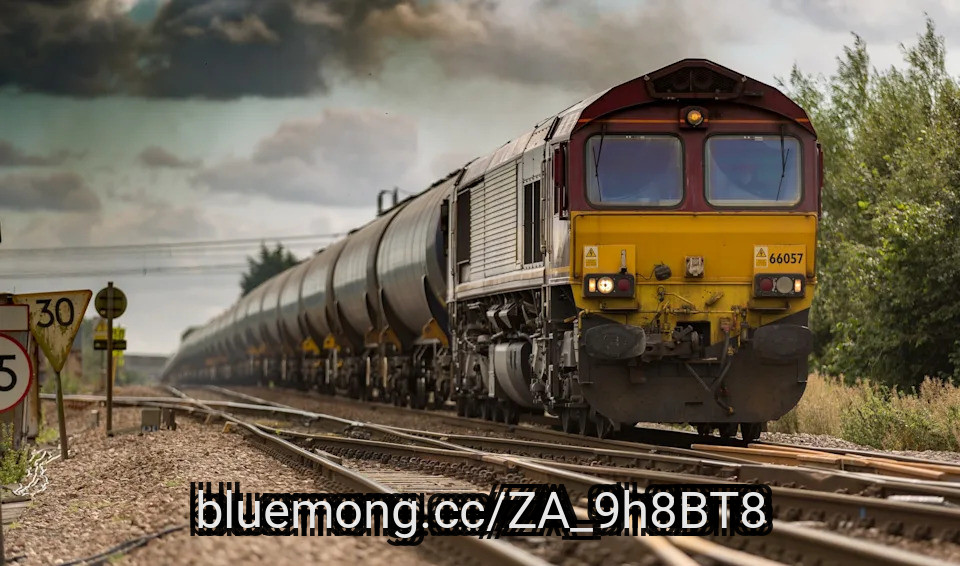
ankush-minda-7KKQG0eB_TI-unsplash
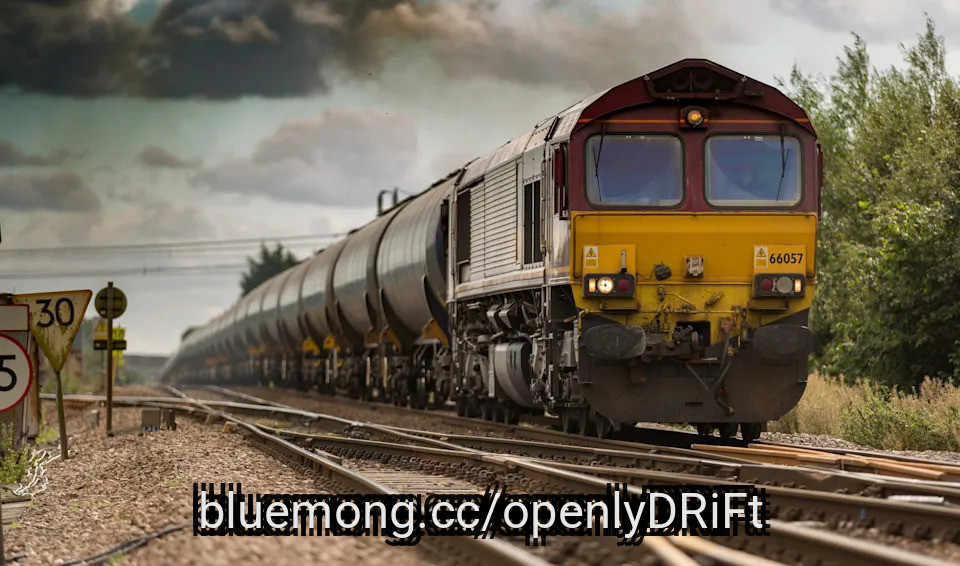
A key highlight of the results was the company's intermodal strength, as it delivered its fourth consecutive record quarter in volume and revenue. Thanks to truck capacity and share gains, private ******* et, rail ******* et, and parcel volumes were all up double-digits.
#revenue #corporation #delivered
Union Pacific Corporation (NYSE:UNP) delivered an operating revenue of $6.9 billion and an adjusted EPS of $3.41, marking a surprise of 3% and 5%, respectively. Meanwhile, the company reported 6% EPS growth, with operating revenue up 12% YoY. Management sees full-year reported EPS growth in the high single-digit range, raising its 2026 outlook.
The strong results were mainly driven by freight revenue, which grew 12%, due to volume growth, fuel surcharge revenue, solid core pricing, and operational efficiency. The company reports being 10 basis points better on the operating ratio, standing at 59.2%.
ankush-minda-7KKQG0eB_TI-unsplash
A key highlight of the results was the company's intermodal strength, as it delivered its fourth consecutive record quarter in volume and revenue. Thanks to truck capacity and share gains, private ******* et, rail ******* et, and parcel volumes were all up double-digits.
#revenue #corporation #delivered

3 months ago
Interested in Norfolk Southern Corporation? Here are five stocks we like better.
Norfolk Southern posted a stronger-than-expected Q2, with adjusted EPS of $3.52, a 65.5% adjusted operating ratio, and 7% growth in both net income and earnings per share. Revenue set records as volumes improved across merchandise, intermodal, and coal.
Executives said volume growth is creating near-term service pressure, but the railroad is already seeing improvement in July. The company is focusing on better originations, lower terminal dwell, faster train velocity, and tactical operating changes to restore network fluidity.
Cost and fuel inflation are pushing up full-year expense guidance, with 2026 operating expenses now expected at $8.8 billion to $8.9 billion, up from the prior range. Norfolk Southern kept capital spending at about $1.9 billion and reiterated at least $150 million in 2026 cost reductions.
This Railroad Stock Is Chugging Along to a New All-Time High
#expected
Norfolk Southern posted a stronger-than-expected Q2, with adjusted EPS of $3.52, a 65.5% adjusted operating ratio, and 7% growth in both net income and earnings per share. Revenue set records as volumes improved across merchandise, intermodal, and coal.
Executives said volume growth is creating near-term service pressure, but the railroad is already seeing improvement in July. The company is focusing on better originations, lower terminal dwell, faster train velocity, and tactical operating changes to restore network fluidity.
Cost and fuel inflation are pushing up full-year expense guidance, with 2026 operating expenses now expected at $8.8 billion to $8.9 billion, up from the prior range. Norfolk Southern kept capital spending at about $1.9 billion and reiterated at least $150 million in 2026 cost reductions.
This Railroad Stock Is Chugging Along to a New All-Time High
#expected


3 months ago
Our ****** ysts just identified a stock with the potential to be the next Nvidia. Tell us how you invest and we'll show you why it's our #1 pick. Tap here.
Record financial results were driven by strong execution and 2% volume growth, with core pricing dollars continuing to exceed inflation dollars.
Operational fluidity reached record levels, with freight car velocity increasing 5% and terminal dwell improving 7%, marking three straight quarters below 20 hours.
Management attributed margin resilience to workforce productivity, which has delivered eight consecutive quarters of record results despite wage and benefit inflation.
The domestic intermodal segment achieved its fourth consecutive record quarter, benefiting from constrained truck capacity and successful over-the-road share gains.
#dollars #inflation #NVIDIA #tell
Record financial results were driven by strong execution and 2% volume growth, with core pricing dollars continuing to exceed inflation dollars.
Operational fluidity reached record levels, with freight car velocity increasing 5% and terminal dwell improving 7%, marking three straight quarters below 20 hours.
Management attributed margin resilience to workforce productivity, which has delivered eight consecutive quarters of record results despite wage and benefit inflation.
The domestic intermodal segment achieved its fourth consecutive record quarter, benefiting from constrained truck capacity and successful over-the-road share gains.
#dollars #inflation #NVIDIA #tell


3 months ago
Interested in Knight-Swift Transportation Holdings Inc.? Here are five stocks we like better.
Knight-Swift said the truckload market tightened sharply in Q2 2026, with spot rates, tender rejections and bid activity all improving. Management said the tighter environment was largely supply-driven, though demand signs are also starting to improve.
Second-quarter earnings improved meaningfully, with adjusted EPS rising 80% year over year to $0.63 and consolidated adjusted operating ratio improving 240 basis points to 91.4%. The company also guided Q3 adjusted EPS to $0.71 to $0.77, above Q2 results.
Truckload was the standout segment, benefiting from better pricing and network efficiency, while U.S. Xpress posted its first profitable quarter since acquisition. By contrast, Logistics was weaker and LTL was mixed, though both intermodal and LTL margins improved.
These 3 Stocks Just Got Upgraded—and Could Keep Climbing
#stocks #truckload #improved
Knight-Swift said the truckload market tightened sharply in Q2 2026, with spot rates, tender rejections and bid activity all improving. Management said the tighter environment was largely supply-driven, though demand signs are also starting to improve.
Second-quarter earnings improved meaningfully, with adjusted EPS rising 80% year over year to $0.63 and consolidated adjusted operating ratio improving 240 basis points to 91.4%. The company also guided Q3 adjusted EPS to $0.71 to $0.77, above Q2 results.
Truckload was the standout segment, benefiting from better pricing and network efficiency, while U.S. Xpress posted its first profitable quarter since acquisition. By contrast, Logistics was weaker and LTL was mixed, though both intermodal and LTL margins improved.
These 3 Stocks Just Got Upgraded—and Could Keep Climbing
#stocks #truckload #improved


3 months ago
Forward Air said Tuesday that it will continue working with one of its largest customers, which had provided notice in May that it might pull all of its business. A non-binding arrangement with the customer will allow Forward to keep half, and potentially up to 75%, of the $250 million account. A memorandum of understanding keeps the current contract in place for at least the next two years.
The service transition of the unretained portion of the business is expected to occur in December and throughout next year.
Forward (NASDAQ: FWRD) previously said the customer was seeking to diversify its list of vendors, emphasizing that the customer's potential departure had nothing to do with the "exceptional service" being provided. However, Forward's shares plummeted over 40% following the warning that it might lose a customer responsible for 10% of its annual revenue.
It said the potential loss of business also foiled its plan to sell the company. (Forward commenced a strategic review at the beginning of 2025 as pressure from investors mounted following its contested merger with Omni Logistics.)
Instead, Forward is now looking to sell its intermodal unit and two smaller legacy Omni businesses, which generated $394 million in combined revenue last year. Proceeds from the sales will be used to delever the balance sheet. Net debt of $1.65 billion stood at 5.4 times last 12 months' adjusted EBITDA at the end of the first quarter.
#customer #omni #provided #service
The service transition of the unretained portion of the business is expected to occur in December and throughout next year.
Forward (NASDAQ: FWRD) previously said the customer was seeking to diversify its list of vendors, emphasizing that the customer's potential departure had nothing to do with the "exceptional service" being provided. However, Forward's shares plummeted over 40% following the warning that it might lose a customer responsible for 10% of its annual revenue.
It said the potential loss of business also foiled its plan to sell the company. (Forward commenced a strategic review at the beginning of 2025 as pressure from investors mounted following its contested merger with Omni Logistics.)
Instead, Forward is now looking to sell its intermodal unit and two smaller legacy Omni businesses, which generated $394 million in combined revenue last year. Proceeds from the sales will be used to delever the balance sheet. Net debt of $1.65 billion stood at 5.4 times last 12 months' adjusted EBITDA at the end of the first quarter.
#customer #omni #provided #service

3 months ago
Transportation ***** et manager ITE Management L.P. announced the acquisition of North American Chassis Pool Cooperative, expanding its premium chassis platform to national scale with broad market coverage for intermodal customers.
Privately-held NACPC of Nashville operates 20,000 chassis serving major intermodal markets across North America. The deal brings New York-based ITE's fleet to 60,000 units, which it said would strengthen its presence across key freight corridors and expand its range of leasing solutions.
No terms were disclosed.
"Milestone, Trend, and NACPC have each built strong businesses with their own identities, but they're united by a common approach: deep industry expertise, responsive service, and a commitment to quality," said Darren Hawkins, chief executive of NACPC, in a release. "Bringing these companies together creates a more powerful platform that expands our reach while continuing to deliver the reliable equipment and service our customers expect."
The strategic consolidation gives ITE a roughly 30% share of the 200,000 chassis operated as part of cooperative pools; chassis availability has been a recurring bottleneck in drayage and port operations. NACPC gains a larger capital base and broader operating footprint; it has long pursued a core model of pooled, interoperable chassis operations to reduce cost and improve availability. NACPC in 2021 acquired chassis maker Pratt.
#platform
Privately-held NACPC of Nashville operates 20,000 chassis serving major intermodal markets across North America. The deal brings New York-based ITE's fleet to 60,000 units, which it said would strengthen its presence across key freight corridors and expand its range of leasing solutions.
No terms were disclosed.
"Milestone, Trend, and NACPC have each built strong businesses with their own identities, but they're united by a common approach: deep industry expertise, responsive service, and a commitment to quality," said Darren Hawkins, chief executive of NACPC, in a release. "Bringing these companies together creates a more powerful platform that expands our reach while continuing to deliver the reliable equipment and service our customers expect."
The strategic consolidation gives ITE a roughly 30% share of the 200,000 chassis operated as part of cooperative pools; chassis availability has been a recurring bottleneck in drayage and port operations. NACPC gains a larger capital base and broader operating footprint; it has long pursued a core model of pooled, interoperable chassis operations to reduce cost and improve availability. NACPC in 2021 acquired chassis maker Pratt.
#platform

3 months ago
J.B. Hunt Transport Services reported second-quarter earnings of $1.91 per diluted share on revenue of $3.5 billion, topping Wall Street expectations and sending the company's stock higher in after-hours trading. The results compared to earnings of $1.31 per share and revenue of $2.93 billion in the same period a year earlier. ******* ysts had expected earnings of $1.74 per share and revenue of $3.25 billion, according to Bloomberg.
Shares of J.B. Hunt climbed as high as 9.5% in after-hours trading Wednesday following the results.
Operating income rose 32% to $259.5 million from $197.3 million a year earlier, the company said. The improvement was driven by higher revenue, productivity gains, and continued efforts to reduce costs, partially offset by higher purchased transportation expenses.
Intermodal was the clear highlight of the quarter, generating $1.75 billion in revenue — a 22% year-over-year increase — while operating income jumped 58% to $150.9 million. The segment's volume grew 10%, with the company attributing the gain to rising fuel costs and constrained trucking supply that pushed customers toward rail-connected freight options. Transcontinental network loads rose 5% while Eastern network loads grew 16%.
Dedicated Contract Services revenue increased 9% to $921 million, with operating income up 9% to $102.5 million. The Integrated Capacity Solutions segment posted revenue of $388 million, up 49%, swinging to an operating profit of $1.7 million from a loss of $3.6 million a year earlier. The Truckload segment posted a $1.3 million operating loss despite a 35% increase in revenue to $240 million, as higher purchased transportation costs outweighed gains. Final Mile Services revenue fell 6% to $198 million, with operating income declining 30% to $5.6 million, due to known business losses tied to efforts to improve revenue quality.
Shares of J.B. Hunt climbed as high as 9.5% in after-hours trading Wednesday following the results.
Operating income rose 32% to $259.5 million from $197.3 million a year earlier, the company said. The improvement was driven by higher revenue, productivity gains, and continued efforts to reduce costs, partially offset by higher purchased transportation expenses.
Intermodal was the clear highlight of the quarter, generating $1.75 billion in revenue — a 22% year-over-year increase — while operating income jumped 58% to $150.9 million. The segment's volume grew 10%, with the company attributing the gain to rising fuel costs and constrained trucking supply that pushed customers toward rail-connected freight options. Transcontinental network loads rose 5% while Eastern network loads grew 16%.
Dedicated Contract Services revenue increased 9% to $921 million, with operating income up 9% to $102.5 million. The Integrated Capacity Solutions segment posted revenue of $388 million, up 49%, swinging to an operating profit of $1.7 million from a loss of $3.6 million a year earlier. The Truckload segment posted a $1.3 million operating loss despite a 35% increase in revenue to $240 million, as higher purchased transportation costs outweighed gains. Final Mile Services revenue fell 6% to $198 million, with operating income declining 30% to $5.6 million, due to known business losses tied to efforts to improve revenue quality.


3 months ago
J.B. Hunt Transport Services is seeing heightened interest for its intermodal and dedicated services, given a steady exodus of non-compliant drivers and following the Supreme Court's ruling widening liability exposure for brokers. The changing landscape is forcing shippers to seek "safe, secure and reliable capacity," the company said Wednesday in conjunction with its second-quarter report, which was significantly better than ***** ysts expected.
The Lowell, Arkansas-based company's second quarter marked a record for intermodal volumes. It reported a 10% year-over-year increase in loads, outpacing 8% y/y growth in total intermodal carloads on the U.S. Class I railroads. (North American containers were up 5% y/y).
"[Intermodal] conversion activity is at levels we have not seen in more than a decade," said Darren Field, president of intermodal, on a Wednesday evening conference call with ***** ysts.
The company's dedicated truckload pipeline ended the period at an all-time high.
J.B. Hunt's (NASDAQ: JBHT) operating leverage was again evident in the period. It grew operating income 32% y/y to $259 million on a 19% increase in revenue. The company has removed $135 million in structural costs over the past year through AI-led and other automation initiatives.
The Lowell, Arkansas-based company's second quarter marked a record for intermodal volumes. It reported a 10% year-over-year increase in loads, outpacing 8% y/y growth in total intermodal carloads on the U.S. Class I railroads. (North American containers were up 5% y/y).
"[Intermodal] conversion activity is at levels we have not seen in more than a decade," said Darren Field, president of intermodal, on a Wednesday evening conference call with ***** ysts.
The company's dedicated truckload pipeline ended the period at an all-time high.
J.B. Hunt's (NASDAQ: JBHT) operating leverage was again evident in the period. It grew operating income 32% y/y to $259 million on a 19% increase in revenue. The company has removed $135 million in structural costs over the past year through AI-led and other automation initiatives.



3 months ago
The July 2026 "State of the Industry Report" — presented in affiliation with Ryder — shares an in-depth overview across the trucking, maritime and intermodal markets, as well as what to expect in the coming weeks. The data contained within the report provides breakdowns of capacity, volumes and rates.
In this report, you will find:
Spot rates, rejection rates, and volumes all reached new annual highs, signaling strong seasonal demand and constrained capacity
Ongoing barriers to entry and limited fleet expansion are keeping capacity tight and remain the primary driver of rising rates
Spot rates significantly outpacing contract rates. The widening spread is creating upward pressure on contract pricing and increasing routing guide disruption
In this report, you will find:
Spot rates, rejection rates, and volumes all reached new annual highs, signaling strong seasonal demand and constrained capacity
Ongoing barriers to entry and limited fleet expansion are keeping capacity tight and remain the primary driver of rising rates
Spot rates significantly outpacing contract rates. The widening spread is creating upward pressure on contract pricing and increasing routing guide disruption

3 months ago
As part of a planned leadership transition, multimodal transportation provider Schneider National announced additional changes on Monday.
Green Bay, Wisconsin-based Schneider (NYSE: SNDR) previously announced that President and CEO Mark Rourke will become the executive chairman of the board, effective Wednesday. Jim Filter, Schneider's executive vice president and president of transportation and logistics, will succeed Rourke as the company's president and CEO. Filter, who has been with the company for 27 years, is also expected to be appointed to the board at a later date.
The company said Monday that Michael Baumgardt has been named executive vice president of the intermodal and logistics units. Baumgardt has been with the company in various leadership roles since 2001, most recently serving as senior vice president and general manager of intermodal.
Schneider's intermodal and logistics segments generated $2.4 billion in combined revenue over the last 12 months.
Steve Wells has been named executive vice president of Schneider's truckload unit. Wells has been president of Schneider subsidiary Cowan Systems since November 2024, when Schneider announced it would acquire the carrier. Wells has been with Cowan for 27 years and served as chief operating officer from 2019 to 2024.
Green Bay, Wisconsin-based Schneider (NYSE: SNDR) previously announced that President and CEO Mark Rourke will become the executive chairman of the board, effective Wednesday. Jim Filter, Schneider's executive vice president and president of transportation and logistics, will succeed Rourke as the company's president and CEO. Filter, who has been with the company for 27 years, is also expected to be appointed to the board at a later date.
The company said Monday that Michael Baumgardt has been named executive vice president of the intermodal and logistics units. Baumgardt has been with the company in various leadership roles since 2001, most recently serving as senior vice president and general manager of intermodal.
Schneider's intermodal and logistics segments generated $2.4 billion in combined revenue over the last 12 months.
Steve Wells has been named executive vice president of Schneider's truckload unit. Wells has been president of Schneider subsidiary Cowan Systems since November 2024, when Schneider announced it would acquire the carrier. Wells has been with Cowan for 27 years and served as chief operating officer from 2019 to 2024.


3 months ago
As part of a planned leadership transition, multimodal transportation provider Schneider National announced additional changes on Monday.
Green Bay, Wisconsin-based Schneider (NYSE: SNDR) previously announced that President and CEO Mark Rourke will become the executive chairman of the board, effective Wednesday. Jim Filter, Schneider's executive vice president and president of transportation and logistics, will succeed Rourke as the company's president and CEO. Filter, who has been with the company for 27 years, is also expected to be appointed to the board at a later date.
The company said Monday that Michael Baumgardt has been named executive vice president of the intermodal and logistics units. Baumgardt has been with the company in various leadership roles since 2001, most recently serving as senior vice president and general manager of intermodal.
Schneider's intermodal and logistics segments generated $2.4 billion in combined revenue over the last 12 months.
Steve Wells has been named executive vice president of Schneider's truckload unit. Wells has been president of Schneider subsidiary Cowan Systems since November 2024, when Schneider announced it would acquire the carrier. Wells has been with Cowan for 27 years and served as chief operating officer from 2019 to 2024.
Green Bay, Wisconsin-based Schneider (NYSE: SNDR) previously announced that President and CEO Mark Rourke will become the executive chairman of the board, effective Wednesday. Jim Filter, Schneider's executive vice president and president of transportation and logistics, will succeed Rourke as the company's president and CEO. Filter, who has been with the company for 27 years, is also expected to be appointed to the board at a later date.
The company said Monday that Michael Baumgardt has been named executive vice president of the intermodal and logistics units. Baumgardt has been with the company in various leadership roles since 2001, most recently serving as senior vice president and general manager of intermodal.
Schneider's intermodal and logistics segments generated $2.4 billion in combined revenue over the last 12 months.
Steve Wells has been named executive vice president of Schneider's truckload unit. Wells has been president of Schneider subsidiary Cowan Systems since November 2024, when Schneider announced it would acquire the carrier. Wells has been with Cowan for 27 years and served as chief operating officer from 2019 to 2024.


4 months ago
C.H. Robinson Worldwide, Inc. (CHRW) is a global logistics company headquartered in Eden Prairie, Minnesota. As a non-asset-based provider, it manages freight brokerage for truckload and intermodal shipments, as well as air and ocean forwarding. CHRW has a market capitalization of $21.81 billion, which classifies it as a "large-cap" stock.
Its shares reached a 52-week high of $203.34 on Feb. 6, but are down 9% from that level. Over the past three months, CHRW's stock has gained 8.4%, while transportation stocks, as shown by the State Street SPDR S&P Transportation ETF (XTN), have gained 27.3% over the same period.
Dear Microsoft Stock Fans, Mark Your Calendars for June 30
Micron Technology Earnings: Bull Put Spread Trade
Dear Walmart Stock Fans, Mark Your Calendars for June 22
Its shares reached a 52-week high of $203.34 on Feb. 6, but are down 9% from that level. Over the past three months, CHRW's stock has gained 8.4%, while transportation stocks, as shown by the State Street SPDR S&P Transportation ETF (XTN), have gained 27.3% over the same period.
Dear Microsoft Stock Fans, Mark Your Calendars for June 30
Micron Technology Earnings: Bull Put Spread Trade
Dear Walmart Stock Fans, Mark Your Calendars for June 22


4 months ago
Sustainable Growth Advisers (SGA), an investment management company, released its first-quarter 2026 investor letter for its "Global Growth Strategy." A copy of the letter can be downloaded here. The SGA Global Growth Portfolio returned -13.6% (Gross) and -13.8% (Net) compared to the MSCI ACWI return of -3.2% and the MSCI ACWI Growth return of -7.7%. AI disruption narratives significantly affected markets in the first two months of the quarter, leading to declines in software, information services, payments, and insurance brokers. In March, geopolitical tensions in the Middle East caused a spike in oil prices, contributing to market volatility and prompting investors to adopt a more cautious stance. The firm believes prioritizing high-quality businesses with strong balance sheets, durable cash flows, and diversified end markets provides resilience against short-term geopolitical shocks. In addition, you can check the Strategy's top 5 holdings for its best picks for 2026.
In its first-quarter 2026 investor letter, SGA Global Growth Strategy highlighted Canadian Pacific Kansas City Limited (NYSE:CP). Canadian Pacific Kansas City Limited (NYSE:CP) is a leading Canadian company that owns and operates a transcontinental freight railway. On June 16, 2026, Canadian Pacific Kansas City Limited (NYSE:CP) closed at $89.15 per share. One-month return of Canadian Pacific Kansas City Limited (NYSE:CP) was 3.25%, and its shares gained 11.23% over the past 52 weeks. Canadian Pacific Kansas City Limited (NYSE:CP) has a market capitalization of $79.14 billion.
SGA Global Growth Strategy stated the following regarding Canadian Pacific Kansas City Limited (NYSE:CP) in its Q1 2026 investor letter:
Canadian Pacific Kansas City Limited (NYSE:CP) was a contributor to performance during the quarter, as solid operational execution helped offset end‑of‑year volume softness. While certain end markets such as automotive, forest products, and intermodal remained pressured by macro factors and supply chain disruptions, strong Precision Scheduled Railroading (PSR) execution drove meaningful margin strength, with management highlighting service metrics and discipline around controllable costs. Confidence improved around a 2026 inflection, supported by multiple factors including a record Canadian grain crop expected to move in the first half of 2026, easing auto chip shortages, and tariff headwinds for aluminum and paper beginning to lap in the second half of the year. The U.S. government's focus on removing non-domiciled truckers and commercial drivers license (CDL) applicants from the labor pool seems to be driving freight transportation costs higher and creating a favorable pricing environment for the company. CPKC is also planning a 5% share repurchase program at attractive prices. CPKC's unique tri-national network spanning the U.S., Canada, and Mexico, positions the company to benefit disproportionately from an eventual freight and industrial demand recovery, as well as
In its first-quarter 2026 investor letter, SGA Global Growth Strategy highlighted Canadian Pacific Kansas City Limited (NYSE:CP). Canadian Pacific Kansas City Limited (NYSE:CP) is a leading Canadian company that owns and operates a transcontinental freight railway. On June 16, 2026, Canadian Pacific Kansas City Limited (NYSE:CP) closed at $89.15 per share. One-month return of Canadian Pacific Kansas City Limited (NYSE:CP) was 3.25%, and its shares gained 11.23% over the past 52 weeks. Canadian Pacific Kansas City Limited (NYSE:CP) has a market capitalization of $79.14 billion.
SGA Global Growth Strategy stated the following regarding Canadian Pacific Kansas City Limited (NYSE:CP) in its Q1 2026 investor letter:
Canadian Pacific Kansas City Limited (NYSE:CP) was a contributor to performance during the quarter, as solid operational execution helped offset end‑of‑year volume softness. While certain end markets such as automotive, forest products, and intermodal remained pressured by macro factors and supply chain disruptions, strong Precision Scheduled Railroading (PSR) execution drove meaningful margin strength, with management highlighting service metrics and discipline around controllable costs. Confidence improved around a 2026 inflection, supported by multiple factors including a record Canadian grain crop expected to move in the first half of 2026, easing auto chip shortages, and tariff headwinds for aluminum and paper beginning to lap in the second half of the year. The U.S. government's focus on removing non-domiciled truckers and commercial drivers license (CDL) applicants from the labor pool seems to be driving freight transportation costs higher and creating a favorable pricing environment for the company. CPKC is also planning a 5% share repurchase program at attractive prices. CPKC's unique tri-national network spanning the U.S., Canada, and Mexico, positions the company to benefit disproportionately from an eventual freight and industrial demand recovery, as well as


4 months ago
Knight-Swift Transportation announced Kevin Knight has retired from his role as executive chairman, effective Wednesday.
Knight was a founder of Knight Transportation and served as the company’s CEO from 1994 to 2014. He played a key role in the company’s 2017 merger with fellow Phoenix-based truckload carrier Swift Transportation. Knight-Swift acquired Chattanooga, Tennessee-based TL carrier U.S. Xpress in 2023.
Knight-Swift (NYSE: KNX) is one of the nation’s largest diversified freight transportation providers, generating $7.5 billion in annual revenue from its TL, less-than-truckload, logistics and intermodal offerings.
“I am humbled when I reflect on what we have built together and where our company stands today,” said Knight in a Thursday news release. … “As I have been approaching this transition in recent years, I knew this bridge would have to be crossed at some point.
“For me, our merger with Knight and Swift was our greatest collective achievement. The reunification of the Swift and Knight families, combined with timing, diligence, operational improvements, and significant financial returns, enabled us to achieve everything that followed.”
Knight was a founder of Knight Transportation and served as the company’s CEO from 1994 to 2014. He played a key role in the company’s 2017 merger with fellow Phoenix-based truckload carrier Swift Transportation. Knight-Swift acquired Chattanooga, Tennessee-based TL carrier U.S. Xpress in 2023.
Knight-Swift (NYSE: KNX) is one of the nation’s largest diversified freight transportation providers, generating $7.5 billion in annual revenue from its TL, less-than-truckload, logistics and intermodal offerings.
“I am humbled when I reflect on what we have built together and where our company stands today,” said Knight in a Thursday news release. … “As I have been approaching this transition in recent years, I knew this bridge would have to be crossed at some point.
“For me, our merger with Knight and Swift was our greatest collective achievement. The reunification of the Swift and Knight families, combined with timing, diligence, operational improvements, and significant financial returns, enabled us to achieve everything that followed.”