
1 month ago
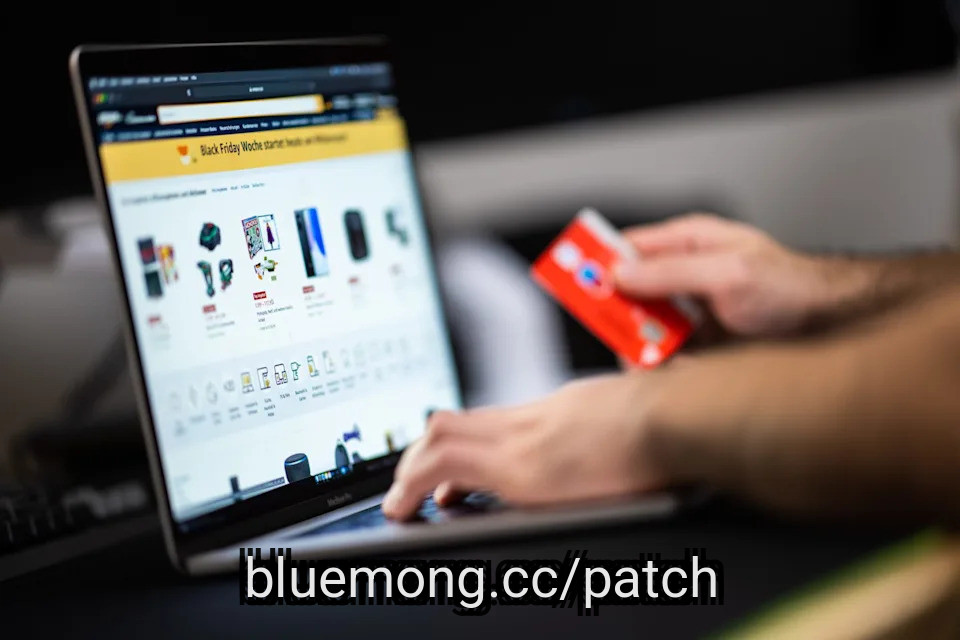
Credit card companies are racing to claim a place at the checkout when AI agents start shopping on behalf of consumers—even as shoppers remain skeptical of letting bots spend their money.
Mastercard rolled out a payment option Thursday that lets people give an AI agent a virtual card and allow it to buy things online without checking in before each purchase. Cardholders can limit how much it spends, restrict which retailers it buys from, or require approval before checkout.
"This is a land grab for infrastructure standards," Phil Bruno, chief strategy and growth officer at payments company ACI Worldwide, told Fortune. "If they set the standards for agentic commerce, they can keep the commerce in their environments for decades to come."
Rival Visa partnered with Alchemy earlier this year and has also announced its own AI shopping and payment product, Visa Intelligent Commerce, which the company says is still being deployed. Similarly, Meta has Muse, which can search for products and navigate checkout, but presents the purchase for the user's final approval.
It seems, though, that shoppers appear far more interested in using AI to find a deal than letting it pay. Just 7% of U.S. and U.K. consumers surveyed who buy fashion items said they would allow an AI ***** istant to make purchases without approval under predefined conditions, according to research commissioned by ACI Worldwide. More than half said they were uncomfortable allowing AI to purchase on their behalf.
#purchase #consumers

1 month ago
Uber Technologies (NYSE:UBER) and Costco Wholesale (NASDAQ:COST) have expanded their US delivery partnership to 47 states, up from 17, making nearly 600 Costco locations available through the Uber Eats platform.
The companies said the expanded service allows Costco members to place orders for on-demand or scheduled delivery through the Uber Eats app.
Customers can purchase fresh produce, bulk groceries and household products, link their Costco membership during checkout and track their deliveries in real time.
The expansion increases the geographic reach of Costco's delivery service through Uber Eats, giving members access to products from participating warehouses.
Nearly 600 Costco locations are now available on the platform, according to the companies' joint statement.
#costco #expanded #available #platform


2 months ago
WBC Welterweight champion, Ryan Garcia, and British bruiser, Conor Benn, will finally settle their issues this Saturday night (Sept. 12, 2026) inside T-Mobile Arena in Las Vegas, Nevada streaming live on Paramount+. Before then, however, they have to weigh in to make sure they make the 147-pound limit. In the co-main event of the evening, Jai Opetaia will defend his Zuffa Boxing and The Ring Cruiserweight ****** les against WBC 200-pound champion, Noel Mikaelian.
See the official live stream in the embedded video player above live at 12:00 p.m. ET.
147 lbs.: Ryan Garcia () vs. Conor Benn (146)
200 lbs.: Jai Opetaia () vs. Noel Mikaelian (200)
135 lbs.: Mark Magsayo () vs. Andres Cortes ()
Heavyweight: Damazion Vanhouter () vs. Raphael Akpejiori ()
130 lbs.: Oswaldo Molina () vs. Pablo Rubio ()
168 lbs.: Abel Gonzalez () vs. Raul Salomon ()
154 lbs.: Vlad Panin () vs. Dakota Linger ()
147 lbs.: Jose Ramirez () vs. Alex Rocha ()
147 lbs.: Sean Garcia () vs. Abraham Morales ()
To checkout the latest Zuffa boxing-related news and notes click here.
#noel #mikaelian


2 months ago
When Cathie Wood makes a move, Wall Street tends to pay attention. Her trades have become something of a market signal, especially when they involve the high-growth themes she has consistently backed. And in September, that shopping list included a little bit of everything — ****** e, fintech, crypto and biotechnology — while ARK Investment Management trimmed several large technology and healthcare positions.
In fintech, ARK Innovation ETF (ARKK) has been steadily adding to its Robinhood Markets (HOOD) bet. On Sept. 4, the fund bought 28,589 HOOD shares worth roughly $3.5 million, just a day after the stock jumped 16.6%. ARK then returned to the checkout counter on Sept. 8, purchasing another $3.3 million worth of Robinhood's shares. The buying reflects growing optimism around Robinhood's prediction markets, banking, and crypto businesses. The additions have also pushed HOOD into ARKK's top 10 holdings, with a 4.17% portfolio weight.
'Not Tens Of Billions, But Tens Of Trillions': Nvidia CEO Jensen Huang Says AI Is Like the New Electricity and the Scale Is Unlike Any Tech in History
What It Means for MSFT Stock Investors as Microsoft Switches to 2 Business Segments
RKLB Stock Jumps as Rocket Lab Debuts New Solar Cell for ****** e
#Stock #sept #markets #worth



2 months ago
Reading run riot, recording eight goals in two games at the Mad Stad, and leading to Ross needing to take a break to process everything. Luckily erstwhile TTE editor Sim steps in to the void.
A lively mailbag sees everybody asking: can Reading keep up this form? Plus, a preview of the upcoming games against Cambridge United and Brentford.
View Link
Thank you to The Amazons for providing the theme song.
Thank you to Siren Brewing – Get 10% off your next Siren order. Use code TILEHURST10 at the checkout on a minimum spend of £30.
#ross #united

2 months ago
PayPal (PYPL) trades at 9.8 times earnings while the S&P 500 trades at 23.2. The profitability underneath is ordinary: an 18.4% operating margin against 18.5% for the market. The discount is not about whether the company makes money. It is about what each dollar it moves is worth.
Why Does PayPal Take In Less On Every Dollar It Moves?
In fiscal Q2 2026 the company moved $486 billion of payment volume, up 9% on a currency-neutral basis. Revenue on the same basis grew 3%. The transaction take rate fell 7 basis points to 1.61%, and by the company's own account the drop came from branded co-marketing investments and mix dynamics, including faster Venmo growth.
The PayPal ***** on itself, branded checkout, grew 2% currency-neutral for a second straight quarter. Venmo and Braintree both grew in the mid-teens. The growth is real, and it is arriving through the doors that pay less.
Who Is Bringing PayPal That Volume Now?
#volume #trades


2 months ago
Ro Khanna is a Democratic congressman known for being one of the most active stock traders in Congress, with hundreds of disclosed transactions. Khanna says the trades sit in family accounts he does not control.
His disclosures show he has been buying NCR Voyix (NYSE:VYX), a small-cap company that sells checkout technology to retailers and restaurants.
The most recent trade was a buy in June. There were about seven purchases of this stock from Khanna in 2026.
NCR Voyix sells the checkout technology that grocery stores, convenience chains and restaurants run on. The business splits into two segments, Retail and Restaurants, with retail accounting for a major chunk of sales.
The company is in the middle of a rebuild. It handed hardware manufacturing to an ODM partner at the end of the first quarter of fiscal 2026, so hardware now shows up as commission instead of full product revenue. Management is pushing customers onto the Voyix Commerce Platform, a cloud system sold on multiyear subscription contracts, and onto Voyix Connect, its payments gateway.
#khanna #retail #checkout

2 months ago
Some offers on this page are from advertisers who pay us, which may affect which products we write about, but not our recommendations. See our Advertiser Disclosure.
Why we like it: The Capital One Venture Rewards makes sense if you want to earn travel rewards on your everyday purchases. It's easy to use and provides a flexible rewards rate that works with any eligible purchase. That's especially useful because Walmart stores aren't typically categorized as a "grocery store" or "supermarket" for credit card purchases.
Read our full Capital One Venture Rewards review
Why we like it: The Blue Cash Everyday is an excellent gas and grocery card, but those types of purchases don't typically apply to Walmart. However, this card also offers 3% cash back on US online retail purchases of up to $6,000 per year, then 1%*. This category includes purchases on Walmart.com. Some reports say that using Walmart Pay in-store could also trigger this spending category.
*Cash back is received in the form of Reward Dollars that can be redeemed as a statement credit or on Amazon.com at checkout
#walmart #like



2 months ago
Kevin Durant is not changing his weird relationship rules anytime soon, as he doubled down on his stance that women shouldn't expect to spend too much time at his home after spending the night.
During an appearance on Boardroom Talks with Speedy Morman, Durant spoke about his viral checkout policy and was asked about how women might react to being told it was time to leave. The Houston Rockets superstar didn't appear particularly concerned about upsetting his guests.
"She'll be alright, she'll be alright when she get home get to the shower and get into her routine. She'll be fine, we'll kick again some other time. Like she'll get over it."
Durant's comments continue a conversation he started during an October 2025 appearance on Bobbi Althoff's Not This Again podcast. At that time, the two-time champion compared having someone stay at his house to checking out of a hotel.
"It's almost like checkout. After breakfast, you gotta dip. It's like now get too comfortable. Like, we're not there yet, but once we get there though you can stay past 2, until at least 4 [p.m.]."
#time


2 months ago
On August 21, 2026, Bloomberg reported that Walmart Inc. (NASDAQ:WMT) will accept Apple Pay and Google Pay across all its U.S. stores and Sam's Club locations by the end of 2026, ending a years-long holdout. The rollout begins August 24 at select locations, with fuel stations gaining the capability by mid-2027.
Walmart had previously relied on its own proprietary Walmart Pay system, preferring QR-code technology that gave it more control over transaction data, rather than supporting near-field communication wallets like Apple Inc. (NASDAQ:AAPL)'s Apple Pay. Customers will be able to tap contactless cards, phones, or smartwatches at checkout and add Walmart, Sam's Club, or OnePay cards to their digital wallets.
For Apple Inc. (NASDAQ:AAPL), this closes one of the last major gaps in Apple Pay's retail coverage. More than 90% of U.S. retailers already accept Apple Pay, and the service holds roughly 92% market share among U.S. mobile wallets, according to Capital One data. Adding the nation's largest retailer removes one of the most visible remaining holdouts. It reinforces Apple Pay's position as the default mobile wallet at checkout.
Apple Pay's user base gives this rollout real reach from day one: Capital One estimates Apple Pay usership is on pace to grow from 70 million to more than 84 million users over the next four years. Walmart Inc. (NASDAQ:WMT)'s enormous foot traffic with an existing and growing user base gives Apple immediate transaction volume without needing to win over new wallet users.
Walmart is fixing something that annoyed shoppers, but they aren't giving up on their own payment tools. Walmart wants customers to have a choice in how they pay, and Tap to Pay adds to, rather than replaces, cash, credit cards, and Walmart Pay. Reducing checkout friction and consumer complaints matters more now that agentic and NFC payments have become standard shopping behavior.
#cards #aapl


2 months ago
The Wall Street Journal reported on August 14, 2026, that PayPal Holdings, Inc. (NASDAQ:PYPL) is in talks to sell itself to a group including Stripe and private equity firm Advent International after Stripe and Advent's initial July offer of $60.50 a share was rejected as too low, with the two sides now negotiating a higher price.
PayPal's market value has collapsed from a 2021 peak of about $360 billion to as low as roughly $36 billion this year. Now the company built by early digital-payments pioneers is negotiating its own sale.
That raises the real question: does a Stripe-Advent deal rescue PayPal Holdings, Inc. (NASDAQ:PYPL)'s business at a fair price, or does it confirm the company simply couldn't turn around its slowing growth alone?
The initial $60.50-per-share offer represented roughly a 28% premium to PayPal Holdings, Inc. (NASDAQ:PYPL)'s prior closing price and was backed by about $50 billion in committed bank financing. William Blair ****** yst Andrew Jeffrey said PayPal's new CEO likely would not accept a "low-ball offer." Blair predicated Stripe and Advent could go as high as $70 a share. Combining Stripe's merchant-focused business with PayPal's more than 430 million consumer accounts would create a combined payments giant processing about $3.7 trillion in annual volume. PayPal CEO Enrique Lores has already split the company into three units, checkout, Venmo, and payments and crypto, since taking over in March as part of a big recovery effort.
PayPal Holdings, Inc. (NASDAQ:PYPL)'s own struggles are exactly why a sale is on the table. Rivals like Apple Pay and Google Pay have taken. As of July, PayPal has lost more than 40% of its market value over just the past 12 months, and its market cap is still roughly one-tenth of its 2021 peak. There's no guarantee talks result in a deal at all, since PayPal already rejected the first offer as insufficient.
#NASDAQ #price


2 months ago
Shares of Affirm Holdings, Inc. (NASDAQ:AFRM) fell 1.3% on August 18 as Klarna plunged more than 22% after reducing its 2026 volume and revenue forecasts. Klarna now expects full-year gross merchandise volume of $149 billion-$151 billion, down from more than $155 billion, and revenue of $4.08 billion-$4.16 billion, down from $4.34 billion. Yet the warning was not cleanly industrywide. Klarna's second-quarter revenue increased 27%, overall volume rose 18%, and U.S. volume grew 27%. Management tied the weaker outlook primarily to soft German retail conditions, while currency translation reduced projected volume by approximately $600 million. Affirm shares rebounded 5.1% the next session. For Affirm Holdings, Inc. (NASDAQ:AFRM), the August 27 earnings report must show whether the initial decline reflected a broader consumer-credit warning or an opportunity to capture share from a slowing competitor.
Affirm Holdings, Inc. (NASDAQ:AFRM) enters the report with stronger momentum than Klarna's guidance might suggest. Fiscal third-quarter gross merchandise volume increased 35% to $11.6 billion, while revenue rose 33% to $1.04 billion. Active consumers grew 22% to 26.8 million, and active merchants increased 44% to 515,000.
The strongest argument for Affirm Holdings, Inc. (NASDAQ:AFRM) is that its growth is spreading beyond the online checkout ****** on. Affirm Card volume jumped 146% to $2.1 billion, while active cardholders more than doubled to 4.4 million. Direct-to-consumer volume increased 48%, and wallet and software partnerships helped expand the merchant network.
Affirm Holdings, Inc. (NASDAQ:AFRM) also has substantial funding capacity to support further share gains. Capacity reached $28.2 billion in March, up from $23.3 billion a year earlier, while the average annualized cost of funds declined 126 basis points to 5.8%. The company estimated that its funding arrangements could support more than $65 billion of annual volume. If Klarna prioritizes profitability over aggressive near-term growth, as some ****** ysts inferred, the slower volume outlook could create room for Affirm without requiring the company to strain its balance sheet.
Affirm Holdings, Inc. (NASDAQ:AFRM) remains exposed to the same consumer and financing pressures affecting the broader BNPL category. The 30-plus-day delinquency rate on monthly installment loans, excluding Peloton and Pay in X, increased 29 basis points year over year to 2.8%. The allowance for credit losses rose to 6.0% of loans held for investment from 5.7% a year earlier.
#NASDAQ #year #increased #klarna


2 months ago
Financial technology firms' SoFi Technologies, Inc. (NASDAQ:SOFI) and PayPal Holdings, Inc. (NASDAQ:PYPL)'s shares have diverged in performance in 2026. SOFI is down by 31% year-to-date while PYPL is up by 5.9%. PayPal Holdings, Inc. (NASDAQ:PYPL)'s stock has gained primarily on the back of takeover news, but Cramer has remained unconvinced. In his previous remarks about the firm, the CNBC TV host remarked that he was hesitant to recommend the stock on the basis of takeover news. In his morning appearance on August 17th, Cramer admonished **** ysts for recommending the stocks even though they were struggling:
"One of the more irritating parts of this market is, the insistence of loving fintech. The **** ysts just love fintech. And the three that they love are SoFi, Klarna, and now PayPal. Look, I totally understand it. But you don't need to reiterate every day people. We understand. PayPal maybe a takeover candidate. Klarna is doing really great. SoFi, it's going to come back. Just stop. **** ysts stop recommending these. Let them go to where they are on the downside. And then you can recommend them. . .I really think that's what happened is that, thatPayPal, when we heard that it might get a takeover bid, it made everything really exciting to people. But I just think, no, just go buy Wells Fargo. Go buy JPMorgan over Klarna. Okay. Or over PayPal."
SoFi Technologies, Inc. (NASDAQ:SOFI)'s narrative surrounds its valuation. The firm's forward P/E ratio is 31.55, which is nearly double that of banking giant JPMorgan and more than 2x of PYPL's 11.79. The risk to SoFi Technologies, Inc. (NASDAQ:SOFI)'s valuation comes from its transformation into a digital bank from a student loan company. Therefore, the firm's Financial Services and Technology platforms are at the center of the narrative.
On this front, SoFi Technologies, Inc. (NASDAQ:SOFI)'s second quarter saw its two businesses grow net revenue by 29% and drop by 23% annually. Technology suffered as a large client transitioned away from the platform. SoFi Technologies, Inc. (NASDAQ:SOFI)'s management added that the two businesses should account for more than 50% of overall revenue over the long term. To sum it up, the firm's headwinds could stem from high deposit costs of sizable amount of funds, such as $45 billion in the latest quarter, while the capital light Financial Services business and fee-driven Technology Services could lead the way to growth.
Shifting towards PayPal Holdings, Inc. (NASDAQ:PYPL), it's all about turnaround versus acquisitions. The turnaround camp, of which its management is also a part of, hinges on improved checkout performance, AI modernization, cost savings and Venmo growth. Through these, PayPal Holdings, Inc. (NASDAQ:PYPL) aims to save $400 million in costs in 2026 and streamline headcount in 2027. Therefore, the firm could experience tailwinds should it achieve the stated $1.5 billion in gross run rate savings and generate earnings power.
#NASDAQ #paypal

2 months ago
Synchrony Financial announced an enterprise collaboration with OpenAI on Monday aimed at embedding its financing products, rewards, and loyalty programs into AI-native shopping and checkout experiences inside ChatGPT.
According to CNBC, the partnership focuses on making Synchrony's store cards — covering brands such as Amazon, Walmart, and Lowe's — available for use inside ChatGPT, so shoppers can check out without being redirected elsewhere. Maran Nalluswami, Synchrony's chief strategy and business development officer, said that getting general-purpose cards functioning within ChatGPT will take roughly six to 12 months, and that integrating private-label store cards — which work only at specific retailers — could take longer because it requires additional coordination with those brands.
"What happens today is the transaction doesn't cleanly happen yet at the provider like OpenAI," Maran Nalluswami said. "We want to ensure that if a transaction's going to happen in that ecosystem, our cards are loaded up in the right spots to ensure that that transaction finishes."
Several obstacles remain before in-chat purchases become routine. Broad adoption also faces a trust gap, as many shoppers are reluctant to give AI platforms access to their payment details or to let automated agents finalize transactions for them, according to CNBC. How revenue from in-chat purchases would be divided among Synchrony, OpenAI, and the underlying retailers is another unresolved issue, with Maran Nalluswami acknowledging that those economic terms have yet to be worked out.
Synchrony also said it is in talks with Anthropic's Claude and Google's Gemini about embedding its cards in those platforms.
#cards #nalluswami #according


2 months ago
It was August 19, 2022, a sultry summer's evening on the banks of the Wear, and there was an air of intrigue as we trooped to the Stadium of Light to witness what we all hoped would be a comfortable home victory over perennial Championship strugglers Rotherham United.
Despite a good start to the season with a new-look team, out of nowhere, we'd suddenly hit a pocket of turbulence.
In a classic 'hero to zero' gambit, Alex Neil had overseen a promising series of results before **** ing off to Stoke City, opting for an early checkout, lobbing the TV out of the window and leaving the contents of his suitcase strewn around the luxury suite on the top floor of the hotel.
After the inevitable fallout and speculation about who would replace Neil, in came Tony Mowbray, with the veteran boss tasked with guiding a young and callow yet talented Sunderland side through its first Championship campaign in five years.
In any event, the game was won comfortably, with Jack Clarke and Ross Stewart in particular proving too hot for the Millers to handle, yet it was the unveiling of four new signings – Abdoullah Ba, Jewison Bennette, Edouard Michut and Amad – that caught the attention at half-time.
#alex




3 months ago
On CNBC's Mad Money's August 3 episode, host Jim Cramer highlighted PayPal Holdings, Inc. (NASDAQ:PYPL) as one of the standout performers in the S&P 500 during July as it gained 32.5%. While noting operational improvements under Chief Executive Officer Enrique Lores, Cramer focused on the market reaction surrounding a reported buyout proposal from private fintech competitor Stripe and private equity partner Advent International:
Third best performing in the S&P 500… in July… PayPal. That's up 32.5%. Now, while the company's certainly doing much better under Enrique Lores than its previous CEO. The stock roared because PayPal apparently got a takeover overture from the giant private fintech company called Stripe, with the backing also of a big private equity firm. Now, they haven't agreed to anything, but it hasn't been shot down. Quizzical.
Reports of a joint buyout offer from Stripe and Advent International valued PayPal Holdings, Inc. (NASDAQ:PYPL) at approximately $53 billion, or $60.50 per share, a significant premium over its pre-announcement trading price. The acquisition attempt represents a rare role reversal, in which a private fintech firm, backed by major financial investors, is trying to buy out an established market leader.
While both platforms dominate online commerce processing, PayPal Holdings, Inc. (NASDAQ:PYPL) and Stripe represent contrasting business architectures and growth trajectories within fintech. PayPal operates as a consumer-facing ecosystem with hundreds of millions of active digital wallets alongside its merchant services. That dual-sided model gives PayPal deep brand recognition, yet leaves it exposed to changing consumer payment preferences and margin pressure in basic checkout processing.
Stripe functions as developer-first infrastructure, embedding payment capabilities directly into application software, SaaS platforms, and enterprise marketplaces. While PayPal Holdings, Inc. (NASDAQ:PYPL) relies on legacy brand equity and consumer wallet engagement, Stripe built its market share by serving software engineers and digital businesses. Combining the two firms would pair PayPal's massive global network and consumer base with Stripe's strength among software developers, though clearing regulatory scrutiny and merging their massive tech systems would pose major challenges.
#holdings #pypl #Equity

3 months ago
Trump's push for lower prices is creating a new challenge for retailers: balancing political pressure with rising costs, supplier relationships and margin protection.
President Donald Trump's campaign to lower consumer prices is creating a new challenge for retailers: how to respond to political pressure while managing the economic reality of rising costs.
From telling Walmart to "eat" the cost of tariffs to demanding lower petrol prices, Trump has increasingly sought to influence the prices consumers see at the checkout and the pump.
For retailers, the issue is not simply whether prices can be reduced. It is who ultimately absorbs the cost when expenses rise.
Tariffs, supply-chain pressures and higher input costs do not disappear because prices remain unchanged. The burden must be absorbed somewhere – by suppliers, retailers, consumers or a combination of all three.
#tariffs #political #rising

3 months ago
Zohran Mamdani stormed into office brandishing the banner of "affordability," and almost singlehandedly pushed the issue to the center of today's political debate. Of all the charismatic, 34-year-old Mayor's initiatives aimed at lowering living costs, the one that's garnered the most coverage is his proposal to get Gotham into the grocery business.
The city-owned food store initiative looks so radical, even for this avowed democratic socialist, because it puts a city in direct competition versus an immense, entrenched private industry. On his other big "affordability" initiatives, providing free bus service and freezing rent on one million apartments, Mamdani's simply using his regulatory and budget powers in the Democratic mayors' traditional vein of tightening price controls on housing and delivering more freebees
This one's different: It's extraordinarily rare for a municipality to challenge local businesses by starting its own enterprises that aim to do the same thing. The only major example: city-backed companies that battle the Verizons and Comcasts to supply broadband. They're all either struggling, or already flopped. Mamdani's predecessor Eric Adams shuttered the $2 billion fiber-optic buildout started a few years earlier under Mayor Bill de Blasio. As for supermarkets, Chicago last year killed plans for a city-owned emporium as impractical. Kansas City, apparently the only major metro ever to open a taxpayer-funded supermarket, ended the failed foray in early 2025.
Hence, Mamdani's plan would probably reign as the biggest push any city's ever made to launch its own business amid a galaxy of private players. The Mayor's identified a big problem. New Yorkers indeed suffer from extremely high prices for everything from chicken to eggs to milk. The city's riddled with "food desert" neighborhoods where residents often can't find much other than processed items nearby, and must travel 20 minutes or more to reach outlets that offer wide choices of fresh foods at low cost.
But that drastic shortage in the metro that ranks among the world's wealthiest is almost totally self-inflicted. Contrary to Mamdani's claim that "the private market alone has not delivered affordable, full-service grocery options," here's the real rub: A web of antiquated regulations—and one in particular that effectively bans big stores where they're needed most—is blocking major chains from deploying billions of their own capital to open far more of the kinds of giant extravaganzas featuring baseball-field length stretches of checkout lanes that bring far lower stickers to the suburbs just beyond Gotham's borders.
#affordability


3 months ago
Night one of the was a blast as corps showed off their latest work on the latest stop of the DCI Summer Tour.
This time, J. Birney Crum set the backdrop for the annual visit to one of the most historic stops of the season. The massive one-sided stadium seating was packed to the brim and the crowd came ready to give it up for the corps' latest improvements and additions.
Watch DCI Replays With Sound On-Demand
What's Streaming On FloMarching? Checkout The Schedule
#night

3 months ago
DUNEDIN, FL — Clay Holmes has been traded once before. He found out when he was going to the New York Yankees in the checkout lane of a Pittsburgh Target. Pirates GM Ben Cherington called him to tell him he had been traded and Holmes was quickly searching the aisles for a razor. He had a plane to catch and a beard to shave.
Now, five years later, he is on the block again. This time, he's a more known and wanted commodity, and because he has been on the injured list he has had 10 weeks to sit with it.
He doesn't love the uncertainty, but he's not dreading anything.
"It was such a good experience the last time, because I just took it for what it was and accepted it," Holmes said Tuesday night. "I am going to try and do that same thing this time. Whatever happens, I just try and come at it with a new perspective, fresh eyes and just enjoy it and just kind of hang on."
Hanging on is harder this week when the ride hasn't even started.
#traded #pittsburgh



3 months ago
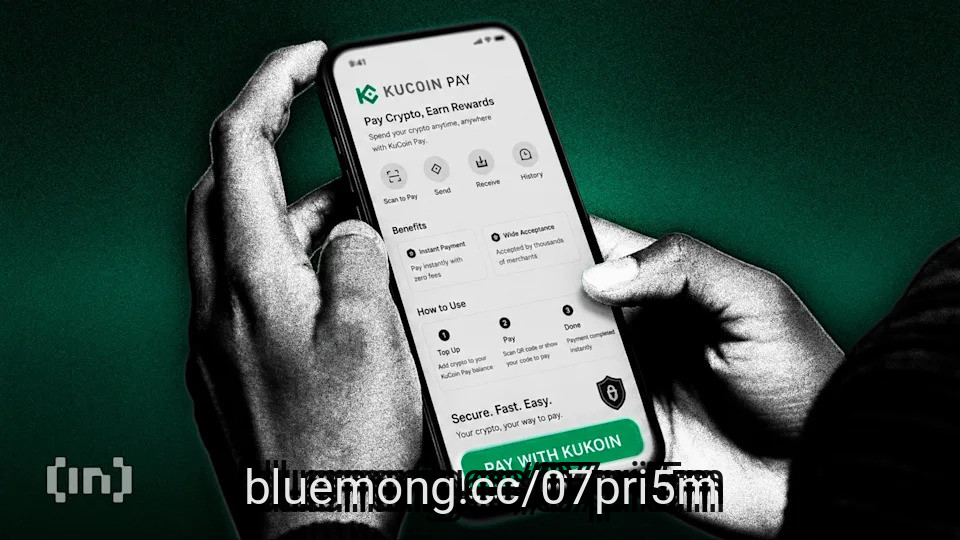
A customer walks into a café in Peru and wants to pay with crypto. The café accepts QR payments, but it has no crypto wallet or special crypto checkout. At that point, the customer would usually need to convert the funds or choose another way to pay.
KuCoin Pay is trying to solve this problem by offering a shorter route. The customer scans the café's existing payment code and pays from their KuCoin crypto balance. The merchant continues using the local payment system already in place.
In June, KuCoin Pay added QR-based access in Argentina and Peru. A separate rollout connected users with bKash and Nagad in Bangladesh, Mexico's SPEI bank-transfer system, and the MTN and Airtel mobile-money networks in Zambia.
The expansion builds on KuCoin Pay's earlier integration with Brazil's Pix network. Its current support pages also indicate broader QR payment coverage across Southeast Asia, alongside Open CryptoPay support in Switzerland.
Together, these integrations point to a larger ambition: making crypto held in a KuCoin account as accessible for everyday payments as funds in a local payment app, even across markets with very different financial systems.
#kucoin #customer #peru

4 months ago
Sezzle Inc. (NASDAQ:SEZL) is one of the 10 Best Performing American Stocks in June 2026.On June 29, 2026, Oppenheimer downgraded Sezzle Inc. (NASDAQ:SEZL) to Perform from Outperform, "solely on valuation," after a 158% year-to-date rise in the shares. Oppenheimer said it still expects Sezzle to remain one of the fastest gross profit and adjusted EBITDA growers in its coverage, supported by market share gains, Buy Now Pay Later industry expansion, and product innovation. The firm sees room for Sezzle to again raise full year EPS guidance from $5.10, but said the recent share-price strength suggests investors are already pricing in potential 2026 EBITDA outperformance.On June 25, Northland ******* yst Mike Grondahl raised the firm's price target on Sezzle to $170 from $160 and kept an Outperform rating on the shares. After meeting with management during Northland's Growth Conference, Grondahl said he got more insight into the company's marketing strategy and ramp, engagement with Pay in 5 and SezzleCash, and bank charter progress.
Earlier in June, B. Riley raised the firm's price target on Sezzle to $141 from $117 and kept a Buy rating on the shares. B. Riley said Sezzle integrated with Knot's CardSwitcher API to automatically update Sezzle virtual cards as the preferred payment method across merchants, including Amazon (AMZN), Walmart (WMT), and Uber (UBER). The firm said the integration should improve checkout convenience and help drive top-of-wallet behavior among users.Sezzle Inc. (NASDAQ:SEZL) operates as a technology-enabled payments company in the United States and Canada.While we acknowledge the potential of SEZL as an investment, we believe certain AI stocks offer greater upside potential and carry less downside risk. If you're looking for an extremely undervalued AI stock that also stands to benefit significantly from Trump-era tariffs and the onshoring trend, see our free report on the best short-term AI stock.READ NEXT: 33 Stocks That Should Double in 3 Years and Cathie Wood 2026 Portfolio: 10 Best Stocks to Buy.Disclosure: None. Follow Insider Monkey on Google News.
Earlier in June, B. Riley raised the firm's price target on Sezzle to $141 from $117 and kept a Buy rating on the shares. B. Riley said Sezzle integrated with Knot's CardSwitcher API to automatically update Sezzle virtual cards as the preferred payment method across merchants, including Amazon (AMZN), Walmart (WMT), and Uber (UBER). The firm said the integration should improve checkout convenience and help drive top-of-wallet behavior among users.Sezzle Inc. (NASDAQ:SEZL) operates as a technology-enabled payments company in the United States and Canada.While we acknowledge the potential of SEZL as an investment, we believe certain AI stocks offer greater upside potential and carry less downside risk. If you're looking for an extremely undervalued AI stock that also stands to benefit significantly from Trump-era tariffs and the onshoring trend, see our free report on the best short-term AI stock.READ NEXT: 33 Stocks That Should Double in 3 Years and Cathie Wood 2026 Portfolio: 10 Best Stocks to Buy.Disclosure: None. Follow Insider Monkey on Google News.

4 months ago
AIsa has raised $6.5 million in total funding to build transaction infrastructure for AI agents, with Alibaba (NYSE: $BABA) and Tribe Capital co-leading its latest seed round.
Draper **** ociates, Sumitomo Corporation and Saison Capital also joined the financing. The company said the capital will be used to expand its engineering team, scale payment infrastructure, add more models, data and API providers, and accelerate stablecoin settlement for agents and businesses.
AIsa is building a transaction layer for software that increasingly needs to buy digital resources without relying on accounts, subscriptions or checkout flows designed for people. Its platform lets AI agents and developers discover, access and pay for models, APIs, real-time data, SaaS tools and compute through a single programmable interface.
More From Cryptoprowl:
Ripple, The Company Behind XRP, Is Valued At $50 Billion

4 months ago
Rezolve AI Limited (NASDAQ:RZLV) is one of the best new tech stocks to buy according to **** ysts. On June 22, Rezolve AI announced that its Reward platform is powering "Everyday Cashback," a new Visa Card-Linked Offers program for Mashreq Bank in the UAE. This partnership allows cardholders to access automated cashback offers of up to 20% at hundreds of merchants, managed directly through the Mashreq mobile app.
The program integrates Rezolve AI's technology into a high-frequency financial environment, using advanced **** ytics to provide personalized, transaction-linked offers. By connecting Mashreq's large customer base with Visa's payment network, the platform enables merchants to drive loyalty and sales through a measurable commerce media channel.
blake-wisz-Xn5FbEM9564-unsplash
This launch marks a strategic expansion for Rezolve AI Limited (NASDAQ:RZLV) into the financial services sector, bridging the gap between everyday consumer spending and personalized rewards. Executives noted that the collaboration aims to transform banking interactions by turning routine transactions into valuable, relevant opportunities for consumers, merchants, and the bank alike.
Rezolve AI Limited (NASDAQ:RZLV) develops AI-powered commerce technology for retailers and brands, including conversational intelligence, checkout, payments, loyalty, and enterprise commerce infrastructure.


4 months ago
Meridian Funds, managed by ArrowMark Partners, released its first-quarter 2026 investor letter for "Meridian Hedged Equity Fund". A copy of the letter can be downloaded here. The Fund invests in high-quality growth companies and mitigates risk by writing call options. Following the late-February strike on Iran, oil prices surged, leading to a risk-off sentiment, boosting energy sector performance. Large-cap technology stocks declined as investors rotated towards smaller companies and more defensive value investments. Market conditions are becoming challenging due to reduced expectations for a Federal Reserve rate cut and increasing geopolitical uncertainty. The Fund returned 0.08% (net) for the quarter, outperforming the S&P 500 Index, which fell 4.33%, and the CBOE S&P 500 BuyWrite Index, which declined 0.92%. At the end of the period, 43% of the portfolio was unhedged, while the remainder was invested in companies with covered call options. In addition, please check the Fund's top five holdings to know its best picks in 2026.
In its first-quarter 2026 investor letter, Meridian Hedged Equity Fund highlighted PayPal Holdings, Inc. (NASDAQ:PYPL). PayPal Holdings, Inc. (NASDAQ:PYPL) is a leading technology platform that provides digital payment solutions for merchants and consumers. On June 26, 2026, PayPal Holdings, Inc. (NASDAQ:PYPL) closed at $44.29 per share, reflecting a market capitalization of $39.07 billion. PayPal Holdings, Inc. (NASDAQ:PYPL) posted a one-month return of -1.99%, and its shares lost 40.41% over the past 52 weeks.
Meridian Hedged Equity Fund stated the following regarding PayPal Holdings, Inc. (NASDAQ:PYPL) in its Q1 2026 investor letter:
"PayPal Holdings, Inc. (NASDAQ:PYPL) operates a two-sided digital payments network, offering consumer digital wallets and merchant checkout solutions. While the company benefits from significant scale and strong free cash flow, the investment thesis has been challenged by market share losses to competitors such as Apple Pay and the margin-dilutive nature of its Braintree processing business. The stock declined after the company reported a sharp deceleration in branded checkout volume growth and weakness across key international markets. Execution challenges also weighed on results as the new CEO guided toward modestly lower adjusted earnings and emphasized the need to heavily reinvest in product experience and loyalty programs to stabilize the core business. We maintained our position throughout the quarter."


4 months ago
Adyen N.V. (ADYEY) gave investors a fresh reason to pay attention after it unveiled Adyen Agentic, a suite of modular APIs built to help merchants sell through conversational AI platforms without rebuilding their commerce systems. Shares jumped 4.11% on Monday after the news and the move made sense because the release pushes Adyen deeper into the next phase of digital commerce, not just plain old payments.
That matters because Adyen is not trying to be just a payment processor. It wants to sit closer to the whole transaction, from discovery to checkout to money movement, and that is exactly where the company is spending time and money in 2026.
Dear Microsoft Stock Fans, Mark Your Calendars for June 30
Dear Walmart Stock Fans, Mark Your Calendars for June 22
Nothing Seems to Be Going Right for Meta Platforms. How to Play META Stock Here.



4 months ago
A major grocery chain operator has agreed to pay a multimillion-dollar settlement after coming under scrutiny for pricing practices tied to one of its business segments.
The case centers not on what shoppers paid at checkout, but on allegations involving how certain prices were reported behind the scenes.
Federal officials say prescription price reporting practices caused government health care programs to pay more than they should have, resulting in a settlement worth tens of millions of dollars.
The case highlights how prescription pricing disclosures can affect taxpayer-funded health care spending, even when consumers receive discounted pharmacy prices.
Ahold Delhaize USA (ADRNY) has agreed to pay $40 million to resolve allegations that it submitted inflated prescription drug pricing data to federal health care programs, according to the U.S. Department of Justice (DOJ).

4 months ago
Some offers on this page are from advertisers who pay us, which may affect which products we write about, but not our recommendations. See our Advertiser Disclosure.
You probably think of debit cards and credit cards as two totally separate things: One pulls money from your checking account and the other lets you borrow against a line of credit. For the most part, that's correct.
What most people don't realize, however, is that you can choose to use your debit card as "credit" at checkout. That doesn't mean you borrow money to make the purchase, but it does change some aspects of the transaction. Here's what you need to know about running a debit transaction as credit.
If your debit card has a Visa or Mastercard logo on it, you can use it as credit. To do this, you simply choose "credit" on the PIN pad or in the payment options at checkout. Alternatively, if you hand your debit card to a cashier or server, you can tell them you want to pay with credit instead of debit.
Then, instead of providing your PIN to authorize and complete the transaction, you'll probably be asked for your signature — usually if the transaction is over $25.


5 months ago
Walmart Inc. (NASDAQ:WMT) is one of the best e-commerce stocks to buy as global sales hit records. The company's online retail story is no longer limited to U.S. pickup and delivery, as Walmart is now pushing its marketplace ***** ortment across borders. On June 11, Walmart opened Walmart.com to customers in Mexico, giving them access to hundreds of thousands of eligible items across categories including apparel, home, electronics, and more. The company said that duties, taxes, and fees are shown at checkout and that it plans to expand international shipping to additional markets in the future.
Walmart is also leaning into faster fulfillment as a core e-commerce advantage. On May 28, the company said 30-minute-or-less delivery was available across 33 U.S. markets, covering more than 100,000 eligible items, including groceries, pharmacy products, household supplies, pet food, electronics, and prescriptions. In the first quarter of fiscal 2027, Walmart said global eCommerce grew 26%, Walmart U.S. eCommerce grew 26%, and Walmart International eCommerce grew 27%. Store-fulfilled delivery has more than doubled over the past two years, with more than 36% of those U.S. orders delivered in under three hours during the quarter.
Pixabay/Public Domain
Walmart Inc. (NASDAQ:WMT) is a tech-powered omnichannel retailer serving customers through stores, clubs, e-commerce websites, and mobile apps.
While we acknowledge the potential of WMT as an investment, we believe certain AI stocks offer greater upside potential and carry less downside risk. If you're looking for an extremely undervalued AI stock that also stands to benefit significantly from Trump-era tariffs and the onshoring trend, see our free report on the best short-term AI stock.

5 months ago
Global-e Online Ltd. (NASDAQ:GLBE) is one of the best e-commerce stocks to buy as global sales hit records. The company powers cross-border direct-to-consumer e-commerce for brands and retailers, making it a direct play on merchants selling to international shoppers. On May 26, Global-e announced a definitive agreement to acquire Passport Global Inc., a U.S.-based cross-border e-commerce logistics and solutions company. The deal is expected to deepen Global-e's standard logistics capabilities through ****** et-light carrier services, direct injection, consolidated returns, customs brokerage, and domestic and last-mile delivery support.
The transaction also expands Global-e's addressable merchant base because Passport will continue offering a non-Merchant of Record solution. Global-e agreed to pay $350 million upfront, funded roughly equally through cash and ordinary shares, with up to $75 million in additional contingent consideration tied to Passport's 2026 financial results. Passport is expected to generate about $100 million in revenue in calendar 2026.
India Picture/Shutterstock.com
Global-e's latest quarterly results support the growth case. On May 13, the company reported first-quarter GMV of $1.74 billion, up 40% year-over-year, while revenue rose 33% to $252.1 million. Adjusted EBITDA increased 59% to $50.2 million, and Global-e raised its full-year 2026 outlook across GMV, revenue, and adjusted EBITDA.
Global-e Online Ltd. (NASDAQ:GLBE) enables brands and retailers to sell internationally by offering localized checkout, logistics, and cross-border e-commerce services.