
2 months ago
By David Shepardson
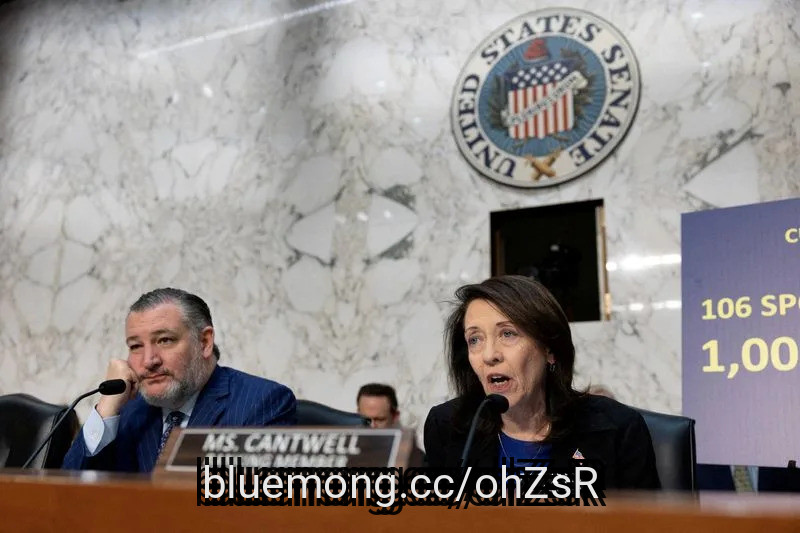
WASHINGTON, Sept 16 (Reuters) - The U.S. Senate Commerce Committee approved legislation on Wednesday to bar government officials from pressuring private companies to censor speech, citing threats from the Trump administration against late-night talk shows as evidence of efforts to stifle free expression.
The measure would allow citizens to sue federal employees who pressure private companies into suppressing speech protected by the First Amendment to the U.S. Constitution, which guarantees free expression. Both Republicans and Democrats on the committee said the bill was needed to curb government overreach.
The committee approved the bill 18-10. It must still pass the full Senate, where it is unclear when it may be taken up, and the U.S. House of Representatives to become law.
Senator Maria Cantwell, the top Democrat on the panel, said the bill, if it had been in effect, would have allowed Disney-owned ABC's late-night show host Jimmy Kimmel to file suit after Federal Communications Commission chair Brendan Carr last year pressured station owners to stop airing Kimmel's show following remarks about the ****** assination of conservative activist Charlie Kirk.
#approved #government #private

2 months ago
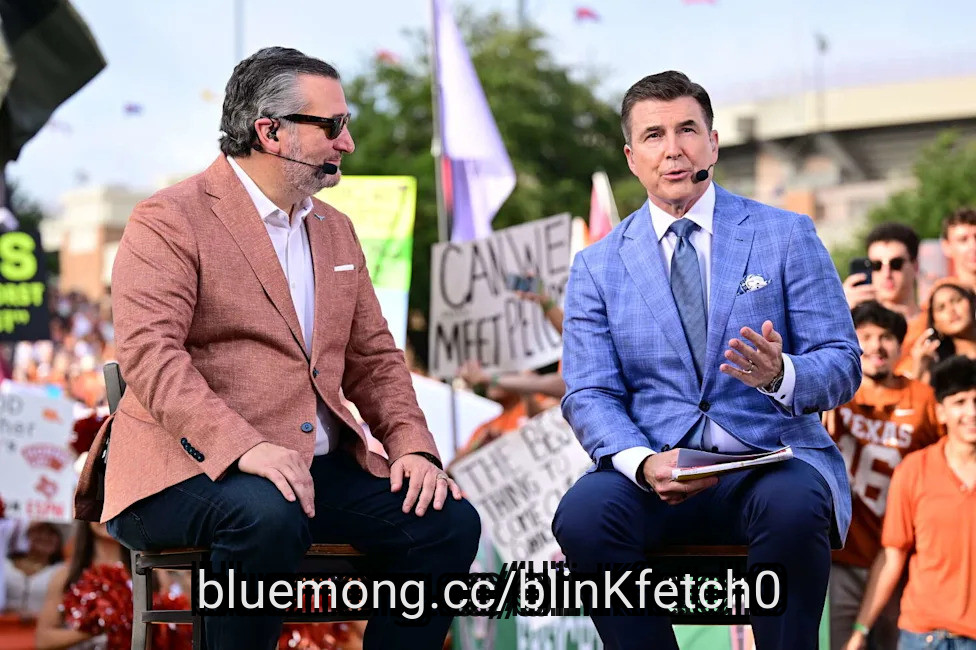
U.S. Sen. Ted Cruz joined the set of ESPN's "College GameDay" on Saturday morning in Austin to push landmark legislation to regulate college sports ahead of the Texas Longhorns' highly anticipated matchup with the top-ranked Ohio State Buckeyes.
He did not receive a warm welcome.
Cruz, clad in a burnt orange blazer, was consistently booed by the raucous crowd of Longhorns faithful throughout his nine-minute interview, with fans breaking into chants of "Ted, you suck" and "Get him off."
He did not acknowledge the jeers, which came on a campus that gave the senator less than 20% of the vote in his 2024 re-election. The Chronicle has reached out to Cruz's office.
Cruz was in attendance to push the Protect College Sports Act, a bill he co-authored with Sen. Maria Cantwell, D-Washington. The legislation is scheduled for a vote in the Senate next week.
#longhorns #sports


2 months ago
Sen. Ted Cruz got a rough welcome from the College GameDay crowd in Austin.
Cruz appeared on ESPN's Saturday morning pregame show ahead of No. 4 Texas' matchup vs. No. 1 Ohio State and was met with loud boos while discussing the Protect College Sports Act, according to Sports Illustrated. Video shared by Awful Announcing showed the Texas Republican being booed during the segment, with some in the crowd chanting, "Ted, you suck!"
ESPN had Ted Cruz on 'College GameDay' in a conversation with Rece Davis for nearly 10 minutes.
Cruz was heavily booed by the crowd -- and heard "Ted, you suck!" chants -- in Austin. pic.twitter.com/npQesiYMsG
The segment lasted nearly 10 minutes, according to Awful Announcing, and featured Cruz speaking with host Rece Davis about the college sports bill.
The Protect College Sports Act is a federal proposal backed by Cruz and Sen. Maria Cantwell, D-Wash., aimed at setting national rules around college athletics, including name, image and likeness deals, transfers and eligibility. Cruz has argued the bill is needed to bring order to college sports, while critics have raised concerns over athlete compensation and federal involvement.
#austin #protect #awful #announcing
2 months ago
In the season opener last fall, the Miami Hurricanes knocked off Notre Dame 27-24, in a highly contested battle.
It was a victory that propelled Miami all the way to the College Football Playoff **** le game, where they ultimately fell to Indiana. The Hurricane offense lost elite offensive tackle Francis Mauigoa, quarterback Carson Beck, offensive linemen Markel Bell and Anez Cooper along with wide receiver CJ Daniels to the NFL draft. That's a good amount of talent gone from a pretty solid offense, but there are some that believe Miami will be better this fall.
Recently, 247Sports Brad Crawford was asked about the Hurricanes offensive outlook for this season and he thinks it will be the best offense they've had under head coach Mario Cristobal. He'd go on to say "I think this is the best transfer quarterback Miami has gotten … Darian Mensah, I think he should be the preseason Heisman frontrunner."
Crawford is high on the running backs and wide receivers, but one area where he's a bit concerned is on offensive line. "Maybe if there's one question Miami has … that would be it," as he noted the addition of 5-star offensive tackle Jackson Cantwell.
This game has been circled on Notre Dame's schedule since the heartbreaking loss last year, and revenge would be sweet. The Irish defense should be one of the best in the country, and should be able to neutralize the Hurricane attack.
#offense #hurricanes #hurricane


3 months ago
TALLAHASSEE, Florida — Florida university leaders are asking Congress to take a timeout and call some audibles in the college sports legislation that could pass the Senate as soon as this week.
Athletic directors and other top officials in the college-sports-crazed Sunshine State see the proposal, the country's most substantial attempt yet to govern this chaotic athletics marketplace, as "progress over perfection" — a potential shift they welcome yet hope will evolve in the Senate or eventually the House.
Notably, they are apprehensive about how the legislation could put schools in purgatory if they want to switch athletic conferences, and they're unsure about the idea of capping the number of colleges in those conferences. They also want more guardrails around third-party name, image and likeness deals they contend schools are using to funnel money to student athletes.
With senators positioned to possibly vote soon on the so-called Protect College Sports Act, the state university system's Board of Governors is sensing it's time to kick off on lobbying the Florida delegation. And there appears to be an open channel, as some Florida athletic directors spoke Monday night with Florida Sens. Ashley Moody and Rick Scott about the bill. Sens. Ted Cruz (R-Texas) and Maria Cantwell (D-Wash.) released a new version of their legislation Tuesday after weeks of negotiations with the largest athletics conferences and the Trump administration, as Cruz remains adamant about passing the bipartisan measure before senators leave for August recess at the end of this week.
"Getting something done in Congress is difficult; changing it later is going to be really difficult," Keith Perry, a former GOP state lawmaker serving on the Board of Governors, said Tuesday during an athletics task force meeting. "The only opportunity, really, to have any kind of influence is there now."
#athletics #congress

3 months ago
The Big Ten and Southeastern Conferences agreed Friday night to support a Senate bill that seeks to regulate college sports, ending a breakneck week of negotiations and pulling the bipartisan measure out of what looked like a certain death spiral.
School presidents from both conferences voted to back the bill after receiving last-minute concessions over language regarding third-party name-image-likeness deals and the so-called "associated entities" that often broker those arrangements between players and schools.
More details need to be worked out, but the headline is that the bill still has a chance to earn the 60 votes it needs to halt debate and head to an up-or-down vote before the Senate heads for summer break next Friday.
The summer recess is increasingly looking like an intractable deadline for the Protect College Sports Act, a bipartisan effort headed by Sens. Ted Cruz, R-Texas, and Maria Cantwell, D-Wash.
After the conferences, which had balked at large sections of the bill, put out a short release announcing they supported the act "as currently drafted," Cruz put out a short statement on social media thanking the leagues and saying: "Let's save college sports." And Cantwell said: "Good. Now progress can be made in protecting women and Olympic athletes and moving the legislation closer to the President's desk."
#college


3 months ago
After months of withholding support and weeks of back and forth with lawmakers, the Big Ten and Southeastern Conference on Friday publicly backed a bipartisan Senate bill designed to stabilize college athlete compensation and provide antitrust protections to the NCAA and its most powerful conferences.
The final major sticking point for the conferences with the Protect College Sports Act was language in a provision regarding name, image and likeness deals athletes can strike with companies that work directly with schools. The conferences wanted more well-defined restrictions on deals between athletes and so-called ***** ociated entities to cut off the workarounds some schools have been using to blow past the current annual revenue-sharing limit of $20.5 million they can direct to athletes.
With the Big Ten and SEC now on board, the bill has a chance of getting to the Senate floor next week for a vote. Still, there is no guarantee Senate Majority Leader John Thune (R-S.D.) will be able to squeeze it in before Aug. 7, when the Senate breaks for a five-week recess.
The bill needs 60 votes to pass, and where that count stands in the Senate is unclear. Lawmakers are hoping for robust support that easily passes the threshold, believing that gives the bill a better chance of then passing a House vote in the fall. Reforming college sports has been a priority for President Donald Trump, and the White House has also pushed for Congress to act.
The bipartisan bill was introduced in May by Sens. Ted Cruz (R-Texas) and Maria Cantwell (D-Wash.). It addresses a wide range of issues in college sports, including antitrust exemptions that would allow the NCAA and member conferences to make rules about athlete eligibility, transfers and NIL compensation, while shielding them from an onslaught of legal challenges.
#bill #lawmakers #support


3 months ago
With Congress soon to begin its August recess, the finalization of the Protect College Sports Act negotiations between lawmakers and college sports leaders remains at a standstill on Capitol Hill, leaving the bill's path to a Senate floor vote uncertain.
The impasse comes as leaders from the Power Four conferences — the Big Ten, the SEC, the ACC and the Big 12 — meet Thursday with university presidents to review the latest revisions to the bill made by lawmakers. The bill is co-sponsored by Sens. Ted Cruz (R-Texas), Maria Cantwell (D-Wash.), Chris **** s (D-Del.) and Eric Schmitt (R-Mo.).
Late Thursday afternoon, NCAA president Charlie Baker released a statement saying that while no bill is "perfect," he "implores college sports leaders and Senators to support this bill now." Baker, of course, is hinting at the ticking clock on getting the bill passed this session.
HOLDOUT: Why the Big Ten is stopping Congress' college sports fix
"After speaking with conference leaders and university presidents in recent days, one thing is clear: there is overwhelming consensus that targeted intervention from Congress is necessary. I am grateful to Senators Cruz and Cantwell for making meaningful changes to strengthen this bill. This is the legislation we need now," Baker said in a statement.
#cruz #cantwell #senators





3 months ago
Senate Majority Leader John Thune told reporters Thursday the Protect College Sports Act is not likely to reach the floor for a vote before the session ends in two weeks.
The bipartisan bill introduced in May by Sens. Ted Cruz (R-Texas) and Maria Cantwell (D-Wash.) addresses a wide-range of issues in college sports, from eligibility and transfer rules to regulations for compensating players.
The bill, which advanced out of committee last month, has drawn support from the NCAA and many Division I conferences, but not the Big Ten and SEC, the wealthiest and most powerful leagues. Advancing through committee markup is the furthest a college sports bill has made it in Congress; a House bill called the SCORE Act advanced through committee last year but never got to the floor for a vote.
Big Ten and SEC officials have been working with Cruz, Cantwell and other co-sponsors in recent weeks to modify the bill. The two conferences have a variety of issues with the bill, including spending limits it would impose on player compensation and restrictions on conference expansion.
Lawmakers have said there has been some progress on those negotiations, but the bigger issue appears to be the legislative calendar. The senate has only two weeks left in the session before going on summer recess starting Aug. 8.
#committee #cantwell #floor #vote


4 months ago
Presidents from four Big Ten schools – Michigan, Penn State, Ohio State and USC – met with Sens. Ted Cruz (R-Texas) and Maria Cantwell (D-Wash.) Tuesday about the Protect College Sports Act, they said in a statement. The talks were “productive.”
Tuesday’s conversations are notable, given the Big Ten’s stance against the bipartisan legislation in its current state. The Big Ten and SEC have both said they do not currently support the bill, which is on track for the Senate floor after a Commerce Committee vote last month. Majority Leader John Thune (R-S.D.) holds the authority to call the bill to a full floor vote.
[ $19.99 gets you a FULL year of On3 | Rivals national coverage ]
The meetings come amid “movement” regarding revisions to the bill submitted by the two conferences, Yahoo! Sports’ Ross Dellenger reported. While not yet formalized, it remains to be seen if the submissions can help get the two conferences on board with their support.
In their statement, the four Big Ten schools acknowledged issues the bill addresses that they support. They also noted the conference’s priorities, including NIL and rev-share framework.


4 months ago
Washington State University Athletics and the Confederated Tribes of the Colville Reservation have entered into a five-year, $8.43 million partnership that will put a Colville Tribes patch on every Cougar uniform — the largest annual sponsorship agreement in WSU Athletics history and the first deal of its kind in the Pac-12.
The agreement calls for all WSU uniforms to carry a Colville Tribes jersey patch, one of the most extensive uniform integrations anywhere in college sports. Beyond the on-field branding, the partnership includes a $250,000 donation to the Cougar Athletic Excellence Fund in its first year, youth clinics in tribal communities, regional basketball development programs, and an AAU tribal tournament. WSU also plans a video series documenting the relationships between its student-athletes and tribal youth, along with designated Colville Tribes entitlement games across multiple sports and Nike N7 games for the men's and women's basketball programs.
The deal was negotiated with help from Playfly Sports, which serves as WSU's multimedia rights partner.
The new athletics partnership extends a relationship between WSU and the Colville Tribes that dates back to a formal agreement in 1997 and reflects more than a century of engagement between the university and the region. WSU President Betsy Cantwell framed the deal as an extension of shared priorities around education and community investment.
"At the heart of this partnership is a shared belief in investing in young people, helping them become exceptional students, future leaders, and ultimately bringing them back home to strengthen the communities they love," Cantwell said. "That alignment of values is what made the Colville Tribes the right partner for this historic opportunity."


4 months ago
Jun. 30—PULLMAN — A day before Washington State University enters a new era in the rebuilt Pac-12 Conference, the Cougars introduced a new partnership.
WSU and Confederated Tribes of the Colville Reservation announced Tuesday a new five-year deal worth $8.43 million, including a $250,000 donation to the Cougar Athletic Excellence Fund in the first year. It's the largest annual sponsorship in WSU athletics history.
The Cougars will wear a new patch on their jerseys for football, men's and women's basketball, baseball and soccer.
"As we enter a new era of the Pac-12 — which begins tomorrow, by the way — we do so with a new look," WSU athletic director Jon Haarlow said during a news conference. "A look that represents far more than just branding. It represents a partnership rooted in shared values, mutual respect, commitment to developing future generations across Eastern Washington and throughout the Pacific Northwest. We've said it internally, we've said it publicly, that our intention is to be the leaders in the new Pac-12. Leadership requires innovation. It requires thinking differently. It requires building strategic partnerships that align with who we are as an institution."
"At the heart of this partnership is a shared belief in investing in young people, helping them become exceptional students, future leaders, and ultimately bringing them back home to strengthen the communities they love," WSU President Betsy Cantwell is quoted as saying in a press release. "That alignment of values is what made the Colville Tribes the right partner for this historic opportunity."



5 months ago
The Protect College Sports Act, legislation meant to introduce and codify sweeping reforms related to college athletics, passed out of the Senate Commerce Committee on Thursday morning.
It now heads to the Senate floor.
The bill passed out of committee by a 19-9 vote. Indiana Republican Sen. Todd Young voted no, his decision reflecting Big Ten concerns over the bill.
A spokesman for Sen. Young told IndyStar, “Senator Young hopes that additional changes can be made to the bill to address concerns raised by the Big Ten.”
Co-sponsored by Ted Cruz (R-Texas) and Maria Cantwell (D-Washington), the Protect College Sports Act represents Congress’ most substantial success so far in a yearslong effort to bring legislative reform to college athletics. Since before the COVID-19 pandemic, leaders in college sports — including the NCAA, member conferences and schools, and other major players — have lobbied for national solutions to what have become state and regional problems.


5 months ago
The Protect College Sports Act, legislation meant to introduce and codify sweeping reforms related to college athletics, passed out of the Senate Commerce Committee on Thursday morning.
It now heads to the Senate floor.
The bill passed out of committee by a 19-9 vote. Indiana Republican Sen. Todd Young voted no, his decision reflecting Big Ten concerns over the bill.
A spokesman for Sen. Young told IndyStar, “Senator Young hopes that additional changes can be made to the bill to address concerns raised by the Big Ten.”
Co-sponsored by Ted Cruz (R-Texas) and Maria Cantwell (D-Washington), the Protect College Sports Act represents Congress’ most substantial success so far in a yearslong effort to bring legislative reform to college athletics. Since before the COVID-19 pandemic, leaders in college sports — including the NCAA, member conferences and schools, and other major players — have lobbied for national solutions to what have become state and regional problems.
It now heads to the Senate floor.
The bill passed out of committee by a 19-9 vote. Indiana Republican Sen. Todd Young voted no, his decision reflecting Big Ten concerns over the bill.
A spokesman for Sen. Young told IndyStar, “Senator Young hopes that additional changes can be made to the bill to address concerns raised by the Big Ten.”
Co-sponsored by Ted Cruz (R-Texas) and Maria Cantwell (D-Washington), the Protect College Sports Act represents Congress’ most substantial success so far in a yearslong effort to bring legislative reform to college athletics. Since before the COVID-19 pandemic, leaders in college sports — including the NCAA, member conferences and schools, and other major players — have lobbied for national solutions to what have become state and regional problems.


5 months ago
Ten professional sports unions—led by their umbrella organization, the AFL-CIO—have come out with major criticisms of the Protect College Sports Act, according to a statement shared with Front Office Sports Thursday.
The statement came in the middle of a Senate Commerce Committee markup to consider amendments to a fresh version of the bill. The Commerce Committee voted 19-9 to send it to the full Senate floor Thursday morning.
The bill, introduced by Sens. Ted Cruz (R., Texas) and Maria Cantwell (D., Wash) and co-sponsored by Sens. Eric Schmitt (R., Mo.) and Chris ****** s (D., Del.) would codify NIL and revenue-sharing rights, as well as health and safety standards and Olympic sports protections. But it would also establish limits on player compensation, transfers, and eligibility, give the NCAA and conferences antitrust protections to enforce these rules, and overrule any conflicting state laws.
College athlete advocacy groups have come out against the bill, saying it would implement restrictions on players that would normally be negotiated through collective bargaining.
And until this week, professional sports unions had refrained from taking a stance.

5 months ago
On Thursday, the Senate Commerce Committee voted 19-9 to send an amended version of the Protect College Sports Act—a sweeping bipartisan college sports bill—to the Senate floor for a full vote.
It’s the first time that a college sports bill has passed a committee vote in the Senate in the six years that college sports stakeholders have been lobbying in Congress.
“No one got everything they wanted,” Cruz said at the outset of the hearing. “But we did create a framework that stabilizes college athletics.”
The bill, introduced by Sens. Ted Cruz (R., Texas) and Maria Cantwell (D., Wash) and co-sponsored by Sens. Eric Schmitt (R., Mo.) and Chris ****** s (D., Del.) would codify academic and health and safety standards, athlete revenue-sharing and NIL rights, and implement minimum requirements for Olympic sports participation. It would also establish limits on player compensation, transfers, and eligibility, give the NCAA and conferences antitrust protections to enforce these rules, and prevent state legislatures from passing laws to conflict with these rules. Additionally, it would prevent a power conference super league and allow for FBS conferences to pool media rights.
Dozens of conferences, including the Big 12 and ACC, have come out in favor of the bill, as has the NCAA.


5 months ago
The NFL has released a statement in support of the Protect College Sports Act. The league cited the need for stability in the college athletics landscape and said the bill is an “important step” toward that point.
Tuesday’s statement comes ahead of a scheduled markup this week – the next step in the legislative process. The NFL also voiced its support for the bill’s provision regarding the voluntary pooling of media rights. That has been a key point of conversation about the bipartisan legislation, particularly since the Big Ten and SEC have spoken out against the idea.
[ $19.99 gets you a FULL year of On3 | Rivals national coverage ]
The NFL also said it plans to keep working with Congressional leadership as the bill moves ahead. A markup is on the schedule for Thursday, the Senate Commerce Committee previously announced.
“The National Football League applauds Senators Ted Cruz, Maria Cantwell, Eric Schmitt, and Chris ****** s for their bipartisan leadership in introducing the Protect College Sports Act of 2026,” the statement reads, via ESPN’s Heather Dinich. “Healthy, stable, and thriving collegiate athletics is essential to the future of American sports, including Olympic sports, and this legislation is an important step to achieving that for the benefit of all college athletes and institutions alike.


5 months ago
SEATTLE (AP) — A group of Democratic senators and one Republican, as well as two Democratic House committees, sent letters Monday to the National Science Foundation asking it to reverse course on its plan to dismantle a sprawling ocean monitoring network, with House lawmakers going further and accusing the agency of acting illegally.
The Ocean Observatories Initiative is a network of more than 900 ocean sensors built at a cost of $386 million. Over the last decade it has tracked ocean circulation, marine ecosystems, climate change and extreme weather, producing data freely available to the public and informing more than 500 scientific publications. The project was slated to run another 15 to 20 years.
The National Science Foundation had directed the removal of most of the system's instruments from waters off Oregon, Washington, Alaska, North Carolina and Greenland by 2027 — a decision scientists said came with no warning and no scientific review. The independent federal agency, which was established by Congress, described the move not as a cancellation but as a "descoping" aligned with a strategy to prioritize "evolving scientific priorities and emerging technologies." The Trump administration's proposed 2026 budget had included a 55% cut to the agency.
"It just seems like this is supreme stupidity and a violation of the fundamental distribution of powers in our Constitution," Democratic Sen. Jeff Merkley of Oregon told The ****** ociated Press. "This program is authorized, it's funded, and for the administration to shut it down without direction from Congress violates that vision in which the people's representatives decide what's done and funded, and the executive branch executes that vision."
Merkley and Republican Sen. Lisa Murkowski of Alaska co-led the letter, which was also signed by Democratic Sens. Edward Markey and Elizabeth Warren of Massachusetts, Tammy Baldwin of Wisconsin, Patty Murray and Maria Cantwell of Washington, Sheldon Whitehouse of Rhode Island, Chris Van Hollen of Maryland and Ron Wyden of Oregon. It urged the National Science Foundation, or NSF, to halt the dismantling of the Ocean Observatories Initiative and conduct a thorough review, including consultation with the marine science community, before any further action is taken.


5 months ago
WASHINGTON, D.C. — This week, the college sports industry enters one of the most exciting stretches of its calendar.
In Oklahoma City, a national champion will be crowned at the Women’s College World Series in a ***** le bout pitting rivals Texas and Texas Tech. At eight different on-campus super regional sites, baseball parks will be teeming with fans as a trip to Omaha is on the line.
And on Capitol Hill, inside a marble-walled committee room, with the future of college athletics at stake, a much different game is set to be played: the political one.
Former Alabama coach Nick Saban, Notre Dame athletic director Pete Bevacqua and Pac-12 commissioner Teresa Gould headline a lineup of witnesses testifying in a hearing before members of the U.S. Senate Commerce Committee on Wednesday morning — perhaps the most significant of the more than a dozen hearings held here since 2020.
At the center of what’s supposed to be a more than two-hour affair is a newly introduced bill from Sens. Ted Cruz and Maria Cantwell intended to reform the college athletics industry. The “Protect College Sports Act” is the most comprehensive, bipartisan college sports legislation produced during the NCAA’s seven-year lobbying effort — and it’s a bill that many believe has the best chance to pass among those introduced.


5 months ago
In a letter to member schools Wednesday, NCAA president Charlie Baker shared his reaction to the Protect College Sports Act. But he also cited “several” provisions he said need to be revised.
Baker pointed out the importance of the bipartisan Senate bill, filed last week by Sens. Ted Cruz (R-Texas) and Maria Cantwell (D-Wash.) in a key moment for the NCAA’s quest for federal legislation. The ****** ociation has been seeking help to settle the current landscape in the NIL and transfer portal era, and the Senate bill’s filing came after the SCORE Act publicly collapsed in the House.
[ $19.99 gets you a FULL year of On3 | Rivals national coverage ]
While the bill addresses key issues such as the transfer portal and coach movement, Baker said “essential” revisions must happen. He added the NCAA will work with the senators to make improvements, as well.
“At the same time, it is essential that several key provisions be refined to best safeguard the stability of college athletic opportunities. … Addressing these areas for improvement will ensure the priorities student-athlete leaders and the NCAA have been championing are comprehensively met,” Baker wrote, in part. “To do that, the NCAA will provide detailed ****** ysis for our member schools to guide the advocacy work that will now be required.”