6 days ago
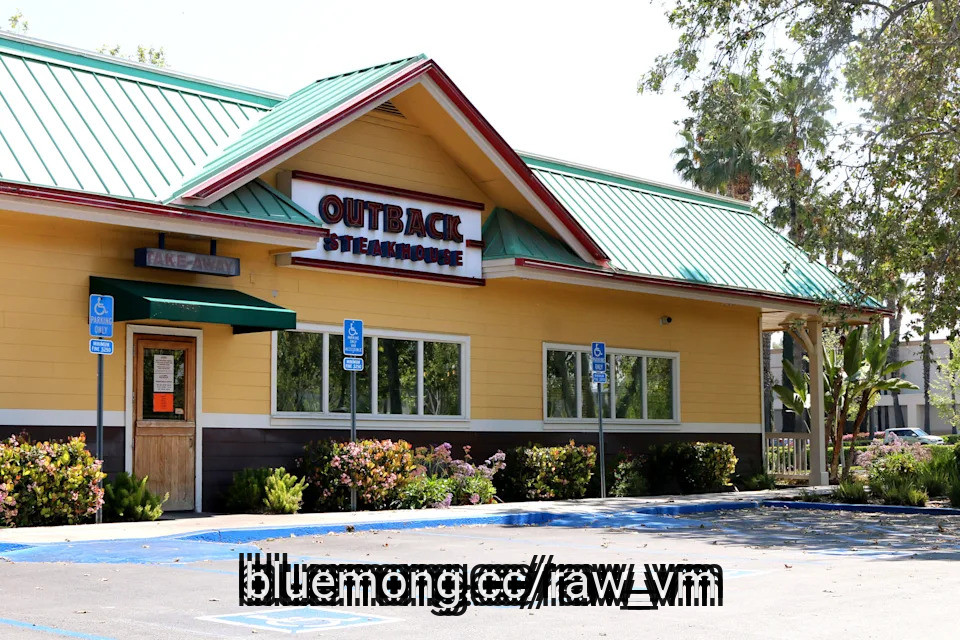
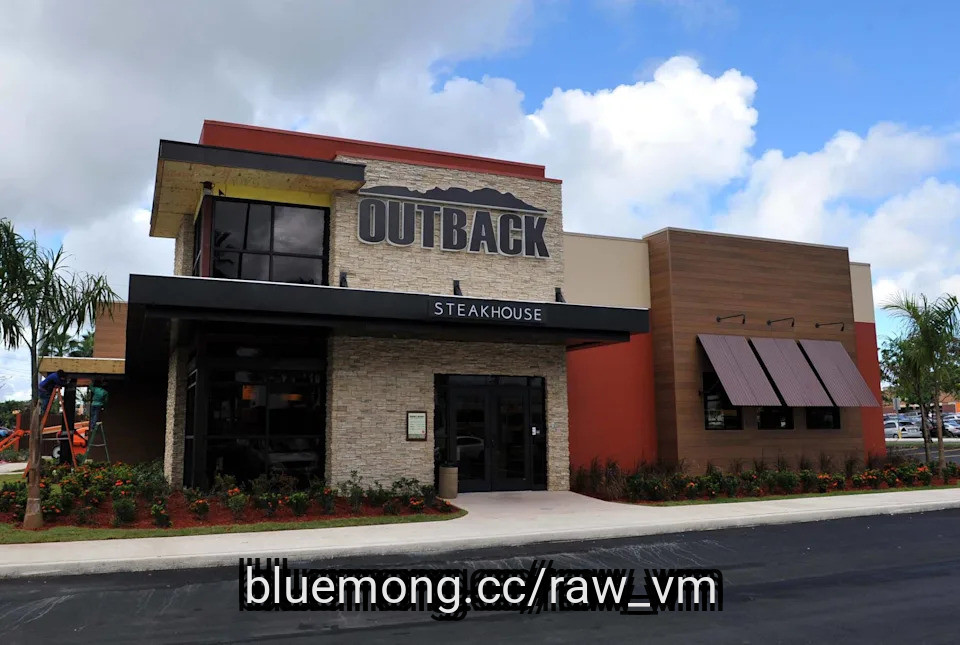
The largest domestic Outback Steakhouse franchisee in the U.S., Out West Restaurant Group (affiliated with Cerca Trova Restaurant Group Holdings), has reportedly filed for Chapter 11 bankruptcy in Delaware on Monday, November 2.
The company operates approximately 60 Outback Steakhouse locations across Western states, including California, Arizona, Nevada, Colorado and New Mexico.
According to Bloomberg Law, the restaurant group reported less than $50,000 in **** ets and between $100 million and $500 million in liabilities. However, limited information about the bankruptcy filing is publicly available.
Amid the bankruptcy filing, Bloomin' Brands, the parent company of Outback Steakhouse, plans to acquire 61 restaurants operated by Out West.
The $26.3 million deal reportedly involves the purchase of the restaurant group's **** ets, according to a filing with the U.S. Securities and Exchange Commission on Sunday, November 1.
#bankruptcy #november

12 days ago
UW and Nebraska face off in Lincoln this weekend for the first time as conference foes. The long and storied history between the two teams stretches exactly 101 years and two weeks to the day between the very first match up in 1925 and this Saturday's game. That shared history primarily revolves around the four games played during the 1990s when both programs were at their peak. The 1991 game featured a furious second half comeback in Lincoln that built the momentum towards UW's eventual national championship. The Cornhuskers' return trip to Seattle in 1992 set the stage for the loudest recorded home crowd in college football history. Five years later, Nebraska returned to Montlake to get their revenge for the previous two games while on their way to their own national championship in 1997 in Tom Osborne's final season.
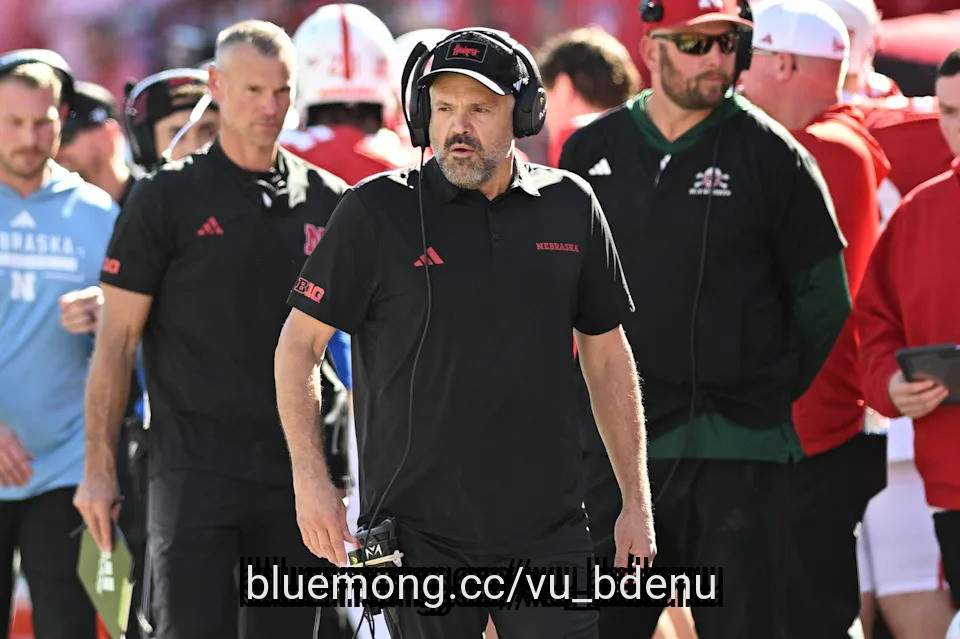
For these two programs, the current stakes of this weekend's game are much lower, although not entirely without significance. Both Washington and Nebraska enter Saturday night's matchup at a crossroads in their seasons. Nebraska sits at 5-2 overall and 2-2 in Big Ten play, but the Cornhuskers are coming off consecutive close losses to Indiana and Oregon. Despite those defeats, Matt Rhule's team has established itself as one of the league's most physical and statistically dominant defenses, keeping every game within reach through disciplined play, strong linebacker action, and excellent situational defense.
Washington, meanwhile, is 4-3 overall and 1-3 in conference play. The Huskies snapped a three-game losing streak with a 38-26 victory over Purdue before their bye week and arrive in Lincoln needing momentum to salvage their Big Ten campaign. Jedd Fisch's offense remains heavily dependent on its passing attack, ranking among the conference's better aerial units, but questions at quarterback and a struggling rushing offense persist.
Over Matt Rhule's four years at Nebraska, the Cornhuskers have embraced a physical and gritty, defensive-oriented identity as a program. Under first-year defensive coordinator, Rob Aurich, Nebraska has maintained the aggressive, fundamentally sound identity Nebraska built under Rhule. The Cornhuskers rank 14th nationally in scoring defense, 9th in total defense, and are holding opponents to just 171 passing yards and 99 rushing yards per game on average. Their suffocating rushing defense on early downs often position them in 3rd & long passing situations where they pressure packages and blanketing secondary can create plays. This formula is what has allowed Nebraska to lead the FBS in defensive 3rd down conversion percentage at just 19%. To put that statistic into perspective, Nebraska's defense has allowed just eight third down conversions in their four Big Ten conference games this season, including games with just one allowed against Maryland and Indiana.
Nebraska typically operates from a multiple-front structure, mixing even-front and odd-front looks while emphasizing gap discipline and disgui



1 month ago
Amcor plc (NYSE:AMCR) isn't a flashy business. Most people probably don't know much about the company, even though they come across its products every day. The company makes the packaging used for food, drinks, healthcare products, beauty products, and plenty of other everyday items.
That gives the company an interesting quality from an investment perspective. Consumers may cut back on certain purchases when the economy gets tougher, but they still need to buy food, medicine, and other basic products. About 60% of Amcor's markets are tied to nutrition, while health, beauty, and wellness make up another 25%. Billionaires are gravitating towards another packaging company, and that has also returned nearly 20% in the past year. Find here.
The company's size is another advantage. Amcor operates across a large global manufacturing network and has relationships with major customers that have been built over many years. It also offers a wide range of packaging formats and materials. For a large multinational customer, being able to deal with one supplier across multiple markets can be a meaningful advantage. The Berry Global acquisition has made Amcor even larger, although it also brought more debt onto the balance sheet.
Amcor plc (NYSE:AMCR) pays $0.65 per share every quarter, giving investors an annual dividend of $2.60. At the October 7 closing price of $41.26, that works out to a yield of about 6.3%. That's a big yield for a company selling products that are tied to everyday consumption. However, a high yield doesn't automatically make a dividend attractive. What matters is whether the business can actually afford to keep paying it. Amcor's latest numbers offer some comfort. Its steady dividend growth is one reason the stock remains popular with income-focused investors.
The company generated $1.303 billion in free cash flow during fiscal 2026, while adjusted diluted EPS came in at $4.02, up 13% from the previous year. Amcor also increased its annual dividend to $2.60. On an adjusted earnings basis, the payout ratio is around 65%. That's not unusual for a mature company and doesn't immediately raise a red flag.
#NYSE


1 month ago
Like every job in Hollywood, managers have grappled with plenty of change in their work in the last decade. Luckily for Range Media Partners' Cora Olson and Michael Diamond, they have each other.
The duo has worked as a unit for 10 years, since being brought together at Mgmt Entertainment and eventually grew to run the lit division. They joined Range as partners in 2024 with a desire to evolve alongside the modern talent management firm, founded during the pandemic by a collective of former CAA, UTA and WME agents hoping to shake things up in the entertainment marketplace. The management company operates its talent representation business alongside an in-house production studio, allowing the operation to finance, develop and build equity in intellectual property.
All those contributing factors can help when putting together the right package to get a film or TV project off the ground in today's precarious Hollywood model — one with fewer greenlit projects and a reliance on safer bets from major distributors. But Olson and Diamond, who represent Hollywood big shots like "Schitt's Creek" Emmy winner Dan Levy, actress-producer-director Kyra Sedgwick and "Pig" filmmaker Michael Sarnoski, counter the ****** umption that original ideas are a tougher sell.
It just takes more work to get there.
"You're not just marrying this actor with this part, or this writer with this ****** ignment. It's not as much mix-and-match as it used to be, because there isn't that same amount of volume," Olson told Office With a View. "If you look at the shows and movies that are breaking through right now, it's those really fresh points of view that seem to resonate with audiences."
#diamond #partners




1 month ago
Vista Gold Corp. (NYSEAMERICAN:VGZ) announced on September 21 that it had agreed to be acquired by Artemis Gold Inc. (TSXV:ARTG). Under the agreement signed September 20, shareholders would receive 0.0966 buyer common shares for each existing common share and own approximately 5% of the combined company. That ownership calculation excludes the buyer's existing 4.95% stake in Vista Gold Corp. (NYSEAMERICAN:VGZ), which it intends to cancel at completion.
For shareholders, the trade-off is a smaller interest in a larger mining business with an operating ***** et and development expertise. The central question is whether that combination can supply the capital and execution needed to bring Australia's Mt Todd gold project into production.
Artemis Gold Inc. (TSXV:ARTG) operates the Blackwater mine in British Columbia and expects its future cash generation to support Mt Todd. That offers Vista Gold a potential funding source alongside a team experienced in building and operating mines.
The financial starting point explains the appeal. Vista Gold Corp. (NYSEAMERICAN:VGZ) ended June 2026 with $49.5 million in cash and no debt. Management described that cash as sufficient for interim development objectives. Joining an operating producer could broaden the resources available for the much larger task of construction.
The acquisition requires no cash consideration or new acquisition debt. Preserving the buyer's financial capacity could leave more room for investment, although the share exchange itself does not raise construction funding.
#cash


2 months ago
With a market cap of $19.5 billion, Best Buy Co., Inc. (BBY) is a leading technology retailer focused on enriching lives through technology by combining tech expertise with personalized customer service. The company serves customers through its online platform, stores, and in-home services, addressing a wide range of everyday technology needs.
Companies valued at more than $10 billion are generally considered "large-cap" stocks, and Best Buy fits this criterion perfectly. Best Buy operates more than 1,000 stores across the United States and Canada and employs more than 85,000 people.
Here's Another Little-Known Firm Jensen Huang's Nvidia Is Quietly Backing
MediaTek Is Stepping Up Competition Against Qualcomm With a New 2-Nanometer Chip. What This Means for QCOM Stock.
1 Year Into the Microsoft Deal, IREN Is Delivering and a Rally May Follow Soon
#stores #known



2 months ago
Toward the end of the lightning round on September 17, a caller asked for Mad Money's host Jim Cramer's thoughts on Iron Mountain Incorporated (NYSE:IRM), and he replied:
It's been an incredible stock. It's a real estate investment trust, basically. And you know, we know that they shred, 3% yield, down 20 points from its high. I think it's a buy.
Iron Mountain Incorporated (NYSE:IRM) operates a highly durable business model centered on physical records management, secure document destruction, and expanding digital infrastructure. In Q2, total revenue reached $2.03 billion, representing an 18.7% increase year-over-year and 16.8% organic growth. The core physical storage business provides reliable cash flow, with storage rental revenue expanding 11.5% year-over-year excluding foreign-exchange effects across a global customer base of 240,000. Adjusted funds from operations grew 17% to $432.7 million, or $1.44 per share.
At the same time, management has channeled capital into scaling higher-growth segments, including digital solutions, ***** et lifecycle management, and data center operations. The data center segment posted 39% revenue growth during the second quarter, securing 110 megawatts in new leases through July and increasing power capacity across major enterprise markets. Operating as a real estate investment trust, the company maintains a quarterly dividend of $0.864 per share, offering shareholders a forward yield of over 3%.
On the other hand, Iron Mountain Incorporated (NYSE:IRM) faces risks inherent to capital-intensive real estate infrastructure expansion. Rapid buildouts of data center power capacity demand substantial capital expenditure, leading to elevated leverage across the balance sheet. Long-term debt, net of the current portion, reached approximately $17.1 billion at the end of the second quarter, increasing sensitivity to interest rate fluctuations and refinancing costs.
#revenue #Growth


2 months ago
Lindblad Expeditions Holdings, Inc. (NASDAQ:LIND) announced on September 15 that it had acquired 60% of White Desert Antarctica and its new aviation travel business, Echo Charlie. Consideration comprises approximately $61 million in cash, plus approximately $6 million relating to acquired cash, subject to working-capital, cash, and indebtedness adjustments.
The purchase broadens the travel portfolio beyond expedition cruises. For investors, the test is whether additional bookings and cash generation justify the acquisition price and subsequent investment.
White Desert takes guests into Antarctica's interior, including the Geographic South Pole. Echo Charlie offers journeys aboard a restored DC-3 aircraft carrying 12 guests. These experiences add distinctive products that Lindblad Expeditions Holdings, Inc. (NASDAQ:LIND) could market to existing adventure travelers.
Cross-selling could reduce marketing costs per booking and encourage repeat travel across the portfolio. Established customer relationships provide a starting point; the financial benefit depends on generating additional profitable departures.
The company already operates a growing land-travel business. Second-quarter Land Experiences revenue increased 23% to $70.0 million, driven by additional trips and higher pricing. That provides a relevant commercial foundation for the expansion.
#additional


2 months ago
The transition toward renewable energy is creating massive opportunities for infrastructure providers. Eos Energy Enterprises (NASDAQ:EOSE) and GE Vernova (NYSE:GEV) represent two distinct ways to play this trend in 2026.
Eos focuses on specialized zinc-based batteries for long-duration energy storage. GE Vernova is a diversified giant that services a massive portion of the world's electricity grid. Comparing these two helps clarify whether you prefer a high-growth disruptor or an established power leader.
Eos Energy Enterprises produces aqueous zinc batteries designed as a safer, scalable alternative to lithium-ion. It operates primarily within the industrial stocks **** e, targeting utilities and commercial developers. Customer concentration like this adds a layer of risk to the business, as two clients accounted for approximately 70% of total revenue in 2025.
In FY 2025, revenue reached approximately $114.2 million. This represents growth of nearly 631.8% compared to the prior fiscal year. The company reported a pre-tax net loss of roughly $969.6 million, resulting in a negative net margin of approximately 849.1%.
As of its December 2025 balance sheet, the company had a debt-to-equity ratio of -1.0x. This value indicates that total liabilities exceed shareholder equity. The current ratio, which measures the ability to cover short term obligations with short term **** ets, was approximately 4.9x, while free cash flow was nearly negative $265.0 million.
#enterprises #massive #Growth


2 months ago
Chevron Corporation (NYSE:CVX) is about to significantly expand its operations in Venezuela. The company's CFO, Eimear Bonner, revealed at a Barclays conference on September 8 that the American oil giant plans to more than double the number of oil rigs it operates in the country as part of its five-year plan to increase output.
The statement follows the company's recent announcement that its joint venture partnerships in Venezuela would invest more than $7 billion to more than double oil output to 600,000 barrels per day by 2031. The current production from Chevron's three Venezuelan JVs totals around 290,000, which is all exported to the United States.
The move builds on Chevron's longstanding presence in Venezuela, as it was the only American oil major that continued operating in the country under a special US license, allowing it to produce and export oil despite the sanctions.
The expansion comes alongside a much larger agreement between Washington and Caracas announced this month, which gave the US majority control over around 20% of Venezuela's proven crude reserves. The White House has now invited American oil companies to revive and modernize the South American country's oil infrastructure and more than double its crude production in the next few years.
Chevron has maintained operations in Venezuela since 1923 and even stayed through the nationalizations that forced ExxonMobil and ConocoPhillips to exit in 2007. This gives it a significant competitive advantage, since it already has a longstanding relationship with the state-owned PDVSA and extensive experience operating in the country's complex regulatory environment.
#around


2 months ago
With a market cap. of $13.4 billion, McCormick & Company, Incorporated (MKC) is a global leader in flavor, manufacturing and distributing herbs, spices, seasonings, condiments, and flavors across 150 countries and territories. Its portfolio includes well-known brands such as McCormick, French's, Frank's RedHot, OLD BAY, Cholula, and Gourmet Garden, serving retailers, food manufacturers, and foodservice businesses.
Companies worth between $10 billion and $200 billion are generally classified as "large-cap stocks," and McCormick comfortably fits this category. Headquartered in Hunt Valley, Maryland, McCormick operates through its Consumer and Flavor Solutions segments, leveraging its global scale, expertise, and technology to support sustainable growth.
Elon Musk, Who Became the World's First Trillionaire, Still Sleeps in a Tiny $50,000 House Where His Mom Uses the Garage — 'It's Kinda Awesome Though'
How to Play AMZN Stock as Amazon Unveils Project Mercury
JPMorgan Gives Up Forecasting Iran War Endgame as Trump Tells Reporters 'Anything Could Happen With Me'
#mccormick #gourmet


2 months ago
FleetCor and CEO Ronald Clarke agreed to a $100 million payment resolving Federal Trade Commission litigation. The settlement follows years of court action over hidden charges involving commercial fuel cards. Harm reached tens of thousands among small-business customers seeking lower operating costs. Regulators say promised savings disappeared beneath undisclosed billing practices.
Federal regulators accused FleetCor, which now operates as Corpay, of imposing unauthorized fees totaling hundreds of millions. Investigators found improper late penalties despite timely remittance or company barriers that prevented payment. Officials cited misleading claims about gas savings, fraud controls, plus card-related expenses. Those practices harmed operators across the United States, according to a 2019 complaint.
Regulators found FleetCor often waited several billing cycles before adding many charges. Delayed timing made extra costs harder for customers to notice. Invoices omitted fee disclosures, pushing account holders toward separate management reports. Even those documents obscured some amounts among unrelated details or excluded them entirely.
"FleetCor deceived its small business customers by promising fuel savings that never materialized," Christopher Mufarrige said. He directs FTC's Bureau of Consumer Protection. Agency officials also criticized hidden and unauthorized charges. Settlement terms channel restitution toward harmed account holders.
In 2023, one federal district court granted summary judgment to the FTC on every count. Its ruling found hidden charges and false representations involving savings, fees, plus fraud-control features. Permanent injunction terms barred FleetCor from billing without informed consent alongside clear disclosures. That order also prohibited deceptive fuel-card claims or hiding material information behind hyperlinks.
#fleetcor #savings


2 months ago
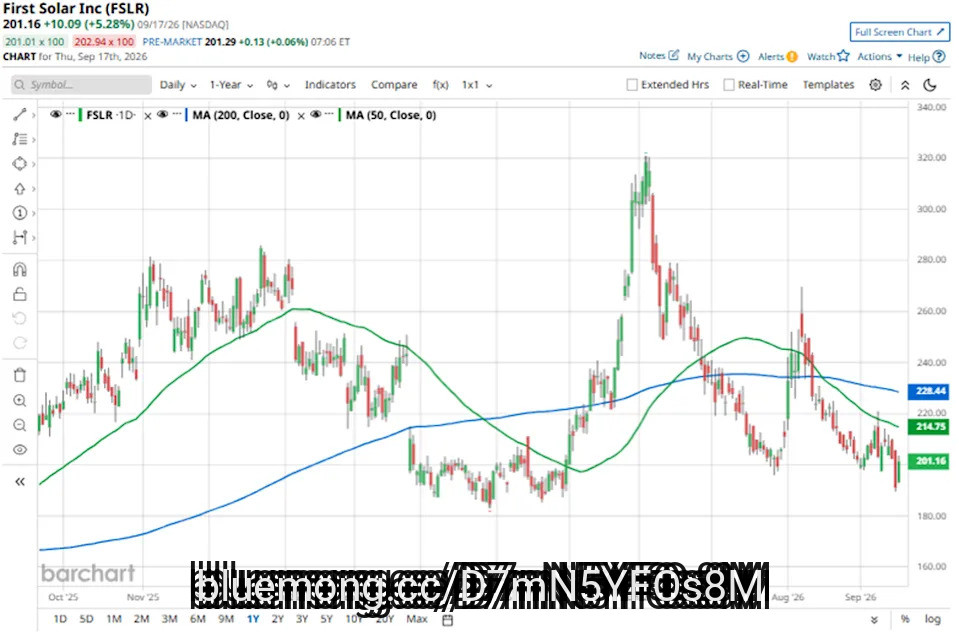
Tempe, Arizona-based First Solar, Inc. (FSLR) is a leading photovoltaic (PV) solar technology and manufacturing company. The company develops and manufactures solar modules using its proprietary thin-film semiconductor technology, offering an alternative to conventional crystalline silicon PV modules. First Solar operates a global manufacturing network spanning the United States, India, Malaysia, and Vietnam. With a market cap of $21.6 billion, the company is one of the largest solar manufacturers.
Companies worth $10 billion or more are generally described as "large-cap stocks," and First Solar fits this description. The company is also one of the few major solar manufacturers with a significant U.S. manufacturing footprint, positioning it to benefit from domestic-content incentives and the broader push to expand U.S. solar manufacturing capacity. First Solar ended the second quarter with a contracted sales backlog of approximately 45.1 GW extending through 2030.
Bank of America Just Declared a 'Generational Entry Point' in U.S. Bonds. Why Investors Should Be Backing Up the Truck on Treasuries Here.
Mark Cuban Says He Was Dizzy for Months, So He Built a VR Fix That Does at Home 'Much Of What A 180k Machine' Does
JPMorgan Gives Up Forecasting Iran War Endgame as Trump Tells Reporters 'Anything Could Happen With Me'
#Solar #first #billion #tempe

2 months ago
On September 15, Arthur J. Gallagher & Co. (NYSE:AJG) announced that it had bought McMillan Insurance & Bonding Inc., an Englewood, Colorado, firm that operates as Innovise Business Consultants. Gallagher did not say what it paid. On its own, the deal is a footnote. But it is one of many, and the way those deals show up in earnings is where the debate over this stock really lives.
On July 30, Gallagher reported results for the quarter ended June 30, and the top line was hard to argue with. Revenue from its combined Brokerage and Risk Management businesses grew 24%, and organic growth, which leaves out acquisitions, was 6%. That second number shows clients are staying and spending. It was not confined to one corner, either, since organic fees in the risk management arm rose 12%. Management adds that retention is strong and customers want broader help from the platform. Adjusted earnings per share climbed to $2.84 from $2.30, which means growth is reaching profit once one-time acquisition costs are set aside.
Innovise fits the pattern. It sells surety bonds and commercial insurance brokerage with a focus on manufacturing, energy, construction and real estate, and Chairman and CEO J. Patrick Gallagher, Jr. said that niche expertise adds depth in Colorado. Jason McMillan's team will move into Gallagher's Denver office and work under Bret VanderVoort, who oversees retail property/casualty brokerage for the Western Zone. Buying specialists and folding them into existing offices is a repeatable playbook, and Gallagher closed 14 brokerage acquisitions in the first six months of 2026.
Now look at reported earnings, because that is where you see the cost. Diluted earnings per share fell to $1.25, from $1.40 in the second quarter of 2025, even though revenue jumped. Much of the gap between reported and adjusted results is the price of buying growth. Amortization of acquired intangibles alone weighs on brokerage net earnings by $218 million, up from $130 million a year ago, and integration costs rose as well. Adjusted figures set those aside, but they are real expenses, and they keep landing as long as Gallagher keeps buying.
Margins tell a similar story. The brokerage segment's adjusted EBITDAC margin, a stand-in for operating profit, slipped to 33.3% from 36.1%. Gallagher points to last year's interest income on cash raised for the ***** uredPartners deal, which closed in the third quarter of 2025, plus seasonality and newly added tuck-ins. That is a fair explanation. But the debt behind the deal is still here, including $9.55 billion of public debt, plus more in private placements and on a credit line. And the deal flow is thinner: brokerage acquisitions closed in the first six months of 2026 carried $107 million of annualized revenue, versus $354 million a year earlier, which puts more weight on organic growth.
#Growth


2 months ago
Des Moines, Iowa-based Principal Financial Group, Inc. (PFG) provides retirement, ******* et management, and insurance products and services to businesses, individuals, and institutional clients worldwide. The company has a market cap of $25 billion and operates through Retirement and Income Solutions, Principal ******* et Management, and Benefits and Protection segments.
Companies with a market cap of $10 billion or more are typically called "large-cap stocks." PFG fits squarely into that category, with a market cap above this threshold that reflects its substantial size and influence in the ******* et management industry.
Mark Cuban Says He Was Dizzy for Months, So He Built a VR Fix That Does at Home 'Much Of What A 180k Machine' Does
Bank of America Just Declared a 'Generational Entry Point' in U.S. Bonds. Why Investors Should Be Backing Up the Truck on Treasuries Here.
Nvidia, OpenAI, and Oracle's $745B Financing Circle Just Hit Its First Stress Test: A Fed Rate Hike
#asset #management #market #moines


2 months ago
Financially challenged fast-food franchisees have been lining up to file for bankruptcy protection in 2026 to reorganize their businesses and restructure debt.
Hardee's Phoenix-based restaurant franchisee Superior Star LLC , filed for Chapter 11 bankruptcy protection on July 9, facing an alleged seller financing dispute, according to court papers. A burger chain rival, Checkers Drive-In franchisee C.S. Holdings of Tampa LLC, which operates two locations in Tampa, Fla., filed for Chapter 11 bankruptcy protection to reorganize its business on July 14.
Another Hardee's franchisee, ARC Burger LLC, filed for Chapter 7 bankruptcy liquidation on April 20, 2026, after franchisor Hardee's Restaurants LLC sued the restaurant operator for alleged breach of contract, seeking to recover over $6.5 million in unpaid franchise fees and other obligations, according to Law.com.
And now, major Wendy's restaurant franchisee Meritage Hospitality Group Inc., which operates over 350 locations in 15 states, filed for Chapter 11 bankruptcy to reorganize its business and restructure its debt, almost 11 months after defaulting on its franchise agreements for failing to remit payments.
Meritage Hospitality and 14 affiliates filed their petition in the U.S. Bankruptcy Court for the Western District of Michigan on Sept. 17, 2026, listing $10 million to $50 million in **** ets and debts.
#chapter

2 months ago
On September 9, 2026, Reuters reported that U.S. Transportation Secretary Sean Duffy sent a letter to Ford Motor Company (NYSE:F) CEO Jim Farley criticizing the automaker's business relationships with Chinese battery maker CATL and Chinese automakers Geely and BYD as raising "profound concern."
It specifically flagged Ford's licensed CATL battery technology at its Marshall, Michigan plant, its joint venture with Geely in Spain, and its decision not to move Lincoln Nautilus production out of China until 2030. Ford responded that Duffy's letter was "a wrongheaded attempt to capture headlines," noting that it owns the Marshall plant, controls its operations, and employs the workforce there, unlike companies that simply import Chinese-made batteries.
Ford Motor Company (NYSE:F) can argue that its CATL partnership still solidifies U.S. battery manufacturing rather than becoming more dependent on Chinese imports. Ford owns and operates its Marshall, Michigan battery plant. It allows the company to manufacture batteries domestically while licensing CATL technology. That structure could help Ford expand its U.S. EV production capacity and reduce the need to import finished Chinese battery packs.
Ford's improving financial performance gives the firm more flexibility to manage the political pressure. The automaker raised its full-year adjusted EBIT guidance to $10 billion-$11 billion after second-quarter results exceeded expectations, with record Bronco sales and a stronger product mix supporting the improvement. Stronger operating earnings could give Ford more resources to adjust its battery strategy if policymakers impose more restrictions on Chinese technology.
The company's existing U.S. manufacturing footprint could become a competitive advantage if Washington tightens restrictions on Chinese automotive technology. Ford has already invested in domestic battery production instead of relying entirely on imported battery packs. Model e losses have narrowed for three consecutive quarters. If policymakers force automakers to cut Chinese supply-chain reliance, Ford can use its existing U.S. factories to adapt faster than rivals that depend heavily on Chinese parts.
#ford #catl #motor

2 months ago
Estes Express Lines is investing nearly $56 million to expand its cross-border and offshore freight network, including terminals, equipment and capacity serving Canada, Mexico, Alaska, Hawaii and Puerto Rico.
Alex Peebles, senior director of offshore and international at Estes, said the privately held, family-owned carrier is taking a longer view of the freight market rather than allowing current conditions to dictate its investment strategy.
"We're really looking at all of these investments from a long-term horizon and viewpoint perspective and one that's going to help accommodate growth and capacity into all the offshore international markets that we service," Peebles told FreightWaves.
Estes, which is celebrating its 95th anniversary this year, is North America's largest privately held less-than-truckload (LTL) freight transportation provider. The company operates a network of over 300 terminals and service centers across the U.S., Puerto Rico, Alaska, Hawaii with coverage extending to Canada, Mexico and the Caribbean
Peebles said the company's ownership structure gives it flexibility to move quickly when real estate and equipment opportunities arise.
#rico



2 months ago
Grab Holdings (NASDAQ:GRAB), a super-app for ride-hailing, deliveries, and digital financial services, closed at $2.87, down 1.37%. The stock moved after Grab announced a $1.49 billion cash deal for a 60% stake in Atome Financial. Investors are watching the financial services expansion and consumer lending reach looking ahead. Trading volume reached 82.1M shares, coming in about 72% above its three-month average of 47.6M shares. Grab Holdings IPO'd in 2020 and has fallen 76% since going public.
The S&P 500 (SNPINDEX:^GSPC) fell 0.43% to 7,553, and the Nasdaq Composite (NASDAQINDEX:^IXIC) slipped 0.01% to 25,978. Among ride-hailing, delivery, and consumer fintech platforms, Uber Technologies (NYSE:UBER) closed at $71.01, down 0.59%, while Lyft (NASDAQ:LYFT) finished at $15.69, unchanged, as mobility peers remained in focus.
Grab, the Southeast Asian delivery, mobility, and financial services upstart, continues to show it intends to become the leading "superapp" in its niche after acquiring 60% of Atome Financial for $1.49 billion today. Prior to the deal, Grab held over $6 billion in cash versus minimal debt, so the deal shouldn't be a funding problem by any means.
Atome Financial operates in five of Grab's six markets and brings over 25 million unique transacting users, helping to beef up the latter's fintech offerings. Atome has seen its gross merchandise volume grow ninefold over the last six years and is profitable on an adjusted EBITDA basis.
As of 2024, merely 5% of Southeast Asian adults owned a credit card and only 14% had borrowed from a financial institution, so the potential here for Grab could be massive if they execute successfully upon this opportunity.
#billion #deal #lyft

2 months ago
Autonomous vehicle company May Mobility is merging with a special purpose acquisition company (SPAC) and will become a publicly traded company. It's a deal that could raise more than $300 million for May Mobility at a valuation of $1.4 billion, the company said Wednesday.
Once the merger is complete, May Mobility said it will be the first public company in the U.S. that is focused entirely on autonomous ride-hailing vehicles. This is meant to differentiate it from a number of other public companies working on autonomy, including Tesla, Rivian, Alphabet (with Waymo), and trucking-focused Aurora and Kodiak.
The move sets up May Mobility to be a test of the stock market's appetite for pure-play robotaxi ventures.
It will also be a test of May Mobility's approach to autonomy, which it pitches as "asset-light" and "partnership-first." Instead of owning and operating the robotaxis, May Mobility's business revolves around selling its autonomous vehicles to its fleet partners over time while maintaining control of any remote supervision and software updates. In exchange, May Mobility receives either fixed fees or per-trip licensing fees.
Founded in 2017, May Mobility currently operates autonomous Toyota Siennas in three locations in the U.S. It has a partnership with Lyft in Atlanta, and offers rides in two cities — Eden Prairie and Grand Rapids — in Minnesota.
#company #autonomous #focused


2 months ago
York Water holds the longest dividend streak in US public markets at 27 consecutive years, while WTW's $1.775B operating cash flow dwarfs its $358M dividend obligation.
Amdocs and Ituran both run near-recession-proof revenue models, with DOX posting near-100% managed services renewal rates and ITRN carrying zero debt alongside $103.7M in net cash.
All five stocks fund dividends from contracted or recurring revenue streams such as regulated rates, fee income, or subscriptions, insulating payouts from economic cycles.
Read More: Learn 7 secret wealth tips high net worth investors use that most investors miss (sponsor)
Income investors heading into the fourth quarter want payouts that don't wobble with the business cycle. The five names below share one thing: dividends funded by recurring, contracted, or fee-based revenue streams that keep flowing whether or not the macro cooperates. Each has raised its payout recently, and each trades on Nasdaq. As a grounding data point, Willis Towers Watson (NASDAQ:WTW) alone generated $360 million of first-half free cash flow, roughly double the prior-year period, giving the broker ample room to keep funding both dividends and buybacks.
#revenue #NASDAQ #Dividend

2 months ago
Spring, Texas-based Hewlett Packard Enterprise Company (HPE) develops intelligent solutions in the United States, the Americas, and internationally. The company has a market cap of $74.2 billion and operates in five segments: Server, Hybrid Cloud, Networking, Financial Services, and Corporate Investments and Other, and offers general-purpose servers, workload-optimized servers, and integrated systems, among others.
Companies with a market cap of $10 billion or more are typically called "large-cap stocks." HPE fits squarely into that category, with its market cap exceeding this threshold and reflecting its substantial size and influence in the communication equipment industry.
Billionaire Charlie Munger, Who Died at 99, Skipped Insurance on His Mansion Since He Could Just Write a Check to Rebuild — 'All Intelligent People Do It My Way'
The Case for Selling CrowdStrike Stock
Nvidia CEO Jensen Huang Just Dropped Huge News for This Cybersecurity Stock
#packard



2 months ago
Wasatch Global Investors, an **** et management company, released its "Long/Short Alpha Fund" Q2 2026 investor letter. The letter can be downloaded here. Small- and mid-cap growth stocks posted significant gains in Q2, led primarily by AI-related companies. The Russell 2500 Index rose 20.26%, while the Wasatch Long/Short Alpha Fund—Investor Class increased by 8.29%. However, the fund faced challenges due to the outperformance of lower-quality companies, which negatively impacted its long positions. Despite trailing the benchmark and some losses in short positions, the fund remains confident in its long portfolio's fundamentals, which have not deteriorated. Additionally, reviewing the Fund's top five holdings could help identify its best picks for 2026.
In its second-quarter 2026 investor letter, Wasatch Long/Short Alpha Fund highlighted Real REMAX Group Inc. (NASDAQ:REAX). Real REMAX Group Inc. (NASDAQ:REAX) is a real estate technology company that provides **** le, mortgage, wallet, and franchising and ancillary services. The Real Brokerage, Inc. changed its name to Real REMAX Group Inc. (NASDAQ:REAX) in August 2026. On September 15, 2026, Real REMAX Group Inc. (NASDAQ:REAX) closed at $19.27 per share. Over the past month, Real REMAX Group Inc. (NASDAQ:REAX) declined 30.93%, but its shares are down 61.84% over the past year. Real REMAX Group Inc. (NASDAQ:REAX) has a market capitalization of $422.42 million, and its stock has traded within a 52-week range of $15.50 to $52.50.
Wasatch Long/Short Alpha Fund stated the following regarding Real REMAX Group Inc. (NASDAQ:REAX) in its Q2 2026 investor letter:
"Among shorts, contributors to Fund performance were those stocks that declined in price. One of our largest contributors was REMAX Group Inc. (NASDAQ:REAX). The company operates a cloud-based real estate platform operating across the U.S. and Canada. Real Brokerage's stock was down due to concerns about how AI may disrupt its business model."
Real REMAX Group Inc. (NASDAQ:REAX) is not on our list of the 40 Most Popular Stocks Among Hedge Funds. According to our database, 25 hedge fund portfolios held Real REMAX Group Inc. (NASDAQ:REAX) at the end of the second quarter, compared to 21 in the previous quarter. While we acknowledge the potential of Real REMAX Group Inc. (NASDAQ:REAX) as an investment, we believe certain AI stocks offer greater upside potential and carry less downside risk. If you're looking for an extremely undervalued AI stock that also stands to benefit significantly from Trump-era tariffs and the onshoring trend, see our free report on the best short-term AI stock.
#real #remax #NASDAQ #long

2 months ago
The choice between established ****** ans and digital-first challengers defines many modern portfolios. In the financial realm, investors must decide if JPMorgan Chase (NYSE:JPM) or SoFi Technologies (NASDAQ:SOFI) is the better buy for long-term growth.
JPMorgan Chase operates as a global financial heavyweight, offering everything from wealth management to retail branches. Conversely, SoFi Technologies focuses on an integrated mobile app to help members borrow, save, and invest. While one relies on massive scale, the other bets on fintech innovation to capture a younger, tech-savvy demographic.
JPMorgan Chase functions as a cornerstone of the global economy, managing a vast array of services including ****** et management and investment banking. In its latest annual report, filed for 2025, the firm highlighted its reach through more than 5,000 branches across the 48 contiguous states. It serves a diverse client base ranging from individual consumers and small businesses to large corporations and governments. The firm provides a comprehensive range of financial services, including transaction processing and commercial banking on a global scale.
Financial performance remained robust in FY 2025, with revenue reaching nearly $182.4 billion. This represented a growth rate of approximately 3.3% compared to the previous year, contributing to a net income of close to $57.0 billion. The net margin, which measures the percentage of revenue kept as profit after all expenses, sat at roughly 20.4% for the period. This consistent profitability underscores the scale of its operations across diverse global markets.
As of its December 2025 balance sheet, the firm reported a debt-to-equity ratio of nearly 2.6x. This ratio measures total debt against shareholder equity, with a higher number indicating more reliance on borrowed funds to finance growth. The current ratio, which compares short-term ****** ets to short-term liabilities, was approximately 0.5x, while free cash flow reached a negative $147.8 billion. Free cash flow is the cash a company generates after accounting for cash outflows to support operations and maintain its capital ****** ets.
#sofi #global #term

2 months ago
Alluvium ******* et Management, an ******* et management company, released its "Conventum – Alluvium Global Fund" second-quarter 2026 investor letter. The letter can be downloaded here. The second quarter reflected a sharp shift from geopolitical uncertainty and oil market volatility to a powerful equity rally led by semiconductor companies. Despite the broader market strength, the Fund declined 1.4% in EUR terms, 2.2% in USD terms, and 3.9% in AUD terms. Portfolio results were mixed, with Alphabet benefiting from strong Cloud growth, while Robert Half, H&R Block, and other holdings posted solid gains. However, cable businesses and several healthcare and consumer holdings weighed on performance. Also, check the fund's top five holdings to see its best picks in 2026.
In its second-quarter 2026 investor letter, Conventum – Alluvium Global Fund highlighted HCA Healthcare, Inc. (NYSE:HCA). HCA Healthcare, Inc. (NYSE:HCA) owns and operates hospitals and related healthcare entities. On September 15, 2026, HCA Healthcare, Inc. (NYSE:HCA) closed at $423.04 per share. HCA Healthcare, Inc. (NYSE:HCA) returned 3.93% over the past month, and its shares are up 5.92% over the past year. HCA Healthcare, Inc. (NYSE:HCA) has a market capitalization of $91.76 billion.
Conventum – Alluvium Global Fund stated the following regarding HCA Healthcare, Inc. (NYSE:HCA) in its Q2 2026 investor letter:
"Our two healthcare companies had a poor quarter (in terms of share price performance, not business fundamentals). HCA Healthcare, Inc. (NYSE:HCA), the hospital operator, fell 17.5%. The share price fell 8.8% immediately following its first quarter results (despite management reaffirming its 2026 guidance). We suspect this is a (over) reaction to poorer than expected respiratory volumes due to a mild flu season. With the shares trading at a discount to our valuation we bought a little more to bring the Fund's position to 6.4%."
HCA Healthcare, Inc. (NYSE:HCA) is not on our list of the 40 Most Popular Stocks Among Hedge Funds. As per our database, 75 hedge fund portfolios held HCA Healthcare, Inc. (NYSE:HCA) at the end of the second quarter which was 70 in the previous quarter. While we acknowledge the potential of HCA Healthcare, Inc. (NYSE:HCA) as an investment, we believe certain AI stocks offer greater upside potential and carry less downside risk. If you're looking for an extremely undervalued AI stock that also stands to benefit significantly from Trump-era tariffs and the onshoring trend, see our free report on the best short-term AI stock.
#quarter #fund #alluvium #conventum


2 months ago
Financial infrastructure provider Fin.com has "emerged from stealth" with $20m in seed funding.
In a statement, the New York-based firm said the round was led by venture firm Expa and Uber co-founder Garrett Camp.
Coinbase Ventures, Tenet Fund, Second Sight Ventures, and various sovereign and family offices across the Gulf and Africa, among others, also participated.
Fin.com, co-founded by Nabeel Alamgir and Mustafa Dar, operates a "single orchestration layer" to allow clients to receive, convert, and move money across borders using local payment rails.
The platform also integrates SWIFT messaging, USD virtual accounts, stablecoin settlement, liquidity management, and compliance tools into a single network, the company added.
#expa #camp

2 months ago
Cardinal Health, Inc. (CAH), headquartered in Dublin, Ohio, operates as a healthcare services and products company. Valued at $54.6 billion by market cap, the company's services include pharmaceutical distribution, health-care product manufacturing, distribution and consulting services, drug delivery systems development, pharmaceutical packaging, automated dispensing systems manufacturing, and retail pharmacy franchising.
Companies worth $10 billion or more are generally described as "large-cap stocks," and CAH perfectly fits that description, with its market cap exceeding this mark, underscoring its size, influence, and dominance within the medical distribution industry. As one of the top three U.S. pharma wholesalers, CAH holds a commanding market position. Its diversified pharmaceutical and medical distribution portfolio, broadens its customer base, adds resilience to market swings, and creates multiple revenue streams with cross-selling opportunities.
Billionaire Charlie Munger, Who Died at 99, Skipped Insurance on His Mansion Since He Could Just Write a Check to Rebuild — 'All Intelligent People Do It My Way'
Nvidia CEO Jensen Huang Just Dropped Huge News for This Cybersecurity Stock
How to Play GME Stock as GameStop CEO Ryan Cohen Buys $20.3 Million in Shares
#market #Health #Manufacturing #systems



2 months ago
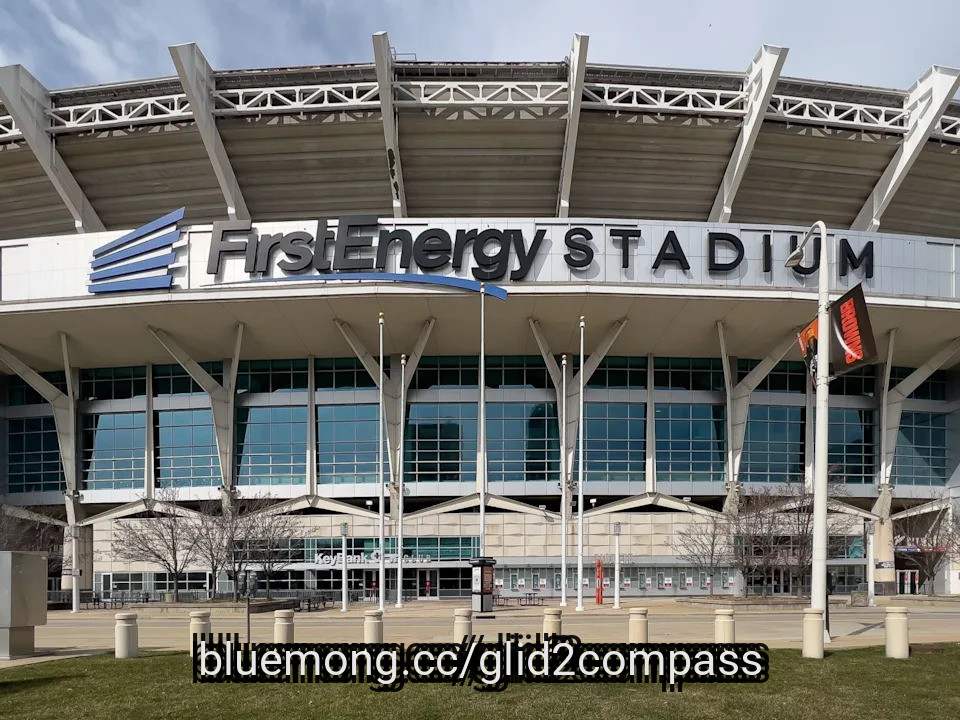
Akron, Ohio-based FirstEnergy Corp. (FE) engages in the generation, distribution, and transmission of electricity in the United States. The company has a market cap of $26.5 billion and operates through Distribution, Integrated, and Stand-Alone Transmission segments, and owns and operates coal-fired, nuclear, hydroelectric, wind, and solar power-generating facilities.
Companies with a market cap of $10 billion or more are typically referred to as "large-cap stocks." FE fits squarely into that category, with its market cap exceeding this threshold and reflecting its substantial size and influence in the regulated electric utilities industry.
Billionaire Charlie Munger, Who Died at 99, Skipped Insurance on His Mansion Since He Could Just Write a Check to Rebuild — 'All Intelligent People Do It My Way'
Nvidia CEO Jensen Huang Just Dropped Huge News for This Cybersecurity Stock
How to Play GME Stock as GameStop CEO Ryan Cohen Buys $20.3 Million in Shares
#operates

2 months ago
Walk into a Burlington Stores (NYSE:BURL) location on a Saturday afternoon, and you will see the mechanism of the company's business model in action. It's a literal hunt for value: a customer finds a name-brand jacket at a steep discount, checks the tag, and takes it to the register. Burlington operates as an off-price retailer of apparel, footwear, and home goods. With the stock priced at $228.73 as of Sept. 15, 2026, it has fallen by 15% over the past 12 months, a period marked by significant operational expansion and active navigation of the retail sector.
Our proprietary Hidden Gems scoring system ****** igns Burlington Stores an overall Superscore of 78 out of 100, placing it in the Strong category. The Superscore is an AI-powered metric that evaluates a company's overall strength by combining financial performance, product-market position, technological capabilities, leadership quality, and relative valuation. It represents the unification of all our scores into a single score for public companies, with five rating bands: Exceptional (90-100), Strong (75-89), Above Average (60-74), Average (40-59), and Cautious (0-39).
This 78 Superscore places the company in the Top ~14% of every company we score. This ****** ysis provides a data-driven signal to help you weigh the company's operational strengths against its risks as part of your own due diligence.
Accelerated store growth: Management successfully opened 104 net new stores in fiscal 2025, executing a long-term strategy to reach 2,000 total locations.
Operational efficiency gains: Gross margin reached 46% in Q2 fiscal 2026, driven by improved inventory turnover and a sophisticated supply chain that distributes goods from six regional centers.
#strong


2 months ago
Steel and materials markets fluctuated between rallies and pullbacks as the US-Canada trade relationship shifted from near agreement to open dispute. Nucor Corporation (NYSE:NUE) and Cleveland-Cliffs Inc. (NYSE:CLF) rose on August 25, after discussions between the two countries broke down, a turnaround from the week before, when several of the same stocks fell on hopes that a new deal would decrease steel and aluminum tariffs. The VanEck Steel ETF gained 1.6% on the day, while the State Street Materials Select Sector SPDR reached an intraday high. The rise didn't last: by the end of the week, the materials ETF had slipped to negative territory, while the steel ETF was about flat, though, both remain substantially up for 2026.
The volatility traces a rapid escalation. On August 19, Bloomberg reported that the US and Canada had tentatively agreed to reduce tariffs on Canadian steel and aluminum to 25% and vehicle charges to 15%. That optimism was dashed within days: on August 22, the US imposed 50% tariffs on a wide variety of Canadian exports, and Canadian Prime Minister Mark Carney responded by declaring Canada officially "at war" with the United States, saying "You're at war when you're attacked, and we got attacked."
On August 25, Ottawa announced counter-tariffs of C$27.6 billion on American goods, which took effect on September 8 at rates ranging from 15% to 50%. The dispute has continued to escalate since then, with Washington announcing additional restrictions and tariffs on Canadian goods in September, reinforcing the view that a quick resolution remains unlikely.
Atsi Sheth, Moody's chief credit officer, put it bluntly: "Expect much more of this uncertainty for some time to come." Investors initially welcomed tariffs as good news for US steelmakers facing less Canadian competition, but the back-and-forth negotiations, as well as Canada's reaction, have made predicting a steady outcome difficult.
The more intriguing story is how differently the aforementioned companies are positioned. Nucor Corporation (NYSE:NUE) relies primarily on scrap-based electric arc furnace steelmaking, while Cleveland-Cliffs Inc. (NYSE:CLF) operates a vertically integrated model with internally sourced iron ore, scrap and other raw materials. Both have meaningful domestic raw-material exposure, although their production models differ substantially. Nucor Corporation (NYSE:NUE) is up more than 50% year-to-date, while Cleveland-Cliffs Inc. (NYSE:CLF), despite similar structural insulation, remains negative for 2026, which **** ysts attribute to balance sheet stress rather than tariffs.
#august #nucor #corporation #cleveland