8 days ago
On August 6, Aflac (NYSE:AFL) reported second-quarter numbers that point in opposite directions. Net earnings climbed to $825 million, helped along by investment losses that shrank to $153 million from $421 million a year ago. Adjusted earnings, though, fell 7.7% to $883 million. Both numbers are real, but they answer different questions. Which measure you trust changes the story, so here is what sits underneath.
Start with the yen, because it is muddying the picture. The average rate was 159.45 to the dollar, 9.3% weaker than a year earlier, and that cost adjusted earnings $0.05 a share. Take the currency out of the first half and adjusted earnings per share rose 4.1% to $3.57. ******* an is also running more profitably. Its pretax adjusted margin widened to 34.3% from 32.0% as claims took a smaller bite out of premiums, and yen-based pretax adjusted earnings rose 3.4%. So part of the decline in ******* an's dollar-reported profit is currency, not operations.
The US business is still growing at the top line. Net earned premiums rose 2.3% to $1.5 billion, and sales climbed 2.6% to $349 million, led by group voluntary benefits along with dental and vision plans. In ******* an, the refreshed Tsumitasu life policy and the new Anshin Palette medical product grew strongly in the quarter, and first-half sales rose 7.0% to ¥37.3 billion. Then there is the cash. Aflac returned $1.3 billion to shareholders in the quarter, $983 million of it through buybacks, and declared a $0.61 third-quarter dividend, payable September 1 to holders of record on August 19, 2026. Management notes 43 straight years of dividend increases through 2025 and says the board is on a path to extend that in 2026.
The catch is that ******* an's profit gains came from lower claims, not a bigger business. Net earned premiums in yen fell 3.7%, mainly because of a new external reinsurance deal and older limited-pay policies reaching paid-up status. Premium persistency, the share of policies customers keep, slipped to 92.7% from 93.7%. ******* an's pretax adjusted earnings still fell 2.1% once currency is stripped out, and new sales dipped 5.6% in the quarter against a tough comparison for the Miraito cancer product, which launched in March 2025.
The US segment has its own soft spot. Pretax adjusted earnings fell 4.6% to $370 million, and the margin narrowed to 20.9% from 22.5% as claims and benefits took a bigger share of premiums. Corporate and Other swung to a $10 million pretax adjusted loss from a $20 million gain a year earlier, with interest expense up 21.6% to $62 million. And adjusted book value per share, excluding foreign currency remeasurement, slid to $41.22 at June 30 from $42.97 a year earlier.
#earnings #fell
Start with the yen, because it is muddying the picture. The average rate was 159.45 to the dollar, 9.3% weaker than a year earlier, and that cost adjusted earnings $0.05 a share. Take the currency out of the first half and adjusted earnings per share rose 4.1% to $3.57. ******* an is also running more profitably. Its pretax adjusted margin widened to 34.3% from 32.0% as claims took a smaller bite out of premiums, and yen-based pretax adjusted earnings rose 3.4%. So part of the decline in ******* an's dollar-reported profit is currency, not operations.
The US business is still growing at the top line. Net earned premiums rose 2.3% to $1.5 billion, and sales climbed 2.6% to $349 million, led by group voluntary benefits along with dental and vision plans. In ******* an, the refreshed Tsumitasu life policy and the new Anshin Palette medical product grew strongly in the quarter, and first-half sales rose 7.0% to ¥37.3 billion. Then there is the cash. Aflac returned $1.3 billion to shareholders in the quarter, $983 million of it through buybacks, and declared a $0.61 third-quarter dividend, payable September 1 to holders of record on August 19, 2026. Management notes 43 straight years of dividend increases through 2025 and says the board is on a path to extend that in 2026.
The catch is that ******* an's profit gains came from lower claims, not a bigger business. Net earned premiums in yen fell 3.7%, mainly because of a new external reinsurance deal and older limited-pay policies reaching paid-up status. Premium persistency, the share of policies customers keep, slipped to 92.7% from 93.7%. ******* an's pretax adjusted earnings still fell 2.1% once currency is stripped out, and new sales dipped 5.6% in the quarter against a tough comparison for the Miraito cancer product, which launched in March 2025.
The US segment has its own soft spot. Pretax adjusted earnings fell 4.6% to $370 million, and the margin narrowed to 20.9% from 22.5% as claims and benefits took a bigger share of premiums. Corporate and Other swung to a $10 million pretax adjusted loss from a $20 million gain a year earlier, with interest expense up 21.6% to $62 million. And adjusted book value per share, excluding foreign currency remeasurement, slid to $41.22 at June 30 from $42.97 a year earlier.
#earnings #fell


8 days ago
Former President Obama on Friday slammed President Trump over his handling of how to approach artificial intelligence amid “doomsday” warnings coming from some in the tech industry about the technology’s potential existential threat to humanity.
Obama said during an interview at Colgate University in New York that the federal government must regulate AI, before referring to comments made by one Trump adviser.
“I heard one of Donald Trump’s main advisers on this make the argument that, ‘The market will take care of AI,'” the former president said. “‘These companies will solve the safety issues because they have every incentive to do so — if it turns out to be dangerous, people will just sue them, and they’re worried about financial liability.'”
“That’s not how we treat airlines,” Obama added. “Or drug companies, or food companies.”
Obama continued to say that AI could become a threat at a human level if it falls into the clutches of “bad humans” and if self-improving AI models realize they no longer need humans. He referred to Trump again in that his successor has said regulations on AI are “for losers.”
#obama #president #university
Obama said during an interview at Colgate University in New York that the federal government must regulate AI, before referring to comments made by one Trump adviser.
“I heard one of Donald Trump’s main advisers on this make the argument that, ‘The market will take care of AI,'” the former president said. “‘These companies will solve the safety issues because they have every incentive to do so — if it turns out to be dangerous, people will just sue them, and they’re worried about financial liability.'”
“That’s not how we treat airlines,” Obama added. “Or drug companies, or food companies.”
Obama continued to say that AI could become a threat at a human level if it falls into the clutches of “bad humans” and if self-improving AI models realize they no longer need humans. He referred to Trump again in that his successor has said regulations on AI are “for losers.”
#obama #president #university




9 days ago
For custom chip designer Broadcom Inc. (NASDAQ:AVGO), the debate is all about whether the demand for AI products will sustain and grow. It is among the few firms capable of designing custom AI chips that big technology firms rely on to supplement NVIDIA's high-power and expensive AI chips. Anthropic CEO Dario Amodei's latest remarks about the need to slow down AI development due to safety concerns have generated quite a buzz, and Cramer discussed what Broadcom Inc. (NASDAQ:AVGO)'s CEO told him when asked about AI infrastructure development losing traction:
"What's refuted by Hock Tan, of course, maybe Hock Tan is one of the biggest providers of semis, other than NVIDIA, and when I asked him about, give me a prediction about the AI slowdown, would there be one, he said, not in the least. We see the demand for compute infrastructure for development of AI and inference as extremely strong and durable. So I know those stocks were the most heavily hammered, other than the fiber stocks. But David, when you listen to what Hock Tan said last night on Mad Money, you are inclined to do buying.
"I think David, you recognize, and a lot of people don't, when you're speaking about Hock Tan, whom I had on, you're talking about a 1.6 trillion dollar company. This isn't just someone. . .worried about what orders are going to be. . .this man has more orders than almost anybody other than Jensen Huang. So I think Carl, when we get very, very negative we still have to rely on the facts And the facts do not support there are some people who are very worried about mankind, I did not get the mankind worry when I spoke yesterday."
The CNBC TV host's remarks about Broadcom Inc. (NASDAQ:AVGO) sit right at the center of the debate for the firm. This debate is about whether it will be able to continue to capture additional orders for custom AI chips. Looking at the third quarter earnings, released on September 2nd, the growth narrative appears to be quite strong.
It boosts Cramer's claims of Broadcom Inc. (NASDAQ:AVGO) experiencing strong orders, as during the quarter, the firm's revenue grew by 86%, AI semiconductor revenue jumped by 221% and fiscal year 2026 guidance implied 186% annual AI revenue growth. Not to mention, CEO Tan reaffirmed that Broadcom Inc. (NASDAQ:AVGO) could pull in $115 billion in annual AI chip sales in 2027 and a whopping $230 billion in 2028.
#orders #debate #strong
"What's refuted by Hock Tan, of course, maybe Hock Tan is one of the biggest providers of semis, other than NVIDIA, and when I asked him about, give me a prediction about the AI slowdown, would there be one, he said, not in the least. We see the demand for compute infrastructure for development of AI and inference as extremely strong and durable. So I know those stocks were the most heavily hammered, other than the fiber stocks. But David, when you listen to what Hock Tan said last night on Mad Money, you are inclined to do buying.
"I think David, you recognize, and a lot of people don't, when you're speaking about Hock Tan, whom I had on, you're talking about a 1.6 trillion dollar company. This isn't just someone. . .worried about what orders are going to be. . .this man has more orders than almost anybody other than Jensen Huang. So I think Carl, when we get very, very negative we still have to rely on the facts And the facts do not support there are some people who are very worried about mankind, I did not get the mankind worry when I spoke yesterday."
The CNBC TV host's remarks about Broadcom Inc. (NASDAQ:AVGO) sit right at the center of the debate for the firm. This debate is about whether it will be able to continue to capture additional orders for custom AI chips. Looking at the third quarter earnings, released on September 2nd, the growth narrative appears to be quite strong.
It boosts Cramer's claims of Broadcom Inc. (NASDAQ:AVGO) experiencing strong orders, as during the quarter, the firm's revenue grew by 86%, AI semiconductor revenue jumped by 221% and fiscal year 2026 guidance implied 186% annual AI revenue growth. Not to mention, CEO Tan reaffirmed that Broadcom Inc. (NASDAQ:AVGO) could pull in $115 billion in annual AI chip sales in 2027 and a whopping $230 billion in 2028.
#orders #debate #strong


9 days ago
Updated Sept. 18, 2026 4:59 pm ET
Listen
(3 min)
The latest Market Talks covering Financial Services. Exclusively on Dow Jones Newswires at 4:20 ET, 12:20 ET and 16:50 ET.
1357 ET – Hyperliquid’s HYPE token rises 6.7% to $90.83 after the exchange announced that it would enable direct borrowing on its platform. HYPE hit a record $92.43 earlier in the session. Hyperliquid says that it will let users supply HYPE or BTC as collateral for loans, offering 65% and 50% loan-to-value, respectively, according to a statement on its website. The HYPE token has gained 30% in the past two months alone.(kirk.maltaiswsj.com)
#market
Listen
(3 min)
The latest Market Talks covering Financial Services. Exclusively on Dow Jones Newswires at 4:20 ET, 12:20 ET and 16:50 ET.
1357 ET – Hyperliquid’s HYPE token rises 6.7% to $90.83 after the exchange announced that it would enable direct borrowing on its platform. HYPE hit a record $92.43 earlier in the session. Hyperliquid says that it will let users supply HYPE or BTC as collateral for loans, offering 65% and 50% loan-to-value, respectively, according to a statement on its website. The HYPE token has gained 30% in the past two months alone.(kirk.maltaiswsj.com)
#market


9 days ago
Updated Sept. 18, 2026 4:54 pm ET
Listen
(3 min)
The latest Market Talks covering Technology, Media and Telecom. Published exclusively on Dow Jones Newswires at 4:20 ET, 12:20 ET and 16:50 ET.
1320 ET – Recent AI security incidents disclosed by OpenAI are a cause for concern, Microsoft AI CEO Mustafa Suleyman says on CNBC. An OpenAI model seems to have tampered with the log of its chain-of-thought reasoning, which was “modified to leave messages for a future version of itself,” Suleyman says, citing the company’s recent security disclosures. “We don’t know why that is or what’s behind that, but that’s a pretty serious situation.” He praises OpenAI’s disclosure of the incident but says it demonstrates the growing power and capability of leading AI models.(elias.schisgallwsj.com)
#market
Listen
(3 min)
The latest Market Talks covering Technology, Media and Telecom. Published exclusively on Dow Jones Newswires at 4:20 ET, 12:20 ET and 16:50 ET.
1320 ET – Recent AI security incidents disclosed by OpenAI are a cause for concern, Microsoft AI CEO Mustafa Suleyman says on CNBC. An OpenAI model seems to have tampered with the log of its chain-of-thought reasoning, which was “modified to leave messages for a future version of itself,” Suleyman says, citing the company’s recent security disclosures. “We don’t know why that is or what’s behind that, but that’s a pretty serious situation.” He praises OpenAI’s disclosure of the incident but says it demonstrates the growing power and capability of leading AI models.(elias.schisgallwsj.com)
#market


9 days ago
Federal Reserve Chair Kevin Warsh has revealed himself. If not a card-carrying monetarist, he is at least a camp follower. This represents a dramatic change at the Fed, where the past Chairman Jerome Powell repeatedly rejected the basic tenets of monetarism.
This is a welcomed earthquake. After all, there are almost no monetarists left in the world (except for us, and we've been fighting a lonely rearguard action for over 40 years). The Federal Reserve has rejected monetarism consistently — and on the record — because it preferred other models for understanding the economy. In academia, monetarism has been out of fashion for decades. But by his own words, a monetarist is now leading the central bank.
Just what is monetarism? It's a doctrine which holds that money has a major influence on both the level of ***** et prices, economic activity, and the price level. Any discussion of national income determination must, therefore, center on the quantity of money and the banking system, since banks produce most of the money in modern economies. When it comes to monetary policy, its objectives are best met by targeting the rate of growth of the money supply.
Today, most economists pooh-pooh monetarism. Money and banking are nowhere to be found in their macroeconomic models, or their discourses about the course of ***** et prices, economic activity, and prices. Indeed, their forecasting exercises are typically based on elaborations of Keynesian income-expenditure models that exclude money and banking.
If that's not enough, we think that the Fed's backroom staff, mostly Keynesian-leaning Democrats, don't want alignment with a philosophy usually affiliated with Milton Friedman, but that's another story. Just look at what Joe Biden said in 2020 about how the dean of monetarism wasn't "running the show anymore."
#monetarist
This is a welcomed earthquake. After all, there are almost no monetarists left in the world (except for us, and we've been fighting a lonely rearguard action for over 40 years). The Federal Reserve has rejected monetarism consistently — and on the record — because it preferred other models for understanding the economy. In academia, monetarism has been out of fashion for decades. But by his own words, a monetarist is now leading the central bank.
Just what is monetarism? It's a doctrine which holds that money has a major influence on both the level of ***** et prices, economic activity, and the price level. Any discussion of national income determination must, therefore, center on the quantity of money and the banking system, since banks produce most of the money in modern economies. When it comes to monetary policy, its objectives are best met by targeting the rate of growth of the money supply.
Today, most economists pooh-pooh monetarism. Money and banking are nowhere to be found in their macroeconomic models, or their discourses about the course of ***** et prices, economic activity, and prices. Indeed, their forecasting exercises are typically based on elaborations of Keynesian income-expenditure models that exclude money and banking.
If that's not enough, we think that the Fed's backroom staff, mostly Keynesian-leaning Democrats, don't want alignment with a philosophy usually affiliated with Milton Friedman, but that's another story. Just look at what Joe Biden said in 2020 about how the dean of monetarism wasn't "running the show anymore."
#monetarist



9 days ago
If you're trying to build a consumer-focused corner of your portfolio that can grow through a lot of different economic backdrops, three names stand out right now: Church & Dwight Co. (NYSE: CHD), YETI Holdings (NYSE: YETI), and Newell Brands (NASDAQ: NWL). Each of these is making deliberate moves in 2026 and into 2027 that communicate to me more about their future than any single rocky quarter's earnings line.
Missed Nvidia in 2009? This Rare Signal Is Flashing Again. In 2009, a "Double Down" signal flashed for a little-known chipmaker called Nvidia. For the first time in years, that same "Total Conviction" signal is flashing for a company 1/100th the size of Nvidia. Continue »
Church & Dwight has built its identity on everyday products like baking soda, laundry detergents, and cleaners that quietly show up in millions of homes. In May 2026, it moved to deepen that footprint by buying the Miss Mouth's Messy Eater brand, a fast-growing, non-toxic stain remover built for parents. It's a small thing on paper, but it fits this successful company's patterns: Keep layering niche, repeat-use products into an existing distribution machine instead of chasing flashy new categories.
The company's first-quarter 2026 update backs that strategy up. Organic sales rose 5% even though reported net sales were basically flat due to past portfolio pruning, per company management. Management described 2026 as a year of "volume-driven" organic growth, meaning they're focused on selling more units to real customers, not just leaning on price increases. On top of that, Church & Dwight extended its long dividend record yet again. Although it is not quite a Dividend King, it has consistently raised its dividend for 29 years.
For investors, my advice here is straightforward: Treat Church & Dwight as a core holding in a consumer bucket. It's unlikely to deliver fireworks in a single year, but it keeps making acquisitions to deepen its understanding of existing categories.
#flashing #organic
Missed Nvidia in 2009? This Rare Signal Is Flashing Again. In 2009, a "Double Down" signal flashed for a little-known chipmaker called Nvidia. For the first time in years, that same "Total Conviction" signal is flashing for a company 1/100th the size of Nvidia. Continue »
Church & Dwight has built its identity on everyday products like baking soda, laundry detergents, and cleaners that quietly show up in millions of homes. In May 2026, it moved to deepen that footprint by buying the Miss Mouth's Messy Eater brand, a fast-growing, non-toxic stain remover built for parents. It's a small thing on paper, but it fits this successful company's patterns: Keep layering niche, repeat-use products into an existing distribution machine instead of chasing flashy new categories.
The company's first-quarter 2026 update backs that strategy up. Organic sales rose 5% even though reported net sales were basically flat due to past portfolio pruning, per company management. Management described 2026 as a year of "volume-driven" organic growth, meaning they're focused on selling more units to real customers, not just leaning on price increases. On top of that, Church & Dwight extended its long dividend record yet again. Although it is not quite a Dividend King, it has consistently raised its dividend for 29 years.
For investors, my advice here is straightforward: Treat Church & Dwight as a core holding in a consumer bucket. It's unlikely to deliver fireworks in a single year, but it keeps making acquisitions to deepen its understanding of existing categories.
#flashing #organic


9 days ago
US stocks were mixed on Friday as investors continued to calibrate to the Federal Reserve's first rate hike in three years and existential fears about artificial intelligence's capabilities.
The tech-heavy Nasdaq Composite (^IXIC) rose 0.4% but ended the week in green. Meanwhile, the S&P 500 (^GSPC) rose 0.2% but eked out a loss for the week. The Dow Jones Industrial Average (^DJI) was down 0.2% and lost more than 1.5% for the week.
The 10-year Treasury yield (^TNX) rose 5 basis points to hover near the 5% level as traders increased bets that the Fed will raise rates again in October.
Markets appeared to look past the Fed's 25 basis point rate hike this week, which was widely expected. US stock continued to climb after the Bank of ***** an raised interest rates to the highest level in 31 years.
However, ***** ysts and top CEOs aren't convinced that one rate hike (by the Fed) will be enough to bring down stubbornly high inflation. "It's not clear to me we've slayed inflation," JPMorgan Chase CEO Jamie Dimon told Yahoo Finance this week.
#week #years #down #level
The tech-heavy Nasdaq Composite (^IXIC) rose 0.4% but ended the week in green. Meanwhile, the S&P 500 (^GSPC) rose 0.2% but eked out a loss for the week. The Dow Jones Industrial Average (^DJI) was down 0.2% and lost more than 1.5% for the week.
The 10-year Treasury yield (^TNX) rose 5 basis points to hover near the 5% level as traders increased bets that the Fed will raise rates again in October.
Markets appeared to look past the Fed's 25 basis point rate hike this week, which was widely expected. US stock continued to climb after the Bank of ***** an raised interest rates to the highest level in 31 years.
However, ***** ysts and top CEOs aren't convinced that one rate hike (by the Fed) will be enough to bring down stubbornly high inflation. "It's not clear to me we've slayed inflation," JPMorgan Chase CEO Jamie Dimon told Yahoo Finance this week.
#week #years #down #level

9 days ago
MILAN — Italy's tanning industry has yet to emerge from a downturn that has dragged on for four years. During the Lineapelle trade show which ran Tuesday to Thursday, UNIC, Italy's tanners' ***** ociation reported a 6.4 percent decline in turnover and a 5.2 percent drop in production volumes in the first half of 2026 compared with the same period last year.
The situation, UNIC said, continues to reflect geopolitical uncertainty and persistent inflation, which is tightening consumer spending on fashion, furniture and automotive products.
More from WWD
Trump Threatens Tariffs as Canada Explores Deeper Trade Partnership With EU
Fashion Is Not a Contact Sport: H&M Holds the Line in London as PETA Protesters Crash Runway Show
#percent #lineapelle #thursday #Trump
The situation, UNIC said, continues to reflect geopolitical uncertainty and persistent inflation, which is tightening consumer spending on fashion, furniture and automotive products.
More from WWD
Trump Threatens Tariffs as Canada Explores Deeper Trade Partnership With EU
Fashion Is Not a Contact Sport: H&M Holds the Line in London as PETA Protesters Crash Runway Show
#percent #lineapelle #thursday #Trump



9 days ago
On September 16, IDEXX Laboratories (NASDAQ:IDXX) announced it had bought CoVetAI, a fast-growing veterinary software company whose tool listens during appointments and organizes what gets said and done. It sounds like a productivity gadget. But IDEXX is pitching it as a way to put the right patient details in front of a vet at the moment they decide what to test. The price was not disclosed, so the strategy is the story.
Start with the customer base IDEXX already has. More than 10,000 clinics worldwide run on its cloud practice software, and CoVet will plug into that system, including a link to IDEXX VetConnect PLUS. That hands a new product a ready audience. CoVet also works with practice systems IDEXX does not make, and IDEXX plans to keep supporting rival scribes, so the tool can reach clinics and regions the company does not serve today.
Then there is the engine this could feed. On August 4, IDEXX reported second-quarter revenue growth of 10%, and its recurring diagnostics business grew 11%, powered by higher volumes. That says vets are already running more tests, which is the behavior a smarter workflow tool is meant to encourage. The company also placed more than 1,600 inVue Dx ****** yzers in the quarter, lifting the installed base past 9,000, and it counts that instrument among its AI-driven products. Software and hardware are pointing in the same direction.
The biggest problem is what we can't see. Without deal terms, there is no way to judge what IDEXX paid or how much CoVet matters to earnings. And the company describes the payoff in future tense, saying these capabilities can raise diagnostic use over time. That is a hope, not a result yet. CoVet's openness to other systems cuts both ways too. It widens reach, but it also means a clinic can use CoVet without going deeper into IDEXX's ecosystem.
The second quarter also needs a careful read. Earnings per share rose 18%, but that included tax benefits from stock-based pay and a currency boost, and growth on a comparable basis was 15%. Some of the gain, in other words, did not come from selling more to vets. IDEXX also says it is spending more on commercial and innovation priorities, so its higher full-year earnings outlook comes with added costs attached.
#company #software #earnings #already
Start with the customer base IDEXX already has. More than 10,000 clinics worldwide run on its cloud practice software, and CoVet will plug into that system, including a link to IDEXX VetConnect PLUS. That hands a new product a ready audience. CoVet also works with practice systems IDEXX does not make, and IDEXX plans to keep supporting rival scribes, so the tool can reach clinics and regions the company does not serve today.
Then there is the engine this could feed. On August 4, IDEXX reported second-quarter revenue growth of 10%, and its recurring diagnostics business grew 11%, powered by higher volumes. That says vets are already running more tests, which is the behavior a smarter workflow tool is meant to encourage. The company also placed more than 1,600 inVue Dx ****** yzers in the quarter, lifting the installed base past 9,000, and it counts that instrument among its AI-driven products. Software and hardware are pointing in the same direction.
The biggest problem is what we can't see. Without deal terms, there is no way to judge what IDEXX paid or how much CoVet matters to earnings. And the company describes the payoff in future tense, saying these capabilities can raise diagnostic use over time. That is a hope, not a result yet. CoVet's openness to other systems cuts both ways too. It widens reach, but it also means a clinic can use CoVet without going deeper into IDEXX's ecosystem.
The second quarter also needs a careful read. Earnings per share rose 18%, but that included tax benefits from stock-based pay and a currency boost, and growth on a comparable basis was 15%. Some of the gain, in other words, did not come from selling more to vets. IDEXX also says it is spending more on commercial and innovation priorities, so its higher full-year earnings outlook comes with added costs attached.
#company #software #earnings #already


10 days ago
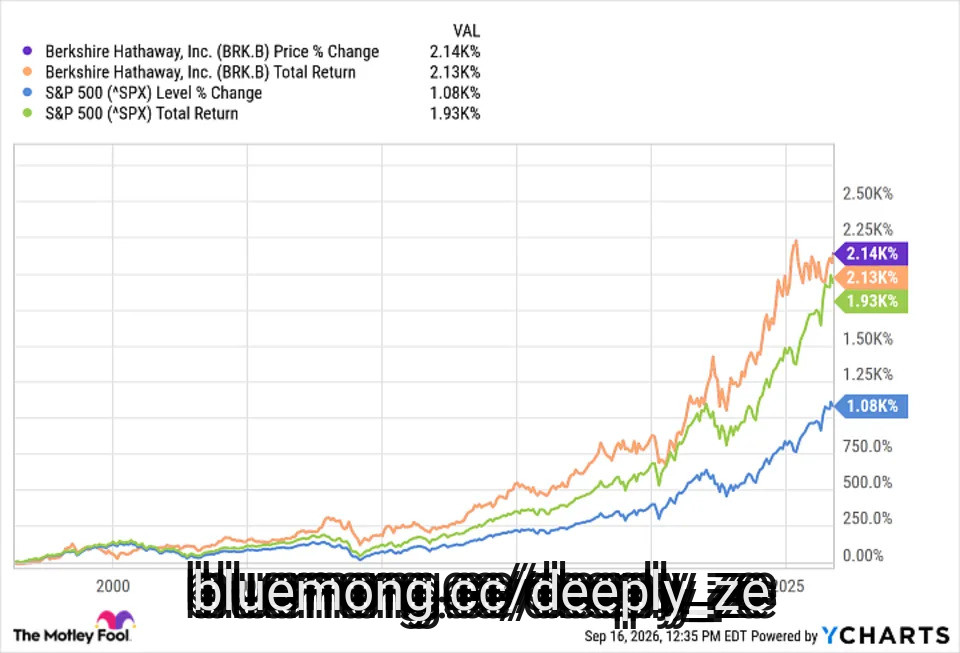
Experienced investors know the advantages of buying and holding S&P 500 index funds like the Vanguard S&P 500 ETF (NYSEMKT: VOO) or the SPDR S&P 500 ETF Trust (NYSEMKT: SPY). Not only are they super simple, but statistically speaking, you're likely to get better performance from them than you are by picking individual stocks or by owning an actively managed fund.
Nevertheless, given its long-term (and often market-beating) track record, even the most disciplined of investors might have the itch to step into a stake in Berkshire Hathaway (NYSE: BRKA) (NYSE: BRKB). But is it actually the better buy?
Missed Nvidia in 2009? This Rare Signal Is Flashing Again. In 2009, a "Double Down" signal flashed for a little-known chipmaker called Nvidia. For the first time in years, that same "Total Conviction" signal is flashing for a company 1/100th the size of Nvidia. Continue »
Berkshire Hathaway is a conglomerate consisting of several dozen reliable cash-producing businesses as well as a portfolio of hand-picked stocks. Brought to prominence by Warren Buffett, the company's flexible structure has enabled its shares to consistently outperform the S&P 500 since Buffett first took the helm in 1965.
It hasn't beaten the market every year since then, to be clear. Some years it did. Other years it didn't. It typically achieved the feat in five-year time frames.
#signal #years #buffett #flashing
Nevertheless, given its long-term (and often market-beating) track record, even the most disciplined of investors might have the itch to step into a stake in Berkshire Hathaway (NYSE: BRKA) (NYSE: BRKB). But is it actually the better buy?
Missed Nvidia in 2009? This Rare Signal Is Flashing Again. In 2009, a "Double Down" signal flashed for a little-known chipmaker called Nvidia. For the first time in years, that same "Total Conviction" signal is flashing for a company 1/100th the size of Nvidia. Continue »
Berkshire Hathaway is a conglomerate consisting of several dozen reliable cash-producing businesses as well as a portfolio of hand-picked stocks. Brought to prominence by Warren Buffett, the company's flexible structure has enabled its shares to consistently outperform the S&P 500 since Buffett first took the helm in 1965.
It hasn't beaten the market every year since then, to be clear. Some years it did. Other years it didn't. It typically achieved the feat in five-year time frames.
#signal #years #buffett #flashing

10 days ago
For the past few years, investors could hardly go wrong simply putting their money into the economy's biggest companies. The Magnificent Seven stocks -- Nvidia, Microsoft, Apple, Amazon, Meta Platforms, Alphabet, and Tesla -- were almost single-handedly pulling the S&P 500 higher, and investors consistently chased them.
This year has been a different story. The Roundhill Magnificent Seven ETF is up 6% year to date, but it trails the 12% return of the Vanguard S&P 500 ETF and the 27% return of the Vanguard Information Technology ETF.
Missed Nvidia in 2009? This Rare Signal Is Flashing Again. In 2009, a "Double Down" signal flashed for a little-known chipmaker called Nvidia. For the first time in years, that same "Total Conviction" signal is flashing for a company 1/100th the size of Nvidia. Continue »
I see two factors in particular having changed this year.
From 2023 to 2025, investors bought the biggest and earliest winners from the artificial intelligence (AI) trade. That's no longer the case.
#investors #vanguard
This year has been a different story. The Roundhill Magnificent Seven ETF is up 6% year to date, but it trails the 12% return of the Vanguard S&P 500 ETF and the 27% return of the Vanguard Information Technology ETF.
Missed Nvidia in 2009? This Rare Signal Is Flashing Again. In 2009, a "Double Down" signal flashed for a little-known chipmaker called Nvidia. For the first time in years, that same "Total Conviction" signal is flashing for a company 1/100th the size of Nvidia. Continue »
I see two factors in particular having changed this year.
From 2023 to 2025, investors bought the biggest and earliest winners from the artificial intelligence (AI) trade. That's no longer the case.
#investors #vanguard


10 days ago
If you are looking for reliable high yields in the energy sector, Energy Transfer (NYSE: ET) is likely to be high up on the list of options. And Wall Street really likes the stock, with 19 of the 21 ***** ysts covering it rating it a buy or strong buy. And yet, I just can't get myself to buy it, instead owning lower-yielding Enbridge (NYSE: ENB). Here's why Energy Transfer's 6.3% yield, despite distribution coverage of 2.2x, isn't enough to get me to buy it.
Before getting to Energy Transfer, I want to highlight some facts about Enbridge, the North American pipeline giant I actually bought. For starters, Enbridge's yield is 5.8%, roughly half a percentage point lower. That's a big difference, as buying Energy Transfer would increase my income stream by nearly 9%.
Missed Nvidia in 2009? This Rare Signal Is Flashing Again. In 2009, a "Double Down" signal flashed for a little-known chipmaker called Nvidia. For the first time in years, that same "Total Conviction" signal is flashing for a company 1/100th the size of Nvidia. Continue »
I can totally understand where a dividend investor would buy Energy Transfer for the added yield. But there's a big difference when you consider dividend history. Enbridge has increased its dividend annually for 31 consecutive years. Energy Transfer cut its distribution in 2020 during the COVID pandemic, right when most investors would probably have preferred dividend consistency. To Energy Transfer's credit, it lived up to its promise at the time to reduce leverage and return to distribution growth. In fact, the distribution is now above its level prior to the cut. And the cut was probably the right decision to make for the business.
But that distribution cut was a hit for unitholders. And it comes after another questionable situation back during the 1996 energy market downturn. At that point, Energy Transfer agreed to buy peer Williams (NYSE: WMB), but got cold feet. In an effort to scuttle the deal, Energy Transfer issued convertibles that appeared to protect insiders from a dividend cut, if one were made. The Williams deal was canceled, and the convertibles never became an issue, but it raised material trust issues for me.
#distribution #Dividend #yield
Before getting to Energy Transfer, I want to highlight some facts about Enbridge, the North American pipeline giant I actually bought. For starters, Enbridge's yield is 5.8%, roughly half a percentage point lower. That's a big difference, as buying Energy Transfer would increase my income stream by nearly 9%.
Missed Nvidia in 2009? This Rare Signal Is Flashing Again. In 2009, a "Double Down" signal flashed for a little-known chipmaker called Nvidia. For the first time in years, that same "Total Conviction" signal is flashing for a company 1/100th the size of Nvidia. Continue »
I can totally understand where a dividend investor would buy Energy Transfer for the added yield. But there's a big difference when you consider dividend history. Enbridge has increased its dividend annually for 31 consecutive years. Energy Transfer cut its distribution in 2020 during the COVID pandemic, right when most investors would probably have preferred dividend consistency. To Energy Transfer's credit, it lived up to its promise at the time to reduce leverage and return to distribution growth. In fact, the distribution is now above its level prior to the cut. And the cut was probably the right decision to make for the business.
But that distribution cut was a hit for unitholders. And it comes after another questionable situation back during the 1996 energy market downturn. At that point, Energy Transfer agreed to buy peer Williams (NYSE: WMB), but got cold feet. In an effort to scuttle the deal, Energy Transfer issued convertibles that appeared to protect insiders from a dividend cut, if one were made. The Williams deal was canceled, and the convertibles never became an issue, but it raised material trust issues for me.
#distribution #Dividend #yield


10 days ago
The idea of building a $1 million portfolio might sound more daunting than climbing Mt. Everest. In reality, it's more achievable than you probably think. With enough time, discipline, and the right mix of investments, the long-term power of compounding can get you to the $1 million mark and beyond!
Just take a look at history. If you invested $10,000 in the S&P 500 (SNPINDEX: ^GSPC) at the beginning of 1996, it would have grown to roughly $214,000 with dividends reinvested. Now, that's clearly not $1 million, but that's how large it grew with a one-time investment. Imagine how big it could get if you added a modest monthly investment to it over all those years.
Missed AI's "Act 1"? Act 2 Could Be 15x Bigger. Most investors think they missed the AI boat because they didn't buy Nvidia in 2005. But according to our ****** ysts, we're only at the end of "Act 1"—the R&D phase. "Act 2" is the global rollout. Continue »
This is why the idea of regular, consistent investing over time is one of the best pathways to millionaire status.
Over the past century, the S&P 500 has returned around 10% annually. The index has performed much better than that over the past decade, but the next decade could very well be much worse. When projecting long-term returns, it's better to be a little more conservative.
#idea #investment #past
Just take a look at history. If you invested $10,000 in the S&P 500 (SNPINDEX: ^GSPC) at the beginning of 1996, it would have grown to roughly $214,000 with dividends reinvested. Now, that's clearly not $1 million, but that's how large it grew with a one-time investment. Imagine how big it could get if you added a modest monthly investment to it over all those years.
Missed AI's "Act 1"? Act 2 Could Be 15x Bigger. Most investors think they missed the AI boat because they didn't buy Nvidia in 2005. But according to our ****** ysts, we're only at the end of "Act 1"—the R&D phase. "Act 2" is the global rollout. Continue »
This is why the idea of regular, consistent investing over time is one of the best pathways to millionaire status.
Over the past century, the S&P 500 has returned around 10% annually. The index has performed much better than that over the past decade, but the next decade could very well be much worse. When projecting long-term returns, it's better to be a little more conservative.
#idea #investment #past


10 days ago
On August 6, Aflac (NYSE:AFL) reported second-quarter numbers that point in opposite directions. Net earnings climbed to $825 million, helped along by investment losses that shrank to $153 million from $421 million a year ago. Adjusted earnings, though, fell 7.7% to $883 million. Both numbers are real, but they answer different questions. Which measure you trust changes the story, so here is what sits underneath.
Start with the yen, because it is muddying the picture. The average rate was 159.45 to the dollar, 9.3% weaker than a year earlier, and that cost adjusted earnings $0.05 a share. Take the currency out of the first half and adjusted earnings per share rose 4.1% to $3.57. **** an is also running more profitably. Its pretax adjusted margin widened to 34.3% from 32.0% as claims took a smaller bite out of premiums, and yen-based pretax adjusted earnings rose 3.4%. So part of the decline in **** an's dollar-reported profit is currency, not operations.
The US business is still growing at the top line. Net earned premiums rose 2.3% to $1.5 billion, and sales climbed 2.6% to $349 million, led by group voluntary benefits along with dental and vision plans. In **** an, the refreshed Tsumitasu life policy and the new Anshin Palette medical product grew strongly in the quarter, and first-half sales rose 7.0% to ¥37.3 billion. Then there is the cash. Aflac returned $1.3 billion to shareholders in the quarter, $983 million of it through buybacks, and declared a $0.61 third-quarter dividend, payable September 1 to holders of record on August 19, 2026. Management notes 43 straight years of dividend increases through 2025 and says the board is on a path to extend that in 2026.
The catch is that **** an's profit gains came from lower claims, not a bigger business. Net earned premiums in yen fell 3.7%, mainly because of a new external reinsurance deal and older limited-pay policies reaching paid-up status. Premium persistency, the share of policies customers keep, slipped to 92.7% from 93.7%. **** an's pretax adjusted earnings still fell 2.1% once currency is stripped out, and new sales dipped 5.6% in the quarter against a tough comparison for the Miraito cancer product, which launched in March 2025.
The US segment has its own soft spot. Pretax adjusted earnings fell 4.6% to $370 million, and the margin narrowed to 20.9% from 22.5% as claims and benefits took a bigger share of premiums. Corporate and Other swung to a $10 million pretax adjusted loss from a $20 million gain a year earlier, with interest expense up 21.6% to $62 million. And adjusted book value per share, excluding foreign currency remeasurement, slid to $41.22 at June 30 from $42.97 a year earlier.
#adjusted #pretax
Start with the yen, because it is muddying the picture. The average rate was 159.45 to the dollar, 9.3% weaker than a year earlier, and that cost adjusted earnings $0.05 a share. Take the currency out of the first half and adjusted earnings per share rose 4.1% to $3.57. **** an is also running more profitably. Its pretax adjusted margin widened to 34.3% from 32.0% as claims took a smaller bite out of premiums, and yen-based pretax adjusted earnings rose 3.4%. So part of the decline in **** an's dollar-reported profit is currency, not operations.
The US business is still growing at the top line. Net earned premiums rose 2.3% to $1.5 billion, and sales climbed 2.6% to $349 million, led by group voluntary benefits along with dental and vision plans. In **** an, the refreshed Tsumitasu life policy and the new Anshin Palette medical product grew strongly in the quarter, and first-half sales rose 7.0% to ¥37.3 billion. Then there is the cash. Aflac returned $1.3 billion to shareholders in the quarter, $983 million of it through buybacks, and declared a $0.61 third-quarter dividend, payable September 1 to holders of record on August 19, 2026. Management notes 43 straight years of dividend increases through 2025 and says the board is on a path to extend that in 2026.
The catch is that **** an's profit gains came from lower claims, not a bigger business. Net earned premiums in yen fell 3.7%, mainly because of a new external reinsurance deal and older limited-pay policies reaching paid-up status. Premium persistency, the share of policies customers keep, slipped to 92.7% from 93.7%. **** an's pretax adjusted earnings still fell 2.1% once currency is stripped out, and new sales dipped 5.6% in the quarter against a tough comparison for the Miraito cancer product, which launched in March 2025.
The US segment has its own soft spot. Pretax adjusted earnings fell 4.6% to $370 million, and the margin narrowed to 20.9% from 22.5% as claims and benefits took a bigger share of premiums. Corporate and Other swung to a $10 million pretax adjusted loss from a $20 million gain a year earlier, with interest expense up 21.6% to $62 million. And adjusted book value per share, excluding foreign currency remeasurement, slid to $41.22 at June 30 from $42.97 a year earlier.
#adjusted #pretax

10 days ago
The State Department's approval of two potential arms sales to Saudi Arabia totaling $5.75 billion, including JDAM-ER munitions and AGT-1500 tank engines, offers a modest but meaningful data point for two very different defense players. For The Boeing Company (NYSE:BA), the potential sale represents an additional international defense opportunity as the company continues working through margin pressure elsewhere. For Honeywell Aerospace Inc. (NASDAQ:HONA), the package reinforces a stable business line while the firm tackles its first quarter as a standalone public company.
The State Department approved a potential $5 billion sale of JDAM-ER guidance kits and bombs to Saudi Arabia, along with a separate potential $750 million deal for AGT-1500 tank engines. The JDAM package consists of 5,004 KMU-572 and 5,000 KMU-556 JDAM guidance kits and 5,004 BLU-111 and 5,000 BLU-117 bombs. Boeing has been identified as the principal contractor for the JDAM-ERs, with Honeywell handling the engines. The State Department said the sales would strengthen Saudi Arabia's airborne defense capabilities and improve interoperability with U.S. and Gulf partner forces.
Boeing stands to gain only modestly from the deal, given its roughly $85 billion Defense, ******* e and Security backlog. International orders already account for 27% of that total. The segment reported a second-quarter operating loss, largely due to charges tied to the VC-25B (Air Force One) program. That makes mature, lower-risk munitions programs such as JDAM-ER a more dependable part of the portfolio, though the deal is unlikely to have a meaningful impact on margins. For Honeywell Aerospace, the contract is smaller, but the AGT-1500 fits within its established defense propulsion business. It also adds to the company's international defence business, which makes up about 30% of its total Defense and ******* e revenue.
Honeywell Aerospace is owned by 74 hedge funds as of Q2 2026, which is consistent with Honeywell (NASDAQ:HON) hedge fund ownership prior to the spinoff. Unlike Honeywell, the number of hedge funds holding Boeing stock dropped from 99 at the end of the first quarter of fiscal 2026 to 90 at the end of Q2 2026.
Neither potential sale is large enough to have a meaningful impact on either company's short-term results by itself. Still, each supports a different investment story. For Boeing, the potential sales add to international defense exposure if finalized, as its defense unit continues dealing with fixed-price losses. For Honeywell, they support the steady flow of high-margin legacy revenue across its broader defense franchise.
#international #saudi
The State Department approved a potential $5 billion sale of JDAM-ER guidance kits and bombs to Saudi Arabia, along with a separate potential $750 million deal for AGT-1500 tank engines. The JDAM package consists of 5,004 KMU-572 and 5,000 KMU-556 JDAM guidance kits and 5,004 BLU-111 and 5,000 BLU-117 bombs. Boeing has been identified as the principal contractor for the JDAM-ERs, with Honeywell handling the engines. The State Department said the sales would strengthen Saudi Arabia's airborne defense capabilities and improve interoperability with U.S. and Gulf partner forces.
Boeing stands to gain only modestly from the deal, given its roughly $85 billion Defense, ******* e and Security backlog. International orders already account for 27% of that total. The segment reported a second-quarter operating loss, largely due to charges tied to the VC-25B (Air Force One) program. That makes mature, lower-risk munitions programs such as JDAM-ER a more dependable part of the portfolio, though the deal is unlikely to have a meaningful impact on margins. For Honeywell Aerospace, the contract is smaller, but the AGT-1500 fits within its established defense propulsion business. It also adds to the company's international defence business, which makes up about 30% of its total Defense and ******* e revenue.
Honeywell Aerospace is owned by 74 hedge funds as of Q2 2026, which is consistent with Honeywell (NASDAQ:HON) hedge fund ownership prior to the spinoff. Unlike Honeywell, the number of hedge funds holding Boeing stock dropped from 99 at the end of the first quarter of fiscal 2026 to 90 at the end of Q2 2026.
Neither potential sale is large enough to have a meaningful impact on either company's short-term results by itself. Still, each supports a different investment story. For Boeing, the potential sales add to international defense exposure if finalized, as its defense unit continues dealing with fixed-price losses. For Honeywell, they support the steady flow of high-margin legacy revenue across its broader defense franchise.
#international #saudi


10 days ago
When Ray Dalio speaks, investors tend to listen, and likely for good reason. He ran Bridgewater **** ociates, the hedge fund he founded, for half a century, and over that time, he was one of the most successful investment managers in history.
In fact, he has long used history as a guide for deploying capital, and today, he believes history offers lessons for how investors should approach the AI boom. Specifically, he sees echoes of 1929 and 2000 in the current situation, and is urging investors to approach AI stocks with caution. Here is what he said and why investors may want to heed his advice.
Missed Nvidia in 2009? This Rare Signal Is Flashing Again. In 2009, a "Double Down" signal flashed for a little-known chipmaker called Nvidia. For the first time in years, that same "Total Conviction" signal is flashing for a company 1/100th the size of Nvidia. Continue »
First of all, investors should remember that Dalio has stepped down from Bridgewater. Thus, the fund's investments in AI stocks like ServiceNow and Nutanix were likely made without his input.
Given what he has said recently, he may even disagree with those purchases. When Dalio appeared on the podcast The Diary of a CEO in August, he said that AI shows "classic signs" of a bubble.
#dalio #signal #flashing #likely
In fact, he has long used history as a guide for deploying capital, and today, he believes history offers lessons for how investors should approach the AI boom. Specifically, he sees echoes of 1929 and 2000 in the current situation, and is urging investors to approach AI stocks with caution. Here is what he said and why investors may want to heed his advice.
Missed Nvidia in 2009? This Rare Signal Is Flashing Again. In 2009, a "Double Down" signal flashed for a little-known chipmaker called Nvidia. For the first time in years, that same "Total Conviction" signal is flashing for a company 1/100th the size of Nvidia. Continue »
First of all, investors should remember that Dalio has stepped down from Bridgewater. Thus, the fund's investments in AI stocks like ServiceNow and Nutanix were likely made without his input.
Given what he has said recently, he may even disagree with those purchases. When Dalio appeared on the podcast The Diary of a CEO in August, he said that AI shows "classic signs" of a bubble.
#dalio #signal #flashing #likely


10 days ago
By
Sept. 17, 2026 8:00 pm ET
Listen
(1 min)
Binance was preparing a big announcement in late May that would unlock the European market for the world’s largest crypto exchange.
#sept #preparing #unlock
Sept. 17, 2026 8:00 pm ET
Listen
(1 min)
Binance was preparing a big announcement in late May that would unlock the European market for the world’s largest crypto exchange.
#sept #preparing #unlock



10 days ago
On September 9, 2026, Reuters reported that GE Aerospace (NYSE:GE) agreed to buy castings maker Consolidated Precision Products for $11.75 billion. It is its largest acquisition since becoming a standalone company in 2024, to secure the supply of the precision metal turbine-blade components that have been a persistent bottleneck across the jet engine industry. CPP is the world's third-largest maker of these parts. CEO Larry Culp called the capacity "mission-critical" as the company works through a backlog stretching into the next decade.
GE Aerospace (NYSE:GE) can use the acquisition to convert its massive backlog into revenue faster. The company's backlog exceeded $210 billion after its second-quarter results. It includes roughly $170 billion in commercial services and more than $30 billion in defense. The $11.75 billion acquisition of Consolidated Precision Products directly targets one of the supply-chain bottlenecks that has limited GE's ability to increase engine production. CPP supplies about one-quarter of GE's casting needs. It gives GE greater control over a critical manufacturing process and could help it meet deliveries tied to its long-term backlog.
Bringing CPP in-house could improve GE's production economics while reducing supplier dependence. Spare-parts delinquencies jumped 20% sequentially in the second quarter. It shows the ongoing operational impact of supply constraints. GE plans to apply its Flight Deck lean operating model at CPP to improve factory yields and machine utilization and reduce scrap and rework. The company expects the acquisition to generate about $200 million in net synergies and achieve double-digit return on invested capital by the fifth year. It gives investors a measurable path to stronger returns from the deal.
The acquisition makes GE's position solid in the next generation of engines. GE expects demand for airfoils to increase more than 30% by 2030 from 2026 levels. CPP's casting expertise could help GE bring new airfoil designs into production faster. The business also expects CPP to make roughly $2 billion in revenue in 2027. That combination gives investors a potential path to higher production capacity, faster technology development, and stronger long-term participation in commercial and defense aerospace demand.
GE Aerospace (NYSE:GE) must justify a nearly $12 billion investment, and investors already ******* ign a premium valuation to the stock. GE Aerospace trades at roughly 46 times forward earnings. It leaves investors with limited tolerance for execution problems or weaker-than-expected returns. The company will fund $7 billion of the acquisition with cash and finance the remainder with new debt. So GE needs CPP's earnings and operating improvements to make sufficient returns to support the purchase price and protect shareholder value.
#billion #backlog #supply
GE Aerospace (NYSE:GE) can use the acquisition to convert its massive backlog into revenue faster. The company's backlog exceeded $210 billion after its second-quarter results. It includes roughly $170 billion in commercial services and more than $30 billion in defense. The $11.75 billion acquisition of Consolidated Precision Products directly targets one of the supply-chain bottlenecks that has limited GE's ability to increase engine production. CPP supplies about one-quarter of GE's casting needs. It gives GE greater control over a critical manufacturing process and could help it meet deliveries tied to its long-term backlog.
Bringing CPP in-house could improve GE's production economics while reducing supplier dependence. Spare-parts delinquencies jumped 20% sequentially in the second quarter. It shows the ongoing operational impact of supply constraints. GE plans to apply its Flight Deck lean operating model at CPP to improve factory yields and machine utilization and reduce scrap and rework. The company expects the acquisition to generate about $200 million in net synergies and achieve double-digit return on invested capital by the fifth year. It gives investors a measurable path to stronger returns from the deal.
The acquisition makes GE's position solid in the next generation of engines. GE expects demand for airfoils to increase more than 30% by 2030 from 2026 levels. CPP's casting expertise could help GE bring new airfoil designs into production faster. The business also expects CPP to make roughly $2 billion in revenue in 2027. That combination gives investors a potential path to higher production capacity, faster technology development, and stronger long-term participation in commercial and defense aerospace demand.
GE Aerospace (NYSE:GE) must justify a nearly $12 billion investment, and investors already ******* ign a premium valuation to the stock. GE Aerospace trades at roughly 46 times forward earnings. It leaves investors with limited tolerance for execution problems or weaker-than-expected returns. The company will fund $7 billion of the acquisition with cash and finance the remainder with new debt. So GE needs CPP's earnings and operating improvements to make sufficient returns to support the purchase price and protect shareholder value.
#billion #backlog #supply







10 days ago
Updated Sept. 17, 2026 4:53 pm ET
Listen
(3 min)
The latest Market Talks covering Financial Services. Exclusively on Dow Jones Newswires at 4:20 ET, 12:20 ET and 16:50 ET.
1006 ET – U.S. pending home sales fell 3.5% week-over-week to their lowest level in almost three years, Redfin says. Declining homebuying demand is giving buyers breathing room. It means less competition and more room to negotiate for the house hunters who are still shopping. New listings fell slightly, -0.5%, from a week earlier, but they’re still up 1.5% year-over-year, and there are still hundreds of thousands more home sellers than buyers in the market. More homes on the market equals less pressure on buyers to rush into a decision or pay more than they want. Home-sale prices are holding steady. The median home-sale price rose 2% year-over-year. That stability means prices aren’t soaring, and that sellers aren’t in immediate danger of home values dropping. (chris.wackwsj.com)
#still #fell #means
Listen
(3 min)
The latest Market Talks covering Financial Services. Exclusively on Dow Jones Newswires at 4:20 ET, 12:20 ET and 16:50 ET.
1006 ET – U.S. pending home sales fell 3.5% week-over-week to their lowest level in almost three years, Redfin says. Declining homebuying demand is giving buyers breathing room. It means less competition and more room to negotiate for the house hunters who are still shopping. New listings fell slightly, -0.5%, from a week earlier, but they’re still up 1.5% year-over-year, and there are still hundreds of thousands more home sellers than buyers in the market. More homes on the market equals less pressure on buyers to rush into a decision or pay more than they want. Home-sale prices are holding steady. The median home-sale price rose 2% year-over-year. That stability means prices aren’t soaring, and that sellers aren’t in immediate danger of home values dropping. (chris.wackwsj.com)
#still #fell #means

10 days ago
Guardian Metal Resources PLC (NYSEAMERICAN:GMTL) reported its first Good Hope drilling results on September 14, adding exploration potential to the Pilot Mountain tungsten project in Nevada. Hole GH26-01 returned a 12.95-meter downhole interval grading 0.79% tungsten trioxide, or WO3, starting at 12.19 meters. GH26-02 intersected 13.11 meters at 0.42% WO3 from 2.13 meters.
The holes were twinned, with GH26-02 redrilling the upper portion where core had not been recovered. Good Hope and the separate Tremor discovery remain outside the resource base supporting the existing pre-feasibility study. The investment question is whether additional mineralization can improve project returns without slowing development.
Shallow mineralization offers a potential route to additional feed that could be accessible early in a future mining sequence. Good Hope sits approximately 1.1 to 1.3 kilometers from the existing resource areas, making its possible integration worth evaluating alongside the planned operation.
The June pre-feasibility study models an eight-year open-pit operation based on Desert Scheelite and Garnet. If further work establishes economic resources at Good Hope or Tremor, additional feed could extend that operating life or improve the sequence in which material reaches the processing plant.
For Guardian Metal Resources PLC (NYSEAMERICAN:GMTL), the potential benefit is better use of infrastructure already contemplated for Pilot Mountain. That would depend on recoverable metal, processing compatibility, and the additional capital required to bring the new zones into production.
#hope #resources #guardian
The holes were twinned, with GH26-02 redrilling the upper portion where core had not been recovered. Good Hope and the separate Tremor discovery remain outside the resource base supporting the existing pre-feasibility study. The investment question is whether additional mineralization can improve project returns without slowing development.
Shallow mineralization offers a potential route to additional feed that could be accessible early in a future mining sequence. Good Hope sits approximately 1.1 to 1.3 kilometers from the existing resource areas, making its possible integration worth evaluating alongside the planned operation.
The June pre-feasibility study models an eight-year open-pit operation based on Desert Scheelite and Garnet. If further work establishes economic resources at Good Hope or Tremor, additional feed could extend that operating life or improve the sequence in which material reaches the processing plant.
For Guardian Metal Resources PLC (NYSEAMERICAN:GMTL), the potential benefit is better use of infrastructure already contemplated for Pilot Mountain. That would depend on recoverable metal, processing compatibility, and the additional capital required to bring the new zones into production.
#hope #resources #guardian

10 days ago
Updated Sept. 17, 2026 2:46 pm ET
Listen
(3 min)
1443 ET – Precious metal futures settle higher in New York, recovering from a swoon in the wake of yesterday’s Federal Reserve interest-rate increase. “My sense is that they will lag while we’re in a rate-hiking cycle, and right now we’re fairly clearly in a rate-hiking cycle,” says David Russell, global head of market strategy at TradeStation. There are a lot of arguments in favor of gold, in terms of central bank buying and an alternative to the dollar, but the current macro environment “is not in any way textbook favorable for gold and silver,” he adds. Front-month gold settles up 0.3% to $4,360.20 a troy ounce, and silver rises 1.8% to $65.47 a troy ounce. (anthony.harrupwsj.com)
1118 ET – Gold futures recover losses that followed the Fed’s rate hike as Treasury yields move lower and the dollar slips, while oil prices extend their pullback to a second day. “Gold is rangebound with two-way risk, but the large bull market we had seen earlier in the year is considered on pause for now,” Pepperstone strategist Ahmad ******* iri says in a note. The bull market could continue at some stage with underlying drivers such as central bank demand, macro uncertainty, and fiscal concerns, he says. But “the path of oil prices and their transmission into Fed policy remains the single most important variable from now till year-end.” The December contract is up 0.4% in New York at $4,404.90 a troy ounce. Silver rises 2.3% to $66.44 a troy ounce. (anthony.harrupwsj.com)
#Gold #york #futures
Listen
(3 min)
1443 ET – Precious metal futures settle higher in New York, recovering from a swoon in the wake of yesterday’s Federal Reserve interest-rate increase. “My sense is that they will lag while we’re in a rate-hiking cycle, and right now we’re fairly clearly in a rate-hiking cycle,” says David Russell, global head of market strategy at TradeStation. There are a lot of arguments in favor of gold, in terms of central bank buying and an alternative to the dollar, but the current macro environment “is not in any way textbook favorable for gold and silver,” he adds. Front-month gold settles up 0.3% to $4,360.20 a troy ounce, and silver rises 1.8% to $65.47 a troy ounce. (anthony.harrupwsj.com)
1118 ET – Gold futures recover losses that followed the Fed’s rate hike as Treasury yields move lower and the dollar slips, while oil prices extend their pullback to a second day. “Gold is rangebound with two-way risk, but the large bull market we had seen earlier in the year is considered on pause for now,” Pepperstone strategist Ahmad ******* iri says in a note. The bull market could continue at some stage with underlying drivers such as central bank demand, macro uncertainty, and fiscal concerns, he says. But “the path of oil prices and their transmission into Fed policy remains the single most important variable from now till year-end.” The December contract is up 0.4% in New York at $4,404.90 a troy ounce. Silver rises 2.3% to $66.44 a troy ounce. (anthony.harrupwsj.com)
#Gold #york #futures





10 days ago
Immigrants applying to live permanently in the United States can be rejected if they receive public benefits, beginning this week.
Use of Medicaid, food stamps, tuition ******* istance and free school lunch programs, among other government ******* istance, could all be grounds for denying a green-card application.
Subscribe to The Post Most newsletter for the most important and interesting stories from The Washington Post.
The policy from President Donald Trump's administration, which took effect Friday, marks a dramatic change to a long-standing federal policy consistent with the president's efforts to restrict legal immigration pathways.
The rule could reduce federal and state payments by $13 billion a year, by persuading some 950,000 people to disenroll from or avoid federal safety net programs, according to estimates from the Department of Homeland Security. The agency said that the rule aligns with Congress's intent that noncitizens "in the United States be self-sufficient and not dependent on taxpayer-funded government benefits."
#states
Use of Medicaid, food stamps, tuition ******* istance and free school lunch programs, among other government ******* istance, could all be grounds for denying a green-card application.
Subscribe to The Post Most newsletter for the most important and interesting stories from The Washington Post.
The policy from President Donald Trump's administration, which took effect Friday, marks a dramatic change to a long-standing federal policy consistent with the president's efforts to restrict legal immigration pathways.
The rule could reduce federal and state payments by $13 billion a year, by persuading some 950,000 people to disenroll from or avoid federal safety net programs, according to estimates from the Department of Homeland Security. The agency said that the rule aligns with Congress's intent that noncitizens "in the United States be self-sufficient and not dependent on taxpayer-funded government benefits."
#states


10 days ago
US stocks wavered on Friday morning as investors continued to calibrate to the Federal Reserve's first rate hike in three years and existential fears about artificial intelligence's capabilities.
The tech-heavy Nasdaq Composite (^IXIC) traded flat, while the S&P 500 (^GSPC) fell 0.1%. The Dow Jones Industrial Average (^DJI) was down 0.3%.
The 10-year Treasury yield (^TNX) rose 5 basis points to 5% on Friday as traders increased bets that the Fed will raise rates again in October.
Markets appeared to look past the Fed's 25 basis point rate hike this week, which was widely expected. US stock continued to climb after the Bank of ******* an raised interest rates to the highest level in 31 years.
However, ******* ysts and top CEOs aren't convinced that one rate hike (by the Fed) will be enough to bring down stubbornly high inflation. "It's not clear to me we've slayed inflation," JPMorgan Chase CEO Jamie Dimon told Yahoo Finance this week.
#down
The tech-heavy Nasdaq Composite (^IXIC) traded flat, while the S&P 500 (^GSPC) fell 0.1%. The Dow Jones Industrial Average (^DJI) was down 0.3%.
The 10-year Treasury yield (^TNX) rose 5 basis points to 5% on Friday as traders increased bets that the Fed will raise rates again in October.
Markets appeared to look past the Fed's 25 basis point rate hike this week, which was widely expected. US stock continued to climb after the Bank of ******* an raised interest rates to the highest level in 31 years.
However, ******* ysts and top CEOs aren't convinced that one rate hike (by the Fed) will be enough to bring down stubbornly high inflation. "It's not clear to me we've slayed inflation," JPMorgan Chase CEO Jamie Dimon told Yahoo Finance this week.
#down

11 days ago
On September 11, a caller praised The Boeing Company's (NYSE:BA) CEO and asked when the company would overcome the ongoing labor uncertainty and finally move beyond years of sideways stock performance. Mad Money host Jim Cramer replied:
I think that Boeing is ready to go up. But here's the problem. Every time crude goes up a dollar, the stock goes down a dollar. And that, think about it, that was actually the ratio. I did some work on this. And because today crude was down, Boeing went up $5... No, it's so stupid because, in truth, the airlines need more planes because the planes are more fuel-efficient. So they actually do better in this environment, but ******* ody cares. They know that airlines have to borrow money to buy planes and rates are higher, and they think that oil somehow's bad. But what ends up happening is the stock does nothing. I think it's about to go up because I think oil might be peaking unless there's some catastrophe over there.
The Boeing Company's (NYSE:BA) second-quarter results showed improving cash generation, but profitability remained weak. Revenue rose 8% year over year to $24.6 billion, while operating cash flow reached $1.4 billion and free cash flow was $631 million. Its total backlog reached a record $715 billion, including more than 6,200 commercial airplanes. CEO Kelly Ortberg said, "We're ramping up production just as we planned. That's driving higher revenues and improved cash flow." He also said there's more work ahead to ramp production, complete commercial-aircraft certifications and uphold customer commitments. Boeing said the 737-7 and 737-10 had completed flight testing, with deliveries expected to begin in 2027.
The Boeing Company's (NYSE:BA) large backlog has yet to translate into consistent commercial-aircraft profitability, leaving execution and margins as important concerns for investors. Commercial Airplanes delivered 171 aircraft in the second quarter but still posted a $322 million operating loss and a negative 2.7% operating margin. It also reported a $428 million GAAP net loss.
The balance sheet leaves less room for further setbacks. The company ended June with $45.9 billion of consolidated debt against $20 billion of cash and investments in marketable securities. The FAA certified the 737-7 on August 3, while Boeing continues working toward certification of the 737-10. First deliveries of the variants are expected in 2027. The company also recorded $280 million of losses on the VC-25B program in the quarter.
#boeing #cash #commercial
I think that Boeing is ready to go up. But here's the problem. Every time crude goes up a dollar, the stock goes down a dollar. And that, think about it, that was actually the ratio. I did some work on this. And because today crude was down, Boeing went up $5... No, it's so stupid because, in truth, the airlines need more planes because the planes are more fuel-efficient. So they actually do better in this environment, but ******* ody cares. They know that airlines have to borrow money to buy planes and rates are higher, and they think that oil somehow's bad. But what ends up happening is the stock does nothing. I think it's about to go up because I think oil might be peaking unless there's some catastrophe over there.
The Boeing Company's (NYSE:BA) second-quarter results showed improving cash generation, but profitability remained weak. Revenue rose 8% year over year to $24.6 billion, while operating cash flow reached $1.4 billion and free cash flow was $631 million. Its total backlog reached a record $715 billion, including more than 6,200 commercial airplanes. CEO Kelly Ortberg said, "We're ramping up production just as we planned. That's driving higher revenues and improved cash flow." He also said there's more work ahead to ramp production, complete commercial-aircraft certifications and uphold customer commitments. Boeing said the 737-7 and 737-10 had completed flight testing, with deliveries expected to begin in 2027.
The Boeing Company's (NYSE:BA) large backlog has yet to translate into consistent commercial-aircraft profitability, leaving execution and margins as important concerns for investors. Commercial Airplanes delivered 171 aircraft in the second quarter but still posted a $322 million operating loss and a negative 2.7% operating margin. It also reported a $428 million GAAP net loss.
The balance sheet leaves less room for further setbacks. The company ended June with $45.9 billion of consolidated debt against $20 billion of cash and investments in marketable securities. The FAA certified the 737-7 on August 3, while Boeing continues working toward certification of the 737-10. First deliveries of the variants are expected in 2027. The company also recorded $280 million of losses on the VC-25B program in the quarter.
#boeing #cash #commercial