
3 days ago
Rates stuck in a holding pattern, inflation still above target and the Fed hinting it may not be done yet. That mix keeps pressure on growth stories and puts steady cash payers back in the spotlight. Investors hunting for resilience and reliable income are watching this closely, because moments like this can reshape portfolios for years. This article walks through 3 dividend stocks exposed to this macro story.
The stocks covered next are just a sample to illustrate the idea. The full screen surfaced 18 more large-cap defensive dividend companies with income profiles and risk characteristics that also fit this tighter brief. If you want to identify and ******* yze your own shortlist of higher-conviction defensive payers right now, head straight into the Large-Cap Defensive Dividend Stocks (US) screener.
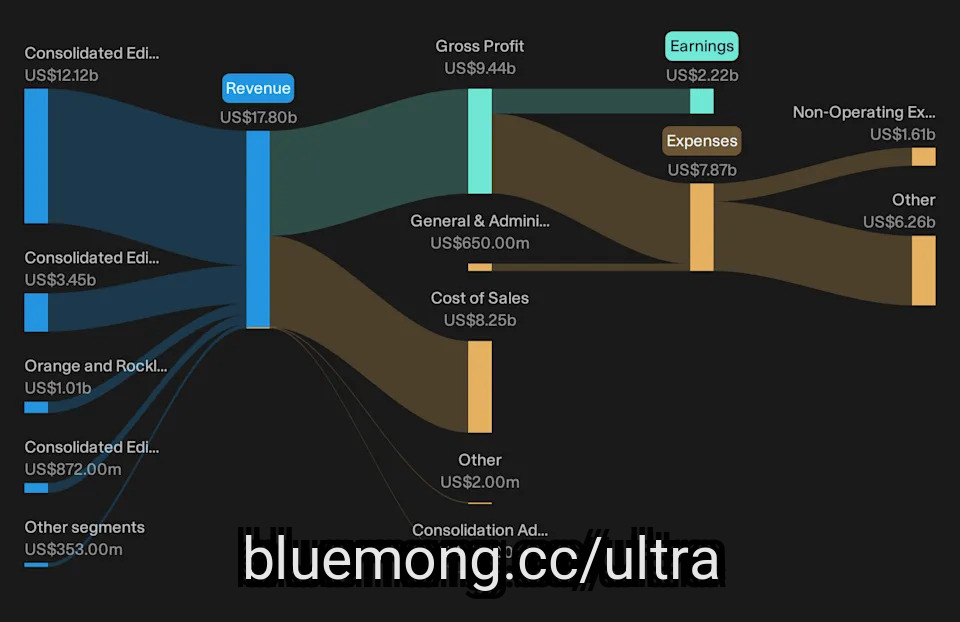
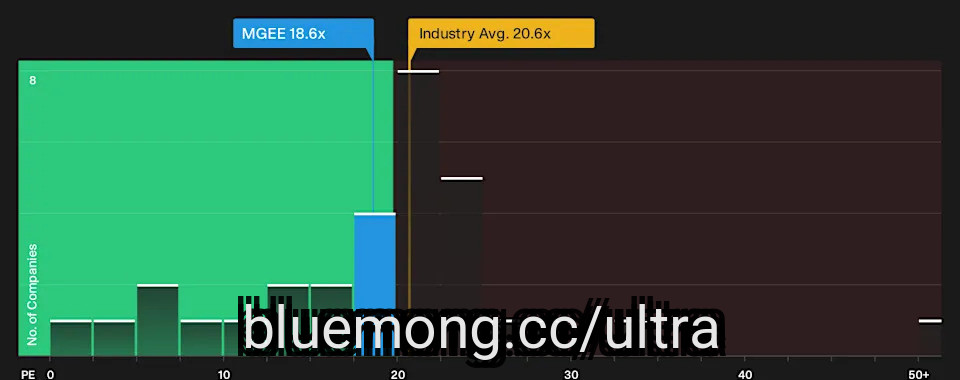
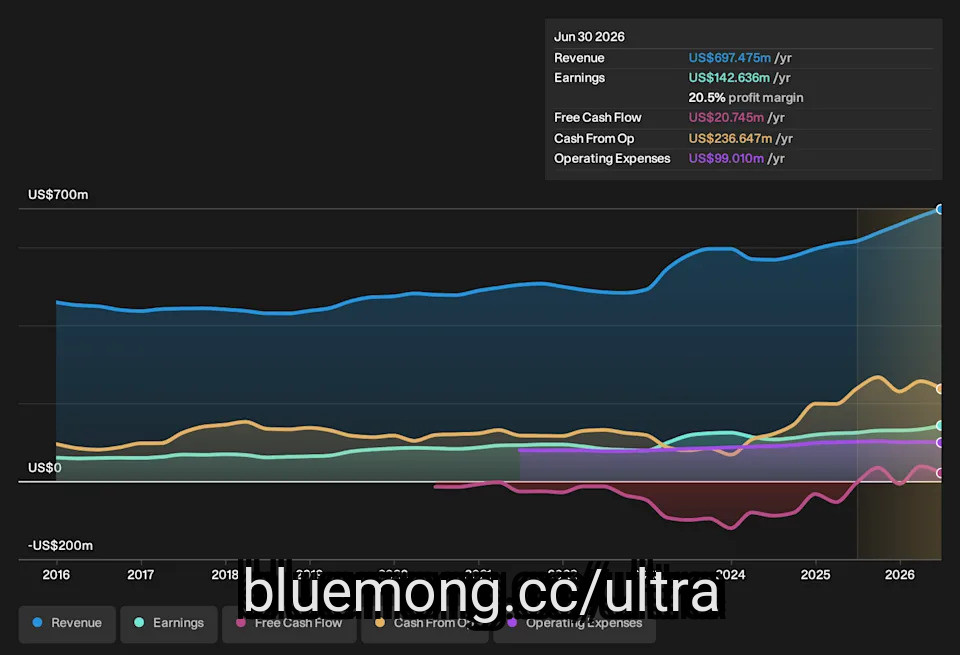
Overview: Consolidated Edison is a regulated utility that delivers electric, gas and steam services to customers across New York and parts of New Jersey.
Operations: Consolidated Edison generates almost all of its roughly US$17.7b revenue from US$12.1b CECONY electric, US$3.4b CECONY gas and US$872 million steam operations in the United States.
#edison #income

21 days ago
October 8, 2026 / 5:00 AM EDT / KFF Health News
The U.S. Senate candidates in Texas could hardly be more different: James Talarico, a former seminarian turned Democratic state lawmaker who speaks in calm cadences about love and empathy, and Ken Paxton, the pugnacious Republican state attorney general who speaks about a refusal to compromise.
They share an enemy, though. They dislike social media's effects on children's mental health. Talarico, who did not respond to a request for comment, has endorsed a social media ban for kids under 16, while denouncing "predatory algorithms that divide us on an hourly, daily basis." As a legislator, he co-authored a bill targeting explicit deepfakes — digital imitations of individuals that are often made or manipulated by artificial intelligence and used for harassment on social media.
Paxton has been suing Big Tech, alleging the companies hook youth on their apps or don't restrict sensitive videos from being viewed by kids. "When elected to the U.S. Senate, he will continue his proven record of advancing policies that protect children online, strengthen parental rights, and hold Big Tech accountable when it breaks the law," Paxton campaign spokesperson Madison Cercy said in a statement to KFF Health News.
Youth mental health is in decline. Even as researchers explore what's causing the problem, momentum is gathering among policymakers from both parties to crack down on social media companies. Several major companies are being sued, investigated, and, soon, potentially regulated. That they may be harming kids' mental health is a key reason.
#Social #kids #senate #Tech



1 month ago
The CLARITY Act failed to pass votes in the Senate earlier this week, a piece of legislature that would set out guardrails and ground rules for crypto **** ets in the U.S. With the failure of passage, the Securities and Exchange Commission took matters into its own hands, passing a conditional exemption Thursday for tokenized stocks. This Innovation Exemption allows for a limited type of tokenized securities to trade on specific Tokenized Securities Venues (TSVs), giving them a 5-year runway to prove their trading chops.
Tokenization is one of the latest trends in the investing world, whereby an **** et is represented digitally on a blockchain. It's seen as the next frontier in finance, with digital trading opening up greater access both for a broader investor base as well as the potential to trade 24/7, while also offering the potential for increased efficiency. However, some argue that tokenized **** ets come with added, unique risks and that by moving investments to the blockchain you introduce greater exposure to bad actors in an as-yet unregulated **** e in the U.S. That is, until now.
The SEC exemption allows for a specific type of tokenized stocks to be traded, specifically ones that retain the investor rights of the stock they are tied to (voting and dividends for example). Only tokenized U.S. National Market System (NMS) stocks qualify that trade through U.S. venues who have established standards for who can trade, limit trading volumes to a certain percentage of the stock, and make public their trading activities as well as any affiliates on the TSV. In addition, venues must halt trading when the primary exchange halts, and leverage is not permitted. Any company that does not want tokenized shares has 30 days to object and prevent their shares from being created.
It's important to note that currently there are two main types of tokenized securities, those that are directly linked to the **** et they represent digitally and those that provide synthetic exposure. Of the two, only the direct exposure tokenized stocks qualify that meet all of the exemption's restrictions.
"The Commission is not cementing today's technology as the standard for tomorrow. Instead, it is allowing the market to evolve, monitoring its development, and using that insight to inform a nimbler and future-ready regulatory framework," SEC Chair Paul Atkins said in a statement.
#exposure #commission



1 month ago
Coinbase Global (NASDAQ: $COIN) has filed for regulatory approval to list perpetual futures tied to individual large-cap U.S. stocks, opening the door to 24/7 leveraged trading of shares such as Apple, Microsoft, Tesla and Nvidia on a regulated U.S. platform.
The exchange plans to offer contracts linked to roughly 50 to 60 major stocks, with trading potentially starting later this year if regulators approve the products, according to The Wall Street Journal.
Perpetual futures, commonly known as perps, are derivatives that do not have an expiration date. Traders can keep positions open indefinitely, while leverage can magnify both gains and losses.
More From Cryptoprowl:
U.S. Regulators Push Crypto Rules As Clarity Act Stalls
#perpetual #global #coin


1 month ago
Galliford Try Holdings PLC (LSE:GFRD, FRA:3WC) chief financial officer Kris Hampson spoke with Proactive's Stephen Gunnion about the construction group's latest results, growing order book, margin progression and outlook for 2027, as well as its approach to acquisitions and shareholder returns.
Hampson said Galliford Try delivered a sixth consecutive year of growth across key metrics, supported by its building, infrastructure and specialist services operations. Adjusted profit before tax rose 24% on revenue growth of 3% to nearly £56 million, with adjusted divisional operating margin advancing from 3% to 3.5% and average cash up 21% to £216.2 million. "We make revenue, we turn it into profit, and we turn that profit into cash," Hampson said.
Looking ahead, he highlighted the £4.3 billion order book, up 5%, with more than 90% of current-year revenue already secured, alongside 60% for 2028. He said 91% of the order book sits within long-term frameworks and 95% is with government and regulated clients.
Hampson also discussed opportunities across water, highways, education and affordable housing, including growth tied to AMP8, newer frameworks on improved terms, and expects continued progression towards the group's 4% adjusted operating margin target for 2030.
On capital allocation, Galliford Try announced a £15 million share buyback alongside its results, following last year's £10 million buyback. Hampson also discussed the company's active M&A pipeline and its commitment to maintaining a dividend at 1.8 times cover based on adjusted EPS.
#million #profit



1 month ago
York Water holds the longest dividend streak in US public markets at 27 consecutive years, while WTW's $1.775B operating cash flow dwarfs its $358M dividend obligation.
Amdocs and Ituran both run near-recession-proof revenue models, with DOX posting near-100% managed services renewal rates and ITRN carrying zero debt alongside $103.7M in net cash.
All five stocks fund dividends from contracted or recurring revenue streams such as regulated rates, fee income, or subscriptions, insulating payouts from economic cycles.
Read More: Learn 7 secret wealth tips high net worth investors use that most investors miss (sponsor)
Income investors heading into the fourth quarter want payouts that don't wobble with the business cycle. The five names below share one thing: dividends funded by recurring, contracted, or fee-based revenue streams that keep flowing whether or not the macro cooperates. Each has raised its payout recently, and each trades on Nasdaq. As a grounding data point, Willis Towers Watson (NASDAQ:WTW) alone generated $360 million of first-half free cash flow, roughly double the prior-year period, giving the broker ample room to keep funding both dividends and buybacks.
#revenue #NASDAQ #Dividend


1 month ago
Akron, Ohio-based FirstEnergy Corp. (FE) engages in the generation, distribution, and transmission of electricity in the United States. The company has a market cap of $26.5 billion and operates through Distribution, Integrated, and Stand-Alone Transmission segments, and owns and operates coal-fired, nuclear, hydroelectric, wind, and solar power-generating facilities.
Companies with a market cap of $10 billion or more are typically referred to as "large-cap stocks." FE fits squarely into that category, with its market cap exceeding this threshold and reflecting its substantial size and influence in the regulated electric utilities industry.
Billionaire Charlie Munger, Who Died at 99, Skipped Insurance on His Mansion Since He Could Just Write a Check to Rebuild — 'All Intelligent People Do It My Way'
Nvidia CEO Jensen Huang Just Dropped Huge News for This Cybersecurity Stock
How to Play GME Stock as GameStop CEO Ryan Cohen Buys $20.3 Million in Shares
#operates



1 month ago
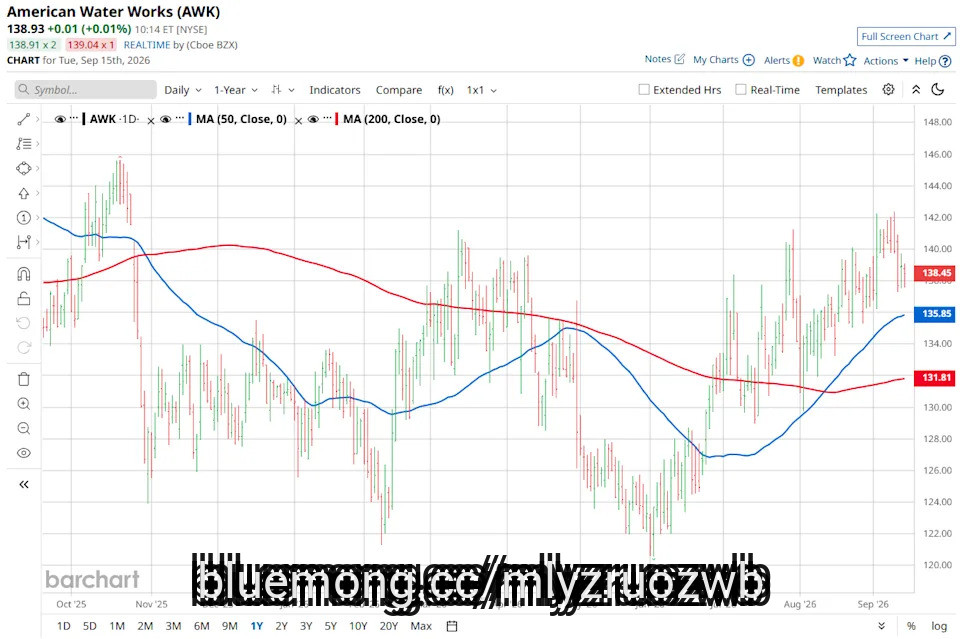
Camden, New Jersey-based American Water Works Company, Inc. (AWK) provides water and wastewater services in the United States and offers water and wastewater services on military installations, undertakes contracts with municipal customers to operate and manage water and wastewater facilities, and offers other related services. The company has a market cap of $27.6 billion and operates approximately 80 surface water treatment plants; 520 groundwater treatment plants; 170 wastewater treatment plants; and 55,000 miles of transmission, distribution, and collection.
Companies with a market cap of $10 billion or more are typically referred to as "large-cap stocks." AWK fits squarely into that category, with its market cap exceeding this threshold and reflecting its substantial size and influence in the regulated water utilities industry.
Goldman Sachs Expects Fed Chair Kevin Warsh to Raise Rates This Week — But Not Because of Oil Prices.
Morgan Stanley Doubles Down on Apple Stock as New Offerings Become 'More Exciting'
The EV Bubble Has Burst. How to Play Rivian Stock Now.
#wastewater #offers #billion

1 month ago
German lender Deutsche Bank (NYSE: $DB) plans to offer cryptocurrency custody to its institutional clients.
Germany's largest bank said in a news release that its digital **** et custody service is set to go live by the end of this year.
Deutsche Bank said the service will give European institutional and corporate clients regulated custody of cryptocurrencies such as Bitcoin (CRYPTO: $BTC).
More From Cryptoprowl:
MEXC Launches Earn Plus With Limited-Time Event Offering Up to 800% APR Booster
#bank #german #Bitcoin

1 month ago
Revolut has obtained authorisation from Colombia's Superintendencia Financiera de Colombia (SFC) to operate and has also filed an application for a banking licence in Switzerland with FINMA.
The Colombian approval clears the way for the company to operate as a regulated bank in the country.
The move comes after a year in which, according to Revolut's 2025 annual report, the group posted revenue of $6bn, up 46% from a year earlier, and pre-tax profit of $2.3bn. Customer balances stood at $67.5bn.
Revolut plans to introduce a range of banking products in Colombia.
In Switzerland, the UK-based fintech firm application has been formally submitted to FINMA and remains under review.
#operate

1 month ago
By Bo Erickson and Padraic Halpin
DOONBEG, Ireland, Sept 13 (Reuters) - U.S. President Donald Trump said on Sunday a lot of "very negative forces" are bringing things up about AI that won't happen and said that he wanted to make sure that the United States remains the industry leader.
"We're leading China in AI. We're the most sophisticated country in the world, and frankly I want to keep it that way because whoever wins AI wins," Trump, at his Ireland golf course, told reporters when asked if the AI industry should slow down or be more regulated.
"We could put guardrails. We can do this and that. But I think you have a lot of very negative forces that are bringing it up that shouldn't be bringing it up and they're bringing up things that won't happen."
Trump has resisted stirring concerns about AI.
#we 're #things

2 months ago
Block, Inc. (NYSE:XYZ) is taking another step toward consolidating its digital **** et operations under a federal regulatory framework. On September 8, it filed an application with the Office of the Comptroller of the Currency (OCC) to charter Builders Bank & Trust, N.A.
If chartered, the Builders Bank & Trust could become an important part of Block's digital **** et custody infrastructure, giving the company a federally supervised framework for custody and related services involving bitcoin and stablecoins.
Builders Bank & Trust would be an uninsured national trust bank, meaning it would not accept deposits or make traditional loans. Instead, its focus would be on fiduciary and custody services, allowing Block to build specialized infrastructure for safeguarding digital **** ets.
The structure could be particularly valuable as Block, Inc. (NYSE:XYZ) seeks to expand its institutional customer base. A federally supervised custody operation could give larger financial institutions greater confidence in Block's ability to safeguard Bitcoin and other digital **** ets.
Stablecoins represent a potentially important opportunity for Block, particularly through its Cash App ecosystem. A regulated custody infrastructure could eventually support broader stablecoin-related products and payments if Block chooses to expand further in this area.
#Bitcoin


2 months ago
Consolidated Edison Company of New York, Inc., the regulated utility subsidiary of Consolidated Edison, Inc. (NYSE:ED), joined New York regulatory staff and other parties in filing a proposed three-year steam-rate plan covering November 2026 through October 2029. Approval from the New York State Public Service Commission remains required.
The proposal includes headline base-rate changes of $13 million, $42 million and $39 million over the three rate years. A bill-shaping mechanism would instead implement corresponding base-rate increases of $26.6 million, $27.5 million and $28.5 million, producing an approximately 3.5% total customer-bill effect each year. Any revenue shortfall caused by delayed billing after the proposed November 1 effective date would be collected through a surcharge.
For Consolidated Edison, Inc. (NYSE:ED), the attraction is a visible investment and recovery framework. The trade-off is a 9.5% authorized return on common equity and limited room before earnings sharing begins.
The settlement supports $396 million of steam capital spending over three years, comprising $143 million, $127 million, and $126 million annually. The average rate base is projected to increase from $2.118 billion in the first rate year to $2.234 billion in the second and $2.311 billion in the third. That represents approximately 9.1% ***** ulative growth from the first year to the third, providing a larger base on which Consolidated Edison, Inc. (NYSE:ED) can earn its authorized return.
The multiyear structure also improves planning. Consolidated Edison, Inc. (NYSE:ED) would know the principal revenue, capital, and financing ***** umptions through October 2029 rather than returning immediately to a full rate proceeding. The proposed after-tax weighted average cost of capital rises from 7.07% to 7.19% across the plan, reflecting higher ***** umed long-term debt costs.
#million #consolidated #year #three



2 months ago
A Brazilian federal judge ordered the immediate suspension of all environmental licenses held by Sigma Mineração S.A., the operating subsidiary of Sigma Lithium Corporation (NASDAQ:SGML), for the Grota do Cirilo project. The September 4 preliminary order also halted mining activities following a civil action brought by the Federation of Quilombola Communities of Minas Gerais.
The dispute centers on whether the project lies within the area of influence of the Baú Quilombola Community and therefore required free, prior, and informed consultation. The judge cited studies placing the community's territory approximately 2.7 kilometers from the project's directly affected area, within the 8-kilometer presumptive regulatory impact radius applicable to mining projects outside Brazil's Legal Amazon under Interministerial Ordinance No. 60/2015. Sigma Lithium Corporation (NASDAQ:SGML) has argued that the project is outside the relevant impact zone.
The court ordered independent georeferencing and barred Minas Gerais and its environmental agency from issuing new licenses, amendments, or corrective approvals until the community-protection requirements are completed.
Two routes remain. If independent georeferencing supports the boundary position, Sigma Lithium Corporation (NASDAQ:SGML) could seek favorable court relief modifying or reversing the suspension. This provides an alternative to completing the consultation requirements.
If the project falls within the regulated impact area, Sigma Lithium Corporation (NASDAQ:SGML) would need Incra approval of the Quilombola Component Study, Basic Quilombola Environmental Plan and Final Execution Report, plus free, prior and informed consultation with the Baú community. Completing those requirements could preserve the project if acceptable mitigation is agreed.
#corporation #sgml #project #community


2 months ago
On this episode of CoinDesk's Public Keys from the New York Stock Exchange, host Jennifer Sanasie is joined by special guest co-host Ophelia Snyder, Co-Founder of 21Shares. Payward Chief Commercial Officer Mark Greenberg breaks down Kraken parent Payward's new partnerships with SoFi and the London Stock Exchange, and how xStocks is bringing tokenized equities and 24/7 markets to investors around the world. Bullish Exchange President Chris Tyrer unpacks Bullish's $4.2 billion acquisition of transfer agent Equiniti, its first tokenized-share trades on a GFSC-regulated venue, and the competing models shaping the future of tokenized stocks. Plus, Sanasie and Snyder break down another billion-dollar week for Bitcoin and Ethereum ETFs and what shifting macro conditions could mean for crypto.-Learn more at bullish.com.-Register now for CoinDesk's Policy and Regulation event on September 22, 2026: policy-regulation.coindesk.com.-To get market-moving news delivered daily, download CoinDesk's mobile app: linktr.ee/coindeskapp.
#sanasie
#sanasie

2 months ago
A cryptocurrency ETF is an exchange-traded fund that gives investors exposure to cryptocurrency through a regular brokerage account with no crypto wallet, exchange, or private keys required. The most important type is the spot ETF, which holds the actual cryptocurrency (Bitcoin, Ether, etc.) in secure custody, so the fund's price tracks the real-time price of the coin. When you buy a share, you're getting direct exposure to the underlying **** et, wrapped in the familiar, regulated ETF structure. One technical note: U.S. spot crypto funds are structured as exchange-traded products — grantor trusts registered under the Securities Act of 1933 — rather than as 1940 Act ETFs, so they trade just like ETFs but do not carry all of the same investor protections.
This is a big deal because it removes the biggest barriers to crypto investing: custody risk, exchange hacks, and technical complexity. It also brings crypto into tax-advantaged accounts and lets investors hold it alongside their stocks and bonds in one place.
Spot Bitcoin ETFs launched in the U.S. in January 2024 and have become the fastest-growing ETF category ever. In 2026 they dominate the crypto ETF landscape.
IBIT (iShares Bitcoin Trust) was one of the first to market and is the runaway leader, with roughly $71 billion in **** ets — well over half of the entire spot Bitcoin ETF market. BlackRock's fund has become the default vehicle for institutional and retail Bitcoin exposure alike, prized for its deep liquidity and low cost. FBTC (Fidelity Wise Origin Bitcoin Fund) is second with about $18 billion, and GBTC (Grayscale Bitcoin Trust), the converted legacy fund, holds around $15 billion despite its higher fee. For most investors seeking Bitcoin exposure, IBIT and FBTC are the go-to, low-cost choices.
Spot Ethereum ETFs followed in July 2024 and form the second pillar of the crypto ETF world. ETHA (iShares Ethereum Trust) leads with roughly $11 billion in **** ets, followed by FETH (Fidelity Ethereum Fund) at about $2.3 billion. Ethereum offers a different investment thesis than Bitcoin as it's the backbone of decentralized applications, smart contracts, and much of the tokenization trend. This means ether ETFs give investors exposure to a distinct part of the digital-asset ecosystem.
#Bitcoin


2 months ago
On August 4, Essential Utilities (NYSE:WTRG) reported second-quarter results that read like two different stories stapled together. Revenue climbed, the dividend grew for the 36th time in 35 years, and the merger with American Water inched closer to the finish line. But earnings per share actually dipped from a year earlier, and the company had to strip out merger costs just to show flat profitability. For a utility this steady, that split is worth a closer look.
Essential's regulated water segment posted revenue of $357.5 million in the quarter, up 7.6% from $332.3 million a year earlier, and the whole company's first-half revenue climbed 7.2% to nearly $1.4 billion. Much of that growth came from rate cases: state regulators approved $43.9 million in new annual water revenue across Pennsylvania, Illinois, Ohio, North Carolina and Indiana, plus $12.7 million more for the gas business in Kentucky and Pennsylvania. Another $79.7 million in water rate requests and a $163.2 million gas case in Pennsylvania, tied to replacing aging pipelines, are still working through the process.
The company keeps buying its way into new customers, too. In May, it closed a $4.9 million wastewater deal in Bastrop County, Texas, and it has signed agreements worth roughly $282 million to add over 200,000 more customers in Pennsylvania, Texas, North Carolina and New Jersey, including the $276.5 million purchase of Philadelphia-area sewer authority DELCORA. Since 2015, acquisitions have added more than 138,000 customers to Essential's base.
Layer on the pending American Water merger, which cleared Virginia and Ohio regulators this year after nearly unanimous shareholder approval in February, and Essential is positioning itself as a much larger multi-state utility by early 2027. The board's decision to raise the dividend 5.25% to $0.3606 per share, continuing a streak of 36 increases over 35 years, signals confidence that this growth is durable.
Look past the top line and the picture gets less flattering. Second quarter net income actually fell to $105.7 million from $107.8 million a year ago, pulling GAAP earnings per share down to $0.37 from $0.38. Essential had to report an adjusted $0.38 figure just to exclude merger-related costs and show earnings roughly matching last year's. The slide is sharper over six months: net income dropped to $330.1 million, or $1.16 per share, from $391.6 million, or $1.41 per share, in the first half of 2025.
#water #pennsylvania


2 months ago
Robinhood (NASDAQ: $HOOD) is expanding its prediction markets business by partnering with Crypto.com and its newly independent derivatives platform, OG.com, as demand for event contracts continues to surge.
Under the agreement announced Tuesday, Robinhood will begin routing a portion of its football prediction contracts to OG.com's CFTC-regulated exchange and clearinghouse. The first contracts are expected to go live today, ahead of the new professional football season.
Robinhood will also receive equity stakes in Crypto.com and OG.com following OG.com's planned spin-off as an independent trading platform. The stakes will be valued in line with Citadel Securities' recent investment in Crypto.com Group, which valued the company at $20 billion. The deal also puts OG.com's standalone valuation at $5 billion.
More From Cryptoprowl:
MEXC Launches Earn Plus With Limited-Time Event Offering Up to 800% APR Booster
#prediction


2 months ago
NEW LONDON - This time, it wasn't like when he left Bloomfield for New Britain in 2001, or when he first went back home to New London in 2005.
Back then, anyone who played, coached, covered, reffed, regulated or followed Connecticut high school football in the slightest degree knew the name Jack Cochran.
It was arguably the biggest in the game and certainly the most polarizing. The volatile coach who had won a combined eight state championships with Bloomfield, New Britain and his alma mater New London, and routed many an overmatched opponent along the way, had a peerless resume for winning games and a reputation for controversial conduct. No matter what you thought about him, an introduction was not necessary.
But it's funny what can happen to even the most household of names, even in their hometown, if they stay on the shelf long enough.
Aside from a brief return in 2013 at Harding in Bridgeport, Jack Cochran was out of high school football for 17 years.
#school



2 months ago
Bloomberg reported on August 25, 2026, that BlackRock, Inc. (NYSE:BLK) cut the minimum size for converting large Bitcoin holdings directly into shares of its iShares Bitcoin Trust ETF to $1 million in July, down from $25 million when the in-kind conversion process first became available. The fund has facilitated more than $5 billion of these conversions, up from more than $3 billion when Bloomberg first reported on the trend in October, according to Robbie Mitchnick, BlackRock's head of digital ******* ets. The process, which can take more than a week, lets holders move Bitcoin from private wallets into a regulated fund structure while retaining price exposure. Mitchnick said "kidnappings, ransom demands, and custody failures" motivate some holders to make the switch. Rival issuer Bitwise has cut its own minimum even further, from $100 million to $3 million, Bloomberg reported.
This is a fast-scaling new source of fee-generating ******* ets for BlackRock, Inc. (NYSE:BLK). The $5 billion processed through IBIT is up from $3 billion just months earlier. It shows accelerating adoption of a service that pulls previously self-custodied Bitcoin wealth directly into BlackRock's ******* et base rather than competing for ******* ets already inside the traditional financial system.
Cutting the minimum by 96% meaningfully widens who can use the service. Dropping the threshold from $25 million to $1 million brings the option within reach of family offices and wealthy individual holders, rather than limiting it to the largest Bitcoin holders. That gives BlackRock access to a substantially larger pool of potential conversions as the practice becomes more common.
IBIT's scale gives it a head start in capturing this migration. The fund already holds roughly 3.645% of Bitcoin's total supply and lists net ******* ets of $60.65 billion. It is scale advantage that likely makes it the default destination for holders deciding where to move their coins, reinforcing BlackRock's position as conversions boost industry-wide.
The process remains manual and slow despite the lower headline minimum. Bitwise chief investment officer Matt Hougan said the conversion process industry-wide is "still bespoke, from introducing a client to a market maker to working with the adviser, but it's becoming more standardized," and Mitchnick himself said conversions can take more than a week. That means BlackRock, Inc. (NYSE:BLK) has not yet turned this into a fully automated, scalable pipeline even as it markets lower minimums to a broader audience.
#blackrock #billion #minimum

2 months ago
On August 4, Essential Utilities (NYSE:WTRG) reported second-quarter results that read like two different stories stapled together. Revenue climbed, the dividend grew for the 36th time in 35 years, and the merger with American Water inched closer to the finish line. But earnings per share actually dipped from a year earlier, and the company had to strip out merger costs just to show flat profitability. For a utility this steady, that split is worth a closer look.
Essential's regulated water segment posted revenue of $357.5 million in the quarter, up 7.6% from $332.3 million a year earlier, and the whole company's first-half revenue climbed 7.2% to nearly $1.4 billion. Much of that growth came from rate cases: state regulators approved $43.9 million in new annual water revenue across Pennsylvania, Illinois, Ohio, North Carolina and Indiana, plus $12.7 million more for the gas business in Kentucky and Pennsylvania. Another $79.7 million in water rate requests and a $163.2 million gas case in Pennsylvania, tied to replacing aging pipelines, are still working through the process.
The company keeps buying its way into new customers, too. In May, it closed a $4.9 million wastewater deal in Bastrop County, Texas, and it has signed agreements worth roughly $282 million to add over 200,000 more customers in Pennsylvania, Texas, North Carolina and New Jersey, including the $276.5 million purchase of Philadelphia-area sewer authority DELCORA. Since 2015, acquisitions have added more than 138,000 customers to Essential's base.
Layer on the pending American Water merger, which cleared Virginia and Ohio regulators this year after nearly unanimous shareholder approval in February, and Essential is positioning itself as a much larger multi-state utility by early 2027. The board's decision to raise the dividend 5.25% to $0.3606 per share, continuing a streak of 36 increases over 35 years, signals confidence that this growth is durable.
Look past the top line and the picture gets less flattering. Second quarter net income actually fell to $105.7 million from $107.8 million a year ago, pulling GAAP earnings per share down to $0.37 from $0.38. Essential had to report an adjusted $0.38 figure just to exclude merger-related costs and show earnings roughly matching last year's. The slide is sharper over six months: net income dropped to $330.1 million, or $1.16 per share, from $391.6 million, or $1.41 per share, in the first half of 2025.
#million #revenue #merger #year


2 months ago
Bitcoin surged 38% from its $57,748 July low to above $80,000, but rate-hike fears from a strong August jobs report quickly pulled it back.
BlackRock's IBIT ETF grew from $47.7 billion to $60.2 billion in net ****** ets since late July, reflecting strong institutional demand for regulated Bitcoin exposure.
Bond yields near 5%, oil above $96 from the U.S.-Iran war, and an expected September rate hike create steep macro headwinds for Bitcoin hitting $100,000.
Just released. Our ****** ysts combed the entire stock market and named the ten best stocks to buy right now. The report is free. Enter your email and see if any of your stocks made the cut.
Markets have spent much of 2026 wrestling with inflation, higher-for-longer interest rates, trade uncertainty, and a bond market that refuses to behave like the safe harbor investors once took for granted. Against that backdrop, Bitcoin (CRYPTO:BTC) has quietly staged one of the year's sharper recoveries.
#july #bond #report

2 months ago
On August 4, Qualys Inc. (NASDAQ:QLYS) reported second-quarter revenue of $182.2 million, up 11% from a year earlier, and used the moment to raise its own bar for the rest of 2026. A company that was already growing at a healthy clip just told Wall Street it expects to grow even more than it previously promised, and it backed that up with a jump in cash generation that outpaced revenue by a wide margin.
Qualys grew revenue from $164.1 million to $182.2 million year over year, and the profit line grew even faster. GAAP operating income rose 20% to $61.9 million, pushing the operating margin to 34% from 31% a year earlier. Non-GAAP operating income climbed 16% to $81.4 million, a 45% margin compared to 43% in the same period last year. Adjusted EBITDA rose 14% to $83.8 million, a 46% margin. Operating cash flow told the sharpest story of the quarter, jumping 77% to $59.6 million from $33.8 million, which lifted cash flow as a share of revenue to 33% from 21%.
On the back of that quarter, Qualys raised its full-year revenue guidance to a range of $732.0 million to $738.0 million, up from a prior range of $721.0 million to $727.0 million. Full-year non-GAAP earnings per share guidance moved up to $7.74 to $7.88, from $7.44 to $7.65, and GAAP earnings per share guidance rose to $5.76 to $5.90. The company also pointed to expanding platform reach during the quarter, including a FedRAMP High Authorization for its TotalCloud solution, sponsored by the US Drug Enforcement Administration, which brings cloud-native application protection capabilities onto the FedRAMP Marketplace for federal and other regulated customers.
The guidance raise came with a smaller growth number attached. Third quarter revenue guidance of $185.5 million to $187.5 million implies growth of 9% to 10%, down from the 11% Qualys just posted, and the full-year guidance range of 9% to 10% growth points the same direction. The gap between GAAP and non-GAAP results also widened this quarter, with GAAP net income of $52.4 million sitting well below the $69.2 million non-GAAP figure, a distance driven by adjustments that GAAP accounting does not recognize.
Qualys leaned on a busy stretch of announcements to make its case for the next leg of growth, including a Converge partnership tied to cyber insurance discounts, four international ROCon customer conferences, and Frost & Sullivan recognition in cloud and application runtime security. Those are the kinds of announcements that build a longer-term pipeline rather than move the needle immediately, and the guidance itself suggests management is not pricing in an acceleration from here.
#qualys #Margin


2 months ago
Duke (DUK) and Southern (SO) have secured a combined 25 gigawatts of data-center load commitments, converting electrification demand into recoverable regulated earnings.
Con Edison (ED) leads all S&P 500 utilities with 52 consecutive annual dividend increases, protected by New York State revenue decoupling that cushions volume swings.
Just released. Our **** ysts combed the entire stock market and named the ten best stocks to buy right now. The report is free. Enter your email and see if any of your stocks made the cut.
Regulated electric utilities are one of the few places income investors can find dividends backed by cash flows that don't rely on the economic cycle. Rate cases, riders, and long-term customer contracts turn capital spending into recoverable revenue, which is why payouts at these three names have kept climbing for decades. The clearest example: Con Edison's "50 straight years of dividend increases, a record unmatched among utilities in the S&P 500" was extended again this year to a 52nd consecutive annual increase. Here are three regulated-cash-flow utilities that income-focused portfolios can lean on.
Duke Energy (NYSE:DUK) is one of the largest fully regulated electric utilities in the country, serving roughly 8.73 million retail customers across the Carolinas, Florida, Indiana, Ohio, and Kentucky, plus Piedmont Natural Gas. The stock closed at $121.40 on September 3, 2026, with an annualized forward dividend of $4.34 after the July step-up to a $1.085 quarterly rate.
#duke #rate #recoverable


2 months ago
Sept 3 (Reuters) - Coinbase has filed registration documents with the U.S. Securities and Exchange Commission to offer equity perpetuals, the crypto exchange's chief policy officer said in a social media post on Thursday.
Here are some details:
• Perpetuals, also called "perps" are derivative contracts that track underlying ****** ets and do not expire, allowing traders to hold positions indefinitely without the need for a roll-over.
• The product will need a Commodity Futures Trading Commission approval next, Chief Policy Officer Faryar Shirzad said in a post on X.
• "Equity perps have proven demand internationally, and we're excited at the prospect of a regulated pathway for U.S. investors," Shirzad said.
#commission

2 months ago
Google's Arkansas data-center buildout is providing a rare look at the price of AI electricity. Documents reported on September 1 show Alphabet Inc. (NASDAQ:GOOGL) agreeing to pay $526 million toward the Cypress Solar project and another $190 million for transmission upgrades. Those commitments benefit Entergy Corporation (NYSE:ETR), the regulated utility responsible for turning Google's computing ambitions into reliable power. The arrangements also reveal why electricity, not chips, may become the next constraint on AI growth.
Photo from Entergy website
Cypress is expected to pair 600 megawatts of solar generation with 350 megawatts of battery storage and cost about $1.6 billion. For Entergy Corporation (NYSE:ETR), a large customer helping fund generation and grid work can expand its rate base while reducing the burden on existing customers. The bull case is that data centers create years of visible load growth, supporting capital investment and earnings without forcing the utility to speculate on which AI model wins.
The bear case sits inside that same promise: huge projects can face construction delays, cost overruns, regulatory scrutiny, and uncertainty over how much demand ultimately materializes. Utilities must build for peak reliability, not optimistic averages. If Google's consumption projections prove too high or technology becomes more efficient, Entergy could be left defending expensive infrastructure. Alphabet Inc. (NASDAQ:GOOGL), meanwhile, is absorbing a major power bill before the ***** ociated AI revenue is guaranteed.
Alphabet's advantage is that it can spread infrastructure costs across search, cloud, advertising, and internal AI products. Google Cloud's rapid growth suggests demand is real, and direct participation in power projects may secure capacity rivals cannot easily obtain. Yet the commitment also makes the economics of AI more capital intensive. Every dollar devoted to generation and transmission raises the hurdle for returns, while electricity contracts can lock a hyperscaler into long-lived obligations.
#entergy #electricity #Growth #corporation


2 months ago
As electricity demand surges amid AI data center growth, two utility companies stand out. NextEra Energy (NYSE: NEE) and Constellation Energy (NASDAQ: CEG) are both incredibly strong businesses, but are taking different approaches to this new chapter in North American power.
NextEra is both a traditional utility provider and a powerhouse in renewable energy. It is planning to spend $94 billion through 2030 in an aggressive push to build out its footprint. In May, the energy giant announced an all-stock agreement to acquire Dominion Energy. This deal will make NextEra the world's largest utility business, but the megamerger is facing intense regulatory scrutiny.
Missed Nvidia in 2009? This Rare Signal Is Flashing Again. In 2009, a "Double Down" signal flashed for a little-known chipmaker called Nvidia. For the first time in years, that same "Total Conviction" signal is flashing for a company 1/100th the size of Nvidia. Continue »
The company's dividend yield is holding strong at over 3%. The stock has risen just 2% this year. NextEra is a reliable income producer, but could see substantial growth through the early 2030s.
Constellation's approach is completely different from NextEra's. Constellation is the largest nuclear power operator in the U.S. It's also an independent power producer, meaning it sells electricity on the open market and not through a regulated utility model. This gives it greater pricing volatility, but potentially more upside.
#energy #flashing


2 months ago
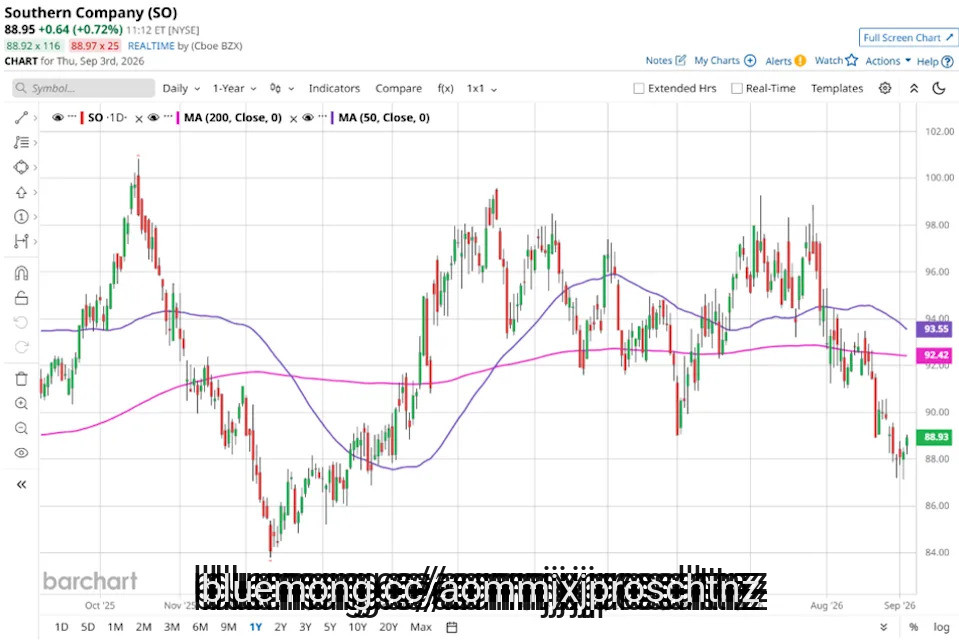
Atlanta, Georgia-based The Southern Company (SO) generates, transmits, and distributes electricity. Valued at $101.6 billion by market cap, the company also offers wireless telecommunications services, provides businesses with two-way radio, telephone, paging, and internet access services, and wholesales fiber optic solutions.
Companies worth $10 billion or more are generally described as "large-cap stocks," and SO definitely fits that description, with its market cap exceeding this threshold, reflecting its substantial size, influence, and dominance in the utilities - regulated electric industry. SO has a robust foundation, with strong finances, a skilled workforce, and extensive infrastructure, including power plants and transmission lines. The company's expertise in navigating complex regulatory environments and influencing energy policy is a key ***** et.
A Potential ***** eX Deal Could Meaningfully Accelerate Growth for Technip Stock
Fears of an Extended US-Iran Conflict Boost Crude Oil Prices
Nat-Gas Prices Rise on Hotter US Weather and Expectations of Smaller Storage
#company #market #Services #atlanta



2 months ago
On August 24, ePlus (NASDAQ:PLUS) announced it had completed the acquisition of the **** ets of Daymark Solutions, a Massachusetts-based IT services provider, with the deal having closed three days earlier on August 21. The announcement landed three weeks after the company posted first-quarter fiscal 2027 results on August 4, showing sales climbing even as profit slipped. Together, the two headlines capture where ePlus stands right now: reaching for new growth in cloud and security while working through pressure on its existing business.
Daymark, founded in 2001, built its business serving highly regulated, data-intensive industries including energy and utilities, healthcare, life sciences, defense, and financial services. Its core capabilities span modern data center infrastructure, cloud, Microsoft 365, Microsoft 365 Copilot, and cybersecurity, and its status as a Microsoft Tier 1 Cloud Solution Provider slots directly alongside ePlus' existing Azure and Microsoft 365 professional and managed services work. The acquisition also gives ePlus a deeper foothold in the New England region, particularly metropolitan Boston. CEO Mark Marron framed it as a way to gain a specialized Microsoft team that could serve as a catalyst for growth across Azure, Microsoft 365, security, and Copilot.
The timing lines up with what was already ePlus' fastest-growing segment. Managed services revenue rose 15.1% to $51.3 million in the first quarter, the segment's first quarter above $50 million, with gross profit up 11.3% on that growth. The balance sheet backs further moves like this one: cash and equivalents reached $448.9 million as of June 30, up from $410.8 million three months earlier, giving ePlus room for additional acquisitions, dividends, and buybacks. Management also pointed to record sales and a significant rise in booked and open orders, positioning the company for what it called a stronger second half.
The first quarter numbers show a company growing on top but shrinking underneath. Net earnings from continuing operations fell 5.4% to $30.3 million, adjusted EBITDA dropped 9.2% to $47.8 million, and operating income declined 9.6% to $38.8 million. Gross margin slipped to 23.3% from 23.9% a year earlier, with margin compression showing up across all three business segments rather than just one.
The professional services segment, the part of the business closest to the consulting and implementation work Daymark specializes in, fell 5.1% to $68.1 million, and its margin dropped to 36.9% from 39.2%. The product segment saw its own margin decline, to 21.0% from 21.3%, as an ongoing memory chip shortage extended lead times and delayed shipments. Terms of the Daymark transaction were not disclosed, leaving no visibility into what ePlus paid or how the deal affects near-term results.
#Microsoft #million #august #first

2 months ago
Johnston Carmichael, a UK-based independent accountancy and business advisory business, has bolstered its leadership team with four new appointments.
Tamsyn Weston joined the company as chief technology officer in Edinburgh. She will lead the company strategy across IT, cybersecurity, digital development, AI and automation.
Weston has more than 20 years of experience in technology, transformation and cybersecurity roles in regulated environments. Her role will focus in part on the responsible use of emerging technology to support the company's growth.
In Glasgow, Deborah Ramsay has joined as an audit partner.
Ramsay is a chartered accountant and has held Responsible Individual status since 2020. She brings more than 20 years of audit experience, including a background at a 'Big Four' company.
#ramsay #business