

2 months ago
Elon Musk has never shied away from ambitious timelines, and his most recent one connects two companies directly together. In a post on X dated September 13, Musk stated that he is "highly confident" that **** e Exploration Technologies Corp. (NASDAQ:SPCX) will transport NVIDIA Corporation (NASDAQ:NVDA) Vera Rubin NVL72 AI computers into orbit next year, repeating a plan that has already moved both companies' stock this year.
The comment strengthens **** eX's Starmind concept, which aims to establish AI data centers in orbit rather than on the ground. The first satellite, named Starmind AI1, will carry a **** e-optimized version of NVIDIA's Vera Rubin NVL72 rack-scale system. The standard terrestrial NVL72 combines 72 Rubin GPUs and 36 Vera CPUs, although **** eX and NVIDIA have not disclosed the final configuration of the orbital version. **** e Exploration Technologies Corp. (NASDAQ:SPCX) plans to launch the satellite in the fourth quarter of 2027 and reach substantial scale by 2028. Musk's plan isn't new; during **** eX's first earnings conference as a public company in August, he stated that the company would build exclusively on NVIDIA hardware in the future, calling the Vera Rubin architecture the best available AI computer design.
Musk's central point is that **** e is, in the long run, the most cost-effective area to develop AI computing. He cites solar power availability in orbit as a crucial advantage, and estimates that within two to three years, **** e might become the lowest-cost place for AI computing in general, describing the orbital architecture as simpler, less expensive, denser, and lighter than a standard data-center rack. Not everyone believes the physics and economics will align on Musk's timeframe. Microsoft President Brad Smith has publicly questioned the broader concept, telling reporters that he would be surprised if companies actually transferred computation from land to low-Earth orbit.
For NVIDIA Corporation (NASDAQ:NVDA), the read-through is simple: **** e-based computing would represent a new, if early-stage and speculative, source of demand for its Vera Rubin platform, on top of the company's strong position in terrestrial AI infrastructure. According to some **** yst models, **** eX accounts for approximately 5% of NVIDIA's revenue.
SpaceX's reasoning is more convoluted. The plan is entirely dependent on the success of Starship, **** eX's next-generation rocket system, which still needs to demonstrate its capacity to handle launch frequency and reliability on the scale Musk describes. When Musk said during **** eX's August earnings call that the company would build its future AI infrastructure exclusively on NVIDIA, NVDA shares rose more than 4%, while **** eX's shares fell more than 10% before paring losses, reflecting investor concerns about execution risk and capital intensity, despite the fact that the NVIDIA relationship was well received.
#Companies
The comment strengthens **** eX's Starmind concept, which aims to establish AI data centers in orbit rather than on the ground. The first satellite, named Starmind AI1, will carry a **** e-optimized version of NVIDIA's Vera Rubin NVL72 rack-scale system. The standard terrestrial NVL72 combines 72 Rubin GPUs and 36 Vera CPUs, although **** eX and NVIDIA have not disclosed the final configuration of the orbital version. **** e Exploration Technologies Corp. (NASDAQ:SPCX) plans to launch the satellite in the fourth quarter of 2027 and reach substantial scale by 2028. Musk's plan isn't new; during **** eX's first earnings conference as a public company in August, he stated that the company would build exclusively on NVIDIA hardware in the future, calling the Vera Rubin architecture the best available AI computer design.
Musk's central point is that **** e is, in the long run, the most cost-effective area to develop AI computing. He cites solar power availability in orbit as a crucial advantage, and estimates that within two to three years, **** e might become the lowest-cost place for AI computing in general, describing the orbital architecture as simpler, less expensive, denser, and lighter than a standard data-center rack. Not everyone believes the physics and economics will align on Musk's timeframe. Microsoft President Brad Smith has publicly questioned the broader concept, telling reporters that he would be surprised if companies actually transferred computation from land to low-Earth orbit.
For NVIDIA Corporation (NASDAQ:NVDA), the read-through is simple: **** e-based computing would represent a new, if early-stage and speculative, source of demand for its Vera Rubin platform, on top of the company's strong position in terrestrial AI infrastructure. According to some **** yst models, **** eX accounts for approximately 5% of NVIDIA's revenue.
SpaceX's reasoning is more convoluted. The plan is entirely dependent on the success of Starship, **** eX's next-generation rocket system, which still needs to demonstrate its capacity to handle launch frequency and reliability on the scale Musk describes. When Musk said during **** eX's August earnings call that the company would build its future AI infrastructure exclusively on NVIDIA, NVDA shares rose more than 4%, while **** eX's shares fell more than 10% before paring losses, reflecting investor concerns about execution risk and capital intensity, despite the fact that the NVIDIA relationship was well received.
#Companies


2 months ago
Intel Corporation (NASDAQ:INTC) is targeting a potentially significant opportunity through its strategic Terafab partnership with companies **** ociated with Elon Musk, including **** eX, Tesla, and xAI. The initiative is part of an ambitious semiconductor manufacturing project focused on producing advanced chips for artificial intelligence (AI), robotics, autonomous vehicles, and other compute-intensive applications.
On September 15, Tigress Financial highlighted the strategic importance of the alliance to Intel's turnaround prospects. The research firm reiterated its Buy rating on Intel and raised its price target to $145 from $118, citing the company's long-term growth opportunity.
The Terafab partnership could provide Intel's foundry business with exposure to customers that have substantial AI and high-performance computing requirements. Securing external customers could help Intel increase manufacturing scale while improving the utilization and economics of its foundry operations.
The partnership could also support Intel Corporation (NASDAQ:INTC)'s efforts to improve its semiconductor manufacturing technology. Greater production volumes and engagement with demanding customers could provide opportunities to improve manufacturing economics, yields, and scalability as Intel works to strengthen its competitive position in advanced chip manufacturing.
Beyond manufacturing scale, Terafab could expand Intel's role in the broader AI semiconductor supply chain. The company has historically been heavily **** ociated with CPUs, but growing its foundry business could give it greater exposure to AI accelerators, custom silicon, and other specialized compute applications. A relationship with major AI-focused customers could also help provide greater visibility into future manufacturing demand.
#Intel
On September 15, Tigress Financial highlighted the strategic importance of the alliance to Intel's turnaround prospects. The research firm reiterated its Buy rating on Intel and raised its price target to $145 from $118, citing the company's long-term growth opportunity.
The Terafab partnership could provide Intel's foundry business with exposure to customers that have substantial AI and high-performance computing requirements. Securing external customers could help Intel increase manufacturing scale while improving the utilization and economics of its foundry operations.
The partnership could also support Intel Corporation (NASDAQ:INTC)'s efforts to improve its semiconductor manufacturing technology. Greater production volumes and engagement with demanding customers could provide opportunities to improve manufacturing economics, yields, and scalability as Intel works to strengthen its competitive position in advanced chip manufacturing.
Beyond manufacturing scale, Terafab could expand Intel's role in the broader AI semiconductor supply chain. The company has historically been heavily **** ociated with CPUs, but growing its foundry business could give it greater exposure to AI accelerators, custom silicon, and other specialized compute applications. A relationship with major AI-focused customers could also help provide greater visibility into future manufacturing demand.
#Intel


2 months ago
Advanced Micro Devices (NASDAQ: AMD) stock rose 6.3% on Thursday, Sept. 17, 2026, after a neocloud operator said a price hike was coming for the use of chips across its stack, with AMD CPUs seeing a substantial **** p.
The S&P 500 and the Nasdaq Composite rose 1.1% and 1.7%, respectively, on Thursday.
Missed Nvidia in 2009? This Rare Signal Is Flashing Again. In 2009, a "Double Down" signal flashed for a little-known chipmaker called Nvidia. For the first time in years, that same "Total Conviction" signal is flashing for a company 1/100th the size of Nvidia. Continue »
Nebius, which rents out the use of chips from AMD and Nvidia, told customers it would soon charge a higher rate. Nebius said that Nvidia GPU prices would increase from 17% to 21%, while AMD's EPYC Genoa CPU rates will increase 25%, while supply constrained memory offerings would see a 41% **** p.
The announcement helps reassure investors that compute demand is still strong across AI, including demand for CPUs, which AMD has pushed in recent months. The company's stock was also rising amid a broader rally across the stock market.
#signal #thursday
The S&P 500 and the Nasdaq Composite rose 1.1% and 1.7%, respectively, on Thursday.
Missed Nvidia in 2009? This Rare Signal Is Flashing Again. In 2009, a "Double Down" signal flashed for a little-known chipmaker called Nvidia. For the first time in years, that same "Total Conviction" signal is flashing for a company 1/100th the size of Nvidia. Continue »
Nebius, which rents out the use of chips from AMD and Nvidia, told customers it would soon charge a higher rate. Nebius said that Nvidia GPU prices would increase from 17% to 21%, while AMD's EPYC Genoa CPU rates will increase 25%, while supply constrained memory offerings would see a 41% **** p.
The announcement helps reassure investors that compute demand is still strong across AI, including demand for CPUs, which AMD has pushed in recent months. The company's stock was also rising amid a broader rally across the stock market.
#signal #thursday


2 months ago
Nvidia (NVDA) has been powering the ongoing artificial intelligence (AI) boom. Its graphics processing units (GPUs), central processing units (CPUs), networking products, and increasingly integrated AI systems continue to benefit from enormous investments in data center infrastructure. As a result, NVDA has continued to deliver impressive financial results.
Notably, concerns about a potential slowdown in AI development have weighed on semiconductor stocks, raising fears that the enormous spending on AI infrastructure could eventually moderate. However, demand for Nvidia's products is unlikely to slow, and the company could continue delivering extraordinary growth.
Billionaire Charlie Munger, Who Died at 99, Skipped Insurance on His Mansion Since He Could Just Write a Check to Rebuild — 'All Intelligent People Do It My Way'
The Case for Selling CrowdStrike Stock
Dear Tesla Stock Fans, Mark Your Calendars for October 1
#nvda #processing #units #infrastructure
Notably, concerns about a potential slowdown in AI development have weighed on semiconductor stocks, raising fears that the enormous spending on AI infrastructure could eventually moderate. However, demand for Nvidia's products is unlikely to slow, and the company could continue delivering extraordinary growth.
Billionaire Charlie Munger, Who Died at 99, Skipped Insurance on His Mansion Since He Could Just Write a Check to Rebuild — 'All Intelligent People Do It My Way'
The Case for Selling CrowdStrike Stock
Dear Tesla Stock Fans, Mark Your Calendars for October 1
#nvda #processing #units #infrastructure


2 months ago
With Agentic AI accelerating CPU server chip demand, Wall Street believes Advanced Micro Devices, Inc. (NASDAQ:AMD) is one of the primary beneficiaries taking share. On September 9, Piper Sandler ******* yst David O'Connor initiated coverage on AMD (NASDAQ: AMD) with an Overweight rating and a $600 price target.
Analyst O'Connor estimates revenue for FY26-30 to grow at a 50% CAGR, while earnings per share compound at 65%.
The server-CPU share gain story for AMD is simple, Agentic AI is expected to increase demand for server CPUs. This is because the workloads require continuous control-plane activity, API calls, database queries and tool execution. AMD will benefit from this use based on its high-frequency and general-purpose processors with its Venice portfolio.
Even AMD executives have highlighted that AMD is now transitioning from merely a semiconductor supplier to a provider of rack-scale systems and software. It is also positioning its server CPU portfolio for increased demand from agentic AI workloads.
The company reported second-quarter revenue of $11.5 billion, beating ******* yst estimates. This includes $6.7 billion from data centers, up 107% year-over-year. The segment performance was attributed to EPYC processors and Instinct GPUs.
#workloads
Analyst O'Connor estimates revenue for FY26-30 to grow at a 50% CAGR, while earnings per share compound at 65%.
The server-CPU share gain story for AMD is simple, Agentic AI is expected to increase demand for server CPUs. This is because the workloads require continuous control-plane activity, API calls, database queries and tool execution. AMD will benefit from this use based on its high-frequency and general-purpose processors with its Venice portfolio.
Even AMD executives have highlighted that AMD is now transitioning from merely a semiconductor supplier to a provider of rack-scale systems and software. It is also positioning its server CPU portfolio for increased demand from agentic AI workloads.
The company reported second-quarter revenue of $11.5 billion, beating ******* yst estimates. This includes $6.7 billion from data centers, up 107% year-over-year. The segment performance was attributed to EPYC processors and Instinct GPUs.
#workloads


2 months ago
Back in April, Morgan Stanley had highlighted how accelerating Agentic AI demand could boost demand for central processing units (CPUs) beyond the graphic chips that have dominated the AI theme so far.
"As AI transitions from generation to autonomous action, the computing bottleneck is shifting towards CPU and memory, driving a step-change in general-purpose compute intensity."
The firm estimated that agentic AI could add $32.5–60 billion to a data-center CPU market already exceeding $100 billion by 2030.
Piper Sandler now backs this claim, ******* erting that Agentic AI is driving demand for Intel Corporation (NASDAQ:INTC)'s CPU server products amid limited supply. On September 9, Piper Sandler ******* yst David O'Connor initiated coverage on Intel with a Neutral rating and a $110 price target.
Egorov Artem/Shutterstock.com
#agentic #piper #morgan
"As AI transitions from generation to autonomous action, the computing bottleneck is shifting towards CPU and memory, driving a step-change in general-purpose compute intensity."
The firm estimated that agentic AI could add $32.5–60 billion to a data-center CPU market already exceeding $100 billion by 2030.
Piper Sandler now backs this claim, ******* erting that Agentic AI is driving demand for Intel Corporation (NASDAQ:INTC)'s CPU server products amid limited supply. On September 9, Piper Sandler ******* yst David O'Connor initiated coverage on Intel with a Neutral rating and a $110 price target.
Egorov Artem/Shutterstock.com
#agentic #piper #morgan


2 months ago
AMD and Intel compete for processor customers, but they have a common interest in making developers comfortable staying with x86. A September 2 GCC commit added initial support for their AI Compute Extensions, or ACE, bringing that shared strategy into a widely used compiler's development code.
For Advanced Micro Devices, Inc. (NASDAQ:AMD) and Intel Corporation (NASDAQ:INTC), the potential payoff is broader software adoption. The immediate event is much narrower: compiler infrastructure, followed by instruction-support commits. It is not evidence that compatible processors have shipped or that GCC 17 is a finished release.
The x86 Ecosystem Advisory Group's April whitepaper describes a common matrix-acceleration architecture shaped by both companies. Matrix multiplication is central to many AI workloads. A shared instruction interface could reduce the effort needed to target those operations across future processors.
That matters commercially because buyers consider the software work required to use hardware, alongside its price and performance. If developers can support both suppliers more easily, a processor purchase may depend more on execution and less on maintaining separate software paths.
For Advanced Micro Devices, Inc. (NASDAQ:AMD), the bull case is an easier route for compatible future CPUs into AI-related workloads. The risk is that a shared standard also improves the rival's appeal. Compiler support alone cannot demonstrate AMD's eventual performance advantage, customer adoption or incremental profit.
#Intel
For Advanced Micro Devices, Inc. (NASDAQ:AMD) and Intel Corporation (NASDAQ:INTC), the potential payoff is broader software adoption. The immediate event is much narrower: compiler infrastructure, followed by instruction-support commits. It is not evidence that compatible processors have shipped or that GCC 17 is a finished release.
The x86 Ecosystem Advisory Group's April whitepaper describes a common matrix-acceleration architecture shaped by both companies. Matrix multiplication is central to many AI workloads. A shared instruction interface could reduce the effort needed to target those operations across future processors.
That matters commercially because buyers consider the software work required to use hardware, alongside its price and performance. If developers can support both suppliers more easily, a processor purchase may depend more on execution and less on maintaining separate software paths.
For Advanced Micro Devices, Inc. (NASDAQ:AMD), the bull case is an easier route for compatible future CPUs into AI-related workloads. The risk is that a shared standard also improves the rival's appeal. Compiler support alone cannot demonstrate AMD's eventual performance advantage, customer adoption or incremental profit.
#Intel


2 months ago
NVIDIA Corporation (NASDAQ:NVDA) is expanding its global AI infrastructure ambitions, with Australia emerging as an important new market for its growing portfolio of GPUs, CPUs, networking products, and AI software.
On September 9, it announced strategic partnerships with Australian NVIDIA Cloud Partners (NCPs) and AI infrastructure providers as it works with local partners toward an AI infrastructure buildout of up to 2 gigawatts by 2027.
The initiative will expand the availability of land, power, and data center shell capacity designed to host multiple generations of Nvidia's DSX AI factory infrastructure. While the buildout is designed to meet Australia's growing demand for AI computing, it could also create a significant new source of demand for Nvidia's hardware and software ecosystem.
The Australian buildout could benefit NVIDIA Corporation (NASDAQ:NVDA) beyond the initial sale of GPUs. Nvidia will provide its DSX platform, accelerated computing, networking, software, and ecosystem support to the emerging network of AI factories. DSX is also compatible with Nvidia's CUDA ecosystem.
As enterprises, universities, government agencies, and startups increasingly build AI workloads around Nvidia's architecture, the company could strengthen CUDA's position as the underlying software platform for AI development and deployment.
#NASDAQ #australian
On September 9, it announced strategic partnerships with Australian NVIDIA Cloud Partners (NCPs) and AI infrastructure providers as it works with local partners toward an AI infrastructure buildout of up to 2 gigawatts by 2027.
The initiative will expand the availability of land, power, and data center shell capacity designed to host multiple generations of Nvidia's DSX AI factory infrastructure. While the buildout is designed to meet Australia's growing demand for AI computing, it could also create a significant new source of demand for Nvidia's hardware and software ecosystem.
The Australian buildout could benefit NVIDIA Corporation (NASDAQ:NVDA) beyond the initial sale of GPUs. Nvidia will provide its DSX platform, accelerated computing, networking, software, and ecosystem support to the emerging network of AI factories. DSX is also compatible with Nvidia's CUDA ecosystem.
As enterprises, universities, government agencies, and startups increasingly build AI workloads around Nvidia's architecture, the company could strengthen CUDA's position as the underlying software platform for AI development and deployment.
#NASDAQ #australian


2 months ago
On August 31, Advanced Micro Devices, Inc. (NASDAQ:AMD), Cisco Systems, Inc. (NASDAQ:CSCO), and Humain announced that their joint AI infrastructure buildout in Saudi Arabia is officially live. The deployment links AMD's Instinct MI355X GPUs and EPYC CPUs directly with Cisco's Silicon One-based 800G switches, giving Humain a foundation to offer GPU-as-a-service across the Middle East. Beyond this immediate launch, the trio plans to deploy up to 250 MW of capacity powered by next-gen AMD MI400 Series GPUs starting in 2027, staying on track for a massive 1 GW platform by 2030.
The milestone highlights how compute and networking have fused into a single market. But financially, AMD and Cisco present two very different investment profiles.
Advanced Micro Devices, Inc. (NASDAQ:AMD)'s Q2 2026 results demonstrated massive top-line expansion, driven almost entirely by data center demand. Revenue surged 50% year-over-year to $11.5 billion, while non-GAAP EPS rose 82% to $1.66. Its Data Center segment alone more than doubled to $6.7 billion (+107% YoY), accounting for 58% of total revenue as EPYC server chips and Instinct GPUs continue to gain enterprise traction.
Cisco Systems, Inc. (NASDAQ:CSCO)'s Q4 and full-year FY2026 report reflected a mature cash-flow powerhouse capturing an architectural transition. Q4 revenue grew 18% YoY to a record $17.3 billion, pushing full-year revenue up 12% to $63.3 billion. Non-GAAP EPS for Q4 reached $1.22 (+23%), with FY2026 non-GAAP EPS hitting $4.33. Cisco logged $9.3 billion in AI infrastructure orders for the fiscal year (up 4.5x YoY) and maintained a non-GAAP operating margin of 35.9%, generating $14.2 billion in annual operating cash flow.
While AMD clearly leads on top-line growth velocity, Cisco holds the upper hand in raw profitability, structural gross margins (66.3%), and shareholder return via capital repurchases and dividends.
#revenue #advanced
The milestone highlights how compute and networking have fused into a single market. But financially, AMD and Cisco present two very different investment profiles.
Advanced Micro Devices, Inc. (NASDAQ:AMD)'s Q2 2026 results demonstrated massive top-line expansion, driven almost entirely by data center demand. Revenue surged 50% year-over-year to $11.5 billion, while non-GAAP EPS rose 82% to $1.66. Its Data Center segment alone more than doubled to $6.7 billion (+107% YoY), accounting for 58% of total revenue as EPYC server chips and Instinct GPUs continue to gain enterprise traction.
Cisco Systems, Inc. (NASDAQ:CSCO)'s Q4 and full-year FY2026 report reflected a mature cash-flow powerhouse capturing an architectural transition. Q4 revenue grew 18% YoY to a record $17.3 billion, pushing full-year revenue up 12% to $63.3 billion. Non-GAAP EPS for Q4 reached $1.22 (+23%), with FY2026 non-GAAP EPS hitting $4.33. Cisco logged $9.3 billion in AI infrastructure orders for the fiscal year (up 4.5x YoY) and maintained a non-GAAP operating margin of 35.9%, generating $14.2 billion in annual operating cash flow.
While AMD clearly leads on top-line growth velocity, Cisco holds the upper hand in raw profitability, structural gross margins (66.3%), and shareholder return via capital repurchases and dividends.
#revenue #advanced


2 months ago
Microsoft (MSFT) is coming off the most profitable stretch it has posted in years, and its stock trades at $493.95, about 92% of its 52-week high. Nothing here is broken. The risk is quieter than that. The spending that came with those margins is still climbing, and the company has already told shareholders what it expects that to do to fiscal 2027.
Net margin over the trailing twelve months is 40.3%, the highest in at least five years and well above a 36.8% three-year average. Operating margin runs 46.8% against a 45.3% three-year average, near the top of its multi-year range. Revenue of $331.8 billion grew 17.8% year over year, so none of this came from a shrinking business.
Margins at a peak rarely stay there. This peak arrives with a specific and growing bill, and that bill is the Azure build-out.
Azure revenue grew 43% in fiscal Q4 2026, and management says customer demand still exceeds available capacity. Company-wide, the build-out took $41 billion of capital expenditure in that one quarter (including equipment acquired under leases), roughly two-thirds of it on what management calls short-lived **** ets, primarily CPUs and GPUs. Against $55.4 billion in cash from operations, cash actually paid for property and equipment was $35.8 billion, yielding $19.6 billion in free cash flow.
The bill is already visible in the margin. The company's gross margin was 67% in fiscal Q4 2026, down year over year, and management attributes the decline to the sales mix shift toward Azure and the AI infrastructure spending behind it, offset only partly by efficiency gains. Capital expenditure is guided higher again in fiscal 2027.
#azure #bill #cash
Net margin over the trailing twelve months is 40.3%, the highest in at least five years and well above a 36.8% three-year average. Operating margin runs 46.8% against a 45.3% three-year average, near the top of its multi-year range. Revenue of $331.8 billion grew 17.8% year over year, so none of this came from a shrinking business.
Margins at a peak rarely stay there. This peak arrives with a specific and growing bill, and that bill is the Azure build-out.
Azure revenue grew 43% in fiscal Q4 2026, and management says customer demand still exceeds available capacity. Company-wide, the build-out took $41 billion of capital expenditure in that one quarter (including equipment acquired under leases), roughly two-thirds of it on what management calls short-lived **** ets, primarily CPUs and GPUs. Against $55.4 billion in cash from operations, cash actually paid for property and equipment was $35.8 billion, yielding $19.6 billion in free cash flow.
The bill is already visible in the margin. The company's gross margin was 67% in fiscal Q4 2026, down year over year, and management attributes the decline to the sales mix shift toward Azure and the AI infrastructure spending behind it, offset only partly by efficiency gains. Capital expenditure is guided higher again in fiscal 2027.
#azure #bill #cash


2 months ago
Nvidia (NASDAQ: NVDA) has been the artificial intelligence (AI) chip company leading this technology revolution so far. This is for two reasons: The company got in on the ******* e early, and its commitment to innovation has kept it in the top spot. And investors, excited about Nvidia's soaring earnings, have piled into the stock, seen as a no-brainer AI winner.
These days, however, Nvidia isn't the only chip company positioned to benefit from the AI market, one on track to reach into the trillions of dollars. In fact, another player is making significant progress, and this player is Advanced Micro Devices (NASDAQ: AMD).
Missed Nvidia in 2009? This Rare Signal Is Flashing Again. In 2009, a "Double Down" signal flashed for a little-known chipmaker called Nvidia. For the first time in years, that same "Total Conviction" signal is flashing for a company 1/100th the size of Nvidia. Continue »
Over time, AMD has become a leader in central processing units (CPUs), the chips that power computers, but in recent quarters, the company is proving its strength in AI chips too -- and investors have recognized it. So far this year, AMD stock is outperforming Nvidia. Now, my prediction is AMD stock could outrun Nvidia over the next three years -- here's the bull case.
So, first, a bit of background. As mentioned, Nvidia entered this market early and began tailoring its graphics processing units (GPUs) to suit AI about a decade ago. Over the past few years, revenue has taken a tremendous leap as sales of AI chip systems soared. For example, in the second quarter three years ago, revenue came in at $13 billion -- in the recently completed second quarter, that number reached $96 billion.
#Stock #NASDAQ
These days, however, Nvidia isn't the only chip company positioned to benefit from the AI market, one on track to reach into the trillions of dollars. In fact, another player is making significant progress, and this player is Advanced Micro Devices (NASDAQ: AMD).
Missed Nvidia in 2009? This Rare Signal Is Flashing Again. In 2009, a "Double Down" signal flashed for a little-known chipmaker called Nvidia. For the first time in years, that same "Total Conviction" signal is flashing for a company 1/100th the size of Nvidia. Continue »
Over time, AMD has become a leader in central processing units (CPUs), the chips that power computers, but in recent quarters, the company is proving its strength in AI chips too -- and investors have recognized it. So far this year, AMD stock is outperforming Nvidia. Now, my prediction is AMD stock could outrun Nvidia over the next three years -- here's the bull case.
So, first, a bit of background. As mentioned, Nvidia entered this market early and began tailoring its graphics processing units (GPUs) to suit AI about a decade ago. Over the past few years, revenue has taken a tremendous leap as sales of AI chip systems soared. For example, in the second quarter three years ago, revenue came in at $13 billion -- in the recently completed second quarter, that number reached $96 billion.
#Stock #NASDAQ

0.00$ raised of 0.00$ goal
0 donations
0.00$
to go

2 months ago
CNBC reported that NVIDIA Corporation (NASDAQ:NVDA)'s Groq 3 LPX rack is in full production and will be deployed alongside its Vera CPUs and Rubin GPUs at neocloud Nebius later this year, Nvidia senior director Dion Harris told reporters.
The rack marks the commercialization of technology from Nvidia's $20 billion purchase of Groq's ***** ets in December, its largest deal on record. Each liquid-cooled rack packages 256 Groq chips. Nvidia said the rack can deliver 3,400 tokens per second, noting a benchmark from Artificial ***** ysis. Groq's chips are manufactured by Samsung, unlike Nvidia's own GPUs, which are made by Taiwan Semiconductor Manufacturing Co.
The $20 billion Groq deal represents a manageable financial risk for NVIDIA Corporation (NASDAQ:NVDA) relative to the strategic capabilities it could add to the company. Bernstein ***** yst Stacy Rasgon told CNBC that Nvidia is financially strong enough to absorb a deal of this size with little impact on its overall position. That gives Nvidia the flexibility to make large strategic investments while expanding into new AI chip technologies without materially straining its balance sheet.
Groq's technology extends Nvidia's dominance across the full AI compute stack rather than creating a rival product line. LPX handles low-latency inference while Nvidia's GPUs continue handling training and large-context processing. The rack can pair with Vera Rubin chips without customers changing their CUDA workflows, deepening the software lock-in that has made Nvidia hard to displace.
Execution has been fast, which matters in a market moving this quickly. Nvidia went from announcing the Groq purchase in December to full production and a named customer, Nebius, in eight months. It is a pace that shows Nvidia can absorb acquired technology and ship it rather than let it stall in integration.
#rack
The rack marks the commercialization of technology from Nvidia's $20 billion purchase of Groq's ***** ets in December, its largest deal on record. Each liquid-cooled rack packages 256 Groq chips. Nvidia said the rack can deliver 3,400 tokens per second, noting a benchmark from Artificial ***** ysis. Groq's chips are manufactured by Samsung, unlike Nvidia's own GPUs, which are made by Taiwan Semiconductor Manufacturing Co.
The $20 billion Groq deal represents a manageable financial risk for NVIDIA Corporation (NASDAQ:NVDA) relative to the strategic capabilities it could add to the company. Bernstein ***** yst Stacy Rasgon told CNBC that Nvidia is financially strong enough to absorb a deal of this size with little impact on its overall position. That gives Nvidia the flexibility to make large strategic investments while expanding into new AI chip technologies without materially straining its balance sheet.
Groq's technology extends Nvidia's dominance across the full AI compute stack rather than creating a rival product line. LPX handles low-latency inference while Nvidia's GPUs continue handling training and large-context processing. The rack can pair with Vera Rubin chips without customers changing their CUDA workflows, deepening the software lock-in that has made Nvidia hard to displace.
Execution has been fast, which matters in a market moving this quickly. Nvidia went from announcing the Groq purchase in December to full production and a named customer, Nebius, in eight months. It is a pace that shows Nvidia can absorb acquired technology and ship it rather than let it stall in integration.
#rack

2 months ago
Shares of Intel (NASDAQ: INTC) rose over 7% this past week after an ******* yst report highlighted the chipmaker's enormous artificial intelligence (AI)-driven growth potential.
Missed Nvidia in 2009? This Rare Signal Is Flashing Again. In 2009, a "Double Down" signal flashed for a little-known chipmaker called Nvidia. For the first time in years, that same "Total Conviction" signal is flashing for a company 1/100th the size of Nvidia. Continue »
The AI boom is creating a massive need for the semiconductor chips that power high-performance computing infrastructure. Many investors are aware of this trend. But they may be overlooking the shift toward central processor units (CPUs), as compute needs transition from graphics processing unit (GPU)-based model training to agentic AI workloads.
Global Equities Research ******* yst Trip Chowdhry believes this shift will help Intel's annual earnings per share grow more than tenfold to $20 by 2031. For context, Wall Street's consensus estimates call for Intel's EPS to increase to $1.51 in 2026 and $2.04 in 2027, as per Yahoo! Finance.
In turn, Chowdhry sees Intel's stock price more than doubling to $200 per share.
#NVIDIA #Intel
Missed Nvidia in 2009? This Rare Signal Is Flashing Again. In 2009, a "Double Down" signal flashed for a little-known chipmaker called Nvidia. For the first time in years, that same "Total Conviction" signal is flashing for a company 1/100th the size of Nvidia. Continue »
The AI boom is creating a massive need for the semiconductor chips that power high-performance computing infrastructure. Many investors are aware of this trend. But they may be overlooking the shift toward central processor units (CPUs), as compute needs transition from graphics processing unit (GPU)-based model training to agentic AI workloads.
Global Equities Research ******* yst Trip Chowdhry believes this shift will help Intel's annual earnings per share grow more than tenfold to $20 by 2031. For context, Wall Street's consensus estimates call for Intel's EPS to increase to $1.51 in 2026 and $2.04 in 2027, as per Yahoo! Finance.
In turn, Chowdhry sees Intel's stock price more than doubling to $200 per share.
#NVIDIA #Intel


2 months ago
Nvidia's $5 billion Intel investment has produced an extraordinary paper gain, but the timeline matters. The companies announced the investment and product collaboration on September 18, 2025. Intel's SEC filing shows that NVIDIA Corporation (NASDAQ:NVDA) actually completed the purchase on December 26, 2025, acquiring 214,776,632 Intel shares at $23.28 each for $5 billion. Nvidia's June 30, 2026 13F valued the same share count at $29.989 billion. That is a large unrealized gain; it does not establish that the commercial partnership has already succeeded. Subtracting the original cost leaves an unrealized gain of about $24.989 billion at quarter-end, an amount that will move with Intel's share price.
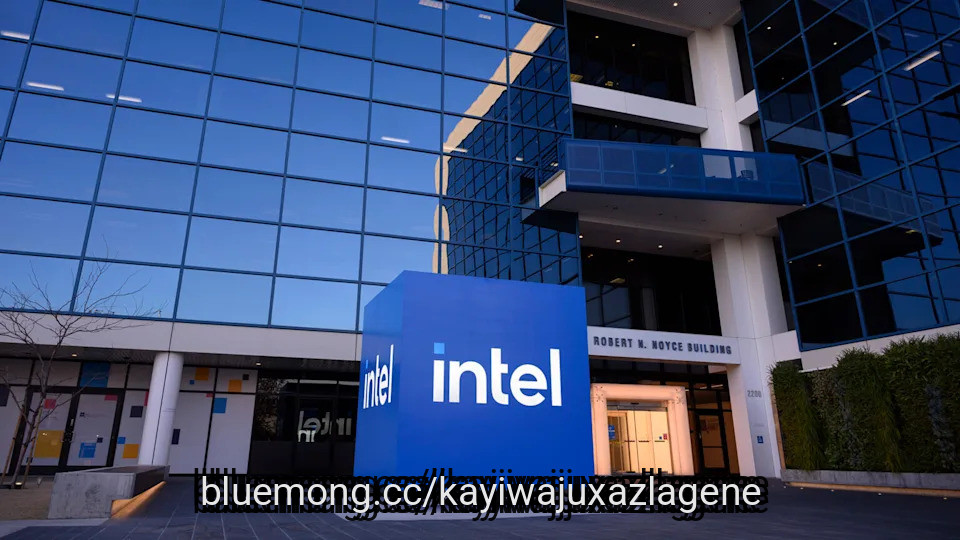
Intel Corp.'s headquarters, the Robert Noyce Building in Santa Clara, California. Photo from Intel Corp website
The companies said Intel Corporation (NASDAQ:INTC) would build Nvidia-custom x86 CPUs for Nvidia AI infrastructure and x86 system-on-chips integrating Nvidia RTX GPU chiplets for PCs. The latest official disclosures reviewed still describe those custom products as a collaboration under development, so the investment's market value is ahead of the operating evidence.
The bull case is an ecosystem bridge. Nvidia can pair its accelerators, networking, and NVLink with an enormous x86 software base. Intel gains a powerful partner and a route to more valuable data-center and client packages. If the jointly developed products arrive on schedule and win meaningful volume, both companies could strengthen their positions across heterogeneous computing.
The countercase is execution. Intel Foundry posted a $2.089 billion operating loss in the second quarter. Intel also reported an $11.033 billion GAAP net loss attributable to the company, largely distorted by a $12.529 billion mark-to-market loss on shares held in escrow for the U.S. government; non-GAAP net income was $2.197 billion. The accounting charge should not be mistaken for foundry performance, but the segment loss shows that manufacturing economics remain difficult. Product delays or weak adoption could keep the alliance strategically interesting without making it profitable. At the same time, Intel's revenue rose 25% year over year to $16.128 billion, so the quarter was not simply an operating collapse.
#loss
Intel Corp.'s headquarters, the Robert Noyce Building in Santa Clara, California. Photo from Intel Corp website
The companies said Intel Corporation (NASDAQ:INTC) would build Nvidia-custom x86 CPUs for Nvidia AI infrastructure and x86 system-on-chips integrating Nvidia RTX GPU chiplets for PCs. The latest official disclosures reviewed still describe those custom products as a collaboration under development, so the investment's market value is ahead of the operating evidence.
The bull case is an ecosystem bridge. Nvidia can pair its accelerators, networking, and NVLink with an enormous x86 software base. Intel gains a powerful partner and a route to more valuable data-center and client packages. If the jointly developed products arrive on schedule and win meaningful volume, both companies could strengthen their positions across heterogeneous computing.
The countercase is execution. Intel Foundry posted a $2.089 billion operating loss in the second quarter. Intel also reported an $11.033 billion GAAP net loss attributable to the company, largely distorted by a $12.529 billion mark-to-market loss on shares held in escrow for the U.S. government; non-GAAP net income was $2.197 billion. The accounting charge should not be mistaken for foundry performance, but the segment loss shows that manufacturing economics remain difficult. Product delays or weak adoption could keep the alliance strategically interesting without making it profitable. At the same time, Intel's revenue rose 25% year over year to $16.128 billion, so the quarter was not simply an operating collapse.
#loss

2 months ago
The September Effect has a reputation for making investors nervous. September has historically been the weakest month of the year for U.S. stocks across a data set stretching back 98 years. For investors watching companies in the artificial intelligence (AI) ***** e this year, September could be a useful test of whether a stock's investment thesis rests on price momentum or on business progress.
That distinction matters for Micron Technology (NASDAQ: MU) and Nvidia (NASDAQ: NVDA). Both companies are seeing conditions shift as the AI build-out progresses into a new stage, but the more interesting story is what is happening beneath the headlines about graphics processing units (GPUs) and central processing units (CPUs).
Missed Nvidia in 2009? This Rare Signal Is Flashing Again. In 2009, a "Double Down" signal flashed for a little-known chipmaker called Nvidia. For the first time in years, that same "Total Conviction" signal is flashing for a company 1/100th the size of Nvidia. Continue »
Micron is one of the clearest examples of how AI infrastructure is changing.
The company produces HBM4, a type of high bandwidth memory (HBM) that Nvidia is embedding in its brand-new Vera Rubin platform, but that is only part of the opportunity. Micron is also shipping SOCAMM2 low-power memory and its PCIe Gen6 9650 data center solid-state drive in high volumes. Those products address all the different memory-related needs of an AI system: accelerator memory, CPU-attached memory, and storage.
#NVIDIA #september #micron
That distinction matters for Micron Technology (NASDAQ: MU) and Nvidia (NASDAQ: NVDA). Both companies are seeing conditions shift as the AI build-out progresses into a new stage, but the more interesting story is what is happening beneath the headlines about graphics processing units (GPUs) and central processing units (CPUs).
Missed Nvidia in 2009? This Rare Signal Is Flashing Again. In 2009, a "Double Down" signal flashed for a little-known chipmaker called Nvidia. For the first time in years, that same "Total Conviction" signal is flashing for a company 1/100th the size of Nvidia. Continue »
Micron is one of the clearest examples of how AI infrastructure is changing.
The company produces HBM4, a type of high bandwidth memory (HBM) that Nvidia is embedding in its brand-new Vera Rubin platform, but that is only part of the opportunity. Micron is also shipping SOCAMM2 low-power memory and its PCIe Gen6 9650 data center solid-state drive in high volumes. Those products address all the different memory-related needs of an AI system: accelerator memory, CPU-attached memory, and storage.
#NVIDIA #september #micron


2 months ago
Sands Capital, an investment management company, released its "Sands Capital Select Growth Fund" Q2 2026 investor letter. The letter can be downloaded here. Select Growth Fund targets U.S. businesses driving significant structural change through disruptive innovation. The fund returned 23.2% in the quarter, outperforming the Russell 1000 Growth Index's 16.7% gain. U.S. large-cap growth equities rebounded sharply, driven by improving corporate fundamentals and renewed investor confidence in AI, despite geopolitical uncertainties. However, the market's gains were narrow, concentrated among AI beneficiaries. The portfolio's success stemmed from strength in AI infrastructure holdings, especially memory and storage, supported by better pricing and tightening supply. As AI development advances, continuous demand for compute capacity is expected, prompting investments in memory, CPUs, AI chips, and semiconductor manufacturing to address emerging bottlenecks essential for scaling AI. Also, check the fund's top five holdings to see its best picks in 2026.
In its second-quarter 2026 investor letter, Sands Capital Select Growth Fund highlighted DoorDash, Inc. (NASDAQ:DASH). DoorDash, Inc. (NASDAQ:DASH) is a US-based leading online food ordering and delivery platform. On September 2, 2026, DoorDash, Inc. (NASDAQ:DASH) closed at $226.24 per share. DoorDash, Inc. (NASDAQ:DASH) returned 8.87% over the past month, while its shares lost 9.06% over the past 52 weeks. DoorDash, Inc. (NASDAQ:DASH) has a market capitalization of $98.04 billion.
Sands Capital Select Growth Fund stated the following regarding DoorDash, Inc. (NASDAQ:DASH) in its Q2 2026 investor letter:
"The sales of DoorDash, Inc. (NASDAQ:DASH) and Nu Holdings reflected the high bar for inclusion in a concentrated portfolio of roughly 30 businesses. We continue to view both companies as high-quality businesses and will monitor them closely but believe the portfolio would be better served by reallocating capital toward AI infrastructure beneficiaries and other idiosyncratic growth opportunities."
DoorDash, Inc. (NASDAQ:DASH) is on our list of the 40 Most Popular Stocks Among Hedge Funds. As per our database, 107 hedge fund portfolios held DoorDash, Inc. (NASDAQ:DASH) at the end of the second quarter which was 117 in the previous quarter. While we acknowledge the potential of DoorDash, Inc. (NASDAQ:DASH) as an investment, we believe certain AI stocks offer greater upside potential and carry less downside risk. If you're looking for an extremely undervalued AI stock that also stands to benefit significantly from Trump-era tariffs and the onshoring trend, see our free report on the best short-term AI stock.
#doordash #dash #letter
In its second-quarter 2026 investor letter, Sands Capital Select Growth Fund highlighted DoorDash, Inc. (NASDAQ:DASH). DoorDash, Inc. (NASDAQ:DASH) is a US-based leading online food ordering and delivery platform. On September 2, 2026, DoorDash, Inc. (NASDAQ:DASH) closed at $226.24 per share. DoorDash, Inc. (NASDAQ:DASH) returned 8.87% over the past month, while its shares lost 9.06% over the past 52 weeks. DoorDash, Inc. (NASDAQ:DASH) has a market capitalization of $98.04 billion.
Sands Capital Select Growth Fund stated the following regarding DoorDash, Inc. (NASDAQ:DASH) in its Q2 2026 investor letter:
"The sales of DoorDash, Inc. (NASDAQ:DASH) and Nu Holdings reflected the high bar for inclusion in a concentrated portfolio of roughly 30 businesses. We continue to view both companies as high-quality businesses and will monitor them closely but believe the portfolio would be better served by reallocating capital toward AI infrastructure beneficiaries and other idiosyncratic growth opportunities."
DoorDash, Inc. (NASDAQ:DASH) is on our list of the 40 Most Popular Stocks Among Hedge Funds. As per our database, 107 hedge fund portfolios held DoorDash, Inc. (NASDAQ:DASH) at the end of the second quarter which was 117 in the previous quarter. While we acknowledge the potential of DoorDash, Inc. (NASDAQ:DASH) as an investment, we believe certain AI stocks offer greater upside potential and carry less downside risk. If you're looking for an extremely undervalued AI stock that also stands to benefit significantly from Trump-era tariffs and the onshoring trend, see our free report on the best short-term AI stock.
#doordash #dash #letter


2 months ago
Sands Capital, an investment management company, released its "Sands Capital Select Growth Fund" Q2 2026 investor letter. The letter can be downloaded here. Select Growth Fund targets U.S. businesses driving significant structural change through disruptive innovation. The fund returned 23.2% in the quarter, outperforming the Russell 1000 Growth Index's 16.7% gain. U.S. large-cap growth equities rebounded sharply, driven by improving corporate fundamentals and renewed investor confidence in AI, despite geopolitical uncertainties. However, the market's gains were narrow, concentrated among AI beneficiaries. The portfolio's success stemmed from strength in AI infrastructure holdings, especially memory and storage, supported by better pricing and tightening supply. As AI development advances, continuous demand for compute capacity is expected, prompting investments in memory, CPUs, AI chips, and semiconductor manufacturing to address emerging bottlenecks essential for scaling AI. Also, check the fund's top five holdings to see its best picks in 2026.
In its second-quarter 2026 investor letter, Sands Capital Select Growth Fund highlighted Micron Technology, Inc. (NASDAQ:MU). Micron Technology, Inc. (NASDAQ:MU) is a leading semiconductor company manufacturing memory and storage products. On September 02, 2026, Micron Technology, Inc. (NASDAQ:MU) closed at $956.08 per share. Over the past month, Micron Technology, Inc. (NASDAQ:MU) returned 8.46%, but its shares are up 669.73% over the past year. Micron Technology, Inc. (NASDAQ:MU) has a market capitalization of $1.08 trillion, and its stock has traded within a 52-week range of $118.52 to $1,255.00.
Sands Capital Select Growth Fund stated the following regarding Micron Technology, Inc. (NASDAQ:MU) in its Q2 2026 investor letter:
"Micron Technology, Inc. (NASDAQ:MU) and SanDisk increased the portfolio's exposure to memory, which has become a critical bottleneck in the AI infrastructure stack. Agentic AI systems require greater context, faster retrieval, and more persistent memory, increasing demand for DRAM, high-bandwidth memory, and NAND. At the same time, advanced memory remains difficult, capital intensive, and time consuming to manufacture. The industry has also become more consolidated and disciplined, which should limit the speed of supply response. We believe this combination of accelerating demand and constrained supply can support stronger pricing, better margins, and a more durable earnings cycle for leading memory providers."
#NASDAQ #fund #sands #investor
In its second-quarter 2026 investor letter, Sands Capital Select Growth Fund highlighted Micron Technology, Inc. (NASDAQ:MU). Micron Technology, Inc. (NASDAQ:MU) is a leading semiconductor company manufacturing memory and storage products. On September 02, 2026, Micron Technology, Inc. (NASDAQ:MU) closed at $956.08 per share. Over the past month, Micron Technology, Inc. (NASDAQ:MU) returned 8.46%, but its shares are up 669.73% over the past year. Micron Technology, Inc. (NASDAQ:MU) has a market capitalization of $1.08 trillion, and its stock has traded within a 52-week range of $118.52 to $1,255.00.
Sands Capital Select Growth Fund stated the following regarding Micron Technology, Inc. (NASDAQ:MU) in its Q2 2026 investor letter:
"Micron Technology, Inc. (NASDAQ:MU) and SanDisk increased the portfolio's exposure to memory, which has become a critical bottleneck in the AI infrastructure stack. Agentic AI systems require greater context, faster retrieval, and more persistent memory, increasing demand for DRAM, high-bandwidth memory, and NAND. At the same time, advanced memory remains difficult, capital intensive, and time consuming to manufacture. The industry has also become more consolidated and disciplined, which should limit the speed of supply response. We believe this combination of accelerating demand and constrained supply can support stronger pricing, better margins, and a more durable earnings cycle for leading memory providers."
#NASDAQ #fund #sands #investor


2 months ago
Billionaire Stanley Druckenmiller made two very different-looking AI purchases in the second quarter that share one underlying thesis. Duquesne Family Office increased its Amazon.com, Inc. (NASDAQ:AMZN) position by 1,083% to 541,600 shares and opened a 72,900-share stake in Advanced Micro Devices, Inc. (NASDAQ:AMD). One company rents computing capacity through AWS; the other supplies accelerators and server processors. Together, the positions give Duquesne exposure to an AI infrastructure platform and a credible alternative chip supplier, although the filing does not disclose Druckenmiller's rationale.
Amazon.com, Inc. (NASDAQ:AMZN) offers the demand platform. AWS revenue grew 36.7% in the second quarter, while Amazon's capital-spending trajectory approached roughly $220 billion. The bull case is that its cloud customer relationships, custom silicon, and enormous infrastructure base let it capture AI usage across models and chips. The bear case is that depreciation, power, and construction costs arrive before utilization. Even strong cloud growth must eventually produce returns on a spending program larger than many national economies.
Advanced Micro Devices, Inc. (NASDAQ:AMD) offers more direct operating leverage. Its data-center revenue more than doubled, and customers want an alternative to Nvidia for accelerators and CPUs. If AMD's software improves and hyperscalers deploy Instinct at scale, revenue can grow faster than the broader infrastructure market. Yet it must compete against an entrenched platform while also funding an aggressive roadmap. A second-source narrative is valuable, but only sustained deployments turn it into durable margins.
The common exposure works because Amazon can profit from rising AI consumption regardless of which merchant chip gains share, while AMD can benefit if that consumption creates room for multiple suppliers. The risks also interact. Amazon's own chips could limit AMD's opportunity, and slower cloud utilization would pressure both the buyer of infrastructure and the seller of processors. Both positions could benefit if the market grows faster than those internal conflicts.
Hedge funds moved in the same direction. Amazon ownership rose to 369 funds in the second quarter from 353, while AMD ownership jumped to 164 from 134. Arrowstreet Capital increased its Amazon position 24% to 40.3 million shares, and Marshall Wace raised its AMD common-share stake 3% to 3.9 million shares. As of August 14, 40.1 million AMD shares were sold short, equal to 2.47% of the float and 1.5 days of trading volume. The modest short-interest snapshot shows limited reported short positioning in AMD; it does not resolve whether AMD can capture enough of the spending Amazon is helping unleash.
#amazon #shares
Amazon.com, Inc. (NASDAQ:AMZN) offers the demand platform. AWS revenue grew 36.7% in the second quarter, while Amazon's capital-spending trajectory approached roughly $220 billion. The bull case is that its cloud customer relationships, custom silicon, and enormous infrastructure base let it capture AI usage across models and chips. The bear case is that depreciation, power, and construction costs arrive before utilization. Even strong cloud growth must eventually produce returns on a spending program larger than many national economies.
Advanced Micro Devices, Inc. (NASDAQ:AMD) offers more direct operating leverage. Its data-center revenue more than doubled, and customers want an alternative to Nvidia for accelerators and CPUs. If AMD's software improves and hyperscalers deploy Instinct at scale, revenue can grow faster than the broader infrastructure market. Yet it must compete against an entrenched platform while also funding an aggressive roadmap. A second-source narrative is valuable, but only sustained deployments turn it into durable margins.
The common exposure works because Amazon can profit from rising AI consumption regardless of which merchant chip gains share, while AMD can benefit if that consumption creates room for multiple suppliers. The risks also interact. Amazon's own chips could limit AMD's opportunity, and slower cloud utilization would pressure both the buyer of infrastructure and the seller of processors. Both positions could benefit if the market grows faster than those internal conflicts.
Hedge funds moved in the same direction. Amazon ownership rose to 369 funds in the second quarter from 353, while AMD ownership jumped to 164 from 134. Arrowstreet Capital increased its Amazon position 24% to 40.3 million shares, and Marshall Wace raised its AMD common-share stake 3% to 3.9 million shares. As of August 14, 40.1 million AMD shares were sold short, equal to 2.47% of the float and 1.5 days of trading volume. The modest short-interest snapshot shows limited reported short positioning in AMD; it does not resolve whether AMD can capture enough of the spending Amazon is helping unleash.
#amazon #shares
2 months ago
Sands Capital, an investment management company, released its "Sands Capital Select Growth Fund" Q2 2026 investor letter. The letter can be downloaded here. Select Growth Fund targets U.S. businesses driving significant structural change through disruptive innovation. The fund returned 23.2% in the quarter, outperforming the Russell 1000 Growth Index's 16.7%. U.S. large-cap growth equities rebounded sharply, driven by improving corporate fundamentals and renewed investor confidence in AI, despite geopolitical uncertainties. However, the market's gains were narrow, concentrated among AI beneficiaries. The portfolio's success stemmed from strength in AI infrastructure holdings, especially memory and storage, supported by better pricing and tightening supply. As AI development advances, continuous demand for compute capacity is expected, prompting investments in memory, CPUs, AI chips, and semiconductor manufacturing to address emerging bottlenecks essential for scaling AI. Also, check the fund's top five holdings to see its best picks in 2026.
In its second-quarter 2026 investor letter, Sands Capital Select Growth Fund highlighted Intercontinental Exchange, Inc. (NYSE:ICE), a US-based financial services company that provides technology, data, and market infrastructure to financial institutions, corporations, and government entities. On September 1, 2026, Intercontinental Exchange, Inc. (NYSE:ICE) closed at $159.60 per share. Over the past month, Intercontinental Exchange, Inc. (NYSE:ICE) returned 4.85%, while its shares have declined 10.30% in the last 52 weeks. Intercontinental Exchange, Inc. (NYSE:ICE) has a market capitalization of $89.6 billion, and its stock has traded within a 52-week range of $121.79 to $177.00.
Sands Capital Select Growth Fund stated the following regarding Intercontinental Exchange, Inc. (NYSE:ICE) in its Q2 2026 investor letter:
"Intercontinental Exchange, Inc. (NYSE:ICE) is one of the world's largest operators of financial exchanges and clearinghouses. Shares declined as investor concerns around AI disruption in ICE's Mortgage business and potential competition from perpetual futures contracts weighed on the stock. Much of the underperformance appears to reflect multiple compression rather than a weakening of fundamentals, which remain solid. In our view, the market is overestimating the risk that AI will displace ICE Mortgage. The business is not simply a workflow solution; it is a platform that connects lenders, data vendors, and other participants required to originate, sell, and service mortgages, while also serving as a system of record for a significant portion of the U.S. mortgage ecosystem. We also believe concerns around perpetual futures competition are overstated, as the structure of these products may limit their use in institutional hedging and risk management, particularly before accounting for liquidity. As such, we believe the recent sell-off more than discounts these risks."
#investor
In its second-quarter 2026 investor letter, Sands Capital Select Growth Fund highlighted Intercontinental Exchange, Inc. (NYSE:ICE), a US-based financial services company that provides technology, data, and market infrastructure to financial institutions, corporations, and government entities. On September 1, 2026, Intercontinental Exchange, Inc. (NYSE:ICE) closed at $159.60 per share. Over the past month, Intercontinental Exchange, Inc. (NYSE:ICE) returned 4.85%, while its shares have declined 10.30% in the last 52 weeks. Intercontinental Exchange, Inc. (NYSE:ICE) has a market capitalization of $89.6 billion, and its stock has traded within a 52-week range of $121.79 to $177.00.
Sands Capital Select Growth Fund stated the following regarding Intercontinental Exchange, Inc. (NYSE:ICE) in its Q2 2026 investor letter:
"Intercontinental Exchange, Inc. (NYSE:ICE) is one of the world's largest operators of financial exchanges and clearinghouses. Shares declined as investor concerns around AI disruption in ICE's Mortgage business and potential competition from perpetual futures contracts weighed on the stock. Much of the underperformance appears to reflect multiple compression rather than a weakening of fundamentals, which remain solid. In our view, the market is overestimating the risk that AI will displace ICE Mortgage. The business is not simply a workflow solution; it is a platform that connects lenders, data vendors, and other participants required to originate, sell, and service mortgages, while also serving as a system of record for a significant portion of the U.S. mortgage ecosystem. We also believe concerns around perpetual futures competition are overstated, as the structure of these products may limit their use in institutional hedging and risk management, particularly before accounting for liquidity. As such, we believe the recent sell-off more than discounts these risks."
#investor


2 months ago
Sands Capital, an investment management company, released its "Sands Capital Select Growth Fund" Q2 2026 investor letter. The letter can be downloaded here. Select Growth Fund targets U.S. businesses driving significant structural change through disruptive innovation. The fund returned 23.2% in the quarter, outperforming the Russell 1000 Growth Index's 16.7%. U.S. large-cap growth equities rebounded sharply, driven by improving corporate fundamentals and renewed investor confidence in AI, despite geopolitical uncertainties. However, the market's gains were narrow, concentrated among AI beneficiaries. The portfolio's success stemmed from strength in AI infrastructure holdings, especially memory and storage, supported by better pricing and tightening supply. As AI development advances, continuous demand for compute capacity is expected, prompting investments in memory, CPUs, AI chips, and semiconductor manufacturing to address emerging bottlenecks essential for scaling AI. Also, check the fund's top five holdings to see its best picks in 2026.
In its second-quarter 2026 investor letter, Sands Capital Select Growth Fund highlighted Sphere Entertainment Co. (NYSE:SPHR). Sphere Entertainment Co. (NYSE:SPHR) is a US-based live entertainment and media company. On September 1, 2026, Sphere Entertainment Co. (NYSE:SPHR) closed at $133.30 per share, reflecting a market capitalization of $4.79 billion. Sphere Entertainment Co. (NYSE:SPHR) posted a one-month return of -17.02%, while its shares gained 175.53% over the past 52 weeks.
Sands Capital Select Growth Fund stated the following regarding Sphere Entertainment Co. (NYSE:SPHR) in its Q2 2026 investor letter:
"Sphere Entertainment Co. (NYSE:SPHR) and ****** e Exploration Technologies (SpaceX) were added as more idiosyncratic growth opportunities. Sphere is creating a new category of immersive live entertainment, where we believe premium in-person experiences may become more valuable as digital content becomes increasingly abundant. Its Las Vegas venue combines live events, original content, and proprietary technology, creating the potential for high utilization and attractive venue-level economics. Over time, the investment case depends on Sphere's ability to scale beyond Las Vegas through additional venues, licensing, and high-margin content monetization."
Sphere Entertainment Co. (NYSE:SPHR) is not on our list of the 40 Most Popular Stocks Among Hedge Funds. As per our database, 1 hedge fund portfolios held Sphere Entertainment Co. (NYSE:SPHR) at the end of the second quarter, which was 2 in the previous quarter. While we acknowledge the potential of Sphere Entertainment Co. (NYSE:SPHR) as an investment, we believe certain AI stocks offer greater upside potential and carry less downside risk. If you're looking for an extremely undervalued AI stock that also stands to benefit significantly from Trump-era tariffs and the onshoring trend, see our free report on the best short-term AI stock.
#NYSE #s
In its second-quarter 2026 investor letter, Sands Capital Select Growth Fund highlighted Sphere Entertainment Co. (NYSE:SPHR). Sphere Entertainment Co. (NYSE:SPHR) is a US-based live entertainment and media company. On September 1, 2026, Sphere Entertainment Co. (NYSE:SPHR) closed at $133.30 per share, reflecting a market capitalization of $4.79 billion. Sphere Entertainment Co. (NYSE:SPHR) posted a one-month return of -17.02%, while its shares gained 175.53% over the past 52 weeks.
Sands Capital Select Growth Fund stated the following regarding Sphere Entertainment Co. (NYSE:SPHR) in its Q2 2026 investor letter:
"Sphere Entertainment Co. (NYSE:SPHR) and ****** e Exploration Technologies (SpaceX) were added as more idiosyncratic growth opportunities. Sphere is creating a new category of immersive live entertainment, where we believe premium in-person experiences may become more valuable as digital content becomes increasingly abundant. Its Las Vegas venue combines live events, original content, and proprietary technology, creating the potential for high utilization and attractive venue-level economics. Over time, the investment case depends on Sphere's ability to scale beyond Las Vegas through additional venues, licensing, and high-margin content monetization."
Sphere Entertainment Co. (NYSE:SPHR) is not on our list of the 40 Most Popular Stocks Among Hedge Funds. As per our database, 1 hedge fund portfolios held Sphere Entertainment Co. (NYSE:SPHR) at the end of the second quarter, which was 2 in the previous quarter. While we acknowledge the potential of Sphere Entertainment Co. (NYSE:SPHR) as an investment, we believe certain AI stocks offer greater upside potential and carry less downside risk. If you're looking for an extremely undervalued AI stock that also stands to benefit significantly from Trump-era tariffs and the onshoring trend, see our free report on the best short-term AI stock.
#NYSE #s


2 months ago
Sands Capital, an investment management company, released its "Sands Capital Select Growth Fund" Q2 2026 investor letter. The letter can be downloaded here. Select Growth Fund targets U.S. businesses driving significant structural change through disruptive innovation. The fund returned 23.2% in the quarter, outperforming the Russell 1000 Growth Index at 16.7%. U.S. large-cap growth equities rebounded sharply, driven by improving corporate fundamentals and renewed investor confidence in AI, despite geopolitical uncertainties. However, the market's gains were narrow, concentrated among AI beneficiaries. The portfolio's success stemmed from strength in AI infrastructure holdings, especially memory and storage, supported by better pricing and tightening supply. As AI development advances, continuous demand for compute capacity is expected, prompting investments in memory, CPUs, AI chips, and semiconductor manufacturing to address emerging bottlenecks essential for scaling AI. Also, check the fund's top five holdings to see its best picks in 2026.
In its Q2 2026 investor letter, Sands Capital Select Growth Fund highlighted Carpenter Technology Corporation (NYSE:CRS), a specialty metals manufacturer serving diversified industries. Carpenter Technology Corporation (NYSE:CRS), held since 2025 with a 4.2% portfolio weight, contributed 1.7% to the Fund's performance this quarter. On September 1, 2026, Carpenter Technology Corporation (NYSE:CRS) closed at $473.06 per share. Over the past month, Carpenter Technology Corporation (NYSE:CRS) declined 17.06%, while its shares are up 100.69% over the past year. Carpenter Technology Corporation (NYSE:CRS) has a market capitalization of $23.44 billion, and its stock has traded within a 52-week range of $228.00 to $625.99.
Sands Capital Select Growth Fund stated the following regarding Carpenter Technology Corporation (NYSE:CRS) in its Q2 2026 investor letter:
"Carpenter Technology Corporation (NYSE:CRS) is a leading supplier of specialty nickel alloys for the aerospace industry. Fiscal third quarter results reinforced our margin thesis as the company demonstrated significant operating leverage as the aerospace equipment cycle continued to recover. Specialty Alloys Operations generated an 86 percent incremental margin in a quarter when volume grew at its strongest rate since the post-COVID aerospace recovery. In our view, the results helped validate that Carpenter's earnings power can continue to expand as the business benefits from improving volume, pricing, and mix. We maintain conviction, supported by Carpenter Technology's specialized materials leadership, pricing power, and exposure to a multiyear aerospace production recovery."
#technology #corporation #capital #select
In its Q2 2026 investor letter, Sands Capital Select Growth Fund highlighted Carpenter Technology Corporation (NYSE:CRS), a specialty metals manufacturer serving diversified industries. Carpenter Technology Corporation (NYSE:CRS), held since 2025 with a 4.2% portfolio weight, contributed 1.7% to the Fund's performance this quarter. On September 1, 2026, Carpenter Technology Corporation (NYSE:CRS) closed at $473.06 per share. Over the past month, Carpenter Technology Corporation (NYSE:CRS) declined 17.06%, while its shares are up 100.69% over the past year. Carpenter Technology Corporation (NYSE:CRS) has a market capitalization of $23.44 billion, and its stock has traded within a 52-week range of $228.00 to $625.99.
Sands Capital Select Growth Fund stated the following regarding Carpenter Technology Corporation (NYSE:CRS) in its Q2 2026 investor letter:
"Carpenter Technology Corporation (NYSE:CRS) is a leading supplier of specialty nickel alloys for the aerospace industry. Fiscal third quarter results reinforced our margin thesis as the company demonstrated significant operating leverage as the aerospace equipment cycle continued to recover. Specialty Alloys Operations generated an 86 percent incremental margin in a quarter when volume grew at its strongest rate since the post-COVID aerospace recovery. In our view, the results helped validate that Carpenter's earnings power can continue to expand as the business benefits from improving volume, pricing, and mix. We maintain conviction, supported by Carpenter Technology's specialized materials leadership, pricing power, and exposure to a multiyear aerospace production recovery."
#technology #corporation #capital #select


2 months ago
Sands Capital, an investment management company, released its "Sands Capital Select Growth Fund" Q2 2026 investor letter. The letter can be downloaded here. Select Growth Fund targets U.S. businesses driving significant structural change through disruptive innovation. The fund returned 23.2% in the quarter, outperforming the Russell 1000 Growth Index's 16.7%. U.S. large-cap growth equities rebounded sharply, driven by improving corporate fundamentals and renewed investor confidence in AI, despite geopolitical uncertainties. However, the market's gains were narrow, concentrated among AI beneficiaries. The portfolio's success stemmed from strength in AI infrastructure holdings, especially memory and storage, supported by better pricing and tightening supply. As AI development advances, continuous demand for compute capacity is expected, prompting investments in memory, CPUs, AI chips, and semiconductor manufacturing to address emerging bottlenecks essential for scaling AI. Also, check the fund's top five holdings to see its best picks in 2026.
In its second-quarter 2026 investor letter, Sands Capital Select Growth Fund highlighted Lam Research Corporation (NASDAQ:LRCX), a leading semiconductor equipment company that supplies semiconductor processing equipment. Lam Research Corporation (NASDAQ:LRCX), with a 4.7% portfolio weight, contributed 2.2% to the Fund's performance this quarter. On September 1, 2026, Lam Research Corporation (NASDAQ:LRCX) closed at $290.20 per share. Over the past month, Lam Research Corporation (NASDAQ:LRCX) declined 5.60%, but its shares are up 196.91% over the past year. Lam Research Corporation (NASDAQ:LRCX) has a market capitalization of $363.13 billion.
Sands Capital Select Growth Fund stated the following regarding Lam Research Corporation (NASDAQ:LRCX) in its Q2 2026 investor letter:
"Lam Research Corporation (NASDAQ:LRCX) is a leading global provider of semiconductor fabrication equipment. Shares of the business benefited from renewed confidence in semiconductor capital spending and the rising complexity of chip manufacturing. In the first quarter, revenue grew 24 percent and adjusted earnings per share grew 42 percent year over year, while June-quarter guidance exceeded consensus expectations. The company is a critical supplier of etch and deposition equipment, both of which become increasingly important as memory architectures and leading-edge semiconductor manufacturing grow more complex. We believe Lam's exposure to high-bandwidth memory, advanced NAND, and a recovering memory investment cycle gives it a differentiated role within the AI infrastructure supply chain."
#NASDAQ #fund #select
In its second-quarter 2026 investor letter, Sands Capital Select Growth Fund highlighted Lam Research Corporation (NASDAQ:LRCX), a leading semiconductor equipment company that supplies semiconductor processing equipment. Lam Research Corporation (NASDAQ:LRCX), with a 4.7% portfolio weight, contributed 2.2% to the Fund's performance this quarter. On September 1, 2026, Lam Research Corporation (NASDAQ:LRCX) closed at $290.20 per share. Over the past month, Lam Research Corporation (NASDAQ:LRCX) declined 5.60%, but its shares are up 196.91% over the past year. Lam Research Corporation (NASDAQ:LRCX) has a market capitalization of $363.13 billion.
Sands Capital Select Growth Fund stated the following regarding Lam Research Corporation (NASDAQ:LRCX) in its Q2 2026 investor letter:
"Lam Research Corporation (NASDAQ:LRCX) is a leading global provider of semiconductor fabrication equipment. Shares of the business benefited from renewed confidence in semiconductor capital spending and the rising complexity of chip manufacturing. In the first quarter, revenue grew 24 percent and adjusted earnings per share grew 42 percent year over year, while June-quarter guidance exceeded consensus expectations. The company is a critical supplier of etch and deposition equipment, both of which become increasingly important as memory architectures and leading-edge semiconductor manufacturing grow more complex. We believe Lam's exposure to high-bandwidth memory, advanced NAND, and a recovering memory investment cycle gives it a differentiated role within the AI infrastructure supply chain."
#NASDAQ #fund #select


2 months ago
Sands Capital, an investment management company, released its "Sands Capital Select Growth Fund" Q2 2026 investor letter. The letter can be downloaded here. Select Growth Fund targets U.S. businesses driving significant structural change through disruptive innovation. The fund returned 23.2% in the quarter, outperforming the Russell 1000 Growth Index's 16.7%. U.S. large-cap growth equities rebounded sharply, driven by improving corporate fundamentals and renewed investor confidence in AI, despite geopolitical uncertainties. However, the market's gains were narrow, concentrated among AI beneficiaries. The portfolio's success stemmed from strength in AI infrastructure holdings, especially memory and storage, supported by better pricing and tightening supply. As AI development advances, continuous demand for compute capacity is expected, prompting investments in memory, CPUs, AI chips, and semiconductor manufacturing to address emerging bottlenecks essential for scaling AI. Also, check the fund's top five holdings to see its best picks in 2026.
In its second-quarter 2026 investor letter, Sands Capital Select Growth Fund highlighted Shopify Inc. (NASDAQ:SHOP). Shopify Inc. (NASDAQ:SHOP), a Canada-based e-commerce technology company that provides a cloud-based platform for individuals and companies to create and manage their operations, detracted from performance in the quarter. On September 01, 2026, Shopify Inc. (NASDAQ:SHOP) closed at $139.82 per share. Over the past month, Shopify Inc. (NASDAQ:SHOP) declined 3.06%, and its shares are down 0.29% over the past year. Shopify Inc. (NASDAQ:SHOP) has a market capitalization of $181.44 billion, and its stock has traded within a 52-week range of $94.00 to $182.19.
Sands Capital Select Growth Fund stated the following regarding Shopify Inc. (NASDAQ:SHOP) in its Q2 2026 investor letter:
"Shopify Inc. (NASDAQ:SHOP) is a leading global ecommerce platform enabling the next generation of retail. Shares declined as concerns around AI-related expenses and forward guidance overshadowed strong quarterly results. Revenue grew 32 percent, the company's fastest growth rate since 2021, supported by strength in North America and higher payments penetration. Investors focused on rising LLM costs ***** ociated with Sidekick, Shopify's AI ***** istant, and second-quarter guidance that implied sequential deceleration. In our view, these concerns are manageable. Shopify is embedding AI into its platform to improve merchant productivity, product discovery, conversion, and win rates, creating potential latent pricing power over time. Early traction is encouraging, with Sidekick usage up 400 percent and Campaigns usage up 300 percent year over year. We maintain conviction in Shopify's long-term growth, supported by enterprise adoption, international expansion, rising take rate, and AI-driven discovery and product enhancements."
#shop
In its second-quarter 2026 investor letter, Sands Capital Select Growth Fund highlighted Shopify Inc. (NASDAQ:SHOP). Shopify Inc. (NASDAQ:SHOP), a Canada-based e-commerce technology company that provides a cloud-based platform for individuals and companies to create and manage their operations, detracted from performance in the quarter. On September 01, 2026, Shopify Inc. (NASDAQ:SHOP) closed at $139.82 per share. Over the past month, Shopify Inc. (NASDAQ:SHOP) declined 3.06%, and its shares are down 0.29% over the past year. Shopify Inc. (NASDAQ:SHOP) has a market capitalization of $181.44 billion, and its stock has traded within a 52-week range of $94.00 to $182.19.
Sands Capital Select Growth Fund stated the following regarding Shopify Inc. (NASDAQ:SHOP) in its Q2 2026 investor letter:
"Shopify Inc. (NASDAQ:SHOP) is a leading global ecommerce platform enabling the next generation of retail. Shares declined as concerns around AI-related expenses and forward guidance overshadowed strong quarterly results. Revenue grew 32 percent, the company's fastest growth rate since 2021, supported by strength in North America and higher payments penetration. Investors focused on rising LLM costs ***** ociated with Sidekick, Shopify's AI ***** istant, and second-quarter guidance that implied sequential deceleration. In our view, these concerns are manageable. Shopify is embedding AI into its platform to improve merchant productivity, product discovery, conversion, and win rates, creating potential latent pricing power over time. Early traction is encouraging, with Sidekick usage up 400 percent and Campaigns usage up 300 percent year over year. We maintain conviction in Shopify's long-term growth, supported by enterprise adoption, international expansion, rising take rate, and AI-driven discovery and product enhancements."
#shop

2 months ago
Sands Capital, an investment management company, released its "Sands Capital Select Growth Fund" Q2 2026 investor letter. The letter can be downloaded here. Select Growth Fund targets U.S. businesses driving significant structural change through disruptive innovation. The fund returned 23.2% in the quarter, outperforming the Russell 1000 Growth Index's 16.7%. U.S. large-cap growth equities rebounded sharply, driven by improving corporate fundamentals and renewed investor confidence in AI, despite geopolitical uncertainties. However, the market's gains were narrow, concentrated among AI beneficiaries. The portfolio's success stemmed from strength in AI infrastructure holdings, especially memory and storage, supported by better pricing and tightening supply. As AI development advances, continuous demand for compute capacity is expected, prompting investments in memory, CPUs, AI chips, and semiconductor manufacturing to address emerging bottlenecks essential for scaling AI. Also, check the fund's top five holdings to see its best picks in 2026.
In its second-quarter 2026 investor letter, Sands Capital Technology Innovators Fund highlighted Spotify Technology S.A. (NYSE:SPOT). Spotify Technology S.A. (NYSE:SPOT) is a leading audio streaming subscription service provider monetizing through paid premium subscriptions and an ad-supported model. On September 1, 2026, Spotify Technology S.A. (NYSE:SPOT) closed at $544.15 per share. Over the past month, Spotify Technology S.A. (NYSE:SPOT) returned 12.84%, but its shares are down 21.97% over the past year. Spotify Technology S.A. (NYSE:SPOT) has a market capitalization of $111.86 billion, and its stock has traded within a 52-week range of $405.00 to $745.00.
Sands Capital Technology Innovators Fund stated the following regarding Spotify Technology S.A. (NYSE:SPOT) in its Q2 2026 investor letter:
"Spotify Technology S.A. (NYSE:SPOT) shares declined following first-quarter results after management guided margins lower due to a near-term increase in operating expenses. In our view, this spending reflects investment in future product development rather than a structurally higher cost base and likely signals the early stages of a new AI-enabled product cycle. Spotify's 2026 investor day helped address concerns around AI by reinforcing that AI could expand, rather than impair, the business model. Management highlighted a path to mid teens revenue growth through 2030, supported by new monetization opportunities, including AI music features, Audiobook+, and personal podcasts. The Universal Music Group partnership also provides a potential path to turn AI music into a paid feature. We believe Spotify's scale, pricing power, and distribution advantage position it to convert AI-enabled products into higher revenue per user and long-term margin expansion."
#spotify
In its second-quarter 2026 investor letter, Sands Capital Technology Innovators Fund highlighted Spotify Technology S.A. (NYSE:SPOT). Spotify Technology S.A. (NYSE:SPOT) is a leading audio streaming subscription service provider monetizing through paid premium subscriptions and an ad-supported model. On September 1, 2026, Spotify Technology S.A. (NYSE:SPOT) closed at $544.15 per share. Over the past month, Spotify Technology S.A. (NYSE:SPOT) returned 12.84%, but its shares are down 21.97% over the past year. Spotify Technology S.A. (NYSE:SPOT) has a market capitalization of $111.86 billion, and its stock has traded within a 52-week range of $405.00 to $745.00.
Sands Capital Technology Innovators Fund stated the following regarding Spotify Technology S.A. (NYSE:SPOT) in its Q2 2026 investor letter:
"Spotify Technology S.A. (NYSE:SPOT) shares declined following first-quarter results after management guided margins lower due to a near-term increase in operating expenses. In our view, this spending reflects investment in future product development rather than a structurally higher cost base and likely signals the early stages of a new AI-enabled product cycle. Spotify's 2026 investor day helped address concerns around AI by reinforcing that AI could expand, rather than impair, the business model. Management highlighted a path to mid teens revenue growth through 2030, supported by new monetization opportunities, including AI music features, Audiobook+, and personal podcasts. The Universal Music Group partnership also provides a potential path to turn AI music into a paid feature. We believe Spotify's scale, pricing power, and distribution advantage position it to convert AI-enabled products into higher revenue per user and long-term margin expansion."
#spotify


2 months ago
Hewlett Packard Enterprise raised its fiscal 2026 revenue growth forecast to a range of 34% to 37%, up from a prior range of 29% to 33%, after reporting record quarterly sales driven by demand for AI servers and networking equipment.
Third-quarter revenue rose 34% from a year earlier to $12.2 billion, the company said. HPE also raised its adjusted earnings per share forecast for the full year to between $3.75 and $3.85, up from a prior range of $3.35 to $3.45.
HPE stock fell more than 5% in extended trading after the results were released. Although revenue beat the consensus ******* yst estimate, it missed the mark for investors who had anticipated even stronger results, according to Bloomberg.
Server revenue climbed 35% to $6.8 billion in the quarter. Networking revenue jumped 75% to $2.9 billion, driven by data center networking that more than doubled and a 270% surge in routing revenue, the company said.
Supply constraints remain a limiting factor. Chief Executive Officer Antonio Neri said on a conference call that HPE is working with partners to secure additional multiyear supply agreements, according to Bloomberg. Chief Financial Officer Marie Myers told Reuters that memory tops the list of constrained components, with NAND, CPUs, and drives also creating shortfalls, and that the company has entered into extended supply agreements to shore up access to critical parts. "Demand is far outstripping supply," Myers said.
#Networking #range
Third-quarter revenue rose 34% from a year earlier to $12.2 billion, the company said. HPE also raised its adjusted earnings per share forecast for the full year to between $3.75 and $3.85, up from a prior range of $3.35 to $3.45.
HPE stock fell more than 5% in extended trading after the results were released. Although revenue beat the consensus ******* yst estimate, it missed the mark for investors who had anticipated even stronger results, according to Bloomberg.
Server revenue climbed 35% to $6.8 billion in the quarter. Networking revenue jumped 75% to $2.9 billion, driven by data center networking that more than doubled and a 270% surge in routing revenue, the company said.
Supply constraints remain a limiting factor. Chief Executive Officer Antonio Neri said on a conference call that HPE is working with partners to secure additional multiyear supply agreements, according to Bloomberg. Chief Financial Officer Marie Myers told Reuters that memory tops the list of constrained components, with NAND, CPUs, and drives also creating shortfalls, and that the company has entered into extended supply agreements to shore up access to critical parts. "Demand is far outstripping supply," Myers said.
#Networking #range
2 months ago
Dell (NYSE:DELL) is gearing up to report its fiscal 2027 second-quarter earnings results after the market closes on Tuesday, Sept. 1. Management will also hold a live conference call with Wall Street ***** ysts.
A longtime maker of personal computers, Dell has gotten involved in the artificial intelligence trade by selling servers to data centers and other companies implementing AI solutions, serving as the skeletal structure connecting the components that power AI.
Missed Nvidia in 2009? This Rare Signal Is Flashing Again. In 2009, a "Double Down" signal flashed for a little-known chipmaker called Nvidia. For the first time in years, that same "Total Conviction" signal is flashing for a company 1/100th the size of Nvidia. Continue »
This includes central processing units (CPUs), graphics processing units (GPUs), memory, storage, and more.
The stock has had a phenomenal year, up roughly 264%. While trading around a near-term event like earnings is always very difficult to predict, Dell's next earnings report could send the stock soaring. Here's why.
#signal
A longtime maker of personal computers, Dell has gotten involved in the artificial intelligence trade by selling servers to data centers and other companies implementing AI solutions, serving as the skeletal structure connecting the components that power AI.
Missed Nvidia in 2009? This Rare Signal Is Flashing Again. In 2009, a "Double Down" signal flashed for a little-known chipmaker called Nvidia. For the first time in years, that same "Total Conviction" signal is flashing for a company 1/100th the size of Nvidia. Continue »
This includes central processing units (CPUs), graphics processing units (GPUs), memory, storage, and more.
The stock has had a phenomenal year, up roughly 264%. While trading around a near-term event like earnings is always very difficult to predict, Dell's next earnings report could send the stock soaring. Here's why.
#signal

2 months ago
Nvidia Corp. (NASDAQ:NVDA) just posted a quarter that would make any other chipmaker blush. On its August 26 earnings call, the company reported $96.2 billion in revenue, more than double what it made a year earlier, and said AI demand has crossed into something it calls an inflection point. But buried inside the good news sat two admissions that matter just as much: memory costs are rising faster than expected, and Nvidia is now underwriting some of its own customers' growth. Both cut against the simple growth story.
Data center revenue reached $89 billion, up 117% year over year, and the ACIE segment, which covers AI labs, cloud providers, industrial and enterprise customers outside the big hyperscalers, grew 138% year over year to $40.0 billion. Management said that segment now represents roughly half of Nvidia's data center business, a sign that governments and specialized cloud operators are becoming nearly as important as Amazon or Microsoft. Sovereign AI revenue, sold mostly through regional NeoCloud partners, grew 35% sequentially and more than tripled from a year ago, and those partners are expected to exit the year with 8 gigawatts of installed capacity, up from roughly 3 gigawatts at the end of 2025.
The bigger shift is how much of each data center dollar Nvidia now keeps for itself. Management said the revenue potential per gigawatt of capacity has climbed from $18 billion in the Hopper generation to $40 billion with the upcoming Vera Rubin platform, as Nvidia sells the CPUs, networking gear and software around its chips rather than just the chips themselves. Networking revenue hit a record, up 18% sequentially, with Spectrum-X Ethernet sales growing 2.6 times year over year. Amazon deepened its own commitment too, agreeing to deploy an additional 2 million Nvidia GPUs through the second quarter of fiscal 2029 alongside new Vera CPUs, while adopting Nvidia's Omniverse and robotics software for its warehouse fleet.
None of this looks like a company running out of runway. Nvidia returned $26 billion to shareholders in the quarter, split between $20 billion in buybacks and $6 billion in dividends, with about $99 billion still left on its repurchase authorization. Global venture funding into AI topped $400 billion in the first half of 2026 alone, with roughly 70% of that money earmarked for compute, which happens to be exactly what Nvidia sells.
Growth this fast is not free. Gross margin held at 75% this quarter, but CFO Colette Kress told investors it will bottom out at 71% to 72% in the fourth quarter as memory component costs spike, and that the size of those price increases has already exceeded the company's own expectations and is set to climb further into next year. Operating expenses are rising too, up 11% sequentially to $8.2 billion, with guidance near $9 billion for the next quarter, and inventory swelled to $31.6 billion as Nvidia stocks up ahead of the Vera Rubin launch.
#vera
Data center revenue reached $89 billion, up 117% year over year, and the ACIE segment, which covers AI labs, cloud providers, industrial and enterprise customers outside the big hyperscalers, grew 138% year over year to $40.0 billion. Management said that segment now represents roughly half of Nvidia's data center business, a sign that governments and specialized cloud operators are becoming nearly as important as Amazon or Microsoft. Sovereign AI revenue, sold mostly through regional NeoCloud partners, grew 35% sequentially and more than tripled from a year ago, and those partners are expected to exit the year with 8 gigawatts of installed capacity, up from roughly 3 gigawatts at the end of 2025.
The bigger shift is how much of each data center dollar Nvidia now keeps for itself. Management said the revenue potential per gigawatt of capacity has climbed from $18 billion in the Hopper generation to $40 billion with the upcoming Vera Rubin platform, as Nvidia sells the CPUs, networking gear and software around its chips rather than just the chips themselves. Networking revenue hit a record, up 18% sequentially, with Spectrum-X Ethernet sales growing 2.6 times year over year. Amazon deepened its own commitment too, agreeing to deploy an additional 2 million Nvidia GPUs through the second quarter of fiscal 2029 alongside new Vera CPUs, while adopting Nvidia's Omniverse and robotics software for its warehouse fleet.
None of this looks like a company running out of runway. Nvidia returned $26 billion to shareholders in the quarter, split between $20 billion in buybacks and $6 billion in dividends, with about $99 billion still left on its repurchase authorization. Global venture funding into AI topped $400 billion in the first half of 2026 alone, with roughly 70% of that money earmarked for compute, which happens to be exactly what Nvidia sells.
Growth this fast is not free. Gross margin held at 75% this quarter, but CFO Colette Kress told investors it will bottom out at 71% to 72% in the fourth quarter as memory component costs spike, and that the size of those price increases has already exceeded the company's own expectations and is set to climb further into next year. Operating expenses are rising too, up 11% sequentially to $8.2 billion, with guidance near $9 billion for the next quarter, and inventory swelled to $31.6 billion as Nvidia stocks up ahead of the Vera Rubin launch.
#vera


2 months ago
After the close of trading on Aug. 26, Nvidia (NASDAQ: NVDA) reported a set of operating results for its fiscal 2027 second quarter (ended July 26, 2026) that blew away Wall Street's expectations, and the company also unexpectedly offered some very bullish forward revenue guidance for fiscal 2028. As a result, Nvidia's stock price soared by almost 9% the very next day.
There is a long list of reasons why Nvidia stock is still a buy, but there is also room for caution right now, particularly surrounding the deals that management is cutting with many of the company's biggest artificial intelligence (AI) customers. So, before investors buy the stock, here's a breakdown of the good news and the bad news.
Missed Nvidia in 2009? This Rare Signal Is Flashing Again. In 2009, a "Double Down" signal flashed for a little-known chipmaker called Nvidia. For the first time in years, that same "Total Conviction" signal is flashing for a company 1/100th the size of Nvidia. Continue »
Nvidia supplies the world's best graphics processing units (GPUs) for data centers, which are the main chips used in AI training and inference workloads. The company's new Vera Rubin systems, which include Rubin GPUs, Vera central processors (CPUs), and a series of advanced networking components, provide up to 30 times more performance per megawatt than its previous Blackwell Ultra systems, highlighting the sheer pace of innovation.
Nvidia says Vera Rubin systems will also reduce inference token costs by a staggering 97% compared to Blackwell Ultra. Inference tokens are the text, images, or computer code generated by an AI model in response to a query, so these new chips will dramatically reduce the cost of deploying AI software. This might encourage more AI usage while making data center operators more profitable, which will only increase demand for Nvidia's chips.
#gpus
There is a long list of reasons why Nvidia stock is still a buy, but there is also room for caution right now, particularly surrounding the deals that management is cutting with many of the company's biggest artificial intelligence (AI) customers. So, before investors buy the stock, here's a breakdown of the good news and the bad news.
Missed Nvidia in 2009? This Rare Signal Is Flashing Again. In 2009, a "Double Down" signal flashed for a little-known chipmaker called Nvidia. For the first time in years, that same "Total Conviction" signal is flashing for a company 1/100th the size of Nvidia. Continue »
Nvidia supplies the world's best graphics processing units (GPUs) for data centers, which are the main chips used in AI training and inference workloads. The company's new Vera Rubin systems, which include Rubin GPUs, Vera central processors (CPUs), and a series of advanced networking components, provide up to 30 times more performance per megawatt than its previous Blackwell Ultra systems, highlighting the sheer pace of innovation.
Nvidia says Vera Rubin systems will also reduce inference token costs by a staggering 97% compared to Blackwell Ultra. Inference tokens are the text, images, or computer code generated by an AI model in response to a query, so these new chips will dramatically reduce the cost of deploying AI software. This might encourage more AI usage while making data center operators more profitable, which will only increase demand for Nvidia's chips.
#gpus
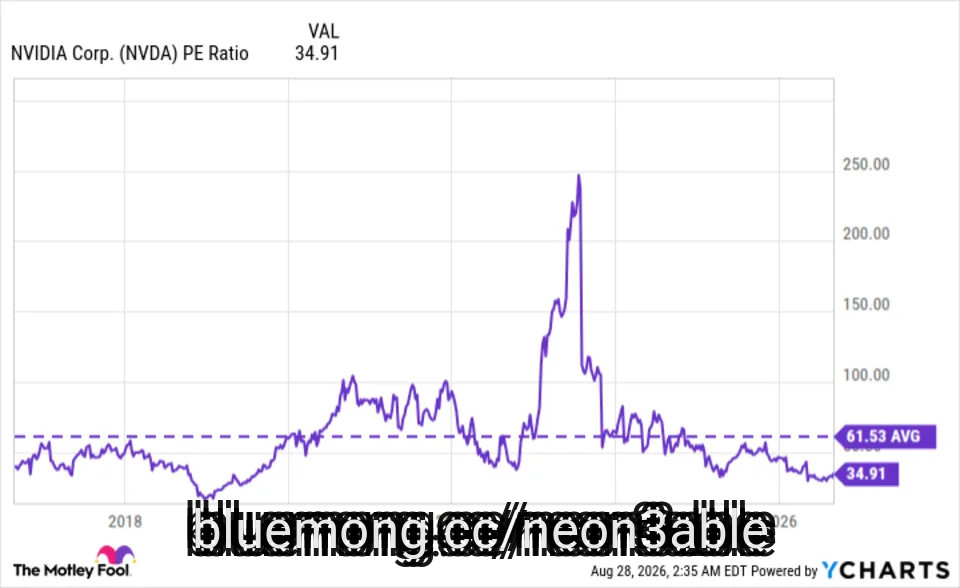
2 months ago
With a market cap of $760 billion, Advanced Micro Devices, Inc. (AMD) is a high-performance and AI computing company focused on driving innovation across cloud, AI infrastructure, embedded systems, AI PCs and gaming. Its broad portfolio includes AI-optimized CPUs, GPUs, networking and software designed to deliver powerful, scalable computing solutions.
Companies valued at $200 billion or more are generally classified as "mega-cap" stocks, and Advanced Micro Devices fits this criterion perfectly. AMD's full-stack AI technologies are helping enable the next generation of intelligent computing and support billions of experiences worldwide.
Jeff Bezos' Heartfelt Tribute to Dolly Parton Drew Brutal Backlash: 'Nobody Wanted to Hear This From You' — He Once Gave Her $100 Million for Charity
Intel vs. AMD: Why the Market Share Number Is Misleading
A $100 Billion Buildout In Louisiana Is Planned for Starship. What This Means for SPCX Stock.
#market #cpus
Companies valued at $200 billion or more are generally classified as "mega-cap" stocks, and Advanced Micro Devices fits this criterion perfectly. AMD's full-stack AI technologies are helping enable the next generation of intelligent computing and support billions of experiences worldwide.
Jeff Bezos' Heartfelt Tribute to Dolly Parton Drew Brutal Backlash: 'Nobody Wanted to Hear This From You' — He Once Gave Her $100 Million for Charity
Intel vs. AMD: Why the Market Share Number Is Misleading
A $100 Billion Buildout In Louisiana Is Planned for Starship. What This Means for SPCX Stock.
#market #cpus



2 months ago
Sustainable Growth Advisers (SGA), an investment management company, released its second-quarter 2026 investor letter for its "Global Growth Strategy." The letter can be downloaded here. The SGA Global Growth Portfolio returned 7.4% gross and 7.2% net, compared with 14.9% for the MSCI ACWI and 19.8% for the MSCI ACWI Growth Index. Momentum leadership and enthusiasm around AI infrastructure drove markets, with semiconductor, memory, and hardware stocks accounting for much of the gain. Although the portfolio owned AI beneficiaries, broader holdings lagged despite fundamentals, as median revenue and EPS growth reached 12% and 14% and more than 60% of the holdings beat expectations. SGA believes valuation compression reflects sentiment rather than weaker business quality, leaving the portfolio near its widest discount to the market since inception. The firm continues to favor durable compounders and expects 16% revenue growth and 20% earnings growth over three years. Also, please check the Fund's top five holdings to see its best picks for 2026.
In its second-quarter 2026 investor letter, SGA Global Growth Strategy highlighted Arm Holdings plc (NASDAQ:ARM) as a leading contributor. Arm Holdings plc (NASDAQ:ARM) is a UK-based technology company that develops and licenses central processing unit designs and related technologies for semiconductor companies and original equipment manufacturers. On August 21, 2026, Arm Holdings plc (NASDAQ:ARM) closed at $243.32 per share. The one-month return of Arm Holdings plc (NASDAQ:ARM) was -8.64%, and its shares gained 76.60% over the past 52 weeks. Arm Holdings plc (NASDAQ:ARM) has a market capitalization of $259.87 billion.
SGA Global Growth Strategy stated the following regarding Arm Holdings plc (NASDAQ:ARM) in its Q2 2026 investor letter:
"Arm Holdings plc (NASDAQ:ARM), leading designer and licensor of CPU architectures and related subsystems, was a top contributor to performance again this quarter. The company delivered solid quarterly results, including 20% revenue growth and 12% profit growth, with continued strength in licensing activity and sustained royalty expansion despite a tougher comparison period. Management guidance reinforced confidence in maintaining roughly 20% revenue growth, supported by increasing demand for Arm-based CPUs and expanding adoption across data center and AI workloads, which helped offset expected weakness in handset markets. Confidence was further supported by evidence of strong CPU demand, improving share gains versus x86 architectures, and growing customer traction, including an expanding roster of signed partners and management's confidence in achieving long-term revenue targets. With strong pricing power, highly recurring revenues, and expanding royalty rates as Arm captures more value across the compute stack, we continue to view the company as a high-quality, long-term compounder well-positioned to benefit from the proliferation of AI and power efficient computing. We
In its second-quarter 2026 investor letter, SGA Global Growth Strategy highlighted Arm Holdings plc (NASDAQ:ARM) as a leading contributor. Arm Holdings plc (NASDAQ:ARM) is a UK-based technology company that develops and licenses central processing unit designs and related technologies for semiconductor companies and original equipment manufacturers. On August 21, 2026, Arm Holdings plc (NASDAQ:ARM) closed at $243.32 per share. The one-month return of Arm Holdings plc (NASDAQ:ARM) was -8.64%, and its shares gained 76.60% over the past 52 weeks. Arm Holdings plc (NASDAQ:ARM) has a market capitalization of $259.87 billion.
SGA Global Growth Strategy stated the following regarding Arm Holdings plc (NASDAQ:ARM) in its Q2 2026 investor letter:
"Arm Holdings plc (NASDAQ:ARM), leading designer and licensor of CPU architectures and related subsystems, was a top contributor to performance again this quarter. The company delivered solid quarterly results, including 20% revenue growth and 12% profit growth, with continued strength in licensing activity and sustained royalty expansion despite a tougher comparison period. Management guidance reinforced confidence in maintaining roughly 20% revenue growth, supported by increasing demand for Arm-based CPUs and expanding adoption across data center and AI workloads, which helped offset expected weakness in handset markets. Confidence was further supported by evidence of strong CPU demand, improving share gains versus x86 architectures, and growing customer traction, including an expanding roster of signed partners and management's confidence in achieving long-term revenue targets. With strong pricing power, highly recurring revenues, and expanding royalty rates as Arm captures more value across the compute stack, we continue to view the company as a high-quality, long-term compounder well-positioned to benefit from the proliferation of AI and power efficient computing. We


