
1 month ago
On September 10, 2026, The Lovesac Company (NASDAQ:LOVE) reported second-quarter fiscal 2027 results for the period ended August 2, 2026. Net sales rose 0.4% to $161.2 million, a record for the quarter, and the company swung to net income of $7.4 million, or $0.51 per diluted share, from a loss of $6.7 million a year earlier. Inside that $0.51 sits $0.86 of net benefit from IEEPA tariff refunds. Omni-channel comparable sales fell 1.9%.
Canaccord's Maria Ripps read the quarter as in line, with revenue and adjusted EBITDA both landing within guidance and near consensus while tariff refunds pushed gross margin and earnings above expectations; she cut the firm's target on The Lovesac Company (NASDAQ:LOVE) to $20 from $22 but held the Buy rating.
Roth Capital's Matt Koranda also called the quarter in line with consensus, though he flagged omni-channel comps trending modestly negative on soft lower-end consumer demand. He lowered the firm's target on The Lovesac Company (NASDAQ:LOVE) to $20 from $22 as well, keeping a Buy rating, and noted that management reset full-year guidance lower on a tough demand environment and modest product launch delays.
DA Davidson offered a similar interpretation of the lower guidance, arguing that the reset reflects the new CFO's approach more than a deterioration in the underlying business. The firm said the CFO, who joined during the quarter, appears to be establishing more conservative expectations that could restore a beat-and-raise pattern the stock had lacked. DA Davidson lowered its target on The Lovesac Company (NASDAQ:LOVE) to $18 from $20 while maintaining its Buy rating.
The operating case rests on the high end: configurations above $6,000 grew double digits against a tough comparison, showroom net sales rose 4.6% to $114.1 million on 14 net new locations, and Snugg helped push other products revenue up 198.2%. Lovesac ended the quarter with $68.8 million in cash and no debt.
#quarter


1 month ago
On September 14, Radiant Logistics (NYSEAMERICAN:RLGT) held its fourth fiscal quarter earnings call, and the headline numbers landed harder than a typical logistics update. Net income jumped 53.1% to $7.5 million for the quarter ended June 30, while revenue climbed 18.5% to $261.4 million. Look past that one quarter, though, and the picture gets more complicated, because full-year adjusted profitability actually fell. That gap between a blowout quarter and a softer year is what makes this name worth a closer look.
The fourth fiscal quarter was strong from top to bottom. Adjusted EBITDA rose 31.6% to $10.4 million, margin expanded 240 basis points to 15.5%, and adjusted net income climbed 34.5% to $7.4 million, all against organic revenue growth of 8%. Management credited the acceleration to US forwarding operations and international airfreight, including work supporting disaster relief after typhoon activity hit the Western Pacific earlier this year, plus airfreight demand tied to capital flows into global data center buildouts.
The balance sheet backs up the story. Radiant enters fiscal 2027 with zero net debt, $25.6 million in cash as of June 30, and a $200 million senior credit facility that was extended and restated in August, pushing maturity out to August 7, 2031, while its acquisition-focused accordion grew to $100 million from $75 million. On the domestic side, capacity has been exiting the truckload and intermodal markets, and spot rates and tender rejections moved higher late in the quarter. Radiant also launched a new independent agent program at Radiant Road & Rail during the quarter, extending its freight forwarding agent network into truck brokerage and intermodal, while Navegate is gaining traction, with one enterprise customer now managing more than 1,400 vendors on the platform.
The full-year numbers tell a different story than the quarter does. Revenue rose just 3.5% to $934.4 million from $902.7 million, a fraction of the fourth quarter's 18.5% pace, and full-year net income grew a modest 8.7% to $18.8 million. Full-year adjusted EBITDA actually fell 5.4% to $36.7 million from $38.8 million, and that figure included a $1.3 million First Brands adjustment. Strip that out and normalized adjusted EBITDA comes in at $35.4 million, an even steeper decline than the headline number suggests.
The operating backdrop stays complicated too. Ocean shipping routes remain disrupted by the closure of the Strait of Hormuz and continued Houthi activity affecting Suez Canal transits, keeping capacity tight on key trade lanes. US tariff policy is generating elevated IEEPA-related filing activity, and Canada put new retaliatory tariff measures into effect in early September, adding fresh complexity for shippers moving goods across that border. Management itself acknowledged that the domestic truck brokerage improvement seen late in the fourth quarter is not yet fully reflected in the reported results.
#quarter #revenue


1 month ago
In March, shortly after the Supreme Court struck down President Donald Trump's International Emergency Economic Powers Act (IEEPA) tariffs and paved the way for $100 billion in import taxes being redistributed back to American importers, U.S. Trade Representative Jamieson Greer shared his idea of what these companies should do with this influx of cash.
"If I were these companies, and somehow they get this windfall, the most important thing and the smartest thing they should do is give it as bonuses to their workers," Greer told CNBC.
It appears some companies have heeded Greer's suggestion. As businesses receive more than $100 billion the U.S. Treasury has doled out in refunds since May, many are vowing to lower prices or pay down debts. A handful, however, are giving the cash back to their employees.
In its second quarter earnings report last month, houseware brand Williams Sonoma said it would allocate $10 million for one-time payments to 401(k) accounts to eligible employees "in recognition of their efforts navigating the IEEPA tariffs."
"We're so appreciative to have the money back and to be able to reward our employees with part of it," President and CEO Laura Alber said on an earnings call. "They have done such an amazing job."
#Companies #employees


1 month ago
On September 9, American Eagle Outfitters Inc. (NYSE:AEO) revealed results for its fiscal 2026 second quarter. The company achieved an 8% year-over-year topline growth with net revenue figures of $1.38 billion. The second quarter operating profit jumped up to $211 million compared to $103 million during the same period last year. As a result, diluted earnings per share for the quarter stood at $0.79 in comparison with $0.45 for Q2 FY25. This led to a $21 million distribution to shareholders with a dividend payout of $0.125 per share.
Africa Studio/Shutterstock.com
A resilient performance during the second quarter was primarily driven by robust momentum within the Aerie sub-brand and OFFLINE collection. There was a 6% year-over-year growth in company-wide comparable sales, whereas the Aerie's comparable sales picked up by 19%. Total gross profit for the quarter reached $672 million, which shows a 34% increase against $500 million for Q2 FY25. This pushed Q2 gross margins to 48.7%, a jump of 980 basis points relative to the previous year's quarter, despite 330 basis points deleveraging across the merchandise margins. Compared to an 8% operating margin in Q2 FY25, the company posted 15.3% margin in the recent period.
Even with a slight dip in comparable sales, the American Eagle brand also exhibited some encouraging signs. It posted sequential gains from the previous quarter, which marks the fourth consecutive quarter of expansion across menswear.
Results for the reported period were bolstered by $196 million in International Emergency Economic Powers Act (IEEPA) tariff refunds, which also included interest payments. This resulted in an additional $35 million in incentive compensation set aside by the company, which affected both gross profit and SG&A. After taking these additional expenses into consideration, the overall operating income gains related to tariff refunds amounted to $161 million.
#comparable


1 month ago
On September 10, Canaccord cut its price target for The Lovesac Company (NASDAQ:LOVE) from $22 to $20 but maintained its Buy rating on the stock. This update came after the company reported its financial results for the second quarter of fiscal 2027, which ended August 2, 2026.
Canaccord noted that the company's fiscal Q2 results were in line with expectations. Revenue and adjusted EBITDA were both within the company's guidance and close to consensus estimates. The company received $21 million in IEEPA tariff refunds, which helped lift gross margins and earnings above consensus.
The Lovesac Company (NASDAQ:LOVE) reported net sales 0.4% higher than the prior-year period. This slight increase was mainly driven by 14 net new showrooms, although this was partly offset by a 1.9% decline in omni-channel comparable net sales and the closure of the company's Best Buy shop-in-shop locations. During the quarter, the company opened five additional showrooms and closed two.
The company reported net income of $7.4 million in the second quarter, compared with a net loss of $6.7 million in the same period last year. Operating income also improved to $10.9 million from an operating loss of $8.8 million a year earlier.
Gross profit rose 21.7% year-over-year while gross margin expanded to 68.4% of net sales from 56.4%, an increase of 1,200 basis points. The improvement was largely driven by IEEPA tariff recoveries, which contributed 1,240 basis points to gross margin. Excluding those recoveries, gross margin was 56.0%, down 40 basis points from the prior-year period.
#year #sales #period


2 months ago
On September 14, Radiant Logistics (NYSEAMERICAN:RLGT) held its fourth fiscal quarter earnings call, and the headline numbers landed harder than a typical logistics update. Net income jumped 53.1% to $7.5 million for the quarter ended June 30, while revenue climbed 18.5% to $261.4 million. Look past that one quarter, though, and the picture gets more complicated, because full-year adjusted profitability actually fell. That gap between a blowout quarter and a softer year is what makes this name worth a closer look.
The fourth fiscal quarter was strong from top to bottom. Adjusted EBITDA rose 31.6% to $10.4 million, margin expanded 240 basis points to 15.5%, and adjusted net income climbed 34.5% to $7.4 million, all against organic revenue growth of 8%. Management credited the acceleration to US forwarding operations and international airfreight, including work supporting disaster relief after typhoon activity hit the Western Pacific earlier this year, plus airfreight demand tied to capital flows into global data center buildouts.
The balance sheet backs up the story. Radiant enters fiscal 2027 with zero net debt, $25.6 million in cash as of June 30, and a $200 million senior credit facility that was extended and restated in August, pushing maturity out to August 7, 2031, while its acquisition-focused accordion grew to $100 million from $75 million. On the domestic side, capacity has been exiting the truckload and intermodal markets, and spot rates and tender rejections moved higher late in the quarter. Radiant also launched a new independent agent program at Radiant Road & Rail during the quarter, extending its freight forwarding agent network into truck brokerage and intermodal, while Navegate is gaining traction, with one enterprise customer now managing more than 1,400 vendors on the platform.
The full-year numbers tell a different story than the quarter does. Revenue rose just 3.5% to $934.4 million from $902.7 million, a fraction of the fourth quarter's 18.5% pace, and full-year net income grew a modest 8.7% to $18.8 million. Full-year adjusted EBITDA actually fell 5.4% to $36.7 million from $38.8 million, and that figure included a $1.3 million First Brands adjustment. Strip that out and normalized adjusted EBITDA comes in at $35.4 million, an even steeper decline than the headline number suggests.
The operating backdrop stays complicated too. Ocean shipping routes remain disrupted by the closure of the Strait of Hormuz and continued Houthi activity affecting Suez Canal transits, keeping capacity tight on key trade lanes. US tariff policy is generating elevated IEEPA-related filing activity, and Canada put new retaliatory tariff measures into effect in early September, adding fresh complexity for shippers moving goods across that border. Management itself acknowledged that the domestic truck brokerage improvement seen late in the fourth quarter is not yet fully reflected in the reported results.
#million #quarter #revenue #fiscal

2 months ago
As continuous inflation squeezes household budgets, the discount retail sector should potentially benefit across the board, with middle- and lower-income consumers looking for value driving foot traffic into value chains. That's roughly what happened in the second-quarter reports from Dollar General Corporation (NYSE:DG) and Dollar Tree, Inc. (NASDAQ:DLTR), both of which were released in late August. Both retailers outperformed expectations, though only one company's stock was rewarded for this.
Dollar General Corporation (NYSE:DG) reported second-quarter results on August 27 that exceeded expectations, and shares rose more than 6.5% in premarket trading. Net sales increased 5.2% to $11.29 billion, surpassing the $11.2 billion market forecast, while diluted EPS came in at $2.48, up 33.3% year-over-year and well above the $2.01 ******* ysts projected. Same-store sales increased 3.5%, driven by a 2.0% increase in customer traffic and a 1.5% increase in average transaction amount, marking the fifth consecutive quarter of traffic growth and the sixth consecutive quarter of positive comps across all four merchandise categories.
Management improved their full-year estimate across the board: same-store sales growth is now expected to be 2.5% to 2.9%, up from 2.2% to 2.7% before, while full-year EPS guidance increased to $7.80-$8.00 from $7.20-$7.45. Tariff refunds, a lower LIFO provision, and improved shrink and damages helped increase the gross margin by 127 basis points to 32.6%. CEO Todd Vasos also pointed to continued market share gains from higher-income households switching away from traditional grocers, a trend the company has cited for several quarters, with management announcing plans to resume up to $700 million in share buybacks in the latter half of the year, backed by remodels under its Project Renovate and Project Elevate initiatives.
Dollar Tree's results, released on August 27, indicate a more complicated situation. Diluted EPS came in at $2.70, including a $1.31-per-share net benefit related to tariff refunds, while revenue increased 7% year-over-year to $4.89 billion. Comparable store sales up 3.7%, driven by a 3.3% gain in average ticket and a 0.4% increase in traffic, a return to positive traffic that occurred a full quarter ahead of management's internal plan.
However, the headline figure includes an important caveat: $1.31 of the $2.70 in EPS came from the net impact of $383 million in IEEPA tariff refunds after related reinvestment spending, duties, and taxes. Strip that out, and underlying EPS was $1.39, above the $1.00-$1.15 range management had guided to in May and about 23% above the $1.13 consensus estimate.
#TRAFFIC


2 months ago
Our ***** ysts just identified a stock with the potential to be the next Nvidia. Tell us how you invest and we'll show you why it's our #1 pick. Tap here.
Management attributes the sequential improvement in comparable sales to enhanced digital conversion and the successful scaling of private brand franchises like THERMACHILL.
The company is navigating a structural shift in customer behavior driven by GLP-1 medication adoption, which has led to temporary pauses in apparel purchasing during weight loss journeys.
Performance was significantly bolstered by a $4.6 million IEEPA tariff refund, which masked a 70 basis point decline in underlying merchandise margins caused by higher markdowns and shipping surcharges.
Strategic focus has shifted toward 'Fit Authority' through the FITMAP initiative, which has scanned 150,000 customers and resulted in higher average order values and lower return rates.
#performance


2 months ago
Ollie's Bargain Outlet Holdings Inc.'s (NASDAQ:OLLI) second quarter results were characterized by robust loyalty membership growth, store count expansion, and a notable boost in earnings despite weakness in comparable store sales. During the quarter, the retailer opened 15 new locations and shut down one store because of storm-related damages. This pushed its overall store count to 686 across 36 states, a year-over-year jump of 11.9%. The ongoing growth in its store network continues to be the core focus of Ollie's expansion roadmap, as the management recently confirmed its plans to open 75 new stores by the end of this fiscal year. Such a strategy strongly reflects on the extended growth potential of Ollie's existing business model.
Photo by Franki Chamaki on Unsplash
The company's loyalty program, Ollie's Army, continued to gain momentum during the recent quarter, raising its reach to 18.1 million members. This helped push net sales higher by 9.1% to $741.3 million, with the gain coming mainly from newly opened stores rather than sales at existing locations. Even with comparable sales trending downward, key profitability figures showed clear improvement.
With lower supply chain-related costs, gross margins expanded to 43.5%. A key factor behind this jump was the IEEPA tariff refunds, which contributed 380 basis points to gross margin on their own, in addition to broader reductions in tariff rates. This tariff-related benefit served as a meaningful cushion, helping to overcome the drop in comparable sales.
Together, these factors fueled substantial growth in the bottom line as the adjusted net income climbed 40.3% to $85.4 million, and adjusted net income per diluted share rose 43.4% to $1.42. This represented an outsized growth compared to overall sales growth, which highlights the impact of tariff refunds and margin improvements on the overall results.
#Growth #tariff

2 months ago
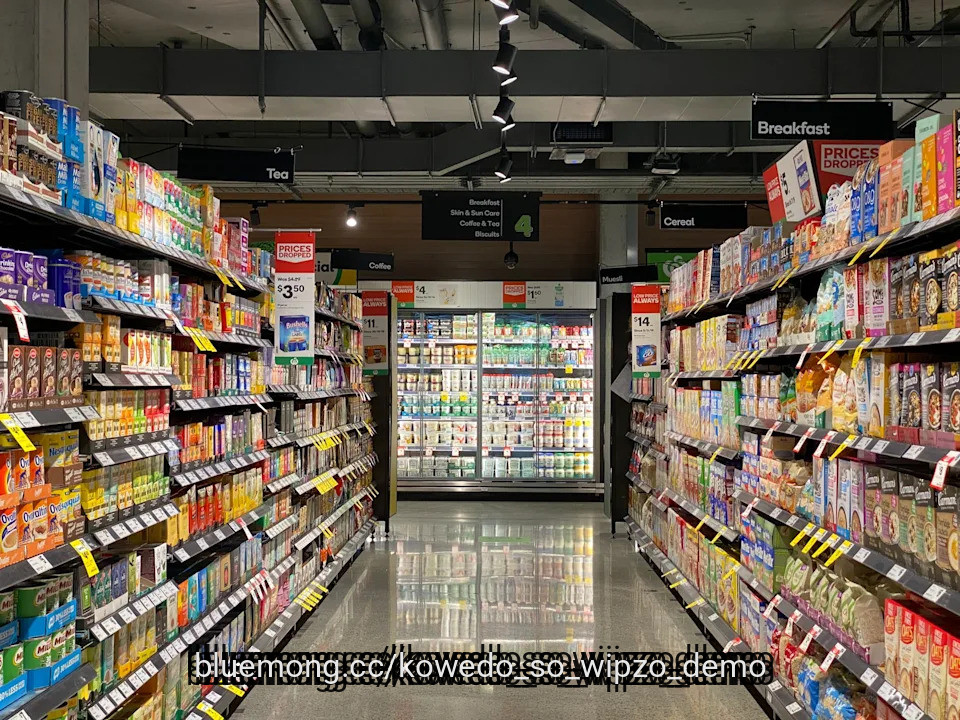
In the quarter ended 31 July 2026, the company's gross profit was $157.0m compared with $143.4m in the same period last year.
Gross margin increased by approximately 320 basis points to 52.0%, primarily due to International Emergency Economic Powers Act (IEEPA) tariff refunds, partly offset by costs related to a new joint venture royalty structure and temporary expenses from the warehouse management system rollout.
During the quarter, Lands' End posted $302m in net revenue, marking a 2.7% increase year-on-year. Its US e-commerce segment saw the strongest growth, with revenues up 9.0% to $182.4m.
This rebound followed earlier disruption related to the implementation of a new warehouse management system, with carryover shipments contributing to the quarterly rise.
Revenue of Lands' End Outfitters business rose by 4.4% to $69.3m, led by enterprise accounts, which offset ongoing challenges in the school uniform business caused by service processing delays.
#related #Warehouse #management #system

2 months ago
On August 26, Movado Group (NYSE:MOV) reported second-quarter fiscal 2027 results that pushed adjusted earnings per share to $0.54 from $0.23 a year earlier, while net sales climbed 4.9% to $169.8 million. The jewelry and watch company also confirmed it will stop issuing annual financial guidance going forward, choosing instead to focus commentary on near-term trends. For a business built on Swiss craftsmanship and a stable of licensed fashion brands, the quarter marked a fifth straight period of positive momentum, and it came with a few surprises tucked inside the numbers.
Some of the headline strength came from a one-time source: $3.2 million in IEEPA duty refunds tied to tariffs paid between February 2025 and May 2026, which lifted GAAP gross margin to 59.4% from 54.1%. But strip that out and adjusted gross margin still rose 340 basis points to 57.5%, driven by favorable channel and product mix, strategic pricing, and less discounting. Growth was broad rather than concentrated in one line item. US net sales rose 4.9%, international sales rose 4.9% as well (4.1% in constant currency), and Latin America and India posted particularly strong results.
Movado.com sales jumped 8%, and Olivia Burton sales grew 23%, powered by small-shaped watches focused on the U.K. and US markets. The company also flagged a resurgence in traditional watch interest among younger buyers, pointing to the Baby Face mini strap watch, which sold out more than 400 units on movado.com in under a month. Looking ahead, Movado is expanding its Tapestry partnership to launch Kate Spade watches starting next fiscal year. The balance sheet backs up the momentum, with $211.6 million in cash, no debt, and $16.6 million already returned to shareholders through dividends this year.
Not every piece of this quarter travels into the second half. Management was explicit that the favorable mix of lower duty rate inventory that padded margins is temporary and is not expected to continue, and second-half gross margin guidance of 55% to 56% reflects that normalization. Sallie DeMarsilis also noted that gross margin gains were partially offset by higher shipping costs tied to fuel surcharges and rising e-commerce volume.
Geographically, the Middle East remains a soft spot, with Efraim Grinberg citing tourism-related headwinds in a region still affected by regional conflict. Operating expenses rose to $85.7 million from $80.6 million, largely on higher performance-based compensation and marketing spend. There is also a smaller but notable item: a $0.2 million pretax charge tied to a misconduct investigation within a Dubai-based Swiss subsidiary branch. And while Movado expects to recover another $6.8 million in IEEPA duties, it has chosen not to recognize that gain until the cash actually arrives, a reminder that not all of this quarter's tailwind is guaranteed to repeat.
#second


2 months ago
Ross Stores, Inc. (NASDAQ:ROST) surged after raising its full-year fiscal 2026 earnings guidance. The off-price retailer boosted its FY26 EPS target to $8.61–$8.77 from $7.50–$7.74, cruising past consensus estimates of $7.82.
The primary catalyst was a stellar Q2 2026 report. Total sales rose 13% to $6.3 billion, beating estimates, while comparable-store sales jumped 10% versus 7.6% expected, driven primarily by customer traffic. Operating profits reached $1.1 billion, with operating margin expanding 610 basis points to include a 405 basis point boost from IEEPA tariff refunds. Reported diluted EPS reached $2.66 (vs. $1.56 a year ago), which included a $0.60 per share tariff refund benefit. Excluding this benefit, adjusted EPS came in at $2.06, still beating expectations driven by broad-based gains across customer demographics. The company also increased its fiscal 2026 store expansion plan to 115 new locations.
This performance brings up a core question: Does Ross Stores' double-digit comp growth signal sustainable market share gains, or will non-recurring tariff tailwinds and inventory buildup pressure future upside?
Wall Street **** ysts responded aggressively to the quarter. On August 21, Barclays **** yst Adrienne Yih raised the firm's price target on ROST to $298 from $260, keeping an Overweight rating. She cited the 10% comp beat, noting that Ross's "short-term execution gap versus peers remains wide" while trend strength has continued into Q3. The same day, Deutsche Bank raised its target to $294 from $283 with a Buy rating, highlighting that comp growth was driven by broad-based transaction gains and management's confidence in accelerating two-year comp momentum.
Operationally, Ross benefits from a scalable off-price model that efficiently sources excess inventory. Rapid turns and frequent product changes foster traffic and customer loyalty. Traffic gains across all merchandise categories indicate broad market share gains rather than reliance on a single segment. Furthermore, strong cash generation ($1.71 billion in H1 operating cash flow) supports store expansion, with 115 new openings planned for FY26, and continuous share buybacks without balance sheet strain.
#gains #Share #billion


2 months ago
Shares of Urban Outfitters (NASDAQ: URBN) charged sharply higher on Wednesday, surging as much as 8.5%. As of 2:46 p.m. ET, the stock was still up 8.4%.
The catalyst that drove the apparel retailer higher was robust results released by a competitor.
Missed Nvidia in 2009? This Rare Signal Is Flashing Again. In 2009, a "Double Down" signal flashed for a little-known chipmaker called Nvidia. For the first time in years, that same "Total Conviction" signal is flashing for a company 1/100th the size of Nvidia. Continue »
Abercrombie & Fitch (NYSE: ANF) released the results for its fiscal 2026 second quarter (ended Aug. 1), and shareholders rejoiced. The company generated record second-quarter net sales that rose 5% to $1.3 billion, marking its 15 consecutive quarter of growth. The gains were broad-based, with net sales in the Americas up 5%, sales in Asia Pacific (APAC) up 19%, and sales in Europe, the Middle East, and Africa (EMEA) up 2%. It also marked the best-ever second quarter across brands, with Abercrombie brands up 8% and Hollister up 2%.
Strong sales growth also boosted profits as adjusted earnings per diluted share (EPS) rose 79% to $4.17. It's worth noting that the results got a $100 million benefit -- or EPS of $1.75 -- from tariff refunds. The Supreme Court recently ruled that tariffs imposed by the Trump administration using the International Emergency Economic Powers Act (IEEPA) were illegal, prompting the refunds. However, even excluding the impact of the tariff refund, Abercrombie surpassed expectations.
#NVIDIA #second #higher #released

2 months ago
Kohl's reported second-quarter results on Wednesday that showed profit and net sales both declined from a year ago, even as a one-time tariff refund lifted the company's full-year earnings outlook.
Net sales fell to $3.32 billion from the prior year period, and same-store sales declined 0.9%. Profit came in at $151 million, or $1.28 per share, down from $153 million, or $1.35 per share, a year earlier.
Kohl's stock fell 5% to $16.75 in premarket trading on Wednesday.
Of the $150 million in IEEPA tariff refunds the retailer collected during the quarter, roughly $100 million reached gross margin, the Wall Street Journal reported.
With the tariff refund factored in, Kohl's updated its full-year adjusted earnings per share outlook to $1.80 to $2.40, compared with its previous guidance of $1.00 to $1.60, the company said. The company also tightened its full-year net sales and comparable sales guidance, bringing the range to flat to down 1.5% from a previously projected band of flat to down 2%.
#tariff

2 months ago
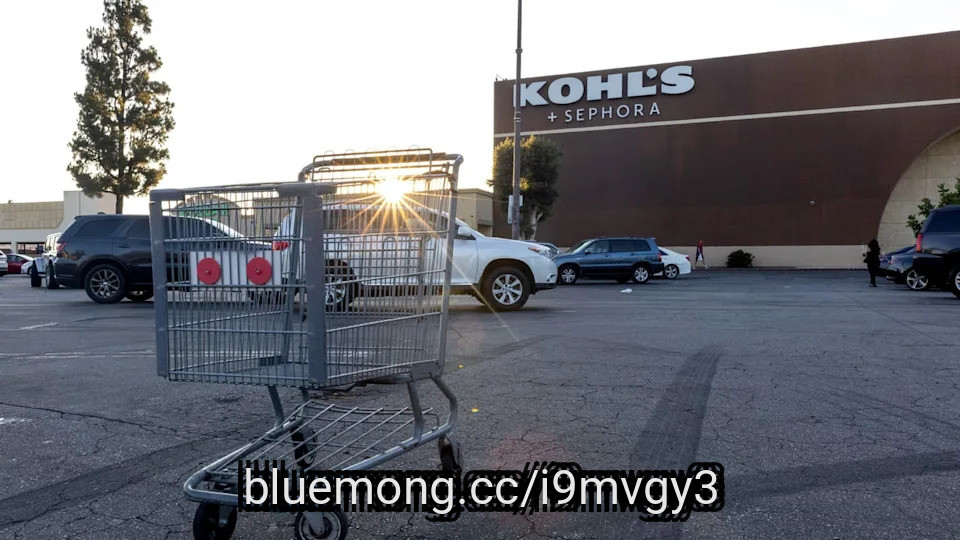
The off-price retailer now projects earnings per share for fiscal 2026 in the range of $8.61 to $8.77, factoring in a $0.60 per share benefit from approximately $253m in IEEPA tariff refunds received during the quarter.
For the period ended 3 August 2026, Ross Stores posted a 13% jump in total sales to $6.3bn, with comparable store sales up 10%, primarily driven by customer traffic.
Net income climbed to $851m from $508m last year, while earnings per share reached $2.66, surpassing previous guidance of $1.85 to $1.93.
Q2 operating profits totalled $1.1bn, including the impact of the tariff refunds, which contributed approximately 405 basis points to the quarter's 610 basis point operating margin increase.
Excluding this one-off benefit, operating margin rose by 205 basis points, outpacing the company's target.
#approximately


2 months ago
The off-price retailer now projects earnings per share for fiscal 2026 in the range of $8.61 to $8.77, factoring in a $0.60 per share benefit from approximately $253m in IEEPA tariff refunds received during the quarter.
For the period ended 3 August 2026, Ross Stores posted a 13% jump in total sales to $6.3bn, with comparable store sales up 10%, primarily driven by customer traffic.
Net income climbed to $851m from $508m last year, while earnings per share reached $2.66, surpassing previous guidance of $1.85 to $1.93.
Q2 operating profits totalled $1.1bn, including the impact of the tariff refunds, which contributed approximately 405 basis points to the quarter's 610 basis point operating margin increase.
Excluding this one-off benefit, operating margin rose by 205 basis points, outpacing the company's target.
#approximately #refunds #sales

2 months ago
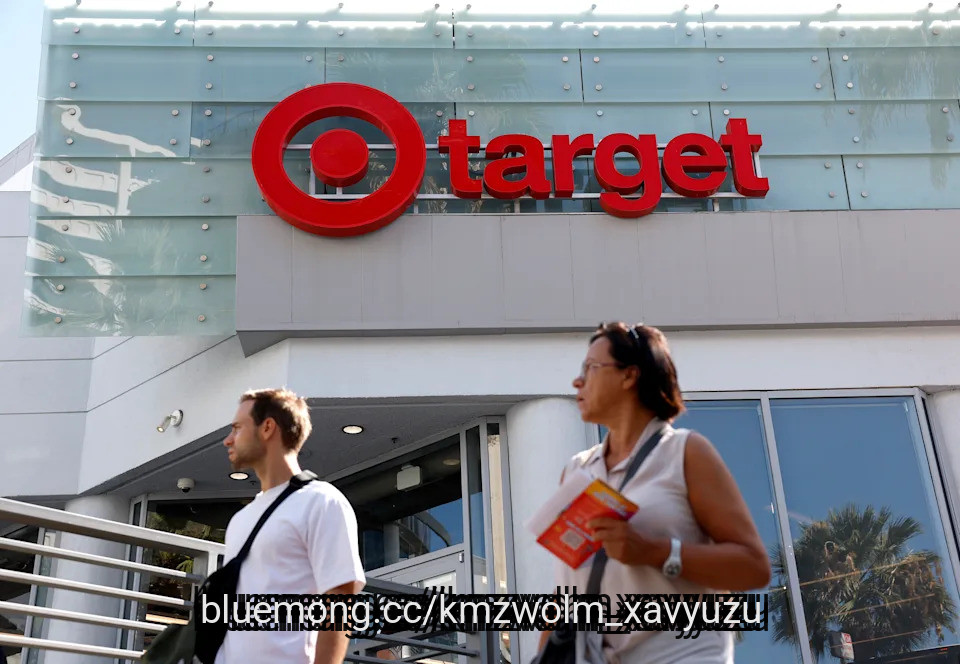
America's biggest retailers are now sitting on tariff refund checks from the federal government. How they plan to spend the billions of dollars in returns is up to them.
The retailers, including Amazon (AMZN), Target (TGT), and Walmart (WMT), are taking various approaches. Some have offset their costs and cushioned their margins, while others have invested in marketing and cutting prices. In a small number of cases, some even claim plans to return the money to customers.
David Silverman, senior director at Fitch Ratings, noted that the billions in refunds present a predicament for businesses because of the "perception by consumers that they ultimately paid the cost of those tariffs through higher prices."
As of late July, the Trump administration returned more than $100 billion to businesses following the Supreme Court's ruling in February that struck down tariffs imposed under the 1977 International Emergency Economic Powers Act (IEEPA). That's about 60% of the total $166 billion collected under the IEEPA tariffs.
The tariff environment is a "wild card," CFRA **** yst Arun Sundaram said, noting that "[It's] kind of different how each retailer is handling it, and it's also different between how much tariff refunds each retailer is getting."
#tariff #tariffs #prices #different
2 months ago
America's biggest retailers are now sitting on tariff refund checks from the federal government. How they plan to spend the billions of dollars in returns is up to them.
The retailers, including Amazon (AMZN), Target (TGT), and Walmart (WMT), are taking various approaches. Some have offset their costs and cushioned their margins, while others have invested in marketing and cutting prices. In a small number of cases, some even claim plans to return the money to customers.
David Silverman, senior director at Fitch Ratings, noted that the billions in refunds present a predicament for businesses because of the "perception by consumers that they ultimately paid the cost of those tariffs through higher prices."
As of late July, the Trump administration returned more than $100 billion to businesses following the Supreme Court's ruling in February that struck down tariffs imposed under the 1977 International Emergency Economic Powers Act (IEEPA). That's about 60% of the total $166 billion collected under the IEEPA tariffs.
The tariff environment is a "wild card," CFRA **** yst Arun Sundaram said, noting that "[It's] kind of different how each retailer is handling it, and it's also different between how much tariff refunds each retailer is getting."
#billions


2 months ago
Global data center energy usage is expected to rise 26% by 2026 to 565 terawatt-hours, while overall data center power demand will soar by 27% to 132 gigawatts. As grid capacity limits become the most significant bottleneck for hyperscalers, standby and prime continuous power generation systems have evolved into mission-critical equipment. For industrial **** ans Caterpillar Inc. (NYSE:CAT) and **** mins Inc. (NYSE:CMI), the steady demand for distributed power, along with strong North American construction expenditures, is driving record backlogs and prompting full-year guidance increases across the board.
The convergence of infrastructure investment and AI power demand was clearly visible when Caterpillar Inc. (NYSE:CAT) released its second-quarter 2026 results on August 4. Total sales increased 24% year-over-year to $20.5 billion, while adjusted earnings per share hit $8.17, greatly exceeding the $6.20 **** yst average expectation and igniting a 9% premarket stock rise. Operating margins increased to 20.9% from 17.3% the previous year, indicating a significant improvement in efficiency. Construction Industries led the way, growing 35% to $8.3 billion on a 50% increase in North American demand, while Power & Energy increased 17% to $8.2 billion.
Trade difficulties also eased during the quarter. After incurring a $710 million negative manufacturing cost hit largely from tariffs in Q1, Caterpillar Inc. (NYSE:CAT) reduced its full-year tariff forecast to approximately $2.2 billion (down from $2.2-$2.6 billion) and won $392 million in tariff recoveries under the International Emergency Economic Powers Act (IEEPA). Cash generation was also strong, with operating cash flow of $4.4 billion. Management increased full-year revenue expectations to mid- to high-teens percentage growth (up from low-double-digits), while returning $2.2 billion to shareholders in Q2 alone, including $1.5 billion in share buybacks and $0.7 billion in cash dividends.
In the same vein, **** mins Inc. (NYSE:CMI) told a very similar story of power-driven demand. The company reported record revenue of $9.5 billion, GAAP net income of $932 million, an EBITDA margin of 17.5%, and diluted earnings per share of $6.73. Synchronized demand from North American on-highway transport, Chinese construction activity, and high-performance generator sets for commercial data centers all helped operations.
Cummins Inc. (NYSE:CMI) increased its full-year revenue guide for 2026 to 10-13% growth (up from 8-11%) and its full-year EBITDA margin forecast to 18.0-18.5% (up from 17.75-18.5%). The company also maintained a disciplined capital deployment strategy, returning $501 million to shareholders in the quarter through dividends and buybacks.
#caterpillar


2 months ago
Lowe's (LOW) stock rose 2% on Wednesday after the company reported an earnings beat but gave a more cautious outlook, citing "pressure" in do-it-yourself (DIY) consumer spending.
In the second quarter, Lowe's revenue came in at $26 billion, just below the $26.1 billion the Street expected. Adjusted earnings per share, which included a $0.11 benefit from IEEPA tariff refunds, came in at $4.27, above the $4.22 the Street predicted based on Bloomberg estimates.
"Our total home strategy is working," Lowe's CEO Marvin Ellison told Yahoo Finance. "This strategic framework has enabled us to drive five consecutive quarters of positive comps. … With the DIY under pressure, we still have been able to deliver."
Poor weather during the Memorial Day weekend weighed on weather-sensitive outdoor and seasonal categories, as did competitors' use of tariff refunds to put up promotions on items like grills, patio, and live goods.
Amid a tough housing backdrop that disproportionately affects DIY customers, Lowe's same-store sales grew 0.2%, below the 0.7% expected.
#refunds

2 months ago
On August 11, Cardinal Health (NYSE:CAH) reported fourth-quarter fiscal 2026 results that on the surface look almost too good to be true. Non-GAAP diluted EPS jumped 40% year over year to $2.91, and full-year adjusted free cash flow hit $5 billion. But a large piece of that quarterly jump came from a one-time tariff refund, and the company's own guidance for the year ahead points to a much more normal pace of growth. That gap between the headline number and what's actually repeatable is where this story gets interesting.
Cardinal Health's fiscal 2026 was broad, not lucky. Operational growth was broad-based across segments, with fourth-quarter total revenue reaching $63.7 billion (up 6% year over year) driven by solid demand in Pharmaceutical and Specialty Solutions. Non-GAAP earnings per share have more than doubled since fiscal 2022, from $5.07 to $11.26, and adjusted free cash flow grew from $2.3 billion to $5 billion over that same four-year stretch, funding $7 billion returned to shareholders.
Pharmaceutical and Specialty Solutions did the heavy lifting again in the fourth quarter, with revenue up 6% to $58.8 billion and segment profit up 21% to $645 million on strength in both brand and Specialty. BioPharma Solutions landed two additional gene therapy 3PL commercialization agreements, with Cardinal Health now exclusively servicing nearly half the cell and gene therapy market and supporting approximately three-fourths of the total market overall. The smaller growth businesses continue to compound rapidly: Nuclear PET and Theranostics revenue grew 20% and 30% respectively in the fourth quarter, while at-Home Solutions posted a 99% total fill rate with its best quarter ever for on-time departures. The board also just authorized a $5 billion increase to the buyback program, pushing total authorization to $6.4 billion, and locked in a long-term Kroger contract extension along with a renewal of its largest medical products customer.
Look closer at that 40% EPS jump, though, and a chunk of it isn't repeatable. About $0.31 of the $2.91 in quarterly diluted earnings per share, roughly 15 percentage points of the 40% growth, came from a one-time $100 million net benefit tied to IEEPA tariff refunds landing in the Global Medical Products and Distribution segment. Strip that out and GMPD's fourth-quarter profit was just $50 million, and the company says it continues to incur ongoing costs from the tariffs that replaced IEEPA. Reported GMPD revenue actually fell 2% for the quarter.
#quarter #specialty


3 months ago
e.l.f. Beauty (NYSE:ELF) reported first-quarter fiscal 2027 results on August 5, and the headline number is hard to ignore. Net sales grew 36% year-over-year, marking the company's 30th consecutive quarter of net sales growth, a streak stretching back more than seven years. Management says only 6 of 516 public consumer companies tracked have matched that pace while averaging at least 20% quarterly growth. On the back of it, e.l.f. raised its full-year outlook to 18% to 20% net sales growth, up from 12% to 14% previously.
Of roughly 1,800 cosmetics and skin care brands Nielsen tracks, only 14 have topped $200 million in retail sales, and e.l.f. now owns four of them. Rhode, the Hailey Bieber brand, is the standout. It added about $160 million in net sales this quarter and posted $27 million in single-day sales on rhodeskin.com during its summer launch, pulling in 90,000 new customers while still drawing over 70% of sales from repeat buyers. International sales grew 61%, well ahead of the 29% domestic pace, as e.l.f. expands into Boots in the UK, Sephora in Brazil, and Naturium into Canada and Mexico this fall.
Rhode itself launches with Sephora across 19 European countries in September. The company is also pushing into haircare, with its June launch of e.l.f. Hair drew nearly half its buyers from outside the existing e.l.f. customer base, a sign the newer categories are expanding the audience rather than just cross-selling it.
Strip away Rhode and the core e.l.f. business told a different story this quarter. Organic net sales declined by a high single-digit percentage, and unit volumes fell about 3 percentage points even as pricing and mix added 39 points to overall growth. Management ran a pricing test this spring and ultimately cut prices on about 10% of e.l.f. SKUs to try to win back units, an acknowledgment that value positioning needed adjusting. Profitability also got a boost that will not repeat. Q1 gross margin jumped roughly 1,400 basis points to 83%, but over 1,050 of those basis points came from $50 million in IEEPA tariff refunds flowing through cost of goods. Adjusted EBITDA rose 93% to $168 million, yet excluding the refund, growth was 36%.
Management plans to reinvest the entire refund through lower prices and marketing, which it expects to be a net zero benefit to full-year EBITDA. SG&A as a share of sales also climbed to 54% from 50% a year earlier, and the company still owes the first payment on Rhode's earnout later this year given how far the brand has outperformed.
#back #sephora

3 months ago
On August 6, Allient (NASDAQ:ALNT) reported its second-quarter fiscal 2026 results, where revenue climbed 10% year-over-year to $153.8 million, gross margin hit a record 34.9%, and orders jumped 49% to $201.3 million, with a book-to-bill ratio of 1.31x. The company also flagged data center demand as a rising piece of its story. So is this durable, or a single strong quarter dressed up as a trend?
The breadth of the quarter stands out. Industrial revenue rose 17%, Aerospace & Defense grew 16%, and Medical increased 9% on demand for surgical robotics and other precision motion work. Data center and infrastructure sales, part of the Industrial bucket, reached $16.3 million, or 10.6% of total revenue, up 60% from a year earlier. On a trailing 12-month basis, those sales hit $57.1 million, up 69% year over year, tied to power quality products like harmonic filters and line reactors that help data centers manage increasingly dense electrical loads.
Profitability improved just as sharply. Operating income rose to $15.6 million from $11.7 million, pushing operating margin to 10.2%, the highest level in roughly a decade. Net income jumped 85% to $10.4 million, or $0.61 per diluted share, while adjusted EBITDA rose 18% to $23.7 million. Backlog ended the quarter at $298 million, with most of it expected to convert to revenue within three to nine months, giving management a clearer read on the back half of the year.
The Vehicle market was the exception to an otherwise strong quarter, with revenue falling 7% on weaker powersports demand. Aerospace & Defense growth of 16% also came despite the previously announced cancellation of the M10 Booker program, a reminder that individual defense contracts can disappear even as the broader segment grows. Management itself cautioned that the record gross margin benefited from favorable mix, and mix can be lumpy, meaning quarter-to-quarter variability should be expected even if the structural trend holds.
Restructuring and business realignment costs, tied partly to the Dothan facility transition, came in at $600,000 for the quarter and are expected to total $2 million to $3 million for the full year. Inventory turnover slipped slightly to 3.1x from 3.2x in 2025, reflecting deliberate investments in inventory and strategic material buys to support growth and hedge against tariff uncertainty. The company also noted it has submitted or expects to submit about $1.3 million in tariff refund claims tied to IEEPA, but hasn't recorded any receivable given the uncertainty around timing and amount.
#defense


3 months ago
NEW YORK (AP) — Government lawyers said a Court of International Trade judge overstepped his authority by ordering the U.S. Customs and Border Patrol to issue refunds to all companies that paid tariffs that were deemed illegal in February, even those that didn't file a lawsuit in trade court.
The government filed an appeal with the U.S. Court of Appeals for the Federal Circuit in June and filed its opening brief on Monday.
In it, government lawyers point to a case that went before the Supreme Court in June 2025, over birthright citizenship. Part of the decision in that case limited the use of universal injunctions, which apply a ruling to all people or companies affected, not just specific litigants.
Judge Richard Eaton, who is overseeing the tariff lawsuits in the Court of International Trade, has said the limits on universal injunctions don't apply in this case, but the government disagrees.
"The CIT's universal injunctions, requiring the government to refund IEEPA duties for all importers (including non-party importers), cannot possibly be squared with CASA," — the court case that limited universal injunctions, the government wrote it its brief.
#government #case #international

3 months ago
During the quarter ended 30 June 2026, revenue at Under Armour fell 3% year-on-year to $1.1bn, with sales in North America down 9% and Asia-Pacific declining 7%.
International revenue proved more resilient, increasing 5% to $490m, driven by a 12% rise in the Europe, the Middle East and Africa (EMEA) region and an 8% gain in Latin America.
Wholesale revenue declined 2%, while direct-to-consumer sales dropped 6%, including a 12% decrease in eCommerce.
Under Armour president and CEO Kevin Plank said: "As we navigate a challenging consumer demand environment, we continue to make progress in building a more focused Under Armour, despite updating our full-year revenue outlook."
The company's gross margin, however, improved 590 basis points to 54.1%, primarily due to tariff refunds under the International Emergency Economic Powers Act (IEEPA), which offset the negative impact of foreign exchange, regional mix, and pricing pressures.
#sales #Consumer #june #asia

3 months ago
Our ****** ysts just identified a stock with the potential to be the next Nvidia. Tell us how you invest and we'll show you why it's our #1 pick. Tap here.
Performance was significantly bolstered by $15.3 million in tariff refunds following a U.S. Supreme Court ruling that invalidated previous IEEPA levies.
Wholesale growth of 7% was driven by momentum in the Florsheim brand, which successfully expanded into hybrid and casual footwear categories.
Management attributed the Stacy Adams recovery to strong retail sell-through of traditional dress shoes, now being leveraged to pivot into casual lifestyle products.
Nunn Bush faced headwinds in the opening price point segment, prompting a strategy to differentiate through superior materials and comfort technology against lower-priced private labels.
#ieepa #wholesale


3 months ago
Most of the available pool of tariff revenue has been disbursed back to U.S. companies, but American consumers are still looking for their share of the refunds.
As of the end of July, about $100 billion in tariff refunds were sent to the U.S. Department of Treasury to be disbursed to approved importers, according to a Tuesday filing to the U.S. Court of International Trade. The total is about 60% of the $166 billion in revenues collected from import taxes under the International Emergency Economic Powers Act (IEEPA), which were struck down by the Supreme Court in February.
Some U.S. consumers, however, are getting antsy that they haven't seen any of that sum reach their own wallets. Last month, New York resident Tyasia Johns filed a class action lawsuit against discount retailer Five Below, claiming it failed to return the tariff refunds it received to customers who actually paid for the levies.
Johns alleged Five Below passed down the cost of the IEEPA tariffs to consumers through increased prices and was able to preserve its profits—seeing a 22.9% year-over-year increase in net sales to $4.76 billion in 2025—through these price increases. According to the lawsuit, Five Below has not confirmed whether it has applied for or received refunds through the U.S. Customs and Border Protection, or if it intends to pass down those refunds to consumers.
The complaint demanded injunctive relief and an award of actual damages to class members, but did not include the prospective size of the class or specific magnitude of damages.
#tariff #class


3 months ago
This story was originally published on Retail Dive. To receive daily news and insights, subscribe to our free daily Retail Dive newsletter.
Looking for immediate cash, some retailers sold off the economic rights to their potential IEEPA tariff refunds over the past year.
A secondary market emerged looking to purchase future refund claims from businesses amid the legal debate over President Donald Trump's levies imposed under the International Emergency Economic Powers Act, BDO Managing Principal David Wong told Retail Dive.
At a discount on the full value, buyers offered companies cash in exchange for the rights to those potential refunds that could come to fruition if the Supreme Court ruled against those levies. The approach is referred to as tariff refund monetization.
"For the seller, a lot of the risk is purely the economics of that transaction because of the uncertainty on exactly when an importer will receive their tariff refund," Wong said. "That's been the biggest risk. … Do I want to take a discount on the amount that could be refunded to me and get upfront cash today, and how does that compare with the full amount plus interest on if I got that amount at a later date?"
#cash #refund #amount #looking

3 months ago
Ram, Jeep, and Fiat parent company Stellantis (STLA) reported solid first-half results on Thursday morning, but only reaffirmed its prior guidance. Investors clearly wanted more from CEO Antonio Filosa's turnaround plan.
For the half, Stellantis reported revenue of 81.61 billion euros ($93.20 billion) vs. 80.71 billion euros per Bloomberg consensus, up 10% compared to last year. Stellantis posted adjusted earnings per share of 0.32 euros ($0.37) vs 0.35 euros expected, and adjusted operating income of 1.733 billion euros ($1.98 billion), more than triple the 540 million euros ($614 million) posted a year ago.
Stellantis confirmed its prior 2026 guidance, projecting net revenues to rise in the mid-single digits in 2026, with low-single-digit adjusted operating income margin. The company aims to return to positive industrial free cash flow by 2027.
The company said its net tariff headwind for the year is estimated at 1.0 billion to 1.2 billion euros ($1.14 billion-$1.37 billion), but Stellantis received an IEEPA refund of 400 million euros ($456.3 million) in the first half of the year.
Stellantis shares fell over 4% in premarket trade.
#stellantis #year


4 months ago
American companies are finally getting relief from tariff refunds—only it's just in time for a new wave of inflationary economic factors.
The U.S. Customs and Border Protection issued $49.2 billion in refunds in June, according to the U.S. Treasury's monthly statement, bringing total tariff refunds to about $71 billion, or more than 60% of the $166 billion available following the Supreme Court striking down tariffs under the International Emergency Economic Powers Act (IEEPA) in February.
But as companies recoup costs ******* ociated with the import taxes they were forced to pay last year, they're finding that, in many cases, those funds are being eaten up thanks to the impact of other economic pressures.
"We do expect some more pressure on the business from a commodity standpoint," PepsiCo Chief Financial Officer Steve Schmitt said in the company's earnings call last week. "We will be using the tariff, essentially the refunds, to help offset some commodity inflation that we're seeing and allow us to continue to play offense in the business."
The company's CEO Ramon Laguarta said the Iran war and its impact on gas prices in particular have impacted consumer behavior, reducing discretionary spending and trips to convenience stores, which is correlated with purchases.