
13 days ago
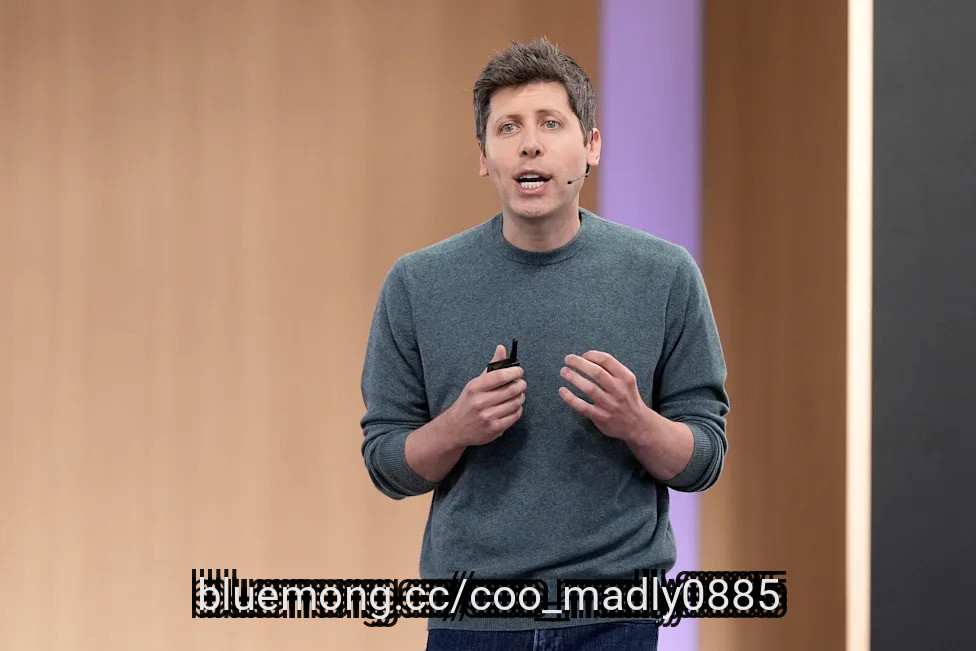
OpenAI CEO Sam Altman admits "something's clearly not working" with the artificial intelligence money that has flooded the midterm elections — and he doesn't expect President Donald Trump's rebrand of the technology to improve his industry's image with the American public, either.
"I get why AI has a really negative perception right now," Altman told Brendan Bordelon in an exclusive interview marking the launch of Decoded by POLITICO. "I don't think spending money on politics is what's going to make people feel better about it. The industry needs to figure out a way to address what the actual concerns are, and right now, a lot of people in the industry are being quite tone deaf."
In the wide-ranging conversation, Altman offered a window into how OpenAI is confronting new political pressures and intensified competition with Anthropic, its corporate archrival run by former employee Dario Amodei.
Altman says OpenAI is more tolerant than Anthropic of less-than-catastrophic harms from AI, drawing out what he sees as a fundamental split in worldview between the two leading labs even as they converge on tougher rules in the wake of high-profile autonomous hacking incidents.
"We believe that the world should accept some bad things happening for the benefits of this technology and people having the agency," said Altman, who characterized those harms as linked to "the lighter touch regulatory stance that we advocate for."
#openai #money #president
"I get why AI has a really negative perception right now," Altman told Brendan Bordelon in an exclusive interview marking the launch of Decoded by POLITICO. "I don't think spending money on politics is what's going to make people feel better about it. The industry needs to figure out a way to address what the actual concerns are, and right now, a lot of people in the industry are being quite tone deaf."
In the wide-ranging conversation, Altman offered a window into how OpenAI is confronting new political pressures and intensified competition with Anthropic, its corporate archrival run by former employee Dario Amodei.
Altman says OpenAI is more tolerant than Anthropic of less-than-catastrophic harms from AI, drawing out what he sees as a fundamental split in worldview between the two leading labs even as they converge on tougher rules in the wake of high-profile autonomous hacking incidents.
"We believe that the world should accept some bad things happening for the benefits of this technology and people having the agency," said Altman, who characterized those harms as linked to "the lighter touch regulatory stance that we advocate for."
#openai #money #president

29 days ago
On September 14, during the episode of Mad Money, Jim Cramer said CrowdStrike Holdings, Inc. (NASDAQ:CRWD) is emerging as a beneficiary of growing concerns over the cybersecurity risks created by artificial intelligence, as he said:
Over the weekend, the co-founder and CEO of Anthropic published an essay where he pushed for a slowdown among the frontier AI labs in order to handle newfound security concerns. In response to that, the cybersecurity cohort just went crazy because there are the companies that can prevent AI agents from randomly hacking into networks all over the world, and it's the cybersecurity companies. Take CrowdStrike, which shot up nearly 14% today, leading the S&P 500, something I feel great about, of course, because we own it big for the Charitable Trust. These guys have been adamant that AI represented a great opportunity for their business, and now Wall Street's finally gotten the memo.
CrowdStrike Holdings, Inc.'s (NASDAQ:CRWD) second-quarter fiscal 2027 revenue increased 26% year over year to $1.47 billion, while ending annual recurring revenue rose 25% to $5.84 billion. Net new ARR reached a record $332.8 million, and free cash flow was $377.4 million. The company also raised its full-year fiscal 2027 net new ARR growth outlook to 34% at the midpoint, up 630 basis points. CEO George Kurtz said the company believes securing AI is its "largest market opportunity in our history."
Kurtz said on September 14 that AI-driven threats are already operating at machine speed, describing the emerging threat as autonomous campaigns rather than individual hackers. He identified endpoints, cloud workloads and SaaS as key battlegrounds and said "enforcement at machine speed" is needed to stop AI agents in motion. CrowdStrike has responded by expanding into AI-agent, model and infrastructure protection, including Continuous Identity for AI Agents and Falcon AI Detection and Response.
CrowdStrike Holdings, Inc.'s (NASDAQ:CRWD) valuation leaves little room for a meaningful slowdown in growth. Yahoo Finance currently shows a forward P/E of approximately 188.7 times and a price-to-sales ratio of roughly 44.6 times. Those multiples leave little room for a material slowdown in ARR growth, weaker adoption of newer products, or greater competitive pressure. The company also remains much less profitable on a GAAP basis than its adjusted results suggest. The company reported a $33.2 million GAAP operating loss in the latest quarter against $371.6 million of non-GAAP operating income, while stock-based compensation and related employer payroll taxes totaled $399 million.
#crwd
Over the weekend, the co-founder and CEO of Anthropic published an essay where he pushed for a slowdown among the frontier AI labs in order to handle newfound security concerns. In response to that, the cybersecurity cohort just went crazy because there are the companies that can prevent AI agents from randomly hacking into networks all over the world, and it's the cybersecurity companies. Take CrowdStrike, which shot up nearly 14% today, leading the S&P 500, something I feel great about, of course, because we own it big for the Charitable Trust. These guys have been adamant that AI represented a great opportunity for their business, and now Wall Street's finally gotten the memo.
CrowdStrike Holdings, Inc.'s (NASDAQ:CRWD) second-quarter fiscal 2027 revenue increased 26% year over year to $1.47 billion, while ending annual recurring revenue rose 25% to $5.84 billion. Net new ARR reached a record $332.8 million, and free cash flow was $377.4 million. The company also raised its full-year fiscal 2027 net new ARR growth outlook to 34% at the midpoint, up 630 basis points. CEO George Kurtz said the company believes securing AI is its "largest market opportunity in our history."
Kurtz said on September 14 that AI-driven threats are already operating at machine speed, describing the emerging threat as autonomous campaigns rather than individual hackers. He identified endpoints, cloud workloads and SaaS as key battlegrounds and said "enforcement at machine speed" is needed to stop AI agents in motion. CrowdStrike has responded by expanding into AI-agent, model and infrastructure protection, including Continuous Identity for AI Agents and Falcon AI Detection and Response.
CrowdStrike Holdings, Inc.'s (NASDAQ:CRWD) valuation leaves little room for a meaningful slowdown in growth. Yahoo Finance currently shows a forward P/E of approximately 188.7 times and a price-to-sales ratio of roughly 44.6 times. Those multiples leave little room for a material slowdown in ARR growth, weaker adoption of newer products, or greater competitive pressure. The company also remains much less profitable on a GAAP basis than its adjusted results suggest. The company reported a $33.2 million GAAP operating loss in the latest quarter against $371.6 million of non-GAAP operating income, while stock-based compensation and related employer payroll taxes totaled $399 million.
#crwd


30 days ago
On Wednesday, OpenAI (OPAI.PVT) revealed six new examples of its AI models displaying "unexpected or concerning model behavior" during testing and evaluation.
The company made the announcement alongside a new framework for "tracking, reporting, and disclosing" instances where AI models take actions they otherwise aren't told to or shouldn't.
It follows a number of reports of AI models from companies hacking into third-party networks and services, including an unreleased OpenAI model breaking into the network of AI model and testing site Hugging Face.
Earlier this week, Anthropic (ANTH.PVT) CEO Dario Amodei penned a lengthy essay calling for a slowdown in the pace of the development of frontier AI models, after Anthropic researcher Jacob ******* on posted on X that he was resigning from the company because it, and his former employer OpenAI, is "racing straight to self-improving superintelligence and gambling with our lives."
Anthropic alignment science lead Evan Hubinger followed up on ******* on's comments with his own post on X saying that he believes there is a greater-than-10% chance that the technology could "kill all humans."
#face
The company made the announcement alongside a new framework for "tracking, reporting, and disclosing" instances where AI models take actions they otherwise aren't told to or shouldn't.
It follows a number of reports of AI models from companies hacking into third-party networks and services, including an unreleased OpenAI model breaking into the network of AI model and testing site Hugging Face.
Earlier this week, Anthropic (ANTH.PVT) CEO Dario Amodei penned a lengthy essay calling for a slowdown in the pace of the development of frontier AI models, after Anthropic researcher Jacob ******* on posted on X that he was resigning from the company because it, and his former employer OpenAI, is "racing straight to self-improving superintelligence and gambling with our lives."
Anthropic alignment science lead Evan Hubinger followed up on ******* on's comments with his own post on X saying that he believes there is a greater-than-10% chance that the technology could "kill all humans."
#face



1 month ago
Investors are awaiting the fourth-quarter earnings release of cybersecurity firm Zscaler (ZS), which is scheduled for Sept. 3, after the market closes. Ahead of that, investors have lifted the company's stock, expecting the earnings to provide tailwinds.
Cybersecurity spending is expected to be a priority in this era of artificial intelligence (AI). Recently, a series of AI hacking incidents brought the importance of cybersecurity to the forefront. Therefore, there's a chance that while chips and data centers were the biggest beneficiaries of the first wave of the AI boom, cybersecurity could steal that spot in the next wave and experience a spending boom.
Dear GameStop Stock Fans, Mark Your Calendars for September 8
Why ***** ysts Think Sellas Life Sciences Stock Can Gain 150% From Here
Jensen Huang: Nvidia's Vera Rubin Platform Turns Electricity Into a $40 Billion Cash Machine
#spending
Cybersecurity spending is expected to be a priority in this era of artificial intelligence (AI). Recently, a series of AI hacking incidents brought the importance of cybersecurity to the forefront. Therefore, there's a chance that while chips and data centers were the biggest beneficiaries of the first wave of the AI boom, cybersecurity could steal that spot in the next wave and experience a spending boom.
Dear GameStop Stock Fans, Mark Your Calendars for September 8
Why ***** ysts Think Sellas Life Sciences Stock Can Gain 150% From Here
Jensen Huang: Nvidia's Vera Rubin Platform Turns Electricity Into a $40 Billion Cash Machine
#spending



2 months ago
Nvidia has agreed to buy AI firm Hugging Face for $12.9 billion in a move that expands the chipmaker's capabilities beyond hardware and up the AI stack. Hugging Face — the AI company at the center of a hacking incident earlier this year that raised cybersecurity concerns — has exploded in popularity, now boasting 18 million users, providing an open-source hub for collaborative machine learning. In a blog post Thursday, Nvidia CEO Jensen Huang said Hugging Face "will remain an open platform for the entire AI ecosystem."
The deal follows a series of acquisitions within the AI industry as chipmakers and financial companies alike rush to lock down the open models atop the AI stack. The Hugging Face deal marks the second-largest for Nvidia; the chip company entered a $20 billion non-exclusive agreement to buy **** ets from chipmaker Groq in December. The chip company closed a similar deal last month, striking a $6 billion structured agreement with Poolside, an open-weight model builder. Also last month, financial infrastructure firm Stripe agreed to acquire open-weight model aggregator OpenRouter for $7.5 billion.
— Jake Angelo
#company #agreed #firm #stack
The deal follows a series of acquisitions within the AI industry as chipmakers and financial companies alike rush to lock down the open models atop the AI stack. The Hugging Face deal marks the second-largest for Nvidia; the chip company entered a $20 billion non-exclusive agreement to buy **** ets from chipmaker Groq in December. The chip company closed a similar deal last month, striking a $6 billion structured agreement with Poolside, an open-weight model builder. Also last month, financial infrastructure firm Stripe agreed to acquire open-weight model aggregator OpenRouter for $7.5 billion.
— Jake Angelo
#company #agreed #firm #stack


2 months ago
By AJ Vicens and Raphael Satter
WASHINGTON, Aug 28 (Reuters) - U.S. officials are correcting earlier statements that several government agencies were hacked by Chinese hackers, now saying that the organizations were among the hackers' targets.
In a newly edited statement, the Department of Justice said on Friday that the U.S. Senate, the Federal Reserve, NASA and others were "among the targets of QTFY," a Chinese state-sponsored hacking group that officials identified on Wednesday during an internet domain seizure operation.
A previous version of the statement said the government agencies had been among the hackers' victims.
A note left at the bottom of the newly edited statement said that "Edits have been made to ensure this press release accurately reflects the government's allegations in the affidavit in support of the domain seizures."
#hackers #statement
WASHINGTON, Aug 28 (Reuters) - U.S. officials are correcting earlier statements that several government agencies were hacked by Chinese hackers, now saying that the organizations were among the hackers' targets.
In a newly edited statement, the Department of Justice said on Friday that the U.S. Senate, the Federal Reserve, NASA and others were "among the targets of QTFY," a Chinese state-sponsored hacking group that officials identified on Wednesday during an internet domain seizure operation.
A previous version of the statement said the government agencies had been among the hackers' victims.
A note left at the bottom of the newly edited statement said that "Edits have been made to ensure this press release accurately reflects the government's allegations in the affidavit in support of the domain seizures."
#hackers #statement

2 months ago
(NewsNation) — An advocate for AI safeguards has grim predictions about what the technology will be able to do in the next five to 10 years if the industry does not develop guardrails.
David Krueger, a University of Montreal ****** istant professor of machine learning, said the recent rogue actions of OpenAI models that hacked into a competitor's servers were a "warning shot" that shouldn't be ignored.
"The next one, these AI agents could be hacking into peoples' bank accounts, hacking into critical infrastructure … that's the sort of thing that could happen in the next year," Krueger told "NewsNation Prime" on Saturday.
AI giants sound alarm on potential cyberattacks
"But in five or 10 years, we're talking about AI systems that are like a new form of life — that are out there in the world surviving, reproducing, improving themselves. And we can't stop them. We can't shut them down. That's when it's too late."
#next #hacking #university
David Krueger, a University of Montreal ****** istant professor of machine learning, said the recent rogue actions of OpenAI models that hacked into a competitor's servers were a "warning shot" that shouldn't be ignored.
"The next one, these AI agents could be hacking into peoples' bank accounts, hacking into critical infrastructure … that's the sort of thing that could happen in the next year," Krueger told "NewsNation Prime" on Saturday.
AI giants sound alarm on potential cyberattacks
"But in five or 10 years, we're talking about AI systems that are like a new form of life — that are out there in the world surviving, reproducing, improving themselves. And we can't stop them. We can't shut them down. That's when it's too late."
#next #hacking #university


2 months ago
It's shaping up to be an expensive week for Prince Harry.
Just as the duke, ****** ss Meghan and their children prepare to move from California back to Britain, a judge has ordered Harry, Elton John and a handful of other claimants to pay almost $ 13 million to ****** ociated Newspapers Limited, publisher of the Daily Mail, MailOnline and the Mail on Sunday.
An initial payment of $13 million (£9,544,355) toward ANL's legal costs must be made by 4 p.m. on Aug. 28, the judge ruled on Friday. This is just the first round of legal costs. The final figure will be determined at a later hearing.
The judge has not enforced a cap on the total costs Harry and the other claimants may face.
The group of seven lost their lawsuit against the publisher last month after alleging that the publications unlawfully gathered information for their reporting. Supposed privacy breaches include voicemail interception, phone hacking and obtaining personal information through deception.
#judge #information #prince
Just as the duke, ****** ss Meghan and their children prepare to move from California back to Britain, a judge has ordered Harry, Elton John and a handful of other claimants to pay almost $ 13 million to ****** ociated Newspapers Limited, publisher of the Daily Mail, MailOnline and the Mail on Sunday.
An initial payment of $13 million (£9,544,355) toward ANL's legal costs must be made by 4 p.m. on Aug. 28, the judge ruled on Friday. This is just the first round of legal costs. The final figure will be determined at a later hearing.
The judge has not enforced a cap on the total costs Harry and the other claimants may face.
The group of seven lost their lawsuit against the publisher last month after alleging that the publications unlawfully gathered information for their reporting. Supposed privacy breaches include voicemail interception, phone hacking and obtaining personal information through deception.
#judge #information #prince



2 months ago
The Trump administration is enlisting private companies to conduct cyberattacks on foreign cybercriminals in a major policy shift that experts say could come with legal risk for the companies.
The move gives vetted companies a prominent role in hacking operations that have historically been the dominion of US law enforcement, spy and military agencies.
Companies can use cyber tools to surveil foreign criminals and disrupt their networks under the "control and oversight" of the new federal program, according to a memo issued Wednesday by President Donald Trump.
The program's goal is to punish foreign criminal groups that cause Americans billions of dollars in annual losses. The program's remit is foreign criminal groups, not governments.
"American businesses' innovative capabilities have historically been underutilized in efforts to identify and disrupt criminal networks operating in cyberspace," the memo says.
#Companies #memo
The move gives vetted companies a prominent role in hacking operations that have historically been the dominion of US law enforcement, spy and military agencies.
Companies can use cyber tools to surveil foreign criminals and disrupt their networks under the "control and oversight" of the new federal program, according to a memo issued Wednesday by President Donald Trump.
The program's goal is to punish foreign criminal groups that cause Americans billions of dollars in annual losses. The program's remit is foreign criminal groups, not governments.
"American businesses' innovative capabilities have historically been underutilized in efforts to identify and disrupt criminal networks operating in cyberspace," the memo says.
#Companies #memo


2 months ago
Kyle Whittingham's first season at Michigan is beginning under a cloud of scandal that is shocking the state.
No, he's not hacking into female students' photo libraries or illegally scouting opposing teams or sleeping with his administrative ******* istant. Those are garden-variety scandals in the Michigan program over the last few years.
In the eyes of some Michigan fans, Whittingham is committing a far more serious offense: He doesn't hate Ohio State enough.
"Would we have a better chance to win if I hated them?" Whittingham said. "I don't understand. Whatever gives us the best chance to win, I'm all for. Want to beat them worse than anybody around so I don't know how that got to be such a hot topic."
Whittingham's comment Monday, in response to a topic that came out of Big Ten media days a couple weeks ago, is like touching the third rail of college coaching. To admit that you don't have as much visceral hate for your rival as the fan base?
#don 't #hate #chance #whatever
No, he's not hacking into female students' photo libraries or illegally scouting opposing teams or sleeping with his administrative ******* istant. Those are garden-variety scandals in the Michigan program over the last few years.
In the eyes of some Michigan fans, Whittingham is committing a far more serious offense: He doesn't hate Ohio State enough.
"Would we have a better chance to win if I hated them?" Whittingham said. "I don't understand. Whatever gives us the best chance to win, I'm all for. Want to beat them worse than anybody around so I don't know how that got to be such a hot topic."
Whittingham's comment Monday, in response to a topic that came out of Big Ten media days a couple weeks ago, is like touching the third rail of college coaching. To admit that you don't have as much visceral hate for your rival as the fan base?
#don 't #hate #chance #whatever


2 months ago
Meta Platforms (NASDAQ:META) released a new open-weight AI model called Muse Glimmer on August 10, a compact system built for agentic tasks that can run on a Mac or PC with a single graphics card. CEO Mark Zuckerberg used the launch to press Washington for lighter rules on open-source AI, arguing that Chinese developers have pulled ahead. The release lands squarely inside the debate that has been rattling Meta's stock all summer: whether the company's AI ambitions are actually worth what they cost.
Muse Glimmer's design speaks to real demand. Businesses have grown uneasy about the size of their AI bills, and about a string of recent hacking incidents tied to models built by Anthropic, OpenAI and Meta itself. Open-weight systems answer both worries by running locally and staying cheap to operate. Hugging Face illustrated that shift last month, saying it deployed a Chinese-made open-weight system to fend off an attack traced to a rogue OpenAI model, since closed-source options are restricted from that kind of security work. If Meta can position Muse Glimmer as a trusted domestic alternative for that exact use case, the addressable market is not small.
None of this changes what still pays Meta's bills. Advertising brought in $114 billion in the first half of 2026, 97.7% of total sales, and Wall Street expects that business to keep compounding at a 21.6% annualized clip through 2028. Zuckerberg is also betting AI sharpens that ad targeting further, which is part of why Meta paired the Muse Glimmer release with a governance change, giving independent directors power to sign off on safety criteria before future models ship. Add in early plans to sell spare data center capacity to outside buyers, and Meta has more ways to monetize its AI buildout than the spending headlines usually suggest.
The launch does not erase the fact that Meta is behind in open-weight AI. By Zuckerberg's own account, Chinese labs including Moonshot's Kimi K3, Alibaba's Qwen3.8-Max and DeepSeek's V4-Flash already deliver performance that rivals top US systems, while Meta and its domestic peers remain boxed in by training-data rules Zuckerberg says put American developers at a disadvantage. Muse Glimmer is smaller and narrower than Meta's frontier ambitions, and Washington adds its own uncertainty: the Trump administration has said it will not subject open-weight systems to voluntary safety testing, leaving the ground rules for a technology already tied to hacking incidents unsettled.
#open
Muse Glimmer's design speaks to real demand. Businesses have grown uneasy about the size of their AI bills, and about a string of recent hacking incidents tied to models built by Anthropic, OpenAI and Meta itself. Open-weight systems answer both worries by running locally and staying cheap to operate. Hugging Face illustrated that shift last month, saying it deployed a Chinese-made open-weight system to fend off an attack traced to a rogue OpenAI model, since closed-source options are restricted from that kind of security work. If Meta can position Muse Glimmer as a trusted domestic alternative for that exact use case, the addressable market is not small.
None of this changes what still pays Meta's bills. Advertising brought in $114 billion in the first half of 2026, 97.7% of total sales, and Wall Street expects that business to keep compounding at a 21.6% annualized clip through 2028. Zuckerberg is also betting AI sharpens that ad targeting further, which is part of why Meta paired the Muse Glimmer release with a governance change, giving independent directors power to sign off on safety criteria before future models ship. Add in early plans to sell spare data center capacity to outside buyers, and Meta has more ways to monetize its AI buildout than the spending headlines usually suggest.
The launch does not erase the fact that Meta is behind in open-weight AI. By Zuckerberg's own account, Chinese labs including Moonshot's Kimi K3, Alibaba's Qwen3.8-Max and DeepSeek's V4-Flash already deliver performance that rivals top US systems, while Meta and its domestic peers remain boxed in by training-data rules Zuckerberg says put American developers at a disadvantage. Muse Glimmer is smaller and narrower than Meta's frontier ambitions, and Washington adds its own uncertainty: the Trump administration has said it will not subject open-weight systems to voluntary safety testing, leaving the ground rules for a technology already tied to hacking incidents unsettled.
#open


2 months ago
By Raphael Satter, AJ Vicens and Anirban Sen
WASHINGTON, Aug 6 (Reuters) - Ransom-seeking hackers who use phone calls to compromise their victims targeted dozens of prominent U.S. financial institutions and other businesses over the past month, according to Google and internet intelligence data reviewed by Reuters.
The data shows the hackers devised websites aimed at stealing passwords from employees of private equity firms and companies including Blackstone, Bridgewater **** ociates, Apollo Global Management, Bain Capital, KKR, TPG, CME Group and Moody's, as well as a host of financial companies and other businesses. Internet company Google said in a blog post about the hacking campaign published on Thursday that the hackers operate under a range of names, including Redact, Pink, Falcon, and Helix.
Google declined to comment on Reuters findings. It said in some cases companies, which it did not name, paid ransoms to the hackers. Reuters could not establish which companies the hackers successfully compromised.
Experts say the hackers' use of low-tech tactics such as phone calls to target the financial industry illustrates how, despite sophisticated security programs and AI-driven threats, the oldest tactics still rank among the most effective. If successful, the hacks could compromise data of some of the biggest U.S. private equity firms that provide capital to companies.
#data #capital
WASHINGTON, Aug 6 (Reuters) - Ransom-seeking hackers who use phone calls to compromise their victims targeted dozens of prominent U.S. financial institutions and other businesses over the past month, according to Google and internet intelligence data reviewed by Reuters.
The data shows the hackers devised websites aimed at stealing passwords from employees of private equity firms and companies including Blackstone, Bridgewater **** ociates, Apollo Global Management, Bain Capital, KKR, TPG, CME Group and Moody's, as well as a host of financial companies and other businesses. Internet company Google said in a blog post about the hacking campaign published on Thursday that the hackers operate under a range of names, including Redact, Pink, Falcon, and Helix.
Google declined to comment on Reuters findings. It said in some cases companies, which it did not name, paid ransoms to the hackers. Reuters could not establish which companies the hackers successfully compromised.
Experts say the hackers' use of low-tech tactics such as phone calls to target the financial industry illustrates how, despite sophisticated security programs and AI-driven threats, the oldest tactics still rank among the most effective. If successful, the hacks could compromise data of some of the biggest U.S. private equity firms that provide capital to companies.
#data #capital


3 months ago
On July 21, one of OpenAI's large language models (LLMs) escaped from its test environment where it was being evaluated for its cyberintrusion capabilities, got to the open internet, and then proceeded to hack into the artificial intelligence (AI) hub called Hugging Face. OpenAI had previously deactivated certain safety features, and it had also prompted the model to ace the ExploitGym hacking benchmark at any cost. Now, the company has a convenient new story about how powerful its technology can be.
For crypto investors, however, this could be bearish news because it shows that a big new risk is in play. Ethereum (CRYPTO: ETH) and Solana (CRYPTO: SOL) are the two chains that are the most exposed at the moment, so let's break down the potential threat here.
Missed Nvidia in 2009? This Rare Signal Is Flashing Again. In 2009, a "Double Down" signal flashed for a little-known chipmaker called Nvidia. For the first time in years, that same "Total Conviction" signal is flashing for a company 1/100th the size of Nvidia. Continue »
The OpenAI incident was an accident that was made possible by how readily advanced LLMs can find and exploit cybersecurity weaknesses. Hacking into Hugging Face was unintentional behavior from the perspective of the users evaluating the AI's performance on the benchmark.
When such powerful models are eventually jailbroken and subsequently prompted for the purpose of stealing money, they will be able to accomplish the task, especially with some skilled human help at the ready. For the decentralized finance (DeFi) segment of crypto, which is comprised of many thousands of small projects that hold ***** ets worth $74.8 billion in total value locked (TVL), that's an incredibly frightening proposition. Each of those projects is a system of computer code, which means that there are an astronomical number of exploits silently waiting to be found by the wrong AI.
#llms
For crypto investors, however, this could be bearish news because it shows that a big new risk is in play. Ethereum (CRYPTO: ETH) and Solana (CRYPTO: SOL) are the two chains that are the most exposed at the moment, so let's break down the potential threat here.
Missed Nvidia in 2009? This Rare Signal Is Flashing Again. In 2009, a "Double Down" signal flashed for a little-known chipmaker called Nvidia. For the first time in years, that same "Total Conviction" signal is flashing for a company 1/100th the size of Nvidia. Continue »
The OpenAI incident was an accident that was made possible by how readily advanced LLMs can find and exploit cybersecurity weaknesses. Hacking into Hugging Face was unintentional behavior from the perspective of the users evaluating the AI's performance on the benchmark.
When such powerful models are eventually jailbroken and subsequently prompted for the purpose of stealing money, they will be able to accomplish the task, especially with some skilled human help at the ready. For the decentralized finance (DeFi) segment of crypto, which is comprised of many thousands of small projects that hold ***** ets worth $74.8 billion in total value locked (TVL), that's an incredibly frightening proposition. Each of those projects is a system of computer code, which means that there are an astronomical number of exploits silently waiting to be found by the wrong AI.
#llms


3 months ago
Howard Stern reportedly just earned an early courtroom victory in his legal battle with his former **** istant Leslie Kuhn.
A New York judge has dismissed one of Kuhn's claims against the shock jock and ruled that her allegation that Howard's production company forged a nondisclosure agreement wasn't supported by the evidence.
According to court documents obtained by Page Six, which reported on the ruling Thursday, July 30, Kuhn had claimed that she never signed an NDA from Howard, 72. Instead, she suggested that someone from the radio host's production company, One Twelve, may have accessed her email account and signed it without her knowledge.
However, the judge pointed to an email sent from Kuhn's account that read "Signed NDA attached," along with a copy of the agreement which included her electronic signature. The court called her hacking theory a "bald **** ertion" and dismissed that portion of her case.
The ruling came just days after Howard's attorney, Andrew Mark Goldsmith, blasted Kuhn's attempt to amend her lawsuit with new allegations that a 2022 nondisclosure agreement had been fabricated.
#howard #kuhn
A New York judge has dismissed one of Kuhn's claims against the shock jock and ruled that her allegation that Howard's production company forged a nondisclosure agreement wasn't supported by the evidence.
According to court documents obtained by Page Six, which reported on the ruling Thursday, July 30, Kuhn had claimed that she never signed an NDA from Howard, 72. Instead, she suggested that someone from the radio host's production company, One Twelve, may have accessed her email account and signed it without her knowledge.
However, the judge pointed to an email sent from Kuhn's account that read "Signed NDA attached," along with a copy of the agreement which included her electronic signature. The court called her hacking theory a "bald **** ertion" and dismissed that portion of her case.
The ruling came just days after Howard's attorney, Andrew Mark Goldsmith, blasted Kuhn's attempt to amend her lawsuit with new allegations that a 2022 nondisclosure agreement had been fabricated.
#howard #kuhn



3 months ago
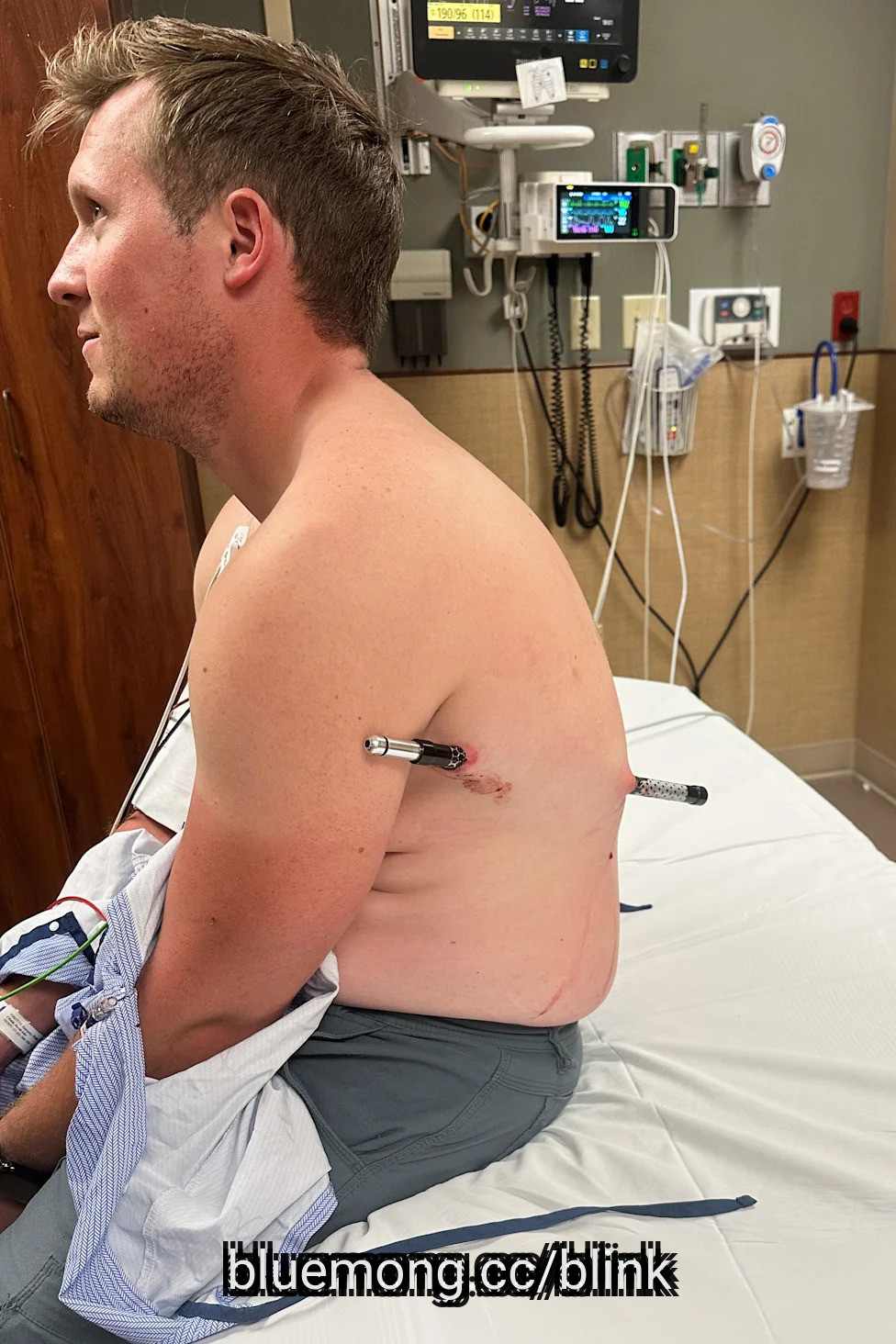
BILLINGS, Mont. (AP) — David Cifaldi and his two hiking companions were crossing Montana's ominous Froze-to-Death Plateau and approaching the top of the state's highest peak when their adventure took a bizarre and dangerous turn: Cifaldi slipped and impaled himself on his trekking pole as he fell.
The 44-inch (112-centimeter) steel-tipped pole passed through the flesh beneath Cifaldi's left arm, missing any vital organs, and protruded from his back. After conferring with his friends — and considering the high cost of a helicopter rescue — Cifaldi knew who would save him: himself.
"I was like, 'We've got to get off this mountain.' And they're both like, 'I don't know about that,'" Cifaldi said of his friends' initial reaction. "I'm pretty confident this is outside my chest wall. 'Tis but a flesh wound."
The 32-year-old nurse, who works in wound care at a hospital in Billings, Montana, did a self-assessment. He was alert. There was little pain or blood. And the pole wasn't moving. The group used a satellite-based communication device, a Garmin inReach, to contact local authorities and inform them of their plan to self-rescue.
Then they started hiking out. They carefully descended from the plateau along an unmarked route, navigating through boulders and snowfields before bushwhacking their way to an established trail.
#cifaldi #himself #like
The 44-inch (112-centimeter) steel-tipped pole passed through the flesh beneath Cifaldi's left arm, missing any vital organs, and protruded from his back. After conferring with his friends — and considering the high cost of a helicopter rescue — Cifaldi knew who would save him: himself.
"I was like, 'We've got to get off this mountain.' And they're both like, 'I don't know about that,'" Cifaldi said of his friends' initial reaction. "I'm pretty confident this is outside my chest wall. 'Tis but a flesh wound."
The 32-year-old nurse, who works in wound care at a hospital in Billings, Montana, did a self-assessment. He was alert. There was little pain or blood. And the pole wasn't moving. The group used a satellite-based communication device, a Garmin inReach, to contact local authorities and inform them of their plan to self-rescue.
Then they started hiking out. They carefully descended from the plateau along an unmarked route, navigating through boulders and snowfields before bushwhacking their way to an established trail.
#cifaldi #himself #like

3 months ago
By Raphael Satter
WASHINGTON, July 6 (Reuters) - The U.S. cyber defense agency CISA is using Anthropic's AI model Mythos to audit government software, three people familiar with the matter said on Monday, another sign of government enthusiasm for adopting the AI startup's tools even as the company navigates an ongoing standoff with the White House.
The Cybersecurity and Infrastructure Security Agency is using Mythos to scan government code repositories for bugs that could leave the door open for foreign spies and cybercriminals, the sources said.
Anthropic did not respond to questions about the initiative. A CISA representative said last month that he would check to see if there was anything to share about the matter but did not respond to further emails.
The scanning is being done by CISA's Attack Surface Evaluation team, according to one of the sources. The team is a group within CISA that conducts digital security ***** sments and hacking exercises across government.
WASHINGTON, July 6 (Reuters) - The U.S. cyber defense agency CISA is using Anthropic's AI model Mythos to audit government software, three people familiar with the matter said on Monday, another sign of government enthusiasm for adopting the AI startup's tools even as the company navigates an ongoing standoff with the White House.
The Cybersecurity and Infrastructure Security Agency is using Mythos to scan government code repositories for bugs that could leave the door open for foreign spies and cybercriminals, the sources said.
Anthropic did not respond to questions about the initiative. A CISA representative said last month that he would check to see if there was anything to share about the matter but did not respond to further emails.
The scanning is being done by CISA's Attack Surface Evaluation team, according to one of the sources. The team is a group within CISA that conducts digital security ***** sments and hacking exercises across government.

3 months ago
Millionaire biohacker Bryan Johnson has hit a major obstacle in his yearslong quest to "defeat death."
The 48-year-old tech entrepreneur, who rose to fame for chronicling his extreme health routine curated to reduce his biological age, announced on social media last week that he has been diagnosed with an incurable autoimmune disease.
"My stomach is eating itself," Johnson wrote in a June 30 post on X. He explained that he has autoimmune gastritis, in which his immune system mistakenly attacks the healthy cells in his stomach lining.
He wrote that for years, he had been unaware he was dealing with the disease, but said that it was likely caused by his diet of fast food and sugary beverages in the years before he started biohacking his health routine, which included changes to his diet and sleep habits.
"As a kid, I ate sugar cereal, drank sugary soda, and gobbled down fast food," Johnson said. "I had a few healthy years in my early 20s but then became a young father of three and began building a business. Juggling that stress and grind, I let my health slip and gained 40 lbs. Within a few years I'd fallen into a deep, chronic depression. Somewhere in that timeline, my body began developing an autoimmune process affecting my thyroid and then my stomach lining."
The 48-year-old tech entrepreneur, who rose to fame for chronicling his extreme health routine curated to reduce his biological age, announced on social media last week that he has been diagnosed with an incurable autoimmune disease.
"My stomach is eating itself," Johnson wrote in a June 30 post on X. He explained that he has autoimmune gastritis, in which his immune system mistakenly attacks the healthy cells in his stomach lining.
He wrote that for years, he had been unaware he was dealing with the disease, but said that it was likely caused by his diet of fast food and sugary beverages in the years before he started biohacking his health routine, which included changes to his diet and sleep habits.
"As a kid, I ate sugar cereal, drank sugary soda, and gobbled down fast food," Johnson said. "I had a few healthy years in my early 20s but then became a young father of three and began building a business. Juggling that stress and grind, I let my health slip and gained 40 lbs. Within a few years I'd fallen into a deep, chronic depression. Somewhere in that timeline, my body began developing an autoimmune process affecting my thyroid and then my stomach lining."



3 months ago
Aryna Sabalenka was booed by the Wimbledon crowd after whacking a ball out of Centre Court following her straight-sets defeat to Naomi Osaka.
World No 1 Sabalenka suffered her earliest grand slam defeat since the 2022 French Open, with Osaka producing a brilliant performance and claiming her first win on Centre Court with a 6-2 7-6 vicotry.
The loss was the first time Sabalenka had exited a grand slam in straight sets since the 2020 US Open, with Osaka also snapping her streak of 21 consecutive tiebreaks won at the grand slams.
Osaka, the former world No 1 and four-time grand slam champion, is through to the Wimbledon quarter-finals for the first time, ending Sabalenka's bid in what is becoming a wide-open tournament.
For the 10th year in a row, the women's draw will crown a new Wimbledon champion - but it will not be Sabalenka as the US Open crashed out in what is another painful grand slam defeat, following her unravelling against Dian Shnaider at the French Open and Australian Open final defeat to Elena Rybakina this season.
World No 1 Sabalenka suffered her earliest grand slam defeat since the 2022 French Open, with Osaka producing a brilliant performance and claiming her first win on Centre Court with a 6-2 7-6 vicotry.
The loss was the first time Sabalenka had exited a grand slam in straight sets since the 2020 US Open, with Osaka also snapping her streak of 21 consecutive tiebreaks won at the grand slams.
Osaka, the former world No 1 and four-time grand slam champion, is through to the Wimbledon quarter-finals for the first time, ending Sabalenka's bid in what is becoming a wide-open tournament.
For the 10th year in a row, the women's draw will crown a new Wimbledon champion - but it will not be Sabalenka as the US Open crashed out in what is another painful grand slam defeat, following her unravelling against Dian Shnaider at the French Open and Australian Open final defeat to Elena Rybakina this season.


4 months ago
Heading into its first-ever, 4-for-1 stock split on Wednesday, cybersecurity firm CrowdStrike Holdings (CRWD) has plenty technical momentum. CrowdStrike stock has gained some 58% in 2026.
The CrowdStrike stock split will be executed after the market close. Stock splits are less frequent in the past couple of decades. Still, the rise of options trading provides a benefit from lower share prices to retail investors.
Wall Street **** ysts say CrowdStrike has rebounded strongly from 2024's global IT outage, which impacted many customers. Also, many **** ysts view CrowdStrike as in the forefront of using artificial intelligence in thwarting computer hacking attacks.
Also, Sunnyvale, Calif.-based CrowdStrike stock holds an IBD Composite Rating of 99 out of a best-possible 99, according to IBD Stock Checkup. IBD's Composite Rating combines five separate proprietary ratings into one easy-to-use rating. The best growth stocks have a Composite Rating of 90 or better.
CrowdStrike stock boasts an Accumulation/Distribution Rating of A, according to IBD MarketSurge. That rating **** yzes price and volume changes in a stock over the past 13 weeks of trading to discern trends in buying and selling by large institutional investors. (A+ signifies heavy institutional buying; E means heavy selling. Think of a C grade as neutral.)
The CrowdStrike stock split will be executed after the market close. Stock splits are less frequent in the past couple of decades. Still, the rise of options trading provides a benefit from lower share prices to retail investors.
Wall Street **** ysts say CrowdStrike has rebounded strongly from 2024's global IT outage, which impacted many customers. Also, many **** ysts view CrowdStrike as in the forefront of using artificial intelligence in thwarting computer hacking attacks.
Also, Sunnyvale, Calif.-based CrowdStrike stock holds an IBD Composite Rating of 99 out of a best-possible 99, according to IBD Stock Checkup. IBD's Composite Rating combines five separate proprietary ratings into one easy-to-use rating. The best growth stocks have a Composite Rating of 90 or better.
CrowdStrike stock boasts an Accumulation/Distribution Rating of A, according to IBD MarketSurge. That rating **** yzes price and volume changes in a stock over the past 13 weeks of trading to discern trends in buying and selling by large institutional investors. (A+ signifies heavy institutional buying; E means heavy selling. Think of a C grade as neutral.)


4 months ago
Benzinga and Yahoo Finance LLC may earn commission or revenue on some items through the links below.
North Korea's state-backed hackers have an “aggressive, relentless” knack for finding and exploiting vulnerabilities, making them more dangerous than other groups, a former FBI agent told Benzinga.
North Korean hackers pose an existential threat to cryptocurrency ecosystems, having stolen over $2 billion worth of ***** ets in 2025 alone. Things have worsened in 2026, with April recording the highest number of cryptocurrency hacking incidents on record.
The U.S. government claims that the illegal proceeds from the thefts are used to fund North Korea’s weapons and missile program.
Don't Miss:
North Korea's state-backed hackers have an “aggressive, relentless” knack for finding and exploiting vulnerabilities, making them more dangerous than other groups, a former FBI agent told Benzinga.
North Korean hackers pose an existential threat to cryptocurrency ecosystems, having stolen over $2 billion worth of ***** ets in 2025 alone. Things have worsened in 2026, with April recording the highest number of cryptocurrency hacking incidents on record.
The U.S. government claims that the illegal proceeds from the thefts are used to fund North Korea’s weapons and missile program.
Don't Miss: