
5 hours ago
Apollo Global Management warned Wednesday that credit default swaps on hyperscaler debt are pricing in more risk. Chief economist Torsten Slok tied the shift to weakening credit fundamentals rather than routine bond-dealer hedging.
Hyperscalers are the cloud computing giants, including Amazon, Microsoft, Google, and Meta, that run the infrastructure behind the AI boom. They face a credit default swap (CDS) gap against bank debt, widened to about 60 basis points since October 2025.
Slok made the case in a Wednesday note reported by CNBC.
"What the market is repricing is hyperscaler credit fundamentals, namely a debt-financed AI capex cycle with rising leverage, negative free cash flow and uncertain payback on depreciating ****** ets."
Dan Alpert, founding managing partner of Westwood Capital, compared the setup to the run-up to the 2008 mortgage crisis. He said banks have since built far bigger equity buffers and are more diversified than they were then.
#slok
Hyperscalers are the cloud computing giants, including Amazon, Microsoft, Google, and Meta, that run the infrastructure behind the AI boom. They face a credit default swap (CDS) gap against bank debt, widened to about 60 basis points since October 2025.
Slok made the case in a Wednesday note reported by CNBC.
"What the market is repricing is hyperscaler credit fundamentals, namely a debt-financed AI capex cycle with rising leverage, negative free cash flow and uncertain payback on depreciating ****** ets."
Dan Alpert, founding managing partner of Westwood Capital, compared the setup to the run-up to the 2008 mortgage crisis. He said banks have since built far bigger equity buffers and are more diversified than they were then.
#slok

6 hours ago
Stocks slid Wednesday afternoon after Federal Reserve Chair Kevin Warsh followed the central bank's first rate hike in three years with a press conference that hinted it wouldn't be the last.
The S&P 500 dropped 1%, heading toward its lowest close since July. The Dow Jones Industrial Average fell 1.7%, or more than 700 points, with financial shares leading the decline. The Nasdaq Composite fell 0.8%. The 10-year Treasury yield held near 5% a day after touching its highest level since 2007, and the dollar index climbed 0.6% to its strongest since late July.
Markets had priced in the quarter-point increase itself and initially took it in stride. All three indexes were higher before the 2 p.m. decision. The selling started during the press conference.
Warsh was on a tightrope going in. The question was whether he'd frame the hike as a one-off adjustment—which risked the bond market reading it as too little to deter inflation—or as the start of a longer cycle. He did neither, and instead went in a more hawkish direction. "I would be hard pressed to describe broad financial conditions as restrictive," he said in his opening remarks. "This view was widely shared by the committee, so we removed a dose of accommodation."
That's a new way of describing a rate hike, and one investors aren't used to. Under his predecessor, Jerome Powell, the Fed called policy "modestly restrictive," meaning rates were already high enough to slow the economy. Warsh was saying that at 3.5%–3.75%, they weren't—and by implication, one quarter point may not have gotten them there either. Asked directly, he declined to say whether policy is restrictive now.
#hike #press
The S&P 500 dropped 1%, heading toward its lowest close since July. The Dow Jones Industrial Average fell 1.7%, or more than 700 points, with financial shares leading the decline. The Nasdaq Composite fell 0.8%. The 10-year Treasury yield held near 5% a day after touching its highest level since 2007, and the dollar index climbed 0.6% to its strongest since late July.
Markets had priced in the quarter-point increase itself and initially took it in stride. All three indexes were higher before the 2 p.m. decision. The selling started during the press conference.
Warsh was on a tightrope going in. The question was whether he'd frame the hike as a one-off adjustment—which risked the bond market reading it as too little to deter inflation—or as the start of a longer cycle. He did neither, and instead went in a more hawkish direction. "I would be hard pressed to describe broad financial conditions as restrictive," he said in his opening remarks. "This view was widely shared by the committee, so we removed a dose of accommodation."
That's a new way of describing a rate hike, and one investors aren't used to. Under his predecessor, Jerome Powell, the Fed called policy "modestly restrictive," meaning rates were already high enough to slow the economy. Warsh was saying that at 3.5%–3.75%, they weren't—and by implication, one quarter point may not have gotten them there either. Asked directly, he declined to say whether policy is restrictive now.
#hike #press


7 hours ago
Every 3% or 5% single-day pop in technology stocks and high-beta market darlings is being hailed by retail momentum chasers as the definitive return of the bull market. I'm a natural skeptic, hardened by decades of seeing markets cycle up and down. And I just don't see the bull market returning in force for a while… and maybe a long, long while.
To be clear, it doesn't prompt me to "exit the market," no more than it would prompt me to "pile into stocks" when the coast looks clearer. To me, investing in the stock market is never about "do I" or "don't I." It is always about "how much do I allocate?"
Billionaire Charlie Munger, Who Died at 99, Skipped Insurance on His Mansion Since He Could Just Write a Check to Rebuild — 'All Intelligent People Do It My Way'
Why It's Time to Load Up on Nvidia Stock
The Case for Selling CrowdStrike Stock
#stocks
To be clear, it doesn't prompt me to "exit the market," no more than it would prompt me to "pile into stocks" when the coast looks clearer. To me, investing in the stock market is never about "do I" or "don't I." It is always about "how much do I allocate?"
Billionaire Charlie Munger, Who Died at 99, Skipped Insurance on His Mansion Since He Could Just Write a Check to Rebuild — 'All Intelligent People Do It My Way'
Why It's Time to Load Up on Nvidia Stock
The Case for Selling CrowdStrike Stock
#stocks



8 hours ago
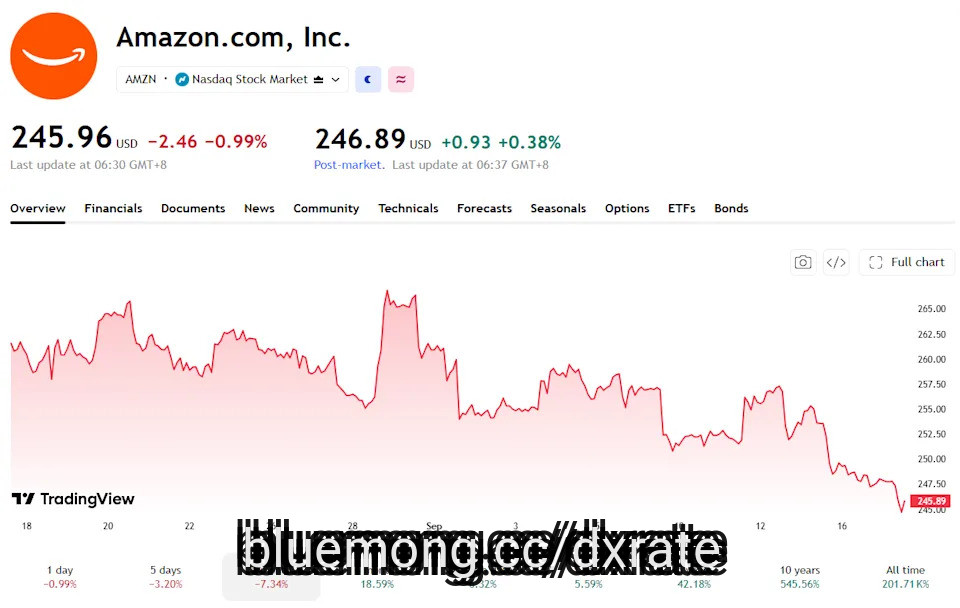
Amazon Business is now a $60B operation serving 11 million customers worldwide. In this FreightWaves Today interview, Amazon Business exec Daniel Silverfield breaks down what that scale means for procurement, supplier consolidation, same-day grocery delivery and AI-driven savings.The big takeaway: business buyers want fewer suppliers, better visibility and less waste in purchasing. Silverfield explains how Amazon Business is pitching exactly that to everyone from small companies to Fortune 100s.
Amazon Business has hit $60 billion in annualized gross sales and now serves 11 million customers worldwide, with 1.8 million organizations added this year alone — a growth rate that puts it on par with a Fortune 100 company if it were standalone. The platform, which launched roughly a decade ago after Amazon noticed businesses already shopping on amazon.com, is increasingly central to how companies across sectors manage procurement, from office supplies to same-day groceries.
The scale matters to shippers, carriers, and brokers because Amazon Business is driving a fundamental shift in B2B purchasing behavior — consolidating supplier pools, centralizing data, and moving procurement from quarterly reporting cycles to an always-on, AI-powered model. Every order that migrates to the platform is one fewer touchpoint for traditional distributors and one more shipment flowing through Amazon's own logistics network.
Daniel Silverfield, head of value and selection for Amazon Business, said the platform saved customers $880 million on Prime free shipping last year and $1 billion through business-specific discounts. The company added 30% new items year over year and recently launched same-day grocery delivery across 2,300 U.S. cities in the first half of this year, a capability customers had been requesting for some time.
"The big shift that we're seeing is that people are moving to a continuous, always-on, conversational-powered procurement journey where agents may be looking for the best price while they're asleep, maybe negotiating on their behalf while they're asleep, and then surfacing to them the best product to buy," said Silverfield.
#customers
Amazon Business has hit $60 billion in annualized gross sales and now serves 11 million customers worldwide, with 1.8 million organizations added this year alone — a growth rate that puts it on par with a Fortune 100 company if it were standalone. The platform, which launched roughly a decade ago after Amazon noticed businesses already shopping on amazon.com, is increasingly central to how companies across sectors manage procurement, from office supplies to same-day groceries.
The scale matters to shippers, carriers, and brokers because Amazon Business is driving a fundamental shift in B2B purchasing behavior — consolidating supplier pools, centralizing data, and moving procurement from quarterly reporting cycles to an always-on, AI-powered model. Every order that migrates to the platform is one fewer touchpoint for traditional distributors and one more shipment flowing through Amazon's own logistics network.
Daniel Silverfield, head of value and selection for Amazon Business, said the platform saved customers $880 million on Prime free shipping last year and $1 billion through business-specific discounts. The company added 30% new items year over year and recently launched same-day grocery delivery across 2,300 U.S. cities in the first half of this year, a capability customers had been requesting for some time.
"The big shift that we're seeing is that people are moving to a continuous, always-on, conversational-powered procurement journey where agents may be looking for the best price while they're asleep, maybe negotiating on their behalf while they're asleep, and then surfacing to them the best product to buy," said Silverfield.
#customers


9 hours ago
Union Pacific Corp (NYSE:UNP, XETRA:UNP) received a UBS upgrade to Buy from Neutral as the broker forecast stronger 2027 growth, excluding potential NSC merger benefits from its base case.
UBS raised its price target from $310 to $339, applying an unchanged multiple of 21 times its 2028 earnings forecast of $16.15 per share.
The bank expects intermodal volumes to grow 6% to 7% in 2027, citing current volume momentum and the relationship between intermodal performance and truckload pricing cycles.
Alongside industrial growth and a roughly neutral contribution from coal and grain, those intermodal gains underpin UBS's forecast for 3.5% total volume growth in 2027.
Low inventories should support steel shipments, while elevated energy prices should sustain petroleum and products volumes, the broker said.
#volume #union #pacific #corp
UBS raised its price target from $310 to $339, applying an unchanged multiple of 21 times its 2028 earnings forecast of $16.15 per share.
The bank expects intermodal volumes to grow 6% to 7% in 2027, citing current volume momentum and the relationship between intermodal performance and truckload pricing cycles.
Alongside industrial growth and a roughly neutral contribution from coal and grain, those intermodal gains underpin UBS's forecast for 3.5% total volume growth in 2027.
Low inventories should support steel shipments, while elevated energy prices should sustain petroleum and products volumes, the broker said.
#volume #union #pacific #corp


10 hours ago
Brace for minor market tremors now that the Fed has hiked interest rates by 0.25%.
Although if history holds up, any losses could prove short-lived.
The S&P 500 (^GSPC) has declined by an average of 4.0% over the six weeks following the first Fed rate hike of a cycle across seven such episodes since 1988, per new ****** ysis from strategists at The Kobeissi Letter.
Stocks recovered all of those losses over the next five to six weeks on average.
In the six months following the first interest rate hike, the S&P 500 returned 4% on average. After 12 months, the S&P 500's average gain tallied 9%. Positive returns have occurred in every episode except 2022 over the 12 months.
"Fed rate hikes have historically been great buying opportunities," the strategists added.
Read more: Follow live coverage of the Fed meeting
The decision by the Fed to lift rates comes as sticky inflation readings — from the CPI to PPI — and rising energy costs force central bankers back into tightening mode. The rate hike marks the central bank's first interest rate increase since July 2023.
Investors are also focused on the updated economic projections and the Fed's "dot plot" to gauge future moves on rates — said dot plot didn't rule out one more hike this year. A hawkish dot plot as was received and follow up commentary from Fed Chairman Kevin Warsh could further elevate borrowing costs and pressure stocks initially around the world.
#rate #hike #first #plot
Although if history holds up, any losses could prove short-lived.
The S&P 500 (^GSPC) has declined by an average of 4.0% over the six weeks following the first Fed rate hike of a cycle across seven such episodes since 1988, per new ****** ysis from strategists at The Kobeissi Letter.
Stocks recovered all of those losses over the next five to six weeks on average.
In the six months following the first interest rate hike, the S&P 500 returned 4% on average. After 12 months, the S&P 500's average gain tallied 9%. Positive returns have occurred in every episode except 2022 over the 12 months.
"Fed rate hikes have historically been great buying opportunities," the strategists added.
Read more: Follow live coverage of the Fed meeting
The decision by the Fed to lift rates comes as sticky inflation readings — from the CPI to PPI — and rising energy costs force central bankers back into tightening mode. The rate hike marks the central bank's first interest rate increase since July 2023.
Investors are also focused on the updated economic projections and the Fed's "dot plot" to gauge future moves on rates — said dot plot didn't rule out one more hike this year. A hawkish dot plot as was received and follow up commentary from Fed Chairman Kevin Warsh could further elevate borrowing costs and pressure stocks initially around the world.
#rate #hike #first #plot



11 hours ago
Investors continue to ask for more timely information, even as the volume available to them expands. A 2026 CFA Institute survey of 2,500 **** ysts and portfolio managers found that 62% opposed replacing quarterly reporting with semiannual reporting. Nearly 85% expressed concern about comparability if companies and investment managers could determine their own reporting frequency and format. Access remains important, while interpretation requires a separate discipline.
The demand also concerns the quality of disclosure. PwC's 2025 Global Investor Survey, covering 1,074 investment professionals across 26 countries and territories, found that only 37% believed companies disclosed enough about artificial intelligence strategies and policies. Respondents wanted greater transparency around innovation strategies, AI investment, and expected returns. These findings suggest that investors can face abundant commentary while still lacking the evidence needed to **** s a thesis.
Commercial incentives add another layer. A 2025 CFA Institute report examined continuation funds, in which a manager can oversee both the vehicle selling an **** et and the vehicle buying it. The report recognized the structure's liquidity role and identified conflicts requiring fair processes and governance. The example illustrates why informed **** ysis and aligned incentives are separate considerations.
That distinction applies beyond any single investment structure. Managers often possess valuable operational knowledge because they work directly with **** ets, tenants and financing markets. They may also be raising capital for the strategies they discuss. Their commercial interest becomes additional context for investors weighing forecasts, market narratives and recommendations alongside independently produced evidence. That context can help an investment committee separate a source's knowledge of the market from the confidence it should place in the source's preferred outcome during capital allocation.
Geoffrey Dohrmann, chairman, CEO and editor-in-chief of Institutional Real Estate, Inc., has watched those narratives develop across several market cycles. IREI is a media and market intelligence company covering institutional real estate and infrastructure through publications, research, data, events and consulting. Dohrmann explains its editorial role as independently recording where real-asset capital is moving and examining the explanations offered for those decisions.
#real #institute
The demand also concerns the quality of disclosure. PwC's 2025 Global Investor Survey, covering 1,074 investment professionals across 26 countries and territories, found that only 37% believed companies disclosed enough about artificial intelligence strategies and policies. Respondents wanted greater transparency around innovation strategies, AI investment, and expected returns. These findings suggest that investors can face abundant commentary while still lacking the evidence needed to **** s a thesis.
Commercial incentives add another layer. A 2025 CFA Institute report examined continuation funds, in which a manager can oversee both the vehicle selling an **** et and the vehicle buying it. The report recognized the structure's liquidity role and identified conflicts requiring fair processes and governance. The example illustrates why informed **** ysis and aligned incentives are separate considerations.
That distinction applies beyond any single investment structure. Managers often possess valuable operational knowledge because they work directly with **** ets, tenants and financing markets. They may also be raising capital for the strategies they discuss. Their commercial interest becomes additional context for investors weighing forecasts, market narratives and recommendations alongside independently produced evidence. That context can help an investment committee separate a source's knowledge of the market from the confidence it should place in the source's preferred outcome during capital allocation.
Geoffrey Dohrmann, chairman, CEO and editor-in-chief of Institutional Real Estate, Inc., has watched those narratives develop across several market cycles. IREI is a media and market intelligence company covering institutional real estate and infrastructure through publications, research, data, events and consulting. Dohrmann explains its editorial role as independently recording where real-asset capital is moving and examining the explanations offered for those decisions.
#real #institute


12 hours ago
XLE has surged 46% year-to-date while XLY dropped 7%, with defensive XLP up 9% as markets rotate away from consumer exposure.
XLF's soft 4% gain signals financial stocks aren't pricing a healthy cycle, with the 10-year/2-year Treasury spread flattened to 0.33%.
Torres pegs $120 WTI as the consumer spending breaking point, still 20% above current prices but reminiscent of 2022's economy-crushing oil surge.
Read More: Avoid these 13 retirement mistakes before they derail your future (sponsor)
The national average price of regular gasoline jumped 16 cents in a single week to $4.32 a gallon on September 14, 2026, a move that puts the pump price in the 90th percentile of the past year and caps a 7.8% jump in one month. The proximate cause sits upstream: WTI crude cleared $97.26 a barrel on September 9 after running up 16.1% in a month, and Brent has traded through the $100 line. On Fed decision day, a CNBC Morning Call panel put a number on where this stops being an inconvenience and starts being a recession.
#september #cnbc
XLF's soft 4% gain signals financial stocks aren't pricing a healthy cycle, with the 10-year/2-year Treasury spread flattened to 0.33%.
Torres pegs $120 WTI as the consumer spending breaking point, still 20% above current prices but reminiscent of 2022's economy-crushing oil surge.
Read More: Avoid these 13 retirement mistakes before they derail your future (sponsor)
The national average price of regular gasoline jumped 16 cents in a single week to $4.32 a gallon on September 14, 2026, a move that puts the pump price in the 90th percentile of the past year and caps a 7.8% jump in one month. The proximate cause sits upstream: WTI crude cleared $97.26 a barrel on September 9 after running up 16.1% in a month, and Brent has traded through the $100 line. On Fed decision day, a CNBC Morning Call panel put a number on where this stops being an inconvenience and starts being a recession.
#september #cnbc


16 hours ago
On August 4, Westlake Corporation (NYSE:WLK) reported second-quarter results that erased two consecutive quarterly losses in a single swing. Net income landed at $260 million, or $2.01 per share, compared with a $169 million loss just three months earlier and a $142 million loss a year ago. EBITDA nearly tripled from the second quarter of 2025. The numbers mark a sharp reversal for a company whose chemicals business had been bleeding red ink.
The turnaround centers on Performance and Essential Materials, the segment that makes chlorovinyls and other basic chemicals. PEM swung from a $318 million operating loss in the second quarter of 2025 to $185 million in income this quarter, while EBITDA excluding identified items jumped from a 3% margin to 21%. The driver was pricing: average sales prices across PEM rose 14% year over year, more than offsetting a 3% price decline in the Housing and Infrastructure Products segment. Combined with a 7% increase in companywide sales volume, excluding the effects of plant shutdowns and an acquisition, the pricing recovery pushed companywide EBITDA to $679 million from $210 million a year earlier.
Westlake is also working the balance sheet alongside the market recovery. The company reduced debt by $500 million during the quarter and returned $99 million to shareholders through dividends and share repurchases. Management says its three-pillar profitability improvement plan remains on track to deliver a $600 million operating income benefit, a target that, if it holds, would layer structural cost savings on top of whatever the market gives back in pricing.
Not every part of the story improved together. Housing and Infrastructure Products, the segment tied to home construction and building products, saw its EBITDA margin slip to 22% from 24% a year earlier, even as volume rose 6% excluding the ACI acquisition. Average sales prices in that segment fell 3% year over year, a sign that pricing power in housing products has softened even as the company sells more of it.
The improvement in the core chemicals business also leans heavily on price rather than volume. PEM's turnaround came from a 14% jump in average sales price, a figure that can move in either direction with commodity cycles. The first quarter of 2026 was a reminder of how quickly conditions shift: Westlake posted a $169 million net loss just three months before this result, weighed down by $85 million in identified items, including a $67 million charge to settle litigation over PVC pipe and fittings and $18 million tied to facility shutdowns. A year earlier, in the second quarter of 2025, the company absorbed another $130 million in shutdown-related charges. Restructuring and legal charges showed up in two of the last three reported quarters.
#million #year #quarter #loss
The turnaround centers on Performance and Essential Materials, the segment that makes chlorovinyls and other basic chemicals. PEM swung from a $318 million operating loss in the second quarter of 2025 to $185 million in income this quarter, while EBITDA excluding identified items jumped from a 3% margin to 21%. The driver was pricing: average sales prices across PEM rose 14% year over year, more than offsetting a 3% price decline in the Housing and Infrastructure Products segment. Combined with a 7% increase in companywide sales volume, excluding the effects of plant shutdowns and an acquisition, the pricing recovery pushed companywide EBITDA to $679 million from $210 million a year earlier.
Westlake is also working the balance sheet alongside the market recovery. The company reduced debt by $500 million during the quarter and returned $99 million to shareholders through dividends and share repurchases. Management says its three-pillar profitability improvement plan remains on track to deliver a $600 million operating income benefit, a target that, if it holds, would layer structural cost savings on top of whatever the market gives back in pricing.
Not every part of the story improved together. Housing and Infrastructure Products, the segment tied to home construction and building products, saw its EBITDA margin slip to 22% from 24% a year earlier, even as volume rose 6% excluding the ACI acquisition. Average sales prices in that segment fell 3% year over year, a sign that pricing power in housing products has softened even as the company sells more of it.
The improvement in the core chemicals business also leans heavily on price rather than volume. PEM's turnaround came from a 14% jump in average sales price, a figure that can move in either direction with commodity cycles. The first quarter of 2026 was a reminder of how quickly conditions shift: Westlake posted a $169 million net loss just three months before this result, weighed down by $85 million in identified items, including a $67 million charge to settle litigation over PVC pipe and fittings and $18 million tied to facility shutdowns. A year earlier, in the second quarter of 2025, the company absorbed another $130 million in shutdown-related charges. Restructuring and legal charges showed up in two of the last three reported quarters.
#million #year #quarter #loss


17 hours ago
Parnassus Investments, an investment management company, released the "Parnassus Growth Equity Fund" second-quarter 2026 investor letter. The letter can be downloaded here. During the quarter, the Fund (Investor Shares) returned 17.49% (net of fees), outperforming the Russell 1000 Growth Index's 16.74%. Holdings in Information Technology and Consumer Discretionary sectors boosted relative returns, while Communication Services and Financials holdings detracted. For the year-to-date period, the Fund returned 6.17% (net of fees), outperforming the Russell 1000 Growth's 5.33%. The firm remains constructively bullish on U.S. equities and continues to be selective, valuation-sensitive, and focused on disruptive growth opportunities through active stock selection. Growth stocks advanced during the second quarter, as the Russell 1000 Growth Index generated strong double-digit returns driven by increased confidence in the durability of the ongoing artificial intelligence (AI) infrastructure build-out. Additionally, reviewing the Fund's top five holdings could help identify its best picks for 2026.
In its second-quarter 2026 investor letter, Parnassus Growth Equity Fund highlighted Sandisk Corporation (NASDAQ:SNDK) as a newly added position. Sandisk Corporation (NASDAQ:SNDK) develops, manufactures, and sells data storage devices and solutions using NAND flash technology in the United States and internationally. On September 15, 2026, Sandisk Corporation (NASDAQ:SNDK) closed at $1,530.90 per share. Over the past month, Sandisk Corporation (NASDAQ:SNDK) declined 2.32%, but its shares are up 1,530.74% over the past year. Sandisk Corporation (NASDAQ:SNDK) has a market capitalization of $224.15 billion, and its stock has traded within a 52-week range of $90.22 to $2,354.39.
Parnassus Growth Equity Fund stated the following regarding Sandisk Corporation (NASDAQ:SNDK) in its Q2 2026 investor letter:
"Other positions added during the quarter included Sandisk Corporation (NASDAQ:SNDK), a leader in flash memory solutions; Comfort Systems, a mechanical, electrical and plumbing contractor. Sandisk makes NAND flash memory, which is seeing a surge in demand from data centers and AI workloads. While NAND remains cyclical, we believe the combination of accelerating AI-driven storage demand and constrained supply provides an attractive opportunity to participate in the current upcycle."
Sandisk Corporation (NASDAQ:SNDK) is on our list of the 40 Most Popular Stocks Among Hedge Funds. As per our database, 128 hedge fund portfolios held Sandisk Corporation (NASDAQ:SNDK) at the end of the second quarter which was 114 in the previous quarter. While we acknowledge the potential of Sandisk Corporation (NASDAQ:SNDK) as an investment, we believe certain AI stocks offer greater upside potential and carry less downside risk. If you're looking for an extremely undervalued AI stock that also stands to benefit significantly from Trump-era tariffs and the onshoring trend, see our fre
In its second-quarter 2026 investor letter, Parnassus Growth Equity Fund highlighted Sandisk Corporation (NASDAQ:SNDK) as a newly added position. Sandisk Corporation (NASDAQ:SNDK) develops, manufactures, and sells data storage devices and solutions using NAND flash technology in the United States and internationally. On September 15, 2026, Sandisk Corporation (NASDAQ:SNDK) closed at $1,530.90 per share. Over the past month, Sandisk Corporation (NASDAQ:SNDK) declined 2.32%, but its shares are up 1,530.74% over the past year. Sandisk Corporation (NASDAQ:SNDK) has a market capitalization of $224.15 billion, and its stock has traded within a 52-week range of $90.22 to $2,354.39.
Parnassus Growth Equity Fund stated the following regarding Sandisk Corporation (NASDAQ:SNDK) in its Q2 2026 investor letter:
"Other positions added during the quarter included Sandisk Corporation (NASDAQ:SNDK), a leader in flash memory solutions; Comfort Systems, a mechanical, electrical and plumbing contractor. Sandisk makes NAND flash memory, which is seeing a surge in demand from data centers and AI workloads. While NAND remains cyclical, we believe the combination of accelerating AI-driven storage demand and constrained supply provides an attractive opportunity to participate in the current upcycle."
Sandisk Corporation (NASDAQ:SNDK) is on our list of the 40 Most Popular Stocks Among Hedge Funds. As per our database, 128 hedge fund portfolios held Sandisk Corporation (NASDAQ:SNDK) at the end of the second quarter which was 114 in the previous quarter. While we acknowledge the potential of Sandisk Corporation (NASDAQ:SNDK) as an investment, we believe certain AI stocks offer greater upside potential and carry less downside risk. If you're looking for an extremely undervalued AI stock that also stands to benefit significantly from Trump-era tariffs and the onshoring trend, see our fre


17 hours ago
York Water holds the longest dividend streak in US public markets at 27 consecutive years, while WTW's $1.775B operating cash flow dwarfs its $358M dividend obligation.
Amdocs and Ituran both run near-recession-proof revenue models, with DOX posting near-100% managed services renewal rates and ITRN carrying zero debt alongside $103.7M in net cash.
All five stocks fund dividends from contracted or recurring revenue streams such as regulated rates, fee income, or subscriptions, insulating payouts from economic cycles.
Read More: Learn 7 secret wealth tips high net worth investors use that most investors miss (sponsor)
Income investors heading into the fourth quarter want payouts that don't wobble with the business cycle. The five names below share one thing: dividends funded by recurring, contracted, or fee-based revenue streams that keep flowing whether or not the macro cooperates. Each has raised its payout recently, and each trades on Nasdaq. As a grounding data point, Willis Towers Watson (NASDAQ:WTW) alone generated $360 million of first-half free cash flow, roughly double the prior-year period, giving the broker ample room to keep funding both dividends and buybacks.
#revenue #NASDAQ #Dividend
Amdocs and Ituran both run near-recession-proof revenue models, with DOX posting near-100% managed services renewal rates and ITRN carrying zero debt alongside $103.7M in net cash.
All five stocks fund dividends from contracted or recurring revenue streams such as regulated rates, fee income, or subscriptions, insulating payouts from economic cycles.
Read More: Learn 7 secret wealth tips high net worth investors use that most investors miss (sponsor)
Income investors heading into the fourth quarter want payouts that don't wobble with the business cycle. The five names below share one thing: dividends funded by recurring, contracted, or fee-based revenue streams that keep flowing whether or not the macro cooperates. Each has raised its payout recently, and each trades on Nasdaq. As a grounding data point, Willis Towers Watson (NASDAQ:WTW) alone generated $360 million of first-half free cash flow, roughly double the prior-year period, giving the broker ample room to keep funding both dividends and buybacks.
#revenue #NASDAQ #Dividend

17 hours ago
"I am the house now," Treasury Secretary Scott Bessent told traders last week, as he defended the administration's increasingly interventionist approach to the bond market. He added that he had "asymmetric information" about what policymakers would do next and dared investors: "bet against me if you want."
On Wednesday, Federal Reserve chair Kevin Warsh might effectively take the other side of the bet.
It's been a hot American summer. Oil is hot, hovering around $110 a barrel. Bond yields are hot, too: the 10-year Treasury yield has pushed above 5%, around its highest level since 2007. Credit markets are running hot as well: U.S.-dollar debt issuance to finance AI and data-center development reached $308 billion through July. And all that borrowing is competing with U.S. national debt, which crossed $40 trillion less than a month ago. Stocks, despite a rough few days, are still up roughly 11% this year. Inflation, meanwhile, remains above 3%.
Put all that heat together, and the Federal Reserve is staring down a question it hasn't seriously confronted in three years: Is the U.S. economy actually overheating? Markets are betting the Fed thinks the answer is at least "maybe." Traders have priced a quarter-point hike Wednesday with near certainty.
But whether Wednesday amounts to a one-time course correction or the beginning of a new tightening cycle depends on what, exactly, is making the American economy hot. The last time the Fed began raising rates, in March 2022, Jerome Powell's Fed ultimately raised its benchmark rate by 525 basis points over 16 months.
Mohamed El-Erian, Wharton professor of practice and chief economic adviser at Allianz, parsed the current fervor and anxiety into four questions on X Tuesday: whether oil-supply disruptions persist, with China potentially acting as a "swing consumer"; whether Treasury Secretary Scott Bessent intervenes again to influence long-end yields; whether this week's hike proves "one and done" or the beginning of a cycle; and how markets balance AI's enormous promise against its enormous risks.
#secretary #federal #american
On Wednesday, Federal Reserve chair Kevin Warsh might effectively take the other side of the bet.
It's been a hot American summer. Oil is hot, hovering around $110 a barrel. Bond yields are hot, too: the 10-year Treasury yield has pushed above 5%, around its highest level since 2007. Credit markets are running hot as well: U.S.-dollar debt issuance to finance AI and data-center development reached $308 billion through July. And all that borrowing is competing with U.S. national debt, which crossed $40 trillion less than a month ago. Stocks, despite a rough few days, are still up roughly 11% this year. Inflation, meanwhile, remains above 3%.
Put all that heat together, and the Federal Reserve is staring down a question it hasn't seriously confronted in three years: Is the U.S. economy actually overheating? Markets are betting the Fed thinks the answer is at least "maybe." Traders have priced a quarter-point hike Wednesday with near certainty.
But whether Wednesday amounts to a one-time course correction or the beginning of a new tightening cycle depends on what, exactly, is making the American economy hot. The last time the Fed began raising rates, in March 2022, Jerome Powell's Fed ultimately raised its benchmark rate by 525 basis points over 16 months.
Mohamed El-Erian, Wharton professor of practice and chief economic adviser at Allianz, parsed the current fervor and anxiety into four questions on X Tuesday: whether oil-supply disruptions persist, with China potentially acting as a "swing consumer"; whether Treasury Secretary Scott Bessent intervenes again to influence long-end yields; whether this week's hike proves "one and done" or the beginning of a cycle; and how markets balance AI's enormous promise against its enormous risks.
#secretary #federal #american


19 hours ago
Invesco Aerospace & Defense ETF (NYSEMKT:PPA) offers a long track record and broad industrial exposure, while Global X Defense Tech ETF (NYSEMKT:SHLD) provides a lower-cost, technology-focused approach to the defense sector.
Defense spending often stays resilient throughout various economic cycles, making aerospace and defense exchange-traded funds a popular choice for investors seeking sector-specific growth. While both funds target the same broad industry, they differ in their approach to legacy hardware versus emerging technologies and software-defined systems. This comparison looks at how the veteran PPA stacks up against the newer SHLD.
Metric
SHLD
PPA
#approach
Defense spending often stays resilient throughout various economic cycles, making aerospace and defense exchange-traded funds a popular choice for investors seeking sector-specific growth. While both funds target the same broad industry, they differ in their approach to legacy hardware versus emerging technologies and software-defined systems. This comparison looks at how the veteran PPA stacks up against the newer SHLD.
Metric
SHLD
PPA
#approach

19 hours ago
Portsmouth-based Iron Mountain Incorporated (IRM) is a global leader in information management services, trusted by more than 240,000 customers in 61 countries. The company has a market cap of $33.4 billion and offers solutions for information management, digital transformation, information security, data centers, and ******* et lifecycle management (ALM).
Companies with a market cap of $10 billion or more are typically referred to as "large-cap stocks." IRM fits perfectly into that category, with its market cap exceeding this threshold and reflecting its substantial size and influence in the specialty REIT industry.
Billionaire Charlie Munger, Who Died at 99, Skipped Insurance on His Mansion Since He Could Just Write a Check to Rebuild — 'All Intelligent People Do It My Way'
Nvidia CEO Jensen Huang Just Dropped Huge News for This Cybersecurity Stock
How to Play GME Stock as GameStop CEO Ryan Cohen Buys $20.3 Million in Shares
#information #incorporated #Companies
Companies with a market cap of $10 billion or more are typically referred to as "large-cap stocks." IRM fits perfectly into that category, with its market cap exceeding this threshold and reflecting its substantial size and influence in the specialty REIT industry.
Billionaire Charlie Munger, Who Died at 99, Skipped Insurance on His Mansion Since He Could Just Write a Check to Rebuild — 'All Intelligent People Do It My Way'
Nvidia CEO Jensen Huang Just Dropped Huge News for This Cybersecurity Stock
How to Play GME Stock as GameStop CEO Ryan Cohen Buys $20.3 Million in Shares
#information #incorporated #Companies



20 hours ago
This story was originally published on CFO.com. To receive daily news and insights, subscribe to our free daily CFO.com newsletter.
Is there a disconnect between finance teams and procurement teams? A new survey of 2,005 procurement leaders in the U.S. and the U.K. suggests there is for some companies, and it may ultimately be affecting their bottom lines.
Released Tuesday, the report from California-based contract lifecycle management company Agiloft showed that about one in 10 respondents said they have no shared metrics between chief procurement officers and CFOs. The lack of shared metrics was cited among the biggest obstacles preventing companies from "closing the gap between what procurement negotiates and what finance realizes."
Other barriers cited were lack of contract data visibility, selected by 14% of respondents, along with manual processes that create exceptions that go unseen (23%).
Agiloft's survey included responses gathered from 2,005 chief procurement officers and other procurement leaders Aug. 5-20.
#procurement
Is there a disconnect between finance teams and procurement teams? A new survey of 2,005 procurement leaders in the U.S. and the U.K. suggests there is for some companies, and it may ultimately be affecting their bottom lines.
Released Tuesday, the report from California-based contract lifecycle management company Agiloft showed that about one in 10 respondents said they have no shared metrics between chief procurement officers and CFOs. The lack of shared metrics was cited among the biggest obstacles preventing companies from "closing the gap between what procurement negotiates and what finance realizes."
Other barriers cited were lack of contract data visibility, selected by 14% of respondents, along with manual processes that create exceptions that go unseen (23%).
Agiloft's survey included responses gathered from 2,005 chief procurement officers and other procurement leaders Aug. 5-20.
#procurement

1 day ago
A startup is proving that there's value in finding creative solutions for returned and overstock inventory.
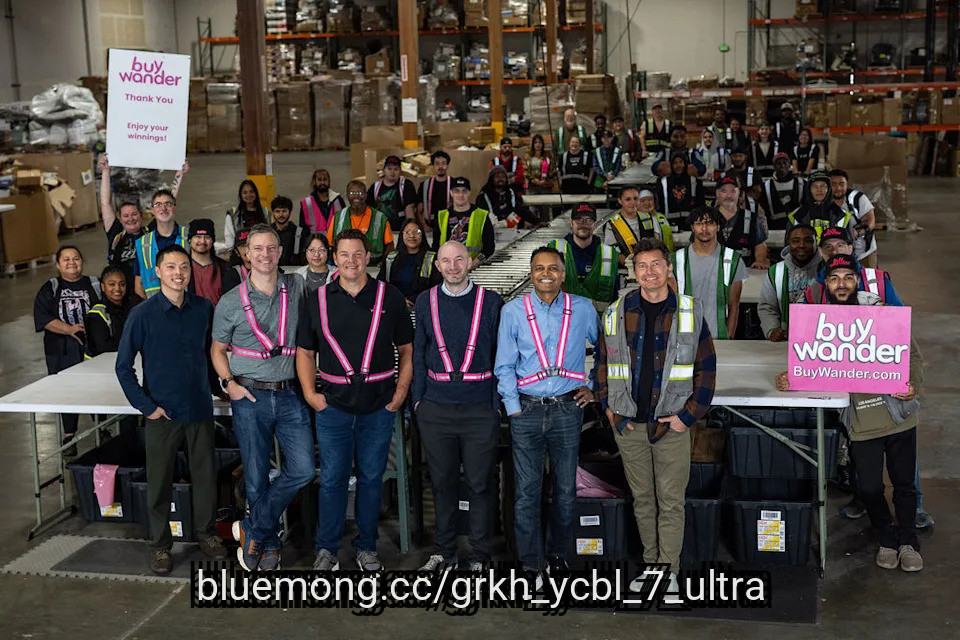
Buywander, an auction-based marketplace for returned and overstocked retail inventory, has just secured $21 million in fresh funding. Madrona Venture Group and Inspired Capital led the Series A funding round. This brings the Seattle-based startup's total funding to $28 million. Buywander said it will use the funding to accelerate national expansion, invest in technology, and grow its leadership team.
More from WWD
Gatik Raises $200 Million as It Ramps Up Driverless Truck Fleet
Fullerton Backs Usha Yarns' Expansion in Recycled Fiber Production
#funding
Buywander, an auction-based marketplace for returned and overstocked retail inventory, has just secured $21 million in fresh funding. Madrona Venture Group and Inspired Capital led the Series A funding round. This brings the Seattle-based startup's total funding to $28 million. Buywander said it will use the funding to accelerate national expansion, invest in technology, and grow its leadership team.
More from WWD
Gatik Raises $200 Million as It Ramps Up Driverless Truck Fleet
Fullerton Backs Usha Yarns' Expansion in Recycled Fiber Production
#funding
1 day ago
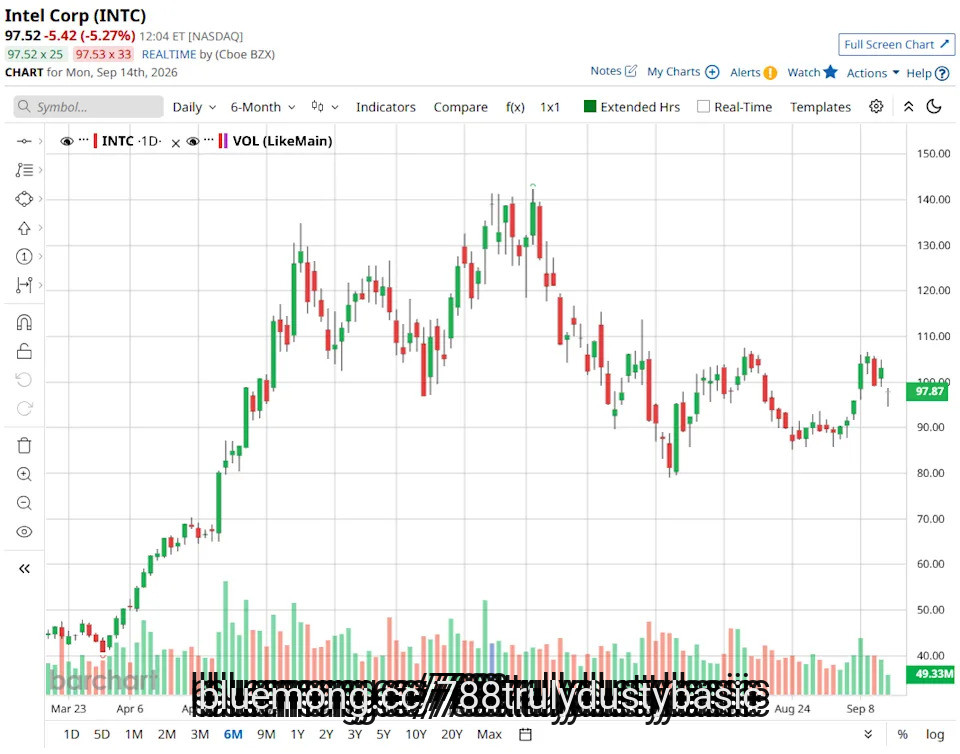
Mizuho has identified four clear tailwinds for Intel (INTC): ongoing CPU supply shortages, a stronger PC refresh cycle, accelerating demand for agentic AI, and growth in advanced packaging. Normally, such a setup would provide a reason to raise a price target. Instead, the firm cut its price target from $109 to $92, citing short-term multiple compression across Agentic AI stocks, and maintained a "Neutral" rating. The contradiction becomes more important because Intel's re-rating still depends on a foundry turnaround that has yet to prove itself.
Mizuho remains cautious on INTC stock despite outlining four separate tailwinds that could support the company's growth. The firm lowered its price target from $109 to $92 on Sept. 3, pointing to short-term multiple compression across agentic AI companies while keeping its "Neutral" rating unchanged. Mizuho **** yst Vijay Rakesh highlighted four developments that could support Intel's outlook. According to the **** yst, accelerating agentic AI demand could improve CPU-to-GPU ratios and drive additional server refreshers. Ongoing CPU supply constraints could also leave the company unable to fully meet demand through 2027. In addition, advanced packaging revenue is expected to reach $3.5 billion by 2029, with external foundry revenue potentially reaching a similar level through the 14A node. Finally, a stronger PC cycle could extend the upgrade cycle as corporate refreshes combine with ongoing memory tightness.
Goldman Sachs Expects Fed Chair Kevin Warsh to Raise Rates This Week — But Not Because of Oil Prices.
Billionaire Charlie Munger, Who Died at 99, Skipped Insurance on His Mansion Since He Could Just Write a Check to Rebuild — 'All Intelligent People Do It My Way'
The EV Bubble Has Burst. How to Play Rivian Stock Now.
#four
Mizuho remains cautious on INTC stock despite outlining four separate tailwinds that could support the company's growth. The firm lowered its price target from $109 to $92 on Sept. 3, pointing to short-term multiple compression across agentic AI companies while keeping its "Neutral" rating unchanged. Mizuho **** yst Vijay Rakesh highlighted four developments that could support Intel's outlook. According to the **** yst, accelerating agentic AI demand could improve CPU-to-GPU ratios and drive additional server refreshers. Ongoing CPU supply constraints could also leave the company unable to fully meet demand through 2027. In addition, advanced packaging revenue is expected to reach $3.5 billion by 2029, with external foundry revenue potentially reaching a similar level through the 14A node. Finally, a stronger PC cycle could extend the upgrade cycle as corporate refreshes combine with ongoing memory tightness.
Goldman Sachs Expects Fed Chair Kevin Warsh to Raise Rates This Week — But Not Because of Oil Prices.
Billionaire Charlie Munger, Who Died at 99, Skipped Insurance on His Mansion Since He Could Just Write a Check to Rebuild — 'All Intelligent People Do It My Way'
The EV Bubble Has Burst. How to Play Rivian Stock Now.
#four


1 day ago
This story was originally published on Bisnow, the newsroom global commercial real estate reads first. To receive daily news and ******* ysis, subscribe to Bisnow's free suite of newsletters.
A pair of national real estate investment managers closed their U.S. office credit fund with $1.1B in investor commitments.
Hines and Rialto Capital secured 126 investors for their Hines Rialto Credit Partners, a co-general partnership focused on U.S. office credit investments. The fund required a minimum investment of $100K, according to a filing with the U.S. Securities and Exchange Commission.
With the rapid growth of private credit, Hines said it believes investors are searching for real estate credit strategies grounded in specialized underwriting and deep market knowledge.
"Yield alone does not tell you the quality of the risk," Alfonso Munk, Hines' global co-head of investment management, said in a statement. "In real estate credit, understanding the underlying ******* et — what it is worth, how it performs and how it may hold up under pressure — is becoming increasingly important as the market works through a significant refinancing cycle."
#real #rialto
A pair of national real estate investment managers closed their U.S. office credit fund with $1.1B in investor commitments.
Hines and Rialto Capital secured 126 investors for their Hines Rialto Credit Partners, a co-general partnership focused on U.S. office credit investments. The fund required a minimum investment of $100K, according to a filing with the U.S. Securities and Exchange Commission.
With the rapid growth of private credit, Hines said it believes investors are searching for real estate credit strategies grounded in specialized underwriting and deep market knowledge.
"Yield alone does not tell you the quality of the risk," Alfonso Munk, Hines' global co-head of investment management, said in a statement. "In real estate credit, understanding the underlying ******* et — what it is worth, how it performs and how it may hold up under pressure — is becoming increasingly important as the market works through a significant refinancing cycle."
#real #rialto


1 day ago
On September 8, United Natural Foods Inc. (NYSE:UNFI) announced its fourth quarter and full FY26 results. For the final quarter, the company posted an adjusted EBITDA of $172 million, which grew 48.3% compared to Q4 FY25. United's fourth quarter adjusted EPS of $0.69 took a sharp turn relative to a $0.11 adjusted loss per share for the same period last year. Cash flow from operating activities for the quarter stood at $197 million, along with free cash flow of $80 million.
Nejron Photo/Shutterstock.com
Amid a favorable customer mix and network optimizations, United delivered Q4 gross profit of $1,050 million, increasing marginally by 1.9% from the same period last year. This led to a gross margin of 13.7%, compared to 13.4% recorded in Q4 FY25. Cost-saving initiatives, which included efficient productivity through distribution centers and network optimizations, translated into lower operating expenses on a year-over-year basis. It helped United jump from an $87 million net loss for Q4 FY25 to a net income of $35 million during the recently concluded quarter.
For the complete fiscal year, the company delivered an adjusted EBITDA of $701 million, showcasing a 27% growth compared to FY25. Full-year adjusted EPS also climbed from $0.71 last year to $2.65. United generated FY26 operating cash flow of $540 million and free cash flow of $323 million.
Several encouraging operational developments took place during the fourth quarter. United initiated onboarding additional business from its existing customer base, as well as the new ones. Topline impact of such additions will be seen during FY27, once the broader optimization initiatives have cycled through. For its Lean Daily Management (LDM) program, the company concluded a preliminary rollout covering 44 distribution centers. This resulted in year-over-year enhancement in fill rates, throughput, and on-time deliveries, for four consecutive quarters.
#cash #flow #fourth #company
Nejron Photo/Shutterstock.com
Amid a favorable customer mix and network optimizations, United delivered Q4 gross profit of $1,050 million, increasing marginally by 1.9% from the same period last year. This led to a gross margin of 13.7%, compared to 13.4% recorded in Q4 FY25. Cost-saving initiatives, which included efficient productivity through distribution centers and network optimizations, translated into lower operating expenses on a year-over-year basis. It helped United jump from an $87 million net loss for Q4 FY25 to a net income of $35 million during the recently concluded quarter.
For the complete fiscal year, the company delivered an adjusted EBITDA of $701 million, showcasing a 27% growth compared to FY25. Full-year adjusted EPS also climbed from $0.71 last year to $2.65. United generated FY26 operating cash flow of $540 million and free cash flow of $323 million.
Several encouraging operational developments took place during the fourth quarter. United initiated onboarding additional business from its existing customer base, as well as the new ones. Topline impact of such additions will be seen during FY27, once the broader optimization initiatives have cycled through. For its Lean Daily Management (LDM) program, the company concluded a preliminary rollout covering 44 distribution centers. This resulted in year-over-year enhancement in fill rates, throughput, and on-time deliveries, for four consecutive quarters.
#cash #flow #fourth #company


1 day ago
On September 11, Dell Technologies Inc. (NYSE:DELL) shares jumped more than 11% after RBC Capital Markets initiated coverage of the company with an Outperform rating and a price target of $640.
The latest rally adds to an already strong year for Dell Technologies Inc. (NYSE:DELL), with the stock having gained over 300% so far in 2026. The company has become one of the biggest vendors for Nvidia-based servers and related equipment, benefiting from strong demand for AI infrastructure from cloud companies and enterprises.
Photo by Pok Rie on Pexels
RBC ***** yst David Paige wrote in a note that Dell Technologies Inc. (NYSE:DELL) is showing no signs of slowing. RBC believes that the company "continues to be well positioned to benefit from a multi-year AI infrastructure spending cycle."
Paige pointed out that "Dell Technologies Inc.'s (NYSE:DELL) best-in-class supply chain represents a competitive moat that differentiates the company during periods of supply disruption, as customers increasingly turn to Dell Technologies Inc. (NYSE:DELL) for a 'calming hand' during periods of supply volatility/constraints."
#paige
The latest rally adds to an already strong year for Dell Technologies Inc. (NYSE:DELL), with the stock having gained over 300% so far in 2026. The company has become one of the biggest vendors for Nvidia-based servers and related equipment, benefiting from strong demand for AI infrastructure from cloud companies and enterprises.
Photo by Pok Rie on Pexels
RBC ***** yst David Paige wrote in a note that Dell Technologies Inc. (NYSE:DELL) is showing no signs of slowing. RBC believes that the company "continues to be well positioned to benefit from a multi-year AI infrastructure spending cycle."
Paige pointed out that "Dell Technologies Inc.'s (NYSE:DELL) best-in-class supply chain represents a competitive moat that differentiates the company during periods of supply disruption, as customers increasingly turn to Dell Technologies Inc. (NYSE:DELL) for a 'calming hand' during periods of supply volatility/constraints."
#paige

1 day ago
Interested in NVIDIA Corporation? Here are five stocks we like better.
NVIDIA released CUDA-Q Logical, an open-source software layer that links GPUs with quantum processors to solve practical error correction challenges.
Early testing by Fermilab and Sandia National Laboratories shows dramatic efficiency gains, including a seven-fold faster design cycle and reduced physical qubit requirements.
Quantum hardware firms IonQ, Rigetti Computing, and D-Wave Quantum could benefit as standardized software lowers development costs and enables deeper integration with NVIDIA's infrastructure.
Many investors view quantum hardware developers and classical semiconductor leaders as competing forces in high-performance computing. Recent developments demonstrate that the two architectures are becoming deeply interdependent.
#hardware #here
NVIDIA released CUDA-Q Logical, an open-source software layer that links GPUs with quantum processors to solve practical error correction challenges.
Early testing by Fermilab and Sandia National Laboratories shows dramatic efficiency gains, including a seven-fold faster design cycle and reduced physical qubit requirements.
Quantum hardware firms IonQ, Rigetti Computing, and D-Wave Quantum could benefit as standardized software lowers development costs and enables deeper integration with NVIDIA's infrastructure.
Many investors view quantum hardware developers and classical semiconductor leaders as competing forces in high-performance computing. Recent developments demonstrate that the two architectures are becoming deeply interdependent.
#hardware #here


2 days ago
Bank of America Corporation (NYSE:BAC) expects third-quarter investment banking fees to fall by at least 10% year over year, which highlights a broader normalization across capital markets after an unusually strong first half of 2026. BofA expects investment banking fees of roughly $1.6 billion to $1.8 billion in the third quarter, compared with $2 billion a year earlier. CEO Brian Moynihan said the broader investment banking market is also down around 10%, suggesting that the softer quarter reflects a cooling in industry activity rather than a company-specific breakdown.
The comparison with the second quarter illustrates how sharp the normalization is. BofA's investment banking fees had risen 50% year over year to $2.1 billion in Q2, while sales and trading revenue reached a record $7.1 billion. The current outlook therefore represents a pullback from elevated levels rather than a reversal of the broader recovery in dealmaking. Global M&A activity remained substantial in the first half of 2026, with more than $3 trillion of announced transactions, providing evidence that corporate deal appetite has remained relatively healthy even as quarterly activity fluctuates.
Pixabay/Public Domain
From a longer-term perspective, the normalization does not necessarily undermine Bank of America Corporation (NYSE:BAC)'s capital-markets franchise. Investment banking revenues remain well above the depressed levels seen during the earlier downturn in deal activity, while the bank continues to have a substantial pipeline of potential transactions. Moynihan's comments that the pipeline remains strong suggest that some of the current weakness could reflect the timing of transactions rather than a fundamental loss of corporate demand for M&A, financing or advisory services.
BofA also has a diversified earnings base that makes it less dependent on any single capital-markets cycle. Its second-quarter net interest income increased 9% to $16 billion, while average loans and leases grew 8%. That provides a more stable source of revenue as investment banking normalizes. In this context, the Q3 decline can be viewed as a shift away from exceptionally strong capital-markets contributions rather than evidence that the bank's broader earnings trajectory has deteriorated.
#billion #year #rather
The comparison with the second quarter illustrates how sharp the normalization is. BofA's investment banking fees had risen 50% year over year to $2.1 billion in Q2, while sales and trading revenue reached a record $7.1 billion. The current outlook therefore represents a pullback from elevated levels rather than a reversal of the broader recovery in dealmaking. Global M&A activity remained substantial in the first half of 2026, with more than $3 trillion of announced transactions, providing evidence that corporate deal appetite has remained relatively healthy even as quarterly activity fluctuates.
Pixabay/Public Domain
From a longer-term perspective, the normalization does not necessarily undermine Bank of America Corporation (NYSE:BAC)'s capital-markets franchise. Investment banking revenues remain well above the depressed levels seen during the earlier downturn in deal activity, while the bank continues to have a substantial pipeline of potential transactions. Moynihan's comments that the pipeline remains strong suggest that some of the current weakness could reflect the timing of transactions rather than a fundamental loss of corporate demand for M&A, financing or advisory services.
BofA also has a diversified earnings base that makes it less dependent on any single capital-markets cycle. Its second-quarter net interest income increased 9% to $16 billion, while average loans and leases grew 8%. That provides a more stable source of revenue as investment banking normalizes. In this context, the Q3 decline can be viewed as a shift away from exceptionally strong capital-markets contributions rather than evidence that the bank's broader earnings trajectory has deteriorated.
#billion #year #rather


2 days ago
Oracle Corporation (NYSE:ORCL) is increasing the expected cost of its fiscal 2026 restructuring plan by about $700 million to roughly $2.8 billion as it simultaneously ramps up spending to capture demand for AI cloud services. The additional costs include severance, contract terminations and other exit expenses, with some restructuring directly linked to adopting AI across parts of the organization.
Oracle had already recorded $1.8 billion of restructuring expenses in fiscal 2026, compared with $299 million in fiscal 2025, showing how materially the company is accelerating its operational transformation. The restructuring comes alongside an unusually large AI investment cycle. Oracle booked more than $30 billion of new AI cloud contracts in its latest quarter, lifting its remaining performance obligations/revenue backlog to $664 billion, while roughly half of that backlog is expected to convert into revenue over the next 36 months.
The strongest bull argument is that the additional restructuring expense is part of a broader shift toward a higher-growth cloud and AI business rather than simply a deterioration in cost control. Oracle Corporation (NYSE:ORCL)'s restructuring program is explicitly aimed at improving efficiency while reallocating resources toward cloud-based offerings and second-generation cloud infrastructure. If the $2.8 billion restructuring program reduces lower-growth costs and enables Oracle to redirect personnel and capital toward AI infrastructure, the near-term earnings pressure could support stronger operating leverage later as cloud revenue scales.
More importantly, the restructuring is occurring against evidence that AI demand is already translating into contracted revenue. Oracle added more than $30 billion of AI cloud contracts in one quarter, pushing its backlog to $664 billion, above the $639.89 billion ******* yst estimate. Management said most of the newly contracted revenue would not require substantial incremental capital because customers are using prepayments or supplying their own hardware. That is particularly important because Oracle's biggest weakness has been the mismatch between rapid infrastructure investment and current cash generation. If customer-funded capacity continues to reduce Oracle's upfront capital burden, the company could convert its huge backlog into revenue without proportionally increasing its cash burn.
The early financial evidence also supports the possibility that the AI strategy is beginning to improve Oracle's growth profile. Revenue in the recent quarter rose 30% year over year to $19.3 billion, adjusted EPS reached $1.92 versus the $1.74 ******* yst consensus, and Oracle Corporation (NYSE:ORCL) raised its fiscal 2027 adjusted EPS forecast from $8.05 to $8.10. Meanwhile, first-quarter free cash flow of negative $5.4 billion was substantially better than both the expected negative $9.56 billion and the previous-quarter negative $11.48 billion. If this trajectory continues, the $700
Oracle had already recorded $1.8 billion of restructuring expenses in fiscal 2026, compared with $299 million in fiscal 2025, showing how materially the company is accelerating its operational transformation. The restructuring comes alongside an unusually large AI investment cycle. Oracle booked more than $30 billion of new AI cloud contracts in its latest quarter, lifting its remaining performance obligations/revenue backlog to $664 billion, while roughly half of that backlog is expected to convert into revenue over the next 36 months.
The strongest bull argument is that the additional restructuring expense is part of a broader shift toward a higher-growth cloud and AI business rather than simply a deterioration in cost control. Oracle Corporation (NYSE:ORCL)'s restructuring program is explicitly aimed at improving efficiency while reallocating resources toward cloud-based offerings and second-generation cloud infrastructure. If the $2.8 billion restructuring program reduces lower-growth costs and enables Oracle to redirect personnel and capital toward AI infrastructure, the near-term earnings pressure could support stronger operating leverage later as cloud revenue scales.
More importantly, the restructuring is occurring against evidence that AI demand is already translating into contracted revenue. Oracle added more than $30 billion of AI cloud contracts in one quarter, pushing its backlog to $664 billion, above the $639.89 billion ******* yst estimate. Management said most of the newly contracted revenue would not require substantial incremental capital because customers are using prepayments or supplying their own hardware. That is particularly important because Oracle's biggest weakness has been the mismatch between rapid infrastructure investment and current cash generation. If customer-funded capacity continues to reduce Oracle's upfront capital burden, the company could convert its huge backlog into revenue without proportionally increasing its cash burn.
The early financial evidence also supports the possibility that the AI strategy is beginning to improve Oracle's growth profile. Revenue in the recent quarter rose 30% year over year to $19.3 billion, adjusted EPS reached $1.92 versus the $1.74 ******* yst consensus, and Oracle Corporation (NYSE:ORCL) raised its fiscal 2027 adjusted EPS forecast from $8.05 to $8.10. Meanwhile, first-quarter free cash flow of negative $5.4 billion was substantially better than both the expected negative $9.56 billion and the previous-quarter negative $11.48 billion. If this trajectory continues, the $700

2 days ago
Bank of America Corporation (NYSE:BAC) expects third-quarter investment banking fees to fall by at least 10% year over year, which highlights a broader normalization across capital markets after an unusually strong first half of 2026. BofA expects investment banking fees of roughly $1.6 billion to $1.8 billion in the third quarter, compared with $2 billion a year earlier. CEO Brian Moynihan said the broader investment banking market is also down around 10%, suggesting that the softer quarter reflects a cooling in industry activity rather than a company-specific breakdown.
The comparison with the second quarter illustrates how sharp the normalization is. BofA's investment banking fees had risen 50% year over year to $2.1 billion in Q2, while sales and trading revenue reached a record $7.1 billion. The current outlook therefore represents a pullback from elevated levels rather than a reversal of the broader recovery in dealmaking. Global M&A activity remained substantial in the first half of 2026, with more than $3 trillion of announced transactions, providing evidence that corporate deal appetite has remained relatively healthy even as quarterly activity fluctuates.
Pixabay/Public Domain
From a longer-term perspective, the normalization does not necessarily undermine Bank of America Corporation (NYSE:BAC)'s capital-markets franchise. Investment banking revenues remain well above the depressed levels seen during the earlier downturn in deal activity, while the bank continues to have a substantial pipeline of potential transactions. Moynihan's comments that the pipeline remains strong suggest that some of the current weakness could reflect the timing of transactions rather than a fundamental loss of corporate demand for M&A, financing or advisory services.
BofA also has a diversified earnings base that makes it less dependent on any single capital-markets cycle. Its second-quarter net interest income increased 9% to $16 billion, while average loans and leases grew 8%. That provides a more stable source of revenue as investment banking normalizes. In this context, the Q3 decline can be viewed as a shift away from exceptionally strong capital-markets contributions rather than evidence that the bank's broader earnings trajectory has deteriorated.
#investment #banking #year
The comparison with the second quarter illustrates how sharp the normalization is. BofA's investment banking fees had risen 50% year over year to $2.1 billion in Q2, while sales and trading revenue reached a record $7.1 billion. The current outlook therefore represents a pullback from elevated levels rather than a reversal of the broader recovery in dealmaking. Global M&A activity remained substantial in the first half of 2026, with more than $3 trillion of announced transactions, providing evidence that corporate deal appetite has remained relatively healthy even as quarterly activity fluctuates.
Pixabay/Public Domain
From a longer-term perspective, the normalization does not necessarily undermine Bank of America Corporation (NYSE:BAC)'s capital-markets franchise. Investment banking revenues remain well above the depressed levels seen during the earlier downturn in deal activity, while the bank continues to have a substantial pipeline of potential transactions. Moynihan's comments that the pipeline remains strong suggest that some of the current weakness could reflect the timing of transactions rather than a fundamental loss of corporate demand for M&A, financing or advisory services.
BofA also has a diversified earnings base that makes it less dependent on any single capital-markets cycle. Its second-quarter net interest income increased 9% to $16 billion, while average loans and leases grew 8%. That provides a more stable source of revenue as investment banking normalizes. In this context, the Q3 decline can be viewed as a shift away from exceptionally strong capital-markets contributions rather than evidence that the bank's broader earnings trajectory has deteriorated.
#investment #banking #year
2 days ago
Oracle Corporation (NYSE:ORCL) is increasing the expected cost of its fiscal 2026 restructuring plan by about $700 million to roughly $2.8 billion as it simultaneously ramps up spending to capture demand for AI cloud services. The additional costs include severance, contract terminations and other exit expenses, with some restructuring directly linked to adopting AI across parts of the organization.
Oracle had already recorded $1.8 billion of restructuring expenses in fiscal 2026, compared with $299 million in fiscal 2025, showing how materially the company is accelerating its operational transformation. The restructuring comes alongside an unusually large AI investment cycle. Oracle booked more than $30 billion of new AI cloud contracts in its latest quarter, lifting its remaining performance obligations/revenue backlog to $664 billion, while roughly half of that backlog is expected to convert into revenue over the next 36 months.
The strongest bull argument is that the additional restructuring expense is part of a broader shift toward a higher-growth cloud and AI business rather than simply a deterioration in cost control. Oracle Corporation (NYSE:ORCL)'s restructuring program is explicitly aimed at improving efficiency while reallocating resources toward cloud-based offerings and second-generation cloud infrastructure. If the $2.8 billion restructuring program reduces lower-growth costs and enables Oracle to redirect personnel and capital toward AI infrastructure, the near-term earnings pressure could support stronger operating leverage later as cloud revenue scales.
More importantly, the restructuring is occurring against evidence that AI demand is already translating into contracted revenue. Oracle added more than $30 billion of AI cloud contracts in one quarter, pushing its backlog to $664 billion, above the $639.89 billion ****** yst estimate. Management said most of the newly contracted revenue would not require substantial incremental capital because customers are using prepayments or supplying their own hardware. That is particularly important because Oracle's biggest weakness has been the mismatch between rapid infrastructure investment and current cash generation. If customer-funded capacity continues to reduce Oracle's upfront capital burden, the company could convert its huge backlog into revenue without proportionally increasing its cash burn.
The early financial evidence also supports the possibility that the AI strategy is beginning to improve Oracle's growth profile. Revenue in the recent quarter rose 30% year over year to $19.3 billion, adjusted EPS reached $1.92 versus the $1.74 ****** yst consensus, and Oracle Corporation (NYSE:ORCL) raised its fiscal 2027 adjusted EPS forecast from $8.05 to $8.10. Meanwhile, first-quarter free cash flow of negative $5.4 billion was substantially better than both the expected negative $9.56 billion and the previous-quarter negative $11.48 billion. If this trajectory continues, the $700 mi
Oracle had already recorded $1.8 billion of restructuring expenses in fiscal 2026, compared with $299 million in fiscal 2025, showing how materially the company is accelerating its operational transformation. The restructuring comes alongside an unusually large AI investment cycle. Oracle booked more than $30 billion of new AI cloud contracts in its latest quarter, lifting its remaining performance obligations/revenue backlog to $664 billion, while roughly half of that backlog is expected to convert into revenue over the next 36 months.
The strongest bull argument is that the additional restructuring expense is part of a broader shift toward a higher-growth cloud and AI business rather than simply a deterioration in cost control. Oracle Corporation (NYSE:ORCL)'s restructuring program is explicitly aimed at improving efficiency while reallocating resources toward cloud-based offerings and second-generation cloud infrastructure. If the $2.8 billion restructuring program reduces lower-growth costs and enables Oracle to redirect personnel and capital toward AI infrastructure, the near-term earnings pressure could support stronger operating leverage later as cloud revenue scales.
More importantly, the restructuring is occurring against evidence that AI demand is already translating into contracted revenue. Oracle added more than $30 billion of AI cloud contracts in one quarter, pushing its backlog to $664 billion, above the $639.89 billion ****** yst estimate. Management said most of the newly contracted revenue would not require substantial incremental capital because customers are using prepayments or supplying their own hardware. That is particularly important because Oracle's biggest weakness has been the mismatch between rapid infrastructure investment and current cash generation. If customer-funded capacity continues to reduce Oracle's upfront capital burden, the company could convert its huge backlog into revenue without proportionally increasing its cash burn.
The early financial evidence also supports the possibility that the AI strategy is beginning to improve Oracle's growth profile. Revenue in the recent quarter rose 30% year over year to $19.3 billion, adjusted EPS reached $1.92 versus the $1.74 ****** yst consensus, and Oracle Corporation (NYSE:ORCL) raised its fiscal 2027 adjusted EPS forecast from $8.05 to $8.10. Meanwhile, first-quarter free cash flow of negative $5.4 billion was substantially better than both the expected negative $9.56 billion and the previous-quarter negative $11.48 billion. If this trajectory continues, the $700 mi

2 days ago
On August 4, Westlake Corporation (NYSE:WLK) reported second-quarter results that erased two consecutive quarterly losses in a single swing. Net income landed at $260 million, or $2.01 per share, compared with a $169 million loss just three months earlier and a $142 million loss a year ago. EBITDA nearly tripled from the second quarter of 2025. The numbers mark a sharp reversal for a company whose chemicals business had been bleeding red ink.
The turnaround centers on Performance and Essential Materials, the segment that makes chlorovinyls and other basic chemicals. PEM swung from a $318 million operating loss in the second quarter of 2025 to $185 million in income this quarter, while EBITDA excluding identified items jumped from a 3% margin to 21%. The driver was pricing: average sales prices across PEM rose 14% year over year, more than offsetting a 3% price decline in the Housing and Infrastructure Products segment. Combined with a 7% increase in companywide sales volume, excluding the effects of plant shutdowns and an acquisition, the pricing recovery pushed companywide EBITDA to $679 million from $210 million a year earlier.
Westlake is also working the balance sheet alongside the market recovery. The company reduced debt by $500 million during the quarter and returned $99 million to shareholders through dividends and share repurchases. Management says its three-pillar profitability improvement plan remains on track to deliver a $600 million operating income benefit, a target that, if it holds, would layer structural cost savings on top of whatever the market gives back in pricing.
Not every part of the story improved together. Housing and Infrastructure Products, the segment tied to home construction and building products, saw its EBITDA margin slip to 22% from 24% a year earlier, even as volume rose 6% excluding the ACI acquisition. Average sales prices in that segment fell 3% year over year, a sign that pricing power in housing products has softened even as the company sells more of it.
The improvement in the core chemicals business also leans heavily on price rather than volume. PEM's turnaround came from a 14% jump in average sales price, a figure that can move in either direction with commodity cycles. The first quarter of 2026 was a reminder of how quickly conditions shift: Westlake posted a $169 million net loss just three months before this result, weighed down by $85 million in identified items, including a $67 million charge to settle litigation over PVC pipe and fittings and $18 million tied to facility shutdowns. A year earlier, in the second quarter of 2025, the company absorbed another $130 million in shutdown-related charges. Restructuring and legal charges showed up in two of the last three reported quarters.
#million #quarter #westlake #earlier
The turnaround centers on Performance and Essential Materials, the segment that makes chlorovinyls and other basic chemicals. PEM swung from a $318 million operating loss in the second quarter of 2025 to $185 million in income this quarter, while EBITDA excluding identified items jumped from a 3% margin to 21%. The driver was pricing: average sales prices across PEM rose 14% year over year, more than offsetting a 3% price decline in the Housing and Infrastructure Products segment. Combined with a 7% increase in companywide sales volume, excluding the effects of plant shutdowns and an acquisition, the pricing recovery pushed companywide EBITDA to $679 million from $210 million a year earlier.
Westlake is also working the balance sheet alongside the market recovery. The company reduced debt by $500 million during the quarter and returned $99 million to shareholders through dividends and share repurchases. Management says its three-pillar profitability improvement plan remains on track to deliver a $600 million operating income benefit, a target that, if it holds, would layer structural cost savings on top of whatever the market gives back in pricing.
Not every part of the story improved together. Housing and Infrastructure Products, the segment tied to home construction and building products, saw its EBITDA margin slip to 22% from 24% a year earlier, even as volume rose 6% excluding the ACI acquisition. Average sales prices in that segment fell 3% year over year, a sign that pricing power in housing products has softened even as the company sells more of it.
The improvement in the core chemicals business also leans heavily on price rather than volume. PEM's turnaround came from a 14% jump in average sales price, a figure that can move in either direction with commodity cycles. The first quarter of 2026 was a reminder of how quickly conditions shift: Westlake posted a $169 million net loss just three months before this result, weighed down by $85 million in identified items, including a $67 million charge to settle litigation over PVC pipe and fittings and $18 million tied to facility shutdowns. A year earlier, in the second quarter of 2025, the company absorbed another $130 million in shutdown-related charges. Restructuring and legal charges showed up in two of the last three reported quarters.
#million #quarter #westlake #earlier


2 days ago
XLE has surged 46% year-to-date while XLY dropped 7%, with defensive XLP up 9% as markets rotate away from consumer exposure.
XLF's soft 4% gain signals financial stocks aren't pricing a healthy cycle, with the 10-year/2-year Treasury spread flattened to 0.33%.
Torres pegs $120 WTI as the consumer spending breaking point, still 20% above current prices but reminiscent of 2022's economy-crushing oil surge.
Read More: Avoid these 13 retirement mistakes before they derail your future (sponsor)
The national average price of regular gasoline jumped 16 cents in a single week to $4.32 a gallon on September 14, 2026, a move that puts the pump price in the 90th percentile of the past year and caps a 7.8% jump in one month. The proximate cause sits upstream: WTI crude cleared $97.26 a barrel on September 9 after running up 16.1% in a month, and Brent has traded through the $100 line. On Fed decision day, a CNBC Morning Call panel put a number on where this stops being an inconvenience and starts being a recession.
#Consumer #torres
XLF's soft 4% gain signals financial stocks aren't pricing a healthy cycle, with the 10-year/2-year Treasury spread flattened to 0.33%.
Torres pegs $120 WTI as the consumer spending breaking point, still 20% above current prices but reminiscent of 2022's economy-crushing oil surge.
Read More: Avoid these 13 retirement mistakes before they derail your future (sponsor)
The national average price of regular gasoline jumped 16 cents in a single week to $4.32 a gallon on September 14, 2026, a move that puts the pump price in the 90th percentile of the past year and caps a 7.8% jump in one month. The proximate cause sits upstream: WTI crude cleared $97.26 a barrel on September 9 after running up 16.1% in a month, and Brent has traded through the $100 line. On Fed decision day, a CNBC Morning Call panel put a number on where this stops being an inconvenience and starts being a recession.
#Consumer #torres

2 days ago
Parnassus Investments, an investment management company, released the "Parnassus Growth Equity Fund" second-quarter 2026 investor letter. The letter can be downloaded here. During the quarter, the Fund (Investor Shares) returned 17.49% (net of fees), outperforming the Russell 1000 Growth Index's 16.74%. Holdings in Information Technology and Consumer Discretionary sectors boosted relative returns, while Communication Services and Financials holdings detracted. For the year-to-date period, the Fund returned 6.17% (net of fees), outperforming the Russell 1000 Growth's 5.33%. The firm remains constructively bullish on U.S. equities and continues to be selective, valuation-sensitive, and focused on disruptive growth opportunities through active stock selection. Growth stocks advanced during the second quarter, as the Russell 1000 Growth Index generated strong double-digit returns driven by increased confidence in the durability of the ongoing artificial intelligence (AI) infrastructure build-out. Additionally, reviewing the Fund's top five holdings could help identify its best picks for 2026.
In its second-quarter 2026 investor letter, Parnassus Growth Equity Fund highlighted Sandisk Corporation (NASDAQ:SNDK) as a newly added position. Sandisk Corporation (NASDAQ:SNDK) develops, manufactures, and sells data storage devices and solutions using NAND flash technology in the United States and internationally. On September 15, 2026, Sandisk Corporation (NASDAQ:SNDK) closed at $1,530.90 per share. Over the past month, Sandisk Corporation (NASDAQ:SNDK) declined 2.32%, but its shares are up 1,530.74% over the past year. Sandisk Corporation (NASDAQ:SNDK) has a market capitalization of $224.15 billion, and its stock has traded within a 52-week range of $90.22 to $2,354.39.
Parnassus Growth Equity Fund stated the following regarding Sandisk Corporation (NASDAQ:SNDK) in its Q2 2026 investor letter:
"Other positions added during the quarter included Sandisk Corporation (NASDAQ:SNDK), a leader in flash memory solutions; Comfort Systems, a mechanical, electrical and plumbing contractor. Sandisk makes NAND flash memory, which is seeing a surge in demand from data centers and AI workloads. While NAND remains cyclical, we believe the combination of accelerating AI-driven storage demand and constrained supply provides an attractive opportunity to participate in the current upcycle."
Sandisk Corporation (NASDAQ:SNDK) is on our list of the 40 Most Popular Stocks Among Hedge Funds. As per our database, 128 hedge fund portfolios held Sandisk Corporation (NASDAQ:SNDK) at the end of the second quarter which was 114 in the previous quarter. While we acknowledge the potential of Sandisk Corporation (NASDAQ:SNDK) as an investment, we believe certain AI stocks offer greater upside potential and carry less downside risk. If you're looking for an extremely undervalued AI stock that also stands to benefit significantly from Trump-era tariffs and the onshoring trend, see our fre
In its second-quarter 2026 investor letter, Parnassus Growth Equity Fund highlighted Sandisk Corporation (NASDAQ:SNDK) as a newly added position. Sandisk Corporation (NASDAQ:SNDK) develops, manufactures, and sells data storage devices and solutions using NAND flash technology in the United States and internationally. On September 15, 2026, Sandisk Corporation (NASDAQ:SNDK) closed at $1,530.90 per share. Over the past month, Sandisk Corporation (NASDAQ:SNDK) declined 2.32%, but its shares are up 1,530.74% over the past year. Sandisk Corporation (NASDAQ:SNDK) has a market capitalization of $224.15 billion, and its stock has traded within a 52-week range of $90.22 to $2,354.39.
Parnassus Growth Equity Fund stated the following regarding Sandisk Corporation (NASDAQ:SNDK) in its Q2 2026 investor letter:
"Other positions added during the quarter included Sandisk Corporation (NASDAQ:SNDK), a leader in flash memory solutions; Comfort Systems, a mechanical, electrical and plumbing contractor. Sandisk makes NAND flash memory, which is seeing a surge in demand from data centers and AI workloads. While NAND remains cyclical, we believe the combination of accelerating AI-driven storage demand and constrained supply provides an attractive opportunity to participate in the current upcycle."
Sandisk Corporation (NASDAQ:SNDK) is on our list of the 40 Most Popular Stocks Among Hedge Funds. As per our database, 128 hedge fund portfolios held Sandisk Corporation (NASDAQ:SNDK) at the end of the second quarter which was 114 in the previous quarter. While we acknowledge the potential of Sandisk Corporation (NASDAQ:SNDK) as an investment, we believe certain AI stocks offer greater upside potential and carry less downside risk. If you're looking for an extremely undervalued AI stock that also stands to benefit significantly from Trump-era tariffs and the onshoring trend, see our fre

4 days ago
Three and a half years of freight recession did two things to the truck financing market at once. It shredded the credit profiles of the carriers who most needed to borrow. It also pushed a large share of the lenders who would have lent to them out of the sector. Both are now rationing the equipment replacement cycle the industry has spent two years waiting on.
Kirk Mann stayed in. As executive vice president and general manager of the transportation vendor solutions business at Mitsubishi HC Capital America, he financed trucks through the entire downturn and watched a great many of them come back.
"There are a lot of lenders, banks that left, and so we've had the benefit of being one of the lenders actually lending money in this ****** e," Mann said in an interview with FreightWaves. What competition remains is mostly OEM captive finance arms, a couple of large independents and a few bank-led groups, he said.
The carriers that did not survive were overwhelmingly the newest. On average, 85% of motor carriers with fewer than two years of operating experience and their own operating authority failed over a three-year stretch of the downturn, Mann said.
Back in January 2023, Mann sat in Mitsubishi HC Capital's Chicago offices with Wayne Pass, the company's chief credit officer for vendor solutions, since retired. He asked what a Freightliner Cascadia 13-speed with a tall sleeper and fewer than 500,000 miles was worth. Both men wrote down $45,000. Mann then asked what the company was financing those trucks at. About $110,000.
#mitsubishi #back #financing #large
Kirk Mann stayed in. As executive vice president and general manager of the transportation vendor solutions business at Mitsubishi HC Capital America, he financed trucks through the entire downturn and watched a great many of them come back.
"There are a lot of lenders, banks that left, and so we've had the benefit of being one of the lenders actually lending money in this ****** e," Mann said in an interview with FreightWaves. What competition remains is mostly OEM captive finance arms, a couple of large independents and a few bank-led groups, he said.
The carriers that did not survive were overwhelmingly the newest. On average, 85% of motor carriers with fewer than two years of operating experience and their own operating authority failed over a three-year stretch of the downturn, Mann said.
Back in January 2023, Mann sat in Mitsubishi HC Capital's Chicago offices with Wayne Pass, the company's chief credit officer for vendor solutions, since retired. He asked what a Freightliner Cascadia 13-speed with a tall sleeper and fewer than 500,000 miles was worth. Both men wrote down $45,000. Mann then asked what the company was financing those trucks at. About $110,000.
#mitsubishi #back #financing #large


4 days ago
September's debate over Chinese and American AI spending puts Alibaba Group Holding Limited (NYSE:BABA) and Amazon.com, Inc. (NASDAQ:AMZN) on opposite sides of the same investment question. Both report strong demand for computing services. Shareholders still need that demand to justify the infrastructure bill.
September 7 coverage of Jefferies' ***** ysis highlighted differences in spending intensity. The companies' own results suggest a more useful test than choosing a winner from headline capital expenditures: distinguish operating progress from cash committed ahead of future growth.
Alibaba's August 20 report showed June-quarter AI Cloud and Compute Services revenue increasing 45% to RMB48.44 billion. Segment adjusted EBITA reached RMB5.63 billion. The reporting group now combines its former Cloud Intelligence Group with T-Head, so investors should use the company's recast comparisons.
That operating improvement supports the case that computing demand can generate returns. It does not mean the spending cycle has already paid for itself. Group capital expenditures reached RMB67.68 billion, while free cash flow, a non-GAAP liquidity measure, was negative RMB44.67 billion for the quarter.
The opportunity is to keep expanding customer demand and utilization as new infrastructure becomes available. The risk is that cash outlays remain elevated while weaker returns elsewhere in the group reduce the room for error. Cloud growth alone cannot settle the value of the entire business.
#spending #cash #Services
September 7 coverage of Jefferies' ***** ysis highlighted differences in spending intensity. The companies' own results suggest a more useful test than choosing a winner from headline capital expenditures: distinguish operating progress from cash committed ahead of future growth.
Alibaba's August 20 report showed June-quarter AI Cloud and Compute Services revenue increasing 45% to RMB48.44 billion. Segment adjusted EBITA reached RMB5.63 billion. The reporting group now combines its former Cloud Intelligence Group with T-Head, so investors should use the company's recast comparisons.
That operating improvement supports the case that computing demand can generate returns. It does not mean the spending cycle has already paid for itself. Group capital expenditures reached RMB67.68 billion, while free cash flow, a non-GAAP liquidity measure, was negative RMB44.67 billion for the quarter.
The opportunity is to keep expanding customer demand and utilization as new infrastructure becomes available. The risk is that cash outlays remain elevated while weaker returns elsewhere in the group reduce the room for error. Cloud growth alone cannot settle the value of the entire business.
#spending #cash #Services