
2 months ago
Toward the end of the lightning round on September 8, when a caller inquired about AstraZeneca PLC (NYSE:AZN), Mad Money host Jim Cramer commented:
Alright, now, AstraZeneca reminds me of a company, it's not unlike Novartis. I'm a little nervous about it. It's been missing some of its trials. I don't think COPD is enough to change my mind… I am not going to put my money on AstraZeneca.
AstraZeneca PLC (NYSE:AZN) maintains a solid financial foundation supported by steady top-line growth and disciplined cost management. In its second-quarter report, the company generated total revenue of $15.38 billion, marking a 6.4% increase compared to the same period last year. Adjusted earnings per share reached $2.63, outperforming ****** yst consensus estimates.
The profitability was driven by strong global demand for core oncology and rare disease treatments, which successfully offset revenue headwinds from generic competition affecting older blockbusters like Farxiga and Brilinta. With a net margin hovering around 17.02% and management reiterating its full-year guidance for mid-to-high single-digit revenue growth along with low double-digit core EPS expansion, the core business continues to demonstrate commercial resilience.
The primary driver behind the skepticism could be based on tangible execution risks and regulatory hurdles that threaten AstraZeneca PLC's (NYSE:AZN) long-term top line. A significant blow to the rare disease division came when anselamimab failed to achieve statistical significance for the primary endpoint in the overall AL amyloidosis population in the Phase III CARES program, although AstraZeneca reported encouraging results in a prespecified subgroup of patients with kappa light-chain amyloidosis.
#management


2 months ago
On August 27, AstraZeneca PLC (NYSE:AZN) and Amgen Inc. (NASDAQ:AMGN) scored a shared clinical victory. Positive high-level results from the Phase III CROSSING trial showed that their co-developed severe asthma drug, TEZSPIRE, achieved statistically significant and clinically meaningful improvements across both co-primary endpoints, histologic remission and the frequency/severity of dysphagia, and all key secondary endpoints at week 24 in patients with eosinophilic esophagitis. These benefits were sustained through week 52 across both tested doses, accompanied by a safety profile consistent with its approved indications. While CROSSING highlights their joint R&D success, a closer look at their standalone financial performance reveals distinct growth trajectories.
Both pharmaceutical giants delivered solid Q2 2026 results, but AstraZeneca is showing stronger overall financial momentum. AstraZeneca PLC (NYSE:AZN)'s Q2 revenue increased 6% year over year to $15.38 billion, supported by its Oncology franchise, which grew 18% in H1 to $14.12 billion, and its Rare Disease portfolio, which increased 13%. Core EPS rose 21% to $2.63, beating expectations, while management reaffirmed its full-year 2026 outlook for mid-to-high single-digit revenue growth and low double-digit Core EPS growth.
Amgen Inc. (NASDAQ:AMGN) reported Q2 revenue of $10.1 billion, up 10% year over year, while non-GAAP EPS increased 4% to $6.29. Although its key growth products advanced 26%, mature products faced significant biosimilar pressure, with Prolia revenue declining 32% and XGEVA falling 34%. Amgen nevertheless raised its 2026 revenue guidance midpoint to $39.4 billion.
Overall, AZN holds the financial edge due to stronger EPS growth, broader portfolio momentum, and less exposure to the biosimilar erosion affecting AMGN's mature products.
Amgen's bull case is supported by robust growth in key products, which increased 26%, and $3.5 billion in Q2 free cash flow, providing substantial capital flexibility. Wells Fargo raised its Amgen price target to $435 from $400 on September 4, citing potential upside from HORIZON and pipeline ****** ets such as olpasiran. New Phase III VESALIUS-CV data also showed Repatha reduced the risk of death by 20% in high-risk adults without a prior heart attack or stroke, with heart attack risk reductions emerging as early as six months. However, accelerating biosimilar competition affecting legacy franchises such as Prolia and XGEVA remains a key risk to sustained margin expansion.
#revenue #astrazeneca #increased #products


2 months ago
U.S. stock futures were little changed to moderately higher on Wednesday as investors ***** sed further military developments involving the United States and Iran, movements in oil and bond markets, developments in artificial intelligence and renewed trade tensions between the U.S. and Canada.
At 02:48 ET (06:48 GMT), S&P 500 futures were up 6 points, or 0.1%, while Nasdaq 100 futures gained 57 points, or 0.2%. Dow futures were broadly unchanged.
Wall Street equities declined on Tuesday following exchanges of attacks between the U.S. and Iran and strikes against Saudi Arabia by Houthi forces in Yemen.
Technology stocks were also affected by market reaction to OpenAI's GPT-6 Astra model, with software and services companies declining while some AI infrastructure-related companies, including chipmakers and data centre-linked industrial groups, received investor interest.
U.S. government bonds have also come under selling pressure. The benchmark 10-year Treasury yield was trading just below 5%, close to its highest level in almost two decades.
#points #wednesday #united

0.00$ raised of 0.00$ goal
0 donations
0.00$
to go

2 months ago
OpenAI launched a product on Thursday called ChatGPT for Financial Services, a version of its enterprise tool tailored to handle tasks traditionally performed by entry-level investment bankers, including company research, financial data ***** ysis, and pitchbook creation.
According to CNBC, the product was developed alongside Morgan Stanley and Evercore as design partners, is built on top of ChatGPT Work, and is powered by GPT-6 Astra, the most capable model in OpenAI's current lineup. It is initially aimed at investment banking and equity research teams.
"We're effectively teaching ChatGPT to research like an ***** yst and back up its conclusions like an ***** yst as well," Nick Turley, OpenAI's vice president of product, told CNBC during a briefing announcing the product.
Unlike the standard ChatGPT Work offering, the financial services version connects directly to data from LSEG, Daloopa, and Pitchbook — giving the system ready access to financial statements and earnings transcripts — and can also tap into a firm's existing data subscriptions automatically, according to CNBC. The product also includes sourcing tools that link figures directly to underlying filings, chart verification functionality, and permission controls designed to safeguard confidential deal information.
In a live demo, Turley walked through the platform's capabilities as it examined a prospective M&A target, drew financial figures from industry-standard data sources, and generated a formatted PowerPoint presentation styled to a bank's existing template, according to CNBC.
#according

0.00$ raised of 0.00$ goal
0 donations
0.00$
to go

2 months ago
The Mets' bats continued their impressive Labor Day weekend by pounding out 16 hits and scoring nine runs in a 9-4 victory over the Marlins. Jonah Tong, who was called upon for his first start of the 2026 season, earned a win by striking out seven over five innings.
Choose Your Recap: Amazin' Avenue, MLB.com, Daily News, NY Post, Newsday, ESPN, Faith and Fear in Flushing
The Mets optioned Justin Hagenman to Triple-A to make room for Jonah Tong on the roster.
Jon Heyman explained that the Mets' trifecta is giving the team hope that this can be a $365 million learning experience.
Abbey Mastracco wrote about 'Beat It' becoming Citi Field's answer to a lost season.
#tong #marlins #recap #amazin


2 months ago
Diamond Hill Capital, a First Eagle Investment Management company, issued its Q2 2026 investor letter for its "Small Cap Strategy". The letter can be downloaded here. The strategy returned 24.01% in the second quarter, outperforming the Russell 2000 Index's 21.49% return. Performance was positively affected by stock selection in health care and industrials, while the Fund's underweight position in information technology was the largest relative detractor as AI-related companies drove market gains. Small-cap equities benefited from strong earnings, resilient economic conditions, and easing geopolitical concerns, with technology leading sector performance while energy declined alongside lower oil prices. Despite the market's focus on AI, the Fund's strongest contributors came from businesses outside the theme, particularly in health care, defense-oriented companies, and tangible-asset industries. Looking ahead, the Fund remains focused on resilient, underfollowed companies tied to infrastructure, defense modernization, and essential industries where disciplined capital allocation and long-term demand can support value creation. Also, check the fund's top five holdings to see its best picks in 2026.
In its second-quarter 2026 investor letter, Diamond Hill Capital Small Cap Strategy highlighted Astrana Health, Inc. (NASDAQ:ASTH). Astrana Health, Inc. (NASDAQ:ASTH), a US-based healthcare management company that provides medical care services, contributed positively to the Strategy's performance this quarter. On September 2, 2026, Astrana Health, Inc. (NASDAQ:ASTH) closed at $38.57 per share. Astrana Health, Inc. (NASDAQ:ASTH) was up 11.75% over the past month, and its shares gained 23.75% over the past 52 weeks. Astrana Health, Inc. (NASDAQ:ASTH) has a market capitalization of $1.91 billion.
Diamond Hill Capital Small Cap Strategy stated the following regarding Astrana Health, Inc. (NASDAQ:ASTH) in its Q2 2026 investor letter:
"Astrana Health, Inc. (NASDAQ:ASTH), a leader in value-based health care, outperformed as the company results have continued to demonstrate that it was not taking advantage of loopholes within Medicare coding, the balance sheet is back in good shape after the recent Prospect Health acquisition, which is performing well, and recent Medicare Advantage rates came in better than expected."
Astrana Health, Inc. (NASDAQ:ASTH) is not on our list of the 40 Most Popular Stocks Among Hedge Funds. As per our database, 18 hedge fund portfolios held Astrana Health, Inc. (NASDAQ:ASTH) at the end of the second quarter which was 15 in the previous quarter. While we acknowledge the potential of Astrana Health, Inc. (NASDAQ:ASTH) as an investment, we believe certain AI stocks offer greater upside potential and carry less downside risk. If you're looking for an extremely undervalued AI stock that also stands to benefit significantly from Trump-era tariffs and the onshoring trend, see our free report on the best short-term AI stock.
#astrana


2 months ago
By Sahil Pandey
Sept 2 (Reuters) - AI company Owkin said on Wednesday it has signed a licensing deal with Germany's Boehringer Ingelheim, giving the drugmaker access to its AI research platform and patient data to speed up discovery of drugs for cancer and immunity-related diseases.
The deal adds Boehringer to a growing list of drugmakers using Owkin's AI technology, "K Pro". AstraZeneca licensed it in May, while Sanofi expanded its partnership with a five-year agreement in June.
Here are some more details:
• The deal builds on the companies' pilot project in 2025, in which Owkin used its patient tumor samples and related biological datasets to help Boehringer prioritize potential drug targets, the AI company's CEO, Thomas Clozel, told Reuters.
#deal #patient


2 months ago
On August 12, Royalty Pharma (NASDAQ:RPRX) agreed to pay Zealand Pharma $100 million for the rights to future royalties on rusfertide, an experimental treatment for a rare blood disorder called polycythemia vera. It is Royalty Pharma's second collaboration with Zealand, and it arrives just as rusfertide awaits a decision from the FDA. For a company that makes its living buying pieces of other companies' drugs, the timing says a lot about how it weighs risk against reward before a regulatory verdict even lands.
Royalty Pharma's business depends on picking the right moment to buy into a drug's future, and this deal fits that pattern. Under the agreement, $50 million changes hands at closing and the remaining $50 million arrives on the first anniversary, in exchange for a 1% royalty on rusfertide's global sales plus any regulatory and commercial milestones. Rusfertide, a once-weekly self-injected therapy that mimics the hormone hepcidin to control iron levels in polycythemia vera patients, already has an FDA goal date set for the third quarter of 2026, with Takeda lined up to handle commercialization worldwide. That is a near-term catalyst most royalty purchases do not carry.
The broader portfolio backs up the confidence. Royalty Receipts grew 14% to $768 million in the second quarter of 2026, lifted by Tremfya, Voranigo, Imdelltra and Evrysdi, and the company raised its full-year 2026 guidance for Portfolio Receipts to a range of $3.4 billion to $3.5 billion, the second increase this year. Capital deployment has already topped $1 billion in 2026, including a July 2026 royalty purchase tied to AstraZeneca's cliramitug, pushing the development-stage pipeline to 19 potential therapies. Even after repaying a $380 million term loan in July 2026, Royalty Pharma still paid a quarterly dividend of $0.235 per share and bought back $45 million of stock in the second quarter alone.
Not every royalty ages well, and Royalty Pharma's own numbers show it. Promacta royalties fell 75% in the second quarter of 2026 to just $8 million as US generic competition took hold, and Imbruvica payments slipped 16% to $36 million, a reminder that patent cliffs eventually catch up to even the steadiest cash flows. That same risk sits underneath every new deal the company signs, including the one with Zealand.
The rusfertide agreement carries its own strings. Royalty Pharma's 1% royalty stops scaling once global sales pass $1.5 billion, at which point Zealand keeps a 0.25% cut and Royalty Pharma only 0.75%, so the largest commercial outcomes get split rather than fully captured. And rusfertide still has not cleared the FDA. The agency's goal date only falls in the third quarter of 2026, meaning the second $50 million payment is committed before regulators finish their review. Layer that onto a balance sheet carrying $9.2 billion in total debt principal against $812 million of cash as of June 30, 2026, and it becomes clear this is a company funding new bets with borrowed as w

2 months ago
By Deepa Seetharaman
SAN FRANCISCO, Sept 1 - OpenAI has determined that one of its upcoming models is so capable that it requires extra safety layers during its development and eventual release.
The company's internal testing showed that the model, called Astra, is significantly more capable than the most advanced OpenAI model available to the public today, GPT-5.6 Sol, OpenAI officials said on Tuesday.
The ChatGPT maker is continuing to navigate intense safety concerns after OpenAI-created agents broke out of their testing arena and hacked open-source platform Hugging Face. The incident prompted OpenAI to pause much of its model development for two weeks to bolster its defenses.
Astra wasn't involved in the Hugging Face incident, but its capabilities still require more careful measures, OpenAI officials said.
#astra #capable #testing



2 months ago
By Sahil Pandey
Sept 2 (Reuters) - AI company Owkin said on Wednesday it has signed a licensing deal with Germany's Boehringer Ingelheim, giving the drugmaker access to its AI research platform and patient data to speed up discovery of drugs for cancer and immunity-related diseases.
The deal adds Boehringer to a growing list of drugmakers using Owkin's AI technology, "K Pro". AstraZeneca licensed it in May, while Sanofi expanded its partnership with a five-year agreement in June.
Here are some more details:
• The deal builds on the companies' pilot project in 2025, in which Owkin used its patient tumor samples and related biological datasets to help Boehringer prioritize potential drug targets, the AI company's CEO, Thomas Clozel, told Reuters.
#patient

2 months ago
New Boston College head coach Luke Murray has outlined plans to bring over many aspects of the UConn men's basketball program, from the Huskies' deliberate offensive approach to instilling a collective, team-first approach.
Murray placed the finishing touches on his debut coaching staff in Chestnut Hill over the past week, bringing yet more UConn flavor to his new home. The 41-year-old, first-time head coach hired three staff members with Connecticut ties last week, and on Monday afternoon, Murray hired Jared Terrell as a graduate ****** istant, one of Dan Hurley's best players during his time at Rhode Island.
Terrell, a consensus top-100 recruit out of Brewster Academy, marked a major early win for Hurley during his time in Rhode Island. The 6-foot-3 shooting guard shattered his lofty expectations with nearly 1,800 career points and a standout senior season, averaging 16.8 points on over 41% shooting from 3-point range for a Rhode Island squad that reeled off 16 straight wins and reached the NCAA Tournament Second Round. Terrell played one season on a two-way contract with Minnesota after he was not picked in the 2018 NBA Draft and made international stops in Turkey, Ukraine and Israel before his 2023 retirement.
As for Murray's other additions, Chris Mastrangelo arrives in Chestnut Hill as the Director of Basketball Administration after seven seasons with UConn, rising from student manager to the ****** istant Director of Basketball Operations. Andre Berry, who also played under Hurley in Rhode Island, joins Murray's staff as a player development ****** istant after graduating from UConn with a master's degree in sports management two years ago.
Hartford native Jared Jordan, who won national ****** ist ****** les at Marist in consecutive seasons and was selected in the 2007 NBA Draft, also joins the Boston College staff as Director of Player Development. Jordan, a Kingswood-Oxford graduate, enjoyed a 13-year playing career, largely in Europe, where he remains the all-time ****** ist leader in the German Bundesliga.
#rhode #director

2 months ago
Genoa sporting director Diego Lopez has been suspended until 8 September for his conduct following Saturday's defeat to Napoli.
According to Il Fatto Quotidiano, Serie A disciplinary judge Gerardo Mastrandrea found that Lopez improperly entered the pitch at full time despite not being listed on the matchday sheet, repeatedly contested a refereeing decision while adopting an aggressive attitude, continued those protests in the dressing room area and briefly prevented the referee from closing his own dressing room door.
AUGUST 22: Johan Vasquez is challenged by Kevin De Bruyne of Napoli during the Serie A match at Stadio Luigi Ferraris on August 22, 2026 in Genoa, Italy. (Photo by Simone Arveda/Getty Images)
The flashpoint was the opening goal in the 2-0 defeat, with Genoa furious that Kevin De Bruyne's challenge on Johan Vasquez went unpunished in the build-up to his own strike. Vergara added the second.
Daniele De Rossi had protested from the touchline during the match and was scathing afterwards, saying there was not a person in the world who thought it was not a foul.
#genoa #kevin #defeat

2 months ago
AstraZeneca PLC (NYSE:AZN) is paying $600 million upfront to secure global rights to Zegfrovy from Dizal Pharmaceutical Co., Ltd, adding another targeted therapy to one of the pharmaceutical industry's largest oncology portfolios. Dizal Pharmaceutical could receive an additional $900 million if specified development, regulatory, and sales milestones are achieved, bringing the agreement's potential value to $1.5 billion. Dizal will also receive tiered royalties on the global sales of Zegfrovy.
Zegfrovy, also known as sunvozertinib, is an oral treatment approved in the United States and China for certain adults with locally advanced or metastatic non-small cell lung cancer with EGFR exon 20 insertion mutations, whose disease has progressed on or after platinum-based chemotherapy. Under the agreement, AstraZeneca (NYSE:AZN) will take responsibility for the treatment's global development and commercialisation.
For AstraZeneca (NYSE:AZN) shareholders, the transaction offers an opportunity to ****** s whether another targeted lung-cancer medicine can reinforce the company's oncology leadership, or whether the price adds further execution risk to an already extensive pipeline.
The agreement strengthens AstraZeneca's (NYSE:AZN) position in a therapeutic area where it already has substantial scientific and commercial experience. The company has built a major lung-cancer business around treatments including Tagrisso, Imfinzi, and Enhertu. That existing infrastructure could help AstraZeneca (NYSE:AZN) introduce Zegfrovy to physicians and patients more efficiently than a smaller developer with a limited global presence.
Zegfrovy also addresses a specific group of patients with EGFR exon 20 insertion mutations, for whom treatment options remain limited. In the Phase III WU-KONG28 trial, Zegfrovy produced median progression-free survival of 10.3 months, compared with 7.5 months for chemotherapy. AstraZeneca (NYSE:AZN) therefore gains an approved medicine supported by late-stage comparative evidence rather than an early experimental ****** et whose clinical viability remains largely unknown.
#lung #egfr


2 months ago
Gold surged to $4,602 and crypto rallied on U.S. Treasury buyback plans while Monday futures traded lower entering the final week of August.
Baird cut both CMG and DPZ to Neutral while UBS upgraded CLS to Buy, lifting its target price to $430 from $410.
Jersey Mike's Subs received Outperform or Overweight initiations from three firms following its recent IPO. Those firms were Piper Sandler, Baird, and RBC Capital.
Act now: the ***** yst who called NVIDIA in 2010 just named his top 10 AI stocks — and AstraZeneca didn't make the cut. Grab the names FREE today.
Futures are trading lower as we enter the final week of August, after a big risk-on Friday when traders and investors shook off a rough Thursday and all major indices finished the session higher. Financial media cited strong earnings, some positive economic numbers, and surging cryptocurrency strength as major reasons. The Dow Jones Industrials led the charge, closing up 0.98% at 53,277, and despite the solid bounce-back, the legacy index still posted back-to-back weekly losses. The small-cap Russell 2000 also had a strong session on Friday, closing up 0.85% at 3,017, and still leads all of the major indices up 21% in 2026. The S&P 500 closed Friday at 7,674, up 0.43%, and the tech-heavy Nasdaq closed out the day at 26,180, up 0.44%.
#futures #firms


2 months ago
The entry deadline for the 2026 Charleston Senior Men's City Championship is 5 p.m. Aug. 21. The tournament will be played Sept. 11-13 at Charleston Municipal Golf Course.
The tournament is open to male amateurs 50 and older who have resided in Charleston, Berkeley or Dorchester counties as of Aug. 21.
There are three divisions — Senior Championship for ages 50-59 playing from the white tees; Super Senior Championship for ages 60-69 playing from the gold tees; and Super Super Senior Championship for ages 70-plus playing from the red tees. The tournament will be flighted after 36 holes.
Matt Wood is the defending champion, having won his second City Senior ****** le in 2025 with a score of 220, one shot better than Matt Laydon. Tadd Brown won the Super Senior division in a playoff with Tony Morelli and Sean McAvoy after the three tied at 227. John Frye shot 219 and scored a three-shot victory over Warren Peper in the Super Super Seniors division.
Our Lady of Mercy Community Outreach will hold its 33rd annual golf tournament and second annual Ralph Mastrangelo Golf Classic Sept. 21 at Crooked Oaks on Seabrook Island Club. Proceeds from the tournament directly benefit Our Lady of Mercy Community Outreach's programs and services, which provide food ****** istance, healthcare, education, employment support, and emergency resources to thousands of neighbors across the Lowcountry each year.
#playing

3 months ago
It was reported on July 27 that AstraZeneca PLC (NASDAQ:AZN) shares outperformed in European trading after the company reported second-quarter earnings that beat Wall Street expectations and reiterated its full-year 2026 guidance. Core earnings per share (EPS) jumped 18% on a constant exchange rate (FXN) basis year-over-year to $2.63, comfortably ahead of the $2.48 ***** yst consensus. Total revenue reached $15.38 billion, up 5% at constant exchange rates, driven primarily by sustained momentum in its Oncology and Rare Disease units. Management reconfirmed its full-year 2026 outlook of mid-to-high single-digit revenue growth and low double-digit Core EPS growth, expressing confidence in reaching its $80 billion total revenue target by 2030 despite near-term headwind shocks.
The quarter demonstrated strong commercial execution in core growth engines. Oncology revenue rose 16% to $7.33 billion, supported by strong demand for Tagrisso ($1.94 billion), Imfinzi ($1.85 billion), and Enhertu (+31%). Rare Disease contributed $4.9 billion, led by Ultomiris. These gains successfully offset severe pressures in the Cardiovascular, Renal & Metabolism (CVRM) segment, which declined 15% due to the loss of exclusivity (LOE) for Farxiga in the U.S. and ongoing Volume-Based Procurement (VBP) price cuts in China.
Meanwhile, pipeline updates presented a mixed picture. On July 27, AZN disclosed that a Phase 3 study evaluating Ultomiris in hematopoietic stem cell transplant-associated thrombotic microangiopathy (HSCT-TMA) failed to hit its primary endpoint of event-free survival at week 26 versus placebo. Following the readout, H.C. Wainwright noted that the trial miss represents a "clear positive" for competitor Omeros (OMER), removing a major near-term competitive overhang on its drug Yartemlea and driving Omeros shares up 11% in morning trading.
AstraZeneca PLC (NASDAQ:AZN)'s core profitability remains elite, with core operating margins expanding to 34% in Q2 despite top-line headwinds from generic entry. High gross and net margins signal durable pricing power across its branded specialty portfolio. This strong profitability generates predictable cash flow to fund heavy R&D investments, commercial rollouts, and growing shareholder returns, including a 3-cent increase in the interim dividend to $1.06 per share, while buffering the company against pricing pressure.
The company's expansive late-stage pipeline and high volume of regulatory approvals underpin a multi-year growth trajectory. With 30 major regional approvals since late 2025 and more than 20 high-value trial readouts scheduled over the next 18 months, AZN possesses broad commercial optionality. Continued expansions in oncology (e.g., Enhertu and Imfinzi) and respiratory therapies (such as Breztri and Tezspire) provide direct revenue replacement for legacy products facing patent expiration.
#high #july

3 months ago
Aug 10 (Reuters) - Global drugmakers are expanding their U.S. footprint, pledging billions of dollars to ramp up manufacturing capacity and research in the country.
Pharmaceutical companies including Eli Lilly, Pfizer, AstraZeneca and Roche have announced roughly $500 billion in U.S. investments as they seek to strengthen infrastructure, mitigate supply-chain risks and reassure investors.
Pfizer
Pfizer reached a deal with President Donald Trump on September 30 to invest $70 billion in research and development and domestic manufacturing, and received a three-year grace period exempting its products from the pharmaceutical-targeted tariffs.
GSK
#pfizer #pharmaceutical #lilly

3 months ago
Resmed's shares fell by around 7% after the company forecast a softer than expected fiscal year 2027 (FY27) outlook due to suspended ventilator sales, ongoing macro uncertainty and inflation across electronic components and freight.
Releasing its FY26 and Q4 FY26 results concurrently, the California-based sleep apnoea specialist achieved revenues of around $5.65bn in FY26, denoting a year-over-year (YoY) uptick of 10%. Meanwhile, the company reported Q4 revenues of $1.46bn, indicative of a 9% uptick YoY.
Resmed's CEO, Mick Farrell, highlighted that Q4's "strong" results reflected "continued momentum" for its global business, sustained product demand and "disciplined" execution of its ongoing strategy.
The company's Q4, however, was marred by a correction and subsequent Class 1 recall from the US Food and Drug Administration (FDA) in July for certain of its Astral 100 and Astral 150 ventilators.
Citing other factors including fuel and freight costs, and ongoing macro uncertainty, Resmed now expects FY27 revenue to land in the $5.75bn to $5.85bn range, coming in below ******* ysts' expectations of $5.92bn, according to data compiled by the London Stock Exchange (LSEG) group and seen by Reuters.
#fy26 #ongoing

3 months ago
By Maggie Fick and Sabrina Valle
Aug 5 (Reuters) - There are "no discussions" ongoing between AstraZeneca and Bristol Myers Squibb over a potential deal, a senior source close to the matter told Reuters on Wednesday, quashing the prospect of a mooted mega merger between the drugmakers.
"There is no deal between AstraZeneca and BMS. There never was a deal to be done, and there are no discussions between the companies," said the source, speaking on condition of anonymity.
AstraZeneca and Bristol Myers Squibb both declined to comment on emailed questions from Reuters.
AstraZeneca shares rose 2.9% on the Reuters report, while Bristol Myers Squibb shares were down 2.6% at 1341 GMT.
#astrazeneca #discussions

3 months ago
AstraZeneca and Bristol Myers Squibb never held merger discussions and are not in talks now, a senior source close to the matter told Reuters on Wednesday.
"There is no deal between AstraZeneca and BMS. There never was a deal to be done, and there are no discussions between the companies," the source said, under the cover of anonymity. Neither company offered a comment when contacted by Reuters.
The denial came days after reports that the two pharmaceutical companies had been in preliminary discussions about a combination that could have created a company worth close to $400 billion. The Financial Times first reported the story. Reuters, which broke the Sunday story on the preliminary talks, noted at the time that it could not confirm whether those conversations were still active.
AstraZeneca shares dropped roughly 9% in the wake of the deal reports, while Bristol Myers Squibb shares weathered the news with relatively little movement.
When the merger reports first surfaced, as covered earlier this week, AstraZeneca stock tumbled as much as 7% on Monday. Bristol Myers Squibb stock rose 6% in U.S. premarket trading. **** ysts at Jefferies questioned the strategic rationale, writing that AstraZeneca was a company that did not need "financial engineering." Citi **** ysts called the reported talks a "surprise" given AstraZeneca's pipeline, according to CNBC.
#astrazeneca #bristol #reuters #reports

3 months ago
CrowdStrike Holdings, Inc. (NASDAQ:CRWD) said on August 3 that a North Korea-linked adversary injected a malicious dependency into at least 131 Mastra AI framework packages on npm (Node Package Manager). Microsoft Corporation (NASDAQ:MSFT) owns GitHub, which acquired npm in 2020 and operates the registry at the center of the attack chain.
This was a developer-supply-chain breach with unusually efficient distribution. Stolen maintainer credentials let the attacker publish poisoned Mastra versions tagged as the latest releases. The malicious easy-day-js dependency then ran during installation, exposing developer machines and build pipelines to credential theft and remote code execution. CrowdStrike found that 87% of identified software-registry threats in the first half of 2026 involved npm packages.
Image by Tawanda Razika from Pixabay
Microsoft's role cuts both ways. GitHub controls the registry infrastructure, and its advisory database powers npm audit, so repeated account takeovers increase the burden to harden publishing and dependency scanning. Yet Microsoft's own June 17 investigation identified more than 140 affected Mastra packages and detailed detections across Defender Antivirus, Defender for Endpoint and Defender XDR. The same incident that creates reputational risk for npm also gives Microsoft another reason to sell integrated security.
The more direct demand read-through belongs to CrowdStrike. Its fiscal Q1 2027 revenue grew 26% to $1.39 billion, while annual recurring revenue rose 24% to $5.51 billion. Hedge-fund ownership also increased to 79 portfolios at the end of Q1 2026 from 67 in Q4 2025, according to Insider Monkey's database. The valuation is the restraint: a roughly $190 billion market value equals about 32 times CrowdStrike's $5.91 billion to $5.96 billion fiscal-year revenue guidance. The business must sustain growth near the mid-20% range for that multiple to remain comfortable.
#NASDAQ


3 months ago
Updated Aug 04, 2026, 7:53 am EDT / Original Aug 04, 2026, 1:30 am EDT
A possible tie-up between Bristol Myers Squibb
BMY
-3.43%
and AstraZeneca might seem like a long shot to Wall Street skeptics, but the market’s enthusiasm around a potential deal points toward a broader trend that can’t be ignored.
BMY
-3.43%
Copyright ©2026 Dow Jones & Company, Inc. All Rights Reserved. 87990cbe856818d5eddac44c7b1cdeb8
#updated #original #myers #wall

3 months ago
Bristol-Myers Squibb (BMY) shares opened higher on Monday following reports that the U.S. pharma giant held preliminary merger talks with UK rival AstraZeneca (AZN). If finalized, this reported transaction would create the world's largest drugmaker (by revenue) with a market cap approaching $400 billion.
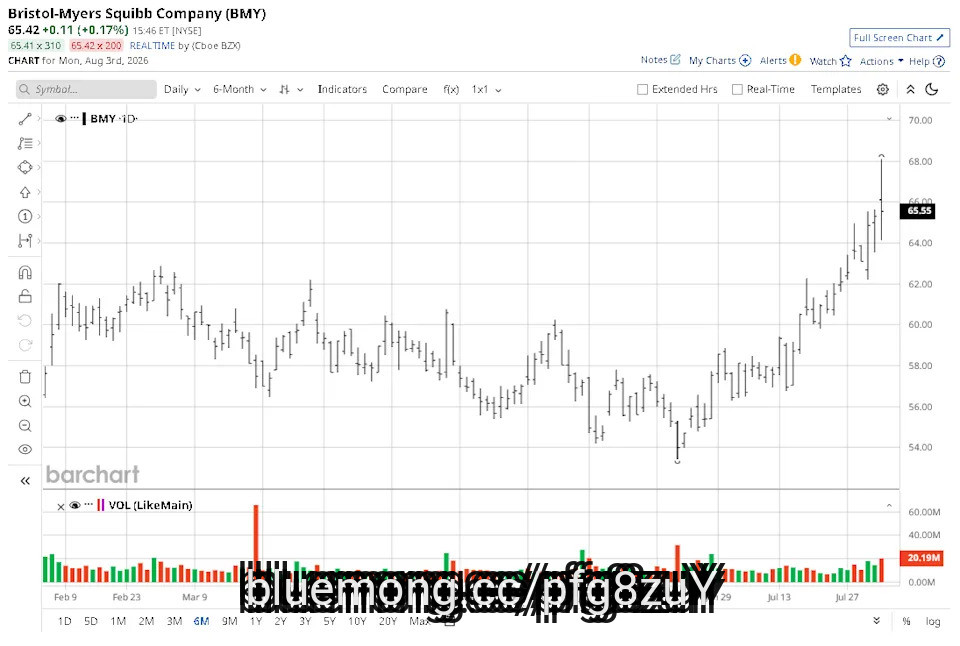
The AstraZeneca rumors arrive at a time when Bristol-Myers stock is already in a massive uptrend, currently up more than 20% versus its low in mid-June.
General Motors vs. Ford: 1 Auto Giant Is Winning the EV Race
1 ******* anese Company Just Waved a Red Flag for Micron Stock. How to Play It Here.
Billionaire Ken Griffin Just Saved Situational Awareness, But Here's What a Rescue Call From Citadel Really Sounds Like — 'I… Heard the Grim Reaper's Scythe'
#bristol #myers #astrazeneca #giant

3 months ago
AstraZeneca (AZN) stock took a nosedive Monday amid reports it's mulling a megamerger with Bristol Myers Squibb (BMY).
The combined company would be worth roughly $400 billion, "making it one of the biggest pharmaceutical mergers in history," RBC Capital Markets ******* yst Trung Huynh said in a report. The Financial Times first reported the early merger talks. AstraZeneca declined to comment to Investor's Business Daily. Bristol Myers didn't immediately respond.
The deal would merge two oncology powerhouses, and likely trigger an antitrust review. Bristol Myers fills portfolio gaps in blood cancer, immunology, cardiovascular diseases and central nervous system conditions where AstraZeneca lacks scale today, Huynh said.
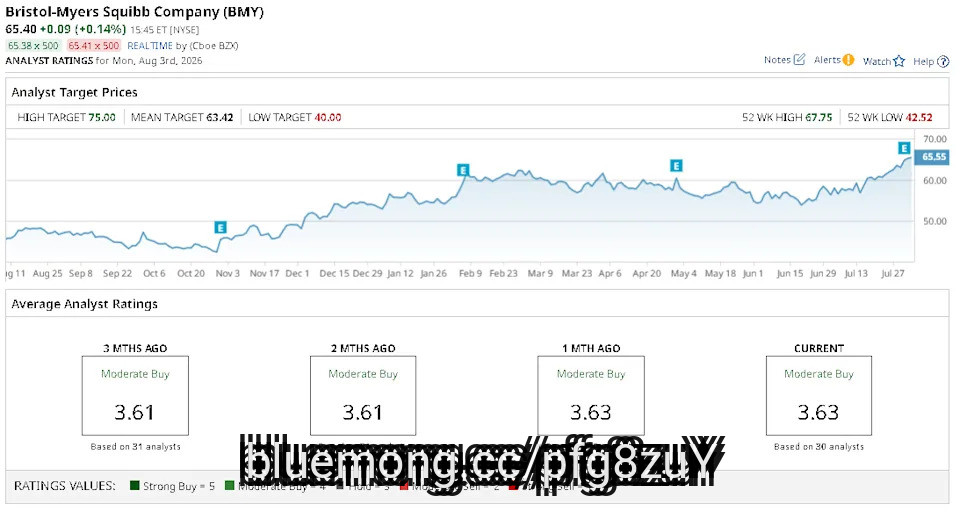
AstraZeneca stock tumbled 6.9% to 157.97. Shares are already trading below their 21-day, 50-day and 200-day moving averages. Bristol Myers Squibb stock, on the other hand, inched a fraction higher to 65.47. The stock ended the regular session in a buy zone that runs up to 66.03.
Given the size of the two companies, the deal would likely be mostly stock-based, resulting in Bristol Myers shareholders owning roughly a third of the combined company, William Blair ******* yst Matt Phipps said in a client note. He says $160 billion makes sense as a price tag for Bristol Myers Squibb.
#astrazeneca #huynh #combined


3 months ago
July 27, 2026 12:34 pm ET
Listen
(4 min)
The latest Market Talks covering the Health Care sector. Published exclusively on Dow Jones Newswires at 4:20 ET, 12:20 ET and 16:50 ET.
0849 ET – While many artificial-intelligence startups are exploring the technology’s potential to find new drugs, AstraZeneca executives say the company is using it in other areas. AI is important in drug development, which entails large, expensive risks, AstraZeneca CEO Pascal Soriot says on a call with reporters. If AI can help fine-tune the design of a clinical trial to improve its chances of success, that could end up being a big benefit, Soriot says. The U.K. drugmaker is also using AI to improve productivity across the business, in areas like regulatory submissions, CFO Aradhana Sarin says on the call. AstraZeneca doesn’t expect any direct impact on jobs from AI as its portfolio continues to grow, Sarin adds. Shares rise 1.2%. (adria.calatayudwsj.com)
#using #market


3 months ago
By Maggie Fick
LONDON, July 24 (Reuters) - AstraZeneca's long-time CEO Pascal Soriot has rarely put a foot wrong. The company's shares have more that quadrupled in price during his 14-year tenure, soaring above the wider FTSE 100 index and main British rival GSK.
AstraZeneca's huge diversity and number of drugs on the market and success in clinical trials in different therapeutic areas set it apart from peers, giving Soriot the golden touch in the eyes of investors.
Now, though, investors have some cause for concern after news this month of the unexpected failure of nerve drug Wainua in a late-stage heart disease trial, which hammered the shares and turned attention on the firm's drug R&D pipeline.
AstraZeneca's shares are down 10% this year and trail GSK and the wider London stock index over two years, with attention now on two other late-stage trials that could shape confidence in AstraZeneca's research engine and long-term growth outlook.
#soriot




3 months ago
Cathie Wood's ARK Genomic Revolution ETF (NYSEMKT: ARKG) focuses on companies in the genomics sector, especially in healthcare. Since the beginning of July, Wood has, through this Ark Invest exchange-traded fund (ETF), bought $15.3 million worth of Ionis Pharmaceuticals (NASDAQ: IONS), a biotech company based in Carlsbad, California.
The stock is down nearly 37% from its 2026 high earlier this month, with much of that decline coming after it and its partner AstraZeneca announced a surprise late-stage trial failure regarding eplontersen, a medicine used to treat patients with transthyretin amyloidosis cardiomyopathy, or ATTR-CM, a rare heart disease. All of Wood's recent Ionis purchases came after that announcement, suggesting she is taking advantage of the stock's decline to buy more shares while maintaining a long-term view that the company is worth investing in.
Missed Nvidia in 2009? This Rare Signal Is Flashing Again. In 2009, a "Double Down" signal flashed for a little-known chipmaker called Nvidia. For the first time in years, that same "Total Conviction" signal is flashing for a company 1/100th the size of Nvidia. Continue »
Let's see what she may be seeing.
In June 2026, the Food and Drug Administration (FDA) approved Ionis's drug Tryngolza (olezarsen) for treatment of severe hypertriglyceridemia (sHTG), a condition characterized by elevated blood triglyceride levels. Tryngolza's initial approval in 2024 was for familial chylomicronemia syndrome (FCS), a rare disease that causes high levels of triglycerides in the blood. FCS affects only about 3,000 people in the U.S., but the new sHTG approval expands its target market to more than 3 million potential patients in the U.S. alone.

3 months ago
Harris Oakmark recently released its second-quarter 2026 investor letter for the "Oakmark Global Fund". A copy of the letter can be downloaded here. It is a non-diversified fund that focuses on long-term capital appreciation by investing in common stocks of U.S. and non-U.S. companies. In the second quarter, the fund (Investor Class) delivered a return of 7.89%, lagging the benchmark, the MSCI World Index's 13.76% return. Energy and industrials were the top performance contributors at the sector level, while health care and consumer discretionary detracted from performance. AI remains a key market theme. The firm focuses on evaluating companies based on their competitive advantages, long-term cash flow potential, and valuation, not predictions. In addition, you can check the Fund's top five holdings to determine its best picks for 2026.
In its Q2 2026 investor letter, Oakmark Global Fund highlighted AstraZeneca PLC (NYSE:AZN) as a newly added position. AstraZeneca PLC (NYSE:AZN) is a leading multinational biopharmaceutical company focusing on the development and discovery of prescription medicines. On July 15, 2026, AstraZeneca PLC (NYSE:AZN) closed at $168.37 per share, reflecting a market capitalization of $261.12 billion. AstraZeneca PLC (NYSE:AZN) posted a one-month return of -3.75%, while its shares gained 18.55% over the past 52 weeks.
Oakmark Global Fund stated the following regarding AstraZeneca PLC (NYSE:AZN) in its Q2 2026 investor update:
"AstraZeneca PLC (NYSE:AZN) is one of the largest pharmaceutical companies in the world. It researches, develops and commercializes prescription medicines designed to treat lung and breast cancers, cardiorenal diseases, respiratory problems and other rare diseases. We believe AstraZeneca's robust on-market portfolio and sector-leading late-stage pipeline provide an attractive growth profile. Moreover, we believe the company can build on its long track record of a productive research and development program, thanks to its innovative culture and exceptional management team. In our view, CEO Pascal Soriot is one of the industry's best executives, and he has cultivated a deep bench of talent, a robust decision-making framework and a differentiated R&D culture that should drive strong growth for years to come, in our view. Recent concerns over United States regulations have overshadowed AstraZeneca's merits and weighed on the broader pharmaceutical industry. This opened a window for us to purchase shares of this company at a price well below our estimate of its intrinsic value."


4 months ago
July 10, 2026 6:15 am ET
Listen
(3 min)
The latest Market Talks covering the Health Care sector. Published exclusively on Dow Jones Newswires at 4:20 ET, 12:20 ET and 16:50 ET.
1622 GMT – The failure of Wainua, a heart disease drug developed by AstraZeneca and Ionis, to meet a primary endpoint in a phase 3 trial is a positive for both BridgeBio Pharma and Alnylam Pharmaceuticals, according to Jefferies **** ysts. For BridgeBio, the news is a potential clearing event for its Attruby drug, an oral stabilizer that addresses the same rare heart disease known as transthyretin amyloid cardiomyopathy. It’s also a headwind for Alnylam, whose Amvuttra treatment will remain the only gene silencer for ATTR-CM, the **** ysts write, although long-term questions remain for the company’s next-generation silencer. Alnylam stock is up 2.4%, erasing some gains after opening up 16%. BridgeBio shares gain 15%. (elias.schisgallwsj.com)


4 months ago
Concerned about an AI bubble? Sign up for The Daily Upside for smart and actionable market news, built for investors.
It was just another manic market day, at least for AstraZeneca.
Shares of the British-Swedish biopharmaceutical company tumbled Thursday after it shared the surprising failure of its drug Wainua to meet its target in a recent clinical trial. AstraZeneca and Ionis Pharmaceuticals said the heart disease treatment didn't outperform the placebo in preventing heart problems in patients with transthyretin-mediated amyloid cardiomyopathy (or ATTR-CM), a rare and potentially fatal disease.
It was a blow ***** ysts weren't expecting, and AstraZeneca's shares fell as much as 10.6% in London, its largest intraday plummet since 2017, per Bloomberg. The company's New York Stock Exchange-listed shares ended Thursday down 5.7%.
Sign up for The Daily Upside at no cost for premium ***** ysis on all your favorite stocks.