

11 days ago
Two years ago, it seemed like ******* ody wanted to touch Intel (NASDAQ: INTC). The company that basically invented the modern chip industry had turned into its own cautionary tale, posting an $18.8 billion net loss for 2024 while it fell behind Nvidia in artificial intelligence (AI) and behind Taiwan's foundries in manufacturing.
Missed Nvidia in 2009? This Rare Signal Is Flashing Again. In 2009, a "Double Down" signal flashed for a little-known chipmaker called Nvidia. For the first time in years, that same "Total Conviction" signal is flashing for a company 1/100th the size of Nvidia. Continue »
Then something strange happened. The U.S. government bought a stake in Intel. So did Nvidia. So did SoftBank. Companies and governments don't usually hand over billions to a business they think is finished, and that's the real reason I think the next 14 months matter more for this stock than almost any stretch in Intel's recent history.
Turnarounds aren't real until a real, working product ships, and Intel is finally shipping. In July, the company said its newest Arizona fab had entered high-volume manufacturing on a subset of its Core Ultra Series 3 chips, known as Panther Lake, the first processor built on Intel 18A, which Intel calls the most advanced semiconductor process ever developed and manufactured in the United States. Its second-quarter 2026 release adds that the next node behind it, 18A-P, had already entered risk production, meaning Intel isn't just trying to catch up on one generation, it's trying to stay on pace for the one after. On the data center side, that same release says Intel also launched Xeon 6+, its first server chip built on 18A.
Money talks, and in 2025 three very different yet massive buyers said the same thing with their wallets. The U.S. government invested $8.9 billion in Intel common stock, structured largely out of unpaid CHIPS Act and Secure Enclave funding, in exchange for roughly 275 million shares and warrants for up to 241 million more. Nvidia added $5 billion, and SoftBank put in another $2 billion, both also in Intel common stock. None of this money really guarantees Panther Lake sells well, or that Intel's foundry business ever turns a real profit. But I think it's an odd thing to do if you think a company is circling the drain, and you don't have any faith in it.
#signal #first
Missed Nvidia in 2009? This Rare Signal Is Flashing Again. In 2009, a "Double Down" signal flashed for a little-known chipmaker called Nvidia. For the first time in years, that same "Total Conviction" signal is flashing for a company 1/100th the size of Nvidia. Continue »
Then something strange happened. The U.S. government bought a stake in Intel. So did Nvidia. So did SoftBank. Companies and governments don't usually hand over billions to a business they think is finished, and that's the real reason I think the next 14 months matter more for this stock than almost any stretch in Intel's recent history.
Turnarounds aren't real until a real, working product ships, and Intel is finally shipping. In July, the company said its newest Arizona fab had entered high-volume manufacturing on a subset of its Core Ultra Series 3 chips, known as Panther Lake, the first processor built on Intel 18A, which Intel calls the most advanced semiconductor process ever developed and manufactured in the United States. Its second-quarter 2026 release adds that the next node behind it, 18A-P, had already entered risk production, meaning Intel isn't just trying to catch up on one generation, it's trying to stay on pace for the one after. On the data center side, that same release says Intel also launched Xeon 6+, its first server chip built on 18A.
Money talks, and in 2025 three very different yet massive buyers said the same thing with their wallets. The U.S. government invested $8.9 billion in Intel common stock, structured largely out of unpaid CHIPS Act and Secure Enclave funding, in exchange for roughly 275 million shares and warrants for up to 241 million more. Nvidia added $5 billion, and SoftBank put in another $2 billion, both also in Intel common stock. None of this money really guarantees Panther Lake sells well, or that Intel's foundry business ever turns a real profit. But I think it's an odd thing to do if you think a company is circling the drain, and you don't have any faith in it.
#signal #first


1 month ago
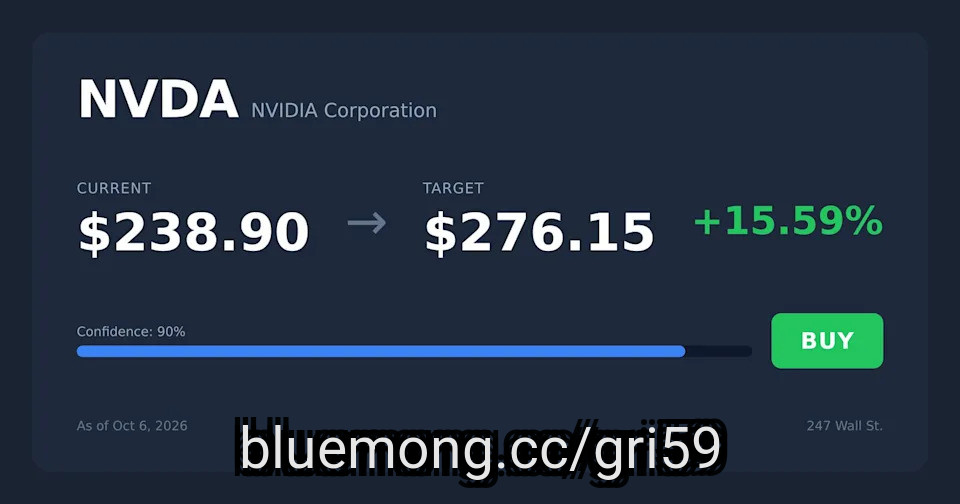
Options traders price NVDA at 50% odds of hitting $6 trillion by Oct. 30, needing just a 4% gain to roughly $249 a share.
Morgan Stanley restored NVDA as its top chip pick with a $300 target, while TSM's Oct. 15 earnings give the first read on AI foundry demand.
NVDA's revenue surged 106% and net income rose 126% last quarter, yet the stock's 28% year-to-date gain trails the semiconductor sector's 96% return.
Building a portfolio and living off one are two completely different skills, and almost ****** ody teaches the second. This problem is what The Definitive Guide to Retirement Income helps, and it is free today. Read more here. (Sponsor)
No company has ever been worth $6 trillion, yet a CNBC options-pricing ****** ysis put the odds of NVIDIA (NASDAQ:NVDA) reaching that level by the end of October at about 50%. The same pricing gave it about 13% odds of crossing within the week of Oct. 5.
#odds #options #trillion #morgan
Morgan Stanley restored NVDA as its top chip pick with a $300 target, while TSM's Oct. 15 earnings give the first read on AI foundry demand.
NVDA's revenue surged 106% and net income rose 126% last quarter, yet the stock's 28% year-to-date gain trails the semiconductor sector's 96% return.
Building a portfolio and living off one are two completely different skills, and almost ****** ody teaches the second. This problem is what The Definitive Guide to Retirement Income helps, and it is free today. Read more here. (Sponsor)
No company has ever been worth $6 trillion, yet a CNBC options-pricing ****** ysis put the odds of NVIDIA (NASDAQ:NVDA) reaching that level by the end of October at about 50%. The same pricing gave it about 13% odds of crossing within the week of Oct. 5.
#odds #options #trillion #morgan



1 month ago
SK Hynix is exploring something it has never done before: manufacturing memory chips in the United States.
Reuters reported on September 16 that the Korean memory giant is discussing several possibilities with Intel Corporation (NASDAQ:INTC), including leasing part of Intel's long-delayed Ohio complex or forming a venture involving Intel and large cloud customers. SK Hynix said no specific plan has been finalized.
For Micron Technology, Inc. (NASDAQ:MU), the talks matter because one of its strongest strategic advantages is being the major U.S.-based memory producer while AI has made DRAM and HBM increasingly scarce.
Intel has committed enormous capital to Ohio, with the broader project potentially reaching around $100 billion over time. Delays have pushed planned production into the next decade. A tenant or joint-venture partner could therefore help Intel share the financial burden of developing the Ohio site rather than relying entirely on its own foundry demand to justify the buildout.
That is the bull case. The bear case is that exploratory talks are a long way from revenue. Bringing advanced Korean memory production to the U.S. could face cost problems, technology-transfer restrictions and objections from Seoul. Intel still needs its core manufacturing roadmap to work.
#long
Reuters reported on September 16 that the Korean memory giant is discussing several possibilities with Intel Corporation (NASDAQ:INTC), including leasing part of Intel's long-delayed Ohio complex or forming a venture involving Intel and large cloud customers. SK Hynix said no specific plan has been finalized.
For Micron Technology, Inc. (NASDAQ:MU), the talks matter because one of its strongest strategic advantages is being the major U.S.-based memory producer while AI has made DRAM and HBM increasingly scarce.
Intel has committed enormous capital to Ohio, with the broader project potentially reaching around $100 billion over time. Delays have pushed planned production into the next decade. A tenant or joint-venture partner could therefore help Intel share the financial burden of developing the Ohio site rather than relying entirely on its own foundry demand to justify the buildout.
That is the bull case. The bear case is that exploratory talks are a long way from revenue. Bringing advanced Korean memory production to the U.S. could face cost problems, technology-transfer restrictions and objections from Seoul. Intel still needs its core manufacturing roadmap to work.
#long

2 months ago
On September 17, shares of Marvell Technology, Inc. (NASDAQ:MRVL) and GLOBALFOUNDRIES Inc. (NASDAQ:GFS) moved sharply higher, with Marvell Technology, Inc. (NASDAQ:MRVL) gaining more than 4% and GLOBALFOUNDRIES Inc. (NASDAQ:GFS) rising more than 6% by the end of the trading session.
Reuters reported that the two companies have expanded their agreement to increase production capacity for silicon germanium (SiGe), a semiconductor technology used in high-speed optical connections for data centers. The multi-year agreement will expand capacity for GLOBALFOUNDRIES Inc.'s (NASDAQ:GFS) SiGe technology at its facility in Burlington, Vermont. SiGe allows semiconductor devices to operate at higher speeds while using less energy, making it increasingly important as data centers handle larger volumes of data.
Robb Johnson, Vice President, Foundry Technology at Marvell Technology, Inc. (NASDAQ:MRVL) said the expanded collaboration will help ensure that the company has the "SiGe technology and manufacturing capacity to support the significant growth" it expects ahead.
According to the report, the increased manufacturing capacity will help Marvell Technology, Inc. (NASDAQ:MRVL) meet growing demand for optical networking products, including pluggable optical transceivers, near-packaged optics, and co-packaged optics.
GlobalFoundries Is Seeing Strong SiGe Demand
#sige #globalfoundries #optical #data
Reuters reported that the two companies have expanded their agreement to increase production capacity for silicon germanium (SiGe), a semiconductor technology used in high-speed optical connections for data centers. The multi-year agreement will expand capacity for GLOBALFOUNDRIES Inc.'s (NASDAQ:GFS) SiGe technology at its facility in Burlington, Vermont. SiGe allows semiconductor devices to operate at higher speeds while using less energy, making it increasingly important as data centers handle larger volumes of data.
Robb Johnson, Vice President, Foundry Technology at Marvell Technology, Inc. (NASDAQ:MRVL) said the expanded collaboration will help ensure that the company has the "SiGe technology and manufacturing capacity to support the significant growth" it expects ahead.
According to the report, the increased manufacturing capacity will help Marvell Technology, Inc. (NASDAQ:MRVL) meet growing demand for optical networking products, including pluggable optical transceivers, near-packaged optics, and co-packaged optics.
GlobalFoundries Is Seeing Strong SiGe Demand
#sige #globalfoundries #optical #data

2 months ago
Intel Corporation (NASDAQ:INTC) is targeting a potentially significant opportunity through its strategic Terafab partnership with companies **** ociated with Elon Musk, including **** eX, Tesla, and xAI. The initiative is part of an ambitious semiconductor manufacturing project focused on producing advanced chips for artificial intelligence (AI), robotics, autonomous vehicles, and other compute-intensive applications.
On September 15, Tigress Financial highlighted the strategic importance of the alliance to Intel's turnaround prospects. The research firm reiterated its Buy rating on Intel and raised its price target to $145 from $118, citing the company's long-term growth opportunity.
The Terafab partnership could provide Intel's foundry business with exposure to customers that have substantial AI and high-performance computing requirements. Securing external customers could help Intel increase manufacturing scale while improving the utilization and economics of its foundry operations.
The partnership could also support Intel Corporation (NASDAQ:INTC)'s efforts to improve its semiconductor manufacturing technology. Greater production volumes and engagement with demanding customers could provide opportunities to improve manufacturing economics, yields, and scalability as Intel works to strengthen its competitive position in advanced chip manufacturing.
Beyond manufacturing scale, Terafab could expand Intel's role in the broader AI semiconductor supply chain. The company has historically been heavily **** ociated with CPUs, but growing its foundry business could give it greater exposure to AI accelerators, custom silicon, and other specialized compute applications. A relationship with major AI-focused customers could also help provide greater visibility into future manufacturing demand.
#Intel
On September 15, Tigress Financial highlighted the strategic importance of the alliance to Intel's turnaround prospects. The research firm reiterated its Buy rating on Intel and raised its price target to $145 from $118, citing the company's long-term growth opportunity.
The Terafab partnership could provide Intel's foundry business with exposure to customers that have substantial AI and high-performance computing requirements. Securing external customers could help Intel increase manufacturing scale while improving the utilization and economics of its foundry operations.
The partnership could also support Intel Corporation (NASDAQ:INTC)'s efforts to improve its semiconductor manufacturing technology. Greater production volumes and engagement with demanding customers could provide opportunities to improve manufacturing economics, yields, and scalability as Intel works to strengthen its competitive position in advanced chip manufacturing.
Beyond manufacturing scale, Terafab could expand Intel's role in the broader AI semiconductor supply chain. The company has historically been heavily **** ociated with CPUs, but growing its foundry business could give it greater exposure to AI accelerators, custom silicon, and other specialized compute applications. A relationship with major AI-focused customers could also help provide greater visibility into future manufacturing demand.
#Intel


2 months ago
Two years of Synopsys (SNPS) earnings calls show management changing what it explains. The company used to open on problems, some outside its control and some its own. The August 2026 call is built around a joint product with Ansys, agentic AI, and a new way to charge for its design IP. Most of that switch is earned, but parts of it are still a promise.
Synopsys Once Opened Its Calls With Bad News
Management used to point to underperformance in the IP business, where expected deals did not arrive, and to challenges at a major foundry customer that were having a sizable impact. The CEO said it plainly on an earlier call: "new export restrictions disrupted design starts in China."
None of that comes up on the August 2026 call. China does not come up. The closest thing to the old worry is that design starts outside AI have stopped declining.
Synopsys Now Leads With Multiphysics Fusion And Agentic AI
#China
Synopsys Once Opened Its Calls With Bad News
Management used to point to underperformance in the IP business, where expected deals did not arrive, and to challenges at a major foundry customer that were having a sizable impact. The CEO said it plainly on an earlier call: "new export restrictions disrupted design starts in China."
None of that comes up on the August 2026 call. China does not come up. The closest thing to the old worry is that design starts outside AI have stopped declining.
Synopsys Now Leads With Multiphysics Fusion And Agentic AI
#China


2 months ago
Barclays ******* yst Simon Coles says the recent pullback in Tower Semiconductor (TSEM) shares is an opportunity to load up on a quality name at a meaningful discount. In a research note this morning, Coles ******* umed coverage of the independent specialty foundry with an "Overweight" rating and a $310 price target that signals potential upside of nearly 40% from here.
Tower Semiconductor stock has been in a sharp downtrend in recent months, currently trading about 30% below its June high.
Bank of America Just Declared a 'Generational Entry Point' in U.S. Bonds. Why Investors Should Be Backing Up the Truck on Treasuries Here.
Mark Cuban Says He Was Dizzy for Months, So He Built a VR Fix That Does at Home 'Much Of What A 180k Machine' Does
JPMorgan Gives Up Forecasting Iran War Endgame as Trump Tells Reporters 'Anything Could Happen With Me'
#tower #recent #simon #tsem
Tower Semiconductor stock has been in a sharp downtrend in recent months, currently trading about 30% below its June high.
Bank of America Just Declared a 'Generational Entry Point' in U.S. Bonds. Why Investors Should Be Backing Up the Truck on Treasuries Here.
Mark Cuban Says He Was Dizzy for Months, So He Built a VR Fix That Does at Home 'Much Of What A 180k Machine' Does
JPMorgan Gives Up Forecasting Iran War Endgame as Trump Tells Reporters 'Anything Could Happen With Me'
#tower #recent #simon #tsem


2 months ago
On September 17, shares of Marvell Technology, Inc. (NASDAQ:MRVL) and GLOBALFOUNDRIES Inc. (NASDAQ:GFS) moved sharply higher, with Marvell Technology, Inc. (NASDAQ:MRVL) gaining more than 4% and GLOBALFOUNDRIES Inc. (NASDAQ:GFS) rising more than 6% by the end of the trading session.
Reuters reported that the two companies have expanded their agreement to increase production capacity for silicon germanium (SiGe), a semiconductor technology used in high-speed optical connections for data centers. The multi-year agreement will expand capacity for GLOBALFOUNDRIES Inc.'s (NASDAQ:GFS) SiGe technology at its facility in Burlington, Vermont. SiGe allows semiconductor devices to operate at higher speeds while using less energy, making it increasingly important as data centers handle larger volumes of data.
Robb Johnson, Vice President, Foundry Technology at Marvell Technology, Inc. (NASDAQ:MRVL) said the expanded collaboration will help ensure that the company has the "SiGe technology and manufacturing capacity to support the significant growth" it expects ahead.
According to the report, the increased manufacturing capacity will help Marvell Technology, Inc. (NASDAQ:MRVL) meet growing demand for optical networking products, including pluggable optical transceivers, near-packaged optics, and co-packaged optics.
GlobalFoundries Is Seeing Strong SiGe Demand
#NASDAQ #globalfoundries #capacity #data
Reuters reported that the two companies have expanded their agreement to increase production capacity for silicon germanium (SiGe), a semiconductor technology used in high-speed optical connections for data centers. The multi-year agreement will expand capacity for GLOBALFOUNDRIES Inc.'s (NASDAQ:GFS) SiGe technology at its facility in Burlington, Vermont. SiGe allows semiconductor devices to operate at higher speeds while using less energy, making it increasingly important as data centers handle larger volumes of data.
Robb Johnson, Vice President, Foundry Technology at Marvell Technology, Inc. (NASDAQ:MRVL) said the expanded collaboration will help ensure that the company has the "SiGe technology and manufacturing capacity to support the significant growth" it expects ahead.
According to the report, the increased manufacturing capacity will help Marvell Technology, Inc. (NASDAQ:MRVL) meet growing demand for optical networking products, including pluggable optical transceivers, near-packaged optics, and co-packaged optics.
GlobalFoundries Is Seeing Strong SiGe Demand
#NASDAQ #globalfoundries #capacity #data


2 months ago
Intel (NASDAQ: INTC) stock jumped roughly 7.6% on Thursday after news broke yesterday of a possible deal that would see SK Hynix's memory chips fabricated in Intel's Ohio factories.
The S&P 500 and the Nasdaq Composite rose 1.1% and 1.7%, respectively, on Thursday.
Missed Nvidia in 2009? This Rare Signal Is Flashing Again. In 2009, a "Double Down" signal flashed for a little-known chipmaker called Nvidia. For the first time in years, that same "Total Conviction" signal is flashing for a company 1/100th the size of Nvidia. Continue »
Reuters reported on Sept. 16 that SK Hynix is discussing either leasing part of Intel's planned Ohio facility or forming a venture with Intel and others. The talks are exploratory, and no formal deal has been made, but the possibility of a deal has been enough to boost Intel for two sessions in a row.
If a deal materializes, it could be a significant one for the U.S. chipmaker's Foundry business, which has struggled. The company considered selling it off before CEO Lip-Bu Tan made it a core part of his turnaround efforts after years of underperformance.
#signal #thursday #flashing #years
The S&P 500 and the Nasdaq Composite rose 1.1% and 1.7%, respectively, on Thursday.
Missed Nvidia in 2009? This Rare Signal Is Flashing Again. In 2009, a "Double Down" signal flashed for a little-known chipmaker called Nvidia. For the first time in years, that same "Total Conviction" signal is flashing for a company 1/100th the size of Nvidia. Continue »
Reuters reported on Sept. 16 that SK Hynix is discussing either leasing part of Intel's planned Ohio facility or forming a venture with Intel and others. The talks are exploratory, and no formal deal has been made, but the possibility of a deal has been enough to boost Intel for two sessions in a row.
If a deal materializes, it could be a significant one for the U.S. chipmaker's Foundry business, which has struggled. The company considered selling it off before CEO Lip-Bu Tan made it a core part of his turnaround efforts after years of underperformance.
#signal #thursday #flashing #years


2 months ago
Palantir Technologies (Nasdaq: PLTR) and Rocket Lab Corporation (Nasdaq: RKLB) are among the biggest climbers in the Roundtable 100 this week.
While Palantir climbed 30 places to No. 33, Rocket Lab rose 34 places to No. 45.
Published with TheStreet, the Roundtable 100 ranks 100 publicly traded technology growth ****** ets. The Blue Ribbon Committee ****** ysts score each ****** et on team, safety, value, innovation and market dominance, with the average forming its power ranking.
Committee member Sam Badawi said the ****** ysts moved Palantir from No. 67 to No. 33 after the AI giant's revenue growth accelerated from 85% to 93% year over year and adjusted operating margin widened to 62%.
"This continues to strengthen through AIP, Foundry, and the Ontology, which are becoming deeply embedded into mission-critical government and enterprise workflows," he remarked.
#NASDAQ #rocket #places #technologies
While Palantir climbed 30 places to No. 33, Rocket Lab rose 34 places to No. 45.
Published with TheStreet, the Roundtable 100 ranks 100 publicly traded technology growth ****** ets. The Blue Ribbon Committee ****** ysts score each ****** et on team, safety, value, innovation and market dominance, with the average forming its power ranking.
Committee member Sam Badawi said the ****** ysts moved Palantir from No. 67 to No. 33 after the AI giant's revenue growth accelerated from 85% to 93% year over year and adjusted operating margin widened to 62%.
"This continues to strengthen through AIP, Foundry, and the Ontology, which are becoming deeply embedded into mission-critical government and enterprise workflows," he remarked.
#NASDAQ #rocket #places #technologies
2 months ago
Intel (NASDAQ:INTC), the leading chip manufacturer, closed at $108.80, up 7.67%. Shares rose after news reports yesterday of a possible tie-up with SK Hynix (NASDAQ:SKHY). They continued to rise today, even though the South Korean firm issued a statement saying that nothing has been finalized.
Trading volume reached 147.2 million shares, coming in about 35% above its three-month average of 109.0 million shares.
The S&P 500 closed at 7,638, up 1.14%, while the Nasdaq Composite finished at 26,418, up 1.69%. Among semiconductors, Advanced Micro Devices closed at $545.09, up 6.36%, and Qualcomm closed at $188.71, up 2.09%, as chip-sector strength and memory-share momentum lifted the group.
Chip stocks rallied today after a rough week in which interest rate hikes and tech leaders' calls for a slowdown in artificial intelligence (AI) development weighed on the sector. Intel got an extra boost from a deal that may not even materialize: Even a whisper that SK Hynix might, possibly, maybe lease part of its Ohio complex or enter into a joint venture proved tantalizing to investors.
The difficulty with these types of speculative price jumps is that they often aren't sustainable. SK Hynix saying it is "exploring various options" is a long way from signing a deal. More concrete news? Barclays upgraded the stock from "Underperform" to "Overweight." Ultimately, Intel is well-placed to benefit from growing AI demand, but finding a client for its foundry business -- whether or not that's SK Hynix -- would represent a significant win.
#hynix #chip #saying
Trading volume reached 147.2 million shares, coming in about 35% above its three-month average of 109.0 million shares.
The S&P 500 closed at 7,638, up 1.14%, while the Nasdaq Composite finished at 26,418, up 1.69%. Among semiconductors, Advanced Micro Devices closed at $545.09, up 6.36%, and Qualcomm closed at $188.71, up 2.09%, as chip-sector strength and memory-share momentum lifted the group.
Chip stocks rallied today after a rough week in which interest rate hikes and tech leaders' calls for a slowdown in artificial intelligence (AI) development weighed on the sector. Intel got an extra boost from a deal that may not even materialize: Even a whisper that SK Hynix might, possibly, maybe lease part of its Ohio complex or enter into a joint venture proved tantalizing to investors.
The difficulty with these types of speculative price jumps is that they often aren't sustainable. SK Hynix saying it is "exploring various options" is a long way from signing a deal. More concrete news? Barclays upgraded the stock from "Underperform" to "Overweight." Ultimately, Intel is well-placed to benefit from growing AI demand, but finding a client for its foundry business -- whether or not that's SK Hynix -- would represent a significant win.
#hynix #chip #saying


2 months ago
International Business Machines (IBM) has secured a landmark $1 billion federal award from the U.S. Department of Commerce under the CHIPS and Science Act. The deal finalized non-dilutive funding to accelerate quantum wafer manufacturing at Anderon, a dedicated quantum foundry company spun out by IBM.
At the time of writing, IBM shares are down about 17% versus the start of this year.
Why It's Time to Load Up on Nvidia Stock
The Case for Selling CrowdStrike Stock
Dear Tesla Stock Fans, Mark Your Calendars for October 1
#international #commerce
At the time of writing, IBM shares are down about 17% versus the start of this year.
Why It's Time to Load Up on Nvidia Stock
The Case for Selling CrowdStrike Stock
Dear Tesla Stock Fans, Mark Your Calendars for October 1
#international #commerce



2 months ago
Mizuho has identified four clear tailwinds for Intel (INTC): ongoing CPU supply shortages, a stronger PC refresh cycle, accelerating demand for agentic AI, and growth in advanced packaging. Normally, such a setup would provide a reason to raise a price target. Instead, the firm cut its price target from $109 to $92, citing short-term multiple compression across Agentic AI stocks, and maintained a "Neutral" rating. The contradiction becomes more important because Intel's re-rating still depends on a foundry turnaround that has yet to prove itself.
Mizuho remains cautious on INTC stock despite outlining four separate tailwinds that could support the company's growth. The firm lowered its price target from $109 to $92 on Sept. 3, pointing to short-term multiple compression across agentic AI companies while keeping its "Neutral" rating unchanged. Mizuho **** yst Vijay Rakesh highlighted four developments that could support Intel's outlook. According to the **** yst, accelerating agentic AI demand could improve CPU-to-GPU ratios and drive additional server refreshers. Ongoing CPU supply constraints could also leave the company unable to fully meet demand through 2027. In addition, advanced packaging revenue is expected to reach $3.5 billion by 2029, with external foundry revenue potentially reaching a similar level through the 14A node. Finally, a stronger PC cycle could extend the upgrade cycle as corporate refreshes combine with ongoing memory tightness.
Goldman Sachs Expects Fed Chair Kevin Warsh to Raise Rates This Week — But Not Because of Oil Prices.
Billionaire Charlie Munger, Who Died at 99, Skipped Insurance on His Mansion Since He Could Just Write a Check to Rebuild — 'All Intelligent People Do It My Way'
The EV Bubble Has Burst. How to Play Rivian Stock Now.
#four
Mizuho remains cautious on INTC stock despite outlining four separate tailwinds that could support the company's growth. The firm lowered its price target from $109 to $92 on Sept. 3, pointing to short-term multiple compression across agentic AI companies while keeping its "Neutral" rating unchanged. Mizuho **** yst Vijay Rakesh highlighted four developments that could support Intel's outlook. According to the **** yst, accelerating agentic AI demand could improve CPU-to-GPU ratios and drive additional server refreshers. Ongoing CPU supply constraints could also leave the company unable to fully meet demand through 2027. In addition, advanced packaging revenue is expected to reach $3.5 billion by 2029, with external foundry revenue potentially reaching a similar level through the 14A node. Finally, a stronger PC cycle could extend the upgrade cycle as corporate refreshes combine with ongoing memory tightness.
Goldman Sachs Expects Fed Chair Kevin Warsh to Raise Rates This Week — But Not Because of Oil Prices.
Billionaire Charlie Munger, Who Died at 99, Skipped Insurance on His Mansion Since He Could Just Write a Check to Rebuild — 'All Intelligent People Do It My Way'
The EV Bubble Has Burst. How to Play Rivian Stock Now.
#four


2 months ago
As artificial intelligence matures, investors must decide between the high-growth niche players and the foundational giants. Choosing between Astera Labs Inc (NASDAQ:ALAB) and Taiwan Semiconductor Manufacturing Co (NYSE:TSM) involves weighing explosive potential against established dominance.
Astera Labs provides the critical connectivity infrastructure that allows AI chips to communicate within data centers. Meanwhile, Taiwan Semiconductor Manufacturing operates as the world's largest dedicated chip foundry, producing the actual processors for almost every major tech firm. Both companies are central to the future of semiconductor stocks.
Astera Labs specializes in connectivity solutions designed to remove bottlenecks in high-performance data centers. The company sells hardware and software that helps AI accelerators, such as those made by major chip designers, communicate efficiently across servers. Its customer base is highly concentrated, primarily consisting of the largest cloud providers and system manufacturers. In 2025, one end customer accounted for over 70% of total revenue. Customer concentration like this adds a layer of risk to the business.
In FY 2025, revenue reached more than $852.5 million, representing an impressive increase of roughly 115% compared to the prior year. This rapid growth helped the company pivot from a loss in previous years to a net income of approximately $219 million. The net margin, which measures how much of each dollar of sales remains as profit, stood at nearly 26%. This trajectory highlights the surging demand for the specialized connectivity chips required for large-scale AI deployments.
As of its December 2025 balance sheet, the company reported a debt-to-equity ratio of 0.0x, indicating it holds no debt relative to its shareholder equity. Its so-called current ratio, which compares short-term ******* ets to short-term liabilities, was a robust 10.2x. Free cash flow, or the cash left over after paying for operations and equipment, was approximately $282 million. Note that stock-based compensation represented roughly 50% of operating cash flow, which inflates reported cash generation since this is a non-cash expense added back in the cash flow statement.
#company
Astera Labs provides the critical connectivity infrastructure that allows AI chips to communicate within data centers. Meanwhile, Taiwan Semiconductor Manufacturing operates as the world's largest dedicated chip foundry, producing the actual processors for almost every major tech firm. Both companies are central to the future of semiconductor stocks.
Astera Labs specializes in connectivity solutions designed to remove bottlenecks in high-performance data centers. The company sells hardware and software that helps AI accelerators, such as those made by major chip designers, communicate efficiently across servers. Its customer base is highly concentrated, primarily consisting of the largest cloud providers and system manufacturers. In 2025, one end customer accounted for over 70% of total revenue. Customer concentration like this adds a layer of risk to the business.
In FY 2025, revenue reached more than $852.5 million, representing an impressive increase of roughly 115% compared to the prior year. This rapid growth helped the company pivot from a loss in previous years to a net income of approximately $219 million. The net margin, which measures how much of each dollar of sales remains as profit, stood at nearly 26%. This trajectory highlights the surging demand for the specialized connectivity chips required for large-scale AI deployments.
As of its December 2025 balance sheet, the company reported a debt-to-equity ratio of 0.0x, indicating it holds no debt relative to its shareholder equity. Its so-called current ratio, which compares short-term ******* ets to short-term liabilities, was a robust 10.2x. Free cash flow, or the cash left over after paying for operations and equipment, was approximately $282 million. Note that stock-based compensation represented roughly 50% of operating cash flow, which inflates reported cash generation since this is a non-cash expense added back in the cash flow statement.
#company


2 months ago
Intel Corporation (NASDAQ:INTC) and ASML Holding N.V. (NASDAQ: ASML) have recently provided fresh evidence that High-NA EUV lithography is advancing in commercial manufacturing. At the SPIE Photomask Technology + Extreme Ultraviolet Lithography conference, the two companies announced several updates related to this technology and next-generation chip production.
While the update offers evidence of High-NA's manufacturing readiness, Intel faces a financial test about whether production improvements translate into better foundry returns. For ASML, it is whether greater manufacturing readiness ultimately leads to broader customer adoption and demand.
According to the companies, more than one million wafers have now been processed using High-NA EUV across early tool certification and testing, research and development efforts, and volume production on select layers for a subset of Intel® Core™ Ultra Series 3 processors, code-named Panther Lake.
The products that have been manufactured on Intel 18A using High NA for select layers continue to deliver performance, the companies noted, meeting or exceeding comparable layers patterned using the NXE platform.
This offers Intel early production experience with the technology. Back in July, ASML noted how Intel was the first company to ship a high-volume logic product manufactured using ASML's High NA EUV lithography technology.
#Intel #asml #technology #production
While the update offers evidence of High-NA's manufacturing readiness, Intel faces a financial test about whether production improvements translate into better foundry returns. For ASML, it is whether greater manufacturing readiness ultimately leads to broader customer adoption and demand.
According to the companies, more than one million wafers have now been processed using High-NA EUV across early tool certification and testing, research and development efforts, and volume production on select layers for a subset of Intel® Core™ Ultra Series 3 processors, code-named Panther Lake.
The products that have been manufactured on Intel 18A using High NA for select layers continue to deliver performance, the companies noted, meeting or exceeding comparable layers patterned using the NXE platform.
This offers Intel early production experience with the technology. Back in July, ASML noted how Intel was the first company to ship a high-volume logic product manufactured using ASML's High NA EUV lithography technology.
#Intel #asml #technology #production


2 months ago
On September 3, a caller mentioned that they are unsure whether to buy, sell, or hold Intel Corporation (NASDAQ:INTC). In response, Mad Money host Jim Cramer said:
Okay, now, let's own this right up front. I got too excited about Intel because I knew it was going to have a good quarter. It had an unbelievable quarter, and the stock went down anyway... Here's the problem: The government has a huge position in it, and they're supposed to be able to sell it if they want to, and we're all waiting for the government to sell the stake, and that's why the stock's been going down. And I have been saying, listen, I may just have to go in and buy more right here, get a better average, and have it come back. I understand it is mixed, but my belief in Intel is 100%. I just need to see the government get out of the stock or just go buy it anyway.
Intel Corporation's (NASDAQ:INTC) fundamental business is finally turning a corner. The company blew past Wall Street estimates with $16.1 billion in second-quarter revenue, fueled by heavy demand for its Xeon data center chips and solid progress on its 18A manufacturing technology. For patient investors who watched management pour billions into rebuilding the company's chip-making muscle, these results offer encouraging signs that Intel's long-term comeback and push into AI hardware are starting to pay off.
Even with those solid numbers, the stock faces a major psychological roadblock: the federal government's massive equity stake. As Cramer noted, investors are sitting on their hands, worried about when and how that big block of shares might be sold off, creating a potential overhang on the stock. Adding to this narrative are structural headwinds in the foundry segment, which continues to report operating losses as it scales up capital-intensive fabrication infrastructure, leaving the stock vulnerable to sentiment-driven pullbacks.
Institutional interest reflects growing engagement along with the company's operational recovery. According to Insider Monkey's tracking data, 138 hedge funds held positions in Intel Corporation (NASDAQ:INTC) during the second quarter, marking an increase from 112 funds in the prior quarter. Short interest stands at 2.57% of the public float, showing a measured level of skepticism without aggressive bearish shorting.
#Intel #quarter #government #right
Okay, now, let's own this right up front. I got too excited about Intel because I knew it was going to have a good quarter. It had an unbelievable quarter, and the stock went down anyway... Here's the problem: The government has a huge position in it, and they're supposed to be able to sell it if they want to, and we're all waiting for the government to sell the stake, and that's why the stock's been going down. And I have been saying, listen, I may just have to go in and buy more right here, get a better average, and have it come back. I understand it is mixed, but my belief in Intel is 100%. I just need to see the government get out of the stock or just go buy it anyway.
Intel Corporation's (NASDAQ:INTC) fundamental business is finally turning a corner. The company blew past Wall Street estimates with $16.1 billion in second-quarter revenue, fueled by heavy demand for its Xeon data center chips and solid progress on its 18A manufacturing technology. For patient investors who watched management pour billions into rebuilding the company's chip-making muscle, these results offer encouraging signs that Intel's long-term comeback and push into AI hardware are starting to pay off.
Even with those solid numbers, the stock faces a major psychological roadblock: the federal government's massive equity stake. As Cramer noted, investors are sitting on their hands, worried about when and how that big block of shares might be sold off, creating a potential overhang on the stock. Adding to this narrative are structural headwinds in the foundry segment, which continues to report operating losses as it scales up capital-intensive fabrication infrastructure, leaving the stock vulnerable to sentiment-driven pullbacks.
Institutional interest reflects growing engagement along with the company's operational recovery. According to Insider Monkey's tracking data, 138 hedge funds held positions in Intel Corporation (NASDAQ:INTC) during the second quarter, marking an increase from 112 funds in the prior quarter. Short interest stands at 2.57% of the public float, showing a measured level of skepticism without aggressive bearish shorting.
#Intel #quarter #government #right

2 months ago
United Microelectronics (UMC) is a leading global semiconductor foundry founded in 1980 and headquartered in Hsinchu, Taiwan. The company specializes in advanced wafer fabrication, offering complementary metal-oxide semiconductor (CMOS) logic, mixed-signal, radiofrequency, embedded memory, high-voltage, and image sensor manufacturing services to a diverse global customer base. The company has increasingly focused on specialty semiconductor solutions spanning power management, connectivity, and advanced packaging, while expanding into silicon photonics to capture emerging demand related to artificial intelligence (AI).
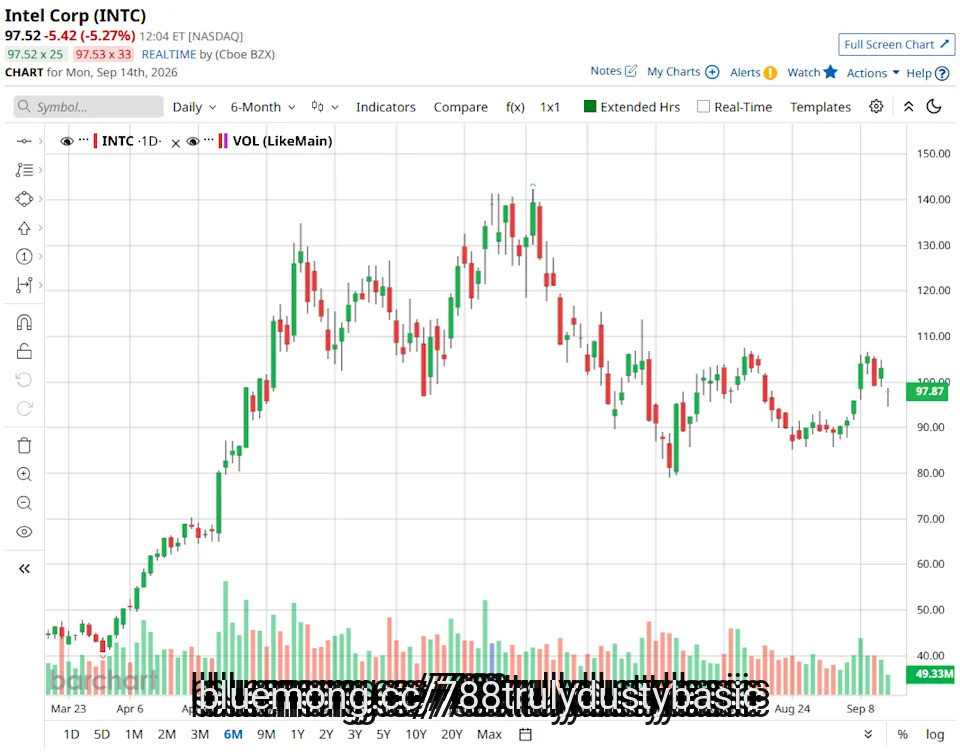
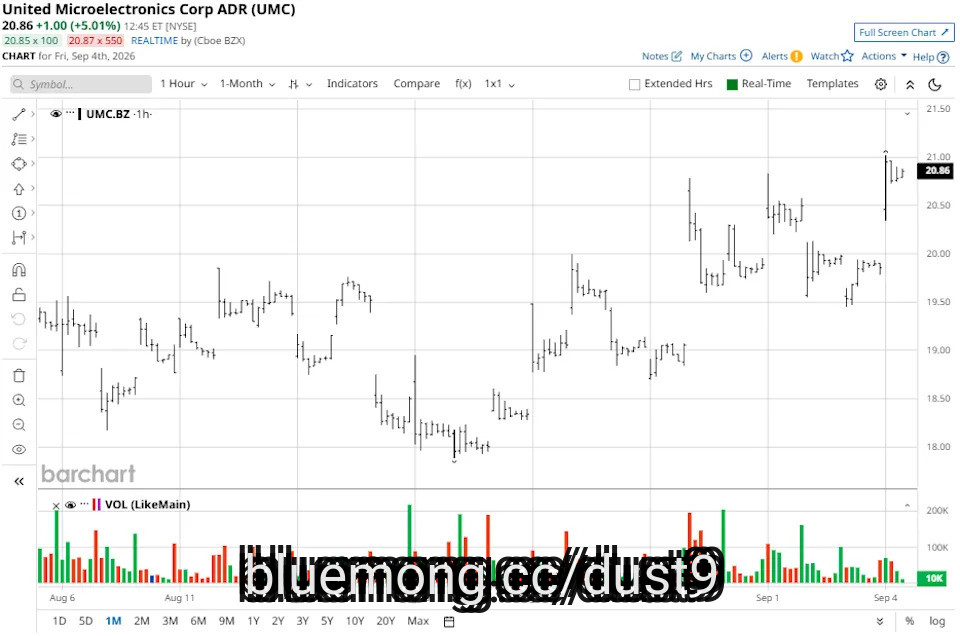
UMC stock currently trades around $22, which is closer to the higher end of its 52-week range of $6.72 to $28.96, reflecting a dramatic rebound from multiyear lows earlier in the year. Shares have been volatile in recent sessions, popping on strong sales figures as investors weigh near-term margin pressures against long-term AI-driven capacity expansion plans.
Dear Nvidia Stock Fans, Mark Your Calendars for September 10
Rocket Lab Keeps Landing Defense Deals. Here's Why ***** ysts Aren't Getting More Bullish.
Why Stifel Just Revamped Its Price Target for Microsoft Stock
#semiconductor #united #taiwan
UMC stock currently trades around $22, which is closer to the higher end of its 52-week range of $6.72 to $28.96, reflecting a dramatic rebound from multiyear lows earlier in the year. Shares have been volatile in recent sessions, popping on strong sales figures as investors weigh near-term margin pressures against long-term AI-driven capacity expansion plans.
Dear Nvidia Stock Fans, Mark Your Calendars for September 10
Rocket Lab Keeps Landing Defense Deals. Here's Why ***** ysts Aren't Getting More Bullish.
Why Stifel Just Revamped Its Price Target for Microsoft Stock
#semiconductor #united #taiwan



2 months ago
AMD gained 4.7% and Intel rose 4.5% on September 4, while Nvidia added only 0.8%. The one-session gap is consistent with investors widening the AI trade beyond Nvidia, but it cannot identify buyer motive or prove a lasting rotation. Advanced Micro Devices, Inc. (NASDAQ:AMD) and Intel Corporation (NASDAQ:INTC) each offer a route to AI spending that does not require Nvidia to lose outright.
AMD's second-quarter revenue reached a record $11.5 billion, up 50% year over year, and Data Center represented 58% of the company. Its portfolio includes MI450 accelerators, sixth-generation EPYC processors, Helios rack-scale systems, and Pensando networking. Customers seeking a credible second source and more negotiating leverage support the bull case. The countercase is software maturity, execution across a broad roadmap, and the capital required to challenge Nvidia's ecosystem.
Insider Monkey's database counted 164 hedge funds holding Advanced Micro Devices, Inc. (NASDAQ:AMD) in Q2 2026, up from 134 in Q1 2026. Marshall Wace reported 3,898,210 shares, about 3% more than in Q1. The quarter-end filings predate the September 4 rally and cannot show whether funds reacted to it.
Intel's second-quarter Data Center and AI revenue was $6.3 billion, up 59% year over year. A resilient CPU franchise, custom silicon, advanced packaging, and a domestic foundry network form the bull case. The cost and uncertain returns of rebuilding manufacturing leadership form the bear case. Intel generated $1.8 billion of GAAP operating income, while its $2.16 GAAP loss per share was driven largely by a $12.5 billion noncash mark-to-market loss on escrowed shares. Negative $8.4 billion adjusted free cash flow still makes capital efficiency a real concern.
The Q2 2026 database counted 138 hedge funds holding Intel Corporation (NASDAQ:INTC), up from 112 in Q1 2026. AQR Capital Management reported 10,742,567 shares after cutting its position by about 6% from Q1. That disclosure also predates the September rally, so it is historical positioning rather than a reaction.
#billion #advanced #quarter
AMD's second-quarter revenue reached a record $11.5 billion, up 50% year over year, and Data Center represented 58% of the company. Its portfolio includes MI450 accelerators, sixth-generation EPYC processors, Helios rack-scale systems, and Pensando networking. Customers seeking a credible second source and more negotiating leverage support the bull case. The countercase is software maturity, execution across a broad roadmap, and the capital required to challenge Nvidia's ecosystem.
Insider Monkey's database counted 164 hedge funds holding Advanced Micro Devices, Inc. (NASDAQ:AMD) in Q2 2026, up from 134 in Q1 2026. Marshall Wace reported 3,898,210 shares, about 3% more than in Q1. The quarter-end filings predate the September 4 rally and cannot show whether funds reacted to it.
Intel's second-quarter Data Center and AI revenue was $6.3 billion, up 59% year over year. A resilient CPU franchise, custom silicon, advanced packaging, and a domestic foundry network form the bull case. The cost and uncertain returns of rebuilding manufacturing leadership form the bear case. Intel generated $1.8 billion of GAAP operating income, while its $2.16 GAAP loss per share was driven largely by a $12.5 billion noncash mark-to-market loss on escrowed shares. Negative $8.4 billion adjusted free cash flow still makes capital efficiency a real concern.
The Q2 2026 database counted 138 hedge funds holding Intel Corporation (NASDAQ:INTC), up from 112 in Q1 2026. AQR Capital Management reported 10,742,567 shares after cutting its position by about 6% from Q1. That disclosure also predates the September rally, so it is historical positioning rather than a reaction.
#billion #advanced #quarter


2 months ago
Palantir shares gained 7.7% on September 3, the same day PwC US expanded an alliance built around enterprise AI, M&A, and ERP modernization. The companies described an AI-native deals platform intended to execute transactions up to 50% faster and cut one-time costs by as much as 45%, but disclosed no new contract value. The same day, Globant introduced a MuleSoft AI Pod for Salesforce integration. Palantir Technologies Inc. (NASDAQ:PLTR) and Globant S.A. (NYSE:GLOB) are packaging expertise around software in very different ways.
Palantir's bull case is productized delivery. PwC can bring industry relationships and implementation capacity, while Foundry and AIP remain the recurring platform. Palantir's Q2 revenue rose 93% to $1.94 billion, including 149% growth in U.S. commercial revenue, so the alliance lands on real momentum. Arrowstreet Capital held 20,517,115 shares at June 30 after increasing its stake by 97%.
The valuation is the obvious counterweight. A partnership announcement without disclosed revenue cannot by itself justify a large daily move. Receivables concentration, stock-based compensation, and competition from clouds and consultants deserve attention. Hedge-fund breadth had already weakened: Insider Monkey counted 86 funds holding Palantir at June 30, down from 96 at March 31.
Globant's AI Pod offers a more explicit delivery unit. Configurations support roughly six, 12, or 24 integration flows or APIs per month, and the company cited benchmarks including up to 80% automation and 15% to 25% faster time to value. That makes capacity tangible. Twenty-three hedge funds held Globant S.A. (NYSE:GLOB) in Q2, down from 25 in Q1. Pzena Investment Management reported 3,859,718 shares after adding 31%.
Globant's problem is that reusable pods can still be labor businesses. The service remains on a waitlist, the benchmark outcomes are not guaranteed customer results, and AI may pressure billing rates even as it improves productivity.
#glob
Palantir's bull case is productized delivery. PwC can bring industry relationships and implementation capacity, while Foundry and AIP remain the recurring platform. Palantir's Q2 revenue rose 93% to $1.94 billion, including 149% growth in U.S. commercial revenue, so the alliance lands on real momentum. Arrowstreet Capital held 20,517,115 shares at June 30 after increasing its stake by 97%.
The valuation is the obvious counterweight. A partnership announcement without disclosed revenue cannot by itself justify a large daily move. Receivables concentration, stock-based compensation, and competition from clouds and consultants deserve attention. Hedge-fund breadth had already weakened: Insider Monkey counted 86 funds holding Palantir at June 30, down from 96 at March 31.
Globant's AI Pod offers a more explicit delivery unit. Configurations support roughly six, 12, or 24 integration flows or APIs per month, and the company cited benchmarks including up to 80% automation and 15% to 25% faster time to value. That makes capacity tangible. Twenty-three hedge funds held Globant S.A. (NYSE:GLOB) in Q2, down from 25 in Q1. Pzena Investment Management reported 3,859,718 shares after adding 31%.
Globant's problem is that reusable pods can still be labor businesses. The service remains on a waitlist, the benchmark outcomes are not guaranteed customer results, and AI may pressure billing rates even as it improves productivity.
#glob

2 months ago
Palantir shares gained 7.7% on September 3, the same day PwC US expanded an alliance built around enterprise AI, M&A, and ERP modernization. The companies described an AI-native deals platform intended to execute transactions up to 50% faster and cut one-time costs by as much as 45%, but disclosed no new contract value. The same day, Globant introduced a MuleSoft AI Pod for Salesforce integration. Palantir Technologies Inc. (NASDAQ:PLTR) and Globant S.A. (NYSE:GLOB) are packaging expertise around software in very different ways.
Palantir's bull case is productized delivery. PwC can bring industry relationships and implementation capacity, while Foundry and AIP remain the recurring platform. Palantir's Q2 revenue rose 93% to $1.94 billion, including 149% growth in U.S. commercial revenue, so the alliance lands on real momentum. Arrowstreet Capital held 20,517,115 shares at June 30 after increasing its stake by 97%.
The valuation is the obvious counterweight. A partnership announcement without disclosed revenue cannot by itself justify a large daily move. Receivables concentration, stock-based compensation, and competition from clouds and consultants deserve attention. Hedge-fund breadth had already weakened: Insider Monkey counted 86 funds holding Palantir at June 30, down from 96 at March 31.
Globant's AI Pod offers a more explicit delivery unit. Configurations support roughly six, 12, or 24 integration flows or APIs per month, and the company cited benchmarks including up to 80% automation and 15% to 25% faster time to value. That makes capacity tangible. Twenty-three hedge funds held Globant S.A. (NYSE:GLOB) in Q2, down from 25 in Q1. Pzena Investment Management reported 3,859,718 shares after adding 31%.
Globant's problem is that reusable pods can still be labor businesses. The service remains on a waitlist, the benchmark outcomes are not guaranteed customer results, and AI may pressure billing rates even as it improves productivity.
#palantir #globant #shares #june
Palantir's bull case is productized delivery. PwC can bring industry relationships and implementation capacity, while Foundry and AIP remain the recurring platform. Palantir's Q2 revenue rose 93% to $1.94 billion, including 149% growth in U.S. commercial revenue, so the alliance lands on real momentum. Arrowstreet Capital held 20,517,115 shares at June 30 after increasing its stake by 97%.
The valuation is the obvious counterweight. A partnership announcement without disclosed revenue cannot by itself justify a large daily move. Receivables concentration, stock-based compensation, and competition from clouds and consultants deserve attention. Hedge-fund breadth had already weakened: Insider Monkey counted 86 funds holding Palantir at June 30, down from 96 at March 31.
Globant's AI Pod offers a more explicit delivery unit. Configurations support roughly six, 12, or 24 integration flows or APIs per month, and the company cited benchmarks including up to 80% automation and 15% to 25% faster time to value. That makes capacity tangible. Twenty-three hedge funds held Globant S.A. (NYSE:GLOB) in Q2, down from 25 in Q1. Pzena Investment Management reported 3,859,718 shares after adding 31%.
Globant's problem is that reusable pods can still be labor businesses. The service remains on a waitlist, the benchmark outcomes are not guaranteed customer results, and AI may pressure billing rates even as it improves productivity.
#palantir #globant #shares #june


2 months ago
Nvidia's $5 billion Intel investment has produced an extraordinary paper gain, but the timeline matters. The companies announced the investment and product collaboration on September 18, 2025. Intel's SEC filing shows that NVIDIA Corporation (NASDAQ:NVDA) actually completed the purchase on December 26, 2025, acquiring 214,776,632 Intel shares at $23.28 each for $5 billion. Nvidia's June 30, 2026 13F valued the same share count at $29.989 billion. That is a large unrealized gain; it does not establish that the commercial partnership has already succeeded. Subtracting the original cost leaves an unrealized gain of about $24.989 billion at quarter-end, an amount that will move with Intel's share price.
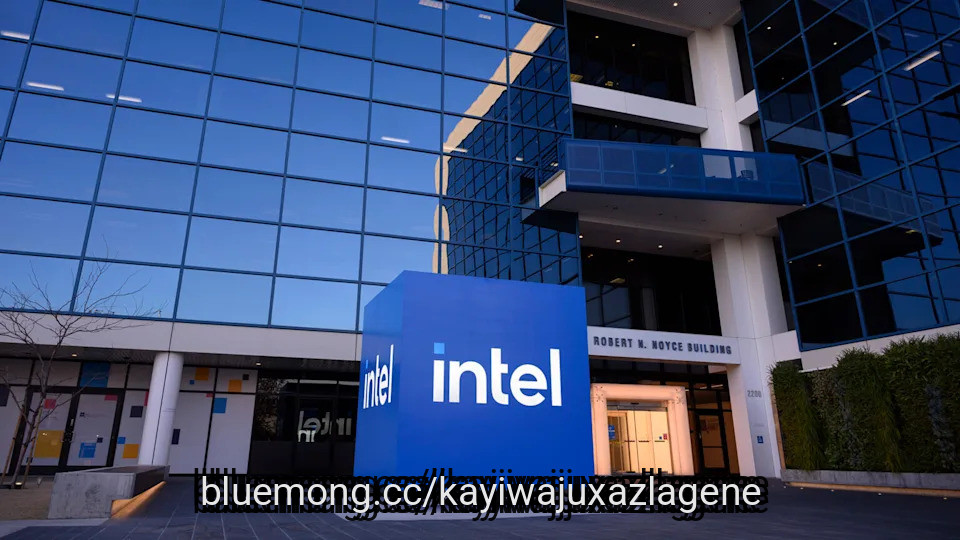
Intel Corp.'s headquarters, the Robert Noyce Building in Santa Clara, California. Photo from Intel Corp website
The companies said Intel Corporation (NASDAQ:INTC) would build Nvidia-custom x86 CPUs for Nvidia AI infrastructure and x86 system-on-chips integrating Nvidia RTX GPU chiplets for PCs. The latest official disclosures reviewed still describe those custom products as a collaboration under development, so the investment's market value is ahead of the operating evidence.
The bull case is an ecosystem bridge. Nvidia can pair its accelerators, networking, and NVLink with an enormous x86 software base. Intel gains a powerful partner and a route to more valuable data-center and client packages. If the jointly developed products arrive on schedule and win meaningful volume, both companies could strengthen their positions across heterogeneous computing.
The countercase is execution. Intel Foundry posted a $2.089 billion operating loss in the second quarter. Intel also reported an $11.033 billion GAAP net loss attributable to the company, largely distorted by a $12.529 billion mark-to-market loss on shares held in escrow for the U.S. government; non-GAAP net income was $2.197 billion. The accounting charge should not be mistaken for foundry performance, but the segment loss shows that manufacturing economics remain difficult. Product delays or weak adoption could keep the alliance strategically interesting without making it profitable. At the same time, Intel's revenue rose 25% year over year to $16.128 billion, so the quarter was not simply an operating collapse.
#loss
Intel Corp.'s headquarters, the Robert Noyce Building in Santa Clara, California. Photo from Intel Corp website
The companies said Intel Corporation (NASDAQ:INTC) would build Nvidia-custom x86 CPUs for Nvidia AI infrastructure and x86 system-on-chips integrating Nvidia RTX GPU chiplets for PCs. The latest official disclosures reviewed still describe those custom products as a collaboration under development, so the investment's market value is ahead of the operating evidence.
The bull case is an ecosystem bridge. Nvidia can pair its accelerators, networking, and NVLink with an enormous x86 software base. Intel gains a powerful partner and a route to more valuable data-center and client packages. If the jointly developed products arrive on schedule and win meaningful volume, both companies could strengthen their positions across heterogeneous computing.
The countercase is execution. Intel Foundry posted a $2.089 billion operating loss in the second quarter. Intel also reported an $11.033 billion GAAP net loss attributable to the company, largely distorted by a $12.529 billion mark-to-market loss on shares held in escrow for the U.S. government; non-GAAP net income was $2.197 billion. The accounting charge should not be mistaken for foundry performance, but the segment loss shows that manufacturing economics remain difficult. Product delays or weak adoption could keep the alliance strategically interesting without making it profitable. At the same time, Intel's revenue rose 25% year over year to $16.128 billion, so the quarter was not simply an operating collapse.
#loss
2 months ago
On Aug. 30, Elon Musk tweeted that ***** eX (SPCX) will start casting its own gas turbine blades and vanes at a foundry in Texas. And when the richest man in the world makes a statement, the world takes notice. The market worried about the impact this could have on Howmet Aerospace (HWM), and its stock fell roughly 8% in a single trading session. The blades Musk wrote about sit in the hottest part of a turbine, and they are one of the main bottlenecks slowing down new power plants. Musk said building them in-house could bring turbines online up to 18 months sooner, feeding the power needs of ***** eX's AI data centers. Investors heard "new competitor" and sold. In my opinion, that may have been an overreaction.
The only reason ***** eX has to build its own foundry is that Howmet and the firms like it are sold out. Just four companies in the world cast these blades at scale, and together they control around 70% to 80% of the market. So several ***** ysts read the news as a sign of strength. Bernstein, which had lifted its price target to $328 just days earlier, called the selloff a buying opportunity. Citi and Jefferies pushed back too.
Nvidia CEO Jensen Huang Says His $3.5 Billion MediaTek Deal Is 'Not Circular' Because 'They Do Their Own Business'
Strategy's Strategy Appears to Have Failed, and the Outlook of MSTR Stock Is Unfavorable
A Potential ***** eX Deal Could Meaningfully Accelerate Growth for Technip Stock
#deal
The only reason ***** eX has to build its own foundry is that Howmet and the firms like it are sold out. Just four companies in the world cast these blades at scale, and together they control around 70% to 80% of the market. So several ***** ysts read the news as a sign of strength. Bernstein, which had lifted its price target to $328 just days earlier, called the selloff a buying opportunity. Citi and Jefferies pushed back too.
Nvidia CEO Jensen Huang Says His $3.5 Billion MediaTek Deal Is 'Not Circular' Because 'They Do Their Own Business'
Strategy's Strategy Appears to Have Failed, and the Outlook of MSTR Stock Is Unfavorable
A Potential ***** eX Deal Could Meaningfully Accelerate Growth for Technip Stock
#deal

2 months ago
The expanded collaboration targets enterprise AI deployment, M&A transformation and ERP modernization, giving Palantir Technologies Inc. (NASDAQ:PLTR) a broader route for embedding its platforms into complex corporate workflows.
Palantir Technologies Inc. (NASDAQ:PLTR) and PwC US are expanding their strategic alliance around three areas: enterprise AI, M&A transformation and ERP modernization.
The collaboration combines Palantir Foundry and AIP with PwC's engineering, industry and transformation capabilities, potentially extending Palantir technology deeper into enterprise operations.
The companies are introducing an AI-native deals IT platform designed to help clients execute transactions up to 50% faster and cut one-time transaction costs by up to 45%.
PwC and Palantir will also target SAP and ERP transformation, using AI to improve data quality and identify process inefficiencies before implementation.
#palantir #technologies #NASDAQ #modernization
Palantir Technologies Inc. (NASDAQ:PLTR) and PwC US are expanding their strategic alliance around three areas: enterprise AI, M&A transformation and ERP modernization.
The collaboration combines Palantir Foundry and AIP with PwC's engineering, industry and transformation capabilities, potentially extending Palantir technology deeper into enterprise operations.
The companies are introducing an AI-native deals IT platform designed to help clients execute transactions up to 50% faster and cut one-time transaction costs by up to 45%.
PwC and Palantir will also target SAP and ERP transformation, using AI to improve data quality and identify process inefficiencies before implementation.
#palantir #technologies #NASDAQ #modernization


2 months ago
Billionaire David Tepper used the second quarter to make a striking trade within the AI hardware chain. Appaloosa Management cut its Micron Technology, Inc. (NASDAQ:MU) share count by 41.4%, while increasing Taiwan Semiconductor Manufacturing Company Limited (NYSE:TSM) for a sixth consecutive quarter. The filing does not disclose Tepper's rationale. The positions instead contrast a cyclical HBM supplier with a diversified advanced foundry serving nearly every major chip designer. That makes the comparison about earnings durability as much as exposure to total AI demand.
Charles Knowles / Shutterstock.com
Micron Technology, Inc. (NASDAQ:MU) has a powerful rebuttal. It reported record fiscal third-quarter results as high-bandwidth memory became critical to AI accelerators. HBM requires more capacity and technical sophistication than conventional memory, potentially supporting stronger pricing and margins. If supply remains disciplined while demand expands, Micron's cycle may be structurally better than the old commodity pattern. The bear case is its planned capital spending of more than $25 billion and the possibility that today's shortages invite too much future supply.
Taiwan Semiconductor Manufacturing Company Limited (NYSE:TSM) offers a broader toll-road thesis. Its second-quarter gross margin reached 67.7%, and the ongoing 2-nanometer ramp can deepen its lead in advanced manufacturing. It benefits whether customers favor Nvidia, AMD, custom accelerators, or other designs. However, that dominance brings enormous fabrication costs, customer concentration, geopolitical exposure, and the difficulty of maintaining exceptional margins while new capacity comes online.
The two holdings do not necessarily predict weaker AI demand. They simply provide two different ways to monetize it. Micron has greater operating leverage if HBM prices stay tight, but Taiwan Semiconductor has more diversified exposure across the entire computing stack. The first offers a sharper cyclical upside; the second offers a more durable platform with risks investors cannot ignore. That tradeoff explains why reducing one position need not invalidate its thesis.
#quarter #semiconductor
Charles Knowles / Shutterstock.com
Micron Technology, Inc. (NASDAQ:MU) has a powerful rebuttal. It reported record fiscal third-quarter results as high-bandwidth memory became critical to AI accelerators. HBM requires more capacity and technical sophistication than conventional memory, potentially supporting stronger pricing and margins. If supply remains disciplined while demand expands, Micron's cycle may be structurally better than the old commodity pattern. The bear case is its planned capital spending of more than $25 billion and the possibility that today's shortages invite too much future supply.
Taiwan Semiconductor Manufacturing Company Limited (NYSE:TSM) offers a broader toll-road thesis. Its second-quarter gross margin reached 67.7%, and the ongoing 2-nanometer ramp can deepen its lead in advanced manufacturing. It benefits whether customers favor Nvidia, AMD, custom accelerators, or other designs. However, that dominance brings enormous fabrication costs, customer concentration, geopolitical exposure, and the difficulty of maintaining exceptional margins while new capacity comes online.
The two holdings do not necessarily predict weaker AI demand. They simply provide two different ways to monetize it. Micron has greater operating leverage if HBM prices stay tight, but Taiwan Semiconductor has more diversified exposure across the entire computing stack. The first offers a sharper cyclical upside; the second offers a more durable platform with risks investors cannot ignore. That tradeoff explains why reducing one position need not invalidate its thesis.
#quarter #semiconductor


2 months ago
Baron Capital, an investment management company, released its second-quarter 2026 investor letter for its "Baron Fifth Avenue Growth Fund". The letter can be downloaded here. The fund achieved a strong quarter, gaining 24.6% (Institutional Shares), outperforming the Russell 1000 Growth Index (16.7%) and the S&P 500 (15.2%). Year to date, it's up 11.7%, surpassing its benchmarks. The first half of 2026 mirrored the previous year, with a 10.4% drawdown in Q1 due to geopolitical tensions, similar to last year's tariff-related decline. However, the fund rebounded with a 24.6% gain in Q2 after a cease-fire and declining oil prices. Stock selection drove the outperformance, contributing 940bps, while sector allocation detracted 152bps. In a volatile market, the firm remains focused on identifying high-quality, competitively advantaged companies and is optimistic about long-term prospects, investing when prices align with intrinsic values. Also, check the fund's top five holdings to see its best picks in 2026.
In its second-quarter 2026 investor letter, Baron Fifth Avenue Growth Fund highlighted Taiwan Semiconductor Manufacturing Company Limited (NYSE:TSM) as a notable contributor to performance. Taiwan Semiconductor Manufacturing Company Limited (NYSE:TSM) is the world's leading contract chip manufacturer, producing advanced semiconductors for major global technology companies. On August 31, 2026, Taiwan Semiconductor Manufacturing Company Limited (NYSE:TSM) closed at $415.32 per share. Taiwan Semiconductor Manufacturing Company Limited (NYSE:TSM) fell 0.44% over the past month, while its shares gained 81.85% over the past 52 weeks. Taiwan Semiconductor Manufacturing Company Limited (NYSE:TSM) has a market capitalization of $1.97 Trillion.
Baron Fifth Avenue Growth Fund stated the following regarding Taiwan Semiconductor Manufacturing Company Limited (NYSE:TSM) in its Q2 2026 investor letter:
"Taiwan Semiconductor Manufacturing Company Limited (NYSE:TSM) is the world's largest contract chipmaker and the leading manufacturer of advanced logic semiconductors used in modern AI accelerators. Shares rose 41.6% during the quarter as the company continues to report stellar financial results underpinned by AI demand with revenue growth of 35% year-on-year and EPS growth of 58%, with 66% gross margins and 58% operating margins. High-performance computing now represents the majority of TSMC's business. AI demand is consuming so much leading-edge capacity that smartphone and PC production is increasingly shifting to older technology nodes, reversing a dynamic that defined the foundry industry for much of the past decade. Management also raised its full-year outlook and increased capital spending to support demand that remains well above available supply. We retain long term conviction in TSMC and view its leading-edge manufacturing monopoly, pricing power, and technology roadmap as durable advantages that support a long duration of growth."
#baron
In its second-quarter 2026 investor letter, Baron Fifth Avenue Growth Fund highlighted Taiwan Semiconductor Manufacturing Company Limited (NYSE:TSM) as a notable contributor to performance. Taiwan Semiconductor Manufacturing Company Limited (NYSE:TSM) is the world's leading contract chip manufacturer, producing advanced semiconductors for major global technology companies. On August 31, 2026, Taiwan Semiconductor Manufacturing Company Limited (NYSE:TSM) closed at $415.32 per share. Taiwan Semiconductor Manufacturing Company Limited (NYSE:TSM) fell 0.44% over the past month, while its shares gained 81.85% over the past 52 weeks. Taiwan Semiconductor Manufacturing Company Limited (NYSE:TSM) has a market capitalization of $1.97 Trillion.
Baron Fifth Avenue Growth Fund stated the following regarding Taiwan Semiconductor Manufacturing Company Limited (NYSE:TSM) in its Q2 2026 investor letter:
"Taiwan Semiconductor Manufacturing Company Limited (NYSE:TSM) is the world's largest contract chipmaker and the leading manufacturer of advanced logic semiconductors used in modern AI accelerators. Shares rose 41.6% during the quarter as the company continues to report stellar financial results underpinned by AI demand with revenue growth of 35% year-on-year and EPS growth of 58%, with 66% gross margins and 58% operating margins. High-performance computing now represents the majority of TSMC's business. AI demand is consuming so much leading-edge capacity that smartphone and PC production is increasingly shifting to older technology nodes, reversing a dynamic that defined the foundry industry for much of the past decade. Management also raised its full-year outlook and increased capital spending to support demand that remains well above available supply. We retain long term conviction in TSMC and view its leading-edge manufacturing monopoly, pricing power, and technology roadmap as durable advantages that support a long duration of growth."
#baron

2 months ago
Baron Capital, an investment management company, released its second-quarter 2026 investor letter for its "Baron Fifth Avenue Growth Fund". The letter can be downloaded here. The fund achieved a strong quarter, gaining 24.6% (Institutional Shares), outperforming the Russell 1000 Growth Index (16.7%) and the S&P 500 (15.2%). Year to date, it's up 11.7%, surpassing its benchmarks. The first half of 2026 mirrored the previous year, with a 10.4% drawdown in Q1 due to geopolitical tensions, similar to last year's tariff-related decline. However, the fund rebounded with a 24.6% gain in Q2 after a cease-fire and declining oil prices. Stock selection drove the outperformance, contributing 940bps, while sector allocation detracted 152bps. In a volatile market, the firm remains focused on identifying high-quality, competitively advantaged companies and is optimistic about long-term prospects, investing when prices align with intrinsic values. Also, check the fund's top five holdings to see its best picks in 2026.
In its second-quarter 2026 investor letter, Baron Fifth Avenue Growth Fund highlighted Taiwan Semiconductor Manufacturing Company Limited (NYSE:TSM) as a notable contributor to performance. Taiwan Semiconductor Manufacturing Company Limited (NYSE:TSM) is the world's leading contract chip manufacturer, producing advanced semiconductors for major global technology companies. On August 31, 2026, Taiwan Semiconductor Manufacturing Company Limited (NYSE:TSM) closed at $415.32 per share. Taiwan Semiconductor Manufacturing Company Limited (NYSE:TSM) fell 0.44% over the past month, while its shares gained 81.85% over the past 52 weeks. Taiwan Semiconductor Manufacturing Company Limited (NYSE:TSM) has a market capitalization of $1.97 Trillion.
Baron Fifth Avenue Growth Fund stated the following regarding Taiwan Semiconductor Manufacturing Company Limited (NYSE:TSM) in its Q2 2026 investor letter:
"Taiwan Semiconductor Manufacturing Company Limited (NYSE:TSM) is the world's largest contract chipmaker and the leading manufacturer of advanced logic semiconductors used in modern AI accelerators. Shares rose 41.6% during the quarter as the company continues to report stellar financial results underpinned by AI demand with revenue growth of 35% year-on-year and EPS growth of 58%, with 66% gross margins and 58% operating margins. High-performance computing now represents the majority of TSMC's business. AI demand is consuming so much leading-edge capacity that smartphone and PC production is increasingly shifting to older technology nodes, reversing a dynamic that defined the foundry industry for much of the past decade. Management also raised its full-year outlook and increased capital spending to support demand that remains well above available supply. We retain long term conviction in TSMC and view its leading-edge manufacturing monopoly, pricing power, and technology roadmap as durable advantages that support a long duration of growth."
#company #fund #
In its second-quarter 2026 investor letter, Baron Fifth Avenue Growth Fund highlighted Taiwan Semiconductor Manufacturing Company Limited (NYSE:TSM) as a notable contributor to performance. Taiwan Semiconductor Manufacturing Company Limited (NYSE:TSM) is the world's leading contract chip manufacturer, producing advanced semiconductors for major global technology companies. On August 31, 2026, Taiwan Semiconductor Manufacturing Company Limited (NYSE:TSM) closed at $415.32 per share. Taiwan Semiconductor Manufacturing Company Limited (NYSE:TSM) fell 0.44% over the past month, while its shares gained 81.85% over the past 52 weeks. Taiwan Semiconductor Manufacturing Company Limited (NYSE:TSM) has a market capitalization of $1.97 Trillion.
Baron Fifth Avenue Growth Fund stated the following regarding Taiwan Semiconductor Manufacturing Company Limited (NYSE:TSM) in its Q2 2026 investor letter:
"Taiwan Semiconductor Manufacturing Company Limited (NYSE:TSM) is the world's largest contract chipmaker and the leading manufacturer of advanced logic semiconductors used in modern AI accelerators. Shares rose 41.6% during the quarter as the company continues to report stellar financial results underpinned by AI demand with revenue growth of 35% year-on-year and EPS growth of 58%, with 66% gross margins and 58% operating margins. High-performance computing now represents the majority of TSMC's business. AI demand is consuming so much leading-edge capacity that smartphone and PC production is increasingly shifting to older technology nodes, reversing a dynamic that defined the foundry industry for much of the past decade. Management also raised its full-year outlook and increased capital spending to support demand that remains well above available supply. We retain long term conviction in TSMC and view its leading-edge manufacturing monopoly, pricing power, and technology roadmap as durable advantages that support a long duration of growth."
#company #fund #

3 months ago
Checking in to see what billionaire investors are doing is a great way to source ideas for your own portfolio. One whom I follow is Stanley Druckenmiller, a former hedge fund manager who now runs the Duquesne Family Office. No later than 45 days after the end of each quarter, organizations that have more than $100 million under management are required to file a Form 13F with the SEC, which discloses their holdings at the end of that quarter. By comparing these forms with the prior ones, we can get some insights into what moves they made during the period.
Druckenmiller made some major purchases in Q2, including boosting its stake in Taiwan Semiconductor (NYSE: TSM) by nearly 20%. The chip foundry giant is now the Duquesne Family Office's second-largest holding. However, those purchases all happened by June 30. So the question is: Is Taiwan Semiconductor stock still a buy now?
Missed Nvidia in 2009? This Rare Signal Is Flashing Again. In 2009, a "Double Down" signal flashed for a little-known chipmaker called Nvidia. For the first time in years, that same "Total Conviction" signal is flashing for a company 1/100th the size of Nvidia. Continue »
Because 13F forms only describe a fund's end-of-quarter holdings, Druckenmiller could have bought these new TSMC shares any time between April 1 and June 30. Right now, the stock is down by more than 10% from the high it established at the end of June, but it's up over 20% from April 1. So, depending on when Druckenmiller bought shares, today's price may or may not be cheaper than when he got in.
But that doesn't matter. What really matters is where Taiwan Semiconductor is heading, and I think the future looks bright for it.
#taiwan #semiconductor #quarter #family
Druckenmiller made some major purchases in Q2, including boosting its stake in Taiwan Semiconductor (NYSE: TSM) by nearly 20%. The chip foundry giant is now the Duquesne Family Office's second-largest holding. However, those purchases all happened by June 30. So the question is: Is Taiwan Semiconductor stock still a buy now?
Missed Nvidia in 2009? This Rare Signal Is Flashing Again. In 2009, a "Double Down" signal flashed for a little-known chipmaker called Nvidia. For the first time in years, that same "Total Conviction" signal is flashing for a company 1/100th the size of Nvidia. Continue »
Because 13F forms only describe a fund's end-of-quarter holdings, Druckenmiller could have bought these new TSMC shares any time between April 1 and June 30. Right now, the stock is down by more than 10% from the high it established at the end of June, but it's up over 20% from April 1. So, depending on when Druckenmiller bought shares, today's price may or may not be cheaper than when he got in.
But that doesn't matter. What really matters is where Taiwan Semiconductor is heading, and I think the future looks bright for it.
#taiwan #semiconductor #quarter #family

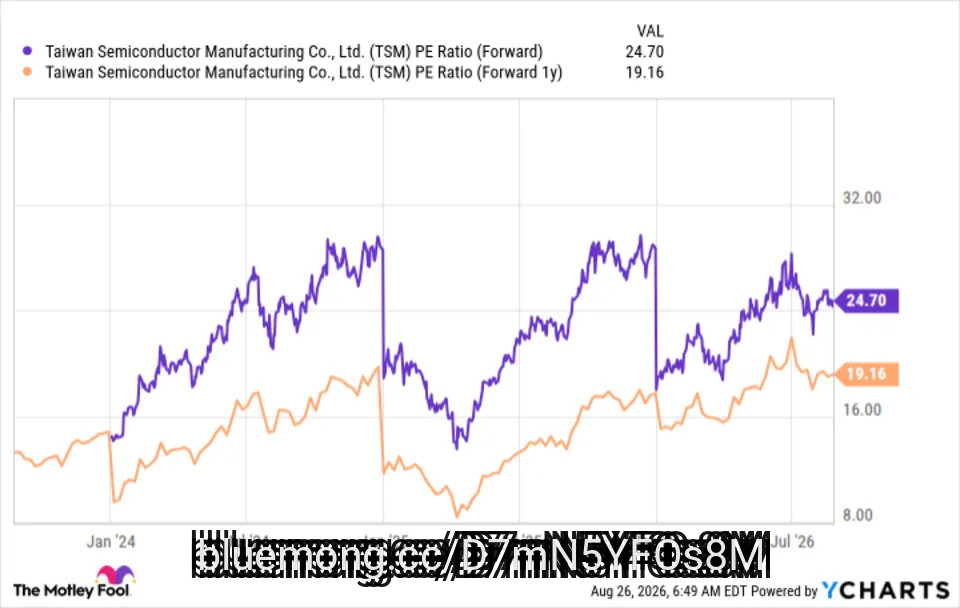

3 months ago
The rapid buildout of AI infrastructure has been driving a strong demand cycle for semiconductor manufacturing equipment. Applied Materials, Inc. (NASDAQ:AMAT) benefits from such a trend, thanks to chipmakers increasing spending on advanced DRAM, HBM, leading-edge logic, as well as advanced packaging.
This trend is evidenced by the company's latest results, which highlight real financial growth. Applied Materials, Inc. (NASDAQ:AMAT) reported record revenue of $9.12 billion, with non-GAAP EPS of $3.50 and $3.17 on a GAAP basis. Importantly, gross margin was above 50%, demonstrating its 13th consecutive quarter of YoY gross-margin expansion.
The company is not just benefiting from elevated semiconductor spending. It is gaining share too. Applied Materials, Inc. (NASDAQ:AMAT) upgraded its Semiconductor Systems revenue expectations for CY 2026, anticipating growth faster than the broader semiconductor equipment market. Notably, the momentum seems to be robust in DRAM, leading-edge foundry/logic, and advanced packaging. Collectively, they continue to become critical as AI chips are more complex.
Furthermore, the numbers support operating leverage. For Q4, the company expects revenue of ~$10.25 billion, demonstrating YoY growth of 51%. The non-GAAP EPS is anticipated to reach $4.02, implying growth of 85% YoY. Semiconductor Systems revenue is projected to increase by 62% to ~$7.9 billion.
UBS ******* yst Timothy Arcuri kept a "Buy" rating on Applied Materials, Inc. (NASDAQ:AMAT)'s stock and a price objective of $675, highlighting the company's aggressive capacity expansion and continued share gains. The long-term thesis needs to be understood, with Applied Materials, Inc. (NASDAQ:AMAT) aiming to double its systems output capacity by CY 2028, and ******* yst's model expecting systems revenue approaching ~$14 billion per quarter and earnings reaching $30 per share.
#amat #semiconductor #systems
This trend is evidenced by the company's latest results, which highlight real financial growth. Applied Materials, Inc. (NASDAQ:AMAT) reported record revenue of $9.12 billion, with non-GAAP EPS of $3.50 and $3.17 on a GAAP basis. Importantly, gross margin was above 50%, demonstrating its 13th consecutive quarter of YoY gross-margin expansion.
The company is not just benefiting from elevated semiconductor spending. It is gaining share too. Applied Materials, Inc. (NASDAQ:AMAT) upgraded its Semiconductor Systems revenue expectations for CY 2026, anticipating growth faster than the broader semiconductor equipment market. Notably, the momentum seems to be robust in DRAM, leading-edge foundry/logic, and advanced packaging. Collectively, they continue to become critical as AI chips are more complex.
Furthermore, the numbers support operating leverage. For Q4, the company expects revenue of ~$10.25 billion, demonstrating YoY growth of 51%. The non-GAAP EPS is anticipated to reach $4.02, implying growth of 85% YoY. Semiconductor Systems revenue is projected to increase by 62% to ~$7.9 billion.
UBS ******* yst Timothy Arcuri kept a "Buy" rating on Applied Materials, Inc. (NASDAQ:AMAT)'s stock and a price objective of $675, highlighting the company's aggressive capacity expansion and continued share gains. The long-term thesis needs to be understood, with Applied Materials, Inc. (NASDAQ:AMAT) aiming to double its systems output capacity by CY 2028, and ******* yst's model expecting systems revenue approaching ~$14 billion per quarter and earnings reaching $30 per share.
#amat #semiconductor #systems

3 months ago
Within the past year, the market has valued Intel (NASDAQ:INTC) at $23.68 per share, at $142.35 per share, and at nearly everything in between. As of this writing, shares sit at $87.26 -- about 39% below the high, and still about 3.7 times the low.
That is a sixfold spread within one year for the same company. How much of Intel's price is the business that exists, and how much is a claim on the foundry business Intel is promising to build?
Missed Nvidia in 2009? This Rare Signal Is Flashing Again. In 2009, a "Double Down" signal flashed for a little-known chipmaker called Nvidia. For the first time in years, that same "Total Conviction" signal is flashing for a company 1/100th the size of Nvidia. Continue »
Image source: Intel.
The bottom of the range is barely a year old. Shares fell to $23.68 last September, days after the U.S. government agreed to convert $8.9 billion in already-awarded chip grant money into 433.3 million shares at $20.47 apiece (a stake of about 10%). A couple of weeks later, Nvidia announced a $5 billion investment of its own at $23.28 per share.
#signal
That is a sixfold spread within one year for the same company. How much of Intel's price is the business that exists, and how much is a claim on the foundry business Intel is promising to build?
Missed Nvidia in 2009? This Rare Signal Is Flashing Again. In 2009, a "Double Down" signal flashed for a little-known chipmaker called Nvidia. For the first time in years, that same "Total Conviction" signal is flashing for a company 1/100th the size of Nvidia. Continue »
Image source: Intel.
The bottom of the range is barely a year old. Shares fell to $23.68 last September, days after the U.S. government agreed to convert $8.9 billion in already-awarded chip grant money into 433.3 million shares at $20.47 apiece (a stake of about 10%). A couple of weeks later, Nvidia announced a $5 billion investment of its own at $23.28 per share.
#signal
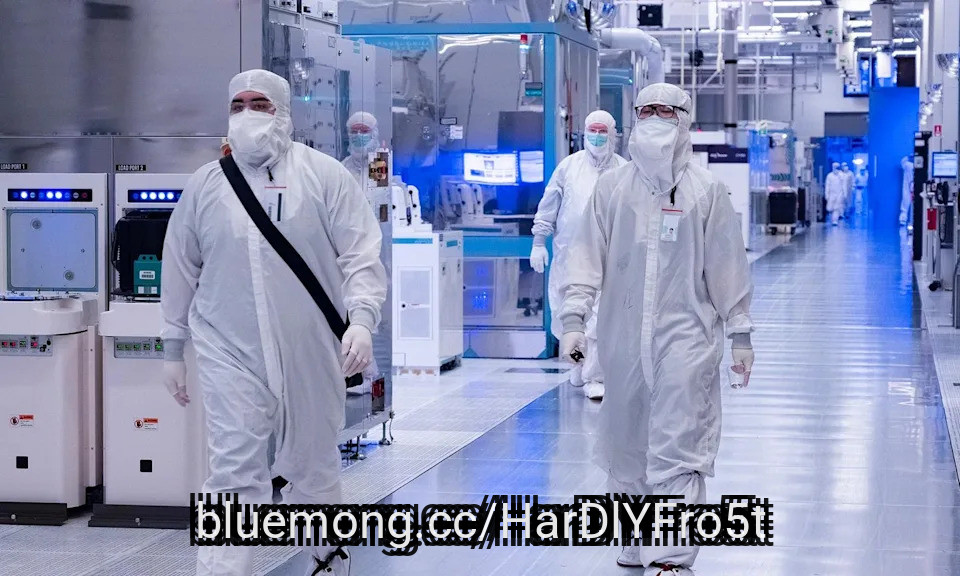

3 months ago
Sustainable Growth Advisers (SGA), an investment management company, released its second-quarter 2026 investor letter for its "Global Growth Strategy." The letter can be downloaded here. The SGA Global Growth Portfolio returned 7.4% gross and 7.2% net, compared with 14.9% for the MSCI ACWI and 19.8% for the MSCI ACWI Growth Index. Momentum leadership and enthusiasm around AI infrastructure drove markets, with semiconductor, memory, and hardware stocks accounting for much of the gain. Although the portfolio owned AI beneficiaries, broader holdings lagged despite fundamentals, as median revenue and EPS growth reached 12% and 14% and more than 60% of the holdings beat expectations. SGA believes valuation compression reflects sentiment rather than weaker business quality, leaving the portfolio near its widest discount to the market since inception. The firm continues to favor durable compounders and expects 16% revenue growth and 20% earnings growth over three years. Also, please check the Fund's top five holdings to see its best picks for 2026.
In its second-quarter 2026 investor letter, SGA Global Growth Strategy highlighted Taiwan Semiconductor Manufacturing Company Limited (NYSE:TSM) as a top contributor to the performance. Taiwan Semiconductor Manufacturing Company Limited (NYSE:TSM) is the world's leading contract chip manufacturer, producing advanced semiconductors for major global technology companies. On August 21, 2026, Taiwan Semiconductor Manufacturing Company Limited (NYSE:TSM) closed at $418.95 per share. The one-month return of Taiwan Semiconductor Manufacturing Company Limited (NYSE:TSM) was 2.34%, and its shares gained 73.37% over the past 52 weeks. Taiwan Semiconductor Manufacturing Company Limited (NYSE:TSM) has a market capitalization of $1.9 trillion with a 52-week trading range between $223.70 - $479.00.
SGA Global Growth Strategy stated the following regarding Taiwan Semiconductor Manufacturing Company Limited (NYSE:TSM) in its Q2 2026 investor letter:
"Taiwan Semiconductor Manufacturing Company Limited (NYSE:TSM), the world's leading semiconductor foundry, was a top contributor to performance during the quarter. Shares were supported by sustained strength in demand for advanced logic and compute, with customers across AI accelerators and CPUs continuing to require additional capacity. TSMC remains firmly positioned at the leading edge of semiconductor manufacturing, benefiting from secular demand across high performance computing, smartphones, automotive, and AI applications. Its technology leadership and scale support sustained double digit growth, with revenue increasingly driven by recurring and repeatable categories that reduce cyclicality. Given TSMC's dominant competitive position, deep customer entrenchment, and the continued global need for advanced compute, TSMC remains well-positioned to deliver strong double-digit revenue and earnings growth over the coming years. We maintained an above average weight position du
In its second-quarter 2026 investor letter, SGA Global Growth Strategy highlighted Taiwan Semiconductor Manufacturing Company Limited (NYSE:TSM) as a top contributor to the performance. Taiwan Semiconductor Manufacturing Company Limited (NYSE:TSM) is the world's leading contract chip manufacturer, producing advanced semiconductors for major global technology companies. On August 21, 2026, Taiwan Semiconductor Manufacturing Company Limited (NYSE:TSM) closed at $418.95 per share. The one-month return of Taiwan Semiconductor Manufacturing Company Limited (NYSE:TSM) was 2.34%, and its shares gained 73.37% over the past 52 weeks. Taiwan Semiconductor Manufacturing Company Limited (NYSE:TSM) has a market capitalization of $1.9 trillion with a 52-week trading range between $223.70 - $479.00.
SGA Global Growth Strategy stated the following regarding Taiwan Semiconductor Manufacturing Company Limited (NYSE:TSM) in its Q2 2026 investor letter:
"Taiwan Semiconductor Manufacturing Company Limited (NYSE:TSM), the world's leading semiconductor foundry, was a top contributor to performance during the quarter. Shares were supported by sustained strength in demand for advanced logic and compute, with customers across AI accelerators and CPUs continuing to require additional capacity. TSMC remains firmly positioned at the leading edge of semiconductor manufacturing, benefiting from secular demand across high performance computing, smartphones, automotive, and AI applications. Its technology leadership and scale support sustained double digit growth, with revenue increasingly driven by recurring and repeatable categories that reduce cyclicality. Given TSMC's dominant competitive position, deep customer entrenchment, and the continued global need for advanced compute, TSMC remains well-positioned to deliver strong double-digit revenue and earnings growth over the coming years. We maintained an above average weight position du