
1 month ago
On September 14, Radiant Logistics (NYSEAMERICAN:RLGT) held its fourth fiscal quarter earnings call, and the headline numbers landed harder than a typical logistics update. Net income jumped 53.1% to $7.5 million for the quarter ended June 30, while revenue climbed 18.5% to $261.4 million. Look past that one quarter, though, and the picture gets more complicated, because full-year adjusted profitability actually fell. That gap between a blowout quarter and a softer year is what makes this name worth a closer look.
The fourth fiscal quarter was strong from top to bottom. Adjusted EBITDA rose 31.6% to $10.4 million, margin expanded 240 basis points to 15.5%, and adjusted net income climbed 34.5% to $7.4 million, all against organic revenue growth of 8%. Management credited the acceleration to US forwarding operations and international airfreight, including work supporting disaster relief after typhoon activity hit the Western Pacific earlier this year, plus airfreight demand tied to capital flows into global data center buildouts.
The balance sheet backs up the story. Radiant enters fiscal 2027 with zero net debt, $25.6 million in cash as of June 30, and a $200 million senior credit facility that was extended and restated in August, pushing maturity out to August 7, 2031, while its acquisition-focused accordion grew to $100 million from $75 million. On the domestic side, capacity has been exiting the truckload and intermodal markets, and spot rates and tender rejections moved higher late in the quarter. Radiant also launched a new independent agent program at Radiant Road & Rail during the quarter, extending its freight forwarding agent network into truck brokerage and intermodal, while Navegate is gaining traction, with one enterprise customer now managing more than 1,400 vendors on the platform.
The full-year numbers tell a different story than the quarter does. Revenue rose just 3.5% to $934.4 million from $902.7 million, a fraction of the fourth quarter's 18.5% pace, and full-year net income grew a modest 8.7% to $18.8 million. Full-year adjusted EBITDA actually fell 5.4% to $36.7 million from $38.8 million, and that figure included a $1.3 million First Brands adjustment. Strip that out and normalized adjusted EBITDA comes in at $35.4 million, an even steeper decline than the headline number suggests.
The operating backdrop stays complicated too. Ocean shipping routes remain disrupted by the closure of the Strait of Hormuz and continued Houthi activity affecting Suez Canal transits, keeping capacity tight on key trade lanes. US tariff policy is generating elevated IEEPA-related filing activity, and Canada put new retaliatory tariff measures into effect in early September, adding fresh complexity for shippers moving goods across that border. Management itself acknowledged that the domestic truck brokerage improvement seen late in the fourth quarter is not yet fully reflected in the reported results.
#quarter #revenue


1 month ago
Our ****** ysts just identified a stock with the potential to be the next Nvidia. Tell us how you invest and we'll show you why it's our #1 pick. Tap here.
Performance was driven by U.S. forwarding operations and international airfreight strength, particularly in disaster relief efforts following Western Pacific typhoons.
The Navegate platform is acting as a growth catalyst, enabling enterprise customers to manage complex supply chains, including one client managing over 1,400 vendors.
Domestic market dynamics are improving as capacity exits the North America truckload and intermodal sectors through carrier attrition and tighter driver availability.
Management observed constructive cyclical indicators, including rising spot rates and tender rejections, which began to manifest late in the fourth fiscal quarter.
#tell #navegate #America


1 month ago
On September 14, Radiant Logistics (NYSEAMERICAN:RLGT) held its fourth fiscal quarter earnings call, and the headline numbers landed harder than a typical logistics update. Net income jumped 53.1% to $7.5 million for the quarter ended June 30, while revenue climbed 18.5% to $261.4 million. Look past that one quarter, though, and the picture gets more complicated, because full-year adjusted profitability actually fell. That gap between a blowout quarter and a softer year is what makes this name worth a closer look.
The fourth fiscal quarter was strong from top to bottom. Adjusted EBITDA rose 31.6% to $10.4 million, margin expanded 240 basis points to 15.5%, and adjusted net income climbed 34.5% to $7.4 million, all against organic revenue growth of 8%. Management credited the acceleration to US forwarding operations and international airfreight, including work supporting disaster relief after typhoon activity hit the Western Pacific earlier this year, plus airfreight demand tied to capital flows into global data center buildouts.
The balance sheet backs up the story. Radiant enters fiscal 2027 with zero net debt, $25.6 million in cash as of June 30, and a $200 million senior credit facility that was extended and restated in August, pushing maturity out to August 7, 2031, while its acquisition-focused accordion grew to $100 million from $75 million. On the domestic side, capacity has been exiting the truckload and intermodal markets, and spot rates and tender rejections moved higher late in the quarter. Radiant also launched a new independent agent program at Radiant Road & Rail during the quarter, extending its freight forwarding agent network into truck brokerage and intermodal, while Navegate is gaining traction, with one enterprise customer now managing more than 1,400 vendors on the platform.
The full-year numbers tell a different story than the quarter does. Revenue rose just 3.5% to $934.4 million from $902.7 million, a fraction of the fourth quarter's 18.5% pace, and full-year net income grew a modest 8.7% to $18.8 million. Full-year adjusted EBITDA actually fell 5.4% to $36.7 million from $38.8 million, and that figure included a $1.3 million First Brands adjustment. Strip that out and normalized adjusted EBITDA comes in at $35.4 million, an even steeper decline than the headline number suggests.
The operating backdrop stays complicated too. Ocean shipping routes remain disrupted by the closure of the Strait of Hormuz and continued Houthi activity affecting Suez Canal transits, keeping capacity tight on key trade lanes. US tariff policy is generating elevated IEEPA-related filing activity, and Canada put new retaliatory tariff measures into effect in early September, adding fresh complexity for shippers moving goods across that border. Management itself acknowledged that the domestic truck brokerage improvement seen late in the fourth quarter is not yet fully reflected in the reported results.
#million #quarter #revenue #fiscal


1 month ago
Founded in 1977 and headquartered in South Korea, LX Pantos has grown into a global logistics provider spanning freight forwarding, contract logistics, e-commerce fulfillment, last-mile delivery and installation, and supply chain management consulting. The company now operates more than 380 locations worldwide with a workforce of approximately 8,500 employees, moving more than 1.6 million TEUs of ocean freight and over 120,000 tons of air freight annually. In 2025, LX Pantos recorded revenue of approximately $5.85 billion.
For President and CEO Lee Yong-ho, those figures mark a foundation rather than a destination.
"Since **** uming the role of CEO, I have set a clear vision for LX Pantos: to build the company into a 'Korea-born, global logistics company,' and we have been pursuing that goal with unwavering commitment," Lee said.
That vision marks a departure from the model that carried LX Pantos for decades on domestic corporate freight volumes.
"For many years, LX Pantos grew rapidly by leveraging freight volumes from domestic corporate customers. However, we have also recognized that growth driven primarily by the domestic market has its limitations," Lee said. "It is now time for LX Pantos to evolve into a truly global logistics company — one that is not confined to any single country or customer segment, but is capable of delivering comprehensive logistics solutions to customers worldwide."
#pantos #Logistics



2 months ago
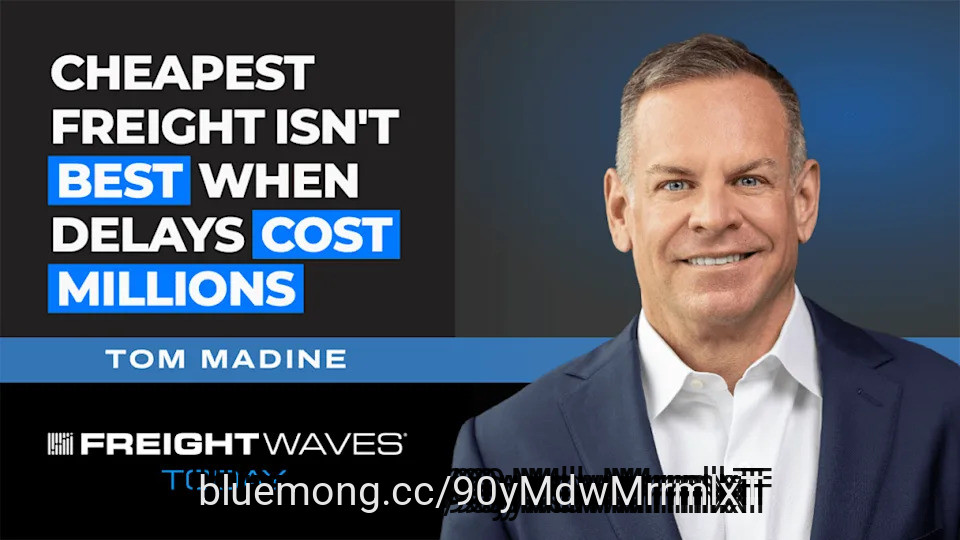
Cheapest freight isn't always best, especially when a late shipment can cost millions. ShipStation Global CEO Tom Madine breaks down why SMB shippers need parcel, LTL and truckload in one workflow, and why better freight decisions now matter more than just lower rates. From the merger that created ShipStation Global to adding more modes into the platform, this conversation gets into where shipping tech is heading, how data shapes carrier selection, and what smaller shippers actually need from logistics partners. #FreightTech #LTL #SupplyChain
ShipStation Global is formally launching its less-than-truckload product, marking the first tangible freight expansion since the merger of software provider Auctane, formerly the parent of the Stamps.com andShipStation,and WWEX Group, which previously housed freight brokerages like Worldwide Express. The company's CEO said the rollout represents the opening move in a broader strategy to let small and midsize shippers purchase and manage all transportation modes through a single platform.
"Today's the first day we've really launched the LTL product," said Tom Madine, CEO of ShipStation Global, noting the company plans to add truckload, final mile, and eventually ocean and forwarding capabilities after establishing its inland position.
The strategic rationale centers on eliminating the workflow gap that forced ShipStation users to leave the platform whenever they needed to move freight beyond parcel. Customer surveys repeatedly flagged the absence of additional modes as the top improvement request, he said. With LTL now integrated, shippers can manage inbound inventory movements alongside outbound parcel without switching systems.
"Cheapest is not always best…But at the same time, you don't want to overpay," Madine said, illustrating the point with a customer whose engine shipments carry multi-million-dollar consequences if delayed.
#madine #shippers #parcel #cheapest

2 months ago
Hypotheticals and hindsight are not typically the favoured topics of the professional sports team but there is an alternative England scenario worth pondering. Had Sam Curran been fully fit to bowl ahead of this Pakistan series, the likelihood is that the Surrey all-rounder would have earned a recall to the Test squad for the first time in five years, a replacement of sorts after Ben Stokes had gone down in a blaze of gory batting at Trent Bridge.
Would Curran have featured in England's XI? The **** umption must be that he would not have but the very fact that he was under consideration at all shows the tricky question that Joe Root's side were attempting to answer. How does one replace the irreplaceable? Well, it seems, the answer is to not replace Stokes at all. There is no point, of course, selecting a seam all-rounder when you have specialists bowling the way that England's pace foursome have in this series so far.
England wrapped up a speedy victory over Pakistan at Lord's (Getty)
One must weigh Pakistan's paucity as mitigation against declarations of the brilliance of this attack but the evidence is increasingly persuasive about the group's potential. After the Headingley Test, Root had declared that the quartet of Ollie Robinson, Jofra Archer, Josh Tongue and Gus Atkinson did not know how good they could be and another standout showing at Lord's will not dim his praise. Of all English bowlers in Test history, Root can currently call upon three of the five men with strike rates beneath 44 and still have Archer to spare; if the fast forwarding of Test cricket is partly to blame, any skipper would enjoy that sort of potency.
"Each day it will be someone else's turn," Archer said during the second Test. "Everyone is relentless, everyone wants wickets and it feels like no-one is ever going to be overworked because everyone shares the overs out. You don't have to do too much because someone is going to back you up until you find your feet again."
#Pakistan



2 months ago
Klaus-Michael Kühne, the former CEO of family-owned global logistics powerhouse Kuehne+Nagel International AG, died Sunday at the age of 89, the company announced.
Born in Hamburg, Germany, Klaus-Michael Kühne in 1958 joined the company co-founded by his grandfather 68 years earlier in Breman, Germany. In 1966, at age 29, he took over as chief executive officer of K+N Speditions-AG, as the company was called at the time. In 1974, with the internationalization of the business, both K+N and Klaus Michael moved to Switzerland. In 1979, he opened K+N's first office in China. The company moved its headquarters to its current location in Schindellegi, Switzerland, in 1992, when he also added the chairman's ****** le. In 1994, Klaus-Michael took the company public on the Swiss stock exchange.
Since 2011, Klaus-Michael has held the position of honorary chairman of the board. He established Kuhne Logistics University in Hamburg and the philanthropic Kühne Foundation.
He owns about 30% of container shipping company Hapag-Lloyd and about 17% of German airline Lufthansa.
He is considered one of the key figures in the logistics industry for helping to expand global trade through air and ocean freight forwarding, warehousing and supply chain management across multiple continents.
#klaus #michael


2 months ago
UPS disclosed Monday that it is investing more than $2 billion across its international, healthcare, and supply chain solutions businesses, revealing the total figure for the first time. The investments began in 2024 and are set to continue through 2028, the company said.
Scott Szwast, UPS vice president of international strategy, framed the spending as an effort to build out capabilities that help customers in specialized sectors navigate increasingly complicated global supply chains. "These investments are really aligned to one of our big strategic areas of focus, which is creating capabilities to enable our customers, particularly in complex industries, to more effectively run their global supply chains," he told CNBC.
Among the initiatives are a new hub in the Philippines slated for this year, a facility in Ontario, Canada, due to open in 2027, and an air hub at Hong Kong International Airport scheduled for 2028. UPS has also opened a technology-enabled logistics center in Taiwan and an Amsterdam facility that integrates freight forwarding, customs brokerage, and cold-chain capabilities under one roof. The Taiwan facility has used automation and robotics to cut total supply chain time by one day, Szwast said. UPS also operates weekly service on the Paris–Hong Kong route and the Shenzhen–Sydney route, each running five days a week.
Szwast said that as global supply chains come under growing strain, companies have moved to spread risk across multiple sourcing and distribution points rather than relying on a single node, even as those same businesses push out new products with unfamiliar logistics demands faster than ever before. "What they find in a lot of cases is that their supply chains look more like their histories than their strategies," he said.
The $2 billion figure encompasses a previously announced $48 million buildout of 27 temperature-controlled facilities across the Americas, Europe, and Asia aimed at handling temperature-sensitive pharmaceuticals, including GLP-1 weight loss drugs. UPS said the healthcare initiative is part of its broader effort to grow in higher-margin logistics services.
#global #Logistics


2 months ago
UPS disclosed Monday that it is investing more than $2 billion across its international, healthcare, and supply chain solutions businesses, revealing the total figure for the first time. The investments began in 2024 and are set to continue through 2028, the company said.
Scott Szwast, UPS vice president of international strategy, framed the spending as an effort to build out capabilities that help customers in specialized sectors navigate increasingly complicated global supply chains. "These investments are really aligned to one of our big strategic areas of focus, which is creating capabilities to enable our customers, particularly in complex industries, to more effectively run their global supply chains," he told CNBC.
Among the initiatives are a new hub in the Philippines slated for this year, a facility in Ontario, Canada, due to open in 2027, and an air hub at Hong Kong International Airport scheduled for 2028. UPS has also opened a technology-enabled logistics center in Taiwan and an Amsterdam facility that integrates freight forwarding, customs brokerage, and cold-chain capabilities under one roof. The Taiwan facility has used automation and robotics to cut total supply chain time by one day, Szwast said. UPS also operates weekly service on the Paris–Hong Kong route and the Shenzhen–Sydney route, each running five days a week.
Szwast said that as global supply chains come under growing strain, companies have moved to spread risk across multiple sourcing and distribution points rather than relying on a single node, even as those same businesses push out new products with unfamiliar logistics demands faster than ever before. "What they find in a lot of cases is that their supply chains look more like their histories than their strategies," he said.
The $2 billion figure encompasses a previously announced $48 million buildout of 27 temperature-controlled facilities across the Americas, Europe, and Asia aimed at handling temperature-sensitive pharmaceuticals, including GLP-1 weight loss drugs. UPS said the healthcare initiative is part of its broader effort to grow in higher-margin logistics services.
#chains #facility #Logistics


3 months ago
Bellevue, Washington-based Expeditors International of Washington, Inc. (EXPD) provides logistics services in the Americas and internationally. The company has a market cap of $23.9 billion and offers air freight services, such as air freight consolidation and forwarding, and ocean freight services, including ocean freight consolidation, direct ocean forwarding, order management, and more.
EXPD is expected to release its Q2 2026 earnings on Tuesday, Aug. 4, before the market opens. Ahead of the event, **** ysts expect the company's EPS to be $1.64 on a diluted basis, up 22.4% from $1.34 in the year-ago quarter. The company has exceeded Wall Street's EPS estimates in each of its last four quarters.
Alibaba Stock Just Got Apple's Biggest AI Endorsement. This Could Be a Game Changer for BABA.
Elon Musk Says If **** eX Accomplishes Its Goals, 'It Will Be Worth More Than The Rest of Earth' — Though He's Also Said 'Money Will Stop Being Relevant'
AI Bubble Fears, Earnings and Other Can't Miss Items this Week
#company #forwarding



4 months ago
Vltava Fund, a value-focused investment management company, published its investor letter for the second quarter of 2026. A copy of the letter can be downloaded here. The letter explores the growing role of AI and how certain facets of human intelligence may become less valuable economically, while other skills become more important. The author emphasizes that despite AI's expanding capabilities in information collection and basic modeling, qualities like sound judgment, good taste, patience, original thinking, strategic skepticism, and the ability to recognize significance will continue to hold their value. Despite the excitement around A.I., fundamental investment principles remain unchanged. Please review the Fund's top five holdings to gain insights into their key selections for 2026.
In its second-quarter 2026 investor letter, Vltava Fund highlighted Visa Inc. (NYSE:V). Visa Inc. (NYSE:V) is a multinational financial services company known for its payment technology network that offers credit, debit, and prepaid card products and other services. On July 2, 2026, Visa Inc. (NYSE:V) closed at $351.08 per share. One-month return of Visa Inc. (NYSE:V) was 11.92%, and its shares gained 0.91% over the past 52 weeks. Visa Inc. (NYSE:V) has a market capitalization of $688.68 billion.
Vltava Fund stated the following regarding Visa Inc. (NYSE:V) in its Q2 2026 investor letter:
"We bought shares in Visa Inc. (NYSE:V) and Kaspi.kz. Visa probably needs little introduction. Nevertheless, I'll describe the company briefly, as people are often surprised by just how complex and sophisticated its business is. Visa is not a "card company" in the simple sense of the word. It is a global technology infrastructure for electronic payments that connects banks, merchants, consumers, payments processors, governments, and companies. Its main role is to ensure that payments between two parties are processed quickly, securely, reliably, and with minimal risk without regard to the country, currency, bank, card type, or sales channel involved.
The sophistication of Visa's business lies in the fact that it is not just about forwarding the payment itself. Visa operates an extensive payment network full of rules, technologies, and security standards. It also handles transaction authorization, fraud prevention, settlement, tokenization, data ***** ytics, and risk management. Every payment looks simple to the customer. A person taps with a card or clicks in an online store, but behind all of this lies a highly complex system coordinating among many participants in the financial ecosystem…" (Click here to read the full text)


4 months ago
Ocean shipping and logistics conglomerate CMA CGM late Wednesday named former FedEx executive Patrick Moebel to lead Ceva Logistics, the fifth largest third-party logistics provider in the world by gross revenue, after earlier announcing an agreement to buy FedEx Corp. 's warehousing and distribution business.
Moebel replaces Matthieu Friedberg, who was appointed executive vice president, transformation, at CMA CGM Group.
Ceva Logistics is an $18.3 billion company, with 110,000 employees and operations in 170 countries. It specializes in contract logistics, freight management and value-added services, with a big market share in automotive logistics.
Moebel has served as president of FedEx Logistics (NYSE: FDX), the integrator's international freight forwarding and customs clearance unit, for nearly six years. Prior to that he was president of the Americas for France-based freight forwarder Geodis for nearly a dozen years.
CMA CGM, headquartered in Marseilles, France, has been on a buying spree for the past decade as it transforms itself from a pure ocean carrier and port terminal operator into an end-to-end logistics provider. After acquiring Ceva Logistics in 2019, it has continued to grow by folding other companies into Ceva, including France-based Bolloré Logistics and Gefco, and Ingram Micro's commerce and lifestyle services business. Last year it took over Borusan Tedarik in Turkey. Ceva has also made numerous tuck-in acquisitions, including the 2023 purchase of last-mile delivery company Colis Privé Group, and initiated joint ventures to accelerate its growth in key geographies or market sectors. CMA CGM also launched its own cargo airline four years ago.


4 months ago
C.H. Robinson Worldwide, Inc. (CHRW) is a global logistics company headquartered in Eden Prairie, Minnesota. As a non-asset-based provider, it manages freight brokerage for truckload and intermodal shipments, as well as air and ocean forwarding. CHRW has a market capitalization of $21.81 billion, which classifies it as a "large-cap" stock.
Its shares reached a 52-week high of $203.34 on Feb. 6, but are down 9% from that level. Over the past three months, CHRW's stock has gained 8.4%, while transportation stocks, as shown by the State Street SPDR S&P Transportation ETF (XTN), have gained 27.3% over the same period.
Dear Microsoft Stock Fans, Mark Your Calendars for June 30
Micron Technology Earnings: Bull Put Spread Trade
Dear Walmart Stock Fans, Mark Your Calendars for June 22