

1 hr. ago
The iShares Russell 2000 Growth ETF (NYSEMKT:IWO) provides broad, low-cost exposure to small-cap growth stocks, while the Invesco S&P SmallCap 600 Revenue ETF (NYSEMKT:RZG) uses a concentrated, revenue-weighted methodology.
Investors seeking the high-growth potential of smaller companies often compare these two funds. While both target the small-cap segment, their differing index strategies and portfolio densities create unique risk-reward profiles. This ******* ysis examines how their costs, historical performance, and underlying holdings differ as of Aug. 10, 2026.
Metric
RZG
IWO
#revenue #investors #metric #ishares
Investors seeking the high-growth potential of smaller companies often compare these two funds. While both target the small-cap segment, their differing index strategies and portfolio densities create unique risk-reward profiles. This ******* ysis examines how their costs, historical performance, and underlying holdings differ as of Aug. 10, 2026.
Metric
RZG
IWO
#revenue #investors #metric #ishares

12 hours ago
Major US banks Morgan Stanley (NYSE: $MS) and JPMorgan (NYSE: $JPM) increased their holdings of cryptoinvestment products in the second quarter, adding to their exposure to Bitcoin (CRYPTO: $BTC) and Ethereum (CRYPTO: $ETH) ETFs despite market volatility during the period.
Morgan Stanley increased its holdings of BlackRock's iShares Bitcoin Trust ETF (IBIT) by 23% from the previous quarter. The investment bank held about 16.5 million IBIT shares at the end of June, up from 13.4 million three months earlier, according to a Form 13F filing submitted to the US Securities and Exchange Commission on Thursday.
Despite the larger position, its reported value fell to about $549 million from $667 million as Bitcoin price declined during the quarter.
More From Cryptoprowl:
MEXC July TradFi Trading Shifts Toward AI Storage as SNDK Futures Volume Surges More Than 15x Times
#Bitcoin #million #NYSE #despite
Morgan Stanley increased its holdings of BlackRock's iShares Bitcoin Trust ETF (IBIT) by 23% from the previous quarter. The investment bank held about 16.5 million IBIT shares at the end of June, up from 13.4 million three months earlier, according to a Form 13F filing submitted to the US Securities and Exchange Commission on Thursday.
Despite the larger position, its reported value fell to about $549 million from $667 million as Bitcoin price declined during the quarter.
More From Cryptoprowl:
MEXC July TradFi Trading Shifts Toward AI Storage as SNDK Futures Volume Surges More Than 15x Times
#Bitcoin #million #NYSE #despite


3 days ago
Long Cast Advisers, an independent registered investment adviser, released its Q2 2026 investor letter. A copy can be downloaded here. The firm reported strong earnings in the second quarter, with results improving 20%, bringing year-to-date returns to +19%. While performance trailed the Russell 2000 and iShares US MicroCap ETF, it remained well ahead of the iShares SmallCap EAFE (ex-N. Am) ETF. Since inception in 2015, ***** ulative returns stand at 343% (15% CAGR), reflecting the firm's strategy of concentrated, patient investments in small and micro‑cap companies. The firm remains cautious in this environment, emphasizing patience and endurance while avoiding margin and volatility. In addition, please check the firm's top five holdings to know its best picks in 2026.
In its Q2 2026 investor letter, Long Cast Advisers highlighted Pro-Dex, Inc. (NASDAQ:PDEX). Pro-Dex, Inc. (NASDAQ:PDEX) is a global medical device company that designs, develops, manufactures, and sells powered surgical instruments for medical device OEMs. On August 7, 2026, Pro-Dex, Inc. (NASDAQ:PDEX) closed at $65.56 per share. The one-month return of Pro-Dex, Inc. (NASDAQ:PDEX) was 7.88%, and its shares gained 72.87% over the past 52 weeks. Pro-Dex, Inc. (NASDAQ:PDEX) has a market capitalization of $209.32 million.
Long Cast Advisers stated the following regarding Pro-Dex, Inc. (NASDAQ:PDEX) in its Q2 2026 investor letter:
"In 2Q26, Pro-Dex, Inc. (NASDAQ:PDEX), PESI and MTRX were the largest contributors. The PDEX pitch offered an attempt to quantify the anticipated incremental benefits to operations if Zimmer succeeds with the mBos robot commercialization (a corrected version of the slide is below). The milestones, prices and margins are all derived from public filings and we ***** ume four effectors per system sale, as an informed estimate.
Zimmer's purchase of Monogram last year included "contingent valuation rights" (CVRs) that pay out $3.41 / share in each year from 2028 to 2030 that mBos gross revenues exceed certain hurdles. Based on these estimates, we calculated the number of systems needed to achieve those revenues, and it triangulates to a capital sale in the range of ~$1M per machine, in line with the cost of Stryker's Mako platform. Stryker sold 860 units in its first three years, so the forecast 609 units to trigger the final CVR seems achievable. And even if the timing is wrong or our estimates imprecise, as long as the direction is right - and Zimmer is putting significant resources behind the launch - once the system launches, PDEX could experience an exceptional transformation in operating cash flow that would justify a substantially higher corporate value. This is why it remains a top position."
#long #cast #investor
In its Q2 2026 investor letter, Long Cast Advisers highlighted Pro-Dex, Inc. (NASDAQ:PDEX). Pro-Dex, Inc. (NASDAQ:PDEX) is a global medical device company that designs, develops, manufactures, and sells powered surgical instruments for medical device OEMs. On August 7, 2026, Pro-Dex, Inc. (NASDAQ:PDEX) closed at $65.56 per share. The one-month return of Pro-Dex, Inc. (NASDAQ:PDEX) was 7.88%, and its shares gained 72.87% over the past 52 weeks. Pro-Dex, Inc. (NASDAQ:PDEX) has a market capitalization of $209.32 million.
Long Cast Advisers stated the following regarding Pro-Dex, Inc. (NASDAQ:PDEX) in its Q2 2026 investor letter:
"In 2Q26, Pro-Dex, Inc. (NASDAQ:PDEX), PESI and MTRX were the largest contributors. The PDEX pitch offered an attempt to quantify the anticipated incremental benefits to operations if Zimmer succeeds with the mBos robot commercialization (a corrected version of the slide is below). The milestones, prices and margins are all derived from public filings and we ***** ume four effectors per system sale, as an informed estimate.
Zimmer's purchase of Monogram last year included "contingent valuation rights" (CVRs) that pay out $3.41 / share in each year from 2028 to 2030 that mBos gross revenues exceed certain hurdles. Based on these estimates, we calculated the number of systems needed to achieve those revenues, and it triangulates to a capital sale in the range of ~$1M per machine, in line with the cost of Stryker's Mako platform. Stryker sold 860 units in its first three years, so the forecast 609 units to trigger the final CVR seems achievable. And even if the timing is wrong or our estimates imprecise, as long as the direction is right - and Zimmer is putting significant resources behind the launch - once the system launches, PDEX could experience an exceptional transformation in operating cash flow that would justify a substantially higher corporate value. This is why it remains a top position."
#long #cast #investor


3 days ago
Long Cast Advisers, an independent registered investment adviser, released its Q2 2026 investor letter. A copy can be downloaded here. The firm reported strong earnings in the second quarter, with results improving 20%, bringing year-to-date returns to +19%. While performance trailed the Russell 2000 and iShares US MicroCap ETF, it remained well ahead of the iShares SmallCap EAFE (ex-N. Am) ETF. Since inception in 2015, **** ulative returns stand at 343% (15% CAGR), reflecting the firm's strategy of concentrated, patient investments in small and micro‑cap companies. The firm remains cautious in this environment, emphasizing patience and endurance while avoiding margin and volatility. In addition, please check the firm's top five holdings to know its best picks in 2026.
In its Q2 2026 investor letter, Long Cast Advisers highlighted Perma-Fix Environmental Services, Inc. (NASDAQ:PESI). Headquartered in Atlanta, Georgia, Perma-Fix Environmental Services, Inc. (NASDAQ:PESI) is an environmental and technology know-how company. The one-month return of Perma-Fix Environmental Services, Inc. (NASDAQ:PESI) was 22.95%, and its shares gained 50.00% over the last 52 weeks. On August 07, 2026, Perma-Fix Environmental Services, Inc. (NASDAQ:PESI) stock closed at $18.08 per share, with a market capitalization of $383.36 million.
Long Cast Advisers stated the following regarding Perma-Fix Environmental Services, Inc. (NASDAQ:PESI) in its Q2 2026 investor letter:
"In 2Q26, PDEX, Perma-Fix Environmental Services, Inc. (NASDAQ:PESI) and MTRX were the largest contributors. Among our other large holdings, PESI recently preannounced 2Q26 earnings indicating continued weak profitability but strong backlog growth on expanding processing at Hanford. There is potential for significantly more waste volumes if a decision is made to grout (embed in concrete) up to 9M gallons of low-level tank waste by 2030. This recent GAO report illustrates how large that opportunity could be and how favorable the government is in pursuing it."
Perma-Fix Environmental Services, Inc. (NASDAQ:PESI) is not on our list of 40 Most Popular Stocks Among Hedge Funds Heading Into 2026. According to our database, 10 hedge fund portfolios held Perma-Fix Environmental Services, Inc. (NASDAQ:PESI) at the end of the first quarter, compared to 11 in the previous quarter. While we acknowledge the potential of Perma-Fix Environmental Services, Inc. (NASDAQ:PESI) as an investment, we believe certain AI stocks offer greater upside potential and carry less downside risk. If you're looking for an extremely undervalued AI stock that also stands to benefit significantly from Trump-era tariffs and the onshoring trend, see our free report on the best short-term AI stock.
#Services #letter
In its Q2 2026 investor letter, Long Cast Advisers highlighted Perma-Fix Environmental Services, Inc. (NASDAQ:PESI). Headquartered in Atlanta, Georgia, Perma-Fix Environmental Services, Inc. (NASDAQ:PESI) is an environmental and technology know-how company. The one-month return of Perma-Fix Environmental Services, Inc. (NASDAQ:PESI) was 22.95%, and its shares gained 50.00% over the last 52 weeks. On August 07, 2026, Perma-Fix Environmental Services, Inc. (NASDAQ:PESI) stock closed at $18.08 per share, with a market capitalization of $383.36 million.
Long Cast Advisers stated the following regarding Perma-Fix Environmental Services, Inc. (NASDAQ:PESI) in its Q2 2026 investor letter:
"In 2Q26, PDEX, Perma-Fix Environmental Services, Inc. (NASDAQ:PESI) and MTRX were the largest contributors. Among our other large holdings, PESI recently preannounced 2Q26 earnings indicating continued weak profitability but strong backlog growth on expanding processing at Hanford. There is potential for significantly more waste volumes if a decision is made to grout (embed in concrete) up to 9M gallons of low-level tank waste by 2030. This recent GAO report illustrates how large that opportunity could be and how favorable the government is in pursuing it."
Perma-Fix Environmental Services, Inc. (NASDAQ:PESI) is not on our list of 40 Most Popular Stocks Among Hedge Funds Heading Into 2026. According to our database, 10 hedge fund portfolios held Perma-Fix Environmental Services, Inc. (NASDAQ:PESI) at the end of the first quarter, compared to 11 in the previous quarter. While we acknowledge the potential of Perma-Fix Environmental Services, Inc. (NASDAQ:PESI) as an investment, we believe certain AI stocks offer greater upside potential and carry less downside risk. If you're looking for an extremely undervalued AI stock that also stands to benefit significantly from Trump-era tariffs and the onshoring trend, see our free report on the best short-term AI stock.
#Services #letter

3 days ago
Long Cast Advisers, an independent registered investment adviser, released its Q2 2026 investor letter. A copy can be downloaded here. The firm reported strong earnings in the second quarter, with results improving 20%, bringing year-to-date returns to +19%. While performance trailed the Russell 2000 and iShares US MicroCap ETF, it remained well ahead of the iShares SmallCap EAFE (ex-N. Am) ETF. Since inception in 2015, ****** ulative returns stand at 343% (15% CAGR), reflecting the firm's strategy of concentrated, patient investments in small and micro‑cap companies. The firm remains cautious in this environment, emphasizing patience and endurance while avoiding margin and volatility. In addition, please check the firm's top five holdings to know its best picks in 2026.
In its Q2 2026 investor letter, Long Cast Advisers highlighted NRC Health (NASDAQ:NRC). NRC Health (NASDAQ:NRC) provides ****** ytics and insights to enhance the patient and employee experience of healthcare organizations in the United States. NRC Health (NASDAQ:NRC) was formerly known as National Research Corporation and changed its name in April 2026. On August 7, 2026, NRC Health (NASDAQ:NRC) closed at $20.34 per share, reflecting a market capitalization of $449.9 million and a year‑to‑date gain of 9.30%. NRC Health (NASDAQ:NRC) posted a one‑month return of ‑6.02%, while its shares gained 35.95% over the past 52 weeks.
Long Cast Advisers stated the following regarding NRC Health (NASDAQ:NRC) in its Q2 2026 investor letter:
"On NRC Health (NASDAQ:NRC), our newest investment, I discussed the company's evolution from owner / operator to professionally led management team, and the expected benefits from putting a growth focused, incentivized and entrepreneurial executive suite behind this strong and recognizable brand, in a business with strong FCF generation and in a market where the two leading competitors just merged in a PE backed $6.5B deal.
Quantitative evidence that supports our optimism includes the recently announced largest contract in company history, leading to the highest 12-mos backlog in history. Deferred revs are also growing and this typically leads sales. Furthermore, management indicated that the second year of the aforementioned contract is materially larger than the first, which infers that in one year's time, 12-mos backlog could be even larger, and with capacity to do more. We continue to add opportunistically."
#NASDAQ #letter #investment
In its Q2 2026 investor letter, Long Cast Advisers highlighted NRC Health (NASDAQ:NRC). NRC Health (NASDAQ:NRC) provides ****** ytics and insights to enhance the patient and employee experience of healthcare organizations in the United States. NRC Health (NASDAQ:NRC) was formerly known as National Research Corporation and changed its name in April 2026. On August 7, 2026, NRC Health (NASDAQ:NRC) closed at $20.34 per share, reflecting a market capitalization of $449.9 million and a year‑to‑date gain of 9.30%. NRC Health (NASDAQ:NRC) posted a one‑month return of ‑6.02%, while its shares gained 35.95% over the past 52 weeks.
Long Cast Advisers stated the following regarding NRC Health (NASDAQ:NRC) in its Q2 2026 investor letter:
"On NRC Health (NASDAQ:NRC), our newest investment, I discussed the company's evolution from owner / operator to professionally led management team, and the expected benefits from putting a growth focused, incentivized and entrepreneurial executive suite behind this strong and recognizable brand, in a business with strong FCF generation and in a market where the two leading competitors just merged in a PE backed $6.5B deal.
Quantitative evidence that supports our optimism includes the recently announced largest contract in company history, leading to the highest 12-mos backlog in history. Deferred revs are also growing and this typically leads sales. Furthermore, management indicated that the second year of the aforementioned contract is materially larger than the first, which infers that in one year's time, 12-mos backlog could be even larger, and with capacity to do more. We continue to add opportunistically."
#NASDAQ #letter #investment

4 days ago
The iShares MSCI EAFE ETF (NYSEMKT: EFA) and the iShares Currency Hedged MSCI EAFE ETF (NYSEMKT: HEFA) are essentially the same portfolio and hold the same developed market stocks across Europe, ***** an, and Australia. The only structural difference is their currency exposures. The first allows currency swings and accepts whatever effect they have on total returns. The latter strips out that currency risk.
Either one can work. It just depends on which risk exposure you prefer, and if you have a high conviction opinion as to whether the dollar will add to or reduce performance. Over the last decade, that difference between hedged and unhedged could have been worth thousands of dollars.
Missed Nvidia in 2009? This Rare Signal Is Flashing Again. In 2009, a "Double Down" signal flashed for a little-known chipmaker called Nvidia. For the first time in years, that same "Total Conviction" signal is flashing for a company 1/100th the size of Nvidia. Continue »
The iShares MSCI EAFE ETF tracks the MSCI EAFE Index, which consists of more than 700 large- and mid-cap stocks across developed markets outside the United States and Canada. Returns reflect both changes in the values of the underlying stocks and fluctuations in the euro, yen, pound, and other currencies relative to the dollar.
The iShares Currency Hedged MSCI EAFE ETF actually holds the EAFE ETF as its only holding. It also layers on currency contracts that effectively neutralize any currency changes. It reduces overall volatility and removes a potential wild card from the risk/reward profile.
#same #stocks
Either one can work. It just depends on which risk exposure you prefer, and if you have a high conviction opinion as to whether the dollar will add to or reduce performance. Over the last decade, that difference between hedged and unhedged could have been worth thousands of dollars.
Missed Nvidia in 2009? This Rare Signal Is Flashing Again. In 2009, a "Double Down" signal flashed for a little-known chipmaker called Nvidia. For the first time in years, that same "Total Conviction" signal is flashing for a company 1/100th the size of Nvidia. Continue »
The iShares MSCI EAFE ETF tracks the MSCI EAFE Index, which consists of more than 700 large- and mid-cap stocks across developed markets outside the United States and Canada. Returns reflect both changes in the values of the underlying stocks and fluctuations in the euro, yen, pound, and other currencies relative to the dollar.
The iShares Currency Hedged MSCI EAFE ETF actually holds the EAFE ETF as its only holding. It also layers on currency contracts that effectively neutralize any currency changes. It reduces overall volatility and removes a potential wild card from the risk/reward profile.
#same #stocks


4 days ago
When the Federal Reserve cuts interest rates, many people ****** ume that bond prices rise in response. In reality, it's more nuanced.
Short-term Treasuries are more closely correlated with the federal funds rate and often do rise. Long-term Treasuries measured by the performance of the iShares 20+ Year Treasury Bond ETF (NASDAQ: TLT) may or may not.
Missed Nvidia in 2009? This Rare Signal Is Flashing Again. In 2009, a "Double Down" signal flashed for a little-known chipmaker called Nvidia. For the first time in years, that same "Total Conviction" signal is flashing for a company 1/100th the size of Nvidia. Continue »
That's because they're more heavily influenced by economic conditions, not policy rates. Long-term yields reflect inflation expectations, risk premiums, government debt levels, and the direction of the U.S. economy. In other words, many moving parts are involved in pricing long bonds.
With markets anticipating rate hikes later this year, it can be helpful to look at what the Fed has done over the past few years and how the bond market has responded. Understanding this could help investors stay on the right side of whatever happens next.
#flashing
Short-term Treasuries are more closely correlated with the federal funds rate and often do rise. Long-term Treasuries measured by the performance of the iShares 20+ Year Treasury Bond ETF (NASDAQ: TLT) may or may not.
Missed Nvidia in 2009? This Rare Signal Is Flashing Again. In 2009, a "Double Down" signal flashed for a little-known chipmaker called Nvidia. For the first time in years, that same "Total Conviction" signal is flashing for a company 1/100th the size of Nvidia. Continue »
That's because they're more heavily influenced by economic conditions, not policy rates. Long-term yields reflect inflation expectations, risk premiums, government debt levels, and the direction of the U.S. economy. In other words, many moving parts are involved in pricing long bonds.
With markets anticipating rate hikes later this year, it can be helpful to look at what the Fed has done over the past few years and how the bond market has responded. Understanding this could help investors stay on the right side of whatever happens next.
#flashing


5 days ago
SPSM charges 84% less than IWM in annual fees and has outperformed it by over 37 percentage points across the past decade.
The S&P 600's profitability screen bars money-losing companies from entry, removing the drag that pulls Russell 2000 returns lower across full market cycles.
In taxable accounts, stopping new IWM contributions and redirecting them to SPSM avoids triggering capital gains while still capturing the fee advantage.
It sounds nuts, but SoFi1 is giving new Active Invest users up to $3,000 in stock for a limited time, and all it takes is a $50 deposit to get started.2 See for yourself (Sponsor)
The iShares Russell 2000 ETF (NYSEARCA:IWM) is the default small-cap vehicle for most portfolios, holding roughly 2,000 US small companies in a single ticker. Investors reach for IWM to add domestic small-cap exposure, tilt toward companies most sensitive to US rate cuts, and diversify beyond a large-cap-heavy S&P 500 allocation. That is a reasonable goal. The question is whether IWM is the best tool to execute it. A quieter alternative from State Street, tracking a different small-cap index with stricter admission standards, has been doing the same job at a fraction of the cost.
#russell #Invest #nysearca
The S&P 600's profitability screen bars money-losing companies from entry, removing the drag that pulls Russell 2000 returns lower across full market cycles.
In taxable accounts, stopping new IWM contributions and redirecting them to SPSM avoids triggering capital gains while still capturing the fee advantage.
It sounds nuts, but SoFi1 is giving new Active Invest users up to $3,000 in stock for a limited time, and all it takes is a $50 deposit to get started.2 See for yourself (Sponsor)
The iShares Russell 2000 ETF (NYSEARCA:IWM) is the default small-cap vehicle for most portfolios, holding roughly 2,000 US small companies in a single ticker. Investors reach for IWM to add domestic small-cap exposure, tilt toward companies most sensitive to US rate cuts, and diversify beyond a large-cap-heavy S&P 500 allocation. That is a reasonable goal. The question is whether IWM is the best tool to execute it. A quieter alternative from State Street, tracking a different small-cap index with stricter admission standards, has been doing the same job at a fraction of the cost.
#russell #Invest #nysearca

6 days ago
(Table below reflects daily flows on August 6, 2026 and **** et totals as of that date.)
ETF Brand League Table
Welcome to the etf.com league table. On this page, you'll find the U.S. ETF market through different lenses: brand and issuer. What's the difference? The brand is what the ETF says on the tin. For example, "iShares" is the brand of issuer "BlackRock's" ETFs. Because many issuers license their ETF infrastructure to third parties, we present the data in both ways. The identification of the correct brand and legal issuer is done by our key data provider, FactSet.
Brand
AUM ($, mm)
#issuer #welcome
ETF Brand League Table
Welcome to the etf.com league table. On this page, you'll find the U.S. ETF market through different lenses: brand and issuer. What's the difference? The brand is what the ETF says on the tin. For example, "iShares" is the brand of issuer "BlackRock's" ETFs. Because many issuers license their ETF infrastructure to third parties, we present the data in both ways. The identification of the correct brand and legal issuer is done by our key data provider, FactSet.
Brand
AUM ($, mm)
#issuer #welcome

6 days ago
Trading in ETFs has exploded over the past few years, as a new generation of investors has come to the market and the number of funds has multiplied, offering exposure to just about every strategy imaginable.
What's interesting, though, is that the most actively traded ETFs aren't necessarily the biggest. Case in point is the Vanguard S&P 500 ETF (VOO). It's the only fund to cross $1 trillion in ******* ets, yet it barely makes the top 10 in terms of daily dollar volume.
The fund that dominates trading is the SPDR S&P 500 ETF Trust (SPY), which tracks the same index and was the largest ETF in the world for decades until VOO overtook it in 2025. It remains the runaway leader in activity, with almost $30 billion of the fund changing hands on Thursday.
The Invesco QQQ Trust (QQQ), which follows the tech-heavy Nasdaq-100, is a juggernaut in its own right, with nearly $24 billion in dollar volume.
After QQQ there is a steep drop off, though tech remains popular. The Direxion Daily Semiconductor Bull 3X Shares (SOXL) was the third most actively traded fund, with $7.6 billion changing hands.
That is an enormous figure for a fund with only $22.5 billion in ******* ets, a sign that SOXL is a trading vehicle above all else. The same is true of the ProShares UltraPro QQQ (TQQQ), which traded $4.4 billion.
SOXL and TQQQ are leveraged instruments that traders use to get amplified exposure to tech, and to the AI trade in particular. But plenty of activity went into unleveraged semiconductor funds as well.
The iShares Semiconductor ETF (SOXX) and the VanEck Semiconductor ETF (SMH) each traded roughly $4 billion. The two funds track the chip stocks that have benefited most from the AI boom.
The bearish versions drew heavy volume too, with the Direxion Daily Semiconductor Bear 3X Shares (SOXS) and the ProShares UltraPro Short QQQ (SQQQ) both landing in the top 20.
The chip theme extended overseas. The iShares MSCI South Korea ETF (EWY) traded $2.9 billion, and the Roundhill Memory ETF (DRAM), which is heavily weighted toward Korean names, traded $2.8 billion. Both cracked the top 15, a reflection of how central Korean memory makers have become to the AI story.
Outside of tech, the iShares Russell 2000 ETF (IWM) stood out with $4.9 billion, far and away the most actively traded small-cap fund. Small caps have had a strong year, rising 23% against 14% for large caps.
On the fixed income side, the iShares iBoxx $ Investment Grade Corporate Bond ETF (LQD), at $3.4 billion, and the iShares 20+ Year Treasury Bond ETF (TLT), at $2.3 billion, drew the most activity. Bonds have performed poorly this year amid expectations that the Federal Reserve could raise rates to fight resurgent inflation.
Gold remained a draw as well. The SPDR Gold Shares (GLD), with $4.3 billion, and the VanEck Gold Miners ETF (GDX), with $2.1 billion, both made the list, even though the metal has had a fairly tepid year.
A more surprising entrant in the top 20
What's interesting, though, is that the most actively traded ETFs aren't necessarily the biggest. Case in point is the Vanguard S&P 500 ETF (VOO). It's the only fund to cross $1 trillion in ******* ets, yet it barely makes the top 10 in terms of daily dollar volume.
The fund that dominates trading is the SPDR S&P 500 ETF Trust (SPY), which tracks the same index and was the largest ETF in the world for decades until VOO overtook it in 2025. It remains the runaway leader in activity, with almost $30 billion of the fund changing hands on Thursday.
The Invesco QQQ Trust (QQQ), which follows the tech-heavy Nasdaq-100, is a juggernaut in its own right, with nearly $24 billion in dollar volume.
After QQQ there is a steep drop off, though tech remains popular. The Direxion Daily Semiconductor Bull 3X Shares (SOXL) was the third most actively traded fund, with $7.6 billion changing hands.
That is an enormous figure for a fund with only $22.5 billion in ******* ets, a sign that SOXL is a trading vehicle above all else. The same is true of the ProShares UltraPro QQQ (TQQQ), which traded $4.4 billion.
SOXL and TQQQ are leveraged instruments that traders use to get amplified exposure to tech, and to the AI trade in particular. But plenty of activity went into unleveraged semiconductor funds as well.
The iShares Semiconductor ETF (SOXX) and the VanEck Semiconductor ETF (SMH) each traded roughly $4 billion. The two funds track the chip stocks that have benefited most from the AI boom.
The bearish versions drew heavy volume too, with the Direxion Daily Semiconductor Bear 3X Shares (SOXS) and the ProShares UltraPro Short QQQ (SQQQ) both landing in the top 20.
The chip theme extended overseas. The iShares MSCI South Korea ETF (EWY) traded $2.9 billion, and the Roundhill Memory ETF (DRAM), which is heavily weighted toward Korean names, traded $2.8 billion. Both cracked the top 15, a reflection of how central Korean memory makers have become to the AI story.
Outside of tech, the iShares Russell 2000 ETF (IWM) stood out with $4.9 billion, far and away the most actively traded small-cap fund. Small caps have had a strong year, rising 23% against 14% for large caps.
On the fixed income side, the iShares iBoxx $ Investment Grade Corporate Bond ETF (LQD), at $3.4 billion, and the iShares 20+ Year Treasury Bond ETF (TLT), at $2.3 billion, drew the most activity. Bonds have performed poorly this year amid expectations that the Federal Reserve could raise rates to fight resurgent inflation.
Gold remained a draw as well. The SPDR Gold Shares (GLD), with $4.3 billion, and the VanEck Gold Miners ETF (GDX), with $2.1 billion, both made the list, even though the metal has had a fairly tepid year.
A more surprising entrant in the top 20

8 days ago
Bitcoin (BTCUSD) was originally envisioned as a peer-to-peer electronic payment system. Later, advocates rebranded it as "digital gold" — a high-octane store of value designed to outpace inflation. This was the replacement for fiat currencies, a speculative dream, a mission-driven ******* et, and a way for the bottom of the global K-shaped economy to finally get on fair footing with the ultra-rich.
And then, this happened. Two years of ups and downs in the price of the iShares Bitcoin ETF (IBIT) that led to zero return. Bitcoin has been a wash.
Jeff Bezos Says He's Selling $1 Billion In Amazon Stock Every Year to Fund Blue Origin — 'It's The Most Important Work I'm Doing'
Apple's New CEO Is Bringing a Familiar Face Back From Retirement. The Shift Is Happening.
Nasdaq Futures Climb as Tech Rally Continues on Palantir Boost, U.S. JOLTS Report and ******* eX Earnings on Tap
#Bitcoin #btcusd #later #amazon
And then, this happened. Two years of ups and downs in the price of the iShares Bitcoin ETF (IBIT) that led to zero return. Bitcoin has been a wash.
Jeff Bezos Says He's Selling $1 Billion In Amazon Stock Every Year to Fund Blue Origin — 'It's The Most Important Work I'm Doing'
Apple's New CEO Is Bringing a Familiar Face Back From Retirement. The Shift Is Happening.
Nasdaq Futures Climb as Tech Rally Continues on Palantir Boost, U.S. JOLTS Report and ******* eX Earnings on Tap
#Bitcoin #btcusd #later #amazon


9 days ago
BlackRock (NYSE: $BLK) says it plans to implement a one-for-three reverse share split on its iShares Ethereum Trust ETF (NASDAQ: $ETHA) on Oct. 6.
The reverse split was outlined in a filing with the U.S. Securities and Exchange Commission (SEC) and will consolidate every three ETHA shares into one.
The reverse split will be used to increase the per-share net ******* et value of the ETF without changing the value of investors' holdings or the fund's ******* ets, according to BlackRock.
More From Cryptoprowl:
Ramp Network Brings Multichain Wallet and Rewards to EU
#NYSE #trust
The reverse split was outlined in a filing with the U.S. Securities and Exchange Commission (SEC) and will consolidate every three ETHA shares into one.
The reverse split will be used to increase the per-share net ******* et value of the ETF without changing the value of investors' holdings or the fund's ******* ets, according to BlackRock.
More From Cryptoprowl:
Ramp Network Brings Multichain Wallet and Rewards to EU
#NYSE #trust


9 days ago
Intesa Sanpaolo, Italy's largest banking group, slashed its Bitcoin ETF holding, BlackRock's iShares Bitcoin Trust (IBIT), by 93.7% last quarter. The bank also tripled its stake in the iShares Staked Ethereum Trust ETF, its new Form 13F shows.
The quarterly disclosure adds to evidence that some institutions now favor yield-bearing Ethereum funds over Bitcoin products.
The bank reported 40,723 IBIT shares worth $1.36 million as of June 30, down from 646,809 three months earlier. Its reported call position shrank 99.3%, from an underlying 2.5 million shares to just 18,000.
A new put position covering 500,000 IBIT shares also appeared in the filing. Puts typically gain value when the underlying **** et falls, which suggests a defensive stance on Bitcoin (BTC).
Meanwhile, the bank's iShares Staked Ethereum Trust holding jumped from 116,200 shares to 349,600, worth $7.1 million. Its Bitwise Solana Staking ETF position collapsed from 2,817 shares to just seven.
#shares
The quarterly disclosure adds to evidence that some institutions now favor yield-bearing Ethereum funds over Bitcoin products.
The bank reported 40,723 IBIT shares worth $1.36 million as of June 30, down from 646,809 three months earlier. Its reported call position shrank 99.3%, from an underlying 2.5 million shares to just 18,000.
A new put position covering 500,000 IBIT shares also appeared in the filing. Puts typically gain value when the underlying **** et falls, which suggests a defensive stance on Bitcoin (BTC).
Meanwhile, the bank's iShares Staked Ethereum Trust holding jumped from 116,200 shares to 349,600, worth $7.1 million. Its Bitwise Solana Staking ETF position collapsed from 2,817 shares to just seven.
#shares



10 days ago
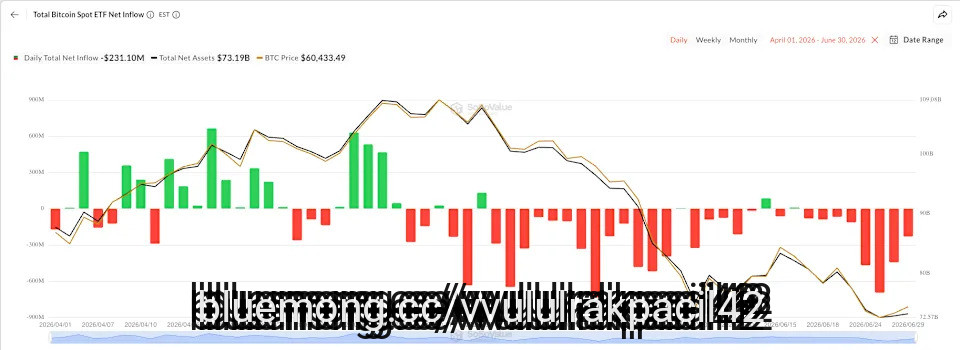
Investors added $191.3 billion to US-listed ETFs in July, pushing year-to-date inflows toward $1.3 trillion.
The AI trade stayed volatile through the month, but the broader stock market held near all-time highs. Bonds went the other way, with the 30-year Treasury yield climbing to a 19-year high.
By category, US equity ETFs led the way with $75 billion of inflows. International equity ETFs followed with almost $46 billion, then US fixed income with more than $39 billion. Leveraged ETFs took in $10.5 billion, and alternatives gathered $6.3 billion.
At the individual fund level, the usual broad-market suspects sat at the top. The Vanguard S&P 500 ETF (VOO) picked up nearly $20 billion, followed by the SPDR S&P 500 ETF Trust (SPY) with $14 billion and the SPDR Portfolio S&P 500 ETF (SPYM) with more than $8 billion.
Outside of the big broad-market US funds, AI-fueled ETFs dominated. The iShares Semiconductor ETF (SOXX) picked up $6.9 billion, the Direxion Daily Semiconductor Bull 3X Shares (SOXL) added $6.9 billion, the Roundhill Memory ETF (DRAM) took in $6.2 billion, the iShares MSCI South Korea ETF (EWY) gathered $4.8 billion, and the VanEck Semiconductor ETF (SMH) brought in $4.5 billion.
#semiconductor #market #spdr #inflows
The AI trade stayed volatile through the month, but the broader stock market held near all-time highs. Bonds went the other way, with the 30-year Treasury yield climbing to a 19-year high.
By category, US equity ETFs led the way with $75 billion of inflows. International equity ETFs followed with almost $46 billion, then US fixed income with more than $39 billion. Leveraged ETFs took in $10.5 billion, and alternatives gathered $6.3 billion.
At the individual fund level, the usual broad-market suspects sat at the top. The Vanguard S&P 500 ETF (VOO) picked up nearly $20 billion, followed by the SPDR S&P 500 ETF Trust (SPY) with $14 billion and the SPDR Portfolio S&P 500 ETF (SPYM) with more than $8 billion.
Outside of the big broad-market US funds, AI-fueled ETFs dominated. The iShares Semiconductor ETF (SOXX) picked up $6.9 billion, the Direxion Daily Semiconductor Bull 3X Shares (SOXL) added $6.9 billion, the Roundhill Memory ETF (DRAM) took in $6.2 billion, the iShares MSCI South Korea ETF (EWY) gathered $4.8 billion, and the VanEck Semiconductor ETF (SMH) brought in $4.5 billion.
#semiconductor #market #spdr #inflows


10 days ago
(Table below reflects daily flows on July 31, 2026 and ***** et totals as of that date.)
ETF Brand League Table
Welcome to the etf.com league table. On this page, you'll find the U.S. ETF market through different lenses: brand and issuer. What's the difference? The brand is what the ETF says on the tin. For example, "iShares" is the brand of issuer "BlackRock's" ETFs. Because many issuers license their ETF infrastructure to third parties, we present the data in both ways. The identification of the correct brand and legal issuer is done by our key data provider, FactSet.
Brand
AUM ($, mm)
#league #welcome #factset #below
ETF Brand League Table
Welcome to the etf.com league table. On this page, you'll find the U.S. ETF market through different lenses: brand and issuer. What's the difference? The brand is what the ETF says on the tin. For example, "iShares" is the brand of issuer "BlackRock's" ETFs. Because many issuers license their ETF infrastructure to third parties, we present the data in both ways. The identification of the correct brand and legal issuer is done by our key data provider, FactSet.
Brand
AUM ($, mm)
#league #welcome #factset #below


12 days ago
Fidelity MSCI Health Care Index ETF (NYSEMKT:FHLC) offers a significantly lower expense ratio and broader diversification than the iShares U.S. Healthcare ETF (NYSEMKT:IYH), while both hold similar blue-chip positions.
These two exchange-traded funds provide targeted exposure to the U.S. healthcare sector, covering industries from pharmaceutical giants to biotechnology firms. Both the Fidelity and iShares funds maintain significant ******* ets under management (AUM), but their differences in fee structures and portfolio depth may influence which vehicle better suits an investor's goals.
Metric
IYH
FHLC
#msci #care
These two exchange-traded funds provide targeted exposure to the U.S. healthcare sector, covering industries from pharmaceutical giants to biotechnology firms. Both the Fidelity and iShares funds maintain significant ******* ets under management (AUM), but their differences in fee structures and portfolio depth may influence which vehicle better suits an investor's goals.
Metric
IYH
FHLC
#msci #care

12 days ago
iShares Gold Trust (NYSEMKT:IAU) offers lower ongoing costs and historically lower volatility, while iShares Silver Trust (NYSEMKT:SLV) provides exposure to a more volatile metal that has recently delivered stronger price appreciation.
Precious metals are often viewed as safe haven ***** ets or as hedges against broader market volatility. Unlike mining stocks, which carry operational risks, the iShares Silver Trust and the iShares Gold Trust aim to track the spot price of the metal itself. This comparison looks at how the costs and historical price swings of these two popular metals differ for long-term holders, particularly since silver is often more volatile than gold.
Metric
SLV
IAU
#trust #price
Precious metals are often viewed as safe haven ***** ets or as hedges against broader market volatility. Unlike mining stocks, which carry operational risks, the iShares Silver Trust and the iShares Gold Trust aim to track the spot price of the metal itself. This comparison looks at how the costs and historical price swings of these two popular metals differ for long-term holders, particularly since silver is often more volatile than gold.
Metric
SLV
IAU
#trust #price

12 days ago
The rout in artificial intelligence (AI)-related stocks is ongoing.
Stocks of companies that provide major inputs into AI data centers have all fallen far from recent highs. That includes memory chip stocks such as Micron Technology and Intel, copper stocks such as Global X Copper Miners ETF, silver stocks such as iShares Silver Trust, and construction stocks such as Caterpillar.
Missed Nvidia in 2009? This Rare Signal Is Flashing Again. In 2009, a "Double Down" signal flashed for a little-known chipmaker called Nvidia. For the first time in years, that same "Total Conviction" signal is flashing for a company 1/100th the size of Nvidia. Continue »
In recent months, investors have been dumping those stocks and many others like them as they began to question the unprecedented AI spending by companies like Meta Platforms and Alphabet and the potential returns.
Shares of companies involved in AI infrastructure fell by an average of nearly 7% in July.
#signal #copper #silver #like
Stocks of companies that provide major inputs into AI data centers have all fallen far from recent highs. That includes memory chip stocks such as Micron Technology and Intel, copper stocks such as Global X Copper Miners ETF, silver stocks such as iShares Silver Trust, and construction stocks such as Caterpillar.
Missed Nvidia in 2009? This Rare Signal Is Flashing Again. In 2009, a "Double Down" signal flashed for a little-known chipmaker called Nvidia. For the first time in years, that same "Total Conviction" signal is flashing for a company 1/100th the size of Nvidia. Continue »
In recent months, investors have been dumping those stocks and many others like them as they began to question the unprecedented AI spending by companies like Meta Platforms and Alphabet and the potential returns.
Shares of companies involved in AI infrastructure fell by an average of nearly 7% in July.
#signal #copper #silver #like

13 days ago
VTI's 229% 10-year return powers long-term growth, while JEPQ delivers monthly income from covered calls before Social Security begins.
Parking 1 to 3 years of planned withdrawals in SGOV's short Treasury bills keeps cash accessible without forcing equity sales during downturns.
Are you ahead, or behind on retirement? SmartAsset's free tool can match you with a financial advisor in minutes to help you answer that today. Each advisor has been carefully vetted, and must act in your best interests. Don't waste another minute; learn more here.
You just hit age 59 1/2, and the 10% early withdrawal penalty on your 401(k) quietly evaporated overnight. The money is finally yours to touch without a tax slap. You now get to decide, deliberately, how to position the piece you might actually use in the next decade. Four funds do most of the heavy lifting for this exact moment: Vanguard Total Stock Market ETF (NYSEARCA:VTI), Vanguard Dividend Appreciation ETF (NYSEARCA:VIG), JPMorgan Nasdaq Equity Premium Income ETF (NASDAQ:JEPQ), and the iShares 0-3 Month Treasury Bond ETF (NYSEARCA:SGOV).
The benefit is emotional as much as financial. You may not be ready to retire, but you now have greater flexibility than you did a month ago. The danger is treating that newfound access as permission to take unnecessary risks.
#nysearca #vanguard #income
Parking 1 to 3 years of planned withdrawals in SGOV's short Treasury bills keeps cash accessible without forcing equity sales during downturns.
Are you ahead, or behind on retirement? SmartAsset's free tool can match you with a financial advisor in minutes to help you answer that today. Each advisor has been carefully vetted, and must act in your best interests. Don't waste another minute; learn more here.
You just hit age 59 1/2, and the 10% early withdrawal penalty on your 401(k) quietly evaporated overnight. The money is finally yours to touch without a tax slap. You now get to decide, deliberately, how to position the piece you might actually use in the next decade. Four funds do most of the heavy lifting for this exact moment: Vanguard Total Stock Market ETF (NYSEARCA:VTI), Vanguard Dividend Appreciation ETF (NYSEARCA:VIG), JPMorgan Nasdaq Equity Premium Income ETF (NASDAQ:JEPQ), and the iShares 0-3 Month Treasury Bond ETF (NYSEARCA:SGOV).
The benefit is emotional as much as financial. You may not be ready to retire, but you now have greater flexibility than you did a month ago. The danger is treating that newfound access as permission to take unnecessary risks.
#nysearca #vanguard #income


13 days ago
TLTW and LQDW generate over 12% annual distribution yields monthly by selling covered calls against iShares Treasury and investment-grade bond ETFs.
Treasury yields near 5% and elevated rate volatility produce richer option premiums, directly fueling these funds' double-digit monthly payouts.
HYGW posted the strongest 12-month total return of the three at about 6%, but faces the sharpest downside if recession-driven default rates rise.
Act now: the **** yst who called NVIDIA in 2010 just named his top 10 AI stocks — and HYGW didn't make the cut. Grab the names FREE today.
Three little-known exchange-traded funds from BlackRock's iShares lineup distribute double-digit annual yields to shareholders monthly. The iShares 20+ Year Treasury Bond BuyWrite Strategy ETF (BATS:TLTW), the iShares Investment Grade Corporate Bond BuyWrite Strategy ETF (BATS:LQDW), and the iShares High Yield Corporate Bond BuyWrite Strategy ETF (BATS:HYGW) pair familiar iShares bond funds with covered call overlays that convert option premiums into monthly cash.
#treasury #buywrite
Treasury yields near 5% and elevated rate volatility produce richer option premiums, directly fueling these funds' double-digit monthly payouts.
HYGW posted the strongest 12-month total return of the three at about 6%, but faces the sharpest downside if recession-driven default rates rise.
Act now: the **** yst who called NVIDIA in 2010 just named his top 10 AI stocks — and HYGW didn't make the cut. Grab the names FREE today.
Three little-known exchange-traded funds from BlackRock's iShares lineup distribute double-digit annual yields to shareholders monthly. The iShares 20+ Year Treasury Bond BuyWrite Strategy ETF (BATS:TLTW), the iShares Investment Grade Corporate Bond BuyWrite Strategy ETF (BATS:LQDW), and the iShares High Yield Corporate Bond BuyWrite Strategy ETF (BATS:HYGW) pair familiar iShares bond funds with covered call overlays that convert option premiums into monthly cash.
#treasury #buywrite


15 days ago
The semiconductor sell-off has punished investors across the board. Leverage has made the damage far harder to recover from.
The iShares Semiconductor ETF (SOXX) has fallen roughly 25% from its June 22 peak while the Direxion Daily Semiconductor Bull 3X Shares (SOXL), a leveraged ETF, has plunged nearly two-thirds over the same stretch.
The latest slide is part of a chip-stock crash that the rest of the market has largely absorbed.
The leverage unwind intensified overnight after SK Hynix (SKHY) reported earnings, sending South Korea's Kospi (^KS11) down as much as 13% before dip buyers cut the loss to 6%. Goldman Sachs traders still saw buyers stepping into memory stocks, suggesting the rout remains disorderly rather than capitulatory, even as the sell-off triggered a record wave of trading halts.
It would be easy to ******* ume that SOXL should be down three times the SOXX loss of 25%, or 75%. SOXL did not malfunction. The fund is designed to deliver three times the daily return of the NYSE Semiconductor Index.
#down
The iShares Semiconductor ETF (SOXX) has fallen roughly 25% from its June 22 peak while the Direxion Daily Semiconductor Bull 3X Shares (SOXL), a leveraged ETF, has plunged nearly two-thirds over the same stretch.
The latest slide is part of a chip-stock crash that the rest of the market has largely absorbed.
The leverage unwind intensified overnight after SK Hynix (SKHY) reported earnings, sending South Korea's Kospi (^KS11) down as much as 13% before dip buyers cut the loss to 6%. Goldman Sachs traders still saw buyers stepping into memory stocks, suggesting the rout remains disorderly rather than capitulatory, even as the sell-off triggered a record wave of trading halts.
It would be easy to ******* ume that SOXL should be down three times the SOXX loss of 25%, or 75%. SOXL did not malfunction. The fund is designed to deliver three times the daily return of the NYSE Semiconductor Index.
#down



15 days ago
The iShares Expanded Tech-Software ETF (NYSEMKT: IGV) is an exchange-traded fund (ETF) that holds over 100 different software stocks, including industry leaders like Palantir Technologies, Microsoft, and Salesforce. The ETF has suffered a decline of 11% this year amid concerns that artificial intelligence (AI) could disrupt the legacy software-as-a-service (SaaS) business model.
The potential risks are twofold. First, some investors think AI will shrink the global workforce, thus reducing the revenue of SaaS companies that charge customers on a per-user basis. Second, some investors fear AI-powered programming tools like Claude Code will allow businesses to create their own versions of popular software products, rendering legacy vendors obsolete.
Missed Nvidia in 2009? This Rare Signal Is Flashing Again. In 2009, a "Double Down" signal flashed for a little-known chipmaker called Nvidia. For the first time in years, that same "Total Conviction" signal is flashing for a company 1/100th the size of Nvidia. Continue »
But the AI boom has recently run into trouble. Wall Street is questioning the sustainability of the data center infrastructure spending boom because the sheer cost of chips and other components is making AI models too expensive to deploy at scale in many cases. Here's why that could be good news for the iShares Expanded Tech-Software ETF.
Some of America's top suppliers of AI data center chips have lost a substantial amount of value over the last few weeks. Nvidia stock is down 16% from its high, while Advanced Micro Devices stock has declined 21%, and Micron Technology stock has plummeted 33%.
#NVIDIA #Stock #down
The potential risks are twofold. First, some investors think AI will shrink the global workforce, thus reducing the revenue of SaaS companies that charge customers on a per-user basis. Second, some investors fear AI-powered programming tools like Claude Code will allow businesses to create their own versions of popular software products, rendering legacy vendors obsolete.
Missed Nvidia in 2009? This Rare Signal Is Flashing Again. In 2009, a "Double Down" signal flashed for a little-known chipmaker called Nvidia. For the first time in years, that same "Total Conviction" signal is flashing for a company 1/100th the size of Nvidia. Continue »
But the AI boom has recently run into trouble. Wall Street is questioning the sustainability of the data center infrastructure spending boom because the sheer cost of chips and other components is making AI models too expensive to deploy at scale in many cases. Here's why that could be good news for the iShares Expanded Tech-Software ETF.
Some of America's top suppliers of AI data center chips have lost a substantial amount of value over the last few weeks. Nvidia stock is down 16% from its high, while Advanced Micro Devices stock has declined 21%, and Micron Technology stock has plummeted 33%.
#NVIDIA #Stock #down


16 days ago
(Table below reflects daily flows on July 27, 2026 and ***** et totals as of that date.)
ETF Brand League Table
Welcome to the etf.com league table. On this page, you'll find the U.S. ETF market through different lenses: brand and issuer. What's the difference? The brand is what the ETF says on the tin. For example, "iShares" is the brand of issuer "BlackRock's" ETFs. Because many issuers license their ETF infrastructure to third parties, we present the data in both ways. The identification of the correct brand and legal issuer is done by our key data provider, FactSet.
Brand
AUM ($, mm)
#issuer
ETF Brand League Table
Welcome to the etf.com league table. On this page, you'll find the U.S. ETF market through different lenses: brand and issuer. What's the difference? The brand is what the ETF says on the tin. For example, "iShares" is the brand of issuer "BlackRock's" ETFs. Because many issuers license their ETF infrastructure to third parties, we present the data in both ways. The identification of the correct brand and legal issuer is done by our key data provider, FactSet.
Brand
AUM ($, mm)
#issuer


16 days ago
O'Keeffe Stevens Advisory, an investment advisory firm, released its second-quarter 2026 investor letter. A copy of the letter can be downloaded here. During Q2 2026, the market experienced notable dispersion between perceived AI losers and winners. The firm has made investments early in AI infrastructure companies, which yielded gains during market repricing. The second quarter experienced strong equity rallies, with the S&P 500 gaining 15.2% and the Nasdaq 21.4%, marking the best quarter since Q2 2020. While the software sector faced challenges, with the iShares Software ETF dropping ~27% before a rally, reflecting high volatility. This volatility is seen as an opportunity, despite the potential for 'dead money' in underperforming stocks. The firm remains cautious, focuses on owning durable businesses at reasonable prices, holding cash, and hedging risks to navigate unpredictability. In addition, please check the Strategy's top five holdings to know its best picks in 2026.
In its Q2 2026 investor letter, O'Keeffe Stevens Advisory highlighted Warrior Met Coal, Inc. (NYSE:HCC). Warrior Met Coal, Inc. (NYSE:HCC) is a non-thermal metallurgical coal producer. On July 27, 2026, Warrior Met Coal, Inc. (NYSE:HCC) stock closed at $80.66 per share. One-month return of Warrior Met Coal, Inc. (NYSE:HCC) was -0.62%, and its shares gained 52.30% over the past 52 weeks. Warrior Met Coal, Inc. (NYSE:HCC) has a market capitalization of $4.26 billion.
O'Keeffe Stevens Advisory stated the following regarding Warrior Met Coal, Inc. (NYSE:HCC) in its Q2 2026 investor update:
"Warrior Met Coal, Inc. (NYSE:HCC): Unsurprisingly, a commodity-producing company's stock experienced Signiant volatility during the quarter. Had the quarter ended one month prior, it's possible we would have been talking about Warrior as a top performer during the quarter. On May 23, 2026, a gas explosion at a coal mine in Shanxi province killed 82 workers, making it China's deadliest coal mining accident since at least 2009. The blast occurred at the privately owned Liushenyu mine in the coal-belt region of Shanxi, and a deadly gas explosion occurred at the Liushenyu Coal Mine in Qinyuan county with 247 workers underground; all four coal mines under Tongzhou Group suspended operations following the incident, driving met coal prices higher. Blue Creek remains the next leg of the story. Increasing production and sales volume at this mine should drive revenue and EPS growth, even in the face of an overall weaker met coal pricing environment."
#coal #stevens #firm
In its Q2 2026 investor letter, O'Keeffe Stevens Advisory highlighted Warrior Met Coal, Inc. (NYSE:HCC). Warrior Met Coal, Inc. (NYSE:HCC) is a non-thermal metallurgical coal producer. On July 27, 2026, Warrior Met Coal, Inc. (NYSE:HCC) stock closed at $80.66 per share. One-month return of Warrior Met Coal, Inc. (NYSE:HCC) was -0.62%, and its shares gained 52.30% over the past 52 weeks. Warrior Met Coal, Inc. (NYSE:HCC) has a market capitalization of $4.26 billion.
O'Keeffe Stevens Advisory stated the following regarding Warrior Met Coal, Inc. (NYSE:HCC) in its Q2 2026 investor update:
"Warrior Met Coal, Inc. (NYSE:HCC): Unsurprisingly, a commodity-producing company's stock experienced Signiant volatility during the quarter. Had the quarter ended one month prior, it's possible we would have been talking about Warrior as a top performer during the quarter. On May 23, 2026, a gas explosion at a coal mine in Shanxi province killed 82 workers, making it China's deadliest coal mining accident since at least 2009. The blast occurred at the privately owned Liushenyu mine in the coal-belt region of Shanxi, and a deadly gas explosion occurred at the Liushenyu Coal Mine in Qinyuan county with 247 workers underground; all four coal mines under Tongzhou Group suspended operations following the incident, driving met coal prices higher. Blue Creek remains the next leg of the story. Increasing production and sales volume at this mine should drive revenue and EPS growth, even in the face of an overall weaker met coal pricing environment."
#coal #stevens #firm

16 days ago
O'Keeffe Stevens Advisory, an investment advisory firm, released its second-quarter 2026 investor letter. A copy of the letter can be downloaded here. During Q2 2026, the market experienced notable dispersion between perceived AI losers and winners. The firm has made investments early in AI infrastructure companies, which yielded gains during market repricing. The second quarter experienced strong equity rallies, with the S&P 500 gaining 15.2% and the Nasdaq 21.4%, marking the best quarter since Q2 2020. While the software sector faced challenges, with the iShares Software ETF dropping ~27% before a rally, reflecting high volatility. This volatility is seen as an opportunity, despite the potential for 'dead money' in underperforming stocks. The firm remains cautious, focuses on owning durable businesses at reasonable prices, holding cash, and hedging risks to navigate unpredictability. In addition, please check the Strategy's top five holdings to know its best picks in 2026.
In its Q2 2026 investor letter, O'Keeffe Stevens Advisory highlighted Callaway Golf Company (NYSE:CALY). Callaway Golf Company (NYSE:CALY) is a global manufacturer of golf equipment, golf and lifestyle apparel, and other accessories. On July 27, 2026, Callaway Golf Company (NYSE:CALY) closed at $18.27 per share, reflecting a market capitalization of $3.28 billion. Callaway Golf Company (NYSE:CALY) posted a one-month return of -2.77%, while its shares gained 89.72% over the past 52 weeks.
O'Keeffe Stevens Advisory stated the following regarding Callaway Golf Company (NYSE:CALY) in its Q2 2026 investor update:
"Callaway Golf Company (NYSE:CALY): Post the announced sale of their TopGolf business, the next catalyst to the story is demonstrating the clean, high-quality business of the remaining club, ball, and apparel business. Q1 net sales rose 9.2% to $687.5m, adjusted EBITDA climbed 31.1% to $163.7 million, and non-GAAP net income from continuing operations increased 96%, with gross margin up roughly 260 basis points, absorbing about $18m of incremental tariX expense. Management raised its full-year outlook, and the summer thus far has been a net positive for the golf industry. On capital return, through April 30, Callaway repurchased 5.6 million shares at an average cost of $14.08 ($79 million of the $200 million authorization), and on May 1 the company settled its $258 million of convertible notes in cash and remains in a net cash position. Our thesis continues to play out, and while the stock has materially appreciated, we still see upside to numbers. Management is acting exactly as expected, reducing debt, returning capital a complex-to-simple story easy for all to understand better."
#golf #caly #o 'keeffe #stevens
In its Q2 2026 investor letter, O'Keeffe Stevens Advisory highlighted Callaway Golf Company (NYSE:CALY). Callaway Golf Company (NYSE:CALY) is a global manufacturer of golf equipment, golf and lifestyle apparel, and other accessories. On July 27, 2026, Callaway Golf Company (NYSE:CALY) closed at $18.27 per share, reflecting a market capitalization of $3.28 billion. Callaway Golf Company (NYSE:CALY) posted a one-month return of -2.77%, while its shares gained 89.72% over the past 52 weeks.
O'Keeffe Stevens Advisory stated the following regarding Callaway Golf Company (NYSE:CALY) in its Q2 2026 investor update:
"Callaway Golf Company (NYSE:CALY): Post the announced sale of their TopGolf business, the next catalyst to the story is demonstrating the clean, high-quality business of the remaining club, ball, and apparel business. Q1 net sales rose 9.2% to $687.5m, adjusted EBITDA climbed 31.1% to $163.7 million, and non-GAAP net income from continuing operations increased 96%, with gross margin up roughly 260 basis points, absorbing about $18m of incremental tariX expense. Management raised its full-year outlook, and the summer thus far has been a net positive for the golf industry. On capital return, through April 30, Callaway repurchased 5.6 million shares at an average cost of $14.08 ($79 million of the $200 million authorization), and on May 1 the company settled its $258 million of convertible notes in cash and remains in a net cash position. Our thesis continues to play out, and while the stock has materially appreciated, we still see upside to numbers. Management is acting exactly as expected, reducing debt, returning capital a complex-to-simple story easy for all to understand better."
#golf #caly #o 'keeffe #stevens


16 days ago
O'Keeffe Stevens Advisory, an investment advisory firm, released its second-quarter 2026 investor letter. A copy of the letter can be downloaded here. During Q2 2026, the market experienced notable dispersion between perceived AI losers and winners. The firm has made investments early in AI infrastructure companies, which yielded gains during market repricing. The second quarter experienced strong equity rallies, with the S&P 500 gaining 15.2% and the Nasdaq 21.4%, marking the best quarter since Q2 2020. While the software sector faced challenges, with the iShares Software ETF dropping ~27% before a rally, reflecting high volatility. This volatility is seen as an opportunity, despite the potential for 'dead money' in underperforming stocks. The firm remains cautious, focuses on owning durable businesses at reasonable prices, holding cash, and hedging risks to navigate unpredictability. In addition, please check the Strategy's top five holdings to know its best picks in 2026.
In its Q2 2026 investor letter, O'Keeffe Stevens Advisory highlighted Sphere Entertainment Co. (NYSE:SPHR). Sphere Entertainment Co. (NYSE:SPHR) is a US-based live entertainment and media company. On July 27, 2026, Sphere Entertainment Co. (NYSE:SPHR) closed at $139.95 per share, reflecting a market capitalization of $5.01 billion. Sphere Entertainment Co. (NYSE:SPHR) posted a one-month return of -19.12%, while its shares gained 227.98% over the past 52 weeks.
O'Keeffe Stevens Advisory stated the following regarding Sphere Entertainment Co. (NYSE:SPHR) in its Q2 2026 investor update:
"During the quarter, Sphere Entertainment Co. (NYSE:SPHR) continued its strong performance as the market realizes the strong underlying unit economics, in the face of weaker Las Vegas Strip attendance. Continued success in Vegas makes selling future Spheres easier. Sphere Abu Dhabi remains on track, which, given the ongoing war, was a concern. Finally, Sphere announced a new immersive experience, "Rocky Horror Picture," which should add incremental, high-margin shows to the slate, increasing utilization. While the Sphere story has largely played out (at least episode 1), we are inclined to let an N=1 ***** et the leeway to become a large position even though the valuation is much diXerent today. Great ***** ets and management teams oVen have longer right tails than one may initially underwrite. While most believe Vegas is forever in decline, visitation trends were positive y/y in May and represented the 3rd month of the year with positive y/y growth. Visitation and comps are substantially easier, concerts continue to perform well, and new Qlms should drive visitation and revisitation at strong rates, even with The Wizard of Oz coming up to its Qrst anniversary. While the Sphere show slate is nearing the optimal/maximum number of shows per year, the exosphere is an incremental high-margin opportunity that will become an important revenue driver."
#NYSE #sphr #stevens
In its Q2 2026 investor letter, O'Keeffe Stevens Advisory highlighted Sphere Entertainment Co. (NYSE:SPHR). Sphere Entertainment Co. (NYSE:SPHR) is a US-based live entertainment and media company. On July 27, 2026, Sphere Entertainment Co. (NYSE:SPHR) closed at $139.95 per share, reflecting a market capitalization of $5.01 billion. Sphere Entertainment Co. (NYSE:SPHR) posted a one-month return of -19.12%, while its shares gained 227.98% over the past 52 weeks.
O'Keeffe Stevens Advisory stated the following regarding Sphere Entertainment Co. (NYSE:SPHR) in its Q2 2026 investor update:
"During the quarter, Sphere Entertainment Co. (NYSE:SPHR) continued its strong performance as the market realizes the strong underlying unit economics, in the face of weaker Las Vegas Strip attendance. Continued success in Vegas makes selling future Spheres easier. Sphere Abu Dhabi remains on track, which, given the ongoing war, was a concern. Finally, Sphere announced a new immersive experience, "Rocky Horror Picture," which should add incremental, high-margin shows to the slate, increasing utilization. While the Sphere story has largely played out (at least episode 1), we are inclined to let an N=1 ***** et the leeway to become a large position even though the valuation is much diXerent today. Great ***** ets and management teams oVen have longer right tails than one may initially underwrite. While most believe Vegas is forever in decline, visitation trends were positive y/y in May and represented the 3rd month of the year with positive y/y growth. Visitation and comps are substantially easier, concerts continue to perform well, and new Qlms should drive visitation and revisitation at strong rates, even with The Wizard of Oz coming up to its Qrst anniversary. While the Sphere show slate is nearing the optimal/maximum number of shows per year, the exosphere is an incremental high-margin opportunity that will become an important revenue driver."
#NYSE #sphr #stevens
16 days ago
O'Keeffe Stevens Advisory, an investment advisory firm, released its second-quarter 2026 investor letter. A copy of the letter can be downloaded here. During Q2 2026, the market experienced notable dispersion between perceived AI losers and winners. The firm has made investments early in AI infrastructure companies, which yielded gains during market repricing. The second quarter experienced strong equity rallies, with the S&P 500 gaining 15.2% and the Nasdaq 21.4%, marking the best quarter since Q2 2020. While the software sector faced challenges, with the iShares Software ETF dropping ~27% before a rally, reflecting high volatility. This volatility is seen as an opportunity, despite the potential for 'dead money' in underperforming stocks. The firm remains cautious, focuses on owning durable businesses at reasonable prices, holding cash, and hedging risks to navigate unpredictability. In addition, please check the Strategy's top five holdings to know its best picks in 2026.
In its Q2 2026 investor letter, O'Keeffe Stevens Advisory highlighted Corning Incorporated (NYSE:GLW). Corning Incorporated (NYSE:GLW) is a technology company that operates through its Optical Communication, Display Technologies, Environmental Technologies, Specialty Materials, and Life Sciences business segments. On July 27, 2026, Corning Incorporated (NYSE:GLW) closed at $143.36 per share. One-month return of Corning Incorporated (NYSE:GLW) was -43.88%, and its shares gained 131.30% over the past 52 weeks. Corning Incorporated (NYSE:GLW) has a market capitalization of $123.38 billion.
O'Keeffe Stevens Advisory stated the following regarding Corning Incorporated (NYSE:GLW) in its Q2 2026 investor update:
"Qualcomm and Corning Incorporated (NYSE:GLW) both appreciated materially in Q2. We trimmed both positions using a combination of options and stock sales.
Corning appreciated over 20% in Q2. Corning spent the second quarter signing up the biggest names in AI as customers and partners. In May, Nvidia and Corning announced a multiyear commercial and technology partnership under which Corning will increase its U.S. optical connectivity manufacturing capacity tenfold and expand U.S. Fiber production by more than 50%, including three new plants in North Carolina and Texas. Nvidia paid $500 million for rights to Corning shares, including warrants on up to 15 million shares at a $180 exercise price; if exercised in full, Nvidia's total equity investment could reach $3.2 billion. In June, Amazon signed a multiyear, multibillion-dollar agreement for Corning to supply the optical Fiber, cable, and connectivity for its expanding U.S. data centers. These follow the up to $6 billion supply agreement Meta signed in January. Historically, data centers used copper cables to connect their technology, some of which is switching to Fiber. Corning's Fiber may be a future bottleneck. As legacy data centers convert to newer, Fiber-connected racks, Corning contends with new data centers demand
In its Q2 2026 investor letter, O'Keeffe Stevens Advisory highlighted Corning Incorporated (NYSE:GLW). Corning Incorporated (NYSE:GLW) is a technology company that operates through its Optical Communication, Display Technologies, Environmental Technologies, Specialty Materials, and Life Sciences business segments. On July 27, 2026, Corning Incorporated (NYSE:GLW) closed at $143.36 per share. One-month return of Corning Incorporated (NYSE:GLW) was -43.88%, and its shares gained 131.30% over the past 52 weeks. Corning Incorporated (NYSE:GLW) has a market capitalization of $123.38 billion.
O'Keeffe Stevens Advisory stated the following regarding Corning Incorporated (NYSE:GLW) in its Q2 2026 investor update:
"Qualcomm and Corning Incorporated (NYSE:GLW) both appreciated materially in Q2. We trimmed both positions using a combination of options and stock sales.
Corning appreciated over 20% in Q2. Corning spent the second quarter signing up the biggest names in AI as customers and partners. In May, Nvidia and Corning announced a multiyear commercial and technology partnership under which Corning will increase its U.S. optical connectivity manufacturing capacity tenfold and expand U.S. Fiber production by more than 50%, including three new plants in North Carolina and Texas. Nvidia paid $500 million for rights to Corning shares, including warrants on up to 15 million shares at a $180 exercise price; if exercised in full, Nvidia's total equity investment could reach $3.2 billion. In June, Amazon signed a multiyear, multibillion-dollar agreement for Corning to supply the optical Fiber, cable, and connectivity for its expanding U.S. data centers. These follow the up to $6 billion supply agreement Meta signed in January. Historically, data centers used copper cables to connect their technology, some of which is switching to Fiber. Corning's Fiber may be a future bottleneck. As legacy data centers convert to newer, Fiber-connected racks, Corning contends with new data centers demand

16 days ago
O'Keeffe Stevens Advisory, an investment advisory firm, released its second-quarter 2026 investor letter. A copy of the letter can be downloaded here. During Q2 2026, the market experienced notable dispersion between perceived AI losers and winners. The firm has made investments early in AI infrastructure companies, which yielded gains during market repricing. The second quarter experienced strong equity rallies, with the S&P 500 gaining 15.2% and the Nasdaq 21.4%, marking the best quarter since Q2 2020. While the software sector faced challenges, with the iShares Software ETF dropping ~27% before a rally, reflecting high volatility. This volatility is seen as an opportunity, despite the potential for 'dead money' in underperforming stocks. The firm remains cautious, focuses on owning durable businesses at reasonable prices, holding cash, and hedging risks to navigate unpredictability. In addition, please check the Strategy's top five holdings to know its best picks in 2026.
In its Q2 2026 investor letter, O'Keeffe Stevens Advisory highlighted QUALCOMM Incorporated (NASDAQ:QCOM). QUALCOMM Incorporated (NASDAQ:QCOM) is a semiconductor and communication technology company focusing on the development and commercialization of foundational technologies for the wireless industry. On July 27, 2026, QUALCOMM Incorporated (NASDAQ:QCOM) closed at $170.04 per share. One-month return of QUALCOMM Incorporated (NASDAQ:QCOM) was -7.98%, and its shares gained 4.91% over the past 52 weeks. QUALCOMM Incorporated (NASDAQ:QCOM) has a market capitalization of $179.22 billion.
O'Keeffe Stevens Advisory stated the following regarding QUALCOMM Incorporated (NASDAQ:QCOM) in its Q2 2026 investor update:
"QUALCOMM Incorporated (NASDAQ:QCOM) and Corning both appreciated materially in Q2. We trimmed both positions using a combination of options and stock sales.
Qualcomm faced a long-standing structural challenge: customer concentration in Apple, which is internally developing its own modem and transitioning away from Qualcomm silicon. Qualcomm hosted an investor day in June, with all eyes focused on their AI and datacenter strategy. Qualcomm has long been seen as a loser in AI stemming from higher memory prices driving down phone demand, and in turn QCOM's handset business. Qualcomm's diversiQcation strategy continues to play out. At the investor day, Qualcomm doubled its Qscal 2029 non-handset revenue goal to $40 billion, liVed its automotive revenue target to $10 billion, and struck a deal with Meta to supply data center CPUs for AI infrastructure, with production of its Dragonby C1000 slated for 2028. We trimmed due to the position becoming oversized in the portfolio, and risk/reward was no longer as attractive."
#qcom
In its Q2 2026 investor letter, O'Keeffe Stevens Advisory highlighted QUALCOMM Incorporated (NASDAQ:QCOM). QUALCOMM Incorporated (NASDAQ:QCOM) is a semiconductor and communication technology company focusing on the development and commercialization of foundational technologies for the wireless industry. On July 27, 2026, QUALCOMM Incorporated (NASDAQ:QCOM) closed at $170.04 per share. One-month return of QUALCOMM Incorporated (NASDAQ:QCOM) was -7.98%, and its shares gained 4.91% over the past 52 weeks. QUALCOMM Incorporated (NASDAQ:QCOM) has a market capitalization of $179.22 billion.
O'Keeffe Stevens Advisory stated the following regarding QUALCOMM Incorporated (NASDAQ:QCOM) in its Q2 2026 investor update:
"QUALCOMM Incorporated (NASDAQ:QCOM) and Corning both appreciated materially in Q2. We trimmed both positions using a combination of options and stock sales.
Qualcomm faced a long-standing structural challenge: customer concentration in Apple, which is internally developing its own modem and transitioning away from Qualcomm silicon. Qualcomm hosted an investor day in June, with all eyes focused on their AI and datacenter strategy. Qualcomm has long been seen as a loser in AI stemming from higher memory prices driving down phone demand, and in turn QCOM's handset business. Qualcomm's diversiQcation strategy continues to play out. At the investor day, Qualcomm doubled its Qscal 2029 non-handset revenue goal to $40 billion, liVed its automotive revenue target to $10 billion, and struck a deal with Meta to supply data center CPUs for AI infrastructure, with production of its Dragonby C1000 slated for 2028. We trimmed due to the position becoming oversized in the portfolio, and risk/reward was no longer as attractive."
#qcom


16 days ago
O'Keeffe Stevens Advisory, an investment advisory firm, released its second-quarter 2026 investor letter. A copy of the letter can be downloaded here. During Q2 2026, the market experienced notable dispersion between perceived AI losers and winners. The firm has made investments early in AI infrastructure companies, which yielded gains during market repricing. The second quarter experienced strong equity rallies, with the S&P 500 gaining 15.2% and the Nasdaq 21.4%, marking the best quarter since Q2 2020. While the software sector faced challenges, with the iShares Software ETF dropping ~27% before a rally, reflecting high volatility. This volatility is seen as an opportunity, despite the potential for 'dead money' in underperforming stocks. The firm remains cautious, focuses on owning durable businesses at reasonable prices, holding cash, and hedging risks to navigate unpredictability. In addition, please check the Strategy's top five holdings to know its best picks in 2026.
In its Q2 2026 investor letter, O'Keeffe Stevens Advisory highlighted Sotera Health Company (NASDAQ:SHC). Sotera Health Company (NASDAQ:SHC) is a US-based company that provides sterilization solutions, lab testing, and advisory services for the healthcare industry. On July 27, 2026, Sotera Health Company (NASDAQ:SHC) closed at $17.24 per share, reflecting a market capitalization of $4.92 billion. Sotera Health Company (NASDAQ:SHC) posted a one-month return of -2.87%, while its shares gained 42.01% over the past 52 weeks.
O'Keeffe Stevens Advisory stated the following regarding Sotera Health Company (NASDAQ:SHC) in its Q2 2026 investor update:
"Sotera Health Company (NASDAQ:SHC): We have been following Sotera Health for several years. The business is exceptional: a sterilization duopoly with Sterigenics and Steris combined controlling an estimated 70% of the sterilization market. Sotera's Sterigenics business boasts 50% EBITDA margins, mission-critical regulated services, and cobalt-60 production that is nearly impossible to replicate. Yet we never bought it because of one thing: Warburg Pincus held a material stake and was consistently selling into the market. We do not buy high quality businesses where forced sellers will pressure the stock regardless of fundamental improvement. We look for situations where forced sellers create dislocation, allowing us to buy a stock for cheaper than what it would trade for without such selling pressure. On the bip side, we look to sell into forced buyers pushing stock prices up irrespective of fundamentals. In early 2026, Warburg sold its last share. Combined with a valuation that was cheap given the quality of the business model, we thought it made sense to purchase the stock.
At their November 2024 Investor Day, management outlined a 2025-2027 plan targeting 5%-7% organic revenue growth and 5%-8% adjusted EBITDA growth, with at least 50bps of EBITDA margin expansion annually. Sterigenics represents over 60% of revenue, and we expect
In its Q2 2026 investor letter, O'Keeffe Stevens Advisory highlighted Sotera Health Company (NASDAQ:SHC). Sotera Health Company (NASDAQ:SHC) is a US-based company that provides sterilization solutions, lab testing, and advisory services for the healthcare industry. On July 27, 2026, Sotera Health Company (NASDAQ:SHC) closed at $17.24 per share, reflecting a market capitalization of $4.92 billion. Sotera Health Company (NASDAQ:SHC) posted a one-month return of -2.87%, while its shares gained 42.01% over the past 52 weeks.
O'Keeffe Stevens Advisory stated the following regarding Sotera Health Company (NASDAQ:SHC) in its Q2 2026 investor update:
"Sotera Health Company (NASDAQ:SHC): We have been following Sotera Health for several years. The business is exceptional: a sterilization duopoly with Sterigenics and Steris combined controlling an estimated 70% of the sterilization market. Sotera's Sterigenics business boasts 50% EBITDA margins, mission-critical regulated services, and cobalt-60 production that is nearly impossible to replicate. Yet we never bought it because of one thing: Warburg Pincus held a material stake and was consistently selling into the market. We do not buy high quality businesses where forced sellers will pressure the stock regardless of fundamental improvement. We look for situations where forced sellers create dislocation, allowing us to buy a stock for cheaper than what it would trade for without such selling pressure. On the bip side, we look to sell into forced buyers pushing stock prices up irrespective of fundamentals. In early 2026, Warburg sold its last share. Combined with a valuation that was cheap given the quality of the business model, we thought it made sense to purchase the stock.
At their November 2024 Investor Day, management outlined a 2025-2027 plan targeting 5%-7% organic revenue growth and 5%-8% adjusted EBITDA growth, with at least 50bps of EBITDA margin expansion annually. Sterigenics represents over 60% of revenue, and we expect

17 days ago
The Dow Jones Industrial Average climbed 659 points, or 1.3%, on Tuesday as strong earnings from Coca-Cola and Sherwin-Williams lifted blue-chip stocks while falling oil prices added support. The S&P 500 rose 0.3%, and the Nasdaq Composite finished little changed.
Sherwin-Williams stock surged 8% to pace the Dow after the paint maker topped second-quarter estimates. Coca-Cola stock climbed 5% after the beverage giant beat on both revenue and earnings and lifted its full-year guidance. Salesforce stock also gained 5%.
A broad rotation out of technology and into other sectors drove much of the day's action. The Technology Select Sector SPDR Fund hit its lowest level since May 7, while the State Street Health Care Select Sector SPDR ETF and Financials ETF surged to record highs. Consumer-staples stocks led the S&P 500 with a 2.7% gain.
The VanEck Semiconductor ETF dropped more than 3%, marking a fourth straight session of losses for chip stocks. Micron shares declined roughly 8% and AMD shed 7%. A drop of nearly 6% in the PHLX semiconductor index pushed the Nasdaq-100 into correction territory at its session low, though the index recovered to close above that threshold, according to the Wall Street Journal. Software names provided a partial cushion, as Microsoft advanced nearly 2% and the iShares Expanded Tech-Software ETF added close to 2%.
Mounting anxiety over AI spending levels and China's accelerating advances in the sector have pressured chip stocks, according to the Journal. The weakness extended across the Pacific, where South Korea's Kospi finished down 10% and ****** an's Nikkei lost 4%.
#Stock #williams
Sherwin-Williams stock surged 8% to pace the Dow after the paint maker topped second-quarter estimates. Coca-Cola stock climbed 5% after the beverage giant beat on both revenue and earnings and lifted its full-year guidance. Salesforce stock also gained 5%.
A broad rotation out of technology and into other sectors drove much of the day's action. The Technology Select Sector SPDR Fund hit its lowest level since May 7, while the State Street Health Care Select Sector SPDR ETF and Financials ETF surged to record highs. Consumer-staples stocks led the S&P 500 with a 2.7% gain.
The VanEck Semiconductor ETF dropped more than 3%, marking a fourth straight session of losses for chip stocks. Micron shares declined roughly 8% and AMD shed 7%. A drop of nearly 6% in the PHLX semiconductor index pushed the Nasdaq-100 into correction territory at its session low, though the index recovered to close above that threshold, according to the Wall Street Journal. Software names provided a partial cushion, as Microsoft advanced nearly 2% and the iShares Expanded Tech-Software ETF added close to 2%.
Mounting anxiety over AI spending levels and China's accelerating advances in the sector have pressured chip stocks, according to the Journal. The weakness extended across the Pacific, where South Korea's Kospi finished down 10% and ****** an's Nikkei lost 4%.
#Stock #williams