

5 days ago
Welltower (WELL) pays out only 52% of normalized FFO, while Ventas (VTR) raised its dividend 8% and improved leverage to a decade-low 4.4x.
Baby boomers turning 80 now number nearly 70 million, yet builders started only 1,000 new senior housing units last quarter.
Sabra's 6% yield comes with a dividend flat since 2020 and a $102 million non-cash loan loss provision recorded in Q2.
Just released. Our ***** ysts combed the entire stock market and named the ten best stocks to buy right now, and Welltower didn't make the cut. Enter your email to see the names that beat WELL. The report is free. Enter your email and see if any of your stocks made the cut.
Senior housing has one of the clearest demand stories in real estate. On its third-quarter call, Ventas (NYSE:VTR) noted that the baby boomer generation, a cohort of nearly 70 million individuals, began turning 80 this year. Builders started only 1,000 units of new senior housing in the quarter. More 80-year-olds and very few new buildings push occupancy and rents higher, but operator health, labor costs, and government reimbursement decide how much of that reaches shareholders. The four REITs below are all equity REITs that own buildings. None is a mortgage REIT. Dividend safety is measured on FFO, FAD, or AFFO coverage, the cash-flow figures REITs actually pay dividends from.
#senior #million #housing #ventas
Baby boomers turning 80 now number nearly 70 million, yet builders started only 1,000 new senior housing units last quarter.
Sabra's 6% yield comes with a dividend flat since 2020 and a $102 million non-cash loan loss provision recorded in Q2.
Just released. Our ***** ysts combed the entire stock market and named the ten best stocks to buy right now, and Welltower didn't make the cut. Enter your email to see the names that beat WELL. The report is free. Enter your email and see if any of your stocks made the cut.
Senior housing has one of the clearest demand stories in real estate. On its third-quarter call, Ventas (NYSE:VTR) noted that the baby boomer generation, a cohort of nearly 70 million individuals, began turning 80 this year. Builders started only 1,000 units of new senior housing in the quarter. More 80-year-olds and very few new buildings push occupancy and rents higher, but operator health, labor costs, and government reimbursement decide how much of that reaches shareholders. The four REITs below are all equity REITs that own buildings. None is a mortgage REIT. Dividend safety is measured on FFO, FAD, or AFFO coverage, the cash-flow figures REITs actually pay dividends from.
#senior #million #housing #ventas


28 days ago
"Hearst Magazines and Yahoo may earn commission or revenue on some items through these links."
When did we lose the art of enjoyment? These days, the average person loves a think piece—specifically, having their own and putting it out there for the world to see. It stems from this new access we have on the internet to each other. On ****** es like TikTok, Instagram, and X and Threads, we can reach beyond our narrow circles into the phones of literally anyone else. Out of this environment, we've normalized an even more extreme parasocial nature between celebrities, influencers, and each other. The new internet landscape involves users ****** yzing and critiquing anyone who chooses to try or put themselves out there, serving as amateur publicists, stylists, and brand-image architects. There's an element of this new world order that's thrilling—our opinions matter! But...what's that phrase about opinions again?
I'd argue that we've critiqued ourselves into mass hysteria, conflating personal opinion with expertise. Just because someone has something to say doesn't mean they actually know what they're saying. There once was a time when people took the time to learn, gain experience, and work in a specific field so they're equipped to handle certain industries. But now, everyone simply thinks they know enough about everything. And it's making fashion and entertainment commentary less fun for everyone involved.
Over the last few weeks, with Fashion Month, the Emmys, and the VMAs, we were inundated with sartorial opinions on the internet. Top of mind for me was Shailene Woodley's Emmys look.
Kevin Winter - Getty Images
#anyone #know #time
When did we lose the art of enjoyment? These days, the average person loves a think piece—specifically, having their own and putting it out there for the world to see. It stems from this new access we have on the internet to each other. On ****** es like TikTok, Instagram, and X and Threads, we can reach beyond our narrow circles into the phones of literally anyone else. Out of this environment, we've normalized an even more extreme parasocial nature between celebrities, influencers, and each other. The new internet landscape involves users ****** yzing and critiquing anyone who chooses to try or put themselves out there, serving as amateur publicists, stylists, and brand-image architects. There's an element of this new world order that's thrilling—our opinions matter! But...what's that phrase about opinions again?
I'd argue that we've critiqued ourselves into mass hysteria, conflating personal opinion with expertise. Just because someone has something to say doesn't mean they actually know what they're saying. There once was a time when people took the time to learn, gain experience, and work in a specific field so they're equipped to handle certain industries. But now, everyone simply thinks they know enough about everything. And it's making fashion and entertainment commentary less fun for everyone involved.
Over the last few weeks, with Fashion Month, the Emmys, and the VMAs, we were inundated with sartorial opinions on the internet. Top of mind for me was Shailene Woodley's Emmys look.
Kevin Winter - Getty Images
#anyone #know #time





29 days ago
Jaguar has a lot riding on its new vehicle, the Type 01.
Revealed last night in New York, the new EV sedan is the production version of the Type 00 concept. It retains the hard angles, dramatic long hood, and truncated rear end of the concept, but with slightly normalized proportions.
The conversion to a sedan also makes it more palatable to a broader subset of buyers compared to the concept's coupe design. Inside the cabin is another story, with a "brass floating spine" bisecting the interior and bucket-type seating in the back, creating a four-seat grand tourer.
The specs are impressive, and like most EVs, it boasts abundant power. Jaguar said the swooping sedan will pump out 1,016 hp, hit 0 to 62mph in 3.2 seconds, and have an estimated range of 450 miles.
Read more: How to find the best luxury car insurance
#jaguar #inside #Riding #last
Revealed last night in New York, the new EV sedan is the production version of the Type 00 concept. It retains the hard angles, dramatic long hood, and truncated rear end of the concept, but with slightly normalized proportions.
The conversion to a sedan also makes it more palatable to a broader subset of buyers compared to the concept's coupe design. Inside the cabin is another story, with a "brass floating spine" bisecting the interior and bucket-type seating in the back, creating a four-seat grand tourer.
The specs are impressive, and like most EVs, it boasts abundant power. Jaguar said the swooping sedan will pump out 1,016 hp, hit 0 to 62mph in 3.2 seconds, and have an estimated range of 450 miles.
Read more: How to find the best luxury car insurance
#jaguar #inside #Riding #last




2 months ago
Johnson & Johnson (JNJ) stock has returned about 57% over the past year, against about 17% for the S&P 500. On the earnings it has already banked, that price looks expensive. But those earnings carry STELARA, which is losing share to biosimilar competition. What looks dear on earnings already reported comes down sharply on the earnings ***** ysts expect.
At about $270 a share, Johnson & Johnson trades at about 28.3 times its trailing earnings. That figure sits on adjusted earnings: normalized net income with stock-based compensation added back, meant to sit closer to the basis ***** ysts use in their forecasts than a GAAP figure would, though the two measures are not defined identically. Measured as market value against consensus net income, the multiple on fiscal 2026 earnings is about 24.1 times, and on the earnings expected for 2027 it is about 20.9 times.
Those trailing twelve months were not a clean run. STELARA cost Johnson & Johnson about 460 basis points of operational sales growth in the second quarter of 2026. Strip it out and the company grew double digits in that quarter on the same basis, on management's own account.
The trailing multiple measures today's price against a period burdened by slowing STELARA revenue. The rest of the portfolio kept growing. Revenue over the trailing twelve months is close to $98 billion, and the company has 28 products and platforms that each sell more than $1 billion a year.
Immunology shows both sides at once. TREMFYA grew 71% in the second quarter of 2026, and it remains the fastest-growing advanced therapy in both Crohn's disease and ulcerative colitis. STELARA is shrinking under biosimilars in that same segment.
#johnson #earnings
At about $270 a share, Johnson & Johnson trades at about 28.3 times its trailing earnings. That figure sits on adjusted earnings: normalized net income with stock-based compensation added back, meant to sit closer to the basis ***** ysts use in their forecasts than a GAAP figure would, though the two measures are not defined identically. Measured as market value against consensus net income, the multiple on fiscal 2026 earnings is about 24.1 times, and on the earnings expected for 2027 it is about 20.9 times.
Those trailing twelve months were not a clean run. STELARA cost Johnson & Johnson about 460 basis points of operational sales growth in the second quarter of 2026. Strip it out and the company grew double digits in that quarter on the same basis, on management's own account.
The trailing multiple measures today's price against a period burdened by slowing STELARA revenue. The rest of the portfolio kept growing. Revenue over the trailing twelve months is close to $98 billion, and the company has 28 products and platforms that each sell more than $1 billion a year.
Immunology shows both sides at once. TREMFYA grew 71% in the second quarter of 2026, and it remains the fastest-growing advanced therapy in both Crohn's disease and ulcerative colitis. STELARA is shrinking under biosimilars in that same segment.
#johnson #earnings


2 months ago
Interested in Cardinal Health, Inc.? Here are five stocks we like better.
Cardinal Health expects growth to normalize in fiscal 2027 after fiscal 2026 benefited from unusually strong specialty growth, customer onboarding, acquisitions and solid healthcare utilization. Management said all five operating segments delivered double-digit earnings growth in fiscal 2026.
The company is expanding its specialty and at-home healthcare strategy through MSO platforms, bolt-on acquisitions and diabetes-related deals. Strive Medical has closed, while the AdaptHealth diabetes acquisition is expected to close in the second half of fiscal 2027, strengthening Cardinal's continuous glucose monitoring business.
Cardinal is prioritizing automated, small-parcel distribution of higher-value at-home products and plans to add three more automated distribution centers. Management also said cash flow was strong in fiscal 2026, putting the company about 90% of the way toward its previously announced $10 billion objective.
Cardinal Health Earnings: Can Perfection Get Priced In Twice?
#acquisitions
Cardinal Health expects growth to normalize in fiscal 2027 after fiscal 2026 benefited from unusually strong specialty growth, customer onboarding, acquisitions and solid healthcare utilization. Management said all five operating segments delivered double-digit earnings growth in fiscal 2026.
The company is expanding its specialty and at-home healthcare strategy through MSO platforms, bolt-on acquisitions and diabetes-related deals. Strive Medical has closed, while the AdaptHealth diabetes acquisition is expected to close in the second half of fiscal 2027, strengthening Cardinal's continuous glucose monitoring business.
Cardinal is prioritizing automated, small-parcel distribution of higher-value at-home products and plans to add three more automated distribution centers. Management also said cash flow was strong in fiscal 2026, putting the company about 90% of the way toward its previously announced $10 billion objective.
Cardinal Health Earnings: Can Perfection Get Priced In Twice?
#acquisitions


2 months ago
Intuitive Surgical (ISRG), maker of the da Vinci surgical robots, trades at about $382, some 36% below its 52-week high. Even so, you pay about 35.9 times trailing adjusted earnings. That is normalized net income with stock-based compensation added back, a basis meant to sit closer to the one ****** ysts forecast on, though the two are not defined identically. ****** ysts' forecasts run to 2027, the year Intuitive plans to start lowering what customers pay per use on some instruments.
The shares were trading about 11% lower the day after second-quarter results in July showed slower US procedure growth. US da Vinci procedures grew 12% in the second quarter, against 14% in the first. Management pointed to two likely causes, with the CFO noting that some customers say coverage changes are delaying deferrable procedures, alongside a little of the law of large numbers.
What the price still pays for is revenue growing faster than procedures. On the first-quarter call, the CFO credited that largely to da Vinci 5 and its higher pricing. More than half of the da Vinci systems Intuitive placed in the second quarter were da Vinci 5.
On ****** ysts' 2026 estimates, today's price is about 35.1 times earnings. On their 2027 estimates, it is about 31.4 times. The revenue forecast behind that looks modest: about 13.1% growth a year through 2027, against 20.7% growth over the past twelve months.
Consensus has earnings and revenue growing at a similar pace between 2026 and 2027, so margins hold roughly steady. Intuitive enters that stretch with an operating margin of 31.3% over the past twelve months, above its three-year average of 27.7%.
#intuitive #analysts #year #procedures
The shares were trading about 11% lower the day after second-quarter results in July showed slower US procedure growth. US da Vinci procedures grew 12% in the second quarter, against 14% in the first. Management pointed to two likely causes, with the CFO noting that some customers say coverage changes are delaying deferrable procedures, alongside a little of the law of large numbers.
What the price still pays for is revenue growing faster than procedures. On the first-quarter call, the CFO credited that largely to da Vinci 5 and its higher pricing. More than half of the da Vinci systems Intuitive placed in the second quarter were da Vinci 5.
On ****** ysts' 2026 estimates, today's price is about 35.1 times earnings. On their 2027 estimates, it is about 31.4 times. The revenue forecast behind that looks modest: about 13.1% growth a year through 2027, against 20.7% growth over the past twelve months.
Consensus has earnings and revenue growing at a similar pace between 2026 and 2027, so margins hold roughly steady. Intuitive enters that stretch with an operating margin of 31.3% over the past twelve months, above its three-year average of 27.7%.
#intuitive #analysts #year #procedures


2 months ago
On September 15, CareTrust REIT (NYSE:CTRE) announced it had closed on a $400 million skilled nursing portfolio in the Southwest, effective September 1, and unveiled a reloaded $600 million investment pipeline behind it. The deal covers 2,622 licensed beds triple net leased back to the existing operator, sourced off-market and structured through a joint venture that put roughly $380 million of CareTrust's own capital to work. It is the latest entry in a buying spree that has now pushed the company's 2026 investment total past $1.9 billion.
The new portfolio is expected to generate a stabilized yield of about 8.6%, in line with the 8.7% blended yield CareTrust has posted across two dozen deals closed so far in 2026. That consistency matters more than any single transaction. The company has now closed roughly $710 million in investments in the third quarter alone, including a small UK care home purchase in mid-August, on top of the $899.6 million it closed in the second quarter at an 8.9% yield.
Management says the $600 million pipeline of near-term, actionable deals, about half of it aimed at the senior housing operating portfolio, does not even include a set of larger transactions still being pursued, so the deal flow may not be finished. The balance sheet backs up that ambition. CareTrust ended the second quarter, on June 30, 2026, with net debt to annualized normalized EBITDA of just 1.01x, and as of the September announcement it still had $725 million available under its revolver plus $612 million of remaining ATM capacity. That combination let the company raise its full year 2026 guidance on August 6 to normalized FFO of $2.03 to $2.06 per share, an increase of 16.2% at the midpoint over 2025, even before this latest acquisition was on the books.
This growth has come with a real cost to existing shareholders. Diluted weighted average shares outstanding rose from about 192.9 million in the second quarter of 2025 to 234.2 million a year later, as CareTrust leaned on forward equity offerings and its ATM program to fund the buying spree. The company still had $439 million of expected net proceeds sitting in unsettled forward equity contracts as of September 15, meaning more shares are still coming.
The second quarter also carried a $4.7 million provision for loan losses, a line that did not appear in the prior year period and is worth watching as the loan and financing receivable book grows alongside the property portfolio. Interest expense rose to $15.3 million in the quarter from $13.0 million a year earlier, and 2026 guidance leans on rent escalators of just 2.5% a year, a modest built-in growth rate once the acquisition pace eventually slows. The company's own risk disclosures flag reliance on tenants to keep meeting their lease obligations, along with exposure to healthcare reform, staffing requirements, and currency swings tied to its UK operations.
#still
The new portfolio is expected to generate a stabilized yield of about 8.6%, in line with the 8.7% blended yield CareTrust has posted across two dozen deals closed so far in 2026. That consistency matters more than any single transaction. The company has now closed roughly $710 million in investments in the third quarter alone, including a small UK care home purchase in mid-August, on top of the $899.6 million it closed in the second quarter at an 8.9% yield.
Management says the $600 million pipeline of near-term, actionable deals, about half of it aimed at the senior housing operating portfolio, does not even include a set of larger transactions still being pursued, so the deal flow may not be finished. The balance sheet backs up that ambition. CareTrust ended the second quarter, on June 30, 2026, with net debt to annualized normalized EBITDA of just 1.01x, and as of the September announcement it still had $725 million available under its revolver plus $612 million of remaining ATM capacity. That combination let the company raise its full year 2026 guidance on August 6 to normalized FFO of $2.03 to $2.06 per share, an increase of 16.2% at the midpoint over 2025, even before this latest acquisition was on the books.
This growth has come with a real cost to existing shareholders. Diluted weighted average shares outstanding rose from about 192.9 million in the second quarter of 2025 to 234.2 million a year later, as CareTrust leaned on forward equity offerings and its ATM program to fund the buying spree. The company still had $439 million of expected net proceeds sitting in unsettled forward equity contracts as of September 15, meaning more shares are still coming.
The second quarter also carried a $4.7 million provision for loan losses, a line that did not appear in the prior year period and is worth watching as the loan and financing receivable book grows alongside the property portfolio. Interest expense rose to $15.3 million in the quarter from $13.0 million a year earlier, and 2026 guidance leans on rent escalators of just 2.5% a year, a modest built-in growth rate once the acquisition pace eventually slows. The company's own risk disclosures flag reliance on tenants to keep meeting their lease obligations, along with exposure to healthcare reform, staffing requirements, and currency swings tied to its UK operations.
#still


2 months ago
On September 14, Radiant Logistics (NYSEAMERICAN:RLGT) held its fourth fiscal quarter earnings call, and the headline numbers landed harder than a typical logistics update. Net income jumped 53.1% to $7.5 million for the quarter ended June 30, while revenue climbed 18.5% to $261.4 million. Look past that one quarter, though, and the picture gets more complicated, because full-year adjusted profitability actually fell. That gap between a blowout quarter and a softer year is what makes this name worth a closer look.
The fourth fiscal quarter was strong from top to bottom. Adjusted EBITDA rose 31.6% to $10.4 million, margin expanded 240 basis points to 15.5%, and adjusted net income climbed 34.5% to $7.4 million, all against organic revenue growth of 8%. Management credited the acceleration to US forwarding operations and international airfreight, including work supporting disaster relief after typhoon activity hit the Western Pacific earlier this year, plus airfreight demand tied to capital flows into global data center buildouts.
The balance sheet backs up the story. Radiant enters fiscal 2027 with zero net debt, $25.6 million in cash as of June 30, and a $200 million senior credit facility that was extended and restated in August, pushing maturity out to August 7, 2031, while its acquisition-focused accordion grew to $100 million from $75 million. On the domestic side, capacity has been exiting the truckload and intermodal markets, and spot rates and tender rejections moved higher late in the quarter. Radiant also launched a new independent agent program at Radiant Road & Rail during the quarter, extending its freight forwarding agent network into truck brokerage and intermodal, while Navegate is gaining traction, with one enterprise customer now managing more than 1,400 vendors on the platform.
The full-year numbers tell a different story than the quarter does. Revenue rose just 3.5% to $934.4 million from $902.7 million, a fraction of the fourth quarter's 18.5% pace, and full-year net income grew a modest 8.7% to $18.8 million. Full-year adjusted EBITDA actually fell 5.4% to $36.7 million from $38.8 million, and that figure included a $1.3 million First Brands adjustment. Strip that out and normalized adjusted EBITDA comes in at $35.4 million, an even steeper decline than the headline number suggests.
The operating backdrop stays complicated too. Ocean shipping routes remain disrupted by the closure of the Strait of Hormuz and continued Houthi activity affecting Suez Canal transits, keeping capacity tight on key trade lanes. US tariff policy is generating elevated IEEPA-related filing activity, and Canada put new retaliatory tariff measures into effect in early September, adding fresh complexity for shippers moving goods across that border. Management itself acknowledged that the domestic truck brokerage improvement seen late in the fourth quarter is not yet fully reflected in the reported results.
#quarter #revenue
The fourth fiscal quarter was strong from top to bottom. Adjusted EBITDA rose 31.6% to $10.4 million, margin expanded 240 basis points to 15.5%, and adjusted net income climbed 34.5% to $7.4 million, all against organic revenue growth of 8%. Management credited the acceleration to US forwarding operations and international airfreight, including work supporting disaster relief after typhoon activity hit the Western Pacific earlier this year, plus airfreight demand tied to capital flows into global data center buildouts.
The balance sheet backs up the story. Radiant enters fiscal 2027 with zero net debt, $25.6 million in cash as of June 30, and a $200 million senior credit facility that was extended and restated in August, pushing maturity out to August 7, 2031, while its acquisition-focused accordion grew to $100 million from $75 million. On the domestic side, capacity has been exiting the truckload and intermodal markets, and spot rates and tender rejections moved higher late in the quarter. Radiant also launched a new independent agent program at Radiant Road & Rail during the quarter, extending its freight forwarding agent network into truck brokerage and intermodal, while Navegate is gaining traction, with one enterprise customer now managing more than 1,400 vendors on the platform.
The full-year numbers tell a different story than the quarter does. Revenue rose just 3.5% to $934.4 million from $902.7 million, a fraction of the fourth quarter's 18.5% pace, and full-year net income grew a modest 8.7% to $18.8 million. Full-year adjusted EBITDA actually fell 5.4% to $36.7 million from $38.8 million, and that figure included a $1.3 million First Brands adjustment. Strip that out and normalized adjusted EBITDA comes in at $35.4 million, an even steeper decline than the headline number suggests.
The operating backdrop stays complicated too. Ocean shipping routes remain disrupted by the closure of the Strait of Hormuz and continued Houthi activity affecting Suez Canal transits, keeping capacity tight on key trade lanes. US tariff policy is generating elevated IEEPA-related filing activity, and Canada put new retaliatory tariff measures into effect in early September, adding fresh complexity for shippers moving goods across that border. Management itself acknowledged that the domestic truck brokerage improvement seen late in the fourth quarter is not yet fully reflected in the reported results.
#quarter #revenue


2 months ago
On September 14, Dave & Buster's Entertainment (NASDAQ:PLAY) reported second-quarter fiscal 2026 results that read like two different companies at once. Revenue fell, and the company posted a net loss for the period ended August 4, yet comparable sales, which had been sliding for more than a year, kept getting less bad every month from June through the first five weeks of the third quarter. New CEO Darin Harper is betting that improvement compounds into something bigger.
The clearest evidence is the trend line itself. Comparable store sales fell 5.4% in the first quarter of fiscal 2026, then 2.9% in the second quarter, then just 1.6% in July after a 5% decline in June, and Harper said trends improved further over the first five weeks of the third quarter. Food and beverage sales are moving in the opposite direction entirely, up 7.6% in the quarter and positive for five straight quarters, helped by the Eat & Play Combo, a bundled meal and game credit offer sold through kiosks. Special event sales have now grown for seven consecutive quarters.
Behind that shift sits a rebuilt leadership bench. Dave & Buster's went more than a year without a chief marketing officer, and Harper has since added a CMO, a chief operations officer, a chief technology officer, and a chief legal officer since taking over. The company also leaned on new content, launching 10 games and attractions this year, including tie-ins with Mandalorian and Grogu, John Wick and Stranger Things, after research found more than 70% of guests said new games would bring them back more often. Changes to game pricing pushed play and dwell time up 16% to 20% or more. Six remodeled stores are already outperforming the rest of the chain, and management says the newest remodel template costs less to build than the last one. Net capital spending dropped to $127.6 million through the first half of the year from $155.4 million, and adjusted free cash flow swung to positive $19.5 million from negative $36.5 million, a $56 million improvement.
The headline figures were still rough. Total revenue slipped 2.4% to $544.1 million from $557.4 million a year earlier, and adjusted EBITDA dropped to $98.9 million, an 18.2% margin, from $129.8 million and a 23.3% margin. On a GAAP basis, the company posted a net loss of $12.5 million, or $0.36 per diluted share, versus net income of $11.4 million in the same quarter last year. About $15 million of the EBITDA decline came from items management calls non-normalized, including a $10 million noncash deferral adjustment that did not repeat this year, $3 million in extra preopening costs and $2 million in higher insurance expenses, but even stripped of those, the underlying decline was still roughly $16 million.
#year #first #harper #play
The clearest evidence is the trend line itself. Comparable store sales fell 5.4% in the first quarter of fiscal 2026, then 2.9% in the second quarter, then just 1.6% in July after a 5% decline in June, and Harper said trends improved further over the first five weeks of the third quarter. Food and beverage sales are moving in the opposite direction entirely, up 7.6% in the quarter and positive for five straight quarters, helped by the Eat & Play Combo, a bundled meal and game credit offer sold through kiosks. Special event sales have now grown for seven consecutive quarters.
Behind that shift sits a rebuilt leadership bench. Dave & Buster's went more than a year without a chief marketing officer, and Harper has since added a CMO, a chief operations officer, a chief technology officer, and a chief legal officer since taking over. The company also leaned on new content, launching 10 games and attractions this year, including tie-ins with Mandalorian and Grogu, John Wick and Stranger Things, after research found more than 70% of guests said new games would bring them back more often. Changes to game pricing pushed play and dwell time up 16% to 20% or more. Six remodeled stores are already outperforming the rest of the chain, and management says the newest remodel template costs less to build than the last one. Net capital spending dropped to $127.6 million through the first half of the year from $155.4 million, and adjusted free cash flow swung to positive $19.5 million from negative $36.5 million, a $56 million improvement.
The headline figures were still rough. Total revenue slipped 2.4% to $544.1 million from $557.4 million a year earlier, and adjusted EBITDA dropped to $98.9 million, an 18.2% margin, from $129.8 million and a 23.3% margin. On a GAAP basis, the company posted a net loss of $12.5 million, or $0.36 per diluted share, versus net income of $11.4 million in the same quarter last year. About $15 million of the EBITDA decline came from items management calls non-normalized, including a $10 million noncash deferral adjustment that did not repeat this year, $3 million in extra preopening costs and $2 million in higher insurance expenses, but even stripped of those, the underlying decline was still roughly $16 million.
#year #first #harper #play


2 months ago
Bank of America Corporation (NYSE:BAC) expects third-quarter investment banking fees to fall by at least 10% year over year, which highlights a broader normalization across capital markets after an unusually strong first half of 2026. BofA expects investment banking fees of roughly $1.6 billion to $1.8 billion in the third quarter, compared with $2 billion a year earlier. CEO Brian Moynihan said the broader investment banking market is also down around 10%, suggesting that the softer quarter reflects a cooling in industry activity rather than a company-specific breakdown.
The comparison with the second quarter illustrates how sharp the normalization is. BofA's investment banking fees had risen 50% year over year to $2.1 billion in Q2, while sales and trading revenue reached a record $7.1 billion. The current outlook therefore represents a pullback from elevated levels rather than a reversal of the broader recovery in dealmaking. Global M&A activity remained substantial in the first half of 2026, with more than $3 trillion of announced transactions, providing evidence that corporate deal appetite has remained relatively healthy even as quarterly activity fluctuates.
Pixabay/Public Domain
From a longer-term perspective, the normalization does not necessarily undermine Bank of America Corporation (NYSE:BAC)'s capital-markets franchise. Investment banking revenues remain well above the depressed levels seen during the earlier downturn in deal activity, while the bank continues to have a substantial pipeline of potential transactions. Moynihan's comments that the pipeline remains strong suggest that some of the current weakness could reflect the timing of transactions rather than a fundamental loss of corporate demand for M&A, financing or advisory services.
BofA also has a diversified earnings base that makes it less dependent on any single capital-markets cycle. Its second-quarter net interest income increased 9% to $16 billion, while average loans and leases grew 8%. That provides a more stable source of revenue as investment banking normalizes. In this context, the Q3 decline can be viewed as a shift away from exceptionally strong capital-markets contributions rather than evidence that the bank's broader earnings trajectory has deteriorated.
#billion #year #rather
The comparison with the second quarter illustrates how sharp the normalization is. BofA's investment banking fees had risen 50% year over year to $2.1 billion in Q2, while sales and trading revenue reached a record $7.1 billion. The current outlook therefore represents a pullback from elevated levels rather than a reversal of the broader recovery in dealmaking. Global M&A activity remained substantial in the first half of 2026, with more than $3 trillion of announced transactions, providing evidence that corporate deal appetite has remained relatively healthy even as quarterly activity fluctuates.
Pixabay/Public Domain
From a longer-term perspective, the normalization does not necessarily undermine Bank of America Corporation (NYSE:BAC)'s capital-markets franchise. Investment banking revenues remain well above the depressed levels seen during the earlier downturn in deal activity, while the bank continues to have a substantial pipeline of potential transactions. Moynihan's comments that the pipeline remains strong suggest that some of the current weakness could reflect the timing of transactions rather than a fundamental loss of corporate demand for M&A, financing or advisory services.
BofA also has a diversified earnings base that makes it less dependent on any single capital-markets cycle. Its second-quarter net interest income increased 9% to $16 billion, while average loans and leases grew 8%. That provides a more stable source of revenue as investment banking normalizes. In this context, the Q3 decline can be viewed as a shift away from exceptionally strong capital-markets contributions rather than evidence that the bank's broader earnings trajectory has deteriorated.
#billion #year #rather


2 months ago
Bank of America Corporation (NYSE:BAC) expects third-quarter investment banking fees to fall by at least 10% year over year, which highlights a broader normalization across capital markets after an unusually strong first half of 2026. BofA expects investment banking fees of roughly $1.6 billion to $1.8 billion in the third quarter, compared with $2 billion a year earlier. CEO Brian Moynihan said the broader investment banking market is also down around 10%, suggesting that the softer quarter reflects a cooling in industry activity rather than a company-specific breakdown.
The comparison with the second quarter illustrates how sharp the normalization is. BofA's investment banking fees had risen 50% year over year to $2.1 billion in Q2, while sales and trading revenue reached a record $7.1 billion. The current outlook therefore represents a pullback from elevated levels rather than a reversal of the broader recovery in dealmaking. Global M&A activity remained substantial in the first half of 2026, with more than $3 trillion of announced transactions, providing evidence that corporate deal appetite has remained relatively healthy even as quarterly activity fluctuates.
Pixabay/Public Domain
From a longer-term perspective, the normalization does not necessarily undermine Bank of America Corporation (NYSE:BAC)'s capital-markets franchise. Investment banking revenues remain well above the depressed levels seen during the earlier downturn in deal activity, while the bank continues to have a substantial pipeline of potential transactions. Moynihan's comments that the pipeline remains strong suggest that some of the current weakness could reflect the timing of transactions rather than a fundamental loss of corporate demand for M&A, financing or advisory services.
BofA also has a diversified earnings base that makes it less dependent on any single capital-markets cycle. Its second-quarter net interest income increased 9% to $16 billion, while average loans and leases grew 8%. That provides a more stable source of revenue as investment banking normalizes. In this context, the Q3 decline can be viewed as a shift away from exceptionally strong capital-markets contributions rather than evidence that the bank's broader earnings trajectory has deteriorated.
#investment #banking #year
The comparison with the second quarter illustrates how sharp the normalization is. BofA's investment banking fees had risen 50% year over year to $2.1 billion in Q2, while sales and trading revenue reached a record $7.1 billion. The current outlook therefore represents a pullback from elevated levels rather than a reversal of the broader recovery in dealmaking. Global M&A activity remained substantial in the first half of 2026, with more than $3 trillion of announced transactions, providing evidence that corporate deal appetite has remained relatively healthy even as quarterly activity fluctuates.
Pixabay/Public Domain
From a longer-term perspective, the normalization does not necessarily undermine Bank of America Corporation (NYSE:BAC)'s capital-markets franchise. Investment banking revenues remain well above the depressed levels seen during the earlier downturn in deal activity, while the bank continues to have a substantial pipeline of potential transactions. Moynihan's comments that the pipeline remains strong suggest that some of the current weakness could reflect the timing of transactions rather than a fundamental loss of corporate demand for M&A, financing or advisory services.
BofA also has a diversified earnings base that makes it less dependent on any single capital-markets cycle. Its second-quarter net interest income increased 9% to $16 billion, while average loans and leases grew 8%. That provides a more stable source of revenue as investment banking normalizes. In this context, the Q3 decline can be viewed as a shift away from exceptionally strong capital-markets contributions rather than evidence that the bank's broader earnings trajectory has deteriorated.
#investment #banking #year

2 months ago
On September 15, CareTrust REIT (NYSE:CTRE) announced it had closed on a $400 million skilled nursing portfolio in the Southwest, effective September 1, and unveiled a reloaded $600 million investment pipeline behind it. The deal covers 2,622 licensed beds triple net leased back to the existing operator, sourced off-market and structured through a joint venture that put roughly $380 million of CareTrust's own capital to work. It is the latest entry in a buying spree that has now pushed the company's 2026 investment total past $1.9 billion.
The new portfolio is expected to generate a stabilized yield of about 8.6%, in line with the 8.7% blended yield CareTrust has posted across two dozen deals closed so far in 2026. That consistency matters more than any single transaction. The company has now closed roughly $710 million in investments in the third quarter alone, including a small UK care home purchase in mid-August, on top of the $899.6 million it closed in the second quarter at an 8.9% yield.
Management says the $600 million pipeline of near-term, actionable deals, about half of it aimed at the senior housing operating portfolio, does not even include a set of larger transactions still being pursued, so the deal flow may not be finished. The balance sheet backs up that ambition. CareTrust ended the second quarter, on June 30, 2026, with net debt to annualized normalized EBITDA of just 1.01x, and as of the September announcement it still had $725 million available under its revolver plus $612 million of remaining ATM capacity. That combination let the company raise its full year 2026 guidance on August 6 to normalized FFO of $2.03 to $2.06 per share, an increase of 16.2% at the midpoint over 2025, even before this latest acquisition was on the books.
This growth has come with a real cost to existing shareholders. Diluted weighted average shares outstanding rose from about 192.9 million in the second quarter of 2025 to 234.2 million a year later, as CareTrust leaned on forward equity offerings and its ATM program to fund the buying spree. The company still had $439 million of expected net proceeds sitting in unsettled forward equity contracts as of September 15, meaning more shares are still coming.
The second quarter also carried a $4.7 million provision for loan losses, a line that did not appear in the prior year period and is worth watching as the loan and financing receivable book grows alongside the property portfolio. Interest expense rose to $15.3 million in the quarter from $13.0 million a year earlier, and 2026 guidance leans on rent escalators of just 2.5% a year, a modest built-in growth rate once the acquisition pace eventually slows. The company's own risk disclosures flag reliance on tenants to keep meeting their lease obligations, along with exposure to healthcare reform, staffing requirements, and currency swings tied to its UK operations.
#closed
The new portfolio is expected to generate a stabilized yield of about 8.6%, in line with the 8.7% blended yield CareTrust has posted across two dozen deals closed so far in 2026. That consistency matters more than any single transaction. The company has now closed roughly $710 million in investments in the third quarter alone, including a small UK care home purchase in mid-August, on top of the $899.6 million it closed in the second quarter at an 8.9% yield.
Management says the $600 million pipeline of near-term, actionable deals, about half of it aimed at the senior housing operating portfolio, does not even include a set of larger transactions still being pursued, so the deal flow may not be finished. The balance sheet backs up that ambition. CareTrust ended the second quarter, on June 30, 2026, with net debt to annualized normalized EBITDA of just 1.01x, and as of the September announcement it still had $725 million available under its revolver plus $612 million of remaining ATM capacity. That combination let the company raise its full year 2026 guidance on August 6 to normalized FFO of $2.03 to $2.06 per share, an increase of 16.2% at the midpoint over 2025, even before this latest acquisition was on the books.
This growth has come with a real cost to existing shareholders. Diluted weighted average shares outstanding rose from about 192.9 million in the second quarter of 2025 to 234.2 million a year later, as CareTrust leaned on forward equity offerings and its ATM program to fund the buying spree. The company still had $439 million of expected net proceeds sitting in unsettled forward equity contracts as of September 15, meaning more shares are still coming.
The second quarter also carried a $4.7 million provision for loan losses, a line that did not appear in the prior year period and is worth watching as the loan and financing receivable book grows alongside the property portfolio. Interest expense rose to $15.3 million in the quarter from $13.0 million a year earlier, and 2026 guidance leans on rent escalators of just 2.5% a year, a modest built-in growth rate once the acquisition pace eventually slows. The company's own risk disclosures flag reliance on tenants to keep meeting their lease obligations, along with exposure to healthcare reform, staffing requirements, and currency swings tied to its UK operations.
#closed


2 months ago
On September 14, Radiant Logistics (NYSEAMERICAN:RLGT) held its fourth fiscal quarter earnings call, and the headline numbers landed harder than a typical logistics update. Net income jumped 53.1% to $7.5 million for the quarter ended June 30, while revenue climbed 18.5% to $261.4 million. Look past that one quarter, though, and the picture gets more complicated, because full-year adjusted profitability actually fell. That gap between a blowout quarter and a softer year is what makes this name worth a closer look.
The fourth fiscal quarter was strong from top to bottom. Adjusted EBITDA rose 31.6% to $10.4 million, margin expanded 240 basis points to 15.5%, and adjusted net income climbed 34.5% to $7.4 million, all against organic revenue growth of 8%. Management credited the acceleration to US forwarding operations and international airfreight, including work supporting disaster relief after typhoon activity hit the Western Pacific earlier this year, plus airfreight demand tied to capital flows into global data center buildouts.
The balance sheet backs up the story. Radiant enters fiscal 2027 with zero net debt, $25.6 million in cash as of June 30, and a $200 million senior credit facility that was extended and restated in August, pushing maturity out to August 7, 2031, while its acquisition-focused accordion grew to $100 million from $75 million. On the domestic side, capacity has been exiting the truckload and intermodal markets, and spot rates and tender rejections moved higher late in the quarter. Radiant also launched a new independent agent program at Radiant Road & Rail during the quarter, extending its freight forwarding agent network into truck brokerage and intermodal, while Navegate is gaining traction, with one enterprise customer now managing more than 1,400 vendors on the platform.
The full-year numbers tell a different story than the quarter does. Revenue rose just 3.5% to $934.4 million from $902.7 million, a fraction of the fourth quarter's 18.5% pace, and full-year net income grew a modest 8.7% to $18.8 million. Full-year adjusted EBITDA actually fell 5.4% to $36.7 million from $38.8 million, and that figure included a $1.3 million First Brands adjustment. Strip that out and normalized adjusted EBITDA comes in at $35.4 million, an even steeper decline than the headline number suggests.
The operating backdrop stays complicated too. Ocean shipping routes remain disrupted by the closure of the Strait of Hormuz and continued Houthi activity affecting Suez Canal transits, keeping capacity tight on key trade lanes. US tariff policy is generating elevated IEEPA-related filing activity, and Canada put new retaliatory tariff measures into effect in early September, adding fresh complexity for shippers moving goods across that border. Management itself acknowledged that the domestic truck brokerage improvement seen late in the fourth quarter is not yet fully reflected in the reported results.
#million #quarter #revenue #fiscal
The fourth fiscal quarter was strong from top to bottom. Adjusted EBITDA rose 31.6% to $10.4 million, margin expanded 240 basis points to 15.5%, and adjusted net income climbed 34.5% to $7.4 million, all against organic revenue growth of 8%. Management credited the acceleration to US forwarding operations and international airfreight, including work supporting disaster relief after typhoon activity hit the Western Pacific earlier this year, plus airfreight demand tied to capital flows into global data center buildouts.
The balance sheet backs up the story. Radiant enters fiscal 2027 with zero net debt, $25.6 million in cash as of June 30, and a $200 million senior credit facility that was extended and restated in August, pushing maturity out to August 7, 2031, while its acquisition-focused accordion grew to $100 million from $75 million. On the domestic side, capacity has been exiting the truckload and intermodal markets, and spot rates and tender rejections moved higher late in the quarter. Radiant also launched a new independent agent program at Radiant Road & Rail during the quarter, extending its freight forwarding agent network into truck brokerage and intermodal, while Navegate is gaining traction, with one enterprise customer now managing more than 1,400 vendors on the platform.
The full-year numbers tell a different story than the quarter does. Revenue rose just 3.5% to $934.4 million from $902.7 million, a fraction of the fourth quarter's 18.5% pace, and full-year net income grew a modest 8.7% to $18.8 million. Full-year adjusted EBITDA actually fell 5.4% to $36.7 million from $38.8 million, and that figure included a $1.3 million First Brands adjustment. Strip that out and normalized adjusted EBITDA comes in at $35.4 million, an even steeper decline than the headline number suggests.
The operating backdrop stays complicated too. Ocean shipping routes remain disrupted by the closure of the Strait of Hormuz and continued Houthi activity affecting Suez Canal transits, keeping capacity tight on key trade lanes. US tariff policy is generating elevated IEEPA-related filing activity, and Canada put new retaliatory tariff measures into effect in early September, adding fresh complexity for shippers moving goods across that border. Management itself acknowledged that the domestic truck brokerage improvement seen late in the fourth quarter is not yet fully reflected in the reported results.
#million #quarter #revenue #fiscal


2 months ago
On September 14, Dave & Buster's Entertainment (NASDAQ:PLAY) reported second-quarter fiscal 2026 results that read like two different companies at once. Revenue fell, and the company posted a net loss for the period ended August 4, yet comparable sales, which had been sliding for more than a year, kept getting less bad every month from June through the first five weeks of the third quarter. New CEO Darin Harper is betting that improvement compounds into something bigger.
The clearest evidence is the trend line itself. Comparable store sales fell 5.4% in the first quarter of fiscal 2026, then 2.9% in the second quarter, then just 1.6% in July after a 5% decline in June, and Harper said trends improved further over the first five weeks of the third quarter. Food and beverage sales are moving in the opposite direction entirely, up 7.6% in the quarter and positive for five straight quarters, helped by the Eat & Play Combo, a bundled meal and game credit offer sold through kiosks. Special event sales have now grown for seven consecutive quarters.
Behind that shift sits a rebuilt leadership bench. Dave & Buster's went more than a year without a chief marketing officer, and Harper has since added a CMO, a chief operations officer, a chief technology officer, and a chief legal officer since taking over. The company also leaned on new content, launching 10 games and attractions this year, including tie-ins with Mandalorian and Grogu, John Wick and Stranger Things, after research found more than 70% of guests said new games would bring them back more often. Changes to game pricing pushed play and dwell time up 16% to 20% or more. Six remodeled stores are already outperforming the rest of the chain, and management says the newest remodel template costs less to build than the last one. Net capital spending dropped to $127.6 million through the first half of the year from $155.4 million, and adjusted free cash flow swung to positive $19.5 million from negative $36.5 million, a $56 million improvement.
The headline figures were still rough. Total revenue slipped 2.4% to $544.1 million from $557.4 million a year earlier, and adjusted EBITDA dropped to $98.9 million, an 18.2% margin, from $129.8 million and a 23.3% margin. On a GAAP basis, the company posted a net loss of $12.5 million, or $0.36 per diluted share, versus net income of $11.4 million in the same quarter last year. About $15 million of the EBITDA decline came from items management calls non-normalized, including a $10 million noncash deferral adjustment that did not repeat this year, $3 million in extra preopening costs and $2 million in higher insurance expenses, but even stripped of those, the underlying decline was still roughly $16 million.
#quarter #sales
The clearest evidence is the trend line itself. Comparable store sales fell 5.4% in the first quarter of fiscal 2026, then 2.9% in the second quarter, then just 1.6% in July after a 5% decline in June, and Harper said trends improved further over the first five weeks of the third quarter. Food and beverage sales are moving in the opposite direction entirely, up 7.6% in the quarter and positive for five straight quarters, helped by the Eat & Play Combo, a bundled meal and game credit offer sold through kiosks. Special event sales have now grown for seven consecutive quarters.
Behind that shift sits a rebuilt leadership bench. Dave & Buster's went more than a year without a chief marketing officer, and Harper has since added a CMO, a chief operations officer, a chief technology officer, and a chief legal officer since taking over. The company also leaned on new content, launching 10 games and attractions this year, including tie-ins with Mandalorian and Grogu, John Wick and Stranger Things, after research found more than 70% of guests said new games would bring them back more often. Changes to game pricing pushed play and dwell time up 16% to 20% or more. Six remodeled stores are already outperforming the rest of the chain, and management says the newest remodel template costs less to build than the last one. Net capital spending dropped to $127.6 million through the first half of the year from $155.4 million, and adjusted free cash flow swung to positive $19.5 million from negative $36.5 million, a $56 million improvement.
The headline figures were still rough. Total revenue slipped 2.4% to $544.1 million from $557.4 million a year earlier, and adjusted EBITDA dropped to $98.9 million, an 18.2% margin, from $129.8 million and a 23.3% margin. On a GAAP basis, the company posted a net loss of $12.5 million, or $0.36 per diluted share, versus net income of $11.4 million in the same quarter last year. About $15 million of the EBITDA decline came from items management calls non-normalized, including a $10 million noncash deferral adjustment that did not repeat this year, $3 million in extra preopening costs and $2 million in higher insurance expenses, but even stripped of those, the underlying decline was still roughly $16 million.
#quarter #sales


2 months ago
The Cooper Companies, Inc. (NASDAQ:COO) cut its fiscal 2026 profit and revenue forecasts after weaker-than-expected demand for contact lenses weighed on its CooperVision business. The company now expects adjusted earnings of $4.51–$4.55 per share, down from its previous forecast of $4.58–$4.66, while revenue guidance was reduced to $4.23–$4.25 billion from $4.29–$4.32 billion. Third-quarter revenue came in at $1.07 billion, below Wall Street's $1.10 billion estimate, although adjusted EPS of $1.15 beat expectations.
The weakness was concentrated in CooperVision, where revenue fell to $717 million. Cooper said a reduction in U.S. channel inventory hurt results and is expected to continue affecting the fourth quarter. At the same time, the company completed its strategic review and decided to retain CooperSurgical rather than sell the business.
The biggest bullish argument is that some of the current weakness may be temporary rather than a fundamental deterioration in the contact lens market. The Cooper Companies, Inc. (NASDAQ:COO) specifically pointed to U.S. channel inventory reductions, meaning part of the sales pressure reflects distributors and customers working through existing stock rather than consumers permanently abandoning contact lenses. If inventories normalize, CooperVision could see a recovery in sales growth.
Cooper also continues to have a strong position in the global contact lens market. The company is investing in new products, expanding CooperVision's sales and marketing organization and improving inventory and logistics operations. Its strategic review also identified opportunities to reduce costs and improve operational efficiency.
There are encouraging signs beneath the weak headline numbers. Adjusted third-quarter EPS still increased 4% year over year to $1.15, while free cash flow jumped 66% to $273 million. The Cooper Companies, Inc. (NASDAQ:COO) also increased its share-repurchase authorization from $2 billion to $3 billion, giving the company another way to support per-share earnings if the stock remains depressed.
#Companies #revenue #contact #coopervision
The weakness was concentrated in CooperVision, where revenue fell to $717 million. Cooper said a reduction in U.S. channel inventory hurt results and is expected to continue affecting the fourth quarter. At the same time, the company completed its strategic review and decided to retain CooperSurgical rather than sell the business.
The biggest bullish argument is that some of the current weakness may be temporary rather than a fundamental deterioration in the contact lens market. The Cooper Companies, Inc. (NASDAQ:COO) specifically pointed to U.S. channel inventory reductions, meaning part of the sales pressure reflects distributors and customers working through existing stock rather than consumers permanently abandoning contact lenses. If inventories normalize, CooperVision could see a recovery in sales growth.
Cooper also continues to have a strong position in the global contact lens market. The company is investing in new products, expanding CooperVision's sales and marketing organization and improving inventory and logistics operations. Its strategic review also identified opportunities to reduce costs and improve operational efficiency.
There are encouraging signs beneath the weak headline numbers. Adjusted third-quarter EPS still increased 4% year over year to $1.15, while free cash flow jumped 66% to $273 million. The Cooper Companies, Inc. (NASDAQ:COO) also increased its share-repurchase authorization from $2 billion to $3 billion, giving the company another way to support per-share earnings if the stock remains depressed.
#Companies #revenue #contact #coopervision


2 months ago
Titan Casket created a pumpkin spice-themed casket to highlight its customizable options and poke fun at the PSL trend
The brand says it uses bold marketing to normalize funeral planning and educate consumers about their rights and options
Actor David Dastmalchian joined as the brand's first ambassador in 2023 to promote open conversations about death and funeral planning
A unique brand is getting in on pumpkin spice season — a casket company.
Titan Casket is selling a Pumpkin Spice Casket, accompanied by related marketing that a brand representative tells PEOPLE is meant to poke fun at the decades-old flavor.
#poke #Marketing #Planning
The brand says it uses bold marketing to normalize funeral planning and educate consumers about their rights and options
Actor David Dastmalchian joined as the brand's first ambassador in 2023 to promote open conversations about death and funeral planning
A unique brand is getting in on pumpkin spice season — a casket company.
Titan Casket is selling a Pumpkin Spice Casket, accompanied by related marketing that a brand representative tells PEOPLE is meant to poke fun at the decades-old flavor.
#poke #Marketing #Planning



2 months ago
Two cybersecurity heavyweights, Rubrik, Inc. (NYSE:RBRK) and CrowdStrike Holdings, Inc. (NASDAQ:CRWD), both released Q2 FY2027 earnings in late August/early September while deepening their strategic alliance. On September 1, the companies announced a joint agentic identity resilience workflow orchestrated by CrowdStrike's Charlotte Agentic SOAR. By uniting CrowdStrike's Falcon Next-Gen Identity Security with Rubrik's Identity Resilience, joint customers can now detect, investigate, and recover from compromised identity environments in hours instead of days.
Den Rise/Shutterstock.com
CrowdStrike continues to operate at a massive scale with strong cash generation and expanding margins. For Q2 FY2027, CrowdStrike reported total revenue of $1.47 billion, up 26% year-over-year, with annual recurring revenue (ARR) reaching $5.84 billion (up 25%) after adding a record $333 million in net new ARR. GAAP net income turned positive at $5.3 million ($0.01 per diluted share), while non-GAAP net income reached $322.9 million ($0.31 per diluted share). Operating cash flow hit a Q2 record of $530.3 million, with free cash flow reaching $377.4 million. Expanding its momentum, CrowdStrike announced a partnership with OpenAI on September 2 to secure Codex agents and integrate GPT-5.6 Cyber into Falcon, prompting Raymond James to raise its price target to $250 from $240 on September 3, citing an "AI double whammy."
Rubrik, meanwhile, represents the hyper-growth challenger outperforming Wall Street's top-line expectations. For Q2 FY2027, Rubrik's total revenue surged 38% year-over-year to $427.3 million (up 43% when normalized for material rights), while Subscription ARR grew 33% to $1.66 billion. While GAAP net loss per share narrowed to $(0.30), Rubrik achieved non-GAAP net income per share of $0.20 ($0.47–$0.53 guidance for full FY27). Operating cash flow reached $76.8 million, generating $65.7 million in free cash flow. While CrowdStrike holds the stronger overall financial profile given its $5.84 billion ARR scale and $377.4 million free cash flow generation, Rubrik leads in top-line growth velocity.
CrowdStrike's bull case rests on its leadership in endpoint and identity security, proven GAAP and non-GAAP profitability, and deep AI integrations with platforms such as OpenAI and Charlotte AI, which could drive further platform consolidation and high-margin ARR growth. However, slower percentage growth compared with younger peers, elevated valuation multiples, and lingering customer scrutiny following past software update disruptions remain key risks.
#flow
Den Rise/Shutterstock.com
CrowdStrike continues to operate at a massive scale with strong cash generation and expanding margins. For Q2 FY2027, CrowdStrike reported total revenue of $1.47 billion, up 26% year-over-year, with annual recurring revenue (ARR) reaching $5.84 billion (up 25%) after adding a record $333 million in net new ARR. GAAP net income turned positive at $5.3 million ($0.01 per diluted share), while non-GAAP net income reached $322.9 million ($0.31 per diluted share). Operating cash flow hit a Q2 record of $530.3 million, with free cash flow reaching $377.4 million. Expanding its momentum, CrowdStrike announced a partnership with OpenAI on September 2 to secure Codex agents and integrate GPT-5.6 Cyber into Falcon, prompting Raymond James to raise its price target to $250 from $240 on September 3, citing an "AI double whammy."
Rubrik, meanwhile, represents the hyper-growth challenger outperforming Wall Street's top-line expectations. For Q2 FY2027, Rubrik's total revenue surged 38% year-over-year to $427.3 million (up 43% when normalized for material rights), while Subscription ARR grew 33% to $1.66 billion. While GAAP net loss per share narrowed to $(0.30), Rubrik achieved non-GAAP net income per share of $0.20 ($0.47–$0.53 guidance for full FY27). Operating cash flow reached $76.8 million, generating $65.7 million in free cash flow. While CrowdStrike holds the stronger overall financial profile given its $5.84 billion ARR scale and $377.4 million free cash flow generation, Rubrik leads in top-line growth velocity.
CrowdStrike's bull case rests on its leadership in endpoint and identity security, proven GAAP and non-GAAP profitability, and deep AI integrations with platforms such as OpenAI and Charlotte AI, which could drive further platform consolidation and high-margin ARR growth. However, slower percentage growth compared with younger peers, elevated valuation multiples, and lingering customer scrutiny following past software update disruptions remain key risks.
#flow



2 months ago
Summer Lynn, an influencer from Alabama, went viral for sharing her cosmetic procedure journey on social media
She has undergone multiple surgeries, including a nose job, chin liposuction and a Brazilian ******* lift, among others
She says she shares her experiences to normalize cosmetic procedures and connect with others who feel similarly
An influencer in her 20s is giving up all the secrets behind her viral cosmetic procedures.
PEOPLE spoke exclusively with New Hope, Ala., resident Summer Lynn, who went viral in July for sharing an Instagram Reel of all her transformations with an overlay that read, "customizing my avatar because we only live 80 years."
#procedures
She has undergone multiple surgeries, including a nose job, chin liposuction and a Brazilian ******* lift, among others
She says she shares her experiences to normalize cosmetic procedures and connect with others who feel similarly
An influencer in her 20s is giving up all the secrets behind her viral cosmetic procedures.
PEOPLE spoke exclusively with New Hope, Ala., resident Summer Lynn, who went viral in July for sharing an Instagram Reel of all her transformations with an overlay that read, "customizing my avatar because we only live 80 years."
#procedures


2 months ago
Multiple acts participating in a comedy festival in Portugal, the inaugural MEO Commedia a La Carte Fest (Lisbon International Humour Festival), have announced that they are no longer participating.
Actress Inês Aires Pereira announced on Saturday that her show Namastê was being removed from the festival's lineup and explained her reasoning being that "one of the names insistently defends ideas and acts that I consider indefensible." She also added in her social media post: "We cannot relativize or normalize a genocide."
More from The Hollywood Reporter
Hirokazu Koreeda Opens Up About His Tender Coming-of-Age Drama 'Look Back': "I Was Tearful the Entire Time I Made This Film"
'Fauda' Creator Says New Season Confronting Oct. 7 Attacks and Aftermath Is "Most Important Thing That We Ever Wrote"
#festival #announced #multiple #fest
Actress Inês Aires Pereira announced on Saturday that her show Namastê was being removed from the festival's lineup and explained her reasoning being that "one of the names insistently defends ideas and acts that I consider indefensible." She also added in her social media post: "We cannot relativize or normalize a genocide."
More from The Hollywood Reporter
Hirokazu Koreeda Opens Up About His Tender Coming-of-Age Drama 'Look Back': "I Was Tearful the Entire Time I Made This Film"
'Fauda' Creator Says New Season Confronting Oct. 7 Attacks and Aftermath Is "Most Important Thing That We Ever Wrote"
#festival #announced #multiple #fest

2 months ago
September 4 delivered a stark rotation. Memory, connectivity, chip-equipment, and power stocks rallied while Adobe fell 6.7% and Palantir dropped 4.5%. Adobe's decline followed news that Anil Chakravarthy will become chief executive on December 1, while Palantir faced a broader move away from richly valued software. Adobe Inc. (NASDAQ:ADBE) and Palantir Technologies Inc. (NASDAQ:PLTR) test whether investors are underestimating software monetization or correctly pricing greater disruption risk.
Adobe's bull case is embedded distribution across creative, document, and marketing workflows. Fiscal second-quarter revenue rose 13% to a record $6.62 billion, and AI-first annualized recurring revenue more than tripled to above $500 million. Chakravarthy already runs customer-experience orchestration, which could connect AI creation with enterprise activation. The bear case is that low-cost generative tools erode pricing, while its CEO and interim-CFO transitions complicate execution.
Insider Monkey counted 81 hedge funds holding Adobe Inc. (NASDAQ:ADBE) at June 30, down from 86 at March 31. Arrowstreet Capital, led by Peter Rathjens, Bruce Clarke, and John Campbell, disclosed 6,787,022 shares, roughly 0.1% fewer sequentially. The filing predates the leadership announcement.
Palantir's bull case is already visible in results. Second-quarter revenue grew 93% to $1.94 billion, U.S. commercial revenue rose 149%, and adjusted operating margin reached 62%. Its software can turn model output into governed operational decisions. The bear case is valuation, contract concentration, termination clauses, and the risk that current growth rates normalize as competitors improve.
Eighty-six hedge funds held Palantir Technologies Inc. (NASDAQ:PLTR) in Q2, down from 96 in Q1. Cathie Wood's ARK Investment Management reported 3,212,286 shares, about 3.3% more than in the prior quarter.
#revenue #chakravarthy #adbe
Adobe's bull case is embedded distribution across creative, document, and marketing workflows. Fiscal second-quarter revenue rose 13% to a record $6.62 billion, and AI-first annualized recurring revenue more than tripled to above $500 million. Chakravarthy already runs customer-experience orchestration, which could connect AI creation with enterprise activation. The bear case is that low-cost generative tools erode pricing, while its CEO and interim-CFO transitions complicate execution.
Insider Monkey counted 81 hedge funds holding Adobe Inc. (NASDAQ:ADBE) at June 30, down from 86 at March 31. Arrowstreet Capital, led by Peter Rathjens, Bruce Clarke, and John Campbell, disclosed 6,787,022 shares, roughly 0.1% fewer sequentially. The filing predates the leadership announcement.
Palantir's bull case is already visible in results. Second-quarter revenue grew 93% to $1.94 billion, U.S. commercial revenue rose 149%, and adjusted operating margin reached 62%. Its software can turn model output into governed operational decisions. The bear case is valuation, contract concentration, termination clauses, and the risk that current growth rates normalize as competitors improve.
Eighty-six hedge funds held Palantir Technologies Inc. (NASDAQ:PLTR) in Q2, down from 96 in Q1. Cathie Wood's ARK Investment Management reported 3,212,286 shares, about 3.3% more than in the prior quarter.
#revenue #chakravarthy #adbe


2 months ago
Wall Street delivered a sharp split on September 4. The S&P 500 fell 0.4% after a stronger-than-expected jobs report lifted rate concerns, but Sandisk jumped 11.9% and Micron gained 6.1%. The divergence matters because it was not a broad risk-on move. The pattern was consistent with investors rotating toward memory and storage suppliers that help keep AI systems fed with data. That put Sandisk Corporation (NASDAQ:SNDK) and Micron Technology, Inc. (NASDAQ:MU) at the center of the session.
Source: Sandisk Corporation
Sandisk offers the purer NAND and flash-storage argument. Its August results established data center as a key growth pillar, and management said it had signed five more new-business-model agreements since April. The bull case is that AI expands high-value enterprise storage demand while tighter supply supports pricing. The bear case is cyclicality: customer agreements cannot eliminate inventory swings, pricing reversals, or the execution risk that comes with a newly independent public company.
Professional ownership broadened before Friday's rally. Insider Monkey counted 128 hedge funds holding Sandisk Corporation (NASDAQ:SNDK) at June 30, up from 114 at March 31. Leopold Aschenbrenner's Situational Awareness LP disclosed 2,495,344 shares, about 119% more than the 1,140,119 shares reported in Q1. Those filings are quarter-end snapshots and do not show what the funds did during the September move.
Micron supplies both high-bandwidth memory and conventional DRAM and NAND. Its fiscal third-quarter revenue reached $41.46 billion, while Cloud Memory revenue rose to $13.77 billion and Core Data Center revenue to $11.52 billion. That operating leverage is the bull case. The counterargument is that extraordinary margins invite capacity additions, and today's scarcity economics may normalize faster than investors expect.
#sandisk #corporation #center #storage
Source: Sandisk Corporation
Sandisk offers the purer NAND and flash-storage argument. Its August results established data center as a key growth pillar, and management said it had signed five more new-business-model agreements since April. The bull case is that AI expands high-value enterprise storage demand while tighter supply supports pricing. The bear case is cyclicality: customer agreements cannot eliminate inventory swings, pricing reversals, or the execution risk that comes with a newly independent public company.
Professional ownership broadened before Friday's rally. Insider Monkey counted 128 hedge funds holding Sandisk Corporation (NASDAQ:SNDK) at June 30, up from 114 at March 31. Leopold Aschenbrenner's Situational Awareness LP disclosed 2,495,344 shares, about 119% more than the 1,140,119 shares reported in Q1. Those filings are quarter-end snapshots and do not show what the funds did during the September move.
Micron supplies both high-bandwidth memory and conventional DRAM and NAND. Its fiscal third-quarter revenue reached $41.46 billion, while Cloud Memory revenue rose to $13.77 billion and Core Data Center revenue to $11.52 billion. That operating leverage is the bull case. The counterargument is that extraordinary margins invite capacity additions, and today's scarcity economics may normalize faster than investors expect.
#sandisk #corporation #center #storage

2 months ago
During the August 27 Mad Money episode, Jim Cramer turned his attention to CrowdStrike Holdings, Inc. (NASDAQ:CRWD). He highlighted the cybersecurity giant's latest earnings report as evidence that the prevailing tech bear cases had completely collapsed. He said:
Like I mentioned at the top of the show, last night every major bear thesis in tech was upended. I'm not just talking about NVIDIA and Salesforce. Look at CrowdStrike. Last night, the cybersecurity kingpin reported what they called the best quarter in the company's history, setting the stock up more than 20% today. This was a terrific top and bottom-line beat, with management also raising their full-year forecast for the net new annual recurring revenue growth, taking it from 27.7% all the way up to 34%.Now, that is a huge and important metric, and it's a staggering number ******* p. Only a few months ago, everyone was worried that cybersecurity would get crushed by AI competition. Turns out the rise of AI has only made CrowdStrike more essential because attackers have this technology, too. They've become the security platform underneath the AI economy, and it's making them a fortune.
The numbers from CrowdStrike Holdings, Inc.'s (NASDAQ:CRWD) Q2 fiscal 2027 report back up Cramer's comments. The company posted total revenue of $1.47 billion, representing a 26% year-over-year increase. Annual recurring revenue (ARR) grew 25% to reach $5.84 billion, supported by a record $332.8 million in net new ARR added during the quarter.
Profitability metrics saw an equally impressive surge. Non-GAAP income from operations climbed to $371.6 million, up sharply from $255 million in the year-ago period. Management's decision to aggressively raise full-year net new ARR growth guidance showed surging enterprise demand, especially Falcon Flex.
Despite the record-breaking quarter, it could be argued that CrowdStrike Holdings, Inc.'s (NASDAQ:CRWD) valuation leaves very little margin for error. Trading at a steep price-to-sales in addition to forward earnings multiples of 185.2x, the stock prices in a high degree of continued execution . If enterprise software spending normalizes or growth cools from current peaks, the premium multiple could face a sharp contraction.
#quarter #Growth
Like I mentioned at the top of the show, last night every major bear thesis in tech was upended. I'm not just talking about NVIDIA and Salesforce. Look at CrowdStrike. Last night, the cybersecurity kingpin reported what they called the best quarter in the company's history, setting the stock up more than 20% today. This was a terrific top and bottom-line beat, with management also raising their full-year forecast for the net new annual recurring revenue growth, taking it from 27.7% all the way up to 34%.Now, that is a huge and important metric, and it's a staggering number ******* p. Only a few months ago, everyone was worried that cybersecurity would get crushed by AI competition. Turns out the rise of AI has only made CrowdStrike more essential because attackers have this technology, too. They've become the security platform underneath the AI economy, and it's making them a fortune.
The numbers from CrowdStrike Holdings, Inc.'s (NASDAQ:CRWD) Q2 fiscal 2027 report back up Cramer's comments. The company posted total revenue of $1.47 billion, representing a 26% year-over-year increase. Annual recurring revenue (ARR) grew 25% to reach $5.84 billion, supported by a record $332.8 million in net new ARR added during the quarter.
Profitability metrics saw an equally impressive surge. Non-GAAP income from operations climbed to $371.6 million, up sharply from $255 million in the year-ago period. Management's decision to aggressively raise full-year net new ARR growth guidance showed surging enterprise demand, especially Falcon Flex.
Despite the record-breaking quarter, it could be argued that CrowdStrike Holdings, Inc.'s (NASDAQ:CRWD) valuation leaves very little margin for error. Trading at a steep price-to-sales in addition to forward earnings multiples of 185.2x, the stock prices in a high degree of continued execution . If enterprise software spending normalizes or growth cools from current peaks, the premium multiple could face a sharp contraction.
#quarter #Growth


2 months ago
Eagle Capital Management, an investment management company, released its second quarter 2026 investor letter. A copy of the letter can be downloaded here. In the quarter, Eagle Capital Management discussed how enthusiasm around AI capital spending has driven strong S&P 500 earnings growth while also increasing risks from elevated valuations, concentrated demand, and aggressive investment ****** umptions. Eagle remains a strong believer in AI but prefers constructing a portfolio that can perform across multiple outcomes rather than relying on one forecast. The firm believes current earnings can overstate underlying economics because semiconductor equipment is depreciated over several years, while free cash flow growth remains much weaker. It also expects competition and additional capacity across AI labs, hyperscalers, and semiconductors to eventually create winners and losers. These dynamics are encouraging Eagle to recycle capital toward attractive opportunities outside the most crowded AI trades while maintaining selective exposure to high-quality beneficiaries. The portfolio trades at a 20% market discount with faster expected EPS growth. Please review the Strategy's top five holdings for key selections in 2026.
In its second-quarter 2026 investor letter, Eagle Capital Management highlighted Mastercard Incorporated (NYSE:MA). Mastercard Incorporated (NYSE:MA) is a leading global payment technology company that provides transaction processing and other payment-related products and services. On September 02, 2026, Mastercard Incorporated (NYSE:MA) closed at $588.14 per share. Over the past month, Mastercard Incorporated (NYSE:MA) returned 2.12% while its shares lost 1.26% over the past 52 weeks. Mastercard Incorporated (NYSE:MA) has a market capitalization of $515.22 billion.
Eagle Capital Management stated the following regarding Mastercard Incorporated (NYSE:MA) in its Q2 2026 investor letter:
High quality with low volatility (24% of capital): London Stock Exchange, Danaher, S&P Global, Mastercard Incorporated (NYSE:MA), A.J. Gallagher: Approximately a quarter of Eagle's portfolio is spread across a handful of superb businesses that exhibit high and stable margins, strong returns on capital, wide competitive advantages, and well above GDP growth. We expect the group to deftly navigate the integration of AI into their markets. Most operate with a combination of oligopoly/monopoly ****** ets, network effects, or regulatory moats. Mastercard operates as part of a global duopoly of payment rails and standards.
A few years ago, these stocks were priced for perfection. Their attractive characteristics were prized, and the group traded at more than 30x earnings. Over the past five years, the businesses have grown significantly, while the stocks have de rated. Today, the group trades at a high teen multiple. In a market that is growing EPS at nearly 20%, their steady growth isn't scarce. However, as earnings in the economy normalize back towards m
In its second-quarter 2026 investor letter, Eagle Capital Management highlighted Mastercard Incorporated (NYSE:MA). Mastercard Incorporated (NYSE:MA) is a leading global payment technology company that provides transaction processing and other payment-related products and services. On September 02, 2026, Mastercard Incorporated (NYSE:MA) closed at $588.14 per share. Over the past month, Mastercard Incorporated (NYSE:MA) returned 2.12% while its shares lost 1.26% over the past 52 weeks. Mastercard Incorporated (NYSE:MA) has a market capitalization of $515.22 billion.
Eagle Capital Management stated the following regarding Mastercard Incorporated (NYSE:MA) in its Q2 2026 investor letter:
High quality with low volatility (24% of capital): London Stock Exchange, Danaher, S&P Global, Mastercard Incorporated (NYSE:MA), A.J. Gallagher: Approximately a quarter of Eagle's portfolio is spread across a handful of superb businesses that exhibit high and stable margins, strong returns on capital, wide competitive advantages, and well above GDP growth. We expect the group to deftly navigate the integration of AI into their markets. Most operate with a combination of oligopoly/monopoly ****** ets, network effects, or regulatory moats. Mastercard operates as part of a global duopoly of payment rails and standards.
A few years ago, these stocks were priced for perfection. Their attractive characteristics were prized, and the group traded at more than 30x earnings. Over the past five years, the businesses have grown significantly, while the stocks have de rated. Today, the group trades at a high teen multiple. In a market that is growing EPS at nearly 20%, their steady growth isn't scarce. However, as earnings in the economy normalize back towards m


2 months ago
Eagle Capital Management, an investment management company, released its second quarter 2026 investor letter. A copy of the letter can be downloaded here. In the quarter, Eagle Capital Management discussed how enthusiasm around AI capital spending has driven strong S&P 500 earnings growth while also increasing risks from elevated valuations, concentrated demand, and aggressive investment **** umptions. Eagle remains a strong believer in AI but prefers constructing a portfolio that can perform across multiple outcomes rather than relying on one forecast. The firm believes current earnings can overstate underlying economics because semiconductor equipment is depreciated over several years, while free cash flow growth remains much weaker. It also expects competition and additional capacity across AI labs, hyperscalers, and semiconductors to eventually create winners and losers. These dynamics are encouraging Eagle to recycle capital toward attractive opportunities outside the most crowded AI trades while maintaining selective exposure to high-quality beneficiaries. The portfolio trades at a 20% market discount with faster expected EPS growth. Please review the Strategy's top five holdings for key selections in 2026.
In its second-quarter 2026 investor letter, Eagle Capital Management highlighted S&P Global Inc. (NYSE:SPGI). S&P Global Inc. is a financial services and **** ytics company that provides benchmarks, data, **** ytics, and workflow solutions in the global capital, energy, commodity, and automotive markets. On September 02, 2026, S&P Global Inc. closed at $431.71 per share, reflecting a market capitalization of $127.27 billion. S&P Global Inc. posted a one‑month return of 6.40%, while its shares lost 14.62% over the past 52 weeks.
Eagle Capital Management stated the following regarding S&P Global Inc. (NYSE:SPGI) in its Q2 2026 investor letter:
"High quality with low volatility (24% of capital): London Stock Exchange, Danaher, S&P Global Inc. (NYSE:SPGI), Mastercard, A.J. Gallagher: Approximately a quarter of Eagle's portfolio is spread across a handful of superb businesses that exhibit high and stable margins, strong returns on capital, wide competitive advantages, and well above GDP growth. We expect the group to deftly navigate the integration of AI into their markets. Most operate with a combination of oligopoly/monopoly **** ets, network effects, or regulatory moats. S&P Global owns the S&P ratings franchise, S&P Indexes, Platts, and Capital IQ.
A few years ago, these stocks were priced for perfection. Their attractive characteristics were prized, and the group traded at more than 30x earnings. Over the past five years, the businesses have grown significantly, while the stocks have de rated. Today, the group trades at a high teen multiple. In a market that is growing EPS at nearly 20%, their steady growth isn't scarce. However, as earnings in the economy normalize back towards mid businesses should demonstrate significant outperfor
In its second-quarter 2026 investor letter, Eagle Capital Management highlighted S&P Global Inc. (NYSE:SPGI). S&P Global Inc. is a financial services and **** ytics company that provides benchmarks, data, **** ytics, and workflow solutions in the global capital, energy, commodity, and automotive markets. On September 02, 2026, S&P Global Inc. closed at $431.71 per share, reflecting a market capitalization of $127.27 billion. S&P Global Inc. posted a one‑month return of 6.40%, while its shares lost 14.62% over the past 52 weeks.
Eagle Capital Management stated the following regarding S&P Global Inc. (NYSE:SPGI) in its Q2 2026 investor letter:
"High quality with low volatility (24% of capital): London Stock Exchange, Danaher, S&P Global Inc. (NYSE:SPGI), Mastercard, A.J. Gallagher: Approximately a quarter of Eagle's portfolio is spread across a handful of superb businesses that exhibit high and stable margins, strong returns on capital, wide competitive advantages, and well above GDP growth. We expect the group to deftly navigate the integration of AI into their markets. Most operate with a combination of oligopoly/monopoly **** ets, network effects, or regulatory moats. S&P Global owns the S&P ratings franchise, S&P Indexes, Platts, and Capital IQ.
A few years ago, these stocks were priced for perfection. Their attractive characteristics were prized, and the group traded at more than 30x earnings. Over the past five years, the businesses have grown significantly, while the stocks have de rated. Today, the group trades at a high teen multiple. In a market that is growing EPS at nearly 20%, their steady growth isn't scarce. However, as earnings in the economy normalize back towards mid businesses should demonstrate significant outperfor

2 months ago
United Parcel Service announced Monday afternoon the adoption of a new operating model and leadership structure aimed at better exploiting its global network to accelerate profit growth as it evolves from a traditional small package carrier to more of an integrated logistics provider.
The timing of the move coincides with the major phase-out of low-margin Amazon business and downsizing of its domestic parcel network, which were largely completed by the end of June.
Under the new approach, UPS (NYSE: UPS) will standardize processes and procedures across geographies while maintaining the flexibility to meet the unique needs of local markets. UPS said it wanted to give customers greater consistency, agility, and scale as the company deemphasizes its traditional status as a small package carrier to focus more on being an integrated logistics provider.
As e-commerce growth normalized following the Covid-fueled boom and low-cost delivery competitors entered the market, UPS parcel volumes have stagnated.
Why It Matters: The company has stressed for two years that it intends to deemphasize last-mile delivery of e-commerce packages and focus more on high-value, premium market segments like healthcare, industrial, and automotive logistics, as well as services for small-and-medium size businesses. Now there is more concrete evidence about the direction UPS is going.
#Growth #package #integrated #provider
The timing of the move coincides with the major phase-out of low-margin Amazon business and downsizing of its domestic parcel network, which were largely completed by the end of June.
Under the new approach, UPS (NYSE: UPS) will standardize processes and procedures across geographies while maintaining the flexibility to meet the unique needs of local markets. UPS said it wanted to give customers greater consistency, agility, and scale as the company deemphasizes its traditional status as a small package carrier to focus more on being an integrated logistics provider.
As e-commerce growth normalized following the Covid-fueled boom and low-cost delivery competitors entered the market, UPS parcel volumes have stagnated.
Why It Matters: The company has stressed for two years that it intends to deemphasize last-mile delivery of e-commerce packages and focus more on high-value, premium market segments like healthcare, industrial, and automotive logistics, as well as services for small-and-medium size businesses. Now there is more concrete evidence about the direction UPS is going.
#Growth #package #integrated #provider

2 months ago
On Tuesday, one of the most popular golf content creators with Texas ties received massive backlash over a now-infamous commercial displaying a woman being shoved to the ground by a man after trying to pull a driver out of a golf bag. The video was yanked after igniting outrage on social media, but more consequences are on the way.
Two days later, Callaway Golf ended its relationship with Frisco-based Good Good Golf amid the ongoing fallout from the influencer brand's controversial ad. Callaway initially reposted the Good Good video on social media before pulling it from its channels. In support of efforts to prevent violence against women, Callaway announced it would donate $1 million to organizations working to prevent violence against women.
"Over the last several days, we have listened and reflected deeply on the hurt and disappointment caused by the video we reposted," read a statement from Callaway Golf on Thursday. "We heard from individuals who shared personal experiences related to violence against women, and their stories were powerful reminders that this issue touches the lives of far too many people. Unequivocally, violence against women is unacceptable and should never be trivialized, normalized, or used as entertainment."
The statement also mentions the immediate severing of their relationship with Good Good, the $1 million donation, and a refocus for their content review and approval processes going forward.
Brad Dalke and Sean Walsh of Good Good walk down the 18th hole during the Creator Classic prior to TOUR Championship at East Lake Golf Club on August 20, 2025 in Atlanta, Georgia. (Tracy Wilcox/PGA TOUR)
#good #women #days
Two days later, Callaway Golf ended its relationship with Frisco-based Good Good Golf amid the ongoing fallout from the influencer brand's controversial ad. Callaway initially reposted the Good Good video on social media before pulling it from its channels. In support of efforts to prevent violence against women, Callaway announced it would donate $1 million to organizations working to prevent violence against women.
"Over the last several days, we have listened and reflected deeply on the hurt and disappointment caused by the video we reposted," read a statement from Callaway Golf on Thursday. "We heard from individuals who shared personal experiences related to violence against women, and their stories were powerful reminders that this issue touches the lives of far too many people. Unequivocally, violence against women is unacceptable and should never be trivialized, normalized, or used as entertainment."
The statement also mentions the immediate severing of their relationship with Good Good, the $1 million donation, and a refocus for their content review and approval processes going forward.
Brad Dalke and Sean Walsh of Good Good walk down the 18th hole during the Creator Classic prior to TOUR Championship at East Lake Golf Club on August 20, 2025 in Atlanta, Georgia. (Tracy Wilcox/PGA TOUR)
#good #women #days


2 months ago
Download the Complete Report Here
Key Takeaways:
Best-in-class execution supported 3.7% revenue growth and stable adj. EBITDA despite an FSM shipment decline during the Hormuz disruption.
Americas led regional earnings growth, with adj. EBITDA up 17.2% and margin expanding to 46.3%, while MEAA remained resilient and Europe remained pressured.
2H26 expected to pivot to more volume-led growth as channel inventories normalize, with 2026 revenue guided +4-6% and adj. EBITDA growth of low-to-mid single digits.
#ebitda #revenue #complete #takeaways
Key Takeaways:
Best-in-class execution supported 3.7% revenue growth and stable adj. EBITDA despite an FSM shipment decline during the Hormuz disruption.
Americas led regional earnings growth, with adj. EBITDA up 17.2% and margin expanding to 46.3%, while MEAA remained resilient and Europe remained pressured.
2H26 expected to pivot to more volume-led growth as channel inventories normalize, with 2026 revenue guided +4-6% and adj. EBITDA growth of low-to-mid single digits.
#ebitda #revenue #complete #takeaways
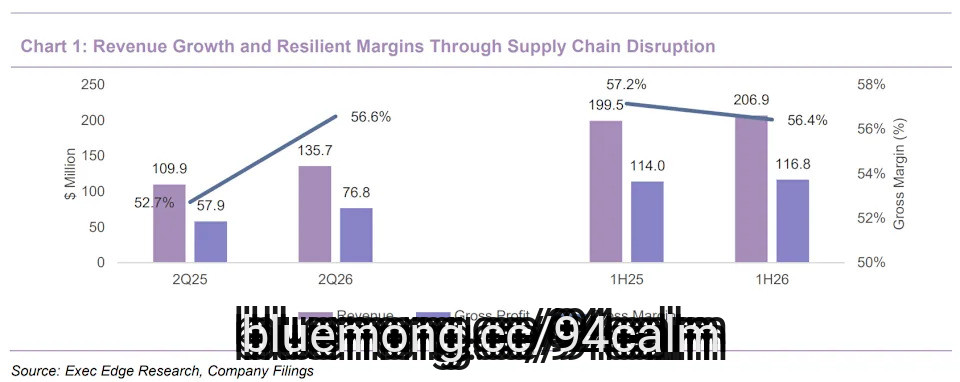
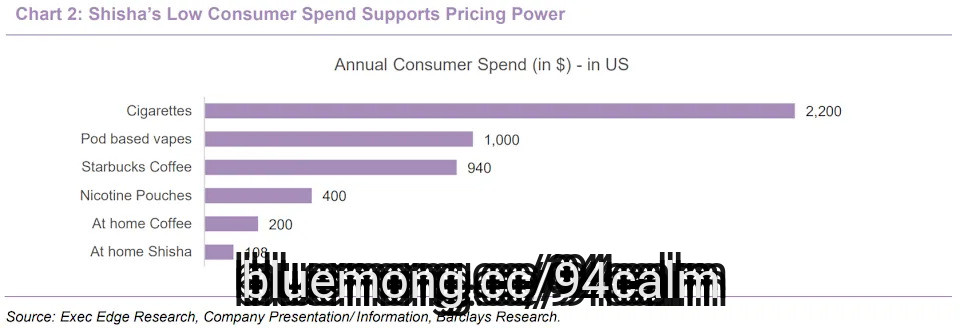
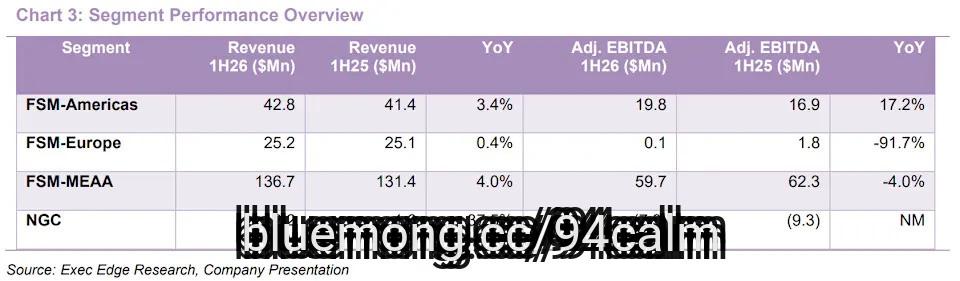
2 months ago
By Timothy Gardner
WASHINGTON, Aug 25 (Reuters) - President Donald Trump has sent Congress a proposed agreement with Saudi Arabia on civil nuclear energy while insisting the pact will only go into effect if the kingdom normalizes relations with Israel, a U.S. administration official told Reuters on Tuesday.
The agreement, which was reached in July and would allow U.S. companies to export civilian nuclear technology to the kingdom, was sent to Congress on Monday, according to the U.S. official, who declined to be identified.
The Saudi embassy in Washington did not immediately respond to a request for comment.
It was not clear how Trump expects sending the nuclear deal to Congress, which has 90 session days to consider it, will advance his objectives.
#reuters #agreement #official
WASHINGTON, Aug 25 (Reuters) - President Donald Trump has sent Congress a proposed agreement with Saudi Arabia on civil nuclear energy while insisting the pact will only go into effect if the kingdom normalizes relations with Israel, a U.S. administration official told Reuters on Tuesday.
The agreement, which was reached in July and would allow U.S. companies to export civilian nuclear technology to the kingdom, was sent to Congress on Monday, according to the U.S. official, who declined to be identified.
The Saudi embassy in Washington did not immediately respond to a request for comment.
It was not clear how Trump expects sending the nuclear deal to Congress, which has 90 session days to consider it, will advance his objectives.
#reuters #agreement #official

2 months ago
Consensus has the earnings arriving, and the multiple falling, yet the scenario that follows leaves a holder within a few percent of today's price unless the market goes on paying a richer forward multiple than it does today.
Cisco Systems (CSCO) trades at about $111 a share, roughly 30 times the last twelve months of normalized earnings. That is a demanding price for a networking company; the defense is that the earnings ***** ysts expect will grow into it. They would. What that is worth to a holder is the smaller answer.
Thirty Times Today, Twenty Times On Fiscal 2028 Earnings
Today's price is about 21.5 times the earnings ***** ysts expect for fiscal 2027, and about 20.0 times what they expect for fiscal 2028, a multiple 34% lower than the trailing one. That drop is not an earnings growth rate: the trailing figure is normalized net income with stock-based compensation added back, a basis not defined identically to the ***** ysts' own adjusted earnings, so the two multiples are not a like-for-like series. Consensus for fiscal 2027, about $5.13 a share on the ***** ysts' adjusted basis, is barely ahead of the $5.05 to $5.11 non-GAAP range management guided.
Margins Have To Hold While The Mix Fights Them
#earnings #consensus #holder
Cisco Systems (CSCO) trades at about $111 a share, roughly 30 times the last twelve months of normalized earnings. That is a demanding price for a networking company; the defense is that the earnings ***** ysts expect will grow into it. They would. What that is worth to a holder is the smaller answer.
Thirty Times Today, Twenty Times On Fiscal 2028 Earnings
Today's price is about 21.5 times the earnings ***** ysts expect for fiscal 2027, and about 20.0 times what they expect for fiscal 2028, a multiple 34% lower than the trailing one. That drop is not an earnings growth rate: the trailing figure is normalized net income with stock-based compensation added back, a basis not defined identically to the ***** ysts' own adjusted earnings, so the two multiples are not a like-for-like series. Consensus for fiscal 2027, about $5.13 a share on the ***** ysts' adjusted basis, is barely ahead of the $5.05 to $5.11 non-GAAP range management guided.
Margins Have To Hold While The Mix Fights Them
#earnings #consensus #holder

2 months ago
Download the Complete Report Here
Key Takeaways:
Best-in-class execution supported 3.7% revenue growth and stable adj. EBITDA despite an FSM shipment decline during the Hormuz disruption.
Americas led regional earnings growth, with adj. EBITDA up 17.2% and margin expanding to 46.3%, while MEAA remained resilient and Europe remained pressured.
2H26 expected to pivot to more volume-led growth as channel inventories normalize, with 2026 revenue guided +4-6% and adj. EBITDA growth of low-to-mid single digits.
#revenue #complete
Key Takeaways:
Best-in-class execution supported 3.7% revenue growth and stable adj. EBITDA despite an FSM shipment decline during the Hormuz disruption.
Americas led regional earnings growth, with adj. EBITDA up 17.2% and margin expanding to 46.3%, while MEAA remained resilient and Europe remained pressured.
2H26 expected to pivot to more volume-led growth as channel inventories normalize, with 2026 revenue guided +4-6% and adj. EBITDA growth of low-to-mid single digits.
#revenue #complete


