
1 month ago
Volkswagen announced a steep cut to its full-year profit outlook on Friday, citing roughly €10 billion ($11.5 billion) in one-time charges concentrated at its troubled Porsche division, amid mounting pressure from U.S. tariffs and a weakening Chinese auto market on the world's second-largest automaker.
The company said it now expects an operating return on sales of up to 1% for 2026, down from its previous guidance of 4% to 5.5%. Volkswagen also said full-year revenue is expected to fall to about €315 billion, from €321.9 billion in 2025.
The bulk of the charges — about €6 billion — stem from revised mid-term ******* umptions for Porsche, in which Volkswagen holds a 75.4% stake. The sports car brand has been hit by U.S. tariffs and a collapse in demand for foreign luxury vehicles in China. On top of that, Volkswagen said it would book a further €2 billion in impairments in the second half of the year, covering China-related writedowns as well as restructuring charges such as costs from early-retirement schemes and the pending divestiture of its Osnabrück plant in Germany, according to The Wall Street Journal.
Volkswagen stock closed down 5.6% following the announcement. Shares of Porsche and Volkswagen's top shareholder Porsche SE fell 3.3% and 4.9%, respectively.
The company cautioned that "further deterioration in the market environment, especially in China, as well as an accelerated shift in demand in favour of battery-electric vehicles" would drag down results, with its Audi and Volkswagen passenger car brands bearing the brunt. Volkswagen noted that its outlook ******* umes tariffs remain unchanged and does not account for possible future effects from the war in the Middle East.
#charges #tariffs #full

1 month ago
Oxford Industries, Inc. (NYSE:OXM) reported fiscal second-quarter net sales of $394.4 million, down 2.2%. Full-price direct-to-consumer sales declined 1%, while wholesale sales fell 14%, primarily reflecting lower off-price sales.
GAAP gross margin increased to 73.8% from 61.4% after Oxford Industries, Inc. (NYSE:OXM) recognized approximately $42 million of tariff refund claims as a reduction of cost of goods sold. Company-defined non-GAAP adjusted gross margin, excluding tariff refunds and LIFO effects, still improved to 63.1% from 61.7%. Updated **** ortment, sourcing, and pricing strategies increased initial markups, while lower off-price wholesale sales improved the sales mix.
Oxford Industries, Inc. (NYSE:OXM) lowered full-year sales guidance to $1.43 billion to $1.47 billion from $1.475 billion to $1.505 billion. Company-defined non-GAAP adjusted EPS guidance fell to $1.60 to $2.00 from $2.30 to $2.70, reducing the midpoint by 28%. Adjusted EPS excludes LIFO effects, tariff refunds and related interest, Johnny Was amortization, distribution-center relocation costs, merchandising initiatives, store-closure impairments and related taxes.
Underlying margin expansion suggests Oxford Industries, Inc. (NYSE:OXM) improved product economics beyond the one-time refund. Company-defined non-GAAP adjusted operating income, which excludes LIFO effects, tariff refunds and related interest, Johnny Was amortization, and specified distribution-center, merchandising, and store-closure costs, increased to $29.3 million from $28.3 million. Adjusted operating margin rose to 7.4% from 7.0%.
Tommy Bahama remained the strongest major brand for Oxford Industries, Inc. (NYSE:OXM), with sales increasing 0.8% and adjusted gross margin rising to 63.6% from 60.7%. FIFO inventory fell $9 million, or 4%, from one year earlier, reducing markdown exposure.
#gaap


1 month ago
Arcosa, Inc. (NYSE:ACA) shareholders approved the proposed acquisition by CRH plc (NYSE:CRH) on September 4. The merger agreement received 39,595,867 votes in favor, compared with 66,113 against and 16,786 abstentions. Approximately 39.7 million shares, representing 80.8% of shares outstanding as of the record date, were present or represented by proxy.
The vote satisfies a major condition for the all-cash transaction. CRH plc (NYSE:CRH) agreed to pay $150 per share, valuing Arcosa, Inc. (NYSE:ACA) at an enterprise value of approximately $8.5 billion. The companies continue to expect a first-quarter 2027 closing, subject to required regulatory approvals and other customary conditions.
CRH plc (NYSE:CRH) described the valuation as 11.5 times estimated 2026 adjusted EBITDA, a company-defined non-GAAP measure, including $175 million of targeted annual run-rate cost synergies expected by year three. CRH plc (NYSE:CRH) defines adjusted EBITDA as earnings from continuing operations before interest, taxes, depreciation, depletion and amortization, with exclusions for impairments, divestitures and investments, equity-method results, substantial acquisition costs and specified pension items.
The result removes the principal seller-side approval risk. The merger no longer depends on another shareholder meeting, and support was decisive among the shares represented. Financing appears less exposed than regulatory clearance: CRH plc (NYSE:CRH) plans to use available cash and committed debt financing, while completion is not subject to a financing condition.
The strategic rationale is tangible. Arcosa, Inc. (NYSE:ACA) would add 109 quarries and yards, nine asphalt plants, 19 terminals and approximately 35 million tons of 2025 aggregates shipments. CRH plc (NYSE:CRH) expects more than 265 million tons of combined annualized aggregates production. Arcosa, Inc. (NYSE:ACA) also brings engineered structures serving grid modernization, electrification and data-center construction.
#NYSE #represented

0.00$ raised of 0.00$ goal
0 donations
0.00$
to go

1 month ago
If you hold Pfizer (PFE) or Zoetis (ZTS), you hold the same idea: a branded medicine becomes a standard of care and keeps earning for years, in people or in animals. That is where it stops. Pfizer is buying replacements for older drugs losing exclusivity. Zoetis is cutting its effective price to keep the franchises it has. Same bet, two opposite defenses.
Pfizer lifted the midpoint of its 2026 revenue guidance by $500 million while cutting its COVID-19 revenue expectation to about $4 billion from about $5 billion. The rest of the company covered that gap: excluding COVID products, the underlying business grew 5% operationally in the second quarter of 2026, with Eliquis and Padcev among the drivers management named.
Zoetis cut its 2026 outlook and now expects revenue to decline 1% to 3% on an organic operational basis. Management said sales trends through July had not yet indicated market stabilization. Pfizer's raise rests on business it can already see. Zoetis has yet to see visibility on market stabilization.
Pfizer is buying growth and cutting cost, and expects about $9.7 billion in total net savings through 2029. What that funds is an aim, not a guide: a risk-adjusted high single-digit revenue CAGR from year-end 2028 through year-end 2033.
The pipeline behind that aim is expensive to get wrong. A Phase III lung cancer trial that missed its primary endpoint and, to a lesser extent, the removal of revenue projections for Oxbryta led to $4.3 billion of noncash intangible **** et impairments recorded in the second quarter of 2026. While an unadjusted price-to-EBIT comparison puts Pfizer at 23.9 against Zoetis at 9.2, aligning the two on operating income brings them to 9.7x and 9.0x, largely erasing the paying-up premium.
#pfizer #covid

0.00$ raised of 0.00$ goal
0 donations
0.00$
to go

2 months ago
On September 4, Bruker (NASDAQ:BRKR) said its energy and supercon technologies unit, Bruker Energy & Supercon Technologies (or BEST), had struck a supply collaboration with Luvata Materials & Solutions to scale up production of RRP superconductors for magnetic confinement fusion. The deal lands right as governments and private developers from Europe to South Korea race to build fusion demonstration plants, and it comes a month after Bruker's core scientific instruments business showed its first real signs of stabilizing. Two very different stories are converging inside one stock.
The Luvata tie-up is not Bruker's first rodeo in fusion. BEST and Luvata previously supplied materials and expertise to ITER, the international fusion megaproject, and to the Wendelstein 7-X stellarator, two of the most advanced superconducting plasma facilities ever built. Their RRP superconductors, wires built with the Rod-Restack Process to withstand field strengths between 12 and 20 Tesla, already run inside CERN's Large Hadron Collider and in ultra-high field NMR magnets. That track record matters now because fusion programs are ramping across Europe, the Americas, China, ***** an and South Korea, and Gauss Fusion has already begun evaluating RRP superconductors for its Gauss Industrial Demonstrator and GIGA power plant platform.
The segment is already delivering. On August 4, Bruker reported that BEST revenue climbed 11.9% year over year to $74.2 million in the second quarter, with organic growth of 8.9% net of intercompany eliminations, while first-half BEST revenue rose 12.3% to $141 million. That growth showed up in Bruker's bottom line too. Non-GAAP operating margin expanded to 14.1% from 9% a year earlier, and non-GAAP diluted earnings per share grew to $0.49 from $0.32, results strong enough that management kept its full-year non-GAAP EPS growth target of 15% to 17% intact.
None of that shows up on a GAAP basis. Bruker's second-quarter GAAP operating results swung to a $65.3 million loss, versus $11.9 million of GAAP operating income a year earlier, dragged down largely by a $134.9 million non-cash goodwill charge. GAAP diluted earnings per share swung to a loss of $0.41 from a profit of $0.05, and for the first half of 2026 the company posted a GAAP diluted loss per share of $0.39. Impairments do not spend cash, but they are a reminder that some of what Bruker paid for in past acquisitions is now being written down.
#fusion


2 months ago
On September 4, Bruker (NASDAQ:BRKR) said its energy and supercon technologies unit, Bruker Energy & Supercon Technologies (or BEST), had struck a supply collaboration with Luvata Materials & Solutions to scale up production of RRP superconductors for magnetic confinement fusion. The deal lands right as governments and private developers from Europe to South Korea race to build fusion demonstration plants, and it comes a month after Bruker's core scientific instruments business showed its first real signs of stabilizing. Two very different stories are converging inside one stock.
The Luvata tie-up is not Bruker's first rodeo in fusion. BEST and Luvata previously supplied materials and expertise to ITER, the international fusion megaproject, and to the Wendelstein 7-X stellarator, two of the most advanced superconducting plasma facilities ever built. Their RRP superconductors, wires built with the Rod-Restack Process to withstand field strengths between 12 and 20 Tesla, already run inside CERN's Large Hadron Collider and in ultra-high field NMR magnets. That track record matters now because fusion programs are ramping across Europe, the Americas, China, **** an and South Korea, and Gauss Fusion has already begun evaluating RRP superconductors for its Gauss Industrial Demonstrator and GIGA power plant platform.
The segment is already delivering. On August 4, Bruker reported that BEST revenue climbed 11.9% year over year to $74.2 million in the second quarter, with organic growth of 8.9% net of intercompany eliminations, while first-half BEST revenue rose 12.3% to $141 million. That growth showed up in Bruker's bottom line too. Non-GAAP operating margin expanded to 14.1% from 9% a year earlier, and non-GAAP diluted earnings per share grew to $0.49 from $0.32, results strong enough that management kept its full-year non-GAAP EPS growth target of 15% to 17% intact.
None of that shows up on a GAAP basis. Bruker's second-quarter GAAP operating results swung to a $65.3 million loss, versus $11.9 million of GAAP operating income a year earlier, dragged down largely by a $134.9 million non-cash goodwill charge. GAAP diluted earnings per share swung to a loss of $0.41 from a profit of $0.05, and for the first half of 2026 the company posted a GAAP diluted loss per share of $0.39. Impairments do not spend cash, but they are a reminder that some of what Bruker paid for in past acquisitions is now being written down.
#gaap #bruker #million #already


2 months ago
On August 6, Dentsply Sirona (NASDAQ:XRAY) reported second-quarter 2026 results that pulled the stock in two directions at once. Net sales fell 4.1% year over year to $898 million, yet the company swung from a $45 million net loss a year earlier to $37 million in net income, with diluted earnings per share of $0.18 versus a $0.22 loss. Investors are left weighing a real profitability turnaround against a top line that is still shrinking.
GAAP gross margin climbed to 54.9% from 52.4% a year ago, and adjusted gross margin came in at 56.4%. Adjusted EBITDA margin ticked up slightly to 21.3% from 21.1%. Cash generation improved even more sharply. Operating cash flow jumped to $99 million from $48 million in the second quarter of 2025, helped by roughly $44 million in tariff refunds along with tighter management of inventory and payables. Free cash flow more than tripled to $55 million from $16 million. The company used some of that cash to repurchase 1.3 million shares for about $12 million during the quarter, and it also expanded its partnership with Medline Sinclair to broaden access to its Connected Technology Solutions portfolio across Canada.
Wellspect Healthcare was the lone segment posting real growth, with net sales up 7.1% to $86 million, and EMEA sales as reported were essentially flat at 0.2% growth. There were no goodwill or intangible ***** et impairments this quarter, a contrast to the $235 million charge taken in the same period last year. Despite the sales decline, the company reiterated its full-year 2026 outlook of $3.5 billion to $3.6 billion in net sales and adjusted EPS of $1.40 to $1.50.
The headline sales decline understates the underlying softness. On a constant currency basis, net sales fell 6.3%, meaning currency translation actually flattered the reported number. Orthodontic and Implant Solutions was the weakest segment, with sales dropping 13.2% to $197 million from $226 million a year ago. The Americas region fared worst geographically, with net sales down 10.7% as reported and 11.6% in constant currency.
Even the adjusted numbers show cracks: adjusted EPS of $0.52 was actually down 1.6% from a year earlier, despite the improved GAAP figures. The balance sheet tightened too, with cash and equivalents falling to $239 million from $326 million at the end of 2025, against long-term debt of nearly $2 billion. Restructuring and other costs for the first six months of 2026 totaled $69 million, up sharply from $13 million in the same period a year ago, tied in part to costs from a new global ERP system.
#year #company


2 months ago
On September 1, Sasol Limited (NYSE:SSL) posted fiscal 2026 results that looked nothing like the shaky operator investors have grown used to. Net debt fell to its lowest level in ten years, Secunda output hit a five-year high, and adjusted EBITDA jumped 17% year over year to ZAR 61 billion. The numbers suggest a turnaround that finally has traction, even as chemical markets stay stuck in a rut.
The clearest thread running through the quarter is that Sasol's core Southern African operations are simply working better than they have in years. Secunda production reached 7.26 million tonnes, a five-year high, driven by improved coal quality and gas availability after the company installed a destoning plant that pushed sinks below 12%. That reliability helped cut the Southern African oil breakeven to $49 per barrel. Management is also weaning the business off external coal, planning to cut purchases from 8.8 million tonnes down to a range of 5 million to 7 million tonnes in fiscal 2027 as own production climbs toward 34 million tonnes by 2028.
The balance sheet tells a similar story. Net debt dropped 11% to $3.3 billion, and available liquidity rose 21% to roughly $5 billion after a bond swap that better matched debt currency to cash generation. Free cash flow of ZAR 11.9 billion was actually up 26% once you strip out a one-time legal settlement from the prior year. International Chemicals, long the drag on the portfolio, posted $604 million in adjusted EBITDA on a 7% cut in fixed costs and a stronger fourth quarter market. Retail fuel market share climbed to 13% from 9% five years ago, and renewable capacity reached 500 megawatts on the way to a 2 gigawatt target by 2030.
Not everything is fixed. Sasol lost two colleagues during the year, a reminder that operational improvement has not erased safety risk. Currency remains a persistent headwind, with CFO Walt Bruns noting that "the stronger rand remained a significant earnings headwind given the U.S. dollar-linked nature of much of our revenue." That same stronger rand outlook, combined with weaker long-term polyethylene pricing, drove impairments on the Secunda liquid fuels refinery and the South African polyethylene unit.
Management was explicit that global chemical markets have not turned a corner, warning that "excess capacity and weaker demand" continue pressuring prices with only a gradual recovery expected. Working capital also ran hot at 18.3% of trailing turnover, above the 15.5% to 16.5% target range, due to pricing volatility and elevated inventory. Fiscal 2027 capital spending guidance of ZAR 23 billion to ZAR 26 billion is also higher than the year just completed, and dividends stay off the table until net debt is sustainably below $3 billion, a threshold the company has approached but not yet crossed.
#debt #fiscal #years #five

2 months ago
HRL claims 60 straight years of annual dividend raises; GIS offers a higher ~6% yield but froze its payout from 2018 through 2020.
GIS generated $2 billion in operating cash flow but posted an $85 million net loss after nearly $3 billion in non-cash impairment charges.
Just released. Our ****** ysts combed the entire stock market and named the ten best stocks to buy right now. The report is free. Enter your email and see if any of your stocks made the cut.
Two of the most reliable dividend names in packaged food just wrote fresh checks to shareholders, and the scorecards look nothing alike. Hormel Foods (NYSE:HRL) closed out its 60-year run of annual increases with a quarterly payout that management called its 392nd consecutive quarterly payout. General Mills (NYSE:GIS) delivered a fatter check backed by a 127-year streak of uninterrupted payments, but a fresh round of impairments has investors questioning what comes next.
Here is how the two dividend kings of the grocery aisle stack up right now.
#payout #NYSE #annual #fresh



2 months ago
NFL players diagnosed with advanced CTE after death who also demonstrated cognitive impairment in testing during their life still did not meet the requirements for financial compensation under the NFL Concussion Settlement, according to a Boston University study published Wednesday.
Researchers examined 33 NFL players diagnosed with CTE after an autopsy who had completed the baseline ****** sment program (BAP) stipulated by the 2014 settlement – that ended a years-long class-action lawsuit – in what researchers called the largest study to date linking cognitive testing performance during life with CTE confirmed posthumously.
The results, published in JAMA Network Open, found that seven participants had advanced (Stage 3 or 4) CTE. Six of those seven showed measurable cognitive impairment on testing, yet all seven received the lowest impairment rating (Level 0) on the BAP's system, according to documentation provided to researchers by players' families.
"The BAP's diagnostic criteria might miss cases of cognitive impairment that are objectively measurable and ****** ociated with confirmed CTE pathology," Michael Alosco, PhD, co-director of clinical research at the BU CTE Center said in a statement. "This has important implications for former players seeking diagnosis and potential compensation through the NFL Concussion Settlement."
The participants' average age at the time of testing was 63, and their average age of death was 65. The most-common problem was memory, particularly short-term, with 63% of the participants affected. Executive function (52%) and language (41%) were other common impairments.
#cognitive #testing #settlement #participants


2 months ago
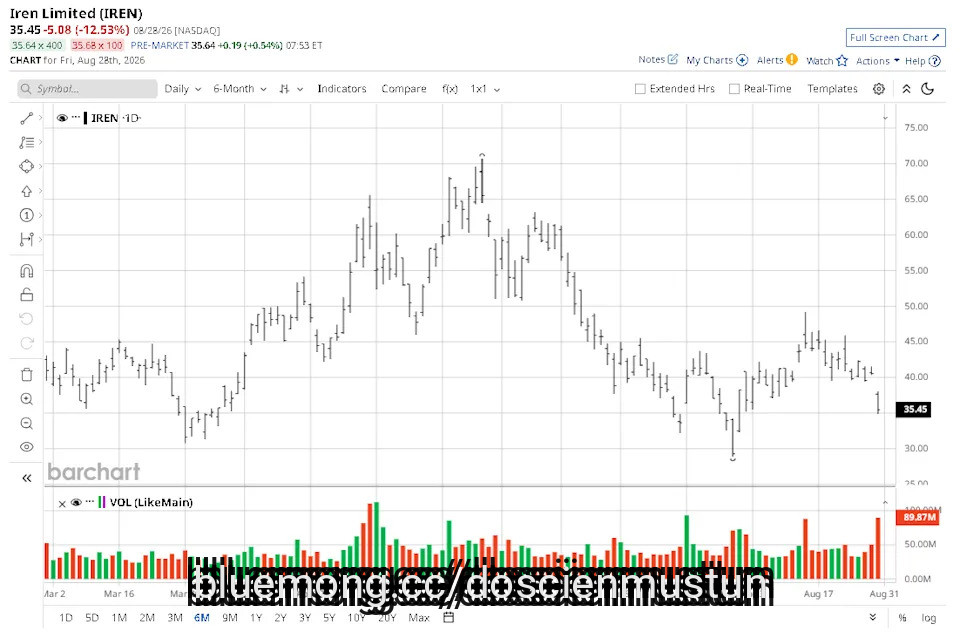
Iren Limited (IREN) shares tanked on Aug. 28 as investors panicked over a $684 million quarterly loss driven by non-cash impairments and massive upcoming capital expenditures. But the market's reaction to IREN's earnings release overlooks a major positive: the Nasdaq-listed firm has locked in $4 billion in contracted annualized recurring revenue (ARR) for 2026.
Following the post-earnings decline, IREN stock is trading at nearly half its price in late May.
Dear Sandisk Stock Fans, Mark Your Calendars for August 31
Dear Palantir Stock Fans, Here's What Maven's Billion-Dollar ARR Means for PLTR
Wu-Tang Clan Member Raekwon Is a Palantir 'OG,' Visiting Headquarters 16 Years After Receiving His Custom PLTR Jacket
#Stock #limited


2 months ago
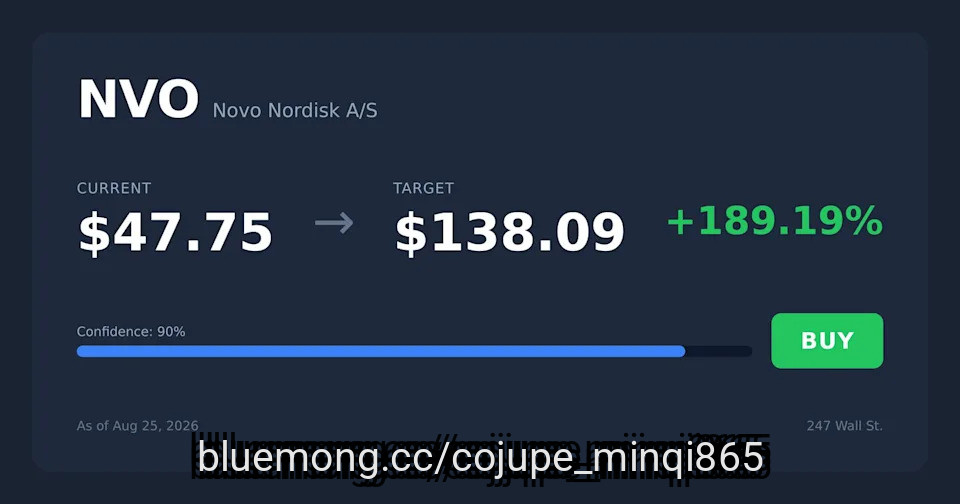
LLY posted 48% revenue growth and controls 6 in 10 U.S. obesity prescriptions, while NVO cut 12,000 employees and saw gross margins fall to 78%.
Retatrutide hit Phase 3 endpoints with weight loss approaching bariatric surgery levels, with Lilly targeting a U.S. BLA submission in Q1 2027.
Act now: the ***** yst who called NVIDIA in 2010 just named his top 10 AI stocks — and Eli Lilly didn't make the cut. Grab the names FREE today.
Eli Lilly (NYSE:LLY) and Novo Nordisk (NYSE:NVO) both reported Q2 2026 results in early August, and the split screen was jarring.
Lilly delivered 48% revenue growth and raised guidance. Novo defended a shrinking U.S. business with price cuts, layoffs, and a fresh round of pipeline impairments. Same week, same category, opposite momentum.
#lilly #NYSE #same #NVIDIA



3 months ago
Pfizer Inc (NYSE:PFE, XETRA:PFE) beat Wall Street expectations for its second-quarter 2026 results and raised the midpoint of its full-year revenue guidance, as growth from launched and acquired products helped offset declines in its COVID-19 portfolio.
The pharmaceutical company reported adjusted earnings of $0.77 per share for the quarter, above the $0.68 expected by ****** ysts. Revenue came in at $15.03 billion, compared with the $14.40 billion consensus estimate.
Pfizer reported quarterly revenue of $15.0 billion, up 1% on an operational basis from a year earlier. Excluding Comirnaty and Paxlovid, revenue increased 5% operationally, while revenue from launched and acquired products rose 18% operationally.
The company reported a GAAP loss of $0.04 per share, reflecting $4.3 billion in non-cash intangible ****** et impairments.
Pfizer raised its 2026 revenue guidance by $500 million at the midpoint to a range of $60.5 billion to $62.5 billion. The company reaffirmed its adjusted diluted earnings guidance of $2.80 to $3.00 per share, which includes an approximately $0.10 impact from its transaction with Innovent Biologics.
#company


3 months ago
Last season, FC Bayern implemented a pilot project in the area of inclusion to test specially designed autograph cards for people with visual impairments. Remaining stock from this special edition is now being distributed at FC Bayern Fan Stores. People with visual impairments and their relatives can order sets of the men's and women's teams from last season by emailing inklusionfcbayern.com – while stocks last.
For this special edition, Braille and a QR code lead to video portraits in which the players provide voiceovers of texts that specifically characterise them.
#impairments
For this special edition, Braille and a QR code lead to video portraits in which the players provide voiceovers of texts that specifically characterise them.
#impairments