

1 month ago
Phillips 66 (NYSE:PSX) has been on a strong rally this year, posting gains of over 110% since the beginning of 2026. The outperformance has been driven by an unusually sharp surge in global refining margins amid the war in the Middle East, which has significantly tightened the world's refining capacity and reduced supplies of gasoline, diesel, and jet fuel.
Given Phillips 66's substantial outperformance compared to the wider market, investors may be questioning whether the stock's record-setting run has reached its peak. However, the ****** ysts over at BMO Capital see further upside ahead. On September 17, the firm raised its price target on PSX from $260 to $310, while maintaining an 'Outperform' rating on the shares. The target boost implies an upside of 13% from the current levels and even exceeds the stock's all-time high of over $274 achieved earlier this month.
BMO Capital highlighted Phillips 66's integrated business model, noting that it has gained momentum and outperformed its individual segments, supported by strong execution across the portfolio. While Refining and Renewables remain the cyclical leaders, BMO also sees a favorable medium-term growth outlook for the company's Midstream business.
BMO Capital's vote of confidence comes amid a broader optimism surrounding Phillips 66, with ****** ysts from Morgan Stanley, Raymon James, UBS, and several others also improving their respective outlooks on PSX. This suggests that Wall Street expects the ongoing refining upcycle to last longer than previously expected, particularly following the renewed escalations between Iran and the United States.
The supply disruptions now extend beyond the troubled region, as a recent wave of Ukrainian attacks on Russian refineries has further reduced global refining capacity and provided further support to margins.
#further #margins #amid


2 months ago
Our **** ysts just identified a stock with the potential to be the next Nvidia. Tell us how you invest and we'll show you why it's our #1 pick. Tap here.
French energy distributor Rubis just proved that expensive oil does not have to mean ugly numbers. First-half profits jumped, guidance went up and investors rewarded the French energy distributor with a roughly 5% share-price pop.
Rubis shares climbed after the French energy distribution and renewables group delivered a strong first half and upgraded its full-year outlook.
Revenue rose 24% to €4.07 billion (about $4.8 billion) in the six months to June, while EBITDA increased 18% to €434 million from €369 million a year earlier.
Net income attributable to shareholders climbed 17% to €191 million, with diluted earnings per share also rising 17% to €1.85.
#rubis #distributor #half


2 months ago
More than half (53%) of Northern Ireland's electricity came from renewable sources in the year to June – beating the level previously set in 2022.
And for the first time renewable generation has consistently exceeded non-renewable generation since January.
Even when imported electricity was taken into account, the amount of renewables equalled the previous record of 50%, set in 2022/23.
The Economy Minister Caoimhe Archibald said the increasing level of renewable energy would help Northern Ireland "move away from price volatility and towards more stable and fairer prices" .
Almost three-quarters (74%) of renewable electricity came from wind. Bioenergy – anaerobic digestion, incineration and fermentation – provided just under one-fifth (18%).
#renewable #june #economy


2 months ago
On August 3, The Andersons Inc. (NASDAQ:ANDE) reported second-quarter results that dwarfed last year's numbers, with net income attributable to the company climbing to $57 million, or $1.65 per diluted share, from just $7.9 million, or $0.23 per share, a year earlier. Adjusted net income reached $74 million, or $2.15 per share, versus $8.4 million, or $0.24 per share, in the second quarter of 2025. The turnaround leaned almost entirely on one business: renewable fuels.
Renewables did the heavy lifting. The segment posted a record second-quarter pretax income of $65 million, with the adjusted figure reaching $88 million, on record plant output and strong merchandising execution. Andersons credited its low-carbon strategy for $24 million in 45Z producer tax credits during the quarter, plus the first-quarter finalization of the Renewable Volume Obligations, which firmed up commodity markets and opened trading opportunities for the merchandising desk. Gains in distillers corn oil and RIN pricing also helped. Segment adjusted EBITDA came in at $103 million, more than triple the $30 million posted a year earlier.
Agribusiness improved too, if more modestly, with pretax income of $20 million, both on a GAAP and adjusted basis, up from $17 million in the prior-year quarter. Fertilizer margins strengthened even as volumes fell, and merchandising benefited from higher commodity prices and early-quarter volatility. The company is pushing further into low-carbon fuels, preparing a debottlenecking project at its Clymers, Indiana ethanol plant and advancing a Class VI well permit to capture more 45Z value. A new soybean meal export operation at the Port of Houston is expected online in the fourth quarter. Operating cash flow of $488 million for the quarter, up from $299 million a year earlier, gave the company room to keep funding those projects while holding long-term debt to EBITDA below its 2.5-times target.
The numbers come with caveats. Cash and cash equivalents stood at just $66.5 million at the end of the second quarter, down from $351 million a year earlier, even as short-term debt climbed to $314 million from $104 million. Much of that swing traces to working capital timing and investment spending rather than distress, but it leaves less cushion than the company carried a year ago.
In Agribusiness, the fertilizer and merchandising gains were partly offset by fuel surcharges, a reminder that the segment's profitability still moves with input costs it does not control. Andersons also warned that a drier stretch across its western growing regions could weigh on grain-asset profits this fall, even though better conditions in the eastern corn belt cut the other way, and that grower economics could limit fertilizer purchasing heading into the fall application season.
#million #year #income #Share


2 months ago
Saudi Arabia's power stations, desalination plants, factories and farms consume more than 1 million barrels per day of liquid fuel that the kingdom aims to displace by 2030. Natural gas and renewables will provide most of the replacement energy. Nuclear power could reduce domestic oil consumption further after 2030 as electricity demand continues to grow.
On July 22, the United States and Saudi Arabia signed a 30-year civil nuclear cooperation agreement, clearing the way for U.S. companies to potentially supply the kingdom with reactors, nuclear materials and technical services. Similar agreements with Turkey and the UAE entered into force in June 2008 and December 2009, respectively.
The commercial opportunity is in Saudi Arabia's search for additional generating capacity. The IEA estimates that the kingdom's electricity demand grew by 3.8% in 2025 and forecasts average annual growth of 3.1% through 2030.
Related: U.S. Shale Producers Lose Bid to Kill Oil Price-Fixing Case
Saudi consumption of crude oil and fuel oil for power generation rises sharply during the summer, when air-conditioning demand peaks. Combined burn reached 1.42 million b/d in June 2024, according to the EIA. It fell to an average of 678,000 b/d in January and February 2025 (the lowest level for that period since 2016) with February alone registering an 11-year monthly low of 589,000 b/d. Reducing domestic oil-fired generation can leave more petroleum available for export or other uses.
#demand #february #million #fuel


2 months ago
Microsoft's next major AI constraint may be measured in turbines rather than processors. On June 22, Microsoft Corporation (NASDAQ:MSFT) entered a 20-year power purchase agreement with Energy Forge One LLC, a wholly owned subsidiary of Chevron Corporation (NYSE:CVX), for a planned West Texas data-center project. The Kilby development targets 2.67 gigawatts of generation, with initial power expected in 2028. Its scale suggests that securing dependable electricity is becoming as strategic to hyperscalers as securing accelerators.
Tupungato / Shutterstock.com
Microsoft Corporation (NASDAQ:MSFT) gets a dedicated path to capacity in a grid-constrained market. Natural gas can provide round-the-clock generation that complements intermittent renewables and supports the reliability AI clusters require. A two-decade contract can also give developers confidence to finance construction. The bull case is simple: Microsoft protects its cloud growth by solving power locally instead of waiting years for transmission expansion.
Chevron Corporation (NYSE:CVX) gains a new outlet for its gas and an opportunity to move downstream into integrated power. If Kilby works, Chevron can replicate a model that converts energy resources and project expertise into long-duration data-center cash flows. Yet the project has not reached a final investment decision. Construction, permitting, fuel costs, emissions rules, and customer requirements can all change the economics before power begins flowing.
Those uncertainties create bear cases for both companies. Microsoft is committing to an energy pathway as AI hardware and efficiency evolve rapidly, and a long contract can become less attractive if power markets change. Chevron and its partners must commit capital years before the **** et is operational while managing construction, fuel-cost and carbon-policy risks. Gas solves the reliability problem, but it may intensify political and regulatory scrutiny around AI's environmental footprint. The critical milestones are final investment approval, permitting, construction costs, and data showing that the first power date remains achievable. Until those arrive, the agreement secures intent rather than operating supply.
#power #data


2 months ago
On August 3, TotalEnergies SE (NYSE:TTE) signed an agreement to acquire Shell plc (NYSE:SHEL)'s entire onshore renewables business in Europe. The acquisition includes 500 MW of operational or under-construction solar and wind ******* ets primarily in Italy and the Netherlands, alongside a 3.5 GW pipeline of solar, wind, and battery storage projects across Italy, the UK, and Spain. Set for completion by late 2026 pending regulatory approval, the deal directly advances TotalEnergies' European Integrated Power strategy, bolstering its existing portfolio of roughly 10 GW in gross capacity/construction and 27 GW under development. Following the news on August 3, Piper Sandler ******* yst John Royall raised Shell's price target from $88 to $89 while maintaining a Neutral rating, citing strong Q2 trading beats.
Both Big Oil majors reported robust Q2 2026 results driven by operational efficiency, yet distinct financial profiles emerge. TotalEnergies SE (NYSE:TTE) generated adjusted net income of $6.0 billion and cash flow from operations (CFFO) of $9.8 billion on 2.395 Mboe/d production, keeping Upstream operating costs down to $5/b despite Middle East transit disruptions. Shell outperformed on sheer cash generation, posting $9.8 billion in Adjusted Earnings and CFFO of $21.4 billion, supported by record upstream production in Brazil, record refinery utilization, and a $3.4 billion working capital inflow.
TotalEnergies retains a leaner debt profile with a gearing ratio of 13.1% ($3.3 billion net debt reduction), whereas Shell holds a 19% gearing ratio with $42 billion in net debt ($12 billion excluding leases). While Shell plc (NYSE:SHEL) leads on top-line cash generation, TotalEnergies displays superior balance sheet leverage and higher quarter-over-quarter cash flow growth (+15%).
TotalEnergies' bull case is supported by strong execution of its Integrated Power strategy, with expanding high-margin renewable power capacity alongside low Upstream costs of approximately $5 per barrel. Its healthy balance sheet, reflected in 13.1% gearing, provides financial flexibility to support a 5.9% dividend increase to €0.90 per share while continuing $1.5 billion in quarterly share buybacks. However, the bear case centers on weakness in Integrated LNG, particularly from underperforming European gas trading. Continued exposure to geopolitical disruptions along Middle Eastern transit corridors could also restrict physical oil liftings and weigh on operations.
#TotalEnergies #shell #upstream


2 months ago
Oil prices have been all over the place in 2026. Brent crude fell nearly 40% from its year-to-date (YTD) high of $118.35 on March 31 to $71.44 by July 1 after a U.S.-Iran peace deal reopened the Strait of Hormuz. Prices then rebounded more than 16% from that July low after the ceasefire broke down on July 8, helping make energy the best-performing S&P 500 sector ($SPX) during that period.
Shell (SHEL) has used the volatility to reshape its business. The company has sold ****** ets that no longer fit its focus on oil, gas, and LNG, including India's Sprng Energy for $1.8 billion, Gulf of Mexico stakes for $1.7 billion, and Jiffy Lube International and Premium Velocity Auto for $1.3 billion. It also sold its European onshore renewables portfolio to TotalEnergies SE (TTE) and agreed to acquire Canada's ARC Resources Ltd. (ARX) in a deal valued at about $13.6 billion.
Seagate vs. Western Digital: Which One is The Best AI Storage Play for Dividend Investors?
Tired of missing midday reversals? The FREE Barchart Brief newsletter keeps you in the know. Sign up now!
Next could be Shell's U.S. chemicals business. The company has reportedly drawn interest from potential buyers, including ExxonMobil Corporation (XOM) and LyondellBasell Industries N.V. (LYB), in a deal that could fetch up to $8 billion.
#prices


2 months ago
Europe is heading for the winter with one of the lowest levels of gas in storage in the past two decades as the war in the Middle East crippled LNG supply from Qatar, sent gas and LNG prices in Europe and Asia skyrocketing, and intensified competition for the shrunk pool of readily available global LNG cargoes.
A perfect storm of elevated demand for filling depleted storage and electricity during the summer heatwaves, and slashed global LNG supply with Qatar's cargoes trapped behind the Strait of Hormuz have pushed European benchmark prices to multi-month highs and LNG prices to the highest in three years.
The high prices, with front-month futures higher than those further out in time, have discouraged stockpiling for most of the summer. But Europe doesn't have a choice and needs to fight for gas to fill storage sites to reasonably adequate levels before December to avoid a winter supply crunch.
That's easier said than done. Competition from Asia is fierce for LNG supply that doesn't need to move through the Strait of Hormuz, and Europe is currently losing this race.
One potentially mitigating factor is that Europe now consumes about 10-15% less natural gas than it did in 2021 due to a higher share of renewables for electricity generation and industries adapting from an abundance of gas (including from Russia) to tight markets with elevated prices.
#Europe #storage #asia #hormuz


2 months ago
Michigan Democratic Senate nominee Abdul El-Sayed told Fox News host Jesse Watters on Monday that he would not defend the Green New Deal when confronted with his past support for the progressive climate proposal, a notable shift from years of publicly embracing it by name.
"Look, I'm not going to defend the Green New Deal," El-Sayed told Watters after the host confronted him over his past support for the proposal. When Watters reiterated that El-Sayed was on record supporting it, El-Sayed redirected the discussion toward lowering energy costs and creating Michigan jobs by prioritizing renewables.
Michigan, which Trump won in 2024 but lost in 2020, is shaping up to have one of the most competitive Senate races in the country, with the likely narrow results in the state potentially determining control of Congress. Critics charge that El-Sayed is downplaying some of his past beliefs and scrubbing his online footprint to appear more moderate, and therefore more palatable, to Michigan voters.
Unearthed Clip Exposes More Anti-police Rhetoric As El-sayed Gets Grilled For Deleting Social Media Posts
Though El-Sayed declined to defend the Green New Deal in front of a national audience, he previously hasn't been so shy.
#green #past




2 months ago
Donald Trump is accidentally overseeing a massive buildout of the country's renewable energy capacity and infrastructure. Not only are investments in renewable technologies soaring to new highs, the national energy grid is rapidly transforming to accommodate an increasingly solar- and wind-powered energy mix.
Despite massive rollbacks of Biden- and Obama-era clean energy incentives and financial supports, investment in clean energy tech keeps soaring to new heights, buoyed by market forces far outside of the federal government's control. Clean energy capital expenditures already reached $74 billion in the first half of 2026, and they're on track to reach a record $180 billion by the end of the year, according to fintech firm Crux's State of Clean Energy Finance: 2026 Mid-Year Market Intelligence Report.
"The market is proving resilient," Crux CEO and co-founder Alfred Johnson was recently quoted by Politico's E&E News. "We're seeing a significant amount of investment subsequent to the tax law changes of last year."
The insatiable energy demand coming from data center hyperscalers and the artificial intelligence boom has spurred a tidal wave of investment into all kinds of energy projects, and especially renewables due to their noted advantages when it comes to energy security and affordability. These advantages have been underscored in recent months by extreme volatility in fossil fuel markets thanks to the war in Iran and resultant supply chain vulnerabilities. "Renewables and storage continue to be the fastest way to get new electrons on the grid until additional gas-fired generation can be built," NextEra Energy CEO John Ketchum was recently quoted by Reuters.
As a result, we are currently "living in what arguably is one of the best periods to invest in renewables in the US over the last 20 years" according to Miguel Stilwell d'Andrade, chief executive officer of Portuguese electric utilities company EDP. Accordingly, EDP is directing approximately USD $5.3 billion – more than half of its capital expenditures – toward United States renewables projects over the next three years.
#year


2 months ago
By Colleen Howe and Sudarshan Varadhan
BEIJING/SINGAPORE, Aug 17 (Reuters) - China turned away enough clean energy to power Mexico for a year in the six months through June as its grids hit their limits, while networks in many other nations such as Australia and **** an also failed to keep pace with a surging renewables buildout.
Curtailments, or the pre-emptive rejection of wind or solar power because a grid reaches capacity, are emerging as a growing challenge to renewables globally and underscore continued reliance on fossil fuels.
China, the world's top producer of solar power, rejected 360 terawatt-hours (TWh) of clean power from January to June, up 49% from the same period a year earlier, according to a report this month by Global Energy Monitor (GEM) and the Center for Research on Energy and Clean Air (CREA).
The report's estimates for curtailments far exceed figures given by the Chinese government.
#curtailments #year


2 months ago
Antipodes Partners published its "Antipodes Global Strategy" second-quarter 2026 investor letter, highlighting the key performance stocks, portfolio changes, and the market outlook. A copy of the letter can be downloaded here. The second quarter of 2026 delivered one of the strongest equity market recoveries in recent history, as global equities gained 14.9% in US dollar terms. Renewed enthusiasm for artificial intelligence, strong corporate earnings, and easing tensions with Iran supported the rebound, while growth stocks outperformed value and emerging markets led gains, particularly Korea and Taiwan. The Antipodes Global Value Strategy underperformed its benchmark during the quarter and over the 12 months to June 30, 2026, as returns became concentrated in a narrow group of semiconductor and hardware stocks. Consumer staples and consumer discretionary holdings supported performance, while information technology, software, and internet exposure detracted. The firm remains cautious on expensive memory companies because pricing and supply remain cyclical despite AI demand. The Strategy continues to favor valued infrastructure, specialty semiconductors, resilient software, and quality businesses. For insights into its key selections for 2026, please review the Strategy's top five holdings.
In its Q2 2026 investor letter, Antipodes Global Strategy highlighted TotalEnergies SE (NYSE:TTE). TotalEnergies SE (NYSE:TTE) is a leading energy company that produces and markets oil and biofuels, natural gas, biogas, and low-carbon hydrogen, renewables, and electricity. On August 7, 2026, TotalEnergies SE (NYSE:TTE) closed at $85.83 per share. The one-month return of TotalEnergies SE (NYSE:TTE) was 7.49%, and its shares gained 43.01% over the past 52 weeks. TotalEnergies SE (NYSE:TTE) has a market capitalization of $190.44 billion.
Antipodes Global Strategy stated the following regarding TotalEnergies SE (NYSE:TTE) in its Q2 2026 investor letter:
"TotalEnergies SE (NYSE:TTE) underperformed as weaker crude oil and natural gas prices reduced earnings expectations and cash-flow forecasts across the integrated energy sector in line with geopolitical tensions easing over the Quarter. Concerns over slowing global economic growth and softer fuel demand also weighed on commodity markets, while increased OPEC+ supply expectations added further pressure to oil prices. Although TotalEnergies continued to benefit from its diversified LNG, power and renewable energy portfolio, these positives were outweighed by declining upstream earnings expectations. A broader rotation away from defensive energy stocks toward higher-growth sectors and profit taking after a stronger period also contributed to weakness."
#strategy #letter #stocks


3 months ago
For most of the last two decades, the anxiety in power planning was about demand: would consumption grow fast enough to justify new capacity, and how would an aging fleet keep pace? That question has inverted. Demand is no longer the uncertain variable—it is the one thing forecasters are confident about. The uncertainty now sits on the supply side: whether the workforce, the equipment, and the political and economic conditions needed to build and run generation can keep up with a demand curve that is accelerating for the first time in a generation.The International Energy Agency (IEA) put a number on the demand side in its Electricity 2026 report, projecting that global electricity demand will grow by an average of 3.6% per year through 2030, roughly 50% faster than the average over the previous decade, driven by industrial electrification, electric vehicles, air conditioning, and data centers. For the first time in three decades outside of a crisis period, electricity demand has begun to grow faster than the global economy itself. The demand is coming. The open question is deliverability.That framing—supply-side constraints as the binding risk—runs through recent research from Verdantix, a UK-based **** yst firm whose Industrial Dislocation Index scores nine major economies on how far their operating conditions have diverged from their own 30-year norms. For power generation specifically, Verdantix identifies four factors that carry disproportionate weight: politics, geo-economic friction, energy prices, and production inputs.
The clearest signal in the Verdantix data for a power audience is the energy sub-index, which scores each country on how far its energy position has moved from its own historical baseline. The spread is wide. The U.S. sits at the resilient end, with the lowest energy-dislocation score in the study at 1.83, a reflection of its position as a net exporter of natural gas, crude, and coal, with electricity and fuel costs below the global average. At the other end is the UK, at 7.33, the highest in the study—a measure of how sharply its energy position has diverged from what UK industry was historically built around. Germany (5.67) and France (5.50) sit high as well; **** an (4.50), India (3.50), China (3.17), Saudi Arabia (3.00), and Canada (2.67) fall in between.What that gap looks like on the ground varies by market, and Verdantix's country profiles fill it in. The UK's high score traces to underinvestment in nuclear, the grid-modernization costs of shifting to decentralized renewables, and windfall taxes on oil and gas—a combination severe enough that Verdantix notes chemical producers citing UK energy costs as a reason to pull back operations. France is Europe's largest net electricity exporter thanks to its nuclear fleet, but that same concentration is a vulnerability: recent questions about the quality of French reactor maintenance, Verdantix observes, show how quickly a strength can turn into a present-day problem. ****
The clearest signal in the Verdantix data for a power audience is the energy sub-index, which scores each country on how far its energy position has moved from its own historical baseline. The spread is wide. The U.S. sits at the resilient end, with the lowest energy-dislocation score in the study at 1.83, a reflection of its position as a net exporter of natural gas, crude, and coal, with electricity and fuel costs below the global average. At the other end is the UK, at 7.33, the highest in the study—a measure of how sharply its energy position has diverged from what UK industry was historically built around. Germany (5.67) and France (5.50) sit high as well; **** an (4.50), India (3.50), China (3.17), Saudi Arabia (3.00), and Canada (2.67) fall in between.What that gap looks like on the ground varies by market, and Verdantix's country profiles fill it in. The UK's high score traces to underinvestment in nuclear, the grid-modernization costs of shifting to decentralized renewables, and windfall taxes on oil and gas—a combination severe enough that Verdantix notes chemical producers citing UK energy costs as a reason to pull back operations. France is Europe's largest net electricity exporter thanks to its nuclear fleet, but that same concentration is a vulnerability: recent questions about the quality of French reactor maintenance, Verdantix observes, show how quickly a strength can turn into a present-day problem. ****


3 months ago
The energy sector in 2026 is experiencing a split-margin scenario that few investors are pricing cleanly. Even though the broader market views the sector as mature and low-growth, refining margins remain significantly higher than their typical mid-cycle range.
Chemicals, on the other hand, are only now recovering from some of their lowest margins in years, with the Chemical Manufacturing Industry posting an EBITDA margin of 16.86% in the year leading up to Q2 2026.
Meanwhile, renewable diesel, which has long been a burden on integrated energy earnings, is moving from below break-even to mid-cycle profitability, thanks to a regulatory reset rather than increased demand. This comes as S&P Global reported that the applicable biomass-based diesel volume requirement has been substantially raised from 5.42 billion gallons in 2025 to 9.07 billion gallons in 2026.
Only a handful of companies sit at the center of all three cycles simultaneously. That's why Phillips 66 (NYSE:PSX) is worth a deeper study. It isn't a pure refiner, a pure chemicals operation, or a pure renewables gamble, but rather a company whose near-term earnings potential depends on three distinct margin recoveries occurring nearly in sync.
The refining rebound is already quantifiable as PSX's realized refining margin increased by 48% to $10.11 per barrel in Q1 2026, from $6.81 the previous year, while crude capacity utilization increased to 95% from 80%. This lifted the refining business from a $937 million adjusted loss in Q1 2025 to a $208 million adjusted profit, bringing overall adjusted EPS to $0.49, above the Wall Street forecast of a $0.40 per share loss.
#refining #chemicals #only #energy

3 months ago
The energy sector in 2026 is experiencing a split-margin scenario that few investors are pricing cleanly. Even though the broader market views the sector as mature and low-growth, refining margins remain significantly higher than their typical mid-cycle range.
Chemicals, on the other hand, are only now recovering from some of their lowest margins in years, with the Chemical Manufacturing Industry posting an EBITDA margin of 16.86% in the year leading up to Q2 2026.
Meanwhile, renewable diesel, which has long been a burden on integrated energy earnings, is moving from below break-even to mid-cycle profitability, thanks to a regulatory reset rather than increased demand. This comes as S&P Global reported that the applicable biomass-based diesel volume requirement has been substantially raised from 5.42 billion gallons in 2025 to 9.07 billion gallons in 2026.
Only a handful of companies sit at the center of all three cycles simultaneously. That's why Phillips 66 (NYSE:PSX) is worth a deeper study. It isn't a pure refiner, a pure chemicals operation, or a pure renewables gamble, but rather a company whose near-term earnings potential depends on three distinct margin recoveries occurring nearly in sync.
The refining rebound is already quantifiable as PSX's realized refining margin increased by 48% to $10.11 per barrel in Q1 2026, from $6.81 the previous year, while crude capacity utilization increased to 95% from 80%. This lifted the refining business from a $937 million adjusted loss in Q1 2025 to a $208 million adjusted profit, bringing overall adjusted EPS to $0.49, above the Wall Street forecast of a $0.40 per share loss.
#sector

3 months ago
By Clare Jim and Danial Azhar
HONG KONG/JOHOR, Malaysia, July 24 (Reuters) - After leapfrogging Singapore to become the region's fastest-growing data centre hub, Malaysia is facing intensifying scrutiny as the resources debate that has complicated the industry's growth spreads to emerging Asia.
Protests over a data centre complex in Johor state's southern tip — the epicentre of the boom — were the first of their kind in the country. In Selangor, the richest and most populous state, debate about the burden on communities has become politicised.
"Two years ago, it was just about building capacity," said Cheam Tat Inn, managing director at the Malaysian arm of U.S. data centre operator Equinix.
"The conversation today is more like, How will you use power? Are you looking at renewables? They want to see how you're going to grow sustainably and responsibly."
#johor #debate #clare



4 months ago
Nova Minerals Corp (ASX:NVA, NYSE-A:NVA, FRA:QM30) has strengthened its board with the appointment of former JP Morgan metals and mining professional Joshua Girnun as the company advances its US-focused critical minerals strategy and Estelle Gold and Critical Minerals Project in Alaska.
Girnun's appointment, effective July 1, 2026, comes as Nova moves through what it describes as a pivotal execution phase following its redomiciliation from Australia to the United States. The company said the move was designed to better align its corporate structure with its predominantly US ****** et base, broaden access to American government and institutional capital and support potential index inclusion.
Girnun brings institutional finance, risk underwriting and technical resources experience to the Nova board.
At JP Morgan Chase & Co, he co-founded a client-facing risk underwriting team covering metals and mining, energy, renewables, industrials, oil and gas, and agriculture. He also helped develop the firm's internal risk standard for the natural resources sector and worked across corporate lending, project finance, trade finance and capital markets transactions.
Girnun's background is expected to support the company as it progresses Estelle through feasibility, ****** ses new project opportunities and prepares for near-term production of military-grade antimony trisulfide.


5 months ago
By Sudarshan Varadhan and Colleen Howe
SHANGHAI, June 5 (Reuters) - China's major solar panel manufacturers are ramping up higher-margin battery exports to boost revenue as growth in photovoltaic (PV) sales slows, betting on rising global demand for renewable energy storage to cut reliance on fossil fuels.
The sector has been hit by weaker domestic installations, slowing exports and record-low prices, with executives expecting global demand to decline in 2026.
That has pushed players including JinkoSolar, JA Solar, LONGi Green Energy and Trina Solar to accelerate expansion into battery storage, company executives told Reuters.
JinkoSolar plans to nearly triple its battery manufacturing capacity from 5 gigawatt-hours (GWh) to 13-14 GWh by the end of this year, as developers seek to address the intermittency of renewables, a company official said at SNEC - a solar industry gathering attended by over half a million people.


1 yr. ago
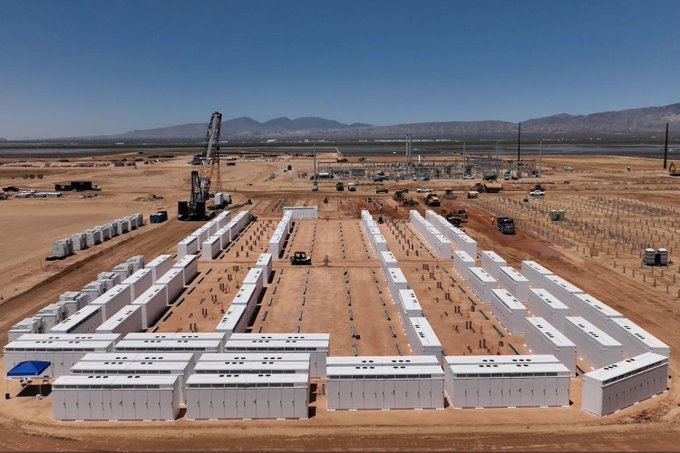
[Solar News] Factor This finance and development roundup: AES, CleanChoice, DESRI, Earthrise, Origis, rPlus, Soltage http://ow.ly/qkqf106bMgK #factorthis #business #finance #news #ProjectDevelopment #Solar #FridayRoundup #Renewables
http://ow.ly/qkqf106bMgK
http://ow.ly/qkqf106bMgK
1 yr. ago
Lusa - Business News - Portugal: Over 75% of electricity produced in May from renewables - Apren
1 yr. ago
Suzlon Energy stock soars after FY25 earnings beat: Is the clean energy giant back for good? https://business-news-toda... #Suzlon #WindEnergy #Renewables #GreenStocks #CleanTechIndia #NSE #PennyToPowerhouse #EnergyTransition #suzlonenergy
https://business-news-toda...
https://business-news-toda...