
NASA's twin Voyager ******* ecraft are very low on power after nearly 50 years. How long can they keep going?
When you buy through links on our articles, Future and its syndication partners may earn a commission.
The pioneering Voyager probes might only have a few years left to explore interstellar ******* e, and that's ******* uming a planned, risky maneuver in 2026 goes well.
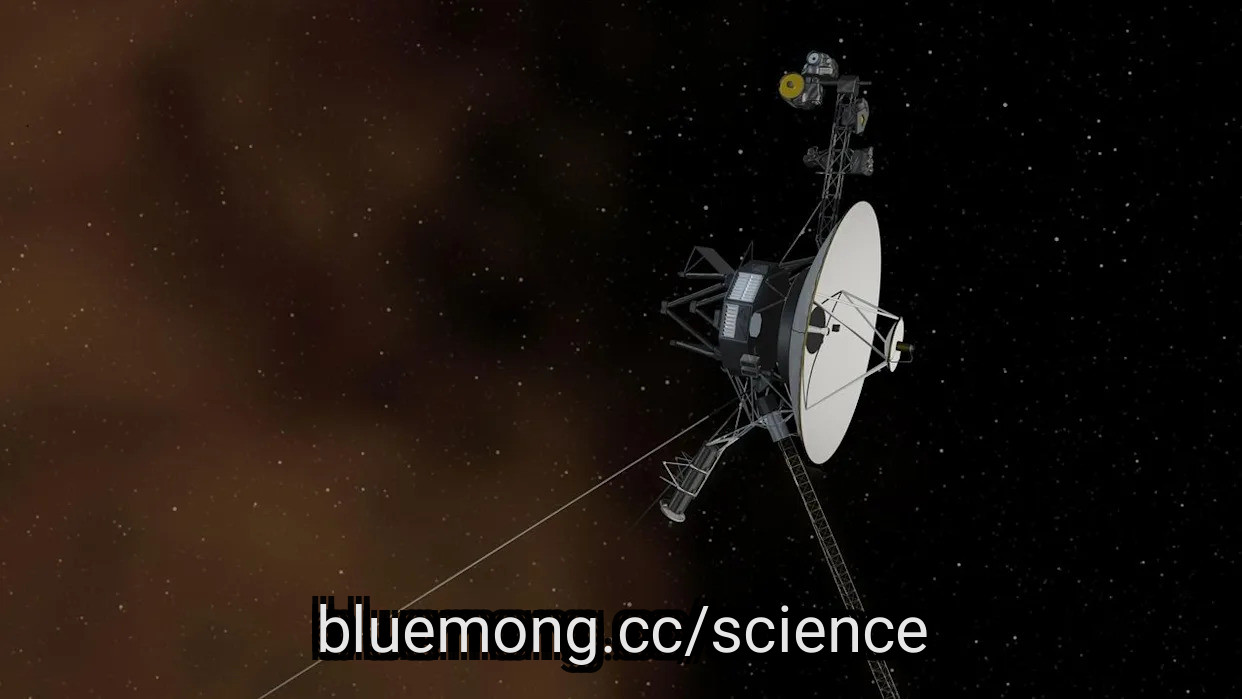
NASA's twin Voyager 1 and Voyager 2 ******* ecraft, both running on nuclear power, now have access to just a portion of the 470 watts of energy that they generated immediately after their 1977 launches. Originally tasked with exploring the giant planets in our solar system, the pair have long passed their expected lifespans and are still transmitting data, far from home.
Voyager 1 crossed into interstellar ******* e in 2012, and Voyager 2 followed suit six years later. For years, NASA has been turning off the probes' instruments one at a time as their power supplies dwindled. They still lose about four watts of power a year. But NASA's Jet Propulsion Laboratory (JPL) in Southern California has an idea, which will be tested out soon, to give them a little more time.
Both Voyager probes launched with the same 10 operational instruments. Voyager 1 turned off its subsystem to look at cosmic rays (high-energy particles) in February, then did the same with its Low-Energy Charged Particles (LECP) instrument in April.
https://www.yahoo.com/news...
When you buy through links on our articles, Future and its syndication partners may earn a commission.
The pioneering Voyager probes might only have a few years left to explore interstellar ******* e, and that's ******* uming a planned, risky maneuver in 2026 goes well.
NASA's twin Voyager 1 and Voyager 2 ******* ecraft, both running on nuclear power, now have access to just a portion of the 470 watts of energy that they generated immediately after their 1977 launches. Originally tasked with exploring the giant planets in our solar system, the pair have long passed their expected lifespans and are still transmitting data, far from home.
Voyager 1 crossed into interstellar ******* e in 2012, and Voyager 2 followed suit six years later. For years, NASA has been turning off the probes' instruments one at a time as their power supplies dwindled. They still lose about four watts of power a year. But NASA's Jet Propulsion Laboratory (JPL) in Southern California has an idea, which will be tested out soon, to give them a little more time.
Both Voyager probes launched with the same 10 operational instruments. Voyager 1 turned off its subsystem to look at cosmic rays (high-energy particles) in February, then did the same with its Low-Energy Charged Particles (LECP) instrument in April.
https://www.yahoo.com/news...
4 months ago