
1 day ago
Democrats retook power in Washington on Tuesday, flipping key House and Senate seats to command majorities in both chambers of Congress.
The power shift creates a new platform for Democrats to launch investigations of President Trump's economic allies — Elon Musk, to name one — and pass bills that may be unlikely to become law but will mark a sharp change in the political climate for business leaders and economic issues after two years of unified Republican control.
The change also appears set to elevate figures like Democratic Sen. Elizabeth Warren and others to prominent positions with oversight over economic policy.
Read more: What a Democratic sweep means for stocks
Democrats are planning "a shock-and-awe legislative sprint," the New York Times reported, on issues like healthcare subsidies and Trump's tariffs, which could prompt a wave of bills to pass the House but stall against the 60-vote threshold in the Senate. Even in the minority, Senate rules mean Republicans retain the power to stop legislation.
#issues


1 day ago
Democrats retook power in Washington on Tuesday, flipping key House and Senate seats to command majorities in both chambers of Congress.
The power shift creates a new platform for Democrats to launch investigations of President Trump's economic allies — Elon Musk, to name one — and pass bills that may be unlikely to become law but will mark a sharp change in the political climate for business leaders and economic issues after two years of unified Republican control.
The change also appears set to elevate figures like Democratic Sen. Elizabeth Warren and others to prominent positions with oversight over economic policy.
Read more: What a Democratic sweep means for stocks
Democrats are planning "a shock-and-awe legislative sprint," the New York Times reported, on issues like healthcare subsidies and Trump's tariffs, which could prompt a wave of bills to pass the House but stall against the 60-vote threshold in the Senate. Even in the minority, Senate rules mean Republicans retain the power to stop legislation.
#senate #change


2 months ago
A woman from a low-income family in China crossed over into Hong Kong to get to a concert she had spent months saving up for.
It was a trip that Beijing’s vast surveillance apparatus didn’t miss. Now her family face the prospect of losing their government benefits for splurging on “high-end consumption.”
The incident has sparked massive debate across Chinese social media over whether those receiving benefits are also entitled to small luxuries. It’s also a reminder of the staggering extent of the Chinese government’s surveillance system, one turbocharged by advances in AI and the embrace of digital payments.
The story first surfaced in a post on popular site Red Note in early September by a user who said they were the young woman’s cousin.
The woman, surnamed Huang, had “worked hard doing manual labor and saved up from the subsidies” to pay for the concert ticket and expenses of traveling to Hong Kong, around 235 miles (380 kilometers) from her home in Jiangxi province, the post said.
#hong #family #government #benefits


2 months ago
Oscar Health (OSCR) raised its full-year earnings outlook while lowering its expected medical costs to cover benefits for its nearly 3 million Affordable Care Act exchange members. OSCR stock climbed in early Wednesday stock market action ahead of its 9 a.m. ET investor conference.
Oscar, which made an aggressive play to gain ACA market share, has seen enrollment surge 47% from a year ago as of June 30, even as overall enrollment has plunged due to the expiration of enhanced premium subsidies. As of now, it looks like the bet is paying off in a big way, with shares up 126% this year through Tuesday. But it's still a bit early to know, because Oscar's earnings depend not only on its own members' costs, but also those of other ACA insurers.
The ACA's No. 2 insurer by membership behind Centene (CNC) said that it now expects its medical loss ratio, or benefit costs as a share of premiums, to be in the 81% to 82% range, down from the prior outlook of 81.5% to 82.5%.
Oscar boosted its outlook for earnings from operations by $100 million at both ends to a range of $600 million to $800 million. The unchanged revenue outlook, between $18.7 billion and $19 billion, implies that no additional customer churn is expected.
Here is what investors should keep in mind. Compared to the overall ACA risk pool, Oscar's enrollment is relatively young, healthy and more likely to sign up for very-high-deductible bronze plans. Yet based on its relatively healthy risk pool, Oscar expects about 20% of its premiums will be paid out via risk adjustment to other carriers under ACA rules. That means results in the second half of this year depend to a large degree on the level of healthcare utilization by non-Oscar members. As of now, it's a bit early to tell, since healthcare spending tends to rise as the year progresses and insured members exhaust their deductibles.
#oscar #year


2 months ago
Investment in what most call clean technologies dropped by 17% over the first half of the year, as China switched from subsidies to a market-based approach to those industries, a report from Rhodium Group has revealed.
Investments in things such as wind and solar power rose in other parts of the world, but China's decline more than offset that growth because of China's position as the top investor in clean tech, far ahead of everyone else.
"Geographically, the decline was driven by China, the world's largest cleantech investor, where a shift to market-based pricing put pressure on new renewable power investments," said the author of the report, Hannah Pitt, as quoted by Reuters.
"China's transition toward market-based pricing for new renewable generation in 2025 drove a rush of installations ahead of the deadline, followed by an uneven pullback. Beijing also phased out consumer EV purchase-tax exemptions starting January 2026," the report pointed out.
These decisions led to a sharp slump in alternative energy and electric transport investment of 49% for China, translating into $133 billion. This trend also slashed China's share of clean tech investment from 52% at the end of 2025 to 39% by June this year.
#Investments


2 months ago
About a million Americans had to find new health insurance at the start of 2026. CVS Health's Aetna subsidiary pulled out of the Affordable Care Act marketplace in 17 states, and at least a dozen more carriers announced they'll stop selling plans next year. When that happens, several hundred thousand more people will need to find coverage elsewhere.
The departures aren't random. When enhanced federal subsidies expired at the end of 2025, premiums jumped, and healthier enrollees dropped coverage. Insurers found themselves covering a smaller, sicker group, and one by one, they decided to stop. The numbers were no longer adding up.
Texas has lost three carriers in two years. Oregon is down another two. For the millions of people who depend on marketplace coverage, every exit gives the insurers who stay less reason to keep prices low.
CVS Health was the first major provider to leave. Its Aetna marketplace enrollees were running up medical bills that exceeded what the company collected in premiums, and CVS projected losses of up to $400 million on its ACA plans in 2025. It was the company's second retreat from the exchanges: Aetna had pulled out in 2017, returned in 2022, expanded into more states in 2023, and still couldn't make the business work.
Cigna followed in late April. The insurer's marketplace enrollment had already fallen 17% from a year earlier, and its president and incoming CEO, Brian Evanko, told ***** ysts there was no viable path to growth. Cigna will leave all 11 states where it sells plans, displacing about 369,000 enrollees, according to healthinsurance.org and Becker's Payer Issues.
#coverage #Health #insurers


2 months ago
Baltimore Mayor Brandon Scott is backing a ballot measure to establish a municipal fund that could provide direct cash payments, subsidies, or supplies to parents of newborns.
Recently, Scott and the campaign behind the Baltimore Baby Fund (BBF) issued a joint statement outlining their collaboration to build public support for the measure ahead of the election.
"Mayor Scott and the Baltimore Baby Fund campaign look forward to working together in the months ahead to earn voters' support and, if the initiative passes, outline a program that gives Baltimore's babies and families the strongest possible start," the BBF campaign posted on Instagram.
Albuquerque Uses Weed Tax To Fund 'No-strings-attached' Guaranteed Income, Sparking Policy Debate
Brandon Scott, mayor of Baltimore, during an interview in New York, US, on Tuesday, Oct. 7, 2025.
#fund #mayor #baby



3 months ago
Time and again, I've seen the same movie at Intel, from different angles. From the layoffs, the 18A yield progress, the management restructuring, the CHIPS Act subsidies, and the Q2 beat, which was the company's strongest revenue growth in 15 years.
Each piece of the puzzle has been pointing in the same direction: Artificial Intelligence (AI). These are just a few of the moves Intel has made.
Recently, we saw Intel raise its 2026 capital expenditure estimates to more than $20 billion, from around $18 billion, to meet rising demand.
August 10, Intel revealed how it intends to fund the next chapter. Intel announced plans to offer $15 billion in new stock. This may be its first public equity offering since it listed in 1971, according to Intel's statement.
The proceeds are earmarked for general corporate purposes, including real-world AI applications, purpose-built silicon, and foundry expansion.
#Intel #billion #intelligence


3 months ago
Our ******* ysts just identified a stock with the potential to be the next Nvidia. Tell us how you invest and we'll show you why it's our #1 pick. Tap here.
Volume growth acceleration was primarily driven by sustained improvements in patient mortality, which management attributes to successful clinical execution and better management of phosphate levels.
The transition of phosphate binders into the Medicare dialysis bundle has reduced reliance on less effective over-the-counter options by more than 50%, expanding access to clinically preferred therapies.
Revenue per treatment declined sequentially due to lower commercial mix following the expiration of ACA subsidies and lower sequential revenue contribution from phosphate binders.
Management is pivoting toward middle molecule clearance technology, specifically expanded hemodialysis (HD), which offers mortality benefits without requiring significant new capital investment in machines.
#lower #medicare

3 months ago
T-Mobile is changing how customers finance new devices after previously saying it would scale back free phone deals and device subsidies.
During an earnings call in February, T-Mobile CEO Srini Gopalan revealed that the company is moving away from device subsidies and will rethink its approach to these deals, noting that customers purchase new phones roughly once every three years.
He later doubled down on this plan during an earnings call in July, stating that the company has given consumers 250 reasons to switch to its network, extending beyond free phone offers. Gopalan also warned that customers will soon have to pay more for smartphones due to rising memory chip prices.
"What we're seeing is clearly the memory price increases are resulting in higher prices for smartphones across the board," he said. "Our intention, consistent with what we've said, is not to increase our subsidy levels. That's going to mean that customers will have to pay more. That's just the result of that dynamic."
Amid these changes, T-Mobile has announced its "Nothing" initiative, which is a new way for new and existing customers to pay $0 upfront for a new phone, according to a recent press release.
#free


3 months ago
Baron Capital, an investment management company, released its Q2 2026 investor letter for the "Baron Health Care Fund". A copy of the letter is available to download here. The Fund gained 11.99% during the quarter, compared with the 10.48% gain for the Russell 3000 Health Care Index and the 15.44% gain for the Russell 3000 Index. Since inception, the Fund appreciated 10.61% on an annualized basis, compared with 10.02% for the Benchmark and 14.83% for the Index. Strong stock selection in pharmaceuticals, biotechnology, health care equipment, and life sciences tools and services supported the Fund's outperformance, although limited exposure to managed care stocks reduced relative returns. The Fund remains positive on health care due to improving biotechnology funding, strong acquisition activity, recovering managed care margins, and growth from an aging population, chronic disease, medical innovation, and higher health care spending. In addition, please check the Fund's top five holdings to know the best picks in 2026.
In its second-quarter 2026 investor letter, Baron Health Care Fund highlighted Intuitive Surgical, Inc. (NASDAQ:ISRG). Intuitive Surgical, Inc. (NASDAQ:ISRG) develops, manufactures, and markets products that enable physicians and healthcare providers to enhance the quality of and access to minimally invasive care in the United States and internationally. On August 3, 2026, Intuitive Surgical, Inc. (NASDAQ:ISRG) closed at $375.41 per share. The one-month return of Intuitive Surgical, Inc. (NASDAQ:ISRG) was -13.53% and its shares lost 26.60% over the past 52 weeks. Intuitive Surgical, Inc. (NASDAQ:ISRG) has a market capitalization of $132.62 billion.
Baron Health Care Fund stated the following regarding Intuitive Surgical, Inc. (NASDAQ:ISRG) in its Q2 2026 investor letter:
"Intuitive Surgical, Inc. (NASDAQ:ISRG) sells robotic-assisted surgical systems. Shares declined after the company's first-quarter U.S. system placements came in below investor expectations. Medical device stocks also broadly underperformed the market amid concerns that health care utilization trends could decelerate following the expiration of Affordable Care Act (ACA) subsidies. Concerns were further compounded by the potential impact of Medicaid work requirements expected to take effect in 2027. Despite these headwinds, we believe Intuitive can continue to grow revenue at a mid-teens rate for many years and remain positive on the company's long-term growth outlook."
Intuitive Surgical, Inc. (NASDAQ:ISRG) is not on our list of the 40 Most Popular Stocks Among Hedge Funds. As per our database, 103 hedge fund portfolios held Intuitive Surgical, Inc. (NASDAQ:ISRG) at the end of the first quarter which was 109 in the previous quarter. While we acknowledge the potential of Intuitive Surgical, Inc. (NASDAQ:ISRG) as an investment, we believe certain AI stocks offer greater upside potential and carry less downside risk. If you're looking for an extremely undervalued AI


3 months ago
(NewsNation) — Retirees shouldn't be alarmed by the ending of a Biden-era Medicare premium subsidy program, an industry expert says.
Last week, the Trump administration said it would move to shutter the program, subsequently bringing to an end Medicare Part D subsidies at the cessation of 2026.
Medicare Part D is optional prescription drug coverage offered by private insurance companies to help people with Medicare pay for brand-name and generic medications.
It is available as a stand-alone plan to add to original Medicare or as part of a bundled Medicare Advantage plan.
"While headlines about the end of Medicare's premium stabilization program may sound alarming, retirees shouldn't confuse that change with a loss of Medicare prescription drug coverage," Chris Maikels, senior actuary and strategy leader of retiree solutions at Aptia Group, told NewsNation.
#coverage


3 months ago
Baron Capital, an investment management company, released its Q2 2026 investor letter for the "Baron Health Care Fund". A copy of the letter is available to download here. The Fund gained 11.99% during the quarter, compared with the 10.48% gain for the Russell 3000 Health Care Index and the 15.44% gain for the Russell 3000 Index. Since inception, the Fund appreciated 10.61% on an annualized basis, compared with 10.02% for the Benchmark and 14.83% for the Index. Strong stock selection in pharmaceuticals, biotechnology, health care equipment, and life sciences tools and services supported the Fund's outperformance, although limited exposure to managed care stocks reduced relative returns. The Fund remains positive on health care due to improving biotechnology funding, strong acquisition activity, recovering managed care margins, and growth from an aging population, chronic disease, medical innovation, and higher health care spending. In addition, please check the Fund's top five holdings to know the best picks in 2026.
In its second-quarter 2026 investor letter, Baron Health Care Fund highlighted Intuitive Surgical, Inc. (NASDAQ:ISRG). Intuitive Surgical, Inc. (NASDAQ:ISRG) develops, manufactures, and markets products that enable physicians and healthcare providers to enhance the quality of and access to minimally invasive care in the United States and internationally. On August 3, 2026, Intuitive Surgical, Inc. (NASDAQ:ISRG) closed at $375.41 per share. The one-month return of Intuitive Surgical, Inc. (NASDAQ:ISRG) was -13.53% and its shares lost 26.60% over the past 52 weeks. Intuitive Surgical, Inc. (NASDAQ:ISRG) has a market capitalization of $132.62 billion.
Baron Health Care Fund stated the following regarding Intuitive Surgical, Inc. (NASDAQ:ISRG) in its Q2 2026 investor letter:
"Intuitive Surgical, Inc. (NASDAQ:ISRG) sells robotic-assisted surgical systems. Shares declined after the company's first-quarter U.S. system placements came in below investor expectations. Medical device stocks also broadly underperformed the market amid concerns that health care utilization trends could decelerate following the expiration of Affordable Care Act (ACA) subsidies. Concerns were further compounded by the potential impact of Medicaid work requirements expected to take effect in 2027. Despite these headwinds, we believe Intuitive can continue to grow revenue at a mid-teens rate for many years and remain positive on the company's long-term growth outlook."
Intuitive Surgical, Inc. (NASDAQ:ISRG) is not on our list of the 40 Most Popular Stocks Among Hedge Funds. As per our database, 103 hedge fund portfolios held Intuitive Surgical, Inc. (NASDAQ:ISRG) at the end of the first quarter which was 109 in the previous quarter. While we acknowledge the potential of Intuitive Surgical, Inc. (NASDAQ:ISRG) as an investment, we believe certain AI stocks offer greater upside potential and carry less downside risk. If you're looking for an extremely undervalued AI
In its second-quarter 2026 investor letter, Baron Health Care Fund highlighted Intuitive Surgical, Inc. (NASDAQ:ISRG). Intuitive Surgical, Inc. (NASDAQ:ISRG) develops, manufactures, and markets products that enable physicians and healthcare providers to enhance the quality of and access to minimally invasive care in the United States and internationally. On August 3, 2026, Intuitive Surgical, Inc. (NASDAQ:ISRG) closed at $375.41 per share. The one-month return of Intuitive Surgical, Inc. (NASDAQ:ISRG) was -13.53% and its shares lost 26.60% over the past 52 weeks. Intuitive Surgical, Inc. (NASDAQ:ISRG) has a market capitalization of $132.62 billion.
Baron Health Care Fund stated the following regarding Intuitive Surgical, Inc. (NASDAQ:ISRG) in its Q2 2026 investor letter:
"Intuitive Surgical, Inc. (NASDAQ:ISRG) sells robotic-assisted surgical systems. Shares declined after the company's first-quarter U.S. system placements came in below investor expectations. Medical device stocks also broadly underperformed the market amid concerns that health care utilization trends could decelerate following the expiration of Affordable Care Act (ACA) subsidies. Concerns were further compounded by the potential impact of Medicaid work requirements expected to take effect in 2027. Despite these headwinds, we believe Intuitive can continue to grow revenue at a mid-teens rate for many years and remain positive on the company's long-term growth outlook."
Intuitive Surgical, Inc. (NASDAQ:ISRG) is not on our list of the 40 Most Popular Stocks Among Hedge Funds. As per our database, 103 hedge fund portfolios held Intuitive Surgical, Inc. (NASDAQ:ISRG) at the end of the first quarter which was 109 in the previous quarter. While we acknowledge the potential of Intuitive Surgical, Inc. (NASDAQ:ISRG) as an investment, we believe certain AI stocks offer greater upside potential and carry less downside risk. If you're looking for an extremely undervalued AI


3 months ago
July 28 (Reuters) - The Trump administration plans to end a subsidy program that helped hold premiums for Medicare drug plans, the Wall Street Journal reported on Tuesday, citing government officials.
The program, expected to provide insurers with roughly $3.6 billion in subsidies this year to cushion Medicare Part D premium increases, will not be renewed beyond 2026, the report said.
Medicare Part D, which provides prescription drug coverage to millions of Medicare beneficiaries through private insurance plans, is a key component of the federal health program for seniors.
Rising healthcare costs remain a growing concern in the U.S., particularly for older Americans living on fixed incomes. Nearly 25 million people were enrolled in standalone Medicare Part D prescription drug plans in 2026, according to data from health policy research group KFF.
The Journal quoted an administration official who said the additional subsidies gave insurers an incentive to raise premiums because the government would absorb much of the added cost. The official also said the subsidies were no longer necessary, saying that other measures aimed at keeping Medicare Part D costs in check remain in place.
#medicare #program #drug #subsidies


3 months ago
Health policy has quietly become a stock-moving variable in 2026, and the figures are significant enough to matter. Approximately 2.6 million Americans discontinued ACA marketplace coverage this year after increased pandemic-era subsidies ended at the end of 2025, with health policy experts predicting that total enrollment would decrease to between 16.5 million and 17.5 million by year-end. Meanwhile, the Urban Institute has projected that 4.8 million more people will be uninsured in 2026 as a direct consequence of the lapsed subsidies, with certain HealthCare.gov-reliant states witnessing enrollment losses of 20% or more.
Whether this translates into fewer elective medical treatments is now a hotly debated topic in the healthcare industry, with Intuitive Surgical, Inc. (NASDAQ:ISRG) emerging as the evident casualty. The company's shares plunged more than 12% before the bell on July 17, despite Intuitive maintaining its global procedure-growth prediction for its da Vinci surgical robots. Instead, the selloff was driven by the company's own admission that changes in insurance coverage could impact demand.
US da Vinci procedure growth slowed to roughly 12% in the second quarter, down from where Intuitive Surgical, Inc. (NASDAQ:ISRG) expected to be at the beginning of the year, with a focus on surgeries that patients may defer. On the July 16 call, CEO David Rosa told ******* ysts that customer conversations indicated that fluctuating patient coverage and premium dynamics affect "when patients seek care," as opposed to if they seek it at all.
That reaction came at an awkward time, as a highly public disagreement was already taking place in the sector. Abbott, a major medical device and diagnostics manufacturer, had argued recently that blaming industry-wide procedure weakness on ACA disenrollment was a "flawed ******* umption." HCA Healthcare, the largest for-profit hospital operator in the United States, took the opposite stance, warning earlier of lower surgical demand and an increase in uninsured patients when pandemic-era subsidies expired.
Intuitive's own results now appear to support the HCA side of the argument, at least in procedures when patients can choose to delay. Stifel's response immediately reflected the tension: the firm reduced its price objective to $550 from $670 on July 17 while keeping a Buy rating on the company's shares, despite Intuitive Surgical, Inc. (NASDAQ:ISRG) exceeding expectations in revenue, earnings, system placements, and procedure growth in the same quarter. Both US procedure and installed-base growth have slowed since the 2020-2021 COVID era, with management blaming the slowdown on ACA disenrollment and the basic law of large numbers as the installed base matures.
#NASDAQ #Growth #healthcare

3 months ago
BRUSSELS, July 23 (Reuters) - A group of investors including Saudi Arabia's Public Investment Fund has secured EU antitrust approval for its $55 billion acquisition of video game developer Electronic Arts, the European Commission said on Thursday.
Saudi Arabia's $1 trillion wealth fund, Jared Kushner's Affinity Partners and private equity firm Silver Lake announced the deal, the largest leveraged buyout in history, in September last year.
The Commission, which acts as the EU competition enforcer and had examined the deal under its merger rules, said the acquisition would not raise competition concerns, confirming a Reuters story.
The EU executive is also scrutinising the deal under its Foreign Subsidies Regulation (FSR) aimed at preventing unfair non-EU subsidies granted to companies looking to acquire rivals in the 27-country bloc and is seen as a bigger hurdle.
PIF is also expected to win EU clearance under EU subsidy rules, people familiar with the matter told Reuters last week. The Commission's decision is due by July 30.
#reuters #fund #Competition


4 months ago
By Tim Hepher and David Shepardson
FARNBOROUGH, England, July 21 (Reuters) - Boeing has asked the U.S. government to press the European Union for transparency over a €3 billion ($3.43 billion) loan package to Airbus, resurfacing trade tensions after the two sides extended a tariff truce over jet subsidies.
What is the European Investment Bank's response to Boeing's concerns?
Could this loan dispute affect the Boeing-Airbus tariff truce?
#shepardson



4 months ago
By Kanishka Singh
WASHINGTON, July 13 (Reuters) - The Trump administration's Department of Health and Human Services has rescinded a $10 billion freeze on child care subsidies and social services funding for five states governed by Democrats after legal obstacles got in the way of the freeze attempts, court records showed on Monday.
Here are details:
• The Department of Health and Human Services communicated to officials in California, Illinois, Colorado, New York and Minnesota that it was rescinding its January 5 and January 6 letters to the states, including all data requests and information requirements **** ociated with those letters.
• A legal filing on Monday released the communication, which said that the mechanism that the department used to enforce the temporary restricted drawdowns has been terminated.


4 months ago
Sales of Chinese-made vehicles, including exports, declined by 3.2% to 2.81 million units in June 2026 after rising by 14% to 2.904 million units a year earlier, according to passenger car and commercial vehicle wholesale data compiled by the China **** ociation of Automobile Manufacturers (CAAM). Domestic sales plunged by 23% year-on-year to 1.773 million units last month, after rising by 10% to 2.312 million units a year earlier, while exports surged by 75% to 1.037 million units from 592,000 units.
Total sales of light passenger vehicles declined by 5.3% to 2.402 million units last month, while commercial vehicle sales rose by almost 11% to 408,000 units. Overall vehicle production in the country declined by 1.2% to 2.760 million units.
China's light passenger vehicle market this year has struggled against strong year-earlier volumes, while sales have also been affected by the withdrawal of some government subsidies and tax exemptions for new energy vehicles (NEVs) at the end of last year. The government has also taken action this year aimed at ending the prolonged "race-to-the-bottom" price war among domestic manufacturers, which was seen as damaging to the industry's long-term growth prospects, with automakers no longer allowed to sell their vehicles at prices below the cost of production. To help maintain affordability, manufacturers and dealers are now offering 'ultra-long-term' auto financing programmes, with repayment terms of up to eight years.
The economy expanded by a better-than-expected 5.0% year-on-year in the first quarter of 2026, after growth slowed to 4.5% in the previous quarter, driven mainly by strong exports. Consumer spending picked up slightly, helped by recent government stimulus measures, but growth remained sluggish at 2.4% year-on-year.
In the first six months of 2026, sales of Chinese-made vehicles declined by 4.1% to 15.017 million units after rising by 11% to 15.653 million units a year earlier, with sales of light passenger vehicles falling by over 6% to 12.720 million units while commercial vehicle sales rose by 8% to 2.297 million units. Domestic sales declined by 21% to 9.921 million units in this period, while exports surged by over 65% to 5.096 million units.

4 months ago
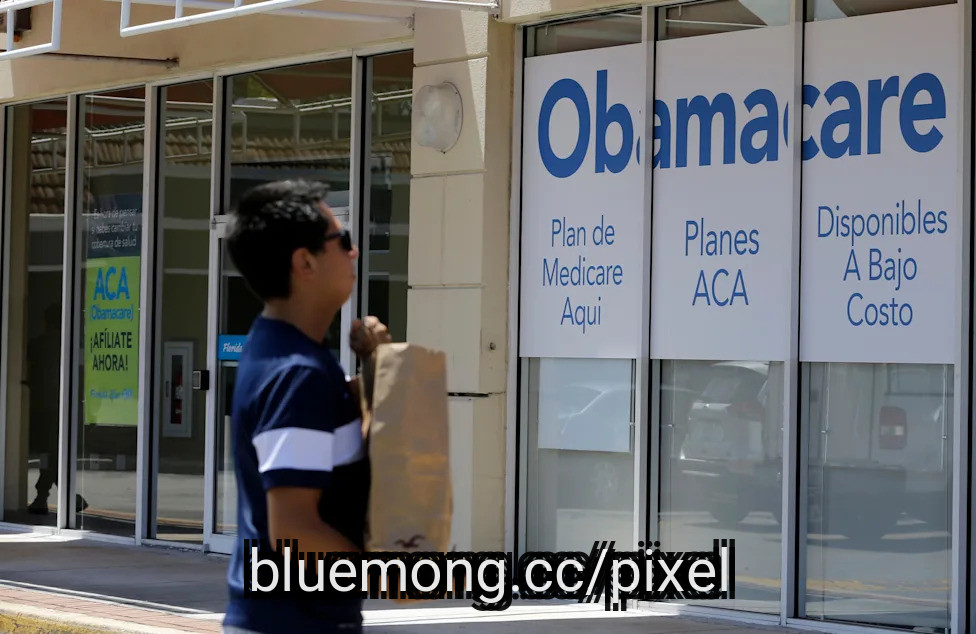
NEW YORK (AP) — Middle-income Americans straining to pay for Affordable Care Act health insurance are unlikely to get relief next year, according to a new ****** ysis that shows insurers in the marketplace are proposing a second straight year of double-digit premium hikes.
Across the 77 insurers in the ACA program that have submitted rate filings that are publicly available, the median proposed premium increase for 2027 is 14%, according to Wednesday's ****** ysis from the healthcare research nonprofit KFF. The insurers cited mounting healthcare costs, federal regulatory changes and the recent expiration of pandemic-era enhanced subsidies as the biggest factors driving premiums higher.
The rise in premiums adds to what already was a significant jump in 2026, when the median rate increase was 20%, according to KFF.
While most Americans in Obamacare still qualify for subsidies that protect them from paying the full premiums, middle-class enrollees who don't get those subsidies will face an especially stark increase in costs. That group includes households with incomes at or above 400% of the poverty level — about $63,000 per year for an individual or $129,000 for a family of four.
The rate increases come as federal lawmakers have proposed various policy changes to overhaul the expensive U.S. healthcare system, but no comprehensive legislation has amassed enough support to pass. The higher costs are contributing to Americans' existing worries about overall affordability, a concern that many voters say is front of mind with November's midterm elections looming.


4 months ago
NEW YORK (AP) — About 3 million fewer people in the United States had Affordable Care Act health insurance plans in February compared with the same time last year, according to new federal data.
In the report released Friday, the U.S. Department of Health and Human Services suggested the 13% drop in enrollment from 22.1 million people in 2025 to 19.2 million this year could be attributed to a federal crackdown on fraudulent or "phantom" enrollment. But health ******* ysts said it was more likely related to the Jan. 1 expiration of federal subsidies, which caused a surge in plan costs that resulted in many people being unable to pay their premiums.
"We know that real people lost their health insurance coverage," said Cynthia ******* , a vice president and director of the ACA program at the healthcare research nonprofit KFF, citing survey findings on people who had left their plans. "This coverage loss happened at the same time millions of people faced double or even triple digit increases in their premium payments."



5 months ago
HONG KONG (AP) — The war in Iran has helped reshape the global electric vehicle market, giving Chinese automakers an opening across the developing world as soaring fuel prices push drivers towards electric vehicles, even as charging infrastructure lags behind a wave of imports.
The blockade of the Strait of Hormuz disrupted shipping of about a fifth of the world's crude oil and liquified natural gas, first hitting Asia — the main destination for the fuels — followed by Africa.
This shock accelerated a trend that was already spreading across the developing world. In April, global exports of Chinese EVs hit a record $9.4 billion, according to an **** ysis by think tank Ember of Chinese customs data. Shipments surged to countries such as Australia, Brazil and regions like Southeast Asia and East Africa.
China exported about 435,000 passenger EVs and plug-in hybrids in May, more than double from a year earlier, according to the Chinese **** ociation of Automobile Manufacturers.
As fuel costs rise, more drivers are switching to EVs to save money, while governments from Laos to Ethiopia are embracing electrification to curb oil imports and reduce costs of fuel subsidies.



5 months ago
BRUSSELS, June 17 (Reuters) - A group of investors including Saudi Arabia's Public Investment Fund has sought EU antitrust approval for its $55 billion acquisition of videogame developer Electronic Arts, according to a European Commission filing on Wednesday.
The Commission, which acts as the EU competition enforcer, set a July 22 deadline for its decision. It can either clear the deal with or without remedies or open a full-scale investigation if it has serious concerns.
The group, which includes Jared Kushner's Affinity Partners and private equity firm Silver Lake, announced the deal for the maker of "Battlefield" and "Madden NFL" in September last year.
The PIF, Saudi Arabia's $1 trillion wealth fund, is betting on the enduring value of blockbuster game franchises as the industry recovers and the kingdom strives to become a global hub for games and sports.
The deal, which is expected to secure EU antitrust approval, will also need approval under EU rules aimed at preventing unfair foreign subsidies granted to companies to acquire rivals.


5 months ago
Marvell's GAAP net income cratered 81% year over year while 76% of its revenue comes from customers actively building silicon to replace it.
MRVL's forward P/E of 65 dwarfs TSM's 27, yet TSM delivers 44% net income growth and a physical moat no competitor can replicate.
Rising U.S. investment tax credits to 35% and government subsidies across four countries are steadily closing the Taiwan risk discount on TSM shares.
Act now: the **** yst who called NVIDIA in 2010 just named his top 10 AI stocks — and Taiwan Semiconductor Manufacturing didn't make the cut. Grab the names FREE today.
Marvell Technology (NASDAQ:MRVL) is the name on every chip trader's lips after a 305.44% one-year rip that turned custom AI silicon into the most crowded trade in semiconductors. But here's what you should actually be watching.


5 months ago
In the first year of his second term, President Donald Trump made a special effort to deny the impacts of climate change. In a September 2025 United Nations speech, he called carbon footprints a “hoax” and criticized climate policies, jabbing, “Windmills are pathetic.” The White House defunded renewable energy subsidies, dismissing them as a waste of government funding.
But the administration launched a probe this month into Brazil’s deforestation as part of Trump’s implementation of new tariffs, which entail investigations into countries’ trade practices.
Brazil is home to about 60% of the Amazon rain forest, which absorbs carbon dioxide that would otherwise enter the atmosphere and contribute to global warming. Legal deforestation—mostly as a result of cattle ranching and agricultural expansion—has cost the country about 3.7 million acres per year.
To be sure, Trump hasn’t changed his mind about climate change, though his sudden concern over deforestation is still ironic.
Instead, the U.S. Trade Representative (USTR) announced a wave of new tariffs on dozens of major U.S. trading partners under Section 301 of the 1974 Trade Act, alleging they failed to enforce bans on imports made with forced labor.
5 months ago
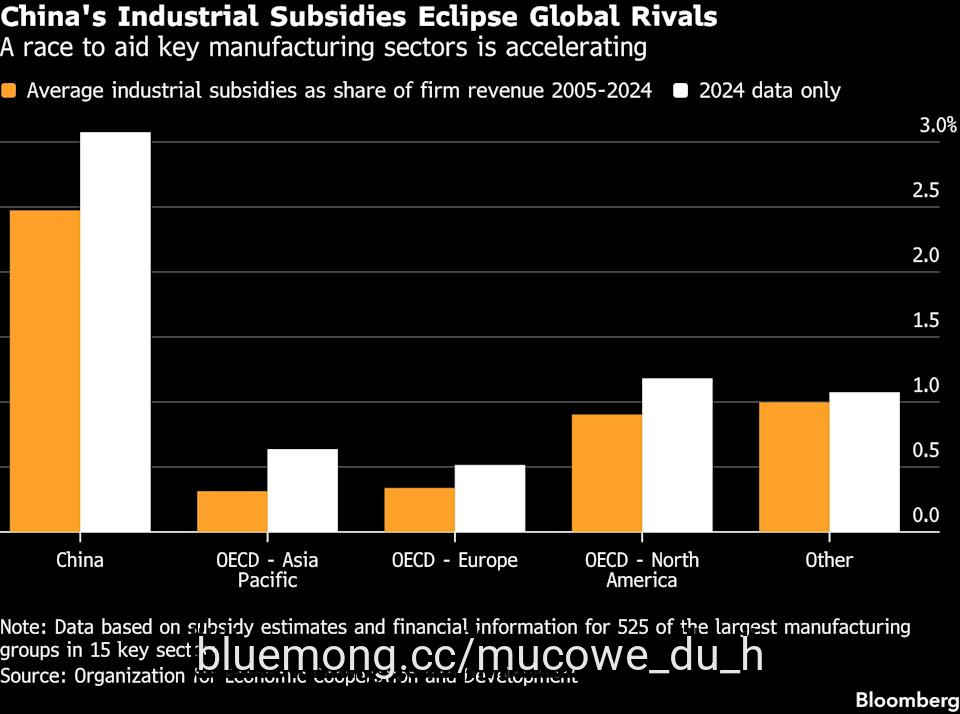
(Bloomberg) -- Industrial subsidies are reshaping the global economy with China standing out as a provider of state support that risks harmful distortions, according to new data from the OECD.
Most Read from Bloomberg
US Says Deals With Iran for Safe Hormuz Transit Are Prohibited
Berkshire Hathaway to Buy Taylor Morrison for $6.8 Billion
A Rare ‘Super’ El Niño Is Looking More Likely. Here’s What to Expect
Most Read from Bloomberg
US Says Deals With Iran for Safe Hormuz Transit Are Prohibited
Berkshire Hathaway to Buy Taylor Morrison for $6.8 Billion
A Rare ‘Super’ El Niño Is Looking More Likely. Here’s What to Expect



5 months ago
Over four years ago, Belarus' authoritarian President Alexander Lukashenko allowed longtime ally Russia to use his territory to invade Ukraine. Now officials in Kyiv are warning that Lukashenko could again allow his land to serve as a launchpad for more attacks by the Kremlin's forces.
While Belarus has not contributed troops to battle, Lukashenko has backed President Vladimir Putin’s war effort by hosting Russia’s nuclear weapons and military infrastructure, as well as producing components for Moscow’s military industries. Earlier this month, the countries held joint drills of nuclear forces involving Russian weapons deployed in Belarus.
Lukashenko, in power for over three decades, has ruled the nation of 9.5 million with an iron fist, relentlessly cracking down on dissent and relying on its close ties with Russia, as well as subsidies from the Kremlin's coffers, to counteract repeated Western sanctions.
Military cooperation between Moscow and Minsk is increasingly worrying Ukraine’s allies.
When Putin began the full-scale invasion of Ukraine on Feb. 24, 2022, Russian troops that gathered in Belarus under the guise of drills dashed toward Kyiv, only about 90 kilometers (56 miles) south of the border.




10 months ago
(AKA the unemployment rate, cost of eggs, gas prices, inflation, the Dow Jones, whether citizens received a stimulus check, and Trump's overall approval rating.)
It wasn't exactly convincing, considering Americans are facing massive insurance hikes in 2026 because Trump and his party recently chose to allow Affordable Care Act subsidies to expire in two weeks. Likewise, our pockets are shrinking as the cost of food and living bloat.
Related: Trump Bragged About His Giant Ballroom Again, And People Did Not Wait To Roast Him
Note: Data on inflation is released a few weeks after each month has




10 months ago
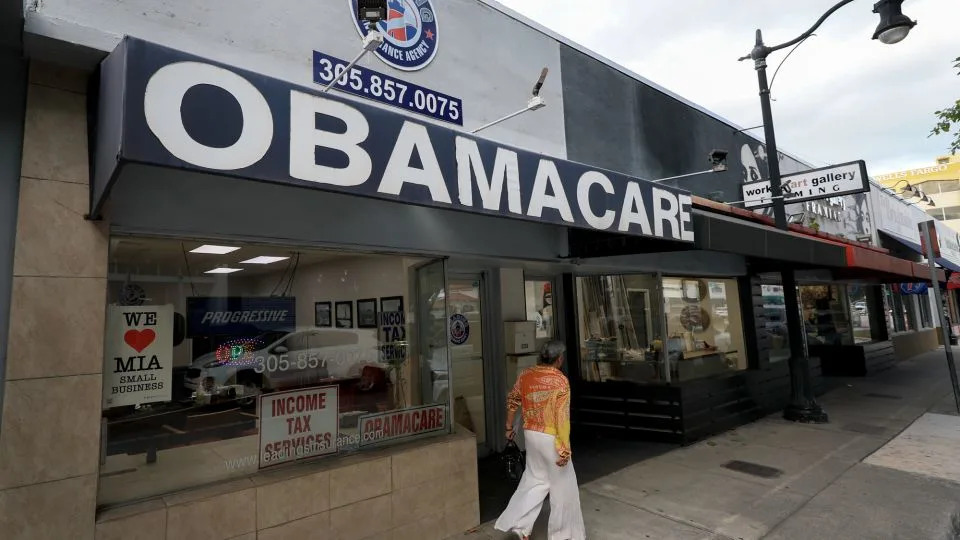
ACA aid is ending. Some small-business owners face $2,000+ monthly premiums.
When patients come to Eric Frankenfeld’s chiropractic practice with insurance woes, his wife, Lisa, the office manager, tells them not to worry because she’ll work with them to keep care affordable.
But starting in January, the Frankenfelds might need to ask for the same treatment from their own doctors, since they will become uninsured. The Point Pleasant, New Jersey, couple will no longer be able to afford their Obamacare plan after the enhanced premiums subsidies lapse at year’s end. They decided to forgo cover


11 months ago
How the end of extra health care subsidies could affect you, broken down by income
Extra subsidies that made Affordable Care Act plans more affordable for millions of Americans for the past five years are all but guaranteed to vanish on New Year’s Day.
In January, most people who buy plans on HealthCare.gov or a state-run marketplace will see a rise in their monthly premium, ranging from a modest **** p to hundreds or even thousands of dollars.
Subscribe to The Post Most newsletter for the most important and interesting stories from The Washington Post.
Congress has been locked in a fier