

51 mins. ago
Oracle, Microsoft, and Amazon helped push hyperscaler capex past $400 billion in 2025, a figure that exceeded combined operating cash flow for the first time.
Meta and Alphabet fund an AI buildout projected at $9 trillion through 2032, averaging 3.22% of GDP and topping railroads' historic 2.24% share.
Read More: Learn 7 ways to generate income with a $1,000,000+ portfolio (sponsor)
Railroads made Cornelius Vanderbilt America's richest person by the 1860s, dying in 1877 with an estate estimated at $95 million to $105 million, larger than U.S. Treasury holdings. By share of GDP, Vanderbilt places third among the richest Americans, behind Rockefeller and Carnegie. Within years, his industry's financing gave way, a warning for today's AI expansion.
The rail network doubled from 35,000 to 70,000 miles between 1865 and 1872, with bonds financing more than three-quarters of it. On September 18, 1873, Jay Cooke's bank failed. The New York Stock Exchange closed for ten days, its first closure ever.
#railroads #amazon
Meta and Alphabet fund an AI buildout projected at $9 trillion through 2032, averaging 3.22% of GDP and topping railroads' historic 2.24% share.
Read More: Learn 7 ways to generate income with a $1,000,000+ portfolio (sponsor)
Railroads made Cornelius Vanderbilt America's richest person by the 1860s, dying in 1877 with an estate estimated at $95 million to $105 million, larger than U.S. Treasury holdings. By share of GDP, Vanderbilt places third among the richest Americans, behind Rockefeller and Carnegie. Within years, his industry's financing gave way, a warning for today's AI expansion.
The rail network doubled from 35,000 to 70,000 miles between 1865 and 1872, with bonds financing more than three-quarters of it. On September 18, 1873, Jay Cooke's bank failed. The New York Stock Exchange closed for ten days, its first closure ever.
#railroads #amazon


23 days ago
Most investors bury their mistakes in a footnote. Warren Buffett prints his in the shareholder letter, in plain English, with his name on it.
For most of the past decade, the story around Berkshire Hathaway (BRK.A) (BRK.B) and its industrial businesses was maintenance rather than growth. Railroads, utilities, insurance float, a slow grind of cash into the same pile.
The exciting money went somewhere else. It went into chips, cloud contracts and anything with a graphics processing unit bolted to it.
That framing skipped a physical step. Before one chip in a new data center draws a watt, somebody has to build the machine that produces the watt.
And the hottest, most stressed piece inside that machine is a cast slab of superalloy that only a handful of companies on earth know how to pour without cracking it.
#machine #warren #buffett #english
For most of the past decade, the story around Berkshire Hathaway (BRK.A) (BRK.B) and its industrial businesses was maintenance rather than growth. Railroads, utilities, insurance float, a slow grind of cash into the same pile.
The exciting money went somewhere else. It went into chips, cloud contracts and anything with a graphics processing unit bolted to it.
That framing skipped a physical step. Before one chip in a new data center draws a watt, somebody has to build the machine that produces the watt.
And the hottest, most stressed piece inside that machine is a cast slab of superalloy that only a handful of companies on earth know how to pour without cracking it.
#machine #warren #buffett #english


26 days ago
Railroad retirement coverage follows the employer, not the work, so independent locomotive manufacturers' workers earn zero creditable railroad service regardless of their job.
Paycheck deductions reveal which system applies. Railroad employees pay Tier I and Tier II taxes, while Social Security-covered workers see only standard withholding.
Workers should confirm RRB employer coverage, check payroll records for Tier II deductions, and review their Social Security earnings record before building any retirement plan.
Are you ahead, or behind on retirement? SmartAsset's free tool can match you with a financial advisor in minutes to help you answer that today. Each advisor has been carefully vetted, and must act in your best interests. Don't waste another minute; learn more here.
In February, Union Pacific signed a $1.2 billion deal with Wabtec to modernize locomotives, a reminder that the companies building the machines and the railroads running them can sit on opposite sides of a surprisingly important retirement line.
#railroad
Paycheck deductions reveal which system applies. Railroad employees pay Tier I and Tier II taxes, while Social Security-covered workers see only standard withholding.
Workers should confirm RRB employer coverage, check payroll records for Tier II deductions, and review their Social Security earnings record before building any retirement plan.
Are you ahead, or behind on retirement? SmartAsset's free tool can match you with a financial advisor in minutes to help you answer that today. Each advisor has been carefully vetted, and must act in your best interests. Don't waste another minute; learn more here.
In February, Union Pacific signed a $1.2 billion deal with Wabtec to modernize locomotives, a reminder that the companies building the machines and the railroads running them can sit on opposite sides of a surprisingly important retirement line.
#railroad


1 month ago
Omaha, Nebraska-based Union Pacific Corporation (UNP) operates in the railroad business. Valued at $178.6 billion by market cap, it connects 23 states in the western two-thirds of the U.S. by rail, providing a critical link in the global supply chain, hauling a variety of goods, including agricultural, automotive, and chemical products.
Companies worth $10 billion or more are generally described as "large-cap stocks," and UNP definitely fits that description, with its market cap exceeding this threshold, reflecting its substantial size, influence, and dominance in the railroads industry. UNP's expansive North American network, including its stake in Mexico's Ferromex and strong cross-border freight business, gives it a distinct competitive advantage and supports a diverse customer base. Its long-standing reputation for reliability has built strong brand loyalty and long-term contracts, driving stable revenues and long-term growth.
Dear Sandisk Stock Fans, Mark Your Calendars for August 31
Bill Gates Says 'We Need Time to Prepare' for an Economic Upheaval — Especially the $20-an-Hour Workers Being Replaced by $10-an-Hour Robots
Dear Palantir Stock Fans, Here's What Maven's Billion-Dollar ARR Means for PLTR
#strong
Companies worth $10 billion or more are generally described as "large-cap stocks," and UNP definitely fits that description, with its market cap exceeding this threshold, reflecting its substantial size, influence, and dominance in the railroads industry. UNP's expansive North American network, including its stake in Mexico's Ferromex and strong cross-border freight business, gives it a distinct competitive advantage and supports a diverse customer base. Its long-standing reputation for reliability has built strong brand loyalty and long-term contracts, driving stable revenues and long-term growth.
Dear Sandisk Stock Fans, Mark Your Calendars for August 31
Bill Gates Says 'We Need Time to Prepare' for an Economic Upheaval — Especially the $20-an-Hour Workers Being Replaced by $10-an-Hour Robots
Dear Palantir Stock Fans, Here's What Maven's Billion-Dollar ARR Means for PLTR
#strong


1 month ago
The reigning Super Bowl champion Seattle Seahawks are not content to rest on their laurels.
We know this because they have the second-most starters returning from a championship team in the last 15 years. It would be natural for basically the same group of players and coaches to have the same exact ambition: Continuing what they started with February's Lombardi Trophy victory and going for the legendary repeat.
We also know the Seahawks are not content to sit back based on the money they've thrown around this offseason, and even dating back to last summer. Seattle has spent so much money on key members of its current championship core for the foreseeable future that you almost wonder whether the currency they're using is actually Monopoly money. Where does it keep coming from? Oh right, the Seahawks have the Park Place and Boardwalk squares, as well as all the railroads.
With the Thursday news that the Seahawks had extended All-Pro defensive lineman Leonard Williams to a three-year, $90 million contract (with $56 million guaranteed), their plan for the rest of the decade is in full focus. The Seahawks clearly believe they can wring out another championship or two with the current make-up of their team (they are probably correct), because why else would they throw out $634 million in new contracts over the last calendar year? For the fun of it? C'mon now. By total guaranteed money, the recent extensions awarded over just the last several weeks to Williams, star cornerback Devon Witherspoon, and arguably the NFL's best receiver in Jaxon Smith-Njigba come out to over $273 million.
That's, uh, a lot of cheddar. Let's put it this way: If the Seahawks didn't think they could wrack up a dynasty of sorts, they wouldn't be handing out proverbial blank checks like this all at once. (Note: It would also be a lot harder to spend this money if quarterback Sam Darnold wasn't on such a team-friendly contract. But here we are!)
#seahawks #money #championship #rest
We know this because they have the second-most starters returning from a championship team in the last 15 years. It would be natural for basically the same group of players and coaches to have the same exact ambition: Continuing what they started with February's Lombardi Trophy victory and going for the legendary repeat.
We also know the Seahawks are not content to sit back based on the money they've thrown around this offseason, and even dating back to last summer. Seattle has spent so much money on key members of its current championship core for the foreseeable future that you almost wonder whether the currency they're using is actually Monopoly money. Where does it keep coming from? Oh right, the Seahawks have the Park Place and Boardwalk squares, as well as all the railroads.
With the Thursday news that the Seahawks had extended All-Pro defensive lineman Leonard Williams to a three-year, $90 million contract (with $56 million guaranteed), their plan for the rest of the decade is in full focus. The Seahawks clearly believe they can wring out another championship or two with the current make-up of their team (they are probably correct), because why else would they throw out $634 million in new contracts over the last calendar year? For the fun of it? C'mon now. By total guaranteed money, the recent extensions awarded over just the last several weeks to Williams, star cornerback Devon Witherspoon, and arguably the NFL's best receiver in Jaxon Smith-Njigba come out to over $273 million.
That's, uh, a lot of cheddar. Let's put it this way: If the Seahawks didn't think they could wrack up a dynasty of sorts, they wouldn't be handing out proverbial blank checks like this all at once. (Note: It would also be a lot harder to spend this money if quarterback Sam Darnold wasn't on such a team-friendly contract. But here we are!)
#seahawks #money #championship #rest




2 months ago
By Nupur Anand
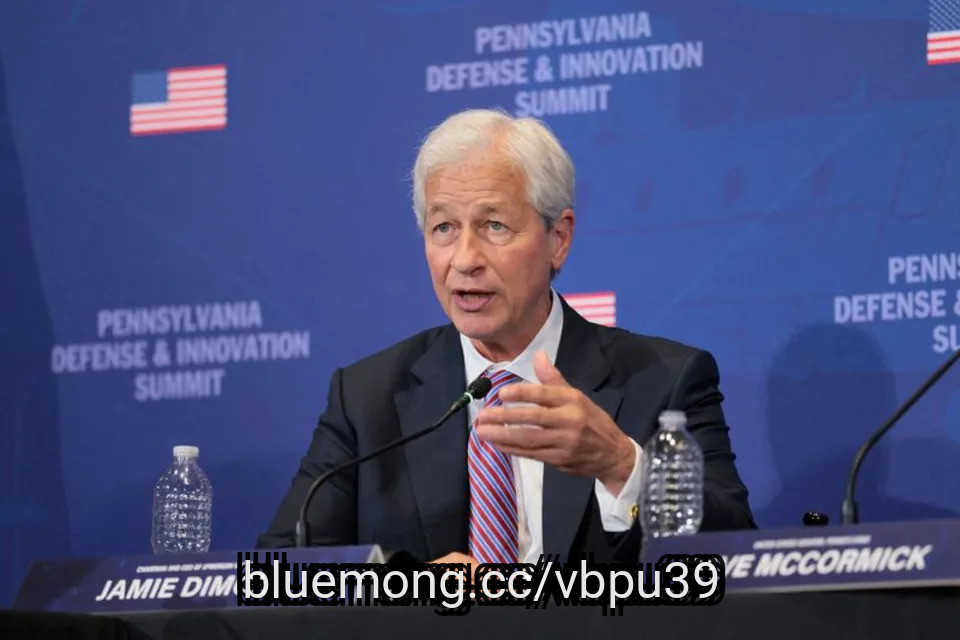
NEW YORK, Aug 5 (Reuters) - JPMorgan Chase CEO Jamie Dimon is urging corporate leaders to join a U.S.-focused industry group to address risks posed by AI, as corporate America rapidly adopts the developing technology, two sources familiar with the matter said.
Dimon has personally reached out to CEOs of other large and major regional banks and IT companies to enlist them in the initiative, which he is expanding from a group that JPM helped found called the Alliance for Critical Infrastructure, the sources said.
The ACI and Dimon have also communicated with other prospective members in an effort to schedule calls in August to discuss collaboration, the sources said.
The outreach, which started in July, includes over 40 companies spanning financial services, energy, water, utilities, telecommunications, airlines, railroads and other critical infrastructure industries that rely heavily on technology, the sources said. The ACI has not disclosed results of the effort so far.
#dimon #critical #corporate #Companies
NEW YORK, Aug 5 (Reuters) - JPMorgan Chase CEO Jamie Dimon is urging corporate leaders to join a U.S.-focused industry group to address risks posed by AI, as corporate America rapidly adopts the developing technology, two sources familiar with the matter said.
Dimon has personally reached out to CEOs of other large and major regional banks and IT companies to enlist them in the initiative, which he is expanding from a group that JPM helped found called the Alliance for Critical Infrastructure, the sources said.
The ACI and Dimon have also communicated with other prospective members in an effort to schedule calls in August to discuss collaboration, the sources said.
The outreach, which started in July, includes over 40 companies spanning financial services, energy, water, utilities, telecommunications, airlines, railroads and other critical infrastructure industries that rely heavily on technology, the sources said. The ACI has not disclosed results of the effort so far.
#dimon #critical #corporate #Companies

2 months ago
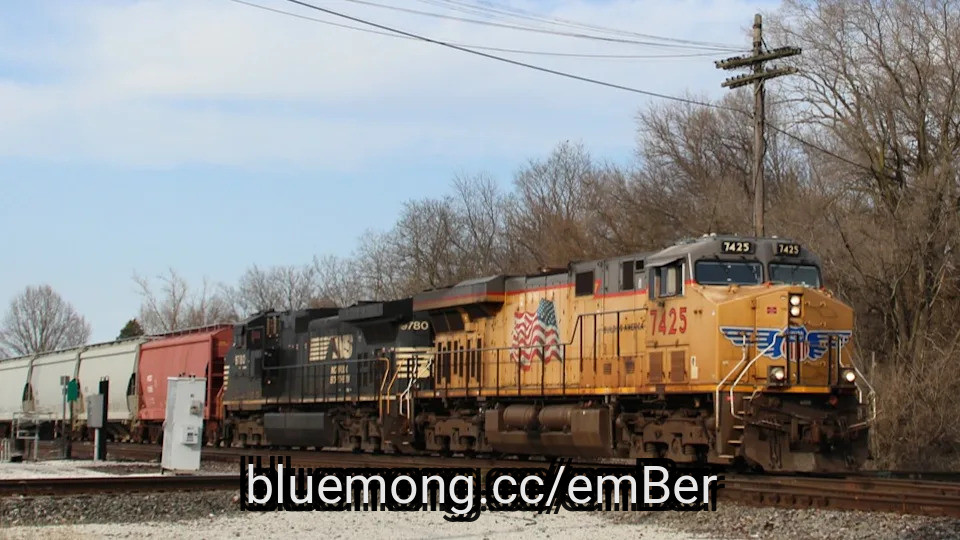
Union Pacific Corporation (NYSE:UNP)'s Big Boy 4014, the world's largest operating steam locomotive, has been touring the country this summer, and grown adults keep tearing up when they see it. CEO Jim Vena said the tour east of the Mississippi wouldn't have been possible without one thing: the railroad operating firm's pending merger with Norfolk Southern, since Union Pacific's own tracks run west of the river. In part, the nostalgia tour is a goodwill campaign for the biggest deal in the company's history.
On the business itself, Union Pacific Corporation (NYSE:UNP) reported a strong quarter. Revenue rose 12% to $6.86 billion, beating the $6.71 billion expected, and adjusted earnings came in at $3.41 a share versus $3.24 expected. The company raised its full-year guidance to high-single-digit earnings growth, up from mid-single digits. The stock rose about 2% in premarket trading. Costs rose too; operating expenses climbed 13% to $4.1 billion, mostly from a 63% jump in fuel costs linked to the Iran war.
Union Pacific Corporation (NYSE:UNP) is trying to buy Norfolk Southern in a deal now valued around $71.5 billion, down from an earlier $85 billion price tag as terms have moved with Union Pacific's stock. It would create the first coast-to-coast U.S. railroad. The day before earnings, Union Pacific settled with Canadian National Railway, a major opponent that had been pushing regulators to demand more information. CN will drop its opposition in exchange for expanded Midwest access and a stake in two jointly owned terminal railroads. Vena called it proof the firm is "ready to move forward in the regulatory process." The deal still isn't approved, though. The Surface Transportation Board (STB) paused its review in May and just this week ordered Union Pacific to make employee-impact data public. Rivals BNSF and Canadian Pacific Kansas City are still lobbying against it, and some shippers and state attorneys general remain opposed. The companies still expect to close the deal in the first half of 2027.
That raises a real question. Is this merger clearing its last real hurdles, or did the CN settlement just remove one opponent out of several?
The core business (Union Pacific's actual railroad operations) is performing well on its own, guidance beat and rose, and pricing power held up despite surging fuel costs. The CN settlement removes a credible opponent and comes with political tailwinds too: Trump has publicly backed the merger and replaced a regulator who could have opposed it. Union Pacific Corporation (NYSE:UNP) and Norfolk Southern say the deal would save shippers $3.5 billion a year and remove 2.1 million trucks from the road. Wall Street responded fast: Baird, RBC, and JPMorgan all raised price targets this week, with RBC citing the CN deal directly as strengthening the merger's case.
#union #deal
On the business itself, Union Pacific Corporation (NYSE:UNP) reported a strong quarter. Revenue rose 12% to $6.86 billion, beating the $6.71 billion expected, and adjusted earnings came in at $3.41 a share versus $3.24 expected. The company raised its full-year guidance to high-single-digit earnings growth, up from mid-single digits. The stock rose about 2% in premarket trading. Costs rose too; operating expenses climbed 13% to $4.1 billion, mostly from a 63% jump in fuel costs linked to the Iran war.
Union Pacific Corporation (NYSE:UNP) is trying to buy Norfolk Southern in a deal now valued around $71.5 billion, down from an earlier $85 billion price tag as terms have moved with Union Pacific's stock. It would create the first coast-to-coast U.S. railroad. The day before earnings, Union Pacific settled with Canadian National Railway, a major opponent that had been pushing regulators to demand more information. CN will drop its opposition in exchange for expanded Midwest access and a stake in two jointly owned terminal railroads. Vena called it proof the firm is "ready to move forward in the regulatory process." The deal still isn't approved, though. The Surface Transportation Board (STB) paused its review in May and just this week ordered Union Pacific to make employee-impact data public. Rivals BNSF and Canadian Pacific Kansas City are still lobbying against it, and some shippers and state attorneys general remain opposed. The companies still expect to close the deal in the first half of 2027.
That raises a real question. Is this merger clearing its last real hurdles, or did the CN settlement just remove one opponent out of several?
The core business (Union Pacific's actual railroad operations) is performing well on its own, guidance beat and rose, and pricing power held up despite surging fuel costs. The CN settlement removes a credible opponent and comes with political tailwinds too: Trump has publicly backed the merger and replaced a regulator who could have opposed it. Union Pacific Corporation (NYSE:UNP) and Norfolk Southern say the deal would save shippers $3.5 billion a year and remove 2.1 million trucks from the road. Wall Street responded fast: Baird, RBC, and JPMorgan all raised price targets this week, with RBC citing the CN deal directly as strengthening the merger's case.
#union #deal


2 months ago
The western rival of Union Pacific said that the carrier's latest regulatory filing doesn't change the fact that the merger with Norfolk Southern will raise rates for shippers, and prices for consumers.
"We are continuing to review the additional information submitted at the request of the Surface Transportation Board in regard to the proposed UP-NS merger," said BNSF (NYSE: BRK-B) President and Chief Executive Katie Farmer, in a statement Tuesday. "Despite UP (NYSE: UNP) and NS's (NYSE: NSC) fourth attempt to submit a complete application, the bottom line remains the same. UP and NS have not changed the core of their proposal that fails to demonstrate how combining two major railroads into a single carrier would preserve – much less enhance – competition as required by the STB's merger rules.'
The merging railroads on Monday completed the supplemental filing requested by the STB when it conditionally accepted the second merger application in late May.
"UP and NS highlight several so-called new aspects of their application, but they are more of the same – processes with multiple caveats that are difficult to understand, available to very few customers and only available for very short periods of time," Farmer said. "They do nothing meaningful to mitigate the massive anticompetitive impact of 50% market share held by one company."
The combined UP-NS would claim around 37% of North American rail traffic, according to data from Railfax. The partners' just-announced operating agreement with Canadian National (NYSE: CNI) would add another 13% share to the total.
#merger #same #Share
"We are continuing to review the additional information submitted at the request of the Surface Transportation Board in regard to the proposed UP-NS merger," said BNSF (NYSE: BRK-B) President and Chief Executive Katie Farmer, in a statement Tuesday. "Despite UP (NYSE: UNP) and NS's (NYSE: NSC) fourth attempt to submit a complete application, the bottom line remains the same. UP and NS have not changed the core of their proposal that fails to demonstrate how combining two major railroads into a single carrier would preserve – much less enhance – competition as required by the STB's merger rules.'
The merging railroads on Monday completed the supplemental filing requested by the STB when it conditionally accepted the second merger application in late May.
"UP and NS highlight several so-called new aspects of their application, but they are more of the same – processes with multiple caveats that are difficult to understand, available to very few customers and only available for very short periods of time," Farmer said. "They do nothing meaningful to mitigate the massive anticompetitive impact of 50% market share held by one company."
The combined UP-NS would claim around 37% of North American rail traffic, according to data from Railfax. The partners' just-announced operating agreement with Canadian National (NYSE: CNI) would add another 13% share to the total.
#merger #same #Share


3 months ago
J.B. Hunt Transport Services is seeing heightened interest for its intermodal and dedicated services, given a steady exodus of non-compliant drivers and following the Supreme Court's ruling widening liability exposure for brokers. The changing landscape is forcing shippers to seek "safe, secure and reliable capacity," the company said Wednesday in conjunction with its second-quarter report, which was significantly better than ***** ysts expected.
The Lowell, Arkansas-based company's second quarter marked a record for intermodal volumes. It reported a 10% year-over-year increase in loads, outpacing 8% y/y growth in total intermodal carloads on the U.S. Class I railroads. (North American containers were up 5% y/y).
"[Intermodal] conversion activity is at levels we have not seen in more than a decade," said Darren Field, president of intermodal, on a Wednesday evening conference call with ***** ysts.
The company's dedicated truckload pipeline ended the period at an all-time high.
J.B. Hunt's (NASDAQ: JBHT) operating leverage was again evident in the period. It grew operating income 32% y/y to $259 million on a 19% increase in revenue. The company has removed $135 million in structural costs over the past year through AI-led and other automation initiatives.
The Lowell, Arkansas-based company's second quarter marked a record for intermodal volumes. It reported a 10% year-over-year increase in loads, outpacing 8% y/y growth in total intermodal carloads on the U.S. Class I railroads. (North American containers were up 5% y/y).
"[Intermodal] conversion activity is at levels we have not seen in more than a decade," said Darren Field, president of intermodal, on a Wednesday evening conference call with ***** ysts.
The company's dedicated truckload pipeline ended the period at an all-time high.
J.B. Hunt's (NASDAQ: JBHT) operating leverage was again evident in the period. It grew operating income 32% y/y to $259 million on a 19% increase in revenue. The company has removed $135 million in structural costs over the past year through AI-led and other automation initiatives.


3 months ago
Union Pacific and Norfolk Southern today submitted the first portion of information requested by the Surface Transportation Board when it conditionally accepted their revised merger application May 28.
The STB set a deadline of July 27 for the partners to submit the additional data. UP (NYSE: UNP) and NS (NYSE: NSC) earlier said that the data would come in two filings. The start of the formal evaluation and environmental review of the proposed $85 billion merger was delayed pending the new submissions. But, the STB spent months gathering data prior to the railroads' initial merger application in December 2025.
The second filing is expected to cover the enhanced competition aspects of the merger stipulated by the STB.
Tuesday's filing addresses the STB's questions regarding control of local railroads Terminal Railroad ******* ociation of St. Louis (TRRA) and Kansas City Terminal Railway (KCT), and freight car equipment cooperative TTX. TRRA is jointly owned by UP, BNSF (NYSE: BRK-B), CSX (NASDAQ: CSX), CN (NYSE: CNI), and NS, with UP having the largest share. BNSF, UP, NS and Canadian Pacific Kansas City (NYSE: CP) share ownership of KCT.
Union Pacific and Norfolk Southern reiterated in their filing that they do not control TRRA and KCT, which handle interchange traffic between Class I carriers. They offered to divest their stakes in order to preserve that neutrality.
The STB set a deadline of July 27 for the partners to submit the additional data. UP (NYSE: UNP) and NS (NYSE: NSC) earlier said that the data would come in two filings. The start of the formal evaluation and environmental review of the proposed $85 billion merger was delayed pending the new submissions. But, the STB spent months gathering data prior to the railroads' initial merger application in December 2025.
The second filing is expected to cover the enhanced competition aspects of the merger stipulated by the STB.
Tuesday's filing addresses the STB's questions regarding control of local railroads Terminal Railroad ******* ociation of St. Louis (TRRA) and Kansas City Terminal Railway (KCT), and freight car equipment cooperative TTX. TRRA is jointly owned by UP, BNSF (NYSE: BRK-B), CSX (NASDAQ: CSX), CN (NYSE: CNI), and NS, with UP having the largest share. BNSF, UP, NS and Canadian Pacific Kansas City (NYSE: CP) share ownership of KCT.
Union Pacific and Norfolk Southern reiterated in their filing that they do not control TRRA and KCT, which handle interchange traffic between Class I carriers. They offered to divest their stakes in order to preserve that neutrality.

3 months ago
With the recent 130th anniversary of the Dow, let's take a closer look at why this old and narrow index still commands so much attention.
Until the S&P 500 began circulating in the 1950s – and then NASDAQ in the 1970s – the Dow was the most widely quoted measure of the market's health each day, but it was not the first market index, or even the first "Dow" measure. Dow Jones & Company was founded in 1882, and its first index, widely known as the "Railroad Average," was created in 1884 and consisted of 11 stocks, all but two of which were railroads.
The first Dow index was published daily in a news sheet that later became The Wall Street Journal, originally called Customer's Afternoon Letter. In the mid-1890s, after these rails were "derailed" in the Panic of 1893, Dow Jones decided to diversify, so 12 industrial stocks were chosen to create a wider diversity:
American Cotton Oil Company
American Sugar Company
Until the S&P 500 began circulating in the 1950s – and then NASDAQ in the 1970s – the Dow was the most widely quoted measure of the market's health each day, but it was not the first market index, or even the first "Dow" measure. Dow Jones & Company was founded in 1882, and its first index, widely known as the "Railroad Average," was created in 1884 and consisted of 11 stocks, all but two of which were railroads.
The first Dow index was published daily in a news sheet that later became The Wall Street Journal, originally called Customer's Afternoon Letter. In the mid-1890s, after these rails were "derailed" in the Panic of 1893, Dow Jones decided to diversify, so 12 industrial stocks were chosen to create a wider diversity:
American Cotton Oil Company
American Sugar Company



10 months ago
MANHATTAN (KSNT) – This year is the 50th anniversary of the first case of herbicide resistance in Kansas, and Kansas State University is reflecting on what has been done and what’s left to do with the issue.
The first known case of herbicide resistance in Kansas came in 1976 when populations of kochia, an early spring weed/herb native to Europe and Asia, growing near railroads were found to be resistant to atrazine, a popular herbicide used in corn and sorghum fields. Today, this resistant kochia can be found across the state.
Kansas Livestock ***** ociation approves policies for 2026
Since
The first known case of herbicide resistance in Kansas came in 1976 when populations of kochia, an early spring weed/herb native to Europe and Asia, growing near railroads were found to be resistant to atrazine, a popular herbicide used in corn and sorghum fields. Today, this resistant kochia can be found across the state.
Kansas Livestock ***** ociation approves policies for 2026
Since