

13 days ago
On September 17, Lucid Group, Inc. (NASDAQ:LCID) and Bolt, a leading European shared mobility platform, announced a strategic partnership to develop and deploy autonomous mobility services across Europe. This sent shares of Lucid Group, Inc. (NASDAQ:LCID) higher, and the stock ended the trading session with gains of nearly 6%.
The partnership will combine Lucid Group, Inc.'s (NASDAQ:LCID) software-defined vehicle platform with Bolt's European data, operating infrastructure, and mobility expertise. The companies will be looking to develop and launch autonomous mobility services at scale, using vehicles based on Lucid Group, Inc.'s (NASDAQ:LCID) upcoming Midsize platform.
Bolt plans to deploy at least 25,000 fully autonomous vehicles across multiple European cities and countries, supporting its ambitious goal of having 100,000 autonomous vehicles on its platform by 2035.
The financial details of the partnership were not disclosed.
The deal comes as Lucid Group, Inc. (NASDAQ:LCID) continues to face significant financial pressure. The company has been pursuing an ambitious expansion strategy. However, its revenue growth has not yet been enough to offset substantial operating losses and the high costs ****** ociated with building its global factories.
#lcid #european #platform #partnership
The partnership will combine Lucid Group, Inc.'s (NASDAQ:LCID) software-defined vehicle platform with Bolt's European data, operating infrastructure, and mobility expertise. The companies will be looking to develop and launch autonomous mobility services at scale, using vehicles based on Lucid Group, Inc.'s (NASDAQ:LCID) upcoming Midsize platform.
Bolt plans to deploy at least 25,000 fully autonomous vehicles across multiple European cities and countries, supporting its ambitious goal of having 100,000 autonomous vehicles on its platform by 2035.
The financial details of the partnership were not disclosed.
The deal comes as Lucid Group, Inc. (NASDAQ:LCID) continues to face significant financial pressure. The company has been pursuing an ambitious expansion strategy. However, its revenue growth has not yet been enough to offset substantial operating losses and the high costs ****** ociated with building its global factories.
#lcid #european #platform #partnership


28 days ago
Interested in Ambarella, Inc.? Here are five stocks we like better.
Ambarella's fiscal Q2 revenue rose 13.2% year over year to $108.1 million, driven by record AI revenue and strong automotive and IoT demand. Automotive revenue reached a new high, while non-GAAP EPS was $0.18.
The company forecast fiscal Q3 revenue of $115 million to $124 million and authorized a new $50 million stock-repurchase program. Ambarella also expects to maintain its 59%–62% long-term gross-margin target despite rising supply-chain costs.
Ambarella raised its fiscal 2032 serviceable market forecast to $22.9 billion, citing expansion into edge infrastructure and AI accelerators such as the sampling X7. Partnerships with Capgemini and Macnica are intended to broaden enterprise and midsize-customer reach, though meaningful revenue is expected in two to three years.
3 Picks-and-Shovels Stocks Powering the Humanoid Robotics Buildout
#revenue #automotive
Ambarella's fiscal Q2 revenue rose 13.2% year over year to $108.1 million, driven by record AI revenue and strong automotive and IoT demand. Automotive revenue reached a new high, while non-GAAP EPS was $0.18.
The company forecast fiscal Q3 revenue of $115 million to $124 million and authorized a new $50 million stock-repurchase program. Ambarella also expects to maintain its 59%–62% long-term gross-margin target despite rising supply-chain costs.
Ambarella raised its fiscal 2032 serviceable market forecast to $22.9 billion, citing expansion into edge infrastructure and AI accelerators such as the sampling X7. Partnerships with Capgemini and Macnica are intended to broaden enterprise and midsize-customer reach, though meaningful revenue is expected in two to three years.
3 Picks-and-Shovels Stocks Powering the Humanoid Robotics Buildout
#revenue #automotive


28 days ago
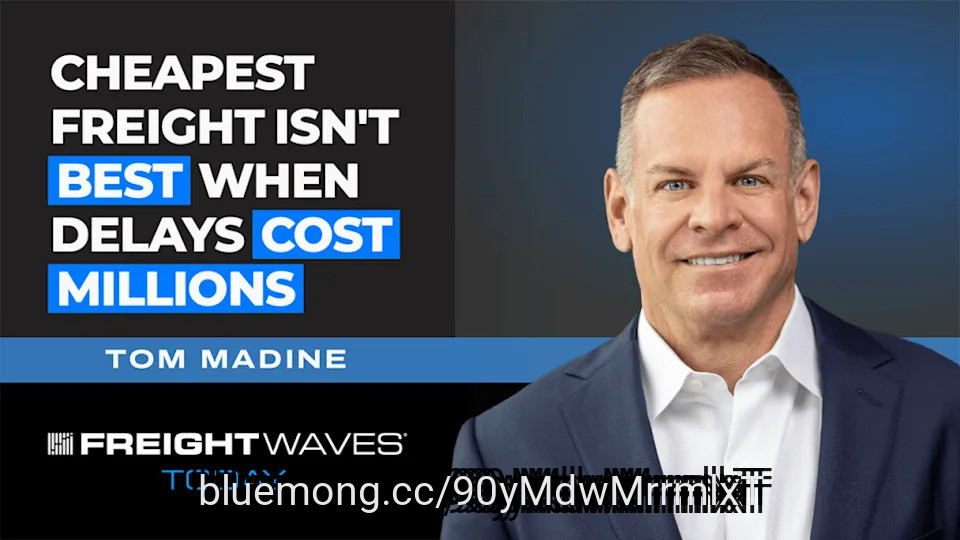
Cheapest freight isn't always best, especially when a late shipment can cost millions. ShipStation Global CEO Tom Madine breaks down why SMB shippers need parcel, LTL and truckload in one workflow, and why better freight decisions now matter more than just lower rates. From the merger that created ShipStation Global to adding more modes into the platform, this conversation gets into where shipping tech is heading, how data shapes carrier selection, and what smaller shippers actually need from logistics partners. #FreightTech #LTL #SupplyChain
ShipStation Global is formally launching its less-than-truckload product, marking the first tangible freight expansion since the merger of software provider Auctane, formerly the parent of the Stamps.com andShipStation,and WWEX Group, which previously housed freight brokerages like Worldwide Express. The company's CEO said the rollout represents the opening move in a broader strategy to let small and midsize shippers purchase and manage all transportation modes through a single platform.
"Today's the first day we've really launched the LTL product," said Tom Madine, CEO of ShipStation Global, noting the company plans to add truckload, final mile, and eventually ocean and forwarding capabilities after establishing its inland position.
The strategic rationale centers on eliminating the workflow gap that forced ShipStation users to leave the platform whenever they needed to move freight beyond parcel. Customer surveys repeatedly flagged the absence of additional modes as the top improvement request, he said. With LTL now integrated, shippers can manage inbound inventory movements alongside outbound parcel without switching systems.
"Cheapest is not always best…But at the same time, you don't want to overpay," Madine said, illustrating the point with a customer whose engine shipments carry multi-million-dollar consequences if delayed.
#madine #shippers #parcel #cheapest
ShipStation Global is formally launching its less-than-truckload product, marking the first tangible freight expansion since the merger of software provider Auctane, formerly the parent of the Stamps.com andShipStation,and WWEX Group, which previously housed freight brokerages like Worldwide Express. The company's CEO said the rollout represents the opening move in a broader strategy to let small and midsize shippers purchase and manage all transportation modes through a single platform.
"Today's the first day we've really launched the LTL product," said Tom Madine, CEO of ShipStation Global, noting the company plans to add truckload, final mile, and eventually ocean and forwarding capabilities after establishing its inland position.
The strategic rationale centers on eliminating the workflow gap that forced ShipStation users to leave the platform whenever they needed to move freight beyond parcel. Customer surveys repeatedly flagged the absence of additional modes as the top improvement request, he said. With LTL now integrated, shippers can manage inbound inventory movements alongside outbound parcel without switching systems.
"Cheapest is not always best…But at the same time, you don't want to overpay," Madine said, illustrating the point with a customer whose engine shipments carry multi-million-dollar consequences if delayed.
#madine #shippers #parcel #cheapest
29 days ago
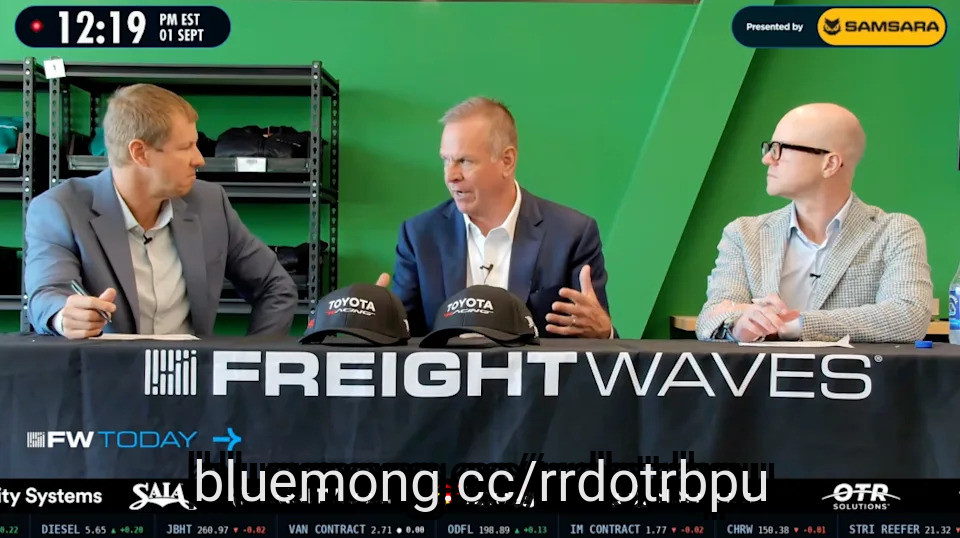
Small and midsize shippers are often forced to stitch together various tools for parcel labels, freight quotes, tracking, and much more. The fragmentation gets more expensive as a business grows past pure e-commerce, since the moment a merchant needs to move inventory between warehouses or ship a pallet instead of a box, they're forced out of whatever platform runs their day-to-day shipping and into unfamiliar territory.
ShipStation Global CEO Tom Madine has built the company's post-merger strategy around closing that gap, knowing that the same merchants who came to the platform for parcel labels are increasingly buying freight, too, and would rather not leave the software to do it.
The LTL rollout is the first major product integration since Thoma Bravo acquired WWEX Group (parent of Worldwide Express, GlobalTranz, Unishippers, JEAR Logistics and BLX Logistics) and merged it with Auctane, the parent company of ShipStation, this past June. The combination created ShipStation Global, a company now valued at roughly $12 billion. CEO Tom Madine described the logic of putting the two businesses together as less about scale for its own sake and more about closing a gap both companies kept running into with customers.
"If you think about an e-commerce merchant that's selling through multiple channels, using multiple carriers with inventory in multiple places, it makes that a much more seamless and stress-free process for them, and allows them to manage everything through a single pane of glass," Madine said of the legacy ShipStation product, before pointing to what it had been missing. "There's nothing else like it on the market."
According to Madine, that gap had shown up repeatedly in customer surveys. "One of the most common requests that ShipStation would get in the legacy Auctane world was, 'When are you going to add other modes to the platform?'" he said. "Prior to today, if you were a ShipStation user, you were managing your entire workflow in ShipStation, except when you needed to move freight." Merchants who needed to move inventory between warehouses had to leave the platform entirely, log into a separate freight system, and reconcile the two.
#freight #inventory #multiple #auctane
ShipStation Global CEO Tom Madine has built the company's post-merger strategy around closing that gap, knowing that the same merchants who came to the platform for parcel labels are increasingly buying freight, too, and would rather not leave the software to do it.
The LTL rollout is the first major product integration since Thoma Bravo acquired WWEX Group (parent of Worldwide Express, GlobalTranz, Unishippers, JEAR Logistics and BLX Logistics) and merged it with Auctane, the parent company of ShipStation, this past June. The combination created ShipStation Global, a company now valued at roughly $12 billion. CEO Tom Madine described the logic of putting the two businesses together as less about scale for its own sake and more about closing a gap both companies kept running into with customers.
"If you think about an e-commerce merchant that's selling through multiple channels, using multiple carriers with inventory in multiple places, it makes that a much more seamless and stress-free process for them, and allows them to manage everything through a single pane of glass," Madine said of the legacy ShipStation product, before pointing to what it had been missing. "There's nothing else like it on the market."
According to Madine, that gap had shown up repeatedly in customer surveys. "One of the most common requests that ShipStation would get in the legacy Auctane world was, 'When are you going to add other modes to the platform?'" he said. "Prior to today, if you were a ShipStation user, you were managing your entire workflow in ShipStation, except when you needed to move freight." Merchants who needed to move inventory between warehouses had to leave the platform entirely, log into a separate freight system, and reconcile the two.
#freight #inventory #multiple #auctane


1 month ago
ShipStation, a provider of multicarrier parcel shipping software, is offering e-commerce sellers the ability to also select and coordinate with less-than-truckload operators at pre-negotiated rates in one integrated platform, bringing to life promised benefits from ownership's recent acquisition of freight brokerage Worldwide Express Group.
Few, if any, software-as-a-service companies that connect small-and-midsize merchants with parcel carriers offer a pallet-shipping solution.
"Most of those small companies don't have enough volumes to do full truckload so their first need after parcel shipping tends to be LTL, which creates this natural linkage between LTL freight brokerage and parcel," said Chris Wofford, the founder of Wofford Advisors LLC, a strategic advisory firm for the logistics sector.
In early June, private equity firm Thoma Bravo acquired WWEX Group and merged it with portfolio company Auctane, which provides shipping and fulfillment technology through brands like ShipStation, Stamps.com, Metapack and Packlink. The combined valuation of the companies is $12 billion.
WWEX Group companies include Worldwide Express, GlobalTranz, Unishippers, JEAR Logistics and BLX Logistics.
#group #Logistics
Few, if any, software-as-a-service companies that connect small-and-midsize merchants with parcel carriers offer a pallet-shipping solution.
"Most of those small companies don't have enough volumes to do full truckload so their first need after parcel shipping tends to be LTL, which creates this natural linkage between LTL freight brokerage and parcel," said Chris Wofford, the founder of Wofford Advisors LLC, a strategic advisory firm for the logistics sector.
In early June, private equity firm Thoma Bravo acquired WWEX Group and merged it with portfolio company Auctane, which provides shipping and fulfillment technology through brands like ShipStation, Stamps.com, Metapack and Packlink. The combined valuation of the companies is $12 billion.
WWEX Group companies include Worldwide Express, GlobalTranz, Unishippers, JEAR Logistics and BLX Logistics.
#group #Logistics


1 month ago
ShipStation, a provider of multicarrier parcel shipping software, is offering e-commerce sellers the ability to also select and coordinate with less-than-truckload operators at pre-negotiated rates in one integrated platform, bringing to life promised benefits from ownership's recent acquisition of freight brokerage Worldwide Express Group.
Few, if any, software-as-a-service companies that connect small-and-midsize merchants with parcel carriers offer a pallet-shipping solution.
"Most of those small companies don't have enough volumes to do full truckload so their first need after parcel shipping tends to be LTL, which creates this natural linkage between LTL freight brokerage and parcel," said Chris Wofford, the founder of Wofford Advisors LLC, a strategic advisory firm for the logistics sector.
In early June, private equity firm Thoma Bravo acquired WWEX Group and merged it with portfolio company Auctane, which provides shipping and fulfillment technology through brands like ShipStation, Stamps.com, Metapack and Packlink. The combined valuation of the companies is $12 billion.
WWEX Group companies include Worldwide Express, GlobalTranz, Unishippers, JEAR Logistics and BLX Logistics.
#parcel #Companies #wwex
Few, if any, software-as-a-service companies that connect small-and-midsize merchants with parcel carriers offer a pallet-shipping solution.
"Most of those small companies don't have enough volumes to do full truckload so their first need after parcel shipping tends to be LTL, which creates this natural linkage between LTL freight brokerage and parcel," said Chris Wofford, the founder of Wofford Advisors LLC, a strategic advisory firm for the logistics sector.
In early June, private equity firm Thoma Bravo acquired WWEX Group and merged it with portfolio company Auctane, which provides shipping and fulfillment technology through brands like ShipStation, Stamps.com, Metapack and Packlink. The combined valuation of the companies is $12 billion.
WWEX Group companies include Worldwide Express, GlobalTranz, Unishippers, JEAR Logistics and BLX Logistics.
#parcel #Companies #wwex


1 month ago
Despite strong sales and growing momentum, Hyundai (005380.KS) CEO Carlos Munoz is going on the offensive in the US.
Hyundai revealed at its 2026 CEO Investor Day today that it will build more of its cars on US soil and pack American showrooms with new hybrids and its first extended-range EV, the centerpiece of its most aggressive product push in its history. New trucks and even a mid-size Toyota Tacoma competitor are coming too.
Munoz is betting on localized US production and that a wave of in-demand hybrids can lift profits and rev sales even as the overall US car market sits in neutral.
"Our fundamentals have never been stronger. Hyundai Motor Group is the third-largest automotive group and the second-most profitable, which gives us the ability to invest while others are pulling back," Muñoz said in a presentation. The company is bringing "more than 100 new models to market by 2030 with multiple powertrain options" while "raising our operating margin above 9 percent."
Of particular importance is the upcoming Santa Fe midsize SUV EREV [Extended Range Electric Vehicle], due in the first half of 2027 and built at Hyundai Motor Manufacturing Alabama. It pairs a battery with an onboard charger for more than 600 miles of range.
#range #motor #group
Hyundai revealed at its 2026 CEO Investor Day today that it will build more of its cars on US soil and pack American showrooms with new hybrids and its first extended-range EV, the centerpiece of its most aggressive product push in its history. New trucks and even a mid-size Toyota Tacoma competitor are coming too.
Munoz is betting on localized US production and that a wave of in-demand hybrids can lift profits and rev sales even as the overall US car market sits in neutral.
"Our fundamentals have never been stronger. Hyundai Motor Group is the third-largest automotive group and the second-most profitable, which gives us the ability to invest while others are pulling back," Muñoz said in a presentation. The company is bringing "more than 100 new models to market by 2030 with multiple powertrain options" while "raising our operating margin above 9 percent."
Of particular importance is the upcoming Santa Fe midsize SUV EREV [Extended Range Electric Vehicle], due in the first half of 2027 and built at Hyundai Motor Manufacturing Alabama. It pairs a battery with an onboard charger for more than 600 miles of range.
#range #motor #group




1 month ago
Eagle Capital Management, an investment management company, released its second quarter 2026 investor letter. A copy of the letter can be downloaded here. In the quarter, Eagle Capital Management discussed how enthusiasm around AI capital spending has driven strong S&P 500 earnings growth while also increasing risks from elevated valuations, concentrated demand, and aggressive investment ******* umptions. Eagle remains a strong believer in AI but prefers constructing a portfolio that can perform across multiple outcomes rather than relying on one forecast. The firm believes current earnings can overstate underlying economics because semiconductor equipment is depreciated over several years, while free cash flow growth remains much weaker. It also expects competition and additional capacity across AI labs, hyperscalers, and semiconductors to eventually create winners and losers. These dynamics are encouraging Eagle to recycle capital toward attractive opportunities outside the most crowded AI trades while maintaining selective exposure to high quality beneficiaries. The portfolio trades at a 20% market discount with faster expected EPS growth. Please review the Strategy's top five holdings for key selections.
In its second-quarter 2026 investor letter, Eagle Capital Management highlighted Intuit Inc. (NASDAQ:INTU). Intuit Inc. (NASDAQ:INTU) provides financial management, payments and capital, compliance, and marketing products. On August 18, 2026, Intuit Inc. (NASDAQ:INTU) closed at $350.41 per share. One-month return of Intuit Inc. (NASDAQ:INTU) was 23.18% and its shares gained -49.88% over the past 52 weeks. Intuit Inc. (NASDAQ:INTU) has a market capitalization of $95.85 billion.
Eagle Capital Management stated the following regarding Intuit Inc. (NASDAQ:INTU) in its Q2 2026 investor letter:
"Software is controversial due to fears of Al-driven disruption. Al makes it easier to build software and will change workflows in how it is used. We believe there will be heightened competition and greater separation between winners and losers over the coming years. The industry is deservedly trading at a higher risk premium, but within the market there are plenty of mispricings.
Intuit Inc.'s (NASDAQ:INTU) QuickBooks, the dominant bookkeeping software for small and midsize businesses in the U.S., exists in a market that is difficult to serve profitably, given the low average selling price. Intuit's brand, scale, and network effect through the accountant channel give it formidable competitive advantages. It is well-placed to deliver Al solutions to this hard-to-reach customer. TurboTax, a relatively smaller part of the business, will likely adapt its business model to an Al world, but we have more modest expectations for its growth. We expect EPS growth in the high teens, driven by revenue growth, operating leverage, and share buybacks."
#management
In its second-quarter 2026 investor letter, Eagle Capital Management highlighted Intuit Inc. (NASDAQ:INTU). Intuit Inc. (NASDAQ:INTU) provides financial management, payments and capital, compliance, and marketing products. On August 18, 2026, Intuit Inc. (NASDAQ:INTU) closed at $350.41 per share. One-month return of Intuit Inc. (NASDAQ:INTU) was 23.18% and its shares gained -49.88% over the past 52 weeks. Intuit Inc. (NASDAQ:INTU) has a market capitalization of $95.85 billion.
Eagle Capital Management stated the following regarding Intuit Inc. (NASDAQ:INTU) in its Q2 2026 investor letter:
"Software is controversial due to fears of Al-driven disruption. Al makes it easier to build software and will change workflows in how it is used. We believe there will be heightened competition and greater separation between winners and losers over the coming years. The industry is deservedly trading at a higher risk premium, but within the market there are plenty of mispricings.
Intuit Inc.'s (NASDAQ:INTU) QuickBooks, the dominant bookkeeping software for small and midsize businesses in the U.S., exists in a market that is difficult to serve profitably, given the low average selling price. Intuit's brand, scale, and network effect through the accountant channel give it formidable competitive advantages. It is well-placed to deliver Al solutions to this hard-to-reach customer. TurboTax, a relatively smaller part of the business, will likely adapt its business model to an Al world, but we have more modest expectations for its growth. We expect EPS growth in the high teens, driven by revenue growth, operating leverage, and share buybacks."
#management


1 month ago
Eagle Capital Management, an investment management company, released its second quarter 2026 investor letter. A copy of the letter can be downloaded here. In the quarter, Eagle Capital Management discussed how enthusiasm around AI capital spending has driven strong S&P 500 earnings growth while also increasing risks from elevated valuations, concentrated demand, and aggressive investment ****** umptions. Eagle remains a strong believer in AI but prefers constructing a portfolio that can perform across multiple outcomes rather than relying on one forecast. The firm believes current earnings can overstate underlying economics because semiconductor equipment is depreciated over several years, while free cash flow growth remains much weaker. It also expects competition and additional capacity across AI labs, hyperscalers, and semiconductors to eventually create winners and losers. These dynamics are encouraging Eagle to recycle capital toward attractive opportunities outside the most crowded AI trades while maintaining selective exposure to high quality beneficiaries. The portfolio trades at a 20% market discount with faster expected EPS growth. Please review the Strategy's top five holdings for key selections.
In its second-quarter 2026 investor letter, Eagle Capital Management highlighted Intuit Inc. (NASDAQ:INTU). Intuit Inc. (NASDAQ:INTU) provides financial management, payments and capital, compliance, and marketing products. On August 18, 2026, Intuit Inc. (NASDAQ:INTU) closed at $350.41 per share. One-month return of Intuit Inc. (NASDAQ:INTU) was 23.18% and its shares gained -49.88% over the past 52 weeks. Intuit Inc. (NASDAQ:INTU) has a market capitalization of $95.85 billion.
Eagle Capital Management stated the following regarding Intuit Inc. (NASDAQ:INTU) in its Q2 2026 investor letter:
"Software is controversial due to fears of Al-driven disruption. Al makes it easier to build software and will change workflows in how it is used. We believe there will be heightened competition and greater separation between winners and losers over the coming years. The industry is deservedly trading at a higher risk premium, but within the market there are plenty of mispricings.
Intuit Inc.'s (NASDAQ:INTU) QuickBooks, the dominant bookkeeping software for small and midsize businesses in the U.S., exists in a market that is difficult to serve profitably, given the low average selling price. Intuit's brand, scale, and network effect through the accountant channel give it formidable competitive advantages. It is well-placed to deliver Al solutions to this hard-to-reach customer. TurboTax, a relatively smaller part of the business, will likely adapt its business model to an Al world, but we have more modest expectations for its growth. We expect EPS growth in the high teens, driven by revenue growth, operating leverage, and share buybacks."
#eagle #management #letter
In its second-quarter 2026 investor letter, Eagle Capital Management highlighted Intuit Inc. (NASDAQ:INTU). Intuit Inc. (NASDAQ:INTU) provides financial management, payments and capital, compliance, and marketing products. On August 18, 2026, Intuit Inc. (NASDAQ:INTU) closed at $350.41 per share. One-month return of Intuit Inc. (NASDAQ:INTU) was 23.18% and its shares gained -49.88% over the past 52 weeks. Intuit Inc. (NASDAQ:INTU) has a market capitalization of $95.85 billion.
Eagle Capital Management stated the following regarding Intuit Inc. (NASDAQ:INTU) in its Q2 2026 investor letter:
"Software is controversial due to fears of Al-driven disruption. Al makes it easier to build software and will change workflows in how it is used. We believe there will be heightened competition and greater separation between winners and losers over the coming years. The industry is deservedly trading at a higher risk premium, but within the market there are plenty of mispricings.
Intuit Inc.'s (NASDAQ:INTU) QuickBooks, the dominant bookkeeping software for small and midsize businesses in the U.S., exists in a market that is difficult to serve profitably, given the low average selling price. Intuit's brand, scale, and network effect through the accountant channel give it formidable competitive advantages. It is well-placed to deliver Al solutions to this hard-to-reach customer. TurboTax, a relatively smaller part of the business, will likely adapt its business model to an Al world, but we have more modest expectations for its growth. We expect EPS growth in the high teens, driven by revenue growth, operating leverage, and share buybacks."
#eagle #management #letter


2 months ago
Lucid Group (NASDAQ: LCID) has always been an intriguing investment opportunity, but it has consistently disappointed investors in several ways.
The electric vehicle (EV) maker designs and produces some of the most advanced EVs globally but has a growing number of recalls and supplier issues and has struggled to lower costs and build scale to improve vehicle unit economics and gross profitability.
Missed Nvidia in 2009? This Rare Signal Is Flashing Again. In 2009, a "Double Down" signal flashed for a little-known chipmaker called Nvidia. For the first time in years, that same "Total Conviction" signal is flashing for a company 1/100th the size of Nvidia. Continue »
Now, another speed **** p: The EV maker just announced that its upcoming Cosmos SUV is significantly delayed -- does this represent a red flag or a smart move?
Lucid originally planned to launch its midsize Cosmos SUV EV late this year, although it admitted that production volume would be low until production accelerates next year. To be fair, many investors and **** ysts were skeptical of this timeline, given that its Gravity SUV is still dealing with recalls, supply chain bottlenecks, and production shifts to align with consumer demand.
#cosmos
The electric vehicle (EV) maker designs and produces some of the most advanced EVs globally but has a growing number of recalls and supplier issues and has struggled to lower costs and build scale to improve vehicle unit economics and gross profitability.
Missed Nvidia in 2009? This Rare Signal Is Flashing Again. In 2009, a "Double Down" signal flashed for a little-known chipmaker called Nvidia. For the first time in years, that same "Total Conviction" signal is flashing for a company 1/100th the size of Nvidia. Continue »
Now, another speed **** p: The EV maker just announced that its upcoming Cosmos SUV is significantly delayed -- does this represent a red flag or a smart move?
Lucid originally planned to launch its midsize Cosmos SUV EV late this year, although it admitted that production volume would be low until production accelerates next year. To be fair, many investors and **** ysts were skeptical of this timeline, given that its Gravity SUV is still dealing with recalls, supply chain bottlenecks, and production shifts to align with consumer demand.
#cosmos


2 months ago
Regional banks are getting a boost as the AI gold rush spills out beyond Wall Street.
Activity among manufacturers, equipment suppliers, and other large and midsize firms that borrow from regional banks is heating up. That's adding to investor hopes that regional lenders with sizable commercial banking arms have another growth stream, even if they are largely sitting out of the data center financing boom.
The State Street SPDR S&P Regional Banking ETF (KRE) traded near a record high earlier this week. Since the start of the year, it has climbed 17%, outperforming major stock indexes.
Demand for commercial and industrial loans strengthened in the second quarter. A net 16.1% of banks reported higher demand from large and midsize companies, up from 4.8% in the previous quarter, according to the Federal Reserve's senior loan officer survey.
Bank loan officers said increased investment in plants and equipment and greater financing needs for inventories were among the reasons companies were borrowing more.
#regional #banking #midsize #financing
Activity among manufacturers, equipment suppliers, and other large and midsize firms that borrow from regional banks is heating up. That's adding to investor hopes that regional lenders with sizable commercial banking arms have another growth stream, even if they are largely sitting out of the data center financing boom.
The State Street SPDR S&P Regional Banking ETF (KRE) traded near a record high earlier this week. Since the start of the year, it has climbed 17%, outperforming major stock indexes.
Demand for commercial and industrial loans strengthened in the second quarter. A net 16.1% of banks reported higher demand from large and midsize companies, up from 4.8% in the previous quarter, according to the Federal Reserve's senior loan officer survey.
Bank loan officers said increased investment in plants and equipment and greater financing needs for inventories were among the reasons companies were borrowing more.
#regional #banking #midsize #financing


2 months ago
Finding a truck for less than $30,000 is nearly impossible in this market. Ford Motor on Thursday is betting that cash-strapped Americans will sign up to buy its all-new Fathom, an electric midsize pickup with a starting price of $28,350.
The company did not release photos or many details about the Fathom, but said it will be the first vehicle to be produced on its Universal Electric Vehicle Platform.
The truck will come with BlueCruise, Ford's hands-free highway driving ******* istant, and feature bi-directional power capability. There's a "frunk" in addition to the bed for added cargo flexibility and pre-orders start in early 2027. Owners will also be able to access Tesla's vast network of Superchargers for road trips and daily "fill-ups."
Ford's EV portfolio is currently limited to one model: the Mustang Mach-E SUV. In December of 2025, Ford decided to cease production of its full-size F-150 Lightning electric truck. Rave reviews from automotive journalists and the truck's ability to serve as a backup generator were not enough to sway consumers who balked at its high price.
Ford said the F-150 Lightning will eventually return as an EREV [Extended Range Electric Vehicle], meaning the truck's electric powertrain will be paired with a gasoline engine for a maximum range of 700 miles.
#range
The company did not release photos or many details about the Fathom, but said it will be the first vehicle to be produced on its Universal Electric Vehicle Platform.
The truck will come with BlueCruise, Ford's hands-free highway driving ******* istant, and feature bi-directional power capability. There's a "frunk" in addition to the bed for added cargo flexibility and pre-orders start in early 2027. Owners will also be able to access Tesla's vast network of Superchargers for road trips and daily "fill-ups."
Ford's EV portfolio is currently limited to one model: the Mustang Mach-E SUV. In December of 2025, Ford decided to cease production of its full-size F-150 Lightning electric truck. Rave reviews from automotive journalists and the truck's ability to serve as a backup generator were not enough to sway consumers who balked at its high price.
Ford said the F-150 Lightning will eventually return as an EREV [Extended Range Electric Vehicle], meaning the truck's electric powertrain will be paired with a gasoline engine for a maximum range of 700 miles.
#range



2 months ago
End-of-year bonuses for private equity professionals are likely to be higher at larger managers compared to midsized and small buyout shops, as banks' blowout earnings put pressure on PE firms to keep pace on pay, according to projections from compensation consultant Johnson ***** ociates.
Its Q2 year-end projections report, which predicts Wall Street end-of-year bonuses based on recent market trends, said that PE professionals at large buyout shops can expect bonuses anywhere from 2.5% to 7.5% higher than what they received in 2025. That's an improvement over the Q1 outlook of no change up to a 5% increase.
The jump is due, in part, to mounting competition for talent between PE firms and banks, said Alan Johnson, president and founder of Johnson ***** ociates. Private equity firms will likely offer stronger sweeteners to retain talent during a challenging period.
"Banks and private equity compete for talent, and as the banks do better, there's going to be a bit of a drag-on effect to private equity," Johnson said.
Investment banks are having a great year. Goldman Sachs and JPMorganChase both reported strong Q2 results, with Goldman's earnings per share nearly doubling year-over-year to $20.98 and JPMorgan's net income up 41% to $21.2 billion. The surge was driven by an uptick in M&A volume and a handful of mega-transactions, such as the record-breaking ***** eX IPO that Goldman led in June.
#year #johnson #Equity #goldman
Its Q2 year-end projections report, which predicts Wall Street end-of-year bonuses based on recent market trends, said that PE professionals at large buyout shops can expect bonuses anywhere from 2.5% to 7.5% higher than what they received in 2025. That's an improvement over the Q1 outlook of no change up to a 5% increase.
The jump is due, in part, to mounting competition for talent between PE firms and banks, said Alan Johnson, president and founder of Johnson ***** ociates. Private equity firms will likely offer stronger sweeteners to retain talent during a challenging period.
"Banks and private equity compete for talent, and as the banks do better, there's going to be a bit of a drag-on effect to private equity," Johnson said.
Investment banks are having a great year. Goldman Sachs and JPMorganChase both reported strong Q2 results, with Goldman's earnings per share nearly doubling year-over-year to $20.98 and JPMorgan's net income up 41% to $21.2 billion. The surge was driven by an uptick in M&A volume and a handful of mega-transactions, such as the record-breaking ***** eX IPO that Goldman led in June.
#year #johnson #Equity #goldman


2 months ago
A decade ago, Seattle was the poster child of American tech prosperity. Amazon and Microsoft had turned a midsize Pacific Northwest city into a magnet for engineers, executives, and capital, adding roughly 40,000 jobs per year at the peak of the boom, according to the Puget Sound Regional Council.
Today, more than one-third of downtown Seattle's office **** e sits empty, its job postings have collapsed faster than almost any other U.S. metro, and even Starbucks—the coffee giant founded in the city in 1971—is shifting jobs south to Nashville, as it commits to a $100 million, 2,000-person new footprint in Music City. The story of Seattle's reversal unfolds in three overlapping arcs: an office market in free fall, a labor market that has gone from boom to bust, and a policy environment that has made survival harder for the small businesses left behind.
Seattle's downtown office vacancy rate hit 35.6% in the fourth quarter of 2025, up from 32.3% a year earlier, according to Cushman & Wakefield data. That marks a stunning reversal from the pre-pandemic era: As recently as early 2025, the central business district's availability rate—offices with departures pending—and vacancy rate were already hitting all-time highs based on CoStar data stretching back to 1982.
Some brokers put the number even higher, with Colliers reporting vacancy touching 39.1% in late 2024 as remote work, tech layoffs, and cautious leasing decisions compounded. Office building values in the district have plunged sharply as a result, with landlords struggling to fill **** e abandoned by major tenants.
The office crisis is inseparable from a broader collapse in hiring. Seattle metro job postings fell 35% between February 2020 and October 2025, the second-steepest drop of any major U.S. metro after San Francisco's 37% decline, according to Axios's **** ysis of Indeed data.
#city
Today, more than one-third of downtown Seattle's office **** e sits empty, its job postings have collapsed faster than almost any other U.S. metro, and even Starbucks—the coffee giant founded in the city in 1971—is shifting jobs south to Nashville, as it commits to a $100 million, 2,000-person new footprint in Music City. The story of Seattle's reversal unfolds in three overlapping arcs: an office market in free fall, a labor market that has gone from boom to bust, and a policy environment that has made survival harder for the small businesses left behind.
Seattle's downtown office vacancy rate hit 35.6% in the fourth quarter of 2025, up from 32.3% a year earlier, according to Cushman & Wakefield data. That marks a stunning reversal from the pre-pandemic era: As recently as early 2025, the central business district's availability rate—offices with departures pending—and vacancy rate were already hitting all-time highs based on CoStar data stretching back to 1982.
Some brokers put the number even higher, with Colliers reporting vacancy touching 39.1% in late 2024 as remote work, tech layoffs, and cautious leasing decisions compounded. Office building values in the district have plunged sharply as a result, with landlords struggling to fill **** e abandoned by major tenants.
The office crisis is inseparable from a broader collapse in hiring. Seattle metro job postings fell 35% between February 2020 and October 2025, the second-steepest drop of any major U.S. metro after San Francisco's 37% decline, according to Axios's **** ysis of Indeed data.
#city


3 months ago
BILL Holdings, Inc. (NYSE:BILL) is one of the 10 Best Stocks to Buy in Glen Kacher's Light Street Portfolio.
On June 22, 2026, TD Cowen initiated coverage of BILL Holdings, Inc. (NYSE:BILL) with a Buy rating. The firm has set a price target of $43 on the stock. According to TD Cowen's research note, the firm views the company as a leading vendor of accounting management solutions, including accounts payable, accounts receivable, and expense management for small businesses. Pointing out that improving fundamentals and execution warrant multiple expansion, the firm expects a steadier upward momentum for the shares. TD Cowen believes these positive factors will overcome muted investor sentiment following a 40% year-to-date decline.
In contrast, earlier this month, on June 10, 2026, Truist downgraded the rating on BILL Holdings, Inc. (NYSE:BILL) from Buy to Hold. The firm held a price target of $35 on the stock, down from $45. Truist believes that an acquisition of BILL Holdings, Inc. (NYSE:BILL) is increasingly unlikely due to AI-driven uncertainty. The ***** yst notes its positive catalyst path is less clear, with core revenue growth likely to decline to low-teens next year during intensifying competition.
Founded in 2006, BILL Holdings, Inc. (NYSE:BILL) is a leading provider of cloud-based software that automates financial operations for small and midsize businesses (SMEs). Headquartered in California, the company's platform streamlines accounts payable, accounts receivable, and spend management.
While we acknowledge the potential of BILL as an investment, we believe certain AI stocks offer greater upside potential and carry less downside risk. If you're looking for an extremely undervalued AI stock that also stands to benefit significantly from Trump-era tariffs and the onshoring trend, see our free report on the best short-term AI stock.
On June 22, 2026, TD Cowen initiated coverage of BILL Holdings, Inc. (NYSE:BILL) with a Buy rating. The firm has set a price target of $43 on the stock. According to TD Cowen's research note, the firm views the company as a leading vendor of accounting management solutions, including accounts payable, accounts receivable, and expense management for small businesses. Pointing out that improving fundamentals and execution warrant multiple expansion, the firm expects a steadier upward momentum for the shares. TD Cowen believes these positive factors will overcome muted investor sentiment following a 40% year-to-date decline.
In contrast, earlier this month, on June 10, 2026, Truist downgraded the rating on BILL Holdings, Inc. (NYSE:BILL) from Buy to Hold. The firm held a price target of $35 on the stock, down from $45. Truist believes that an acquisition of BILL Holdings, Inc. (NYSE:BILL) is increasingly unlikely due to AI-driven uncertainty. The ***** yst notes its positive catalyst path is less clear, with core revenue growth likely to decline to low-teens next year during intensifying competition.
Founded in 2006, BILL Holdings, Inc. (NYSE:BILL) is a leading provider of cloud-based software that automates financial operations for small and midsize businesses (SMEs). Headquartered in California, the company's platform streamlines accounts payable, accounts receivable, and spend management.
While we acknowledge the potential of BILL as an investment, we believe certain AI stocks offer greater upside potential and carry less downside risk. If you're looking for an extremely undervalued AI stock that also stands to benefit significantly from Trump-era tariffs and the onshoring trend, see our free report on the best short-term AI stock.


3 months ago
Shares of Rivian Automotive (NASDAQ: RIVN) jumped on Thursday after the automaker boosted its full-year vehicle delivery target.
Missed Nvidia in 2009? This Rare Signal Is Flashing Again. In 2009, a "Double Down" signal flashed for a little-known chipmaker called Nvidia. For the first time in years, that same "Total Conviction" signal is flashing for a company 1/100th the size of Nvidia. Continue »
Rivian produced 12,613 vehicles and delivered 12,194 in the quarter ended June 30. That was well above the company's forecast of 9,000 to 11,000 vehicle deliveries.
The electric vehicle (EV) manufacturer said the "robust growth" in sales of its battery-powered delivery vans and R1 pickup trucks, combined with the launch of its R2 midsize SUV, drove the gains.
These results and encouraging ongoing sales and production trends prompted Rivian to lift its 2026 full-year delivery target to between 65,000 and 70,000 vehicles, up from a prior estimate of 62,000 to 67,000.
Missed Nvidia in 2009? This Rare Signal Is Flashing Again. In 2009, a "Double Down" signal flashed for a little-known chipmaker called Nvidia. For the first time in years, that same "Total Conviction" signal is flashing for a company 1/100th the size of Nvidia. Continue »
Rivian produced 12,613 vehicles and delivered 12,194 in the quarter ended June 30. That was well above the company's forecast of 9,000 to 11,000 vehicle deliveries.
The electric vehicle (EV) manufacturer said the "robust growth" in sales of its battery-powered delivery vans and R1 pickup trucks, combined with the launch of its R2 midsize SUV, drove the gains.
These results and encouraging ongoing sales and production trends prompted Rivian to lift its 2026 full-year delivery target to between 65,000 and 70,000 vehicles, up from a prior estimate of 62,000 to 67,000.


3 months ago
New signals showing the health of the private credit market emerged in the second quarter of 2026, indicating a changed landscape as lenders and investors alike reassessed their exposure to the alternative ***** et class and once-favored sectors.
The war in Iran stymied hopes for a return of M&A and buyout activity that seemed to be taking shape in late 2025. This development compounded existing negativity for private credit in the wake of a rough start to 2026, after the release of Anthropic's Claude Cowork fueled a global sell-off of publicly traded software and IT companies and raised concerns about business models of software-as-a-service companies.
Matt Harvey, head of middle-market direct lending for PGIM's private capital business, said that prior to the US attack on Iran, reduced uncertainty over tariff policy had led to a burst of direct-lending activity, which amounted to "pent-up demand." For PGIM, Q4 2025 was the firm's busiest quarter on record. PGIM's direct lending business focuses on "real economy" borrowers, such as food and beverage; consumer services that are staples, such as home repairs; value-add industrial services and products, such as distribution logistics; and certain areas of healthcare. The business has little exposure to software. PGIM focuses on midsize companies generating EBITDA of $25-75 million.
"Valuations are starting to become a little more realistic," Harvey said. "Our pipeline has never been fuller on deals ready to go."
Pricing on a typical non-sponsored loan financing is approximately S+500, with 40-50% loan-to-value, 4x leverage, 60% equity, and 1-2 covenants, according to Harvey. This spread is wider than it was a year ago, he said.
The war in Iran stymied hopes for a return of M&A and buyout activity that seemed to be taking shape in late 2025. This development compounded existing negativity for private credit in the wake of a rough start to 2026, after the release of Anthropic's Claude Cowork fueled a global sell-off of publicly traded software and IT companies and raised concerns about business models of software-as-a-service companies.
Matt Harvey, head of middle-market direct lending for PGIM's private capital business, said that prior to the US attack on Iran, reduced uncertainty over tariff policy had led to a burst of direct-lending activity, which amounted to "pent-up demand." For PGIM, Q4 2025 was the firm's busiest quarter on record. PGIM's direct lending business focuses on "real economy" borrowers, such as food and beverage; consumer services that are staples, such as home repairs; value-add industrial services and products, such as distribution logistics; and certain areas of healthcare. The business has little exposure to software. PGIM focuses on midsize companies generating EBITDA of $25-75 million.
"Valuations are starting to become a little more realistic," Harvey said. "Our pipeline has never been fuller on deals ready to go."
Pricing on a typical non-sponsored loan financing is approximately S+500, with 40-50% loan-to-value, 4x leverage, 60% equity, and 1-2 covenants, according to Harvey. This spread is wider than it was a year ago, he said.



4 months ago
Shipping a product people love and running a company that makes money are two different jobs. One earns applause. The other earns a line on the balance sheet, and the two rarely arrive in the same week.
Rivian spent years selling the idea that it could become the next great American carmaker. Its trucks won awards. Its brand built a following most legacy automakers would envy. Amazon (AMZN) placed a large delivery van order and an early equity bet. For a company that has never posted an annual profit, the entire story rested on one promise, that a cheaper, higher volume vehicle would finally turn all that attention into earnings.
That vehicle is the R2, a midsize sport utility vehicle (SUV) built around a promised base price near $45,000 that began reaching buyers in June 2026. It is the most important launch Rivian has ever attempted. Which is what makes the timing of the next move so jarring.
Rivian laid off hundreds of workers on Tuesday, June 16, roughly one week after the first R2 deliveries. The cuts touched less than 2% of its workforce and fell mostly on service and customer teams. Rivian said it had "restructured a handful of teams" as it works to scale the business profitably, according to CNBC.
The size of the cut is small. The signal is not. Rivian employed 15,232 people at the end of last year, so less than 2% works out to up to roughly 300 jobs, according to Electrek.
Rivian spent years selling the idea that it could become the next great American carmaker. Its trucks won awards. Its brand built a following most legacy automakers would envy. Amazon (AMZN) placed a large delivery van order and an early equity bet. For a company that has never posted an annual profit, the entire story rested on one promise, that a cheaper, higher volume vehicle would finally turn all that attention into earnings.
That vehicle is the R2, a midsize sport utility vehicle (SUV) built around a promised base price near $45,000 that began reaching buyers in June 2026. It is the most important launch Rivian has ever attempted. Which is what makes the timing of the next move so jarring.
Rivian laid off hundreds of workers on Tuesday, June 16, roughly one week after the first R2 deliveries. The cuts touched less than 2% of its workforce and fell mostly on service and customer teams. Rivian said it had "restructured a handful of teams" as it works to scale the business profitably, according to CNBC.
The size of the cut is small. The signal is not. Rivian employed 15,232 people at the end of last year, so less than 2% works out to up to roughly 300 jobs, according to Electrek.