
2 months ago
A woman from a low-income family in China crossed over into Hong Kong to get to a concert she had spent months saving up for.
It was a trip that Beijing’s vast surveillance apparatus didn’t miss. Now her family face the prospect of losing their government benefits for splurging on “high-end consumption.”
The incident has sparked massive debate across Chinese social media over whether those receiving benefits are also entitled to small luxuries. It’s also a reminder of the staggering extent of the Chinese government’s surveillance system, one turbocharged by advances in AI and the embrace of digital payments.
The story first surfaced in a post on popular site Red Note in early September by a user who said they were the young woman’s cousin.
The woman, surnamed Huang, had “worked hard doing manual labor and saved up from the subsidies” to pay for the concert ticket and expenses of traveling to Hong Kong, around 235 miles (380 kilometers) from her home in Jiangxi province, the post said.
#hong #family #government #benefits


2 months ago
The decision will see the planned closure of Cone Denim's Jiaxing facility in Zhejiang province, marking a major step in its ongoing strategic transformation.
Cone Denim says the withdrawal follows a "comprehensive review" of its manufacturing footprint, the global denim market and changes in customer sourcing needs.
Recent changes in global trade, evolving customer strategies, cost pressures, supply chain considerations and broader geopolitical circumstances all contributed to the determination to curtail denim production in China.
Cone Denim president Steve Maggard explained: "We are positioning Cone Denim for its next chapter of success, with a clear priority to continue delivering for our customers with the quality, innovation, reliability, and service that have defined Cone Denim for generations.
"Closing the China facility was a difficult but necessary decision as we position Cone Denim for long-term competitiveness in a changing global market. While this marks a significant change in our manufacturing network, our commitment to serving customers remains unchanged, and we are committed to supporting our customers, employees, suppliers, and local stakeholders through this transition with transparency, care, and disciplined execution."
#global #changes

2 months ago
China's Bu Yunchaokete produced one of the US Open's most surprising results so far on Wednesday, drubbing rising Spanish star Rafael Jodar in straight sets.
Bu, ranked 124th, needed less than two hours to take down 12th-seeded Jodar, 6-2, 6-1, 6-1 in one of the most one-sided scorelines of this year's championships.
A native of Xinjiang, Bu lost in the final round of qualifying, but was granted a spot as a "lucky loser" when Australian Thanasi Kokkinakis withdrew with an injury.
Bu had finished his warmup Tuesday morning ahead of a planned flight that evening when he found out he could play. Now he's in the second round against American Michael Zheng, a two-time US collegiate champion.
"It's nothing you can lose with a lucky loser," Bu said after the match, describing his approach as "enjoy the crowd and enjoy the court and play one of the best players in this year."
#loser #spanish


2 months ago
Richard A. Brooks/Getty Images
Shein is asking some of its existing investors to invest in an initial public offering that is supposed to give them an exit. While it's a welcome development for some, a series of failed attempts to go public means skepticism remains.
Bloomberg reported on Thursday that Chinese investment manager Boyu Capital and UBS ***** et Management are in talks to become cornerstone investors in the online fast-fashion retailer's Hong Kong listing. Shein has set aside at least $400 million of stock for cornerstone investors and is seeking to raise about $2 billion overall at a valuation of $26 billion to $27 billion.
Tencent and General Atlantic are among the other existing investors weighing commitments, according to the report.
Boyu is one of Shein's largest identifiable shareholders, owning Series D and D+ preferred shares at prices implying a value of roughly $815 million, according to Shein's draft IPO prospectus. The Hong Kong firm was founded in 2010 by partners including Alvin Jiang, a grandson of Jiang Zemin, leader of the Chinese Communist Party from 1989 to 2002.
#kong #jiang


3 months ago
On August 14, autoworkers at Stellantis (NYSE:STLA) learned their union had been told the company is weighing the sale of its Brampton, Ontario plant, a move Unifor tied directly to US tariffs on Canadian goods. The timing is awkward. Days earlier, Stellantis had posted a swing back to profit, which looked like the first real evidence that its turnaround plan is working. Now investors have to weigh a genuine operational rebound against a labor and trade headache tangled up in the very North American market the company is counting on.
Stellantis reported a Q2 net profit of 293 million euros, a sharp reversal from a loss of 1.87 billion euros a year earlier, while adjusted operating income more than tripled to 773 million euros. North America, the region investors watch most closely, saw market share climb to 7.4% from a flat 7%, and Ram notched its fourth straight quarter of year-over-year sales growth, up 6%, breaking a seven-year losing streak. Renewed demand for the reintroduced Hemi V8 helped drive that gain, and Stellantis is leaning further into high-margin performance vehicles to extend it.
The Ram 1500 TRX SRT, priced at $102,590 with shipping, just reached dealerships only six months after its unveiling, and a lower-priced Rumble Bee variant is coming in the lower $60,000s. SRT trims carry margins two to three times higher than standard versions, and the automaker plans eleven SRT models across Ram, Jeep, and Dodge over the next five years. Combined with two all-new and three refreshed vehicles launched in the quarter, and nine more on the way, that product cycle backs up a stated goal of pushing North American margins to 8% to 10% within five years.
Wall Street was not impressed by the Q2 print. Adjusted operating income fell short of the 914 million euro estimate, and the stock dropped nearly 10% on the news before recovering part of that loss, a sign the turnaround still has to prove itself. That skepticism looks more justified given what surfaced on August 14, when Unifor said Stellantis notified the union it may close and sell its Brampton plant, ending decades of vehicle ***** embly there. Stellantis pointed to US tariffs on Canadian goods as the driver, and Brampton would not be the first casualty.
The plant was already idled for retooling in 2024, paused again in 2025, and lost its planned Jeep Compass production to a factory in Illinois once the tariffs hit. Brampton employed 2,200 workers before closing, and Canada's government, including Industry Minister Melanie Joly's office, has been pushing Stellantis to restart it. Stellantis has also previously discussed building electric vehicles in Canada with Chinese partner Zhejiang Leapmotor, an idea Unifor has openly opposed. All of this lands just as Unifor enters new contract talks covering Brampton and two other plants, with the current agreement expiring in September.
#north #plant #million #euros


3 months ago
June's NBA Finals should remind us of excellence, discipline and the way sports can lift the human spirit. Instead, Stephen Curry's partnership with apparel company Li-Ning points in the other direction. It binds one of America's most admired athletes to a Chinese company already under serious scrutiny for forced labor. **** ody can pretend the moral cost of doing business with Communist China is a mystery anymore.
What makes this so disappointing is that Curry is not simply a gifted player: He is a global figure whose public standing rests on more than championships. It rests on judgment, character and the sense that he takes serious things seriously. When a man like that signs a reported 10-year, $400 million deal with Li-Ning, he is not just changing brands. He is lending his good name to a company shadowed by one of the great human rights scandals of our time.
Sports at their best can do something rare. They can take fame, which is often fleeting and shallow, and turn it toward service. They can show that athletic greatness and moral witness do not have to live in separate worlds. That is why decisions like this matter. The larger the platform, the larger the responsibility.
Curry's decision is so troubling because it places the honor attached to athletic excellence beside a system of coercion. The U.S. Department of Labor states that since 2016 the Chinese Communist Party has subjected Uyghurs and other mostly Muslim minorities in Xinjiang "to genocide, state-imposed forced labor, and crimes against humanity." It describes labor transfers, surveillance, indoctrination and coercive factory work as part of a broad machinery of control.
These are not careless accusations. They are specific charges documented by the U.S. government and corroborated by international investigators.
#ning #communist #excellence #human


3 months ago
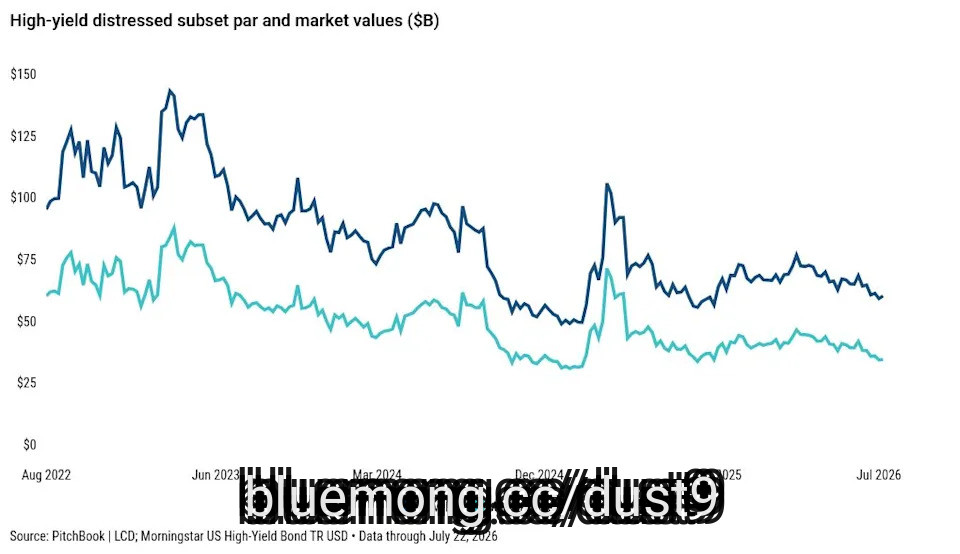
Distressed investors are, by their nature, optimists. They must be, since they see bargains and opportunities where other investors fear to tread. True to form, recent conversations with a number of distressed players reveal a significant distressed opportunity set in the back half of 2026 in the face of a roaring US equity bull market and a vibrant US economy.
Beginning on a positive note, "the US economy is doing well and isn't likely to turn south in the next six to 12 months," says Jeremy Burton, managing director and portfolio manager at PineBridge Investments. Even the rise of oil prices isn't of great concern for Burton, as he believes that the hit to consumers from rising oil prices in one region of the country will be offset by a healthy oil-and-gas-based economy in another region. As a result, the opportunities are more sector-specific, he believes.
Concurring with Burton's relatively sunny view are Morgan Stanley strategists Vishwas Patka and Joyce Jiang, who, in a recent piece covering their mid-year outlook, said "capex growth and a resilient consumer support a stable macro environment with strong earnings, while attractive yields anchor robust [debt] demand." This bodes well for business growth and equity generally, the pair said.
That health is reflected in the numbers. PitchBook LCD reported on July 1 that the trailing 12-month default rate for the Morningstar LSTA US Leveraged Loan index was only 0.97% by dollar amount and 1.34% by issuer count. The default rate by count, including Liability Management Exercises (LMEs), was 2.77%.
But danger in the leveraged loan index lurks. The index's distress ratio by amount (defined as the share of loans trading below 80 cents on the dollar) rose 34 bps in June, to 6.87%. In fact, the distress ratio has trended higher over the past nine months after plumbing a near-term low of 2.59% in September 2025. The peak for 2026 is 7.23% in March, which was the result of six consecutive monthly increases and marked the highest level since the distress ratio hit 7.36% in December 2022, in the midst of a series of US fed funds rate hikes by the FOMC. Roughly 45% of the debt trading under 80 is in software-related sectors.
#distressed #ratio #leveraged



4 months ago
Trip.com Group Limited (NASDAQ:TCOM) is one of the 10 Fastest Growing Consumer Stocks to Buy Now.
On July 2, 2026, China Renaissance downgraded Trip.com Group Limited (NASDAQ:TCOM) to Hold from Buy with a $42 price target.
On June 29, BofA lowered the firm's price target on Trip.com to $64 from $78 and kept a Buy rating on the shares. BofA said that despite a "modest" Q1 beat, results disappointed due to the lack of resolution on the antitrust investigation and a weaker-than-expected Q2 outlook. On June 25, Benchmark ***** yst Fawne Jiang lowered the firm's price target on Trip.com to $65 from $72 and kept a Buy rating on the shares. Jiang said that despite "another quarter of solid operating execution," management's softer-than-expected Q2 guidance reset near-term growth expectations.
Also on June 25, Trip.com reported Q1 EPS of RMB5.73, compared with consensus of RMB6.15, and revenue of RMB16.2B, compared with consensus of RMB15.85B. Executive Chairman James Liang said inbound travel continues to "gain momentum," creating opportunities across the travel value chain. CEO Jane Sun said the travel market remained resilient in Q1 of 2026, supported by continued growth in international travel demand and rising interest in more personalized travel experiences.
Trip.com Group Limited (NASDAQ:TCOM) operates as a travel service provider for accommodation reservation, transportation ticketing, packaged tours, in-destination, corporate travel management, and other travel-related services in China and internationally.


4 months ago
Antero Resources Corp (NYSE:AR) is one of the 8 Most Undervalued Growth Stocks to Buy for the Next 10 Years. On July 7, Betty Jiang, an ******* yst from Barclays, maintained a Hold rating on Antero Resources Corp (NYSE:AR) and set a target price of $45. Despite the ******* yst's Hold rating, the stock has seen positive momentum during the last few trading sessions. In contrast to Barclays, on June 30, Goldman Sachs ******* yst Neil Mehta kept a Buy rating on the stock while lowering the firm's price target from $46 to $41. The firm's downward price target still reflects 16% upside from current levels.
Antero Resources Corp.'s (NYSE:AR) second-quarter fiscal 2026 earnings report is scheduled to be announced on July 29. As per the company's Q1 outlook, it revised its full-year 2026 production guidance to 4.1 Bcfe per day. Moreover, the company reduced its cash cost guidance by $0.10 per Mcfe. The company planned to invest about $1 billion in capital expenditure, with the option to increase spending to $1.2 billion, stated CEO and President Michael N. Kennedy. However, the additional $200 million is not guaranteed and remains under consideration. The oil and gas company expects benefits from the HG acquisition to increase over time, potentially generating $100 million in annual savings.
CFO Glen Warren, while emphasizing cost efficiencies, noted:
"The integration of the HG acquisition has exceeded our expectations, delivering significant cost reductions and synergies."
Antero Resources Corp (NYSE:AR) is an independent oil and natural gas company that develops, produces, explores, and acquires natural gas, natural gas liquids (NGLs), and oil properties in the U.S.


4 months ago
By Go Nakamura, Xihao Jiang and Ella Cao
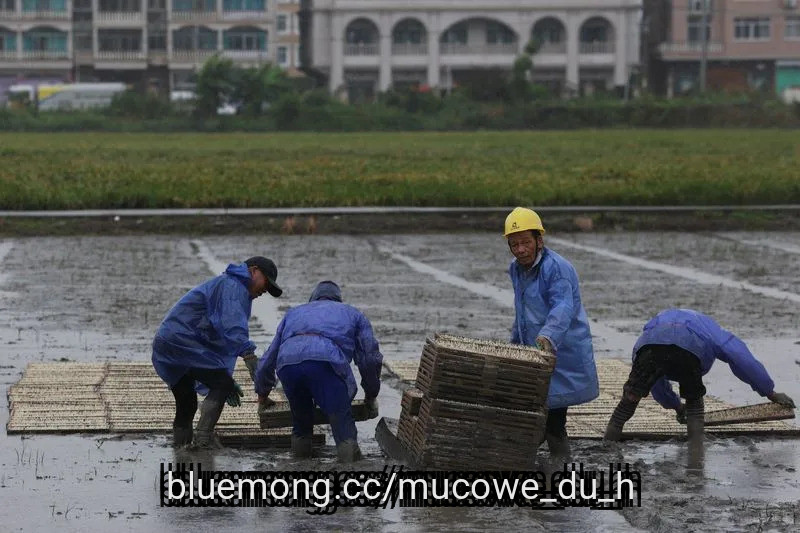
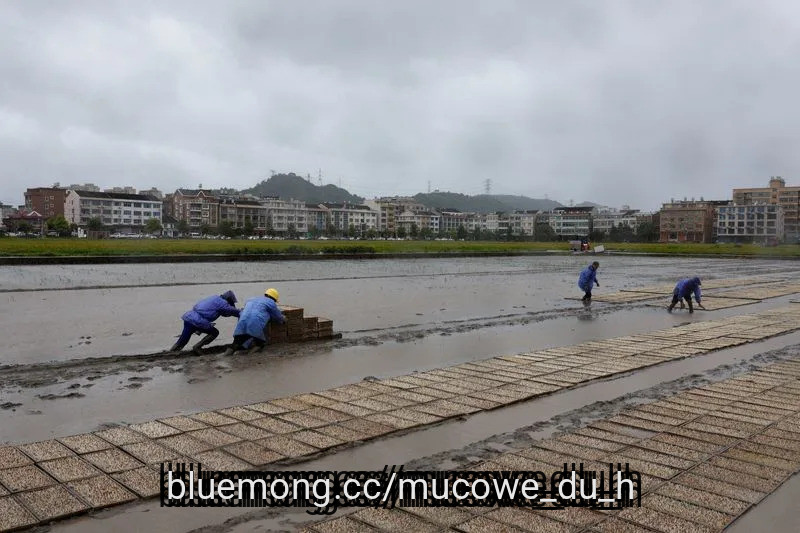
WENZHOU, China, July 11 (Reuters) - Typhoon Bavi made landfall late on Saturday in the coastal city of Taizhou in eastern China, where nearly 2 million people were evacuated, having earlier pummelled ******* an's southern Sakishima island chain and brushed past northern Taiwan.
Even as Bavi continues to slow and weaken on its northwesterly path, the typhoon is still a potent risk due to the sheer volume of moisture it holds within its rain bands, about the size of France from end to end.
Bavi had maximum sustained winds of about 144 km per hour (90 mph), equivalent to Category 1 on the Saffir-Simpson Hurricane Wind Scale, when it made landfall at around 11:20 p.m. local time (1520 GMT), according to the National Meteorological Center.
State media said more than 1.7 million people had been evacuated across Zhejiang province, where Taizhou is located, along with more than 100,000 each from neighbouring Fujian province and Beijing, and some 34,000 from Shanghai.


4 months ago
PDD Holdings Inc. (NASDAQ:PDD) is one of the 10 Fastest Growing Asian Stocks to Buy Now.
On June 24, 2026, Daiwa downgraded PDD Holdings Inc. (NASDAQ:PDD) to Hold from Buy with a price target of $80, down from $145. Daiwa said China's 2026 6.18 shopping festival "delivered a negative surprise," with overall gross merchandise value up only 0.9% year-over-year versus a 15% increase in 2025, according to Syntun. The firm said the data confirms a "weak" e-commerce consumption trend in China and cited a "tough" macro backdrop, tightening regulations, a scaled-back national trade-in program, and a high base as limits on sector growth.
On June 15, BofA lowered its price target on PDD Holdings to $113 from $140 and kept a Neutral rating. BofA lowered its 2026-27 revenue forecasts by 6% and adjusted its net profit view by 21%-22% to reflect elevated ecosystem investments, including merchant traffic support, commission rebates, and platform-funded coupons booked as contra revenue.
Last month, Benchmark ***** yst Fawne Jiang lowered the firm's price target on PDD Holdings to $127 from $160 and kept a Buy rating after the company reported "disappointing" Q1 results. Jiang said monetization appears to be taking a backseat as the company prioritizes ecosystem health, and said the stock is likely to remain in the "penalty box" near term until investors gain better visibility into earnings normalization. Jiang added that valuation has "become increasingly compelling."
PDD Holdings Inc. (NASDAQ:PDD) is a multinational commerce group that operates Pinduoduo and Temu.

4 months ago
HONG KONG (AP) — In the race between the U.S. and China to develop artificial intelligence, the battle over hardware and computing power is heating up as Chinese companies like Huawei overtake global industry leaders like Nvidia in their home market.
Jensen Huang, the CEO of computer chip giant Nvidia, was mobbed by onlookers as he hit the streets for the "zhajiangmian" noodles while visiting Beijing during U.S. President Donald Trump's May summit with Chinese leader Xi Jinping. But his celebrity status has not translated into success in selling Nvidia's advanced chips in China.
Controls imposed by Washington on exports of advanced technology due to national security concerns initially stalled sales of Nvidia's advanced H200 AI chips there. By the time Huang won a reprieve, with Trump agreeing to their sale, Beijing had switched to encouraging use of domestically designed chips made by local rivals led by Huawei.
Huang has acknowledged that the U.S. has lost its edge in China's advanced AI chips market as Chinese competitors have become "giants."
"Well, we were in China for 30 years, and before the export control banned Nvidia out of China we had about 95% market share, and so we were competing just fine," he said in a recent interview with The ****** ociated Press.



11 months ago
In recent days, bitcoin mining stocks with AI exposure, including IREN, have rebounded as bitcoin moved back above US$90,000 following earlier regulatory-driven disruption in China’s Xinjiang region.
This recovery has coincided with growing attention on AI-focused infrastructure deals across the sector, such as Hut 8’s very large US$7 billion, 15‑year hosting agreement with Fluidstack and Anthropic, which highlights investor interest in miners pivoting toward AI compute.
Against this backdrop, we’ll explore how renewed enthusiasm for AI-centric bitcoin miners, and IREN’s AI infrastructure pi



11 months ago
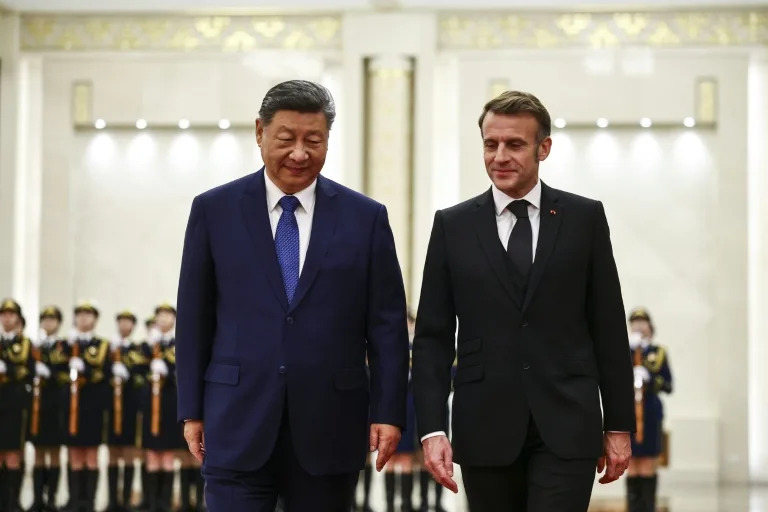
Pandas and ping-pong: Macron ending China visit on lighter note
An ancient dam, pandas and ping-pong: French leader Emmanuel Macron concluded his fourth state visit to China on Friday, striking a more relaxed note in the city of Chengdu after tough discussions on Ukraine and trade with his counterpart Xi Jinping a day earlier.
Far from the imposing Great Hall of the People in Beijing where the two leaders held talks, Xi and First Lady Peng Liyuan showed Macron and his wife Brigitte around the centuries-old Dujiangyan Dam, a World Heritage Site set against the mountainous landscape of Sichu



12 months ago
Scientists may have identified a way to naturally regulate blood sugar levels and sugar cravings in a similar fashion to drugs like Ozempic.
In mice and humans, the key to unlocking this natural process was found to be a gut microbe and its metabolites – the compounds it produces during digestion.
By increasing the abundance of this one gut microbe in diabetic mice, researchers led by a team at Jiangnan University in China showed they can "orchestrate the secretion of glucagon-like peptide-1".
Related: Mounjaro's Effect on Brain's 'Cravings' Measured For The First Time
Glucagon-like peptid