
2 months ago
Italy's Eni has signed a 25-year contract with Venezuela's state oil company PDVSA that makes the Italian energy major the exclusive operator of the giant Junín-5 heavy-oil field in the Orinoco Belt.
The agreement gives Eni responsibility for the technical, financial and commercial management of Junín-5, which contains an estimated 35 billion barrels of certified oil in place but currently produces just 12,000 barrels per day.
The deal marks a significant change from the previous Petrojunín joint-venture structure, under which PDVSA held 60% and Eni 40%. Venezuela's recently reformed hydrocarbons law allows foreign and domestic companies greater autonomy to operate fields, market production and receive proceeds from oil sales.
The signing took place during U.S. Energy Secretary Chris Wright's visit to Caracas and comes amid a broader revival of foreign investment in Venezuela's oil industry. Chevron separately announced plans to invest $7 billion over five years and more than double its Venezuelan production to 600,000 bpd by 2031.
Eni has major ambitions for Junín-5. The company originally envisioned developing the field to 240,000 bpd, although that target—initially planned for 2018—was never achieved. The Financial Times reported Wednesday that Eni plans to invest around $1.5 billion annually as it ramps up the project.
#billion #pdvsa #field


2 months ago
Chevron Corporation (NYSE:CVX), GE Vernova Inc. (NYSE:GEV), India's ONGC, Italy's Eni and Colombia's GeoPark are reportedly close to signing final agreements for energy projects in Venezuela after months of negotiations. Most of the agreements would move existing oil contracts under Venezuela's amended hydrocarbons law, which gives foreign companies more flexibility to operate and expand fields, export crude and receive cash proceeds from sales. Some agreements would also cover new electricity and energy projects.
For Chevron Corporation (NYSE:CVX), the opportunity could be particularly significant. The company is seeking to add a block in Venezuela's Orinoco Belt, which could allow it to expand an existing joint venture with state-owned PDVSA. It is also pursuing an area in Monagas North that could provide diluents needed for its extra-heavy oil production. The Wall Street Journal previously reported that Chevron was close to securing rights to two additional heavy-oil fields.
The agreements would represent another step toward reopening Venezuela's energy sector to foreign investment, but the final list of companies and terms had not yet been finalized at the time of the Reuters report.
The biggest positive is greater access to Venezuela's enormous oil resources. The amended hydrocarbons framework could give foreign companies more control over their operations and improve their ability to monetize production. For Chevron Corporation (NYSE:CVX), additional acreage in the Orinoco Belt could provide a meaningful avenue to increase long-term Venezuelan production.
Chevron also has an advantage over companies entering Venezuela for the first time because it already operates joint ventures in the country. That existing infrastructure, relationships, and operational experience could allow it to capture opportunities more efficiently as the sector reopens. The Wall Street Journal has noted that Chevron is currently the only major U.S. oil company operating in Venezuela.
#agreements #Companies #energy


2 months ago
Trump's Venezuela deal grants U.S. companies majority control of 65 billion barrels, pushing total U.S.-accessible proven reserves to 7.1% of global supply.
Venezuela's extra-heavy crude demands specialized refining and major infrastructure repairs, meaning production gains will take years rather than months to reach consumers.
Chevron's existing Venezuelan joint ventures and strong free cash flow position it as the clearest near-term beneficiary of the new hydrocarbons framework.
Act now: the ******* yst who called NVIDIA in 2010 just named his top 10 AI stocks — and Chevron didn't make the cut. Grab the names FREE today.
Oil markets have spent 2026 wrestling with supply disruptions, Strategic Petroleum Reserve drawdowns to multi-decade lows, and stubborn pump prices that refuse to cooperate with political calendars.
#NVIDIA #chevron #strategic #petroleum


2 months ago
Venezuela's new petroleum minister sees her South American home not as a dilapidated former oil giant, but as an emerging energy economy ripe for U.S. and foreign investments in new oil and gas exploration, both onshore and offshore.
Paula Henao, who took over as the hydrocarbons minister in March after the forced U.S. removal of former leader Nicolás Maduro, told an overflowing Houston energy audience on Wednesday that Venezuela is much more than just its famed heavy-grade crude oil. There are more than 916 exploration opportunities awaiting foreign investment, she said, including natural gas and other untapped oil basins. She cited an estimated 192 trillion cubic feet of natural gas reserves, as well as the country's world-leading proven oil reserves of more than 300 billion barrels.
"It's an entire world waiting to be discovered, just waiting for us to reach these agreements so we can develop these new areas," Henao said in Spanish to the crowd at the posh Post Oak Hotel in Houston.
Henao and leaders of the Venezuelan state oil company, PDVSA, were in Houston this week for meetings and a showcase event in advance of a bigger Venezuela Energy Week in February in Caracas.
"Go to Venezuela to invest, go to Venezuela to develop businesses there," said PDVSA Vice President Jovanny Martinez, also speaking in Spanish. "We are at the right place at this historical moment. We have the energy that the world requires."
#venezuela #henao


2 months ago
Eagle Capital Management, an investment management company, released its second quarter 2026 investor letter. A copy of the letter can be downloaded here. In the quarter, Eagle Capital Management discussed how enthusiasm around AI capital spending has driven strong S&P 500 earnings growth while also increasing risks from elevated valuations, concentrated demand, and aggressive investment ***** umptions. Eagle remains a strong believer in AI but prefers constructing a portfolio that can perform across multiple outcomes rather than relying on one forecast. The firm believes current earnings can overstate underlying economics because semiconductor equipment is depreciated over several years, while free cash flow growth remains much weaker. It also expects competition and additional capacity across AI labs, hyperscalers, and semiconductors to eventually create winners and losers. These dynamics are encouraging Eagle to recycle capital toward attractive opportunities outside the most crowded AI trades while maintaining selective exposure to high quality beneficiaries. The portfolio trades at a 20% market discount with faster expected EPS growth. Please review the Strategy's top five holdings for key selections.
In its second-quarter 2026 investor letter, Eagle Capital Management highlighted EQT Corporation (NYSE:EQT). EQT Corporation (NYSE:EQT) engages in the exploration, production, gathering, and transmission of hydrocarbons and natural gas. On August 19, 2026, EQT Corporation (NYSE:EQT) closed at $53.64 per share. One-month return of EQT Corporation (NYSE:EQT) was 0.47% and its shares gained 3.05% over the past 52 weeks. EQT Corporation (NYSE:EQT) has a market capitalization of $33.55 billion with a 52-week trading range between $47.94 - $68.24.
Eagle Capital Management stated the following regarding EQT Corporation (NYSE:EQT) in its Q2 2026 investor letter:
"The energy & metals companies we own benefit from favorable multiyear supply/demand outlooks, management teams that are good capital allocators, and ***** et bases that are well-positioned on the global cost curve. EQT Corporation (NYSE:EQT) is the largest U.S. pure-play natural gas producer. Like ConocoPhillips, it has low-cost, long-lived ***** ets and management with an excellent track record allocating capital. Its position in the Marcellus shale and internally owned pipeline ***** ets give it a distinctive position compared to most peers. It earns good margins even when prices are low. In the coming years, as LNG export capacity is added and U.S. electricity demand increases due to data center buildouts, we think supply and demand are likely to tighten. Combined with moderate production growth and a large free cash flow yield, it offers good EPS growth and attractive skew. We expect EPS growth in the mid-teens over the next several years."
#letter


2 months ago
Following the Washington-led removal of Venezuela's previous president, Nicolás Maduro, from office on 3 January this year, U.S. firms are pushing hard to keep increasing oil production from the hydrocarbons giant, in line with President Donald Trump's grand plans for the country within his new world order. The foundation for such output increases is extremely solid, as Venezuela still holds the world's largest proven crude reserves -- roughly 303 billion barrels, or about 17% of the global total. Most of this is extra-heavy crude oil from the Orinoco Belt that requires more technical expertise to handle than lighter grades but is cheaper to lift and often more profitable to process, with the challenge lying in transporting, upgrading, and refining it, not extracting it. Moreover, of its 14 supergiant oil fields, 11 retain more than half of their original reserves. Once up and running to something approaching full capacity, the country is to play a key role in the 'Americas' geographical sphere -- one of three such regions, as delineated recently in the U.S.'s '2025 National Security Strategy' -- so where are we now in this development arc following comments in the past week or so from U.S. oil and gas giant, Chevron?
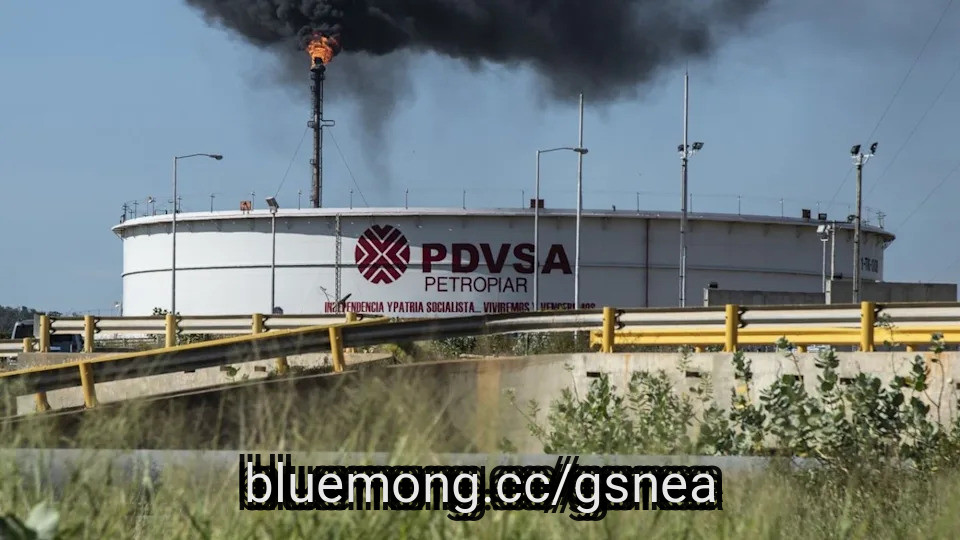
According to chief financial officer Eimear Bonner, during a recent earnings call, the U.S. supermajor has increased its oil production in Venezuela from 40,000 barrels per day (bpd) to 250,000 bpd over the past few years. And, based solely on its three current joint ventures in the country, output has risen over just the past six months by 12% year on year to 280,000 bpd. This followed the mid-April announcement of an **** et-swap agreement with Petróleos de Venezuela, S.A. (PDVSA), under which Chevron received an additional 13.21% interest in the Petroindependencia joint venture, increasing its total stake to 49%. The U.S. firm's other two joint ventures include Petropiar (in which a Chevron subsidiary holds a 30% interest and has the rights to develop the adjacent Ayacucho 8 area in the Orinoco Oil Belt), and Petroindependiente (in which it has a 25.2% non-operated interest in the west of the country). Looking ahead, Bonner added that Chevron expects its production across Venezuela to rise by 50% between now and the end of 2028, which would bring the total up to 420,000 bpd. Across the country as a whole, July saw average crude oil production by Venezuelan state oil company PDVSA and its foreign partners increase by 20,000 bpd to 1.21 million bpd, according to Ministry of Hydrocarbons data. Nearly all of this is now exported, compared to an average of 847,000 bpd in 2025. That said, back in the early 2000s, Venezuela's crude production was running at over 3 million barrels per day.
#crude #past #joint

2 months ago
Brazilian state-controlled oil giant Petrobras has identified hydrocarbons in an exploration well being drilled in ultra-deep waters off the state of Amapá, providing an early indication of petroleum potential in one of the country's most closely watched exploration frontiers.
The Morpho well, formally known as 1-BRSA-1405-APS, is being drilled in the FZA-M-59 block in the Foz do Amazonas Basin, around 175 kilometers offshore in water depths of 2,886 meters. Petrobras said the hydrocarbon-bearing interval was identified through electrical well logs and indications in rock.
Drilling remains underway, and Petrobras has not disclosed the size of the accumulation, the type or quality of the hydrocarbons, or any estimate of recoverable resources. The result therefore represents an exploration discovery rather than confirmation of a commercially viable oil or gas development.
Still, the find is significant because Petrobras described it as its first discovery offshore Amapá, an area at the northern end of Brazil's Equatorial Margin where the company has been seeking to establish a new exploration province.
Petrobras began drilling Morpho after receiving an operating license from Brazilian environmental regulator Ibama in October 2025. At the time, the company said the well was designed to collect geological data and determine whether hydrocarbons were present in economically viable quantities, with no production planned during the exploration phase.
#hydrocarbons #morpho

3 months ago
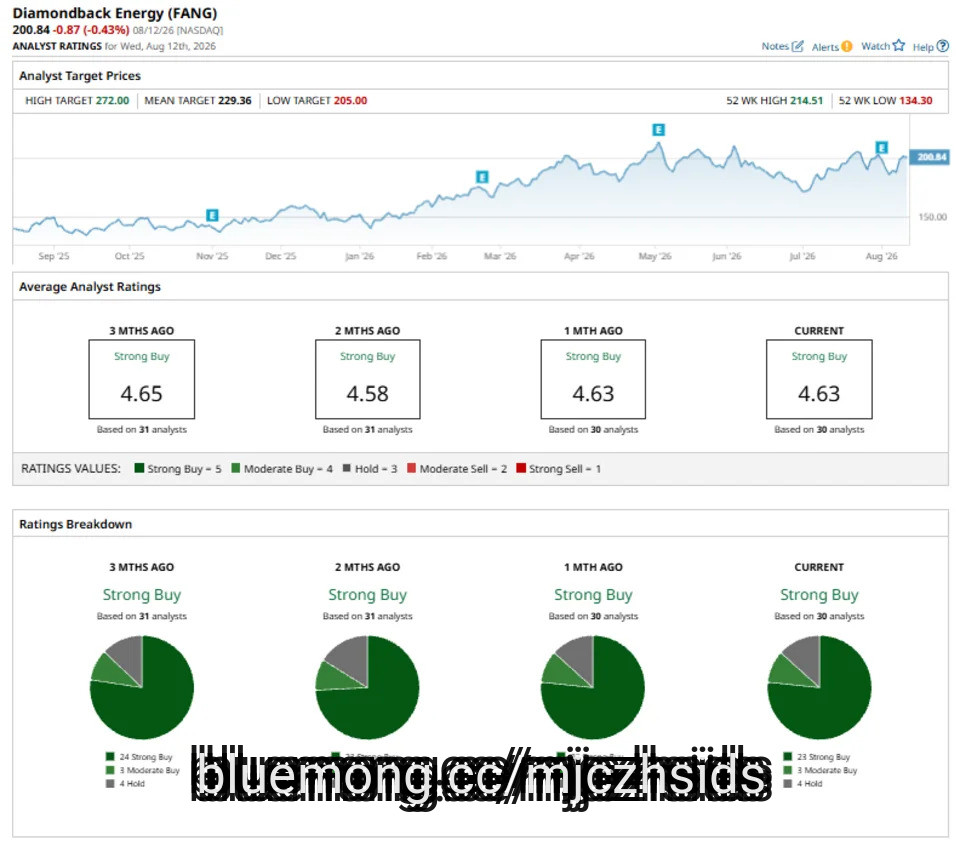
Midland, Texas-based Diamondback Energy, Inc. (FANG), with a market capitalization of approximately $56.5 billion, is an independent oil and natural gas company focused on exploring, developing, and producing hydrocarbons in the Permian Basin. It also operates crude oil and natural gas gathering infrastructure through its subsidiary, Rattler Midstream.
Shares of this leading oil and gas company have significantly outperformed the broader market over the past year. FANG has climbed 45% over this period, compared with a 20.2% gain for the broader S&P 500 Index ($SPX). The stock has continued to outperform the index in 2026, gaining 33.6%, surpassing the index's 13.2% gain over the same period.
A $20 Billion Reason Why Intel Stock Is in Focus
Marvell Technology (MRVL) Stock Might Offer a Quick Bounce Before Earnings
Most **** ysts Still Aren't Bullish on Tesla Stock, Even After Recent Selloff. Here's Why.
#fang #market #gain



3 months ago
PARIS (AP) — Paris is staging its first high-diving competition in the Seine, with athletes launching themselves from a 20-meter platform in front of the Eiffel Tower — a spectacular new test of the city's effort to reclaim its river for sport.
The event on the Bir-Hakeim Bridge has also exposed the fragility of that ambition: Organizers suspended training Thursday when traces of hydrocarbons were detected upstream. By Friday, the French Swimming Federation said the affected area had been treated, allowing athletes to return to the water and the event to proceed as planned.
High diving concludes Saturday with the final two rounds and medal events, while the broader European Aquatics Championships run through Aug. 16.
"There are things that are within our control, and there are uncertainties that are inevitably linked to any outdoor activity," said Maxime Sauvage, Paris deputy mayor in charge of sports, sports facilities and equal access to sport.
Among the things within the city's control, he said, are the massive investments made before the 2024 Olympic and Paralympic Games to make the river safe for swimming, from work to prevent sewage from flowing directly into the Seine to improvements in stormwater management.
#athletes #things


3 months ago
Middle East turmoil, centered on the U.S. war with Iran, is playing havoc with world energy markets. An ongoing dispute over access to the Strait of Hormuz, through which a fifth of world oil and natural gas supply is shipped, is causing prices to surge. This is a boon for South America's oil industry, particularly Suriname's emerging petroleum boom, which was delayed by conflicting drilling results and seismic data. The former Dutch colony is on the cusp of becoming South America's next major oil-producing nation.
Since 2019, Suriname's government in the capital Paramaribo has hungrily eyed Guyana's booming petroleum sector, which delivered a massive economic windfall for the former British colony. Five major oil discoveries in offshore Block 58, which started in 2020 with the Maka Central-1 exploration well, confirmed the presence of commercially exploitable hydrocarbons in Suriname's portion of the offshore Guyana-Suriname Basin.
After a series of delays, beginning in 2022, due to mismatched drilling results and seismic data along with a high gas-to-oil ratio, TotalEnergies, the operator of Block 58, approved a final investment decision (FID). TotalEnergies, which holds a 50% working interest in offshore Block 58, and 50% partner APA Corporation approved the development of the deepwater GranMorgu project. This changed the project's ownership structure. Forty percent was retained by the operator TotalEnergies with another 40% retained by APA, and the remainder granted to Staatsolie.
The state-controlled energy company's acquisition was in accordance with Staatsolie's rights set out in the production-sharing contract (PSC) for Block 52. The company used a $1.6 billion loan from a banking consortium and a March 2025 bond issue to finance the acquisition. Staatsolie's share of GranMorgu will multiply the earnings delivered to Paramaribo, which has been battling an economic crisis since 2021. Indeed, the situation was so severe that rioting engulfed parts of the capital and parliament was stormed by protestors in 2023.
GranMorgu, which will come online in 2028, is a game changer for an economically challenged Suriname. The project's floating production, storage and offloading unit (FPSO) vessel, on completion, will have capacity of 220,000 barrels per day.
#south #World

3 months ago
Middle East turmoil, centered on the U.S. war with Iran, is playing havoc with world energy markets. An ongoing dispute over access to the Strait of Hormuz, through which a fifth of world oil and natural gas supply is shipped, is causing prices to surge. This is a boon for South America's oil industry, particularly Suriname's emerging petroleum boom, which was delayed by conflicting drilling results and seismic data. The former Dutch colony is on the cusp of becoming South America's next major oil-producing nation.
Since 2019, Suriname's government in the capital Paramaribo has hungrily eyed Guyana's booming petroleum sector, which delivered a massive economic windfall for the former British colony. Five major oil discoveries in offshore Block 58, which started in 2020 with the Maka Central-1 exploration well, confirmed the presence of commercially exploitable hydrocarbons in Suriname's portion of the offshore Guyana-Suriname Basin.
After a series of delays, beginning in 2022, due to mismatched drilling results and seismic data along with a high gas-to-oil ratio, TotalEnergies, the operator of Block 58, approved a final investment decision (FID). TotalEnergies, which holds a 50% working interest in offshore Block 58, and 50% partner APA Corporation approved the development of the deepwater GranMorgu project. This changed the project's ownership structure. Forty percent was retained by the operator TotalEnergies with another 40% retained by APA, and the remainder granted to Staatsolie.
The state-controlled energy company's acquisition was in accordance with Staatsolie's rights set out in the production-sharing contract (PSC) for Block 52. The company used a $1.6 billion loan from a banking consortium and a March 2025 bond issue to finance the acquisition. Staatsolie's share of GranMorgu will multiply the earnings delivered to Paramaribo, which has been battling an economic crisis since 2021. Indeed, the situation was so severe that rioting engulfed parts of the capital and parliament was stormed by protestors in 2023.
GranMorgu, which will come online in 2028, is a game changer for an economically challenged Suriname. The project's floating production, storage and offloading unit (FPSO) vessel, on completion, will have capacity of 220,000 barrels per day.
#suriname #since #World #energy


3 months ago
EQT Corporation (NYSE:EQT) is one of the 8 Worst Blue Chip Stocks to Buy Now.
On July 8, 2026, UBS lowered the firm's price target on EQT Corporation (NYSE:EQT) to $73 from $74 previously and kept a Buy rating on the shares.
On July 2, Jefferies **** yst Lloyd Byrne lowered the firm's price target on EQT Corporation (NYSE:EQT) to $75 from $77 and kept a Buy rating on the shares as part of a Q2 preview. Byrne said Jefferies expects EQT to post Q2 EBITDA of $1.13B, just below the consensus of $1.19B.
On June 30, Freedom Broker initiated coverage of EQT Corporation (NYSE:EQT) with a Buy rating and $79 price target on the shares. The firm said EQT is the largest U.S. natural gas producer and is positioned to benefit from improving natural gas market fundamentals.
EQT Corporation (NYSE:EQT) engages in the exploration, production, gathering, and transmission of hydrocarbons and natural gas.


4 months ago
Infinity Natural Resources, Inc. (NYSE:INR) has declined slightly by around 5% over the past month. Although the stock is trading close to its all-time low, ******* ysts' 12-month average price target suggests more than 96% upside from the current level. Infinity Natural Resources, Inc. (NYSE:INR) ranks among our Best All-Time Low Stocks to Buy Now.
Recently, on June 26, Texas Capital ******* yst John Annis initiated coverage of the stock with a Buy rating and a $27 price target. The ******* yst noted Infinity as a differentiated, high-growth Appalachian operator. He likes the company's accelerating scale and commodity optionality. The ******* yst also pointed to Infinity's recent acquisition of Ohio Utica upstream and midstream ******* ets and called it a major transformation for the business.
Texas Capital also noted that the stock trades at a discount to peers. The firm sees this valuation gap as creating an attractive entry point for investors.
Infinity Natural Resources, Inc. (NYSE:INR) is an independent energy company. It is focused on the acquisition, development, and production of hydrocarbons in the Appalachian Basin.
While we acknowledge the potential of INR as an investment, we believe certain AI stocks offer greater upside potential and carry less downside risk. If you're looking for an extremely undervalued AI stock that also stands to benefit significantly from Trump-era tariffs and the onshoring trend, see our free report on the best short-term AI stock.


4 months ago
For a decade, Colombia's economically vital oil industry has been caught in a death spiral. A combination of sharply weaker oil prices, rising geopolitical risk and anti-petroleum industry reforms implemented by Colombia's first leftist president Gustavo Petro deterred investment, causing the operational tempo to decline. The main issue weighing heavily on the oil patch's outlook is a dire lack of proven petroleum reserves. These are the result of a lack of spending on wildcat drilling and a poor exploration success rate.
After a lengthy delay, Colombia's regulatory authority, the National Hydrocarbons Agency (ANH), released the 2025 report on the Andean country's oil reserves. Since the end of the 2020 COVID pandemic, Colombia's proven oil and natural gas reserves have remained flat. This trend is evident from the 2025 reserve report, where proven or 1P oil reserves totaled just over 2 billion barrels, a nearly 1% decrease compared to a year earlier. Despite that drop, the productive life of Colombia's 1P reserves grew from 7.2 years for 2024 to 7.6 years.
Both proven and probable (2P) as well as proved, possible and probable (3P) reserves also declined, falling 2% and 3% year over year to 2.56 billion barrels and 2.99 billion barrels, respectively. The moderate increase in the productive life of 1P reserves occurred for one simple reason: Colombia's oil production is in decline, falling to a multiyear low of 724,910 barrels per day for April 2026. Indeed, that number was the lowest output since June 2021, when the Andean country lifted 694,151 barrels daily.
The vast majority of Colombia's 1P reserves, 74%, are located in the Llanos Basin with 15.3% in the Middle Magdalena Valley and 3.8% situated in the Upper Magdalena Valley. The aging Rubiales field in the Llanos Basin is the largest oilfield on the basis of proven reserves and remains Colombia's most productive petroleum acreage. For the year-to-date, ANH data shows 11.3 million barrels of oil have been lifted from the Rubiales field, which is nearly double that of the Castilla field, also situated in the Llanos Basin.
Colombia's natural gas reserves also fell sharply during 2025. The ANH report shows 1P natural gas reserves plummeted by a whopping 17% year over year to 1.7 trillion cubic feet. Meanwhile, 2P reserves plunged 11% to 2.38 trillion cubic feet and 3P fell 8% to 3 trillion cubic feet.